Just International

Why Democratic Party Foreign Policy Fails And Will Continue To Fail

By Richard Falk

For six years (2008-2014) I acted as UN Special Rapporteur for Occupied Palestine, and found myself routinely and personally attacked by the top UN diplomats representing the U.S. Government. Of course, I knew that America was in Israel’s corner no matter what the issue happened to be, whether complying with a near unanimous set findings by the World Court in the Hague or a report detailing Israeli crimes committed in the course of its periodic unlawful attacks on Gaza. Actually, the vitriol was greater from such prominent Democratic liberals as Susan Rice or Samantha Power than from the Republican neocon stalwart John Bolton who was the lamentable U.S. ambassador at the UN when I was appointed. I mention this personal background only because it seems so disappointingly emblematic of the failure of the Democratic Party to walk the walk of its rule of law and human rights talk.

From the moment Barack Obama stepped into the Oval Office he never tired of telling the country, indeed the world that we as a nation were different because we adhered to the rule of law and acted in accord with our values in foreign policy. But when it came down to concrete cases, ranging from drone warfare to the increasingly damaging special relationships with Israel and Saudi Arabia, the policies pursued seemed almost as congenial to a Kissinger realist as to an Obama visionary liberal. Of course, recently the Republicans from the comfort zone of oppositional irresponsibility chide the government led by a Democrat for its wimpy approach whether in response to Russia’s involvement in the Ukraine, China’s moves in the Pacific, and especially the emergence of ISIS. The Republicans out of office want more bombs and more wars in more places, and seem content to risk a slide into a Second Cold War however menacing such a reality would undoubtedly turn out to be.

How are we to explain this inability of Democrats to follow through on a foreign policy that is linked to law and ethics, as well as to show respect for the authority of the UN, World Court, Human Rights Council, and above all, the UN Charter? Such a question can be partly answered by noticing the gap between Obama the national campaigner and Obama the elected president expected to govern in the face of a hostile and reaction Congress and a corporatized media. In effect, it is the government bureaucracy and the special interest groups especially those linked to Wall Street, the Pentagon, guns, and Israel that call the shots in Washington, and it is expected that a politician once elected will forget the wellbeing of the American people as a whole on most issues, and especially with respect to controversial foreign policy positions, if he or she hopes to remain a credible public figure. The boundaries of credibility are monitored and disciplined by the mainstream media, as interpreted to reflect the interests of the militarized and intelligence sectors of the government and the economy.

Obama’s disappointing record is instructive because he initially made some gestures toward an innovative and independent approach. In early 2009 he went to Prague to announce a commitment to work toward a world without nuclear weapons, but there was no tangible steps taken toward implementation, and he kept quiet to the extent that his hopes were shattered. He will finish his presidency no nearer that goal than when he was elected, and in a backward move he has even committed the country to modernizing the existing arsenal of nuclear weapons at the hefty cost of $30 billion. The only reasonable conclusion is that the nuclear weapons establishment won out, and security policy of not only this country, but the world and future generations, remains subject to nuclearism, and what this implies about our unnecessarily precarious fate as a species.

Obama gave a second visionary speech in Cairo a few months later in which he promised a new openness to the Islamic world, and seemed to acknowledge that the Palestinians had suffered long enough and deserved an independent state and further, that it was reasonable to expect Israel to suspend unlawful settlement expansion to generate a positive negotiating atmosphere. When the Israel lobby responded by flexing its muscles and the Netanyahu leadership in Israel made it clear that they were in charge of the American approach to ‘the peace process,’ Obama sheepishly backed off, and what followed is a dismal story of collapsed diplomacy, accelerated Israeli settlement expansion, and renewed Palestinian despair and violent resistance. The result is to leave the prospect of a sustainable peace more distant than ever. It was clear that Zionist forces are able to mount such strong pressure in Congress, the media, and Beltway think tanks that no elected official can follow a balanced approach on core issues. Perhaps, the Democrats are even more vulnerable to such pressures as their funding and political base is more dependent on support of the Jewish communities in the big cities of America.

Occasionally, an issue comes along that is so clearly in the national interest that Israel’s opposition can be circumvented, at least temporarily and partially. This seems to have been the case with regard to the Iran Nuclear Agreement of a year ago that enjoyed the rare support of all five permanent members of the UN Security Council plus Germany. Yet even such a positive and sensible step toward restoring peace and stability in the tormented Middle East met with intense resistance at home, even being opposed by several prominent Democratic senators who acted as if they knew on which side their toast was buttered.

It seems pathetic that the White House in the aftermath of going against Israel’s rigid views on Iran found it necessary to patch things up by dispatching high level emissaries to reassure Israel that the U.S. remains as committed as ever to ‘the special relationship.’ To prove this point the Obama administration is even ready to increase military assistance to Israel from an already excessive $3 billion annual amount to a scandalous $5 billion, which is properly seen as compensation for going ahead with the Iran deal in the face of Israel opposition. Even the habitual $3 billion subsidy is in many ways outrageous given Israel’s regional military dominance, economic wellbeing, without even mentioning their refusal to take reasonable steps toward achieving a sustainable peace, which would greatly facilitate wider the pursuit of wider American goals in the Middle East. It is past time for American taxpayers to protest such misuses of government revenues, especially given the austerity budget at home, the decaying domestic infrastructure, and the anti-Americanism among the peoples of the Middle East that is partly a consequence of our long one-sided support for Israel and related insensitivity to the Palestinian ordeal.

True, the Democrats do push slightly harder to find diplomatic alternatives to war than Republicans, although Obama appointed hard liners to the key foreign policy positions. Hilary Clinton was made Secretary of State despite her pro-intervention views, or maybe because of them. Democrats seem to feel a habitual need to firm up their militarist credentials, and reassure the powerful ‘deep state’ in Washington of their readiness to use force in pursuit of American interests around the world. In contrast, Republicans are sitting pretty, being certified hawks on foreign policy without any need to prove repeatedly their toughness. Until George W. Bush came along it did seem that Democrats started the most serious war since 1945, and it took a Republican warmonger to end it, and even more daringly, finally to normalize relations with Communist China, a self-interested move long overdue and delayed for decades by anti-Communist ideological fervor and the once powerful ‘China Lobby.’

Looking ahead there is little reason to expect much departure if a Democrat is elected the next American president in 2016. Clinton has already tipped her hand in a recent speech to the Council on Foreign Relations, the self-anointed voice of the East Coast American establishment. She promised more air strikes and a no fly zone in Syria and a more aggressive approach toward ISIS. Such slippery slopes usually morph into major warfare, with devastating results for the country where the violence is situated and no greater likelihood of a positive political outcome as understood in Washington. If we consider the main theaters of American interventionary engagement in the 21st century, including Afghanistan, Iraq, and Libya we find the perplexing combination of battlefield dominance and political defeat. It is dismaying that neither Clinton nor lead foreign policy advisors are willing to examine critically this past record of frustration and defeat, and seem ready for more of the same, or as it now expressed, ‘doubling down.’ We should not forget that Clinton was the most ardent advocate of the disastrous intervention in Libya, and mainly unrepentant about her support of the Iraq War, which should shock even her most committed backers, considering that it was the most costly mistake and international crime since Vietnam.

Ever since the Vietnam War political leaders and military commanders have tried to overcome this record of failed interventionism, forever seeking new doctrines and weapons that will deliver victory to the United States when it fights wars against peoples living in distant lands of the Global South. Democrats along with Republicans have tried to overcome the dismal experience of intervention by opting for a professional army and total reliance on air tactics and special forces operations so as to reduce conditions giving rise to the sort of robust anti-war movement that dogged the diehard advocates of the Vietnam War in its latter stages. The government has also taken a number of steps to achieve a more supportive media through ‘embedding’ journalists with American forces in the fields of battle. These kinds of adjustment were supposed to address the extreme militarist complaint that the Vietnam War was not lost on the battlefields of combat, but on the TV screens in American living rooms who watched the coffins being unloaded when returned home.

Despite these adjustments it has not helped the U.S. reached its goals overseas. America still ends up frustrated and thwarted. This inability to learn from past mistakes really disguises an unwillingness that expresses a reluctance or inability to challenge the powers that be, especially in the area of war and peace. As a result not only is foreign policy stuck adhering to deficient policies with a near certainty of future failure, but democracy takes a big hit because the critical debate so essential in a truly free society is suppressed or so muted as to politically irrelevant. Since 9/11 this suppression has been reinforced by enhanced intrusions on the rights of the citizenry, a process supported as uncritically by Democrats as by the other party. Again it is evident that the unaccountable deep state wields a big stick!

This is the Rubicon that no Democrat, including even Bernie Sanders, has dared yet to cross: The acknowledgement that military intervention no longer works and should not be the first line of response to challenges emerging overseas, especially in the Middle East. The forces of national resistance in country after country in the South outlast their Northern interveners despite being militarily inferior. This is the major unlearned lesson of the wars waged against European colonialism, and then against the United States in Vietnam, and still later in Afghanistan, Iraq, and Libya. The balance of forces in the Global South has decisively shifted against a military reading of history that prior to the middle of the last century was the persuasive basis of defending the country against foreign enemies, as well as providing imperial ambitions with a cost efficient means to gain access to resources and market in underdeveloped parts of the world. National resistance movements have learned since 1945 that they are able to prevail, although sometimes at a great cost, because they have more patience and more at stake. As the Afghan saying goes, “You have the watches, we have the time.”

The intervening side shapes its foreign policy by a crude cost/benefit calculus, and at some point, the effort does not seem worth the cost in lives and resources, and is brought to an end. For the national resistance side the difference between winning and losing for a mobilized population is nearly absolute, and so the costs however high seem never too high. The most coherent intervention initiated by the Obama presidency in 2011 did succeed in driving a hostile dictatorship from power, but what resulted was the opposite of what was intended and expected by Washington: chaos and a country run by warring and murderous tribal militias. In other words, military intervention has become more destructive than ever, and yet its political goals of stability and a friendly atmosphere remain even more elusive than previously.

For Democrats to have an approach that learns from this experience in the period since the end of World War II would require leveling with American people on two main points: (1) military intervention generally does not reach its proclaimed goals unless mandated by the UN Security Council and carried out in a manner consistent with international law; and (2) the human concerns and national interests of the country are better protected in this century by deferring to the dynamics of self-determination even if the result are not always in keeping with American strategic goals and national values. Such a foreign policy reset would not always yield results that the leaders and public like, but it is preferable to the tried and tested alternatives that have failed so often with resulting heavy burdens. Adopting such a self-determination approach is likely to diminish violence, enhance the role of diplomacy, and reduce the massive displacement of persons that is responsible for the wrenching current humanitarian crises of migration and the ugly extremist violence that hits back at the Middle East interveners in a merciless and horrifying manner as was the case in the November 13th attacks in Paris.

Despite these assessments when, hopefully, a Democrat is elected in 2016, which on balance remains the preferable lesser of evils outcome, she has already announced her readiness to continue with the same failed policy, but even worse, to increase its intensity. Despite such a militarist resolve there is every reason to expect the same dismal results, both strategically and humanly. The unfortunate political reality is that even Democratic politicians find it easier to go along with such a discredited approach than risk the backlash that world occur if less military policies were advocated and embraced. We must not avoid an awareness that our governmental security dynamics is confined to an iron cage of militarism that is utterly incapable of adjusting to failure and its own wrongdoing.

We must ask ourselves why do liberal minded Democratic politicians, especially once in office follow blindly militarist policies that have failed in the past and give every indication of doing even worse in the future because the international resistance side is more extremist and becoming better organized. Dwight Eisenhower, incidentally a Republican, gave the most direct answer more than 50 years ago—what he called ‘the military-industrial complex,’ that lethal synergy between government and capital. Such a reality has become a toxic parasite that preys upon our democratic polity, and has been augmented over the years by intelligence services, the corporatization of the media and universities, public policy institutes, and lobbies that have turned Congress into a complicit issuer of rubber stamps as requested.

Under these conditions we have to ask ourselves ‘What would have to happen to enable a presidential candidate of the Democratic Party to depart from the foreign policy failures of the past? That is, to escape from the cage within which foreign policy is now imprisoned: Nothing less than a transforming of the governing process from below that would sweep away this parasitical burden that is ever

more deforming the republic and spreading suffering and resentment to all corners of the planet. American foreign policy is having these harmful effects at a time when decent people of all parties should be exerting their political imagination to the utmost to meet the unprecedented challenges mounted by the accumulating dangers of climate change and the moral disgrace of mounting extreme economic inequalities despite as many as 3 billion people living on less than $2.50 per day.

Not only is the Democratic Party failing the nation by its refusal to meet the modest first principle of Florence Nightingale—‘do no harm’—but it is not rising to the deeper and more dangerous threats to future wellbeing and sustainability directed at the nation and the ecological health of the planet, and also of menace to peoples everywhere. What the United States does and does not do reverberates across the globe. Political responsibility in the 21st century does not stop at the border, and certainly is not fulfilled by walls and drones. If political parties cannot protect us, then it is up to the people to mount the barricades, but this too looks farfetched when the most vital form of populism now seems to be of a proto-fascist variety activated so viciously by the candidacy of Donald Trump, and reinforced more politely by his main Republican rivals.

Richard Falk is an international law and international relations scholar who taught at Princeton University for forty years. Since 2002 he has lived in Santa Barbara, California, and taught at the local campus of the University of California in Global and International Studies and since 2005 chaired the Board of the Nuclear Age Peace Foundation. For six years (2008-2014) he acted as UN Special Rapporteur for Occupied Palestine

06 March, 2016
Richard Falk Blog

The Mercury Doesn’t Lie: We’ve Hit A Troubling Climate Change Milestone

By Bill McKibben

Thursday, while the nation debated the relative size of Republican genitalia, something truly awful happened. Across the northern hemisphere, the temperature, if only for a few hours, apparently crossed a line: it was more than two degrees Celsius above “normal” for the first time in recorded history and likely for the first time in the course of human civilization.

That’s important because the governments of the world have set two degrees Celsius as the must-not-cross red line that, theoretically, we’re doing all we can to avoid. And it’s important because most of the hemisphere has not really had a winter. They’ve been trucking snow into Anchorage for the start of the Iditarod; Arctic sea ice is at record low levels for the date; in New England doctors are already talking about the start of “allergy season.”

This bizarre glimpse of the future is only temporary. It will be years, one hopes, before we’re past the two degrees mark on a regular basis. But the future is clearly coming much faster than science had expected. February, taken as a whole, crushed all the old monthly temperature records, which had been set in … January. January crushed all the old monthly temperature records, which had been set in … December.

In part this reflects the ongoing El Nino phenomenon — these sporadic events always push up the planet’s temperature. But since that El Nino heat is layered on top of the ever-increasing global warming, the spikes keep getting higher. This time around the overturning waters of the Pacific are releasing huge quantities of heat stored there during the last couple of decades of global warming.

And as that heat pours out into the atmosphere, the consequences are overwhelming. In the South Pacific, for instance, the highest wind speeds ever measured came last month when Tropical Cyclone Winston crashed into Fiji. Entire villages were flattened. In financial terms, the storm wiped out ten percent of the nation’s gross domestic product, roughly equivalent to fifteen simultaneous Hurricane Katrina’s.

This was followed by a few months of the highest wind speeds ever recorded in our hemisphere, when Patricia crashed into the Pacific coast of Mexico. And it joins all the other lines of misery: the zika virus spreading on the wings of mosquitoes up and down the Americas; the refugees streaming out of Syria where, as studies now make clear, the deepest drought ever measured helped throw the nation into chaos.

The messages are clear. First, global warming is not a future threat — it’s the present reality, a menace not to our grandchildren but to our present civilizations. In a rational world, this is what every presidential debate would focus on. Forget the mythical flood of immigrants — concentrate on the actual flooding.

Second, since we’re in a hole it’s time to stop digging — literally. We’ve simply got to keep coal and oil and gas in the ground; there’s not any other way to make the math of climate change even begin to work. There is legislation pending in the House and Senate that would end new fossil fuel extraction on America’s public lands. Senator Sanders has backed the law unequivocally; Secretary Clinton seemed to endorse it, and then last week seemed to waffle. Donald Trump has concentrated on the length of his fingers.

No one’s waiting for presidential candidates to actually lead, of course. In May campaigners around the world will converge on the world’s biggest carbon deposits: the coal mines of Australia, the tarsands of Canada, the gasfields of Russia. And they will engage in peaceful civil disobedience, an effort to simply say: no. The only safe place for this carbon is deep beneath the soil, where’s it been for eons.

This is, in one sense, stupid. It’s ridiculous that at this late date, as the temperature climbs so perilously, we still have to take such steps. Why do Bostonians have to be arrested to stop the Spectra pipeline? Anyone with a thermometer can see that we desperately need to be building solar and windpower instead.

In a much deeper sense, however, the resistance is valiant, even beautiful. Think of those protesters as the planet’s antibodies, its immune system finally kicking in. Our one earth is running a fever the likes of which no human has ever seen. The time to fight it is right now.

Bill McKibben is the Schumann Distinguished Scholar at Middlebury College and co-founder of 350.org. His most recent book is Eaarth: Making a Life on a Tough New Planet.
© 2016 Bill McKibben

06 March, 2016
The Boston Globe

Saudi Prince: We Support Israel In Palestinian War

By Shubhda Chaudhary

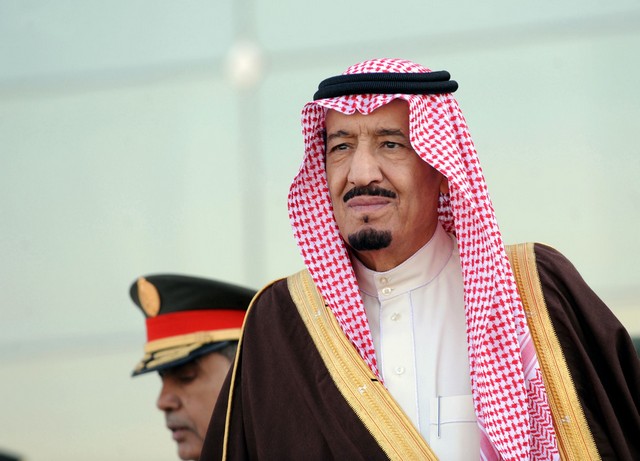
Saudi Prince and entrepreneur, al-Waleed bin Talal made a startling statement to Kuwaiti Al Qabas daily stating that ‘Saudi Arabia must reconsider its regional commitments and devise a new strategy to combat Iran’s increasing influence in Gulf States by forging a Defense pact with Tel Aviv.’ It would deter any possible Iranian moves in the light of unfolding developments in the Syria and Moscow’s military intervention.

He openly stated that ‘I will side with the Jewish nation and its democratic aspirations in case of outbreak of a Palestinian Intifada( uprising) and i shall exert all my influence to break any ominous Arab initiatives set to condemn Tel Aviv , because I deem the Arab-Israeli entente and future friendship necessary to impede the Iranian dangerous encroachment.’

With the emergence of neo-liberalism and complex interdependence, Saudi Arabia and Israel have had built tacit alliances but they have not been openly embraced. Though, this has now turned into a geopolitical strategic acrimony between Iran and Saudi Arabia. As we are witnessing a regional cold war in West Asia, the media attention has anyway shifted from the Palestinian issue, in spite of the fact that they are currently undergoing a ‘leaderless Intifada.’ But it’s astonishing that Saudi Arabia, the powerful giant for Wahabbi ideology is thinking of deterring its stand in the Palestinian cause.

The manner in which, one after another, Arab states have abandoned the Palestinian cause has now become a convention. But such an unreasonable statement by Saudi Prince reveals the emerging hidden contours of power.

He further mentioned ‘Iran seeks to buttress its presence in the Mediterranean by supporting Assad regime in Syria, added Prince al-Waleed, but to the chagrin of Riyadh and its sister Gulf sheikhdoms, Putin’s Russia has become a real co-belligerent force in Syrian 4-year-old civil war by attacking CIA-trained Islamist rebels. Here surfaces the paramount importance of Saudi-Israeli nexus to frustrate Russia-Iran-Hezbollah axis.’ The quote validates that Russia is bombing CIA trained Islamist rebels which has always been controversial and often called a conspiracy theory. At the same time, it also highlights the insecurity of Saudi Arabia against the emergence of Russia-Iran and Hezbollah axis within the Syrian paradigm.

Prince al-Waleed bin Talal had previously been in news also for supporting the annexation of Bahrain during the Arab Uprising at Pearl Square in Manama, which witnessed complete media blackout though there was massive man-slaughter. The entire idea of uprisings for democracy is so antithetical to the entire monarchial set-up of Saudi Arabia that it has also played a pivotal role in fuelling the sectarian war in West Asia.

Nevertheless, the Palestinian Ambassador to India stated that Prince al-Waleed had later stated that he had made no such statements and they do not hold true. It’s quite unbelievable that any news agency can have the leverage t fabricate such strong views on its own behalf and hence, on meticulous scrutiny, it might have an iota of truth.

Shubhda Chaudhary is a PhD student at JNU. She can be contacted at shubhda.chaudhary@gmail. com

04 March, 2016
Countercurrents.org

Art Of The Deal Politics, Billionaires’ Wars, And The Decline Of America

By Jon Kofas

Introduction

Is Trump a reflection of America, at least a segment of the population that has proved it wants him as the next president, or is he a historical accident, an aberration from the norm in politics? Despite both Republican and Democrat, conservative, liberal and leftist critics that Trump is not a reflection of the American mainstream, the astonishing results of the primary voting process reveal a very different story for a man who could easily win the nomination. This would be especially the case if the Republican Party establishment owned by billionaires like Trump supports his candidacy instead of undermining it in every respect possible.

Although Trump has opportunistically toyed with right-wing populism – racism, xenophobia, misogyny, jingoism – and although he is indeed a con-artist as Marco Rubio calls him and a fraud as Mitt Romney calls him, he is very much a reflection of mainstream America as much as Bernie Sanders representing the anti-neoliberal pro-Keynesian wing of the Democrat party. It is indeed true that he is an embarrassment at home and overseas because of who he is and because he is a right wing populist approaching as close to neo-Fascism as any candidate for president.

However, Trump is a product of and reflects the traditions and institutions as much as any Republican who in essence represents the same ideological and policy position. Nor can it be argued that the corrupt billionaires and Republican political establishment is against Trump on moral grounds as though these people are on a higher moral plane like Pope Francis who criticized Trump for lacking compassion for the poor trying to cross the border. Therefore, the issue comes down to the degree to which the Republican political and business establishment wants Trump as its presidential candidate no matter what the voters want, and the degree of control the party machinery and billionaires wish to exercise in the political arena as they are looking beyond the presidency to House and Senate seats that may be at risk because of Trump at the head of the party ticket.

Legitimacy and Democracy

Regardless of whether Trump becomes the nominee or the next US president, the larger issue is one of a “bourgeois democratic” society’s institutional mechanisms and sources of legitimacy. If legitimacy rests with the party machinery and the wealthy people funding it, then the system parading as democratic is a fraud, and it is not just Trump. The issue of legitimacy is at stake in American democracy and especially with this campaign of 2016 where the frontrunner and presumptive nominee after striking a deal with the party bosses finds himself isolated from the party bosses and those funding the party.
In US, does legitimacy emanate from the political party apparatus that chooses candidates and presents them to voters for election? If the people by majority vote for a candidate that the political party establishment has chosen to be on the ballot but does not want that candidate does this mean that popular vote is meaningless as is the electoral process? According to 19th century German sociologist Max Weber, the sources of legitimacy converge in an open society and they are based on tradition, charismatic leadership and legal authority. Based on a constitutional system and laws, legal authority by elected and/or appointed officials is one source of legitimacy.

The powers of legal authority are not without limits considering checks and balances in the US democratic system and popular consent as the underlying source of political power, at least in theory. It should be stressed that Max Weber never created linkage between social justice and political legitimacy, whereas his contemporaries ideologically to the left did exactly that. The question of popular sovereignty and legitimacy is one with limits in American history that had excluded slaves, women, and for all practical purposes the poor and minorities from the voting process. Although in the early 21st century the system ideally permits for all citizens to vote for pre-selected candidates of the party machinery, the issue of legitimacy remains a big question mark because the preservation of the public and private institutions take precedence over any elected official whose goal must be to serve the institutions and not change them without congressional authorization.

The Historical Role of the Wealthy in Politics

Historically in Europe the very wealthy recognized the symbolic significance of not running for office and simply manipulating the political process from behind the scenes. After all, money has always bought political influence at all levels of government, and one way of protecting the interests of capital has been to rely on the legislative branch of government because one never knows if the executive deviates from serving capital as faithfully as the socioeconomic elites expect. This rule of the very wealthy staying out of politics was broken in the Age of Imperialism in Europe (1870-1914) when the stakes became so important that competing interests at the national and international levels were fighting for market share on a world scale.

More recently, there have been billionaires like Silvio Berlusconi who was Italy’s prime minister and many European politicians have used their political office as a vehicle of moving into the socioeconomic elite class. Last spring a millionaire businessman Juha Sipila was elected to Prime Minister of Finald by promising to make the country competitive just as Republicans have been advocating, never mentioning income inequality or social justice. Therefore,

Europe is not entirely free of the businessman-politician promising the moon to voters.

From its founding, the US carved a different path than Europe that tended to be skeptical of wealthy oligarchs in political power. George Washington, Thomas Jefferson, James Madison, Andrew Jackson, Theodore Roosevelt, Herbert Hoover, Franklin Roosevelt were all multi-millionaires and saw their class interests converging with the nation’s interests, without necessarily neglecting completely the marginalized in society. It is true, of course, that after 1850 and the era of Lincoln we have layers and professionals with a record of public service running for office, but they were just as representative of big capital’s interests as the wealthy presidents. The Gilded Age (1870-1900) proved as much despite presidents in the White House that were not super wealthy like Washington and Jefferson. There are remarkable parallels between the late 19th century Gilded Age and the new Gilded Age of the late 20th-early 21st century America.

The Progressive Era (1900-1920) that started at the local level in Wisconsin during the age of mass consumerism as the Industrial Revolution was expanding the economy prompted calls by the rising professional middle class for limits on the role of the wealthy in politics. After all, American politics was blatantly bought and paid for by the wealthy in all levels of government to the degree that calling such a system democracy could not be taken seriously.

Ironically, Theodore Roosevelt who was very wealthy and a Republican favored the role of the state as an arbiter of capital and he favored reforms that would rationalize the political economy. He recognized that capitalists left to their own devices were predatory and the rise of big business meant the need to create large government bureaucracies to regulate and assist the private sector. In short, Roosevelt had no illusions that capitalism must be rationalized otherwise it would cause havoc in society and destroy democracy rooted in pluralism. He knew first hand that the wealthy had politicians in their back pockets and tried to broaden the process to integrate the lower middle class into the political mainstream largely to afford legitimacy to a corrupt system. Progressivism only regulated big businesses and hardly placed restrictions on capital accumulation to the detriment of labor.

The Great Depression forced Franklin Roosevelt to expand on many programs of the Progressive Era that started at the turn of the century under Roosevelt and continued under Wilson. Despite opposition by the wealthy who did not want the state used as an agent of growth and development and an arbiter in society, FDR had no choice if he wanted to save a system from chaos and collapse. He broadened the political process and co-opted the lower classes into the Democrat mainstream, thus affording legitimacy to the system. When the Second World War ended, however, the US began to slowly deviate from the premises of government’s role in society, justifying it on the basis of the Cold War and the need to compete in the world considering the US was the world’s number one economy having inherited Europe’s and Japan’s imperial role.

Just as people today complain of wealth concentration among the top one percent, so did the people in the late 19th century. Just as people today complain that government is corrupt, bought and paid by the rich, so did the people in the Gilded Age (1870-1900). Just as people today are receptive to populism from the center-left and the extreme right because the so-called middle represents the very rich, so did people in the Gilded Age. The fundamental difference is that the US economy was expanding very rapidly in the late 19th century in every sector from agriculture, mining, manufacturing and services. In the early 21st century there is no comparable expansion, making politics and the role of the billionaires in society much more controversial. Finally, whereas in the late 19th century the US had room to expand its middle class, in the recent Gilded Age from Reagan to the present the middle class has been contracting and the future prospects are very bleak for upward mobility.

Billionaires and Trump

The challenge for Republican or Democrat party politicians who represent the existing social order and capitalist political economy has always been to forge consensus by securing a broad popular base in order to govern in what is supposed to be a bourgeois democracy. It is never easy to convince people from the middle class and working class that their interests rest with a political representative of the rich, although it has been done around the world for the last two centuries. The politicians with the ability to make their case and secure public support win elections.

The Republican Party invited Trump knowing that it needed a “star quality” candidate, a celebrity billionaire with mass appeal to broaden the party’s popular base. This is exactly what this man did but the idea was to broaden the popular base, not to win. Someone more mainstream establishment would actually be the one to win the nomination. Political parties have always sought popular figures to run for office precisely because of their mass appeal and ability to convince voters to identify with the candidate, despite the reality that the candidate is beholden to those who chose him/her to run for office.

The Trump brand in the age of pop culture sells as much in real estate development as in politics. After all, Trump made hundreds of millions of dollars selling his name that he equated with business success; this despite massive losses and three bankruptcies, failure of an airline business, the phantom Trump University, etc. Just like the Democrats, the Republicans are a well oiled political machine and no one can run without the blessing of the party hierarchy as Trump is doing with self-financing campaign, which in essence means he does not have to answer to campaign donors. The billionaires and party operatives invited Trump to run because they knew he was selling the brand name to voters, mostly white and male without a college degree that aspire to dreams of becoming billionaires or at least identify with the anti-establishment nationalist rhetoric, often bordering on Fascist considering he has borrowed quotes from Mussolini that Trump preaches to win votes.

Just in case there is any doubt that the wealthy own politicians, just follow the money trail and look at newspaper endorsements and media coverage. The media built up Trump as a political messiah so that people would vote Republican. The media follows the marching orders of its billionaire and millionaire owners. On 3 March 2016, FOX news instructed its reporters and guests to stop giving Republican presidential candidate Marco Rubio any sort of favorable coverage. In itself this is hardly newsworthy that a news organization would pick favorites, considering this is how it has been throughout the history of the press. However, it does reveal the factionalism within the Republican Party at a time that the economic elites in the US are split over which candidate even within their own party best represents finance capital. Usually, the wealthy rally around one candidate and recognize the need to sell that individual to voters as though he is a popular choice. There have been cases from the 19th century to the present when the elites have been split about political parties and leaders, mostly obviously during the election of 1860 that brought Abraham Lincoln to the White House.

A number of billionaires, including the founder of Home Depot, the Ricketts family that owns the Chicago Cubs, the Koch brothers and many others have become public with their adamant opposition to Trump. Considering he too is from the billionaire class just like Mitt Romney who ran on the Republican ticket in 2012, there is no reason to oppose Trump if his policy positions are not so very different from Romney’s and if he is as malleable as some like Jimmy Carter believe. There are of course many reasons that conservative billionaires oppose Trump to the degree that some have publicly stated Hillary would make a better president.

The underlying assumption that there is solidarity among capitalists is simply wrong, although there is indeed a common interest among them to keep profits high, and wages and their taxes low. There are competing capitalist interests and always have been in the political economy.

a. The inability to buy the election, as Bernie Sanders and Trump have argued, frustrates billionaires, even if the candidate is one whose policy positions are very close to theirs.

b. There are competing interests that believe Trump will favor one or the other. For example, he has argued that drug companies are engaged in price gauging and that Apple is taking away jobs from the US and shipping them to China. Clearly, he would probably favor construction firms because he is on record favoring rebuilding of the aging infrastructure, probably with mob-connected firms, although there is hardly a difference between mob money and legitimate one given the interactivity that takes place between banks and the mod.

c. His proposal of taxing Hedge Funds has not been well received by Wall Street and the banks involved in such products.

d. Defiance toward congress, even toward Majority Leader Paul Ryan that Trump threatened of getting along or paying a big price is no way to forge alliances in Washington and on Wall Street. This kind of bravado and reckless rhetoric is what the billionaire-politician Romney alluded to when he asked Americans to oppose Trump.

e. Promising to do something about illegal immigration but in essence winking at the elites that the Obama policy will continue does not sit well with right wing ideologue billionaires of the Republican party.

A closer examination of Trump’s positions on policy, without actually knowing what he would do once in office if elected, reveals that he is indeed no different than his colleagues still in the race and hardly different on many issues from Hillary Clinton a many issues once the hyperbolic populist rhetoric is taken out.

1. Ever since Republican presidential candidate announced he would run for office. Trump began to denigrate Mexicans, women, Muslims, and just about every non-white male Protestant group, including Catholics offended by Trump’s trashing of Pope Francis. The reasons for this is that a segment of American society that includes the establishment agree with Trump, but disagree on the modality of expressing such views considering one must abide by political correctness to cover up bigotry in America.

2. Although he proposed assassinating the families of ISIS jihadists, a war crime as the United Nations defines it, the media stayed silent because they agree and would never dare support international law.

3. When he berated the Pope, the media sided with Trump against Francis who argued that Christians built bridges not walls. Pope Francis is the most leftist Pope in modern history and a critic of American consumerism and the culture of greed that the US media and establishment support as part of the value system.

4. When he proposed sending back more than 11 million illegal aliens, conservatives found it difficult to justify defending illegal aliens, except to argue that they do provide cheap labor and it would cost too much to ship them back. How could they oppose Trump considering this is a core issue for the Republican Party that rhetorically opposes non-white immigrants but in practice uses them for cheap labor just as Trump has in his hotels and construction projects?

5. When he argued that he would go to an economic war against China, Japan, South Korea and Mexico, no politician or media bothered pointing out that the world economy is tightly integrated and economic nationalism makes no sense for the US at the core of globalization. How could anyone argue that that products coming from Mexico and China are made by US firms and in Japan and South Korea exporting companies in which US investors have a stake. How could anyone argue that Japan finances the US debt and unleashing an economic war would also have geopolitical consequences that would only strengthen China and weaken US strategic allies in Asia?

6. When he argued that he would have the Chinese “get rid of” the leader of North Korea, no one criticized such a proposal because political assassinations and coup d’etat hardly pose a problem for either Republican or Democrat.

7. When he proposed cutting the Department of Education, no Republican or the press asked why because they agree. After all, the teachers and their unions have a long-standing history of usually voting Democrat. Moreover, the media and the Republicans have cultivated the perception that the Department of education is to blame for all calamities befalling the country’s educational system. Never mind that schools well funded in rich communities have excellent schools while the ghetto suffers along because its schools are underfunded owing to funds going to support prisons.

8. When Trump argued that he would send in massive forces to defeat ISIS, no one in either political party or in the media bother pointing out that jihadists operate in roughly fifty countries and employ unconventional methods of warfare that have proved almost impossible to eliminate with conventional means in the last two decades.

9. When this man employed the nebulous slogan “Make America Great Again”, only Clinton insisted that America is already great because she is running on the Obama legacy, such as it is with a record of pursuing neo-liberal policies that make the rich richer. No conservative dared to argue that America is already great because that would be an endorsement for Obama. Therefore, Trump reflects their view.

10. When he proposed eliminating OBAMACARE, no Republican or mainstream media objected because it is an anathema for the conservative elites and big business to support social welfare. However, they have no problem when Trump proposed lowering corporate taxes at home and to have corporate money repatriated. How could the media and the conservatives criticize Trump for wanting to erode social welfare and strengthen corporate welfare?

11. When he proposed cutting funding for Planned Parenthood, there was no criticism from the Republicans because they advocate the exact same thing.

12. When he offered unqualified support for the Second Amendment, neither his Republican colleagues nor the media argued that something must be done to bring under control the epidemic of shootings with handguns.

13. When he admitted that he hates to pay taxes and there are reports he pays very little taxes, no one had a problem with this issue because it is ubiquitous among conservatives who want the working class and middle class to carry the brunt of the tax burden through direct and indirect taxation. There are studies indicating Trump’s proposed tax cuts for the rich would cost an estimated $1 trillion per year; this in a country that has $19 trillion in public debt soon to rise at $21 trillion. The irony here is that Trump has said his plan would lower the debt but non-partisan groups looking at his tax policy insist the opposite would be the case.

14. Although he is on record opposing the war in Iraq, and argued that Saudi Arabia is the world’s biggest “funder of terrorism”, he has repeated the need to bomb ISIS in Syria and Iraq, and placing troops on the ground to bring down Syria’s Assad.

15. Trump alarms US allies so he is unacceptable. Reagan alarmed allies as did George W. Bush, but they were both presidents that much of the world viewed very unfavorably and destabilizing for the world. Why would Cruz or Rubio be any less destabilizing for the world than Trump the deal maker? It is indeed true that conservatives, centrists and leftists around the world are amazed that the US has Trump as a frontrunner, but they would be more interested in making sure he does not pursue economic nationalism or start new wars as his hyperbolic rhetoric would suggest. They have the exact same concern about Cruz and Rubio, and they realize that any president would have constraints from congress.

16. When he publicly stated that he wants to repeal the law to after the media legally on libel cases, there was no outcry by politicians, business people or even most of the media about the First Amendment and freedom of the press.

17. Even when he was forced to repudiate David Duke, a well known KKK member, many conservatives argued that this is not as bad as some present it because the late West Virginia Democrat Senator Robert Byrd was also a former KKK member in his youth during the 1940s. Ultra right winger Mike Huckabee among others noted that Sen. Byrd endorsed Obama and that was acceptable but Duke endorsing Trump is an anathema. In short, we are all Klansmen here under these three-piece suits so let’s just stop pretending. Trump’s hesitancy to denounce emphatically the KKK has been cited as proof he does not belong in the Republican Party. However, institutional racism as manifested in the criminal justice system, the educational system, infrastructural policies such as the Flint Michigan water poisoning afflicting blacks, all these are acceptable.

18. Business deregulation that would be in line with the neoliberal mainstream all administrations have pursued since Reagan. This would result in fewer environmental, labor, health and safety regulations. Republicans and many Democrats hardly have a problem with neoliberal policies such as these considering this is the general direction they have been going in the last three decades.

Many critics of Trump pretend as though he is a recent visitor from a distant planet, as though he is not a reflection of the Republican Party and at least a segment of American society. Although “Trumpism” has similarities with “Reaganism”, among them Nativism and xenophobia, underlying racism and sexism, jingoism and right-wing populism embodying the popular issues already part of the Republican Party mainstream, there are many who insist he is outside the mainstream of Republican politics.

Organized Crime: It is true that he may be an embarrassment because Trump has worked with organized crime in New York. When confronted with the allegations, he replied that he had to work with organized criminal elements to have his hotels constructed because organized crime controlled the cement business. A number of US banks have paid fines for laundering drug money, so why should Trump be an exception to major banks?

Trump University: He may carry a stigma because he created an unaccredited makeshift real estate university that was in essence a “get-rich quick scheme” where students’ tuition ran as high as $35,000. Trump University turns out to have been another of the billionaire’s many ways of making money promising the moon and delivering nothing. The US government has been investigating a number of online and brick and mortar colleges that promise the moon and deliver fast food jobs to their students. Why should Trump be any different?

Illegal Workers: It is true he may have hired illegal workers knowingly and had to pay more than $1,000,000 in fines. He publicly justified on the basis of worker shortage, not low wages. It is also true that he used tax abatements to make money in real estate and there are reports he probably pays very little or no taxes.

KKK: Only when Trump was not emphatic and categorical about disavowing former Ku Klux Klan member David Duke and the Klan did some elements of the mainstream media turn on him. It is one thing to embrace aspects of the Klan’s belief and entirely another to remove the thin veil of political correctness that exposes a mainstream politician as just another Klansman and neo-Nazi. White Anglo-Saxon Protestants want to project the appearance of respectability by distancing themselves from neo-Nazis and the Klan, while all along wholeheartedly supporting institutional racism as evidence by the criminal justice system that weighs heavily in the black and Hispanic communities; poising blacks in Flint Michigan for profits; police shootings of black youth in the inner city; black youth unemployment at 50%, and a series of other real life measures that keep the apartheid society alive and well. Obama not Trump has been the president in the last seven years when all of this has taken place. If Obama is not doing much about racism, why should a right-wing populist trying to win the White House?

Conclusions

It hardly stretches credulity to conclude that Trump is not the ideal candidate for a “normal” individual to be displayed at a psychologists’ convention. Nevertheless, within the realm of what is acceptable as normal in politics, Trump may be granted a generous pass. One could argue that a politician would have to be inhuman to propose massive displacement of 11 million illegal immigrants; or the deaths of thousands of innocent people as a result of a jingoistic foreign policy? But Reagan and George W. Bush were harsh toward minorities and carried out foreign interventions resulting in millions dying and displaced. Yet, Reagan and Bush are heroes, while Trump who advocates similar measures is outside the Republican mainstream?

I am amazed that even leftist critics of Trump have difficulty assessing the situation. Some have argued that the Trump phenomenon represents white anger and fear because society is changing demographically and the economic pie is becoming smaller. Demographic change and smaller economic pie has actually hurt minorities more than whites, but it is true the absence of upward social mobility among whites has driven a segment of them to the right politically. Another critique by the left is that the Trump phenomenon represents a breakdown of society and or the two-party system essentially representing the same class. It is true that both parties have always represented the same capitalist class, but it is just as true that American society was on verge of breakdown during the depression of the 1890s and of the 1930s. Yet, it bounced back and revived itself.

What is so different in the early 21st century? The US has actually slipped very rapidly into a role of interdependence with China that is headed for global economic hegemony. This is hardly good news for those who believe in the American Dream accessible to all who work hard. The increasingly secondary role of the US in the world economy and its dogmatic insistence on policing the world as political and economic leverage is running its course and will continue to erode living standards.

All candidates agree that the debt at $19 trillion will rise to $21 and probably well in the upper 20s in the next ten years. This means that unless there is a radical shift in the political economy, America of the 2030s will probably resemble that of the 1930s. The political arena reflects the ugly realities in the economy and society. In the end the larger question is how the electoral process has exposed the reality of the wealthy in control of the political class trying to sell a dream to voters, a brand like the “Trump band” when in fact there is nothing but empty air behind it because the real economy is faltering under the existing system. The future is bleak and the stakes very high for the wealthy trying to make sure they retain their privileges as the economy is on its way to a long steady decline relative to China and Asia at large.

Jon Kofas is a retired university Professor from Indiana University.

04 March, 2016
Countercurrents.org

Nobel-Prize-Winning Economist Condemns Obama’s ‘Trade’ Deals

By Eric Zuesse

The Nobel-Prize-winning former chief economist of the World Bank, and Chairman of the Council of Economic Advisers to the U.S. President, Joseph Stiglitz, went to England to warn the British public, and Parliament, that “no democracy” can support U.S. President Barack Obama’s proposed trade-deals, because all of these have a feature built into them, called Investor State Dispute Resolution, or ISDS, which will establish a supra-national authority that gives international corporations the power to sue any signatory nation that introduces new or increased economic regulations regarding product-safety, the environment, workers’ rights, or anything else that the corporation alleges lowers the corporation’s profits; and because these cases will be tried not in courts that are subject to the given nation’s constitution and laws, but instead by private three-person panels of mainly corporate lawyers, and their rulings will not be subject to being appealed within the given nation’s court system — the panel’s decison will be final. There will be no democratic accountability at all, regarding regulations and laws that are designed to protect the public: environmental, product-safety, and workers’ rights. The existing regulations will be, in effect, locked in stone, or else decreased — never increased, no matter how much the latest scientific findings might indicate they ought to be. That’s because the international corporations’ panels will have powers above and beyond any signatory nation’s constitution and laws. ISDS gives international corporations the right to sue taxpayers; it does not give any government the right to sue an international corporation (and that also means no right to sue such a corporation for having filed a frivolous lawsuit against the taxpayers). It’s a new profit-center for international corporations, in which those profits are coming from the taxpayers of nations that lose these lawsuits — and these cases will explode in volume if Obama’s deals get passed.

Stiglitz was speaking specifically about the TTIP, which is Obama’s proposed trade-deal with Europe, and he based his analysis upon the published proposed TPP, which is its companion trade-deal for virtually all nations that are in or on the Pacific. (Wikileaked texts indicate that the TTIP is basically similar to TPP.)

In the article by Huffington Post that reports on Stiglitze’s comments was this, from Stiglitz:

“There’s nothing to stop you, in TTIP, from passing regulations. You can keep the regulations. You would just have to keep writing a cheque to [cigarette firm] Phillip Morris every year for the profits they lost from what they would have been if they had been able to kill people in the way they had in the past,” he said. “Every year you would have to write them another billion dollar cheque.” …
He said it would mean “any government that passes a regulation that has an adverse effect on the profits of a company can be sued” by that company.
Stiglitz said the lawyers who drafted TPP designed it to be so strict that if governments passed regulations “trying to prevent polonium in baby cereal” companies would sue. “This is not a joke,” he added.
Previously, on the basis of a legal analysis of Obama’s trade-deals, a leading legal expert at the United Nations, explained why (as my headline summarized it) “UN Lawyer Calls TTP & TTIP ‘a dystopian future in which corporations and not democratically elected governments call the shots’.” That lawyer was saying essentially the same thing as Stiglitz, but from a legal not an economic standpoint.

For information specifically about the motivation behind Obama’s trade-deals, see this.

Obama’s proposed ‘trade’ deals have not yet been passed into law in the United States. Here are the positions of leading U.S. Presidential candidates regarding whether they will favor or oppose them if they become the next U.S. President on 20 January 2017:

Hillary Clinton supports and was actively involved in producing Obama’s proposed trade-deals, but they became too unpopular among Democratic primary voters and so during her Democratic Party primary campaign for the White House she reversed her previous verbal position on the matter, just as she did in 2008 when she condemned her husband’s more-limited model, the NAFTA, after her having actually helped him to win approval for it in the U.S. Senate.

Bernie Sanders has condemned and voted against Obama’s trade-deals consistently. His actions have matched his words.

Donald Trump also condemns Obama’s proposed trade-deals, but his opposition, like Hillary’s, is merely verbal while he’s running for President, and though he (unlike Clinton) has no active record of having helped to produce these deals, he (like Clinton) does have a record of switching his positions in order to win votes. He’s not like Sanders; he can’t be trusted (or, at least, not intelligently trusted).

More details about these deals, and their origins, can be found here, which provides the deeper historical context, going all the way back to the U.S. Constitution.

Specifically regarding the corporate panels that will, in a sense, become an international-corporate world government if these deals become law, the details of that can be found here.

Essentially, what both Stiglitz and the UN’s lawyer are saying is that, if these deals become law, then workers’ rights laws, and product-safety laws, and environmental laws, won’t be able to be increased — not even, for example, in order to meet the verbal commitments that were recently made at the Paris conference on climate change. (Those ‘commitments’ to reduce global-warming gases would automatically become not merely unenforceable — which they already are — but they would become outright impossible to fulfill, because any effort to put them into place would produce crippling corporate-lawsuit-imposed fines against taxpayers.)

When Stiglitz said, “This is not a joke,” he was saying, essentially, the same thing as the UN lawyer did: “We don’t want a dystopian future in which corporations and not democratically elected governments call the shots. We don’t want an international order akin to post-democracy or post-law.” He was saying: Don’t assume that the future won’t be an international-corporate dictatorship, because that now is actually quite likely. If both of these agreements become law, then even the publics in non-member nations will almost certainly become crushed, because they’ll be essentially boycotted by international corporations: both employment and consumption will collapse there. The interntional corporations would still come out way ahead, no matter how impoverished those people might become.

President Obama has specifically targeted the BRICS nations for that type of crushing treatment. He says this within a moralistic context in which he also says “the United States is and remains the one indispensable nation.” He said that on 28 May 2014, when he told graduating cadets at West Point this too:

“Russia’s aggression toward former Soviet states unnerves capitals in Europe, while China’s economic rise and military reach worries its neighbors. From Brazil to India, rising middle classes compete with us.”

None of the five BRICS countries — Brazil, Russia, India, China, and South Africa — is included in either of these two ‘trade’-pacts: Obama was telling America’s future military leaders that those are enemy nations, which those future U.S. military officers might be fighting against in their careers, and he was placing that prospect into a broader economic (not merely military) context. Obama’s ‘trade’ deals are about lots more than merely ‘trade.’

It’s widely expected that at least the TPP, if not also the TTIP, will become passed into law in the United States at some time between the November 8th U.S. Presidential election and the start of the new Presidency on 20 January 2017.

Both of these ‘trade’ deals are being rammed through Congress in direct violation of the U.S. Constitution’s Treaty Clause. Apparently, the U.S. Constitution no longer rules in the United States. The U.S. Supreme Court has never considered the matter (even though it would entail overthrowing a large portion of the U.S. Constitution if it becomes passed into law and sticks). However, if Obama’s ‘trade’ deals become passed into law, and remain, then what Stiglitz said, “This is not a joke,” will also mean that no intelligent and decent person will want to have children, unless that person wants them to live in a downward-spiralling dictatorship — which is what that would mean (and which would hardly qualify as being ‘decent’).

The vote that the American people will be making on November 8th could thus turn out to be the most important vote in the entire history of the world: the stakes are so large — for the entire world. And that’s no joke, either. If these proposed deals are not already too late to stop, this could well be the last chance. And to say that isn’t ‘apocalyptic,’ either: there’s nothing at all of ‘Scripture’ referred-to here. There’s nothing that’s at all ‘supernatural’ about this. It’s pure reality: very hard, very cold, and very real (and very profitable for the international billionaires whose agents have been pushing for this ever since at least 1954).

Investigative historian Eric Zuesse is the author, most recently, of They’re Not Even Close: The Democratic vs. Republican Economic Records, 1910-2010, and of CHRIST’S VENTRILOQUISTS: The Event that Created Christianity.
04 March, 2016
Countercurrents.org

Dutch MPs slam secrecy, question lack of evidence in MH17 investigation

By Rt News

Dutch lawmakers have questioned the course of the investigation into the MH17 crash in Ukraine, highlighting innuendos in the Dutch Safety Board report, and lack of raw data despite US claims of picking up “imagery” as the jet disappeared from radars.

Dutch MPs have held a parliamentary debate on the investigation into the downing of Malaysia Airlines Flight MH17 in eastern Ukraine on July 17, 2014 that killed all 298 on board, most of them citizens of the Netherlands.

In particular, the Tuesday discussion focused on the final report into the causes of the incident issued by the Dutch Safety Board last October, and the recent chief prosecutor’s letter which revealed the investigation has no raw radar data, useful footage or satellite images of the missile launch.
During the debate, Dutch Prime Minister Mark Rutte’s government insisted that there was already enough information for a criminal investigation into the crash, while Dutch opposition lawmakers questioned innuendos and a lack of firm evidence.

Among the questions raised by Dutch MPs was an issue concerning raw radar data and satellite imagery that the United States claimed to have in its possession and which it called strong evidence.

“We picked up the imagery of this launch. We know the trajectory. We know where it came from. We know the timing, and it was exactly at the time that this aircraft disappeared from the radar,” said US Secretary of State John Kerry in an interview with David Gregory of NBC’s Meet the Press in July 2014.

The reason why Dutch investigators apparently haven’t seen that data was questioned during the parliamentary debate: “So our question is, why has [it] not been asked what information they had because Kerry literally says: we saw it “disappear from the radar” screens,” said Pieter Omtzigt of the of the Christian Democratic Appeal.

The Dutch Minister of Security and Justice Ard van der Steur in response argued that the Safety Board on one hand “stated in their report that they themselves did not ask for this data” while on the other the investigators “were given insight into the information distributed to the by the Americans via the Military Intelligence Services.”

Meanwhile, Washington officials have failed to clarify to what extent alleged US intelligence was shared with the investigation.

“I believe we have collaborated with the Dutch in their investigation,” State Department spokesperson Mark Toner told RT’s Gayane Chichakyan. “I just don’t know to what level we shared information with them, I’d have to look into that.”

The evidence provided by Ukraine has also raised questions during the debate, in particular the lack of raw radar data, which was unavailable because the military radar was allegedly switched off and the primary civil radar was allegedly on maintenance, according to Kiev’s claims.

“We know that a part of the information we received from Ukraine is incorrect,” Omtzigt said, referring to Kiev’s conflicting statements and noting that secrecy over the evidence used in the investigation complicates the issue even further.

Meanwhile, Henricus van Bommel of the Socialist Party wondered how can it be possible that “Ukraine did not notify the European Air Traffic Organization ‘EuroControl’ about the fact that the radars were switched off, while this should have been done. How do you react to this?”

Van Bommel also called it “weird” that in contradiction to Washington’s claims of having the imagery of the missile launch, the Public Prosecution Service now admits that no “useful” data exists as the day the MH17 was shot down was “cloudy.”

The Russian side has provided the Dutch Safety Board with all available primary radar data tracing Flight MH17 right after the tragedy, as early as August 2014, according to the Deputy Head of the Federal Air Transport Agency, Oleg Storchevoy. Moreover the data is stored to this day, and can be provided once again to the relevant authorities if necessary.

However, it remains unclear if the investigators had indeed received “all cooperation and documents needed” for a conclusive probe, Omtzigt added.

“Through the primary rough radar-data a rocket [launch] is very likely to be detected,” Omtzigt said.

“And what is the case? This is the only, the only plane disaster in Europe in the last ten years, where this data is not available to the researchers.”

“Did these strange events lead to an insight of the ministry that not everyone involved was cooperating?” Omtzigt wondered. “Did these countries [the US, Ukraine and Russia] oblige to the UN resolution 2166… did these three countries oblige regarding this radar data?”

Among the topics up for debate was Kiev’s failure to close its airspace for civilian aircraft, and the fact that the Dutch government concealed for six months that it was briefed by Kiev about insecurity of the airspace above eastern Ukraine ahead of MH17 crash, according to the Dutch MPs.

“The [Dutch] government was privy to the information given to diplomats at the Kiev briefing,” said Raymond de Roon of the Party for Freedom. “At the day of the briefing the government knew – the government agencies knew – the Ministry of Foreign Affairs and the Ministry of Defense knew that planes were shot down above the Ukraine, above a certain altitude.”

“All of this was known, none of it shared with the airlines. This is what should have happened. Can the prime minister vow that this information from here on in will be shared?” he wondered.

Parliamentarians also believe that the investigation into the MH17 disaster is taking too long as 19 months have passed since the crash.

Some families of the MH17 victims have been trying to take legal action against Ukraine by suing the country and its president for manslaughter by negligence, as it was Kiev’s obligation to close the airspace at the time. Elmar Giemulla, aviation law professor, who is representing several families of the victims told RT that they have filed a lawsuit, however received no clear response from Ukrainian authorities.

“We had filed our lawsuits more than one year ago and we never received response from the court except from the acknowledgment of receipt. We know definitely that our lawsuit arrived at the court but for the time being we have been left completely in darkness by the court,” he said.

“We don’t know if the Ukrainian defendant had received a copy of our lawsuit. We do not know whether the Ukrainian side has responded to our allegations, claims. And we do not know what the court has in mind or whether the court will be treating this lawsuit …”

Any criminal investigation “revolves around evidence” but ultimately, Ukraine is responsible for the safety of its airspace, international lawyer Thomas Sima told RT, reiterating one of the Dutch Safety Board’s conclusions.

“At all levels it sounds though the evidence has been blocked,” Sima said. “From what I understand the Ukraine has not released key radar information… so if evidence is sealed and you are not allowed to see it and other evidence is being withheld, it is going to be hard to make a case and prove it.”

In the meantime the United States may indeed be “rather loathed” to release its intelligence, because raw data might reveal some of the military secrets, Julian Bray, aviation security and airline operation expert told RT.

“There are 101 different reasons why they won’t hand it over, but they have actually opened the door, because they say they have irrefutable proof,” Bray said. “Now, if they have the proof somehow they’re going to need to release it.”
3 March 2016

Believe it or not, pluralistic democracy thriving in Iran

By Catherine Shakdam

Forget the green movement, forget dissent, and calls for violence, Iranians today are expressing their yearning for change through the ballot box, confident that reforms will be debated, legislated and implemented in line with the general will.

Much can be said of the Islamic Republic’s resilience in the face of adversity, whether it be political, economic or ideological. Rooted in religious tradition, and a faith whose strength too few observers have bothered to recognize (for it disturbs their own sense of political righteousness, and I would say republican correctness), Iran stands as a mirror of its people – the alliance of the religious and the worldly, a covenant of sort in between divine law and man-made laws.

Whether Western capitals are willing to admit it or not, Iran stands a democracy – maybe not a perfect one (what nation could claim such a feat), but a democracy nevertheless; one which through the decades has proven a rampart against many great attacks, and many great machinations (Iraq, US sanctions, oil embargo, worldwide defamation… the list goes on).
History will certainly remember how the Iranian nation was robbed decades of freedom for colonialists imagined Iran’s riches belonged to the British Crown, and not its people. If not for the United Kingdom and the United States, Iran would have been spared the indignity of the Pahlavi House… hundreds and thousands of lives would have been spared the injustice of imperialism.

But just as it was born in resistance to Iran’s Islamic Republic, has endured and grew through it – so much so that not even deep economic sanctions could shake its foundations. Such has been Iran’s commitment to democracy. And while many might not agree with the path Iranians took, it looks as if most finally came to terms with it: It’s called pluralism, people. Try it on for size!

This February will likely be remembered as a historical moment for Iran’s democratic evolution as its people were called upon to elect both their next parliamentarians, and their Assembly of Experts.

While the Majlis (parliament) is responsible for passing the country’s legislation (every 4 years), the Assembly of Experts decide who will sit as Supreme Leader over the Islamic Republic (every 8 years).

Needless to say, to have both electoral cycles coalesce is rather significant, even more so in the light of Iran’s recent historical nuclear deal and its return to the international fold. No longer a pariah shun by world powers, Iran has been set to rise a titan over both Asia and the Middle East: a powerful ally, and a bridge builder between East and West.

But before I begin delving into the inner workings of Iran’s political dynamics there is a point I would like to make clear, as misconceptions and misrepresentations continue to this day to darken people’s perception of Iran.

Iran has been gravely misunderstood, and I would say underestimated. Iran is more than just a nation, it is also a civilization with a history stretching across millennia – such cultural and political wealth should not be taken lightly. The Iranians are an old people, and a wise people. Their land and their history speaks as much of God as it does freedom and self-governance.

It is the marriage of those two traditions which Ayatollah Ruhollah Khomeini set out to manifest into a governing system in 1979, one the keeper of the other, both the expressions of a political wisdom Iranians chose to embrace and stand upon.

Today the Supreme Leader of Iran’s Islamic Republic stands not as a tyrant over a democratic parody, but a guide and a keeper of tradition. Sitting outside and over politics, the Supreme Leader has occupied a difficult place as his role has been to both safeguard and embrace those changes innate to any society. And while the affairs of the state might remain ultimately within the president’s hands, it is its faith Iran has entrusted to the Supreme Leader. Denying Iran’s politico-religious paradigm is missing a piece of this very Iranian puzzle.

Where most Western democracies have chosen to separate the state from the religious, Iran embraced both to imagine a new system, best fitted to its own sense of political self. And though many still turn their nose up in disgust – secularists have a tendency to do that at the mention of God; disdain will do little by way of change when popular will stands fast. Iran is the way it is because of and through the will of its people.

Let’s now go back to the order of the day: the double elections and what they entail for Iran’s future.

While Iran has a myriad of political outfits, two have been sitting on very vocal, and opposite end of the spectrum – this is not to say their political visions are antagonistic per se, only that they view change from different vantage points: the reformists and the principalists.

Reformists, as the name suggests, would like to fast-track Iran through economic reforms, to alleviate the negative effects sanctions have had on the economy, while allowing the country to embrace modernity.

Principalists are much more traditional in their views, and would like instead to cautiously implement change by fear; unfettered capitalism would debilitate Iran’s institutions from the inside out.

What do the Iranians say?

Iranians chose somewhere in the middle as it happens. If the capital Tehran spoke in favor of reformists, other provinces were more conservative in their choice, opting instead to stand the course with principalists in both bodies (Majlis and Assembly of Experts).

Candidates on the reformist list took all 30 parliamentary seats in the Tehran constituency, up from just two previously, final results released by Interior Minister Fazli showed.

Where to now?

“Forward” said Ayatollah Khamenei’s press office. A keen observer, the Supreme Leader was first to congratulate Iranians for their high turnout (over 62 percent participation), noting how important it had been for the nation to stand united.

Very much a vote of confidence for President Rouhani, many experts believe the elections will allow for a smoother legislative process. “Rouhani will face less opposition in the Majlis than before,” said Sadegh Zibakalam, a professor of politics at Tehran University. “How much less we will have to wait and see,” he added.

In the midst of so much political chatter and the emergence of so many independent political voices Iran kept its composure, a credit I’d attribute to its institutions.

Catherine Shakdam is a political analyst, writer and commentator for the Middle East with a special focus on radical movements and Yemen. A regular pundit on RT and other networks her work has appeared in major publications: MintPress, the Foreign Policy Journal, Mehr News and many others.Director of Programs at the Shafaqna Institute for Middle Eastern Studies, Catherine is also the co-founder of Veritas Consulting. She is the author of Arabia’s Rising – Under The Banner Of The First Imam

2 March 2016

ISIS massacred at least 133 Iraqis in the past few days. Unlike the Paris attack, there was no international outcry

By Ben Norton

ISIS massacred at least 40 people and wounded 58 more in a suicide bombing at a funeral in east Iraq on Monday. Most of the people at the funeral were from the Shia religious community, which the Sunni extremist so-called Islamic State considers to be heretical.

The attack took place in Muqdadiya, northeast of the capital city Baghdad.

Another ISIS suicide bombing took place the same day, west of Baghdad, killing eight members of the Iraqi security forces.

Just one day before, ISIS massacred another 78 Iraqis in a double suicide bombing in a Shia-majority neighborhood in Baghdad. At least 100 more people were wounded.

Sunday’s attack was the deadliest bombing inside the Iraqi capital so far this year.

From Feb. 28 to 29, at least 118 Iraqis were killed. When one factors in the additional ISIS attack on a Shia mosque in Baghdad on Feb. 25, in which 15 people were killed, at least 133 Iraqis have been massacred in the past few days.

And this does not even include the dozen more Iraqi soldiers who died in battles with ISIS during the same time period.

In the horrific November 2015 Paris attacks, 130 people were killed. The world virtually stopped, as heads of state from across the globe condemned the killings, and as stories filled up the headlines of every leading publication.

Yet there has been virtually no international outrage over the 133 Iraqis slaughtered by ISIS in the past few days. Like the Paris attacks, these bombings were primarily directed not at Iraqi fighters, but rather at civilians from the Shia community. Yet there was little press coverage, and most people yawned and moved on.

Do French lives matter more?

According to the United Nations, 670 Iraqis, including 410 civilians, were killed in February. Another 1,050 civilians were injured. ISIS was responsible for most of the casualties, targeting places of worship, markets and even funerals, in what the U.N. calls “vicious” attacks.

In January, another 849 Iraqis were killed, and 1,450 were injured. “This conflict continues to exact a heavy toll on the population,” remarked Ján Kubiš, head of the U.N. Assistance Mission for Iraq.

The responses — or lack thereof — from Western media outlets, governments, and citizens makes their answer obvious.

Some might argue the reason there is less media attention on attacks in Iraq is because extreme violence like this is more regular in the country. Yet the irony in this argument is that the reason such violence has become quotidian in Iraq is becausethe U.S. destroyed its government and plunged it into chaos.

Al-Qaeda was not in Iraq before the U.S. invaded. And ISIS did not even exist. It was the U.S. military occupation and so-called de-Baathification strategy that dissolved the government, and the U.S.-backed sectarian government that incited a sectarian war, destabilizing the region — and leading to the deaths of at least 1 million Iraqis, according to a report by the Nobel Prize-winning medical organization International Physicians for the Prevention of Nuclear War.

Former British Prime Minister Tony Blair, who backed the war, has conceded that this is true.

A January United Nations report found that at least 18,802 civilians were killed and 36,245 wounded in Iraq in the 22 months between Jan. 1, 2014 and Oct. 31, 2015. Another 3.2 million Iraqis were displaced.

Since the 2003 U.S.-led invasion — which the U.N. explicitly said was illegal — and subsequent occupation, Iraq has suffered extreme violence. Paris attacks have become regular occurrences. And yet, although they are equally tragic and horrific, they garner exponentially less attention.

Ben Norton is a politics staff writer at Salon. You can find him on Twitter at@BenjaminNorton.
MORE BEN NORTON.

1 March 2016

Photo Essay: How Many Global Crises Can A 15 Year Old Afghan Take On, Including The Water Crisis?

By Dr. Hakim

On 31st Jan, I followed Zekerullah, an Afghan Peace Volunteer who coordinates the Borderfree Street Kids School in Kabul, to visit Zuhair and his family in their rented room. Zuhair attends the School on Fridays with 92 other working and street kids, a minuscule number in the context of 6 million working children in Afghanistan.

My heart squirmed at the unequal math of today’s economics.

In any world, children should have access to water, but in an internationally supported, ‘most-drone-attacked’ and ‘democratic’ Afghanistan, Zuhair is one person among 73% of the Afghan population who do not have access to clean, potable water.

Partly, Afghanistan and the world’s drinking water is drying up. And contaminated.

A recent analysis estimates that 4 billion people, two thirds of the world’s population, are affected by a falling water table.

I was challenged; since the Afghan and allied international governments don’t seem too bothered about resolving the root causes of the water, environmental or any crisis, what could the Afghan Peace Volunteers and I do?

**************

“Zuhair, after your apprenticeship at the bicycle repair shop, were you able to handle common bike repairs?” I asked him two months ago.

Zuhair has striking green Afghan eyes, and a gentle spirit. He hesitated very slightly, and then… he said, “Yes.”

The Afghan Peace Volunteers have plans to open a bicycle repair shop as part of their ‘Borderfree Afghan Cycling Club’ plans. So, we were hoping to involve Zuhair.

The Afghan Peace Volunteers in the new ‘Borderfree Afghan Cycling Club’ team

“For how many months were you an apprentice?”

“Three months,” he replied, obviously very keen to work and earn some money.

Three months after four decades of war….I had my doubts and wished there was enough work for Afghan adults, so kids didn’t have to feel so desperate.

**************

Zek and I boarded a packed mini-bus towards Zuhair’s house. Finally ‘sandwiched’ in the back row of the bus, we found ourselves seated next to an old, bespectacled, kindly-looking man. “Do you know where Breshnakot is?” he asked with a smile revealing the few remaining tea-tainted teeth he had.

“Sorry, we don’t.”

A minibus in Kabul

“At this age, I’m losing my memory. I’ve a high-ranking friend in the Ministry of Defence. I complained to him, ‘Why don’t you send me for medical treatment abroad?”

“There, I can have a ‘memory transplant’, and for my ‘jigar-khuni’ ( Dari phrase meaning ‘liver bleeding’ from sorrow ), a liver transplant too!”

**************

“Zek, who will meet us at Guzar Bridge?”

Zek glanced around the Bridge quickly. With a twitch of his eyes, he gestured to a woman in a blue burqa seated on a ledge between the dusty road and the polluted river, “That could be his mother.”

Next to her on the ledge were red, green and yellow bottles of diluted dishwashing liquid displayed by a street vendor.|

I could make out that, under the burqa, she had picked up Zek’s phone call as we walked towards her. She was Zuhair’s mother, not to be seen by the world.

Zuhair’s Neighborhood
**************

I could hear her panting as she took each step on a sloping footpath that zig-zagged up the mountainside. We walked past tiny gullies filled with trash and sewerage, and then suddenly, a plastic water pipe.

Going up the hill. The water pipe can be seen in a gulley. Zuhair’s mother walks in front of Zek.

“The private company that laid the water pipes collected our money, and then ran away! Zuhair has to fetch water from a public well every day,” Mother said.

We saw kids fetching water, some using a wheelbarrow to carry a horde of used cooking oil containers.

Containers at a well

There was no attempt to lay the pipe underground; it bent around corners, cut across the path, traversed high and low. It is an open scandal describing today’s politicians, appearing to do public good, but really, cheating breathless mothers and children.

**************

Zuhair’s sister was sitting on a cushion against the wall in the three-by-two-meter room, like a frail but dignified princess. She coughed occasionally.

On a window ledge were stupefying factory-made medicines, cefoxime and azithromycin, that are creating for all of us another global crisis – superbugs that can resist our common spectrum of antibiotics.

Zek conducting the survey in Zuhair’s home. Zuhair’s sister is looking on.

“The poor doctor who used to treat all of us!” Mother lamented. “Somebody put bullets through him, and stole his stack of money. He was a good doctor, giving patients needed injections without the need for prescriptions…”

Zuhair wasn’t home. Mother had sent him to his aunt’s place to wash clothes with the aunt’s well water.

“We were wondering if Zuhair can run a bike repair shop,” I said.

“We did send him to be an apprentice, but he was so small then, and in three months, what could he have learnt? Moreover, if he works at a shop, who will fetch the water?” Mother thought aloud.

“His father is a wheelbarrow-man ( transports goods with a wheelbarrow for a fee ). He only brings home about 80 to 100 Afghanis daily. You know how there are so many wheelbarrow-men standing around waiting for a customer!”

I looked out of the window in the direction of Babur Garden, the restive resort palace of King Babur, the Mughal Emperor. Almost five centuries after Babur, world governance hasn’t quite freed us yet. While a tiny elite of individuals own mansions and parks, we’re still subjects.

**************

At a corner was a gas cylinder, a metal can of oil, a pot, a pressure cooker and salt; their one room was their kitchen, living room and bedroom all rolled into one.

Zuhair’s kitchen in a corner of the single, multipurpose room

As we left, I noticed the ubiquitous yellow water container in the narrow doorway, a small one.

The pitcher and basin are ever-ready for the washing of hands before meals

“My husband and I understand that Zuhair is still young, and that it gets tiring for him, so we got him a smaller-size container,” Mother laughed fondly.

“And oh yes, you should take a photo of the pipe outside, the pipe that doesn’t supply us any water.

**************

As we crossed the busy main road, Zek asked, “Hakim, what does ‘explosion’ mean?”

Zek had heard this English word being used so many times in the past few months that its sound and pronunciation had stuck in his mind.

Two weeks ago, further along that very road, a suicide bomber had set himself off near a bus carrying employees of Tolo Television, killing seven.

Such news has lost its ability to teach us anything new, because we’re all so entrenched in our reflexive conclusions.|

In this instance, we lay the blame solely on the Taliban, because the media and the world says so. We no longer ask what the late White House journalist Helen Thomas asked Obama’s Counter-Terrorism Advisor, John Brennan, “And what is the motivation (of the terrorists)? We never hear what you find out on why.”

In other words, our leaders can skip the root causes. Most of us are too tired or busy to question the world.|

Likewise, we presume that only 27% of Afghans, including kids like Zuhair, have access to drinking water because they are ‘backward people’ who did not work hard to improve their lives in the past decades.

Zuhair playing a game on the importance of saving water at the Borderfree Street Kids School

“Zek, what was the story Barath Khan told us the other evening about the ear and the dog?”

“I can’t remember.” Zek looked pensive for a few moments.

“Oh, I remember now: A man was told by his friend, ‘Hey! The dog bit off one of your ears!’. Without hesitation, and without even so much as checking his intact ears, the man ran off angrily after the dog.”

Playing on our fears, we have been told repetitively that the ‘Taliban’, and the latest ‘demon’, the ISIS, have ‘bit off’ our water, or our electricity or our security.

We have lost the ability to demand critical facts, and to ‘check our ears’, and to pursue solid evidence. We seldom visit people and places like Zuhair’s mother’s room on the Afghan hill.

But, for once, and literally, ‘for-ever’, for the children, for mothers and for all humanity, we should not give up till we help one another undo these man-made crises.

Because Zuhair can’t shoulder this work alone.
Dr Hakim, ( Dr. Teck Young, Wee ) is a medical doctor from Singapore who has done humanitarian and social enterprise work in Afghanistan for the past 9 years, including being a friend and mentor to the Afghan Peace Volunteers, an inter-ethnic group of young Afghans dedicated to building non-violent alternatives to war. He is the 2012 recipient of the International Pfeffer Peace Prize.

Photo Credit: Dr. Hakim

29 February, 2016
Countercurrents.org

The New Silk Roads and the Rise of the ‘Chinese Dream’

By Pepe Escobar

Beijing is advancing a Chinese-led globalization that will challenge U.S. hegemony both regionally and globally.

Earlier last week, the first Chinese commercial train, with 32 containers, arrived in Tehran after a less than 14-day journey from the massive warehouse of Yiwu in Zhejiang, eastern China, crossing Kazakhstan and Turkmenistan.

This is a 10,400 km-long trip. Crucially, it’s also no less than 30 days shorter compared to the sea route from Shanghai to Bandar Abbas. And we’re not even talking about high-speed rail yet – which in a few years will be installed all along from eastern China to Iran and onward to Turkey and, crucially, Western Europe, enabling 500-plus container trains to crisscross Eurasia in a flash.

When Mohsen Pour Seyed Aghaei, president of Iran Railways, remarked that, “countries along the Silk Road are striving to revive the ancient network of trade routes,” he was barely touching the surface in what is an earth-shattering process.

Chinese President Xi Jinping visited Iran only last month – the first global leader to do so after nuclear sanctions were lifted. Then the heirs to the former Silk Road powers – imperial Persia and imperial China – duly signed agreements to boost bilateral trade to $600 billion over the next decade.

And that is just the beginning.

Trade Wars and Air/Sea Battles

To frame the earth-shattering process in a strategic perspective, from the Chinese point of view, it’s enlightening to revert to a very important speech delivered last summer by General Qiao Liang at the University of Defense, China’s top military school. It’s as if Liang’s formulations would be coming from the mouth of the dragon – Xi – himself.

Beijing’s leadership assesses that the U.S. won’t get into a war against China within the next 10 years. Pay attention to the time frame: 2025 is when Xi expects China to have turned into a “moderately prosperous” society as part of the renewed Chinese Dream. And Xi for his part would have fulfilled his mandate – arguably basking in glory once enjoyed only by the Little Helmsman Deng Xiaoping.

The secret for the next 10 years, as General Liang framed it, is for China to overhaul its economy (a work in progress) and internationalize the yuan. That also implies striking an Asian-wide free trade pact – which is obviously not the Chinese-deprived American TPP (Trans-Pacific Partnership), but the Chinese-driven RCEP.

General Liang directly connects the internationalization of the yuan to something way beyond the New Silk Roads, or One Belt, One Road, according to the official Chinese denomination. He talks in terms of a Northeast Asia free trade agreement, but in fact what’s in play, and what China aims at, is the trans-Asia free trade agreement.

As a consequence, a “ripple effect” will divide the world:

“If only a third of the global money is in the hands of the dollar, how can the U.S. currency maintain its leadership? Could a hollowed out United States, left without monetary leadership, still be a global leader?”

So the decline of the U.S. dollar is the key issue, according to the Beijing leadership, of China’s “recent troubles” under which loom “the shadow of the United States.”

Enter the U.S. “pivot to Asia.” Beijing clearly interprets its goal as “to balance out the momentum of China’s rising power today.” And that leads to the discussion of the former AirSea Battle concept (it has now “evolved” into another mongrel), which General Liang qualifies as an “intractable dilemma” for the U.S.

“The strategy primarily reflects the fact that the U.S. military today is weakening,” said Liang. “U.S. troops used to think that it could use airstrikes and the Navy against China. Now the U.S. finds neither the Air Force nor the Navy by themselves can gain advantages against China.”

Only this previous paragraph would be enough to put in perspective the whole, tumultuous cat and mouse game of Chinese advances and American bullying across the South China Sea. Beijing is very much aware that Washington cannot “offset some advantages the Chinese military has established, such as the ability to destroy space systems or attack aircraft carriers. The United States must then come up with 10 years of development and a more advanced combat system to offset China’s advantages. This means that Americans may schedule a war for 10 years later.”

Have War, Will Plan

So, no major war up to 2025, which leaves Xi and the Chinese Communist Party (CCP) leadership free to advance like a juggernaut. Observers who follow the moves in Beijing in real time qualify it as “breathtaking “ or “a sight to behold.” The Beltway remains mostly clueless.

At the onset of the Chinese Year of the Monkey, the CCP under Xi’s orders released a sensational cartoon hip hop video that went mega-viral. Talk about Chinese soft power; that’s how Xi’s platform for his 10-year term, up to 2023, was announced to the masses.

Enter the Four Comprehensives: 1) to develop a “moderately prosperous society” (translated into a GDP per capita of US$10,000); 2) Keep deepening reforms (especially of the economic model); 3) Govern by the rule of law (that’s tricky; but essentially means the law as interpreted by the CCP); 4) Eliminate corruption from the CCP (a long work in progress).

None of this, of course, implies following a Western model; on the contrary, it shows off Beijing counteracting Western soft power on every domain.

And then, inevitably, all roads, sooner or later, lead to One Belt, One Road. And yet General Liang sees it as way beyond a globalization process, “the truly American globalization,” which he qualifies as “the globalization of dollars.” He – and the Beijing leadership – do not see the China-driven One Belt, One Road as “an integration into the global economic system. To say that the dollar will continue its globalization and integration is a misunderstanding. As a rising great power, One Belt, One Road is the initial stage of China globalization.”

Radically ambitious does not even begin to describe it. So as much as One Belt, One Road is the external vector of the Chinese Dream, bent on integrating the whole of Eurasia on a trade and commerce “win-win” basis, it is also “by far the best strategy China can put forward. It is a hedge strategy against the eastward move of the U.S.”

There we have it – mirroring what I have been writing since One Belt, One Road was launched. This is China’s “hedge strategy of turning its back to the U.S. eastward shift: You push in one direction; I go in the opposite direction. Didn’t you pressure me to it? I go west, neither to avoid you nor because I am afraid, but to very cleverly defuse the pressure you gave me on the east.” Welcome to China pivoting West.

Feel Free to Encircle Yourself

General Liang, predictably, prefers to concentrate on the military, not commercial aspects. And he could not spell it out more clearly.

“Given that China’s sea power is still weak, the first choice of One Belt, One Road should be to compete on land,” he said. Liang frames the top terrain of competition as the “belt” – overland New Silk Road routes; and that leads to worrying, still unanswered questions about the Chinese army “expeditionary capabilities.”

General Liang does not expand on this competition – arguably with the U.S. – along the New Silk Road belt. What he believes to be certain though, is “that in choosing China as its rival, America chose the wrong opponent and the wrong direction. Because in the future, the real challenge to the United States is not China; it is the United States itself, and the United States will bury itself.”

And how will that happen? Because of financial capitalism; it’s as if Gen. Liang has been reading Michael Hudson and Paul Craig Roberts (as he certainly does). He notes how “through the virtual economy, the United States has already eaten up all the profits of capitalism.”

And what about that “burial”? Well, it will be orchestrated by “the Internet, big data, and the cloud” as they are “pushed to the extreme” and will “gain a life of their own and oppose the government of the U.S.”

Who would have thought it? It’s as if the Chinese don’t even have to play go anymore. They just need to let the adversary encircle itself.

Pepe Escobar is the author of Globalistan: How the Globalized World is Dissolving into Liquid War (Nimble Books, 2007), Red Zone Blues: a snapshot of Baghdad during the surge and Obama does Globalistan (Nimble Books, 2009).

26 February 2016