
By Vikas Parashram Meshram
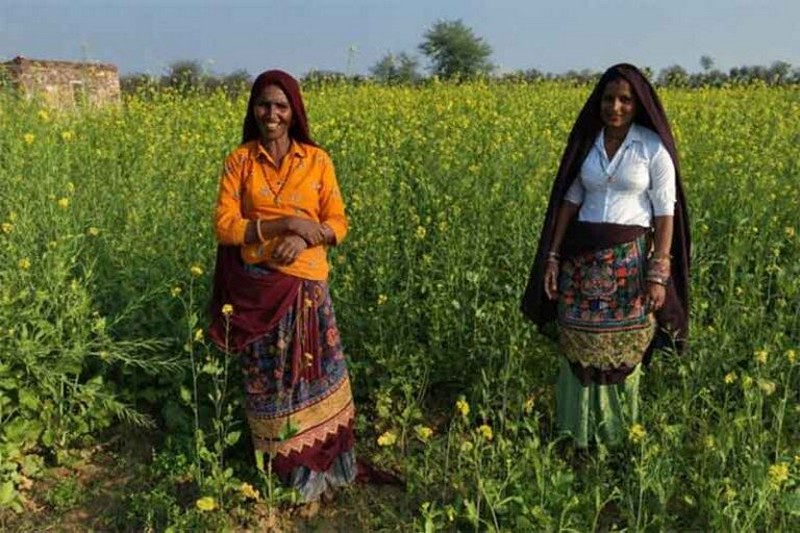
When the word “farmer” is spoken, what image comes to mind? For most people, it is a man holding a plough and gazing hopefully at the sky. This image is so deeply ingrained that even when women toil in the fields day and night, they are rarely recognised as farmers. They sow seeds, pull weeds, pick cotton, tend livestock, and store grain, yet their identity remains confined to that of a “labourer” or a “helper.” This is not merely a social oversight; it is a long-standing injustice, and the price is being paid by the nation’s food security.
Anthropologists tell us that the origins of agriculture can be traced to women. Thousands of years ago, women identified, preserved, sowed, and nurtured seeds, laying the foundations of agricultural civilisation. Today, millions of women in India carry forward that legacy. Nearly 80 percent of rural women are engaged in agriculture, performing around 70 percent of all agricultural tasks. Their contribution accounts for 75 percent of crop production, 79 percent of horticulture, and as much as 95 percent of animal husbandry and fisheries.
According to the Periodic Labour Force Survey 2024, women now constitute more than 42 percent of India’s agricultural workforce. In 2017, the figure was only 24.8 percent, meaning that the number of women working in agriculture has nearly doubled in less than a decade. Yet this growing participation has not translated into recognition. Responsibilities have increased, but identity has remained elusive.
Only 12.8 percent of landholdings in India are registered in women’s names, while nearly half of all women working in agriculture receive no remuneration. Over the past eight years, the number of unpaid women workers in agriculture has risen from 2.36 crore to 5.91 crore. This is not merely alarming; it reflects a profound national failure.
The situation in Maharashtra is particularly stark. As many as 88.46 percent of rural women in the state work in agriculture—the highest proportion in the country. Yet more than 90 percent of them do not own any agricultural land.
A survey conducted by the Indian Council of Agricultural Research (ICAR) across nine states found that women perform nearly 75 percent of agricultural activities, including sowing, weeding, harvesting, livestock care, grain processing, and seed preservation. Yet they hold less than 14 percent of agricultural land. According to the Agricultural Census 2015–16, women owned 13.87 percent of landholdings, and a decade later, the figure has barely changed. Policies come and go, speeches are made, and announcements are issued, but land rights remain largely beyond women’s reach.
Even in Telangana, which records the highest share of women landholders in southern India, women own only 21.5 percent of agricultural land. In western, central, and eastern India, the proportion falls below 13 percent.
Without land ownership, there is no 7/12 extract, and without a 7/12 extract, access to government schemes becomes difficult. This vicious cycle traps millions of women. Of the 9.35 crore beneficiaries registered under PM-KISAN, only 2.15 crore are women. Crop insurance requires land records, bank loans demand proof of ownership, and access to many forms of government assistance depends on official registration. Women are often excluded at the very first stage.
Banks frequently insist on a man’s signature for loans, insurance schemes require land certificates, and access to market information depends on networks and resources from which women are systematically excluded.
The wage gap adds another layer of inequality. According to the Food and Agriculture Organization (FAO), women agricultural labourers earn only 78 paise for every rupee earned by men. In India, women agricultural workers often receive barely ₹200 per day. Whether under the scorching summer sun, in the monsoon mud, or during freezing winter mornings, women remain constantly at work, yet their labour is consistently undervalued.
Even among the 13–14 percent of women who own land, only about half derive income from farming. For many others, their labour is effectively assigned no value.
Social anthropologist A.R. Vasavi of Karnataka has described the gendered division of agricultural labour with clarity. Men generally perform tasks such as ploughing, sowing, and spraying, while women undertake labour-intensive work such as harvesting and livestock care. Since Independence, technological innovations—tractors, irrigation systems, and mechanisation—have largely focused on reducing men’s labour. Little attention has been paid to easing the burden of tasks traditionally assigned to women, such as weeding, transplanting, and cotton picking. Women’s labour has long been treated as if it does not exist.
Soma K.P., founder of the Mahila Kisan Adhikar Manch (MAKAAM), points out that even when men migrate to cities for employment, ownership and decision-making powers over agricultural land often remain with them. Women may single-handedly manage farms, but they are still denied recognition as farmers. When crops fail or drought strikes, compensation is often paid in the name of men who may no longer even reside in the village. Widows who continue farming after the death of their husbands frequently struggle to access government support.
Women spend an average of 14 hours each day combining agricultural work with household responsibilities. During harvest seasons, this rises to 16 hours. Much of this labour remains invisible in economic calculations. Globally, unpaid domestic labour performed by women and girls contributes an estimated $10.8 trillion to the economy, yet it receives neither wages nor recognition. Because agricultural work is intertwined with household and care responsibilities, surveys often fail to capture women’s actual contribution accurately.
Climate change has added another burden. Women-led farming households lose an estimated $37 billion annually due to heat stress and another $16 billion because of floods. For every one-degree Celsius increase in temperature, the income of women-headed households declines by 34 percent compared with male-headed households.
Research among paddy farmers in Kerala’s Palakkad district found that women face skin diseases, heat stress, and waterborne illnesses because of prolonged exposure to harsh working conditions. The impacts of climate change fall disproportionately on women because they often lack access to protective technologies, insurance, and institutional support.
According to the World Bank, women farmers are 20 to 30 percent less productive than men. However, this difference reflects unequal access to irrigation, technology, and extension services rather than differences in ability or skill.
India’s Hindu Succession (Amendment) Act of 2005 granted daughters equal rights in ancestral property. But laws on paper do not automatically translate into rights in practice. Social pressure, family expectations, and fears that land may pass to “outsiders” often compel women to surrender their claims. Even when land is registered in women’s names, the holdings are generally smaller and of poorer quality than those owned by men.
In 2012, Prof. M.S. Swaminathan introduced the Women Farmers’ Rights Bill in the Rajya Sabha, proposing the issuance of Women Farmer Certificates. However, the bill lapsed in April 2013. Organisations such as the Mahila Kisan Adhikar Manch and the Gorakhpur Environmental Action Group campaigned for years, but their demands received little attention from policymakers.
The United Nations has declared 2026 the International Year of Women Farmers. According to Máximo Torero, Chief Economist of the FAO, progress in women’s empowerment has stalled, and the cost of inaction is immense. The initiative focuses on four pillars: land ownership, access to credit, technology, and training.
Against this backdrop, Maharashtra has offered a measure of hope. Chief Minister Devendra Fadnavis has announced that the Maharashtra Women Farmer Empowerment Bill, 2026, will be introduced during the monsoon session of the state legislature. The proposed legislation seeks to provide women with independent legal recognition as farmers and improve their access to credit, technology, markets, and government services.
Fadnavis noted that women contribute more than 81 percent of agricultural labour in Maharashtra, yet most policies remain male-centric and many welfare benefits are tied to land ownership. The bill is expected to cover landless women farmers, tenant farmers, agricultural labourers, livestock keepers, and migrant workers.
If enacted effectively, the legislation could represent a historic shift. For the first time, women could obtain legal recognition as farmers even without possessing a 7/12 extract. Such recognition would improve their access to institutional credit, water rights, insurance, and government support. In households devastated by farmer suicides, women often shoulder the entire burden of survival. For them, a farmer certificate would not merely signify justice; it would be a necessity.
Yet legislation alone will not be enough. The distance between laws and implementation remains wide. Women’s names must find their place in land records, gram panchayats, banks, and agricultural offices. At the heart of the problem lies a persistent assumption—that women’s labour is auxiliary rather than primary.
This assumption must be rejected. The mother, sister, and wife who works in the fields is not merely helping a farmer; she is a farmer. She deserves the same rights, recognition, and dignity accorded to any male cultivator. Only then can the immense value of her labour finally be acknowledged.
Vikas Parashram Meshram is a journalist
15 Jun 2026
Source: countercurrents.org