
By Abdullah al-Ahsan
Introduction
Intra-Muslim conflict has always been there in history but the rise of the group called “Islamic State of al-Iraq and al-Sham” (ISIS) or Da’esh in Arabic, also known as Islamic State of Iraq and Levant (ISIL) or simply Islamic State (IS) is phenomenal and paradoxical. The group seems to be opposed to all other Islamic groups as well as all minorities in Muslim countries, and yet they claim to stand for Islamic rule in the form of caliphate.
In international relations, it has put the United States, Russia, and Iran, on the same boat—a scenario completely inconceivable a couple of decades ago. They seem to love attracting international attention by deliberately creating intimidation and terror. Dangerously, the group seems to motivate some Muslim youth born and brought up in Western democracies.
How has the Muslim community reached to such a catastrophic state of affairs? The entire Muslim community has come under international pressure due to the rise of this group, and naturally due to global communication growth, these developments have made impacts on contemporary global affairs.
Recently the United Nations Security Council (UNSC) has adopted a number of resolutions (2235, 2249 and 2254) recommending measures to combat international terrorism in connection with Syria. Earlier, in a conference on “Countering Violent Extremism” President Obama has called for collective international action to confront this threat (February 17, 2015). Graham Fuller, a former CIA official, immediately responded to President’s call in a blog saying, “Muslims must themselves be the ultimate force against ISIS.”
Fuller is right, because outside interference would complicate this already complex matter further. But can the Muslims resolve their internal conflicts internally? Can Qur’anic teachings on the subject play any role in resolving those conflicts? Can the Organization of Islamic Cooperation or the OIC, the only political institution that has brought most nation-states under one political platform, undertake challenges of internal conflicts and resolve them on the basis of Qur’anic teachings?
This chapter first highlights OIC’s achievements in resolving intra-Muslim conflicts ever since its establishment in 1969 and then it analyzes the question of the rise of Da’esh in recent times and recommends a realistic method of addressing it.
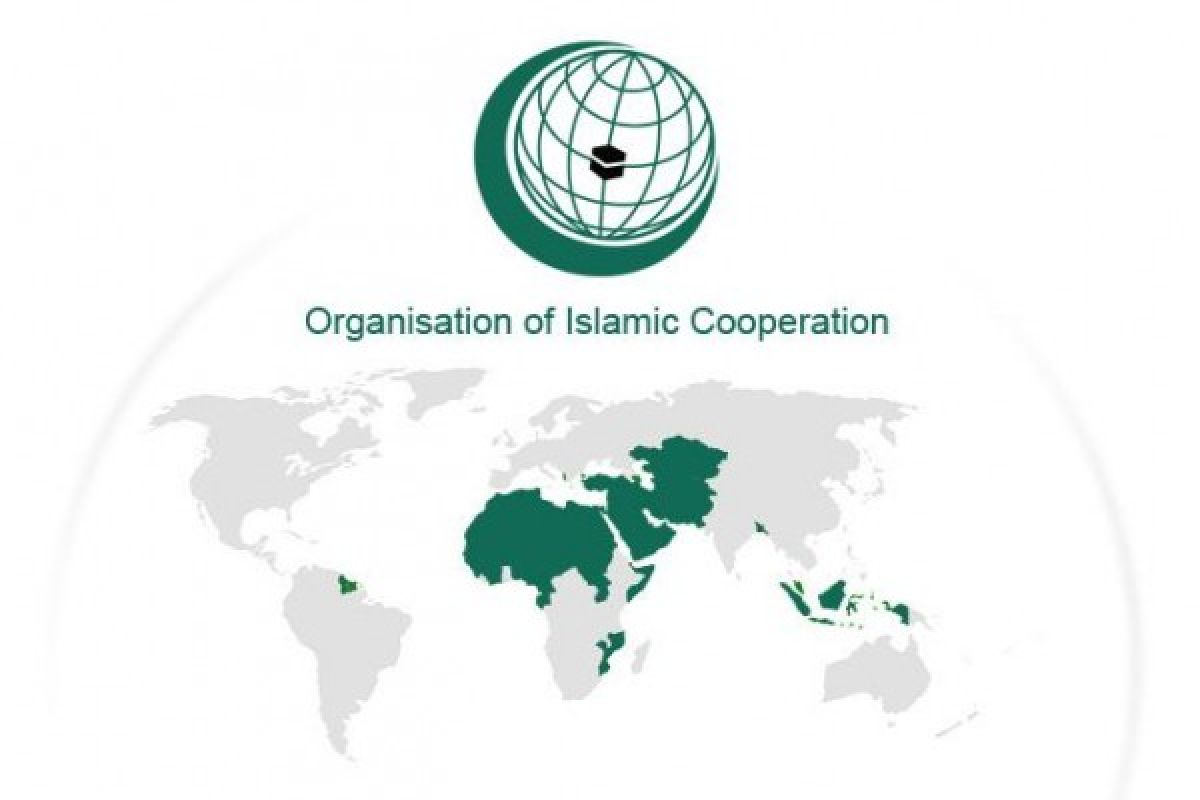
The OIC, formerly known as the Organization of Islamic Cooperation, was founded in a Cold War atmosphere to achieve cooperative developments among member states. Fifty-seven independent and sovereign nation-states, mostly with Muslim majorities, joined for “promoting and consolidating the unity and solidarity among the Member States.”
Interestingly, the OIC legitimizes its foundation citing Islamic teachings. This makes the OIC a unique political institution in modern times that deals not only with sovereign nation-states that are outcome of modern European thought, but also relates itself with the religious and traditional universal faith of all Muslims. It has also involved Muslim international NGOs in its activities.
This institution has become particularly relevant in the context of Da’esh’s demand for the revival of the caliphate—an institution that has historically claimed loyalty of all Muslims.
It is for these reasons we have chosen the OIC to examine the questions of unity and conflicts among Muslim in the world today and study whether institutions such as the OIC could play any significant role in resolving conflicts within Muslim societies today.
However, examining the rise and function of Da’esh would pose difficulty in treatment of non-state entities. The OIC is composed of nation-states while Da’esh is a non-state body without any known structure or background. But again, in our view, there is no other institution that could undertake activities encompassing Muslims all over the world.
Since its establishment, the OIC has witnessed many conflicts among member states. In recent years, situation in a number of Muslim countries have deteriorated to the extent that some observers are portraying many OIC member states as failed states.
This led the OIC to establish in March 2013 a specialized component called “Peace, Security and Mediation Unit (PSMU) at the OIC General Secretariat in Jeddah, Saudi Arabia. It declared that, the PSMU initially would focus on its capacity building, after which it would be expected to function principally through monitoring current and potential crisis situations to identifying and analyzing major root causes of conflicts and determining means to resolve them.”
In order to promote task further, the OIC established a Wise Persons Council (WPC) with the aim of identifying “mechanism for conflicts resolution and peace building, strengthening the role of the Organization in the field of mediation and preventive diplomacy.”
In light of recent developments in many Muslim countries where civil unrests are on the rise, this step by the OIC is very significant.
Interestingly, even before the establishment of this office conflicts have occurred among member states and the OIC has been engaged in mediation efforts. How has the OIC addressed these conflicts? Since the OIC claims its legitimacy on Islamic ideas, we shall examine how it has made use of Qur’anic guidance on the subject?
In this paper we shall examine the role of the OIC in resolving conflicts among member countries and extend this study to scrutinize OIC’s potential role in tackling the rise of extremism within the community. The recent discreet brawl between Iran and Saudi Arabia, which according to many observers threatens the very foundation of the Muslim community (Ummah), is also relevant to our discussion here.
We shall now examine OIC’s potential role on this longstanding conflict.
PLO—Jordan Conflict
The first internal conflict that the OIC encountered was the conflict between the PLO and Jordan in 1970. The PLO was not a regular member of the OIC at that time, but was an emerging force against the Israeli occupation of Palestine representing a significant segment of the Palestinian population.
Jordan, however, had accommodated a huge number of Palestinian refugees and claimed to be the legitimate political representative of the Palestinian people. On the other hand, the PLO at that time had a revolutionary approach to confront Israel, while Jordan was more pragmatic in dealing with Israel.
This difference in approach brought the two parties into a direct armed conflict in 1970. An understanding of the conflict demands some references to recent history of the area.
The establishment of the state of Jordan can be traced to the First World War period in the region. The British defeated the Ottoman sultan with the support of some local tribesmen under the leadership of Sharif Hussein who came to prominence as the representative from the Hijaz to Ottoman parliament.
In 1921, his son Abdullah was installed as the Amir of Amman with a grant of ₤5000 subsidy by the British. The British also helped Abdullah to create an army and with the British approval in 1946 he was declared king of the area called Trans-Jordan.
In recognition King Abdullah played a passive role in the British effort to establish the state of Israel in the area. He also strongly opposed the Arab League proposal of creating the state of Palestine in 1948. Instead, he formally declared the creation of the Hashemite Kingdom of Jordan in 1949.
Israel found an argument that no Palestinian nationhood had existed and Jordan was the nation of Palestinians where many Palestinians took refuge after 1948 war. In 1951, Abdullah was assassinated by a Palestinian gunman. Most Palestinians were irritated at Abdullah’s role in creating the state of Israel in the area.
Following the 1967 war, many more Palestinians took refuge in Jordan. Some of them wanted to continue their struggle against the Israeli occupation of their homeland, and attempts were made to use Jordan as their base to attack Israeli targets.
On its part, Jordan was not willing to let Palestinians use its land. In the process, the differences between Jordanian and Palestinian identities were becoming clearer.
By then, the Palestinians had formed the Palestine Liberation Organization (PLO) to streamline their struggle against Israeli occupation. By 1970, the Palestinian militants and the Jordanian armed forces fought a number of skirmishes, and by the end of the year the conflict reached new heights.
It was at this juncture that King Faisal of Saudi Arabia and President Abdul Nasir of Egypt intervened using the platform of the OIC and the Arab League.
The conflict was resolved when Jordan renounced its desire to represent the Palestinians and the PLO agreed to move out of Jordan. Palestinian nationalism triumphed and the PLO moved its office to Lebanon. Both parties received specified roles in Palestinian politics.
The PLO gradually received international recognition as the sole representative of the Palestinian people. In a resolution, the OIC expressed its appreciation for the efforts of Egypt and Saudi Arabia in seeking to reconcile two of its members.
Almost no information on the process of mediation was made public, but from the OIC resolutions on the subject, it was clear that Egypt and Saudi Arabia used their good offices to reconcile between the two conflicting parties.
In a resolution the OIC noted the need for coordinated efforts by both the Kingdom of Jordan and Palestine Liberation Organization.
Clearly the personalities of King Faisal of Saudi Arabia and President Abdul Nasir of Egypt positively played the most significant role in the negotiation. Both leaders were genuinely concerned about the Palestinian problem, and conflicting parties were convinced about their sincerity. As a result, the conflict was resolved to the satisfaction of both parties.
Bangladesh—Pakistan Conflict
The OIC encountered another challenge among “brotherly Muslim peoples” almost immediately after its birth.
In 1971, a civil war broke out in Pakistan between Bengali-speaking East Pakistanis and the people of West Pakistan. In resolving this conflict, the OIC played a very vital role.
The conflict between the two countries originated when these two entities constituted one independent and sovereign nation-state between 1947 and 1971.
Muslims from the extreme western and extreme eastern parts of the British India jointly fought against the British colonial administration and the anti-Muslim Indian nationalism.
After independence, however, the military and bureaucratic elite, who came mainly from western Pakistan, gained control over Pakistani politics, and deprived the common people of their legitimate rights.
Freedom minded East Pakistanis were the first to rise against the military-bureaucratic oligarchy of Pakistan.
As early as 1948, it was reported in the Constituent Assembly Debates that, “a feeling is growing among the Eastern Pakistanis the Eastern Pakistan is being neglected and treated merely as a colony of Western Pakistan.”
Soon, East Pakistani representatives in the Constituent Assembly identified two issues of disagreement with West Pakistani representatives. East Pakistanis felt that, by declaring Urdu as the only official language of Pakistan, the importance of their native language (Bengali) was being diluted.
Some also believed that attempts were being made to transform the numerical majority of the Bengalis in Pakistan to a minority status.
The claim for Urdu being the only national language was supported by the fact that Urdu was the only language that was generally understood in all regions, while it was not the language of any particular region. On the other hand, the argument of the supporters of the Bengali language was that Bengali was the language of the majority of the population of Pakistan and in many respects was a more developed and internationally recognized language than Urdu. Therefore, many Bengalis expected their language to be one of the official languages of Pakistan. Most leaders, however, seemed to have been more concerned about the unity and stability of the new country since it consisted of two separate regions divided by an enemy territory. They believed that a linguistic division would only set the two geographically divided territories further apart. There was little discussion in the Constituent Assembly on the question of language and the bureaucracy-dominated central government attempted to resolve the issue by coercive methods.
This eventually led to a civil war in 1971. During the civil war, the OIC Secretary General visited both parts of Pakistan in an effort to find a political solution to the conflict. The Secretary General was accompanied by representatives from Kuwait and Iran. When the OIC delegation attempted to visit India, where most of the leaders of de facto Bangladesh had taken political refuge, the Indian authorities prevented them on the grounds that the OIC had earlier expelled the Indian representative from its First Islamic Conference in 1969. The mission failed.
The OIC renewed its effort to mediate, now between the two independent Muslim nations, after Bangladesh became officially independent at the end of 1971 following the military defeat of Pakistani armed forces. The general approach of the OIC clearly indicated its commitment to democratic values. In a resolution, the OIC decided to entrust the Secretary General with the duty of contacting prime ministers of both countries for a meeting between them and a delegation of six members, of the Islamic Conference of Foreign Ministers consisting of Algeria, Iran, Malaysia, Morocco, Somalia, and Tunisia.
The OIC demanded the meeting to bring about agreement, conciliation, and brotherhood between the two elected leaders in an atmosphere of Islamic brotherhood, freedom, and dignity, as well as to study ways and means of assisting both the leaders to solve the problems.
The Secretary General first attempted to arrange a meeting between the Bangladeshi and Pakistani leaders in Makkah during the annual pilgrimage, but the former declined to sit until the latter officially recognized Bangladesh as an independent country. The Pakistani leader, on the other hand, was experiencing public demonstrations opposing the idea.
He, however, took the advantage of calling for an OIC Summit Conference to discuss the outcomes of the 1973 war between Israel and a number of Arab countries. The Second Islamic Summit Conference was called in Lahore in February 1974, and in the process the Pakistani leader recognized Bangladesh as an independent nation and invited its leader to the conference.
Bangladesh responded positively, and since then both Bangladesh and Pakistan have been active participants in OIC activities. In the process the OIC gained legitimacy in the eyes of many Muslims. However, in recent years, Bangladesh–Pakistan relationship has again deteriorated with a new Indian-backed government in power, but the OIC has not taken any notice of the conflict.
Iran—Iraq War
The OIC acted quickly in a mediating effort between Iran and Iraq when the hot war began between them in the early 1980s. Foreign Minister’s Conference of the OIC met in an extraordinary session in New York during a UN General Assembly. A goodwill mission, headed by the Pakistani President Ziaul Haq, was formed “in the hopes of bringing the warring parties to negotiations.” Ziaul Haq immediately visited Tehran and Baghdad to persuade the leaders of the two countries to settle their dispute peacefully. Ziaul Haq was joined by the PLO leader Yasser Arafat.
Their attempts failed.
The OIC continued with its efforts during the Third Islamic Summit Conference, held in Makkah/Taif in January 1981. The mission was reshuffled and renamed: under its new name—the Islamic Peace Committee now headed by the Guinean Revolutionary leader Ahmad Sekou Toure was composed of the heads of governments of Bangladesh, the Gambia, Pakistan, the PLO, Senegal, and Turkey.
After the death of President Sekou Toure in 1983, the Gambian President Dawda Kairaba Jawara was entrusted with the leadership of the Islamic Peace Committee. The Summit Conference called both the parties to cease hostilities and declared that the OIC had agreed to “form an Islamic emergency force entrusted with the task of ensuring the implementation of the ceasefire, should the need arise.”
Iran had already announced its decision to boycott the conference on the grounds that it would never sit with the representative of what it called the “aggressor Iraqi regime.” The Iraqis, on the other hand, not only tried to convince the Summit Conference that Iran was responsible for the conflict, but also succeeded in getting the OIC’s approval to host the following Foreign Minister’s Conference in Baghdad.
The Islamic Peace Committee, however, went on with its efforts to bring the war to an end. The powerful Committee visited both capitals, and made a number of proposals based on the principle of nation-state sovereignty. It identified that the Shatt al-Arab waterway was the main issue of disagreement between the two countries. It, therefore, proposed that the decision on the waterway be placed to a committee composed of OIC members acceptable to both parties; it also proposed to continue negotiations for peaceful settlement of other disputes between the two countries.
The Committee proposed a cease-fire date with a timetable for the withdrawal of Iraqi troops from Iranian territories. The Committee also proposed that the cease-fire and the withdrawal would take place under the supervision of military observers drawn from member countries of the OIC.
It urged both countries to exchange declarations of noninterference in internal affairs of the other country. The Peace Committee firmly affirmed that the “OIC countries will guarantee the observance by both sides of the commitments undertaken on the basis of the package peaceful settlement and, if necessary, maintain observers on both sides of international frontier for a certain period.”
Neither Iran nor Iraq paid much attention to these proposals. The Iranians demanded the OIC first, identify the aggressor in the conflict and punish them accordingly. And Iran wanted the OIC to do this without participating in its meetings.
Iraq, on the other hand, remained part and parcel of the OIC system. The 12th Foreign Minister’s Conference was already scheduled to be held in June, 1981 in Baghdad. The Iranians requested a neutral venue for the conference, but the request was rejected on the grounds that Iran had earlier boycotted the Third Islamic Summit Conference, which was held in Makkah/Taif, Saudi Arabia.
At the inaugural session of the 12th Conference of Islamic Foreign Ministers, the Iraqi President declared that “Iraq is relieved of any moral or legal responsibility for the continuation of the conflict: the responsibility lies squarely on the officials of Iran, for they have so far not exerted any serious and sincere efforts to halt the conflict and reach a peaceful, just and honorable settlement in this dispute.”
At the end of the conference, the OIC decided to make the statement of the Iraqi president a part of its official document because it contained “useful guidance for the Organization.” Thus, the OIC lost its credibility as a mediator. Yet the OIC continued its moribund efforts to bring an end to the war.
Background to Iran—Iraq Conflict
Some historians would like to trace the origin of the problem very early, but the historical differences in the relations between Arabia and Persia seem to have been exploited in the conflict between Iran and Iraq more than what they really were.
Realistically, however, the origin of the Iran–Iraq conflict should rather be traced in the twentieth century. Like Jordan, contemporary Iraq also was curved by the British colonial administration following the First World War.
In the process, certain communities such as the Kurds were denied statehood. Also the question of Shatt al-Arab waterway was not settled to the satisfaction of either Iran or Iraq.
As a result, the countries in the region took advantage of their relative strengths and the weaknesses of their neighbors to define their international borders.
In 1975, the former Iranian King Muhammad Reza Shah took the advantage of his cordial relations with the United States to “negotiate” a treaty with Iraq by adopting the Thalweg principle in Shatt al-Arab waterway, although traditionally Iraq had controlled the waterway. Since most of the waterway flows from Iraq, Iraqi leadership seemed to have accepted the treaty as an “interim solution” only.
Within years (February 1979) Iran witnessed an Islamic revolution; and that changed the perception of both countries on the issue. Iraq seemed to have found an opportunity to revise the 1975 treaty, for Iran now was explicitly against the United States, and therefore, had no military and diplomatic support from the US or any other Western powers that it had earlier enjoyed.
Iraq began to accuse Iran of provoking them and preparing the grounds for an all out assault. One pro-Iraqi author claimed:
Iran first launched a series of assaults on a number of cities within Iraqi territory … (then caused) the sudden explosion of a bomb at a peaceful gathering of students at the University of Mustansiriya in Baghdad on April 1, 1980. Very soon, this was followed by attempts of the lives of Tariq ‘Aziz, Deputy Prime Minister, and Latif Nasif Jasim, Minister of Culture and Information.
This claim clearly seemed to have been concocted as another author observed that the “total absence of any Iranian military preparation was unmistakably obvious in the first few weeks of the war.”
To demonstrate their point, Iraqi authorities arrested a Shi’a religious leader, Ayatullah Baqir al-Sadr and his sister accusing them of being involved in anti-state activities. Baqir al-Sadr reportedly died in an Iraqi prison a few weeks later. This created a heavy tension among the Shi’a population in Iran.
On their part, the revolutionary leaders in Iran seemed to have been busy consolidating the revolution; they were still fighting against whom they considered internal enemies of the state. At the same time, however, they continued with their rhetoric not only against the United States, but also began to raise their fingers against the regimes in most neighboring countries.
Iraq seemed to have taken full advantage of this situation. One observer summarizes the Iraqi perception before the war as follows:
- The Iraqi leadership believed that the regular Iranian armed forces were in disarray following the revolution, and they were in no position to defend the country.
- The Iraqi leadership wanted to take advantage of this situation of the Iranian revolutionary government to alter the 1975 agreement to reestablish total Iraqi sovereignty over Shatt al-Arab waterway, and also to take control over a number of islands in southern gulf.
- Iraq also believed that the people of the Iranian territory of Khuzistan, who spoke Arabic and which Iraq officially called Arabistan, would welcome an Iraqi “liberation” of their territory.
- The belief that Ayatullah Khomeini’s regime would collapse soon.
- The Iraqi regime also expected to become a regional power by championing the “Arab cause” after defeating Iran.
In public, however, Iraq justified the attack on Iran claiming that it was carried out in self-defense. In supporting its action, Iraq cited a case in international law saying that its behavior was “a necessity of self-defense, instant, overwhelming, leaving no choice of means and no moment of deliberations.”
Iraq had been building up its troops along the Iranian borders since April 1980. On September 4, 1980 the Iraqi president officially accused Iran of violating and bombing Iraqi territories, and dispatched troops to capture one of the islands in the Gulf, and on September 7, he sent a warning note to Iran on the subject.
The all-out formal Iraqi assault began on September 22, 1980. This background information is important for fair understanding of the conflict.
Other Mediation Efforts
We have already mentioned some unsuccessful mediation efforts on the part of the OIC. The Non-Align Movement also attempted to mediate in the conflict, but like the OIC its efforts were met with failure.
It has also been pointed out that the war at last ended through mediation by the United Nations. Let us now examine in further detail the way the issue was handled by international bodies.
The UNSC met 4 days after the official beginning of the war (September 26). Two days later it adopted Resolution 479 calling for a cease-fire, but the resolution lacked persuasive wordings to convince the warring parties to adhere.
In fact, as one observer has pointed out that, “during the first 6 years of the Iran-Iraq war, most of the actions of the Security Council varied between leaving things much as they were or making them worse.”
The Security Council even refused to use the term ‘war’ to describe the state of affairs between the two factions. It used the term ‘situation’, perhaps because it wanted to avoid “the Security Council’s responsibility under the UN Charter to determine if an aggression had occurred.” Under such circumstances, it would have to identify the aggressor, which it wanted to avoid.
Powerful members of the Security Council “concluded that their interests could best be served by letting the two regimes exhaust themselves on the battlefield.”
Resolution 479 also failed to call for Iraqi withdrawal from Iranian territories, which the UN Security Council normally performs under such circumstances. It may be pointed out that during the early days of the war, Iraq made significant gains in capturing Iranian territories. This indicates a clear bias in favor of Iraq by members of the Security Council.
What Went Wrong with OIC Attempts?
Why has the OIC failed to mediate between Iran and Iraq? In order to evaluate this question, one needs first to highlight the successes of the OIC in mediating between Jordan and the PLO, and between Bangladesh and Pakistan.
We have already pointed out that all OIC mediations succeeded only after military defeat of one of the warring parties. Therefore, one may suggest that the OIC succeeds only when the conflict has been resolved militarily.
One should, however, not underestimate the role of the OIC in cultivating brotherly relations between the two warring factions.
For, it was only after resolving the conflict between Jordan and the PLO that gradually the latter received world recognition as being the only legitimate representative of the Palestinian people.
In the case of Bangladesh and Pakistan, both countries became actively involved in international diplomacy. In the case of the Iran and Iraq, failure of military victory by any party might have been the main cause of failure of the OIC’s mediation effort. However the issue demands further assessment for a deeper understanding.
The nature of PLO-Jordan and Bangladesh–Pakistan conflicts were different from the Iran–Iraq conflict. As compared to the latter, the former two conflicts were not deeply rooted in history.
Jordan was curved as a nation-state by the British following the First World War in order to please one of the latter’s supporters during the war. The Palestinians never considered themselves as a part of the British created Jordan.
Also after the occupation of their lands by Israel, Palestinians became radical in regaining their lands from the occupiers, but Jordan never approved such radicalism. As a result, it was easy on the part of the arbitrators to develop working relations between the two warring factions.
Can the OIC Play Any Effective Role Now?
The overall situation in the Muslim world has deteriorated drastically in recent years. Decades of bad governance, corruption, pseudo-religiosity and misuse of ideas of democracy and progress have produced frustration among the common people.
On top of these internal quandaries, foreign intervention in Afghanistan, Iraq, and many other parts of the Muslim world in recent decades has become catalyst for the rise of extremist groups such as Al-Qaeda, ISIS, ISIL, or Da’esh.
These groups have become increasingly more extreme. The Muslim youth seems to have lost hope.
All the evidences suggest that the so-called war on terror has fuelled extremism and interestingly most extremist activists and suicide actors, according to most reliable studies, have not been known for their religious devotion.
Many of these activists happen to be recent converts to Islam. According to one study published in the science magazine Nature, “religion is not the trigger,” rather “resentment is the common ground” for the growth of extremism.
The study also suggests that, “terrorism breeds in the prison” and “in poor and neglected suburbs.” Perhaps these young men and women have only known hypocrisy and double standards in the name of democracy and human rights but have not been exposed to Qur’anic guidance and prophetic practices under similar circumstances.
In other words, the issue has many dimensions: while it demands cultivation of a good understanding of the Qur’anic guidance in life, it also demands serious undertaking of issues such as political injustice, insecurity, and hopelessness among the Muslim youth.
Since the Arab uprisings of 2011, the general situation has further worsened. The situation in Syria has particularly exposed the weakness of the Ummah.
The OIC seems to be aware of the gravity of the situation. In a statement in response to President Obama’s call, the Secretary General of the OIC has said, “Soul searching and looking into our inner individual, national, ideological, and religious self to identify that black hole within all of us is the beginning of our road to salvation.”
But what sort of soul searching would the OIC be undertaking? The conflict seems to have taken a sectarian formation and the OIC does not seem to have taken any lesson from the failure of Iran–Iraq conflict of the 1980s.
In the last Islamic Summit Conference (13th, held in Istanbul, 14–15 April 2016), the OIC has “deplored Iran’s interference in the internal affairs of the States of the region and other Member States including Bahrain, Yemen, Syria, and Somalia.”
Earlier Saudi Arabia established a 34 nation “anti-terrorism coalition” with the participation of a number of OIC countries. One may ask whether or not Iran is the only OIC member state interfering into internal affairs of other member countries.
OIC’s WPC, which met following the Summit Conference, did not ask any question about the rise of sectarianism within the Ummah.
Iranian-American academic Vali Nasr has argued that although Iranian revolutionary leader Ayatullah Khomeini “fashioned himself as pan-Islamic leader,” he “was dismissed by a growing number of Sunnis as a Shiite cleric.”
However, it would be unfair to suggest that most Sunni clerics were opposed to Khomeini’s approach toward Islamic unity, although many establishments oriented Sunni clerics did oppose Khomeini’s approach.
Surprisingly Nasr misses the point that following the Iran–Iraq war, the Iranian government continued to cultivate their line of thinking in other Muslim countries. As a result, there are now significant number of Shi’a population in countries such as Indonesia, Malaysia, Nigeria, and many other Sunni majority countries where almost no Shi’a existed before the Islamic revolution in Iran.
Nasr is also wrong in his assessment of Dae’sh: he thinks that “the rise of the Islamic State—a violent sectarian army that has fashioned itself as the sword of the Sunnis pointed at the heart of the Shiite world and the West.” Hasn’t the terrorist organization terrorized many Sunni populated areas including Istanbul and Gaza?
In other words, as the Nature article points out, one has to look for the rise extremism elsewhere, not in sectarian differences.
As for the OIC, the question is whether or not the OIC would have the courage to undertake the challenges that the Ummah faces today.
Challenges arise not only from internal soul searching, questions will also be raised about the role of external interference in the Muslim world.
Will the OIC be able to address those questions? Externally, the OIC must raise questions such as, are Afghanistan and Iraq better off following the UN and NATO interventions? Hasn’t extremism increased manifold since those interventions?
Could the OIC demand trials for those Western leaders who lied in the name of weapons of mass destruction and imposed a war on Iraq as a result of which almost million perished and millions became refugees?
Could the OIC demand trial in the International Court of Justice of Israeli leaders who frequently conduct massacres on the people of Gaza? These are relevant questions in the context of the rise of Da’esh.
These are necessary questions not only for determining relationship between Islam and the West, but also for intra-Muslim relations.
The OIC is best placed to address these issues. However, keeping in view the UN and NATO interventions in Afghanistan, Iraq, and more recently in Libya resulting in catastrophic consequences, the OIC may seek intervention of UN peace-keeping forces with active participation of Muslim countries.
Past experiences have not been encouraging. In 2001, Pakistan was coerced to join the US actions in Afghanistan. Pakistan carried out only what it was asked to do.
The OIC must raise the question in the current context—why Pakistan has become a target of more US drone attacks under the Obama administration in recent years. Are the drone attacks legal or moral? Shouldn’t the perpetrators be brought to justice?
As a member of the OIC and a country that has succeeded in generating hope among many Muslims in recent years, Turkey and Malaysia are better positioned to pursue a policy of empowering the OIC in addressing questions of conflict resolution and security.
If these questions are raised and treated on the basis of Qur’anic principles and freedom of expression is maintained in a transparent manner, the OIC may perform near-miracle in the world today.
Notes
Vali Nasr, “The War for Islam.”
Graham E. Fuller, “Interpreting Islam to Muslims,” accessed on March 13, 2017.
See the OIC Charter.
Peace, Security and Mediation Unit (PSMU) at the OIC General Secretariat in Jeddah.
“OIC Operationalizes its Conflicts Resolution Mechanism.”
Organisation of Islamic Conference, Third Islamic Conference of Foreign Ministers, Resolution No. 1/3.
Salahuddin Ahmed, Bangladesh: Past and Present.
“Two Months after the Islamic Conference: Psychological Warfare, the one which is more Serious.”
Organisation of Islamic Conference, Third Islamic Conference of Foreign Ministers, Resolution No. 9/3.
Organisation of Islamic Conference, Third Islamic Summit Conference.
“Text: the OIC Peace Proposals.”
Organisation of Islamic Conference, Seventeenth Islamic Conference of Foreign Ministers.
Majid Khadduri, The Gulf War: The Origins and Implications of the Iraq–Iran Conflict.
Reference to the Battle of Qadisiya.
Discussion by Ami Aylon.
Majid Khadduri.
Gary Sick, “Trial by Error: Reflections on the Iran-Iraq War.”
Ibid.
Quoted in Ibid.
Gary Sick.
Ibid.
Ibid.
UN Security Council records.
The Texts of Letters Exchanged between the Presidents of the Islamic Republic of Iran and the Republic of Iraq 1990.
Flamur Vehapi, “Conflict Resolution in Islam: Document Review of the Early Sources.”
Majid Khadduri.
Gary Sick.
Ami Aylon.
Declan Butler, “Terrorism Science: 5 insights into jihad in Europe.”
Organisation of Islamic Conference statement.
Organisation of Islamic Conference, Thirteenth Islamic Summit Conference.