
By Junaid S Ahmad
Empire does not negotiate when it becomes wise. It negotiates when it is bruised, cornered, humiliated, and running out of profitable lies.
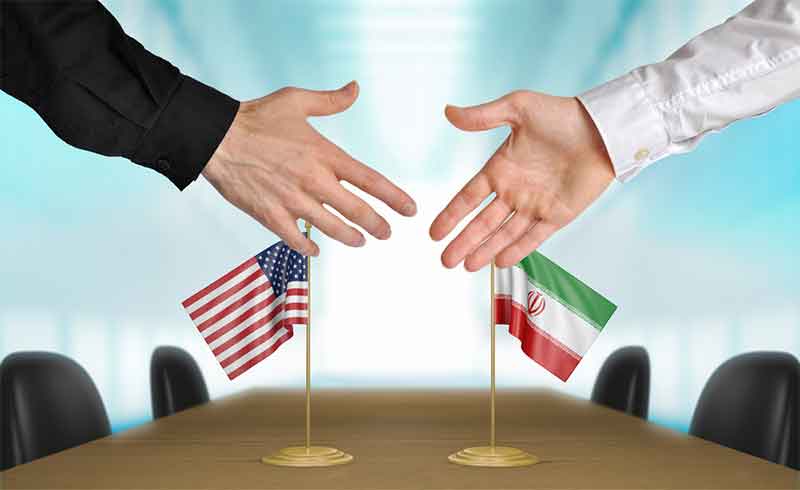
That is the truth beneath the sudden theater of a U.S.–Iran peace framework moving toward signature under Pakistani mediation. Washington has not discovered humility. Trump has not stumbled into moral clarity. The American imperium, after decades of confusing aircraft carriers with political intelligence, has collided with the oldest fact in West Asia: civilizations are not bombed into obedience because think-tank clerks in Washington mistake PowerPoint maps for history.
Pakistan’s role is not accidental. It is geography finally collecting its debt. Bordering Iran, tied to the Gulf, partnered with China, embraced by Washington, armed with nuclear weapons, and civilizationally close enough to understand that dignity is not a slogan in this region, Pakistan was never irrelevant. It was merely ruled by elites trained to behave as if relevance required foreign permission.
That permission slip has expired.
Two forces have pushed Pakistan toward the center. First: Israel’s regional madness. Tel Aviv’s campaign of unrestrained violence has not only horrified Arab publics; it has frightened Arab rulers. Gulf monarchies long sheltered under the American umbrella now see the hole in it: it protects Israel’s impunity better than Arab stability. U.S. bases may deter Iran, flatter princes, and anger citizens, but they cannot restrain Washington’s favorite arsonist. When the patron’s client becomes the region’s chief fire, even monarchs start shopping for new insurance.
Pakistan, with its massive military and nuclear capability, suddenly looks less like a poor cousin and more like a possible guarantor. The Gulf does not love Pakistan. Monarchies do not love; they hedge. But in the age of Israeli recklessness, Pakistan offers something Washington increasingly cannot: a Muslim nuclear state whose security relevance cannot be dismissed with a State Department adjective.
Second: India’s moral shrinkage. Modi’s Hindutva state has turned a once-advertised postcolonial progressive democracy into a subcontractor for the global architecture of Islamophobia. Delhi sits in BRICS while emotionally auditioning for Likud. It invokes the Global South while embracing colonial violence. It speaks the language of sovereignty while endorsing the logic of occupation. This is not nonalignment; it is colonial mimicry dressed in diplomatic sophistication.
For Pakistan, India’s bankruptcy opens space. Delhi’s embrace of Israel has damaged its standing across Muslim West Asia and much of the decolonial world. Islamabad, if led by serious people, could occupy the moral terrain India has abandoned. But seriousness in Pakistan’s ruling elite remains a rare imported commodity.
The decisive factor, however, is American defeat. Let us not anesthetize it with diplomatic perfume. Washington did not come to the table because it achieved its objectives. It came because its objectives became incoherent, costly, and embarrassing. Had America been winning, it would have continued for years, chanting the usual imperial lullabies: pressure, deterrence, freedom of navigation, rules-based order. It negotiates because the alternative is further exposure: more strategic bleeding, more domestic backlash, more proof that America can still destroy but can no longer command.
Trump now faces the trap he built: MAGA or MIGA. Make America Great Again, or Make Israel Great Again. Netanyahu understands the danger. A settlement that leaves Iran sovereign, unbroken, and politically intact is a nightmare for Israeli maximalism. Israel will try to sabotage it through provocation, lobbying, media hysteria, and the familiar blackmail by which every Israeli insecurity is inflated into a global emergency.
That is why Pakistan’s mediation matters. A durable settlement could begin a regional order less dependent on American tantrums and Israeli vetoes. It could advance the real decolonization: not flags, anthems, and summit speeches, but the decolonization of security, diplomacy, and imagination. West Asia does not need another imperial manager. It needs sovereign states capable of denying Washington and Tel Aviv the right to decide who may breathe strategically.
Here, as always with Pakistan, tragedy enters. The objective conditions are magnificent; the subjective forces are miserable. Pakistan has geography, military weight, China, the Gulf, Iran, and nuclear deterrence. What it lacks is an elite worthy of the hour. Its establishment remains Westoxicated, comprador, predatory, and intellectually colonized. It dreams of sovereignty in public and bargains away dignity in private. It speaks of Muslim honor while disciplining its own people with colonial instruments polished for domestic use.
A state that mediates between Washington and Tehran while suffocating democracy at home is not a liberator. It is a contradiction trying to pass itself off as destiny.
Pakistan now stands before a historic opening. It can become the hinge of a new West Asian order, or the stenographer of someone else’s retreat. It can help bury the old imperial system, or rent itself again as corridor, barracks, errand boy: nuclear-armed, strategically placed, and tragically misruled.
The deal may be signed in Switzerland. But the real document is being drafted in Islamabad. Its question is brutal: will Pakistan finally inhabit its destiny, or will small men squander it yet again?
15 June 2026
Prof. Junaid S. Ahmad teaches Law, Religion, and Global Politics and is the Director of the Center for the Study of Islam and Decolonization (CSID – https://csidpk.org), Islamabad, Pakistan. He is a member of the International Movement for a Just World (JUST – https://just-international.org/), Movement for Liberation from Nakba (MLN – https://nakbaliberation.com/), and Saving Humanity and Planet Earth (SHAPE – https://www.theshapeproject.com/).