
By Junaid S. Ahmad
History has a nasty sense of irony. In 1971, Pakistan helped carry secret messages between Washington and Beijing so that an anxious American empire could welcome China into the diplomatic architecture of the modern world. In 2026, Pakistan is again carrying messages between Washington and a power orbit shaped by Beijing — only this time America is not opening the door with strategic confidence. It is being marched to it, sulking, by the logic of its own decline.
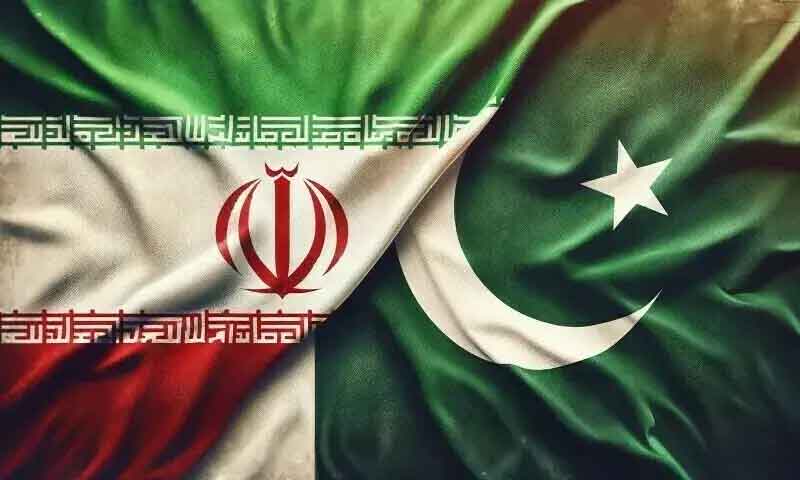
That is the real meaning of Pakistan’s role in the ceasefire diplomacy around the U.S.-Israeli war on Iran. The sentimental version says Islamabad rose unexpectedly as a peacemaker. The flatteringly patriotic version says Pakistan rediscovered its historic vocation as a pivot state. The more accurate version is less romantic and more revealing: Pakistan functioned as the courier of a transition in world order. It was not the author of the new script. It was the familiar intermediary through which the new balance of power announced itself.
The comparison with 1971 is irresistible. Then, Pakistan under Yahya Khan — a military ruler with a wretched domestic record and a fine reputation among foreign patrons for being useful — served as the discreet channel through which Henry Kissinger reached China. The United States approached that opening with something close to strategic enthusiasm. It had decided that admitting China into the geometry of great-power diplomacy served American interests. Washington was still imperial enough to choose adaptation before compulsion.
Today the choreography is eerily similar, but the mood has inverted. Pakistan, once again fronted by a military strongman whose legitimacy at home is inversely proportional to his value abroad, has been used as the go-between in a crisis whose real diplomatic center of gravity lies farther east. This time, however, the United States is not ushering China into the system. It is confronting the much grimmer realization that the system no longer belongs to it in the old way.
The war on Iran exposed that truth with unusual cruelty. Forty days of threats, bombardment, and theatrical ultimatums did not produce Iranian capitulation. They produced strategic turbulence: energy panic, maritime disruption, regional escalation, and a steadily shrinking margin for American bluff. Empires love the language of red lines because it allows them to confuse vocabulary with leverage. But leverage is not what one tweets at midnight. It is what remains when the other side declines to tremble.
That is why the ceasefire mattered less as a peace document than as an x-ray. It showed that Washington could still destroy, certainly; that is rarely the problem. The problem is that destruction no longer guarantees submission. The old imperial formula — threaten annihilation, impose terms, call it order — now yields diminishing returns. Iran, bruised but unbowed, did not enter diplomacy because it suddenly discovered trust in Trumpian statecraft. It entered because a broader architecture of assurance emerged around it, and at the center of that architecture was not Pakistan’s eloquence, nor America’s goodwill, but China’s weight.
This is the crucial point. China does not ordinarily rush to play impresario in hot wars. Its preference is structural influence, not melodrama; ports, corridors, markets, and slow positional gains rather than the pyrotechnics of coercive diplomacy. When such a power moves more assertively in an active conflict, one should assume the stakes have exceeded the ordinary. And they had. A prolonged war with Iran threatened shipping lanes, energy flows, regional investments, and the wider Asian commercial ecosystem in which China is now the indispensable gravitational force. Beijing’s intervention, by all credible indications, was decisive precisely because it offered something Washington could not: reassurance that was not instantly interpreted as a prelude to betrayal.
Pakistan’s role, then, was both important and humbling. Important, because geography, military channels, and political access still make Islamabad useful in moments when rival powers need a Muslim-majority intermediary with links into multiple camps. Humbling, because usefulness is not sovereignty. Pakistan did not impose a settlement on the warring parties. It facilitated a transition already being authored by larger forces. It was, to borrow the old diplomatic euphemism, a valued conduit. One should not confuse the envelope for the letter.
Still, even envelopes can tell you who now writes history. In 1971, the United States used Pakistan to reach a rising China it wished to integrate. In 2026, the United States used Pakistan to navigate a crisis in which China had become too consequential to ignore. That is not a sequel. It is a reversal.
The first opening of China was undertaken by an America still confident enough to redesign the board. The second has arrived through a ceasefire brokered in the shadow of American exhaustion, Israeli overreach, Iranian resilience, and Chinese indispensability. Washington came to this diplomacy not with the swagger of a system-maker, but with the irritated posture of a declining power forced to negotiate with realities it did not choose.
And Pakistan, faithful to its familiar function, stood once more in the corridor between empires: not quite sovereign, never quite irrelevant, carrying papers for history while pretending to host it.
About the Author
Prof. Junaid S. Ahmad teaches Law, Religion, and Global Politics and is the Director of the Center for the Study of Islam and Decolonization (CSID), Islamabad, Pakistan. He is a member of the International Movement for a Just World (JUST – https://just-international.org/), Movement for Liberation from Nakba (MLN – https://nakbaliberation.com/), and Saving Humanity and Planet Earth (SHAPE – https://www.theshapeproject.com/).
Contact & Links
Junaid S. Ahmad
Professor of Law, Religion, and Global Politics
Director, Center for the Study of Islam and Decolonization (CSID)
Islamabad, Pakistan
@Academicatarms
https://wp.nyu.edu/pakistan_academics_collective
https://www.theshapeproject.com
9 April 2026