Just International

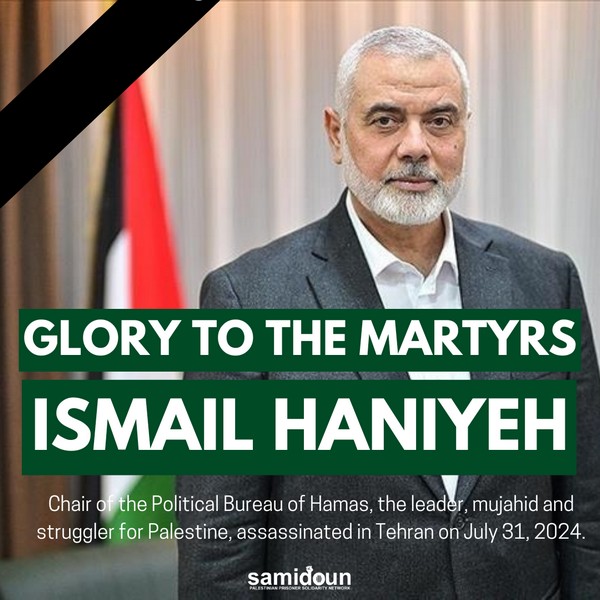
Glory to the martyr: Ismail Haniyeh, Palestinian leader, assassinated in Zionist attack

Samidoun Palestinian Prisoner Solidarity Network joins the entire Palestinian national movement in condemning the assassination, mourning the martyrdom and saluting the life of the leader, Ismail Haniyeh, Abu al-Abed, the chair of the Political Bureau of Hamas, the Palestinian Islamic Resistance Movement, in Tehran, Iran. 

Haniyeh was in Iran to attend the inauguration of newly elected Iranian president Masoud Pezeshkian and also met with Imam Khamenei today, alongside Ziyad Nakhaleh of the Palestinian Islamic Jihad Movement, and was assassinated along with his bodyguard and companion, the martyr Wassim Abu Shaaban, in the residence where he was staying by a “treacherous Zionist raid,” as Hamas stated in the movement’s first statement on the assassination.

The assassination policy of the Zionist regime has attempted to erase the leadership of the Palestinian people for over 76 years now. The names of the martyrs of assassination are great, shining figures of history. Ismail Haniyeh. Saleh al-Arouri. Abu Ali Mustafa. Fathi Shiqaqi. Ghassan Kanafani. Kamal Nasser. Abdel-Aziz Rantisi. Sheikh Ahmed Yassin. Abu Jihad. Mohammed al-Najjar. Basil al-Kubaisi. Tareq Izzedine. Samir Kuntar. Kamal Udwan. Imad Mughniyyeh. Sheikh Khader Adnan. Ibrahim al-Rai: A parade of martyrs on the road to the liberation of Palestine.

Ismail Haniyeh was assassinated as part of a comprehensive policy of the Zionist regime that aims to eliminate the leaders, spokespeople and revolutionary voices of the Palestinian liberation movement.

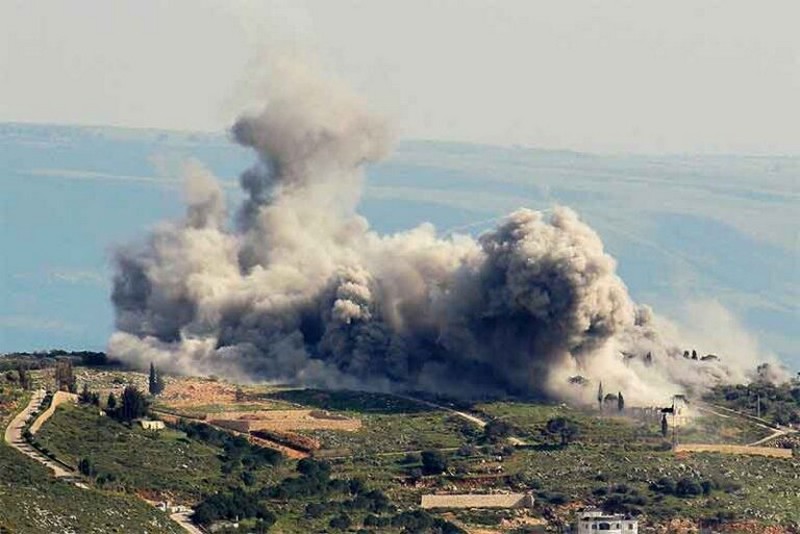
This aggression was also an act of war against Iran, and came on the same day as the attempted assassination of a leader of Hezbollah, the Lebanese resistance movement, through the Zionist bombing of the southern suburbs of Beirut,  and on a day that the US bombed Iraq, targeting the Iraqi resistance, assassinating three members of the resistance forces. It is also clear that this is not a Zionist crime alone, but a crime bought and paid for by the United States and its imperialist partners. 

These assassinations have not undermined the strength, solidarity, commitment and firmness of the alliance of resistance forces in the region. From Iran to Lebanon, Yemen to Iraq to Syria, and of course, to Palestine, where the people and the Resistance daily confront the genocidal Zionist regime, the people have the right and the determination to resist, to respond and to confront the assassins and genocidaires. Further, this crime does not demonstrate the “strength” of the Zionist entity but rather its desperation and decline. These assassinations and international aggressions come as the Zionist regime is rent with internal contradictions and riots as settlers and soldiers demand the right to rape imprisoned Palestinians, reflecting the death throes of a wounded colonial monster.

Ismail Haniyeh, 61, a husband, father and grandfather, was born a Palestinian refugee in al-Shati camp and struggled all his life for the liberation of the Palestinian people. From his days as a student, a football player, and a leader in the Islamic Bloc at the Islamic University of Gaza, he was dedicated to the Hamas movement and to Palestine. In 1989, amid the great popular Intifada and shortly after the founding of the movement, Haniyeh was abducted and imprisoned by the Zionist regime for three years, before he was among 415 Hamas and Islamic Jihad leaders and members forcibly deported to Marj al-Zuhour in southern Lebanon on 17 December 1992, alongside Dr. Abdelaziz al-Rantisi, Sheikh Youssef Sarkji, Sheikh Saleh al-Arouri, Dr. Mahmoud al-Zahhar, and, among many others, Mustafa Abu Ora, the martyr of the prisoners’ movement just five days ago.

He headed the office of Sheikh Ahmed Yassin in Gaza and was elected the leader of Hamas in Gaza in 2004, following the assassination of Abdel-Aziz al-Rantisi. In 2017 Haniyeh was elected by the Hamas movement to lead its Political Bureau and was reelected to this position in 2021.

Haniyeh was the chief negotiator mandated by the Hamas movement and all of the organizations of the Palestinian Resistance, and this assassination aims to prevent him from seeing and directly welcoming the prisoners freed by the Resistance and once again underlines that the Zionist regime is only interested in continued genocide.

Over 60 of his family members have been martyred, killed by the Zionist regime in the past 10 months, including three of his children and five of his grandchildren. “The blood of my children is not more valuable than the blood of the people of Palestine and all the martyrs in Gaza are my children,” he said, cherishing all of the martyrs of Palestine.

“There is no difference between the martyrs, and they have all been chosen by the Most Merciful to pave our way to victory and freedom,” he said. “The blood of the martyrs demands that we do not compromise, do not relent, do not change or alter, do not weaken, and do not despair, but continue our path with determination.”

The martyr Tareq Izzedine, of the Islamic Jihad movement, gave his last statement before his assassination on the martyrdom of Sheikh Khader Adnan, himself assassinated through deliberate refusal of medical care in the Zionist prisons. His words remain resonant today (video by Resistance News Network): “Whenever a leader ascends, ten will emerge to replace them. When a martyr ascends, 100 martyrs will emerge to replace them. The march continues, and it does not stop until the defeat of the occupation.”

Just today, Ismail Haniyeh said, in his meeting with Imam Khamenei, “Yesterday marked the 300th day of the Gaza War, and we have now reached a critical and historic stage in which the Palestinian people and the Resistance Forces must sustain their heroism and victory.”

His last major statement was for the prisoners, and for popular mobilization, urging people everywhere to participate in the August 3 call to action for Gaza and the Prisoners. “Freedom is near for our dignified prisoners and honorable female prisoners, and victory is coming for our people and our valiant resistance.”

“We call for active and massive participation on this national and global day in defense of our prisoners and our people in the Gaza Strip, to expose the brutal crimes of the occupation against them, and to support their rights and just cause….We look forward to making the 3 of August a pivotal day in all parts of Palestine, in the refugee camps and the diaspora, in our Arab and Islamic world, & among all the free people of the world, to support our people in Gaza and our free prisoners in the occupation’s prisons.”

We must all mobilize, on August 3 and beyond. We must all act. We must all continue the struggle, to confront Zionism and imperialism everywhere and to hold them accountable for their crimes.

From Beirut to Tehran to Gaza to Haifa, to all of our communities, this is the time for action and confrontation. They have never killed the resistance and will not succeed in doing so today. 

Ismail Haniyeh and all of the martyrs live on, and their legacy of commitment, sacrifice and love for the people is an inspiration to generations to come. The defeat of Zionism is forthcoming, as is the liberation of Palestine from the river to the sea. Every one of the honourable martyrs have sacrificed everything in order to make that vision a material reality that is closer every day.

Glory to the martyr Ismail Haniyeh and all the martyrs of Palestine and the Resistance. Return, liberation and victory to Palestine, all of Palestine, from the river to the sea.

30 July 2024

Source: samidoun.net

Sde Teiman: the true face of the Zionist project

Since the establishment of “Israel’s” notorious Sde Teiman concentration camp, filled with thousands of Palestinian civilians from Gaza, rounded up and abducted from cities, refugee camps, schools and hospitals by the invading Zionist army as part and parcel of their genocide against the Palestinian people in Gaza, those who are released have spoken about the horror of their experiences at the hands of the occupation soldiers. Palestinian survivors have testified about rape and sexual assault, starvation and denial of food, people being handcuffed 24/7, forced amputations of limbs due to torture, denial of medical care, beatings, noise and sound torture, “hooding” and binding of detainees, attacks by trained dogs, and all other forms of abuse and torture.

Palestinian survivor after survivor have spoken on the record about their experiences. At least 38 Palestinian detainees from Gaza held at Sde Teiman have been martyred under torture and denied medical treatment, even though the full scope of the crimes are not yet visible due to the secrecy surrounding the torture camp. Palestinian lawyer Khaled Mahajneh, the first lawyer to speak to detainees held at Sde Teiman recounted multiple instances of rape and sexual assault, electric shock torture, dangerous hygiene conditions (the journalist he visited was “covered in dirt and bird droppings”) and brutal beatings. Even CNN, the Washington Post, the New York Times, imperialist outlets that have eagerly promoted Zionist propaganda about its genocide in Gaza, have covered the horror that is Sde Teiman — and, indeed, the entire Zionist prison system.

Sde Teiman is a systemic crime

Sde Teiman is not an aberration or an unusual case. It is part and parcel of the military system and the use of imprisonment to target Palestinians en masse. It is the labour camps of the 1947-1948 Nakba, the interrogation centres throughout occupied Palestine. Sde Teiman is, of course, also Guantanamo, and Abu Ghraib, as the US and the Zionist regime share strategies of torture, interrogation and abuse directed, largely, at Palestinian and Arab men. In short: Sde Teiman is Zionism and imperialism; it is the fruit of the perpetrators of the genocide; it is the experience of Palestinian prisoners and the entire Palestinian people, for over 76 years, distilled and condensed into a concentration camp to torture the victims of genocide.

Sde Teiman burst once more into global visibility on July 29, after nine Zionist soldiers were arrested by military police for their role in the mass rape and sexual assault of at least one Palestinian detainee, who was injured so badly that he was hospitalized due to the damage to his rectum and anus. The arrest is itself extremely uncommon, given that Zionist soldiers have been essentially given free rein to engage in a widespread, systemic campaign of torture, rape and abuse against the Palestinian people, part of the same genocidal campaign that has taken over 40,000 Palestinian lives in Gaza, from the bombing of water wells and treatment plants to the systematic destruction of hospitals and the health care system to the bombing of refugees in tents and children at play to the numerous TikTok videos made by Zionist soldiers boasting of their war crimes and displaying them to the world.

From the daily settler violence in the West Bank of occupied Palestine to the leading politicians of the regime ordering more genocide on a daily basis, complete impunity is built into the system. However, the growing international pressure, including the legal pressure at the International Criminal Court and the International Court of Justice — as well as, reportedly, new forthcoming restrictions on British arms trade with the Zionist regime, has mandated that the Zionist regime make at least the appearance of some form of discipline for the most extreme examples of abuse. The crimes at Sde Teiman were not perpetrated by nine occupation soldiers, but by the entire occupation regime.

Zionists demand the right to rape

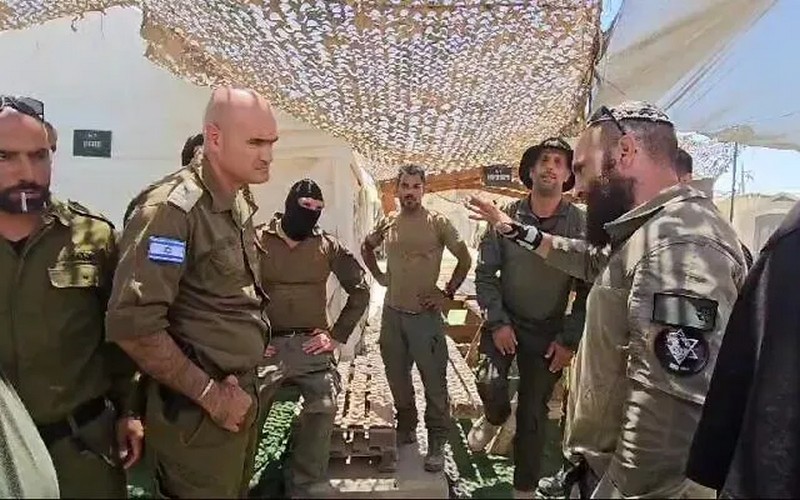
However, the arrest of the nine soldiers did not stop there. Military police entered the compound and seized the soldiers, taking them away. It must be noted that this “raid” was conducted with far greater care and non-violence than the daily dozens of raids throughout occupied Palestine, where occupation soldiers blow the doors off Palestinian homes, steal children from their beds and terrorize families on a nightly basis. However, it is the response to the arrests that truly has put the reality of Zionism on display, if the past ten months of videos and photos of livestreamed genocide did not consolidate that reality: throngs of paramilitary settlers and fascist politicians rioting to demand the right to rape Palestinian detainees. These fascist mobs were allowed to engage in violent riots and invade military bases, in sharp contrast to the occupation opening fire with live bullets on Palestinian demonstrators.

This is the reality of Zionism: Masses of fascists screaming for their unlimited right to rape and abuse Palestinians, with Members of the Knesset affirming it openly, with Likud MK Hanoch Milvetsky declaring that “everything is legitimate” in response to a direct question about rape with foreign objects and politician after politician declaring it unacceptable that Zionist soldiers could be tried or arrested for their crimes. And, as expected, occupation authorities have reportedly “acknowledged mistakes” — not for allowing the rapes to continue, but for arresting the rapists too visibly! This is the point that the internal crisis and decay of the Zionist regime has reached, in full view of the world.

The rape-supporting riots and the exposure of the crimes at Sde Teiman have also thrown a sharp light on the campaign of lies and misinformation directed against the Palestinian resistance. Released “Israeli” detainees held by the Palestinian resistance and released in prisoner exchanges have, despite massive incentives to do otherwise, largely spoken of their well-treatment by the Resistance. The photos of released Zionist detainees, compared to those of released Palestinian detainees, speak for themselves. Despite conditions of genocide and starvation throughout Gaza, the captives of the resistance received all the food available, while the Zionist forces deliberately starve Palestinian detainees despite an abundance of resources supported and funded by the world’s imperialist powers, including the US, Germany, Britain, France, Canada and Italy.

The smear campaign against the Palestinian resistance

Further, the drumbeat of misinformation and misrepresentation about Al-Aqsa Flood and the 7 October military operation of the Palestinian Resistance is perhaps more exposed than ever. Despite the loud claims and propaganda campaigns of Zionist officials, U.S. officials, and even complicit international institutions, not a shred of evidence for rape and sexual assault as part of the Al-Aqsa Flood has been produced. Indeed, the unproven and fantastical allegations have largely been sourced from right-wing Zionist men, the same ones responsible for false allegations of “beheaded and burned babies.” Now, right-wing Zionist men are rioting against their own state for the right to rape, burn and kill Palestinians. Sde Teiman is not “revenge” for October 7 — the institutional crimes that are crystallized in Sde Teiman are part of the reason why the Palestinian resistance has been willing to undertake such tremendous sacrifices, before, during and after October 7 in order to liberate the Palestinian prisoners — and of course, to liberate Palestine, from the river to the sea.

It cannot be any clearer that the defamation of the Palestinian resistance is perhaps the clearest exmple of “every accusation is a confession” on the part of the Zionist regime. The Palestinian resistance forces have consistently and firmly conducted themselves with honour, faith and commitment to the liberation of their land and people, while the Zionist occupation forces have engaged in a genocidal orgy of destruction. After Sde Teiman, the reality must be clear to all.

Abu Ghraib, Guantanamo, the NYPD and Sde Teiman

Of course, the crimes of Sde Teiman are part and parcel of the Zionist alliance with imperialism as well. They are sharply reminiscent of the reliance on sexualized torture and abuse of Arab men at Abu Ghraib and Guantanamo, just as the torture in Guantanamo and Abu Ghraib recalled decades of torture of Palestinian prisoners, so much that one chair used for torture was referred to as the “Palestinian chair” by U.S. interrogators. This practice is not confined to U.S. imperialism in the Arab nation, of course; NYPD cops’ rape of Haitian American Abner Louima with an object in 1997, so severe as to require three surgeries, once again highlighted the systematic violence against Black people carried out by US cops, including sexual violence directed at Black men and women.

Sexualized torture has not been confined to Palestinian and Arab men, of course; Palestinian women have been subjected to extreme sexual assault, torture and abuse. Rasmea Odeh exposed these crimes to the world at the United Nations and the Sunday Times in 1979; of course, she was later deported from the United States for her bravery. Algerian women were subjected to mass rape by French colonizers, including political prisoners jailed for their resistance to colonialism. Palestinians — and Zionists — documented the rape of Palestinian women and girls in the Nakba of 1947-48. The allegorical references to the rape of the land of Palestine by the occupation forces, their settlements and their land confiscation, are built on a material foundation of the physical rape of Palestinian women and men.

The Zionist regime is not only subjecting Palestinian prisoners — in Sde Teiman and in the “regular” Israel Prison Service prisons, directed by Itamar Ben-Gvir, one of the “right to rape” leaders — to severe torture and abuse, it is imprisoning the bodies of the martyrs after they are killed. Approximately 38 Palestinians have been confirmed to have been martyred at Sde Teiman, including famed surgeon Dr. Adnan al-Bursh, and approximately 21 in the Zionist prisons. Several of the martyrs’ and survivors’ stories are told in a new article in the Washington Post.

Organize, resist and act! 

Despite all of these crimes, the Palestinian prisoners’ movement continues to play a leadership role in the liberation struggle, to develop the movement and to organize together, confronting the Zionists with their bodies and lives on the line on a daily basis. The Resistance, led in Gaza, in the West Bank, throughout occupied Palestine, in Lebanon, in Yemen, in Iraq and throughout the region, is fighting to defend humanity and to bring these crimes to an end, once and for all. There can be no accomodation with the Zionist regime, a criminal regime built upon genocide, dispossession and destruction, but only its defeat and dismantlement.

As we join in the global outrage at the crimes of Sde Teiman, we must redouble our efforts to organize to end the genocide, to stand with the resistance, to liberate the prisoners and for a free Palestine, from the river to the sea. We urge all appalled by the “right to rape riots” to join in the global actions on August 3 for Gaza and the prisoners: take direct action, organize mass rallies, educate your communities, and shut down Zionism and imperialism. 

30 July 2024

Source: samidoun.net

The Silent Winner of Myanmar’s Northern Conflict

From the chaos of the conflict in Shan State, the United Wa State Army has emerged as a potentially decisive force.

By Amara Thiha

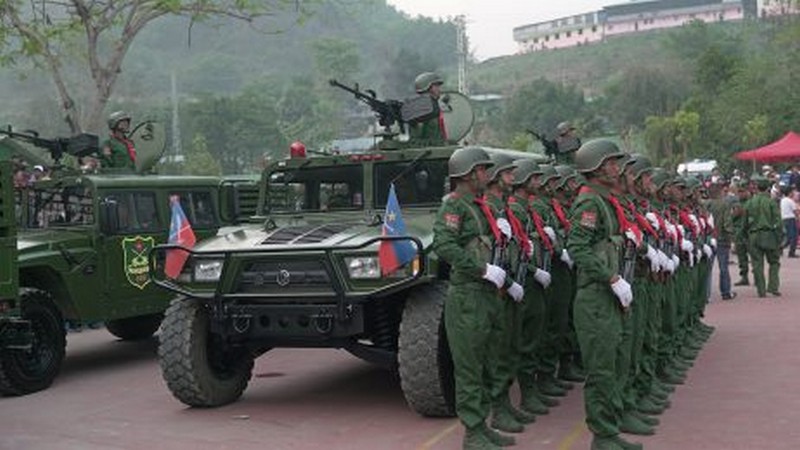
On the morning of July 28, a convoy of soldiers from the United Wa State Army (UWSA) drove through Lashio, the capital of the northern Shan State and home of the Myanmar military’s Northeastern Regional Command, taking control of the administration under the pretext of peacekeeping. This occurred amid renewed fighting in northern Shan State, as the Three Brotherhood Alliance of ethnic armed groups launched the second phase of its Operation 1027 offensive, massing their forces around Lashio. Without firing a single shot, the UWSA has gained control of three additional townships in Shan State since October 2023 – Hopang, Pan Lon, and Tangyan – and likely more in the coming weeks.

Sources in Naypyidaw indicate that the military State Administration Council (SAC) has agreed to have the UWSA and Shan State Progress Party (SSPP) step in as peacekeepers to prevent the renewed conflict from spilling over into other parts of Shan State. This indicates the SAC’s inability to maintain control and the potential total collapse of its authority in northern Shan State. The key question is: what are the strategic aims and implications of the UWSA’s entry into Lashio? To answer that question, here are five things you need to know about the UWSA, what it stands to gain from the northern conflict, and the broader regional implications.

A Role Model and Political Leadership

As the largest of Myanmar’s ethnic armed groups, the UWSA, which controls two non-contiguous territories in Shan State and has as many as 30,000 soldiers under arms, is widely viewed as a model and a source of inspiration for other ethnic organizations in Myanmar. “We have ambitions that are nothing less than Wa State,” said Twan Mrat Naing, leader of the Arakan Army (AA), during celebrations marking the 30th anniversary of the UWSA’s founding in Pangsang, the UWSA’s capital, in 2019. Newly formed ethnic armed groups are now drawing similar inspiration from the AA and its battlefield successes in Rakhine State since the launch of Operation 1027.

The UWSA has also established itself as a political leader among the 20-odd ethnic armed organizations (EAOs) in Myanmar. At the 21st Century Panglong Peace Conference convened by Aung San Suu Kyi’s government in 2017, the group submitted a proposal for a confederation model as part of an ethnic coalition known as the Federal Political Negotiation and Consultative Committee (FPNCC). Led by the UWSA, the FPNCC’s policy reflects the interests of the UWSA in two key ways: first, it advocates self-determination and authority over local security forces within designated areas until the establishment of a future federal system; and second, it advocates the creation of a security system that prioritizes local authorities and the self-defense of autonomous states through the formation of ethnic armies. This forms the foundational document of its political leadership. This significant demand for a parallel peace and political dialogue process in 2017 seemed ambitious at the time. However, seven years after the proposal, with the central administration at its weakest in decades and ready to negotiate, it appears achievable.

The FPNCC, which also includes the AA, SSPP, Kachin Independence Army (KIA), Myanmar National Democratic Alliance Army (MNDAA), National Democratic Alliance Army (NDAA), and Ta’ang National Liberation Army (TNLA), is now Myanmar’s largest ethnic coalition. It includes more than half of all EAO combatants in Myanmar and operates from the banks of the Mekong River to the Bay of Bengal. The FPNCC has held regular meetings since the 2021 coup, with a clear framework and vision and clear political demands. Since the military takeover, no other ethnic coalition has hosted summits or regular meetings on this scale or presented a clear political position like the FPNCC. De facto leadership of the FPNCC has made the UWSA the most politically influential armed group in Myanmar, a role historically contested by the Karen National Union and the KIA.

The existing FPNCC’s political framework differs significantly from the federal charter formulated by the opposition National Unity Government (NUG) and National Unity Consultative Council (NUCC). This difference is evident not only in the political process, but also in terms of fundamental visions, security arrangements, and relationship with the union administration. With its strength and influence, the FPNCC is unlikely to agree to participate in either junta or NUG processes, instead choosing to chart its own course.

Wa State and Vision

Using the FPNCC as a platform, the UWSA has aligned its political aspirations with the FPNCC’s principles. In addition to this, the UWSA submitted two other documents in 2017: a proposal for a consultation process with the Myanmar government over the creation of an autonomous Wa State from the territories under the UWSA’s control and a proposal for a new ceasefire agreement. These documents illustrate the UWSA’s inspiration and vision for Wa State.

These proposals left open the question of what exactly constitutes Wa State. This has again become a live question in the current context, which the UWSA is hoping it can use to extend its territory as much as possible. Taking advantage of the weak central administration, it has already created buffer areas around UWSA-administered areas. The critical issue is whether it can link the central Wa State, which lies along the border with China, with southern Wa State, along the Thai border, over which it established control in the 1990s while fighting against a Shan insurgency alongside the Myanmar military. In its 2017 proposal for a new Wa State, the UWSA requested the inclusion of Kengtung township in eastern Shan State.  This would link the southern and central Wa States, turning the eastern part of Shan State into an exclave under direct UWSA control. The UWSA attempted this territorial expansion in 2016. In September of that year, a force of 1,000 UWSA troops marched toward Mong La, an area under the control of the NDAA, creating tensions with the NDAA. A settlement with the NDAA was reached following talks between the UWSA leadership and Aung San Suu Kyi’s government.

All of this is to say that the UWSA’s territorial ambitions extend beyond the current status quo. Linking the southern and northern parts of Wa State is a crucial aim. Having been granted permission by the SAC to mobilize in northern Shan State, the UWSA will undoubtedly seize the opportunity to expand its areas of influence and control. Given these territorial aspirations, and the UWSA’s influence over the Three Brotherhood Alliance, particularly the MNDAA, since the start of Operation 1027, the UWSA now exerts possibly decisive influence in a long arc from the China-Myanmar border in the north of Shan State to the Thailand-Myanmar border in the south. This makes it the most influential and capable EAO in Myanmar’s modern history.

The Strategic Stalemate

In making its decisions, the UWSA has tended to act cautiously. In general, it has sought to maintain the status quo between the central administration, rival EAOs, and China. This strategic posture has been evident in its response to the coup and Operation 1027 offensive. While not directly involved, the UWSA has indirectly supported the MNDAA during the operation, for which the MNDAA leadership expressed gratitude in January.

By avoiding conflict with the SAC and maintaining its distance from the NUG, the UWSA has upheld its neutrality, at least officially. This neutrality has allowed the UWSA to increase its influence amidst the stalemate in the Shan State, not only among FPNCC members but also with those in southern Myanmar that are seeking supplies and arms. By preserving a relationship with the military junta and avoiding outright conflict, the UWSA’s strategic approach seems to have paid off, positioning it as a leading political entity in northern Myanmar. This unique position allows it to mediate the relations between various EAOs and the junta administration, as evidenced by the SAC’s request for the UWSA to deploy its forces in Tangyan and now in Lashio.

Despite the UWSA’s entry into Lashio, its FPNCC allies, particularly the MNDAA, are continuing their siege of the city, and the TNLA persists in its offensive in northern Shan State and parts of Mandalay Region. The critical question is whether the UWSA will allow its own alliance to become uncontrollable, potentially challenging its political influence and disrupting the new status quo. Alternatively, the UWSA might seek to maintain a stalemate in northern Shan State. Regardless of its chosen path, it is certain that the UWSA will continue to have a significant impact on Myanmar politics for the foreseeable future.

New Leadership, Rising Kingdom

The UWSA’s strategic shift is being driven by a new generation of leaders. Young and energetic leaders in their 30s and early 40s, including Zhao Ai Nap Lai (son of Zhao Nyi-lai) and Bao Ai Kham (son of Bao Youxiang), were introduced in strategic meetings with the MNDAA in April. Zhao Ai Nap Lai has succeeded his father as general secretary and head of the Politburo, while Bao Ai Kham is the UWSA’s new deputy general secretary.

These leaders, part of the generation that witnessed the fall of the Communist Party of Burma (from which the UWSA was created in 1989), bring different visions, views, and objectives. They lead the UWSA with heightened nationalism, seeking to preserve their legacy while seizing any opportunities that present themselves. However, their political ambitions may necessitate a recalibration of the UWSA’s decades-long strategy of maintaining the status quo and stalemate in the region, given the evolving political and regional context.

As China’s power grows and Myanmar’s central administration weakens, the UWSA is actively seeking a new status quo that can maximize its influence. This context is reminiscent of the rise of new kingdoms. With substantial tin deposits, rare earth elements, control over a critical juncture of Southeast Asia’s largest drug trafficking route, and the ability to produce small arms, the UWSA possesses the resources needed to achieve its strategic goals. Importantly, the Wa State territories straddle the China-Myanmar Economic Corridor and are relevant to the Lancang-Mekong Cooperation platform, both of which are crucial to China’s strategic expansion in mainland Southeast Asia.

Influencing and Threats to Thailand

Given that it is considered a natural ally of China, the UWSA maintains a close relationship with Beijing and the provincial administration in Yunnan. The UWSA’s influence in the heart of the Mekong region extends Chinese influence deep into Myanmar and down to the border with Thailand.

As the UWSA grows more powerful, its political model will become more attractive to other EAOs. If Chinese efforts to mediate the current conflict secure formal autonomy and territorial concessions for the UWSA, other groups along Myanmar’s borders might adopt the UWSA’s approach and choose to come under greater Chinese influence. This development could undermine all dialogue processes initiated by the Association of Southeast Asian Nations (ASEAN) or the establishment of local administrative processes by the NUG and other ethnic Interim Executive Councils, which enjoy the backing of Western countries. The UWSA’s expansion along the Thai-Myanmar border means that states and entities influenced by China could soon surround Thailand. This new player in the region poses a critical question: Is Thailand, the last remaining U.S. ally in mainland Southeast Asia, prepared for this expansion?

Amara Thiha is a researcher at the Peace Research Institute Oslo (PRIO) and a Non-Resident Fellow at the Stimson Center.

30 July 2024

Source: hediplomat.com

Gaza Haunts Me

By Samaa Abu Sharar

It took me about eight months to sit and write about Gaza. Like most people, I went through a wide range of emotionsthat ranged from severe depression to severe helplessnessaccompaniedby crying from pain I have never felt and disappointmentfrom a “free” and “unfree” world.

Emotionally, I am no longer myself. As much as Gaza has hurt me, it changed me to the core.

Most of the concepts and beliefs we were raised on, studied, or dictated to us went down the drain and with them, fell my faith in all the outdated universal laws that claim to protect human dignity and rights.

Gaza taught me to trust nothing. Nothing at all. Human beings are not equal in international covenants. There is the law of the “white man” opposed to the rest of humanity. The law of the “strongest” and the law of the “weakest”. In all cases, Gaza remained on the margins of humanity, equating the victim with the executioner in all of its ugliness.

***

My dayssince 7 October are meaningless details. Gaza literally haunts me. I sleep, if I can sleep, on Gaza, and I wake up on Gaza. I can’t remember how many times I woke up from a fitful sleepto quickly grab my mobile phone to see if the weather was stormy or rainy there inGaza?

Scenes of displaced people trying to fix their fragile tents or drain the water – the desired and unwanted visitor – flooding the tents and their inhabitants, and the shivering of young and old from the cold and the world’s failure to them, lie before me.

I wait impatiently for winter, but this winter has come bitterly. My prayers were for a kind winter, kinder on our people in Gaza; and a gentle summer, gentler than theharshreality, unfathomable for the human mind to comprehend.

Even the weather conspired against the people of Gaza. The tents are unbearable, thr raging heat, accompanied by all the creepy crawlers of the earth and the flying creatures, making life a continuing nightmare.

No, there is no room for things we once took for granted. All have become luxuries for the people of the tiny Strip insize, immense in its spirit, sacrifices and people.

***

I was witness to many of the tragedies of the great Palestinian people, on both the personal and public levels. Nothing is similar to what happened and is still happening in Gaza, which exposed everyone and primarily the Palestinian himself. This new Nakba (catastrophe), the details of which we live every day has revealed the extent of our fragility in face of this historic event.

The fragility is evident on all levels, from our worn-out Palestinian political scene, to our crisis-ridden institutions to our weak official media scene drowning in political divisions unable to present the Palestinian narrative, unfit to us as a people and to our great and just cause and our right of resistance until the liberation of Palestine. A narrative also unfit to the  Arab and western public in search of a genuine Palestinian narrative, which will not hurt if it were a unified one.

Politically, the scene became more worn out than it was before 7 October. The major event did not unite us or solidify our position but increased our fragmentation, dispersion and division. With some exceptions by some individual Palestinian efforts who presented a solid narrative, the vast majority stood in contrast despite the enormous amount of sacrifice the people of Gaza made and continue to make.

“Protecting Palestinian national unity inside and outside the occupied homeland is one of our main weapons with which we fight our enemies and a condition for our victory,” once wrote the late Palestinian martyr and revolutionary Majed Abu Sharar.

Where are we from this unity? How do we face the consequences of what is happening or invest in the unprecedented international awareness and mobilization to support our cause?

How many of us have remained silent at the beginning “because this is not the time for criticism,” as the battle is big and ongoing and the enemy is one or so we thought! But apparently the enemy was never one for many, as factional alignments are more important than the momentous event and supreme cause.

We would be lying to ourselves if we would say that the genocide in Gaza united us; the opposite is true. Many mouthpieces, some of whom we have never heard and some we know too well, delivered statements that could have only come from an enemy, and in a chilling harmony with the Zionist viewpoint and that of global imperialism, instead of defending the Palestinian right to resist based on international laws.

Our political discourse has become a mirror image of our troubled reality. I am one of many Palestinians who did not find herself during this ongoing genocide and long before in any of the  official Palestinian narrative and Arab discourse.

***

The tragedy continues and human interaction with it is enormous. But the official Palestinian institutions were generally absent from what was happening on the ground despite the great need to unify efforts and address its enormity as dictated by the ongoing war of extermination.

My life, like the lives of many others, has become centered around possible ways to extend a helping hand to our people in Gaza, but all these efforts remain individual and unorganized despite the good intentions, thus cannot meet the huge needs in Gaza. One of the reasons for the institutional absence in these exceptional circumstances is the division and vacancy of a unified vision for an urgent relief plan.

The 1948 Nakba and the 1967 Naksa and all the massacres and pivotal events in the history of our long conflict with the enemy don’t seem to have taught us anything. The genocide in Gaza has clearly demonstrated this.

The unprecedented international mobilization and parallel awareness is heart warming! Who amongst us, and I mean Palestinians and Arabs, who still consider Palestine “as their cause”, ever dreamt of a similar scene to what we have witnessed in the last 10 months?

Awareness amongst young people in the West is equal to, if it does not precede that of many young Arabs and even Palestinians towards the Palestinian cause. And what young people in Europe and America are declaring in terms of adopting firm positions, many of our own hesitate even to think about. “Palestine from the river to the sea”, “Terminating the existence of Israel”, “Zionism equals Nazism”, “Israel is a criminal entity”… and others have become beliefs rather than slogans for many in the West, especially the youth.

***

Palestine is no longer the cause of the Palestinians and some Arabs. It has become an international, humanitarian cause adopted by hundreds of millions of people, and if that indicates anything, it shows how Gaza and its people were able to achieve what we have failed to achieve for many years.

Yes, and despite the pain and the catastrophic scenes, Gazans came to teach us lessons in pride, dignity, faith, adherence to the truth, and steadfastness. I often wonder how the people of Gaza are able to do this while living the impossible over the last 10 months?

I have not left out a single curse that I did not use in this painful genocide, maybe as an expression of anger and resentment towards this world or maybe as a form of venting. But not once have I heard a Gazan utter a curse.

All we have heard were terms ranging from “Thank God,” “God is sufficient for me, “God is the best Disposer of affairs”, “May God take revenge on you, Netanyahu,” and other “polite” utterings in light of the abominable reality to which Gazans have been exposed.

How many times have I wished to stop the rhythm of this world for the sake of Gaza, to stop this madness, how many times have I wanted to scream with all my heart in the hope that someone would hear me and stop a pain I have never imagined I could bear a portion of.

***

My private conversations with some friends and relatives in Gaza were not much different from what we all see and hear on television and all the available means of communication. Their responses when we dare to ask them about their well-being range from “thank God,” “may God end this war,” “we miss returning to our homes and lives,” and the most extreme is “we are tired, we are exhausted.” I honestly don’t recall a single time when someone uttered a word that crossed the boundaries of known politeness.

I sometimes wonder when someone from Gaza contacts me to check on me or even congratulate me on Eid- two Eids (El Fiter and Al Adha) have passed by under indescribable circumstances for the people of Gaza- I wonder where they get the ability to continue?

Over the past months, I have built friendships with many acquaintances where our communication previously did not go beyond a comment here or a like there, on social media. They might have needed an outside source of reassurance to ensure their presence in our existence, or perhaps any piece of news of a potential ceasefire for the ongoing madness or a glimmer of hope that this nightmare would end. My relationship with existing friends in Gaza were strengthened further. They allowed me into the details of their lives amidst the endless killing, displacement, exhaustion, anxiety and other complex human feelings.

My heart skips a beat every time I hear of a bombing close to their displacement places, until I hear from them to know they are well, until the next time comes. Sometimes, I hesitate to ask about their being, as they are definitely not well, despite everything they say to reassure us and/or not to burden us with the impossible life they are living.

***

I don’t know the limit of pain a person can bear.

What I do know is that amidst the ongoing genocide, we never once believed we could bear this unbelievable pain. The anxiety never leaves us, the helplessness that resides in us, the unparalleled disappointment… and the images that besiege us with their mythical cruelty.

How many times I wished to stop the rhythm of this world for the sake of Gaza, to stop this madness, how many times have I wanted to scream with all my heart so that someone would hear and stop a pain that I never imagined I could even bear a portion of. Yet hope remains that the nightmare will end.

Hope from which we derive our ability to continue for the sake of Gaza and its people, for the sake of Palestine.

The journey of recovery will be long, actually very long, and what awaits us may be more difficult than what we’ve already experienced. My hope remains in our ability to translate the pain into actions, so that the journey of freedom and liberation continues towards a homeland that we still dream of.

Samaa Abu Sharar is a Palestinian journalist and researcher living in Beirut.

28 July 2024

Source: countercurrents.org
Will Kamala Harris Pivot on Gaza and Win the ‘Uncommitted’ Vote?

By Jon Rainwater

As the surreal and high-stakes 2024 Presidential election careens through its surprising twists and turns, one thing is near certain—at the finish line the election will be decided by a relatively small margin. U.S. Vice President Kamala Harris, as the likely Democratic nominee, would do well to appeal to the over 650,000 people who voted for “uncommitted” or cast other protest votes in the primary.

Vice President Harris has seen polling revealing that the Democrats suffered from a large enthusiasm gap—trailing Republicans by 11 points in one Gallup poll before President Joe Biden Biden dropped out. Given Democratic-leaning voters’ well-founded existential angst about former President Donald Trump’s authoritarian impulses, such a gap in this election is astounding.

At least part of that “enthusiasm gap” was reflected in the “uncommitted” vote over the last few months. In addition to the 650,000 Democrats voted against Biden by choosing options such as “uncommitted,” etc., millions of rank-and-file Democrats are unhappy with the war in Gaza. According to one Reuters poll, 44% of Democratic voters disapprove of the administration’s handling of the Gaza crisis and these voters said they were less likely to vote for Biden come fall. Obviously, Arab American voters are watching Harris’ actions on Gaza closely. But so are other critical constituencies. Younger voters, and particularly younger voters of color, are more likely to support an immediate cease-fire in Gaza and disapprove of Israel’s actionsSeven major labor unions, representing 6 million workers, just wrote to President Biden and called on him to “shut off military aid to Israel.”

Some former Biden administration officials who resigned over Biden’s Gaza policy are “cautiously optimistic” about a fresh approach with Harris. They point to Harris speaking in favor of a cease-fire before Biden did. Former State Department arms control expert Josh Paul described Harris as less “fixed and intransigent” on Gaza and said, “I have cautious and limited optimism—but also a deep sense of relief that the Democratic party will not be nominating for the presidency of the United States a man who has made us all complicit in so much and such unnecessary harm.” At the same time, most observers feel it is unrealistic to expect her positions to be a radical departure from Biden’s based on her history of strong support for Israel.

Clearly Biden-Harris messaging has recently become more focused on seeking peace and a cease-fire. In Biden’s historic address explaining his decision to drop out of the race, the president courted peace voters by bragging that he was “the first president this century to report to the American people that the United States is not at war anywhere in the world.” That was at best a fib, given that the U.S. had just bombed Yemen hours earlier. But it displayed recognition of the importance of the peace vote. He also promised to work for a cease-fire for Gaza.

VP Harris’ remarks after meeting with Israeli Prime Minister Benjamin Netanyahu reflected an even greater emphasis on a cease-fire. She bluntly stated, “It is time for the war to end.” It was refreshing to hear her emphasize the famine in Gaza, a critical issue that the media is underreporting. As Randa Slim of the Middle East Institute put it in a post on X (formerly Twitter): “This is the best speech I heard so far from a senior U.S. official about Israel[’s] war on Gaza. [The] VP mentioned the word Palestinians more times than in all Joe Biden speeches combined. There is hope fellow Arab #Americans!” But simply displaying more empathy toward Palestinians, while shipping arms to Israel that are used in killing those same Palestinians, is not likely to win over recalcitrant uncommitted voters or to truly energize peace voters.

The task in front of Harris is daunting. Ideally she needs to deliver a cease-fire despite the fact that she is not (yet) the president of the U.S., let alone the prime minister of Israel. But the U.S., as Israel’s crucial ally, has immense leverage, and it’s long past time to fully deploy it. Netanyahu has ignored U.S. calls to prevent human rights violations for months. He is resisting a cease-fire. One way to reach a desperately needed lasting cease-fire—including the release of all Israeli and Palestinian captives—is for the U.S. to put real pressure on Netanyahu by ending the flow of weapons to the Israeli government.

If Netanyahu will not agree to a cease-fire, the Biden-Harris administration needs to become more assertive in concrete policy terms. Matt Duss, of the Center for International Policy, laid out some of the policy changes that could be the basis of a real pivot on Gaza that goes beyond a change in tone:

She can announce that as president, she will immediately suspend the U.S.-supplied military aid being used in violation of U.S. law. She can reject the baseless and inflammatory claims that the United Nations Relief and Works Agency for Palestine Refugees in the Near East (UNRWA), the largest and most important relief agency in Gaza, is a “Hamas front,” and state that she’ll work to see UNRWA funding resumed as soon as legally possible.

The grassroots has a role to play in all this. Harris is unlikely to truly change course without being pushed to do so by her base. The Uncommitted National Movement, now that their ballot box campaigns are over, is pushing a “Not Another Bomb” campaign to push Harris to take a bolder position on ending the war. Peace groups like Peace Action are calling on Harris to support an arms embargo on Israel and other concrete policies. Everyone who cares about these issues should be contacting the vice president and getting out the message that her empathetic words are refreshing, but it is long past time for bold action to end the killing and famine in Gaza once and for all.

Jon Rainwater is executive director of Peace Action. For over 30 years, he has been active in campaigns on issues of peace, nuclear disarmament, social justice and environmental sustainability.

28 July 2024

Source: countercurrents.org
Suicide Squad: U.S. Troops Are Losing a War with Their Deadliest Enemy

By Nick Turse

At the end of the last century, hoping to drive the United States from Saudi Arabia, the home of Islam’s holiest sites, al-Qaeda leader Osama bin Laden sought to draw in the American military. He reportedly wanted to “bring the Americans into a fight on Muslim soil,” provoking savage asymmetric conflicts that would send home a stream of “wooden boxes and coffins” and weaken American resolve. “This is when you will leave,” he predicted.

After the 9/11 attacks, Washington took the bait, launching interventions across the Greater Middle East and Africa. What followed was a slew of sputtering counterterrorism failures and stalemates in places ranging from Niger and Burkina Faso to Somalia and Yemen, a dismal loss, after 20 years, in Afghanistan, and a costly fiasco in Iraq. And just as bin Laden predicted, those conflicts led to discontent in the United States. Americans finally turned against the war in Afghanistan after 10 years of fighting there, while it took only a little more than a year for the public to conclude that the Iraq war wasn’t worth the cost. Still, those conflicts dragged on. To date, more than 7,000 U.S. troops have died fighting the Taliban, al-Qaeda, the Islamic State, and other militant groups.

As lethal as those Islamist fighters have been, however, another “enemy” has proven far more deadly for American forces: themselves. A recent Pentagon study found suicide to be the leading cause of death among active-duty U.S. Army personnel. Out of 2,530 soldiers who died between 2014 and 2019 from causes ranging from car crashes to drug overdoses to cancer, 35% — 883 troops — took their own lives. Just 96 soldiers died in combat during those same six years.

Those military findings bolster other recent investigations. The journalism nonprofit Voice of San Diego found, for example, that young men in the military are more likely to take their own lives than their civilian peers. The suicide rate for American soldiers has, in fact, risen steadily since the Army began tracking it 20 years ago.

Last year, the medical journal JAMA Neurology reported that the suicide rate among U.S. veterans was 31.7 per 100,000 — 57% greater than that of non-veterans. And that followed a 2021 study by Brown University’s Costs of War Project which found that, compared to those who died in combat, at least four times as many active-duty military personnel and post-9/11 war veterans — an estimated 30,177 of them — had killed themselves.

“High suicide rates mark the failure of the U.S. government and U.S. society to manage the mental health costs of our current conflicts,” wrote Thomas Howard Suitt, author of the Costs of War report. “The U.S. government’s inability to address the suicide crisis is a significant cost of the U.S. post-9/11 wars, and the result is a mental health crisis among our veterans and service members with significant long-term consequences.”

Military Shocked (Shocked!) by a Rise in Suicides

In June, a New York Times front-page investigation found that at least a dozen Navy SEALs had died by suicide in the last 10 years, either while on active duty or shortly after leaving military service. Thanks to an effort by the families of those deceased special operators, eight of their brains were delivered to a specialized Defense Department brain trauma laboratory in Maryland. Researchers there discovered blast damage in every one of them — a particular pattern only seen in people exposed repeatedly to blast waves like SEALs endure from weapons fired in years of training and war-zone deployments as well as explosions encountered in combat.

The Navy claimed that it hadn’t been informed of the lab’s findings until the Times contacted them. A Navy officer with ties to SEAL leadership expressed shock to reporter Dave Philipps. “That’s the problem,” said that anonymous officer. “We are trying to understand this issue, but so often the information never reaches us.”

None of it should, however, have been surprising.

After all, while writing for the Times in 2020, I revealed the existence of an unpublished internal study, commissioned by U.S. Special Operations Command (SOCOM), on the suicides of Special Operations forces (SOF). Conducted by the American Association of Suicidology, one of the nation’s oldest suicide-prevention organizations, and completed sometime after January 2017, the undated 46-page report put together the findings of 29 “psychological autopsies,” including detailed interviews with 81 next-of-kin and close friends of commandos who had killed themselves between 2012 and 2015.

That study told the military to better track and monitor data on the suicides of its elite troops. “Further research and an improved data surveillance system are needed in order to better understand the risk and protective factors for suicide among SOF members. Further research and a comprehensive data system is needed to monitor the demographics and characteristics of SOF members who die by suicide,” the researchers advised. “Additionally, the data emerging from this study has highlighted the need for research to better understand the factors associated with SOF suicides.”

Quite obviously, it never happened.

The brain trauma suffered by SEALs and the suicides that followed should not have been a shock. A 2022 study in Military Medicine found Special Operations forces were at increased risk for traumatic brain injury (TBI), when compared with conventional troops. The 2023 JAMA Neurology study similarly found that veterans with TBI had suicide rates 56% higher than veterans without it and three times higher than the U.S. adult population. And a Harvard study, funded by SOCOM and published in April, discovered an association between blast exposure and compromised brain function in active-duty commandos. The greater the exposure, the researchers found, the more health problems were reported.

Studies on the Shelf

Over the last two decades, the Defense Department has, in fact, spent millions of dollars on suicide prevention research. According to the recent Pentagon study of soldiers’ deaths at their own hands, the “Army implements various initiatives that evaluate, identify, and track high-risk individuals for suicidal behavior and other adverse outcomes.” Unfortunately (though Osama bin Laden would undoubtedly have been pleased), the military has a history of not taking suicide prevention seriously.

While the Navy, for example, officially mandated that a suicide hotline for veterans must be accessible from the homepage of every Navy website, an internal audit found that most of the pages reviewed were not in compliance. In fact, according to a 2022 investigation by The Intercept, the audit showed that 62% of the 58 Navy homepages did not comply with that service’s regulations for how to display the link to the Veterans Crisis Line.

The New York Times recently investigated the death of Army Specialist Austin Valley and discovered gross suicide prevention deficiencies. Having just arrived at an Army base in Poland from Fort Riley, Kansas, Valley texted his parents, “Hey mom and dad I love you it was never your fault,” before taking his own life. The Times found that “mental-health care providers in the Army are beholden to brigade leadership and often fail to act in the best interest of soldiers.” There are, for example, only about 20 mental-health counselors available to care for the more than 12,000 soldiers at Fort Riley, according to the Times. As a result, soldiers like Valley can wait weeks or even months for care.

The Army claims it’s working to eliminate the stigma surrounding mental health support, but the Times found that “unit leadership often undermines some of its most basic safety protocols.” This is a long-running issue in the military. The study of Special Operations suicides that I revealed in the Times found that suicide prevention training was seen as a “check in the box.” Special operators believed their careers would be negatively impacted if they sought treatment.

Last year, a Pentagon suicide-prevention committee called attention to lax rules on firearms, high operational tempos, and the poor quality of life on military bases as potential problems for the mental health of troops. M. David Rudd, a clinical psychologist and the director of the National Center for Veterans Studies at the University of Memphis, told to the Times that the Pentagon report echoed many other analyses produced since 2008. “My expectation,” he concluded, “is that this study will sit on a shelf just like all the others, unimplemented.”

Bin Laden’s Triumph

On May 2, 2011, Navy SEALs attacked a residential compound in Pakistan and gunned down Osama bin Laden. “For us to be able to definitively say, ‘We got the man who caused thousands of deaths here in the United States and who had been the rallying point for a violent extremist jihad around the world’ was something that I think all of us were profoundly grateful to be a part of,” President Barack Obama commented afterward. In reality, the deaths “here in the United States” have never ended. And the war that bin Laden kicked off in 2001 — a global conflict that still grinds on today — ushered in an era in which SEALs, soldiers, and other military personnel have continued to die by their own hands at an escalating rate.

The suicides of U.S. military personnel have been blamed on a panoply of reasons, including military culture, ready access to firearms, high exposure to trauma, excessive stress, the rise of improvised explosive devices, repeated head trauma, an increase in traumatic brain injuries, the Global War on Terror’s protracted length, and even the American public’s disinterest in their country’s post-9/11 wars.

During 20-plus years of armed interventions by the country that still prides itself on being the Earth’s sole superpower, U.S. military missions have been repeatedly upended across South Asiathe Middle Eastand Africa including a sputtering stalemate in Somalia, an intervention-turned-blowback-engine in Libya, and outright implosions in Afghanistan and Iraq. While the peoples of those countries have suffered the most, U.S. troops have also been caught in that maelstrom of America’s making.

Bin Laden’s dream of luring American troops into a meat-grinder war on “Muslim soil” never quite came to pass. Compared to previous conflicts like the Second World War, Korean, and Vietnam wars, U.S. battlefield casualties in the Greater Middle East and Africa have been relatively modest. But bin Laden’s prediction of “wooden boxes and coffins” filled with the “bodies of American troops” nonetheless came true in its own fashion.

“This Department’s most precious resource is our people. Therefore, we must spare no effort in working to eliminate suicide within our ranks,” wrote Secretary of Defense Lloyd Austin in a public memo released last year. “One loss to suicide is too many.” But as with its post-9/11 wars and interventions, the U.S. military’s effort to stem suicides has come up distinctly short. And like the losses, stalemates, and fiascos of that grim war on terror, the fallout has been more suffering and death. Bin Laden is, of course, long dead, but the post-9/11 parade of U.S. corpses continues. The unanticipated toll of suicides by troops and veterans — four times the number of war-on-terror battlefield deaths — has become another Pentagon failure and bin Laden’s enduring triumph.

Nick Turse is the managing editor of TomDispatch and a fellow at the Type Media Center.

26 July 2024

Source: countercurrents.org
Venezuela Faces a Test This Sunday

By Vijay Prashad

Caracas.

On July 28, the people of Venezuela will go to the polls to conduct the sixth presidential election since the 1999 Bolivarian Constitution. The two previous elections (2013 and 2018) were won by Nicolás Maduro Moros, the incumbent president. Maduro is running for a third term that will begin in 2025 and run for six years. He is leading a vast alliance of left and democratic parties that have united to defend the Bolivarian revolution, which has been ongoing for almost 25 years.

Maduro has had to lead both Venezuela and the Bolivarian revolutionary process since the death of Hugo Chávez, the legendary figure who broke the oligarchy’s stranglehold on Venezuela’s politics. He has done so since the collapse of oil prices in 2015 as well as the increased suffocation by the United States to destroy the Bolivarian agenda. No doubt, Maduro has one of the toughest jobs on the planet, having to succeed the charismatic Chávez and steer the ship in the turbulent waters created by the United States. By all accounts, Maduro will prevail on Sunday, largely because of the abominable character of the opposition.

The Far Right’s Terrible Candidate

Maduro faces Edmundo González Urrutia, the candidate of the far right. González is portrayed as a grandfatherly figure, although he is only 13 older than Maduro (born in 1962, while González was born in 1949). This image of González as an abuelo (grandfather) masks his more ferocious political project and his background. González leads the Unitary Platform, which was created in 2021 by Juan Guaidó. It is worth recalling that Guaidó was the politician plucked from obscurity by the United States to become a pretender president in 2019 (following a blueprint that had succeeded for the United States in Ukraine when the United States government placed Arseniy Petrovych Yatsenyuk into the prime minister’s office in Ukraine).

The Unitary Platform, or PU in its Spanish acronym, brings together the politicians of the far right who have been funded and trained by the United States (such as María Corina Machado and Leopoldo Eduardo López Mendoza). Privately, members of the PU say that they cannot win an election in Venezuela; despite the privations caused by the U.S.-imposed sanctions, the grip of Chavismo on the masses is indelible. That is why people like Corina Machado and López lean on the United States to bring its arsenal to bear against Venezuela, a treasonous position that has them barred from the electoral process.

That is why PU has selected González to be its candidate, but during the campaign, there has been no real alternative project to Chavismo put forward by González or his surrogates. Indeed, their only claim is that they are not Maduro and that they would be able to improve the economy by surrendering to the U.S. demands. González has largely obscured his own past, which has been buried behind claims that he was merely a diplomat. Those who remember his tenure as an embassy official in El Salvador have different things to say about this grandfatherly figure. In July 1981, González was dispatched to the Venezuelan embassy in El Salvador, where he worked directly under Ambassador Leopoldo Castillo. During his time, there—Colombian diplomat María Catalina Restrepo Pinzón de Londoño reports—he worked with the death squads against leftwing guerrillas. One of these guerrilla leaders, Nadia Díaz, recalls in her autobiography (Nunca estuve sola) that when she was in prison there were Venezuelan men among her torturers. Díaz does not say that González directly tortured her, but certainly, he was among those who participated in the campaign. Such is the character of the “grandfatherly” figure who is the candidate of the far right against Maduro.

The Weight of the Sanctions

A study in the Washington Post finds that the United States government is currently enforcing illegal, unilateral sanctions against a third of the countries in the world, with 60 percent of the poorer nations under sanction. These U.S. sanctions, first applied in 2005 to overthrow the government of Hugo Chávez, define the Venezuelan economy. At one time, the Venezuelan state relied upon the oil revenues for 90 percent of its own finances. In mid-2014, the oil boom ended with the collapse of oil prices, which was amplified by the increased U.S. sanctions and threats of armed attack against Venezuela. The impact of secondary sanctions against financial institutions and shipping companies dried up Venezuela’s revenues and pushed the state to emergency measures in order to maintain the basic requirements of the Bolivarian project.

During several visits between 2014 and 2024, I have been struck both by the vicious impact of the sanctions and by the political mobilization of the Maduro government to explain the situation to the people. The privations caused enormous distress, which led to decreased nutritional intake and mass migration. I was in Caracas in February 2021 when UN Special Rapporteur Alena Douhan gave a press conference on the impact of the sanctions. Her findings in a press conference were plainly stated: “Lack of necessary machinery, spare parts, electricity, water, fuel, gas, food and medicine, growing insufficiency of qualified workers many of whom have left the country for better economic opportunities, in particular medical personnel, engineers, teachers, professors, judges, and policemen, has enormous impact over all categories of human rights, including the rights to life, to food, to health, and to development.” The situation since 2021 has improved, largely due to the October 2023 Barbados Agreement signed between the Venezuelan government and the opposition, and by the entry of other countries (such as China, Iran, Russia, and Turkey) into trade with Venezuela. But the road ahead is difficult and long.

The sanctions define this election. If the elections are seen as fair, then the Barbados Agreement might lead to the loosening of the sanctions by the U.S. The United States would like more Venezuelan oil to get into the market not to help the Venezuelan people, but to provide energy to Europe given the sanctions on Russia. But there are far too many contradictions at play here. The U.S. will certainly deny the legitimacy of the elections if Maduro wins and allow the sanctions to prevent Venezuelan oil from providing relief to the Europeans. During the 2020 presidential elections, sanctions played the leading role. They continue to be the main issue on the ballot.

Maduro’s campaign rallies have been effusive. The Chavistas cheer him, their red shirts sparkling with sweat under the warm Venezuelan skies. “We will prevail,” says the former bus driver, whose humorous speeches are defiant. There is no evasion here. Maduro is clear: Venezuela is being put to the test. Will the Venezuelan people continue the Bolivarian process or will they U-turn to the terrible past of the oligarchy?

Vijay Prashad is an Indian historian, editor, and journalist. He is a writing fellow and chief correspondent at Globetrotter.

26 July 2024

Source: countercurrents.org
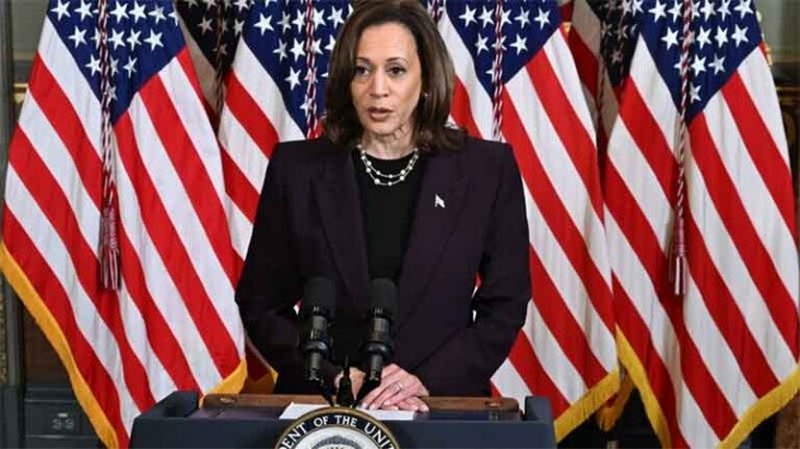
An Open Letter to Kamala Harris and the Democratic Party

By Richard Falk

[Prefatory Note: An earlier version of thiss Open Letter to Kamala Harris was published by CounterPunch on July 23, 2024;  so many developments have occurred in recent days as to make this longer version seem justifiable.]

An Open Letter to Kamala Harris and the Democratic Party, July 2024

These is every reason to be glad that Joe Biden finally acted responsibly by withdrawing his candidacy for a second term. It should have happened weeks earlier. To consider this overdue act ‘brave’ and ‘courageous’ is to rob those precious words of their proper meaning. Withdrawal was a pragmatic move forced upon Biden by mounting pressures from the leadership of the Democratic Party and the insistence of a large majority of potential voters.

It is certainly true that Trump and his Republican base repeatedly lie about their achievements and the failings of their opponents, yet it is time to admit that the exaggerations and selective self-congratulations of the Democratic Party are only a degree less deceptive from the perspective of meaningful political communication in self-respecting democracies. Exaggerations are best understood as ‘soft lies’ and are integral to the style of post-truth political discourse.  They should not be excused by such phrases as ‘that’s the way of politics.’

Biden, and so far, Kamala Harris, neither defend nor apologize for a foreign policy that has repudiated diplomacy in the Ukraine context and made no secret of its complicity in supporting Israel’s violent assault on the entire civilian population of Gaza that much of the rest of the world views as a transparent and severe instance of the crime of crimes, genocide. And this seems also reflects the implicit views of the International Court of Justice, including the American judge, in its preliminary and interim responses to the well-presented legal arguments of the South African team in The Hague on why Israel is violating the Genocide Convention and needs to be stopped.

Against this background, should not Democrats, and Americans generally reasonably expect more forthrightness from Harris before heeding unity pleas tied tightly to urgent pleas for yet more campaign donations? What Biden and Harris said in their comments on Biden’s decision to withdraw and call for support of the current VP is worth reflecting upon. This is especially so in view of the foregrounding of controversy during Netanyahu’s speech to a Joint Session of Congress, which were highlighted by bipartisan standing ovations with the hallowed halls, while on the streets near the Capital large hostile demonstrations led by Jewish Voices for Peace were seeking Netanyahu’s arrest for crimes rather than for applause for the world to witness.

At least, Harris absented herself from the Congressional appearance of Netanyahu, and limited herself to a private courtesy meeting in the White House entire separated from Biden’s welcoming of Netanyahu.

################

Biden’s words in his official letter announcing his withdrawal are best reflected upon in this wider political framing:

“My fellow Democrats, I have decided not to accept the nomination and to focus all my energies on my duties as President for the remainder of my term. My very first decision as the party nominee in 2020 was to pick Kamala Harris as my Vice President. And it’s been the best decision I’ve made. Today I want to offer my full support and endorsement for Kamala to be the nominee of our party this year. Democrats—it’s time to come together and beat Trump. Let’s do this.”

This statement is pretty much boiler plate for such occasions, although it would have been better appreciated if it had included some affirmation of Kamala Harris as having a bold independent, intelligent, compassionate voice that made her counsel so valuable during these past four years. Instead, Biden leaves a dominant impression that Harris performed so admirably because she did such a good job in implementing his policy agenda. Now all Americans will have an opportunity to listen to what Kamala Harris has to say on her own behalf. She is unquestionably an outstanding experienced public servant but to earn broad support beyond her appeal as not being ‘not Trump’ (or Vance) depends on expressing her vison of what presidential leadership should aspire to be at this critical stage in the country’s evolution. The Harris/Trump epic contest this November is shaping up to be one of the most vitally important presidential elections in the country’s 248 years of existence.

In accepting Biden’s endorsement and committing herself to seeking the presidency Kamala Harris’s words are for my taste too much in the spirit of presenting herself to the voting public as Biden 2.0: Of course, this is what a vice president is supposed to do while in service, but at this stage, Harris is uniquely challenged to be simultaneously Biden Vice President until his term ends in January 2025 and to make a distinct case for herself as the next leader of the country. In effect, this amounts to asking Harris to give strong hints as to her views on foreign policy, especially if they significantly different from those of Biden is to be in an impossible position. It is not to be expected that Harris makes explicit note of such differences as that would be divisive given

the circumstances associated with having been Biden’s loyal junior partner during these four years of his presidency.

Her words on accepting Biden’s endorsement of her candidacy are probably neither better nor worse than could be expected given such he sensitive situation.

“I am running to be President of the United States.

“It has been the honor of a lifetime to serve alongside our Commander-in-Chief, my friend, President Joe Biden – one of the finest public servants we will ever know. And I am honored to have his support and endorsement. [emphasis in original]

“And I am eager to run on the record of what Joe and I have accomplished together. We built our country back after our predecessor left it in shambles – making historic progress in upgrading our nation’s infrastructure, fighting climate change, and more. We are stronger today because we took action – together – to invest in America’s future.”

The language is a gracious expression of her experience while serving as VP, but also again it manages nothing revealing about Harris’ worldview beyond her embedded commitment to carry on the work as VP during the remainder of the Biden presidency, which is to be judged as compiling a record to be assessed by its positive impacts on the lives of Americans, conveying an image of US foreign policy being so bipartisan that is not worth talking about, or more truthfully because both its defense and critique would be divisive. The Democratic Party is badly split with regard to its attitude toward complicity with the Israeli perpetrators of criminal policies and practices in Gaza, including those that are parallel yet apart from the genocide issue, On July 19 the ICJ pronounced by a near unanimous majority of the 15 judges who issued a decision on Israel’s multiply wrongful occupation of Gaza and drew the legal conclusion that Israel should be required to depart from Gaza, the West Bank, and East Jerusalem as quickly as possible. Although the decision is within the ICJ category of ‘Advisory Opinions’ it sets forth an authoritative determination of the international law issues and their consequences, including the ICJ insistence that Israel, all States, and the UN itself implements its extremely far reaching rulings. [“Legal Consequences Arising from the Policies and Practices of Isael in the Occupied Palestinian Territory Including East Jerusalem,” 19 July 2024].

It is possible that Kamala Harris, who admirably acknowledged in declaring her candidacy that she must earn the nomination not merely inherit it as a Biden final bequest, will give a forthright speech to the American people that exhibits some measure of independence, and abandons the incredible stance of Democratic Party nominees to be silent this year about the world out there beyond American borders at a time when the US role has never been more controversially intrusive. Surely, Biden’s frequent claims that America is in the best position of any country to provide global leadership, a view widely contested outside the West, deserve either a reasoned reaffirmation or, more appropriately, a prudent modification that is sensitive to criticisms and failures as it is boastful about achievements.

Aside from her double identity as VP and presidential candidate, Harris has a great opportunity to speak in her own voice, and not just channel the Biden record, but will she seize it? Looking back at her autobiography, The Truths We HoldAn American Journey, I was encouraged by the pride she took in being part of an activist family of color dedicated to progressive causes while growing into adulthood, including activist opposition to the Vietnam War and almost daily engagement in the civil rights movement. And even during her semi-obligatory downplayed meeting in the White House with Netanyahu, she seemed to distance herself from the mindless immorality of Israel’s behavior in Gaza since October 7. Since March she has been more forthright that Biden in supporting a war-ending ceasefire.

Also, encouraging are her rumored intention to replace the foreign policy team of Antony Blinken and Jake Sullivan that have served as such mediocre Biden international ideologues, especially Blinken whose startling ignorance of international affairs and excessive embrace of Israel have not served well the country or the Democratic Party. Perhaps, Democratic Party incredible silence amid engagement in two controversial and dangerous wars was after all a clever tactical diversion of attention from the world scene to domestic realities.

Harris can bring enthusiasm to her candidacy by talking about reinvigorating US commitments peace and justice in the world. Her choice of a running mate, promised by August 7 will be one opportunity for a fresh start, particularly is she has the political and moral wisdom to pass over Josh Shapiro who has been in the Biden camp on Israel, and hostile to pro-Palestinian campus activism.

In closing, I should acknowledge that despite the deplorable prospect of a second Trump term made worse by an awareness that JD Vance would then be a heartbeat away from presidential leadership, I had substantive reservations about supporting Biden/Harris, despite appreciating much of their domestic record, because of their foreign policy. It posed for me, to put it bluntly, an unwelcome choice between a warmonger and a mentally unstable incipient fascist. I confess to nightmares that this is still my choice, or and not yet sure whether Harris will make the fundamental adjustments in governance that might at least restore US credentials as first among the world’s ‘liberal democracies.’

I should also add that I was disappointed by the domestic failure of the Biden/Harrris presidency to do more to protect the academic freedom of pro-Palestinian protests on college campuses and elsewhere. and by the related refusal to take responsibility for protecting all its students, and not just Jewish students as beneficiaries of donor interferences with the integrity of America’s once proud centers of higher education. One result has been to lead such institutions to take punitive action against foreign, especially Muslim, students who dare express their pro-Palestinian sentiments by way of civic activism.

As many Americans are assessing the highly objectionable Netanyahu visit to Washington during this past week, it is a time to elevate the electoral dialogue not only at the presidential level but also in relation to the many important Congressional contests. This unfortunate display of perverse diplomacy will also test Harris’ composure in her role as Vice President, whether to exhibit politeness but refrain from an ideological embrace of a foreign leader with a scandalous record, and from early accounts she seems to have handled the political delicacies of the situation in an encouragingly skillful manner.

Richard Falk is an international law and international relations scholar who taught at Princeton University for forty years.

26 July 2024

Source: countercurrents.org
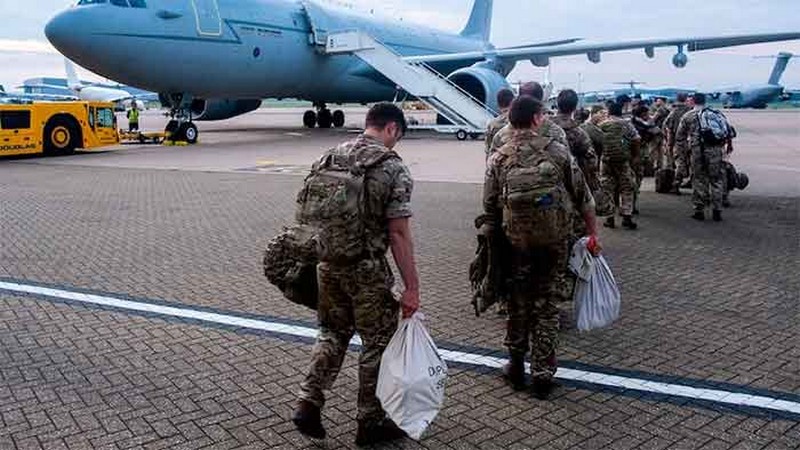
Feminists in Resistance condemns the shamefully misogynistic, terrifying, discriminatory, regressive attitude of the Institute of Chartered Accountants of India

By Press Release

Mr Ranjeet Kumar Agarwal
President
Institute of Chartered Accounts of India
ICAI Bhawan, New Delhi 700 002

Subject: Feminists in Resistance (FIR) condemns the shamefully misogynistic, terrifying, discriminatory, regressive attitude of the Institute of Chartered Accountants of India to its fellow female students, members, fellows, colleagues and staff

Sir,

Feminists in Resistance (FIR), a feminist group based in Kolkata, in unequivocal terms strongly condemns the extremely painful, shamefully misogynistic, terrifying, discriminatory and regressive attitude towards its female students, members, fellows, colleagues and staff.

FIR draws your attention towards the shameful incident that happened in your presence, on the first day of International Conference for CA Students held during 22nd and 23rd June of this year in Kolkata with over 3,600 participants. At the inaugural event, all women present in the hall, were asked to vacate the first five rows of the hall at the demand of the Chief Guest Swami Gyanvatsalya from BAPS Swaminarayan Mandir. As is reported, the Swami threatened to leave if his demand is not met.

By denying the presence and visibility of women in the hall in the presence of the Swami, the ICAI has violated their Right to Equality, which is a fundamental right enshrined in the Constitution of India. Provisions related to this right contained in Articles 14 to 18 form the basis ofjustice and equality in society. These provisions give them the right of equal treatment, and of not being discriminated on the grounds of religion, race, caste, sex, or place of birth.

Meeting such a highly discriminatory, regressive, and  misogynistic, demand by a 75-year-old statutory body like ICAI, that boasts of having 43% female CA members amongst a total of nearly 4,00,000 CA members is, if not an insult to all, definitely an insult to its 43% female community. The frantic announcement on the mike for all the female event organizers, volunteers, and attendees, to disappear from the sight of Swami by vacating the prominent front rows shows the real face of ICAI that claims to work for equality and respect.

It is not the first time the Swami has made such  demands. In 2020, he left an event without delivering his speech after seeing women in the front row. The incident was handled with greater dignity, and the pride of women was not compromised. In contrast, the acquiescence to his unreasonable demand by ICAI is highly condemnable.

Known in the public domain as a life coach and eminent motivational speaker, Swami  Gyanvatsalya apparently gives inspiring talks on personal development, spirituality, and social issues. His views and aspirations for social reform seem to rest on making women invisible, and an outright denial of women’s contribution to the social and economic life and activity of the society we live in. It is, therefore, alarming that the ICAI made such a man the Chief Guest of the ceremony without any background check or for that matter, that the ICAI has no views of its own.

At the ceremony the Swami spoke about making India ‘Viksit’ and ‘Viswaguru’ by 2024. And you, Mr President, yourself highlighted the increasing number of Women Chartered Accountants in India, despite proudly claiming that one in every three members of ICAI is female; ironically it was the same women that you removed from the front rows of the session from the big all-male stage.

In abiding by the Swami’s demand, the ICAI too is complicit in encouraging discriminatory practices and pushing back women whose entry into the public domain, and especially in male-dominated professions, is beginning to scale new heights in recent years, be it engineering, chartered accountancy, civil services or the navy or air force. It is also to be noted that such an event is happening in a professional arena that is seeing, and takes pride in, the steady increase in women’s participation. A 2024 Economic Times report states that from an 8% increase in women membership in ICAI in 2000, the increase today is nearly 30%.

Institutions like the Institute of Chartered Accountants of India (ICAI), an educated and informed professional body, are seen bending down to the diktats of Hindu spiritual leaders. This deference to the Chief Guest demonstrates the valorisation of misogyny that comes from the Manusmriti, which is also becoming apparent in other educational and professional institutions.

As a group of feminist workers, students, homemakers, and professionals,  Feminists in Resistance (FIR) is deeply concerned by the ongoing entrenchment of patriarchal practices in the backdrop of the rising Hindu majoritarian politics, whose goal of a Hindu Rashtra rests on the exclusion of women, Dalits, Adivasis, LGBTQIA+ individuals, and people from all marginalised communities.

The assault on marginalized communities does not stop at religious minorities.  The politics of exclusion are permeating across large sections of society, and women are also getting affected as their entry and participation in public life is antithetical to the ethos of Hindu Rashtra. The BJP and its allies, which form  the current ruling party in the Centre, are guided by the same  valorisation of misogyny, resulting in the reversal of the hard-won rights of women over the years.

Mr President, your silence is a new low for women’s empowerment in India. Society demands much more from people like you, the torchbearers of progress, than stoic silence.  Feminists  in Resistance demands a public apology, and an assurance that such an incident will not occur in future, under any circumstance whatsoever.

Dr Nisha Biswas

(Feminists in Resistance)

24 July 2024

Source: countercurrents.org
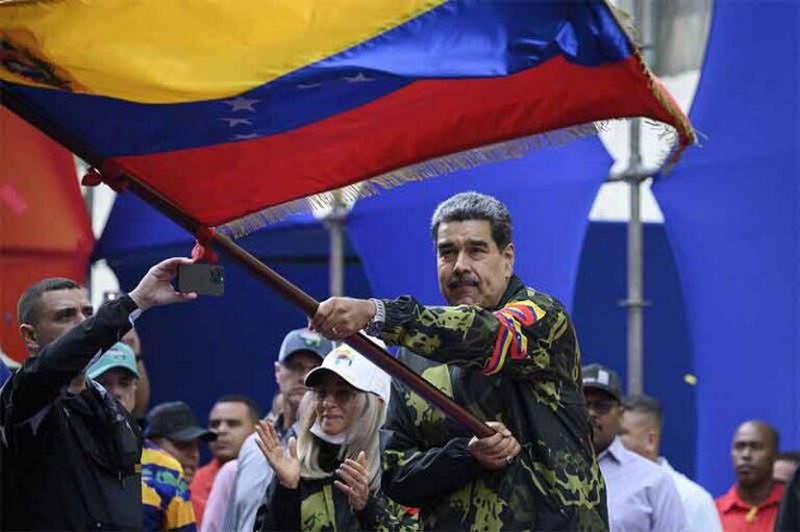
Genocidaire Netanhayu Does Not Deserve to Address Congress a Record 4th Time

By Ralph Nader

Unless the GOP in Congress has a last-minute rethinking, Prime Minister Benjamin Netanyahu of Israel will enjoy his record-setting fourth address to a Joint Session of Congress on July 24, 2024. Scores of Democrats are boycotting the event. Meanwhile, in Gaza, Netanyahu is committing mass murders and war crimes and killing hundreds of thousands of Palestinian civilians, most of them children and women, blowing up their crucial life-saving facilities, and wounding the survivors rendered homeless and defenseless against Biden-provided deadly weapons.

Netanyahu’s first address to Congress was on July 10, 1996, when a younger Netanyahu promised to end U.S. aid to a prosperous Israel and received a standing ovation. He obviously has broken this promise, as his U.S. lobbies have demanded tens of billions of more U.S. taxpayer dollars.

Netanyahu’s third address to Congress on March 3, 2015 bypassed then-President Barack Obama in an arrogant breach of protocol. The supine Congress gave him many standing ovations.

The push for Netanyahu’s forthcoming address was spearheaded by the fanatic GOP House Speaker Michael Johnson (R-La.) who easily politically intimidated House Democratic leader Hakeem Jeffries (D-N.Y.) and Senate Democratic Majority Leader Chuck Schumer (D-N.Y.) into going along.

Johnson’s invitation has outraged many Israelis—majorities of whom despise Netanyahu, who is under indictment by Israeli prosecutors for corruption and because of his attacks on the judiciary and destruction of their protest rights.

Former House Speaker Nancy Pelosi (D-Calif.) told CNN regarding the invitation to Netanyahu, “I think this is wrong.” Hundreds of House and Senate staffers are signing petitions urging Democratic lawmakers to protest or boycott it. The staffers pointed to “bombings of schools, hospitals, and mosques” and a “campaign of mass starvation against Palestinian children” in addition to censoring media coverage of the devastation.

Noting that world opinion is overwhelmingly against Netanyahu’s genocidal war on Gaza, the staffers’ letter emphasized that “Israelis have been protesting in the streets for months, decrying his failure to negotiate a cease-fire and release of hostages.”

An outstanding affirmation of these sentiments by congressional staff came on June 26, 2024 in an op-ed in The New York Times by six very prominent Israelis, including a former prime minister, titled “We Are Israelis Calling on Congress to Disinvite Netanyahu.” It is pertinent to present an excerpt from this urgent dispatch, as follows:

WE ARE ISRAELIS CALLING ON CONGRESS TO DISINVITE NETANYAHU

By David Harel, Tamir Pardo, Talia Sasson, Ehud Barak, Aaron Ciechanover, and David Grossman

The leaders of the U.S. Congress have invited Prime Minister Benjamin Netanyahu of Israel to address a joint meeting of the Senate and the House of Representatives on July 24. Normally, we Israelis would consider the invitation recognition of our two nations’ shared values and a welcome gesture from our closest friend and ally, to whom we are deeply and morally indebted.

But Congress has made a terrible mistake. Mr. Netanyahu’s appearance in Washington will not represent the State of Israel and its citizens, and it will reward his scandalous and destructive conduct toward our country.

We come from a variety of areas of Israeli society: science, technology, politics, defense, law, and culture. We are thus in a good position to assess the overall effect of Mr. Netanyahu’s government, and like many, we believe that he is driving Israel downhill at an alarming speed, to the extent that we may eventually lose the country we love.

To date, Mr. Netanyahu has failed to come up with a plan to end the war in Gaza and has been unable to gain the freedom of scores of hostages. At the very least, an invitation to address Congress should have been contingent upon resolving these two issues and, in addition, calling for new elections in Israel.

Inviting Mr. Netanyahu will reward his contempt for U.S. efforts to establish a peace plan, allow more aid to the beleaguered people of Gaza, and do a better job of sparing civilians. Time and again, he has rejected President Joe Biden’s plan to remove Hamas from power in Gaza through the establishment of a peacekeeping force. Such a move would very likely bring in its wake a far broader regional alliance, including a vision to solve the Israeli-Palestinian conflict, which is not only in Israel’s interest but also in the interest of both political parties in the United States. Mr. Netanyahu constitutes the main obstacle to these outcomes.

The man who will address Congress next month has failed to assume responsibility for the blunders that allowed the Hamas assault, initially blaming security chiefs (then quickly backtracking), and has yet to announce the establishment of a direly needed state commission of inquiry headed by a Supreme Court judge to look into the fiasco.
…..
Above all, many Israelis are convincedthat Mr. Netanyahu has obstructed proposed deals with Hamas that would have led to the release of the hostages in order to keep the war going and thus avoid the inevitable political reckoning he will face when it ends.
…..
For months now, many of us have participated in nationwide demonstrations demanding an immediate release of the hostages, an end to the war, and immediate elections. Polls of Israelis show that a majority want immediate elections, or elections right at the end of the war.

A large portion of Israelis have lost faith in Mr. Netanyahu’s government.
…..
That’s where Mr. Netanyahu’s speech to Congress fits in with his political needs. No doubt it will be carefully stage-managed to prop up his shaky hold on power and allow him to boast to his constituents about America’s so-called support for his failed policies.

His supporters in Israel will be emboldened by his appearance in Congress to insist that the war continue, which will further distance any deal to secure the release of the hostages, including several U.S. citizens.

Giving Mr. Netanyahu the stage in Washington will all but dismiss the rage and pain of his people, as expressed in the demonstrations throughout the country. American lawmakers should not let that happen. They should ask Mr. Netanyahu to stay home.

This full communication to the American people can be seen either inThe New York Times or the Congressional Record of July 11, 2024.

There will be mass protests outside Congress on July 24 by Jewish Voice for Peace, CodePink, Veterans for Peace, and other civic groups. But there would be a great benefit for boycotters like Sen. Bernie Sanders (I-Vt.), Progressive House Caucus Chair Pramila Jayapal (D-Wash.), and Rep. Mark Pocan (D-Wis.) to secure a House Committee Room and invite, via Zoom, these six leading Israelis to testify before the media on the same day. These messages could reach the grisly, complicit architects of this disgraceful defamation of the Peoples’ Legislature more than the bullhorns of the upstanding peaceful protesters kept far away by the security police.

Ralph Nader is a consumer advocate and the author of “The Seventeen Solutions: Bold Ideas for Our American Future” (2012).

24 July 2024

Source: countercurrents.org