Just International

France Will Back ECOWAS Military Action In Niger, Says Macron

By Countercurrents Collective

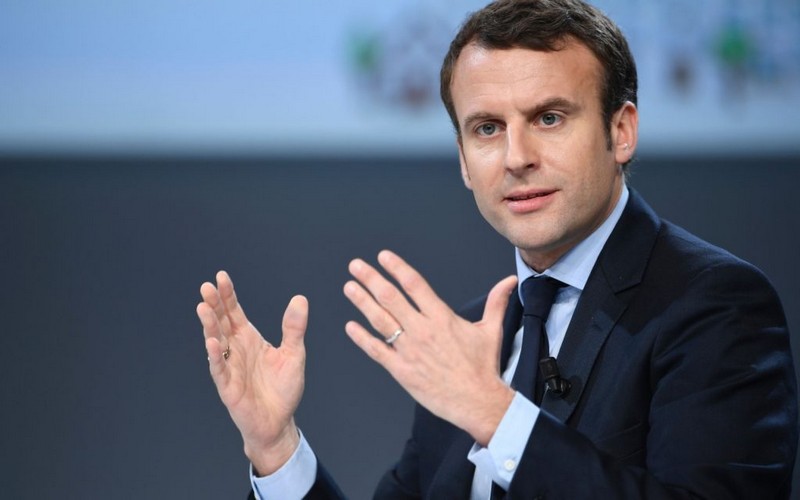
France will back any military action by the 11-member Economic Community of West African States (ECOWAS) in Niger to restore the rule of ousted leader Mohamed Bazoum, French President Emmanuel Macron has said.

Macron made the comment in response to the Expulsion of French Ambassador Sylvain Itte from Niamey by the new military government that seized power in a coup last month.

The Nigerien Foreign Ministry said on Friday that the envoy had 48 hours to leave the country for refusing to meet with the new military rulers and for “other actions of the French government contrary to the interests of Niger.”

Speaking to diplomats in Paris about French foreign policy on Monday, Macron stated that, despite the coup leaders’ order, the ambassador would remain in Niger.

“France and its diplomats have faced particularly difficult situations in some countries in recent months, from Sudan, where France has been exemplary, to Niger at this very moment, and I applaud your colleague and your colleagues who are listening from their post,” Macron said.

The West African regional bloc, ECOWAS, has been attempting to negotiate with Niger’s coup leaders, but has warned that, if diplomatic efforts fail, troops would be sent to Niamey to restore democratic rule.

Macron called Bazoum’s decision not to resign, which has kept him under house arrest since the July 26 coup, “courageous” on Monday.

France would not change its stance on condemning the coup and supporting Bazoum, the French president insisted, emphasizing that the ousted leader had been democratically elected.

“I think our policy is the right one. It is based on the courage of President Bazoum, and on the commitments of our ambassador on the ground who is remaining despite all the pressure, despite all the declarations made by the illegitimate authorities,” said the French President.

Meanwhile, hundreds of supporters of the military rulers reportedly rallied on Saturday near a French military base in the capital, Niamey, calling for the removal of the soldiers, while accusing Paris of meddling in the country’s affairs.

France still has 1,500 soldiers in its former French colony, its last remaining ally in the Sahel region in the fight against jihadist insurgencies.

Earlier this month, Niger’s new rulers announced the cancellation of five military treaties with France. However, France insisted on carrying out the cooperation agreements, claiming they were signed with the country’s “legitimate authorities.”

Niger Expels French Ambassador

Earlier media reports said:

The military government of Niger on Friday gave French Ambassador Sylvain Itte 48 hours to leave the country. The Nigerien Foreign Ministry justified the decision by Itte not responding to their invitation to a meeting and “other actions of the French government contra the interests of Niger.”

The ambassador’s expulsion comes a month after the military of the former French colony, led by Brigadier General Abdourahamane Tchiani, ousted President Mohamed Bazoum. In response, the ECOWAS sanctioned Niger and threatened a military intervention to “restore democracy.”

Guinea, Mali, Burkina Faso

Guinea declined to go along with the sanctions, while neighboring Mali and Burkina Faso said they would consider such an intervention an act of war against them. Late on Thursday, Niger authorized the two neighbors to come to its defense should ECOWAS invade.

“The three countries have agreed to grant each other facilities for mutual assistance in matters of defense and security in the event of aggression or terrorist attacks,” said a joint statement by their foreign ministries.

Malian Foreign Minister Abdoulaye Diop and his Burkinabe colleague Olivia Rouamba also condemned the “illegal, illegitimate, and inhumane” sanctions imposed on Niger by ECOWAS and the West African Economic and Monetary Union (UEMOA).

Omar Alieu Touray, the ECOWAS Commission president, told AP that the sanctions have resulted in  “serious socio-economic crises” in the country, but were “for the interest of the people of Niger.”

The ECOWAS has repeatedly announced final plans for a military intervention, while continuing to send diplomatic missions to Niamey. On Thursday, a delegation of Islamic leaders was dispatched to Niger by Nigerian President Bola Tinubu, who also chairs the bloc.

Earlier this week, General Tchiani outlined a proposal to return to civilian rule that would take “no longer than three years,” but warned neighbors and France not to interfere in Niger’s internal affairs.

The ECOWAS rejected the offer, demanding the immediate reinstatement of Bazoum. Touray told AP on Friday that the military option was “still on the table.”

Algeria Rejects French Request To Use Airspace For Niger Operation

A media report said:

Algeria has turned down a request from France to fly over its airspace for a military operation in Niger, several media reports suggested on Tuesday, citing the North-African nation’s state radio.

Algerian national radio reported late on Monday that it had learned from sources that France was planning a strike against Niamey’s new military rulers if they did not release Bazoum, who has been held in detention since July 26.

“Faced with Algerian refusal, France turned to Morocco, asking for authorization to pass its military planes through its airspace,” state radio said, according to the Nova News Agency.

France, which has some 1,500 troops in its former colony Niger, has been accused by the coup leadership of plotting to intervene militarily to restore the ousted president’s rule.

The French foreign ministry denied any intention of armed intervention in the West African country but has repeatedly stated that it supports the efforts of the West African regional bloc ECOWAS, which has threatened to use force to reverse the coup.

“France’s joint defense staff denies making a request to fly over Algerian territory,” a source in the French army told Reuters.

ECOWAS said on Friday that it has decided on a date for sending troops into Niger if diplomatic efforts at Bazoum’s restoration prove unsuccessful.

Benin, Ivory Coast, and Nigeria have all expressed willingness to contribute troops to the bloc’s mission to restore democratic order in Niger.

Earlier this month, Algerian President Abdelmadjid Tebboune raised concerns about an armed response to the crisis in Niamey, which he fears “could ignite the whole Sahel region.” He added that Algeria would not use force against its neighbors.

In a statement on Saturday, the Foreign Affairs Ministry of Algeria insisted on a peaceful restoration of democratic order, opposing the possible use of an ECOWAS “standby force” against the military leaders in Niger, saying military interventions “have brought more problems than solutions.”

African Union

The African Union (AU) warned on Tuesday against any external interference in Niger, after suspending the country’s membership as punishment for the coup.

West African Sanctions Blocking Food And Aid From Reaching Niger

A Reuters report said on Thursday:

Thousands of trucks carrying food bound for Niger have been stuck for weeks at the Malanville crossing in northern Benin due to border closures and sanctions imposed on the new military government in Niamey,.

Benin’s Malanville checkpoint is said to be one of the busiest in West Africa, with a high volume of transit goods, including humanitarian aid products passing through into neighboring Niger.

Traffic at the crossing is reportedly at a standstill, with a line of loaded trucks stretching back 25 kilometers “from the muddy shores of the Niger River that marks the frontier.”

Some small traders are said to be using wooden boats to transport goods across the river into the country, evading border guards.

“We do not know if we have taken hostage or what,” a Nigerien driver told the agency, who said he had been stranded at the border with his cargo of sugar and oil for more than 20 days. “There is no food, there is no water, there is nowhere to sleep,” he added.

The ECOWAS restricted financial transactions and blocked entry into Niger from its member states in order to force the new military government to reinstate ousted president Mohamed Bazoum.

3.3 Million People Food-Insecure In Niger

The World Food Programme (WFP) warned last week that the blockade was “greatly affecting the supply of vital foods and medical supplies inti Niger,” where it claimed at least 3.3 million people were already “acutely food-insecure” prior to the coup.

Margot van der Velden, the UN food agency’s acting regional director for Western Africa, has urged “all parties to facilitate humanitarian exemptions, enabling immediate access to people in need of critical food and basic necessities.”

The WFP’s West African regional spokesperson, Djaounsede Madjiangar, has also told the media that about 6,000 tonnes of goods from the agency, including cereals, cooking oil, and food for malnourished children, are stuck outside Niger.

Businesses in the country’s southern neighbor, Nigeria, have expressed concern about the impact of the sanctions on cross-border trade. Some residents told the Associated Press that business owners have taken advantage of the border closure to raise the prices of goods.

Burkina Faso And Mali Shall Defend Niger

Niger’s new military government has signed an order authorizing Burkina Faso and Mali to send their defense and security forces to intervene on its territory in the event of an attack, the parties announced on Thursday.

The agreement was reached in Niamey when both Burkina Faso’s foreign minister, Olivia Rouamba, and her Malian counterpart, Abdoulaye Diop, paid a visit to the coup leader, General Abdourahamane Tchiani.

“The three countries have agreed to grant other facilities for mutual assistance in matters of defense and security in the event of aggression or terrorist attacks,” the foreign ministries said in a joint statement late Thursday.

Last month, the military governments of Mali and Burkina Faso warned African states and Western governments against intervening militarily in neighboring Niger.

Any such move would be considered a declaration of war against Bamako and Ouagadougou, the military rulers said in a statement.

Consultation Framework Of 3 Countries

Mali, Burkina Faso and Nifer have also announced the formation of a “consultation framework” and a “a joint secretatiat” to coordinate efforts to “deal with the multiple situations and challenges to which they are exposed.”

Countercurrents is answerable only to our readers. Support honest journalism because we have no PLANET B

29 August 2023

Source: countercurrents.org
Border Massacres: The Saudi Ethiopian Migrant Killings

By Dr Binoy Kampmark

We know what the regime is like.  Starving a country, bombing its hospitals and strafing its schools has been minor fare for the Kingdom of Saudi Arabia.  The population of Yemen has found this out to their colossal cost.  Add to this the killing of dissident journalists, the enthusiastic employment of capital punishment, and an assortment of other merry brutalities, the House of Saud comes across as a fine specimen of barbaric endeavour. At least, as many of their supporters will say, they like international sporting events, and are willing to throw money at, if not completely purchase, full events.

The killing of hundreds of Ethiopian migrants and asylum seekers attempting to cross the Yemen-Saudi border between March 2022 and June 2023 on what is sometimes termed the “Eastern Route” or “Yemeni Route”, adds another notch to the belt of bloodstained achievements for Riyadh.  According to Human Rights Watch (HRW), “Saudi officials are killing hundreds of women and children out of view of the rest of the world while they spend billions on sports-washing to try to improve their image.”

This is all the more galling for the fact that such human travellers must already encounter the dangers of the sea route from the Horn of Africa to Yemen, where they transit through to Saudi Arabia.

HRW’s “They Fired Upon Us Like Rain”: Saudi Arabian Mass Killings of Ethiopian Migrants at the Yemen-Saudi Border, is a self-explanatory document of brutal recounting by the human rights organisation, based on the interviews of 42 Ethiopian and asylum seekers.  In addition to the interviews, HRW also based its report on findings drawn from an examination of 350 videos and photographs which were posted on social media platforms.

The examination had been conducted by members of the Independent Forensic Expert Group (IFEG) of the International Rehabilitation Council for Torture Victims.  In terms of injuries, IFEG members reached the conclusion that some exhibited “clear patterns consistent with the explosion of munitions with capacity to produce heat and fragmentation”; others had “characteristics consistent with gunshot wounds”.

The 2023 report by the organisation notes some staggering instances of violence against those seeking refuge.  “People travelling in groups, from four to five people to up to several hundred describe being attacked by mortar projectiles and other explosive weapons by Saudi border guards once they had crossed the border from Yemen into Saudi Arabia.”

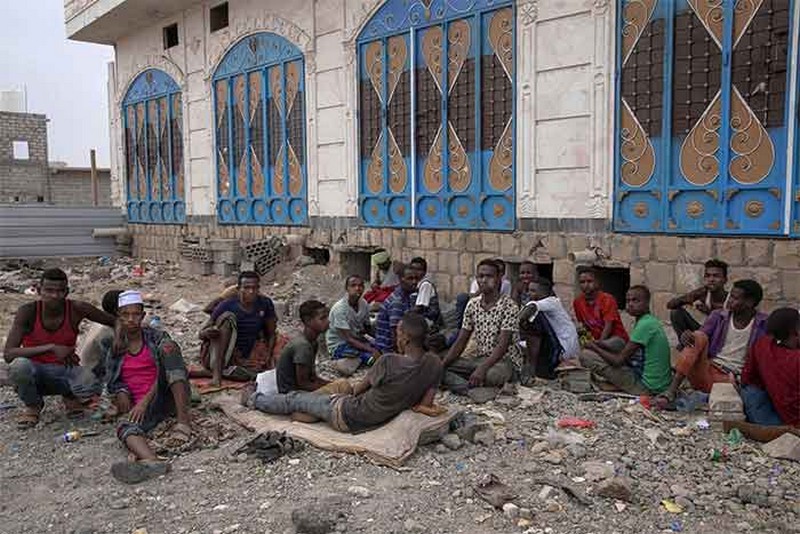
The allegations are biting in their cruelty, and bring to mind the fact that killings of this sort have happened before along this notorious route.  Saudi border guards, it would seem, went so far as to deploy an array of weapons against such migrants, showing a keen interest targeting Ethiopians.  Some 750,000 live and work in the kingdom.  Movement through the borders is based on the less than scrupulous calculations and account keeping of smugglers.

Those interviewed in the camp of Saada, base for tens of thousands awaiting their chance to enter Saudi Arabia, note how Saudi border guards tended to patrol the border equipped with “large vehicles” that could have been rocket launchers.  “Many migrants,” the report also notes, “said they saw cameras tracking their movements mounted on what looked like ‘street lamps’ on the Saudi side of the border.”

Some of the brutalities are calculatingly perverse.  According to HRW, some Saudi border guards dared to discriminate, bothering to first ask “survivors in which limb of their body they preferred to be shot, before shooting them at close range.”  Such viciousness sounds boardroom, spreadsheet and planned, which is exactly the sort of matter that should leave a trail right to the Kingdom’s central authorities.  But it could also be burgeoning sadism at work, an instant where the powerful can determine what bit of maiming might excite them.

For Ethiopians moving through the precarious route, the circumstances of misery have been frequent.  While Riyadh engages in its own complement of viciousness, the Yemeni guards have also had a hand in raping and torturing asylum seekers from the Horn of Africa.  Houthi forces have not been averse to targeting immigration centres in Sana’a.

The spectacle recounted by HRW is grotesque.  But so are acts involving the turning back of refugee-laden boats or repulsing migrant vessels in the Mediterranean, and conspiring to frustrate the international right to asylum which has been in print since 1951. Little wonder that little mention was made of the killings when they were made aware to envoys from France, Germany, The Netherlands, Sweden and the European Union, not to mention the Biden administration.  (The US State Department insists that it “quickly engaged senior Saudi officials to express our concern” on receiving news on the gruesome details.)

In August 2001, the Australian government, a most eminent practitioner in the field of subverting international refugee law, did not deploy rocket launchers against those seeking asylum off Christmas Island on the Norwegian vessel, the MV Tampa.  But they did deploy fully armed members of the Special Air Services regiment, an elite force that would go on to, some years later, inflict atrocities upon Afghans in an unwinnable war.

This HRW Report adds another bloodied entry to the chronicles of the Kingdom’s brutality.  The organisation claims that the killings continue.  The sanguinary story is a telling one for those who continue to conduct relations with Riyadh without murmur or concern, delighted by the riches of its Sovereign Wealth Fund.  Its officials know all too well that cash and the expediency of security softens a prickly conscience.

Dr. Binoy Kampmark was a Commonwealth Scholar at Selwyn College, Cambridge.

29 August 2023

Source: countercurrents.org
Declaration of the BRICS Johannesburg Summit

By Countercurrents Collective

XV BRICS Summit

Johannesburg II Declaration

BRICS and Africa: Partnership for Mutually Accelerated Growth, Sustainable Development and Inclusive Multilateralism

Sandton, Gauteng, South Africa Wednesday 23 August 2023

Preamble

  1. We, the Leaders of the Federative Republic of Brazil, the Russian Federation, the Republic of India, the People’s Republic of China and the Republic of South Africa met in Sandton, South Africa, from 22 to 24 August 2023 for the XV BRICS Summit held under the theme: “BRICS and Africa: Partnership for Mutually Accelerated Growth, Sustainable Development and Inclusive Multilateralism”.
  2. We reaffirm our commitment to the BRICS spirit of mutual respect and understanding, sovereign equality, solidarity, democracy, openness, inclusiveness, strengthened collaboration and consensus. As we build upon 15 years of BRICS Summits, we further commit ourselves to strengthening the framework of mutually beneficial BRICS cooperation under the three pillars of political and security, economic and financial, and cultural and people-to-people cooperation and to enhancing our strategic partnership for the benefit of our people through the promotion of peace, a more representative, fairer international order, a reinvigorated and reformed multilateral system, sustainable development and inclusive growth.

Partnership for Inclusive Multilateralism

  1. We reiterate our commitment to inclusive multilateralism and upholding international law, including the purposes and principles enshrined in the Charter of the United Nations (UN) as its indispensable cornerstone, and the central role of the UN in an international system in which sovereign states cooperate to maintain peace and security, advance sustainable development, ensure the promotion and protection of democracy, human rights and fundamental freedoms for all, and promoting cooperation based on the spirit of solidarity, mutual respect, justice and equality.
  2. We express concern about the use of unilateral coercive measures, which are incompatible with the principles of the Charter of the UN and produce negative effects notably in the developing world. We reiterate our commitment to enhancing and improving global governance by promoting a more agile, effective, efficient, representative, democratic and accountable international and multilateral system.
  3. We call for greater representation of emerging markets and developing countries, in international organizations and multilateral fora in which they play an important role. We also call for increasing the role and share of women from EMDCs at different levels of responsibilities in the international organizations.
  4. We reiterate the need for all countries to cooperate in promoting and protecting human rights and fundamental freedoms under the principles of equality and mutual respect. We agree to continue to treat all human rights including the right to development in a fair and equal manner, on the same footing and with the same emphasis. We agree to strengthen cooperation on issues of common interests both within BRICS and in multilateral fora including the United Nations General Assembly and Human Rights Council, taking into account the necessity to promote, protect and fulfil human rights in a non-selective, non-politicised and constructive manner and without double standards. We call for the respect of democracy and human rights. In this regard, we underline that they should be implemented on the level of global governance as well as at national level. We reaffirm our commitment to ensuring the promotion and protection of democracy, human rights and fundamental freedoms for all with the aim to build a brighter shared future for the international community based on mutually beneficial cooperation.
  5. We support a comprehensive reform of the UN, including its Security Council, with a view to making it more democratic, representative, effective and efficient, and to increase the representation of developing countries in the Council’s memberships so that it can adequately respond to prevailing global challenges and support the legitimate aspirations of emerging and developing countries from Africa, Asia and Latin America, including Brazil, India and South Africa, to play a greater role in international affairs, in particular in the United Nations, including its Security Council.
  6. We reaffirm our support for the open, transparent, fair, predictable, inclusive, equitable, non-discriminatory and rules-based multilateral trading system with the World Trade Organisation (WTO) at its core, with special and differential treatment (S&DT) for developing countries, including Least Developed Countries. We stress our support to work towards positive and meaningful outcomes on the issues at the 13th Ministerial Conference (MC13). We commit to engage constructively to pursue the necessary WTO reform with a view to presenting concrete deliverables to MC13. We call for the restoration of a fully and well-functioning two-tier binding WTO dispute settlement system accessible to all members by 2024, and the selection of new Appellate Body Members without further delay.
  7. We call for the need to make progress towards the achievement of a fair and market-oriented agricultural trading system, ending hunger, achieving food security and improved nutrition, promoting sustainable agriculture and food systems, and implement resilient agricultural practices. We emphasize the need to deliver on agriculture reform in accordance with the mandate in Article 20 of the Agreement on Agriculture, while recognizing the importance of respecting the mandates with regards to a Permanent Solution on Public Stockholding (PSH) for food security purposes and special safeguard mechanism (SSM) for developing countries, including LDCs, in their respective negotiating contexts. BRICS members are also concerned with trade restrictive measures which are inconsistent with WTO rules, including unilateral illegal measures such as sanctions, that affect agricultural trade.
  8. We support a robust Global Financial Safety Net with a quota-based and adequately resourced International Monetary Fund (IMF) at its centre. We call for the conclusion of the International Monetary Fund’s (IMF) 16th General Review of Quotas before 15 December 2023. The review should restore the primary role of quotas in the IMF. Any adjustment in quota shares should result in increases in the quota shares of emerging markets and developing economies (EMDCs), while protecting the voice and representation of the poorest members. We call for reform of the Bretton Woods institutions, including for a greater role for emerging markets and developing countries, including in leadership positions in the Bretton Woods institutions, that reflect the role of EMDCs in the world economy.

Fostering an Environment of Peace and Development

  1. We welcome the Joint Statement of the BRICS Ministers of Foreign Affairs and International Relations meeting on 1 June 2023 and note the 13th Meeting of BRICS National Security Advisors and High Representatives on National Security held on 25 July 2023.
  2. We are concerned about ongoing conflicts in many parts of the world. We stress our commitment to the peaceful resolution of differences and disputes through dialogue and inclusive consultations in a coordinated and cooperative manner and support all efforts conducive to the peaceful settlement of crises.
  3. We recognise the importance of the increased participation of women in peace processes including in conflict prevention and resolution, peacekeeping, peacebuilding, post-conflict reconstruction and development, and sustaining peace.
  4. We stress our commitment to multilateralism and to the central role of the United Nations which are prerequisites to maintain peace and security. We call on the international community to support countries in working together towards postpandemic economic recovery. We emphasise the importance of contributing to postconflict countries’ reconstruction and development and call upon the international community to assist countries in meeting their development goals. We stress the imperative of refraining from any coercive measures not based on international law and the UN Charter.
  5. We reiterate the need for full respect of international humanitarian law in conflict situations and the provision of humanitarian aid in accordance with the basic principles of humanity, neutrality, impartiality and independence established in UNGA resolution 46/182.
  6. We commend continued collective efforts of the United Nations, the African Union and sub-regional organisations, including in particular the cooperation between the United Nations Security Council and the African Union Peace and Security Council, to address regional challenges including maintaining peace and security, promoting peacebuilding, post-conflict reconstruction and development, and call for continued support by the international community to these endeavours using diplomatic means such as dialogue, negotiations, consultations, mediation, and good offices, to resolve international disputes and conflicts, settle them on the basis of mutual respect, compromise, and the balance of legitimate interests. We reiterate that the principle “African solutions to African problems” should continue to serve as the basis for conflict resolution. In this regard we support African peace efforts on the continent by strengthening the relevant capacities of African States. We are concerned about the worsening violence in Sudan. We urge the immediate cessation of hostilities and call for the unimpeded access of the Sudanese population to humanitarian assistance. We remain concerned at the situation in the Sahel region, in particular in the Republic of Niger. We support the sovereignty, independence, territorial integrity and national unity of Libya. We reiterate our support for a “Libyan led and Libyan-owned” political process with UN-led mediation as the main channel. We emphasize the need to achieve an enduring and mutually acceptable political solution to the question of Western Sahara in accordance with relevant UNSC resolutions and in fulfilment of the mandate of the United Nations Mission for the Referendum in Western Sahara (MINURSO).
  7. We welcome the positive developments in the Middle East and the efforts by BRICS countries to support development, security and stability in the region. In this regard, we endorse the Joint Statement by the BRICS Deputy Foreign Ministers and Special Envoys for the Middle East and North Africa at their meeting of 26 April 2023. We welcome the reestablishment of diplomatic relations between the Kingdom of Saudi Arabia and the Islamic Republic of Iran and emphasise that deescalating tensions and managing differences through dialogue and diplomacy is key to peaceful coexistence in this strategically important region of the world. We reaffirm our support for Yemen’s sovereignty, independence, and territorial integrity, and commend the positive role of all the parties involved in bringing about a ceasefire and seeking a political solution to end the conflict. We call on all parties to engage in inclusive direct negotiations and to support the provision of humanitarian, relief and development assistance to the Yemeni people. We support all efforts conducive to a political and negotiated solution that respects Syrian sovereignty and territorial integrity and the promotion of a lasting settlement to the Syrian crisis. We welcome the readmission of the Syrian Arab Republic to the League of Arab States. We express our deep concern at the dire humanitarian situation in the Occupied Palestinian Territories due to escalating violence under continued Israeli occupation and the expansion of illegal settlements. We call on the international community to support direct negotiations based on international law including relevant UN Security Council and General Assembly resolutions and the Arab Peace Initiative, towards a two-state solution, leading to the establishment of a sovereign, independent and viable State of Palestine. We commend the extensive work carried out by the United Nations Relief and Works Agency for Palestine Refugees in the Near East (UNRWA) and call for greater international support for UNRWA activities to alleviate the humanitarian situation of the Palestinian people.
  8. We express serious concern with the ongoing deterioration of the security, humanitarian, political and economic situation in Haiti. We believe that the current crisis requires a Haitian-led solution that encompasses national dialogue and consensus building among local political forces, institutions and the society. We call on the international community to support the Haitian endeavours to dismantle the gangs, enhance the security situation and put in place the foundations for long-lasting social and economic development in the country.
  9. We recall our national positions concerning the conflict in and around Ukraine as expressed at the appropriate fora, including the UNSC and UNGA. We note with appreciation relevant proposals of mediation and good offices aimed at peaceful resolution of the conflict through dialogue and diplomacy, including the African Leaders Peace Mission and the proposed path for peace.
  10. We call for the strengthening of disarmament and non-proliferation, including the Convention on the Prohibition of the Development, Production and Stockpiling of Bacteriological (Biological) and Toxin Weapons and on their Destruction (BTWC) and the Convention on the Prohibition of the Development, Production, Stockpiling and Use of Chemical Weapons and on Their Destruction (CWC), recognizing its role in safeguarding and for preserving their integrity and effectiveness to maintain global stability and international peace and security. We underline the need to comply with and strengthen the BTWC, including by adopting a legally binding Protocol to the Convention that provides for, inter alia, an efficient verification mechanism. We reassert our support for ensuring the long-term sustainability of outer space activities and prevention of an arms race in outer space (PAROS) and of its weaponization, including through negotiations to adopt a relevant legally binding multilateral instrument. We recognise the value of the updated Draft Treaty on the Prevention of the Placement of Weapons in Outer Space, the Threat or Use of Force against Outer Space Objects (PPWT) submitted to the Conference on Disarmament in 2014. We stress that practical and non-binding commitments, such as Transparency and Confidence-Building Measures (TCBMs), may also contribute to PAROS.
  11. We reiterate the need to resolve the Iranian nuclear issue through peaceful and diplomatic means in accordance with the international law, and stress the importance of preserving the JCPOA and the UNSCR 2231 to international non-proliferation as well as wider peace and stability and hope for relevant parties to restore the full and effective implementation of the JCPOA at an early date.
  12. We express strong condemnation of terrorism in all its forms and manifestations whenever, wherever and by whomsoever committed. We recognize the threat emanating from terrorism, extremism conducive to terrorism and radicalization. We are committed to combating terrorism in all its forms and manifestations, including the cross-border movement of terrorists, and terrorism financing networks and safe havens. We reiterate that terrorism should not be associated with any religion, nationality, civilization or ethnic group. We reaffirm our unwavering commitment to contribute further to the global efforts of preventing and countering the threat of terrorism on the basis of respect for international law, in particular the Charter of the United Nations, and human rights, emphasizing that States have the primary responsibility in combating terrorism with the United Nations continuing to play central and coordinating role in this area. We also stress the need for a comprehensive and balanced approach of the whole international community to effectively curb the terrorist activities, which pose a serious threat, including in the present-day pandemic environment. We reject double standards in countering terrorism and extremism conducive to terrorism. We call for an expeditious finalization and adoption of the Comprehensive Convention on International Terrorism within the UN framework and for launching multilateral negotiations on an international convention for the suppression of acts of chemical and biological terrorism, at the Conference of Disarmament. We welcome the activities of the BRICS Counter-Terrorism Working Group and its five Subgroups based upon the BRICS Counter-Terrorism Strategy and the BRICS Counter-Terrorism Action Plan. We look forward to further deepening counter-terrorism cooperation.
  13. While emphasising the formidable potential of Information and Communication Technologies (ICTs) for growth and development, we recognise the existing and emerging possibilities they bring for criminal activities and threats, and express concern over the increasing level and complexity of criminal misuse of ICTs. We welcome the ongoing efforts in the Ad Hoc Committee to elaborate a comprehensive international convention on countering the use of ICTs for criminal purposes and reaffirm our commitment to cooperating in the implementation of the mandate adopted by the UN General Assembly resolution 75/282 in a timely manner.
  14. We reaffirm our commitment to the promotion of an open, secure, stable, accessible and peaceful ICT-environment, underscored the importance of enhancing common understandings and intensifying cooperation in the use of ICTs and Internet. We support the leading role of the United Nations in promoting constructive dialogue on ensuring ICT-security, including within the UN Open-Ended Working Group on security of and in the use of ICTs 2021-2025, and developing a universal legal framework in this realm. We call for a comprehensive, balanced, objective approach to the development and security of ICT products and systems. We underscore the importance of establishing legal frameworks of cooperation among BRICS countries on ensuring security in the use of ICTs. We also acknowledge the need to advance practical intra-BRICS cooperation through implementation of the BRICS Roadmap of Practical Cooperation on ensuring security in the use of ICTs and the activities of the BRICS Working Group on security in the use of ICTs.
  15. We reaffirm our commitment to strengthen international cooperation and our collaboration against corruption and continue to implement the relevant international agreements in this regard, in particular the United Nations Convention against Corruption. With the knowledge that the scourge of corruption knows no geographic boundaries, and respects no society or humanitarian cause, we have jointly put in place a strong foundation to combat corruption through capacity building, including, conducting training programmes and sharing of current best practices applied in each of our countries. We will continue to reinforce these efforts and increase our knowledge of the emerging avenues. We will enhance international cooperation through collaborative information-sharing networks, and mutual legal assistance to combat illicit financial flows, counter safe havens and support the investigation, prosecution and recovery of stolen assets subject to domestic laws and regulations of BRICS countries.

Partnership for Mutually Accelerated Growth

  1. We note that an unbalanced recovery from the shock and hardship of the pandemic is aggravating inequality across the world. The global growth momentum has weakened, and the economic prospects have declined owing to trade fragmentation, prolonged high inflation, tighter global financial conditions, in particular the increase in interest rates in advanced economies, geopolitical tensions and increased debt vulnerabilities.
  2. We encourage multilateral financial institutions and international organizations to play a constructive role in building global consensus on economic policies and preventing systemic risks of economic disruption and financial fragmentation. We call for Multilateral Development Banks (MDBs) to continue implementing the recommendations which should be voluntary within MDBs governance frameworks, from the G20 Independent Review Report on MDBs Capital Adequacy Frameworks to increase their lending capacities, while safeguarding MDBs long-term financial stability, robust creditor rating, and preferred creditor status.
  3. We believe that multilateral cooperation is essential to limit the risks stemming from geopolitical and geoeconomic fragmentation and intensify efforts on areas of mutual interest, including but not limited to, trade, poverty and hunger reduction, sustainable development, including access to energy, water and food, fuel, fertilizers, as well as mitigating and adapting to the impact of climate change, education, health as well as pandemic prevention, preparedness and response.
  4. We note that high debt levels in some countries reduce the fiscal space needed to address ongoing development challenges aggravated by spillover effects from external shocks, particularly from sharp monetary tightening in advanced economies. Rising interest rates and tighter financing conditions worsen debt vulnerabilities in many countries. We believe it is necessary to address the international debt agenda properly to support economic recovery and sustainable development, while taking into account each nation’s laws and internal procedures. One of the instruments, amongst others, to collectively address debt vulnerabilities is through the predictable, orderly, timely and coordinated implementation of the G20 Common Framework for Debt Treatment, with the participation of official bilateral creditors, private creditors and Multilateral Development Banks in line with the principle of joint action and fair burden-sharing.
  5. We reaffirm the importance of the G20 to continue playing the role of the premier multilateral forum in the field of international economic and financial cooperation that comprises both developed and emerging markets and developing countries where major economies jointly seek solutions to global challenges. We look forward to the successful hosting of the 18th G20 Summit in New Delhi under the Indian G20 Presidency. We note the opportunities to build sustained momentum for change by India, Brazil and South Africa presiding over the G20 from 2023 to 2025 and expressed support for continuity and collaboration in their G20 presidencies and wish them all success in their endeavours. Therefore, we are committed to a balanced approach by continuing to amplify and further integrate the voice of the global South in the G20 agenda as under the Indian Presidency in 2023 and the Brazilian and South African presidencies in 2024 and 2025.
  6. We recognize the important role of BRICS countries working together to deal with risks and challenges to the world economy in achieving global recovery and sustainable development. We reaffirm our commitment to enhance macro-economic policy coordination, deepen economic cooperation, and work to realize strong, sustainable, balanced and inclusive economic recovery. We emphasize the importance of continued implementation of the Strategy for BRICS Economic Partnership 2025 in all relevant ministerial tracks and working groups. We will look to identify solutions for accelerating the implementation of the 2030 Agenda for Sustainable Development.
  7. Recognising that BRICS countries produce one third of the world’s food, we reaffirm our commitment to strengthen agricultural cooperation and promote sustainable agriculture and rural development of BRICS countries for enhancing food security both within BRICS and worldwide. We emphasize the strategic importance of facilitating steady access to agricultural inputs, on ensuring global food security. We reiterate the importance of implementing the Action Plan 2021-2024 for Agricultural Cooperation of BRICS Countries, and welcome the Strategy on Food Security Cooperation of the BRICS Countries. We underscore the need for resilient food supply chains.
  8. We recognize the dynamism of the digital economy in enabling global economic growth. We also recognize the positive role that trade and investment can play in promoting sustainable development, national and regional industrialization, the transition towards sustainable consumption and production patterns. We recognize the challenges facing trade and investment development in the digital era and acknowledge that BRICS members are at different levels of digital development, and thus recognize the need to address respective challenges including the various digital divides. We welcome the establishment of the BRICS Digital Economy Working Group. We reaffirm that openness, efficiency, stability, reliability, are crucial in tackling economic recovery challenges and boosting international trade and investment. We encourage further cooperation among BRICS countries to enhance the interconnectivity of supply chains and payment systems to promote trade and investment flows. We agree to strengthen exchanges and cooperation in trade in services as established in the BRICS Framework for Cooperation on Trade in Services, with the BRICS Business Council and BRICS Women’s Business Alliance (WBA) with the aim to promote implementation of BRICS Trade in Services Cooperation Roadmap and relevant documents including the BRICS Framework for cooperation in Trade in Professional Services.
  9. We reiterate our support to the African Union Agenda 2063 and to Africa’s efforts towards integration, including through the operationalisation of the African Continental Free Trade Area. We underscore that the AfCFTA is poised to create a predictable environment for investments, particularly in infrastructure development, and provides an opportunity to find synergies with partners on cooperation, trade and development on the African continent. We underline the importance of strengthening the partnership between BRICS and Africa to unlock mutually beneficial opportunities for increased trade, investment and infrastructure development. We welcome progress made towards the AfCFTA Protocol on Women and Youth in Trade and recognise its potential to be a catalyst for economic and financial inclusion of women and youth into Africa’s economy. We stress the importance of issues including industrialization, infrastructure development, food security, agriculture modernisation for sustainable growth health-care, and tackling climate change for the sustainable development of Africa.
  10. We further note that the African continent remains on the margins of the global trading system and has much to gain through BRICS collaboration. The African Continental Free Trade Agreement (AfCFTA) and BRICS cooperation presents opportunities for the continent to transition away from its historic role as a commodity exporter towards higher productivity value addition. We welcome and support the inclusion of the African Union as a member of the G20 at the New Delhi G20 Summit.
  11. We commit to strengthening intra-BRICS cooperation to intensify the BRICS Partnership on New Industrial Revolution (PartNIR) and create new opportunities for accelerating industrial development. We support intra-BRICS cooperation in human resource development on new technologies through the BRICS Centre for Industrial Competences (BCIC), BRICS PartNIR Innovation Centre, BRICS Startup Forum and collaboration with other relevant BRICS mechanisms, to carry out training programmes to address challenges of NIR for Inclusive and sustainable industrialization. We reiterate our commitment to continue discussion on the establishment of BCIC in cooperation with UNIDO to jointly support the development of Industry 4.0 skills development among the BRICS countries and to promote partnerships and increased productivity in the New Industrial Revolution. We look forward to the cooperation with UNIDO and request the PartNIR Advisory Group to coordinate with UNIDO.
  12. We recognize the crucial role that Micro, Small and Medium-sized Enterprises (MSMEs) play in unlocking the full potential of BRICS economies and reaffirm the importance of their participation in production networks and value chains. We will continue joint efforts aimed at eliminating constraints such as lack of easily accessible information and financing, skills shortage, network effects, as well as regulation of excessive administrative burden, and procurement related constraints ensuring easily accessible information and financing, skill up gradation and market linkage. We endorse the BRICS MSMEs Cooperation Framework which promotes BRICS cooperation on such issues as exchanging information about fairs and exhibitions, and encouraging participation of MSMEs in the selected events to enhance interactions and cooperation amongst MSMEs which may secure deals. Member states will facilitate exchange of business missions, and promote sector specific Business to Business (B2B) meetings amongst the MSMEs, to enhance enterprise-to-enterprise cooperation and business alliances between the MSMEs of BRICS, with a particular focus on women-owned and youth-owned MSMEs. Member States will provide information relating to MSMEs, business development opportunities and possibilities of partnerships for the development of MSMEs in the BRICS countries. In addition, we will promote sharing of information on trade policies, and market intelligence for MSMEs to increase their participation in international trade. We will facilitate access to resources and capabilities such as skills, knowledge networks, and technology that could help MSMEs improve their participation in the economy and global value chains. We will exchange views on measures and approaches for integrating BRICS MSMEs into global trade and Global Value Chains, including by sharing experience on how regional integration approaches can support the development of MSMEs.
  13. We reiterate the commitment to promote employment for sustainable development, including to develop skills to ensure resilient recovery, genderresponsive employment and social protection policies including workers’ rights. We reaffirm our commitment to respect, promote, and realise decent work for all and achieve social justice. We will step up efforts to effectively abolish child labour based on the Durban Call to Action and accelerate progress towards universal social protection for all by 2030. We will invest in skills development systems to improve access to relevant and quality skills for workers in the informal economy and workers in new forms of employment as we seek to increase productivity for economically, socially, and environmentally sustainable and inclusive economies. We will explore the development of a BRICS platform to implement the Productivity Ecosystem for Decent Work.
  14. We acknowledge the urgent need for tourism industry recovery and the importance of increasing mutual tourist flows and will work towards further strengthening the BRICS Alliance for Green Tourism to promote measures, which can shape a more resilient, sustainable and inclusive tourism sector.
  15. We agree to enhance exchanges and cooperation in the field of standardization and make full use of standards to advance sustainable development.
  16. We agree to continue to deepen cooperation on competition amongst BRICS countries and create a fair competition market environment for international economic and trade cooperation.
  17. We agree to enhance dialogue and cooperation on intellectual property rights through, the BRICS IPR cooperation mechanism (IPRCM). As we celebrate a decade of cooperation of the Heads of Intellectual Property Offices, we welcome the alignment of their workplan to the Sustainable Development Goals.
  18. We support enhancing statistical cooperation within BRICS as data, statistics and information form the basis of informed and effective decision making. On the 10th anniversary of its first issue, we support the continued release of the BRICS Joint Statistical Publication 2023 and the BRICS Joint Statistical Publication Snapshot 2023 for engaging a wider range of users.
  19. We recognise the widespread benefits of fast, inexpensive, transparent, safe, and inclusive payment systems. We look forward to the report by the BRICS Payment Task Force (BPTF) on the mapping of the various elements of the G20 Roadmap on Crossborder Payments in BRICS countries. We welcome the sharing of experience by BRICS members on payment infrastructures, including the interlinking of cross-border payment systems. We believe this will further enhance cooperation amongst the BRICS countries and encourage further dialogue on payment instruments to facilitate trade and investment flows between the BRICS members as well as other developing countries. We stress the importance of encouraging the use of local currencies in international trade and financial transactions between BRICS as well as their trading partners. We also encourage strengthening of correspondent banking networks between the BRICS countries and enabling settlements in the local currencies.
  20. We task our Finance Ministers and/or Central Bank Governors, as appropriate, to consider the issue of local currencies, payment instruments and platforms and report back to us by the next Summit.
  21. We recognise the key role of the NDB in promoting infrastructure and sustainable development of its member countries. We congratulate Ms Dilma Rousseff, former President of the Federative Republic of Brazil, as President of the New Development Bank (NDB) and are confident that she will contribute to strengthening of the NDB in effectively achieving its mandate. We expect the NDB to provide and maintain the most effective financing solutions for sustainable development, a steady process in membership expansion, and improvements in corporate governance and operational effectiveness towards the fulfilment of NDB’s General Strategy for 2022-2026. We welcome the three new members of the NDB, namely Bangladesh, Egypt and United Arab Emirates. We encourage the NDB to play an active role in knowledge sharing process and incorporate the member-countries best practices in its operational policies, according to its governance mechanism and taking into account national priorities and development goals. We see the NDB as an important member of global MDB family, given its unique status as an institution created by EMDCs for EMDCs.
  22. We welcome the establishment of the BRICS Think Tank Network for Finance during 2022 and efforts to operationalise the Network. We will work towards the identification and designation of the lead Think Tanks from member countries. We endorse the Operational Guidelines for the BRICS Think Tank Network for Finance developed under South Africa’s Chairship, which provides guidance on how the Network will operate in terms of governance, delivery of outputs and funding of the BRICS Think Tank Network for Finance.
  23. We recognise that infrastructure investments support human, social, environmental, and economic development. We note that the demand for infrastructure is growing, with a greater need for scale, innovation and sustainability. We highlight that BRICS countries continue to offer excellent opportunities for infrastructure investment. In this regard, we further recognise that leveraging governments’ limited resources to catalyse private capital, expertise and efficiency will be paramount in closing the infrastructure investment gap in BRICS countries.
  24. We continue to support the work of the Task Force on Public-Private Partnership (PPP) and Infrastructure in sharing knowledge, good practices and lessons learnt on the effective development and delivery of infrastructure for the benefit of all member countries. In this regard, the Task Force has collated guiding principles that advance the adoption of a programmatic approach in infrastructure delivery and promotes the use of PPPs and other blended finance solutions in infrastructure development and delivery. We look forward to convening the Infrastructure Investment Symposium later this year for a discussion amongst BRICS governments, investors and financiers on ways to work with the private sector to promote the use of green, transition and sustainable finance in infrastructure delivery.
  25. The BRICS Contingent Reserve Arrangement (CRA) continues to be an important mechanism for mitigating the effects of a crisis situation, complementing existing international financial and monetary arrangements, and contributing to the strengthening of the global financial safety net. We reiterate our commitment to the continued strengthening of the CRA and look forward to the successful completion of the sixth Test-Run later in 2023. We also support progress made to amend the outstanding technical issues on the Inter-Central Bank Agreement and endorse the proposed theme of 2023 BRICS Economic Bulletin ‘Challenges in a post-COVID-19 environment.
  26. We welcome the continued cooperation on topics of mutual interest on sustainable and transition finance, information security, financial technology, and payments, and look forward to building on work in these areas under the relevant work streams, including the proposed study on leveraging technology to address climate data gaps in the financial sector and support the proposed initiatives aimed at enhancing cyber security and developing financial technology, including the sharing of knowledge and experience in this area.

Partnership for Sustainable Development

  1. We reaffirm the call for the implementation of the 2030 Agenda for Sustainable Development in its three dimensions: economic, social and environmental, in a balanced and integrated manner by mobilising the means required to implement the 2030 Agenda. We urge donor countries to honour their Official Development Assistance (ODA) commitments and to facilitate capacity building and the transfer of technology along with additional development resources to developing countries, in line with the national policy objectives of recipients. We highlight in this regard that the SDGs Summit to be held in New York in September 2023 and the Summit of the Future to be held in September 2024, constitute significant opportunities for renewing international commitment on the implementation of the 2030 Agenda.
  2. We recognise the importance of implementing the SDGs in an integrated and holistic manner, inter alia through poverty eradication as well as combating climate change whilst promoting sustainable land use and water management, conservation of biological diversity, and the sustainable use of its components and the biodiversity and the fair and equitable sharing of the benefits arising out of the utilisation of genetic resources, including by appropriate access to genetic resources, in line with Article 1 of Convention on Biological Diversity (CBD) and in accordance with national circumstances, priorities and capabilities. We also underscore the significance of technology and innovation, international cooperation, public-private partnerships, including South-South cooperation.
  3. We underscore the importance of collaborating on biodiversity conservation and sustainable use matters, such as research and development of conservation technologies, development of protected areas, and the combatting of illegal trade in wildlife. Furthermore, we will continue to actively participate in international biodiversity-related conventions, such as the Convention on Biological Diversity (CBD), its protocols and advancing the implementation of its Kunming-Montreal Global Biodiversity Framework (GBF), Convention on International Trade in Endangered Species of Wild Fauna and Flora (CITES), United Nations Convention to Combat Desertification (UNCCD) and working towards the Global Initiative on Reducing Land Degradation and Enhancing Conservation of Terrestrial Habitats.
  4. We welcome the historic adoption of the Kunming-Montreal Global Biodiversity Framework (KMGBF) at the 15th Conference of the Parties to the Convention on Biological Diversity (CBD COP-15) in December 2022. We thus undertake to strive towards the implementation of all the global goals and targets of the KMGBF, in accordance with the principles of common but differentiated responsibilities and national circumstances, priorities and capabilities in order to achieve its mission to halt and reverse biodiversity loss and vision of living in harmony with nature. We urge developed countries to provide adequate means of implementation, including financial resources, capacity-building, technical and scientific cooperation, and access to and transfer of technology to fully implement the KMGBF. We also acknowledge the potential for cooperation on the sustainable use of biodiversity in business to support local economic development, industrialisation, job creation, and sustainable business opportunities.
  5. We reemphasise the importance of implementing the United Nations Framework Convention on Climate Change (UNFCCC) and its Paris Agreement and the principle of Common but Differentiated Responsibilities and Respective Capabilities (CBDR-RC) enhancing low-cost climate technology transfer, capacity building as well as mobilizing affordable, adequate and timely delivered new additional financial resources for environmentally sustainable projects. We agree that there is a need to defend, promote and strengthen the multilateral response to Climate Change and to work together for a successful outcome of the 28th Conference of the Parties of the United Nations Framework Convention on Climate Change (UNFCCC COP28). We recognise that the Means of Implementation should be enhanced by developed countries, including through adequate and timely flow of affordable Climate Finance, Technical Cooperation, Capacity Building and transfer of Technology for climate actions. Furthermore, there is a need for comprehensive financial arrangements to address loss and damage due to climate change, including operationalising Fund on Loss and Damage as agreed at the UNFCCC COP27 to benefit developing countries.
  6. We agree to address the challenges posed by climate change while also ensuring a just, affordable and sustainable transition to a low carbon and low-emission economy in line with the principles of CBDR-RC, in light of different national circumstances. We advocate for just equitable and sustainable transitions, based on nationally defined development priorities, and we call on developed countries to lead by example and support developing countries towards such transitions.
  7. We stress the need for support of developed countries to developing countries for access to existing and emerging low-emission technologies and solutions that avoid, abate and remove GHG emissions and enhance adaptation action to address climate change. We further emphasize the need for enhancing low-cost technology transfer and for mobilizing affordable, adequate new and timely delivered additional financial resources for environmentally sustainable projects.
  8. We express our strong determination to contribute to a successful COP28 in Dubai, later this year, with the focus on implementation and cooperation. As the main mechanism for assessing collective progress towards achieving the purpose of the Paris Agreement and its long-term goals and promoting climate action on all aspects of the Paris Agreement under the UNFCCC, the Global Stocktake must be effective and identifying implementation gaps on the global response to climate change, whilst prospectively laying the foundations for enhanced ambition by all, in particular by developed countries. We call upon developed countries to fill outstanding gaps in means of implementation for mitigation and adaptation actions in developing countries.
  9. We welcome Brazil’s candidacy to host COP30 as the year 2025 will be key to the very future of the global response to climate change.
  10. We further urge developed countries to honour their commitments, including of mobilizing the USD 100bn per annum by 2020 and through 2025 to support climate action in developing countries. In addition, importance of doubling adaptation finance by 2025 from the base of 2019 is also key in order to implement adaptation actions. Moreover, we look forward to setting up an ambitious New Collective Quantified goal, prior to 2025, as per the needs and priorities of developing countries. This will require enhanced financial support from developed countries that is additional, grant-based and/or concessional, timely delivered, and adequate to take forward adaptation and mitigation action in a balanced manner. This extends to support for the implementation of the Nationally Determined Contributions (NDCs).
  11. We acknowledge that the financial mechanisms and investments to support the implementation of environment and climate change programmes need to be enhanced, and increased momentum to reform these financial mechanisms, as well as the multilateral development banks and international financial institutions is required. In this regard, we call on the shareholders of these institutions to take decisive action to scale-up climate finance and investments in support towards achieving the SDGs related to climate change and make their institutional arrangements fit for purpose.
  12. We oppose trade barriers including those under the pretext of tackling climate change imposed by certain developed countries and reiterate our commitment to enhancing coordination on these issues. We underline that measures taken to tackle climate change and biodiversity loss must be WTO-consistent and must not constitute a means of arbitrary or unjustifiable discrimination or a disguised restriction on international trade and should not create unnecessary obstacles to international trade. Any such measure must be guided by the principle of common but differentiated responsibilities and respective capabilities (CBDR-RC), in the light of different national circumstances. We express our concern at any WTO inconsistent discriminatory measure that will distort international trade, risk new trade barriers and shift burden of addressing climate change and biodiversity loss to BRICS members and developing countries.
  13. We commit to intensify our efforts towards improving our collective capacity for global pandemic prevention, preparedness, and response, and strengthening our ability to fight back any such pandemics in the future collectively. In this regard, we consider it important to continue our support to the BRICS Virtual Vaccine Research and Development Center. We look forward to the holding of the High-Level Meeting on Pandemic Prevention, Preparedness and Response to be to be held on 20th September 2023 at the United Nations General Assembly and we call for an outcome that will mobilise political will and continued leadership on this matter.
  14. We recognize the fundamental role of primary health care as a key foundation for Universal Health Care and health system’s resilience, as well as on prevention and response to health emergencies. We believe that the High-level meeting on Universal Health Coverage (UHC) to be held at the UN General Assembly in September 2023 would be a critical step for mobilizing the highest political support for UHC as the cornerstone to achieving SDG 3 (good health and well-being). We reiterate our support for the international initiatives, with the leadership of WHO, on addressing tuberculosis (TB) and look forward to actively engaging in the United Nations HighLevel Meeting on TB in New York in September this year and encourage an assertive political declaration.
  15. Taking into account national legislation and priorities of BRICS countries, we commit to continue cooperation in traditional medicine in line with previous meetings of the BRICS Health Ministers and their outcomes, as well as the BRICS High-Level Forum on the Traditional Medicine.
  16. We note that BRICS countries have significant experience and potential in the field of nuclear medicine and radio pharmaceutics. We welcome the decision to establish a BRICS Working Group on Nuclear Medicine to expand cooperation in this area.
  17. We welcome South Africa hosting BRICS Science Technology and Innovation (STI) Steering Committee meetings throughout 2023 as the main coordination mechanism to manage and ensure the successful hosting of BRICS STI activities. We call on the Steering Committee to undertake a strategic review of the thematic focus areas and organisational framework of the BRICS STI Working Group to ensure better alignment as appropriate with current BRICS policy priorities. We commend South Africa for hosting the 8th BRICS Young Scientist Forum and the concurrent organization of the 6th BRICS Young Innovator Prize. We commend the success of the BRICS STI Framework Programme in continuing to connect scientists through the funding of an impressive portfolio of research projects between BRICS countries. We also appreciate the efforts of the BRICS STI Framework Programme Secretariat in facilitating a discussion to launch in 2024 a Call for Proposals for BRICS STI Flagship Projects. We recognize the progress achieved in the implementation of the BRICS Action Plan for Innovation Cooperation (2021-24). In this regard we encourage further actions to be taken on initiatives such as the BRICS Techtransfer (the BRICS Centers for Technology Transfer) and the iBRICS Network (the dedicated BRICS innovation network). We also welcome more actions to be taken, especially by the BRICS STIEP (Science, Technology and Innovation Entrepreneurship Partnership) Working Group, in the fields of innovation and entrepreneurship, for example, through support for the BRICS Incubation Training and Network, the BRICS Technology Transfer Training Program, and the BRICS Startup Forum.
  18. We congratulate our Space agencies for successfully implementing the BRICS RSSC agreement by exchanging of BRICS Satellite Constellation data samples; holding of the 1st BRICS RSSC Application Forum in November 2022; convening of the 2nd meeting of BRICS Space Cooperation Joint Committee in July 2023 and continue to successfully implement the BRICS Constellation Pilot Projects. We encourage the BRICS Space agencies to continue enhancing the level of cooperation in remote sensing satellite data sharing and applications, so as to provide data support for the economic and social development of the BRICS countries.
  19. While emphasising the fundamental role of access to energy in achieving SDGs and noting the outlined risks to energy security we highlight the need for enhanced cooperation among the BRICS countries as major producers and consumers of energy products and services. We believe that energy security, access and energy transitions are important and need to be balanced. We welcome the strengthening of cooperation and increasing investment in the supply chains for energy transitions and note the need to fully participate in the clean energy global value chain. We further commit to increase the resilience of energy systems including critical energy infrastructure, advancing the use of clean energy options, promoting research and innovation in energy science and technology. We intend to address energy security challenges by incentivising energy investment flows. We share a common view, taking into consideration national priorities and circumstances, on the efficient use of all energy sources, namely: renewable energy, including biofuels, hydropower, fossil fuels, nuclear energy and hydrogen produced on the basis of zero and low emission technologies and processes, which are crucial for a just transition towards more flexible, resilient and sustainable energy systems. We recognise the role of fossil fuels in supporting energy security and energy transition. We call for collaboration amongst the BRICS countries on technological neutrality and further urge for the adoption of common, effective, clear, fair and transparent standards and rules for assessment of emissions, elaboration of compatible taxonomies of sustainable projects as well as accounting of carbon units. We welcome joint research and technical cooperation within the BRICS Energy Research Cooperation Platform, and commend the holding of the BRICS Youth Energy Summit and other related activities.
  20. We remain committed to strengthening BRICS cooperation on population matters, because the dynamics of population age structure change, and pose challenges as well as opportunities, particularly with regard to women’s rights, youth development, disability rights, employment and the future of work, urbanisation, migration and ageing.
  21. We reiterate the importance of BRICS cooperation in the field of disaster management. We stress the importance of disaster risk reduction measures towards building resilient communities and the exchange of information on best practices, adoption of climate change adaptation initiatives, and integration of indigenous knowledge systems and improving investments in early warning systems and disaster resilient infrastructure. We further stress the need for holistic inclusivity in disaster risk reduction by mainstreaming disaster risk reduction in government and communitybased planning. We encourage expanding intra-BRICS cooperation through joint activities for enhancing the capacities of national emergency systems.
  22. We agree with the importance placed by South Africa as BRICS Chair on Transforming Education and Skills Development for the Future. We support the principle of facilitating mutual recognition of academic qualifications amongst BRICS countries to ensure mobility of skilled professionals, academics, and students and recognition of qualifications obtained in each other’s countries subject to compliance of applicable domestic laws. We welcome concrete proposals made during the 10th Meeting of BRICS Ministers of Education focusing on critical areas in education and training such as entrepreneurship development, skills for the changing world, out-ofschool youth, climate change, labour market intelligence, early childhood development and university global ranking. We appreciate the progress on education and Technical and Vocational Education and Training (TVET) cooperation, in particular, the operationalization of the BRICS TVET Cooperation Alliance which focuses on strengthening communication and dialogue and early finalisation of the Charter of the BRICS TVET Cooperation Alliance thereby promoting substantial cooperation in TVET, integrating TVET with industry.
  23. We commit to strengthening skills exchanges and cooperation amongst BRICS countries. We support the digital transformation in education and TVET space, as each BRICS country is domestically committed to ensure education accessibility and equity, and promote the development of quality education. We agree to explore opportunities on BRICS digital education cooperative mechanisms, hold dialogues on digital education policies, share digital educational resources, build smart education systems, and jointly promote digital transformation of education in BRICS countries and to develop a sustainable education by strengthening the cooperation within BRICS Network University and other institution-to-institution initiatives in this area, including the BRICS University League. We welcome the BRICS Network University International Governing Board consideration to expand membership of the BRICS Network University to include more universities from the BRICS countries. We underscore the importance of sharing best practices on expanding access to holistic early childhood care and education to provide a better start in life for children within BRICS countries. We welcome the decision to facilitate exchanges within BRICS countries on equipping learners with skills fit for the future through multiple learning pathways.

Deepening People-to-People Exchanges

  1. We reaffirm the importance of BRICS people-to-people exchanges in enhancing mutual understanding, friendship and cooperation. We appreciate the progress made under South Africa’s Chairship in 2023, and including in the fields of media, culture, education, sports, arts, youth, civil society and academic exchanges, and acknowledge that people-to-people exchanges play an essential role in enriching our societies and developing our economies.
  2. We recognise that youth is a driving force for accelerating the achievement of sustainable development goals. Leadership by young people is fundamental to accelerating a just transition premised on the principles of intergenerational solidarity, international cooperation, friendship, and societal transformation. A culture of entrepreneurship and innovation must be nurtured for the sustainable development of our youth. We reiterate the importance of the BRICS Youth Summit as a forum for meaningful engagement on youth matters and recognise its value as a coordinating structure for youth engagement in BRICS. We welcome the finalisation of the BRICS Youth Council Framework.
  3. We commend the successful holding of the BRICS Business Forum. On its 10th anniversary, we welcome the BRICS Business Council’s self-reflection with a focus on milestones achieved and areas of improvement. We further welcome the intention of the BRICS Business Council to track intra-BRICS trade flows, identify areas where trade performance has not met expectations and recommend solutions.
  4. We acknowledge the critical role of women in economic development and commend the BRICS Women’s Business Alliance. We recognise that inclusive entrepreneurship and access to finance for women would facilitate their participation in business ventures, innovation, and the digital economy. We welcome initiatives that will enhance agricultural productivity and access to land, technology, and markets for women farmers.
  5. On its 15th anniversary, we recognise the value of BRICS Academic Forum as a platform for deliberations and discussions by leading BRICS academics on the issues confronting us today. The BRICS Think Tanks Council also celebrates 10 years of enhancing cooperation in research and capacity building among the academic communities of BRICS countries.
  6. Dialogue among political parties of BRICS countries plays a constructive role in building consensus and enhancing cooperation. We note the successful hosting of BRICS Political Parties Dialogue in July 2023 and welcome other BRICS countries to host similar events in the future.
  7. We reaffirm our commitments under all the instruments and Agreements signed and adopted by the Governments of the BRICS States on Cooperation in the Field of Culture and commit to operationalising the Action Plan (2022-2026) as a matter of urgency through the BRICS Working Group on Culture.
  8. We commit to ensure the integration of culture into our national development policies, as a driver and an enabler for the achievement of the goals set out in the UN 2030 Agenda for Sustainable Development. We also reaffirm our commitment to promote culture and the creative economy as a global public good as adopted at the World Conference on Culture and Sustainable Development-MONDIACULT22.
  9. We agree to support the protection, preservation, restoration and promotion of our cultural heritage, including both tangible and intangible heritage. We commit to take strong action to fight against illicit trafficking of our cultural property and encourage dialogue among culture and heritage stakeholders and commit to promote digitization of the culture and creative sectors by finding technologically innovative solutions and pushing for policies that transform ways in which cultural contents are produced, disseminated, and accessed. We reaffirm our commitment to support participation of cultural enterprises, museums and institutions in international exhibitions and festivals, hosted by BRICS countries and extend mutual assistance in the organisation of such events.
  10. We welcome the establishment of a Joint Working Group on Sports to develop a BRICS Sport Cooperation Framework, during South Africa’s Chairship in 2023. We look forward to the successful holding of the BRICS Games in October 2023 in South Africa. We commit to provide the necessary support for BRICS countries to participate in international sport competitions and meetings held in their own country in compliance with relevant rules.
  11. We emphasize that all BRICS countries have rich traditional sport culture and agree to support each other in the promotion of traditional and indigenous sports among BRICS countries and around the world. We encourage our sport organizations to carry out various exchange activities both online and offline.
  12. We commend the progress made by BRICS countries in promoting urban resilience including through the BRICS Urbanisation forum and appreciate the commitment to further strengthen inclusive collaboration between government and societies at all levels, in all BRICS countries in implementing the 2030 Agenda and promoting the localisation of the SDGs.

Institutional Development

  1. We reiterate the importance of further enhancing BRICS solidarity and cooperation based on our mutual interests and key priorities, to further strengthen our strategic partnership.
  2. We note with satisfaction the progress made on BRICS institutional development and stress that BRICS cooperation needs to embrace changes and keep abreast with the times. We shall continue to set clear priorities in our wide-ranging cooperation, on the basis of consensus, and make our strategic partnership more efficient, practical and results oriented. We task our Sherpas to continue discussions on a regular basis on BRICS institutional development, including on consolidation of cooperation.
  3. We welcome the participation, at the invitation of South Africa as BRICS Chair, of other EMDCs as “Friends of BRICS” in BRICS meetings below Summit-level and in the BRICS-Africa Outreach and BRICS Plus Dialogue during the XV BRICS Summit in Johannesburg in 2023.
  4. We appreciate the considerable interest shown by countries of the global South in membership of BRICS. True to the BRICS Spirit and commitment to inclusive multilateralism, BRICS countries reached consensus on the guiding principles, standards, criteria and procedures of the BRICS expansion process.
  5. We have decided to invite the Argentine Republic, the Arab Republic of Egypt, the Federal Democratic Republic of Ethiopia, the Islamic Republic of Iran, the Kingdom of Saudi Arabia and the United Arab Emirates to become full members of BRICS from 1 January 2024.
  6. We have also tasked our Foreign Ministers to further develop the BRICS partner country model and a list of prospective partner countries and report by the next Summit.
  7. Brazil, Russia, India and China commend South Africa’s BRICS Chairship in 2023 and express their gratitude to the government and people of South Africa for holding the XV BRICS Summit.
  8. Brazil, India, China and South Africa extend their full support to Russia for its BRICS Chairship in 2024 and the holding of the XVI BRICS Summit in the city of Kazan, Russia.

Countercurrents is answerable only to our readers. Support honest journalism because we have no PLANET B.

27 August 2023

Source: countercurrents.org

Educational Fantasies in a Dystopian Conjunture

By Yanis Iqbal

On August 24, 2023, in a private school in Muzaffarnagar, Uttar Pradesh, teacher Tripta Tyagi instructed students to take turns hitting a fellow student, who was of the Muslim faith and had apparently made multiplication errors. Tyagi referred derogatorily to “Mohammedan children,” insinuating that they get spoiled when their mothers don’t prioritize their studies. She urged a student to hit harder, questioning, “Why are you hitting him lightly? Hit him hard.” As the distressing incident unfolded, Tyagi continued by asking whose turn was next and instructing, “This time hit his back… don’t hit his face, it’s turning red.”

At first glance, the above incident may seem as if the teacher is arbitrarily imposing her authoritarian will upon an utterly degraded student. But the fantasy driving this violence takes an inverse structure: the teacher assumes the role of a passive spectator, positioning the student as the subject. This student’s perceived negligence grants him access to an excessive enjoyment that ostensibly spoils him more than his Hindu peers. Contrary to what might be assumed, the sadistic violence inflicted by Tyagi doesn’t merely turn the student into an object for her will. Rather, it transforms her into an object for the Other’s enjoyment. In the words of Jacques Lacan: “The sadist discharges the pain of existence into the Other, but without seeing that he himself thereby turns into an ‘eternal object.’”

The figure of the suffering student foregrounds the illicit enjoyment that has been attributed to him. By physically assaulting the otherized student, the perpetrators attempt to recover the entire reservoir of libidinal gratification from him. This satisfaction, however, doesn’t exist. Its coordinates are constructed through the positing of the neglectful student, who functions as an obstacle in the path of the educational normality that the teacher wishes to bring about. “What we conceal by imputing to the Other the theft of enjoyment,” writes Slavoj Žižek, “is the traumatic fact that we never possessed what was allegedly stolen from us”. Mainstream enjoyment is constituted in the very act of beating the Other, who simultaneously accesses the fantasized satisfaction and blocks its achievement by the aggrieved majority.

Given that the Other is both a barrier to enjoyment and the site for an endlessly appealing enjoyment, his continued presence is essential for the hegemonic subject’s identity. When talking about the racist fantasy, Todd McGowan notes: “extreme violence doesn’t just combat an excess; it reproduces it in the guise of eliminating it. The racist subject feeds off the enjoyment that it imputes to the racial other in the fantasy, especially when the racist is destroying this other…despite reviling this racial other, the racist subject must unconsciously identify with this figure in order to access the enjoyment that it hoards for itself.” Insofar as the teacher enjoys through the Other, it is incorrect to see her an all-powerful subject humiliating an objectified student to establish a new educational regime wherein all are capable of enjoying themselves to the full. The teacher’s conscious imagination staves off the reality of her unconscious, which enjoys through the figure of the otherized student.

By refusing to be responsible for her enjoyment, the teacher styles herself as a transparent instrument of a new Educational Future, whose dictates she is supposed to be following with mechanical rigidity. This is what led Theodor Adorno to remark, “The image of the teacher repeats, no matter how dimly, the extremely affect-laden image of the executioner.” The executioner is driven by hardness, completely indifferent to the consequences of their action. In the fascist phalanxes, bodies become insensitive to the emotional charge of relational dynamics. Boundaries are indispensable in order to register the Other as mere input for a larger project of religio-national regeneration. Adolf Hitler described the preferred fascist education as “a harsh one,” where “weakness must be stamped out” in order to generate a “violent, masterful, dauntless, cruel younger generation” with “nothing weak and tender about it.”

The hardness and instrumental rationality of fascist pedagogy masks its unconscious dependence on the Other, whose unrestrained enjoyment motivates the subject to undertake hate campaigns. Just like “love jihad,” in which the value of Hindu women increases due to the threat posed by the predatory sexuality of Muslim males, the glory of education is secured through the otherized student whose subterfuge enables him to enjoy at the expense of the pedagogic majority. This fascist fantasy can be combated only through what Avijit Pathak calls the spirit of “mutual trust,” in which “nuanced conversations, reflections on multiple ways of seeing, the art of listening…[and] the willingness to expand one’s mental/intellectual horizon,” reveal that we all are lacking, that none of has total satisfaction and that our incompleteness can be a source of creative connections.

Yanis Iqbal is studying at Aligarh Muslim University, India. He has published over 300 articles on social, political, economic and cultural issues.

27 August 2023

Source: countercurrents.org
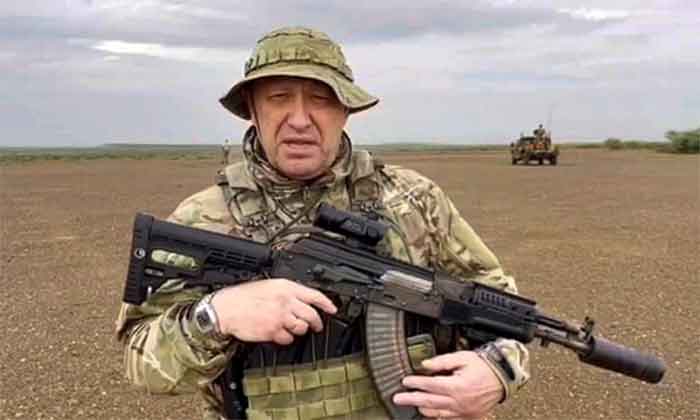
Who’s afraid of Prigozhin and Wagner?

By M K Bhadrakumar

There has been an avalanche of western media reports within minutes or hours of the ghastly death on Wednesday of the head of the Wagner organisation of Russian military contractors, Yevgeny Prigozhin, which pointed the accusing finger at President Vladimir Putin as the perpetrator.

It is almost as if a button was pressed at some unknown command centre to launch a new narrative to demonise Putin for serving the cold dish of revenge to Prigozhin, to borrow the CIA director William Burns’  recent words, for staging a failed coup in Russia. No one cared to produce empirical evidence.

“Repeat a lie often enough and it becomes the truth” — the law of propaganda is often attributed to the Nazi leader Joseph Goebbels who understood the power of repeating falsehoods. It is now the West’s compass to “erase” Russia.

True, Putin had every reason to be annoyed with Prigozhin — a “stab in the back,” as he put it — when the nation was waging an existential war against sworn enemies who seek the dismemberment of Russia. But three considerations discredit the hypothesis of Putin’s involvement.

First, why such a crude method reminiscent of the murder of the charismatic Iranian general Qasem Suleimani, the spearhead of Tehran’s ‘Axis of Resistance’ against America, by former US president Donald Trump?

In his celebrated 1827 essay titled On Murder Considered as one of the Fine Arts, Thomas De Quincey wrote, “Everything in this world has two handles. Murder, for instance, may be laid hold of by its moral handle… and that, I confess, is its weak side; or it may also be treated aesthetically, as the Germans call it, that is, in relation to good taste.” The aesthetic of Prigozhin’s murder is, simply put, the least appealing by the principle of murder connoisseurship if the motivation were revenge .

Second, Prigozhin was a dead man walking for staging such an idiotic act, after his security cover was withdrawn by the state. Imagine ex-president Barack Obama without secret service protection after the murder of Osama bin Laden — or Mike Pompeo and Trump walking around without security after murdering Soleimani.

But Putin made it clear that Wagner still would have a future and the nation will remember its role in the Ukraine war. Putin even invited Prigozhin to a Kremlin meeting. Arguably, Putin’s first remarks on Prigozhin’s death betray a trace of pity. (here and here)

Putin said, “I’ve known Prigozhin for a very long time, since the early 1990s. He was a man of no easy fate. He made some serious mistakes in his life, but he also achieved the needed results – both for himself and, when I asked him, for the common cause. The way it was in recent months.”

“As far as I know, he returned from Africa only yesterday. He met with some officials here. He worked not only in our country – and he worked successfully, but also abroad, especially in Africa. There, he dealt with oil, gas, precious metals and stones,” Putin added.

In the excessive zeal to focus on Prigozhin’s murder to demonise Putin, what is overlooked is that whoever choreographed the crime also ensured that Wagner’s entire command structure has been eliminated. Bye, bye, Africa!

There isn’t going to be anyone in the foreseeable future to challenge the hegemony of the French Legion in the Sahel or match the vast network of 29 bases under Pentagon’s Africa Command spread across the continent from Djibouti in the north to Botswana in the south. Put differently, the long arm of Russia’s “smart power” has been chopped off with one single swing of the blade. Who stands to gain?

Third, Prigozhin’s murder was staged on a special day that in a historical perspective, must be counted as the finest hour of Russian diplomacy ever since the disintegration of the former Soviet Union. The reality of “a new starting point for BRICS” — as Chinese President Xi Jinping stated — is yet to sink in fully, but what is beyond doubt is that Russia is walking away as the winner.

Make no mistake that the BRICS unity held firm and rubbished all western prognosis; BRICS expansion means that the issue of a single settlement currency is on the table, and the international financial system is not going to be the same again; de-dollarisation is knocking at the gates; a new global trading system is taking shape which renders obsolete the exploitative 4-century old western regime geared to transfer wealth to the rich countries; BRICS has graduated, finally, from an informal club to an institution that will eclipse the G7.

The host country South Africa delivered big-time for the Russian and Chinese agenda of multipolarity. The joint statement issued by South Africa and China and the induction of Ethiopia (where the West tried to stage a regime change) as BRICS member underscore the emerging alignment in Africa. Doesn’t all that add up to something?

And, above all, the big message coming out of Johannesburg is that with all the king’s horses and all the king’s men, the Biden administration has failed miserably to “isolate” Russia — it is there writ large in the resplendent glow of Foreign Minister Sergey Lavrov’s effulgent smile. Russia is capping its gains in the battlefields of Ukraine with an outstanding diplomatic victory by being on the right side of history alongside the global majority.

Isn’t it plain common sense that of all days, Putin would never have chosen Wednesday to act as spoiler when Russia’s prestige was soaring high in the international community? Again, the question arises: Who stands to gain?

The plain truth is, there could be any number of people who wanted to physically eliminate Prigozhin. Within Russia itself, Prigozhin had recruited hardened criminals undergoing prison sentence to fight in Ukraine and thereby get their sentence commuted. He deployed them without adequate military training, and over 10,000 of them reportedly got killed. There is a deep sense of revulsion within Russia in the matter.

Then there are the external enemies starting from France, which has been virtually evicted from the Sahel region, its playpen where it had a field day as the ex-colonial power until Prigozhin came and spoiled the party. France could barely hide its rancour toward Russia ever since then.

Meanwhile, the brewing crisis in Niger alerted the US that Prigozhin was on the prowl. The redoubtable acting secretary of state Victoria Nuland, who masterminded the 2014 coup in Ukraine, travelled to Niamey to plead with the coup leaders not to have any truck with Wagner.

However, Prigozhin reportedly had sneaked into the neighbouring country, Mali, where Wagner is well established, with a view to establish contact with Niger’s new rulers and offer the services of Wagner. Suffice to say, Prigozhin was threatening to do to the Pentagon what he earlier did to the French Legion in Sahel.

It is entirely conceivable that the Biden administration decided that enough was enough and Wagner must be decapitated. Of course, Prigozhin’s departure along with his core group of senior commanders will incalculably weaken Wagner.

Meanwhile, within Russia, the ruthless Uranian intelligence operates at different levels. The drone attacks on Moscow are being staged by saboteurs within Russia. And Ukraine too has a score to settle with Wagner, which is establishing itself in Belarus.

Without doubt, there is a congruence of interests between the Ukrainian intelligence and its western mentors to destroy Wagner and eliminate it from the geopolitical chessboard altogether.

Ambassador M K Bhadrakumar served the Indian Foreign Service for more than 29 years.

27 August 2023

Source: countercurrents.org

Hate Crimes in India Reach Class Rooms

By Vidya Bhushan Rawat

The video of a Muslim boy being beaten up, slapped and humiliated in front of the entire class in a school in Uttar Pradesh, has only shown how much the hate propaganda against the Muslims in India has reached inside our hearts and minds. That a teacher in the primary school is sadistically enjoying when the poor boy is being humiliated in front of the entire class reflects the power of the poison that has been injected in our mind for years and has become the hallmark of the Noida channels. Remember, the teacher is not beating the boy herself but ordering each student of the class to beat him up. She encouraged and said that all Muslim children should be dealt with like this.

The criminal and thuggish teacher identified as Tripta Tyagi is actually head of the Neha Public school of a village in Muzaffarnagar district in Uttar Pradesh. This clearly reflects how much poison has been spread in our heart across the nooks and corners of the country and it should not merely make us feel ashamed of us but worry us. Should we allow such things to happen or they need a strong socio-political and cultural response. Often BJP and the Sangh Parivar promote its agenda on the ‘non-political basis’ using common prejudices and cultural practices as if they are the sole guardians of the society.

The most atrocious part of these hate crimes is that they are being recorded and spread across the internet by the perpetrators of the crime. In most of such cases when there is a huge outrage, the state apparatus acts like it acted in the Manipur case, to punish the person who posted the video on social media. The person who brought it to the notice of the nation becomes a criminal while the criminals who commit such heinous crimes are carefully pushed in the background for some time till someday some outfit of the Hindutva makes the person their leader. Tripta Tyagi actually does not deserve to be teacher but for certain she is the product of the ‘jahar kee pathshala’ of various outfits of the saffron propaganda militia.

We all celebrated India now on the moon yesterday. The G-20 summit is scheduled to happen in the second week of September. The prime minister has already got an ‘international award’ for his ‘contribution’ but the crisis in India is much bigger than even the BJP can think of now. The poison of hatred has spread across. The Sangh Parivar outfits, Noida Propaganda media all have worked hard during the past 10 years. Remember, it is not merely the act of committing the hate crime but justifying it through the vilifying those who speak up against such hatred. The vilification of the opponents is justified through whereaboutary on the prime time. Criminals get normalised on TV. Media will wait for a couple of days till they find some Muslim criminal to have committed a heinous crime to deflate the story. The continuous vilification of Muslims in our media is the biggest achievement of the present dispensation.

India’s ruling party and its Ministers rarely speak on the issue. The officers will wait for the orders of the highest authority and the media will begin to cover up the incident. The Darbaris and loud speakers on prime time will not allow ‘Hindus’ to be ‘targeted’ for some ‘isolated’ incident and blame the opponents for conspiring to ‘defame’ India when the country has landed on moon and G-20 is happening. The ruling party’s response to this will be on conspiracy theory while their ground staff will continue to feed the hatred against Muslims as well as the Bahujan Samaj of India.

Good thing is that the people are speaking. Many political leaders have spoken including Rahul and Priyanka Gandhi. It was essential for them and speak against hatred. I am still waiting Uttar Pradesh, Bihar Netas to speak up on the issue and call for a full-fledged battle against hatred. More than anything else, India does not merely need a ‘ muhobbat kee dukan’ but complete demolition of the hate factories built up so powerfully with the help of the power elite. Hate crime flourishes on the strength of distortion of history and fake news. So, the biggest priority of our political parties today in INDIA should be to unite against the culture of violence, prejudices and hate crime. Do not legitimise news channels that spread fake news and justify hate crime. Speak up against hatred as otherwise it will engulf you. You can’t build stronger and united India on the edifice of falsehood and hatred.

Remembering Gurudev Rabindranath Tagore’s powerful lines here

‘Where the mind is without fear and the head is held high,

Where knowledge is free

Where the world has not been broken up into fragments by narrow domestic walls;

Where words come out from the depths of truth;

Where tireless striving stretches its arms towards perfection;

Where the clear stream of reason has not lost its way into the dreary desert sand of dead habit;

Where the mind is led forward by thee into ever widening thought and action

into that heaven of freedom, my father, l

Let my country awake’

Let my countrymen awake against this culture of hatred which will ultimately affect us as a society and as a citizen of India.

We must stand united and firm against the culture of hatred and bigotry.

26 August 2023

Source: countercurrents.org
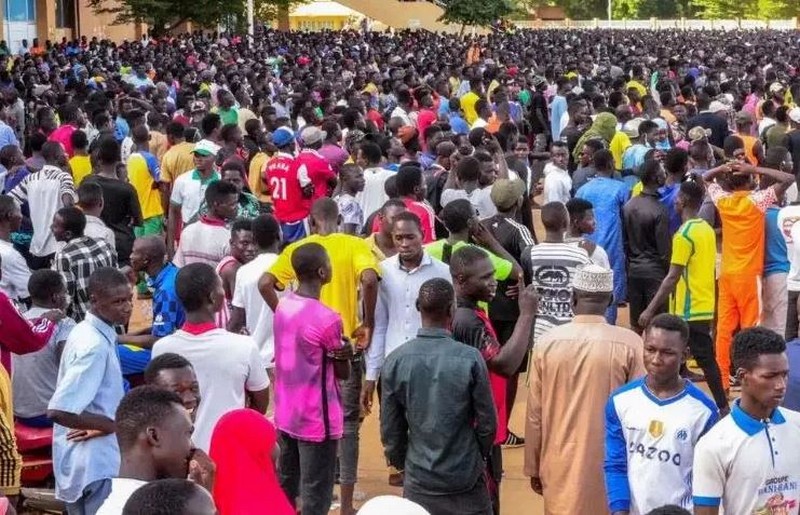
Tens of Thousands Pledge to Resist an Imperialist-backed Intervention in Niger

By Abayomi Azikiwe

Millions across the West Africa Sahel region and around the world have loudly objected to the imperialist-instigated threats against the newly installed National Council for the Defense of the Homeland (CNSP) government in Niger.

From left political groupings to more moderate and even conservative forces recognize the grave danger inherent in the proclamations of some members of the Economic Community of West African States (ECOWAS) to stage a military intervention into Niger aimed at restoring the former President Mohamed Bazoum.

In Niger itself, thousands of young people have appeared at the main stadium in the capital of Niamey to sign up as volunteers committed to defend the uranium-rich state in the case of a hostile invasion. Despite the threats issued by ECOWAS Chairperson and Federal Republic of Nigeria President Bola Tinubu, the regional organization seems to be moving towards utilizing a more political approach by engaging the CNSP government.

Rallies held in Niamey since the July 26 change of government have attracted the support of the broad masses of people. Sanctions levelled at the CNSP have not impacted the determination to maintain the course of charting a new direction for the country. Transitional military governments in neighboring Mali and Burkina Faso have joined the CNSP in building an anti-imperialist front in the midst of the military and intelligence units of France and the United States which have drone stations and nearly 3,000 soldiers in Niger.

The August 19 mobilization was designed to create a mass organization among youth who are committed to defending the Nigerien territory. Since the July 26 overthrow of Bazoum the weight of the imperialist states and their allies in ECOWAS has had the effect of building greater animosity against France and the U.S.

A leading Nigerian newspaper, Vanguard, published an article on August 19 on the current situation in neighboring Niger saying:

“Supporters of Niger’s junta were forced on Saturday (Aug. 19) to halt a census of people willing to volunteer for non-military roles in defense against a possible intervention by West African powers, saying they had been overwhelmed by the numbers who turned up. Thousands of mostly young men had massed outside a stadium in the capital Niamey hours before the scheduled start-time of the event – a sign of the strong support in some quarters for the junta, which has defied international pressure to stand down after the July 26 ouster of President Mohamed Bazoum. ‘In all our calculations and our understandings, we never thought we could mobilize (this number of people),” said Younoussa Hima, co-organizer of the initiative dubbed ‘The Mobilization of Young People for the Fatherland’.”

Any objective observer of the level of enthusiasm displayed by people in Niger, should surmise that any attempted intervention would not be an easy task for the ECOWAS military forces who claim they are prepared to restore the ousted government by force. This position related to threats of military force has been reiterated by ECOWAS defense ministers at a recent meeting in Accra, Ghana, where President Nana Akufo-Addo is a close ally of Washington. The outcome of the Accra meeting was that ECOWAS designated what it described as a “D Day” for the CNSP to leave office and return authority back to Bazoum.

Nonetheless, quotes from youth in Niger reflect a sense of patriotism and hope for a better future. This West African state is categorized as one of the least developed in the world even though the territory is well-endowed with uranium, gold and other valuable natural resources. The current siege against Niger, in part through the imposition of sanctions, will only worsen the social conditions inside the country.

Vanguard in the same above-mentioned report noted:

“Organizers of the Niamey recruitment drive said they did not intend to sign up volunteers for the army, but rather to gather a list of people willing to lend their civilian skills in case ECOWAS attacks. But many of those around the stadium appeared keen to fight. ‘They called on the youth to respond to a possible attack on our soil. And we are ready for any attack,’ said blogger Tahirou Seydou Abdoul Nassirou. ‘My life, I give my life to my country,’ he said, wiping a tear from his eye as other young men nodded and cheered his words…. At the stadium on Saturday, 35-year-old Kader Haliou said patriotism was not the only motivation for those wanting to help the junta. ‘Most of the young people who have come are unemployed. Getting registered is a blessing for us given the idleness and lack of work,’ he said.”

Regional Solidarity

The pledge by neighboring Burkina Faso and Mali to view any attack on Niger as a declaration of war against their states as well has been exemplified by the deployment of fighter jets from Ouagadougou and Bamako to Niamey. Delegations have been travelling between the three West African states in obvious preparation for the possible eventuality of an imperialist-engineered invasion.

TRT World confirmed the sending of military aircraft to Niger in an article which emphasized:

“Mali and Burkina Faso have dispatched warplanes to Niger in a show of solidarity against possible military intervention by the Economic Community of West African States (ECOWAS).

A report aired on Niger’s state television highlighted joint efforts by Mali and Burkina Faso in support of Niger and the deployment of warplanes within Niger’s borders on Friday (Aug. 18). ‘Mali and Burkina Faso turned their commitments into concrete action by deploying warplanes to respond to any attack on Niger,’ it said, noting the planes were Super Tucano fighter jets.”

The solidarity with the CNSP in Niger is not only being demonstrated on an official level. Various commentators, journalists, unions and civil society organizations have objected to the course which ECOWAS has taken in alliance with France and the U.S.

Consequently, after repeating threats to intervene at its meeting in Accra, ECOWAS sent a delegation to Niamey on August 18 to discuss the crisis with CNSP leaders. The new government stated that it would implement a three-year transitional process in the country. It also reiterated that Bazoum was not going to be reinstalled and that there is a possibility to place the former president on trial for treason against the Nigerien people.

France, the U.S. and the African Union (AU) Differ on Handling the Crisis

There are reports that Washington and Paris have differences over how to resolve the crisis in Niger. The U.S. is more inclined to engage diplomatically with the CNSP government in order to sustain its military and intelligence operations in West Africa. Whereas the French administration of President Emmanuel Macron wants to limit any discussions between NATO states and the CNSP, thinking that it would eventually break the capacity of the new government to resist the demands of imperialism.

This obstinate position by Paris may complicate efforts by the administration of President Joe Biden to continue its presence in Niger where the Pentagon has two drone bases and the presence of 1,100 soldiers from the U.S. Africa Command (AFRICOM). If the Biden administration can reach a compromise with the CNSP it will not have to take down its drone bases and other intelligence operations in Niger. See this.

However, contingency plans are underway by AFRICOM to possibly disable the drone bases in Niger. Reports have been published suggesting that the Russian-based Wagner Group has been invited to assist the CNSP government in security matters. An ambush on Niger troops on the border with Mali on August 14 has been blamed on Islamist armed rebels by the western corporate and government-controlled media outlets. Nevertheless, any attack on the new government in Niamey is objectively aiding the imperialist military forces occupying the country.

The 55-member African Union (AU) in a meeting on August 14 rejected the plans for a military intervention by ECOWAS in Niger. Reports emerging from a meeting of the AU’s Peace and Security Council (PAS) revealed that:

“The African Union’s Peace and Security Council, the organ in charge of enforcing the bloc’s decisions, met in the Ethiopian capital Addis Ababa on Monday (Aug. 14) for talks on the crisis in Niger that one African diplomat described as ‘difficult’. According to several sources cited by French media, the council rejected an ECOWAS proposal to stage a military intervention unless the Nigerien military junta cedes power and reinstates President Mohamed Bazoum. Bazoum has been under house arrest since the July 26 coup. Speaking to FRANCE 24’s sister station RFI, a diplomat who attended the meeting said many southern and northern African member countries were ‘fiercely against any military intervention’. On Wednesday (Aug. 16) the council had still not issued a joint statement on the bloc’s stance.”

These responses by governments, political parties and mass organizations across the continent should reinforce the antiwar and anti-imperialist movements in the western countries to categorically oppose any NATO-backed intervention in Niger and other states within the West Africa region. African states have a right to self-determination and sovereignty. Any violations of these rights should be met with fierce resistance both inside and outside the continent of Africa.

Abayomi Azikiwe is the editor of the Pan-African News Wire. He is a regular contributor to Global Research.

22 August 2023

Source: globalresearch.ca

Nagasaki Peace Declaration on 78th Anniversary of Atomic Bombing

9 Aug 2023The following is a translation of the Peace Declaration read today by Nagasaki Mayor Shiro Suzuki at a ceremony to mark the 78th anniversary of the atomic bombing of the city, as provided by the Nagasaki Municipal Government, with minor changes for style and clarity.

“Suddenly a rainbow-like flash of light burst from behind me. A blast of wind knocked me over, slamming me into the road. Touching my back, my clothes were gone and my skin was blistered and slimy, sticking to my fingers. I was in hospital for three years and seven months, hovering between life and death, and one year and nine months of my stay I spent lying on my stomach, my back covered with severe burns. My chest was covered in bedsores, the flesh rotting to the bone. Even now, my chest appears gouged so deeply you can see my heart beating through my ribs.

“This is the experience of Sumiteru Taniguchi, who sustained crimson-red burns all over his back in the atomic bombing at the age of 16.

“The atomic bomb that exploded over Nagasaki at 11:02 on the morning of August 9, 1945, stole the lives of 74,000 people by the end of the year. The hibakusha who survived developed leukemia, cancer and other diseases years and decades after the bombing battle with suffering and anxiety due to the effects of radiation even now.

“Mr. Taniguchi passed away six years ago, but before his death he left a message that seemed to foresee the world today: “People appear to be gradually forgetting the suffering of the past. This forgetfulness terrifies me. I fear that forgetfulness will lead to the acceptance of further atomic bombings.

“As the invasion of Ukraine drags on, Russia continues to threaten use of nuclear weapons. Other nuclear states are accelerating moves to strengthen their dependence on nuclear weapons or enhance their nuclear capabilities, further increasing the risk of nuclear war.

“What must we do right now?

“We have to go back to the very beginning, to look again at “What happened to human beings underneath that mushroom cloud 78 years ago?” and address the fundamental question of “What would happen to the Earth and to humankind if a nuclear war were to begin right now?

“At the G7 Hiroshima Summit held in May this year, the leaders of all the participating countries visited the Hiroshima Peace Memorial Museum and met with a hibakusha, showing the world through their own actions the importance of knowing the reality of the atomic bombings. Furthermore, the G7 Leaders’ Hiroshima Vision on Nuclear Disarmament — one of the summit’s outcome documents — reaffirmed that “a nuclear war cannot be won and must never be fought.

“However, the Hiroshima Vision is predicated on “nuclear deterrence” — nations maintaining their safety by possessing nuclear weapons. Russia is not the only state representing the risk of nuclear deterrence. As long as states are dependent on nuclear deterrence, we cannot realize a world without nuclear weapons. Eliminating nuclear weapons from the face of the Earth is the only way to truly protect our safety.

“I hereby appeal to the leaders of nuclear states and countries under the nuclear umbrella: Now is the time to show courage and make the decision to break free from dependence on nuclear deterrence. I ask that you move steadily along the path to abolishing nuclear weapons through dialogue, not confrontation, based on a concept of security centered on humanity.

“I hereby appeal to the Government of Japan and members of the National Diet: The world is watching the actions of the only country to experience wartime atomic bombings. In order to clearly show Japan’s resolve to abolish nuclear weapons, please participate in the Second Meeting of States Parties to the Treaty on the Prohibition of Nuclear Weapons (TPNW) as an observer, and sign and ratify the treaty as quickly as possible. I also ask that, in addition to firmly maintaining the principle of peace stated in the Japanese Constitution, you engage in diplomatic efforts aimed at disarmament and alleviation of tensions in the region, such as denuclearization of the Korean Peninsula and the Northeast Asia Nuclear-Weapon-Free Zone initiative.

“I ask that everyone in the world stop for a moment and think: Despite the pain caused by recalling their atomic bombing experiences, the hibakusha have continuously called on the world to recognize the inhumanity of nuclear weapons by recounting their personal ordeals. Surely it is their testimonies that have been a deterrent force preventing the use of nuclear weapons during the past 78 years.

“This year, the average age of the hibakusha exceeded 85 years. As we near a time when there are no longer any hibakusha living, whether we are able to maintain this genuine deterrent force and whether we are able to abolish nuclear weapons are dependent on the actions of each and every individual.

“Please visit the atomic bombing sites, see with your own eyes and sense the consequences of nuclear weapons. Please listen to the testimonies of hibakusha, a common inheritance of humankind that must continue to be talked about throughout the world.

“Knowing the reality of the atomic bombings is the starting point for achieving a world without nuclear weapons, and could also be the driving force for changing the world.

“I am a second-generation hibakusha; my parents are both hibakusha. To ensure that Nagasaki is the last place to suffer an atomic bombing, the next generation of hibakusha — including me — will firmly carry on the hibakusha’s mission, passing the baton of peace on to future generations.

“I strongly call on the Government of Japan to further enhance support for the hibakusha as well as provide relief for those who have experienced an atomic bombing as quickly as possible.

“In addition to expressing my deepest condolences to those whose lives were taken by the atomic bombs, I declare here that Nagasaki will continue to strive to disseminate a ‘Culture of Peace’ throughout the world as well as realize the abolition of nuclear weapons and permanent world peace, working with not only Hiroshima, Okinawa, and Fukushima — which sustained radiation damage — but all people who desire peace.”

21 August 2023

Source: www.transcend.org

The Hiroshima Peace Declaration on 78th Anniversary of Atomic Bombing

By The Mainichi

6 Aug 2023The following is the full text of the Peace Declaration read today by Hiroshima Mayor Kazumi Matsui at a ceremony to mark 78 years since the 1945 atomic bombing of the city.

“l want the leaders of all countries with nuclear weapons to visit Hiroshima and Nagasaki and, using their own eyes and ears, learn the realities of the atomic bombings — the lives lost in an instant, the bodies charred by heat rays; lives lost in agony from burns and radiation, tended to by no one. I want them standing here to feel the full weight of the countless lives lost.” The hibakusha making this plea was 8 years old when the bomb exploded 78 years ago. He always remembered that day as a living hell.

“The heads of state who attended the G7 Hiroshima Summit in May this year visited the Peace Memorial Museum, spoke with hibakusha, and wrote messages in the guestbook. Their messages provide proof that hibakusha pleas have reached them. As they stood before the Cenotaph for the A-bomb Victims, I conveyed the Spirit of Hiroshima underlying its inscription. Enduring past grief, overcoming hatred, we yearn for genuine world peace with all humanity living in harmony and prosperity. I believe our spirit is now engraved in their hearts. And in this spirit, the first G7 Leaders’ Hiroshima Vision on Nuclear Disarmament reaffirms their “commitment to the ultimate goal of a world without nuclear weapons with undiminished security for all,” and declares that their “security policies are based on the understanding that nuclear weapons, for as long as they exist, should serve defensive purposes …

“However, leaders around the world must confront the reality that nuclear threats now being voiced by certain policymakers reveal the folly of nuclear deterrence theory. They must immediately take concrete steps to lead us from the dangerous present toward our ideal world. In civil society, each of us must embrace the generosity and love for humanity embodied in the hibakusha message, “No one else should ever suffer as we have.” It will be increasingly important for us to urge policymakers to abandon nuclear deterrence in favor of a peaceful world that refuses to compromise individual dignity and security.

“Mahatma Gandhi, who pursued independence for his native India through absolute nonviolence, asserted, “Nonviolence is the greatest force at the disposal of mankind. It is mightier than the mightiest weapon of destruction devised by the ingenuity of man.” The U.N. General Assembly has adopted, as a formal document, a Programme of Action on a Culture of Peace. To end the current war as quickly as possible, the leaders of nations should act in accordance with Gandhi’s assertion and the Programme of Action, with civil society rising up in response.

“To that end, it will be vital to build a social environment in which our dreams and hopes come alive in our daily lives through contact with or participation in music, art, sports, and other activities that transcend language, nationality, creed, and gender. And to create that social environment, let us promote initiatives to instill the culture of peace everywhere. If we do, elected officials, who need the support of the people, will surely work with us toward a peaceful world.

“The City of Hiroshima, together with more than 8,200 member cities of Mayors for Peace in 166 countries and regions, intends to promote the culture of peace globally through citizen-level exchange. Our goal is an environment in which our united desire for peace can reach the hearts of policymakers, helping to build an international community that maintains peace without relying on military force. We will continue to expand our programs to convey the realities of the atomic bombings to young people around the world so they can acquire the hibakusha’s passion for peace, spread it beyond national borders, and pass it on to future generations.

“I ask all policymakers to follow in the footsteps of the leaders who attended the G7 Hiroshima Summit by visiting Hiroshima and sharing widely their desire for peace. I urge them to immediately cease all nuclear threats and turn toward a security regime based on trust through dialogue in pursuit of civil society ideals.

“I further urge the national government to heed the wishes of the hibakusha and the peace-loving Japanese people by reconciling the differences between nuclear-weapon and non-nuclear-weapon states. Japan must immediately join the Treaty on the Prohibition of Nuclear Weapons (TPNW) and establish common ground for discussions on nuclear weapons abolition by attending, at least as an observer, the Second Meeting of States Parties to the TPNW to be held in November this year. The average age of the hibakusha now exceeds 85. The lives of many are still impaired by radiation’s harmful effects on mind and body. Thus, I demand that the Japanese government alleviate their suffering through stronger support measures.

“Today, at this Peace Memorial Ceremony commemorating 78 years since the bombing, we offer heartfelt condolences to the souls of the atomic bomb victims. Together with Nagasaki and like-minded people around the world, we pledge to do everything in our power to abolish nuclear weapons and light the way toward lasting world peace.”

21 August 2023

Source: www.transcend.org

The US Will Strengthen Its Occupation of Syria, while Plundering Oil Resources

By Steven Sahiounie interviews Prof. Glenn Diesen

Steven Sahiounie of MidEastDiscourse interviewed Glenn Diesen from the University of South-Eastern Norway.

11 Aug 2023 – The Obama administration began the US military occupation of Syria in November 2015. Obama sold the public on the idea of fighting ISIS, but in reality military personnel of Syria, Russia, Iraq and Iran were already on the group and ultimately defeated ISIS in Syria.

The real reason behind the US invasion and occupation of Syria, now lasting eight years, and with no end in sight, was to prevent the Syrian government, and its citizens, from benefiting from the oil wells in the north east.

Those oil wells had supplied the domestic consumption of gasoline, diesel home heating fuel, diesel truck fuel, and the production of electricity.

Since then, Syrians have had a chronic shortage of gasoline, diesel and have almost no electricity for homes, offices, businesses, schools and hospitals The national grid is dependent on converting petroleum into electricity at the various power stations. Syrians are living with just two to three hours of electricity per 24 hours, in three increments.

Due to US sanctions, Syria can’t buy energy products easily. The sanctions and occupation are designed to keep the Syrian people deprived of even the most basic daily needs.

#1. Steven Sahiounie (SS):   Recently, the US military sent reinforcement to east of Syria where they are illegal occupying the largest oil wells in Syria. In your opinion, what is the US planning there?

Glenn Diesen (GD):  We have seen growing military pressure against the US in Syria to compel the Americans to end their occupation of Syria. The US will strengthen its position to withstand these efforts. Besides plundering Syria, the US must also ensure that the region recognizes the US as the dominant force in the region. Once states in the region no longer believe that the US will have the final say, then they will start to become more self-reliant by seeking alternative security arrangements, or pursuing peace agreements. The political power of the US derives to a large extent from its ability to demonstrate its military dominance.

#2. SS:  In both Ukraine and Syria, Russia and the US are in a military conflict. Recently, the US was complaining about Russian airplanes operating in Syria, where they are targeting the Radical Islamic terrorists such as ISIS and Jabhat Al-Nusra. In your opinion, will this result in open conflict, and where?

GD:  Russia is increasing pressure on the American troops to push them out of Syria. This can also be considered to be horizontal escalation to the conflict in Ukraine where the Americans are in a position to kill Russian soldiers, but the Russians do not have any possibility to impose direct costs on the Americans. Neither the Russians nor the Americans want this to escalate into a direct hot war between the two nuclear powers; however, they are both prepared to risk such a war by increasing pressure on the other side. However, the US still prefers to fight Russia through proxies such as Islamic terrorist groups in Syria.

#3. SS:  China brokered a deal between Saudi Arabia and Iran, which took America by surprise. In your view, how do you see the American reaction to this new relationship? 

GD:  The political influence of the US in the region largely derives from its role as a security provider, and therefore has an interest in perpetuating the conflicts. US hegemony therefore depends on dividing regions of the world into dependent and obedient allies on one side, and weakened adversaries on the other. The US openly expressed its dissatisfaction with the Chinese-brokered deal between Saudi Arabia and Iran as they want the military pressure on Iran to endure and they want to maintain their influence over Saudi Arabia. The US is also very apprehensive about the strength of China, that is displacing US power across the world.

#4. SS:  US president Joe Biden has a very strained relationship with Saudi Arabia. Crown Prince Mohammed bin Salman has decided to act decisively on the world stage. In your opinion, will America allow Saudi Arabia to fall from their grasp?

GD:  Saudi Arabia is seeking an ideal position in the nascent multipolar world, which is to establish good relations with all the great powers. By diversifying its partnerships, Saudi Arabia can avoid excessive dependence on any one state and thus enjoy greater political autonomy. The US will predictably attempt to restore its control over Saudi Arabia, and therefore push for Saudi Arabia to sever its ties with other great powers such as China and Russia. This can only be achieved by stoking tensions between Saudi Arabia and Iran as this will increase Saudi security dependence on the US and it must therefore follow US orders. The US always aims to convert security dependence into economic and political loyalties, thus US power is conditioned on conflict.

#5. SS:   The US-Turkish relationship has been strained for years while the US supports the Kurds, who Turkey considers terrorists. In your view, now that President Erdogan has been re-elected, and has such a big role to play in Ukraine, will the US re-evaluate their support of the Kurds? 

GD:  The US has more than once used the Kurds as a proxy against regional adversaries, and then abandoned the Kurds once they have served their purpose for the Americans. It is still unclear what path the Americans will take, but they obviously face a dilemma between continuing to use the Kurds to advance US objectives in Syria or improving US relations with Turkey.

Steven Sahiounie is a two-time award-winning journalist and political commentator.

Glenn Diesen is a professor at the University of South-Eastern Norway.

21 August 2023

Source: www.transcend.org