Just International

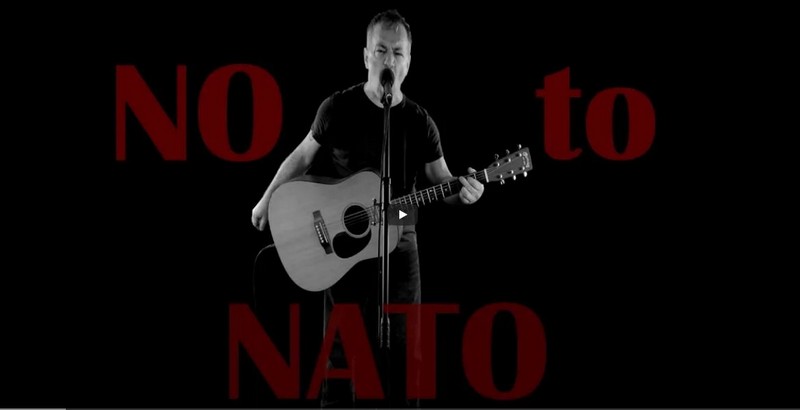
No to NATO (Music Video of the Week)

By Mistahi Corkill

This song goes out to all peace loving people who are taking a courageous stand against US empire building and expansion of the aggressive, warmongering military alliance, NATO.

Music Video: No to NATO

LYRICS:
Hear the warmongers speak, “NATO must expand to the East”,
“Trust us”, they say, “Russia and China are enemies”,
“They won’t get down on their knees!”,
But we know who’s to blame, For the path to WWIII,
We say no, we say no NATO!

Right before our eyes, US/NATO commits heinous war crimes,
Empire leaders of the day try to hide their crimes away, War in the name of peace,
But we know what to blame, Their bloody crusades,
We say no, we say no NATO!

They spread fear – lies – and hate, To justify regime change,
World control is their aim – state terror on display, Violence is their only way,
And we know who’s to blame, as the war machine gets paid,
We say no, we say no NATO!

Defend the rights of all, Don’t let them demonize the world,
Disband NATO, Bring the troops home, It’s the only way to peace,
‘Cause we know who’s to blame, So raise up your fist and sing,
We say no, we say no NATO!

10 July 2023

Source: transcend.org

UN Forcefully Hits at US Blockade of Cuba and Prison in Guantanamo

By W.T. Whitney Jr.

5 July 2023 – Nothing on the horizon now threatens the end of the U.S. economic blockade of Cuba. Critical voices inside the United States and beyond fall flat; nothing is in the works, it seems. Recently, however, the United Nations put forth a denunciation that carries unusual force, mainly because of the UN’s legal authority and its practical experience in Cuba.

Criticism of U.S. policies on Cuba from within the United States is usually brushed aside due in large measure to the low priority Washington officials assign to Cuban affairs. Coalitions of nations that condemn the blockade may lack staying power and surely have no means for enforcement. The anti-blockade opinions of nations or individuals, alone or together, are useful mainly for consciousness-raising.

The United Nations is different on account of its institutional capacity. It’s on display when the UN General Assembly annually votes on a Cuban resolution calling for an end to the blockade. Every year word of its overwhelming and inevitable approval goes worldwide, because of the UN connection.

The United Nations is unique on account of its Charter, which took effect on October 24, 1945. This founding instrument outlines purposes as to peace, no war, and human rights. It is legally binding on participating nations, like a treaty. Additionally, the history and expectations associated with the United Nations endow that organization with institutional power. That’s something that neither NGOs operating in Cuba or the time-limited projects of various governments on the scene there can claim.

Another element emerges. The United Nations works within Cuba and participates in Cuban affairs. On that account, UN complaints about U.S. all-but-war against Cuba take on special authority.

On the ground

UN workers and technical specialists since 2015 have been implementing the UN’s “National Plan[s] for Sustainable Economic and Social Development” in dozens of countries since 2015, including Cuba.

Work is carried out inside countries and territories in order to fulfill a “Development Agenda [for] 2030.” The main goals are: government efficiency, transformation of production, protecting natural resources and the environment, and human development with equity.

The Cuba section of the so-called “United Nations System” consists of 22 “agencies, funds, and programs,” 11 of which are physically present on the island. That section recently issued a report on its activities in 2022.

Francisco Pichón is a Colombia native serving as the UN program’s “resident coordinator.” In comments to the Cuban News Agency, Pichón noted that in Cuba his teams participated with Cubans in dealing with disaster situations and introducing developmental assistance. Collaboration was impaired, he observed, by the “the economic, commercial, and financial blockade imposed by the United States.”

Pichón testified to the constant necessity for making adjustments. What with the impact of Covid-19; the increase of prices of food, sources of energy, and more; and the war in Ukraine, his associates had to “circumvent U.S. economic sanctions” and work around Cuba’s exclusion from “international financing mechanisms”. UN personnel found it necessary to divert funds in order to mount special assistance programs after Hurricane Ian and in response to problems in Pinar del Rio.

He indicated that “pre-positioning of essential resources for emergency situations” was essential in order to mount quick and efficient responses. That was helpful in reacting to the Hotel Santiago explosion in Havana and the terrible fire at an oil storage facility in Matanzas.

Pichón highlighted the complexity of making any kind of payments, especially because costs go up when resources are imported from far-distant countries and because Cuba is excluded from international lending agencies and banking services.

Guantanamo

The idea that the United Nations is a potentially capable partner in warding off U.S. aggression against Cuba gains additional strength following the recently concluded visit to Cuba of the UN Special Rapporteur on Human Rights and Counterterrorism. Through her visit and report, the United Nations was asserting legal norms.

Law professor Fionnuala Ni Aolain examined the plight of prisoners at the U.S. naval base in Guantanamo in Cuba. The U.S. government occupied land there as a condition of its approval in 1902 of a constitution for newly-independent Cuba. Cuba’s government denounces the occupation as violating international law.

Of the almost 800 men imprisoned there at one time or another since 2002, 30 prisoners remain, of whom 16 have been cleared for release and represent no danger.

In an interview, Aolain testified to U.S. violation of human rights: “Men are shackled as they move within the facility. They were shackled when they met me.” She referred to “enormous deficits … in health care, in the standard operating procedures … [Men] are called by numbers, not by name.

She added that, “Those who tortured betrayed the rights of victims … [W]hat they ensured is that you couldn’t have [a] fair trial … [And therefore] it would be impossible for the victims of terrorism to redeem their rights.” And, “let me be clear. Torture is the most egregious and heinous of crimes.”

Quoted in a Cuban news report, Aolain referred to “cumulative aggravating effects on the dignity, freedom and fundamental rights of each detainee, which I think amounts to cruel, inhuman and degrading treatment, according to international law”.

W.T. Whitney Jr. is a retired pediatrician and political journalist living in Maine, USA.

10 July 2023

Source: transcend.org

Conditions for Guantanamo Detainees Are Cruel, Inhuman and Degrading, UN Investigator Says

By Edith M. Lederer

26 Jun 2023 – The first U.N. independent investigator to visit the U.S. detention center at Guantanamo Bay said today the 30 men held there are subject “to ongoing cruel, inhuman and degrading treatment under international law.”

The investigator, Irish law professor Fionnuala Ní Aoláin, said at a news conference releasing her 23-page report to the U.N. Human Rights Council that the 2001 attacks in New York, Washington and Pennsylvania that killed nearly 3,000 people were “crimes against humanity.” But she said the U.S. use of torture and rendition against alleged perpetrators and their associates in the years right after the attacks violated international human rights law — and in many cases deprived the victims and survivors of justice because information obtained by torture cannot be used at trials.

Ní Aoláin said her visit marked the first time a U.S, administration has allowed a U.N. investigator to visit the facility, which opened in 2002.

She praised the Biden administration for leading by example by opening up Guantanamo and “being prepared to address the hardest human rights issues,” and urged other countries that have barred U.N. access to detention facilities to follow suit. And she said she was given access to everything she asked for, including holding meetings at the facility in Cuba with “high value” and “non-high value” detainees.

The United States said in a submission to the Human Rights Council on the report that the special investigator’s findings “are solely her own” and “the United States disagrees in significant respects with many factual and legal assertions” in her report.

Ní Aoláin said “significant improvements” have been made to the confinement of detainees but expressed “serious concerns” about the continued detention of 30 men, who she said face severe insecurity, suffering and anxiety. She cited examples including near constant surveillance, forced removal from their cells and unjust use of restraints.

“I observed that after two decades of custody, the suffering of those detained is profound, and it’s ongoing,” the U.N. special rapporteur on the promotion and protection of human rights and fundamental freedoms while countering terrorism said. “Every single detainee I met with lives with the unrelenting harms that follow from systematic practices of rendition, torture and arbitrary detention.

Ní Aoláin, concurrently a professor at the University of Minnesota and at Queens University in Belfast, Northern Ireland, said there was “a heartfelt response” by many detainees to seeing someone who was neither a lawyer nor associated with the detention center, some for the first time in 20 years. During the visit, she said, she and her team scrutinized every aspect of Guantanamo.

Ní Aoláin said many detainees she met showed evidence of “deep psychological harm and distress – including profound anxiety, helplessness, hopelessness, stress and depression, and dependency.”

She expressed grave concern at the failure of the U.S. government to provide torture rehabilitation programs to the detainees and said the specialist care and facilities at Guantanamo “are not adequate to meet the complex and urgent mental and physical health issues of detainees” ranging from permanent disabilities and traumatic brain injuries to chronic pain, gastrointestinal and urinary issues.

Many also suffer from the deprivation of support from their families and community “while living in a detention environment without trial for some, and without charge for others, for 21 years, hunger striking and force-feeding, self-harm and suicidal ideation (ideas), and accelerated aging,” she said.

Ní Aoláin expressed “profound concern” that 19 of the 30 men remaining at Guantanamo have never been charged with a single crime, some after 20 years in U.S. custody, and that the continuing detention of some of them “follows from the unwillingness of the authorities to face the consequences of the torture and other ill-treatment to which the detainees were subjected and not from any ongoing threat they are believed to pose.” She stressed repeatedly that using information obtained by torture at a trial is prohibited and she said the United States has committed to not using such information.

She also found “fundamental fair trial and due process deficiencies in the military commission system,” expressed concern at the extent of secrecy in all judicial and administrative proceedings, and concluded the U.S. failed to promote fundamental fair trial guarantees.

Ní Aoláin made a long series of recommendations and said the prison at Guantanamo Bay should be immediately closed, a goal of the Biden administration.

Among her key recommendations to the U.S. government were to provide specialized rehabilitation from torture and trauma to detainees, ensure that all detainees whether they are “high-value” or “non-high value” are provided with at least one phone call every month with their family, and guaranteed equal access to legal counsel to all detainees.

The U.S. response, submitted by the American ambassador to the Human Rights Council, Michele Taylor, said Ní Aoláin was the first U.N. special rapporteur to visit Guantanamo and had been given “unprecedented access” with “the confidence that the conditions of confinement at Guantanamo Bay are humane and reflect the United States’ respect for and protection of human rights for all who are within our custody.”

“Detainees live communally and prepare meals together; receive specialized medical and psychiatric care; are given full access to legal counsel; and communicate regularly with family members,” the U.S. statement said.

“We are nonetheless carefully reviewing the (special rapporteur’s) recommendations and will take any appropriate actions, as warranted,” it said.

The United States said the Biden administration has made “significant progress” toward closing Guantanamo, transferring 10 detainees from the facility, it said, adding that it is looking to find suitable locations for the remaining detainees eligible for transfer.

The report also covers the rights of the 9/11 victims and the rights of the detainees released from Guantanamo who have been repatriated to their home country or resettled.

Ní Aoláin stressed that victims of terrorism have a right to justice, and called it “a betrayal” that the U.S. use of torture would prevent many from seeing the perpetrators and their collaborators in court. She also said children whose families accepted compensation in the immediate aftermath of 9/11 and waived their rights should be able to pursue compensation and health care.

As for the 741 men who have been released from Guantanamo, she said, many were left on their own, lacking a legal identity, education and job training, adequate physical and mental health care, and continue to experience “sustained human rights violations,” poverty, social exclusion and stigma.

The special rapporteur stressed that the United States has international law obligations before, during and after the transfer of detainees and must provide “fair and adequate compensation and as full rehabilitation as possible to the men who were detained at Guantanamo.”

10 July 2023

Source: transcend.org

Mainstream Media Colludes with U.S. Government to Conceal Source of Syria’s Heartbreaking Humanitarian Crisis

By Jeremy Kuzmarov

Illegal U.S. bombing raids, brutal economic sanctions, and incredibly brazen theft by U.S. forces of 66,000 barrels of Syrian oil per day (80% of its total output) have visited a biblical-scale tragedy upon the Syrian people that has battered them virtually back to the stone age.

30 Jun 2023 – Following a devastating earthquake in February that displaced thousands of people and compounded the suffering of 13 years of war, UNICEF issued a warning that millions of children in Syria were at a heightened risk of malnutrition.

According to UNICEF, close to 13,000 children have been killed or injured in the Syrian conflict.

More than 609,000 children under the age of five are stunted from chronic undernutrition; 12 million Syrians do not have enough food to meet daily dietary needs; 6.9 million people are internally displaced, and 90% of Syrians are estimated to be living in poverty.

The U.S. media blame the biblical-scale catastrophe on Syria’s President Bashar al-Assad.

It claims that Assad started a war against his own people to preserve his family’s ruling dynasty, committed large-scale war crimes against his own people with Vladimir Putin’s support, and then stole relief aid following the earthquake and deprived people of needed medical assistance in order to punish those who did not support him.

In an April 60 Minutes segment, host Scott Pelley accused Assad of launching chemical-weapon and barrel-bomb attacks on his own people and reported that a hospital in a rebel-controlled area in northwest Syria had to be built underground so it could not be bombed by Assad.

Pelley interviewed a Chicago doctor who accused Assad of chemical-weapon attacks, and he interviewed members of the White Helmets, a humanitarian aid group exposed as an intelligence front, who claimed that Assad cruelly bombed rebel targets in the northwest just days after the earthquake.

Crimes Against Syria

60 Minutes’ narrative about Syria is contradicted by a new documentary, Crimes Against Syria, produced by Mark Taliano,[1] which draws more on Syrian perspectives.

See the documentary here.

The film begins with an encounter between a BBC reporter and a Syrian man who tells her that she is “not telling the truth about Syria” and that Syrians “love our President [Assad]” and “support [him].”

The film goes on to detail the suppressed history in the West about how the uprising that triggered the war was initiated by jihadist terrorists supported by the U.S., Jordan, Turkey, Saudi Arabia and Qatar who attacked Syrian security forces, many of whom were armed only with sticks, while burning shops and cars.

Their aim was to weaken and destabilize Syria, overthrow Assad, and trigger a full-scale U.S. military invasion.

Crimes Against Syria includes footage of an interview with General Wesley Clark, who talks about visiting with a high-ranking general after 9/11 who told him of Donald Rumsfeld and Dick Cheney’s plan to invade and overthrow seven Arab governments starting with Syria.[2]

The neo-conservatives picked Syria because Assad was a secular nationalist who stood up to the Israelis and U.S. regional designs. His popularity stemmed from the fact that his regime provided the Syrian people with free health care and education and protected Syria’s sovereignty.[3]

Independent journalists Eva Bartlett and Vanessa Beeley are featured in the film, providing pictures of vast NATO weapon supplies that ISIS forces left behind in their headquarters after territory that they took was liberated by the Syrian Army.

The Obama administration had told the U.S. public that the U.S. was arming only “moderate [anti-Assad] rebels,” when there were no moderate rebels—they were all part of ISIS, al-Nusra and other al-Qaeda affiliates in Syria.

When an American living in Latakia saw a false report in the Los Angeles Times about how the Syrian uprising began, she contacted the journalist who wrote the story. The journalist admitted that she lived in Lebanon and based her report only on rumors supplied by anti-Assad forces.

The woman then tried to contact a Times editor whose information she had been provided, but the editor never emailed her back.

The media similarly misled Americans when it came to the chemical-weapon attack in eastern Ghoutta, Douma and other locations that were used as a pretext for the U.S. bombing of Syria.

A key source for the claims were the White Helmets—an al-Qaeda affiliate whose founder was a British intelligence agent.

A man interviewed in the film said that he lived in Douma where one of the chemical attacks was supposed to have taken place and never saw evidence of it; he thinks it was a play or show—a lie that never happened.

How was it possible, he asked, that people were walking around the area openly—without getting sick or killed when these chemicals were supposed to be deadly? And why would Assad use these weapons on his own people when he had liberated most of the country without them?

Other Syrians testified in the film to the widespread revulsion in the country for the foreign-backed jihadists who committed horrific atrocities, ranging from torture to beheadings to the seizing of medicine and food aid to the converting of hospitals into jails.

The Syrian Army—which included all ethnic groups in the country—was heralded for protecting the people from the terrorists and restoring law and order in areas they took back.

Russian troops were also looked upon favorably by Syrians for assisting Assad in freeing the country from foreign aggression.

The main pretext for the application of U.S. sanctions was the testimony of an alleged Syrian defector named “Caesar” who displayed images of tortured and mutilated Syrians, many of whom were actually Syrian Army soldiers.

When he appeared before Congress, Caesar wore a hood over his face to mask his identity and was brought there by his “case officer,” implying that he was working for the CIA.

“U.S. Sanctions Have Brought Syria Back to the Stone Age”

60 Minutes’ narrative about Syria was further debunked in March by the testimony of Syrian doctors before the International People’s Tribunal on U.S. Imperialism, which aims to spotlight the pernicious impact of U.S. sanctions on countries around the world.

These doctors emphasized the cruelty of U.S. sanctions on Syria, which have deprived its people of needed medicines and crippled its already war-ravaged economy.

Comparison was made with Iraq in the 1990s, where sanctions that were applied following the bombing of Iraq’s infrastructure in the first Persian Gulf War resulted in the deaths of half a million Iraqi children, according to Secretary of State Madeleine Albright.

Counter to what 60 Minutes claimed, the doctors said that it was jihadist rebels who had shelled Syrian hospitals and murdered other doctors, and destroyed pharmaceutical factories—which is what has made the country ill-equipped to deal with the on-going humanitarian crisis.

Dr. Hizla al-Assad said that the U.S. war and sanctions had threatened to turn life in Syria back to the Stone Age.

Electricity in the country was now sporadic and basic social services—excellent before the war—were severely reduced. Living standards were miserable and social cohesion was coming undone.

People had to endure long food lines, public transport was lacking and students could not study because their schools had been destroyed. Goods can no longer get in because of restrictions on Syrian airplanes and imports and exports are way down.

Much of the country’s oil had also been stolen, taken to Iraq and Turkey.

This was all part of the U.S. plan of intentionally impoverishing a country that was part of an axis of resistance against Western imperialism.

According to Hizla al-Assad, the earthquake in Syria showed the inhumanity of the Americans who prevented the delivery of needed medical and humanitarian aid into the country.

That inhumanity was also evident in the behavior of American occupying troops in the northwest, who kidnapped Syrian youths and dragged them unconscious for the crime of possessing a picture of Bashar al-Assad.

Trying to Destroy a Proud Anti-Colonial Tradition

The first speaker at the International People’s Tribunal on U.S. Imperialism, Patrick Higgins, a Ph.D. student at the University of Houston, emphasized Syria’s proud history as a center of Arab nationalist movements going back to the 19th century, when it provided a base of resistance for the overthrow of the Ottoman-Turkish Empire.

In 1948, Syria sent troops to confront the Zionist colonizers of Palestine and then, in the early 1950s, supported the Algerian struggle for independence against France, under the leadership of Shukri al-Quwatli, who was overthrown in a 1949 CIA-backed coup but won presidential elections in 1955 (the CIA then again tried to overthrow him but failed).

Bashar al-Assad’s father, Hafez, who ruled Syria from 1970 to 2000, supported many Arab and Third World liberationist movements and allied closely with the Soviet Union.

Bashar continued his father’s legacy by establishing Syria as a main conduit for Iran, Lebanese and Palestinian resistance movements fighting against Western imperialism and proxies like Israel.

In the 1950s, the U.S. and Israel developed the Johnston Plan—named after Special U.S. Ambassador Eric Johnston—which redirected water in Syria and Jordan to Israeli settlements and Israeli military development.

Syria resisted the plan and was attacked accordingly, with Israel stealing the Golan Heights during the closing stages of the 1967 Six-Day War.

That Israel is the foundation for U.S. imperial power in the Middle East, and Syria is in Israel’s crosshairs, helps account for the long U.S. subversion campaign.

The latter’s deadly consequences are childishly blamed by the U.S. ruling establishment and media on a leader who is respected in Syria as an heir to the country’s proud anti-colonial tradition which in part, and ironically, mirrors America’s own.

NOTES:

  1. Taliano is a retired teacher from Ontario who previously authored the book Voices from Syria, while a Second Edition of Voices from Syria was co-authored with Syrian Basma Qaddour.
  2. The other six were: Iraq, Lebanon, Libya, Somalia, Sudan and Iran.
  3. The film acknowledges some grievances against Assad and that some of the original protesters were peaceful but emphasizes that the protest movement was hijacked by violent extremists backed by foreign interests bent on destroying Syria.

Jeremy Kuzmarov is Managing Editor of CovertAction Magazine and author of four books on U.S. foreign policy, including Obama’s Unending Wars (Clarity Press, 2019) and The Russians Are Coming, Again, with John Marciano (Monthly Review Press, 2018).

10 July 2023

Source: transcend.org

Israel’s Bloodcurdling ‘Poison Policy’ to Replace Palestinians with Jewish Settlers

By Kit Klarenberg

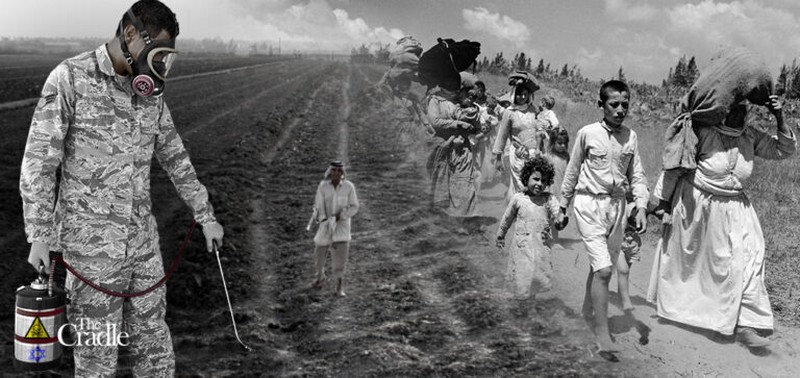
To vacate Palestinian lands for incoming Jewish settlements, Israel greenlit covert crop-dusting operations to spray toxic chemicals that would drive out the local population.

4 July 2023 – A shocking document last September revealed that, during the 1948 Nakba, Zionist militias engaged in a wide-ranging chemical and biological warfare campaign to expel indigenous Palestinian communities from their lands, slow the advance of intervening Arab armies, and poison citizens of neighboring states.

This unconscionable use of biological weapons on civilian targets, which sought to infect the local Palestinian population with typhoid, dysentery, malaria, and other diseases by contaminating local water supplies, was subject to a concerted coverup at the time – one that was maintained by the Zionist state for decades thereafter.

Even after its exposure, the Israeli academics who helped break the story were at pains to diminish its significance, unconvincingly arguing it was a failed strategy promptly jettisoned and forgotten about as a result.

But newly declassified Israeli Defense Forces (IDF) files starkly underline this narrative to be an abject lie. Released by the Jewish Settlements Archival Project, an initiative of New York University’s Taub Center for Israel Studies, they amply show that the Israeli occupiers employed much the same tactics in order to purge Palestinian areas to make way for illegal settlements in the West Bank, and elsewhere.

Facts on the ground

In 1967, Tel Aviv emerged victorious in the Six Day War and effectively annexed significant swaths of surrounding territory from neighboring Arab states.

Israel’s occupation of these areas, and indeed the construction of settlements for Jewish colonists, was and remains absolutely illegal under international law and has been repeatedly condemned by the United Nations. Initially, successive Israeli governments claimed the settlements were the work of individual settlers and non-governmental entities such as the Jewish Agency and World Zionist Organization, and insisted that the state neither approved of nor could prevent their expansion.

Again, the newly-released papers starkly demonstrate this to be a deliberate deception. The trail begins in January 1971, when the cabinet of then-Israeli prime minister Golda Meir met to discuss the forthcoming construction of settlements. The need for unfailing public secrecy about what was about to happen was considered paramount. At the start of the summit, the premier requested:

“Before we move forward with our discussion, there’s something I’d like to ask. It was our habit that for anything that has to do with settlements, outposts, land expropriations, and so on, we simply do and do not talk [about it]…Lately, this … has broken down, and I’m asking ministers for the sake of our homeland to hold back, talk less, and do as much as possible. But the main thing, as much as possible, is to talk less.”

This extended to Meir demanding ministers not attend settlement opening ceremonies, and avoid being seen by the media anywhere near the sites. In April 1972, this oath of silence remained very much in force, with minister without portfolio Yisrael Galili reminding his cabinet confederates at a meeting to “refrain from dealing with the matter in the press, as it could cause damage.”

Around this time, the Israelis began constructing the first illegal Jewish settlement, Gitit, in the West Bank. Kickstarting the criminal enterprise required displacing Palestinians from the nearby village of Aqraba. This was first attempted by brute force, with IDF soldiers demanding they vacate the area to make way for a new military training zone.

The Palestinians ignored them, and continued cultivating the land, prompting Israeli forces to damage their tools. When they still refused to budge, the IDF was ordered to use vehicles to destroy crops, and dispossess the indigenous population. Soldiers struck upon a radical, bloodcurdling solution: a crop duster would rain down toxic chemicals, lethal to animals and dangerous for humans, to precipitate their departure.

Still, Aqraba’s population refused to budge, prompting the IDF to up its devilish campaign’s ante quite considerably. In April 1972, the military’s Central Command met with representatives of the Jewish Agency’s settlements department. They established “responsibility and schedule for the spraying,” at such a density that it would preclude humans from inhabiting the area for several days “for fear of stomach poisoning” and animals for a full week.

The Jewish Agency was given the job of obtaining the plane, which it did from Chemair, a local crop-dusting company. The explicit aim was to “destroy the harvest” of the Palestinians, and forcibly expel them from the area in perpetuity.

The next month, the destruction was so severe that Aqraba’s mayor wrote to Defense Minister Moshe Dayan. They stated the village had 4,000 residents, who until recently had cultivated “145,000 dunams of agricultural land.” Now, after “the authorities” had burned wheat and confiscated land, the Palestinians were left with just 25,000 dunams.

“The damage is unbearable … how will we be able to provide for ourselves?” the mayor despaired.

Israeli occupation forces finally took over the land in May 1973. Tel Aviv was asked for permission to “seize the land for the purpose of establishing a settlement,” which was granted. Three months later, construction commenced.

‘Get cover for it’

While Israeli governments covertly encouraged and facilitated the creation of illegal settlements, it is clear there was some internal dissent on the issue at various times.

In 1974, the head of the Israel Lands Administration began steps to establish another Jewish settlement in the West Bank, Ma’aleh Adumim, before the government had made a formal decision on the matter. Former IDF general turned Knesset representative Meir “Zarro” Zorea actively lobbied the Jewish Agency to allocate an appropriate budget for the effort, suggesting the organization “funnel money to settlement activity and get cover for it after a while, when I request budget approval.”

At a subsequent cabinet meeting however, then-Housing Minister Yehoshua Rabinovitz was dismayed, declaring, “this has no budget, and I don’t know how work is being started without sitting down with us.” Prime Minister Yitzhak Rabin attempted to calm him, stating, “that’s what we’re meeting about right now.”

“There might be room for clarifying this issue, but I wouldn’t suggest going into it today. I know it may not be following the neatest definitions, but I’m in favor of them starting to carry out this infrastructure work,” he added.

Later on, the aforementioned Yisrael Galili pressed ministers to define Ma’aleh Adumim as “an A-class area,” thereby granting it and its Jewish settler population greater benefits from the government, despite the fact it would lie in illegally occupied territory. The Israeli government officially granting the settlement this classification would, by definition, amount to a de facto endorsement, in contradiction to its official public stance.

“I’m surprised that you don’t understand that this whole subject is one of the ingenious methods to alleviate a process that could be very dangerous internally in Israel,” Galili explained.

These shocking communications remained concealed for half a century before the Jewish Settlements Archival Project released them to the world. It is almost inevitable that a great many more incriminating documents remain sealed in the IDF’s vaults. The project’s archives end in summer of 1977, and as of January 2023, there are 144 illegal Jewish settlements in the West Bank, including 12 in East Jerusalem, housing 450,000 colonizers.

Stealing that much land, and displacing so many people in the process, was a vast undertaking that frequently met bitter local resistance, which continues today. Given the efficacy of chemical and biological warfare in stealing Palestinian land over so many years, there is no reason to think this heinous approach wasn’t employed again and again over the years.

Kit Klarenberg is an investigative journalist exploring the role of intelligence services in shaping politics and perceptions.

10 July 2023

Source: transcend.org

SCO: Eurasian Leaders Focus on Common Goals and Sidestep Disagreements

By Amb. Kanwal Sibal

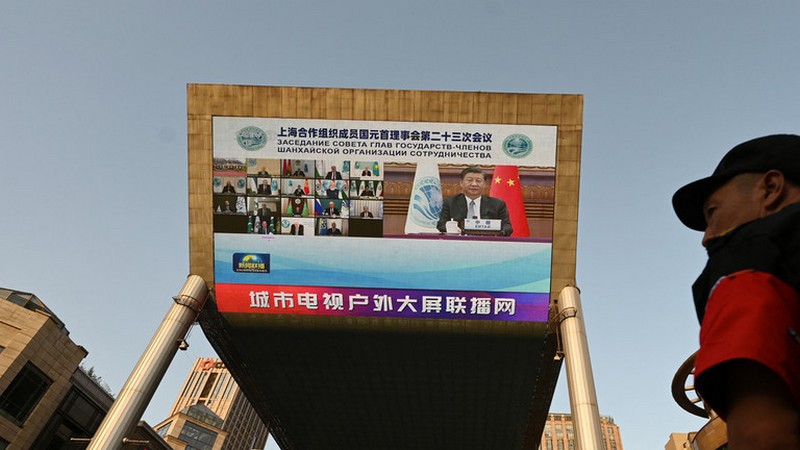
6 July 2023 – India has successfully chaired the Shanghai Cooperation Organisation (SCO) summit despite many diplomatic challenges, including having to hold a virtual summit due to the prevailing circumstances.

Relations between SCO member states have their share of bilateral difficulties and tensions. SCO members have had to address them, either to set them aside or find bridging formulations so that broad understandings are reached on regional and international issues of common interest. The New Delhi Declaration, adopted following the summit, addresses this challenge as best as possible.

It is a compromise document, because being members of an organization does not mean agreement on all issues before it, or the same interpretation of issues even if an agreed-upon text gives an appearance of consensus. Even when there is broad agreement in principle, in practice, the member states pursue the logic of their national interest or regional geopolitical considerations.

For example, the SCO members reaffirm their strong commitment to fighting terrorism, separatism, and extremism, and express their determination to disrupt terrorism financing channels, suppress recruitment activities and cross-border movement of terrorists, etc. But in actual practice, within the SCO space, cross-border terrorism continues, terrorist organizations are surviving, radicalization is taking place, safe havens are being provided, and UN listing of known terrorists is being repeatedly blocked. The New Delhi Declaration, regrettably, hedges the last issue by stating that “subject to their national laws and on the basis of consensus, the Member States will seek to develop common principles and approaches to form a unified list of terrorists, separatist and extremist organizations whose activities are prohibited on the territories of the SCO Member States.”

The New Delhi Declaration rightly acknowledges that the world is undergoing unprecedented transformations which require an increase in the effectiveness of global institutions, stronger multi-polarity, increased interconnectedness, interdependence, and an accelerated pace of digitization. It expressly confirms the commitment of member states to building a more representative, democratic, just, and multipolar world order based on international law, multilateralism, equal, joint, indivisible, comprehensive and sustainable security, cultural and civilizational diversity, with a central coordinating role of the UN.

The document expresses concern about the state of the global economy, continued turbulence in global financial markets, global reduction in investment flows, instability of supply chains, increased protectionist measures, food and energy security issues, the growing technological and digital divide, and calls for a more equitable and effective international cooperation.

Concerns in the West that the SCO is essentially anti-West in conception and seeks to build alternative political, security and economic structures is rejected in the Declaration which reaffirms that the SCO is not directed against other states and international organizations. What it rejects are bloc, ideological and confrontational approaches.

This sends the message that the SCO seeks a reformed international system, not an alternative one, that it still believes in interdependence but in a multipolar format and not one dominated by the historically preeminent powers. But then, the issue of reform of the UN and the expansion of the UN Security Council to make it more representative is not mentioned (China and Pakistan oppose India’s bid for permanent membership of the UN Security Council although Russia and Central Asian states support it). This contrasts with the call in the document for greater effectiveness and inclusive reform of the World Trade Organization (WTO).

With the West raising issues of democracies versus autocracies, the Declaration advocates respect for the right of peoples to an independent and democratic choice of the paths of their political and socioeconomic development. But its emphasis on the principles of mutual respect for sovereignty and territorial integrity of states, non-interference in internal affairs and non-use of force or threats to use force being the basis of international relations is at variance with the actual practice of some SCO member states. This applies also to the reaffirmation in the Declaration of the commitment of SCO member states to peaceful settlement of disagreements and disputes between countries through dialogue and consultations.

The issue of the governance of the Internet is a contentious one, as it has many implications – political, economic, security, social etc.The Declaration considers it important to ensure equal rights for all countries to regulate the Internet and the sovereign right of states to manage it in their national segment. The actual practice in SCO states on national control over the Internet varies.

India, not being a signatory to the Non-Proliferation Treaty (NPT), did not, as before, subscribe to the Declaration’s paragraphs on proliferation issues. Similarly, India excluded itself from the support expressed for China’s Belt and Road Initiative (BRI) by the other SCO members who also spoke in favor of implementing the roadmap for gradual increases in the share of national currencies in mutual settlements by the interested member states. This is a rather muted reference to a switch away from the US dollar.

Russia’s concerns, to which others, including India, subscribe, are addressed in paragraphs on the unilateral and unlimited expansion of global missile defense systems by certain countries or groups of countries which has a negative impact on international security and stability. Also, there is a call for full compliance with the Convention on the Prohibition of the Development, Production, Stockpiling and Use of Chemical Weapons and on their Destruction (CWC) and bridging divisions within the Organization for the Prohibition of Chemical Weapons (OPCW) to ensure its integrity and operational effectiveness (Russia has issues with the functioning of the OPCW).

China’s pet mantra for cooperation in the building of a new type of international relations as well as formation of a common vision of creating a community for the common destiny of humanity, is accommodated in the Declaration. The reference to reliable, resilient, and diversified supply chains is also an issue that India flags in various international forums as a result of the experience during the Covid-19 crisis and the concentration of critical raw materials and supply chains in a single geography.

A quick settlement of the situation in Afghanistan is viewed as one of the most important factors of preservation and strengthening of safety and stability within the SCO region. The Declaration considers it essential to establish an inclusive government in Afghanistan with the participation of representatives of all ethnic, religious, and political groups in Afghan society. The issue of the formal recognition of the Taliban regime is not addressed.

The Declaration rightly stresses that unilateral application of economic sanctions other than those approved by the UN Security Council is incompatible with the principles of international law and have a negative impact on the third countries and international economic relations.

All in all, the New Delhi Declaration is a carefully balanced, pragmatic, non-rhetorical document which spells out the challenges the world is facing and how they need to be approached in principle and practice.

Kanwal Sibal is a retired Indian Foreign Secretary and former Ambassador to Russia (2004-2007).

10 July 2023

Source: transcend.org
NATO’s Scorched Earth in Ukraine

By Tony Kevin

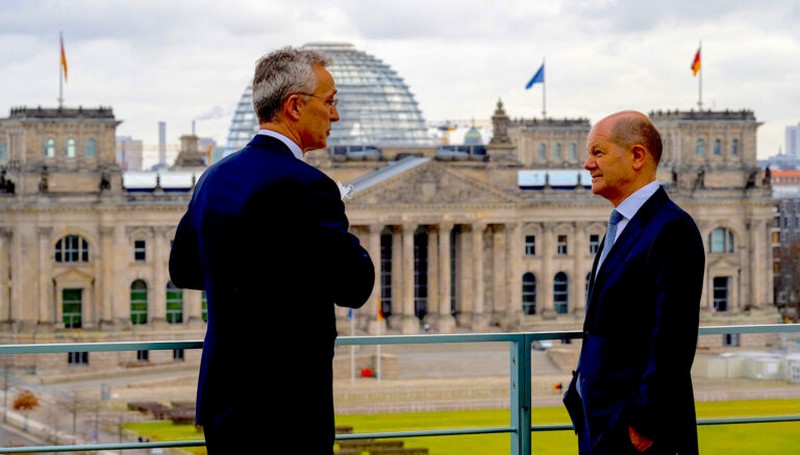
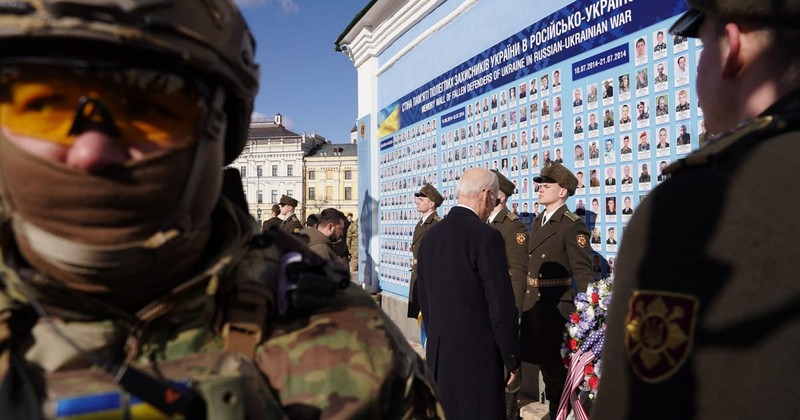
The forthcoming NATO Summit in Vilnius on July 11-12  seems already infected by a strange policy fatalism.

5 July 2023 – Hope of a policy breakthrough in Vilnius, Lithuania towards peace in Ukraine, spearheaded by the war-weary East Europeans, seems to have drained away.

There is general acceptance in NATO that the Ukrainian summer offensives in Zaporizhie and again now in Bakhmut have failed to dent Russian defences, with horrific mortality in Ukrainian manpower and enormous destruction of Western-supplied equipment.

The West seems content to let Zelensky go on wasting Ukraine’s increasingly scarce military-age men in a process described by writer Raúl Ilargi Meijer as NATO’s assisted suicide of the Ukrainian nation.

The NATO unspoken strategy seems to be: we know Russia is inevitably winning in Ukraine, but we will make sure we and our Kiev proxies destroy as much as possible of Ukraine’s manpower and national wealth before Russia takes control of the country.

The Kakhovka dam is gone, and what is left of Zaporizhie Nuclear Power Plant seems increasingly at risk of West-assisted Ukrainian sabotage. These two huge assets were the pivots of Ukraine’s industrial and agricultural potential and wealth.

When Russia wins political control over the ruined land of Ukraine, and after it repudiates Western carpetbagging claims to asset ownership there, it will face a huge rebuilding job, comparable to the situation the Soviet Union faced in Ukraine after the 1944-45 vengeful scorched-earth actions by the retreating Nazi divisions.

Meanwhile, Germany under its supine Scholz leadership is de-industrialising, following the loss of cheap Russian gas after the U.S.-conducted sabotage of the Baltic pipelines. German industrialists are taking their capital, management skills and intellectual property elsewhere. France is riven by serious rioting. The EU is distracted and aimless. Western Europe is shrinking in global influence.

In the U.S., only the military-industrial-information complex is doing well. Infrastructure continues to decay. The middle class is eroding and confused. The Democrats are the party of liberal imperialism and the Republicans are still riven between warmongers and America-first nationalist Trumpians. Who knows who will be the next U.S. president, and if he or she can arrest America’s relative decline.

Russia steadily makes reputational headway in what it now describes as the Global Majority (what used to be the Global South). There is an increasingly long queue of governments seeking to join BRICS and the Shanghai Cooperation Organisation (SCO).

The Russia-China strategic alliance is the linchpin of this growing robust and intellectually confident ideology of multipolarity which is attracting the attention of serious governments around the world.

Russia’s task is to win in Ukraine, as it is doing, but without destroying its reputation with China and the Global Majority.

Russia is bringing down the curtain on 320 years since Peter the Great began trying to make Russia a member of European-Anglophone Club. Russia will never trust the West again.

The history of Western diplomatic treachery during the last 32 years since the 1991 end of Soviet Communism has shown Russians that the U.S.-U.K. agenda was always about much more than defeating Communism: it was about expanding American global hegemony and breaking up Russia as a competing world civilisational state.

There is enough evidence now to satisfy the Global Majority that U.S. regime change and controlling operations in Ukraine since 2013 have been above all cynically aimed at weakening and destabilising Russia. Remembering their own viciously exploited colonial history, the Global Majority are glad these Western efforts are failing.

The Vilnius NATO meeting will produce no new miracles of salvation for the doomed Kiev regime. There will be a lot of tired rhetoric about continuing to defend democratic Ukraine.

Nobody – speakers or listeners – will believe it .

Tony Kevin is a former Australian senior diplomat, having served as ambassador to Cambodia and Poland, as well as being posted to Australia’s embassy in Moscow.

10 July 2023

Source: transcend.org
Ukraine and the Cluster Bombs Debate

By René Wadlow

7 July 2023 – There is currently a debate, at the highest foreign policy-making level in the U.S.A., concerning the delivery of cluster bombs to Ukraine in support of the ongoing counter offensive.  Ukraine military forces have used most of the cluster bombs they had.  It would take a good bit of time to manufacture new cluster weapons.  Thus, the request for cluster munitions from the U.S.A.  However, cluster weapons have been outlawed by a Cluster Weapons Convention signed by many states.

In a remarkable combination of civil society pressure and leadership from a small number of progressive states, a strong ban on the use, manufacture and stocking of cluster bombs was agreed by 111 countries in Dublin, Ireland on 30 May 2008.  However, bright sunshine casts a dark shadow.  In this case, the dark shadow is the fact that the major makers and users of cluster munitions were deliberately absent from the agreement: Brazil, China, India, Israel, Pakistan, Russia, and the U.S.A.

As arms negotiations at the United Nations go, the cluster bomb ban has been swift.  They began in Oslo, Norway in February 2007 and were often called “the Oslo Process.”  The negotiations were a justified reaction to their wide use by Israel in Lebanon during the July-August 2006 conflict.   The U.N. Mine Action Coordination Centre working in southern Lebanon reported that their density there is higher than in Kosovo and Iraq, especially in built-up areas, posing a constant threat to hundreds of thousands of people as well as to U.N. peacemakers.  It is estimated that one million cluster bombs were fired in south Lebanon during the 34  days of war, many during the last two days of war when a ceasefire was a real possibility.  The Hezbollah militia also shot rockets with cluster bombs into northern Israel.

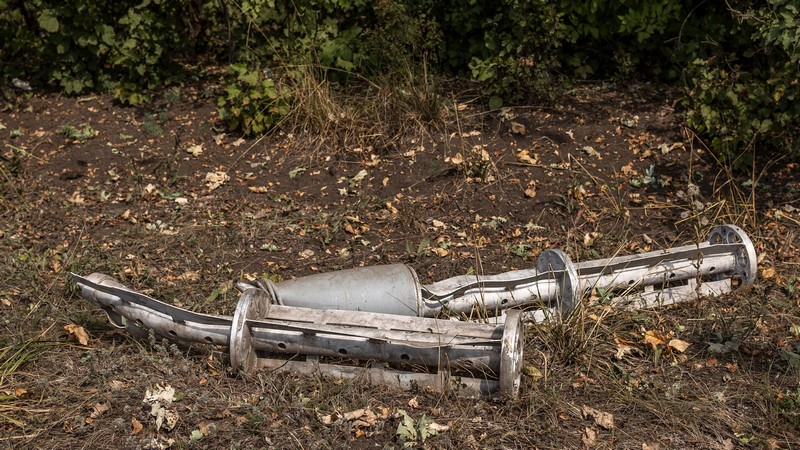
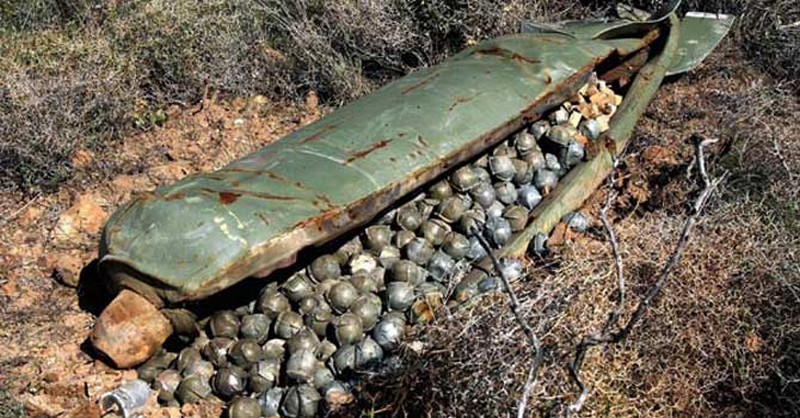
Cluster munitions are warheads that scatter scores of smaller bombs.  Many of these sub-munitions fail to detonate on impact, leaving them scattered on the ground, ready to kill and maim when disturbed or handled.  Reports from humanitarian organizations have shown that civilians make up the vast majority of the victims of cluster bombs, especially children attracted by their small size and often bright colors.

The failure rate of cluster munitions is high, ranging from 30 to 80 per cent.  But “failure” may be the wrong word.  They may, in fact, be designed to kill later.  The large number of unexploded cluster bombs means that farm lands and forests cannot be used or used with great danger.  Most people killed and wounded by cluster bombs in the 21 conflicts where they have been used were civilians–often young.  Such persons often suffer severe injuries such as loss of limbs and loss of sight. It is difficult to resume work or schooling.

Discussions on a ban on cluster weapons had begun in 1979 during the negotiations in Geneva which led to the 1980 “Convention on Prohibition on the Use of Certain Conventional Weapons which May be Deemed to be Excessively  Injurious or to Have Indiscriminate Effects.”  The indiscriminate impact of cluster bombs was raised by the representative of the Quaker United Nations Office in Geneva and by myself for the Association of World Citizens.  My NGO text of August 1979 “Anti-Personnel Fragmentation Weapons ” called for a ban based on the 1868 St Petersburg Declaration and recommended the creation of “permanent verification and dispute-settlement procedures which may investigate all charges of the use of prohibited weapons whether in inter-State or internal conflicts and that such a permanent body include a consultative committee of experts who could begin their work without a  prior resolution of the U.N. Security Council.”

At the start of the review conference of the “Convention on Prohibition on the Use of Certain Conventional Weapons ” then U.N. Secretary-General of the U.N. Kofi Annan called for a freeze on the transfer of cluster munitions – the heart of the current debate on U.S. transfers of cluster weapons to Ukraine.

There was little public outcry ot the use by Ukrainian forces of cluster weapons since they were fighting against a stronger enemy.  However, the debate in the U.S.A. may raise the awareness of the use of cluster weapons and lead to respect for the aim of the cluster weapon ban.

René Wadlow is a member of the TRANSCEND Network for Peace Development Environment.

10 July 2023

Source: transcend.org
What After Banned Cluster Bombs to Ukraine?

By Ramesh Jaura

BERLIN 8 July 2023 (IDN) — “Have you noticed,” said John, “how countries call theirs ‘sovereign nuclear deterrents,’ but call the other countries’ ones ‘weapons of mass destruction’?” I am reminded of this quote from David Mitchell’s ‘Ghostwritten’ while reading how President Biden has defended his decision to provide Ukraine with banned cluster munitions, bypassing the US law and violating the international ban signed by his NATO allies.

Ahead of the NATO summit on 11-12 July in Vilnius, Lithuania, Mr Biden said, “the Ukrainians are running out of ammunition” in the fight against Russian forces, and that it was a temporary move to hold Ukraine over until the production of conventional artillery rounds could be ramped up.

“It was a very difficult decision on my part—and by the way, I discussed this with our allies, I discussed this with our friends up on the Hill,” the US President said in an interview with CNN. “The Ukrainians are running out of ammunition,” reported the Washington Post.

“And so, what I finally did, I took the recommendation of the Defense Department to—not permanently—but to allow for this transition period,” he added.

NATO Secretary-General Jens Stoltenberg dodged a question on whether he believed it was wise for the United States to provide the weapons to Ukraine. “It is for individual allies to make decisions on the delivery of weapons and military supplies to Ukraine,” Mr Stoltenberg told journalists at NATO’s headquarters in Brussels. “So this will be for governments to decide—not for NATO as an alliance.”

The Washington Post added: “Russia, US officials have noted, has been using its cluster munitions in Ukraine for much of the war. The Ukrainians have also used them, and President Volodymyr Zelensky has been pressing Mr Biden to supply him with more in order to flush out the Russians who are dug into trenches and blocking Ukraine’s counteroffensive.”

BBC asked the British Prime Minister about his position on the US decision. Rishi Sunak highlighted the UK was one of 123 countries that had signed up to the Convention on Cluster Munitions, which prohibits the production or use of cluster munitions and discourages their use.

Spain’s Defence Minister Margarita Robles told reporters her country had a “firm commitment” that certain weapons and bombs could not be sent to Ukraine. “No to cluster bombs and yes to the legitimate defence of Ukraine, which we understand should not be carried out with cluster bombs,” she said.

But Germany, which is also a signatory of the treaty, said that while it would not provide such weapons to Ukraine, it understood the American position.

“We’re certain that our US friends didn’t take the decision about supplying such ammunition lightly,” German government spokesman Steffen Hebestreit told reporters in Berlin.

A story published in IDN on 6 July quoting President Biden is “under steady pressure from Ukraine’s President Volodymyr Zelensky” to transfer banned cluster munitions, arguing that the munitions were “the best way to kill Russians who are dug into trenches and blocking Ukraine’s counteroffensive”.

Responding, the independent, nongovernmental Arms Control Association (ACA), said if he decides to give cluster munition, the US will be violating the Convention on Cluster Munitions

Cluster munitions are designed to disperse or release explosive submunitions, each of which weighs less than 20 kilograms, and includes those explosive submunitions.

The US stockpile includes dual-purpose improved conventional munitions (DPICMs), surface-to-surface warheads, and other types of older cluster munitions.

Given that cluster munitions disperse hundreds or even thousands of tiny but deadly bomblets, their use produces significant quantities of unexploded submunitions that can maim, injure, or kill civilians and friendly forces during, and long after, a conflict.

“Some types of lethal US and European military assistance to Ukraine, including cluster munitions, would be escalatory, counterproductive, and only further increase the dangers to civilians caught in combat zones and those who will, someday, return to their cities, towns, and farms,” warned Arms Control Association’s Executive Director Daryl G. Kimball.

US National Security Advisor Jake Sullivan has been reported saying that Ukraine has given “written assurances” that it would not use these cluster munitions on foreign soil, but to defend its territory, preserve its civilian population as much as possible. Le Monde’s US correspondent Piotr Smolar noted that a paper guarantee is of “relative value”. He added: How will this be determined, with such indiscriminate bombs?”

“Ukraine has also committed to mine clearing efforts once the conflict ends to further minimize the potential impact of the rounds on civilians,” says US Department of Defence (DOD) News. Ukraine has also committed to mine clearing efforts once the conflict ends to further minimize the potential impact of the rounds on civilians. “The US has provided more than $95 million in assistance for Ukraine’s demining efforts.”

The Biden administration has committed more than $41.3 billion in security assistance—weapons—to Ukraine since the beginning of Russia’s invasion in February 2022. For the past year and a half, President Biden has been clear that we will support Ukraine for “as long as it takes”. Germany has also pledged to support Ukraine for “as long as it takes”.

The US and its NATO allies have assured that, while they will provide all the military equipment to facilitate Ukraine to stand up against Russia (and liberate its territory from Russian occupation?) but do everything possible to avoid the “NATO involvement” in the war.

What if Ukraine cannot retake its territories and the only way left is for some NATO countries’ armed troops to replenish Ukraine’s dwindling strength? [IDN-InDepthNews]

Ramesh Jaura is Editor-in-Chief of IDN, the flagship agency of the Non-profit International Press Syndicate.

10 July 2023

Source: countercurrents.org

They Lied About Afghanistan. They Lied About Iraq. And They Are Lying About Ukraine

By Chris Hedges

The playbook the pimps of war use to lure us into one military fiasco after another, including Vietnam, Afghanistan, Iraq, Libya, Syria and now Ukraine, does not change: Freedom and democracy are threatened. Evil must be vanquished. Human rights must be protected. The fate of Europe and NATO, along with a “rules based international order” is at stake. Victory is assured.

The results are also the same. The justifications and narratives are exposed as lies. The cheery prognosis is false. Those on whose behalf we are supposedly fighting are as venal as those we are fighting against.

The Russian invasion of Ukraine was a war crime, although one that was provoked by NATO expansion and by U.S. backing of the 2014 “Maidan” coup, which ousted the democratically elected Ukrainian President Viktor Yanukovych. Yanukovych wanted economic integration with the European Union, but not at the expense of economic and political ties with Russia. The war will only be solved through negotiations that allow ethnic Russians in Ukraine to have autonomy and Moscow’s protection, as well as Ukrainian neutrality, which means the country cannot join NATO. The longer these negotiations are delayed the more Ukrainians will suffer and die. Their cities and infrastructure will continue to be pounded into rubble.

But this proxy war in Ukraine is designed to serve U.S. interests. It enriches the weapons manufacturers, weakens the Russian military and isolates Russia from Europe. What happens to Ukraine is irrelevant.

“First, equipping our friends on the front lines to defend themselves is a far cheaper way — in both dollars and American lives — to degrade Russia’s ability to threaten the United States,” admitted Senate Republican Leader Mitch McConnell.

“Second, Ukraine’s effective defense of its territory is teaching us lessons about how to improve the defenses of partners who are threatened by China. It is no surprise that senior officials from Taiwan are so supportive of efforts to help Ukraine defeat Russia.

Third, most of the money that’s been appropriated for Ukraine security assistance doesn’t actually go to Ukraine. It gets invested in American defense manufacturing. It funds new weapons and munitions for the U.S. armed forces to replace the older material we have provided to Ukraine. Let me be clear: this assistance means more jobs for American workers and newer weapons for American service members.”

Once the truth about these endless wars seeps into public consciousness, the media, which slavishly promotes these conflicts, drastically reduces coverage. The military debacles, as in Iraq and Afghanistan, continue largely out of view. By the time the U.S. concedes defeat, most barely remember that these wars are being fought.

The pimps of war who orchestrate these military fiascos migrate from administration to administration. Between posts they are ensconced in think tanks — Project for the New American Century, American Enterprise Institute, Foreign Policy Initiative, Institute for the Study of War, The Atlantic Council and The Brookings Institution — funded by corporations and the war industry. Once the Ukraine war comes to its inevitable conclusion, these Dr. Strangeloves will seek to ignite a war with China. The U.S. Navy and military are already menacing and encircling China. God help us if we don’t stop them.

These pimps of war con us into one conflict after another with flattering narratives that paint us as the world’s saviors. They don’t even have to be innovative. The rhetoric is lifted from the old playbook. We naively swallow the bait and embrace the flag — this time blue and yellow — to become unwitting agents in our self-immolation.

Since the end of the Second World War, the government has spent between 45 to 90 percent of the federal budget on past, current and future military operations. It is the largest sustained activity of the U.S. government. It has stopped mattering — at least to the pimps of war — whether these wars are rational or prudent. The war industry metastasizes within the bowels of the American empire to hollow it out from the inside. The U.S. is reviled abroad, drowning in debt, has an impoverished working class and is burdened with a decayed infrastructure as well as shoddy social services.

Wasn’t the Russian military — because of poor moralepoor generalshipoutdated weaponsdesertions, a lack of ammunition that supposedly forced soldiers to fight with shovels, and severe supply shortages — supposed to collapse months ago? Wasn’t Putin supposed to be driven from power? Weren’t the sanctions supposed to plunge the ruble into a death spiral? Wasn’t the severing of the Russian banking system from SWIFT, the international money transfer system, supposed to cripple the Russian economy? How is it that inflation rates in Europe and the United States are higher than in Russia despite these attacks on the Russian economy?

Wasn’t the nearly $150 billion in sophisticated military hardware, financial and humanitarian assistance pledged by the U.S., EU and 11 other countries supposed to have turned the tide of the war? How is it that perhaps a third of the tanks Germany and the U.S. provided were swiftly turned by Russian mines, artillery, anti-tank weapons, air strikes and missiles into charred hunks of metal at the start of the vaunted counter-offensive? Wasn’t this latest Ukrainian counter-offensive, which was originally known as the “spring offensive,” supposed to punch through Russia’s heavily fortified front lines and regain huge swathes of territory? How can we explain the tens of thousands of Ukrainian military casualties and the forced conscription by Ukraine’s military? Even our retired generals and former CIA, FBI, NSA and Homeland Security officials, who serve as analysts on networks such as CNN and MSNBC, can’t say the offensive has succeeded.

And what of the Ukrainian democracy we are fighting to protect? Why did the Ukrainian parliament revoke the official use of minority languages, including Russian, three days after the 2014 coup? How do we rationalize the eight years of warfare against ethnic Russians in the Donbass region before the Russian invasion in Feb. 2022? How do we explain the killing of over 14,200 people and the 1.5 million people who were displaced, before Russia’s invasion took place last year?

How do we defend the decision by President Volodymyr Zelenskyy to ban eleven opposition parties, including The Opposition Platform for Life, which had 10 percent of the seats in the Supreme Council, Ukraine’s unicameral parliament, along with the Shariy Party, Nashi, Opposition Bloc, Left Opposition, Union of Left Forces, State, Progressive Socialist Party of Ukraine, Socialist Party of Ukraine, Socialists Party and Volodymyr Saldo Bloc? How can we accept the banning of these opposition parties — many of which are on the left — while Zelenskyy allows fascists from the Svoboda and Right Sector parties, as well as the Banderite Azov Battalion and other extremist militias, to flourish?

How do we deal with the anti-Russian purges and arrests of supposed “fifth columnists” sweeping through Ukraine, given that 30 percent of Ukraine’s inhabitants are Russian speakers? How do we respond to the neo-Nazi groups supported by Zelenskyy’s government that harass and attack the LGBT community, the Roma population, anti-fascist protests and threaten city council members, media outlets, artists and foreign students? How can we countenance the decision by the U.S and its Western allies to block negotiations with Russia to end the war, despite Kyiv and Moscow apparently being on the verge of negotiating a peace treaty?

I reported from Eastern and Central Europe in 1989 during the breakup of the Soviet Union.  NATO, we assumed, had become obsolete. President Mikhail Gorbachev proposed security and economic agreements with Washington and Europe. Secretary of State James Baker in Ronald Reagan’s administration, along with the West German Foreign Minister Hans-Dietrich Genscher, assured Gorbachev that NATO would not be extended beyond the borders of a unified Germany. We naively thought the end of the Cold War meant that Russia, Europe and the U.S., would no longer have to divert massive resources to their militaries.

The so-called “peace dividend,” however, was a chimera.

If Russia did not want to be the enemy, Russia would be forced to become the enemy. The pimps of war recruited former Soviet republics into NATO by painting Russia as a threat. Countries that joined NATO, which now include Poland, Hungary, the Czech Republic, Bulgaria, Estonia, Latvia, Lithuania, Romania, Slovakia, Slovenia, Albania, Croatia, Montenegro, and North Macedonia, reconfigured their militaries, often through tens of millions in western loans, to become compatible with NATO military hardware. This made the weapons manufacturers billions in profits.

It was universally understood in Eastern and Central Europe following the collapse of the Soviet Union that NATO expansion was unnecessary and a dangerous provocation. It made no geopolitical sense. But it made commercial sense. War is a business.

In a classified diplomatic cable — obtained and released by WikiLeaks — dated Feb. 1, 2008, written from Moscow, and addressed to the Joint Chiefs of Staff, NATO-European Union Cooperative, National Security Council, Russia Moscow Political Collective, Secretary of Defense, and Secretary of State, there was an unequivocal understanding that expanding NATO risked conflict with Russia, especially over Ukraine.

“Not only does Russia perceive encirclement [by NATO], and efforts to undermine Russia’s influence in the region, but it also fears unpredictable and uncontrolled consequences which would seriously affect Russian security interests,” the cable reads. “Experts tell us that Russia is particularly worried that the strong divisions in Ukraine over NATO membership, with much of the ethnic-Russian community against membership, could lead to a major split, involving violence or at worst, civil war. In that eventuality, Russia would have to decide whether to intervene; a decision Russia does not want to have to face. . . .”

“Dmitri Trenin, Deputy Director of the Carnegie Moscow Center, expressed concern that Ukraine was, in the long-term, the most potentially destabilizing factor in U.S.-Russian relations, given the level of emotion and neuralgia triggered by its quest for NATO membership . . .” the cable read.  “Because membership remained divisive in Ukrainian domestic politics, it created an opening for Russian intervention. Trenin expressed concern that elements within the Russian establishment would be encouraged to meddle, stimulating U.S. overt encouragement of opposing political forces, and leaving the U.S. and Russia in a classic confrontational posture.”

The Russian invasion of Ukraine would not have happened if the western alliance had honored its promises not to expand NATO beyond Germany’s borders and Ukraine had remained neutral. The pimps of war knew the potential consequences of NATO expansion. War, however, is their single minded vocation, even if it leads to a nuclear holocaust with Russia or China.

The war industry, not Putin, is our most dangerous enemy.

Chris Hedges is a Pulitzer Prize–winning journalist who was a foreign correspondent for fifteen years for The New York Times, where he served as the Middle East Bureau Chief and Balkan Bureau Chief for the paper.

9 July 2023

Source: countercurrents.org