Just International

Tariq Ramadan: Islam scholar cleared of Swiss rape charges

By Imogen Foulkes

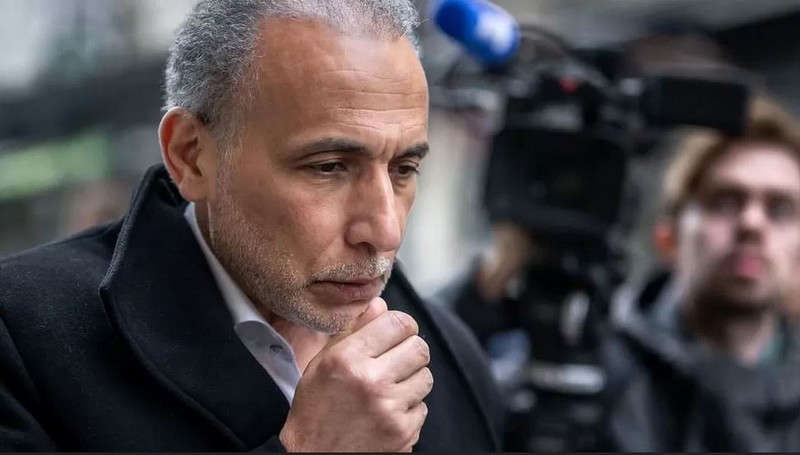
Renowned Islamic studies scholar Tariq Ramadan has been cleared of rape and sexual coercion by a Swiss court.

Mr Ramadan, who is a Swiss citizen, is the grandson of Hassan al-Banna, the founder of Egypt’s Muslim Brotherhood.

The case was brought by a Swiss woman who said she had been raped by Mr Ramadan in a Geneva hotel in 2008.

A convert to Islam, and a fan of Mr Ramadan’s, the woman told the court she had been subjected to a brutal sexual assault, beatings and insults.

She said it happened after she was invited by the former Oxford academic for a coffee after a conference.

Mr Ramadan, who is 60, had faced up to three years in prison if convicted. He denied all the charges, but did admit to having met the woman.

The trial was a sharp contrast to the career so far of the man once feted as a “rock star” of Islamic thought.

As Europe struggled with terrorist attacks and rising anti-Muslim feeling, Mr Ramadan appeared as a voice of reason – condemning terrorism and opposing the death penalty. He was denied entry to Tunisia, Egypt, Saudi Arabia, Libya, and Syria, because, he said, he had criticised their lack of democracy.

In 2004 he was voted one of Time magazine’s 100 most influential people in the world.

In 2007 he became a professor of Islamic studies at St Antony’s College Oxford. He also had his critics, particularly in France, where a number of leading academics accused him of anti-Semitism.

But in 2017, Mr Ramadan’s meteoric rise ended, when he was accused by a French woman of rape.

When that case became public, more women came forward.

By 2020 he was facing five charges of rape – four in France, and one in Switzerland – and had spent nine months in detention in France before being released on probation. He has consistently denied all the charges against him.

The Swiss case was the first to come to trial, and the atmosphere in the Geneva courtroom was tense.

Mr Ramadan faced a barrage of cameras as he arrived. His accuser, using the name Brigitte to protect her identity, requested a screen be put up in the courtroom so she would not have to look at the man she claimed raped her.

She described the alleged attack in detail, saying she feared she would die.

Mr Ramadan admitted inviting her to his hotel room, but denied any form of violence. He said all the accusations against him have been politically motivated and designed to discredit him.

His French and Swiss lawyers also questioned the accusers’ truthfulness, citing inconsistencies around the dates of the alleged attacks.

Mr Ramadan was supported in that argument by his family. His son Sami, pointing to his father’s “role in the debate about Islam in France,” told the BBC in 2019 that the cases against his father were “motivated by other reasons, which we feel are political.”

That view was backed by dozens of high-profile figures, including American philosopher Noam Chomsky, and British filmmaker Ken Loach, who signed an open letter questioning whether Mr Ramadan was receiving a fair legal process, with the usual presumption of innocence.

In court in Geneva, the prosecution insisted Brigitte could not have invented the alleged attack or have been able to tell it to the judges in such detail.

Mr Ramadan’s defence lawyer insisted on his innocence, describing the charges against him as “crazy”. In his own remarks to the court, Mr Ramadan asked not to be tried on his “real or supposed ideology”.

After a week’s deliberation, the three Swiss judges found him innocent.

While he has been cleared in Switzerland, this could be just the first of several trials.

In France, prosecutors are still assessing whether charges brought against Mr Ramadan should go to court.

He continues to protest his innocence in all the cases, and has vowed to clear his name.

24 May 2023

Source: www.bbc.com

Neo-Nazism and the War in Ukraine: Interview with Michel Chossudovsky

By Prof Michel Chossudovsky and Dragan Vujicic

The West’s support of Neo-Nazism in Ukraine should come as no surprise. Historically, powerful U.S. financial interests not only supported Nazi Germany as well as Bandera Nazism in Ukraine. In some regards the totalitarian practice of Neo-nazism is akin to the doctrine of the Neocons as formulated in the Project of the New American Century (PNAC).

And Serbia, beware, you are the only country in Europe which has courageously stood up against US pressures.

This and much more is revealed in this interview with Prof. Michel Chossudovsky, economist, professor emeritus at the University of Ottawa and editor of the renowned anti-globalist Global Research website.

***

Dragan Vujicic: How do you view the war between Ukraine and Russia?

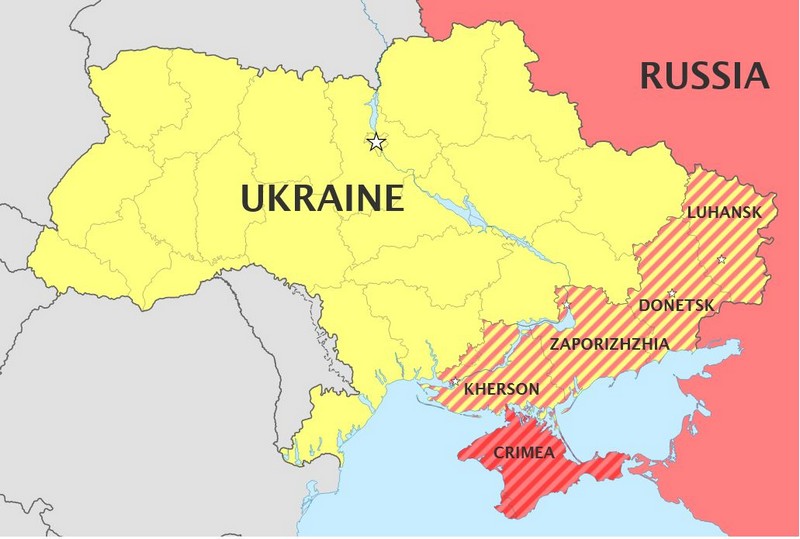
Prof Michel Chossudovsky: The war in Ukraine ended before it began. The Russians literally destroyed their Air Force and Navy at the very outset in February-March 2022.

Also Russia has strategic control over a large part of the Black Sea and total control of the Sea of Azov. Turkey which is a NATO heavyweight is an unspoken ally of Russia. Turkey controls the southern flank of the Black Sea.

Anyone who has a minimal understanding of military strategies, knows that you cannot wage a conventional ground war without a Navy and an Airforce.

Now, after these recent Pentagon “leaks”, there is ample evidence that Ukraine is running out of ammunition and that they do not have (even with US-NATO support) the military capabilities to confront the Russians.

Hopefully there will be a cease-fire to save lives. I think that the war could end in a month or so and negotiations might begin. But there are obstacles to reaching this objective. There is a crisis in bona fide diplomacy. The Biden administration refuses to enter into dialogue with Russia with a view to reaching a cease-fire and peace negotiations.

In fact, the biggest problem is that politicians in America believe in their own propaganda. They think they can defeat Russia by using nuclear weapons. Nukes have been re-categorized. Tactical so-called low yield mini-nukes have been slated for use in the conventional war theater. If nukes are used that would lead us into a WW III scenario.

I have researched the history of nuclear weapons, starting with the Manhattan Project (the creation of the American atomic bomb). Many people simply do not know that the Manhattan Project in the immediate wake of Hiroshima, Nagasaki in August 1945 was intended to wage a nuclear war against the USSR, at a time when the Soviet Union and the U.S. were allies.

DV: Are you talking about plans for nuclear war after 1945?

PMC: What I am referring to is the U.S Blueprint of September 15, 1945 according to which the US War Department planned to drop more than 200 atomic bombs on 66 cities of the Soviet Union. This is not mentioned in the history books. See:

http://blog.nuclearsecrecy.com/wp-content/uploads/2012/05/1945-Atomic-Bomb-Production.pdf 

DV: What are the nuclear capabilities of the U.S’s main rivals today?

PMC: Russia and China are on par with the U.S. with regard to nuclear capabilities. The U.S. has a 1.3 trillion dollar project assigned solely to nuclear weapons, which constitutes Big Money for the US-NATO defense contractors. We are at a dangerous crossroads. Western politicians believe that they can win a nuclear war.

DV: With the war in Ukraine, Nazism has reemerged, now they call it neo-Nazism?

PMC: The U.S. financial establishment have supported the Nazis since the outset of the Third Reich. Wall Street, The Federal Reserve  and the Bank of England supported Adolf Hitler’s election campaign  for Chancellor in the wake of the Weimar Republic. They had business interests in Nazi Germany. There were powerful US economic interests behind the Third Reich including Prescott Bush, the grandfather of George W. Bush.

Moreover, it is common knowledge that you do not go to war if you do not have Oil and Hitler started Operation Barbarossa on June 22, 1941, a military operation for which he needed a huge amount of fuel. Rockefeller’s Standard Oil  of  New Jersey (today’s Exxon) supplied Hitler’s troops until 1945. Without the sale of U.S. oil to Nazi Germany, Operation Barbarossa would not have taken place.

Before Harry Truman became president in 1945, when he was senator he stated his position as follows:

“If we see that Germany is winning the war, we ought to help Russia; and if Russia is winning, we ought to help Germany”

DV: Today the world is moving towards de-dollarization and the Multipolar world is born.

PMC: I think many analysts and journalists do not understand what de-dollarization means. The dollar as a currency is not the main issue. What is at stake is the macroeconomic apparatus of dollarised countries and their relationship with Wall Street and the Washington consensus.

The Federal Reserve, Wall Street  et al,  generate dollar denominated debts, which then enables them to enforce Neoliberal economic policies Worldwide.

The central banks of dollarized Third World countries are invariably defunct, controlled by Wall Street, the IMF and the World Bank.

De-dollarization requires “Exit” from the institutions which sustain the (dollar denominated) Debt Crisis. These institutions include the IMF and the WB (which control the central banks of the Global South), not to mention the regional development banks and the World Trade Organization (WTO).

As far as the BRICS member states are concerned, India, South Africa and Brazil are heavily dollarized, ie. in the stranglehold of IMF conditionalities. They are not sovereign nation-states. What is required is for sovereign countries to have their own central bank which does not depend on external creditors.

DV: Is Russia considered the bearer of the current de-dollarization?

PMC: Their post-Cold War financial and banking institutions are in many regards still aligned with the West. Let us recall that the neoliberal agenda was imposed on Russia under the proxy Boris Yeltsin government in the early 1990s.

I should also mention the fate of Russia’s gold and dollar deposits in Western banks. They are significant for the Russian government. When Russia’s “Special Military Operation” began in February 2022, about 200 billion dollars of Russia’s Central Bank reserves deposited in Western banks were frozen. And that does not include the billions of dollars of assets of Russia’s “oligarchs” deposited in the Western banking system. Why did they not attempt to withdraw those funds?

DV: Is Russia, from a military standpoint better organized than the USA and NATO.

PMC: The US and European companies which produce weapons for US-NATO, (i.e. the military industrial complex) are entirely in private hands. In practice, the wars waged by US-NATO are privatized, they serve private corporate interests under the label of “national security”.

The “owners of war” are primarily interested in profit and more profit, from the proceeds of weapons sales, rather than the performance of the advanced weapons systems which they sell to US-NATO.

Militarily, Russia is ahead of US-NATO in many regards, specifically with regard to its air defense system (S-400) which is superior to the U.S. Patriot (ADS).

DV: There are many stupid and dangerous things in that war?

PMC: Yes, let’s point to the actions of the so-called International Criminal Court (ICC), which accused President Putin of the war crime of forcibly transferring Ukrainian children to Russia. This is  obvious nonsense. The  ICC did not blame Russia for aggression against a neighboring country, but for removing children from war-torn areas in Donbass, ultimately to save the lives of those children. It’s idiocy and the ICC is totally corrupt.

DV: When talking about the conflict between Ukraine and Russia, what is the relevance of the Davos WEP agenda?

PMC: Russia’s relations with the World Economic Forum are contradictory. Eight months before the February 2022 “Special Military Operation”, Russia participated in a scenario with the WEF on procedures and actions in the event of a major cyber attack.

The “Davos players” are routinely in contact with Russia’s financial establishment. In turn Russia’s financial and banking interests including Russia’s Central Bank have retained their connections with the Washington Consensus as well as with the IMF and the World Bank.

Putin is aware that there are intruders in Russia’s financial system.

DV: What to do when the UN is absolutely blocked?

PMC: It must be known that the UN was at the outset a project which was very much influenced by powerful banking interests including the Rockefellers. I should say that the UN system at the outset of the post war era had international legitimacy and acceptance as an instrument of peace. I have worked for a number of UN agencies as a consultant.

Now the UN is de facto privatized and coopted, partner of the WEF, serving the interests of the financial elites. I would characterize them as “sold out”. They have betrayed the United Nations.

As outlined by the late Padre Miguel d’Escoto Brockmann (who was President of the UN General Assembly in 2008-2009), the UN system needs to be completely restructured with a view to restoring the true spirit of internationalism.

Padre Miguel was my mentor. In this regard, I have worked in Asia, China, Latin America… and I realize just how people from all walks of life in different continents share the same values. Everyone should live in justice and with justice.

DV: How do you view Serbia’s international position?

PMC: Exceptional. Serbia has not caved in to the pressures of Washington, i.e. sanctions on Russia.

DV: Serbia is still being pressured to give up Kosovo and Metohija?

PMC: Based on my experience and from the documents on the international status of Kosovo. I do not think it is possible to negotiate the possibility of Kosovo and Metohija gaining the status of a sovereign nation state.  Kosovo and Metohija belong to Serbia under international law. It is true that there is a US military base there but that is another topic for discussion.

DV: What is another reason why the Republic of Kosovo must not be internationally recognized?

PMC: The leader of the KLA, Hashim Thaci in 1998-99 was wanted by Interpol, for crimes committed in the 1990s. He was used by US-NATO to create a mafia state.

Hashim Thaci and Madeleine  Albright, (1998)

It’s ironic that Thaci is now being held in prison and tried for crimes against humanity committed in the late 1990s. Why didn’t they arrest him in 1999, when they knew everything?

22 May 2023

Source: www.globalresearch.ca

Global Debt Increases To Near-Record Highs – $305 Trillion

By Countercurrents Collective

The global debt increased by $8.3 trillion in the first quarter of the year to a near-record high of $305 trillion amid an aggressive tightening of monetary policy by central banks, the Institute of International Finance (IIF) has revealed.

According to its quarterly Global Debt Monitor (GDM) report on Wednesday, the reading is the highest since the first quarter of last year and the second-highest quarterly reading ever.

“Global debt is now $45 trillion higher than its pre-pandemic level and is expected to continue increasing rapidly,” said the IIF in the GDM.

After peaking near 360% in 2021 the debt-to-output ratio has stabilized around 335%, above pre-pandemic levels.

The IIF warned that the combination of such high debt levels and rising interest rates had pushed up the cost of servicing that debt, prompting concerns about leverage in the financial system.

The IIF also noted the growth of shadow banking, or credit intermediation from non-bank financials.

“Shadow banks now account for more than 14% of financial markets, with the majority of growth stemming from a rapid expansion of U.S. investment funds and private debt markets.”

Specifically, the report mentioned the “large portion” of corporate debt held by life insurance companies, “raising concerns over their increased exposure to less liquid assets.”

“With financial conditions at their most restrictive levels since the 2008-09 financial crisis, a credit crunch would prompt higher default rates and result in more ‘zombie firms’ – already approaching an estimated 14% of U.S.-listed firms,” the IIF said.

Despite concerns over a potential credit crunch following recent turmoil in the banking sectors of the U.S. and Switzerland, government borrowing needs to remain elevated, the finance industry body stressed.

According to the report, aging populations and rising healthcare costs continue putting strain on government balance sheets, while “heightened geopolitical tensions are also expected to drive further increases in national defense spending over the medium term,” which would potentially affect the credit profile of both governments and corporate borrowers.

“If this trend continues, it will have significant implications for international debt markets, particularly if interest rates remain higher for longer,” the IIF cautioned.

The report showed that total debt in emerging markets hit a new record high of more than $100 trillion, around 250% of GDP, up from $75 trillion in 2019. China, Mexico, Brazil, India and Türkiye were the biggest upward contributors, according to the IIF.

As for the developed markets, Japan, the US, France and the UK posted the sharpest increases over the quarter, it said.

The report partly focused on the effects of last year’s rapid rise in rates in some bank balance sheets.

“Although recent bank failures appear more idiosyncratic than systemic,” the report said, “fear of contagion has prompted significant deposit withdrawals from U.S. regional banks.”

The IIF voiced its concern that tighter lending practices among smaller banks would hurt some businesses and households harder.

“Given the central role of regional banks in credit intermediation in the U.S., worries about their liquidity positions could result in a sharp contraction in lending to some segments.”

The report showed 75% of the IIF’s emerging market (EM) universe saw an increase in debt levels in dollar terms in the first quarter, with the overall figure crossing over $100 trillion for the first time.

Some of the larger EMs have benefited from the relative weakness of the dollar, which has attracted investors to their local currency debt. But for others access to markets has been harder or non-existent on either tighter spreads as rates rose in developed markets or fast-rising borrowing costs.

“With the interest rate differential between EMs and mature markets diminishing, EM local currency debt is less appealing for foreign investors,” the IIF said.

World Economic Forum said on May 16, 2022 (What does ‘global debt’ mean and how high is it now?, https://www.weforum.org/agenda/2022/05/what-is-global-debt-why-high/):

Borrowing was already surging before the pandemic – but COVID-19 and now the war in Ukraine have pushed global debt to new highs.

About a year ago IMF warned: Countries need to work together to tackle this debt mountain in order to safeguard global stability and prosperity.

“In the end, the impact will be most sharply felt by those households that can least afford it,” it adds.

Experts warn: Low-income countries and households suffer the most from high debt levels.

Global debt is borrowing by governments, businesses and households.

In 2021, the global debt was a record $303 trillion, according to the IIF.

That was a further jump from record global debt in 2020 of $226 trillion, as was reported by the IMF in its Global Debt Database.

The current debt wave is the world’s fourth since 1970, the World Bank says.

Emerging and developing economies have been the worst hit by previous debt crises, World Bank research shows.

If countries default on their debts, it can cause panic on financial markets and economic slowdowns.

For businesses, meeting repayments on high levels of debt can mean less money is available to invest. Insolvency is also a risk for businesses that are unable to pay back their loans.

For households, high levels of debt can force them to cut some areas of spending, such as food or fuel.

When low-income countries get into debt distress, it is associated with “protracted recessions, high inflation and fewer resources going to essential sectors like health, education and social safety nets, with a disproportionate impact on the poor”, the World Bank says.

Debt distress is when a country is unable to fulfill its financial obligations, such as repayments due on its debt. The IMF and World Bank believe 60% of low-income countries are at or near this point.

As food and fuel prices soar, governments may need to give more grants to households in need to help them cover costs, particularly in low-income countries, the IMF says.

Countercurrents is answerable only to our readers. Support honest journalism because we have no PLANET B.

22 May 2023

Source: countercurrents.org

The Numbers BlackRock Won’t Crunch

By Teddy Ogborn

As the planet’s biggest investor, with $9 trillion in assets under management and an army of tech-savvy analysts trained on the scent of easy money, numbers are BlackRock’s bread and butter. A giant with such an enormous appetite should find room for all kinds of facts and figures – but this one’s a bit of a picky eater.

The BlackRock Annual General Meeting is on May 24th, and resolutions submitted by shareholders will be going to a vote. The board advocates for or against those resolutions in a statement released last month. One resolution they unanimously recommend shareholders vote against is Item 7 – the ‘Impact Report for Climate-Related Human Risks of iShares U.S. Aerospace and Defense Exchange-Traded Fund’ resolution, submitted by CODEPINK.

The resolution simply calls on BlackRock to research and publish the climate impacts of this industry-wide investment offering (ticker code ITA). Among the dozens of companies represented in ITA are Raytheon, Lockheed Martin, Boeing – companies that profit directly from mass killings. Lockheed Martin developed the bombs Saudi Arabia used on a Yemeni school bus full of children in 2018, and Raytheon is the contractor behind the expansion of the US’ nuclear arsenal.

But the significant climate impact of these companies often goes unmentioned. By providing ballistic missiles and aerospace tech to the Pentagon, these companies fuel the latter’s carbon emissions – making the U.S. military the planet’s largest institutional emitter of greenhouse gasses, and thus a leading cause of our present climate crisis. This is one of many reasons that BlackRock’s continued acknowledgement of the severity of the climate crisis is at serious odds with the investment platforms it sells.

If BlackRock’s CEO and chairman Larry Fink has a catchphrase, it’s “we are a fiduciary to our clients.” In the guise of displaying the firm’s humble loyalty to investors, this line is usually delivered with an exculpatory tenor: “Sure we call the shots, but it’s our investors who pull the trigger.” For a corporation that is second only to the US and China in terms of the financial power it wields, this is an extremely convenient way to pass the buck. But Fink’s M.O. is to publicly play both roles – on one hand a duty-bound servant, on the other, a super-powerful arbiter of global financial affairs.

For years, activists have worked to expose the problem with these incongruencies, and it’s paid off. In his 2020 letter to investors, Fink underscored the reality of the climate crisis, stating plainly that “climate risk is investment risk” in order to highlight the trillions of dollars in damage and lost revenue that will stem from fossil-fueled disasters. After coming under intense fire for the firm’s continued investment in the dirtiest fossil fuel sector, Fink pledged to cut thermal coal from some of its offerings. Climate activists got a glimmer of hope. Could this signal the beginning of the end for climate-killing investments?

But since 2020, BlackRock has shown that Fink was full of hot air. The firm included gaping loopholes in the new coal rules, rendering them moot. The total of those thermal coal investments now hovers around $110 billion, and BlackRock is the planet’s second-biggest funder of fossil fuels. Climate-conscious language has evaporated from Fink’s annual letters and public statements. But that performative display of climate goodwill in 2020 exposed the truth: BlackRock is capable of partially decarbonizing the global economy. It’s not a question of ability, as it tends to claim, but one of will. Its board’s statement against CODEPINK’S resolution is a case study in the firm’s duck-and-weave approach when faced with this fact.

In short, the board argues that ITA’s information page already provides all the “sustainability characteristics” an investor could possibly want to see. The board points out that the “implied temperature rise,” or ITR, associated with the operation of the companies is clearly displayed. What the board leaves out speaks volumes: the ITR is listed as “>3.0° C.” In other words: the sector is slated to exceed emissions levels that are consistent with global warming of 3 degrees Celsius. This is a stunning figure for several reasons.

A temperature rise above 3 degrees Celsius won’t produce “more-April-beach-days” weather. Three degrees means melted ice caps, the death of the Amazon rainforest, mass migration of climate refugees, global food shortages – that “>3.0° C” means the end of life as we know it. The board kindly informs us that ITR shows whether the index is “progressing toward the temperature goal of the Paris Agreement.” But the Paris goal is 1.5 degrees Celsius, and you’d never know that from reading the board’s statement.

A popular ethics thought experiment goes like this: You are presented with a button. If you press it, a random person will be killed; but you’ll be a million dollars richer. Do you press it? In obscuring the effects of a greater-than-3-degrees future, BlackRock omits the catch. The question BlackRock poses to its clients is: “Would you press a button for a million dollars?” The response is predictable and perilous.

Further, the board’s statement says that the ITR metric is provided by “third party” research  – that third party in this case is Morgan Stanley, another notoriously major player in the financial sector. Morgan Stanley also provides an ESG (or Environmental, Social, and Governance) score for the fund. It assigns ratings from “AAA” – “leaders” in ESG – to “CCC” – “laggards.” In a move that would be laughable were it not so troubling, Morgan Stanley recognizes that ITA will help to produce an apocalyptic level of warming of at least 3 degrees – yet gives ITA the triple-A score, a blue ribbon for ethical investment.

Setting aside a much-needed investigation of Morgan Stanley’s methodology, it is abundantly clear that investors are being seriously misled by the presentation of ITA as “sustainable.” BlackRock, per its opposition statement to CODEPINK’s resolution, believes it has no obligation to remedy the issue. For a company that prides itself on providing accurate numbers to clients so they can make informed investment decisions, it is shocking how intent BlackRock is to underplay the climate impacts of ITA.

Few people would choose to sit idle in a house that is burning – but statistically few people, I’d wager, truly understand their home is burning. It remains to be seen whether I’m right across the board – whether erstwhile investors in ITA (nukes and all) would reallocate their money if they knew what a “greater than 3” world will look like.That isn’t my decision to make, but neither is it BlackRock’s.

BlackRock’s clients deserve to know the climate impact of ITA. This isn’t just a reasonable request, one that is well within BlackRock’s wheelhouse and purview – it’s a moral obligation to investors.

Teddy Ogborn is an activist and organizer based in New York City with a BA in Comparative Literature from Haverford College.

19 May 2023

Source: countercurrents.org

COVID-19: Camouflaging even Greater Threats to Democracy and Public Health: Dr. Naomi Wolf

By Michael Welch and Dr. Naomi Wolf

“I speak as the granddaughter of a woman who lost nine siblings to the Holocaust. We have an obligation to speak out against murder in our own communities.” – Naomi Wolf [1]

“Our lives begin to end the day we become silent about things that matter.” – Martin Luther King (cited as favorite quote by Magda Havas) [2][3]

A smoking gun?

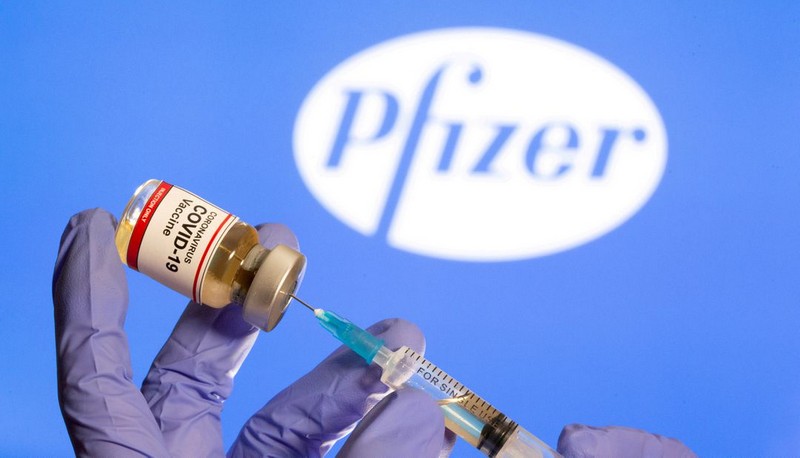
Reams of data are coming out of Pfizer’s internal documents, released under court orders from a Texas judge. The judge ruled that the Freedom of Information Act (FOIA) request for the data guiding the decision by the U.S. Food and Drug Administration to approve the approval of the Pfizer/BioNTech COVID-19 vaccine “is of paramount public importance.” [4]

The documents were released at a rate of 55,000 pages per month. One of the individuals rolling up her sleeves and digging into the numbers alongside a team of reportedly hundreds of doctors, scientists, oncologists, medical fraud investigators and other experts was Naomi Wolf. The facts she revealed, based on Pfizer’s own documents showed shocking statistics, including 1223 fatalities during a three month period, half of the adverse events, which included fatalities, occurred within 48 hours of the injection, and the vaccine was killing adults, babies and fetuses with adverse events ranging from 3 to 1 to 8 to 1. [5]

Pfizer had documented these and other hazards by February 2021 and rather than inform the public, they urged people, including pregnant mothers, with intensive campaigns to get the jab. [6]

Wolf has spoken up on this subject. In numerous articles online, and in the media interviews. [7]

But earlier this month, on May 9, the UK media regulator Ofcom found the broadcaster GB News of an interview between Naomi Wolf and host Mark Steyn on October 4 2022 in breach of Broadcast rules. Ofcom said the interview guest was relaying views that would be potentially harmful to the public. Ofcom received 422 complaints about the show’s comments being “dangerous” and including “misinformation” that was “unopposed” by Steyn. [8]

Is a journalist citing information from a FOIA requested release of information and bringing it to the attention of the public an example of “dangerous” information harmful to the public being aired?

Another interesting twist to the COVID “pandemic” is the interesting case of 5G installations around the globe that were happening at the same time as the virus was allegedly spreading around the globe.

A number of studies, for instance here, here, and here, document illnesses attributable to radio frequency radiation. This is not necessarily to say that the virus wasn’t hazardous. However, the two dynamics can act in a synergistic way to complicate the lives for those subjected to both in intense ways.

On this week’s episode of the Global Research News Hour we talk to Naomi Wolf about her research into Pfizer’s internal files and about the immense act of what she calls censorship recently directed toward her and Mark Steyn by Ofcom, and the UK government actually linked to it. We also speak with Magda Havas, an emerita professor from Trent University and specialist in environmental toxicology who has spoken of the harms associated with radio frequency radiation for years. She discusses the links between COVID-19 and the rise of 5G in our communities and across the planet. Finally, we speak briefly to Dr. Brent Roussin, the Chief Provincial Public Health Officer in Manitoba about how he defends his own decisions related to COVID-19 in the face of many critics present on this program.

Dr. Naomi Wolf is a former political consultant and Co-Founder of the DailyClout, a platform that empowers democracy-building. She is the author of the best-selling The Beauty Myth, which launched her reputation as a leading voice within Third Wave feminism, and she authored the 2007 book The End Of America: Letter of Warning to a Young Patriot.

Professor Magda Havas is Professor Emerita at Trent University and a specialist on Environmental Toxicology. Dr. Havas has been an advisor to several public interest groups and educational groups concerned with the health of the environment. She is currently science advisor on EMF-related issues to several non-profit organizations.

Dr. Brent Roussin was the Chief Provincial Public Health Officer throughout the pandemic in Manitoba.

(Global Research News Hour Episode 392)

The Global Research News Hour airs every Friday at 1pm CT on CKUW 95.9FM out of the University of Winnipeg. The programme is also podcast at globalresearch.ca .

Other stations airing the show:

CIXX 106.9 FM, broadcasting from Fanshawe College in London, Ontario. It airs Sundays at 6am.

WZBC 90.3 FM in Newton Massachusetts is Boston College Radio and broadcasts to the greater Boston area. The Global Research News Hour airs during Truth and Justice Radio which starts Sunday at 6am.

Campus and community radio CFMH 107.3fm in  Saint John, N.B. airs the Global Research News Hour Fridays at 7pm.

CJMP 90.1 FM, Powell River Community Radio, airs the Global Research News Hour every Saturday at 8am.

Caper Radio CJBU 107.3FM in Sydney, Cape Breton, Nova Scotia airs the Global Research News Hour starting Wednesday afternoon from 3-4pm.

Cowichan Valley Community Radio CICV 98.7 FM serving the Cowichan Lake area of Vancouver Island, BC airs the program Thursdays at 9am pacific time.

Notes:

  1. https://www.globalresearch.ca/uk-media-regulator-ofcom-goes-after-me-mark-steyn-telling-truth/5818861
  2. https://www.politifact.com/factchecks/2017/jan/06/dan-patrick/half-true-dan-patrick-martin-luther-king-saying-li/
  3. https://rumble.com/v2kcqe6-5g-and-covid-symptoms-dr.-magda-havas-saskatoon-day-3-national-citizens-inq.html
  4. https://www.fdanews.com/articles/206113-federal-judge-tells-fda-it-must-make-public-55000-pages-a-month-of-pfizer-vaccine-data
  5. https://www.globalresearch.ca/uk-media-regulator-ofcom-goes-after-me-mark-steyn-telling-truth/5818861
  6. ibid;
  7. https://www.globalresearch.ca/author/naomi-wolf
  8. https://www.globalresearch.ca/uk-media-regulator-ofcom-goes-after-me-mark-steyn-telling-truth/5818861

19 May 2023

Source: www.globalresearch.ca

Western Weapons to Ukraine: Black Market for Terrorists “On Command”

By Peter Koenig

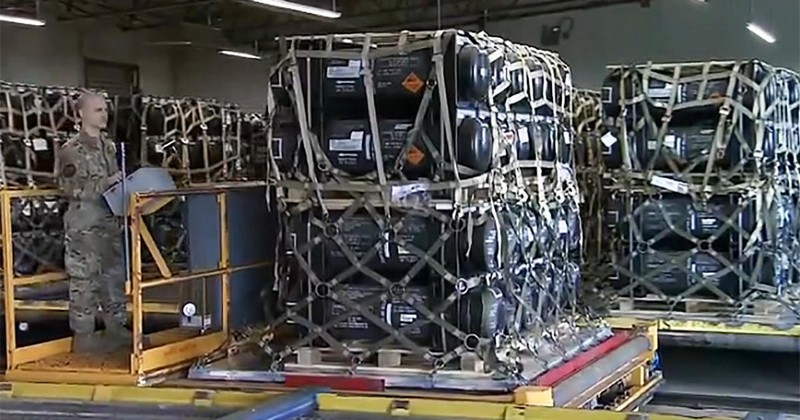
For almost as long as the West supplies Ukraine with weapons to kill Russians, it is known that most of these weapons – billions of dollars and euros-worth of weapons, would never reach the front, but would instead be sold on the black-market.

The West knew that from the very beginning. BBC and CNN were reporting on this calamity already in 2022. At one point BBC was reporting that up to 70% of the weaponry supplied by the West would disappear on the black market.

Of course, in the meantime all such references have been either deleted from the internet, or “fact-checked” away. The mainstream of the mainstream may not be seen or heard to say the truth. They are paid to lie or be silent.

However, there are some who speak up, who do not mind risking their reputation – but dare bringing the truth to the people. Pulitzer Prize winner Seymour Hersh is one of them. He recently spoke to Afshin Rattansi, a British broadcaster, journalist and author who presents Going Underground which is broadcast around the world, except in the UK and EU, on television stations including the RT network.

According to his data, Hersh said, shortly after the conflict started between Kiev and Moscow in February 2022, “Poland, Romania, other countries on the border were being flooded with US and allies supplied weapons which were shipped to Ukraine to support the war against Russia.”

Hersh noted that there was concern in the West, especially about Stinger shoulder-launched missiles, as they could be used to “shoot down an airplane at considerable height.”

In other words, the West was concerned that these shoulder launchers could shoot down Western civilian planes, either by accident or, of course, also on purpose, depending in who’s hands they landed.

*

So the West knew from the very beginning that most of their weaponry – paid for with US, European, UK and other so-called Western allies’ taxpayer’s money – ended up on the black market, often through what is called the “Dark Net”.

Journalist Hersh also said that “CBS wrote a story about it that they were forced to retract.” When asked why the story was withdrawn, the CBS journalists said, “We are on the side of Ukraine. We all hate Russia.”

This referred most likely to a CBS documentary, “Arming Ukraine”, aired in August 2022, in which CBS claimed that only about 30% of military aid actually reached the frontline. This part was removed, as it was taken out of similar reports by BBC and CNN.

People must not know that 70% of the weapons they paid for Ukraine to kill Russians, are going to the black market, most probably ending up in hands of terrorist groups. They would be so disappointed and risked no longer supporting their governments’ anti-Russia stance.

On many occasions, Russian official warned about Western supplied arms being smuggled outside Ukraine, causing a severe security risk. Russia’s Foreign Ministry spokeswoman Maria Zakharova estimated in October 2022, the black market at $1billion per month. See this for the full interview and this 6-min video clip (below) by “CRUX” Finland, confirming Russia’s concern of western weapons via black-market feeding world terrorist gangs.

Putin Vindicated? Western Arms For Ukraine Feeding Black Market I Finland Confirms Russia’s Claim

There is logic behind the fact that up to 70% of Western weaponry ends up on the Dark Net or directly on the black market being sold to all sorts of potential organizations, no questions asked. Amazing, isn’t it?

And the logic is that the Ukrainian army is far from being equipped to absorb and handle these masses of weaponry, some of them highly sophisticated, for which no Ukrainian soldiers were trained. But the West knows all that.

Ms. Donatella Rovera, a senior crisis adviser with Amnesty International, told CBS,

“There is really no information as to where they’re [the weapons] going at all. What is really worrying is that some countries that are sending weapons do not seem to think that it is their responsibility to put in place a very robust oversight mechanism.”

Likewise, a US intelligence source told CNN already in April 2022 that Washington has “almost zero” idea what happens to these arms, describing the shipments as dropping “into a big black hole” once they enter Ukraine.

Also, Canadian sources said that they have “no idea” where their weapons deliveries end up.

And so does Europol; they believe that some of these weapons have ended up in the hands of organized crime groups in the EU.

Russian government officials are afraid that many of these weapons are ending up in the Middle East.

According to Transparency International, Ukraine is consistently ranked as one of the most corrupt countries, if not the most corrupt country, in the world.

See this.

*

Let’s jump to another dimension. If the West knew that most of their weaponry supposedly destined for Ukraine’s war against Russia will end up on the black market and find its way eventually to terrorist groups, why did they not stop it, police it, at the borders, make sure that no weapon reaches the Dark Net or the black market?

Putting in place a rigorous security apparatus would have been worth the money to avoid more terror groups roaming the world and attacking “randomly” Western civilization.

The West did not put such a security system in place. Could it be – just hypothetically — that there was and is a special agenda behind this reckless and thoughtless behavior of the Western anti-Russian alliance?

Is this perhaps a plan to arm existing or new Western-founded terrorist groups, à la al-Qaeda, ISIS, the Islamic State and others – mind you, to be repeated, ALL created and funded by the West, mostly by the CIA, NATO and other US/UK/EU secret service organizations – so as to be ready to use these terror organization when needed by the West?

For example, to intimidate an ever-more “awakening” populace, to the terror and wars waged against people by the US/Western quest towards full hegemony?

Armed with Ukraine weaponry, commanded by CIA, NATO, or even the unelected European Commission, in accordance with “rules-based orders”, such old and new terror groups could carry out random or not so random mass killings, thereby keeping the populace worldwide in check, afraid, submissive.

This could be a new tentacle of the failing octopus, reaching around the globe for full spectrum dominance, trying to keep the illusion of US Western hegemony alive as long as possible, continuing killing and maiming people by the millions, and destroying economies – as per the Great Reset and Agenda 2030 playbook.

Like mentioned earlier, it is just a hypothesis but a real one. Nothing is beyond the intent and reach of this diabolical dark Deep State Death Cult, currently engulfing Mother Earth, her sentient beings and perhaps foremost her generous supply of natural resources.

Remember the Club of Rome’s doctrine of “Limits to Growth”, a blueprint still underpinning the agenda of the billionaires’ elite, the Cult that wants to reduce the current world population by 90%, and produces highly sophisticated man-made ENMOD-type “climate changes”, severe droughts, floods, cold and hot spells, and even earthquakes, to bring about famine, destruction of infrastructure, of economies, shifting resources from the bottom to the top and killing masses of people, genocide-style.

When we dare staring the enemy – the Antichrist roaming among us – in the eye, stepping out of the circle of fear, we may also find the way to another conscience where Light and Love reigns, leading us out of and away from the digital gulag – into FREEDOM.

*

Note to readers: Please click the share button above. Follow us on Instagram and Twitter and subscribe to our Telegram Channel. Feel free to repost and share widely Global Research articles.

Peter Koenig is a geopolitical analyst and a former Senior Economist at the World Bank and the World Health Organization (WHO), where he worked for over 30 years around the world.

18 May 2023

Source: www.globalresearch.ca

The Pentagon’s Increased Use of Elite Military Units

By Shane Quinn

Under president Barack Obama (2009–17) covert operations and raids by American military special forces intensified. Organisations like the US Special Operations Forces (SOF), Navy SEALs and CIA were infiltrating different states, violating their national sovereignty in kill/capture offensives aimed ostensibly at Islamic insurgents.

The countries targeted were those such as Afghanistan, Pakistan, Iraq, Yemen, Sudan, etc. The kill/capture targets highlighted by Washington comprised part of a Joint Prioritized Effects List (JPEL), which even included some American citizens abroad deemed as enemies, and which was based on legal or extralegal assumptions according to classified information from president Obama.

The Pentagon chose to wage “unconventional war” through elite military units, through proxy forces and sabotage groups.

In executing night raids and other activities, the US special forces were often focused on countries outside of Washington’s influence, in efforts to align them with the Western liberal order. For example president George W. Bush, Obama’s predecessor, had sent special forces such as the Green Berets, along with US Marine Corps troops, to the Caucasus state of Georgia where they trained Georgian military personnel (1). The goal was to turn Georgia, which borders Russia to the north, into a permanent US client nation.

John Nagl, a US lieutenant-colonel, described the kill/capture campaign as “an almost industrial-scale counterterrorism killing machine”. Nagl said that, in a 3 month period in 2010, US forces from the Special Operations Command (SOCOM) carried out 3,000 military operations in Afghanistan (2). This involved entering villages in the middle of the night, in order to kill or take prisoner Islamic militants.

From mid-2010 to mid-2011, US special forces liquidated or captured 12,000 Islamic fighters according to the US military (3). Many of the night raids were executed through faulty intelligence or recklessness, and as the months went by hundreds of innocent people and civilians were also killed. Under the leadership of General Stanley McChrystal, appointed by Obama as the top commander in Afghanistan in summer 2009, the US special forces killed or took prisoner 700 insurgent officers. In another 3 month period, from July to September 2010, US-led NATO forces executed 3,279 operations, resulting in the deaths of 293 insurgent commanders and the capture of 2,169 Islamic fighters. (4)

In July 2010, General David Petraeus succeeded McChrystal as overall commander of US-led forces in Afghanistan, as McChrystal had irreconcilable differences with the Obama administration. In a 1 year period, from 25 April 2010 to 25 April 2011, the US Special Operations Forces killed 3,200 insurgents and captured 800. Between February to May 2011, NATO purported it had carried out 1,400 operations in Afghanistan, which they said resulted in the deaths or capture of 500 “insurgent leaders” and 2,700 “lower-level insurgents” (5). These attacks, because of their often indiscriminate nature, would have again resulted in significant loss of life to non-combatants.

In 2011 president Obama authorised the construction of a network of US military bases on the Arabian Peninsula, and in the Horn of Africa (east Africa), with another base on the island of Seychelles in the Indian Ocean.

More US bases were established in central and east Africa, such as in South Sudan, Ethiopia and the Central African Republic. Obama dispatched special forces soldiers to central areas of Africa, apparently to assist in hunting down Joseph Kony, the Ugandan-born rebel commander (6). Kony was often described as “the world’s most wanted warlord” in Western media and he was never found. The US commandos have been operating in the Democratic Republic of Congo (formerly Zaire), the Central African Republic and South Sudan.

The likelihood is that, rather than the main focus being the capture of people like Kony, the US has attempted to increase its presence in Africa for strategic purposes. Hundreds of American soldiers from the Special Operations Forces have been stationed at the US military base in Djibouti, east Africa, called Camp Lemonnier, where they work under concealed identities and have co-ordinated the flight path for American aircraft and drones. About 3,200 people, including some civilians, were stationed at Camp Lemonnier where US troops have provided training to foreign militants.


The Camp Lemonnier base is of importance, due to its location between east Africa and the Arabian Peninsula. The Port of Djibouti offers access to the Indian Ocean and Red Sea, and from Camp Lemonnier the US military can hit targets in nearby Somalia and Yemen within minutes. Washington continued to launch strikes over Pakistan, Somalia and Yemen, countries which the Americans were not officially at war with. (7)

Washington was implementing a kill/capture offensive inside Pakistan, traditionally a pro-American country. An independent research organisation based in Pakistan, the Conflict Monitoring Center, estimated that the kill/capture raids in Pakistan during the 5 years up to June 2011 resulted in the deaths of 2,052 people, the majority of whom were civilians. From July 2008 to June 2011, the CIA carried out 220 attacks within Pakistan, and in doing so the CIA claimed to have killed 1,400 “suspects” along with 30 civilians. (8)

The American raids and drone strikes inside Pakistan swelled the ranks of armed radical groups, like the Taliban and Lashkar-e-Jhangvi. The Pakistani author Ahmed Rashid believed that, around 2011, the Taliban within Pakistan was more formidable than the Taliban in Afghanistan. The US military attacks on Pakistan and Afghanistan also boosted the legitimacy of Al Qaeda, whose members could rely on numerous safehouses in which to plan their operations.

Mistrust between the US and Pakistan increased on 26 November 2011, when NATO helicopters and aircraft bombed an outpost in northern Pakistan in an unprovoked attack, killing at least 24 Pakistani soldiers, in the Mohmand District (9). Pakistan’s government quickly retaliated, by cutting supply routes for US-NATO troops into Afghanistan, and demanded that Washington shut down its drone launch base. The Americans, despite these actions, did not want to lose Pakistan as an ally; because Pakistan, a strategically important country and nuclear power, shares borders with Afghanistan, India, Iran and China, and has a lengthy coastline which provides the Pakistanis with access to lucrative sea routes.

The US was pursuing two kill/capture campaigns inside Yemen (10). One was overseen by the CIA and the other was executed by the US Joint Special Operations Command (JSOC). General James Jones, of the US Marine Corps, said Yemen was “an embryonic theater that we weren’t really familiar with”. The Americans, however, were aware that Yemen like Pakistan is strategically placed, beside crucial sea lanes and the Persian Gulf’s oil reserves.

The CIA was operating as a de facto paramilitary force. On top of the CIA’s intelligence activities, it was partaking in many of the tasks assigned to the special forces. On 17 September 2001, Bush had authorised a secret presidential finding, which enabled the CIA to develop teams with the goal of catching, killing or apprehending designated insurgents in different countries.

Obama greatly surpassed Bush in the deployment of elite units, such as from the Joint Special Operations Command. In the middle of 2010, the US Special Operations Forces were present in 75 countries at that time (11). Colonel Tim Nye, a Pentagon spokesman, said the Special Operations Forces would probably be operating in 120 countries by late 2011. Unsurprisingly then, Obama had requested a 5.7% increase in the Special Operations Forces budget for 2011, amounting to $6.3 billion with a contingency fund of another $3.5 billion. By 2015 it was reported the Special Operations Forces were active in 135 countries that year, clearly a mind-boggling number. (12)

The combined population, of the US and its allies, is much lower than that of the states of Eurasia and the Global South, many of whom increasingly desire a multipolar world rather than a unipolar world governed by the US. European nations like Britain, in decline for generations and losing its sovereignty, has hung on to the coat-tails of the US empire. The American-led NATO continues expanding but this is not, as the liberal media insists, a strategic defeat for Russia or China. NATO enlargement endangers the world, including the US, which would suffer a total defeat in a nuclear war as is known.

When Obama assumed the presidency in January 2009, he was faced with the upheaval that Bush left behind. There was the very high cost and failure of the war in Iraq, and ongoing uncertainty with the conflict in Afghanistan, another distant country which most Americans had a limited understanding of.

A survey conducted by the American media in March 2012, over a decade after the US invasion of Afghanistan was launched, revealed that 69% of American adults who partook in the survey did not want their nation involved in the war in Afghanistan. Only 23% of respondents felt America was “doing the right thing” by participating in the war. Twenty-seven per cent of Americans believed the conflict “has been mostly a success for the US”, just 25% felt the fighting was progressing well, and 59% stated that it had not been a successful war. (13)

Obama decided to pursue more cost-effective methods, and which he felt would not risk as many American lives. Obama, advised by intelligence expert and CIA director John Brennan, changed the “war on terror” to a “high-tech war”. The conflicts created more jobs in the US arms industry, and shored up the tax revenues of the states where the weapons firms are based, such as in Texas, California, Virginia, Massachusetts and Maryland.

Between 2001 and 2007, the US arms companies Lockheed Martin, Northrop Grumman and Boeing Defense, Space & Security recorded over $30 billion in yearly sales, and Raytheon and General Dynamics posted annual revenues of more than $20 billion during the same period (14). In June 2015 Obama sanctioned the National Military Strategy which outlined that Iran, Russia, China and North Korea are the countries most challenging to US interests in various regions. Yet the Pentagon’s Military Strategy conceded that none of the above countries was seeking a direct armed conflict, against the US or its allies. (15)

With Obama as president, US foreign policy continued to be focused on expansionist doctrines. In announcing a “pivot” to Asia, Obama tried to encircle and contain China with the construction of large numbers of bases in the Asia-Pacific areas, while he maintained the Pentagon military budget at over $600 billion per year. Contingency plans have been made for a US military attack on China, which is a nuclear state.

The American commander, Douglas MacArthur, had wanted to pursue a US-backed invasion of China in the early 1950s. General MacArthur, who at the time was commanding US-led forces in the Korean War, wished to extend the conflict to China in order to overthrow the communist government in Beijing. MacArthur supported the use of atomic bombs during the Korean War, but he had fallen out with president Harry Truman, and he was removed from his position as overall commander in April 1951. (16)

*

Note to readers: Please click the share button above. Follow us on Instagram and Twitter and subscribe to our Telegram Channel. Feel free to repost and share widely Global Research articles.

Shane Quinn obtained an honors journalism degree and he writes primarily on foreign affairs and historical subjects.

Notes

1 Luiz Alberto Moniz Bandeira, The Second Cold War: Geopolitics and the Strategic Dimensions of the USA (Springer; 1st ed., 23 June 2017) p. 48

2 Ibid., p. 130

3 “What is the secretive U.S. ‘Kill/Capture’ Campaign?’, PBS, 17 June 2011

4 Bandeira, The Second Cold War, p. 130

5 “Daily brief: U.S. prepared for fights with Pakistanis during bin Laden raid: report”, Foreign Policy Magazine, 10 May 2011

6 “Obama sends U.S. military advisers to central Africa”, Reuters, 14 October 2011

7 Bandeira, The Second Cold War, p. 136

8 Ibid., p. 138

9 “Pakistan outrage after ‘NATO attack kills soldiers’”, BBC News, 26 November 2011

10 Bandeira, The Second Cold War, p. 213

11 “A Secret War in 120 Countries: The Pentagon’s New Power Elite”, Commondreams.org, 4 August 2011

12 “American special operations forces have been deployed to 135 countries this year alone”, The Independent, 25 September 2015

13 “Poll: Support for war in Afghanistan hits all-time low”, CBS News, 26 March 2012

14 Bandeira, The Second Cold War, p. 132

15 “Pentagon releases National Military Strategy”, Defense News, 1 July 2015

16 “Douglas MacArthur”, Spartacus Educational, September 199 (updated November 2021)

18 May 2023

Source: www.globalresearch.ca

Disastrous Proxy Wars by Great Powers Create Military, Monetary, Financial and Economic Chaos Worldwide

By Prof Rodrigue Tremblay

“In the councils of government, we must guard against the acquisition of unwarranted influence, whether sought or unsought, by the military-industrial complex… Only an alert and knowledgeable citizenry can compel the proper meshing of the huge industrial and military machinery of defense with our peaceful methods and goals, so that security and liberty may prosper together.” Dwight D. Eisenhower (1890-1969), 34th President of the United States, (1953-1961), (in his ‘Farewell Address’, Jan. 17, 1961)

“Were the Soviet Union to sink tomorrow under the waters of the ocean, the American military-industrial complex would have to remain, substantially unchanged, until some other adversary could be invented. Anything else would be an unacceptable shock to the American economy.” George F. Kennan (1904-2005), American diplomat and historian, (in his preface to Norman Cousins’ 1987 book ‘The Pathology of Power’)

“A nation cannot become free and at the same time continue to oppress other nations.” Fredrich Engels (1820-1895), German social scientist and father of Marxist theory, (in “Speech on Poland’, 1847)

Sometimes politicians like to sprinkle their speeches and statements with words like “diplomacy” and “peace“. This does not insure, in so doing, that they really mean what they say. In fact, such grandiloquent talk could be a cover-up for their real intentions, which may be the very opposite to diplomatic solutions and peaceful coexistence to solving world problems. In the realm of politics, actions count more than words.

A good point in this case could be what U.S. President Joe Biden meant when he said, during a talk at the State Department on February 4, 2021: “diplomacy is back at the center of our Foreign Policy.”

He repeated the same message a few months later, in a speech at the United Nations, on September 21, 2021, saying that “we’re opening a new era of relentless diplomacy“, and pledging that “we are not seeking a new Cold War or a world divided into rigid blocs.”

And to be well understood, Mr. Biden made the following commitment: “We must redouble our diplomacy and commit to political negotiations, not violence, as the tool of first resort to manage tensions around the world.” He even went on quoting the opening words of the 1948 Universal Declaration of Human Rights: “The equal and inalienable rights of all members of the human family is the foundation of freedom justice, and peace in the world.”

These were noble pledges.

The reality: The U.S. Government has largely abandoned multilateralism for a unilateral foreign policy mainly concentrated on NATO

However, what has really happened during the first three years of the Biden administration?

Following in the footsteps of a few preceding administrations, the Joe Biden administration has de facto abandoned the search for the common good of all countries within a multilateral approach. Indeed, far from actively leading the world with diplomacy in the hope of reducing military conflicts around the world, the Biden administration has embarked upon a bellicose foreign policy.

This is a policy inspired by neoconservative advisers, and it calls for increased military U.S. interventions abroad, on a permanent basis, outside of the framework of the U.N. Charter, which, it should be emphasized, was signed by all member nations. It has instead chosen to mainly pursue its foreign policy within the narrow framework of an increasingly offensive NATO.

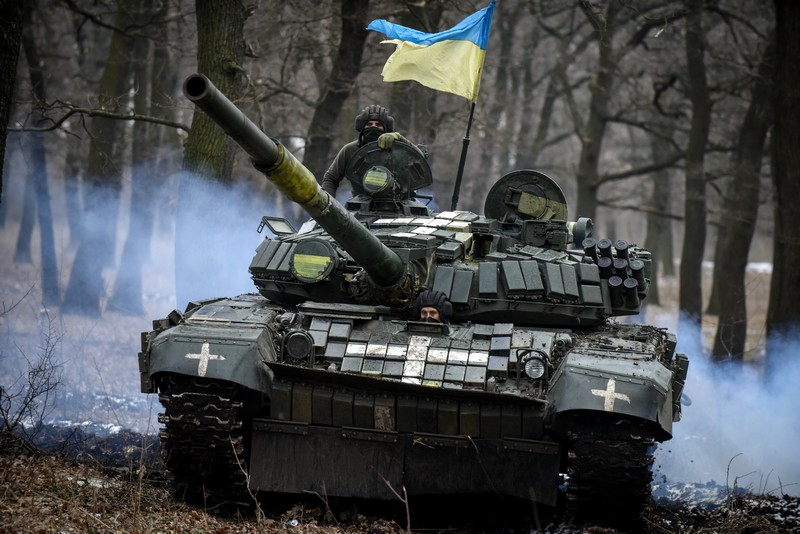
Presently, there are two mainly U.S.-NATO-led proxy wars that are of immediate concern: a hot one in Ukraine directed at Russia, and one brewing in Taiwan and aimed at China.

In Ukraine, this has taken the form of the U.S. and other NATO countries shipping huge amounts of arms and equipment, and even some covert operations personnel, to that country neighboring Russia, including illegal depleted uranium weapons.

Even if public opinion in Western countries is still strongly behind the Russian-Ukrainian war, especially among the young and less among older generations, one of the consequences of the war, according to some polls, has been to isolate somewhat the United States and its NATO allies in certain parts of the world. In some countries, for example, notably in Asia, Africa and South America, the position seems to be “none of our business“.

Fall-outs from the American-NATO-led proxy wars against Russian and China

According to official propaganda, Russian embarked upon an ‘unprovoked’ war against Ukraine, on February 24, 2022. However, things are a bit more complicated, because the United States and NATO have been heavily involved in that unnecessary war since at least 2014, and credibly since 1991, as far as the U.S. government is concerned.

First of all, after the collapse of the Soviet Union, in 1991, it is widely established through declassified documents that U.S. Secretary of State James Baker, and the representatives of important European nations, made a solemn commitment to Russia, on February 9, 1990, that NATO would not be expanded “one inch” into Eastern Europe—conditional to Russia’s acceptance of the reunification of the two Germanys.

Secondly, as professor John Mearsheimer of the University of Chicago has often said (and I agree), there would not have been a Ukraine War if Joe Biden had not been in the White House. It was, indeed, President Biden’s insistence on having NATO expand to the very doorsteps of Russia, with missiles pointed toward Moscow, that was the main reason why Russia felt directly threatened and why it invaded Ukraine.

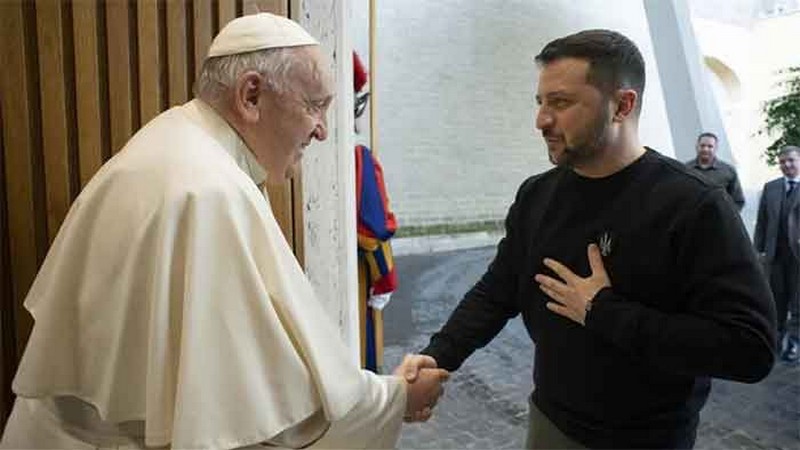
Even Pope Francis arrived at the same conclusion, that the main trigger of the Ukraine War was “NATO barking at Putin’s door.”

Thirdly, let us remember that it was the Obama administration (2009-2017), with then Vice-President Joe Biden involved, that bankrolled, to a large extent, the overthrow of the elected pro-Russia Ukrainian government of Viktor Yanukovych, in February 2014.

This was clearly established by then U.S. Assistant Secretary of State for European and Eurasian Affairs Victoria Nuland (a well-known neocon), who confirmed publicly, on December 13, 2013, that the U.S. government had invested $5 billion in Ukraine, under the pretext of ‘promoting democracy’, One may ask if it an accepted practice by democracies to overthrow elected governments?

Fourthly, published documents indicate that the policy of encircling Russia militarily, an act of war implicitly not allowed under the U.N. Charter, is a neoconservative idea originating from the Rand Corporation—a think-tank heavily financed by the military-industrial complex (MIC) and deeply involved in framing U.S. foreign policy.

Indeed, the policy of an aggressive military stand against Russia is well outlined in a 2019 report, entitled “Overextending and Unbalancing Russia“. Therefore, when Defense Secretary Gen. Lloyd Austin said publicly, on April 25, 2022, that the Biden administration’s objective in Eastern Europe was to “see Russia weakened“, it was a clear indication that the Rand Corporation’s strategy of militarily encircling Russia had become the official foreign policy of the Biden administration, even at the risk of turning such a localized conflict into a global one.

That may be a reason why people in the know do not swallow the propaganda line that the U.S. and NATO are in Ukraine to “save democracy“. In fact, there is no democracy in Ukraine, since the Ukrainian government of Volodymyr Zelensky has abolished eleven political parties.

Failed attempts by third parties to bring peace to Ukraine

The above could explain why the Biden administration has been quick to turn down any attempt to prevent or to end the Ukraine War.

For example, even when it was still possible to avoid a conflict, on December 7, 2021, during a Biden-Putin direct phone talk, President Biden undiplomatically turned down demands to consider Russian security considerations and stop pushing NATO right to Russia’s border. [N.B.: It is relevant to remember that when the shoe was on the other foot, in October 1962, and the USSR wanted to place missiles in Cuba, at 90 miles from the USA, it was seen by the John F. Kennedy administration in Washington D.C. as an unacceptable breach of American security.]

The Israeli government and the government of Turkey both have attempted to mediate a peace between Russia and Ukraine, but without any success.

First, in the beginning days of the conflict, in early March 2022, then Israeli Prime Minister (June 2021-June 2022) Naftali Bennett attempted to mediate a speedy end to the Russia-Ukraine confrontation. He came very close to succeeding when Russian President Vladimir Putin dropped his demand to seek Ukraine’s disarmament and Ukrainian President Voldymyr Zelensky promised not to join NATO. A bilateral peace deal was ready to be signed in April 2022.

Secondly, in March 2022, the Turkish government also tried to bring a peace agreement closer between Russia and Ukraine. After successful talks were held in Istanbul, between officials of both countries, the two sides agreed on the framework for a tentative deal.

Considering that both Russia and Ukraine were willing to make concessions and with peace deals close at hand, why did the Israeli and the Turkish attempts at mediation fail?

Former Israeli Prime Minister Bennett gave an answer: the Biden administration commissioned then-British Prime Minister Boris Johnson to go to Kyiv and sabotage any peace deal. Some Western powers saw it to their advantage that the war in Ukraine continue.

Not too surprisingly, the latest attempt to end the Ukraine War—China‘s 12-point peace proposal for a “Political Settlement for the Ukraine Crisis“, made on February 24, 2023—has so far also been derailed.

It would seem that those who planned for and ‘invested’ much in such a war do not wish to lose face. For one, President Biden has branded the Chinese plan (which calls for de-escalation toward a cease-fire in Ukraine, respect for national sovereignty, establishment of humanitarian corridors, resumption of peace talks and a stop to unilateral sanctions), as “not rational“.

While President Joe Biden has concentrated his efforts on fueling the fire of war in Ukraine, Chinese President Xi Jinping seems to have filled the void and has developed the stature of a peace broker around the world.

In the end, considering the many parties involved in the conflict (Russia, Ukraine, United States, NATO, European Union), and their intransigence, the UN Secretary General, Antonio Guterres, threw in the towel and confessed, on May 9, 2023, that peace negotiations in Ukraine were “not possible at this time”. Warmongers are in charge in many nations, and no ceasefire can be expected at this time in Eastern Europe.

Flight from the U.S. dollar as a consequence of financial and economic sanctions

Holding financial assets denominated in U.S. dollars has recently become a risky proposition. Any government imprudent enough to do so exposes itself to political pressures from the U.S. government and, if it does not abide, its dollar assets could be arbitrarily frozen, unilaterally seized or simply confiscated. The list of countries so punitively ‘sanctioned‘ has been getting longer and longer each month.

One would think that an international currency should not be ‘weaponized’ in that way, unless one really wishes to destabilize the entire international monetary and financial system and create chaos in the world economy.

On April 16, 2023, even the U.S. Treasury Secretary Janet Yellen (1946-) mused aloud about the possibility of the U.S. dollar loosing its dominance in international finance and as a reserve currency.

Indeed, even if it is not easy, some countries have stopped settling their cross-border trade in U.S. dollars and are either using the Chinese Yuan, the Indian Rupee (INR), bilateral barter or their local currencies to do so. There are calls on the part of the BRICS nations (Brazil, Russia, India, China and South Africa) to avoid using the U.S. dollar, as a response to unilateral U.S.-led financial and economic sanctions.

Such a movement to dedollarize global trade is an ominous development for international monetary and financial markets, with potentially enormous consequences, both monetary and economic.

In fact, the entire international monetary framework of the Bretton Woods System of payments, established in 1944 around the U.S. dollar (linked at the time to gold at a fixed rate of $35 per ounce), could be in jeopardy. Indeed, if the international payment system were to become more fragmented, the volume of international trade and the flows of capital movements could decline, and this could have a disastrous impact on the growth of the world economy.

Conclusions

As things stand now, despite efforts, hopes do not look promising for a quick resolution to the proxy war in Ukraine, and for lowering the escalating tensions over Taiwan.

First, if Great Powers hiding behind their veto at the U.N. Security council cannot contribute to peace in the world, they should at least not actively contribute to war. Unfortunately, in the 21st Century, the United Nations has become the carpet on which Great Powers wipe their feet.

Secondly, with its proxy wars, the U.S. government should realize that it is losing its moral ascendency and influence in the world. And it is evident why this is the case: the Biden administrations’s current neocon-inspired foreign policy of using NATO as its main instrument of intervention around the world, especially with its proxy conflicts with Russia and China, while snubbing the United Nations and its Charter, is shrouded with risks and may be a very bad idea.

Indeed, such a policy is isolating the United States and its NATO allies from the rest of the world. In the future, this could undermine their legitimacy, efficiency and influence outside North America and Western Europe. Pushed to the limit, such a development could result in unraveling the very international framework of global institutions that was established in the aftermath of World War II.

Thirdly, if one adds the persistent and threatening danger of a nuclear war to the equation, it would seem obvious to clear minds that a negotiated peace in Ukraine, in particular, should be preferable to a murderous and disastrous war, without ends, with few possible winners, other than arms dealers, and many losers all around.

Prof. Rodrigue Tremblay is a Research Associate of the Centre for Research on Globalization (CRG)

17 May 2023

Source: www.globalresearch.ca

China and the Axis of the Sanctioned – How America’s Divide-and-Rule Strategy in the Middle East Backfired

By Juan Cole

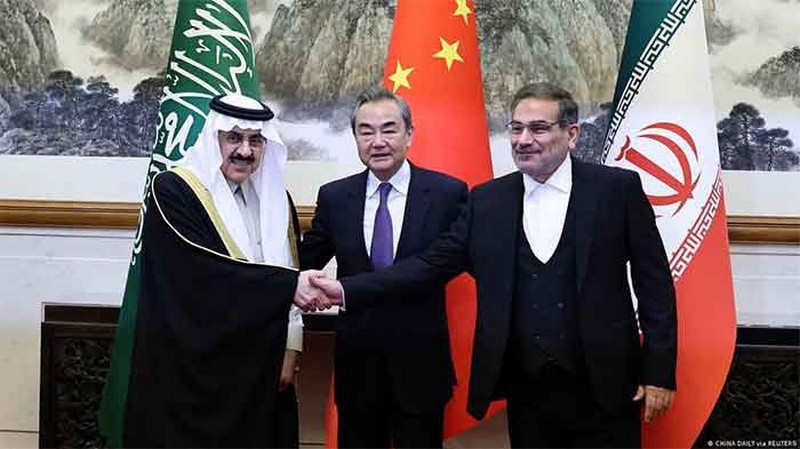
photo Beijing released on March 6th of Chinese President Xi Jinping delivered a seismic shock in Washington. There was the Secretary-General of the Chinese Communist Party standing between Ali Shamkhani, the secretary of Iran’s National Security Council, and Saudi National Security Adviser Musaad bin Mohammed al-Aiban. They were awkwardly shaking hands on an agreement to reestablish mutual diplomatic ties. That picture should have brought to mind a 1993 photo of President Bill Clinton hosting Israeli Prime Minister Yitzhak Rabin and PLO chief Yasser Arafat on the White House lawn as they agreed to the Oslo Accords. And that long-gone moment was itself an after-effect of the halo of invincibility the United States had gained in the wake of the collapse of the Soviet Union and the overwhelming American victory in the 1991 Gulf War.

This time around, the U.S. had been cut out of the picture, a sea change reflecting not just Chinese initiatives but Washington’s incompetence, arrogance, and double-dealing in the subsequent three decades in the Middle East. An aftershock came in early May as concerns gripped Congress about the covert construction of a Chinese naval base in the United Arab Emirates, a U.S. ally hosting thousands of American troops. The Abu Dhabi facility would be an add-on to the small base at Djibouti on the east coast of Africa used by the People’s Liberation Army-Navy for combating piracy, evacuating noncombatants from conflict zones, and perhaps regional espionage.

China’s interest in cooling off tensions between the Iranian ayatollahs and the Saudi monarchy arose, however, not from any military ambitions in the region but because it imports significant amounts of oil from both countries. Another impetus was undoubtedly President Xi’s ambitious Belt and Road Initiative, or BRI, that aims to expand Eurasia’s overland and maritime economic infrastructure for a vast growth of regional trade — with China, of course, at its heart. That country has already invested billions in a China-Pakistan Economic Corridor and in developing the Pakistani Arabian seaport of Gwadar to facilitate the transmission of Gulf oil to its northwestern provinces.

Having Iran and Saudi Arabia on a war footing endangered Chinese economic interests. Remember that, in September 2019, an Iran proxy or Iran itself launched a drone attack on the massive refinery complex at al-Abqaiq, briefly knocking out five million barrels a day of Saudi capacity. That country now exports a staggering 1.7 million barrels of petroleum daily to China and future drone strikes (or similar events) threaten those supplies. China is also believed to receive as much as 1.2 million barrels a day from Iran, though it does so surreptitiously because of U.S. sanctions. In December 2022, when nationwide protests forced the end of Xi’s no-Covid lockdown measures, that country’s appetite for petroleum was once again unleashed, with demand already up 22% over 2022.

So, any further instability in the Gulf is the last thing the Chinese Communist Party needs right now. Of course, China is also a global leader in the transition away from petroleum-fueled vehicles, which will eventually make the Middle East far less important to Beijing. That day, however, is still 15 to 30 years away.

Things Could Have Been Different

China’s interest in bringing to an end the Iranian-Saudi cold war, which constantly threatened to turn hotter, is clear enough, but why did those two countries choose such a diplomatic channel? After all, the United States still styles itself the “indispensable nation.” If that phrase ever had much meaning, however, American indispensability is now visibly in decline, thanks to blunders like allowing Israeli right-wingers to cancel the Oslo peace process, the launching of an illegal invasion of and war in Iraq in 2003, and the grotesque Trumpian mishandling of Iran. Distant as it may be from Europe, Tehran might nonetheless have been brought into NATO’s sphere of influence, something President Barack Obama spent enormous political capital trying to achieve. Instead, then-President Donald Trump pushed it directly into the arms of Vladimir Putin’s Russian Federation and Xi’s China.

Things could indeed have been different. With the 2015 Joint Comprehensive Plan of Action (JCPOA) nuclear deal, brokered by the Obama administration, all practical pathways for Iran to build nuclear weapons were closed off. It’s also true that Iran’s ayatollahs have long insisted they don’t want a weapon of mass destruction that, if used, would indiscriminately kill potentially vast numbers of non-combatants, something incompatible with the ethics of Islamic law.

Whether one believes that country’s clerical leaders or not, the JCPOA made the question moot, since it imposed severe restrictions on the number of centrifuges Iran could operate, the level to which it could enrich uranium for its nuclear plant at Bushehr, the amount of enriched uranium it could stockpile, and the kinds of nuclear plants it could build. According to the inspectors at the U.N.’s International Atomic Energy Agency, Iran faithfully implemented its obligations through 2018 and — consider this an irony of our Trumpian times — for such compliance it would be punished by Washington.

Iran’s Ayatollah Ali Khamenei only permitted President Hassan Rouhani to sign that somewhat mortifying treaty with the permanent members of the U.N. Security Council in return for promised relief from Washington’s sanctions (that they never got). In early 2016, the Security Council did indeed remove its own 2006 sanctions on Iran. That, however, proved a meaningless gesture because by then Congress, deploying the Department of the Treasury’s Office of Foreign Assets Control, had slapped unilateral American sanctions on Iran and, even in the wake of the nuclear deal, congressional Republicans refused to lift them. They even nixed a $25 billion deal that would have allowed Iran to buy civilian passenger jets from Boeing.

Worse yet, such sanctions were designed to punish third parties that contravened them. French firms like Renault and TotalEnergies were eager to jump into the Iranian market but feared reprisals. The US had, after all, fined French bank BNP $8.7 billion for skirting those sanctions and no European corporation wanted a dose of that kind of grief. In essence, congressional Republicans and the Trump administration kept Iran under such severe sanctions even though it had lived up to its side of the bargain, while Iranian entrepreneurs eagerly looked forward to doing business with Europe and the United States. In short, Tehran could have been pulled inexorably into the Western orbit via increasing dependence on North Atlantic trade deals, but it was not to be.

And keep in mind that Israeli Prime Minister (then as now) Benjamin Netanyahu had lobbied hard against the JCPOA, even going over President Obama’s head in an unprecedented fashion to encourage Congress to nix the deal. That effort to play spoiler failed — until, in May 2018, President Trump simply tore up the treaty. Netanyahu was caught on tape boasting that he had convinced the gullible Trump to take that step. Although the Israeli right wing insisted that its greatest concern was an Iranian nuclear warhead, it sure didn’t act that way. Sabotaging the 2015 deal actually freed that country from all constraints. Netanyahu and like-minded Israeli politicians were, it seems, upset that the JCPOA only addressed Iran’s civilian nuclear enrichment program and didn’t mandate a rollback of Iranian influence in Lebanon, Iraq, and Syria, which they apparently believed to be the real threat.

Trump went on to impose what amounted to a financial and trade embargo on Iran. In its wake, trading with that country became an increasingly risky proposition. By May 2019, Trump had succeeded handsomely by his own standards (and those of Netanyahu). He had managed to reduce Iran’s oil exports from 2.5 million barrels a day to as little as 200,000 barrels a day. That country’s leadership nonetheless continued to conform to the requirements of the JCPOA until mid-2019, after which they began flaunting its provisions. Iran has now produced highly enriched uranium and is much closer to being capable of making nuclear weapons than ever before, though it still has no military nuclear program and the ayatollahs continue to deny that they want such weaponry.

In reality, Trump’s “maximum pressure campaign” did anything but destroy Tehran’s influence in the region. In fact, if anything, in Lebanon, Syria, and Iraq the power of the ayatollahs was only strengthened.

After a while, Iran also found ways to smuggle its petroleum to China, where it was sold to small private refineries that operated solely for the domestic market. Since those firms had no international presence or assets and didn’t deal in dollars, the Treasury Department had no way of moving against them. In this fashion, President Trump and congressional Republicans ensured that Iran would become deeply dependent on China for its very economic survival — and so also ensured the increasing significance of that rising power in the Middle East.

The Saudi Reversal

When Russia invaded Ukraine in February 2022, oil prices spiked, benefiting the Iranian government. The Biden administration then imposed the kind of maximum-pressure sanctions on the Russian Federation that Trump had levied against Iran. Unsurprisingly, a new Axis of the Sanctioned has now formed, with Iran and Russia exploring trade and arms deals and Iran allegedly providing drones to Moscow for its war effort in Ukraine.

As for Saudi Arabia, its de facto leader, Crown Prince Mohammed bin Salman, recently seemed to get a better set of advisers. In March 2015, he had launched a ruinous and devastating war in neighboring Yemen after the Zaydi Shiite “Helpers of God,” or Houthi rebels, took over the populous north of that country. Since the Saudis were primarily deploying air power against a guerrilla force, their campaign was bound to fail. The Saudi leadership then blamed the rise and resilience of the Houthis on the Iranians. While Iran had indeed provided some money and smuggled some weapons to the Helpers of God, they were a local movement with a long set of grievances against the Saudis. Eight years later, the war has sputtered to a devastating stalemate.

The Saudis had also attempted to counter Iranian influence elsewhere in the Arab world, intervening in the Syrian civil war on the side of fundamentalist Salafi rebels against the government of autocrat Bashar al-Assad. In 2013, Lebanon’s Shiite Hezbollah militia joined the fray in support of al-Assad and, in 2015, Russia committed air power there to ensure the rebels’ defeat. China had also backed al-Assad (though not militarily) and played a quiet role in the post-war reconstruction of the country. As part of that recent China-brokered agreement to reduce tensions with Iran and its regional allies, Saudi Arabia just spearheaded a decision to return the al-Assad government to membership in the Arab League (from which it had been expelled in 2011 at the height of the Arab Spring revolts).

By late 2019, in the wake of that drone attack on the Abqaiq refineries, it was already clear that Bin Salman had lost his regional contest with Iran and Saudi Arabia began to seek some way out. Among other things, the Saudis reached out to the Iraqi prime minister of that moment, Adil Abdel Mahdi, asking for his help as a mediator with the Iranians. He, in turn, invited General Qasem Soleimani, the head of the Jerusalem Brigade of the Iranian Revolutionary Guards Corps, to Baghdad to consider a new relationship with the House of Saud.

As few will forget, on January 3, 2020, Soleimani flew to Iraq on a civilian airliner only to be assassinated by an American drone strike at Baghdad International Airport on the orders of President Trump who claimed he was coming to kill Americans. Did Trump want to forestall a rapprochement with the Saudis? After all, marshaling that country and other Gulf states into an anti-Iranian alliance with Israel had been at the heart of his son-in-law Jared Kushner’s “Abraham Accords.”

The Rise of China, the Fall of America

Washington is now the skunk at the diplomats’ party. The Iranians were never likely to trust the Americans as mediators. The Saudis must have feared telling them about their negotiations lest the equivalent of another Hellfire missile be unleashed. As 2022 ended, President Xi actually visited the Saudi capital Riyadh, where relations with Iran were evidently a topic of conversation. This February, Iranian President Ebrahim Raisi traveled to Beijing by which time, according to the Chinese foreign ministry, President Xi had developed a personal commitment to mediating between the two Gulf rivals. Now, a rising China is offering to launch other Middle Eastern mediation efforts, while complaining “that some large countries outside the region” were causing “long-term instability in the Middle East” out of “self-interest.”

China’s new prominence as a peacemaker may soon extend to conflicts like the ones in Yemen and Sudan. As the rising power on this planet with its eye on Eurasia, the Middle East, and Africa, Beijing is clearly eager to have any conflicts that could interfere with its Belt and Road Initiative resolved as peaceably as possible.

Although China is on the cusp of having three aircraft carrier battle groups, they continue to operate close to home and American fears about a Chinese military presence in the Middle East are, so far, without substance.

Where two sides are tired of conflict, as was true with Saudi Arabia and Iran, Beijing is clearly now ready to play the role of the honest broker. Its remarkable diplomatic feat of restoring relations between those countries, however, reflects less its position as a rising Middle Eastern power than the startling decline of American regional credibility after three decades of false promises (Oslo), debacles (Iraq) and capricious policy-making that, in retrospect, appears to have relied on nothing more substantial than a set of cynical imperial divide-and-rule ploys that are now so been-there, done-that.

Juan Cole, a TomDispatch regular, is the Richard P. Mitchell collegiate professor of history at the University of Michigan.

16 May 2023

Source: countercurrents.org

A Timely Call for Peace in Ukraine by U.S. National Security Experts

By Medea Benjamin and Nicolas J. S. Davies

On May 16, 2023, The New York Times published a full-page advertisement signed by 15 U.S. national security experts about the war in Ukraine. It was headed “The U.S. Should Be a Force for Peace in the World,” and was drafted by the Eisenhower Media Network.

While condemning Russia’s invasion, the statement provides a more objective account of the crisis in Ukraine than the U.S. government or The New York Times has previously presented to the public, including the disastrous U.S. role in NATO expansion, the warnings ignored by successive U.S. administrations and the escalating tensions that ultimately led to war.

The statement calls the war an “unmitigated disaster,” and urges President Biden and Congress “to end the war speedily through diplomacy, especially given the dangers of military escalation that could spiral out of control.”

This call for diplomacy by wise, experienced former insiders—U.S. diplomats, military officers and civilian officials—would have been a welcome intervention on any one of the past 442 days of this war. Yet their appeal now comes at an especially critical moment in the war.

On May 10th, President Zelenskyy announced that he is delaying Ukraine’s long-awaited “spring offensive” to avoid “unacceptable” losses to Ukrainian forces. Western policy has repeatedly put Zelenskyy in near-impossible positions, caught between the need to show signs of progress on the battlefield to justify further Western support and arms deliveries and, on the other hand, the shocking human cost of continued war represented by the fresh graveyards where tens of thousands of Ukrainians now lie buried.

It is not clear how a delay in the planned Ukrainian counter-attack would prevent it leading to unacceptable Ukrainian losses when it finally occurs, unless the delay in fact leads to scaling back and calling off many of the operations that have been planned. Zelenskyy appears to be reaching a limit in terms of how many more of his people he is willing to sacrifice to satisfy Western demands for signs of military progress to hold together the Western alliance and maintain the flow of weapons and money to Ukraine.

Zelenskyy’s predicament is certainly the fault of Russia’s invasion, but also of his April 2022 deal with the devil in the shape of then-U.K. Prime Minister Boris Johnson. Johnson promised Zelenskyy that the U.K. and the “collective West” were “in it for the long run” and would back him to recover all of Ukraine’s former territory, just as long as Ukraine stopped negotiating with Russia.

Johnson was never in a position to fulfill that promise and, since he was forced to resign as prime minister, he has endorsed a Russian withdrawal only from the territory it invaded since February 2022, not a return to pre-2014 borders. Yet that compromise was exactly what he talked Zelenskyy out of agreeing to in April 2022, when most of the war’s dead were still alive and the framework of a peace agreement was on the table at diplomatic talks in Turkey.

Zelenskyy has tried desperately to hold his Western backers to Johnson’s overblown promise. But short of direct U.S. and NATO military intervention, it seems that no quantity of Western weapons can decisively break the stalemate in what has degenerated into a brutal war of attrition, fought mainly by artillery and trench and urban warfare.

An American general bragged that the West has supplied Ukraine with 600 different weapons systems, but this itself creates problems. For example, the different 105 mm guns sent by the U.K., France, Germany and the U.S. all use different shells. And each time heavy losses force Ukraine to re-form survivors into new units, many of them have to be retrained on weapons and equipment they’ve never used before.

Despite U.S. deliveries of at least six types of anti-aircraft missiles—Stinger, NASAMS, Hawk, Rim-7, Avenger and at least one Patriot missile battery—a leaked Pentagon document revealed that Ukraine’s Russian-built S-300 and Buk anti-aircraft systems still make up almost 90 percent of its main air defenses. NATO countries have searched their weapons stockpiles for all the missiles they can provide for those systems, but Ukraine has nearly exhausted those supplies, leaving its forces newly vulnerable to Russian air strikes just as it prepares to launch its new counter-attack.

Since at least June 2022, President Biden and other U.S. officials have acknowledged that the war must end in a diplomatic settlement, and have insisted that they are arming Ukraine to put it “in the strongest possible position at the negotiating table.” Until now, they have claimed that each new weapons system they have sent and each Ukrainian counter-offensive have contributed to that goal and left Ukraine in a stronger position.

But the leaked Pentagon documents and recent statements by U.S. and Ukrainian officials make it clear that Ukraine’s planned spring offensive, already delayed into summer, would lack the previous element of surprise and encounter stronger Russian defenses than the offensives that recovered some of its lost territory last fall.

One leaked Pentagon document warned that “enduring Ukrainian deficiencies in training and munitions supplies probably will strain progress and exacerbate casualties during the offensive,” concluding that it would probably make smaller territorial gains than the fall offensives did.

How can a new offensive with mixed results and higher casualties put Ukraine in a stronger position at a currently non-existent negotiating table? If the offensive reveals that even huge quantities of Western military aid have failed to give Ukraine military superiority or reduce its casualties to a sustainable level, it could very well leave Ukraine in a weaker negotiating position, instead of a stronger one.

Meanwhile, offers to mediate peace talks have been pouring in from countries all over the world, from the Vatican to China to Brazil. It has been six months since the U.S. Chairman of the Joint Chiefs of Staff, General Mark Milley, suggested publicly, after Ukraine’s military gains last fall, that the moment had come to negotiate from a position of strength. “When there’s an opportunity to negotiate, when peace can be achieved, seize it,” he said.

It would be doubly or triply tragic if, on top of the diplomatic failures that led to the war in the first place and the U.S. and U.K. undermining peace negotiations in April 2022, the chance for diplomacy that General Milley wanted to seize is lost in the forlorn hope of attaining an even stronger negotiating position that is not really achievable.

If the United States persists in backing the plan for a Ukrainian offensive, instead of encouraging Zelenskyy to seize the moment for diplomacy, it will share considerable responsibility for the failure to seize the chance for peace, and for the appalling and ever-rising human costs of this war.

The experts who signed The New York Times statement recalled that, in 1997, 50 senior U.S. foreign policy experts warned President Clinton that expanding NATO was a “policy error of historic proportions” and that, unfortunately, Clinton chose to ignore the warning. President Biden, who is now pursuing his own policy error of historic proportions by prolonging this war, would do well to take the advice of today’s policy experts by helping to forge a diplomatic settlement and making the United States a force for peace in the world.

Medea Benjamin and Nicolas J. S. Davies are the authors of War in Ukraine: Making Sense of a Senseless Conflict, published by OR Books in November 2022.

16 May 2023

Source: countercurrents.org