Just International

What Can the United States Bring to the Peace Table for Ukraine?

By Medea Benjamin and Nicolas J. S. Davies

The 2023 Doomsday Clock statement – Image credit: the Bulletin of the Atomic Scientists

The Bulletin of the Atomic Scientists has just issued its 2023 Doomsday Clock statement, calling this “a time of unprecedented danger.” It has advanced the hands of the clock to 90 seconds to midnight, meaning that the world is closer to global catastrophe than ever before, mainly because the conflict in Ukraine has gravely increased the risk of nuclear war. This scientific assessment should wake up the world’s leaders to the urgent necessity of bringing the parties involved in the Ukraine war to the peace table.

So far, the debate about peace talks to resolve the conflict has revolved mostly around what Ukraine and Russia should be prepared to bring to the table in order to end the war and restore peace. However, given that this war is not just between Russia and Ukraine but is part of a “New Cold War” between Russia and the United States, it is not just Russia and Ukraine that must consider what they can bring to the table to end it. The United States must also consider what steps it can take to resolve its underlying conflict with Russia that led to this war in the first place.

The geopolitical crisis that set the stage for the war in Ukraine began with NATO’s broken promises not to expand into Eastern Europe, and was exacerbated by its declaration in 2008 that Ukraine would eventually join this primarily anti-Russian military alliance.

Then, in 2014, a U.S.-backed coup against Ukraine’s elected government caused the disintegration of Ukraine. Only 51% of Ukrainians surveyed told a Gallup poll that they recognized the legitimacy of the post-coup government, and large majorities in Crimea and in Donetsk and Luhansk provinces voted to secede from Ukraine. Crimea rejoined Russia, and the new Ukrainian government launched a civil war against the self-declared “People’s Republics” of Donetsk and Luhansk.

The civil war killed an estimated 14,000 people, but the Minsk II accord in 2015 established a ceasefire and a buffer zone along the line of control, with 1,300 international OSCE ceasefire monitors and staff. The ceasefire line largely held for seven years, and casualties declined substantially from year to year. But the Ukrainian government never resolved the underlying political crisis by granting Donetsk and Luhansk the autonomous status it promised them in the Minsk II agreement.

Now former German Chancellor Angela Merkel and French President Francois Hollande have admitted that Western leaders only agreed to the Minsk II accord to buy time, so that they could build up Ukraine’s armed forces to eventually recover Donetsk and Luhansk by force.

In March 2022, the month after the Russian invasion, ceasefire negotiations were held in Turkey. Russia and Ukraine drew up a 15-point “neutrality agreement,” which President Zelenskyy publicly presented and explained to his people in a national TV broadcast on March 27th. Russia agreed to withdraw from the territories it had occupied since the invasion in February in exchange for a Ukrainian commitment not to join NATO or host foreign military bases. That framework also included proposals for resolving the future of Crimea and Donbas.

But in April, Ukraine’s Western allies, the United States and United Kingdom in particular, refused to support the neutrality agreement and persuaded Ukraine to abandon its negotiations with Russia. U.S. and British officials said at the time that they saw a chance to “press” and “weaken” Russia, and that they wanted to make the most of that opportunity.

The U.S. and British governments’ unfortunate decision to torpedo Ukraine’s neutrality agreement in the second month of the war has led to a prolonged and devastating conflict with hundreds of thousands of casualties. Neither side can decisively defeat the other, and every new escalation increases the danger of “a major war between NATO and Russia,” as NATO Secretary General Jens Stoltenberg recently warned.

U.S. and NATO leaders now claim to support a return to the negotiating table they upended in April, with the same goal of achieving a Russian withdrawal from territory it has occupied since February. They implicitly recognize that nine more months of unnecessary and bloody war have failed to greatly improve Ukraine’s negotiating position.

Instead of just sending more weapons to fuel a war that cannot be won on the battlefield, Western leaders have a grave responsibility to help restart negotiations and ensure that they succeed this time. Another diplomatic fiasco like the one they engineered in April would be a catastrophe for Ukraine and the world.

So what can the United States bring to the table to help move towards peace in Ukraine and to de-escalate its disastrous Cold War with Russia?

Like the Cuban Missile Crisis during the original Cold War, this crisis could serve as a catalyst for serious diplomacy to resolve the breakdown in U.S.-Russian relations. Instead of risking nuclear annihilation in a bid to “weaken” Russia, the United States could instead use this crisis to open up a new era of nuclear arms control, disarmament treaties and diplomatic engagement.

For years, President Putin has complained about the large U.S. military footprint in Eastern and Central Europe. But in the wake of the Russian invasion of Ukraine, the U.S. has actually beefed up its European military presence. It has increased the total deployments of American troops in Europe from 80,000 before February 2022 to roughly 100,000. It has sent warships to Spain, fighter jet squadrons to the United Kingdom, troops to Romania and the Baltics, and air defense systems to Germany and Italy.

Even before the Russian invasion, the U.S. began expanding its presence at a missile base in Romania that Russia has objected to ever since it went into operation in 2016. The U.S. military has also built what The New York Times called “a highly sensitive U.S. military installation” in Poland, just 100 miles from Russian territory. The bases in Poland and Romania have sophisticated radars to track hostile missiles and interceptor missiles to shoot them down.

The Russians worry that these installations can be repurposed to fire offensive or even nuclear missiles, and they are exactly what the 1972 ABM (Anti-Ballistic Missile) Treaty between the U.S. and the Soviet Union prohibited, until President Bush withdrew from it in 2002.

While the Pentagon describes the two sites as defensive and pretends they are not directed at Russia, Putin has insisted that the bases are evidence of the threat posed by NATO’s eastward expansion.

Here are some steps the U.S. could consider putting on the table to start de-escalating these ever-rising tensions and improve the chances for a lasting ceasefire and peace agreement in Ukraine:

–        The United States and other Western countries could support Ukrainian neutrality by agreeing to participate in the kind of security guarantees Ukraine and Russia agreed to in March, but which the U.S. and U.K. rejected.

–        The U.S. and its NATO allies could let the Russians know at an early stage in negotiations that they are prepared to lift sanctions against Russia as part of a comprehensive peace agreement.

–        The U.S. could agree to a significant reduction in the 100,000 troops it now has in Europe, and to removing its missiles from Romania and Poland and handing over those bases to their respective nations.

–        The United States could commit to working with Russia on an agreement to resume mutual reductions in their nuclear arsenals, and to suspend both nations’ current plans to build even more dangerous weapons. They could also restore the Treaty on Open Skies, from which the United States withdrew in 2020, so that both sides can verify that the other is removing and dismantling the weapons they agree to eliminate.

–        The United States could open a discussion on the removal of its nuclear weapons from the five European countries where they are presently deployed: Germany, Italy, the Netherlands, Belgium and Turkey.

If the United States is willing to put these policy changes on the table in negotiations with Russia, it will make it easier for Russia and Ukraine to reach a mutually acceptable ceasefire agreement, and help to ensure that the peace they negotiate will be stable and lasting.

De-escalating the Cold War with Russia would give Russia a tangible gain to show its citizens as it retreats from Ukraine. It would also allow the United States to reduce its military spending and enable European countries to take charge of their own security, as most of their people want.

U.S.-Russia negotiations will not be easy, but a genuine commitment to resolve differences will create a new context in which each step can be taken with greater confidence as the peacemaking process builds its own momentum.

Most of the people of the world would breathe a sigh of relief to see progress towards ending the war in Ukraine, and to see the United States and Russia working together to reduce the existential dangers of their militarism and hostility. This should lead to improved international cooperation on other serious crises facing the world in this century–and may even start to turn back the hands of the Doomsday Clock by making the world a safer place for us all.

Medea Benjamin and Nicolas J. S. Davies are the authors of War in Ukraine: Making Sense of a Senseless Conflict, available from OR Books in November 2022.

26 January 2023

Source: countercurrents.org
Israel’s army goes ballistic

Palestine Update 623
Comment

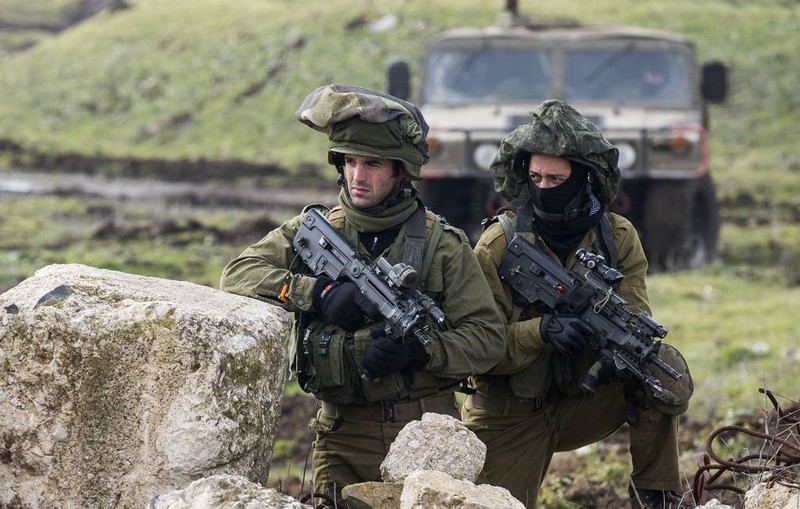
Israel’s army goes ballistic
Dozens of Israeli armored military vehicles, bulldozers, drones as well as armed troops from the military, border police and Shin Bet, raided the West Bank city of Jenin in attacks that were unprecedented in intensity and scope. The pretext was that they had to take down three Palestinian militants. A report describes how “Nine Palestinians, including an elderly woman, were killed by Israeli forces. Dozens of cars were flipped over and crushed, homes were heavily damaged, and patients had to run away from tear gas shot at the Jenin hospital”. Osama Mansour, 55, a local activist in Jenin painfully said: “It’s a multi-faced crime that not only includes killing our children but attacking civilians and destroying Palestinian property…Everyone in Jenin has someone to mourn.”

To call these excesses, brutality and disproportionate violence is a massive understatement. Chaos and bloodshed are politically expedient to Israel’s new national security minister and convicted terror-supporter, Itamar Ben-Gvir, as well as the finance minister and de facto prime minister of the West Bank.  “They want more violence, they want deterioration, they want an exacerbation of violence because politically it serves them,” retired Israeli General Ephraim Sneh, who served as deputy defense minister under Ehud Olmert, was warning me only a week ago. The Israeli police commissioner Kobi Shabtai has shared a similar assessment of Ben-Gvir’s proclivity for inciting violence for political gain, blaming him for sparking the 2021 escalation by establishing an office in the disputed Jerusalem neighborhood of Sheikh Jarrah.

The Palestinian Authority has stated it would suspend cooperation that its security forces maintain with Israel. A complaint will be filed with the UN Security Council, International Criminal Court and other international bodies. The ICRC reminded “all armed actors of their obligations to respect and protect civilians and their property.” he added. Medical personnel, medical units and facilities must be protected and respected in all circumstances to guarantee the affected communities’ continuing access to care, they added. The UNSC will issue a strongly-worded statement. The US will boycott the vote. Israel will give the resolution two hoots because it is used to managing impunity.

For many in the distance, these are mere reports. For those who subscribe to justice and human rights, each life taken diminishes the rest of humankind except that too many don’t know, and when they do, they don’t care. And there are far too many lives that are being lost.

According to the Rome Statute of the International Criminal Court, the Geneva Conventions define war crimes to include “willful killing; torture or inhuman treatment, including biological experiments; willfully causing great suffering, or serious injury to body or health; extensive destruction and appropriation of property, not justified by military necessity and carried out unlawfully and wantonly; compelling a prisoner of war or other protected person to serve in the forces of a hostile Power; willfully depriving a prisoner of war or other protected person of the rights of fair and regular trial; unlawful deportation or transfer or unlawful confinement; and taking of hostages.” What the world witnessed in Jenin, and indeed in Gaza, other parts of the West bank are all part of Israel’s acts of Genocide, Crimes against Humanity, and War Crimes.

On behalf of MLN Palestine Updates
Ranjan Solomon

_______________________________________________________

‘Cyber Palestine’: Elia Suleiman and the Israeli occupation
When it comes to the Israel-Palestine conflicts and their representations in cinema, most of it can be found in documentaries. The history of Palestinian cinema has been characterized by censorship and erasure, but a handful of brave filmmakers have been fighting back. One of them is the extremely talented Elia Suleiman. Suleiman’s oeuvre is a unique presence within the context of Palestinian cinema because it uses comic lenses to make sense of the overwhelming tragedy of the Israeli occupation. Suleiman has delivered thoughtful critiques of the West’s flawed perception of Palestine throughout his career. Suleiman is one of the leading figures of contemporary Palestinian cinema. Starting with his 1996 drama Chronicle of a Disappearance Suleiman’s examinations of the sociopolitical climate of Palestine has managed to reach wider audiences around the world.

Suleiman said: “I was rejected non-stop when I was trying to set up my first feature. At that time in the mid-’90s, there weren’t a lot of Palestinian filmmakers per se, and the lefties in the occidental film world were very patronizing about Palestine. They wanted to speak about it and not let you speak about it, so they were affronted by the comedy in the script.” The filmmaker added: “They knew that Palestinians never laughed because they were far too busy being tortured and tormented by the Israelis. One of the most interesting additions to Suleiman’s filmography is Cyber Palestine, a fascinating parable that re-contextualizes the origin of Jesus Christ within modern Palestine. Filled with volatile political anger and an innovative sense of humour, Cyber Palestine is the perfect example to prove that Suleiman is an incredibly necessary voice for his country. An incisive attack against the Israeli occupation’s control over Palestinian subjects, Cyber Palestine shows just how difficult it would be for Mary and Joseph to deliver Jesus in modern-day Palestine, where they would never have made it past the checkpoints. Suleiman insists that the idea of Palestine has almost been transformed into a virtual space now in a commentary that is simultaneously powerful and tragicomic.

Watch the film through the link

Israel strikes Gaza after deadly Jenin camp raid as Arab world calls for de-escalation
Israel carried out air strikes early on Friday after Gaza militants fired rockets as tensions soared following an Israeli raid in the occupied West Bank that killed 10 Palestinians in Jenin, including a 61-year-old woman. It was the deadliest single raid in the territory in over two decades. The flare-up in violence poses an early test for Israeli Prime Minister Benjamin Netanyahu’s far-right government.

Both the Palestinian rockets and Israeli air strikes seemed limited so as to prevent escalation into a full-blown war. Israel and Hamas have fought four wars and several smaller skirmishes since the militant group came to power in Gaza in 2007. Thursday’s deadly raid in the Jenin refugee camp is likely to reverberate on Friday as Palestinians gather for weekly Muslim prayers that are often followed by protests. Hamas had earlier threatened revenge for the raid. The Palestinian Authority also confirmed it would halt the ties that its security forces maintain with Israel and planned to file complaints with the UN Security Council, International Criminal Court and other international bodies.
Read more at National News

‘Everyone in Jenin has someone to mourn’: Nine Palestinians killed, one funeral
Thousands of Palestinians attended the funeral for nine Palestinians killed during a raid on a refugee camp in Jenin

Thousands of Palestinians gathered in Jenin, in the northern occupied West Bank, on Thursday, to attend the funeral for nine Palestinians killed during a raid on the Jenin refugee camp that same morning. Pain and sadness filled every corner of Jenin, Eyad Salahat, the older brother of 22-year-old Izz al-din Salahat, who was killed in the Israeli raid, told Middle East Eye between breaths.

“My family and I can’t believe we lost Izz,” he said before explaining that his brother’s nickname closely translates to pride. “Not just pride, but the pride. Our pride, the pride of our home, the pride of the camp….At the funeral, I couldn’t even fathom who was and wasn’t killed because of the sheer scale of everything,” he added. Eyad’s brother Izz al-Din was, according to his family, one of the first Palestinians killed during the large-scale Israeli military raid on the Jenin refugee camp. The raid, which lasted close to five hours, claimed the lives of eight others, including a 61-year-old woman, Majda Obaid, and two children. On Thursday evening, a 10th Palestinian was killed during confrontations that erupted between Israeli forces and Palestinians in the town of Al-Ram, north of Jerusalem.

“What happened to them is a crime against humanity,” Osama Mansour, 55, a local activist in Jenin in acute emotional distress stated: “It’s a multi-faced crime that not only includes killing our children but attacking civilians and destroying Palestinian property…Everyone in Jenin has someone to mourn.”
Read entire report in Middle East Eye

ICRC calls for greater protection of civilians in the West Bank
The International Committee of the Red Cross (ICRC) is deeply concerned about the events this morning in Jenin, which have resulted in several deaths and injuries. The number of civilians injured and killed due to the intensification of armed violence in parts of the West Bank has significantly increased over the past weeks,” said Arnaud Meffre, the ICRC’s head of sub-delegation in the West Bank. “We remind all armed actors of their obligations to respect and protect civilians and their property,” he added. Medical personnel, medical units and facilities must be protected and respected in all circumstances to guarantee the affected communities’ continuing access to care.

Source

Palestine Updates from Movement for Liberation from Nakba is a clearing house for historical and current information about happenings in the colonised Palestinian territories.

29 January 2023

Source: nakbaliberation.com

LDF Responds to Release of Video Footage in the Killing of Tyre Nichols

LDF Responds to Release of Video Footage in the Killing of Tyre Nichols

Today, the City of Memphis and the Memphis Police Department (MPD) released body-worn camera footage of the events that led to the death of Tyre Nichols, a 29-year-old Black man who died three days after being brutally attacked by five former MPD officers.

Each of the officers has been charged with one count of second-degree murder, one count of aggravated assault, two counts of aggravated kidnapping, two counts of official misconduct, and one count of official oppression. The officers had already been fired for excessive use of force, failing to intervene, and failing to render aid. Two Memphis Fire Department personnel were also relieved of duty following an internal investigation. The U.S. Department of Justice has opened a civil rights investigation through the U.S. Attorney’s office and the Federal Bureau of Investigation. The Tennessee Bureau of Investigation is also investigating this incident.

In response to today’s release of the footage, Legal Defense Fund (LDF) President and Director-Counsel Janai S. Nelson issued the following statement:

“We extend our deepest condolences to the family of Mr. Nichols. There is no version of justice that can account for this loss.

“The depth of the depravity revealed in footage of the police attack on Tyre Nichols is immeasurable. Memphis Police Department officers hunted, tortured, and brutalized Tyre Nichols. Not a single officer present intervened to stop these criminal acts or render aid. The sustained and sadistic attack on Mr. Nichols puts a spotlight on a law enforcement culture of violence that cannot be divorced from the ways law enforcement routinely undermines the public safety of Black people. Even minutes away from his home, Mr. Nichols was not safe, and the excruciating, extended, and inhumane violence that led to his death reminds us of the urgent need to replace our current system of public safety with one founded on principles of humanity and justice.

“While it is important that these officers have been swiftly charged and their actions investigated, this is only the first step toward accountability. Ultimately, this process must not — cannot — end with these MPD officers. The department has received over $18 million dollars in federal funding in the past decade, and we are calling on the Department of Justice to conduct an immediate and comprehensive investigation of the MPD to ensure that these funds have not gone towards creating the conditions that led to this heinous killing. We also call on the Tennessee Bureau of Investigation to ensure that every law enforcement bystander to this incident is identified and charged.

“To prevent another tragedy from occurring, our public safety system must be transformed, starting with the removal of law enforcement officers from routine traffic enforcement which creates opportunities for violence during benign interactions. We echo the demands of the Memphis community for the MPD to disband the SCORPION unit that ended Mr. Nichols life, and we urge Congress to meet this moment by passing comprehensive federal legislation that addresses the scourge of police violence.”

Additionally, LDF Associate Director-Counsel Tona Boyd issued the following statement:

“Today, the world saw the truth of what happened to Tyre Nichols, and it is as terrifying as it is inhumane. The reprehensible conduct by these former Memphis Police Department officers has once again left a community and our nation in need of deep healing. The brutal attack on Mr. Nichols – which included officers taking turns using pepper spray, tasers, batons, kicks, hand strikes and dehumanizing language in a prolonged, harrowing sequence of violence – exemplifies the very worst of law enforcement and calls attention to the horrific ways that, all too often, Black people in this country are treated by police.

“It is not a coincidence that such violence stemmed from a simple traffic incident. Too many times we’ve seen routine stops result in fatal harm — that disproportionately impacts Black people. Simply put, there is no room for armed officers in traffic enforcement.

“To those that demand justice, we stand with you, and we urge officials to allow demonstrators to exercise their right to peacefully protest under the First Amendment and we further caution authorities not to meet those who peacefully protest police brutality with antagonism and more police violence.”

###

Founded in 1940, the Legal Defense Fund (LDF) is the nation’s first civil rights law organization. LDF’s Thurgood Marshall Institute is a multi-disciplinary and collaborative hub within LDF that launches targeted campaigns and undertakes innovative research to shape the civil rights narrative. In media attributions, please refer to us as the Legal Defense Fund or LDF. Please note that LDF has been completely separate from the National Association for the Advancement of Colored People (NAACP) since 1957—although LDF was originally founded by the NAACP and shares its commitment to equal rights.

27 January 2023

Source: naacpldf.org


Why the CPTPP should be unratified

Why the CPTPP should be unratified. Jomo Kwame Sundaram. The Edge Malaysia Weekly, for January 23, 2023 – January 29, 2023. January 26, 2023

https://www.theedgemarkets.com/node/652860

Malaysians should ask why the previous international trade and industry minister Datuk Seri Mohamed Azmin Ali surreptitiously ratified the Comprehensive and Progressive Agreement for Trans-Pacific Partnership (CPTPP) days before the 15th general election, without parliamentary — let alone public — discussion despite his earlier ministerial promise to consult relevant parties.

Hidden costs

The high legal costs of its investor-state dispute settlement (ISDS) provisions need to be emphasised, even when governments win against powerful transnational corporations with deep pockets.

The US’ official reason for withdrawing from the Trans-Pacific Partnership (TPP) was ISDS. Although it had never lost an ISDS case up to that point, the US considered this a major threat, especially after former president Barack Obama cancelled a major pipeline construction project awarded to a Canadian company.

Yet, Malaysian CPTPP lobbyists claim ISDS is not a problem. Any experienced contract lawyer knows how vulnerable any government is, especially developing countries without deep fiscal pockets to bear legal costs.

Even Australia insisted on a tobacco “carve out” (exception) for the TPP after its costly experience fighting US tobacco company Philip Morris all the way to the Australian Supreme Court.

Perhaps the Ministry of International Trade and Industry (Miti) does not consider it a problem as it does not pay the legal bills — often running into tens, if not hundreds, of millions of ringgit — even when the government wins against the corporate plaintiff.

Lower corporate income and other tax rates in other CPTPP jurisdictions are another big problem. Why would any large company want to be registered and pay taxes in Malaysia if it offers no advantage but is more costly in terms of tax liability?

Meanwhile, governments everywhere are trying to increase revenue — especially from wealth, corporate income and windfall taxes — in the face of rising interest rates, economic stagnation and greater fiscal deficits following Covid-19 pandemic measures. The tax rate “race to the bottom”, promoted by the CPTPP, is over.

Exaggerating trade gains

While there will undoubtedly be some increased exports with any free trade agreement (FTA), these have been greatly exaggerated by TPP, and now CPTPP lobbyists, as several studies have shown.

But there is much less attention given to increased imports in most supposed trade projections, which may result in greater net trade deficits. Only FTA lobbyists claim that everybody can simultaneously increase exports, but not imports.

For Malaysia, current projections suggest we will probably import much more Japanese cars and plastic waste from others, thanks to former premier Datuk Seri Najib Razak’s earlier waste processing initiative. But about 85% of plastic waste is not commercially recycled, and hence dumped into landfills in Malaysia.

Supposed World Bank projections promoting the CPTPP were actually done by economists originally hired by the Peterson Institute of International Economics (PIIE) in Washington DC, which accepts funding from lobbyists.

Incredibly, their study claims more gains without US participation although the US economy accounted for two-thirds of the TPP area from an economic point of view. “More (gains) from less (trade)” surely deserves an award for economic fiction.

Even the official US International Trade Council (ITC) doubted the PIIE’s TPP projections and found our sceptical 2016 research paper (by Jere Capaldo, Alex Izurieta and Jomo KS) much more credible and robust.

For Vietnam and Malaysia, access to the US market was the main attraction of the TPP. Surely, the gains from joining the CPTPP, without the US, should be considerably less, even before considering the costs.

Also, 85% of the PIIE’s supposed economic gains from the TPP were from non-trade measures, mainly investments, not trade liberalisation.

The CPTPP lobbyists should also stop pretending that alleged gains projected are from trade liberalisation. More importantly, they need to clearly show where their anticipated economic investment boom is going to come from.

Former US president Donald Trump’s and the late former Japanese prime minister Shinzo Abe’s efforts to “reshore” US and Japanese foreign direct investment in China largely failed. Instead, Malaysia is now benefiting from diverted “friendshoring” interest from the two anti-China allies.

But China is the major trading partner of not only Malaysia, but all of Asean. It is also a major investor in our country. It would therefore be quite foolish and myopic to join either camp in the emerging new Cold War.

Economic agreements are political

The damning ITC report of mid-2016 forced Hillary Clinton to do a political U-turn and reject the TPP in the 2016 US presidential campaign after proposing and advocating the agreement earlier as part of the Obama cabinet.

As the recent IDEAS study, financed by Taiwan’s office in Kuala Lumpur, implicitly acknowledges, the TPP was, and the CPTPP is, about “containing” China, as Obama made very clear when he first suggested it as part of his “pivot to Asia”.

After China expressed interest in joining the CPTPP, Japan and Australia objected on political, not economic, grounds. For the CPTPP, the views of the Ministry of Finance and Wisma Putra are really more important than those of Miti.

When the previous Miti minister had a different portfolio in Tun Dr Mahathir Mohamad’s administration, a study he commissioned cautioned against joining the CPTPP.

So, one might well ask if the rushed ratification is Azmin’s poisoned chalice for the new government. One might also ask who was responsible for releasing and circulating a purported endorsement of CPTPP ratification by the new prime minister.

Jomo Kwame Sundaram, a former economics professor, was United Nations assistant secretary-general for economic development.

Ukraine Had Lost the War Before It Even Started

Part I
By Prof Michel Chossudovsky

Introduction

In the course of the last 11 months, I have been reviewing on a daily basis numerous carefully documented articles on the unfolding war in Ukraine,

The evolving consensus — after eleven months which emanates from the senior ranks of the US military and intelligence establishment — is that Ukraine “has lost the war”.

What strikes me in this ingenuous assessment is something which should have been obvious to analysts from the very outset of Russia’s “Special Operation”.

Ukraine Had Lost the War Before it Even Started

I will start with the obvious, much of which has been confirmed by official sources and analysis.

From Day One, Russia was involved as part of it’s “Special Operation” in “precision” attacks against Ukrainian military installations, which commenced hours prior to President Putin’s February 24, TV address:

“I am referring to the eastward expansion of NATO, which is moving its military infrastructure ever closer to the Russian border. It is a fact that over the past thirty years we have been patiently trying to come to an agreement with the leading NATO countries …In response, we invariably faced either cynical deception and lies or attempts at pressure and blackmail.”

From one week to the next, Ukraine was without a Navy and without an Air Force, destroyed at the outset in late February, early March 2022.

Part II of this article focusses in detail on another obvious concept, which has not been the object of media coverage or even analysis by the independent media:

Turkey, NATO’s heavyweight is “Sleeping with the Enemy”. It has a military cooperation agreement with Russia

What this means is that under present conditions a US-NATO war against Russia is an impossibility.

The Black Sea is strategic. While the Ukraine coastline is in large part controlled by Russia, Turkey controls the entire Southern coastline of the Black Sea as well as access to the Mediterranean. (under the Montreux protocol) (see map below)

Turkey is playing a double game, it is not acting on behalf of NATO in the war theater. It is “unofficially” collaborating with Russia. The March 2022 failed peace agreements in Istanbul were hosted by the Erdogan government.

The Obvious: How Could Ukraine Win a War without an Air Force and a Navy?

According to Russian Sources quoted by B. K, Bhadrakumar (March 25, 2022);

The Russian General Staff disclosed that Ukrainian air force and air defence is almost completely destroyed [March 2022], while the country’s Navy no longer exists and about 11.5% of the entire military personnel have been put out of action.

[Quoting Russian sources] Ukraine has lost much of its combat vehicles (tanks, armoured vehicles, etc.), one-third of its multiple launch rocket systems, and well over three-fourths of its missile air defence systems and Tochka-U tactical missile systems.

Sixteen main military airfields in Ukraine have been put out of action, 39 storage bases and arsenals destroyed (which contained up to 70% of all stocks of military equipment, materiel and fuel, and more than 1 million 54000 tons of ammunition.)

Ukraine had not only lost its naval power in the Black Sea, it had also lost its maritime access to the Sea of Azov and Eastern Ukraine.

That happened in February-March of last year.

The Kerch strait in Eastern Crimea is controlled by Russia. It constitutes a narrow maritime gateway which links the Black Sea to the Sea of Azov.

All major ports on the Sea of Azov are currently under Russian control.

The Dnieper Seaway

The Delta of Ukraine’s major river-way the Dnieper is controlled by Russia, despite Russia’s withdrawal from Kherson.

The Dnieper is a strategic seaway extending from Belarus, Northern Ukraine and Kiev down to the Black Sea.

The Dnieper is a major corridor for Ukraine grain cargo transportation and maritime commodity trade out of the Black Sea, which is controlled by Russia in collaboration with Turkey. (on Turkey’s role, see Part II)

Part II of this article is entitled:

Unspoken Divisions within NATO. “Sleeping with the Enemy”

Michel Chossudovsky is an award-winning author, Professor of Economics (emeritus) at the University of Ottawa, Founder and Director of the Centre for Research on Globalization (CRG), Montreal, Editor of Global Research.

25 January 2023

Source: globalresearch.ca

China Rebukes U.S. For Brinkmanship Over U.S.’s Catastrophic Debt Problem

By Countercurrents Collective

China has rebuked the U.S. for its brinkmanship over the nation’s “catastrophic debt problem as Washington approaches a statutory debt ceiling this week that could see the country defaulting on its obligations.

The criticism came from the Chinese embassy in Zambia’s capital Lusaka, following a reproach from U.S. Treasury Secretary Janet Yellen over alleged mishandling by Beijing of a debt problem in the southern African country.

On Monday, during a visit to Zambia, Yellen said that it was critically important to restructure the country’s debt. She blamed China, the key creditor of the African state, for being an obstacle to resolving the problem.

In response, the Chinese Embassy in Zambia said on Tuesday that “the biggest contribution that the U.S. can make to the debt issues outside the country is to act on responsible monetary policies, cope with its own debt problem, and stop sabotaging other sovereign countries’ active efforts to solve their debt issues.”

According to official data, China holds about $870 billion in U.S. debt, down from more than $1.3 trillion in late 2013. The country’s stockpile, the world’s largest after Japan’s, slumped for the third straight month, reaching the lowest level since June 2010, Bloomberg reported.

US debt is currently capped at $31.4 trillion. In December the ceiling was lifted. Last week, Treasury Secretary Janet Yellen warned that “once the limit is reached, the Treasury will need to start taking certain extraordinary measures to prevent the United States from defaulting on its obligations.”

She explained that these measures will only go as far as to give Congress time to negotiate and pass a debt-limit hike, most likely until early June.

Economists warn that raising the debt ceiling would give the Treasury some time before it runs out of money, adding that a U.S. default on payments would damage not only the world’s biggest economy but also the global financial system.

U.S. Warned Of Default

Another media report said:

The U.S. is expected to reach a statutory debt ceiling next week, which could see the country defaulting on its obligations unless preventative steps are taken, Treasury Secretary Janet Yellen warned on Friday in a letter to House Speaker Kevin McCarthy.

“The use of extraordinary measures enables the government to meet its obligations for only a limited amount of time. It is therefore critical that Congress act in a timely manner to increase or suspend the debt limit. Failure to meet the government’s obligations would cause irreparable harm to the U.S. economy, the livelihood of all Americans, and a global financial stability,” the secretary stated.

The U.S. debt is currently capped at $31.4 trillion. The ceiling was last lifted in December 2021.

There are concerns that the process of hiking the limit may be drawn out, as there are disputes over the move between the Republican and Democratic parties. However, following Yellen’s letter, the White House said it would support an increase and urged Congress to act in a prompt and bipartisan way.

Yellen’s Africa Visit

A Reuters report said on January 24, 2023:

U.S. Treasury Secretary Janet Yellen’s three-country trip to Africa – the leading edge of a new diplomatic push by the Biden administration – aims to show the continent the United States is a true partner, one here for the long-haul.

But after decades of losing ground to China and the tumult of the Donald Trump years, when the former president threatened to slash aid and roll back military support, it is a tough sell.

As Africa struggles with economic headwinds caused by the COVID-19 pandemic, the war in Ukraine and, notably, Washington’s own monetary policy, Africans are asking for proof the United States will stay the course this time.

Yellen, so far, is at pains to make guarantees.

“I do not know how I can give assurances, honestly,” she told Reuters in an interview en route from Senegal to Zambia. But Republicans and Democrats alike support long-standing initiatives, including in the areas of health and trade, she said.

Yellen’s trip kicks off a year of high-level U.S. visits that will include President Joe Biden, Vice President Kamala Harris, Trade Representative Katherine Tai, and Commerce Secretary Gina Raimondo.

Washington hosted African leaders from 49 countries and the African Union at a summit in December, where Biden said the United States was “all in” on Africa’s future and planned to commit $55 billion over the next three years.

African officials have broadly welcomed the United States’ renewed engagement. But the timing, two years into Biden’s four-year term, is viewed by many as “late and somewhat half-hearted”, said Chris Ogunmodede, a Nigerian researcher and associate editor of World Politics Review.

“The fears that Biden will not follow through, or that he could lose and be replaced by a hostile Republican administration, definitely exist,” he said.

The Reuters report said:

As the United States touts its long-standing ties to Africa and a renewed commitment to ramping up trade and investment, it is playing catch-up with China and facing a growing challenge from Russia.

Chinese trade with Africa is about four times that of the United States, and Beijing has also become an important creditor by offering cheaper loans than Western lenders.

American officials – both Democrats and Republicans – have criticized China’s lending as lacking transparency and predatory.

In Senegal, Yellen warned Africa against “shiny deals that may be opaque and ultimately fail to actually benefit the people” and has accused China of dragging its feet on a critical debt restructuring in Zambia.

U.S. Failure

The Reuters report added:

The U.S. fiscal policy is creating its own drag.

African countries have become collateral victims of this year’s rate hikes by the U.S. Federal Reserve, aimed at curbing inflation at home.

“Tightening financial conditions and the appreciating U.S. dollar have had dire consequences for most African economies,” the African Development Bank (AfDB) wrote in a report last week.

The cost of debt service is expected to hit $25 billion next year according to the World Bank, up from $21.4 billion in 2022. In local currency term, it has risen even faster, increasing the risk of debt distress, the AfDB stated.

African countries are also finding it harder to access capital markets to meet their fiscal needs and refinance maturing debt.

The United States has largely failed to offer viable alternatives to cheap Chinese credit, officials said.

“China is an important partner,” Democratic Republic of Congo Finance Minister Nicolas Kazadi told Reuters. “It is clearly shown that it is not easy to mobilize U.S. investors.”

One senior U.S. Treasury official said the United States had long been engaged in Africa, funding anti-HIV work and working on other health issues. “We do not often talk about it. It is not named bridges or highways … but if you think about just the sheer lives saved – estimates of 25 million lives saved with our engagement with (AIDS relief) – that is real.”

Conflict With Russia

The Reuters report said:

African countries have largely rejected U.S. pressure to take sides in the Russia-Ukraine conflict, some of them citing Moscow’s colonial-era support for their liberation movements.

Russia has blocked Ukrainian grain exports, driving up food inflation and aggravating one of the worst food crises in Africa’s history, U.S. officials note.

On Friday, Yellen said in Senegal that the war was hurting the continent’s economy, and that a Group of Seven-led price cap on Russian crude oil and refined products could save African countries $6 billion annually.

On Monday South Africa hosted a visit by Russian Foreign Minister Sergei Lavrov and defended its decision to hold joint naval exercises with Russia and China off its east coast next month – a day before Yellen was scheduled to arrive.

“All countries conduct military exercises with friends worldwide,” South Africa’s Foreign Minister Naledi Pandor, standing alongside Lavrov, told reporters.

Washington, Beijing and Moscow are all courting African nations with their own interests in mind, say foreign policy experts including Ebrahim Rasool, a former South African ambassador to the United States. African leaders, hoping for greater representation in bodies like the G20 and UN Security Council, can play that game too.

Countercurrents is answerable only to our readers. Support honest journalism because we have no PLANET B.

25 January 2023

Source: countercurrents.org
QURAN BURNING NOT PROTECTED BY LAW

QURAN BURNING NOT PROTECTED BY LAW

International Progress Organization condemns anti-Islamic hate crime in front of Turkish Embassy in Stockholm

Vienna, 25 January 2023
P/RE/28683c-is

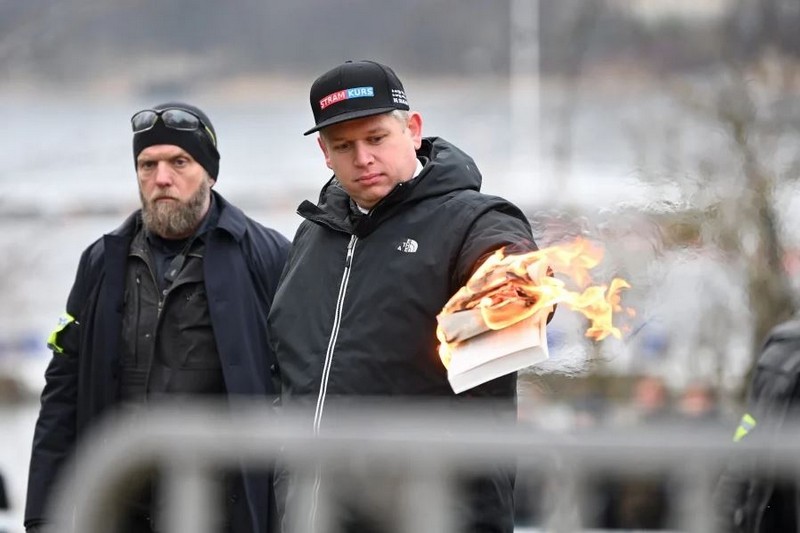
In a statement issued today, the International Progress Organization rejected the position of the Swedish government according to which the public burning of the Holy Quran is an act of freedom of expression, protected under Article 10 of the European Convention on Human Rights. On the contrary, any incitement to hatred such as the burning of sacred texts requires penalties according to Paragraph 2 of Article 10 of the Convention. Instead of issuing an official permit and providing security for the commission of what was actually a hate crime against the worldwide community of Muslims, the Swedish government should have prevented this heinous act, in conformity with the country’s obligations as a State Party to the European Convention on Human Rights.

Sweden should also pay attention to Article 20(1) of the International Covenant on Civil and Political Rights (ICCPR), which obliges all State Parties to prohibit, by law, “any advocacy of national, racial or religious hatred that constitutes incitement to discrimination, hostility or violence.”

The position of the Swedish government, arguing with “freedom of expression,” is also untenable in view of the jurisprudence of the European Court of Human Rights (ECHR). In a ruling of 25 October 2018 (ECHR 360[2018]) concerning a case of an abusive attack on the Prophet of Islam, the European Court confirmed the conviction of a person who, with her statements, had violated the “right of others to have their religious feelings protected” and thus had threatened religious peace in Austria. The ECHR explicitly affirmed the right of a state to take “proportionate restrictive measures” against acts that “were likely to incite religious intolerance” and thus are “incompatible with respect for the freedom of thought, conscience and religion.”

The public burning of a copy of the Holy Quran in Stockholm by a fascist activist was an act of pure provocation and an extreme form of hate crime. By allowing this vile act, on the basis of a perverted notion of the freedom of expression, Sweden has violated her international legal obligations under the ECHR as well as the ICCPR.

The increasing number of cases of anti-Islamic book burnings in Europe is eerily reminiscent of the book burnings of the Nazi period, which accompanied and preceded racist violence against people in an escalation that led to the Second World War. Those who speak of “European values” lack all credibility if they do nothing to stop acts of fascist hatred in Europe, but defend – as exercise of their freedom of expression – the right of activists to burn the holy book of one of the great monotheistic religions. In the tense and volatile inter-cultural climate of today, such an attitude is not only morally and legally indefensible, but a recipe for an escalating clash of civilizations.

International Progress Organization
Enquiries: info@i-p-o.org · Phone +43-1-5332877 · Fax +43-1-5332962 · Postal address: A-1010 Vienna, Kohlmarkt 4, Austria

The New York Times Is Orwell’s Ministry of Truth. “Newspeak, Double-Speak”

By Edward Curtin

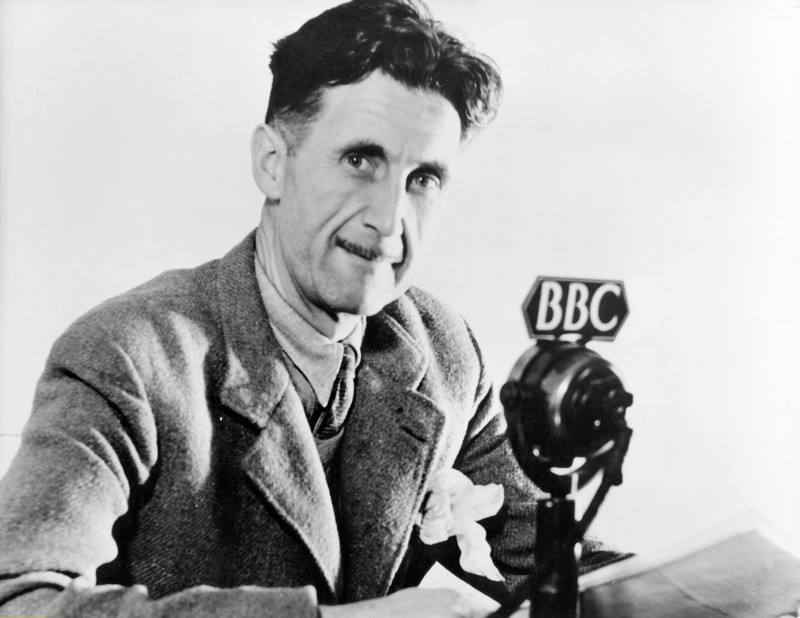
“Ingsoc. The sacred principles of ingsoc. Newspeak, double-speak, the mutability of the past.” – George Orwell, 1984

As today dawned, I was looking out the window into the cold grayness with small patches of snow littering the frozen ground.  As light snow began to fall, I felt a deep mourning in my soul as a memory came to me of another snowy day in 1972 when I awoke to news of Richard Nixon’s savage Christmas bombing of North Vietnam with more than a hundred B-52 bombers, in wave after wave, dropping death and destruction on Hanoi and other parts of North Vietnam.  I thought of the war the United States is now waging against Russia via Ukraine and how, as during the U.S. war against Vietnam, few Americans seem to care until it becomes too late.  It depressed me.

Soon after I was greeted by an editorial from The New York Times’ Editorial Board, “A Brutal New Phase of the War in Ukraine.”  It is a piece of propaganda so obvious that only those desperate to believe blatant lies would not fall down laughing.  Yet it is no laughing matter, for The N.Y. Times is advocating for a wider war, more lethal weapons for Ukraine, and escalation of the fighting that risks nuclear war.  So their title is apt because they are promoting the brutality.  This angered me.

The Times’ Editorial Board tells us that President Putin, like Hitler, is mad.

“Like the last European war, this one is mostly one man’s madness.”  Russia and Putin are “cruel”; are conducting a “regular horror” with missile strikes against civilian targets; are “desperate”; are pursuing Putin’s “delusions”; are waging a “terrible and useless war”; are “committing atrocities”; are responsible for “murder, rape and pillaging,” etc.

On the other hand, “a heroic Ukraine” “has won repeated and decisive victories against Russian forces” who have lost “well over 100,000 Russian soldiers killed and wounded,” according to the “reliable” source, chairman of the U.S. Joint Chief of Staff, Gen. Mark A. Milley.  To add to this rosy report, the Ukrainians seem to have suffered no casualities since none are mentioned by the cozy Times’ Editorial Board members from their keyboards on Eighth Avenue.  When you support a U.S. war, as has always been The Times’ modus operandi as a stenographer for the government, mentioning the dead pawns used to accomplish the imperialists’ dreams is bad manners.  So are the atrocities committed by those forces, so they too have been omitted.  Neo-Nazis, the Azov Battalion?  They too must never have  existed since they are not mentioned.

But then, according to the esteemed editorial writers, this is not a U.S. proxy war waged via Ukraine by U.S./NATO “to strip Russia of its destiny and greatness.”  No, it is simply Russian aggression, supported by “the Kremlin’s propaganda machinery” that has churned “out false narratives about a heroic Russian struggle against forces of fascism and debauchery.”  U.S./NATO were “horrified by the crude violation of the postwar order,” so we are laughingly told, and so came to Ukraine’s defense as “Mr. Putin’s response has been to throw ever more lives, resources and cruelty at Ukraine.”

Nowhere in this diatribe by the Times’ Board of propagandists – and here the whole game is given away for anyone with a bit of an historical sense – is there any mention of the U.S. engineered coup d’état in Ukraine in 2014.  It just didn’t happen.  Never happened.  Magic by omission.  The U.S., together with the Ukrainian government “led” by the puppet-actor “President Volodymyr Zelensky,” are completely innocence parties, according to the Times.  (Note also, that nowhere in this four page diatribe is President Putin addressed by his title, as if to say that “Mr. Putin” is illegitimate and Zelensky is the real thing.)

All the problems stem from when “Mr. Putin seized Crimea and stirred up a secessionist conflict in eastern Ukraine n 2014.”

Nowhere is it mentioned that for years on end:

that U.S./NATO has been moving troops and weapons right up to Russia’s borders,

that George W. Bush pulled the U.S. out of the Anti-Ballistic Missile Treaty and that

Trump did the same with the Intermediate-Range Nuclear Forces Treaty,

that the U.S. has set up so-called anti-ballistic missile sites in Poland and Rumania and asserted its right to a nuclear first-strike,

that more and more countries have been added to NATO’s eastern expansion despite promises to Russia to the contrary,

that 15,000 plus mostly Russian-speaking people in eastern Ukraine have been killed by Ukrainian forces for years before February 2022,

that the Minsk agreements were part of a scheme to give time for the arming of Ukraine, that the U.S. has rejected all calls from Russia to respect its borders and its integrity, that the U.S./NATO has surrounded Russia with military bases,

that there was a vote in Crimea after the coup,

that the U.S. has been for years waging economic war on Russia via sanctions, etc.

In short, all of the reasons that Russia felt that it was under attack for decades and that the U.S. was stone deaf to its appeals to negotiate these threats to its existence.

It doesn’t take a genius to realize that if all were reversed and Russia had put troops and weapons in Mexico and Canada that the United States would respond forcefully.

This editorial is propaganda by omission and strident stupidity by commission.

The editorial has all its facts “wrong,” and not by accident.  The paper may say that its opinion journalists’ claims are separate from those of its newsroom, yet their claims echo the daily barrage of falsehoods from its front pages, such as:

  • Ukraine is winning on the battlefield.
  • “Russia faces decades of economic stagnation and regression even if the war ends soon.”
  • That on Jan.14, as part of its cruel attacks on civilian targets, a Russian missile struck an apartment building in Dnipro, killing many.
  • Only one man can stop this war – Vladimir Putin – because he started it.
  • Until now, the U.S. and its allies were reluctant to deploy heavy weapons to Ukraine “for fear of escalating this conflict into an all-in East-West war.”
  • Russia is desperate as Putin pursues “his delusions.”
  • Putin is “isolated from anyone who would dare to speak truth to his power.”
  • Putin began trying to change Ukraine’s borders by force in 2014.
  • During the last 11 months Ukraine has won repeated and decisive victories against Russian forces …. The war is at a stalemate.”
  • The Russian people are being subjected to the Kremlin’s propagandamachinery “churning out false narratives.”

This is expert opinion for dummies.  A vast tapestry of lies, as Harold Pinter said in his Nobel Prize address.  The war escalation the editorial writers are promoting is in their words, “this time pitting Western arms against a desperate Russia,” as if the U.S./NATO does not have CIA and special forces in Ukraine, just weapons, and as if “this time” means it wasn’t so for the past nine years at least as the U.S. was building Ukraine’s military and arms for this very fight.

It is a fight they will lose in the days to come.  Russia was, is, and will triumph.

Everything in the editorial is disingenuous.  Simple propaganda: the good guys against the bad guys.  Putin another Hitler.  The good guys are winning, just as they did in Vietnam, until reality dawned and it had to be admitted they weren’t (and didn’t).  History is repeating itself.

Little has changed and so my morning sense of mourning when I remembered Nixon and Kissinger’s savagery at Christmas 1972 was appropriate.  As then, so today, we are being subjected to a vast tapestry of lies told by the corporate media for their bosses, as the U.S. continues its doomed efforts to control the world.  It is not Russia that is desperate now, but propagandists such as the writers of this strident and stupid editorial.  It is not the Russian people who need to wake up, as they claim, but the American people and those who still cling to the myth that The New York Times Corporation is an organ of truth.  It is the Ministry of Truth with its newspeak, double-speak, and its efforts to change the past.

Let Harold Pinter have the last words:

The crimes of the United States have been systematic, constant, vicious, remorseless, but very few people have actually talked about them. You have to hand it to America. It has exercised a quite clinical manipulation of power worldwide while masquerading as a force for universal good. It’s a brilliant, even witty, highly successful act of hypnosis.

Edward Curtin is a prominent author, researcher and sociologist based in Western Massachusetts.

23 January 2023

Source: globalresearch.ca

Lula’s robust reassertion of democracy, social progress and the rule of law in Brazil

By Dr Francisco Dominguez

On 8th January 2023, a week after Lula’s presidential inauguration, the world was shocked by a Trump-style mob attack on key state institutions in Brasilia, the country’s capital city. The world saw media images of thousands of Bolsonaro supporters invading Planalto (presidential palace), and the premises of both the Supreme Court and Parliament, who, when inside proceeded to vandalise just about everything within their reach whilst taking selfies of themselves.

It was a Bolsonarista insurrection aimed at not recognising Lula’s victory and keeping Jair Bolsonaro in power. Flavio Dino, Lula’s minister of justice, reported that Bolsonaristas had perpetrated similar acts of vandalism in at least ten states.

Former president Jair Bolsonaro, who refused to recognise his electoral defeat against Workers’ Party (PT) candidate, Inazio Lula da Silva on 31st October 2022, had conveniently travelled to Florida (30th December 2022) ostensibly not to be present at Lula’s inauguration but most probably not to be directly associated with the 8th January coup attempt if it failed.

To hand over the presidential sash on Lula would have been tantamount to accepting the people’s electoral will. Bolsonaro’s vice-president, retired army general Hamilton Mourão, who had also questioned the transparency of the election, refused to hand over the presidential sash to Lula too and did not attend the official inauguration on 1st January 2023, even though he was invited.

The issue was resolved by inviting representatives of the people of Brazil (a Black child, a disabled person, a street recyclables collector, a metal worker, a teacher, a woman cook, and an artisan) who were entrusted with placing the sash across Lula’s chest. Prominent among them was 93-year old Roani Metuktire, indigenous leader who accused Bolsonaro of crimes against humanity for both destroying their Amazon habitat and trampling upon indigenous rights.

A few days earlier (24/12/22), Brasilia detectives had foiled a plot to detonate an explosive device inside a truck filled-up with jet-plane fuel in the capital city’s airport. Three Bolsonaristas were arrested and are being tried for the terrorist attempt. One of them (Washington de Oliveira Souza) told police that Bolsonaro’s call to arms inspired him to build the arsenal he kept in his flat (shotguns, a rifle, two revolvers, three pistols, huge amounts of ammunition, camouflage uniforms, and many explosive devices). These criminals declared to the police they intended to cause a huge commotion hoping to provoke the military to declare a state of emergency. From Florida, Bolsonaro labelled the action a “terrorist act” yet he still praised protesters camping outside army barracks across Brazil urging the military to stage a coup.

The coup atmosphere created by Bolsonaro intensified during the election itself. In an unprecedented deployment of personnel, the Federal Highway Police (PRF) set up roadblocks in the Brazil’s northeast seeking to prevent voters in the PT strongholds from voting. In the nine-states sub-region Lula scored an average of 70% of the votes cast.

Silvinei Vasques, director of the PRF had posted a call to vote for Bolsonaro on Instagram, which was later deleted. Before the second round in October 2022, The Economist (8/09/2022) described the nearly 400,000-strong Brazil’s police forces as “trigger-happy and fond of Mr Bolsonaro”. The prompt intervention of Supreme Court judge, Alexandre de Moraes, president of Brazil’s Supreme Electoral Tribunal (TSE), led the PRF blockade to be lifted and his order to extend the polls closure time in 560 places, prevented this Bolsonarista vote suppression effort from succeeding.

In a raid carried out by the Federal Police (12th January), a page with minutes for Jair Bolsonaro was found in the private residence of his (now ex) minister of justice, Anderson Torres, with a plan to issue a presidential decree declaring a state of emergency in the premises of the TSE aimed at changing (annulling) the 31st October election result and impose military rule.

Previously, Bolsonaro and some of the top brass, had proposed that the armed forces conducted their own, separate and parallel, vote audit to be contrasted with the TSE figures should Lula be declared the winner. On the 8th of January Torres was Brasilia’s security secretary appointed in that position by the capital city governor, Ibaneis Rocha, a Bolsonaro’s staunch ally.

With Torres in charge of Brasilia’s security the scene was ready for the putsch. Its Military Police (MP) simply opened the gates for the violent invaders. There are scores of posted videos showing sympathetic MP officers smiling, hugging and taking selfies of themselves with the insurrectionists. Brasilia’s Military Police Commander in chief, Fabio Augusto Vieira, is charged with openly conniving with them.

Another Bolsonarista top brass is ex minister of Institutional Security, general Augusto Heleno, who throughout 2021 and 2022 kept making threats of military intervention. In November 2022, after Lula’s victory in the second round, Heleno publicly tarnished the mental and physical health of the president and labelled him a drunkard.

There is also Walter Braga Netto, a retired army general, former minister of defence and vice-presidential candidate in Bolsonaro’s 2022 presidential ticket. In June 2022, Braga Netto stated that if Bolsonaro’s demand that the armed forces audited the election results was not accepted, the election could be cancelled. “Either we have clean elections, or we won’t have elections.” Reportedly, during the insurrection Braga Netto would have the task to deploy the armed forces in the streets.

Even though the idea of the army exerting tutelage over politics is appealing and popular among high officers, despite the persistent Bolsonaro and Bolsonarista calls the bulk of the armed forces were not persuaded to stage a coup. Bolsonaro had become so toxic that even substantial sections of the world far right seems to be ready to dissociate themselves from him, despite the BBC/PSB strenuous PR efforts made with “Rise of the Bolsonaros.”

On 9th January, Lula gave vent to his anger over the Bolsonarista violent insurrection against Brazil’s democracy announcing his government will not rest until finding and punishing all those responsible, including its financial backers. Brazil’s General Attorney Office has obtained that 6,5 million Reais (over 1 million Euros) belonging to 52 individuals and 7 companies be frozen to be investigated as suspects of having financed the coup attempt.

Followed by governors and Supreme Court judges, to symbolise institutional unity in defense of democracy, Lula headed a walk (09/01/23) from the presidential palace to the Federal Supreme Court premises to verify the damage done to the vandalised public buildings. Among those present were Brazil’s 27 state governors, the presidents of both Congress and Senate, and the General Attorney. Lula strongly criticised the lack of action and the silence of the armed forces for two months about the Bolsonarista camps outside military barracks demanding they stage a coup d’état. And for good measure, Lula has so far sacked over 50 military officers in charge of the presidency’s security.

After the institutional walkabout, law and order was swiftly restored by police forces: the Bolsonarista camp outside the army HQ in Brasilia was dismantled after an order from Alexandre de Moraes leading to the arrest of 1,500 protesters who were detained in over 300 detention centres. All such camps in other states of Brazil were also dismantled.

Torres Anderson is under arrest and the STF suspended Brasilia’s governor Ibaneis Rocha from his position for 90 days pending an investigation. During the coup attempt, as Rocha was sitting on his hands, Lula issued a decree turning control of Brasilia’s security over to the Federal Government until January 31. “Twenty minutes later, all government buildings had been completely cleared of rioters by the Brasilia Civil Police and the Federal Police.” Brasilia’s Military Police Commander in chief, Fabio Augusto Vieira, is also under arrest. Silvinei Vasques, director of the PRF, has ‘been retired’.

Senator Renan Calheiros (former Senate president) stated that it would request STF minister Moraes to investigate Bolsonaro’s responsibility in the coup attempt. STF doyen judge, Gilmar Mendes, pointed out that Bolsonaro carries political responsibility for not having dissuaded his supporters from executing acts of violence. Brazilian prosecutors have asked the courts to seize Bolsonaro’s assets as part of their investigation of the coup attempt.

Brazil’s General Attorney Office has included Bolsonaro in its investigation because he may have “publicly incited the commissions of crimes”. And STF judge Ricardo Lewandowski rejected a preventive habeas corpus request for Torres and Jair Bolsonaro.

Due to the perplexity surrounding the Bolsonarista insurrection, little attention has been paid to the implementation of Lula’s policies. On 2nd January, one day after being inaugurated, he cancelled the privatization of eight state-owned companies. He also reversed several reactionary Bolsonaro decrees: re-established financial support to fight against deforestation and repealed a measure on illegal mining, suspended the issuance of new gun permits and authorisation for new shooting clubs, guaranteed income support for the poor, and a tax exemption on fuel, among a raft of progressive measures.

To top it all up, he appointed Sonia Guajajara, a representative of indigenous peoples, in charge of the newly created Ministry of Indigenous Peoples, which he pledged to create during the electoral campaign.

Under Lula’s progressive government, the significance of Brazilian democracy to rest of Latin America cannot be stressed enough. Nor can the threat represented by the Bolsonarista militarisation of Brazil’s state institutions. During the election campaign he promised the sack around 8,000 military officers appointed at all levels of the state throughout Brazil.

We will need to both remain vigilant – Bolsonarismo has been defeated but it is not yet buried – and redouble our solidarity with the people of Brazil and the peoples of Latin America.

Dr Francisco Dominguez is academic and a specialist on Latin America’s contemporary political economy.

22 January 2023

Source: countercurrents.org
A Hard-Edged Rock: Waging Economic Warfare on Humanity

By Colin Todhunter

Why is much modern food of inferior quality? Why is health suffering and smallholder farmers who feed most of the world being forced out of agriculture?

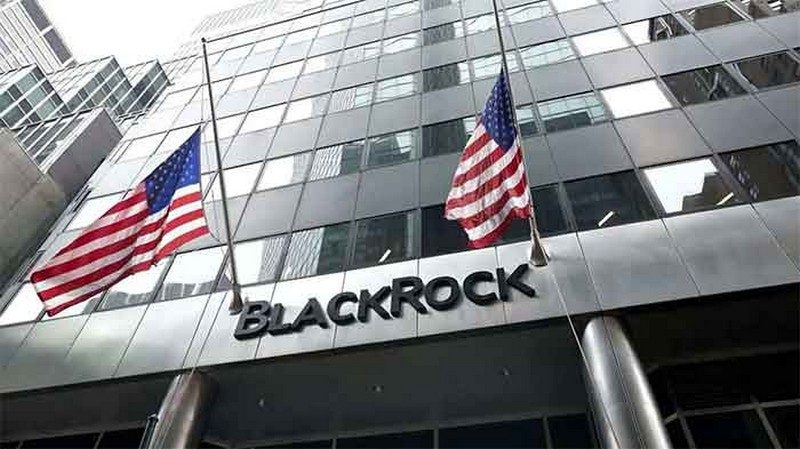
Mainly because of the mindset of the likes of Larry Fink of BlackRock – the world’s biggest asset management firm – and the economic system they profit from and promote.

In 2011, Fink said agricultural and water investments would be the best performers over the next 10 years.

Fink Stated:

“Go long agriculture and water and go to the beach.”

Unsurprisingly then, just three years later, in 2014, the Oakland Institute found that institutional investors, including hedge funds, private equity and pension funds, were capitalising on global farmland as a new and highly desirable asset class.

Funds tend to invest for a 10-15-year period, resulting in good returns for investors but often cause long-term environmental and social devastation. They undermine local and regional food security through buying up land and entrenching an industrial, export-oriented model of agriculture.

In September 2020, Grain.org showed that private equity funds – pools of money that use pension funds, sovereign wealth funds, endowment funds and investments from governments, banks, insurance companies and high net worth individuals – were being injected into the agriculture sector throughout the world.

This money was being used to lease or buy up farms on the cheap and aggregate them into large-scale, US-style grain and soybean concerns. Offshore tax havens and the European Bank for Reconstruction and Development had targeted Ukraine in particular.

Western agribusiness had been coveting Ukraine’s agriculture sector for quite some time. That country contains one third of all arable land in Europe. A 2015 article by Oriental Review noted that, since the mid-90s, Ukrainian-Americans at the helm of the US-Ukraine Business Council have been instrumental in encouraging the foreign control of Ukrainian agriculture.

In November 2013, the Ukrainian Agrarian Confederation drafted a legal amendment that would benefit global agribusiness producers by allowing the widespread use of genetically modified seeds.

In June 2020, the IMF approved an 18-month, strings-attached $5 billion loan programme with Ukraine.

Even before the conflict, the World Bank incorporated measures relating to the sale of public agricultural land as conditions in a $350 million Development Policy Loan (COVID ‘relief package’) to Ukraine. This included a required ‘prior action’ to “enable the sale of agricultural land and the use of land as collateral.”

It is interesting to note that Larry Fink and BlackRock are to ‘coordinate’ investment in ‘rebuilding’ Ukraine.

An official statement released in late December 2022 said the agreement with BlackRock would:

“… focus in the near term on coordinating the efforts of all potential investors and participants in the reconstruction of our country, channelling investment into the most relevant and impactful sectors of the Ukrainian economy.”

With more than $813.5 billion invested in arms manufacturing companies, BlackRock is in a win-win situation – profiting from both destruction and reconstruction.

BlackRock is a publicly owned investment manager that primarily provides its services to institutional, intermediary and individual investors. The firm exists to put its assets to work to make money for its clients. And it must ensure the financial system functions to secure this goal. And this is exactly what it does.

Back in 2010, the farmlandgrab.org website reported that BlackRock’s global agriculture fund would  target (invest in) companies involved with agriculture-related chemical products, equipment and infrastructure, as well as soft commodities and food, biofuels, forestry, agricultural sciences and arable land.

According to research by Global Witness, it has since indirectly profited from human rights and environmental abuses through investing in banks notorious for financing harmful palm oil firms (see the article The true price of palm oil, 2021).

Blackrock’s Global Consumer Staples exchange rated fund (ETF), which was launched in 2006 and, according to the article The rise of financial investment and common ownership in global agrifood firms (Review of International Political Economy, 2019), has:

“US$560 million in assets under management, holds shares in a number of the world’s largest food companies, with agrifood stocks making up around 75% of the fund. Nestlé is the funds’s largest holding, and other agrifood firms that make up the fund include Coca-Cola, PepsiCo, Walmart, Anheuser Busch InBev, Mondelez, Danone, and Kraft Heinz.”

The article also states that BlackRock’s iShares Core S&P 500 Index ETF has $150 billion in assets under management. Most of the top publicly traded food and agriculture firms are part of the S&P 500 index and BlackRock holds significant shares in those firms.

The author of the article, Professor Jennifer Clapp, also notes BlackRock’s COW Global Agriculture ETF, has $231 million in assets and focuses on firms that provide inputs (seeds, chemicals and fertilizers) and farm equipment and agricultural trading companies. Among its top holdings are Deere & Co, Bunge, ADM and Tyson. This is based on BlackRock’s own data from 2018.

Jennifer Clapp states:

“Collectively, the asset management giants – BlackRock, Vanguard, State Street, Fidelity, and Capital Group – own significant proportions of the firms that dominate at various points along agrifood supply chains. When considered together, these five asset management firms own around 10%–30% of the shares of the top firms within the agrifood sector.”

BlackRock et al are heavily invested in the success of the prevailing globalised system of food and agriculture.

They profit from an inherently predatory system that – focusing on the agrifood sector alone – has been responsible for, among other things, the displacement of indigenous systems of production, the impoverishment of many farmers worldwide, the destruction of rural communities and cultures, poor-quality food and illness, less diverse diets, ecological destruction and the proletarianization of independent producers.

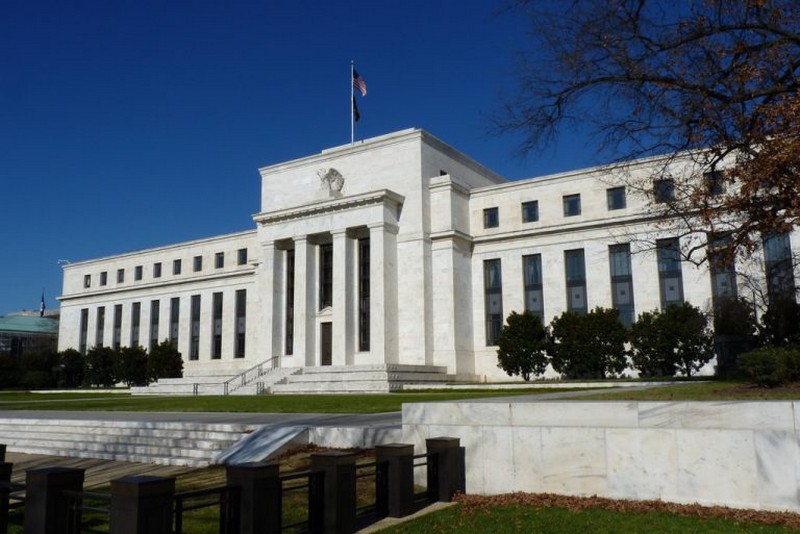
Due to their size, according to journalist Ernst Wolff, BlackRock and its counterpart Vanguard exert control over governments and important institutions like the European Central Bank (ECB) and the US Federal Reserve. BlackRock and Vanguard have more financial assets than the ECB and the Fed combined.

BlackRock currently has $10 trillion in assets under its management and to underline the influence of the firm, Fink himself is a billionaire who sits on the board of the World Economic Forum and the powerful and highly influential Council for Foreign Relations, often referred to as the shadow government of the US – the real power behind the throne.

Researcher William Engdahl says that since 1988 the company has put itself in a position to de facto control the Federal Reserve, most Wall Street mega-banks, including Goldman Sachs, the Davos World Economic Forum Great Reset and now the Biden Administration.

Engdahl describes how former top people at BlackRock are now in key government positions, running economic policy for the Biden administration, and that the firm is steering the ‘great reset’ and the global ‘green’ agenda.

Fink recently eulogised about the future of food and ‘coded’ seeds that would produce their own fertiliser. He says this is “amazing technology”. This technology is years away and whether it can deliver on what he says is another thing.

More likely, it will be a great investment opportunity that is par for the course as far as genetically modified organisms in agriculture are concerned: a failure to deliver on its inflated false promises. And even if it does eventually deliver, a whole host of ‘hidden costs’ (health, social, ecological, etc) will probably emerge.

And that’s not idle speculation. We need look no further than previous ‘interventions’ in food/farming under the guise of Green Revolution technologies, which did little if anything to boost overall food production (in India at least) but brought with it tremendous ecological, environment and social costs and adverse impacts on human health, highlighted by many researchers and writers, not least in Bhaskar Save’s open letter to Indian officials and the work of Vandana Shiva.

However, the Green Revolution entrenched seed and agrichemical giants in global agriculture and ensured farmers became dependent on their proprietary inputs and global supply chains. After all, value capture that was a key aim of the project.

But why should Fink care about these ‘hidden costs’, not least the health impacts?

Well, actually, he probably does – with his eye on investments in ‘healthcare’ and Big Pharma. BlackRock’s investments support and profit from industrial agriculture as well as the hidden costs.

Poor health is good for business (for example, see on the BlackRock website BlackRock on healthcare investment opportunities amid Covid-19). Scroll through BlackRock’s website and it soon becomes clear that it sees the healthcare sector as a strong long-term bet.

And for good reason. For instance, increased consumption of ultra-processed foods (UPFs) was associated with more than 10% of all-cause premature, preventable deaths in Brazil in 2019 according to a recent peer-reviewed study in the American Journal of Preventive Medicine.

The findings are significant not only for Brazil but more so for high income countries such as the US, Canada, the UK, and Australia, where UPFs account for more than half of total calorific intake. Brazilians consume far less of these products than countries with high incomes. This means the estimated impact would be even higher in richer nations.

Due to corporate influence over trade deals, governments and the WTO, transnational food retail and food processing companies continue to colonise markets around the world and push UPFs.

In Mexico, global agrifood companies have taken over food distribution channels, replacing local foods with cheap processed items. In Europe, more than half the population of the European Union is overweight or obese, with the poor especially reliant on high-calorie, poor nutrient quality food items.

Larry Fink is good at what he does – securing returns for the assets his company holds. He needs to keep expanding into or creating new markets to ensure the accumulation of capital to offset the tendency for the general rate of profit to fall. He needs to accumulate capital (wealth) to be able to reinvest it and make further profits.

When capital struggles to make sufficient profit, productive wealth (capital) over accumulates, devalues and the system goes into crisis. To avoid crisis, capitalism requires constant growth, expanding markets and sufficient demand.

And that means laying the political and legislative groundwork to facilitate this. In India, for example, the now-repealed three farm laws of 2020 would have provided huge investment opportunities for the likes of BlackRock. These three laws – imperialism in all but name – represented a capitulation to the needs of foreign agribusiness and asset managers who require access to India’s farmland.

The laws would have sounded a neoliberal death knell for India’s food sovereignty, jeopardized its food security and destroyed tens of millions of livelihoods. But what matters to global agricapital and investment firms is facilitating profit and maximising returns on investment.

This has been a key driving force behind the modern food system that sees around a billion people experiencing malnutrition in a world of food abundance. That is not by accident but by design – inherent to a system that privileges corporate profit ahead of human need.

The modern agritech/agribusiness sector uses notions of it and its products being essential to ‘feed the world’ by employing ‘amazing technology’ in an attempt to seek legitimacy. But the reality is an inherently unjust globalised food system, farmers forced out of farming or trapped on proprietary product treadmills working for corporate supply chains and the public fed GMOs, more ultra-processed products and lab-engineered food.

A system that facilitates ‘going long and going to the beach’ serves elite interests well. For vast swathes of humanity, however, economic warfare is waged on them every day courtesy of a hard-edged rock.

The author is a research associate of the Centre for Research on Globalization with an interest in food, agriculture and development issues.

21 January 2023

Source: countercurrents.org