Just International

Violent upheavals by settlers and soldiers bring despair to Palestinians

Palestine Update 634
_Comment_

Violent upheavals by settlers and soldiers bring despair to Palestinians
92 lawmakers sent a letter to the US president in which they said the
proposed changes to Israel’s judiciary would “jeopardize Israeli
democracy, which in turn would undermine the very foundation of the
US-Israel relationship” They are calling on President Biden to
influence a reversal in the decision.

But, the Biden administration defies political ethics. It has approved a
diplomatic visa for right-wing Israeli Finance Minister Bezalel Smotrich
even after Human rights groups had urged   the Biden administration to reject Smotrich’s request for a visa after he called for the Palestinian village of Huwwara to be “wiped out” [1] earlier this month. His comments were a prelude to a surge [2] of settler violence in the area that resulted in one Palestinian being killed, hundreds being injured, and huge amounts of property destroyed.

Legal sources narrated 214 incidents of suppression of Palestinian
advocacy in the US. Of these, 70 percent of incidents took place at 80
educational institutions. In addition, the group provided an overview of some of the key the stories behind these numbers.

The high court of Israel is enabling the state’s use of torture against
Palestinian prisoners. On 29 December 2022, the high court once again
yielded to the demands of the state regarding the issue of prison
conditions and the size of prison cells in particular. In most Western
countries, the size of standard prison cells ranges between 6 and 12
sqm, while in Israel, it is less than 3 sq metres.

An estimated 500 Israeli settlers stormed the occupied West Bank
villages [3] of Hawara [4], Zaatara, and Burin, among others in what
many are calling a pogrom [5]. Protected by Israeli Occupation Forces
(IOF), armed settlers set fire to hundreds of Palestinian homes – 9 of
which were confirmed to have families trapped inside – hundreds of
cars, shops, ambulances, trees, and livestock. Just a few days ago
Zionist settlers and IOF soldiers invaded occupied Nablus again, broke
into shops, and terrorized Palestinians. Predictably, in the wake of
such violence from settlers who are not IOF soldiers, narratives about
“extremist,” “right-wing” Zionists and Zionist governments
emerged.

Amnesty International has expressed strong disapproval: “Israeli
authorities have long enabled and incited settler attacks against
Palestinians, and in some cases, soldiers have directly participated”,
it stated.

Please read the articles below and disseminate widely.
On behalf of MLN Palestine Updates

Ranjan Solomon
————————-

US lawmakers warn Biden that Israel’s judicial overhaul undermines
bilateral ties
_More than 90 members of US Congress say Biden must ‘oppose any moves
toward annexation’_
A group of nearly 100 Democratic lawmakers has warned US [6] President Joe Biden that the actions of Israel’s [7] far-right government are undermining the US-Israel relationship. The 92 lawmakers sent a letter to the US president in which they said the proposed changes to Israel’s judiciary would “jeopardize Israeli democracy, which in turn would undermine the very foundation of the US-Israel relationship”…We urge you to use all diplomatic tools available to prevent Israel’s
far-right government from further damaging the nation’s democratic
institutions and undermining the potential for two states for two
peoples,” said the letter, published [8] by the liberal pro-Israel
group J Street.

Currently, Israel’s highest court can disqualify government legislation
if it contradicts Israel’s 13 basic laws, particularly the Human Dignity
and Liberty Basic Law. Israel’s basic laws are intended to be part of
the future constitution, which does not exist yet. However, a new plan
proposed by the Netanyahu-led coalition would expand the government’s power to appoint judges and impede the Supreme Court’s power to restrain parliament.
Read more in Middle East Eye [9]

Biden administration approves visa for Israeli minister who called for
Palestinian village to be ‘wiped out’
_The State Department has approved a visa for Bezalel Smotrich, the
Israeli finance minister who called for the village of Huwwara to be
destroyed as settler violence has surged in the West Bank._

The U.S. State Department has approved a diplomatic visa for right-wing Israeli Finance Minister Bezalel Smotrich. Human rights groups had called [10] on the Biden administration to reject Smotrich’s request
after he called for the Palestinian village of Huwwara to be “wiped
out” [11] earlier this month. His comments came amid a surge [12] of
settler violence in the area that resulted in one Palestinian being
killed, hundreds being injured, and huge amounts of property destroyed.

Smotrich apologized for his comments last week. “People sometimes use harsh words they don’t mean in order to pass a message,” he tweeted [13]. “It happens to everyone.”

Smotrich is scheduled to address an Israel Bonds meeting [14] in
Washington, D.C. that begins on March 12. The CEO of Israel Bonds is Dani Naveh, a former Likud Party minister and Benjamin Netanyahu’s first cabinet secretary. Press are not permitted at the event.

A senior U.S. official told [15] Axios‘ Barak Ravid that the State
Department had internal discussions on the issue, but that there’s a
very high bar for denying a diplomatic visa to a United States ally.

In 2019 the U.S. denied [16] a visa to senior Palestinian official Hanan
Ashrawi for unspecified reasons. In 2012 former Knesset member Michael Ben Ari was denied [17] a visa over connections to a “terrorist
organization,” presumably the defunct Zionist party Kach.
Read more in Mondoweiss [18]

US group records 214 incidents of suppression of Palestine advocacy in
2022Palestine
Legal reports that in 2022 it responded to 214 incidents of suppression
of Palestinian advocacy in the US. Of these, 70 percent of incidents
took place at 80 educational institutions. They also responded to 48
legal questions from activists concerned about their rights. In
addition, the group provided an overview of some of the key the stories behind these numbers. “By sharing these stories together and seeing the backlash people face, we’re building a support system and speaking out for one another,” Zoha Khalili, a staff attorney with Palestine Legal and an author of the report, told The New Arab. These stories included Palestinian poet Mohammad El-Kurd, who faced attempts at derailing his book tour at US college campuses; professors facing backlash over lectures; and students being punished for allegedly posting pro-Palestinian fliers. In each of these cases, the activists were
accused of antisemitism. Last year saw a slew of anti-Palestinian legislation, with at least 11 anti-BDS bills introduced at the state level, as well as at least eight bills introduced in state legislatures to adopt the definition of antisemitism by the International Holocaust Remembrance Alliance, which has been widely interpreted as equating
criticism of Israel as antisemitism. Implementation of the IHRA
antisemitism definition appears to be accelerating in 2023.
Read more in New Arab [19]

Israel’s Supreme Court enables torture of Palestinian prisoners
While Israelis protest against Netanyahu and Ben-Gvir’s war on the
judiciary, the high court of Israel enables the state’s use of torture
against Palestinian prisoners. On 29 December 2022, the high court once again capitulated to the demands of the state regarding the issue of prison conditions and the size of prison cells in particular. It granted
the state’s request and extended, for the third time, the deadline for
expanding the living space of detainees until 31 December 2027. In most Western countries, the size of standard prison cells ranges between 6 and 12 sqm, while in Israel, it is less than 3 sqm

In response to a petition [20] by Israeli human rights organisations
including the Association for Civil Rights (ACRI), the Supreme Court
issued an order in June 2017 to expand the living space of prisoners to
4.5 sqm – giving the Israel Prison Service an initial deadline of nine
months (HCJ 1892/14 ACRI v Public Security Minister). The ruling seemed to acknowledge the cruel, humiliating, and inhuman living conditions of the prisoners. In the opening statement of the decision, Judge Yitzhak Amit wrote that “society is evaluated…through its treatment of prisoners”. He pointed out that “depriving them of their freedom through imprisonment does not mean depriving them of their right to dignity, which stems from the prisoner’s right to determine the minimum living space”.  However, despite this statement, the court approved maintaining these conditions for an additional five years which then became 10 years [21] from the initial judgement.
Read more in Middle East Eye [22]

Israeli settler attacks in the West Bank: Pogroms are the foundation of
the Zionist state On 26 February, an estimated 500 Israeli settlers stormed the occupied West Bank villages [23] of Hawara [24], Zaatara, and Burin, among others in what many are calling a pogrom [25]. Protected by Israeli Occupation Forces (IOF), armed settlers set fire to hundreds of Palestinian homes – 9 of which were confirmed to have families trapped inside – hundreds of cars, shops, ambulances, trees, and livestock. Just a few days ago Zionist settlers and IOF soldiers invaded occupied Nablus again, broke into shops, and terrorized Palestinians. Predictably, in the wake of such violence from settlers who are not IOF soldiers, narratives about “extremist,” “right-wing” Zionists and Zionist governments emerged. Ironically, thousands of settlers in the territories occupied in 1948, known as “Israel”, denounced [26] such aggression in the occupied West Bank, blaming it on the newly elected right-wing Zionist government led by Netanyahu, as opposed to so-called “progressive” Zionist parties.
Read more in The New Arab [27]

Israeli Occupation Forces execute four Palestinians in Jenin
A special Israeli forces unit killed three Palestinians after opening
fire at their vehicle at the entrance of the town of Jabaa’, south of
the occupied West Bank city of Jenin. The three slain Palestinians were
identified as Sufyan Fakhoury, 26, Nayef Malayshah, 25 and Ahmad
Fashafsha, 22. According to eye witnesses, a special Israeli forces unit
sneaked into the town and opened fire at a Palestinian vehicle while
three youths were inside, killing them all. They added that Israeli
forces raided the town and detained a Palestinian citizen after breaking
into and ransacking his house.

With the killing of the three youths, the number of Palestinians killed
by Israeli forces since the beginning of 2023 has risen to 77, including
13 children and one woman. Another Palestinian child has Thursday
succumbed to the wounds he sustained from Israeli gunfire during the
Israeli army assault on Jenin two days ago. According to the Ministry of
Health, Waleed Nassar, 14, was shot during the Israeli forces raid into
the city and refugee camp of Jenin. The number of Palestinians killed by the Israeli forces in Jenin during the assault on March 7 has now risen to seven. Earlier a special Israeli forces unit killed three
Palestinians after opening fire at their vehicle at the entrance of the
town of Jabaa’, south of Jenin. The number of Palestinians killed by
Israeli forces since the beginning of 2023 has risen to 78, including 14
children and one woman. Read more from PNN [28] Amnesty: ‘Impunity reigns for perpetrators of settler violence’

Commenting on the violent settler attack on the occupied West Bank
village of Huwara last week, Amnesty International has said that
“impunity reigns for perpetrators of settler violence” against
Palestinians. “Under Israel’s apartheid system, impunity reigns,”
Amnesty International’s Director for the Middle East and North Africa, Heba Morayef, said.

“Despite the intensity and scale of Sunday’s attacks [29], which
resulted in the killing of one Palestinian and the wounding of nearly
400, and despite a rare show of international condemnation of settler
violence, Israeli police yesterday released six suspects who were
arrested in connection with the attacks,” Morayef said. “Meanwhile two
others have been issued with administrative detention orders, which
violate international law.”

“Israeli authorities have long enabled and incited settler attacks
against Palestinians, and in some cases, soldiers have directly
participated,” she continued, stressing that “state-backed settler
violence is endemic in the occupied West Bank.”
Read more from Middle East Monitor [30]

Palestine Updates from Movement for Liberation from Nakba is a clearing house for historical and current information about happenings in the colonised Palestinian territories.

12 March 2023

Source: nakbaliberation.com

20 Years and Nothing Has Changed

By Philip A Farruggio

It was the morning of March 19th, 2003 and this writer was up early. I was eating a bowl of Cheerios as I turned on the boob tube. I can remember vividly the evening before when I was able to watch a Canadian Cable News channel. The news anchor was explaining how all the many groups throughout the entire planet were pushing for the Bush/Cheney Cabal to halt the probable, that being a full fledge pre-emptive attack upon Iraq. Didn’t tens of millions of us, once again throughout the entire world, stand and march on that February 11th against such a move? As I swallowed the cereal I watched my country’s missiles destroying Baghdad. I had to cry, and did I!  The die was cast , as Cassius spelled it out: ‘ The fault dear Brutus is not in our stars, but in ourselves, that we are underlings.’ And yes, unfortunately, too many of my fellow citizens were just that… underlings! Guess what?  After twenty years nothing really has changed.

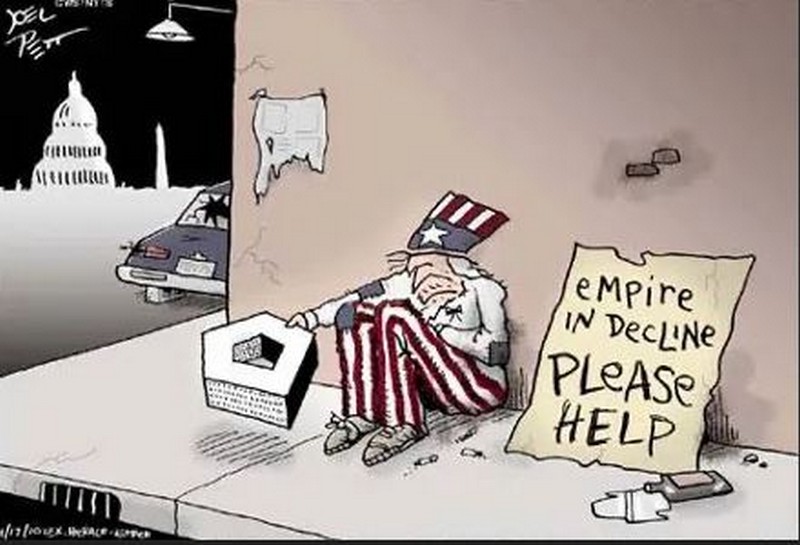
The most heinous act by my nation, a nation whose policies I have had a lifetime adversarial relationship with, has bankrupted us… along with so many other countries. You can call it ‘ Money down the drain’ and so it is. At least a trillion dollars has been diverted from our federal revenues and given, usually Carte Blanche, to the Military Industrial Empire. The Two Party/One Party scam has taken turns to steal from us citizens in the name of ‘ National Security’ or ‘ National Defense’. They even, after the highly questionable happening on September 11, 2001, decided to copy from the Nazi playbook by transposing Homeland onto the German term of Fatherland. There are a myriad of top level investigative researchers who have presented scenarios as to what really went down on 9/11, always in opposition to the government line. Regardless, the empire we live under used the tower attacks to push forth draconian measures… especially the phony wars on Afghanistan and Iraq. Thus, they went in, invaded and destroyed those countries, occupied them with our ( mostly) young soldiers, and gave their political friends and donors hundreds of billions of dollars in contracts. You see, that is the rule of modern empires: Attack and destroy a nation and then subsidize the rebuilding of it… at great profit.

Sadly, it does not matter which party controls the White House and Congress. What the Michael Douglas character, Gordon Gecko, in Oliver Stone’s film Wall Street should have said : ‘ War & Greed is good!’ Yesterday it was the Middle East; today it is Eastern Europe, Ukraine. Remember this dear readers: America needs, as the Al Pacino character Tony Montana said in Brian DePalma’s film Scarface:’ You need people like me so you can point your ***** fingers and say That’s the bad guy!’ It seems that the masters of this current empire, through the Democrats, are doing their best to recreate the Cold War and foolishly package  Russia AND China as the new ‘ Bad Guys’. The right wing Republicans focus on the terror of illegal aliens invading us through our Southern border replete with opioids to hook our citizens. ( Of course throw in thirsty rapists to the mix).  They also make sure to blame the Chinks for their lab leaking  Covid, although most experts realize it was from their ‘ Wet Markets’ of wild animals. Who cares as long as it all sells.

It seems like those ‘ Islamic Fascists’ now take a back seat in the newest versions of our ‘ War on Terror’… until needed again.

Philip A Farruggio is regular columnist on itstheempirestupid website.

9 March 2023

Source: countercurrents.org

China Meets American Hegemony Head-On

By Timur Fomenko

In a rare scathing essay, Beijing’s foreign ministry has blasted Washington’s continued attempts at world domination.

23 Feb 2023 – The Chinese foreign ministry has published an essay titled ‘US Hegemony and Its Perils’, a scathing attack on the United States and its desire to effectively rule the world.

The essay was widely shared throughout Chinese state media outlets and was probably the harshest thing they’ve ever published at least as far as Washington is concerned. It coincides with Russian President Vladimir Putin’s recent address and attacks the US across a broad spectrum of topics, outlining Washington’s multi-pronged efforts to achieve and maintain exclusive dominance over the entire planet. This includes military action, such as Iraq and Afghanistan, as well as interference in internal political affairs of countries in the form of coups and revolutions.

The essay discussed the Arab Spring, US interference in Latin America including the CIA coup in Chile and attempts to undermine the government of Cuba and Venezuela, and the number of “color revolutions” in former Soviet states such as Ukraine, Georgia, and Kyrgyzstan. It went on to condemn how Washington weaponizes the subject of democracy and forces countries to take sides, branded the US a country “characterized by violence and expansion” that crushes its opponents with sanctions and “economic coercion” and claimed the (US) dollar of being “the main source of instability and uncertainty in the world economy.”

Never has China’s foreign ministry launched such a blistering attack on the US. For many years, despite Washington’s turn to hostility towards Beijing, China has been overwhelmingly restrained when it comes to the US. For a long time, it held to the belief that America can be engaged with, that somehow the country can be brought to reason, and that the US-China bilateral relationship can be improved and stabilized. It once held the belief that after the departure of the Donald Trump administration, things could be returned to “normal” under Joe Biden.

That belief could not have been more wrong. After two years in office, the Biden administration has shown itself to be more belligerent and hawkish on China than Trump and his colleagues had ever been, and ties have gone from one new low to another, with the Biden presidency having transformed US policy from a series of “America First” Trumpian grievances over trade, to an all-encompassing campaign of military and strategic containment which has dramatically escalated tensions. Trump was a negotiator, who wanted to make trade deals with China to suit American interests using tariffs as leverage, whereas the word “compromise” does not exist in Biden’s vocabulary.

The Biden administration has repeatedly claimed it wants “guardrails” and “lines of communication” with Beijing, but its actions have shown its real intentions, from allowing Nancy Pelosi’s highly provocative visit to Taiwan, to stoking paranoia over a balloon, to forcing countries to cut off supplies to China’s entire semiconductor industry. The conclusion that Beijing has finally arrived at is that when it comes to the United States, there is no serious dialogue to be had. It is a waste of time. China faces a belligerent, hegemonic and bad-faith actor who seeks to contain it and strategically crush it at all costs.

The US is forcing a change in China’s foreign policy. For many decades, China’s philosophy was to avoid confrontation with Washington and seek cooperation, to prevent the Americans from moving towards policies of Cold War containment and blocking its economic development, which is the Communist Party’s overarching domestic priority. This is why even when the US was turning hostile, China remained ambivalent and restrained for a long time. It wanted to believe the relationship with America could be rescued, and these policies could be offset.

China now recognizes that its best bet is not appeasing Washington, but that its continued development and prosperity depends on sustaining a multipolar world where American power is diluted. China has formally identified American hegemony as the biggest source of instability, chaos, inequality and conflict in the world, mirroring comments made by Vladimir Putin.

As such, the US has no interest in accepting or coming to terms with the rise of any other country which challenges its monopoly on global power, believing its hegemony to be some sort of divine right, and leaving little hope for “stability”. It will do everything it can to try and contain China and break up its integration with the global economy. While this does not mean Beijing will do something reckless or risk-prone, it does mean it has finally woken up to the challenge it faces and is no longer, after decades of cordial ties, starry-eyed or deluded about the true nature of the American regime.

__________________________________________

Timur Fomenko is a political analyst.

6 March 2023

Source: www.transcend.org
Evil Empire: House Overwhelmingly Approves Resolution to Maintain Syria Sanctions after Earthquake

By Dave DeCamp

1 Mar 2023 – The House this week voted overwhelmingly in favor of a resolution to maintain sanctions on Syria following a devastating earthquake that has killed at least 5,900 people in the country, The Cradle reported today.

The resolution was introduced by Rep. Joe Wilson (R-SC) and received 51 cosponsors. It passed in a vote of 414-2. Only Reps. Thomas Massie (R-KY) and Marjorie Taylor Greene (R-GA) voted against the measure.

The resolution calls for the Biden administration to remain committed to “implementing the Caesar Syria Civilian Protection Act of 2019,” a law that imposed crippling sanctions on Syria that are designed to prevent the country from rebuilding after years of war.

The resolution said that the government of Syrian President Bashar al-Assad was “falsely claiming” US sanctions impeded the aid response to the earthquake. But it’s a fact that US sanctions hurt the relief effort, something that has been detailed by the head of the Syrian Arab Red Crescent and UN experts.

After initially claiming sanctions wouldn’t hurt the relief effort, the Biden administration issued a 180-day sanctions exemption for transactions related to earthquake relief. UN experts responded by welcoming the move but said it wasn’t enough and called for the sanctions to be fully lifted.

The House resolution said it “mourned” the victims of the earthquake and portrayed enforcing the Caesar Act as a way to “protect” the Syrian people. But even before the earthquake, US sanctions on Syria were having a devastating impact on the civilian population. Secretary of State Antony Blinken acknowledged in 2021 that it was US policy to “oppose the reconstruction of Syria,” and the policy hasn’t changed.

Business Insider covered Greene and Massie voting against the resolution but completely mischaracterized the bill. The report said they voted against “mourning the 50,000 people killed in the deadly earthquakes in Turkey and Syria” and made no mention of the fact that it supported maintaining crushing sanctions on Syria.

The Biden administration has said it’s against regional countries upgrading ties with the Assad government, even if it’s part of an effort to aid in earthquake relief. On top of the sanctions and opposing Syria’s engagement with its neighbors, the US maintains an occupation force of about 900 troops in eastern Syria and backs the Kurdish-led SDF in the region, allowing the US to control about one-third of Syrian territory. The area the US controls is where most of the country’s oil resources are, keeping the vital resource out of the hands of Damascus.

Dave DeCamp is the news editor of antiwar.com.

6 March 2023

Source: www.transcend.org

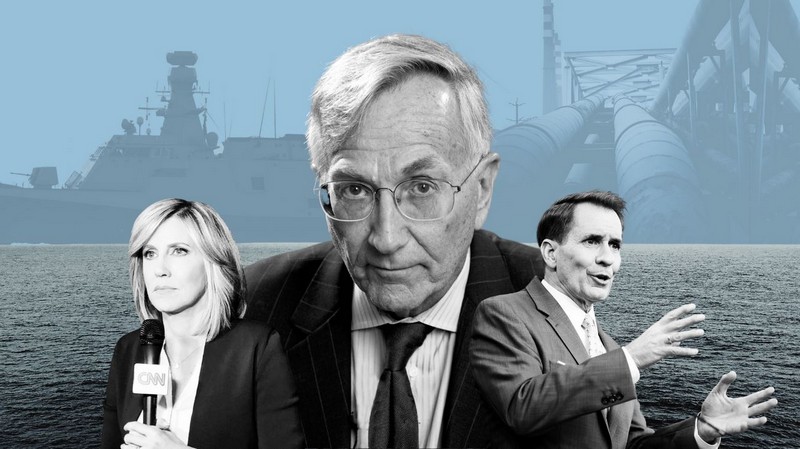
From the Gulf of Tonkin to the Baltic Sea

By Seymour M. Hersh

22 Feb 2023 Why Norway? In my account of the Biden Administration’s decision to destroy the Nord Stream pipelines, why did much of the secret planning and training for the operation take place in Norway? And why were highly skilled seamen and technicians from the Norwegian Navy involved?

The simple answer is that the Norwegian Navy has a long and murky history of cooperation with American intelligence. Five months ago that teamwork—about which we still know very little—resulted in the destruction of two pipelines, on orders of President Biden, with international implications yet to be determined. And six decades ago, so the histories of those years have it, a small group of Norwegian seamen were entangled in a presidential deceit that led to an early—and bloody—turning point in the Vietnam war.

After the Second World War, ever prudent Norway invested heavily in the construction of large, heavily armed fast attack boats to defend its 1,400 miles of Atlantic Ocean coastline. These vessels were far more effective than the famed American PT boat that was ennobled in many a postwar movie. These boats were known as “Nasty-class,” for their powerful gunnery, and some of them were sold to the US Navy. According to reporting in Norway, by early 1964 at least two Norwegian sailors confessed to their involvement in CIA-led clandestine attacks along the North Vietnam coast. Other reports, never confirmed, said the Norwegian patrol boats where manned by Norwegian officers and crew. What was not in dispute was that the American goal was to put pressure on the leadership in North Vietnam to lessen its support of the anti-American guerrillas in South Vietnam. The strategy did not work.

None of this was known at the time to the American public. And the Norwegians would keep the secret for decades. The CIA’s lethal game of cat-and-mouse warfare led to a failed attack on August 2, 1964, with three North Vietnamese gunships engaging two American destroyers—the USS Maddox and the USS Turner Joy—on a large body of contested water known as the Gulf of Tonkin that straddled both North and South Vietnam.

Two days later, with the destroyers still intact, the commander of the Maddox cabled his superiors that he was under a torpedo attack. It was a false alarm, and he soon rescinded the report. But the American signals intelligence community—under pressure from Secretary of Defense Robert McNamara, who was doing President Johnson’s bidding—looked the other way as McNamara ignored the second cableand Johnson told the American public there was evidence that North Vietnam had attacked an American destroyer. Johnson and McNamara had found a way to take the war to North Vietnam.

Johnson’s nationally televised speech on the evening of August 4, 1964, is chilling in its mendacity, especially when one knows what was to come.

“This new act of aggression,” he said, “aimed directly at our own forces, again brings home to all of us in the United States the importance of the struggle for peace and security in Southeast Asia. Aggression by terror against the peaceful villagers of South Vietnam has now been joined by open aggression on the high seas against the United States of America.”

Public anger swelled, and Johnson authorized the first American bombing of the North. A few days later Congress passed the Tonkin Gulf Resolution with only two dissenting votes, giving the president the right to deploy American troops and use military force in South Vietnam in any manner he chose. And so it went on for the next eleven years, with 58,000 American deaths and millions of Vietnamese deaths to come.

The Norwegian navy, as loyal allies in the Cold War, stayed mum, and over the next few years, according to further reporting in Norway, sold eighteen more of their Nasty Class patrol boats to the U.S. Navy. Six were destroyed in combat.

In 2001, Robert J. Hanyok, a historian at the National Security Agency, published Skunks, Bogies, Silent Hounds, and the Flying Fish: The Gulf of Tonkin Mystery, 2–4 August 1964,a definitive study of the events in the gulf, including the manipulation of signals intelligence. He revealed that 90 percent of the relevant intercepts, including those from the North Vietnamese, had been kept out the NSA’s final reports on the encounter and thus were not provided to the Congressional committees that later investigated the abuse that led America deeper into the Vietnam War.

That is the public record as it stands. But, as I have learned from a source in the US intelligence community, there is much more to know. The first batch of Norwegian patrol boats meant for the CIA’s undeclared war against the North Vietnamese actually numbered six. They landed in early 1964 at a Vietnamese naval base in Danang, eighty-five miles south of the border between North and South Vietnam. The ships had Norwegian crews and Norwegian Navy officers as their captains. The declared mission was to teach American and Vietnamese sailors how to operate the ships. The vessels were under the control of a long-running CIA-directed series of attacks against coastal targets inside North Vietnam. The secret operation was controlled by the Joint Chiefs of Staff in Washington and not by the American command in Saigon, which was then headed by Army General William Westmoreland. That shift was deemed essential because there was another aspect of the undeclared war against the North that was sacrosanct. US Navy SEALs were assigned to the mission with a high-priority list of far more aggressive targets that included heavily defended North Vietnamese radar facilities.

It was a secret war within a secret war. I was told that at least two SEALs were ambushed by the North Vietnamese and severely wounded in a fire fight. Both men managed to make their way to the coast and were eventually rescued. Both men were awarded the Medal of Honor, America’s highest decoration, in secret.

There also were far less dramatic movements as the war unraveled. At some later date, it was decided to arm bats with incendiary devices and drop them, by air, over areas of high interest in the south. The release came at high altitude, and the bats quickly froze to death.

This bit of top secret and heretofore unknown history raises, to this reporter, an obvious question: what else do we not know about the secret operation in Norway that led to the destruction of the pipelines? And is there anyone in the Senate and the House, or in the American press, interested in finding out what was going on—and what else we do not know?

_____________________________________________

Seymour M. Hersh’s investigative journalism and publishing awards include one Pulitzer Prize, five George Polk Awards, two National Magazine Awards, and more than a dozen other prizes for investigative reporting.

6 March 2023

Source: www.transcend.org

Ukraine: The Tunnel at the End of the Light

By Robert Freeman

26 Feb 2023 – The U.S. abused its providential anointment as the exceptional nation. That abuse has been recognized, called out and is now being acted against by most of the other nations of the world.  

China’s Belt and Road Initiative is a dizzyingly ambitious plan to connect Asia and more than 100 nations with 21st Century economic infrastructure, everything from highways and high-speed rail lines to power generation, energy pipelines, communication systems, cities, ports, and more.

“Light at the end of the tunnel” was an iconic phrase used by the warmongers who kept the U.S. in Vietnam long after the War had been lost. The implication was that insiders could see through the fog of war and know that things were getting better. It was a lie.

In January 1966, long before the military height of the War, Secretary of Defense Robert McNamara told President Johnson that the U.S. had a one-out-of-three chance of winning on the battlefield. But Johnson, like Eisenhower and Kennedy before him, and Nixon after him, didn’t want to be the first American president to lose a war. So, he ginned up a simplistic lie and “soldiered on.”

The lie was blown by the Tet Offensive in January 1968. More than 100 U.S. military installations were attacked in a simultaneous nationwide assault that stunned the U.S. The broadcaster, Walter Cronkite, then “the most trusted man in America,” bellowed on national television, “I thought we were supposed to be winning this damned thing.” It was the beginning of the end of the U.S.’ murderous and failed occupation.

We’re now facing another light-and-tunnel event, this time in Ukraine. Only now, it’s not the light at the end of the tunnel. It’s the tunnel at the end of the light. What do we mean by that?

Until now, it’s been all light. Remember when the scrappy Ukrainian forces were kicking the barbarian Russian hordes’ asses? When every development betrayed the Russians’ clod-footed strategy, its soldiers’ bad morale, its army’s poor provisioning and worse leadership, and the perilous political situation for Putin back home? The testosterone was flowing. The bravado was intoxicating. The exceptionalism was sublimely seductive. It was only a matter of time and pluck and determination before Ukraine would bloody the bully’s nose and show it what the West was made of.

Remember?

No more.

You can prosecute a war for only so long on the strength of smoke and mirrors, delusions and illusions, lies and press releases. Eventually, however, reality catches up with you. The thuggishly propagandized American citizenry couldn’t know it, but that catching up began in the first weeks of the War and has only accelerated since.

Within the first week of the War, Russia had destroyed Ukraine’s air force and air defenses. By the second week, it had taken out most of Ukraine’s armories and weapons depots. Over following weeks and months, it systematically demolished artillery shipped in from former Warsaw Pact, now NATO, countries in Eastern Europe. It dismantled the country’s transportation and fuel supply systems. It has recently taken out most of the country’s electrical infrastructure.

The Ukrainian army has lost an estimated 150,000 troops, a pace more than 140 times the rate of U.S. losses in Vietnam. This, at a time when 10 million of its formerly 36 million people have fled the country. The military is down to dragooning 16-year-old boys and 60-year-old men to man the barricades. It cannot get replacement ammunition. Russia has knocked out some 90% of Ukraine’s drones, leaving it largely sightless. Delivery times for the tanks that are the hoped-for “game changer” are running into months and years. Not that that will matter.

Remember all the other failed “game changers”? The M777 howitzers and the Stryker armored fighting vehicles? The HIMARS multiple rocket launchers and the PATRIOT air defense systems? All were going to turn the tide at one time. All have proven impotent to stop Russia from seizing 20% of Ukraine’s territory and annexing it and its people to Russia.

The U.S. lost the economic war, as well. Remember Joe Biden’s delusional prediction that the U.S. would see that “the ruble will be reduced to rubble”? And that “the most stringent sanctions regime in history” was going to “weaken” Russia, perhaps even leading to Putin’s overthrow? Most of it backfired, badly. Last year, the ruble reached its highest exchange rate in history. Russia’s 2022 trade surplus of $227 billion was up 86% from 2021. The U.S.’ trade deficit over the same period rose 12.2%, and is approaching $1 trillion.

As a result of all of the above and more, the tide of insider opinion has turned against the War. Senior officials in Europe are talking openly about how the losses are unsustainable and they need to get back to security architectures that prevailed before the poisoned CIA-supported coup in Maidan in 2014. Mark Milley, Chairman of the Joint Chiefs of Staff, recently let slip that “It will be very, very difficult to eject the Russians from all of occupied Ukraine in the next year. The Washington Post warned recently that Ukraine faced a “critical moment” in the war, belaboring the fact that U.S. support was not limitless and would soon be reached. Hint. Hint.

The Rand Corporation, one of the U.S.’ best-connected strategic whisperers, just published a report stating that “The consequences of a long war far outweigh the benefits.” It explicitly states that the U.S. needs to husband its resources for its more important upcoming conflict with China. Newsweek headlined that “Joe Biden Offered Vladimir Putin 20 Percent of Ukraine to End War.” It also revealed that “Nearly 90 percent of the world isn’t following us on Ukraine.” Vast swaths of Latin American, Africa, and Asia refuse to support the U.S. in its demand for sanctions against Russia.

These are not “Light at the end of the tunnel” divinations. Quite the contrary. If there’s a common thread running through it all it is the sickening recognition that the war is lost, militarily, economically, and diplomatically, that there is no plausible scenario in which those losses will be turned around by soldiering on, and that what is needed now is a hide-the-loss, get-out-any-way-you-can, face-saving exit strategy.

That will not be available, either. That’s where the tunnel at the end of the light comes into play.

Even before the U.S. and its NATO puppets undertook the War, the rest of the world—and that means most of the world—was congealing itself into an anti-Western economic and security bloc. Led by China and its strategic ally, Russia, that bloc includes more than a dozen trade and security organizations. Those include the BRICS confederation of Brazil, Russia, India, China, and South Africa, working explicitly to devise multi-polar institutions to stand up to the U.S.’ unipolar hegemonic model.

It includes the Shanghai Cooperation Organization, a security compact made up of leading nations from east, central, and south Asia, including China, Russia, India, and soon, Iran, Turkey, and Saudi Arabia. It is explicitly working to devise measures to prevent the kind of predatory military assaults the U.S. carried out against Iraq, Libya, Somalia, Yemen, and Afghanistan.

The organizing economic engine behind these efforts it is China’s Belt and Road Initiative. BRI is a dizzyingly ambitious plan to connect Asia and more than 100 nations with 21st Century economic infrastructure, everything from highways and high-speed rail lines, to power generation, energy pipelines, communication systems, cities, ports, and more. It is critical to understand why BRI poses such daunting challenges to U.S. supremacy in the world.

Infrastructure is so powerful because it spins off a vast, unimaginable array of secondary, and tertiary economic benefits. It was the railroads in the nineteenth century that bound the U.S. together as the world’s first continental-scale market. Manufacturers could produce for a larger market, and, therefore, at larger scale, and, therefore, at lower cost, than could producers anywhere else on earth.

The railroads made the U.S. the largest market in the world for iron, steel, machine tools, grading equipment, farm equipment, and scores of other commercial and industrial products essential to a modern industrial economy. The U.S. began the 1800s with 1.5% of the world’s GDP. It ended the century with 19% of a four-times larger number, making it the largest economy in the world.

Similarly, automobiles. People think it was Henry Ford and mass production that made the Twentieth Century “The American Century.” In fact, it was the build-out of millions of miles of roads and, later, interstates, without which automobiles would have remained expensive playthings of the wealthy. Those roads stitched the country together into an asphalt network that allowed individual mobility, by virtually anybody, anywhere, down to every street address in the country. The world had never seen anything like it.

The secondary and tertiary economic effects were astounding, everything from the world’s largest markets for steel, glass, plastics, and rubber, to gasoline, diesel, highway construction on a continental scale, repair shops and drive-ins, to the entire panoply of culture we know of as suburbia. The Twentieth Century was the Century of the Automobile. The infrastructure the U.S. built to make it possible was the major reason—at least economically—that the U.S. led the world for most of that century.

China is now proposing to do the same for Asia in the Twenty-First Century, but on a much larger scale. It is leading an infrastructure build-out that will dwarf Eisenhower’s Interstate highway system. It will serve most of the five billion people in Eurasia, thirty TIMES more than the 150 million people Eisenhower’s project helped.

Wisely, China has ensured that all of the 100+ nations joining BRI are enriched by their participation, whether building themselves up domestically, or extending their reach internationally. It is the largest, most compelling, geographically extensive, nationally inclusive, mutually enriching economic enterprise in the history of the world. The U.S. is not part of it.

Finally, there is the matter of the dollar. Since the Bretton Woods Agreement of 1944, the global economy has used the dollar as the primary currency of international trade. This has given the U.S. an “exorbitant privilege” in that it can essentially write an unlimited stream of hot checks to the world, because countries need dollars to be able to conduct international commerce. The U.S. “sells” them dollars by issuing Treasury debt, which is a universally fungible international medium of exchange.

One of the consequences of this arrangement is that it has allowed the U.S. to spend far beyond its means, running up $32 trillion of debt since 1980, when its national debt stood at a mere $1 trillion. The U.S. uses this debt to, among other things, fund its gargantuan military with its 800 military bases around the world, which it uses to do things like destroy Serbia, Libya, Iraq, Afghanistan, Syria, Somalia, and a host of lesser predations on other countries. All the world sees this and is repulsed by it.

The world sees how dollar hegemony underwrites the U.S.’ ability to carry out or attempt coups in Honduras, Venezuela, Peru, Bolivia, Kazakhstan, Pakistan, Myanmar, Belarus, Egypt, Syria, and, of course, Ukraine, among others. And these are just those in the past two decades.

The same dollar hegemony underwrote U.S. predations in the latter part of the Twentieth Century against Iran, the Dominican Republic, Guatemala, Vietnam, Nicaragua, Cuba, Chile, Congo, Brazil, Indonesia, and dozens of other countries. Again, the rest of the world sees this. U.S. citizens, rapturously oblivious in their hermetically sealed media bubble, do not.

The world saw how the U.S. stole $300 billion of Russian funds that were held in Western banks, part of its sanctions regime against Russia for its role in the Ukraine war. They’ve seen how the U.S. has carried out similar thefts against dollar-denominated funds of Venezuela, Afghanistan, and Iran. It sees how the Federal Reserve’s raising of interest rates to take care of U.S. needs makes capital flow out of other countries, and how it makes their currencies fall, forcing inflation on them. Not a single country in the world is left untouched.

The cumulative impact of these facts is that many countries would rather not be held hostage to the implicit and explicit negative consequences of dollar hegemony. They also want to remove the “exorbitant privilege” that they believe the U.S. has abused to their individual and collective detriment.

They have begun—again, led by Russia and China—to build an international finance and trading system that doesn’t rely on dollars, that uses countries’ local currencies, gold, oil, or other assets to trade. This received special impetus last year when Saudi Arabia announced it would begin accepting Chinese yuan in exchange for its oil. Oil is the world’s most valued internationally-traded commodity, so the perception is that a dam is beginning to break.

It will take years before an equally functional substitute for the dollar is devised but what began a few years ago as a trickle has gained momentum and urgency as a consequence of U.S. actions in Ukraine. When the dollar is no longer the world’s international reserve currency and nations don’t need dollars to trade with each other, the U.S. will no longer be able to fund its massive budget and trade deficits by writing hot checks. The withdrawal will be agonizing and will greatly circumscribe the U.S.’ role as global hegemon.

U.S. actions in Ukraine have driven together its two greatest adversaries, Russia and China. They, joined by India, Turkey, Saudi Arabia, Iran and dozens of other countries, are carrying out a Mackinder-feared Eurasian integration that will leave the U.S. outside of the world’s largest and most dynamic trading bloc.

The U.S.’ military failure has advertised, once again (after Iraq and Afghanistan), the relative impotence of U.S. military solutions. Yes, it can still destroy small, defenseless countries like Serbia, Libya, Afghanistan, and Iraq. But against a peer competitor that has chosen to stand up to it, the U.S. has, frankly, been handed its ass. All the world can see it.

Events have shown the hollowness of U.S.-led economic and financial systems, as well, especially compared to China. China’s economic performance has far surpassed that of the U.S. It has lifted more people out of poverty more quickly than any country in the history of the world. Its growth has made it the largest economy in the world in purchasing power parity terms. While average inflation-adjusted incomes in the U.S. are little higher than they were 50 years ago, incomes in China are up more than 10 TIMES over the same period. And it has done this without brutalizing and pillaging other nations that refuse to bend to its hegemonic will.

And, the War has betrayed, as nothing else possibly could, the diplomatic isolation of the U.S., with the vast majority of the world’s people refusing to implement U.S.-demanded sanctions against Russia. Its destruction of the Nord Stream gas pipeline is recognized as the greatest act of state-sponsored terrorism in history, easily surpassing 911 in terms of the hundreds of millions of people it will hurt. And this, to one of its putative allies, Europe. Imagine what happens to its enemies.

This is the tunnel at the end of the light, a multi-polar as opposed to a unipolar world. It means increasing isolation of the U.S. from the rest of the world, the closing in of options, the narrowing of opportunities, the loss of strategic primacy that once graced the greatest power in the history of the world. It will mean dramatically reduced power and influence vis-à-vis the U.S.’ strategic adversaries, and markedly constrained ability to operate militarily, economically and financially in the world, what with the hot checkbook soon to be taken away.

In twenty or thirty years, the U.S. will still be a substantial regional power, perhaps like Brazil in South America, Iran in West Asia, or Nigeria in Africa. But it will not be the global hegemon it once was, able to project and inflict power in the world as it has done for the last century. The U.S. abused its providential anointment as the exceptional nation. That abuse has been recognized, called out, and is now being acted against by most of the other nations of the world. The future will be very different for the U.S. than it has been for the past 80 years, since the end of World War II when it towered over the rest of the world like a giant among pygmies. Ukraine will prove to have been the turning point in this transformation, the tunnel at the end of the light.

___________________________________________

Robert Freeman is Founder and Executive Director of The Global Uplift Project which builds small-scale infrastructure projects in the developing world to improve humanity’s capacity for self-development.

6 March 2023

Source: www.transcend.org

Analyses, Comments and Opinion Pieces in Various Chinese Media

By Jan Oberg, Ph.D.

17 Feb 2023 – I’m happy to announce that from December 2021, I serve as a monthly contributor of opinion pieces to China Daily. It has more than 52 million clicks online daily and about 40 million followers on social media – according to the latest (2016) data. It serves more than 330 million readers all over the world and is a default choice for people who read about China in English.

Here is Wikipedia about China Daily with some background and facts but then producing the obligatory boring list of Western accusations of CD doing what we once believed that Western media would surely never do…

I encourage you to go visit China Daily and see for yourself. We need to be curious and learn. Ignorant condemnations – particularly by people who have never studied or visited China – is wrong. Period.

I accepted the invitation to be a contributing writer because I believe in dialogue and diversity.

When you read my articles on China Daily you’ll look around and learn about China and surely see what you never see in Western media about China and many other matters. And you’ll see lots of materials about the West. Likewise, when the readers of my articles see who I am and are directed to my home here, they get the opportunity to look around and visit The Transnational that I edit and TFF of which I am the director.

That’s how, with an open mind, we connect and learn about each other globally. And make friends. If we want to.

Over about 20 years, I have – once a week – disseminated TFF Associates’ and my own research and public education articles to, among others, thousands of Western media people and editorial offices. No one picked up any of it or invited me to contribute articles to them on a regular basis.

Since I know that some will think or ask: So, you are now on the payroll of the Chinese government? – the answer is: “Yes, I am – China Daily is state-owned and says it will pay me US$ 100-150 for each article of about 1000 words.”

Finally, now and then, I contribute – alone or with my dear colleagues – also to other Chinese media.

Prof. Jan Oberg, Ph.D. is director of the Transnational Foundation for Peace and Future Research, TFF and a member of the TRANSCEND Network for Peace Development Environment. CV: https://transnational.live/jan-oberg
https://transnational.live

6 March 2023

Source: www.transcend.org

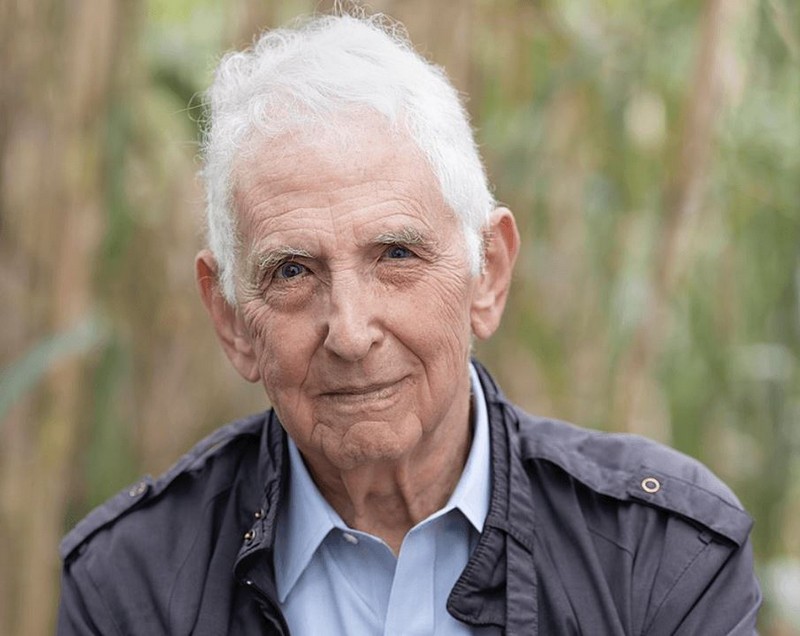
Activist Dan Ellsberg, Pentagon Papers Whistleblower, Has Terminal Cancer

By Daniel Ellsberg

2 Mar 2023 – I wrote this letter recently to my friends in the antiwar and anti-nuclear movements. I see it’s being circulated, so I’ve decided to share it here. For all of you working on these issues, thank you, and please keep going!

https://twitter.com/DanielEllsberg/status/1631381696661827584/photo/1

Daniel Ellsberg is a former US military analyst who in 1971 leaked the Pentagon Papers, which revealed how the US public had been misled about the Vietnam War.

6 March 2023

Source: www.transcend.org

Why Biden Snubbed China’s Ukraine Peace Plan

By Medea Benjamin, Marcy Winograd and Wei Yu

There’s something irrational about President Biden’s knee-jerk dismissal of China’s 12-point peace proposal titled “China’s Position on the Political Settlement of the Ukraine Crisis.”

“Not rational” is how Biden described the plan that calls for de-escalation toward a ceasefire, respect for national sovereignty, establishment of humanitarian corridors and resumption of peace talks.

“Dialogue and negotiation are the only viable solution to the Ukraine crisis,” reads the plan. “All efforts conducive to the peaceful settlement of the crisis must be encouraged and supported.”

Biden turned thumbs down.

“I’ve seen nothing in the plan that would indicate that there is something that would be beneficial to anyone other than Russia if the Chinese plan were followed,” Biden told the press.

In a brutal conflict that has left thousands of dead Ukrainian civilians, hundreds of thousands of dead soldiers, eight million Ukrainians displaced from their homes, contamination of land, air and water, increased greenhouse gasses and disruption of the global food supply, China’s call for de-escalation would surely benefit someone in Ukraine.

Other points in China’s plan, which is really more a set of principles rather than a detailed proposal, call for protection for prisoners of war, cessation of attacks on civilians, safeguards for nuclear power plants and facilitation of grain exports.

“The idea that China is going to be negotiating the outcome of a war that’s a totally unjust war for Ukraine is just not rational,” said Biden.

Instead of engaging China–a country of 1.5 billion people, the world’s largest exporter, the owner of a trillion dollars in US debt and an industrial giant–in negotiating an end to the crisis in Ukraine, the Biden administration prefers to wag its finger and bark at China, warning it not to arm Russia in the conflict.

Psychologists might call this finger-wagging projection–the old pot calling the kettle black routine. It is the US, not China, that is fueling the conflict with at least $45 billion dollars in ammunition, drones, tanks and rockets in a proxy war that risks–with one miscalculation–turning the world to ash in a nuclear holocaust.

It is the US, not China, that has provoked this crisis by encouraging Ukraine to join NATO, a hostile military alliance that targets Russia in mock nuclear strikes, and by backing a 2014 coup of Ukraine’s democratically elected Russia-friendly president Viktor Yanukovych, thus triggering a civil war between Ukrainian nationalists and ethnic Russians in eastern Ukraine, regions Russia has more recently annexed.

Biden’s sour attitude toward the Chinese peace framework hardly comes as a surprise. After all, even former Israeli Prime Minister Naftali Bennett candidly acknowledged in a five-hour interview on YouTube that it was the West that last March blocked a near-peace deal he had mediated between Ukraine and Russia.

Why did the US block a peace deal? Why won’t President Biden provide a serious response to the Chinese peace plan, let alone engage the Chinese at a negotiating table?

President Biden and his coterie of neo-conservatives, among them Undersecretary of State Victoria Nuland, have no interest in peace if it means the US concedes hegemonic power to a multi-polar world untethered from the all-mighty dollar.

What may have gotten Biden unnerved—besides the possibility that China might emerge the hero in this bloody saga—is China’s call for the lifting of unilateral sanctions. The US imposes unilateral sanctions on officials and companies from Russia, China and Iran. It imposes sanctions on whole countries, too, like Cuba, where a cruel 60-year embargo, plus assignment to the State Sponsor of Terrorism list, made it difficult for Cuba to obtain syringes to administer its own vaccines during the COVID pandemic. Oh, and let’s not forget Syria, where after an earthquake killed tens of thousands and left hundreds of thousands homeless, the country struggles to receive medicine and blankets due to US sanctions that discourage humanitarian aid workers from operating inside Syria.

Despite China’s insistence it is not considering weapons shipments to Russia, Reuters reports the Biden administration is taking the pulse of G-7 countries to see if they would approve new sanctions against China if that country provides Russia with military support.

The idea that China could play a positive role was also dismissed by NATO Secretary General Jens Stoltenberg, who said, “China doesn’t have much credibility because they have not been able to condemn the illegal invasion of Ukraine.”

Ditto from US Secretary of State Antony Blinken, who told ABC’s Good Morning America, “China has been trying to have it both ways: It’s on the one hand trying to present itself publicly as neutral and seeking peace, while at the same time it is talking up Russia’s false narrative about the war.”

False narrative or different perspective?

In August of 2022, China’s ambassador to Moscow charged that the United States was the “main instigator”of the Ukraine war, provoking Russia with NATO expansion to Russia’s borders.

This is not an uncommon perspective and is one shared by economist Jeffrey Sachs who, in a February 25, 2023  video directed at thousands of anti-war protesters in Berlin, said the war in Ukraine did not start a year ago, but nine years ago when the US backed the coup that overthrew Yanukovych after he preferred Russia’s loan terms to the European Union’s offer.

Shortly after China released its peace framework, the Kremlin responded cautiously, lauding the Chinese effort to help but adding that the details “need to be painstakingly analyzed taking into account the interests of all the different sides.” As for Ukraine, President Zelinsky hopes to meet soon with Chinese President Xi Jinping to explore China’s peace proposal and dissuade China from supplying weapons to Russia.

The peace proposal garnered more positive response from countries neighboring the warring states. Putin’s ally in Belarus, leader Alexander Lukashenko, said his country “fully supports” the Beijing plan. Kazakhstan approved of China’s peace framework in a statement describing it as “worthy of support.” Prime Minister of Hungary Viktor Orbán–who wants his country to stay out of the war– also showed support for the proposal.

China’s call for a peaceful solution stands in stark contrast to US warmongering this past year, when Secretary of Defense Lloyd Austin, a former Raytheon board member, said the US aims to weaken Russia, presumably for regime change–a strategy that failed miserably in Afghanistan where a near 20-year US occupation left the country broke and starving.

China’s support for de-escalation is consistent with its long-standing opposition to US/NATO expansion, now extending into the Pacific with hundreds of US bases encircling China, including a new base in Guam to house 5,000 marines. From China’s perspective, US militarism jeopardizes the peaceful reunification of the People’s Republic of China with its break-away province of Taiwan. For China, Taiwan is unfinished business, left over from the civil war 70 years ago.

In provocations reminiscent of US meddling in Ukraine, a hawkish Congress last year approved $10 billion in weapons and military training for Taiwan, while House leader Nancy Pelosi flew to Taipei – over protests from her constituents–to whip up tension in a move that brought US-China climate cooperation to a halt.

A US willingness to work with China on a peace plan for Ukraine might not only help stop the daily loss of lives in Ukraine and prevent a nuclear confrontation, but also pave the way for cooperation with China on all kinds of other issues–from medicine to education to climate–that would benefit the entire globe.

Medea Benjamin is cofounder of CODEPINK, and author of several books, including War in Ukraine: Making Sense of a Senseless Conflict.

Marcy Winograd serves as Co-Chair of the Peace in Ukraine Coalition, which calls for a ceasefire, diplomacy and an end to weapons shipments that escalate the war in Ukraine.

Wei Yu is the China Is Not Our Enemy campaign coordinator for CODEPINK.

3 March 2023

Source: countercurrents.org

At the Brink of War in the Pacific? The Nightmare of Great Power Rivalry Over Taiwan

By Alfred W McCoy

While the world has been distracted, even amused, by the diplomatic tussle around China’s recent high-altitude balloon flights across North America, there are signs that Beijing and Washington are preparing for something so much more serious: armed conflict over Taiwan. Reviewing recent developments in the Asia-Pacific region raises a tried-and-true historical lesson that bears repeating at this dangerous moment in history: when nations prepare for war, they are far more likely to go to war.

In The Guns of August, her magisterial account of another conflict nobody wanted, Barbara Tuchman attributed the start of World War I in 1914 to French and German plans already in place. “Appalled upon the brink,” she wrote, “the chiefs of state who would be ultimately responsible for their country’s fate attempted to back away, but the pull of military schedules dragged them forward.” In a similar fashion, Beijing and Washington have been making military, diplomatic, and semi-secretive moves that could drag us into a calamitous conflict that, once again, nobody wants.

At the apex of power, national leaders in Beijing and Washington have staked out starkly contrasting positions on Taiwan’s future. For nearly a year now, President Joe Biden has been trying to resolve the underlying ambiguity in previous U.S. policy toward that island by stating repeatedly that he would indeed defend it from any mainland attack. In May of last year, in response to a reporter’s question about a possible Chinese invasion of Taiwan, he said, “Yes,” the U.S. would intervene militarily. He then added: “We agree with the One China policy. We signed on to it and all the attendant agreements made from there, but the idea that it can be taken by force, just taken by force, is [just not] appropriate.”

As Biden acknowledged, by extending diplomatic recognition to Beijing in 1979, Washington had indeed accepted China’s future sovereignty over Taiwan. For the next 40 years, presidents from both parties made public statements opposing Taiwan’s independence. In effect, they conceded that the island was a Chinese province and its fate a domestic matter (even if they opposed the People’s Republic doing anything about it in the immediate future).

Nonetheless, Biden has persisted in his aggressive rhetoric. He told CBS News last September, for instance, that he would indeed send U.S. troops to defend Taiwan “if, in fact, there was an unprecedented attack.” Then, in a significant break with longstanding U.S. policy, he added: “Taiwan makes their own judgments about their independence… That’s their decision.”

Within weeks, at a Communist Party Congress, Chinese President Xi Jinping responded with a strong personal commitment to the unification of Taiwan — by force if necessary. “We insist on striving for the prospect of peaceful reunification,” he said, “but we will never promise to give up the use of force and reserve the option to take all necessary measures.”

After a long burst of applause from the 2,000 party officials massed in Beijing’s Great Hall of the People, he then invoked the inevitability of Marxian dialectical forces that would insure the victory he was promising. “The historical wheels of national reunification and national rejuvenation are rolling forward,” he said, “and the complete reunification of the motherland must be achieved.”

As the political philosopher Hannah Arendt once reminded us, a sense of historical inevitability is a dangerous ideological trigger that can plunge authoritarian states like China into otherwise unthinkable wars or unimaginable mass slaughter.

War Preparations Move Down the Chain of Command

Not surprisingly, the forceful statements of Biden and Xi have been working their way down the chain of command in both countries. In January, a four-star U.S. Air Force general, Mike Minihan, sent a formal memo to his massive Air Mobility Command of 500 aircraft and 50,000 troops, ordering them to ramp up their training for war with China. “My gut tells me,” he concluded, that “we will fight in 2025.” Instead of repudiating the general’s statement, a Pentagon spokesman simply added, “The National Defense Strategy makes clear that China is the pacing challenge for the Department of Defense.”

Nor is General Minihan even the first senior officer to have made such foreboding statements. As early as March 2021, the head of the Indo-Pacific Command, Admiral Philip Davidson, warned Congress that China was planning to invade the island by 2027: “Taiwan is clearly one of their ambitions… And I think the threat is manifest during this decade, in fact, in the next six years.”

Unlike their American opposites, China’s service chiefs have been publicly silent on the subject, but their aircraft have been eloquent indeed. After President Biden signed a defense appropriation bill last December with $10 billion in military aid for Taiwan, an unprecedented armada of 71 Chinese aircraft and many more military drones swarmed that island’s air defenses in a single 24-hour period.

As such tit-for-tat escalation only increases, Washington has matched China’s aggression with major diplomatic and military initiatives. Indeed, the assistant defense secretary for the Indo-Pacific, Ely Ratner, has promised, ominously enough, that “2023 is likely to stand as the most transformative year in U.S. force posture in the region in a generation.”

During a recent tour of Asian allies, Secretary of Defense Lloyd Austin claimed some significant strategic gains. On a stopover in Seoul, he and his South Korean counterpart announced that the U.S. would deploy aircraft carriers and additional jets for expanded live-fire exercises — a distinctly escalatory move after the curtailment of such joint operations during the Trump years.

Moving on to Manila, Austin revealed that the Philippines had just granted U.S. troops access to four more military bases, several facing Taiwan across a narrow strait. These were needed, he said, because “the People’s Republic of China continues to advance its illegitimate claims” in the South China Sea.

China’s Foreign Ministry seemed stung by the news. After a successful diplomatic courtship of the previous Philippine president, Rodrigo Duterte, that had checked U.S. influence while accepting the Chinese occupation of islands in Philippine waters, Beijing could now do little more than condemn Washington’s access to those bases for “endangering regional peace and stability.” Although some Filipino nationalists objected that an American presence might invite a nuclear attack, according to reliable polling, 84% of Filipinos felt that their country should cooperate with the United States to defend their territorial waters from China.

Both of those announcements were dividends from months of diplomacy and down payments on major military deployments to come. The annual U.S. “defense” bill for 2023 is funding the construction of military installations across the Pacific. And even as Japan is doubling its defense budget, in part to protect its southern Islands from China, U.S. Marines in Okinawa plan to trade their tanks and heavy artillery for agile drones and shoulder-fired missiles as they form “littoral regiments” capable of rapid deployment to the smallest of islands in the region.

Secret Strategies

In contrast to those public statements, semi-secret strategies on both sides of the Pacific have generally escaped much notice. If the U.S. military commitment to Taiwan remains at least somewhat ambiguous, this country’s economic dependence on that island’s computer-chip production is almost absolute. As the epicenter of a global supply chain, Taiwan manufactures 90% of the world’s advanced chips and 65% of all semiconductors. (In comparison, China’s share of chips is 5% and the U.S. slice only 10%.) As the world’s top producer of the most critical component in everything from consumer cell phones to military missiles, the Taiwan Semiconductor Manufacturing Company (TSMC) is the leading innovator, supplying Apple and other U.S. tech firms.

Now, American officials are moving to change that. Having overseen the breaking of ground for a $12 billion TSMC chip-production factory in Phoenix in 2020, only two years later, Arizona’s governor announced that “TSMC has completed construction of its main facility.” Last August, just before President Biden signed the $52 billion CHIPS and Science Act, Secretary of Commerce Gina Raimondo insisted that “our dependence on Taiwan for chips is untenable and unsafe.”

Only three months later, TSMC reached for a large slice of those federal funds by investing $28 billion in a second Phoenix factory that, when opened in 2026, will produce what the New York Times has called “more advanced — though not the most advanced — chip-making technology.” At a ceremony featuring President Biden last December, Apple’s CEO Tim Cook proclaimed, “This is an incredibly significant moment.”

That might be true, but the focus on Phoenix obscured equally significant chip factory projects being put in place by Samsung in Texas, Intel in Ohio, and Micron Technology in New York. Add it all up and the U.S. is already about halfway to the “minimum of three years and a $350 billion investment… to replace the Taiwanese [chip] foundries,” according to the Semiconductor Industry Association.

In other words, if Beijing did decide to invade Taiwan after 2026, TSMC’s intellectual capital, in the form of its top computer scientists, would undoubtedly be on outbound flights for Phoenix, leaving little more than a few concrete shells and some sabotaged equipment behind. The global supply chain for silicon chips involving Dutch machines (for extreme ultraviolet lithography), American designs, and Taiwanese production would probably continue without much of a hitch in the United States, Japan, and Europe, leaving the People’s Republic of China with little more than its minimalist 5% of the world’s $570 billion semiconductor industry.

China’s secret calculus over an invasion of Taiwan is undoubtedly more complex. In mid-February at Munich, Secretary of State Antony Blinken charged that Beijing was considering giving Moscow “lethal support” for its war in Ukraine, adding that “we’ve made very clear to them that that would cause a serious problem for… our relationship.”

But China is faced with a far more difficult choice than Blinken’s blithe rhetoric suggests. From its impressive arsenal, Beijing could readily supply Moscow with enough of its Hong Niao cruise missiles to destroy most of Ukraine’s armored vehicles (with plenty left over to demolish Kyiv’s faltering electrical infrastructure).

Bleeding NATO in that way would, however, pay limited dividends for any possible future Chinese plans vis-a-vis Taiwan. In contrast, the types of ground-warfare armaments Washington and its allies continue to pour into Ukraine would do little to strain the U.S. naval capacity in the Western Pacific.

Moreover, the diplomatic and economic price Beijing would pay for a significant involvement in the Ukraine War might well prove prohibitive. As the world’s largest consumer of imported cheap oil and wheat, which Russia exports in abundance, China needs a humbled Putin, desperate for markets and compliant with its designs for greater dominion over Eurasia. A triumphant Putin, bending the will of timorous states in Eastern Europe and Central Asia while negotiating ever-tougher deals for his exports, is hardly in Beijing’s interest.

Ignoring the existential threat Putin’s war poses for the European Union would also cost Beijing decades of diplomacy and billions in infrastructure funds already invested to knit all of Eurasia, from the North Sea to the South China Sea, into an integrated economy. In addition, siding with a distinctly secondary power that has blatantly violated the core principle of the international order — which bars the acquisition of territory by armed conquest — is hardly likely to advance Beijing’s sustained bid for global leadership.

Vladimir Putin might indeed try to equate China’s claim to a breakaway province in Taiwan with his own bid for former Soviet territory in Ukraine, but the analogy is anathema to Beijing. “Taiwan is not Ukraine,” the Chinese Foreign Ministry announced last year, the day before Putin invaded Ukraine. “Taiwan has always been an inalienable part of China. This is an indisputable legal and historical fact.”

The Costs of War

With both Beijing and Washington contemplating a possible future war over Taiwan, it’s important (especially in light of Ukraine) to consider the likely costs of such a conflict. In November 2021, the venerable Reuters News Agency compiled a series of credible scenarios for a China-U.S. war over Taiwan. If the United States decided to fight for the island, said Reuters, “there is no guarantee it would defeat an increasingly powerful PLA [People’s Liberation Army].”

In its least violent scenario, Reuters speculated that Beijing could use its navy to impose a “customs quarantine” around Taiwan, while announcing an Air Defense Identification Zone over the island and warning the world not to violate its sovereignty. Then, to tighten the noose, it could move to a full blockade, laying mines at major ports and cutting underwater cables. Should Washington decide to intervene, its submarines would undoubtedly sink numerous PLA warships, while its surface vessels could launch aircraft and missiles as well. But China’s powerful air-defense system would undoubtedly fire thousands of its own missiles, inflicting “heavy losses” on the U.S. Navy. Rather than attempting a difficult amphibious invasion, Beijing might complete this staged escalation with saturation missile attacks on Taiwan’s cities until its leaders capitulated.

In the Reuters scenario for all-out war, Beijing decides “to mount the biggest and most complex amphibious and airborne landing ever attempted,” seeking to “overwhelm the island before the United States and its allies can respond.” To hold off a U.S. counterattack, the PLA might fire missiles at American bases in Japan and Guam. While Taiwan launched jets and missiles to deter the invasion fleet, U.S. carrier battle groups would steam toward the island and, “within hours, a major war [would be] raging in East Asia.”

In August 2022, the Brookings Institution released more precise estimates of likely losses from various scenarios in such a war. Although China’s “recent and dramatic military modernizations have sharply reduced America’s ability to defend the island,” the complexities of such a clash, wrote the Brookings analyst, make “the outcome… inherently unknowable.” Only one thing would be certain: the losses on both sides (including in Taiwan itself) would be devastating.

In Brookings’ first scenario involving “a maritime fight centered on submarines,” Beijing would impose a blockade and Washington would respond with naval convoys to sustain the island. If the United States were to knock out Beijing’s communications, the U.S. Navy would lose just 12 warships, while sinking all 60 of China’s subs. If, by contrast, China maintained its communications, it could possibly sink 100 vessels, mostly U.S. warships, while losing only 29 subs.

In Brookings’ second scenario for “a broader subregional war,” both sides would use jets and missiles in a struggle that would engulf southeastern China, Taiwan, and U.S. bases in Japan, Okinawa, and Guam. If China’s attacks proved successful, it might destroy 40 to 80 U.S. and Taiwanese warships at a cost of some 400 Chinese aircraft. If the U.S. got the upper hand, it could destroy “much of China’s military in southeastern China,” while shooting down more than 400 PLA aircraft, even as it suffered heavy losses of its own jets.

By focusing largely on military losses, which are chilling enough, both studies grossly underestimate the real costs and potential devastation to Taiwan and much of East Asia. My own instinct tells me that, should China impose a customs blockade on the island, Washington would blink hard at the thought of losing hundreds of aircraft and dozens of warships, including an aircraft carrier or two, and retreat to its longstanding policy of regarding Taiwan as China’s territory. If the U.S. did challenge that customs interdiction zone, however, it would have to attack the Chinese blockade and might, in the eyes of much of the world, become the aggressor — a real disincentive from Washington’s point of view.

Should China launch an all-out invasion, however, Taiwan would likely succumb within a few days once its air force of just 470 combat aircraft was overwhelmed by the PLA’s 2,900 jet fighters, 2,100 supersonic missiles, and its massive navy, now the world’s largest. Reflecting China’s clear strategic advantage of simple proximity to Taiwan, the island’s occupation might well be a fait accompli before the U.S. Navy ships could arrive from Japan and Hawaii in sufficient numbers to challenge the massive Chinese armada.

If Beijing and Washington somehow let the pull of policy and planning drag them into such an ever-widening war, however, the damage could still prove incalculable — with cities devastated, untold thousands dead, and the global economy, with its epicenter in Asia, left in ruins. Let us only hope that today’s leaders in both Washington and Beijing prove more restrained than did their counterparts in Berlin and Paris in August 1914 when plans for victory unleashed a war that would leave 20 million dead in its wake.

Alfred W. McCoy, a TomDispatch regular, is the Harrington professor of history at the University of Wisconsin-Madison.

3 March 2023

Source: countercurrents.org