Just International

Execution of a Protester Intensifies Opposition to Clerical Rule in Iran

By Akbar E Torbat

The uprising that began on September 16 in reaction to the death of 22-year-old Kurdish woman Mahsa Amini in police custody has been ongoing. The young generation of Iranians in schools and universities has joined the uprising to demand the end of clerical rule in Iran. The uprising has created the biggest challenge to the theocratic rule in Iran since the 1979 Revolution. The unrest was further aggravated by the execution of a 23-year-old protestor Mohsen Shekari. On December 8, the Iranian judiciary ordered to hang Shekari, who had been convicted of injuring a basij security guard with a knife and blocking a street in Tehran. That was the first such execution after thousands of arrests over the unrest and the killing of more than 400 protestors. In reaction, on September 10, the offices of basij at Sharif University and some other locations were torched.

The International community and many Iranians inside and outside of the country condemned the execution. Many legal experts criticized Shekari’s execution as he did not have an optional attorney, due process was not observed in his show trial, and he was hastily executed. The ruling was not even in compliance with the regime’s own Islamic laws. From a legal point of view, the death penalty did not fit the illegal act he had committed. Shekari had not committed acts that deserved death due to the crime of “moharebeh” which is an Islamic term interpreted as “waging war against God.” His execution has caused further antagonism towards clerical rule in Iran. Nonetheless, the mullahs defended the execution and said more executions were forthcoming. In the Friday prayers sermon on December 9, senior cleric Ahmad Khatami expressed his gratitude to the judiciary for sending the first rioter to the gallows.

The reason for the momentum behind the uprising involves challenges against the regime that have been going on since the revolution. For over four decades, the people in Iran have been the victim of the mullahs’ repression. In the first decade after the revolution, the ruling clerics eliminated their political opponents through imprisonments and subsequent mass executions. They further pushed their Islamic ideology in all aspects of Iranian social, legal, cultural, economic, and political affairs. For years, the mullahs tried to minimize any Iranian cultural identification that was pre-Islamic. The mullahs attempted to destroy the remains of Persepolis, the capital of the Achaemenid Empire. The attempt was eventually halted due to intense public outrage against it. The mullahs have ridiculed the Iranian traditions and festivities. In the early years, they assaulted celebrations of Nowruz, the Iranian new year, on the first day of Spring. Numerous changes were made to eradicate Iranian national identity. These actions included replacing the icon of the lion and sun at the center of the Iranian flag with the Arabic word “Allah”, eliminating the Zoroastrian’s ethical words from Iran’s national anthem and adopting a new anthem that humiliates Iranians to sing it, strict censorship of the national media, elimination of joyful music from the Iranian radio and television, and enforcing Islamic hejab on women. Many Iranians consider these actions as a second Arab invasion of Iran after the downfall of the Sassanid Empire in the seventh century.

Among other matters, the educational system was subjected to Islamic ideological infusion to legitimize clerical rule. The clerics push superstitious ideas to indoctrinate the students. References to the Persian Empire were eliminated from schoolbooks. So far, the regime has pushed its shi’ism ideology along with crackdowns to survive. However, pushing Islamic ideology to legitimize clerical rule has backfired. Many Iranians can no longer tolerate the fundamentalist rule of the mullahs. As a result, the regime has resorted to heavy crackdowns against protests to extend its authority. But crackdowns have not worked as the mullahs do not have the legitimacy to remain in power. Though, the Supreme Leader, Ali Khamenei claims that the United States and its allies have launched hybrid warfare against the Islamic Republic, and that has instigated these demonstrations and riots.

In the past, the Western powers had publicly criticized the mullahs but tacitly supported them to rule, wanting to contain the power of Iranian nationalism throughout the region. Taking advantage of the uprising now, the West is attempting to spread propaganda to radicalize the Iranian ethnic minorities such as the Kurds, Azari, and Baluchi in the hope of partitioning the Iranian motherland.

Akbar E. Torbat (atorbat@calstatela.edu)  is the author of “Politics of Oil and Nuclear Technology in Iran,” Palgrave Macmillan, (2020)

12 December 2022

Source: countercurrents.org

Mass Protests In Peru In Support Of Pedro: Demonstrators Take Over An Airport, 1 Dead

By Countercurrents Collective

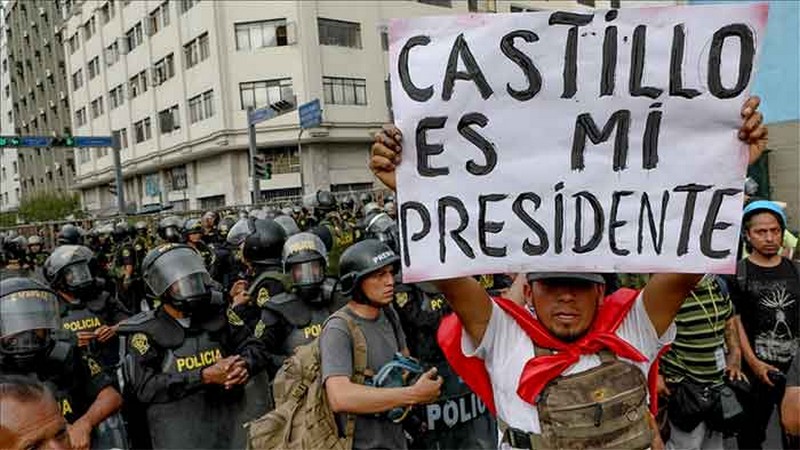
Protesters in the Peruvian city of Andahuaylas have seized the airport and set fire to part of the terminals, the Peruvian Corporation of Commercial Airports and Aviation (CORPAC) said.

Radio Programas del Peru (RAA) has reported that one protester died during clashes with police while ten other including police officers were injured.

Protests are being carried out in Lima and in regions such as Arequipa, Trujillo, Ayaucho, Huancavelica, Huancayo, Puno and Cajamarca.

Since last Wednesday, thousands of protesters have been demanding Castillo’s release and the closure of Congress, which ordered the dismissal of the then president.

In Arequipa, Cusco, Ayacuchom and other southern provinces, social organizations have called on people to go to the capital city to protest against Castillo’s imprisonment and force a call for new elections.

Besides blocking the Pan-American Highway, citizens have held demonstrations in Ica, Arequipa and Tacna. They are demanding the closure of Congress and new elections.

Media reports on Peru said:

Mass protests are taking place across Peru with demonstrators demanding the immediate holding of elections and the resignation of the new president, Dina Boluarte.

On Sunday, protesters at Andahuaylas airport “set fire to the transmitter room, fuel room, encircling the air terminal with acts of violence, where 50 members of the Peruvian National Police and company employees were located,” CORPAC said in a statement.

The airport was forced to suspend work out of security concerns, CORPAC said.

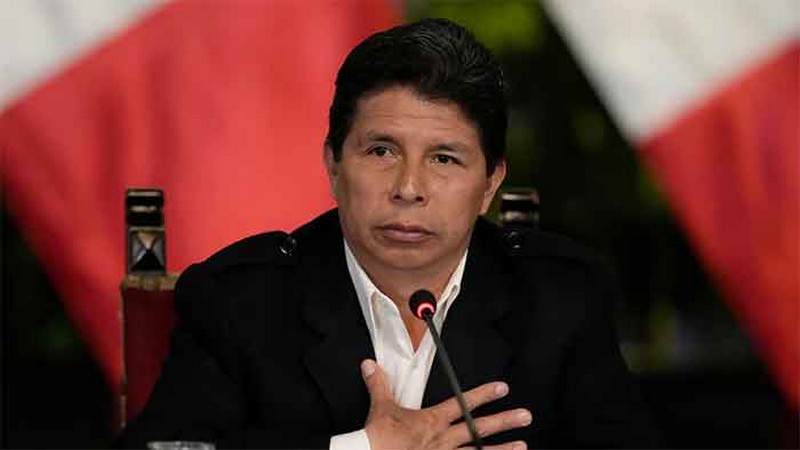
Peru’s Congress impeached President Pedro Castillo on Wednesday. Prime Minister Dina Boluarte took an oath as the country’s new president within two hours of the impeachment vote, vowing to serve out the rest of Castillo’s term, until July 2026.

Castillo, who had tried to dissolve the parliament before the vote, was arrested after the impeachment procedure and the Peruvian prosecutor’s office has launched a criminal case against him on charges of a coup attempt and crimes against the state.

Several corruption cases have been opened against Castillo, who maintains that all accusations against him are political persecution by the opposition.

Court Declares Inadmissible The Habeas Corpus To Pedro

Reports by teleSUR said:

The Third Constitutional Court of Lima declared the habeas corpus petition filed in favor of the former Peruvian president, Pedro Castillo, inadmissible.

Judge John Paredes ruled that the petition made by Castillo’s defense must be archived definitively and thus the habeas corpus lawsuit filed for the way in which the former president was detained by police officers was declared inadmissible.

With the resolution of this court, the immediate freedom of Castillo is compromised.

Meanwhile, this Saturday the Extraordinary National Assembly of Social Organizations of Peru approved its support for the closure of unicameral Parliament, the call for a National Constituent Assembly, and the request for Castillo’s immediate release.

In addition, nearly 200 delegates of this Assembly approved the call for a national strike for December 15.

Hours earlier, the former president announced the dissolution of Congress and the establishment of a Government of Exception.

The Armed Forces and the National Police did not support the action, declaring it unconstitutional. Castillo is now being held at the Directorate of Special Operations (DIROES).

Social Movements Demand Holding of Elections

The New Peru movement and other political groups requested that the authorities advance general elections and convene a Constituent Assembly.

These organizations reject the “truce” that President Dina Boluarte requested because it will open the way for policies that will not favor the popular classes.

On Thursday, the Police repressed the citizens who protested in the center of Lima demanding the closure of Congress, which removed Pedro Castillo from the presidency on Wednesday. Currently, he is imprisoned in the Barbadillo prison in the district of Ate.

“On Wednesday, far-right elites carried out a racist and classist strategy aimed at breaking the popular will and removing Castillo from the presidency,” New Peru militant Lucia Alvites said, adding that Boluarte’s truce “represents in practice a pact with the coup plotters that have been handcuffing democracy.”

A tweet reads, ” Now from Peru: in San Martin Square, the police attack with violence an gas protesters rejecting the government of Dina Boluarte. There is one death not yet confirmed. Violence always comes with a coup!!”

“What we propose is that elections be called with new rules. We must have a referendum that allows us to establish certain reforms, return power to the people, and ask citizens if they want a new Constitution,” she pointed out.

Pedro Transferred To Maximum Security Prison

An earlier teleSUR report said:

On Wednesday night, former President Pedro Castillo was transferred to the Special Operations Directorate (DIROES), a maximum security prison near Lima where he will be confined while awaiting trial.

Previously, he spent over 8 hours in the Lima Prefecture, amid the situation created after his decree of dissolution of Congress. The Public Ministry announced the start of preliminary investigations against Castillo for “breaking the constitutional order.

Simultaneously, Attorney General Patricia Benavides and the Police entered the Government Palace as part of the proceedings related to the accusations of rebellion and conspiracy.

Teams from the Prosecutor’s Office also entered various ministries to collect documentation for the open investigation against the former Peruvian president.

One tweet reads, “Pedro Castillo was transferred to the Special Operations Directorate (DIROES), a police headquarters in eastern Lima, where former president Alberto Fujimori (1990-2000) is being held.”

On Wednesday morning, Castillo decreed the temporary closure of Congress and the establishment of a “Government of Exception.”

This decision was not supported by the majority of the members of his cabinet nor by the Armed Forces, the Police, the Constitutional Court, and the Judiciary.

Hours later, Congress debated a third vacancy request for moral incapacity against him, which was finally approved by 101 of 130 lawyers.

Mexico Postpones Pacific Alliance Summit Due to Peruvian Crisis

Another teleSUR report said:

On Wednesday, Mexico announced the postponement of the 17th Summit of the Pacific Alliance after Peruvian President Pedro Castillo was impeached by Congress earlier in the day.

“Given the latest events in Peru, we have agreed to postpone the Summit of the Pacific Alliance that was to take place on Dec. 14 in the city of Lima,” Mexican Foreign Affairs Minister Marcelo Ebrard tweeted.

Mexico regrets the developments in the South American country and “hopes for respect for democracy and human rights for the good” of the Peruvian people, he added.

The summit had been rescheduled to take place in Lima, Peru on Dec. 14 in a show of support for Castillo after his nation’s Congress barred him from attending the summit originally slated for Nov. 25 in Mexico City.

Founded in 2011, the Pacific Alliance gathers Chile, Colombia, Mexico and Peru, representing the world’s eighth-largest economic bloc and eighth-leading exporter.

In Latin America and the Caribbean, the Pacific Alliance accounts for 41 percent of the region’s GDP, according to data from the bloc.

Mexico holds the rotating presidency of the alliance this year and is due to pass the baton to Peru at the leaders’ summit.

Countercurrents is answerable only to our readers. Support honest journalism because we have no PLANET B.

12 December 2022

Source: countercurrents.org

Xi’s Visit and the Future of the Middle East: What Does China Want from the Arabs

By Dr Ramzy Baroud

The problem with most Western media’s political analyses is that they generally tend to be short-sighted and focused mostly on variables that are of direct interest to Western governments.

These types of analyses are now being applied to understanding official Arab attitudes towards Russia, China, global politics and conflicts.

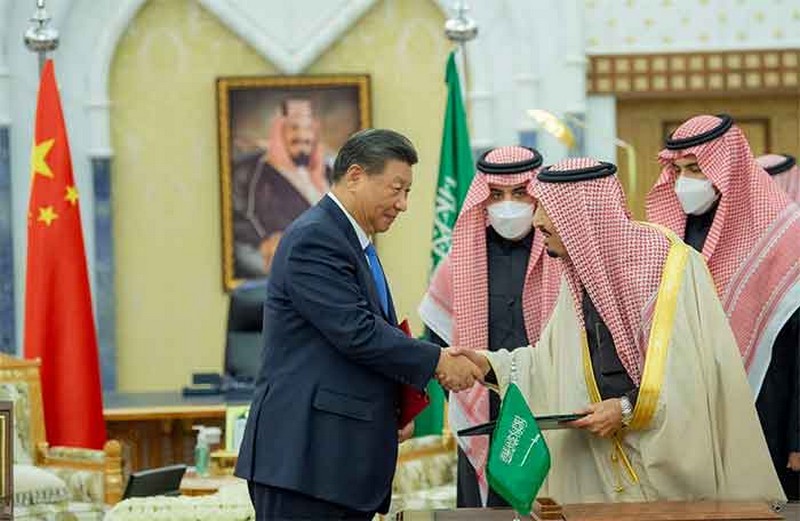
As Chinese President Xi Jinping prepares to lead a large delegation to meet with Arab leaders in Saudi Arabia on December 9, Western media conveys a sense of dread.

The Chinese leader’s visit “comes against the backdrop” of the Biden Administration’s “strained ties with both Beijing and Riyadh” over differences, supposedly concerning “human rights and Russia’s invasion of Ukraine,” Reuters reported.

The same line of reasoning was parroted, with little questioning, by many other major Western media sources, falsely suggesting that ‘human rights’, along with other righteous reasons, are the main priority of the US and Western foreign policy agenda.

And, since these analyses are often shaped by Western interests, they tend to be selective in reading the larger context. If one is to rely exclusively or heavily on the Western understanding of the massive geopolitical changes around the world, one is sure to be misled. Western media wants us to believe that the strong political stances taken by Arab countries – neutrality in the case of war, growing closeness to China and Russia, lowering oil output, etc – are done solely to ‘send a message’ to Washington, or to punish the West for intervening in Arab affairs.

Seen through a wider lens, however, these assumptions are either half-truths or entirely fabricated. For example, the OPEC+ decision to lower oil output on October 5 was the only reasonable strategy to apply when the global market’s demand for energy is low. Additionally, Arab neutrality is an equally reasonable approach considering that Washington and its Western allies are not the only global forces that matter to the Arabs. It is equally untrue that the Middle East’s growing affinity with Asia is borne out of recent dramatic events, but a process that began nearly two decades ago, specifically a year following the US invasion of Iraq.

In 2004, China and the Arab League established the China-Arab States Cooperation Forum.

CASCF officially represented the Chinese government and all 22 members of the Arab League, eventually serving as the main coordination platform between China and the Arabs. This has given China the advantage of investing in a collective strategy to develop trade, economic and political ties with the entirety of the Arab world. On the other hand, Arabs, too, had the leverage of negotiating major economic deals with China that could potentially benefit multiple Arab states simultaneously.

An extremely important caveat is that CASCF was predicated in what is known as the “Five Principles of Peaceful Coexistence.” Based on the Westphalian norms of state sovereignty, the five principles seem to be founded on an entirely different paradigm of foreign relations, compared to the West’s approach to the Middle East and the Global South, in general, extending from the colonial periods to the neocolonialism of post-World War II: mutual respect for “territorial integrity and sovereignty”, “non-aggression”, “non-interference”, and so on.

Chinese-Arab relations continue to follow this model to this day, with very little deviation. This validates the claim that collective Arab political attitudes towards China and Xi’s visit to the Middle East are hardly an outcome of any sudden shift of policies resulting from the Russia-Ukraine war of recent months.

This is not to suggest that Arab and Chinese relations with the US and the West had no impact on the nature of the speed of Chinese-Arab ties. Indeed, the Chinese model of ‘peaceful coexistence’ seems to challenge the henceforth modus operandi at work in the Middle East.

In 2021, China announced projects to build a thousand schools in Iraq, a piece of news that occupied substantial space in Arab media coverage. The same can be said about China’s growing economic – not just trade – influence in Arab countries.

China’s lucrative Road and Belt Initiative, announced in 2013, fits seamlessly into the political infrastructure of Arab-Chinese ties, which were built in previous years. According to the Asharq Al-Awsat newspaper, Riyadh was the largest recipient of Chinese investments within the BRI during the first half of 2022.

Starting in March, Saudi Arabia agreed in principle to sell its oil to China using the Chinese yuan instead of the US dollar. When implemented, this decision will have irreversible repercussions on the global market but also on the future status of the dollar.

Assuming that such mammoth changes in global geopolitics were an outcome of the immediate need for the Arabs to ‘send a message’ will continue to impair the West’s ability to truly appreciate that the changes underway, not only in the Middle East but worldwide, are part of permanent shifts to the world’s political map. The sooner the West achieves this realization, the better.

Considering all of this, it would be unfair – in fact, misguided – to suggest that large political entities like China and Arab countries combined are shaping their foreign policy agendas, thus staking their futures, on knee-jerk political reactions to the attitude of a single American President or administration.

Dr. Ramzy Baroud is a journalist, author and the Editor of The Palestine Chronicle.

9 December 2022

Source: countercurrents.org

Guantánamo’s First 7,627 Days

By Karen J Greenberg

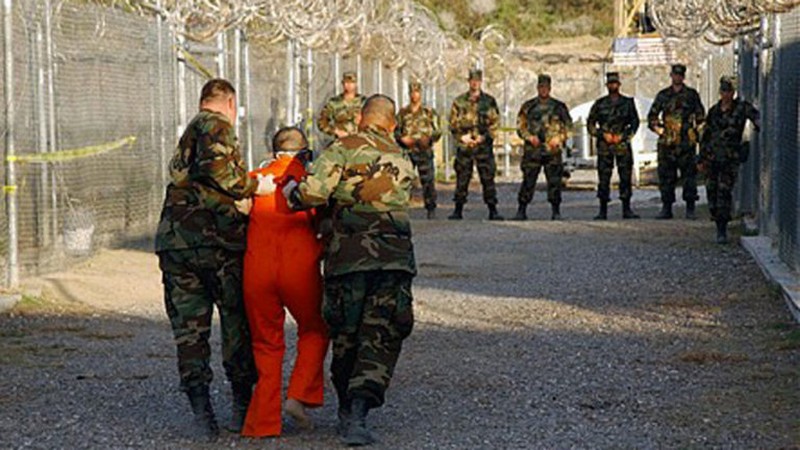
As of December 8, 2022, Guantánamo Bay detention facility — a prison offshore of American justice and built for those detained in this country’s never-ending Global War on Terror — has been open for nearly 21 years (or, to be precise, 7,627 days). Thirteen years ago, I published a book, The Least Worst Place: Guantanamo’s First 100 Days. It told the story of the military officers and staff who received the prison’s initial detainees at that U.S. naval base on the island of Cuba early in 2002. Like the hundreds of prisoners that followed, they would largely be held without charges or trial for years on end.

Ever since then, time and again, I’ve envisioned writing the story of its ultimate closure, its last days. Today, eyeing the moves made by the Biden administration, it seems reasonable to review the past record of that prison’s seemingly never-ending existence, the failure of three presidents to close it, and what if anything is new when it comes to one of the more striking scenes of ongoing injustice in American history.

The Beginning

When, in January 2002, those first planes landed at Guantánamo (which we came to know as Gitmo), the hooded, shackled, goggled, and diapered prisoners in them were described by the Pentagon as “the worst of the worst.” In truth, however, most of them were neither top leaders of al-Qaeda nor, in many cases, even members of that terrorist group. Initially housed at Camp X-Ray in open-air cages without plumbing, dressed in those now-iconic orange jumpsuits, the detainees descended into a void, with little or no prison policies to guide their captors. When Brigadier General Michael Lehnert, the man in charge of the early detention operation, asked Washington for guidelines and regulations to run the prison camp, Pentagon officials assured him that they were still on the drawing board, but that adhering in principle to the “spirit of the Geneva Conventions” was, at least, acceptable.

Those first 100 days left General Lehnert and his officers trying to provide some modicum of decency in an altogether indecent situation. For example, Lehnert and those close to him allowed one detainee to make a call to his wife after the birth of their child. They visited others in their cells, talked with them, and tried to create conditions that allowed for some sort of religious worship, while forbidding interrogations by officials from a variety of U.S. government agencies without a staff member in the interrogation hut as well. Against the wishes of Secretary of Defense Donald Rumsfeld and the Pentagon, a lawyer working with the general even called in representatives of the International Committee of the Red Cross.

By the end of March 2002, the U.S. had installed prefab prisons at Guantánamo in which those detainees could be all too crudely housed and had brought in a new team of officers to oversee the operation while pulling Lehnert and his crew out. The new leadership included people reporting directly to Rumsfeld as they put in place a brutal regime whose legacy has lasted, in all too many ways, to this day.

Despite General Lehnert’s efforts, in the nearly 21 years since its inception, Guantánamo has successfully left the codes of American law, military law, and international law in the dust, as it has morality itself in a brazen willingness to implement policies of unspeakable cruelty. That includes both physical mistreatment and the limbo of allowing prisoners to exist in a state of indefinite detention. Most of its detainees were held without any charges whatsoever, a concept so contrary to American democracy and legality that it’s hard to fathom how such a thing could happen, no less how it’s lasted these 7,627 days.

Bush’s Prison

As the 35 prisoners still in Guantánamo illustrate, no president has yet found a way to close that prison completely. George W. Bush, who opened it, did eventually acknowledge that it would be best to shut it down. As he put it to a German television audience in May 2006, “I very much would like to end Guantánamo. I very much would like to get people to a court.”

He was, however, anything but decisive on the subject. As he told a White House press conference that June, “I’d like to close Guantánamo, but I also recognize that we’re holding some people that are darn dangerous, and that we better have a plan to deal with them in our courts. And the best way to handle — in my judgment, handle these types of people is through our military courts.” That month the Supreme Court invalidated the ad hoc military tribunals that had by then been formed at Gitmo and, in the fall of 2006, Congress passed the Military Commissions Act, formally creating the courts Bush had imagined.

Pointing out that shuttering the prison was “not as easy a subject as some may think on the surface,” the president then began pursuing another approach — namely, releasing uncharged prisoners and returning them to their home countries or transferring them elsewhere. And his administration did, in the end, release about 540 of the 790 prisoners held there. Gitmo accepted its last prisoner in March 2008.

Meanwhile, a 2008 Supreme Court ruling granting detainees the right to challenge their detention by filing habeas corpus petitions in federal court opened a new path toward future freedom. Twenty-three of those detainee petitions were granted before Bush left office, but the prison, of course, remained open.

Obama’s Well-Intentioned but Failed Efforts

Barack Obama initially signaled his desire to close Guantánamo on the campaign trail and then, in one of his first acts as president, issued an executive order calling for it to be shut down within a year. “If any individuals covered by this order remain in detention at Guantánamo at the time of closure of those detention facilities,” it read, “they shall be returned to their home country, released, transferred to a third country, or transferred to another United States detention facility in a manner consistent with law and the national security and foreign policy interests of the United States.” With new energy, the Obama administration plunged ahead on the two fronts Bush had halfheartedly pursued: establishing military commissions and transferring certain prisoners directly to their home countries or others willing to accept them.

On Obama’s watch, a reformed version of the Guantánamo tribunals was authorized by the passage of the 2009 Military Commissions Act, resolving five cases, all with guilty pleas. In addition, his administration edged toward closure by transferring nearly 200 more prisoners to willing countries in a vigorous effort over the final year and a half of his presidency.  Still, he encountered unanticipated opposition within Congress. Although the military commissions did start anew under Obama, so many years later, their trial of the five prisoners alleged to have been actual 9/11 co-conspirators has still not been scheduled.

In addition, under Obama, numerous habeas corpus petitions were filed in federal court, often falling victim to defeat in appellate courts. As Shayana Kadidal, the Center for Constitutional Rights’ senior managing attorney for Gitmo litigation, summed it up at Just Security: “By 2011, the then sharply conservative D.C. Circuit had rendered it more or less impossible for detainees to prevail on their habeas petitions.”

Obama’s team did seem to add a new possibility for aiding the closure process by transferring one detainee to federal court for trial on terrorism charges. In 2010, Ahmed Ghailani stood trial in New York City for participating in the bombings of two U.S. embassies in East Africa. He was found guilty and sentenced to life in prison on U.S. soil. But in the end, the trial proved fraught with problems, including the fact that the defendant was acquitted on 284 of 285 charges and so it would prove to be not just the first but the last such trial. In fact, in the 2011 National Defense Authorization Act, Congress included a ban on the transfer to the United States of any further Gitmo detainees for any reason whatsoever.

All told, though the Obama administration poured far more energy into the effort to close Gitmo than the Bush administration had, the president failed during his terms in office to do so. In his last year, Obama continued to push hard with the rallying cry, “Let’s go ahead and get this thing done!” He called for renewed federal trials on U.S. soil and prisoner incarceration in the United States, noting that Guantánamo was “contrary to our values” and “undermines our standing in the world” — not to mention the $450 million annual price tag for keeping it open.

He put the blame for failure squarely on the growing political divide in the country and openly worried about what it meant not to succeed. “I don’t want to pass this problem on to the next President, whoever it is,” he said. And, of course, we know just who he was.

Trump’s “Bad Dudes”

Not surprisingly, passing Guantánamo on to Donald Trump fulfilled whatever misgivings he had. Unlike Presidents Bush and Obama, Trump displayed no interest whatsoever in closing it. His instinct was to reaffirm its standing as a legal black hole. On the campaign trail in 2016, in fact, he swore that “we’re gonna load it up with some bad dudes, believe me, we’re gonna load it up.” On taking office, he almost instantly signed an executive order to keep Gitmo open.

Still, no new detainees were actually added during his term in office. In 2020, he even suggested it should house people infected with Covid, but as it turned out, expanding its activities was as elusive a goal for Trump as closing it had been for his predecessors.

While his threats of adding inmates amounted to naught, his presidency basically put that prison camp on pause. He even stopped the process of transferring five detainees cleared for release by the Obama team. Only one prisoner, Ahmed Muhammad Haza al-Darbi, who had pleaded guilty in 2014 in the military commissions, was released during Trump’s time in office. Meanwhile, the military commissions remained essentially stalled on his watch and Congress continued the ban on moving any of the detainees to the U.S.

Biden’s Gitmo

When Joe Biden entered office, 40 prisoners remained at Guantánamo Bay. In his first weeks, his aides called for a formal review of their cases and his spokesperson Jen Psaki announced the administration’s intention to close the prison camp before he left office. Having learned from Obama’s mistakes, however, Biden made no sweeping public promises.

His administration nonetheless put renewed energy into both transfers and trials. The military commissions have indeed ramped up in recent months. Pretrial hearings have recently been held in the four pending military tribunal cases. In addition, plea deals that would take the death penalty off the table are reportedly being negotiated for the five 9/11 defendants.

Three of the five detainees cleared for release by the Obama administration have finally been transferred to other countries, while all but three of the 27 prisoners not cleared when Biden took office have been greenlighted to go home or to a third country. In doing so, several previously blocked thresholds were crossed. As of early 2021, when the government cleared detainee Guled Hassan Duran, it signaled that, for the first time, there was a willingness to release even those who had been subjected to torture while held at CIA “black sites” in the early years after 9/11. The point was made even more strongly three months later when Mohammed al Qahtani, who experienced some of the worst treatment at American hands, was also finally released.

Meanwhile, in September 2022, President Biden appointed former State Department coordinator for counterterrorism and former ambassador to Kosovo, Tina Kaidanow, to oversee the transfer of prisoners cleared for release. While her position doesn’t replicate the formidable office of the Special Envoy for Guantánamo Closure that Obama established and Trump nixed, it is a promising move. The job of arranging each prisoner transfer, assuring the security of the detainee, and assessing that the release will not pose a danger to the United States is challenging but achievable, as prior releases have demonstrated. All told, recidivism rates for Guantánamo detainees, as reported by the Director of National Intelligence, have been 18.5%, though only 7.1% for those released under Obama.

In the End…?

The last question, these 7,627 nightmarish days later, might be this: Are there any options for the final Gitmo prisoners? In 2017, military defense lawyers Jay Connell and Alka Pradhan, joined by researcher Margaux Lander, pointed out that, under international law, victims of “torture, and cruel, inhuman and degrading treatment” have the right to full rehabilitation. In addition to seeking the removal of the death penalty in their cases, the 9/11 defendants at Gitmo have reportedly asked for access to a torture rehabilitation program.

Pradhan, who represents 9/11 defendant Ammar al Baluchi has summed the situation up well:

“The United States has utterly failed to give these men either a fair trial or medical treatment for their torture in violation of their legal obligations. Most of the evidence in the 9/11 case is torture-derived, and the men are deteriorating quickly from the brain and other injuries inflicted by U.S. torture nearly 20 years ago. The Department of Defense has confirmed that they don’t currently have the ability to provide complex medical care at Guantanamo, so the most ethical solution is to transfer the men to locations where they can obtain the care they require.”

In fact, after all these years in prison, releasing those who might otherwise still stand trial and putting them in rehabilitation centers might indeed be a good idea.

There are many ways to address a wrong. Arguably, the greater its magnitude, the more leeway should be given for subsequent actions. As the Biden administration has taken steps towards closing Gitmo, perhaps the gesture of sending the defendants in the military commissions to rehabilitation programs is a good one.

For years, General Lehnert has told Congress, media outlets, and anyone who would listen that it remains imperative, however difficult, to finally shut the prison down. As he has written,Closing Guantánamo is about reestablishing who we are as a nation.” It might not quite accomplish that, but it would certainly be a formidable step in that direction. After all, its legacy of torture, indefinite detention without charges or trials, and the reckless disregard for the rule of law will no doubt haunt us for years.

There is no way to fathom the harm caused by the torture, cruel treatment, legal limbo, injustice, and dehumanization that has become the definition of Guantánamo. But for the first time in all these years, its actual closure might realistically be on the horizon. One can always hope, right?

Karen J. Greenberg, a TomDispatch regular, is the director of the Center on National Security at Fordham Law and author most recently of Subtle Tools: The Dismantling of American Democracy from the War on Terror to Donald Trump (Princeton University Press).

9 December 2022

Source: countercurrents.org

Peru’s Oligarchy Overthrows President Castillo

By Manolo De Los Santos

June 6, 2021, was a day which shocked many in Peru’s oligarchy. Pedro Castillo Terrones, a rural schoolteacher who had never before been elected to office, won the second round of the presidential election with just over 50.13% of the vote. More than 8.8 million people voted for Castillo’s program of profound social reforms and the promise of a new constitution against the far-right’s candidate, Keiko Fujimori. In a dramatic turn of events, the historical agenda of neoliberalism and repression, passed down by former Peruvian dictator Alberto Fujimori to his daughter Keiko, was rejected at the polls.

From that day on, still in disbelief, the Peruvian oligarchy declared war on Castillo. They made the next 18 months for the new president a period of great hostility as they sought to destabilize his government with a multi-pronged attack that included significant use of lawfare. With a call to “throw out communism,” plans were made by the oligarchy’s leading business group, the National Society of Industries, to make the country ungovernable under Castillo.

In October 2021, recordings were released that revealed that since June 2021, this group of industrialists, along with other members of Peru’s elite and leaders of the right-wing opposition parties, had been planning a series of actions including financing protests and strikes. Groups of former military personnel, allied with far-right politicians like Fujimori, began to openly call for the violent overthrow of Castillo, threatening government officials and left-leaning journalists.

The right-wing in Congress also joined in these plans and attempted to impeach Castillo on two occasions during his first year in office. “Since my inauguration as president, the political sector has not accepted the electoral victory that the Peruvian people gave us,” Castillo said in March 2022. “I understand the power of Congress to exercise oversight and political control, however, these mechanisms cannot be exercised by mediating the abuse of the right, proscribed in the constitution, ignoring the popular will expressed at the polls,” he stressed. It turns out that several of these lawmakers, with support from a right-wing German foundation, had also been meeting regarding how to modify the constitution to quickly remove Castillo from office.

The oligarchic rulers of Peru could never accept that a rural schoolteacher and peasant leader could be brought into office by millions of poor, Black, and Indigenous people who saw their hope for a better future in Castillo. However, in the face of these attacks, Castillo became more and more distanced from his political base. Castillo formed four different cabinets to appease the business sectors, each time conceding to right-wing demands to remove leftist ministers who challenged the status quo. He broke with his party Peru Libre when openly challenged by its leaders. He sought help from the already discredited Organization of American States in looking for political solutions instead of mobilizing the country’s major peasant and Indigenous movements. By the end, Castillo was fighting alone, without support from the masses or the Peruvian left parties.

The final crisis for Castillo broke out on December 7, 2022. Weakened by months of corruption allegations, left infighting, and multiple attempts to criminalize him, Castillo was finally overthrown and imprisoned. He was replaced by his vice president, Dina Boluarte, who was sworn in after Congress impeached Castillo with 101 votes in favor, six against, and ten abstentions.

The vote came hours after he announced on television to the country that Castillo was dissolving Congress. He did so preemptively, three hours before the start of the congressional session in which a motion to dismiss him for “permanent moral incapacity” was to be debated and voted on due to allegations of corruption that are under investigation. Castillo also announced the start of an “exceptional emergency government” and the convening of a Constituent Assembly within nine months. He said that until the Constituent Assembly was installed, he would rule by decree. In his last message as president, he also decreed a curfew to begin at 10 o’clock that night. The curfew, as well as his other measures, was never applied. Hours later, Castillo was overthrown.

Boluarte was sworn in by Congress as Castillo was detained at a police station. A few demonstrations broke out in the capital Lima, but nowhere near large enough to reverse the coup which was nearly a year and a half in the making, the latest in Latin America’s long history of violence against radical transformations.

The coup against Pedro Castillo is a major setback for the current wave of progressive governments in Latin America and the people’s movements that elected them. This coup and the arrest of Castillo are stark reminders that the ruling elites of Latin America will not concede any power without a bitter fight to the end. And now that the dust has settled, the only winners are the Peruvian oligarchy and their friends in Washington.

Manolo De Los Santos is the co-executive director of the People’s Forum and is a researcher at Tricontinental: Institute for Social Research.

9 December 2022

Source: countercurrents.org

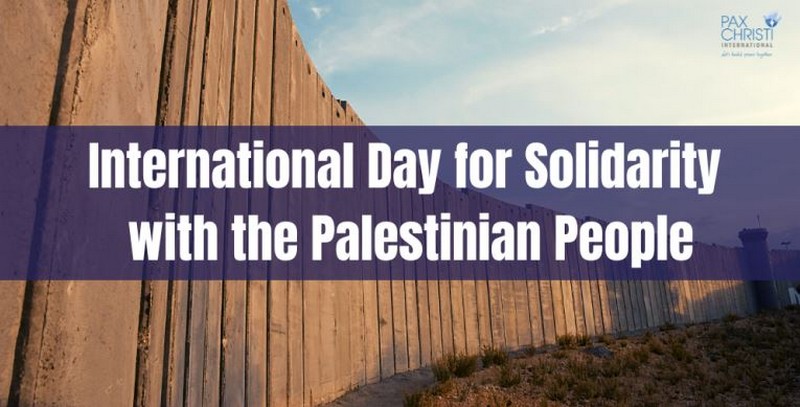
Statement for the International Day of Solidarity with the Palestinian People

As Israel ushers in a dangerous ultra-right wing, ultra-orthodox religious administration, belligerent Israeli settlers, protected by the Israeli Defense Force (IDF), are emboldened to viciously attack, and the sanctity of the holy city of Jerusalem is put in jeopardy. Never have the Palestinian people needed the support and solidarity of the international community more than now.

In less than a year, the world has witnessed the inexcusable killing of journalist Shireen Abu Akleh by an IDF sharpshooter, an alarming rate of arrests, detention, and mistreatment of Palestinian minors, an exponential increase in the killing of Palestinians, the ongoing devastation of house demolitions and the relentless confiscation of Palestinian land and expansion of illegal settlements.

Yet, Israel remains unaccountable for its blatant disregard of UN resolutions and international and human rights law. It is unabashed in its silencing of civil society. A newly elected Knesset member has called highly respected human rights organizations an “existential threat” while the new Prime Minister agrees to retroactively legalize settlements and outposts. The future is bleak for the beleaguered Palestinian people.

And so, the question becomes – with whom will the international community stand?

Solidarity must be more than a word; it must be visible, not on one day, but every day. Solidarity must demand change. Let this occasion finally be the moment when our statements of solidarity transform into purposeful action on behalf of the Palestinian people.

29 November 2022

Source: paxchristi.net


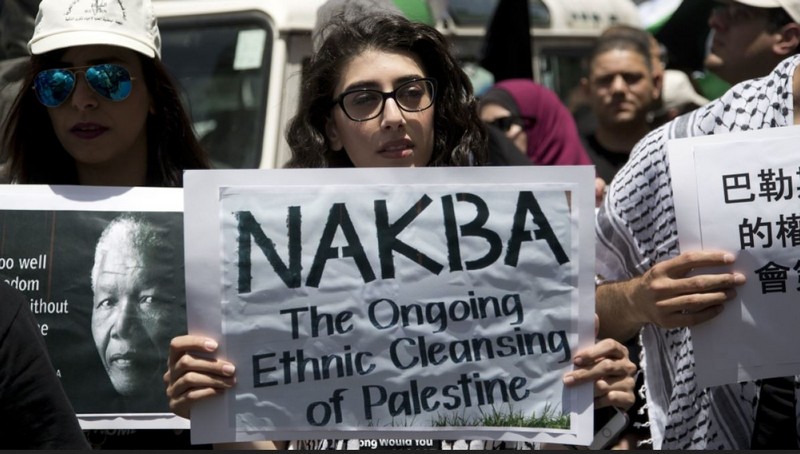
FOR FREEDOM FROM NAKBA

By Hassanal Noor Rashid

The 1948 Nakba resonates deeply with those who are familiar with the Palestinian Struggle and those who share a history of what it was like living under oppression.

Historically it symbolizes a great catastrophe endured by the
Palestinian people, with the destruction of their homeland, and the
displacement of many of their people.

It symbolizes the slow erosion of Palestine, territorially, historically, and culturally. The illegal settlements, the cruel and oppressive measures that were used to chase away Palestinian families from their homes, and the narrative manipulation to rewrite the history of Palestine itself. All of these were also part of the Nakba, and its effects continue to be felt for generations to come.

But through this catastrophe, the most shining example of what the human spirit is capable of in the face of injustice and overwhelming suffering.

The Nakba happened in 1948. And yet the Palestinian people remain, strong and resilient as ever.

Not only have they not given in to the subjugations of their occupiers, but they also fought back against the might of the Israelis oppressors, coordinating their efforts internally and externally to support each other, survive and push back against the Apartheid state and system in various social-political spheres.

Throughout the history of their struggle, and its ever-changing
dynamics, the goals still remain the same ultimately, and that is to
liberate themselves from the catastrophe that was placed unto them, and have their voices heard. This voice is shared by many now, especially those who share an understanding of the history of colonialism, and its’ many ills that continue to plague the world till this day.

We all share this voice, as we all want to see a world liberated from
that which is an afront to the human conscience.

Palestinian youth speak: Perspectives on struggle and liberation

Watch our latest webinar on Palestinian Youth Speak: Perspectives on
struggle and liberation

17 December 2022

A LETTER FROM PALESTINE

By Ilan Pappe

A mini-intifada is taking place this 2022 autumn in Palestine, spreading over Jenin, Nablus and Jerusalem. What is incredible is not that these uprisings occur, but rather the way the Israeli media is trying to explain their occurrence. One ex general after the other, on ex secret service expert after the other, provide an analysis that is familiar for anyone studying the history of colonialism in Asia and Africa. European colonialist policy makers always attributed resistance to the colonisation as the outcome of “incitement” and never attributed the revolts against them to their own callous oppression.

The daily humiliation in the checkpoints, the collective punishmentsthat include closure and endless curfews, the mass arrests without trial including of children, tortures in the interrogations, confiscation of land, ethnic cleansing operations and settlers’ attacks are all not sufficient causes, in the view of this narrative, for an ongoing uprising. Unemployment among the youth, the absence of any vision for a different future and the international indifference also do not factor into the analysis not just of the securitization sector but also in that provided by very respected doyens of the Israeli academy. They appear constantly in TV studios and explain how the violent nature of “Arabs” and “Muslims” are the sole causes for this and previous uprisings.

Who are the inciters is never totally clear from the analysis. Usually, the “culprits” is the Hamas movement in the Gaza Strip. However, the fingers are pointed to all kinds of organizations such as the Islamic Jihad, the Fatah and a new group called “the Lions’ Den” situated in Nablus. The contradictions have never bothered the analysts with their clear narrative which needed to have inciters and an easily incited crowd.

The depiction of the Palestinian liberation struggle as a series of senseless assaults by an incited mob is very familiar for those us exposed to the Israeli educational textbooks and public discourse. The Israeli academia provided scholarly scaffolding for this narrative and
articulated it in a more sophisticated discourse.

This analysis had been put forward already after the first significant Palestine uprising during the Mandatory period in 1929 (_thawrat al-Buraq_). While the British inquiry commission that was set up after the uprising, did attribute that particular uprising to the Zionist policy of land purchasing that pauperised rural Palestine, the Zionist assessment was that pro-Arab British officers and “fanatic” religious leaders incited the uprising which was carried out by “criminal gangs”. In 2022, the same Zionist discourse is employed for depicting the present Palestinian resistance (that already cost the life of more than 100 young Palestinians) as a mixture of criminal gangs and incited youth.

It is important to acknowledge the explanation official Israel, and by extension its civil society, provides for the present and past Palestinian uprisings. This discourse analysing Palestinian violence as the product of an “Arab culture” and “Islamic primitivism” is
widely shared within Israel.

These images and prejudices are deeply rooted, and are planted and replanted in every new generation of young Israelis passing through the educational system, the media, the political discourse and the socialisation processes, the most important taking place during the compulsory military,

Realising that this is the state of affairs, one can understand the failure of the so-called peace process that began in earnest in 1967. The process was initiated and managed by cynical politicians, but also by some genuine peace makers, mostly Americans. One of its basic assumptions was that there was a “peace camp” in Israel that would be willing to compromise with the Palestinians. Their optimism stemmed from the success of brining about two bilateral peace agreements between Israel and Egypt in 1979 and Jordan in 1994.

Two agreements between governments but without any genuine new relationship between the societies involved. More importantly, the nature of the conflict between Israel and these two Arab states was very different from the Palestine question. It is not a war between two
states, it is an anti-colonial struggle for decolonisation.

The total dehumanisation of the Palestinians, the total denial of their rights and of their attachment to their homeland, and the willingness to go to any extreme to turn Palestine into a de-Arabized space, lead to two undeniable conclusions. The first is that there is no peace camp in Israel and therefore any anticipation of a change within Israeli Jewish society and its consensual attitudes towards the Palestine issue is unrealistic. The second and interconnected conclusion is that the only way official Israel would stop its criminal policies towards the Palestinians, is by strong external pressure on it, the kind of pressure
that was directed against Apartheid South Africa. This pressure is required today more than ever before as so many Palestinians are under an existential danger. This year alone, more than 150 Palestinians were killed by the Israelis and the casualties are growing exponentially in the last few weeks.

There is another manifestation to this dehumanisation which is hardly noticed outside Israel. And these are the daily murders committed by criminal gangs within the Palestinian minority inside Israel, the 48 Arabs. Every day, someone is murdered among this community, sometimes more than one person a day is assassinated. Among those caught in the crossfire are also children. Allowing criminal gangs, a free hand in oppressed society as means of depoliticising them was done elsewhere. In the USA, this method was employed to kill in its bud the political resistance of African Americans, by allowing the drug deals to take over neighbourhoods and slums.

In Israel, such policies were already enacted in the early 1950s as mentioned but they have reached unprecedented levels in the last few years. The situation was aggravated after the Oslo accord, when Israel extracted a large number of its Palestinian collaborators and forced
them on the 48 Arabs community. Some of them are armed, have good connections to the security services and thus enjoy some sort of immunity. Some of them are part of this new gangland within the Palestinian villages and neighbourhood inside Israel.

This immunity coupled with an obvious lack of any attempt by the Israeli police to interfere significantly in the gang wars and crimes is an intentional policy of neglect that is substantiated by the narratives spanned by the Israel academia and media about this situation. There are two features in this narrative. The first is that high levels of
murderous crime like this are inevitable in an Arab society and there is not much Israel can do. The second is that it is the responsibility of the leaders of the Arab community themselves to put a stop to the killings. Both assertions are racist and stem from the same ideology and mentality that dehumanises the Palestinians living in the Jerusalem, the West Bank and the Gaza Strip.

This attitude became part of the DNA of Zionism and Israel as is typical to settler colonial movements and apartheid states. However, it petered out and is less significant in many other places where settler colonialism reigned. The reason that this DNA is still there in Israel has also to do with the international reaction to Zionism and later Israel. The total silence in the West in the face of the 1948 ethnic cleansing encouraged the new state of Israel to continue such polices in the future. Thus, ethnic cleansing policies are still enacted today, and they can only be perpetrated if the victims are dehumanised, as were the hundred and fifty Palestinians who have been killed by Israel since the beginning of this year. The killing will continue to be justified on the basis of this dehumanisation, and the question is will the international community continue to provide immunity to policies that it condemns and reject categorically when they are enacted in places such as the Ukraine or Iran?

6 December 2022

Illan Pappe is an expatriate Israeli historian and socialist activist. He is a professor with the College of Social Sciences and International Studies at the University of Exeter in the United Kingdom, director of the university’s European Centre for Palestine Studies, and co-director of the Exeter Centre for Ethno-Political Studies. He is also a member of JUST’S International Advisory Panel (IAP)


NATO summit vows to continue troop surge to Russia’s borders

By Andre Damon

NATO foreign ministers met in Bucharest, Romania, on Tuesday, along with representatives of the prospective NATO members Ukraine, Finland, and Sweden to discuss a further expansion of the NATO war with Russia in Ukraine and the stationing of more troops on Russia’s Western borders.

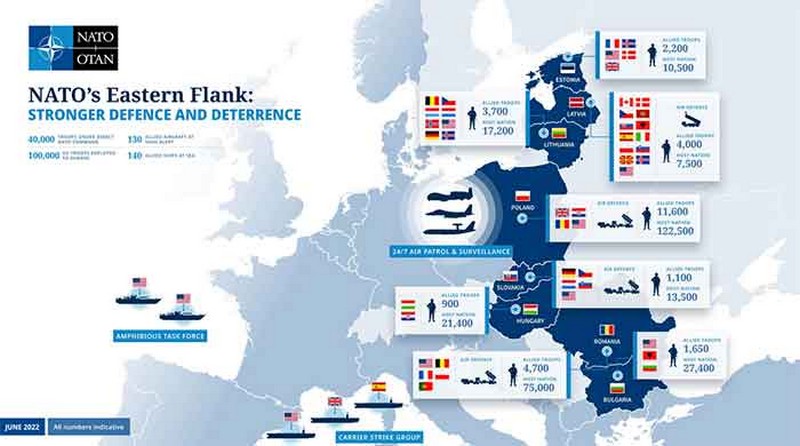
“In response to Russia’s full-fledged invasion of Ukraine, we are raising the readiness of our troops,” said NATO Secretary-General Jens Stoltenberg at the start of the meeting. “And we have doubled the number of NATO battlegroups from four to eight. Including one here in Romania, led by France.”

“We have increased our presence on the ground, we have more presence in the air,” Stoltenberg said.

He continued, “Just last week, NATO Allies conducted an exercise to test air and missile defenses in Romania. Involving Spanish, Turkish and US aircraft, as well as French jets flying from the aircraft carrier Charles de Gaulle. Demonstrating how NATO Allies operate together and are ready to defend every inch, but also the airspace above NATO Allies.”

The “airspace above NATO Allies” is rapidly expanding, with Stoltenberg all but treating Finland and Sweden as members of NATO. He declared, “Their membership of NATO is a game-changer for the European security architecture. It will make them safer, our Alliance stronger and the Euro-Atlantic area more secure.”

Stoltenberg doubled down on NATO’s involvement in the war with Russia, saying, “So our message from Bucharest is that NATO will continue to stand with Ukraine for as long as it takes. We will not back down.”

Behind the scenes, these general pledges of expanded NATO involvement in the war are being filled out with concrete discussions to send US fighter jets, long-range missiles, and attack drones into the warzone.

In an article that appeared in Bloomberg, James Stavridis, NATO’s former Supreme Allied Commander Europe, declared that the “West’s best option will be to significantly increase its assistance to Ukraine on the air war side of the conflict.”

Stavridis claimed that NATO members are actively discussing sending US fighter jets to Ukraine, saying, “Leaders in NATO capitals are also revisiting an idea that was discarded in the early days of the war: providing either MiG-29 Soviet-era fighters (the Poles have offered to transfer them to the Ukrainians) or even US surplus F-16s, a simple-to-learn multi-role fighter.”

In an interview with Bloomberg, Latvian foreign minister Gabrielius Landsbergis said that NATO should “allow” Ukraine to strike targets inside of Russia, saying, “We should allow Ukrainians to use weapons to target missile sites or air fields from where those operations are being launched.” He added that NATO “should not fear” the response from Russia.

Ahead of the meeting, Landsbergis tweeted, “My message to fellow foreign ministers at today’s NATO meeting is simple: Keep calm and give tanks.”

Such calls were closely coordinated with demands by Ukrainian officials. “No eloquent speech will say more than concrete action. ‘Patriot’, ‘F-16’, or ‘Leopard’ for Ukraine,” tweeted presidential adviser Mykhailo Podolyak – referring to US F-16 fighter jets and German Leopard battle tanks.

A group of US senators have meanwhile issued a letter calling for the United States to provide lethal armed attack drones to Ukraine, the so-called “Grey Eagle,” which they praised for its “lethality.”

They note, most importantly, that armed Unmanned Aerial Systems (UAS) could find and attack Russian warships in the Black Sea.

They declare that “The MQ-1C, along with already provided long-range fires capabilities, provides Ukraine additional lethality needed to eject Russian forces and regain occupied territory.”

The signatories include Joe Manchin, a key Senate ally of US President Joe Biden, and Trump ally Lindsay Graham.

In an indication of the degree of tension surrounding the conflict, this week Russia canceled nuclear talks with the US at the last minute.

Deputy Foreign Minister Sergei Ryabkov said that “We are sending signals to the Americans that their line of escalation and ever deeper involvement in this conflict is fraught with dire consequences. The risks are growing.”

As the US intervenes ever more directly in the conflict, its military strategists are expressing their aims all the more bluntly. In an essay entitled “United States Aid to Ukraine: An Investment Whose Benefits Greatly Exceed its Cost,” veteran US geostrategist Anthony H. Cordesman acknowledges that “the war in Ukraine has become the equivalent of a proxy war with Russia.”

Cordesman explains that “the U.S. has already obtained major strategic benefits from aiding the Ukraine,” while “Russia is already paying far more of its Gross National Product and economy to fight the war in the Ukraine than the U.S. and its partners, and that Russia has suffered massive losses of weapons, war reserves, and military personnel.”

While Cordesman’s essay treats the deaths of Russian troops and the devastation of the Russian economy as a benefit, it does not anywhere factor in the cost in Ukrainian lives or the suffering inflicted on the Ukrainian population by the war.

Even as the US and NATO continue to pour weapons in to Eastern Europe, Russia has responded with weeks of strikes on Ukraine’s power and water infrastructure, leaving millions of people, including much of the capital of Kiev, without power in the freezing temperatures.

Originally published in WSWS.org

30 November 2022

Source: countercurrents.org

Jan Oberg in China Daily: Abolish NATO and Build Peace Instead

By Jan Oberg, Ph.D.

18 Nov 2022 – While most organisations are evaluated and reformed as time goes by, NATO isn’t. It has become sacrosanct and criticism of its operations silenced. In Western media, it is always called the ”defensive” alliance. It does not see itself as party to the conflict with Russia – but rather as an innocent property owner who protects himself against a burglar. This frees it from co-responsibility for the present, fateful situation.

The NATO-Russia conflict that plays out in Ukraine is grossly a-symmetric: NATO is 30 members with at least 12 times higher military expenditures than Russia. The former NATO Secretary-General, Anders Fogh Rasmussen, recently boasted that ”Putin knows that NATO spends 10 times more than Russia and NATO can beat him into a pulp.” Quite sensational given that NATO has always told us that Russia is a formidable threat.

After losing its raison d’etre in 1990, NATO has been expanding horisontally and vertically – ever more militarist. That breaks all the promises made to the last Soviet leader, Gorbachev, about not expanding ”one inch.” All Russian leaders have protested. So have eminent, knowledgeable security experts, former US politicians and ambassadors to Moscow. And no opinion poll in Ukraine has ever shown a majority for NATO membership.

NATO Secretary-General Stoltenberg states ad nauseam that countries must freely choose their security partnership. NATO never let Ukraine do so. Since 1991, NATO has been wooing, training, arming, financing, integrating and aiming at only one security arrangement for Ukraine: NATO membership

While Russia is responsible for the war in Ukraine, NATO is responsible for the underlying conflict – and that conflict is about the right to feel secure around one’s border and not be encircled. No NATO state would accept what NATO has expected Russia to accept.

Ukraine was the one too many expansions of the increasingly autistic alliance. Militarism has become the West’s new secular religion, NATO its church and the NATO elites with their intellectually empty summits as the congregation: You shall have no other gods but NATO!

NATO no longer bases itself on intellectual analyses. It states and postulates. Deterrence on which it builds is a basically offensive concept; it includes the ability to harm and kill the other on his territory – the opposite of common security and defensiveness. NATO’s ’defence’ ultimately rests on the right to first use of nuclear weapons even against a conventional or cyber attack. It has only one answer to every problem: More weapons.

NATO postulates threats and challenges. It does not argue them. China is a ’challenge’ because it has different interests and values. This means that NATO believes in universalising Western/Occidental values, making others like itself. The real problem is, however, that US/NATO cannot live without enemies. It seeks confrontation, not cooperation. At its moment of decline and coming fall, the West stands together in hate, enemy-making and armament – all negative energy – not in a vision of a better future.

Since 1949 when it was created, NATO has squandered trillions of dollars of taxpayers’ money, but it has not made them secure or created peace. NATO has 8% of the world’s population but consumes 57% of global military expenditures. We are closer than ever to a major war, perhaps involving nuclear weapons. The world must ask NATO: Why have you failed so miserably and what shall we do now – together? It’s a politico-intellectual task, not a military challenge to match.

There are other questions: The Russians have asked to become members of NATO in 1954, and so have Gorbachev, Yeltsin and Putin. Why has the door always been closed? Or, how come an organisation whose treaty is a copy of the UN Declaration (with Para 5 about mutual defence added) can violate its own Treaty every day and, for example, bomb Serbia and Kosovo, Libya and now expand violently into Ukraine?

China must calculate with another nasty factor: NATO’s evolving globalisation. It has 30 members, and future members have to be European, but it has 40 ”partners” over all continents. It’s the main US tool for maintaining global dominance. Now, the US is a declining empire bound to fall, but it can do a lot of harm before that happens.

The sad and risky fact is that the West does not have a single leader who can be trusted to preside grace- and peacefully over that process. Gorbachev could have used weapons, even nukes, when the Soviet game was over. But he was a man of ethics with a constructive vision about a new European peace and conflict-resolution structure. NATO cheated him.

The most dangerous aspects of the West’s crisis is the vicious circle of moral and intellectual disarmament and ever more military armament and militarism.

Therefore, we must all do what can be done to replace NATO with defensive defence, common security, early warning, mediation, civil conflict-resolution, a much stronger UN, peace academies and peace education. For our global common good, survival and peace.

Prof. Jan Oberg, Ph.D. is director of the Transnational Foundation for Peace and Future Research, TFF and a member of the TRANSCEND Network for Peace Development Environment.

5 December 2022

Source: www.transcend.org