Just International

Palestinians ‘are bound to win’: Why Israelis are prophesying the end of their state

By Ramzy Baroud

While it is true that Zionism is a modern political ideology that has exploited religion to achieve specific colonial objectives in Palestine, prophecies continue to be a critical component of Israel’s perception of itself, and of the state’s relationship with other groups, especially Christian messianic groups in the United States and worldwide.

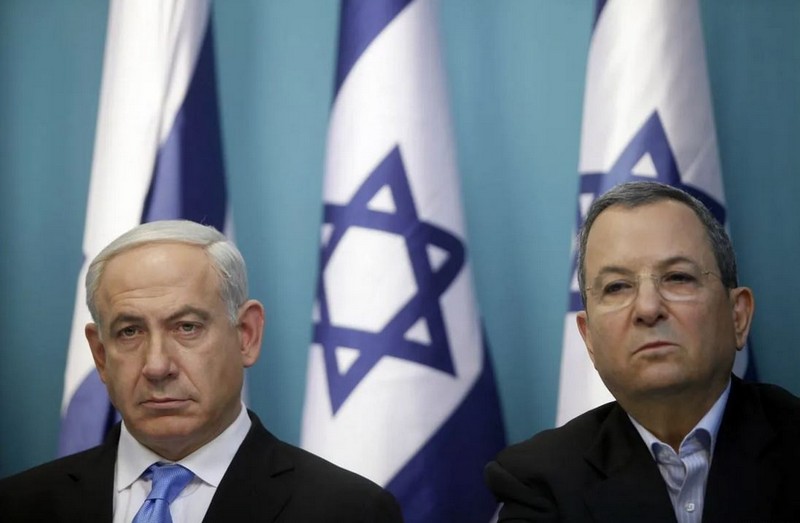
The subject of religious prophecies and their centrality to Israel’s political thought was once more highlighted following remarks by former Israeli Prime Minister Ehud Barak, in a recent interview with the Hebrew-language newspaper Yedioth Ahronoth. Barak, perceived to be a ‘progressive’ politician, who was once the leader of Israel’s Labour Party, expressed fears that Israel will “disintegrate” before the 80th anniversary of its 1948 establishment.

“Throughout the Jewish history, the Jews did not rule for more than eighty years, except in the two kingdoms of David and the Hasmonean dynasty and, in both periods, their disintegration began in the eighth decade,” Barak said.

Based on pseudo-historical analysis, Barak’s prophecy seemed to conflate historical facts with typical messianic Israeli thinking, reminiscent of statements made by Israel’s former Prime Minister Benjamin Netanyahu in 2017.

Like Barak, Netanyahu’s comments were expressed in the form of fear over the future of Israel, and the looming ‘existential threat’, the cornerstone of Israeli hasbara throughout the years. At a Bible study session in his house in Jerusalem, Netanyahu had then warned that the Hasmonean kingdom – also known as the Maccabees – had merely survived for 80 years before it was conquered by the Romans in 63 B.C.E.

The “Hasmonean state lasted only 80 years, and we needed to exceed this,” Netanyahu was quoted by one of the attendees as saying, the Israeli Haaretz newspaper reported.

But, even according to Netanyahu’s purported determination to exceed that number, he had reportedly vowed to ensure Israel will surpass the Maccabees’ 80 years, and survive for 100 years. That is merely 20 years more.

The difference between Barak and Netanyahu’s statements is quite negligible: the former’s views are supposedly ‘historical’ and the latter’s are biblical. Worth noting, however, is that both leaders, though they subscribe to two different political schools, have converged on similar meeting points: Israel’s survival is at stake; the existential threat is real and the end of Israel is only a matter of time.

But the pessimism in Israel is hardly confined to political leaders, who are known to exaggerate and manipulate facts to instil fear and rile up their political camps, especially Israel’s powerful messianic constituencies. Although this is true, predictions regarding Israel’s grim future are not confined to the country’s political elites.

In an interview with Haaretz in 2019, one of Israel’s most respected mainstream historians, Benny Morris, had much to say about the future of his country. Unlike Barak and Netanyahu, Morris was not sending warning signals but stating what, to him, seemed an unavoidable outcome of the country’s political and demographic evolution.

“I don’t see how we get out of it,” Morris said, adding: “Already, today there are more Arabs than Jews between the (Mediterranean) Sea and the Jordan (River). The whole territory is unavoidably becoming one state with an Arab majority. Israel still calls itself a Jewish state, but a situation in which we rule an occupied people that has no rights cannot persist in the 21st century.”

Morris’ predictions, while remaining committed to the racial fantasy of a Jewish majority, were far more articulate and also realistic if compared to those of Barak, Netanyahu and others. The man who once regretted that Israel’s founder, David Ben Gurion, did not expel all of Palestine’s native population in 1947-48, spoke with resignation that, in a matter of a generation, Israel will cease to exist in its current form.

Particularly notable about his comments is the accurate perception that “the Palestinians look at everything from a broad, long-term perspective,” and that the Palestinians will continue to “demand the return of the refugees.” But who were the “Palestinians” Morris was referring to? Certainly not the Palestinian Authority, whose leaders have already marginalised the Right of Return for Palestinian refugees, and most certainly have no “broad, long-term perspective”. Morris’ ‘Palestinians’ are, of course, the Palestinian people themselves, generations of whom have served, and continue to serve, as the vanguards of Palestinian rights despite all of the setbacks, defeats and political ‘compromises’.

Actually, prophecies regarding Palestine and Israel are not a new phenomenon. Palestine was colonised by Zionists with the help of Britain, also based on biblical frames of reference. It was populated by Zionist settlers based on biblical references dedicated to the restoration of ancient kingdoms and the ‘return’ of ancient peoples to their supposedly rightful ‘promised land’. Though Israel took on many different meanings throughout the years – perceived to be a ‘socialist’ utopia at times, a liberal, democratic haven at others – it was always preoccupied with religious meanings, spiritual visions and inundated with prophecies. The most sinister expression of this truth is the fact that the current support of Israel by millions of Christian fundamentalists in the West is largely driven by messianic, end-of-the-world prophecies.

The latest predictions about Israel’s uncertain future are based on a different logic. Since Israel has always defined itself as a Jewish State, its future is mostly linked to its ability to maintain a Jewish majority in historic Palestine. By the admission of Morris and others, this pipedream is now crumbling as the ‘demographic war’ is clearly and quickly being lost.

Of course, co-existence in a single democratic state will always be a possibility. Alas, for Israel’s Zionist ideologues, such a state will hardly meet the minimum expectations of the country’s founders, since it would no longer exist in the form of a Jewish, Zionist state. For co-existence to take place, the Zionist ideology would have to be scrapped altogether.

Barak, Netanyahu and Morris are all right: Israel will not exist as a ‘Jewish state’ for much longer. Speaking strictly in terms of demographics, Israel is no longer a Jewish-majority state. History has taught us that Muslims, Christians and Jews can peacefully coexist and collectively thrive, as they have done throughout the Middle East and the Iberian Peninsula for millennia. Indeed, this is a prediction, even a prophecy that is worth striving for.

Ramzy Baroud is a journalist and the Editor of the Palestine Chronicle.

13 June 2022

Source: www.middleeastmonitor.com
Opinion | Thanks to Saudi Arabia, Pakistan’s Recognition of Israel Is Now Inevitable

By Kunwar Khuldune Shahid

Pakistan can’t afford to remain the last Sunni Islamist bastion resisting Saudi normalization with Israel. But the country’s rulers, both political and military, want safeguards against a frenzied domestic backlash

The visit to Israel of a group of Pakistani-Americans and Pakistanis last month has mainstreamed the debate surrounding the formalization of ties between the two countries. From newspaper columns, to blogs, to YouTube videos, to Twitter threads in the local Urdu language – all are dedicated to the discussion. While the most visible narrative still betrays Islamist hyperbole and antisemitic hysteria, even the hyper-nationalist internet fora in Pakistan have found space for arguments in favor of recognizing Israel.

That change is in the air is clear from the surprisingly robust defense of former state television journalist Ahmed Quraishi, who was part of the Pakistani delegation that visited Israel last month, who himself isn’t the only prominent voice championing the formalizing of ties between the two countries today. Despite being sacked by the government affiliated Pakistan Television Cooperation, and being targeted by the recently ousted Imran Khan, many mainstream journalists have come to Quraishi’s defense.

An expert I recently interviewed for a piece on the country’s environmental policies reiterated that he has been saying for years that Pakistan should “learn from Israel” and use Israeli tech knowhow to bring about a green revolution. A similar argument was made here in Haaretz by Pakistani agriculture experts a couple of years ago, and back then, the backlash was severe.

A decade ago, when some of us found space in local English-language newspapers then willing to push the proverbial envelope, questioning the state’s duplicity over Israel, highlighting the similarities between the two countries, and arguing for ties between them, it was an eccentric opinion that barely anyone would take seriously. Today, it is one of the top-level foreign policy deliberations in Pakistan’s corridors of power.

This, of course, is not to suggest that these handful of Pakistani writers penning the occasional piece in local, and more recently Israeli, newspapers have rejigged the national ethos. It is the new geopolitical realities that have transformed what was until recently unthinkable to now being increasingly inevitable.

Even so, decades of anti-Israel frenzy was never going to evaporate without a whimper, even if the push for formalization is coming from the omnipotent military establishment.

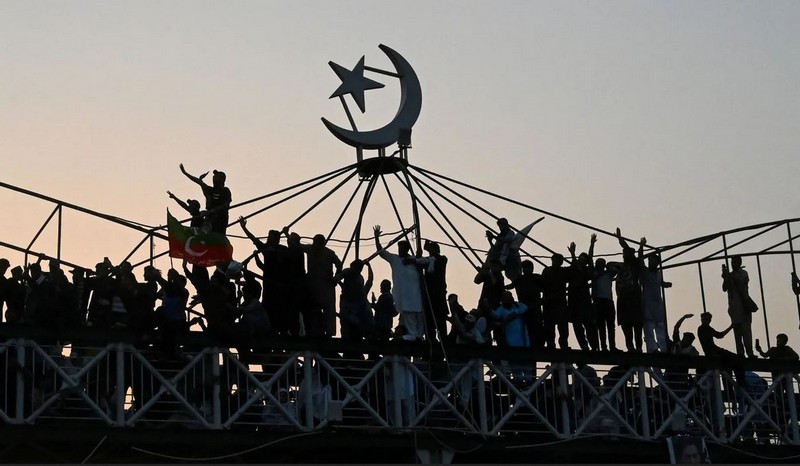
On cue, Imran Khan, who had already been fanning conspiracy theories about an “Israeli plot” against him before his removal as the prime minister in April, is now amplifying them in front of crowds of many thousands. At one recent mass rally he declared that his government was “ousted because of a conspiracy to install America’s puppets,” and alleged that the Israel visit was not only masterminded by the Sharif government that replaced his, but that it was “an attempt to impose the Indian-Israeli-American agenda on Pakistan and enslave Pakistan.”

Further than that, Khan is increasingly spilling the beans on the military leadership which once secured his position but with which he’s now at loggerheads. Khan has been reiterating how his successors have been “tasked with” recognizing Israel and a settlement over Kashmir with India, because of course that is precisely what he had been “tasked with” when he was in power.

Last week, the day after Khan first made the allegation that Pakistan’s current leaders were effectively Israel’s pawns, his rival, Prime Minister Shehbaz Sharif, attended the National Assembly session with a performative riposte, wearing a Palestinian scarf with “Jerusalem is ours” inscribed on it.

Antisemitic slurs are being hurled by both the government and the opposition. Maryam Nawaz, vice president of the ruling Pakistan Muslim League-Nawaz (PML-N) saying that Khan is the “only person in Pakistan with family ties to Israel,” alluding to his erstwhile marriage with Jemima Goldsmith. Fazlur Rehman, the Islamic cleric who is presiding over the ruling coalition Pakistan Democratic Movement (PDM), and who has spent the past couple of decades directing antisemitic hatred towards Khan, last week said that it was the ousted prime minister whose “agenda” was to recognize Israel and “taint Islam.”

Meanwhile, as the current government, like its predecessors, gaslights its way towards ties with Israel, the leaders of Khan’s Pakistan Tehrik-e-Insaf (PTI) are digging out developments from the PML-N’s previous tenure to suggest that the “plot” had been hatched even before Khan came to power. For Shireen Mazari, the former Khan administration’s human rights minister no less, the current government allowing a Jewish man, Fishel Benkhald, to correct his religion on official documents in 2017 came at the initiation of the “Israel agenda.” Benkhald, Pakistan’s “last Jew,” was part of the delegation that visited Israel last month.

Clearly, neither the government nor the Khan-led opposition wants the formalization of Israeli ties under their watch unless the military can guarantee protection from the inevitable electoral dent that the move would trigger. Prime Minister Shehbaz Sharif has been keen on subservience to the military. However, his government still isn’t certain of the depth and breadth of support it enjoys from the powers that be.

For instance, it took the government two months to make the commonsensical move on removing the unsustainable subsidy on fuel which had pulverized the Pakistani rupee, exacerbated the current account deficit and crashed the markets. Where aligning fuel prices with global crude hike is politically touted as a “tough decision,” recognizing Israel obviously goes off the difficulty charts. However, given that even in a crippling economic crisis, the government has managed to find a way to hike the defense budget by six percent shows that Sharif is willing to put it all on the line over the military bailing his regime out in the election now likely to be in 2023.

The military, of course, has much to gain from the godfathers of normalization with Israel, namely Saudi Arabia and the United States, and was increasingly alarmed by the strident anti-American tone adopted by Khan, particularly in his final months in office.

When Khan was visiting Putin and openly slamming the U.S. in the weeks leading up to his ouster, Army Chief Gen Qamar Javed Bajwa was orchestrating damage control with Washington in his public statements and diplomatic engagements, both official and backchannel. However, with Khan’s popularity escalating following his unceremonious exit in April, both Gen Bajwa and the institution that he leads, are facing vitriol across social media. #BajwaHasToGo was the top Twitter trend in Pakistan on Monday.

Indeed, a behind-the-scene turf war has been brewing within the military leadership, with a faction backing Khan, whose exit was prompted by the fallout his attempt to exercise the prime minister’s constitutional right to prolong the term of his spymaster instead of nominating Gen Bajwa’s choice. With Bajwa’s term ending in November, he wants a government willing to obediently follow his call and pick his choice as the next army chief.

But this has made Gen Bajwa enemies with Khan’s party, the political grouping that dominates social media like no other. As result, pushing ties with Israel, a treasonous, “anti-Pakistan” argument until last year, is now a popular accusation directed at the military leadership.

Meanwhile, Saudi Arabia, the principal force behind Pakistan’s Israel move, cannot afford to wait too long for Pakistan’s civil-military leaders to sort out their wariness over the consequences. With Israeli businesspeople, frequenting Saudi Arabia, the kingdom wants to formalize the ties swiftly especially with Joe Biden’s visit to the two countries – now postponed till July – likely to fortify defense alliances in the region.

Formalizing ties with Israel, coupled with peace in Jerusalem – which, in turn, would require a settlement acceptable to the Palestinian leadership – is the final piece in the Islamic jigsaw of the al-Saud family, with Crown Prince Mohammed bin Salman pivoting, in recent years, towards selling a tourism-friendly version of Islam.

The hub of Salafi jihadism for the past four decades, Saudi Arabia, is now coping with new economic realities after losing out oil dominance to U.S. shale in recent years, and with Islam evolving from being the source of al-Saud family’s control over Islamic sites in the Arabian Peninsula to now growing as the bedrock of the Saudi economy.

With Islamic pilgrimage already contributing over $12 billion to the Saudi economy, a reformed, moderate Islam will bolster Saudi geoeconomic power, especially if it can be coupled with hegemony over the Islamic heritage in the region. Easy access to Jerusalem would complete the Mecca-Medina-Jerusalem Islamic trail connecting the three holiest sites in Islam, with the theological rationale for brotherhood with Jews – fellow ‘people of the book’ in Islam – already being peddled by leading Saudi clerics in official sermons.

With the seven-decade old Turkey-Israel ties recently growing warmer after years of frigidity, encouraged by Saudi Arabia which has petrodollars that Recep Tayyip Erdogan desperately needs, and ever-closer ties between Israel and its Abraham Accords partners, it is Pakistan that remains the last Sunni Islamist bastion resisting Saudi normalization with Israel. Pakistan, too, will inevitably be offered sweeteners to soften its stance: massive financial gains to heal an ailing economy, which is once again at the doorstep of the International Monetary Fund for a bailout.

That bailout could allow the government, for instance, to pass a more populist budget next June in the lead up to national elections. A Saudi-backed influence campaign championing both subsidies for essential goods and access to Al-Aqsa could offer an enticing electoral slogan. Despite that, Saudi protection is largely for the military rulers invested in the country not imploding, financially or otherwise. The government wants safeguards from the army that in turn wants safeguards from Riyadh and DC, a veritable food chain of guarantees.

But with a significant chunk of Pakistanis, most notably Imran Khan’s followers, no longer being under the army’s control, it is already more difficult for both the U.S. and Saudi Arabia to leverage their influence. Biden and MBS will find little reassurance in solely incentivizing the military leadership, which has hitherto sufficed in guaranteeing Pakistan’s position in regard to Israel. In the meantime, Saudi Arabia is likely to soon make its move on Israel, with or without a Pakistan high on self-righteousness but running out of economic lifelines.

Kunwar Khuldune Shahid is a Pakistan-based journalist and a correspondent at The Diplomat.

13 June 2022

Source: www.haaretz.com

Summit of the Americas Fails: Boycott by Presidents of Mexico, Bolivia, Honduras, Guatemala

By Ben Norton

7 Jun 2022 –The US government’s Summit of the Americas started on June 6 in Los Angeles, California. And the event proved to be a major diplomatic failure for the Joe Biden administration.

Washington refused to invite the socialist governments of Cuba, Venezuela, and Nicaragua.

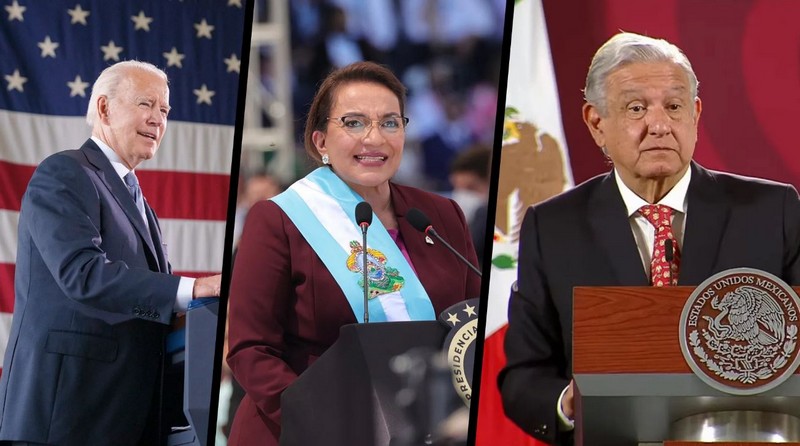
So to protest this exclusion, the presidents of Mexico, Bolivia, and Honduras boycotted the summit. Guatemala’s president also chose to skip the conference.

This means heads of state representing Latin American countries with a total population of more than 200 million people – a significant percentage of the Americas – refused to attend Washington’s Summit of the Americas.

US govt’s Summit of the Americas fails: Mexico, Bolivia, Honduras boycott

Mexico’s President AMLO boycotts the summit

The most significant absence was Mexico’s left-wing president, Andrés Manuel López Obrador, known popularly by the acronym AMLO.

“I am not going to the summit because not all of the countries of the Americas were invited,” AMLO explained in his morning press conference on June 6.

“I believe in the need to change the policy that has been imposed for centuries, the exclusion, the desire to dominate, the lack of respect for the sovereignty of the countries and the independence of every country,” the Mexican president explained.

“There cannot be a Summit of the Americas if all of the countries of the American continent do not participate,” López Obrador continued. “We consider that to be the old policy of interventionism, of a lack of respect for nations and their peoples.”

AMLO criticized the US Republican Party for its “extremist” positions against Cuba and racist policies against immigrants. But he also pointed out that some prominent figures in the Democratic Party, such as New Jersey Senator Bob Menendez, have also contributed to “hate” against Cuba and hawkish meddling in Latin America’s sovereign affairs.

“I don’t accept hegemonies,” AMLO added. “Not of China, not of Russia, not of the United States. All countries, no matter how small they are, are free and are independent.”

López Obrador said that Mexico’s foreign minister, Marcelo Ebrard, would instead attend the Summit of the Americas.

AMLO’s absence is especially significant given that, in addition to being neighbors with a 3,000-kilometer border, the United States and Mexico’s are each other’s top trading partners.

Mexico is the second-largest country in Latin America, in terms of population. It also has the second-biggest economy in the region.

Bolivia’s President Luis Arce boycotts the summit

Joining AMLO in condemning the US government’s policy of exclusion was Bolivia’s socialist President Luis Arce.

Bolivia’s foreign ministry confirmed on June 6 that Arce is not joining the summit either. Instead, the country’s ambassador to the Organization of American States (OAS), Héctor Arce, is attending.

In a Twitter thread the week before, Arce insisted that “it is time for the government of the United States to put an end to the senseless and criminal economic, commercial, and financial blockade that weighs on Cuba, as well as the more than 500 unilateral coercive sanctions imposed on Venezuela and Nicaragua.”

The Bolivian leader added, “With blockades and sanctions, a sustainable, resilient, and equitable future will never be able to be built in the hemisphere, as the next Summit of the Americas is proposing.”

Honduras’ President Xiomara Castro boycotts the summit

Honduras’ new left-wing President Xiomara Castro is boycotting the Summit of the Americas as well.

On May 28, Castro tweeted, “I will only attend the summit if all of the countries of America are invited without exception.”

On June 6, the Honduran president made good on her promise, and her government confirmed that Foreign Minister Eduardo Enrique Reina would attend instead.

Guatemala’s President Alejandro Giammattei boycotts the summit

While the majority of the leaders not attending the Summit of the Americas are left-wing, even Guatemala’s right-wing president, Alejandro Giammattei, announced that he will not be present.

Several officials from Giammattei’s government have been sanctioned by the United States, and he is protesting the Biden administration’s policies with his absence.
Protests planned against summit

The Caribbean Community (CARICOM), which represents 15 states, similarly threatened to boycott the summit if Cuba, Venezuela, and Nicaragua were excluded.

Several countries in the Caribbean did confirm they are attending, however. It is not clear how many are boycotting.

Brazil’s far-right leader, Jair Bolsonaro, had initially threatened not to attend the summit. Washington responded by promising Bolsonaro that it would welcome him to the White House and give him one-on-one meetings with Biden.

The far-right Brazilian autocrat thus changed his mind and decided to attend.

Bolsonaro is joined by the right-wing leaders of Colombia and Ecuador, as well as the centrist leaders of Chile and Argentina. (The conservative president of Uruguay, Luis Lacalle Pou, had planned to join, but was ultimately unable to do so because he got Covid-19.)

The Summit of the Americas was first convened by the United States in 1994, after the end of the first cold war, as a way for Washington to expand its hegemony in Latin America and the Caribbean.

That same year, the US government signed the North Atlantic Free Trade Agreement (NAFTA), a neoliberal deal with Mexico and Canada, which devastated Mexico’s local economy and fueled a wave of mass migration.

Numerous grassroots organizations, left-wing social movements, and labor unions have organized an alternative People’s Summit for Democracy to protest the US government’s Summit of the Americas.

The People’s Summit is hosting a series of demonstrations, panels, concerts, and cultural activities in California from June 8 to 10.

Benjamin Norton is a journalist, writer, and filmmaker.

13 June 2022

Source: www.transcend.org

Bilderberg Meets in Washington: Bilderberg Does China–An Economic Hurricane Is Coming

By Pepe Escobar

7 Jun 2022 – Discreetly, as under the radar as a looming virus, the 68th Bilderberg meeting is currently underway in Washington, D.C. Nothing to see here. No conspiracy theories about a “secret cabal”, please. This is just a docile, “diverse group of political leaders and experts” having a chat, a laugh, and a bubbly.

Still, one cannot but notice that the choice of venue speaks more volumes than the entire – burned to the ground – Library of Alexandria. In the year heralding the explosion of a much-awaited NATO vs. Russia proxy war, discussing its myriad ramifications does suit the capital of the Empire of Lies, much more than Davos a few weeks ago, where one Henry Kissinger sent them into a frenzy by advancing the necessity of a toxic compromise named “diplomacy”.

The list of Bilderberg 2022 participants is a joy to peruse. Here are just some of the stalwarts:

  • James Baker, Consigliere extraordinaire, now a mere Director of the Office of Net Assessment at the Pentagon.
  • José Manuel Barroso, former head of the European Commission, later the recipient of a golden parachute in the form of Chairman of Goldman Sachs International.
  • Albert Bourla, the Pfizer Big Guy.
  • William Burns, CIA director.
  • Kurt Campbell, the guy who invented the Obama/Hillary “pivot to Asia”, now White House Coordinator for Indo-Pacific.
  • Mark Carney, former Bank of England, one of the designers of the Great Reset, now Vice Chair of Brookfield Asset Management.
  • Henry Kissinger, The Establishment’s Voice (or a war criminal: take your pick).
  • Charles Michel, President of the European Council.
  • Minton Beddoes, Editor-in-Chief of The Economist, which will duly  relay all major Bilderberg directives in the magazine’s upcoming cover stories.
  • David Petraeus, certified loser of endless surges and Chairman of KKR Global Institute.
  • Mark Rutte, hawkish Prime Minister of the Netherlands.
  • Jens Stoltenberg, NATO top parrot, sorry, secretary-general.
  • Jake Sullivan, Director of the National Security Council.

The ideological and geopolitical affiliations of these members of the “diverse group” need no further elaboration. It gets positively sexier when we see what they will be discussing.

Among other issues we find

  • “NATO challenges”;
  • “Indo-Pacific realignment”;
  • “continuity of government and economy” (Conspirationists: continuity in case of nuclear war?);
  • “disruption of global financial system” (already on);
  • “post-pandemic health” (Conspirationists: how to engineer the next pandemic?);
  • “trade and deglobalization”;
  • and of course, the choice wagyu beef steaks: Russia and China.

As Bilderberg follows Chatham House Rules, mere mortals won’t have a clue of what they actually “proposed” or approved, and none of the participants will be allowed to talk about it with anyone else. One of my top New York sources, with direct access to most of the Masters of the Universe, loves to quip that Davos and Bilderberg are just for the messenger boys: the guys who really run the show don’t even bother to show up, ensconced in their uber-private meetings in uber-private clubs, where the real decisions are made.

Still, anyone following in some detail the rotten state of the “rules-based international order” will have a pretty good idea about the 2022 Bilderberg chatter.

What the Chinese say

Secretary of State Little Blinken – Sullivan’s sidekick in the ongoing Crash Test Dummy administration’s Dumb and Dumber remake – has recently claimed that China “supports” Russia on Ukraine instead of remaining neutral.

What really matters here is that Little Blinken is implying that Beijing wants to destabilize Asia-Pacific – which is a notorious absurdity. Yet that’s the master narrative that must pave the way for the US to muscle up its “Indo-Pacific” concoction. And that’s the briefing Sullivan and Kurt Campbell will be delivering to the “diverse group”.

Davos – with its new self-billed mantra, “The Great Narrative” – completely excluded Russia. Bilderberg is mostly about containment of China – which after all is the number one existential threat to the Empire of Lies and its satrapies.

Rather than wait for Bilderberg morsels dispensed by The Economist, it’s much more productive to check out what a cross-section of fact-based Chinese intelligentsia thinks about the new “collective West” racket.

Let’s start with Justin Lin Yifu, former Chief Economist of the World Bank and now Dean of the Institute of New Structural Economics at Peking University, and Sheng Songcheng, former head of the Financial Survey and Statistic Dept. a the Bank of China.

They advance that if China achieves “dynamic zero infection” on Covid-19 by the end of May (that actually happened: see the end of the Shanghai lockdown), China’s economy may grow by 5.5% in 2022.

They dismiss the imperial attempt to establish an “Asian version of NATO”: “As long as China continues to grow at a higher rate and to open up, European and ASEAN countries would not participate in the US’s decoupling trap so as to ensure their economic growth and job creation.”

Three academics from the Shanghai Institute of International Studies and Fudan University touch on the same point: the American-announced “Indo-Pacific Economic Framework”, supposed to be the economic pillar of the Indo-Pacific strategy, is nothing but a cumbersome attempt to “weaken the internal cohesion and regional autonomy of ASEAN.”

Liu Zongyi stresses that China’s position at the heart of the vastly inter-connected Asian supply chains “has been consolidated”, especially now with the onset of the largest trade deal on the planet, the Regional Comprehensive Economic Partnership (RCEP).

Chen Wengling, Chief Economist of a think tank under the key National Development and Reform Commission, notes the “comprehensive ideological and technological war against China” launched by the Americans.

But he’s keen to stress how they are “not ready for a hot war as the US and Chinese economies are so closely linked.” The crucial vector is that “the US has not yet made substantial progress in strengthening its supply chain focusing on four key fields including semiconductors.”

Chen worries about “China’s energy security”; “China’s silence” on US sanctions on Russia, which “may result in US retaliation”; and crucially, how “China’s plan of building the Belt and Road Initiative (BRI) with Ukraine and EU countries will be affected.” What will happen in practice is BRI will be privileging economic corridors across Iran and West Asia, as well as the Maritime Silk Road, instead of the Trans-Siberian corridor across Russia.

It’s up to Yu Yongding, from the Chinese Academy of Social Sciences (CASS) and a former member of the Monetary Policy Committee of the Central Bank, to go for the jugular, noting how” the global financial system and the US dollar have been weaponized into geopolitical tools. The nefarious behavior of the US in freezing foreign exchange reserves has not only seriously damaged the international credibility of the US but has also shaken the credit foundation of the dominant international financial system in the West.

He expresses the consensus among Chinese intel, that “if there is a geopolitical conflict between the US and China, then China’s overseas assets will be seriously threatened, especially its huge reserves. Therefore, the composition of China’s external financial assets and liabilities urgently needs to be adjusted and the portion of US dollar denominated assets in its reserves portfolio should be reduced.

This chessboard sucks

A serious debate is raging across virtually all sectors of Chinese society on the American weaponization of the world financial casino. The conclusions are inevitable: get rid of US Treasuries, fast, by any means necessary; more imports of commodities and strategic materials (thus the importance of the Russia-China strategic partnership); and firmly secure overseas assets, especially those foreign currency reserves.

Meanwhile Bilderberg’s “diverse group”, on the other side of the pond, is discussing, among other things, what will really happen in case they force the IMF racket to blow up (a key plan to implement The Great Reset, or “Great Narrative”).

They are starting to literally freak out with the slowly but surely emergence of an alternative, resource-based monetary/financial system: exactly what the Eurasia Economic Union (EAEU) is currently discussing and designing, with Chinese input.

Imagine a counter-Bilderberg system where a basket of Global South actors, resource-rich but economically poor, are able to issue their own currencies backed by commodities, and finally get rid of their status of IMF hostages. They are all paying close attention to the Russia gas-for-rubles experiment.

And in China’s particular case, what will always matter is loads of productive capital underpinning a massive, extremely deep industrial and civil infrastructure.

No wonder Davos and Bilderberg messenger boys, when they look at The Grand Chessboard, are filled with dread: their era of perpetual free lunch is over. What would delight cynics, skeptics, neoplatonists and Taoists galore is that it was Davos-Bilderberg Men (and Women) who actually boxed themselves into zugzwang.

All dressed up – with nowhere to go. Even JP Morgan’s Jamie Dimon – who didn’t even bother to go to Bilderberg – is scared, saying an economic “hurricane” is coming. And overturning the chessboard is no remedy: at best that may invite a ceremonious tuxedo visit by Mr. Sarmat and Mr. Zircon carrying some hypersonic bubbly.

Pepe Escobar, born in Brazil, is a correspondent and editor-at-large at Asia Times and columnist for Consortium News and Strategic Culture in Moscow.

13 June 2022

Source: www.transcend.org

Secretive Bilderberg Meetings of ‘Spies, War Hawks and World Leaders’ Escape Media Scrutiny

By Susan C. Olmstead

More than 100 of the world’s most powerful people last week participated in the secretive Bilderberg Meetings in Washington, D.C. — while the media paid little attention.

7 Jun 2022 – A secretive meeting of more than 100 of the world’s most powerful people just took place in a Washington, D.C. hotel behind closed doors and under tight security — while few reporters even took note.

Bilderberg Meetings attendees — including the director of the CIA, the secretary-general of NATO, European prime ministers, CEOs of pharmaceutical, energy and tech companies (including Pfizer CEO Albert Bourla) — gathered June 2-5 to discuss global issues under an anonymity agreement.

“The participants take part as individuals rather than in any official capacity, and hence are not bound by the conventions of their office or by pre-agreed positions,” the group’s website states.

On the agenda of the invitation-only summit were topics including “Disruption of the Global Financial System,” “Disinformation,” “Energy Security and Sustainability,” “Post Pandemic Health” and “Fragmentation of Democratic Societies.”

As an element of its secrecy, the annual conference invokes the “Chatham House Rule.” In meetings held under this rule, “participants are free to use the information received, but neither the identity nor the affiliation of the speaker(s) nor of any other participant may be revealed.”

Begun in 1954 by British and U.S. intelligence agencies, the Bilderberg conference has been held in various countries in Europe and North America, with a two-year gap during the COVID-19 pandemic.

About 120 North American and European leaders from Big Tech, Big Pharma, industry, finance, the military, politics and academia are invited each year.

Members of the media are not invited to report on the event “in order to encourage the highest level of openness and dialogue,” according to the Bilderberg Meetings website.

Bilderberg participants and security were barred from disclosing the location of the meeting and from quoting anyone during the “off-the-record sessions,” according to journalist Max Blumenthal, who attempted to enter the Mandarin Oriental Hotel while the meetings were taking place.

The group claims it does not hold a press conference regarding its agenda due to “lack of interest,” and that it “has never sought any public attention.”

However, it does issue a press release each year. The key topics for discussion listed in this year’s press release were:

  1. Geopolitical Realignments
  2. NATO Challenges
  3. China
  4. Indo-Pacific Realignment
  5. Sino-US Tech Competition
  6. Russia
  7. Continuity of Government and the Economy
  8. Disruption of the Global Financial System
  9. Disinformation
  10. Energy Security and Sustainability
  11. Post Pandemic Health
  12. Fragmentation of Democratic Societies
  13. Trade and Deglobalisation
  14. Ukraine

The Guardian noted that while in years past, meeting talking points were along the lines of “A Stable Strategic Order” and “What Next For Europe,” this year the agenda “reek[ed] of chaos and crisis.”

Sometimes “dismissed as a talking shop or crazed imagining of conspiracy theorists,” Bilderberg instead “is a major diplomatic summit,” reported The Guardian.

Independent journalist Josh Friedman was one of the few people who waited outside the Mandarin Oriental hotel to catch glimpses of the secret proceedings:

English writer Charlie Skelton also tweeted on the meetings, noting the mainstream press’s curious lack of interest and the irony of having to rely on Twitter for insight into the proceedings.

“It’s a mad irony that the head of NATO [Jens Stoltenberg] is doing more actual reporting on #Bilderberg2022 than almost every news outlet in the world,” he wrote.

“The Dutch Foreign Minister says that at #Bilderberg2022 he’d be discussing international affairs ‘with colleagues from different disciplines,’” he also tweeted.

“Splendidly euphemistic to call the heads of [French multinational insurance company] AXA, [investment company] KKR, [investment firm] Thiel Capital, [investment banking advisory firm] Evercore [and] Amundi (Europe’s biggest asset manager) your ‘colleagues.’”

Journalist Kim Iversen reported on the gathering of what she called “spies, war hawks and world leaders” on a recent episode of The Hill’s “Rising.”

“Aren’t we, the people, entitled to a reading of the minutes?” she asked.

Absolutely, said guest Olayemi Olurin, a public defender for the Legal Aid Society. “When it comes to our lawmakers and the people who are responsible for us and make these decisions over our lives — especially at a time like this — we should know everything they’re discussing, who they’re discussing it with and why.”

It’s not a “conspiracy theory” to believe the secrecy of the Bilderberg Meetings is suspicious, said Iversen. “We’ve been putting up with this for a really long time,” she said. “There’s not a lot of light shed on this … anybody who then talks about it is called a conspiracy theorist.”

Olurin agreed. “There [are] definitely things being discussed they don’t want us to know about here [or] even get an indication that it might be happening, so that tells me everything I need to know,” she said.

Watch the “Rising” episode here:

Kim Iversen: Inside The SECRET Bilderberg Meetings Between Spies, War Hawks And World Leaders

Susan C. Olmstead is the assistant editor of The Defender.

13 June 2022

Source: www.transcend.org


Ukraine and the Risk of Geopolitical Conflict — A Reawakening to Nuclear Dangers?

By Richard Falk

11 Jun 2022 – The post below is an interview/conversation with my brilliant former student, Asli Bali, current star UCLA law professor, and cherished friend. It was previously published by the Global Governance Forum on June 8th, 2022, an excellent source of scholarly reflections on global issues.

*******************************

The risk of nuclear escalation in the context of Russia’s invasion of Ukraine has been a subject of considerable debate in the United States among scholars, policy analysts and media commentators. These debates reveal a broad spectrum of views from those who dismiss Russian references to nuclear capabilities as mere saber rattling to those who worry that if Russian President Vladimir Putin finds his back to the wall in Ukraine, he may resort to tactical nuclear strikes. Whatever the assessment of the risks in Ukraine, it is clear that questions of nuclear deterrence are back on the table after nearly a generation in which most American analysts viewed non-proliferation as the sole U.S. foreign policy objective regarding nuclear arsenals.

For those who have continued to press concerns about nuclear disarmament since the end of the Cold War, the return of the nuclear question may be an opportunity to raise awareness among new audiences about the existential threat posed by existing nuclear arsenals. Richard Falk has for decades been an outspoken authority calling for denuclearization. In this interview, Aslı Bâli invites Professor Falk to reflect on whether the Ukraine conflict risks becoming a military confrontation that tips the world into further nuclear escalation or whether there remains an opportunity to move the world away from the nuclear precipice.

Introduction: The Folly of Ignoring Disarmament

Aslı Bâli: To begin our conversation, it would be useful to provide some context as to why nuclear disarmament was largely sidelined as an urgent international question in the post-Cold War period. How might we think about the last two decades in particular, during which the possibility of the development of an Iranian nuclear arsenal was deemed so much more threatening than the existence of extensive nuclear arsenals in the hands of other states?

Richard Falk: I think the last two decades reflect a period in which the nuclear weapons states, particularly the US, have felt comfortable with the nuclear status quo. Their preference was to organize this arrangement—in which they maintain nuclear arsenals and other states forego that option—as a permanent regime anchored in the non-proliferation treaty (NPT) interpreted in such a way as to drop the disarmament requirements of that treaty. Article VI of the NPT contains the good faith nuclear disarmament obligation, which was supposedly the bargain that induced the non-nuclear states to become parties to the treaty. The attempt by nuclear weapons states to drop this element from the treaty arrangement creates an interesting international law situation: There’s a breach of an essential provision of the NPT, yet this is treated by the US and NATO countries as a sort of a great achievement of international law. The NPT is reduced to an arrangement that at least put certain limits on the proliferation of nuclear weapons, and kept the control of them and the discretion to develop and threaten to use them, and to determine how they would be used in crisis situations, purely under the national sovereign control of states already in possession of such arsenals.

For example, I participated in a Council on Foreign Relations event about the future of national security, and one of the participants there introduced the idea that Article VI is best understood as ‘a useful fiction.’ That is, Article VI was included in the treaty as a way of satisfying non-nuclear countries that they entered into some sort of equitable bargaining situation. Whereas in fact there was a tacit understanding from the beginning that disarmament was not a realistic, or even a desirable goal, to be pursued by the nuclear weapons states, at least not by the United States.

In considering the broader context that has, as you put it, sidelined the issues of nuclear disarmament, the other thing to be emphasized is that there had crept in a kind of complacency about this weaponry. There are thousands of nuclear weapons, especially in the US and Russia, and very little idea of existing constraints on their threat or use or under what circumstances these arsenals might be introduced into diplomacy or even combat situations. The U.S. in particular, and some other countries like Israel, have been developing combat roles for certain types nuclear weapons—styled as tactical nuclear arms or so-called “mini-nukes”—that suggested they might actually be introduced into regional conflicts. Given the array of bilateral conflicts that have the risk of nuclear escalation including on the Korean peninsula, in India/Pakistan and perhaps Israel’s posture in the Middle East, this possibility has been an increasingly uncomfortable one to which there has been no concerted or consistent international response.

The risks of the overall situation are well-reflected for those who follow the nuclear issue by the fact that the Doomsday clock—maintained by the Bulletin of Atomic Scientists and often relied upon as an accurate assessment of nuclear danger at a given time—has moved ever closer in this period to midnight. Prior to the Ukraine crisis I think it was already only one hundred second away from midnight. In the words of the editors, “the Clock remains the closest it has ever been to civilization-ending apocalypse.” The complacency toward this weaponry and the satisfaction with the NPT regime that has allowed powerful states to retain a hierarchical relationship to the non-nuclear states are important dimensions of this doomsday risk. Thus, the situation prior to Ukraine required urgent action to avoid existential dangers, but global complacency and the diversionary focus on containing proliferation threats posed by non-nuclear states rather than addressing the risks of existing arsenals has kept the nuclear agenda from any serious engagement with disarmament as a priority.

Global Acquiescence in Great Power Nuclearism

Aslı Bâli: Your response raises one further question: why, in your view, have the non-nuclear states acquiesced in the violation of the core bargained-for agreement they had negotiated in the NPT? 

Richard Falk: I think the non-nuclear weapons states, too, have adapted to this complacent atmosphere when it comes to nuclear weapons. This may reflect their sense that they lack leverage over global nuclear policy in a post-Cold War context. During the Cold War, there had been some willingness on the part of the Soviet Union and then China to engage in a disarmament process and the non-nuclear states had followed their lead on negotiating arsenal reductions. But in the post-Cold War period, the U.S. shifted away from even the pretense of disarmament priorities and there has been an absence of powerful states pushing back against this trajectory. That said, I do think there is now emerging a critical outlook on the part of the Global South that may alter course back in manner more favorable to the views of disarmament advocates. This has been most clearly expressed in a new treaty, the Treaty on the Prohibition of Nuclear Weapons (TPNW), which was signed in 2017 and came into force with over sixty ratifications in 2021. The treaty itself was originally supported by as many as 120 countries, though it has only garnered signatures from about two thirds of that number and been ratified by a little more than half.

There is sort of a free-floating anxiety about the possibility that nuclear weapons use might occur on the European continent and this may have a galvanizing effect…

Another indication of renewed Global South resistance to demoting the nuclear weapons states disarmament obligations is evident in the twice delayed review conference called for by the NPT. Such a review conference is supposed to take place every five years and the pivotal Tenth Review Conference was scheduled for 2020. Originally postponed due to the COVID-19 pandemic, it was supposed to be rescheduled for 2021 and was postponed again to 2022 and may now take place in August of this year. But in addition to pandemic-related reasons, it is understood that the deferrals have been prompted by the concern among nuclear weapons states that there may encounter friction with the Global South over disarmament.

In short, even prior to Ukraine there was reason to think that there is a new international mood at the intergovernmental level concerning the threat posed by existing nuclear arsenals. I think the Ukraine events have now added momentum to this shift by reawakening at the civil society level palpable concern over the threat or use of nuclear weapons. So this is a time when I think there may be a revival of pressure from below to put nuclear disarmament back on the global policy agenda.

The Risks of Escalation in Ukraine

Aslı Bâli: Some have characterized the Ukraine conflict as illustrating the degree to which global powers might stumble blindly into a nuclear confrontation. Is it your sense that there are opportunities to contain this risk today whether through intergovernmental diplomacy or global civil society mobilization?

Richard Falk: Well, I think at the civil society level there is a definite concern though it is not too well-focused at this point. There is sort of a free-floating anxiety about the possibility that nuclear weapons use might occur on the European continent and this may have a galvanizing effect that leads to forms of domestic pressure in some European states to take action to offset such a risk. I also think that some in the Biden administration have changed their views of the Ukraine conflict as the potential nuclear dimensions of the conflict have come into clearer focus. At an earlier stage of the Ukraine war, it seemed as if Biden officials didn’t consider very seriously the nuclear risk, though they were always in some sense sensitive to the wider war dangers of escalation. This sensitivity was evident, for example, in Biden’s resistance to calls, especially from Congress and right-wing think tanks, to establish a no-fly zone in Ukraine, and originally in his hesitance to supply offensive weaponry to the Ukrainians. Similarly, the early posture of not interfering with Ukrainian President Volodymyr Zelensky’s efforts at seeking some sort of negotiated compromise indicated that the Biden administration was wary of escalation, and willing to allow Ukraine to control its own future.

But in a second phase of the conflict, when the Ukrainian resistance turned out to be more successful than anticipated, and strategic defeat or weakening of Russia seemed possible and strategically attractive, the Biden administration’s priorities visibly shifted and they manifestly treated the Ukraine war as an opportunity to teach Russia a lesson and to signal China that if they tried anything similar with Taiwan, they would face an even worse outcome. This latter point was provocatively underscored by Biden during his recent trip to Asia that featured a strong public statement committing the US to the defense of Taiwan.

With respect to the Ukraine conflict I have drawn a distinction between two levels. First, there is the Russia-Ukraine confrontation over issues that pertain to their bilateral conflict. But secondly, there is the geopolitical level of interaction between the US and Russia, which entails a confrontation whose stakes exceed the question of Ukraine. Here, escalation was stimulated by what I view as the quite irresponsible rhetoric from the Biden administration that demonized Putin. To be sure, Putin is not a particularly attractive political leader, but even during the Cold War American leaders sensibly refrained from demonizing Stalin or other Soviet leaders. Some public officials, congresspeople, did demonize Soviet officials and policies but leaders in the executive branch refrained from that because it would create such an evident obstacle to keeping open necessary diplomatic channels between the US and the Soviets.

Regrettably, in the second phase of the current conflict in Ukraine, the U.S. became a source of escalation. American influence was directed also at more or less discouraging President Zelensky from further seeking a negotiated ending of the war on the ground. Instead, the U.S. position seemed to harden around pursuit of strategic victory. This was made explicit by Secretary of State Antony Blinken and Defense Secretary Lloyd Austin who commented on the opportunity to weaken Russia. I think that now we are entering a third phase of the Ukraine conflict where there is some recognition in Washington and elsewhere that the Biden administration went too far in an escalatory direction. But the worry is that those earlier actions have created a momentum that will be difficult to reverse, and the tragic result will be a prolonged war in Ukraine, with terrible adverse consequences, for the world economy, and especially the countries dependent on affordable access to food and energy, widely imperiled by the impact of the war on Ukraine and the sanctions on Russia.

Stumbling into Nuclear Conflict?

Aslı Bâli: Given your analysis of the U.S. role in escalating the conflict in Ukraine, what in your view is the current risk of either nuclear confrontation or further erosions of the possibility of promoting U.S.-Russian arms control and nuclear disarmament?

Richard Falk: The discouraging thing in this third phase is that the Biden administration still hasn’t clearly opened the door to a diplomatic resolution or emphasized the importance of a cease fire that might stop the immediate killing and enable de-escalation. What this suggests is that there will be one of two bad scenarios unfolding as the Ukraine Crisis continues: the first is that the risk and costs of a long war in Ukraine results in the U.S. further escalating in order to try to bring the war to a faster conclusion by making Moscow give in, or withdraw, or do something that allows Ukraine and the US to claim victory. That approach really would put maximum pressure on Putin who, in turn, might determine that facing such a serious existential danger to Russian security justifies a robust response that includes the threat and possibly even the use of tactical nuclear weapons as a way, and maybe the only way, to avoid strategic defeat.

The second scenario is that the U.S. might be prepared to live with a prolonged war and hope that  at some point Moscow will tire of the experience, the way the Soviets did in Afghanistan and that the US did in Vietnam. But recent experience suggests just how destructive this course would be for Ukraine and the world. It took the U.S. twenty years to extricate itself from Afghanistan, leaving that country in ruins, millions permanently displaced, facing famine, and untold hundreds of thousands of Afghanis maimed or worse. Equally depressing, as others have pointed out, the likely outcome from the Ukrainian point of view will be the same, whether the war is ended next week or ten years from now except that a longer war will result in more casualties and greater devastation.

Aslı Bâli: Could you say more about what you would expect at the end of the Ukraine conflict whether it happens through early negotiations or at the end of a protracted war?

Richard Falk: Well, I expect that the most likely scenario for an end to the conflict will entail some concessions by Ukraine in relation to the Donbas region of Eastern Ukraine, together with a pledge of neutrality for the country as a whole, and non-membership in NATO. In exchange for such concessions, Russia would likely be expected to pledge in turn that it would  respect the sovereign rights and political independence of the Ukraine. In all likelihood the question of Crimea will not be addressed in the course of ending the current conflict. The contours of such a negotiated end to the conflict had already emerged in talks between the Russian and Ukrainian sides in March and there is little reason to think these parameters will change substantially. In other words, this outcome could have been achieved earlier, certainly in the first phase of the conflict if not prior to the Russian attack, before early Ukrainian victories led to the second geopolitical phase of escalation.

Multipolarity Among Nuclear Powers

Asli Bali: Given this assessment, what opportunities, if any, do you see for reviving calls for nuclear disarmament in response to the nuclear risks made evident by the Ukraine conflict?

Richard Falk: Of course there is a very dark form of opportunity that might emerge if there is indeed a nuclear confrontation and the use of tactical or other nuclear weapons. Such a development would certainly generate a widespread call for disarmament—one hopes that doesn’t occur, of course. Beyond this apocalyptic scenario, it is a little unpredictable whether there will emerge a recognition that the pursuit of permanent stability via the non-proliferation approach should be superseded by a new effort at nuclear disarmament. I think it would be very globally popular thing to try to explore that possibility, and I would imagine the Chinese at least would be quite open to that.

In the background of such speculation is the question of whether the US is prepared to live in a multipolar world. Certainly, the post-Cold War period afforded the U.S. the opportunity to nurture illusions that the collapse of the Soviet Union might usher in a durable era in which it was the only global geopolitical actor. In a sense this is what Secretary Blinken presumably meant when he says in speeches that the idea of spheres of influence should have been relegated to the dustbin of history. The thought is that after WWII, or at the very least following the Cold War, the U.S. prefers to preside over a system in which its own influence is confined by no sphere and extends in truly global fashion. Of course, had the US adopted this posture in the immediate aftermath of WWII, as Secretary Blinken suggests, it would have amounted to a declaration of a third world war. This is because ruling out spheres of influence would have mean blocking Soviet intervention in Eastern Europe, whether in Hungary in 1956 or Czechoslovakia in 1968. Moreover, what Blinken is suggesting today is not a world without spheres of influence but rather a kind of Monroe doctrine for the world in which the US regards the global order as its sphere of influence alone. And, of course, the Monroe doctrine in the narrower conventional sense is also alive and well as the US continues to assert its prerogative to dictate policies to countries in this hemisphere from Cuba to Venezuela to Nicaragua and beyond.

Against this backdrop, it is worth noting that the ongoing US effort at global supremacy does put it at a massive asymmetric advantage over all other actors in exerting influence without bounds. With some 800 foreign bases—and a context in which 97% of all foreign bases globally are American—and troops stationed in every continent the US has extended its influence globally and naval commands in every ocean. Meanwhile, of course, alongside this enormous investment in militarism is profound disinvestment in the infrastructure and social services needed to sustain its own population domestically. In short, the US effort to prevent a multipolar order from challenging its own claim to global supremacy is coming at an enormous cost at home and is currently faltering abroad. The risk is that this approach is increasingly tied to an investment in ensuring strategic weakness for the Russians in Ukraine, which, in turn, feeds nuclear brinksmanship.

Ukraine and the Deepening Global Divide

Aslı Bâli: There is something distressing about the way in which the Ukraine conflict has reset the domestic debate, which at the end of the Trump years and in the 2020 presidential election had begun to converge around the idea of restraining American militarism and ending endless wars. Today, bipartisan consensus around an enhanced defense budget and massive military aid to Ukraine may be eclipsing those earlier commitments. Do you consider the Ukraine conflict as providing a new lease on life for the project of American primacy?

Richard Falk: I’m afraid that might be right. Biden was so committed to unifying the country as part of his presidential campaign—the image of himself as someone who is able to “cross the aisle” and generate bipartisan consensus. In fact, however, that project failed miserably with the Republican side converging around Trump’s constituencies. The Ukraine war has somewhat reshuffled the deck and Biden seems keen to embrace this opportunity to forge bipartisan consensus around war. His popularity level remains surprisingly low, but the surge of Cold War bipartisanship in relation to appropriating billions of dollars for Ukraine is undeniable. From a global perspective, however, this great show of empathy for Ukrainian suffering and civilian damage and refugees, and so on, sets a stark contrast to the ways in which the US and the West responded to other humanitarian crises. Thus one price of unity at home may be an increasingly divided world in which US standing declines further. The specific comparisons between the Western response to Ukraine and their indifference and callous disregard for the plight of Palestinians, the consequences of the Iraq War, and the displacement generated by the Syrian conflict is difficult to explain without conceding an element of racism. This reality has hardly escaped the attention of governments and communities in the Global South.

Stepping Back from the Nuclear Precipice?

Aslı Bâli: Returning to the nuclear question, you have suggested that the Ukraine war has awakened a new generation to the real risks of the nuclear arsenals retained by global powers. Do you believe that this awareness alongside concerns about the double standards attached to American hegemony might mobilize new global social movements calling for disarmament and a more equitable international order?

Richard Falk: I certainly hope that might be the case. I think it would be premature to expect the Ukraine conflict alone to rekindle a vibrant anti-nuclear movement at this point. But there may be further developments that do have such a galvanizing effect, something that unfortunately cannot be discounted as the Russians engage in nuclear drills to remind Western states of the risks of escalation in Ukraine. There are also other nuclear dangers that are looming in the world. I think the Israel-Iran relationship is very unstable and may produce some renewed awareness of nuclear risk; the same is also true of the conflicts in India-Pakistan and the Korean peninsula. So new generations may come to understand that the idea of achieving stability with nuclear weapons is a kind of false utopia. This brings me back to the cynical idea that I encountered at the Council on Foreign Relations about disarmament being a useful fiction to appease publics in the Global South. At the time, and there was no real pushback against that assertion. The response of the audience was to simply acknowledge that this is how realist elites talks about national security. It is this kind of acquiescence and complacency that poses the greatest obstacle to global social organizing around disarmament and, thus, the greatest risk that we may stumble into an existential crisis. I hope that the threats that are now manifest in Ukraine and beyond might spark new forms of awareness amongst the now mobilized younger generations leading social movements for environmental and racial justice. Nuclear arsenals pose an existential threat to our planet alongside the reckless climate policies, massive wealth disparities and the virulent structural racism that plague the global order. There is much work to do to address all of these challenges, but we would well begin by recognizing nuclear abolition as an urgent priority.

Richard Falk is a member of the TRANSCEND Network, Albert G. Milbank Professor Emeritus of International Law at Princeton University, Chair of Global Law, Faculty of Law, at Queen Mary University London,  Research Associate the Orfalea Center of Global Studies at the University of California, Santa Barbara, and Fellow of the Tellus Institute. He directed the project on Global Climate Change, Human Security, and Democracy at UCSB and formerly served as director the North American group in the World Order Models Project. Between 2008 and 2014, Falk served as UN Special Rapporteur on Human Rights in Occupied Palestine.

13 June 2022

Source: www.transcend.org

Rossiya TV Interviews Vladimir Putin

By Presidential Executive Office

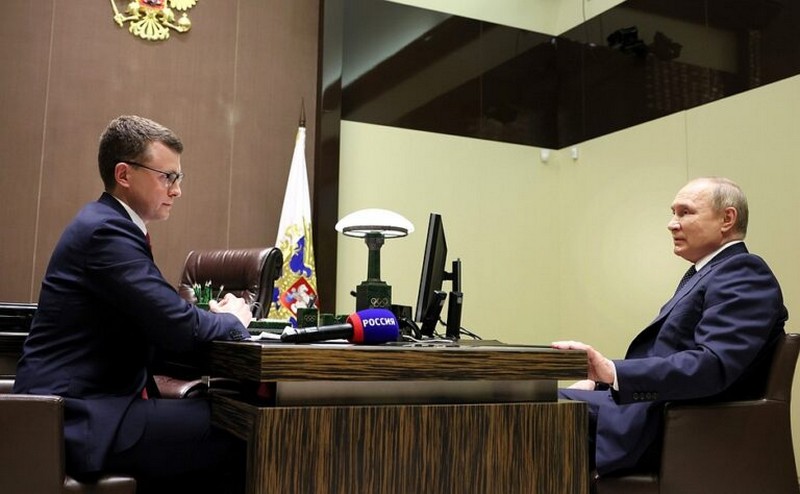
3 Jun 2022 – The Russian President answered questions from Pavel Zarubin of Rossyia 1 TV channel.

************

This extensive interview on the global as well as European resource crisis provides more than statement of Russia’s perspective. It also frames issues structurally that need to be addressed in every capital and policy arena. Its factual detail should be checked for validity, of course, and the assignment of responsibility carefully considered. It should be noted that several of those details will come as a surprise to those who rely on Western MSM for their information. (For example, it was Ukraine that mined the waters off Odessa – not Russia as claimed by a headline story in yesterday’s NYT which is wholly fallacious). However we judge the actions of Russia, and others, I see no advantage in having a political elite – including those in power – who wear their ignorance as some sort of insignia of rank. — Prof. Michael Brenner

************

Pavel Zarubin: Mr President, we have just followed your meeting with the head of Senegal who is also the current leader of the African Union. He expressed, and actually in the past week many countries have expressed concern not so much about the food crisis, but they are afraid of large-scale famine because world food prices are climbing and so are oil and gas prices, These issues are interrelated.

Naturally, the West blames Russia for this, too. What is the real situation at this point, how is it developing? And what do you think will happen in the food and energy markets?

President of Russia Vladimir Putin: Yes, indeed, we are seeing attempts to place the responsibility on Russia for developments in the global food market and the growing problems there. I must say that this is another attempt to pin the blame on someone else. But why?

First, the situation with the global food market did not become worse yesterday or even with the launch of Russia’s special military operation in Donbass, in Ukraine.

The situation took a downturn in February 2020 during the efforts to counter the coronavirus pandemic when the global economy was down and had to be revived.

The financial and economic authorities in the United States, of all things, found nothing better than to allocate large amounts of money to support the population and certain businesses and economic sectors.

We generally did almost the same thing, but I assure you that we were much more accurate, and the results are obvious: we did this selectively and got the desired results without affecting macroeconomic indicators, including excessive inflation growth.

The situation was quite different in the United States. The money supply in the United States grew by 5.9 trillion in less than two years, from February 2020 to the end of 2021 – unprecedented productivity of the money printing machines. The total cash supply grew by 38.6 percent.

Apparently, the US financial authorities believed the dollar was a global currency, and it would spread, as usual, as it did in previous years, would dissolve in the global economy, and the United States would not even feel it. But that did not happen, not this time. As a matter of fact, decent people – and there are such people in the United States – the Secretary of the Treasury recently said they had made a mistake. So, it was a mistake made by the US financial and economic authorities – it has nothing to do with Russia’s actions in Ukraine, it is totally unrelated.

And that was the first step – and a big one – towards the current unfavourable food market situation, because, in the first place, food prices immediately went up, they grew. This is the first reason.

The second reason was European countries’ short-sighted policies, and above all, the European Commission’s policy in regard to energy. We see what is going on there. Personally, I believe that many political players in the United States and Europe have been taking advantage of people’s natural concerns about the climate, climate change, and they began to promote this green agenda, including in the energy sector.

It all seems fine, except for the unqualified and groundless recommendations about what needs to be done in the energy sector. The capabilities of alternative types of energy are overestimated: solar, wind, any other types, hydrogen power – those are good prospects for the future, probably, but today, they cannot be produced in the required amount, with the required quality and at acceptable prices. And at the same time, they began to belittle the importance of conventional types of energy, including, and above all, hydrocarbons.

What was the result of this? Banks stopped issuing loans because they were under pressure. Insurance companies stopped insuring deals. Local authorities stopped allocating plots of land for expanding production and reduced the construction of special transport, including pipelines.

All this led to a shortage of investment in the world energy sector and price hikes as a result. The wind was not as strong as expected during the past year, winter dragged on, and prices instantly soared.

On top of all that, the Europeans did not listen to our persistent requests to preserve long-term contracts for the delivery of natural gas to European countries. They started to wind them down. Many are still valid, but they started winding them down. This had a negative effect on the European energy market: the prices went up. Russia has absolutely nothing to do with this.

But as soon as gas prices started going up, fertiliser prices followed suit because gas is used to produce some of these fertilisers. Everything is interconnected. As soon as fertiliser prices started growing, many businesses, including those in European countries, became unprofitable and started shutting down altogether. The amount of fertiliser in the world market took a dive, and prices soared dramatically, much to the surprise of many European politicians.

However, we warned them about this, and this is not linked to Russia’s military operation in Donbass in any way. This has nothing to do with it.

But when we launched our operation, our so-called European and American partners started taking steps that aggravated the situation in both the food sector and fertiliser production.

By the way, Russia accounts for 25 percent of the world fertiliser market. As for potash fertilisers, Alexander Lukashenko told me this – but we should double-check it, of course, although I think it is true – when it comes to potash fertilisers, Russia and Belarus account for 45 percent of the world market. This is a tremendous amount.

The crop yield depends on the quantity of fertiliser put into the soil. As soon as it became clear that our fertilisers would not be in the world market, prices instantly soared on both fertilisers and food products because if there are no fertilisers, it is impossible to produce the required amount of agricultural products.

One thing leads to another, and Russia has nothing to do with it. Our partners made a host of mistakes themselves, and now they are looking for someone to blame. Of course, Russia is the most suitable candidate in this respect.

Pavel Zarubin: Incidentally, it has just been reported that the wife of the head of our largest fertiliser companies has been included in the new European package of sanctions. What will all this lead to in your opinion?

Vladimir Putin: This will make a bad situation worse.

The British and later the Americans – Anglo-Saxons – imposed sanctions on our fertilisers. Then, having realised what was happening, the Americans lifted their sanctions, but the Europeans did not. They are telling me themselves during contacts: yes, we must think about it, we must do something about it, but today they have just aggravated this situation.

This will make the situation in the world fertiliser market worse, and hence the crop prospects will be much more modest, and prices will keep going up – that is it. This is an absolutely myopic, erroneous, I would say, simply stupid policy that leads to a deadlock.

Pavel Zarubin: But Russia is accused by high-ranking officials of preventing the grain that is actually there, in Ukrainian ports, from leaving.

Vladimir Putin: They are bluffing, and I will explain why.

First, there are some objective things, and I will mention them now. The world produces about 800 million tonnes of grain, wheat per year. Now we are being told that Ukraine is ready to export 20 million tonnes. So, 20 million tonnes out of 800 million tonnes amounts to 2.5 percent. But if we proceed from the fact that wheat accounts for merely 20 percent of all food products in the world – and this is the case, this is not our data, it comes from the UN – this means that these 20 million tonnes of Ukrainian wheat are just 0.5 percent, practically nothing. This is the first point.

The second. 20 million tonnes of Ukrainian wheat are potential exports. Today, the US official bodies also say that Ukraine could export six million tonnes of wheat. According to our Ministry of Agriculture, the figure is not six but about five million tonnes, but okay, let us assume it is six, plus it could export seven million tonnes of maize – this is the figure of our Ministry of Agriculture. We realise that this is not much.

In the current agricultural year of 2021–2022, we will export 37 million and, I believe, we will raise these exports to 50 million tonnes in 2022–2023. But this is apropos, by the way.

As for shipping out Ukrainian grain, we are not preventing this. There are several ways to export grain.

The first one. You can ship it out via the Ukraine-controlled ports, primarily in the Black Sea – Odessa and nearby ports. We did not mine the approaches to the port – Ukraine did this.

I have already said to all our colleagues many times – let them demine the ports and let the vessels loaded with grain leave. We will guarantee their peaceful passage to international waters without any problems. There are no problems at all. Go ahead.

They must clear the mines and raise the ships they sunk on purpose in the Black Sea to make it difficult to enter the ports to the south of Ukraine. We are ready to do this; we will not use the demining process to initiate an attack from the sea. I have already said this. This is the first point.

The second. There is another opportunity: the ports in the Sea of Azov – Berdyansk and Mariupol – are under our control, and we are ready to ensure a problem-free exit from these ports, including for exported Ukrainian grain. Go ahead, please.

We are already working on the demining process. We are completing this work – at one time, Ukrainian troops laid three layers of mines. This process is coming to an end. We will create the necessary logistics. This is not a problem; we will do this. This is the second point.

The third. It is possible to move grain from Ukraine via the Danube and through Romania.

Fourth. It is also possible through Hungary.

And fifth, it is also possible to do this via Poland. Yes, there are some technical problems because the tracks are of different gauges and the wheel bogies must be changed. But this only takes a few hours, that is all.

Finally, the easiest way is to transport grain via Belarus. This is the easiest and the cheapest way because from there it can be instantly shipped to the Baltic ports and further on to any place in the world.

But they would have to lift the sanctions from Belarus. This is not our problem though. At any rate, President of Belarus Alexander Lukashenko puts it like this: if someone wants to resolve the problem of exporting Ukrainian grain, if this problem exists at all, please use the simplest way – through Belarus. No one will stop you.

So, the problem of shipping grain out of Ukraine does not really exist.

Pavel Zarubin: How would the logistics work to ship it from the ports under our control? What would the conditions be?

Vladimir Putin: No conditions.

They are welcome. We will provide peaceful passage, guarantee safe approaches to these ports, and ensure the safe entry of foreign ships and passage through the Sea of Azov and the Black Sea in any direction.

By the way, several ships are stuck in Ukrainian ports at this point. These are foreign ships, dozens of them. They are simply locked up and their crews are still being held hostage.

13 June 2022

Source: www.transcend.org

US IS TRAPPED IN A DEATH SPIRAL – Princeton, New Jersey (Scheerpost) —

US IS TRAPPED IN A DEATH SPIRAL – Princeton, New Jersey (Scheerpost) —

By Chris Hedges

The United States, as the near unanimous vote to provide nearly $40 billion in aid to Ukraine illustrates, is trapped in the death spiral of unchecked militarism. No high speed trains. No universal health care. No viable Covid relief program. No respite from 8.3 percent inflation. No infrastructure programs to repair decaying roads and bridges, which require $41.8 billion to fix the 43,586 structurally deficient bridges, on average 68 years old. No forgiveness of $1.7 trillion in student debt. No addressing income inequality. No program to feed the 17 million children who go to bed each night hungry. No rational gun control or curbing of the epidemic of nihilistic violence and mass shootings. No help for the 100,000 Americans who die each year of drug overdoses. No minimum wage of $15 an hour to counter 44 years of wage stagnation. No respite from gas prices that are projected to hit $6 a gallon.

The permanent war economy, implanted since the end of World War II, has destroyed the private economy, bankrupted the nation, and squandered trillions of dollars of taxpayer money. The monopolization of capital by the military has driven the US debt to $30 trillion, $ 6 trillion more than the US GDP of $ 24 trillion. Servicing this debt costs $300 billion a year.
US spent more on the military, $ 813 billion for fiscal year 2023, than the next nine countries, including China and Russia, combined.

US is paying a heavy social, political, and economic cost for its militarism. Washington watches passively as the U.S. rots, morally, politically, economically, and physically, while China, Russia, Saudi Arabia, India, and other countries extract themselves from the tyranny of the U.S. dollar and the international Society for Worldwide Interbank Financial Telecommunication (SWIFT), a messaging network banks and other financial institutions use to send and receive information, such as money transfer instructions. Once the U.S. dollar is no longer the world’s reserve currency, once there is an alternative to SWIFT, it will precipitate an internal economic collapse. It will force the immediate contraction of the U.S. empire shuttering most of its nearly 800 overseas military installations. It will signal the death of Pax Americana.

Democrat or Republican. It does not matter. War is the raison d’état of the state. Extravagant military expenditures are justified in the name of “national security.” The nearly $40 billion allocated for Ukraine, most of it going into the hands of weapons manufacturers such as Raytheon Technologies, General Dynamics, Northrop Grumman, BAE Systems, Lockheed Martin, and Boeing, is only the beginning. Military strategists, who say the war will be long and protracted, are talking about infusions of $4 or $5 billion in military aid a month to Ukraine. US faces existential threats. But these do not count. The proposed budget for the Centers for Disease Control and Prevention (CDC) in fiscal year 2023 is $10.675 billion. The proposed budget for the Environmental Protection Agency (EPA) is $11.881 billion. Ukraine alone gets more than double that amount. Pandemics and the climate emergency are afterthoughts. War is all that matters. This is a recipe for collective suicide.

There were three restraints to the avarice and bloodlust of the permanent war economy that no longer exist. The first was the old liberal wing of the Democratic Party, led by politicians such as Senators George McGovern, Eugene McCarthy, and J. William Fulbright, who wrote The Pentagon Propaganda Machine. The self-identified progressives, a pitiful minority, in Congress today, from Barbara Lee, who was the single vote in the House and the Senate opposing a broad, open-ended authorization allowing the president to wage war in Afghanistan or anywhere else, to Ilhan Omar now dutifully lined up to fund the latest proxy war.
The second restraint was an independent media and academia, including journalists such as I.F Stone and Neil Sheehan along with scholars such as Seymour Melman, author of The Permanent War Economy and Pentagon Capitalism: The Political Economy of War. Third, and perhaps most important, was an organized anti-war movement, led by religious leaders such as Dorothy Day, Martin Luther King Jr. and Phil and Dan Berrigan as well as groups such as Students for a Democratic Society (SDS). They understood that unchecked militarism was a fatal disease.

None of these opposition forces, which did not reverse the permanent war economy but curbed its excesses, now exist. The two ruling parties have been bought by corporations, especially military contractors. The press is anemic and obsequious to the war industry. Propagandists for permanent war, largely from right-wing think tanks lavishly funded by the war industry, along with former military and intelligence officials, are exclusively quoted or interviewed as military experts. NBC’s “Meet the Press” aired a segment May 13 where officials from Center for a New American Security (CNAS) simulated what a war with China over Taiwan might look like. The co-founder of CNAS, Michèle Flournoy, who appeared in the “Meet the Press” war games segment and was considered by Biden to run the Pentagon, wrote in 2020 in Foreign Affairs that the U.S. needs to develop “the capability to credibly threaten to sink all of China’s military vessels, submarines and merchant ships in the South China Sea within 72 hours.”

The handful of anti-militarists and critics of empire from the left, such as Noam Chomsky, and the right, such as Ron Paul, have been declared persona non grata by a compliant media. The liberal class has retreated into boutique activism where issues of class, capitalism and militarism are jettisoned for “cancel culture,” multiculturalism and identity politics. Liberals are cheerleading the war in Ukraine. At least the inception of the war with Iraq saw them join significant street protests. Ukraine is embraced as the latest crusade for freedom and democracy against the new Hitler. There is little hope, I fear, of rolling back or restraining the disasters being orchestrated on a national and global level. The neoconservatives and liberal interventionists chant in unison for war. Biden has appointed these war mongers, whose attitude to nuclear war is terrifyingly cavalier, to run the Pentagon, the National Security Council, and the State Departmt.

Since all we do is war, all proposed solutions are military. This military adventurism accelerates the decline, as the defeat in Vietnam and the squandering of $8 trillion in the futile wars in the Middle East illustrate. War and sanctions, it is believed, will cripple Russia, rich in gas and natural resources. War, or the threat of war, will curb the growing economic and military clout of China.

These are demented and dangerous fantasies, perpetrated by a ruling class that has severed itself from reality. No longer able to salvage their own society and economy, they seek to destroy those of their global competitors, especially Russia and China. Once the militarists cripple Russia, the plan goes, they will focus military aggression on the Indo-Pacific, dominating what Hillary Clinton as secretary of state, referring to the Pacific, called “the American Sea.”

Washington is desperately trying to build military and economic alliances to ward off a rising China, whose economy is expected by 2028 to overtake that of the United States, according to the UK’s Centre for Economics and Business Research (CEBR). The White House has said Biden’s current visit to Asia is about sending a “powerful message” to Beijing and others about what the world could look like if democracies “stand together to shape the rules of the road.” The Biden administration has invited South Korea and Japan to attend the NATO summit in Madrid.

But fewer and fewer nations, even among European allies, are willing to be dominated by the United States. Washington’s veneer of democracy and supposed respect for human rights and civil liberties is so badly tarnished as to be irrecoverable. Its economic decline, with China’s manufacturing 70 percent higher than that of the U.S., is irreversible. War is a desperate Hail Mary, one employed by dying empires throughout history with catastrophic consequences. “It was the rise of Athens and the fear that this instilled in Sparta that made war inevitable,” Thucydides noted in the History of the Peloponnesian War.

Chris Hedges
04 June 2022

US Congress Passes Anti-Russia Bill Reinforcing Neo-colonialism in Africa

By Abayomi Azikiwe

31 May 2022 – A United States Congressional bill has already been approved by a wide margin that would target and punish African states that maintain political and economic relations with the Russian Federation.

The hostile action by the Congress which is dominated by the Democratic Party continues the efforts to isolate Moscow and intensify the war in Ukraine.

Labeled as the “Countering Malign Russian Activities in Africa Act” (H.R. 7311) was passed on April 27 by the House of Representatives in a bipartisan 419-9 majority and will probably be approved by the Senate which is evenly split between the Democrats and the Republicans. This legislative measure is broadly worded enabling the State Department to monitor the foreign policy of the Russian Federation in Africa including military affairs and any effort which Washington deems as “malign influence.” (https://www.congress.gov/bill/117th-congress/house-bill/7311)

Russian military operations in Ukraine are in response to Washington and Wall Street’s efforts to expand the North Atlantic Treaty Organization (NATO) deeper into Eastern Europe as a direct threat to the interests of the Russian Federation and its allies. Two other bills have recently been passed to maintain and expand Pentagon military bases around the world along with providing an additional $40 billion to supply weapons to the Ukrainian government which is bolstered by neo-Nazi militias integrated into the armed forces.

During the early phase of the Russian special operations in Ukraine, many African states abstained from two United Nations General Assembly resolutions motivated by Washington to condemn the Russian government for its intervention in Ukraine while completely ignoring the level of fascist infiltration of Kiev’s military forces and the necessity of reaching a diplomatic solution to the burgeoning conflict. African heads-of-state, such as President Cyril Ramaphosa of the Republic of South Africa, have consistently argued that the African National Congress (ANC) led government in Pretoria will not support the Ukraine war along with the draconian sanctions instigated by the Biden administration. Ramaphosa has demanded that the U.S. State Department and White House support negotiations between Kiev and Moscow, which have been routinely undermined by Biden and his cabinet members.

Long before the February 24 intervention by the Russian armed forces, the U.S. has engaged in repeated threats against President Vladimir Putin and the entire government based in Moscow demanding that it acquiesce to the expansion of NATO. Unprecedented sanctions with the stated aims of completely blockading Russia from the world economic system has largely failed to curtail the advances by Moscow in eastern Ukraine.

The only foreign policy towards Eastern Europe that has been devised by the Biden administration, which follows a neocon ideological orientation, is to announce additional sanctions and send in more weapons to the regime of Ukraine President Volodymyr Zelensky. The war policy towards Moscow is also extended to the People’s Republic of China where Biden has threatened military intervention in relation to the Taiwan situation. Even within the Western Hemisphere, Biden has sought to isolate the Republic of Cuba and the Bolivarian Republic of Venezuela from a Summit of the Americas planned for June in Los Angeles.

A leading Nigerian newspaper, Premium, sought to provide a rationale for the legislation now moving through the Senate. The report issued on May 20 reads in part that: “New York Democrat Gregory Meeks, chair of the House Foreign Affairs Committee, said the bill was designed to thwart Russian President Vladimir Putin’s efforts to ‘pilfer, manipulate and exploit resources in parts of Africa to evade sanctions and undermine U.S. interests,’ and to finance his war in Ukraine. Mr. Meeks also presented the bill as supportive of Africa, intended to protect ‘all innocent people who have been victimized by Putin’s mercenaries and agents credibly accused of gross violations of human rights in Africa, including in the Central African Republic and Mali.’ It is specifically in the Central African Republic (CAR) and Mali that Wagner has been accused of committing human rights violations to prop up dubious governments and thwart Western interests. Some African governments suspect there’s more at play than protecting ‘fragile states in Africa,’ as Mr. Meeks put it. ‘Why target Africa?’ one senior African government official asked. ‘They’re obviously unhappy with the way so many African countries voted in the General Assembly and their relatively non-aligned position.’” (https://www.premiumtimesng.com/news/headlines/531252-analysis-proposed-u-s-law-seeks-to-punish-african-countries-for-aligning-with-russia.html)

‘Neo-Colonialism: The Last Stage of Imperialism’

Yet within Congressman Meek’s comments there is no acknowledgement of the centuries-long enslavement and colonization of African people by the western feudal and capitalist states, including the U.S. In fact, there has never been any apology let alone gesture towards paying reparations to the African people on the continent and throughout the globe for the destruction caused by the plunders of involuntary servitude and political domination engendered by international finance capital.

The actual historical record reveals that Russia, even under monarchial rule prior to 1917, never participated in the Atlantic Slave Trade, colonization on the continent or the Western Hemisphere where hundreds of millions of Africans remain up until this day. Contrary to the posture of the U.S. and its NATO allies, the former Soviet Union as well as China and other socialist states supported the anti-colonial, national liberation and civil rights struggles waged by the African people from the period after World I up until the 21st century. It was successive administrations in Washington which gave military and economic solace to the colonial powers operating in Africa and throughout the world. All of the legitimate liberation movements and popular struggles against racism, capitalism, colonialism and imperialism were opposed by the U.S.

Since the advent of independent African states during the late 1950s, the U.S. has become the leading neo-colonial imperialist power on the continent and around the world. Neo-colonialism seeks to maintain economic, political and social control over independent states through the roles of transnational corporations and military apparatuses, with NATO as the leading alliance designed to maintain the global status-quo.

According to Dr. Kwame Nkrumah, founder of modern Ghana and Africa, Neo-colonialism is the major threat to African unity and development since the 1960s. Nkrumah states in his book entitled “Neo-Colonialism: The Last State of Imperialism” (1965): “Faced with the militant peoples of the ex-colonial territories in Asia, Africa, the Caribbean and Latin America, imperialism simply switches tactics. Without a qualm it dispenses with its flags, and even with certain of its more hated expatriate officials. This means, so it claims, that it is ‘giving’ independence to its former subjects, to be followed by ‘aid’ for their development. Under cover of such phrases, however, it devises innumerable ways to accomplish objectives formerly achieved by naked colonialism. It is this sum total of these modern attempts to perpetuate colonialism while at the same time talking about ‘freedom’, which has come to be known as neo-colonialism. Foremost among the neo-colonialists is the United States, which has long exercised its power in Latin America. Fumblingly at first she turned towards Europe, and then with more certainty after world war two when most countries of that continent were indebted to her. Since then, with methodical thoroughness and touching attention to detail, the Pentagon set about consolidating its ascendancy, evidence of which can be seen all around the world.” (https://www.marxists.org/subject/africa/nkrumah/neo-colonialism/ch01.htm)

Consequently, the U.S. Congress at the beckoning call of the Biden administration has no right to dictate what the relations between the Russian Federation and the African Union (AU) member-states should be. The AU governments and more so among the workers, women, farmers, youth and revolutionary intelligentsia, have nothing to gain from the U.S. attempts to prohibit sovereign states from engaging in trade deals and military alliances that Washington deems to be at variance with its own interests.

Moreover, the peace and antiwar movements in the U.S. should be outraged at all of these legislative and administrative measures which will not only harm the people of Africa and other geopolitical regions, these actions by the ruling elites in Washington are a detriment to the working class and oppressed within North America. As U.S. working families face the highest increases in fuel, food, housing and other costs in over four decades, it will not be long before the people understand that the alleviation of the impoverishment among the masses cannot be addressed absent of the elimination of the Pentagon budget and dismantling of military bases around the globe.

___________________________________________

Abayomi Azikiwe is the editor of Pan-African News Wire.

6 June 2022

Source: www.transcend.org

Ray McGovern and Scott Ritter on Ukraine, Russia, China

By Ray McGovern

29 May 2022 – Scott and I focused initially on President Biden’s just-completed Excellent Adventure in the Far East and the U.S. effort to woo countries away from China or, at least, pre-empt closer bilateral ties.

I again posed the question (see my brief talk Thursday, embedded here), Why must China’s “win-win” approach be dismissed out of hand – especially when it was so mutually beneficial 50 years ago in reducing tension and keeping the peace?

Recent developments, including talks with Chinese officials, have fortified Scott’s view that China remains extremely reluctant to go to war over Taiwan. Nevertheless, China will do so “in a heartbeat” if Taiwan declares independence and develops a more substantial military relationship with the US.

Bottom line: Scott predicts that the US will be at war with China within six months to a year – and will lose. This could be avoided if the US takes the military aspect out of the equation in confronting China and does the sensible thing in limiting the competition to the economic sphere.

Ray discussed the lemming-like bloc heads now leading the NATO bloc and compared them to statesmen and stateswomen of the past – the German Social Democratic Party’s Willy Brandt and Egon Bahr, for example; and Angela Merkel (no Socialist she), who told President Obama to his face that Germany would not join any effort to send offensive arms to Ukraine. Sadly, serious leaders of the past, experienced in foreign affairs as well as politics, have been replaced by political hacks with little or no experience (or even interest) in Ostpolitik, which yielded a peaceful, mutually beneficial détente in the 1970-80s.

The economic sanctions are already making themselves felt, however, in Germany and elsewhere. And there are preliminary signs that even some bloc-head lemmings may be having serious second thoughts. Fissures are cracking open and expanding among the NATO countries – particularly among those most affected by the sanctions.

Scott reiterated his long-standing view that Russian forces will prevail on the ground in Ukraine, adding that recently they have been performing in a very impressive, professional way. This, despite what the NY Times and Washington Post has been saying, (and even their narrative of Russian “blundering” has begun to change under the force of circumstances). One major question: If Establishment media find themselves forced to acknowledge strong Russian advances in the coming weeks, will they turn on the Biden administration as the mid-term November elections draw near? Snippets of truth have begun to appear in the likes of the NY Times and Washington Post.

The way things have evolved on the ground, serious embarrassment may be unavoidable. Will Biden cut his loses? I suggest the answer to that is No. Rather, with no adults in the room, Biden may instead be persuaded to up the ante (see below). I do hope someone tells the president that the Russians will not back down in the face of escalatory steps they are capable of neutralizing, and that this includes what they call “offensive strike missiles” capable of reaching Russia.

UPDATE

In this context, the trial-balloon-type media reports yesterday afternoon, after our interview, that the US is preparing to send long-range rocket systems to Ukraine, takes on added importance. A final decision by the White House is expected as early as next week.

One key weapons system under discussion is the U.S.-made Multiple Launch Rocket System (MLRS) capable of firing a torrent of rockets 180 miles or more. This is much farther than the systems currently in Ukraine’s inventory, and could put Russia itself within range. This system has been sitting atop the long list of requests from Ukrainian officials, who say it is needed to curb advancing Russian forces in the Donbas. US officials reportedly “have concerns” that Ukrainian forces might end up firing into Russian territory, causing major escalation.

Meanwhile, CNN reports that Democratic Rep. Jason Crow of Colorado, who was part of a congressional delegation trip to Kyiv earlier this month, told CNN he believes the systems could help Ukraine gain significant momentum against Russia.

Crowing About the MLRS

“I think it could be a game-changer”, Crow** said, not only for offensive attacks but also for defense. He explained that Russian conventional artillery, which has a range of about 50km, “would not get close” to Ukrainian urban centers if MLRS systems were positioned there. “So it would take away their siege tactics,” he said of the Russians.

The Kremlin has warned that any country providing advanced weaponry to Ukraine will face harsh repercussions. Yesterday Russian Foreign Minister Sergei Lavrov said the West has “declared total war” against Russia. The Russians would see any attempt to provide MLRS to Ukraine as additional proof of the West’s intent.

I would expect any MLRS that make it into Ukraine to be neutralized as soon as they are detected. And then Lockheed Martin (poor thing) would have to manufacture and sell still more! The money is there; the only problem is how fast it can be spent down. And so it goes.

** Jason Crow styles himself as something of a specialist on Russia. He has asserted that: “Vladimir Putin wakes up every morning and goes to bed every night trying to figure out how to destroy American democracy.”
__________________________________________________

Ray McGovern works with Tell the Word, a publishing arm of the ecumenical Church of the Saviour in inner-city Washington.

6 June 2022

Source: www.transcend.org