Just International

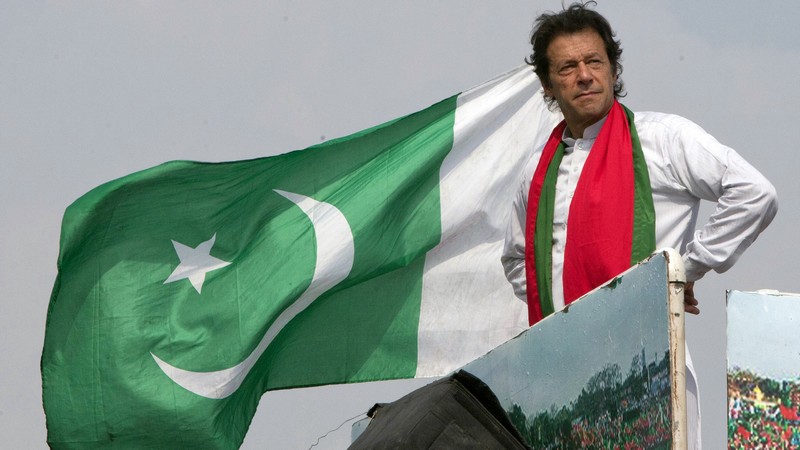
The Removal Of Imran Khan: Dismantling Pakistan’s Relationships with China and Russia

Part II

By Michael Welch and Abdul Jabbar

“I feel we are back in 1939; Munich. Czechslovakia has been taken. Will the word community appease a market of 1.2bn or will it stand up for justice and humanity? If a conventional war starts between 2 countries, nuclear countries anything could happen.

“Supposing a country 7 times smaller than its neighbour; faced with a question. Either you surrender, or you fight till the end. I ask myself this question. And my belief is ‘La ilaha illAllah’, there is no God but one. We will FIGHT!”

– Imran Khan, from his speech at the United Nations General Assembly Seventy-fourth session, 9th plenary meeting (September 27, 2019)

LISTEN TO THE SHOW

The Removal Of Imran Khan Part 2: Back to Dismantling Pakistan’s Relationships with China and Russia

A month following the vote of his political rivals to eject him from power, Imran Khan is riding perhaps the biggest waves of popularity that he has ever surfed upon!

And with legions of supporters propping up his stature, he has launched the campaign “Ghulami Na Manzoor,” a call to unseat the “Imported government” of the recently installed Prime Minister Shehbaaz Sharif. Starting after May 20th, less than a week from the time this is written, a new vote of confidence will be launched from the very grassroots population against the individuals who have conspired to remove the leader they put in place nearly four years ago.

The onslaught of the public would enter into Islamabad and hound the Prime Minister everywhere he goes with slogans of “thief and traitor.” Those unable to make the trip would protest locally in their own communities.

That being said, the actual rules of governance would not likely recognize such tactics as anything more than a protest. Power appears to have returned to the old guard leaving U.S. interests in their leading role in the Pakistan stage.

One writer who has taken an interest in the current Pakistan plight, Abdul Jabbar, described the situation in Pakistan as being the latest example of what he calls Indirect Colonialism. HE puts it bluntly:

“In this kind of colonialism, the colonizing power uses local self-seeking, nation-betraying leaders to sacrifice national interests for the sake of self-advancement.

“The colonizer does not have to spend its resources on launching a formal invasion to occupy a country. Local corrupt politicians prostitute national interest to do the colonizer’s bidding.”

On this week’s Global Research News Hour, Jabbar, this week’s feature guest, takes us through just how far back the new government in charge has taken the country already, away from partnership with Russia and China and towards advancing U.S. geopolitical aims. But this interview is preceded by a replay of one of Imran Khan’s most impassioned speeches, the one at the UN General Assembly relating to Islamophobia and the ever contentious Kashmir region. Toward the end of the program, we bring to the attention of listeners the role of a local terrorist army now appearing to attack Chinese in the province of Balochistan.

Imran Khan is the recently removed Prime Minister of Pakistan. He currently commands broad support within the grassroots population of the West Asian country.

Abdul Jabbar is a scholar originally from Pakistan. He has taught interdisciplinary studies (including political science) in the United States for nearly half a century, so he has been following the developments in Pakistan with great interest and concern, both from professional and personal points of view.

(Global Research News Hour Episode 355)

Transcript – Interview with Abdul Jabbar, May 9, 2022

Global Research News Hour: This is Michael Welch for the Global Research News Hour, and the story of the Pakistan coup against Imran Khan is still an ongoing issue. Now one month into the new regime is in power, and Imran is delighting the many hundreds of thousands in the streets.

So we’re going to get a take by a new individual. His name is Abdul Jabbar. He taught English and Interdisciplinary Studies for 36 years on a full-time basis at City College of San Francisco, including visiting professorship at University of California-Berkeley, he’s a recipient of a Fulbright scholarship and two National Endowment for the Humanities Awards, he received his PhD in English from Case Western University in Cleveland Ohio, and has written three books, his latest, The Promise, Reality, and Potential of American Cultural Diversity is in the process of publication. He’s published several articles on literary, political, and similar topics. His video lectures are available on YouTube, and has been following developments in Pakistan with great interest and concern both from professional and personal points of view. Professor Jabbar, welcome to the Global Research News Hour.

Abdul Jabbar: Thank you for having me on the program Michael.

GR: Since Imran Khan was replaced from power one month ago, has there been any fundamental changes in terms of policy that he’s brought forward?

AJ: His policies have been completely turned around. His policy was for independent foreign policy, that was a major concern and that has been completely diluted with the new government because the new government is really [inaudible] in a sham When you have a coup like this, I don’t think we have any idea. For us, it’s just a matter of simple foreign policy decision to bring in someone who will cooperate with our view of the region. We don’t think much more than that. It leads to so many ramifications for the affected country, it’s hard to even imagine.

So right now, what’s happening is that the new prime minister is scrambling all over the world to get funding. He got some funding from Saudi Arabia and requesting the IMF to extend the loan. And you know every new regime that comes in uses the previous regime for causing the problems, but you know time will tell, I am not sure to what extent is it accusations that there was bad governance on the part of Imran Khan’s government. I’m not so sure to what extent I can believe it, but mainly what is of concern is the assassination attempts on Imran Khan. When we make foreign policy decisions to replace someone, I don’t think we really deep down want the person to be eliminated.

But the local people who take power, they have to then guard themselves against reprisal, repercussions, so they just eliminate the person, the opponent. So this time there is a lot of talk of assassinating Imran Khan, and a lot of warnings from the government, and a lot of advice from even the military that he should not call his big meeting where he expects about two million people to show up this month. There’s attempt also to have him arrested, so that’s the situation right now.

GR: So you mean to say that the deals with, the defense deal between Russia and Pakistan is over, that Pakistan is no longer part of the CPEC with China?

AJ: The deal with Russia was close to being completed when Imran Khan was overthrown, so that hasn’t gone through. That was a huge breakthrough for Pakistan’s economy, 30% discount oil, 30% discount on wheat, and Imran was just working for the benefit of the masses who are struggling with this global inflation with COVID thrown in. And that was not completely carried out, and I think it will not happen. The US will dictate terms. The US government will dictate terms with regard to Russia for sure. With China, remember China is the biggest investor in Pakistan’s market. With close to 60 billion dollars of investment in the program called CPEC, which means China-Pakistan Economic Corridor.

And they are, well there are many projects which are going to be very beneficial to Pakistan in China, US has never liked the close relation of Pakistan to China. Because China is a potential threat to US economy, and the US government forgets that in 1971, Pakistan that enabled the first meeting between US and China, it was a secret meeting when Kissinger flew to Islamabad to Pakistan, and then Pakistan government arranged that secret meeting. So they were brought together, the two powers, so Pakistan was instrumental in doing that. So my take is Michael that Pakistan could play a centre role to bring either Russia and the US to clear the tensions. Pakistan believes in, believds under Imran Khan, no bases in Pakistan, no foreign bases.

No participation in foreign and I don’t know what is going to happen now with terrorism in Pakistan. All the Taliban are attacking Pakistan. Pakistan retaliated and there were 47 Taliban killed inside Afghanistan. So this is been happening in the past and now this will escalate…. Terrorism brought under control under Imran Khan because he [inaudible] will have a negotiated settlement with the Taliban is no [inaudible] resolution. He was perfectly right. What we, out of 20 years of war, was to replace the Taliban with Taliban with trillions of dollars of expense and so many debts. So I think that the reversal it has taken place in the foreign policy with the new government.

GR: What can you tell me about the new prime minister, Shehbaz Sharif?

AJ: Shehbaz Sharif has many cases pending against him for corruption and money laundering like his older brother. He has power to have those cases honed in the federal judiciaries. The judiciaries in the system of the whole [inaudible] [inaudible] situations is totally still the same that was there before Imran Khan. The system is the same, he tried to change from one. He failed miserably. Because the system is there and what they do is, like whenever there’s a hearing, the judges will postpone the hearing to the next day, to the next day. So Imran was furious, a few times he said the Judiciary is not doing its job.

So he had a lot of cases. He doesn’t have a clean slate. You can say that he’s almost like on the hill, and so are many of his cabinet members. But he’s a good manager, when he was chief minister of Punjab which is the biggest province in Pakistan. He did some good work and building his home city Lahore, and the area, so he, he’s a good manager, and I believe he will do whatever the US wants him to do, and since he may be able to get Pakistan some benefit in the short run.

But the people are not going to accept it. See millions of people are coming out all over the world. They demand election. In the elections, Imran will have two-thirds of majority that he needs. His problem was, Michael, that he didn’t have an absolute majority when he won elections in 2018. He had to work, compromise, with people with whom he totally disagreed. So it was very difficult. Now if the elections are held, he will have an absolute majority, and even then implement the vision that got postponed, because of the corruption in all these institutions that he inherited.

GR: It sort of brings us to your latest essay, American Style Colonialism and Imperialism with Pakistan the Latest Victim. You lay out how the status as an American conquest is protected by the local puppets who succeed one another. Every once in a while, somebody will actually place the interests of the country ahead of the welfare of US wealth and undue political interests. In Pakistan, before Khan, we had Benazir Bhutto, who was assassinated in 1977. What were the dynamics that played out in that case?

AJ: 2007, think she was assassinated. ‘77 is when Zia-ul-Haq overthrew the democratic government of Bhutto and then he was hanged by Zia-ul-Haq. That is the last clear demonstration of US interference in the internal affairs of Pakistan. It was in 1977, July 5th, to be accurate, I had flown to Pakistan on a visit on July 4th because I know the people there didn’t travel much it was an American plane. So I travelled and I woke up to the news that the country’s government is overthrown and I came to know, I heard some people in the military, some friends, I came to know that the last pieces of the strategy were finalized in the American embassy on [inaudible]. So Zulfikar Ali Bhutto was overthrown. And then a couple of years later he was executed. What happened to the country since then, what did Zia-ul-Haq bring to the country, this is mind-boggling.

He has done the most amount of damage to the country single-handedly. It was a liberal democracy under Bhutto. Bhutto was not perfect. Just talking about the democracy that was in place, and it was a liberal democracy. Zia-ul-Haq brought in the extreme Wahhabi, Saudi Arabian imported version of Islam. And curtailing women’s rights, freedom of speech, and he came for 90 days to have elections but he stayed in power until he was assass– he was killed in an airplane crash. So that also were brought in all kinds of terrorists from over the world.

So they were funded by the US through Pakistan, the US and Saudi Arabia funded them under Zia-ul-Haq to fight the Soviet Union ‘79 invasion of Afghanistan. And so just imagine, those people came from 40 different countries, and they landed in Afghanistan with the help of Pakistan ISI and the US training. So what happened, they destroyed the social fabric of the society. Because once the war was over. they were there. They weren’t leaving. I grew up in Pakistan. I don’t remember any household owning Kalashnikov. And after the Soviet invasion, the US and this [inaudible] for the US, all that changed the country’s society completely.

We could walk in Pakistan at 1 a.m. 2 a.m. freely, but then it was just a matter of being caught for ransom if you go to visit Pakistan. Things changed under Imran Khan simply because he said we should be in negotiated settlement and it is cultural imperialism to command another culture to obey us. And that was why he was respected by the Taliban, then we started calling him Taliban Khan. So really ironic.

GR: The elections in Pakistan are set for 2023. What do you think will take place in the interim to foil Khan’s attempts to return to power? I made you mentioned a possible assassination. Are there other things they could do to finish him off in case he can avoid assassination?

AJ: Just yesterday he said that there are a lot of attempts from all kinds of quarters. He expects some of those, but even if he’s assassinated it will not change the momentum because the youth, which is more aware than ever before, they want the restoration of the government that is representative of their will. And his party Pakistan Tehreek-e-Insaf, which means just “his party,” Pakistan Movement for Justice, they will sweep the election. And the current government is trying to postpone the election until as you said 2023. And that, in the interim, many things can happen. You can have… Hopefully the worst scenario is civil war. That is nobody wishes. In Syria, we didn’t think anything would happen when we interfered others interfered, one side was Russia, on the other side was the US, the proxy war. Two and a quarter million people have been killed, so many millions displaced… We don’t know, you see when these things happen, they have their own momentum.

They take the ugliest possible terms, you can’t imagine, so what will happen Michael is anybody’s guess. The worst scenario is civil war. Within my own family there’s a civil war going on. So I can tell you that this, there’s a lot of tension, people and Saudi Arabia there was a spontaneous demonstration against Shehbaz. He had gone to Saudi Arabia and get funding. Here it pretty much is a convention to go to those holy sites in Saudi Arabia to offer prayers. So Shehbaz went there, Shehbaz Sharif and the crowd saw him recognized him and the Pakistan is living in Saudi Arabia they erupted with “Thief! Thief!” And there was a pretty much of a riot. The police came in and then more people joined in and Sharif and his Entourage were attacked and the Saudi Arabian government arrested people from both sides, and they have some draconian punishment for that. Saudi Arabia doesn’t…the government doesn’t want any protest, especially at that time in that place. And as you know they don’t like protest, period. So they’re going to give huge sentences.

The worst part of that incident was to me an FIR registered in a city in Pakistan to implicate to introduce the idea of assassinating Imran on religious grounds that he has done a sacrilege to a holy site because he’s behind the whole riot, that he instigated it. He was in Pakistan of course, there is no legal ability to this and it won’t win in the court. The problem is it instigates, it unleashes a tsunami of hatred and fanaticism.

It was a governor in Pakistan who simply said the blasphemy laws should be used carefully because a Christian woman was being hanged according to sources for blasphemy. And he intervened, he said, blasphemy is a very sensitive legal item, we have to use it very carefully. He was assassinated by a fanatic. Because he thought if he was being too soft on Christian minority and defaming and blaspheming the prophet. So this was the attempt to create a legal basis First Information Report. FIR is a legal document the police registered. And then it unleashes all these currents of hate, totally unfounded. So, you know, that is the worst-case scenario that could happen, that kind of assassination could take place.

Civil war is a possibility, and it’s also possible to be very hopeful, that the current government will continue until the election and the interim will not see any big upheavals other than Imran Khan [inaudible] And he insists on nonviolence. He does not want his followers to do any violence. So, it is possible that probably will be the best-case scenario short of elections.

GR: Well, that’s fascinating reality is playing out. Professor Jabbar I’m afraid we’re out of time now , but you brought us a lot to think about. Thank you for joining us.

AJ: Thank you very much for having me on your program!
______________________________________

The Global Research News Hour airs every Friday at 1pm CT on CKUW 95.9FM out of the University of Winnipeg. The programme is also podcast at globalresearch.ca .

Other stations airing the show:

CIXX 106.9 FM, broadcasting from Fanshawe College in London, Ontario. It airs Sundays at 6am.

WZBC 90.3 FM in Newton Massachusetts is Boston College Radio and broadcasts to the greater Boston area. The Global Research News Hour airs during Truth and Justice Radio which starts Sunday at 6am.

Campus and community radio CFMH 107.3fm in Saint John, N.B. airs the Global Research News Hour Fridays at 7pm.

CJMP 90.1 FM, Powell River Community Radio, airs the Global Research News Hour every Saturday at 8am.

Caper Radio CJBU 107.3FM in Sydney, Cape Breton, Nova Scotia airs the Global Research News Hour starting Wednesday afternoon from 3-4pm.

Cowichan Valley Community Radio CICV 98.7 FM serving the Cowichan Lake area of Vancouver Island, BC airs the program Thursdays at 9am pacific time.

15 May 2022

Source: www.globalresearch.ca

Monkeypox: “Fool Me Twice, Shame on Me”

By Mike Whitney

“I can’t believe it’s monkey-pox season already and I haven’t even taken my Ukrainian decorations down.” Robin Monotti

Bill Gates’ prediction that the world would face an unexpected smallpox outbreak is miraculously unfolding. Should we be surprised?

I know I’m not. Here’s the money-quote that was delivered by Gates 6 months before the first case was recorded.

“It’ll take probably about a billion a year for a pandemic Task Force at the WHO level, which is doing the surveillance and actually doing what I call ‘germ games’ where you practice… You say, OK, what if a bioterrorist brought smallpox to 10 airports? You know, how would the world respond to that?” Bill Gates, Sky News, November 6, 2021

One can only marvel at Gates’ extraordinary powers of perception. He’s like some kind of Software Soothsayer able to divine the future from the entrails of animals. Is that it, or does he have a crystal ball tucked-away somewhere in the bowels of his Lake Washington mansion? Whatever it is, it’s trully astonishing. Here’s more from the World Socialist Web Site:

“An unprecedented outbreak of monkeypox virus has officially spread to 10 countries outside of Africa, with 107 confirmed or suspected cases reported as of this writing, in the United Kingdom (9 cases), Portugal (34), Spain (32), France (1), Belgium (2), Sweden (1), Italy (3), Canada (22), the United States (2), and Australia (1).”

Much remains unknown about what is causing the outbreak, which is the most geographically dispersed and rapidly spreading monkeypox outbreak since the virus was first discovered in 1958. In the coming days and weeks, more data and scientific understanding will emerge, but already there is profound concern within the scientific community and among the public, which has found wide expression on social media.” (“Over 100 monkeypox infections detected in 10 countries as unprecedented outbreak spreads globally“, World Socialist Web Site)

Repeat: The most “rapidly spreading monkeypox outbreak since the virus was first discovered in 1958.”

I wonder if that “rapidly spreading” part has something to do with the way that researchers have been tweaking the gain-of-function of these unique pathogens in order to make them more contagious and more lethal? Is that what’s going on?

We’ll probably never know.

And, is it fair to ask whether monkey-pox might be another lab-generated virus that was concocted in the 300-or-so Pentagon-funded secret labs sprinkled around the world that are presently conducting a massive war on humanity to further the ambitions of billionaire elites who are committed to reducing the global population while imposing strict, police state surveillance on every sentient being on planet earth?

We probably won’t get an answer to that one either.

In the interest of fairness, though, we should mention that “reputable” media outlets, like Newsweek magazine, have refuted the claim that Gates made the prediction that we allude to above. Here’s Newsweek’s explanation:

“While Gates has talked about the possibility of bioterrorist smallpox attacks in the past, his comments have been drawn slightly out of context and don’t mention monkeypox.” (Fact Check: Did Bill Gates Predict The Monkeypox Outbreak? Newsweek)

“Slightly out of context?” You mean, Gates did NOT draw attention to a particular infectious disease (smallpox) that magically reemerged from extinction just months later? What “context” is the author talking about? We’d like to know.

Strictly speaking, it doesn’t matter what Newsweek says or doesn’t say, after all, Gates has become the embodiment of everything that’s wrong with today’s Public Health Gestapo, which is why he’s become a magnet for criticism. And, whether he’s been treated fairly or not, a sizable number of people believe quite strongly, that Gates is the mastermind behind a plan to use lab-generated infectious diseases to subjugate the global population in order to establish a tyrannical New Order controlled by voracious elites like himself.

And the WHO’s new sovereignty-eviscerating treaty further underscores this point, in fact, it seems to suggest that Gates and his fellow travelers believe their lifelong ambition to rule the world is now within their grasp. Check it out:

In researching this article, I stumbled across a number of tidbits that readers might find interesting. For example, I discovered that there had been a tabletop exercise simulating a global pandemic involving an unusual strain of #monkeypox” that took place in March 2021. It’s astonishing how many of these ‘preparatory drills’ seem to take place just prior to some particularly horrific event. Can we dismiss them all as mere coincidences? Check out this blurb from the Brownstone Institute:

“… media outlets around the world are on red alert over the world’s first-ever global outbreak of Monkeypox in mid-May 2022—just one year after an international biosecurity conference in Munich held a simulation of a “global pandemic involving an unusual strain of Monkeypox” beginning in mid-May 2022.

Monkeypox was first identified in 1958, but there’s never been a global Monkeypox outbreak outside of Africa until now—in the exact week of the exact month predicted by the biosecurity folks in their pandemic simulation. Take these guys to Vegas!

The global Monkeypox outbreak—occurring on the exact timeline predicted by a biosecurity simulation of a global Monkeypox outbreak a year prior—bears a striking resemblance to the outbreak of COVID-19 just months after Event 201, a simulation of a coronavirus pandemic almost exactly like COVID-19. ” (“Monkeypox Was a Table-Top Simulation Only Last Year”, Brownstone Institute)

And here’s a minute and a half video that helps to explain the excerpt above. (Video) You may notice that the anchor reporting the (simulated) outbreak says, “Scientists have decided that this monkeypox virus was engineered.”

Uh huh. And, further along, one of the analysts offers these prescient words of advice: “We’re seeing far fewer cases where governments’ took early and decisive action”

What do you think that means? Could it mean that we’d better prepare ourselves for another round of experimental clot shots? Is that what it means?

So, here’s your Pandemic Quiz for the Day: What do you think the chances are that an oddball affliction, like Monkeypox, could spontaneously break out in 10 different locations around the world (where it had never appeared before) at the exact same time?

How about “zero” chance? Is that too high?

I’m going to go out-on-a-limb here and say there is zero chance that this new disease occurred “naturally”. The only rational assumption one can make, is that monkey-pox, like Covid, is a lab-generated pathogen spread by covert agents that are prosecuting a bio-war on the global population. But we’ll have to consult Dr Fauci on the matter and see if he agrees. Here’s more from the WSWS:

“In preliminary posts, scientists speculate that the virus, which is endemic in parts of Africa, could have evolved to become more contagious and better suited to human-to-human transmission. In addition, nearly all people under 42 years old have not received a smallpox vaccine (which is 85 percent effective at preventing monkeypox infection) since smallpox was eradicated in 1980. As a result, they have no immunity, and younger adults can be infected as easily as children.”(WSWS)

This simply confirms that another mass vaccination campaign is on the way. Here’s more from the same article:

“The emergence of multiple cases across different countries is deeply problematic….“Given that we have seen now confirmed cases out of Portugal, suspected cases out of Spain, we’re seeing this expansion of confirmed and suspect cases globally, we have a sense that no one has their arms around this to know how large and expansive it might be….

In nearly every public statement by epidemiologists, they have all admitted to being bewildered by how entrenched the virus already is in communities, given that it is normally extremely rare. Tom Inglesby, director of the Johns Hopkins Center for Health Security, told STAT News, “this is starting off with much more of a foothold, in a much more distributed way, and we don’t understand how it got into those networks.” (“Over 100 monkeypox infections detected in 10 countries as unprecedented outbreak spreads globally“, World Socialist Web Site)

So, it’s everywhere already? Then, what do we do?

The obvious answer is lock-down, mask up and get vaccinated as soon as possible. Otherwise, most of the world’s population could face an agonizing death… just like Covid, remember?. Of course, some people might conclude that we are being deliberately misled again, and that 2 pandemics in 2 years is a statistical impossibility. But why be reasonable when mass-hysteria is the order of the day? Here’s more:

“The number of severe side-effects of the smallpox vaccine makes its use in a mass vaccination campaign problematic. However, due to the long incubation period for monkeypox, the smallpox vaccine can work as a post-exposure prophylaxis in a “ring vaccination” model….” (WSWS)

In other words, don’t be dissuaded by the sky-high rates of heart attacks, strokes, blood clotting or death. Just follow the CDC’s thoughtful recommendations and everything will be just fine. Besides, the government has already purchased 13 million of these new-improved poison-death shots (U.S. Buys 13 Million Doses of Monkeypox Vaccine) so just calm down, take a deep breath and roll up your sleeve. We all know the drill by now.

We do, however, scratch our heads when we read about the suspicious goings-on at the Pentagon’s secret bio-labs that appear to be engaged in all manner of illicit skullduggery including the industrial-scale creation of lethal pathogens that could exterminate billions of people in one fell-swoop. That does keep us up at night. Check out this article in Tass:

“The US researched Ebola and smallpox viruses in Ukraine, says Irina Yarovaya, Co-Chair of the Parliamentary Commission on Investigation of US Biological Laboratories in Ukraine.

“Today, we presented an analysis of which pathogens the US was particularly interested in in Ukraine,” she told reporters Friday. “Aside from the pathogens that are territoriality bound to Ukraine, [the laboratories] researched viruses and pathogens that are endemically very far from Ukraine, such as Ebola and smallpox.”

According to the legislator, the information obtained indicates “aggressive goal-setting that underpins the foundation of these programs, de facto implemented by US Department of Defense on Ukrainian soil.”…

“I would like to underscore that the dialogue that we had with the SVR chief today, combined with the proof obtained by the commission, fully confirms the US-created network of biological intelligence worldwide and the implementation of active military-biological exploitation of the globe, and Ukraine in particular. This essentially poses a serious global threat”….

“But at the same time, [it should] urge the global community to seriously get to the bottom of this secret and dangerous military biological activity, implemented by the US. So that comprehensive measures pertaining to common, equal and indivisible security could be developed. Given the distinction between peaceful and non-peaceful use of bacteriological research and the study of toxins, it must be completely transparent and controlled. And there simply must not be any bacteriological weapons in the world, this is Russia’s principal position.” (“Key Russian lawmaker reveals illicit Ebola, smallpox research at US-run Ukraine biolab”, Tass)

So, what’s going on here? Why does the Pentagon have over 300 bio-labs spread around the world conducting secret gain-of-function research on pathogens that pose a clear threat to all of humanity? And why has the Pentagon partnered with notorious elites whose links to the eugenics, depopulation and climate movements suggest the research may be shaped to a particular strategic agenda that could involve significant casualties?

And what if Monkeypox is not, in fact, a natural occurring virus but merely the next phase of a relentless war on Constitutional government, individual freedom and the basic institutions of modern civilization? Perhaps, we are being prepared for a different civilization altogether, a civilization in which all of our decisions will be made for us by enlightened elders, corporate stakeholders and well-meaning philanthropists. Is that possible?

It’s certainly worth thinking about.

*

Note to readers: Please click the share buttons above or below. Follow us on Instagram, Twitter and Facebook. Feel free to repost and share widely Global Research articles.

This article was originally published on The Unz Review.

Michael Whitney is a renowned geopolitical and social analyst based in Washington State.

23 May 2022

Source: www.globalresearch.ca
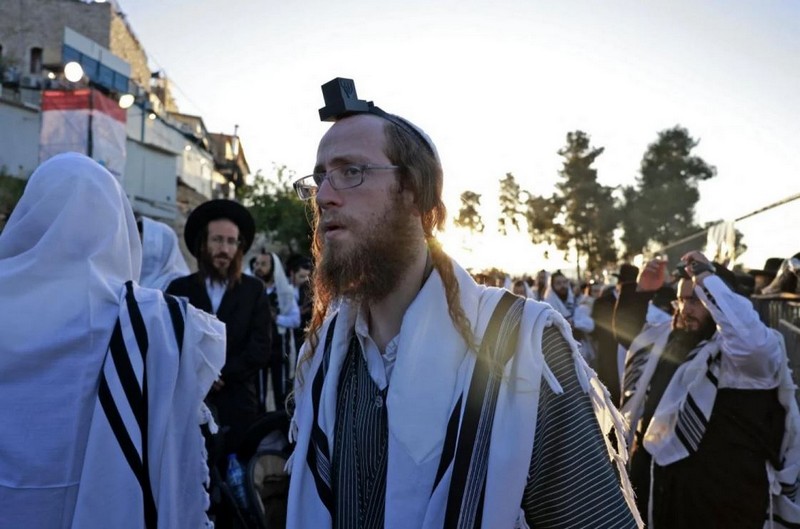
For Israelis, the future is impossible to see

By Gideon Levy

If there is one thing completely missing from the public agenda in Israel, it is the long-term view. Israel does not look ahead, not even by half a generation.

Children are important in Israel, and the time and energy devoted to them may substantially exceed what is typical in most other societies, yet no one talks about what lies ahead for them or for their own future children.

There is not a single Israeli, not one, who knows where his country is headed.

Ask any ordinary Israeli or any politician, any journalist or scientist, from the political centre or the right or the left: where are you going? How will your country look in another 20 years? Or 50? They can’t even describe what 10 years from now might be like. Few Israelis could even say where they would like their country to be going, apart from empty slogans about peace and security and prosperity.
Troubling question

Also very instructive is the one question that does arise about the long term: will Israel still exist in another 20 or 50 years? That is all you will hear queried in Israel about the future. And meanwhile a different question – Will there ever be peace? – which a generation or two ago was omnipresent, is no longer on the agenda and almost never asked.

There are very few places where people ask whether or not their country will exist a few decades hence. People don’t ask that in Germany or Albania, or in Togo or in Chad. This question may not be pertinent for Israel either – a powerfully armed regional power, impressively well-connected, with such technological prowess and such prosperity, the darling of the West.

Yet consider the fact that so many Israelis continue to ask this question, more often lately than ever. Note the incredible efforts Israelis expend to obtain a second passport for themselves and their children – any passport! Let it be Portuguese or Lithuanian, the main thing is to have some option beyond an Israeli passport, as if an Israeli passport is some kind of temporary permit nearing its expiration date, as if it weren’t possible to go on renewing it forever.

All of that suggests that the Israeli habit of burying their heads in the sand about the future of their country disguises a deep-seated, and possibly very realistic, fear about what the future may hold. Israelis are afraid of the future of their country. They brag about their country’s power and ability, a righteous nation, a chosen people, a light unto the nations; they are exceedingly boastful about their army, about their skills, while at the same time a primordial fear gnaws at their innards.

The future of their country is hidden from them, shrouded in mist. They like to talk in religious terms about eternity, “a united Jerusalem for eternity” and “God’s eternal promise to Israel”, while deep down they have no clue what will be happening to their country tomorrow or, at the latest, the day after that.
Self-delusion provides no answer

The name of the game is repression, denial, self-delusion, on a scale unknown in any other society that comes to mind. Just as for most Israelis there is no occupation, and definitely no apartheid, despite the mountains of evidence towering higher all the time – so, for most Israelis, tomorrow is not a thing. Tomorrow is not a thing in terms of the environment or climate change in Israel; tomorrow is not a thing in terms of relations with the other nation living alongside us with our knee on its throat.

Just try asking Israelis what it is going to be like here one day with a Palestinian majority between the Jordan River and the Mediterranean Sea, and in the best case you’ll get nothing but a shrug. Where is it all headed? Will we live forever by the sword? Is it worth the price?

What you’ll discover is that – guess what? – Israelis have never asked themselves this question before and no one has ever queried them about it before, either. Their expression will tell you that they’ve never heard such a strange question. In any event, there will be no answer. Israelis have no answer.

This situation is very unhealthy, of course. A society cannot go far with its head buried in the sand, and will certainly be unable to cope with the real challenges confronting it. The occupation, which more than anything else is what defines Israel today, presents more than a few challenges – with which Israel refuses to grapple. What will happen with the occupation? Where will it take the two societies, occupier and occupied, Israeli and Palestinian? Can the occupation go on forever?

Until recently, I was convinced that the occupation cannot last forever. History has taught us that a people fighting to be free generally wins and that rotten regimes, like the military occupation of the Palestinian people by Israel, collapse of their own accord, crumbling internally from the decay that always pervades them. But as the Israeli occupation drags on and its end continually recedes, doubts have riven my once-solid conviction that something will surely happen soon to bring down the occupation, like a tree that looks robust but has rotted from within.

The most frightening case in point is that of America and the Native Americans, a story of a conquest that became permanent, with the conquered herded onto reservations where they have independence and self-determination only in theory and their national rights are ignored.
Indefinite occupation

In other words, there are indeed occupations that go on indefinitely, defying the odds and all the predictions, persisting and persisting until a conquered people stops being a nation and becomes an anthropological curiosity living in its cage on a reservation. This happens when the occupation is particularly powerful and the conquered are especially weak and the world loses interest in their fate. A future like that now looms over the Palestinians. They are at their most perilous hour since the Nakba in 1948.

Divided, isolated, lacking strong leadership, bleeding at the side of the road and slowly losing their most precious asset in terms of the solidarity they aroused all over the world, especially in the global south.

Yasser Arafat was a global icon; there was nowhere on earth that did not know his name. No Palestinian leader today even comes close. Worse yet, their cause is gradually disappearing from the world’s agenda as it pivots to pressing issues like migration, the environment and the war in Ukraine. The world is tired of the Palestinians, the Arab world tired of them long ago and the Israelis were never interested in them. That could still change, but the current trends are deeply disheartening.

Another Nakba on the 1948 model would not seem a realistic option for Israel at the present time; the second Nakba is an ongoing one that creeps along insidiously all the time, but without drama. There are certainly those in Israel who toy with the idea that under the cloak of some future war, Israel could “finish the job” only partially completed in 1948. Threatening voices in that key have sounded louder lately but they remain a minority in Israeli discourse.

Continue with the settlements? Why not. Most Israelis just do not care. They have never been to the settlements, will never go there and couldn’t care less whether Evyatar is evacuated or not.

The struggle has long since moved to the international front. The crucial shift will come only from there, as happened in South Africa. But part of the world has simply lost interest, and the rest clings to the formula of a two-state solution as if it were sanctified by religious edict. Yet, most decision-makers already know that the two-state solution is long dead, if in fact it ever lived and breathed.
Equality is the path

The only exit from this depressing impasse is by creating a new discourse, a discourse of rights and equality. People must stop singing the songs of yesteryear and embrace a new vision. For the international community, this should be obvious; for the Israelis and to a lesser extent the Palestinians, the idea is revolutionary, threatening, and exceedingly painful.

Equality. Equal rights from the river to the sea. One person, one vote. So basic and yet so revolutionary. This path requires a parting of the ways with Zionism and the rejection of Jewish supremacy, and letting go of the entire self-definition of both peoples – but it represents the only ray of hope.

In Israel until just a few years ago this idea was viewed as subversive, treasonous and illegitimate. It is still viewed that way but with somewhat less force. It has become mentionable. It now remains for civil societies in the West and then the politicians to embrace the change. Most of them already know that this is the only solution left, but are afraid to admit it lest they lose the magic formula for a continued Israeli occupation provided by the now dead two-state solution.

The present is deeply discouraging, the future no less so. And yet to persist in thinking that something can still be hoped for, some action can still be taken, is of the utmost importance. The worst thing that could happen in this part of the world would be for everyone to lose interest in what happens here and resign themselves to the current reality. That must not be.

Gideon Levy is a Haaretz columnist and a member of the newspaper’s editorial board. Levy joined Haaretz in 1982, and spent four years as the newspaper’s deputy editor.

23 May 2022

Source: www.middleeasteye.net

On Bush’s Freudian Confession

By Caitlin Johnstone

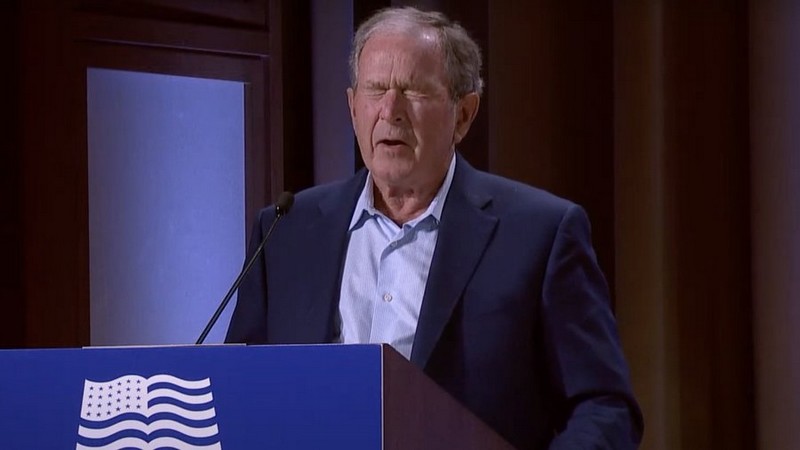
19 May 2022 – Oh my God. It happened. I can’t believe it really happened.

During a speech in Dallas at Southern Methodist University’s George W Bush Presidential Center on Wednesday, the man himself, George W Bush, did the best thing ever. I am pretty sure it is the single best thing that has ever happened. I do not believe I am exaggerating when I say that.

While criticizing Russia for having rigged elections and shutting out political opposition (which would already be hilarious coming from any American in general and Bush in particular), the 43rd president made the following comment:

“The result is an absence of checks and balances in Russia, and the decision of one man to launch a wholly unjustified and brutal invasion of Iraq. I mean, of Ukraine.”

And then it got even better. After correcting himself with a nervous chuckle, Bush broke the tension in the empire-loyal crowd with the words, “Iraq too. Anyway.” He then quipped that he is 75 years old, leaning harder on his “Aw shucks gee willikers I’m such a goofball” persona than he ever has in his entire life.

And Bush’s audience laughed. They thought it was great. A president who launched an illegal invasion that killed upwards of a million people (probably way upwards) openly confessing to doing what every news outlet in the western world has spent the last three months shrieking its lungs out about Putin doing was hilarious to them.

There are not enough shoes in the universe to respond to this correctly.

As comedian John Fugelsang put it, “George W. Bush didn’t do a Freudian slip. He did a Freudian Confession.”

One of the many, many interesting things about this occurrence is the likelihood that Bush’s words tumbled out in the way they did because he’s either heard a lot of criticisms of his invasion or has been thinking a lot about them; a familiar neural pathway would explain why his brain chose the exact worst word he could possibly swap out for “Ukraine” in that moment. This would be a small light in the darkness for we ordinary folk who oppose war and love peace, because it suggests that even the worst empire managers cannot fully insulate themselves from our criticisms.

The bullshit doesn’t get any more brightly illuminated than this, folks. All that spin and narrative management they’ve been pouring into the US proxy war in Ukraine, and Bush undoes it all with the Bushism to end all Bushisms.

While the western political/media class constantly rends its garments over “disinformation” about the Ukraine war even as US officials openly admit they’ve been using the media to circulate disinformation about that same war, and even as the Biden administration imprisons and persecutes a journalist for exposing US war crimes, we get a square admission that the US is no better than Russia and that the only thing obscuring this is the fact that we are all swimming in a sea of disinformation and propaganda provided by that same political/media class.

And this admission comes not from any low-level empire lackey, but from the man himself. The guy. The man whose name alone serves as a one-word debunk of every claim made about how uniquely nefarious Vladimir Putin is on the world stage and how uniquely depraved is his invasion of Ukraine.

If you really look at what just happened, really truly ingest it, this one incident just by itself is enough to show you that we are swimming in a sea of lies designed to give us an upside-down and ass-backwards perspective of what’s going on in the world. If Bush himself can’t always tell the difference between the invasion of Iraq and the invasion of Ukraine, then this means our news media and our politicians are lying to us constantly. They lied to us through 2002 and 2003, and they never stopped lying, and they are lying now in the year 2022.

The entire mainstream worldview is a perceptual distortion filter which obscures the public understanding of world events so severely that Bush has been not just forgiven for his crimes but actively rehabilitated in the public eye, while the enemies of the United States are continuously compared to Adolf Hitler and condemned throughout the US-dominated world.

In reality the US is the single most tyrannical and destructive government on this planet, and it is only because the public is fed a nonstop deluge of propaganda that this isn’t universally obvious. Even the worst empire managers know deep down that this is true, and, in their less guarded moments, sometimes the truth slips out.

Caitlin Johnstone is a rogue journalist, poet, and utopia prepper who publishes regularly at Medium.

23 May 2022

Source: www.transcend.org

USA’s Selective Outrage over Ukraine Is Fashioned by a Well-Oiled Propaganda Machine… Just Ask the People of Yemen

By Robert Bridge

15 May 2022 – North Americans are being shepherded to the next emoji crusade – the latest being Russia’s special operation in Ukraine – like consumers waiting in line for junk food and Happy Meals. When does the mindless virtue-signaling end?

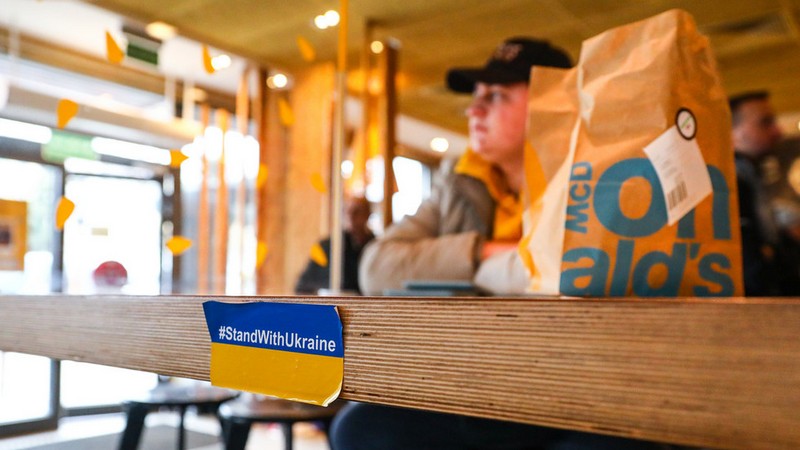
While some Westerners may find a kindred spirit with McDonald’s and its anti-war posturing against Russia, a little more consistency on the issue of war and peace would be a most welcome development.

The fact is, nothing screams ‘Russophobia’ more than the spectacle of McDonald’s abandoning the Russian market amid Moscow’s conflict with Ukraine, especially when it is remembered that Ronald kept flipping his burgers all the while as George W. Bush and Barack Obama were indulging themselves on a killing spree in numerous ill-fated countries.

Aside from the question of America’s flagrant double standards when dealing with Russia, there lurks an even more mysterious and disturbing riddle: How is it possible to continue triggering Americans into a non-stop virtue-signaling crusade on behalf of various causes? Moreover, if the media was not there to point them to the Next Big Thing, would Americans even know that one existed?

With whiplash swiftness, Americans have gone from taking a knee to Black Lives Matter (even as this group was going on a billion-dollar, 20-state rampage, which entered the record books as America’s most expensive protest ever), to demonizing those wary of new Covid-19 vaccines, to lining up on opposite sides of the Roe v. Wade abortion rights showdown.

Amid these increasingly frequent domestic earthquakes, Russia has always found itself at the epicenter of the action. It’s a bit like the Chris Rock of countries, getting slapped in the face every day without rhyme or reason. There is a whiff of a slick McDonald’s advertising campaign at the heart of America’s perennial obsession with Russia. Just like those wonderfully deceptive TV ads that show a deliriously happy (and mysteriously healthy) family gorging themselves on Big Macs and Happy Meals, a trip to McDonald’s tends to always leave behind a bitter aftertaste, if not outright intestinal issues. In other words, the corporate hype rarely lives up to the reality.

A similar sort of advertising campaign has been aimed directly at Russia for many years, albeit in reverse. Not unlike Edward Bernays, the ‘father of public relations’, and his ability to convince American women in the 1920s that smoking cigarettes was a symbol of feminine empowerment, propagandists today have successfully peddled the fake news to an unsuspecting public that Russia is the root of all evil.

Unless people ditch these carefully crafted stereotypes and physically board an airplane, they will probably never know that Russia’s portrayal by Hollywood and the mainstream media is quite simply the worst form of propaganda. Once an individual experiences the reality of Russia without the second-hand smoke and mirrors – as millions of sports fans did during the 2018 FIFA World Cup, for example, where dozens of football matches were held in 11 Russian cities – they quickly understand that the doom and gloom stories about this part of the world are a wicked pack of lies.

But alas, not everyone in the world can travel to Russia and see the reality for themselves. Unfriendly foreign countries, in cahoots with a venal media, perfectly understand this handicap, which allows them to portray Russia as the ‘evil empire’, something straight out of a Bond flick. And then one day, when Russia finds itself in a situation where it is forced to say ‘enough!’ and resorts to what it considers to be a legitimate act of self-defense – certainly no less legitimate than the military offensives undertaken by the Western hemisphere over the years – a vicious virtue-signaling campaign against Russia and Russians begins in earnest, and to great effect.

The reaction to the events in Ukraine has demonstrated the concentrated power of the US media and government to channel the self-perceived virtuousness of the entire Western world practically at will. The US establishment could just as easily have weaponized a virtuous campaign on behalf of other embattled people, like in Yemen, for example, which has been under relentless siege for seven years by Saudi Arabia, with the assistance from the usual (Western) suspects. According to UNICEF, the humanitarian agency for children, “more than 10,200 children have been killed or injured” since the start of Riyadh’s military blockade, which has led to disease, famine, and death throughout the country.

And what about the long-suffering people of Donbass, the Russian-speaking region of Ukraine that has been under siege by pro-Kiev forces for eight years? How many Americans know that this tragedy can be traced back to a US-led coup that ousted Ukraine’s democratically elected government in 2014? Had the virtue-signaling crusaders shone the spotlight on the plight of these oppressed peoples, asking why the Minsk Protocol for a ceasefire was being regularly violated, there very well could be peace in Ukraine today.

Self-serving companies like McDonald’s and countries like the United States shout from the rooftops that they are the ultimate defenders of the oppressed. The reality, however, is more sobering. The reality is that their virtue-signaling theatrics are of a very selective type that has a strong tendency for aligning with the foreign policy dictates of Washington, as opposed to the actual needs of the downtrodden. Virtuosity should know no political master, otherwise it’s just cheap virtue-signaling on behalf of ulterior motives.

Robert Bridge is a North American writer and journalist.

23 May 2022

Source: www.transcend.org

A Marcos Is Back in Power in the Philippines

By Mike Billington

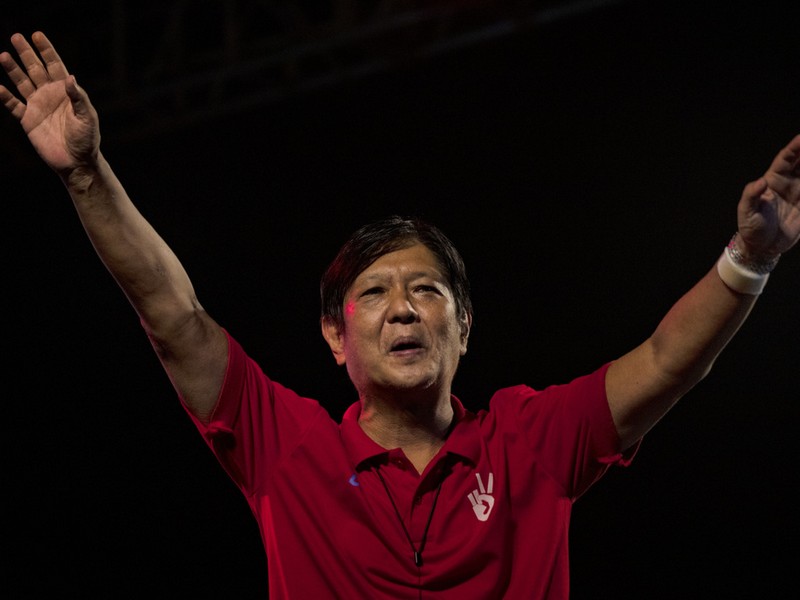
May 12—Ferdinand Marcos Jr., the son of the nationalist leader
of the Philippines whose massive development programs for
his nation were crushed in one of the first “color revolutions,”
run by then Secretary of State George Shultz and his neocon
Deputy, Paul Wolfowitz, in 1986, has been elected President of
the Philippines in the May 9 election. While not yet official,
Marcos crushed his opponent, Leni Robredo, the darling of the
regime-change set in Washington, in preliminary statistics, by
two to one, setting a record in Philippine presidential elections
of 31 million votes.

Bong Bong Marcos, as he is known, or BBM, held rallies before
huge crowds across the country during the campaign, but gave
few interviews and simply skipped most of the debates.
Although he served as a senator, he had a sparse record of
legislative accomplishments.

So why the massive victory? In fact, Marcos was swept into
power on the hope by the masses of Filipino citizens that he
can restore the policies of the much beloved Ferdinand Marcos

Sr. His overwhelming victory, beyond the reach of the infamous
vote fraud capacities in the Philippines, serves to prove to the
Western world, at least, to those who appreciate the truth rather
than the fake news and information warfare now dominating the
Western press and governments, that his father and his
mother, Imelda Marcos, who worked closely together during the
Marcos era as President from 1965-1986, to build the
Philippines miracle—leading Southeast Asia in scientific,
industrial, medical and agricultural development, making it the
envy of its Asian neighbors.

Is this the way you remember the Marcos era? Is this the way
the Marcos legacy is reported in your newspapers? Rather,
what is reported ad nauseum is some variant of this lead article
in the May 9 Washington Post:

Ferdinand Marcos Jr., son of the late dictator whose family
plundered billions of dollars, was elected president of the
Philippines by a landslide, according to preliminary results, 36
years after his father was ousted in a historic revolution. For
critics, it marks a further backward slide for a nation—once
admired as one of the few democracies in Southeast Asia—that
continues to trudge down the path of populism.

Whether Marcos will follow his brilliant father’s legacy is not
certain, but his campaign slogan was “Together, we shall rise
again,” reflecting both his call for unity in the heavily divided
country, but also clearly the revival of the Marcos family policies
and values. He also had the support of the outgoing President
Rodrigo Duterte, whose daughter Sara was elected Vice
President in an even more resounding margin of three to one.

The Marcos Sr. Record

In a series of articles in EIR, this author presented the true
history of the 1986 coup against Marcos, portrayed to the world
by the whorish Western press as a “People’s Power” removal of
a vile killer and dictator:

• December 24, 2004: “Shultz and the ‘Hitmen’ Destroyed the
Philippines”
• May 16, 2008: “Why the Philippines is Starving—How Shultz
and the WTO Destroyed the Philippines Green Revolution”
• June 14, 2019: “U.S.-China Cooperation in the
Philippines—Operation Marcos: A Development Plan for Asia
and the World”

Here are some highlights:

Agriculture: Marcos was the first president of the Philippines
who did not rise from the elite class, but was a “commoner,”
trained as a lawyer. Making the nation self-sufficient in rice and
corn for the first time, he emphasized irrigation in the major
food-producing regions of Luzon and Mindanao. Credit
facilities, mechanization, and the introduction of high-yield rice
varieties, which needed irrigation, resulted in the self-
sufficiency in rice by 1968.

Eliminating the “latifundista” structure of agriculture under a
landed aristocracy was only possible after Marcos imposed
martial law in 1972. Although martial law was primarily aimed at
countering the communist insurgency in the country, Marcos
used it to break many aspects of the oligarchical control over
the economy. He proclaimed that the entire nation was to be
considered a “land reform area,” and declared that all tenants
working land devoted primarily to rice and corn were to be the
owners of that land, up to a specified limit. Over enraged
opposition from the oligarchs, the program, together with
infrastructure and mechanization improvements, made a
quarter of a million peasants into landowners and increased
grain productivity by half. [Box: Why Marcos Was a Target for
Regime Change]

Nuclear Power: In 1974, Marcos contracted with
Westinghouse to build a nuclear power plant in the Philippines,
which was to be, and is still today, the only nuclear power plant
in Southeast Asia. As originally contracted, the plant would
have cost about $1 billion, and produced 1,200 MW of
electricity by 1984. However, with the anti-nuclear hysteria
following the Three Mile Island (inconsequential) accident in
1979, the Carter Administration imposed retroactive safety
regulations which contributed to more than doubling the cost of
construction. After the 1986 color revolution placed Cory
Aquino, of the latifundista Aquino clan, in power, the fully
completed Bataan nuclear power plant was mothballed, never
to produce a single watt of electricity. Aquino agreed to her
controllers’ demands in Washington that the Philippine people
pay every cent of the inflated cost, for nothing.

Industrial Projects: Marcos launched 11 major industrial
projects, shifting the focus of the nation’s manufacturing
economy from consumer goods to basic heavy industry. This
included steel, petro-chemical, pulp and paper, a copper
smelter, aluminum, phosphate fertilizer, diesel engines, gas
and oil, a coconut industry, and the nuclear power program.
The administration tripled the country’s road network, doubled
the electrification of the country’s homes, increased irrigated
cropland eight-fold, and achieved rice and corn self-sufficiency.
Minimum daily wage rates tripled, although inflation, driven by
international oil price hikes and exploding U.S. interest rates,
more than wiped out these wage increases.

Philippine Heart Center For Asia: In 1975, under First Lady
Imelda’s leadership, Marcos established by presidential decree
the Philippine Heart Center for Asia, open for both paying
patients and charity patients from across Southeast Asia. It stands, still today, as one of the foremost heart hospitals in Asia.

All of these programs—every one, except the Heart
Center—were totally destroyed by the 1986 coup. The
oligarchs, placed in power to “save freedom and democracy,”
scrapped all the industrial programs, ended food self-
sufficiency, privatized power and water utilities, shuttered the
nuclear power plant, and much more, at the command of Wall
Street and Washington. The Philippines, once the envy of its
Asian neighbors, soon became the basket case of Asia, with
mass poverty, transportation bottlenecks, mass unemployment
and a horrendous drug addiction crisis.

Marcos Jr.’s Program?

While BBM has said little about his intentions, there have been
some signals. “We really have to look at nuclear power,” he
said in March, addressing the exorbitant and rising cost of
electricity. Although he goes along with the undependable and
expensive green energy hype for wind and solar, he said a
South Korean proposal to rehabilitate the Bataan nuclear plant
should be revisited: “Let’s look at it again.”

Antonio “Butch” Valdes, the founder of the Philippine LaRouche
Society and of the new political party KDP (Katipunan ng
Demokratikong Pilipino), has long campaigned to reopen the
Bataan plant and to build more nuclear plants across the
country, especially the new small modular reactors (SMRs)
which are now coming on line. He also has campaigned to re-
nationalize the utilities away from the oligarchs who have
demonstrated their failure to run them on behalf of the
population. The potential for BBM to revive his father’s
movement for an actual transformation of the nation will depend
on his willingness to take on these issues against the U.S.-
influenced oligarchical families.

The financial lords of Wall Street and the City of London are
distraught over the Marcos/Duterte victories. Goldman Sachs
complained that—

[Marcos] has sounded a less cautionary note on rising public
debt levels, while emphasizing measures such as subsidizing
key agricultural inputs or capping key food prices to contain
inflation risks, alongside initiatives to revitalize the industrial
sector and SMEs [small and medium-sized enterprises] to
provide more jobs.

Goldman has threatened that if Marcos is so reckless as to try
to build the economy and improve the living standards of the
impoverished population, then investors may “pull out and
outsource their services elsewhere,” leading to “massive
layoffs.” Their support for the defeated Leni Robredo was in no
way hidden, praising her throughout the campaign for her
subservience to Western finance and her rabid attacks on
China.

The Key Role of China

Indeed, it is the Philippine relationship with China that is the
crucial issue which will determine the success or failure of the
new Marcos era. BBM’s mother, Imelda, played a critical
foreign policy role in her husband’s administration, leading a
delegation to Beijing in 1974, meeting twice with then Prime
Minister Zhou Enlai and once with Chairman Mao Zedong,
arranging for the purchase of Chinese oil and China’s purchase
of Philippine exports. Bong Bong accompanied his mother on
that trip, and treasures the pictures of his meeting with Zhou
Enlai. Mao pledged to Emelda that the Cultural Revolution
leaders who had been training communist insurgents in the
Philippines had been deposed, and that, henceforth, China
would respect Philippine sovereignty under the Chinese
Communist Party’s Five Principles of Peaceful Coexistence.

Today that relationship is even more important. As the Western
financial system collapses into a hyperinflationary breakdown, driving deadly inflation in the former colonial countries like the Philippines, and with Washington demanding that these impoverished nations kowtow to their efforts to destroy Russia and China, Marcos Jr. bravely asserted:

No matter what the superpowers are trying to do, we have to
work within the interest of the Philippines. We cannot allow
ourselves to be part of the foreign policy of other countries. We
have to have our own foreign policy.

Soon after his election in 2016, Duterte visited China, meeting
with President Xi Jinping, and other delegations from the
Philippines followed. A Six-Year Development Program for
Trade and Economic Cooperation was signed with China in
March 2017. In November 2018, President Xi visited the
Philippines and signed 29 cooperative agreements, lifting the
China-Philippine relationship to the level of “Comprehensive
Strategic Cooperation.” These agreements include bridges, a
dam, irrigation systems, highways, industrial parks, drug rehab
facilities, and more. While some of this is in process, the
COVID-19 pandemic, which had a devastating impact on the
Philippines, has stalled many of the projects. Hopefully, this
cooperation with the Belt and Road Initiative will continue and
expand under the new Marcos administration.

Between them is Mike Defensor, candidate for mayor of
Quezon City.

Regarding the South China Sea, and the 2016 arbitration ruling
at The Hague which rejected Chinese claims over certain areas
also claimed by the Philippines, Marcos Jr. has said that since
China did not even attend the arbitration and does not recognize it, “it’s no longer available to us.” Nonetheless, he added, “We will not cede any one square inch to any country, particularly China, but will continue to engage and work on our national interest.” That will come through negotiations, he insisted, not confrontation.

As to relations with the U.S., Marcos Jr. insists that he respects
the historic relationship with the former colonial power, but told
a radio host:

If you let the U.S. come in, you make China your enemy. I think
we can come to an agreement [with China]. As a matter of fact,
people from the Chinese embassy are my friends. We have
been talking about that.

BBM was the special guest at an event in the Chinese
Embassy last October, when the Embassy invited him to cut
the ribbon for a new photo display of historic moments of
China-Philippines relations, including a photo of then Chinese
Premier Zhou Enlai and former President Ferdinand Marcos
signing the Joint Communiqué on the Establishment of
Diplomatic Relations between the Philippines and China on
June 9, 1975—four years before the U.S. established official
relations with Beijing.

Speaking at that October event, Chinese Ambassador Huang
Xilian said:

While [we] always cherish and honor old friends, we hope that
more and more people from our two countries will be committed
to deepening our partnership and cooperation, so as to bring
more benefits to our two peoples and pass on our traditional
friendship from generation to generation. Together, we are
opening up a brighter future! As to the oligarchs’ view of BBM,
Antonio Carpio, the former Supreme Court Judge who led the
Philippines’ legal team at the arbitral tribunal, said Marcos’s
stance in regard to the South China Sea was a “betrayal. He’s
taken the side of China against the Philippines.”

Outgoing President Rodrigo Duterte had been more direct in
cutting ties with the U.S. neo-colonial policies, especially the
military agreements, although he has since softened and has
allowed the U.S. to set up military operations within five
Philippine Army Bases. How Marcos will deal with the U.S.
military presence, especially in the context of the mounting
belligerence of the “NATO in Asia” campaign by London and
Washington, is yet to be seen. There is a very real potential
that NATO will provoke China into military action against
Taiwan by threatening to recognize Taiwan as an independent
country, undermining China’s sovereignty over Taiwan under
the “One China” policy acknowledged by the U.S. in 1979 when
they recognized the People’s Republic of China in Beijing as
the “sole legal Government of China.” It has been shown by the
NATO provocations of Russia over Ukraine that the ultimate
purpose was to create a justification to wage direct economic
warfare, and proxy military warfare against Russia within
Ukraine, threatening a nuclear confrontation.

One complicating factor for Washington is that under current
U.S. law, Marcos Jr. and the rest of his family are not allowed
to enter the U.S. The family was held in contempt of court for
refusing to co-operate with the District Court of Hawaii ruling in
1995 which ordered the Marcos family to pay $2 billion of what
the court falsely declared “plundered wealth,” to be handed out
to people they declared to be “victims of Marcos Sr.’s rule.” If
the current madness in Washington is not stopped, to continue
the drive for world war and to do nothing about the collapse of
the entire Western financial system, it were better Ferdinand
Marcos Jr. stays away.

Why Marcos Was a Target for Regime Change

Ferdinand Marcos Sr. wrote the book, An Ideology for
Filipinos, published in 1983. The following excerpt exemplifies
why he was targeted for regime change:

The western philosophic tradition locates man’s uniqueness in
his rationality: it defines man as a rational animal. The idea of
man does not necessarily lead to the philosophy of humanism,
for the concept of rationality could be construed
mechanistically: as a movement of thought that follows a set of
inflexible principles. The Cartesian conception of reason is
mechanistic in this sense. For it regards thinking as something
that can be pursued in one way: beginning with clear and
distinct notions, the mind moves forward, step by step,
following only the dictates of logic. What Cartesianism
overlooks is that element of creativity so essential to the
concept of human rationality. The recognition of man’s
creativity, or that impulse to create new forms and new modes
of coping with the demands of reality, has tremendous
implications—not only for a philosophy of man but also for
social policy and thus for ideology.

In a sense, we can regard the history of civilization as the
history of human creativity. The so-called scientific revolutions
represent man’s disengagement from traditional modes of
thinking….

The humanistic thrust of our ideology precisely takes into
account the fact that apart form being rational, in the Cartesian
sense of the term, man has a gift of creativity that expresses
itself not only in his art but also in his science and social
institutions. This creativity is what makes man truly human. In
fact, it seems more appropriate to define man not as a rational
animal, but as a creative being.

20 May 2022


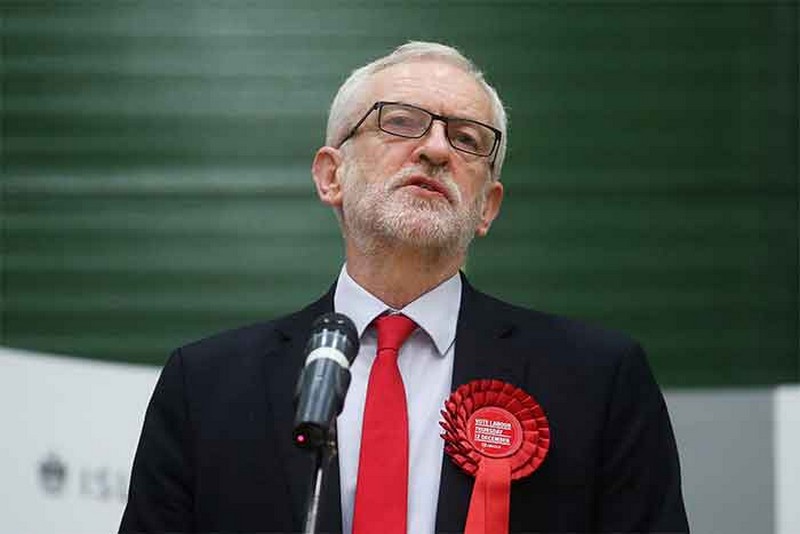
Jeremy Corbyn: It’s Not Enough to Resist—We Have to Build, Too

By Jeremy Corbyn

In April, the UN’s climate scientists warned it’s “now or never” to limit global warming to 1.5 degrees Celsius above preindustrial levels. You can almost hear them screaming at their keyboards, desperate for governments to actually do something, when they outline the need for “rapid, deep and immediate” cuts in CO2 emissions. But their words are not just a warning about the future; they describe the present reality for billions of people.

South Asia is now into its third month of extreme heat, with temperatures soaring above 40 degrees Celsius day after day. And it’s not just South Asia that is sweltering. In March, both the Arctic and the Antarctic were 30 degrees Celsius and 40 degrees Celsius above their usual average temperatures, respectively. Ice is melting, and sea levels are rising. Thirty million people were displaced by climate shocks in 2020. And these shocks store up more strife to come by wrecking harvests.

The supply chains that connect the world’s farms, mines, factories, shipping lanes, ports, warehouses, delivery networks and consumers are already massively disrupted, even before the full effects of climate breakdown are felt. In the heavily integrated global capitalist economy, disruption spells disaster. Already, more than 800 million people—1 in 10 people of the entire world’s population—go to bed hungry.

The price of wheat has doubled already this year. And it could rise further as the effects of Russia’s criminal invasion of Ukraine and Russia’s resulting partial economic isolation are felt across the globe.

Wars lead to hunger, mental distress, misery and death for years after the fighting stops. There must be an immediate ceasefire in Ukraine, the withdrawal of Russian forces from Ukrainian territory and a negotiated settlement between the two countries.

If there isn’t, then not only will the Ukrainian people continue to face the horror of shells, tanks and air raid sirens; not only will Ukrainian refugees suffer uncertain futures and dislocation from their families and communities; not only will young Russian conscripts be sent off to be brutalized in the army and die in a foreign land for a war they don’t understand; not only will Russian people suffer under sanctions; not only will the people of Egypt, Somalia, Laos, Sudan and many others who rely on wheat from the belligerent nations continue facing rising hunger.

But everyone on earth faces the threat of nuclear Armageddon if the war in Ukraine continues. The threat of direct confrontation between Russian and NATO forces is a clear and present danger to all of us. That’s why it is so important that we support the Treaty on the Prohibition of Nuclear Weapons, which is now part of international law thanks to inspiring campaigning by countries in the Global South.

It will not be easy. Weapons companies do extremely well out of war. They fund politicians and think tanks. They have their many media mouthpieces. Those who strive for peace and justice are vilified because behind conflict stand the interests of the war machine. They threaten the ill-gotten wealth and power of the few.

We see it with painful clarity in the pandemic as Big Pharma refuses to share vaccine technology that was mainly developed with public funds. Who benefits? The pharma executives and shareholders. Who loses? Everyone else. More mothers and fathers die. More livelihoods are wrecked. And the threat of viral mutation hangs over everyone, vaccinated and unvaccinated alike.

The state is used to prop up the wealth of the richest. Central banks pumped in $9 trillion in 2020 in response to the pandemic. The result? Billionaire wealth went up by 50 percent in one year, when at the same time the world economy shrank. The billionaires and corporations claim to hate government action. In reality, they love it. The only thing they hate is governments acting in your interests. And so, they fight to keep governments in their pocket and try to overthrow those that aren’t.

When we step back and survey all of these dynamics, a truth dawns on us. We used to think that there were a series of distinct crises: the climate crisis, the refugee crisis, the housing shortage crisis, the debt crisis, the inequality crisis, the crisis of the rich getting richer and the poor getting poorer. We tried to isolate each one and solve it.

Now we can see that we don’t face multiple separate crises. The system itself is the crisis. The global system is not in a crisis that can be resolved. The system is crisis and must be overcome, replaced and transformed.

The end of the world is already here—it is just unevenly distributed. The image of apocalypse—bombs and raids, oil spills and wildfires, disease and contagion—is a reality for people across the planet.

The periphery is the future, not the past. We were told that developed countries give the developing world an image of their future. But the periphery sits at the vanguard of history—where the crises of capitalism hit hardest, the consequences of climate collapse arrive the quickest, and the call to resist them rings the loudest.

That resistance is powerful and inspiring. The world recently witnessed the largest strike in history when Indian farmers and their worker allies resisted the neoliberal bills that Prime Minister Narendra Modi’s government wanted to force through their parliament. The farmers stood up for themselves, their livelihoods and the needs of the poor. And they won.

Or take Amazon, the world’s sixth-largest company, which has made record profits during the pandemic. Its greed and exploitation are being fiercely resisted by workers, communities and activists on every continent in the world. They have come together to make Amazon pay.

In Latin America, the people are rallying to support progressive political leaders to say no more to the domination by imperialism, the destruction of their communities and the abuse of their environments.

But it’s not enough to just resist. We have to build a new world brimming with life, bound by love and powered by popular sovereignty.

How do we do that? We strengthen workers and rural workers in their struggles against exploitation, support people and communities in their fights for dignity and join progressive forces to mobilize state power. And we bring them all together into powerful people’s alliances with the capacity to remake the world. If we do that, we will breed hope over despair.

So I want you to commit today: Double your efforts in the struggles you are involved in. Join that campaign you’ve been thinking about joining. Show that real solidarity.

I want you to be able to look back in a generation’s time and say, yes, I built the trade unions, the community organizations, the social movements, the campaigns, the parties, the international platforms that turned the tide.

I want you to be able to say, yes, we produced and distributed the food, homes and health care so no one endures poverty; preserved and shared the wisdom of the people of this planet; spread love between people and communities; built the energy system to decarbonize our planet; dismantled the war machine and supported refugees; reined in the power of the billionaires; and secured a new international economic order.

Will it be easy? Of course not. We will face enormous resistance. Of course we will.

But, as the great and wonderful Chilean poet Pablo Neruda once wrote, “You can cut all the flowers, but you cannot stop spring from coming.”

And spring, my friends, is coming.

Adapted from Jeremy Corbyn’s inaugural speech to the Progressive International’s Summit at the End of the World on May 12, 2022.

Jeremy Corbyn is a member of the UK Parliament, former leader of the UK Labour Party and the founder of the Peace and Justice Project.

14 May 2022

Source: countercurrents.org

MESSAGE ON THE OCCASION OF NAKBA DAY 2022

Palestine Update 551

Global Network for Palestinian Refugees and Displaced Persons
Indo Palestine Solidarity Network, India (IPSN)
Global Kairos for Asia Pacific Solidarity with Palestine GKAPPS)
Palestine Updates

MESSAGE ON THE OCCASION OF NAKBA DAY 2022

Today we stand here in India, and Asia-Pacific region, in unity with our people in the refugee camps in Gaza, the West Bank, Lebanon, Syria and Jordan, and in the countries of the distant diaspora, to declare that we are one people, we have one destiny, and that our return is certain.

Today we stand here to renew the pledge that we will continue to resist the ongoing Nakba. The Nakba is not a memory. The Nakba is ongoing with the continued domination of the Israeli colonial-apartheid regime. The Nakba continues with forced displacement, denial of return and residency rights, fragmentation and racial segregation, discriminatory planning and permit regimes, repression, arbitrary arrests and detentions, extra-judicial killings/executions and collective punishments, home demolitions, and denial of access to natural resources and services.

Today we stand here to say that ending the ongoing Nakba requires the dismantling of the Israeli system of colonialism and apartheid politically, economically, legally and ideologically. We stand here to recall that dismantling this regime is the responsibility of the Palestinian people as it is the responsibility of all the free people in the world, because colonialism, apartheid, forced displacement, denial of self-determination, and persecution in all their forms are crimes against humanity and international crimes that must be stopped.

We stand here to confirm that the services of the United Nations Relief and Works Agency for Refugees (UNRWA) are not a gift that the world would kindly give to the refugees of our people. UNRWA services are a right for Palestinian refugees, and providing them is an international responsibility incumbent on the United Nations and individual states. That is why we declare our total rejection of the imposition of political conditions by the United States of America and the European Union on UNRWA in exchange for funding. We reject forcing UNRWA to erase Palestine from the Palestinian curriculum, and reject turning it into a security agency spying on our people for the benefit of the Israeli regime and the donor countries. The project of transferring UNRWA’s services to countries of asylum or to other international agencies and organizations aims to liquidate UNRWA – the existing witness to the international responsibility for the plight of the Palestinian people and their displacement.

We stand to say that the Oslo Accords and the facts they produced are invalid and rejected, and that normalization serves the Israeli colonial – apartheid regime and not the rights of the Palestinian people or peace. We affirm that depriving refugees of their human rights in host countries does not serve return, but rather pushes them to death boats on the high seas and oceans.

Therefore, we affirm:

First: The return of Palestinian refugees and internally displaced persons to their original homes, the restoration of their properties and compensation is a national, legal and human right that is not subject to derogation, restriction, delegation or substitution, and that any solutions that do not expressly recognize this right are null and rejected.

Second: Ensuring a permanent and stable budget for UNRWA by the international community does not constitute a gift or favor from anyone. It is an international responsibility that is due to the Palestinian people, and it is not permissible to detract from it nor to use it for political blackmail.

Third: The necessity of recognizing the basic human rights of Palestinian refugees and not discriminating against them in host countries.

Fourth: Resistance and partnerships with the solidarity, rights and liberation movements in the world is the way to dismantle the system of colonialism and apartheid, not victim rhetoric or begging and seeking sympathy.

One people, one destiny, and our return is certain

Glory to the martyrs, healing to the wounded, freedom to the prisoners, and long live a free Arab Palestine


Signed by
*

GLOBAL KAIROS ASIA PACIFIC SOLIDARITY FOR PALESTINE

*

INDO PALESTINE SOLIDARITY NETWORK

*

PALESTINE UPDATES

14 May 2022

Source: palestineupdates.com

Fear of Nuclear War Drives More into Action against Global NATO

by Gretchen Small

[Print version of this article]

April 30—On April 26, the Committee for the Republic, a group formed by American policymakers and “strategic realists,” convoked a “salon” in Washington, D.C. and online, to clarify the U.S. Congress’s war power responsibilities with regard to the conflict in Ukraine. Speakers included the Committee chairman, Rep. Thomas Massie of Kentucky, John Henry, and Vice Chairman Bruce Fein. Their conclusion: The United States has become a “co-belligerent” in a war with Russia, by providing arms, intelligence, and personnel to Ukraine since Feb. 24. By so doing, it has made itself a legitimate target for Russian attacks under international law—and this has been done without a Congressional declaration of war, and thus is unconstitutional.

The Committee was founded in 2003, after President George W. Bush launched an unprovoked war upon Iraq, also without a congressional declaration of war, its chairman, Henry, reminded. Since then,

imperial presidents under the leadership of the Republican and Democratic parties have waged unconstitutional wars with abandon across the Middle East…. Article I, section 8, clause 11 establishes neutrality as the default policy of the United States until such time as Congress formally takes the country from a state of peace to a state of war,

which clearly has not occurred in this latest war.

Rep. Massie denounced current U.S. policy of arming “‘peaceful, moderate’ Nazis” in Ukraine, as the United States had armed “‘peaceful, moderate’ terrorists” in Syria. He called NATO a Cold War relic, whose expansion to Russia’s borders created the conditions for this conflict. Most importantly, he raised the reality that the policy of backing Russia into a corner, with NATO, sanctions, charges of war crimes, etc., risks nuclear war.

Massie explained: When I am asked back home for a quick answer as to why I have voted against various resolutions and sanctions against Russia, I tell people: “If there’s a 5% chance of going into nuclear war, and I can reduce it to 2% by my vote, then that vote I will take.”

That such a discussion takes place in Washington, D.C. is a start. Many, many more such discussions are urgent in the countries of “the collective West,” in order to break the iron-grip of censorship, lies, and persecution thrown against those who do dare speak up.

This week, we focus our reporting of global opposition against “Global NATO” on voices being raised from behind the Iron Curtain imposed upon the United States and Europe. The common denominator of most of the opposition statements below, is the urgency of turning back to a policy of reaching a negotiated conclusion to this war, out of the realistic fear that the current, now-openly-stated policy of not permitting any settlement until Russia is crushed as a nation, has brought the world to the brink of global, possibly nuclear war.

United States

U.S. a ‘Co-Belligerent’ in Ukraine War, Legal Expert Says

CC/Gage Skidmore
Bruce Fein

Constitutional lawyer Bruce Fein, who served as Associate Attorney General in the Reagan administration, is warning all who will listen, that U.S. and several NATO members

have become co-belligerents with Ukraine against Russia by systematic and massive assistance to its military forces to defeat Russia, [and are thus vulnerable to attack by] an enemy belligerent [that is, Russia, because of their] systematic or substantial violations of a neutral’s duties of impartiality and non-participation in the conflict.

Fein’s warning was reported by James Carden, himself a former State Department advisor, journalist and senior consultant to the American Committee for U.S.-Russia Accord, in his April 19 Asia Times article with the above title.

U.S. involvement goes deeper than arms sales and intelligence sharing, Carden reported:

A Pentagon official who requested anonymity told me it is “likely we have a limited footprint on the ground in Ukraine, but under Title 50, not Title 10,” meaning U.S. intelligence operatives and paramilitaries—but not regular military.

Such violations of neutrality are unconstitutional, Fein emphasized:

Under the Declare War Clause of the Constitution, co-belligerency, which displaces the status of the United States as neutral, requires a declaration of war by Congress.

A Voice of Sanity: Prof. Michael Brenner

Senior American foreign policy expert Michael Brenner ripped into the “cartoon caricatures” used today to portray the rationale behind Russia’s military operation in Ukraine and what motivates Putin, in a spirited interview with Robert Scheer of Scheer Intelligence April 15. Brenner was a prestigious senior professor at the University of Pittsburgh and the University of Texas, and a fellow at Johns Hopkins SAIS, working also at the State Department’s Foreign Service Institute and the Department of Defense, during his decades-long career, but he has been subjected to vitriolic attack unlike anything he had ever experienced, he reported. Brenner nonetheless continues to insist that the United States must adopt a “dialogue of civilizations” approach to both Russia and China.

On Putin, Brenner told Scheer:

What we’re getting is not only a cartoon caricature, but a portrait of the country and its leadership—and by the way Putin is not a dictator. He is not all-powerful. The Soviet (sic) [Russian] government is far more complex in its processes of decision-making.…

And he is, Putin himself, an extraordinarily sophisticated thinker. But people don’t bother to read what he writes, or to listen to what he says.

I know, in fact, of no national leader that has laid out in the detail and the precision and the sophistication his view of the world, Russia’s place in it, the character of interstate relations, with the candor and acuity that he has. It’s not a question of whether you believe that that depiction he offers is entirely correct.… But you are dealing with a person and a regime which in vital respects is the antithesis of the one that is caricatured and almost universally accepted, not only in the Biden administration but in the foreign policy community and the political class, and in general.

It’s been the objective of American foreign policy for at least a decade to render Russia weak and unable to assert itself in any manner of speaking in European affairs. We want it marginalized, we want to neuter it, as a power in Europe. And the ability of Putin to reconstitute a Russia that was stable, that also had its own sense of national interest, and a vision of the world different from ours, has been deeply frustrating to the political elites and the foreign policy elites of Washington….

There is growing and now totally persuasive evidence that when the Biden people came to office, they made a decision to create a crisis over Donbas to provoke a Russian military reaction and to use that as a basis for consolidating the West, unifying the West, in a program whose centerpiece was massive economic sanctions, with the aim of tanking the Russian economy and possibly and hopefully leading to a rebellion by the oligarchs that would topple Putin….

Why do Americans feel so threatened, so anxious?

… We have to look in the mirror and say, well, we’ve seen … the source of our disquiet, and it’s within us; it’s not out there, and it is leading to gross distortions of the way in which we see, we depict, and we interpret the world all across the board….

I truly believe that we are talking about collective psychopathology. And of course, collective psychopathology is what you get in a nihilistic society in which all sort of standard conventional sort of reference points cease to serve as markers and guideposts on how individuals behave.

And one expression of that is the erasure of history. We live in the existential … moment, or week, or month, or year or whatever. So, we totally, almost totally forget about the reality of nuclear weapons….

Germany

Open Letter: Replace Logic of War with Logic of Peace!

Days before the German government announced its decision to deliver heavy weapons to Ukraine on April 26, German academicians, artists, churchmen, and journalists had appealed to the German Chancellor not to deliver weapons to Ukraine and thereby prolong the war, but instead take the lead for an initiative to have a ceasefire and begin serious talks on a peace agreement. The letter warns that a bigger war, potentially a nuclear one, could grow out of a prolonged war in Ukraine.

Here are excerpts from that letter, published April 22 in the Berliner Zeitung. Signers include Hans-Christof Graf von Sponeck, former Assistant Secretary General of the UN, and Dr. Antje Vollmer, former Vice President of the German Bundestag:

Dear Chancellor Scholz,

We are people of different backgrounds, political attitudes and positions toward the policies of NATO, Russia and the German government. We all deeply condemn this war of Russia in Ukraine, which cannot be justified by anything. We are united in warning against an uncontrollable expansion of the war with unforeseeable consequences for the entire world and in opposing a prolongation of the war and bloodshed with arms deliveries.

By supplying weapons, Germany and other NATO countries have de facto made themselves a party to the war. And thus, Ukraine has also become the battleground for the conflict between NATO and Russia over the security order in Europe, which has been escalating for years.

This brutal war in the middle of Europe is being fought on the backs of the Ukrainian population. The economic war now unleashed is at the same time endangering supplies for the people of Russia and many poor countries around the world. Reports of war crimes are mounting. Even if they are difficult to verify under the prevailing conditions, it can be assumed that in this war, as in others before, atrocities are being committed and the brutality increases with its duration. All the more reason to end it quickly.

The war carries the real danger of an expansion and uncontrollable military escalation—similar to that in the First World War. Red lines are drawn, which are then crossed by actors and hazards on both sides, and the spiral is once again one step further. If responsible people like you, dear Chancellor, do not stop this development, we will end up with another big war. Only this time with nuclear weapons, widespread devastation, and the end of human civilization. Avoiding more and more casualties, destruction and further dangerous escalation must therefore have absolute priority….

We therefore call on the German government, EU, and NATO countries to stop supplying arms to Ukrainian troops and to encourage the government in Kyiv to end military resistance—in exchange for assurances of negotiations on a ceasefire and a political solution.

Negotiations on the rapid withdrawal of Russian troops and the restoration of Ukraine’s territorial integrity should be supported by NATO countries’ own proposals regarding legitimate security interests of Russia and its neighbors….

The prevailing logic of war must be replaced by a bold logic of peace, and a new European and global architecture of peace must be created, including Russia and China. Our country must not stand on the sidelines here, but take an active role.

General Slams Green Politicians, Insists on Ceasefire

Brig.-Gen. (ret.) Erich Vad

Erich Vad, a retired Bundeswehr brigadier general and security advisor to former Chancellor Angela Merkel, repeatedly warned against capitulating to the demands that Germany send heavy weapons to Ukraine, before Chancellor Scholz did so this week. On the primetime TV show Maybrit Illner April 21, Vad had caused another stir, with his insistence that:

We have to put the political emphasis on the time after, on a possible ceasefire…. Delivering battle tanks now would make no sense militarily because we would have to send technicians along and have no time to train them. Moreover, these tanks would never reach eastern Ukraine. Russia would never allow that.

Vad attacked the Green Party, in particular, for their campaign for heavy weapons:

It bothers me when German politicians from the Greens present military solutions as the ultimate goal. That’s crazy. These are politicians who have nothing to do with the military, who have refused military service. We have to come to some kind of cease-fire in the end…. We have to be careful with our military rhetoric and with arms deliveries. To assume that only one side can win in the end is a mistake.

Former German National Security Advisor Argues for Diplomacy to Prevent Nuclear War

CC/StagiaireMGIMO
Horst Teltschik

In an April 28 interview with web.de magazine yesterday, Horst Teltschik, the national security advisor of former Chancellor Helmut Kohl who was personally involved in the negotiations with Russia on German reunification, was asked how great the danger of nuclear war is. No one knows the answer to that, Teltschik answered. He put the onus on Russia possibly using nuclear weapons, because he, and others, think Vladimir Putin “believes he needs a victory—whatever it may look like. Russia cannot afford to lose. That’s what key Kremlin advisers say, too, for example, Sergei Karaganov, whom I’ve known since the 1980’s.”

But while Teltschik has questions about what Putin’s real motives are, he acknowledged Western errors:

For sure, Russia has an interest that Ukraine cannot become a member of NATO, that it is neutral and does not pose a military threat to Russia, that the already-occupied territories of Crimea and Donbas get a pro-Russian status. That was also part of the Minsk Agreement. And, of course, you also have to ask Ukraine why it was so inflexible about the Minsk Agreement.

Teltschik thinks NATO should not have expanded first, but rather the European Union—which also has security guarantees for its members:

At the same time, the establishment of a European free-trade zone involving Russia should have been pursued.

But none of these designs was ever seriously pursued by the West, and the NATO-Russia Council was never ever seriously made use of.

I have never understood why the NATO Secretary General did not convene this Council, especially in crisis situations. If he did, it was only at the ambassadorial level, which can’t make decisions anyway. So, we have had a number of instruments that have not been used specifically by the West….

You have to talk to the heads of state or government, whether you want to or not, and whoever they are. But I’ve always said: it’s better to talk than to bang your heads…. It is always crucial to create some kind of atmosphere of trust….

Teltschik worries that whereas there was trust among Helmut Kohl, Michael Gorbachev, and George Bush 40 years ago, today “relations of trust between Putin and the West are more or less dead.”

Scandinavia

Senior Finnish Parliamentarian Slams ‘War Psychosis’

CC/Paasikivi
Erkki Tuomioj

Finnish MP Erkki Tuomioja, Vice Chairman of the Parliament’s Foreign Affairs Committee, told American National Public Radio April 22, that he views the growing support for Finland joining NATO as the result of fear and emotion. Tuomioja, a veteran politician and member of the governing Social Democratic Party who has served as foreign minister in several governments over the past two decades, told NPR:

Public opinion plays a big role in this, but there is also this ingrained fear, which is actually fueled also by our media, which is in a state of, I would say, war psychosis, in a sense—

… That Finland could any day expect to be attacked—I don’t think this is realistic….

[Joining NATO] would create tensions with Russia, obviously. And we have had a very pragmatic relationship with Russia in terms of logistics, environment and regional cooperation….

I’m also concerned about the level of the public debate. Anybody who questions membership is being vilified as a Putin agent.

NATO Is Part of the Problem, Not the Solution

Alexis Kouros

The editor-in-chief of Helsinki Times, Alexis Kouros, cited Tuomioja’s warning, in his April 25 column headlined, “NATO Is Not the Solution to Finland’s Security Concerns, but Part of the Problem.” Kouros argues that popular support for NATO membership is the product of a momentary panic resulting from the shock of the Russian invasion, and Finland’s own history with Russia:

Historically, the majority of Finns have never supported joining NATO. Pro-NATO parties want to use this “shell shocked” status of the nation to expedite the submission of Finland’s NATO application, before blood returns to people’s heads….

This false perception, that the Ukraine war is a good opportunity to join NATO, is shared by many Finnish politicians across party lines. A momentum which could have been used for novel progress, is being used to trap Finland in the past, this time as a participant in the new cold war…. There is no reason for Russia to show aggression against Finland, unless Finland provokes Russia with bad decisions….

Some NATO supporters … have claimed that NATO is a defensive alliance and for that reason, Russia should not be concerned. This claim is utterly false. NATO has not had a single defensive war since its establishment. On the contrary, the alliance, or collection of its members have attacked several countries with tragic consequences….

A fundamental characteristic of strong and wise leaders is that they don’t make decisions out of emotions or fear and in haste. Unfortunately for Finland, we lack those leaders now when we need them badly. What we need now for our fragile post-pandemic world is de-escalation and de-militarization, not more arms, new arms races, and a new cold war.

Swedish Left Party Leader Says ‘No’ to NATO, Demands Referendum

CC/Vansterpartiet bildbank/Jessica Segerberg
Nooshi Dadgostar

In a dramatic turn, Swedish Left Party leader Nooshi Dadgostar on Swedish Public Radio news April 28 said “no” to NATO membership for Sweden and demanded a referendum. She raised the issue of keeping nuclear weapons out of Sweden, which strategically is the big issue, as NATO membership for Sweden and Finland could lead to a Cuban missile crisis in reverse in Northern Europe.

Not only would Russian cities be threatened with mere minutes of warning, but also the Kola Peninsula, where the major part of Russia’s nuclear submarine fleet is based, which provides Russia’s second-strike capabilities. From the Finnish border, it is just 180 km to Murmansk, Kola’s largest city, and 450 km to Sweden.

Dadgostar’s statement will significantly influence the decision-making process in the Social Democratic Party, which began April 22 and will continue until a final decision is taken by the party on May 24th. Already the sudden spurt of support for joining NATO has fallen from 49% to 47% since just last week. More voices are being raised daily in Sweden against NATO.

Italy

Italian President Calls for New Helsinki Conference

Presidenza della Repubblica
President Sergio Mattarella

Speaking April 27 before the Council of Europe, Italian President Sergio Mattarella harshly condemned Russia and supported sanctions, as he has before, but then called upon the international community “to obtain a ceasefire and restart with the construction of a respectful and shared international framework that leads to peace.” To accomplish this, he proposed that a peace and security conference like the 1975 Helsinki conference be convened:

For a moment, let’s practice—borrowing them from the language of the so-called “cold war”—spelling out words we thought had fallen into disuse, to see if they can help us get back on track, however difficult it may be. Détente: to interrupt hostilities. Repudiation of war: to return to the status quo ante. Peaceful coexistence among peoples and states. Democracy—as the precious work of the Venice Commission of the Council of Europe teaches us—as a condition for the respect of the dignity of each one. Finally, Helsinki and not Yalta: dialogue, not tests of strength between great powers that must understand that they are less and less so.

To envisage an international forum that renews the roots of peace, that restores dignity to a framework of security and cooperation, following the example of the Helsinki Conference that led, in 1975… of which the Organization for Security and Co-operation in Europe was the offspring.

It is a matter of strongly affirming the rejection of a policy based on spheres of influence, on weakened rights for some peoples and countries and, instead, of proclaiming, in the spirit of Helsinki, equal rights and equality for peoples and people.

According to a new architecture of international relations, in Europe and in the world, shared, involving, without prejudicial privileged positions.

Principles of Westphalia Are Being Revived

IASSP
Ivan Rizzi

Prof. Ivan Rizzi, the chairman of Italy’s Institute for High Strategic and Political Studies, who has warned of the “Algorithm of World War Three,” is working to wake the West up to its increasing isolation from its war and economic policies. In his March 19 article in IlSussidario.net, “If We Isolate Russia, the West Will Also Remain Alone,” Rizzi wrote that the resentment against the West’s failed model has gone so far as to revive the principles of the 1648 Peace of Westphalia:

The West’s presumption of good and right is not widely shared today. On the contrary, there is a growing global resentment that is increasingly isolating us….

Our presumption of good and right is not much shared on Earth; we have not even implemented it with the integrity due, through our example. The morality that should preside over those principles is always overridden by self-interest….

The humanitarian interventions and their evangelization by the United Nations and NATO in war-torn countries (Iraq, Lebanon, Kosovo, Afghanistan …) have not stabilized peace at all, so much so that some are proposing to revive the principles of the Peace of Westphalia (1648), which respected the different cultures, religions, lifestyles, that is, the differences between people who still insist on existing with feelings in the face of hyper-development and hyper-consumption….

But resentment is not only everywhere else than in the West, it is also within it: in the suburbs of French and English cities, in the Turkish enclaves in Germany, in every city of ours, often protected by a vindictive identity in Islamic regions, among African-Americans of the United States, punctuated by periodic riots as violent as the simmering of an unspeakable racial resentment….

Now, however, we must realize in time, that if we totally isolate Russia without thinking of a way out to allow it to retrace its steps and stop the massacre, then try at all costs to start negotiations to resolve the conflict, we are, in fact, isolating the West….

Most of the population is outside our limes and looking favorably on the successes of China, which has not yet either colonized or evangelized any place on earth, with the exception of the snows of Tibet.

It would be fatal for the West, and in particular for our country, if the irrationality of resentment, which is known to be the best glue of the masses, were to merge with the rationale of a response from the producing and exporting countries of “dirty” energy; that is, a dispute arose with the strategy of the Great Reset of the energy and technological transition.

Right now, that the others finally are able to produce and have raw materials under their feet, we are left with the “cleanest” energy of finance, which, however, happens to be the first thing that the winds of war will sweep away.

The orientation of inclusive and sustainable capitalism is the exact opposite of what the rest of the world wants: Russia, China, India, Arabia, and the countries of South America claim the priority of development at non-prohibitive costs, following the path of unrestricted prosperity already taken by the West. Privilege breeds resentment.

International

Appeal for Peace from UN-Linked Professionals

An appeal for peace issued April 15, by leaders of the UN Sustainable Development Solutions Network, a worldwide network of universities, scholars, politicians, business leaders, and faith leaders operating under the auspices of UN Secretary General António Guterres, has been signed by over 200 of its members by the end of April. While focusing only on security, not development, and blaming the war fully on Russia, “A Message to all UN Member States and Leaders of the United Nations” does demand that the Permanent Five member nations of the UN Security Council sit down together and reach an agreement that assures security for all.

Some excerpts:

The war in Ukraine threatens not only sustainable development, but the survival of humanity. We call on all nations, operating in accordance with the UN Charter, to put diplomacy to the service of humanity by ending the war through negotiations before the war ends all of us.

The world must urgently return to the path of peace. Blessed are the peacemakers, teaches Jesus in the Gospels. The Qur’an invites the righteous to the Dar as-Salam, the abode of peace. Buddha teaches Ahimsa, nonviolence to all living beings. Isaiah prophesizes the day when nation will no longer fight against nation, nor train for war anymore.

International peace and security are the first purposes of the United Nations. The world’s nations dare not fail to bring peace to Ukraine in the momentous hours ahead….

Peace requires dialogue and diplomacy, not more heavy weaponry that will ultimately lay Ukraine to utter ruin. The path of military escalation in Ukraine is one of guaranteed suffering and despair. Still worse, military escalation risks a conflict that spirals to Armageddon….

Russia’s troops must leave Ukraine, but not to be replaced by NATO’s troops or heavy weaponry. We note that the UN Charter uses the words “peace” and “peaceful” 49 times, but never once uses the word “alliance” or the phrase “military alliance.”…

The UN Security Council can secure the peace precisely because Russia, China, the U.S., France, and the United Kingdom are all permanent members of the UNSC. These five permanent members, together with the other ten members of the UNSC, must negotiate with each other to find a way forward that preserves the territorial integrity of Ukraine while meeting the security needs of Ukraine, Russia, and indeed the other 191 UN member states….

6 May 2022

Source: larouchepub.com

Palestinian journalist Shireen Abu Aqleh assassinated by Israeli occupation forces in Jenin

Palestinian journalist Shireen Abu Aqleh, a prominent reporter for Al Jazeera who has been one of the most well-known faces conveying the current situation in Palestine in Arabic-language media for over 20 years, was shot dead in the early morning hours of Wednesday, 11 May by Israeli occupation forces invading Jenin. She was shot in the head as she wore her “Press” vest, sparking outrage at her murder and at the systematic attacks directed against Palestinian journalists.

The assassination of Abu Aqleh drew comparisons to the killing of Palestinian journalist Yasser Murtaja and Ahmed Abu Hussein in Gaza during the Great March of Return in 2018, as well as the 50 Palestinian journalists killed since 2000 by the Israeli occupation. There are also dozens of Palestinian journalists held behind occupation bars, including Bushra al-Tawil, jailed without charge or trial under administrative detention. Abu Aqleh was a fixture on Al Jazeera, famed throughout the Arab region for her reporting of four wars on Gaza, the Israeli war on Lebanon, and the ongoing Palestinian liberation struggle. On many occasions, she covered the stories of the thousands of Palestinian prisoners, their families, their lives and their resistance. Indeed, her final tweet reported on the death of the mother of one of the longest-serving Palestinian prisoners, Karim Younes, only eight months before his scheduled release:

Samidoun Network
@SamidounPP

She joins a long line of Palestinian martyrs whose lives have been taken by a colonial force attempting its futile effort to defeat the Palestinian people. Her legacy, like that of all of the martyrs of Palestine, must inspire all to organize, struggle and resist for the liberation of Palestine, its prisoners and its people, and to turn our eyes to Jenin, a daily site of assassinations, extrajudicial killings, armed raids, home demolitions and relentless occupation assaults — and a daily site of an undaunted and undefeated resistance that continues to struggle for justice and freedom, to defend the land and people from colonial aggression.

We urge all to salute the martyrs of Palestine and their aspirations by joining the marches and rallies for Palestine around the world marking the 74th commemoration of the Nakba, the Day of Palestinian Struggle, and the ongoing movement for liberation and return. See the list of actions here. 

The below article by Shireen Abu Aqleh was published in “This Week in Palestine” (in English) in September 2021. She writes of her return to Jenin after her previous coverage there, specifically because of the heroes of the “Freedom Tunnel,” who liberated themselves from Gilboa prison, and weaves the story of imprisonment in Jenin with that of life and resistance:

“Reporting in a Time of Legends”

by Shireen Abu Aqleh

It was probably a coincidence that brought me back twenty years. When I arrived in Jenin in September, I did not expect to relive this overwhelming feeling. Jenin is still the same inextinguishable flame that is home to fearless young men who are not intimidated by any potential Israeli invasion.

The success of the escape from Jalbou’ Prison was the reason I spent a number of days and nights in the city. It was like going back to 2002 when Jenin lived something unique, unlike any other city in the West Bank. Towards the end of Al-Aqsa Intifada, armed citizens spread out all over the city and publicly dared the occupation forces to raid the camp.

In 2002, Jenin became a legend in the minds of many. The battle in the camp against the occupation forces that April is still powerfully present in the minds of its inhabitants, even those who were not yet born when it happened.

Returning to Jenin now, 20 years later, I encountered many familiar faces. In a restaurant, I met Mahmoud who greeted me with the question, “Do you remember me?” “Yes,” I replied, “I remember you.” It is difficult to forget that face and those eyes. He continued, “I was released from jail a few months ago.” Mahmoud was wanted by the Israelis when I met him during the years of the Intifada.

I relived those feelings of anxiety and horror that we experienced every time we met an armed person in the camp. Mahmoud is one of the lucky ones; he was imprisoned and released, but the faces of many others have been turned into symbols or mere memories for the inhabitants of Jenin and for Palestinians in general.

During this visit, we did not face any difficulties in finding a place to stay, unlike ten years ago when we had to stay in the homes of people we did not know. At that time, people opened their homes to us since there were no hotels.

At first sight, life in Jenin may appear normal, with restaurants, hotels, and shops that open their doors every morning. But in Jenin we have the feeling that we are in a small village that monitors every stranger that comes in. On every street, people ask the crew, “Are you from the Israeli press?” “No, we are from Al-Jazeera.” The yellow Israeli vehicle plates raise suspicion and fear. The car was photographed and the photograph was circulated several times before our movement in the city became familiar to inhabitants.

In Jenin, we met people who have never given up hope; they have not allowed fear to infiltrate their hearts and have not been broken by the Israeli occupation forces. It is probably not a coincidence that the six prisoners who managed to escape are all from the vicinity of Jenin and the camp.

To me, Jenin is not a one ephemeral story in my career or even in my personal life. It is the city that can raise my morale and help me fly. It embodies the Palestinian spirit that sometimes trembles and falls but, beyond all expectations, rises to pursue its flights and dreams.

And this has been my experience as a journalist; the moment I’m physically exhausted and mentally drained, I’m faced with a new, surprising legend. It might emerge from a small opening, or from a tunnel dug underground.

About  Shireen Abu Aqleh

For 24 years I have been covering the Palestinian-Israeli conflict for Al Jazeera. In addition to the political issue, my concern has been and will always be the human story and the daily suffering of my people under occupation. Before joining my current channel, I was a co-founder of Sawt Falasteen Radio. Throughout my career, I have covered four wars against the Gaza Strip and the Israeli war on Lebanon, in addition to the incursions into the West Bank. Furthermore, I have covered events in the United States, the United Kingdom, Turkey, and Egypt.

10 May 2022

Source: samidoun.net