Just International

Don’t Stop at Big Tech — We Need to Break Up Big Food Monopolies, Too

By Rob Larew and Dr. Diana Moss

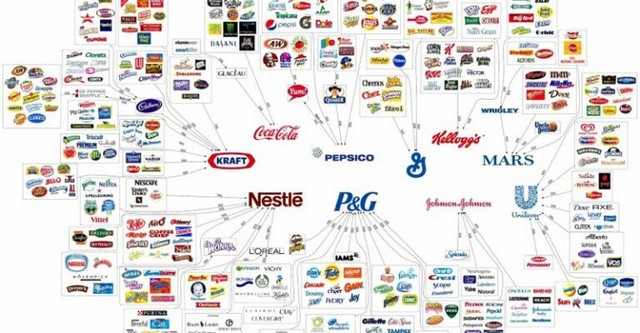
Some of the largest players in the food and agriculture sectors have been allowed to engage in anticompetitive mergers and practices that are as serious, if not more so, than those of which Big Tech stands accused. A wave of consolidation has given a few large companies control of proprietary, multi-level systems of traits, seeds, agrochemicals and digital technology.

3 Feb 2021 – Amid Congressional investigation and federal, state and private antitrust cases, all eyes are on Big Tech. The step up in antitrust enforcement against the digital technology behemoths and their alleged abuses of market power is, by all accounts, good news. Successful cases could restore competition, which would benefit smaller businesses and American consumers alike.

And after decades of under-enforcement of the antitrust laws in the U.S., these cases could deliver some base hits — and even home runs — for a critical area of law enforcement.

But the outsized media, political and social attention paid to the tech industry has diverted focus from other important sectors. There are monopolies and domestic cartels elsewhere — in healthcare, pharmaceuticals, media and communications, as well as food and agriculture. These industries produce goods and services that are essential to the health, safety and well-being of consumers, and even to our national security, which is why antitrust laws must be enforced against violations in these sectors, too.

The food system has been particularly fertile ground for rising concentration, the emergence of dominant firms and formation of domestic cartels. Some of the largest players have been allowed to engage in anticompetitive mergers and practices that are as serious, if not more so, than those of which Big Tech stands accused.

Much like their counterparts in the tech sector, many of the largest food and agriculture corporations have acquired their way to dominance by gobbling up rival businesses. This has occurred across the food system, including digital farming startups, biotechnology firms, food manufacturers, flour millers, farm machinery manufacturers and grocery store chains. But nowhere has it been more pronounced than agricultural inputs.

In acquiring competitors both small and large, the six biggest agricultural biotechnology firms collapsed rapidly into the Big Three — Bayer, DuPont and ChemChina. This wave of consolidation, which was met with little resistance from antitrust authorities, gave these corporations control of proprietary, multi-level systems of traits, seeds, agrochemicals and digital technology that limit farmers’ choices and lock them into limited cropping systems.

But some parts of the agricultural sector are rife with other damaging antitrust violations that we haven’t seen in Big Tech. This includes alleged conspiracies to fix prices and allocate markets — practices that are made possible by high levels of consolidation and concentration.

One of the most notable examples of this is in beef packing, where the top four firms now control about 85% of the national market. Given the market power that the packers possess, it comes as no surprise that they have allegedly abused it: On multiple occasions, these packers have been accused of colluding to pay ranchers less for cattle and charge consumers more for beef.

However, this behavior isn’t unique to the beef-packing sector. Similar allegations of price fixing have been leveled against tuna, chicken, turkey, egg, pork and peanut producers, among others. These cartels are especially egregious because processors allegedly collude on both the sell and buy sides, hurting both farmers and consumers — including independent restaurants and grocery stores.

Beyond anticompetitive practices, rising concentration has implications for our national food security. Concentration-driven bottlenecks along the supply chain make the entire food system vulnerable to disruption, a fact that has become painfully obvious during the pandemic.

Following a rash of COVID-19 outbreaks at meatpacking plants, national meat processing capacity declined by nearly half, resulting in supply chain breakdowns and price gouging that affected millions of Americans — many of whom were already experiencing food insecurity.

If disruption in the food supply system weren’t enough, the communities that support our food system are also at risk. Foreign companies now own a non-trivial portion of the United States’ farmland and food system. These entities not only resist food labeling and regulations that protect and inform consumers, they also take jobs and resources out of rural communities, accelerating social and economic decline and suppressing the growth of independent businesses that would contribute to revitalization.

Kudos to antitrust enforcers for finally taking aim at Big Tech. Monopolization cases — if they produce meaningful results — will improve the welfare of hundreds of millions of people that engage in online search, social networking and shopping. But we should not stop there. Americans depend on a safe, functional and resilient food system at least as much as they depend on their social media networks or ability to search the internet. Antitrust enforcers must turn their attention there next.

Watch here as Robert Reich of Inequality Media, explains
“The Monopolization of America”

_________________________________________________

Rob Larew is president of National Farmers Union, which represents 200,000 family farmers and ranchers across the country.

Dr. Diana Moss is the president of the American Antitrust Institute, which is devoted to promoting competition that protects consumers, businesses and society.

15 February 2021

Source: www.transcend.org

Iran’s Islamic Republic Celebrates Its 42nd Anniversary

By Richard Falk

Introduction

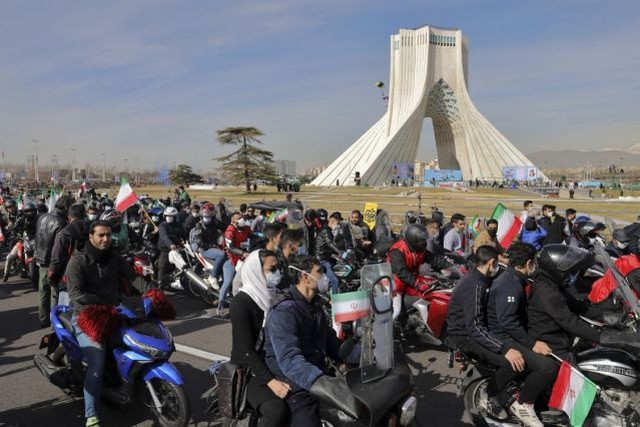
9 Feb 2021 – Iran is in the process of celebrating the 42nd Anniversary of the Islamic Revolution that led to the downfall of the Shah of Iran’s dynastic rule and its replacement by the Islamic Republic of Iran, which has defied the odds by resisting successfully a variety of attempts to restore the old established order either by an Iraqi encouraged war in the 1980s, destabilization efforts all along pushed by the U.S. and Israel, and an undisguised goal of regime change. It should also be remembered that the U.S. helped restore the Shah to his imperial crown in 1953 by helping to engineer a coup against the democratically elected Mohamad Mosaddeq. Months after the Shah abdicated and revolutionary supporters took over the Iranian government, Iranian students seized control of the American Embassy in Tehran and held the staff, including diplomats, hostage for more than a year. Such an event escalated the confrontation between Iran and the United States, which has risen to war-threatening heights at times, and veered toward normalization at other times. With a new American president in the White House who seems eager to promote a more moderate atmosphere in the Middle East there were widespread hopes for accommodation, but so far there are as many signs of continuity with the Trump years as indications of seeking accommodation based on equality and respect.

I am aware that it is ‘politically correct’ in the West to comment favorably on this anniversary occasion, but I continue to view Iran as practicing the politics of post-colonial self-determination that has made it a target for hostile forces in the Middle East and elsewhere, and that hopes for a peaceful regional future rest on the further dewesternization of liberal secular criteria of governmental and behavioral legitimacy. I would not minimize Iran’s bad record when it comes to human rights, but its emphasis in the Western media is more a matter of geopolitics than empathy for victims, especially if compared with the silence about much worse infractions by regional allies of the West, and taking account of the tendencies of even the purist of democracies to become paranoid and repressive when threatened by intervention and a counterrevolutionary crusade. Surely, maintaining comprehensive sanctions on Iran by the United States despite humanitarian appeals for their suspension during the COVID pandemic because of the massive harm done to the Iranian people should also be taken into account.

**************************

Q. 1: The anniversary of the victory of the Islamic Revolution in Iran is coming up. Many argue that the Iranian revolution, besides having internal effects, has affected the region and the international community. If you are positive with this viewpoint, what are its major international effects?

It is difficult to draw firm conclusions about cause and effect in international relations as there are many factors interacting at that same time. It seemed clear that the Islamic Revolution posed a challenge to Western vital strategic and economic interests that were tied closely to the Shah’s regime. It should be remembered that Henry Kissinger reminded the world that the Shah was “that rarest of things, an unconditional ally.” More broadly, the Islamic Revolution created the perception that the U.S. had a new adversary in the Middle East additional to, and perhaps more threatening, than the Soviet Union and the ideology of Marxism/Leninism. Its regional policies had previously emphasized, other than the containment of Soviet influence, access to oil at affordable prices and the security of Israel. This belief in Iran as a strategic threat was interpreted in the West as an ideological threat, as well, giving rise to Islamophobia that reached its peak in the United States after the 9/11 attacks in 2001 on the World Trade Center and Pentagon, primary symbols of American economic and military power.

Imam Khomeini reinforced Western and regional anxieties by his insistence that the transformation of Iran was an ‘Islamic Revolution,’ nor a ‘Iranian Revolution’ or a ‘Sunni Revolution,’ implying strong concerns beyond the borders of Iran. Such a sentiment had an electrifying and mobilizing effect on Islamic thought and action throughout the Arab world, and recreated the idea that territorial states within enclosed borders were a European conception of community imposed on the Middle East after World War I, and the collapse of the Ottoman Empire. Nationalist thinking and organization inauthentically displaced the primary existential community of shared adherence to Islamic beliefs, the umma. Such an interpretation of community undermined the legitimacy of many governments in the Arab/Islamic context that relied on nationalist and secular sources of legitimacy while actually serving the interests of the West.

The Western views of the Khomeini impact were highlighted by such phrases as regarding Islamic countries as the new ‘arc of crisis,’ or more memorably as ‘the clash of civilizations,’ the sequel to the Cold War, and the basis for a new phase of ideological and geopolitical confrontation.

The Israeli dimension of the effects of the Islamic Revolution in Iran should not be overlooked. Israel was regarded as an alien force in the region, anti-Islamic, secular, and a lingering remnant of the colonial era. For the West it was an outpost of enlightenment, modernity, and shared goals, and after the fall of the Shah the became the leading strategic ally of the United States, a relationship that continues to haunt the region with intervention and political violence, as well as the denial of basic rights to the Palestinian people in their own homeland.

Q. 2: Imam Khomeini, as the founder of the Islamic Revolution, unified the Muslim community towards certain causes, while before the Iranian revolution, there was not a dynamic wave of the Muslim community. What reasons caused that situation before the revolution?

Before the Iranian developments in 1978-79, the Middle East in particular was governed by authoritarian regimes that were on one side or the other of the Cold War rivalry between the U.S. and the Soviet Union. Many regional leaders in the Islamic world were fearful of the Islamic orientation of their own people, portraying Islam as anti-modern and an enemy of progress, and potentially threatening to the economic elites bonded with international capitalism. The Shah’s Iran typified this orientation and exhibited an acute form of civilizational alienation.

Imam Khomeini arrived on the political scene with a different vision of a political community animated by the resurgence of Islam as tradition and the foundation of ethically grounded governance. Because Iran faced counterrevolutionary threats from within and without, the governing challenges in Iran gave priority to protecting the revolution from its enemies, with a harshness often relied upon by the West to contend that the Islamic Revolution was a regressive development, a view encouraged by many of the Iranians who fled the country for various reasons. It is notable that these harsh tactics allowed the Islamic Revolution to survive and evolve, and contrasts with the experience of other efforts to achieve transformation, even reform, in Islamic countries, for instance, Egypt. The achievement of the Islamic Revolution is to persist in such a hostile environment suggests the skills of its leaders and the support of the great majority of its people.

Q. 3: Experts on the Palestinian issue argue that the Islamic Revolution changed the direction of fights against Israel. What is your opinion about this matter?

In a few words, whereas before the Islamic Revolution support for the Palestinian struggle was pragmatic and opportunistic, while afterwards identification with Palestine became a matter of fundamental principle and a source of authentic identity. The Islamic Republic of Iran, no matter what pressures it was subjected to during the last four decades, has never wavered in support for the rights of the Palestinian people.

Such speculation is difficult to be sure about as many forces were at work, but certainly the Islamic Revolution was one factor that altered the character of the struggle over the future of Palestine. From an Israeli perspective, Iran posed an increasing threat not only to its internal security and nationalist claims of legitimacy, but also to its regional and expansionist ambitions. At the same time, Iranian hostility to Israel reinforced Western hostility to the Islamic Republic. It also had the effect of leading the Gulf countries, with the exception of Qatar, to believe that their own legitimacy and stability was more threatened by the Islamic Republic than by Israel. These regimes, led by Saudi Arabia, also emphasized sectarian identities, insisting that only Sunni Islam was the true faith and that Shi’ia Islam was a deviation. At the same time, these Arab elites became persuaded that their rivalry throughout the Middle East with Iran was their primary concern, shared with Israel (and the United States), and that tensions and opposition to Israel no longer served governmental interests despite the persisting identification of their citizens with the Palestinian struggle. The climax of this revision of priorities became evident when the anti-Iran diplomacy was recently signaled to the world by the normalization agreements reached with several Arab countries, encouraged by others, and celebrated as a triumph of Trump’s pro-Israel foreign policy.

The Palestinian movement for self-determination was always viewed as problematic, and potentially dangerous, by the top-down governing processes in Iran and throughout the Arab world. Any bottom-up popular democratizing movement, epitomized by the Islamic Revolution in Iran and later by the rise to power of the Muslim Brotherhood in Egypt, was opposed by these repressive government scared of their own people. The Palestinian movement was deemed threatening in two of its dimensions—as putting forth political demands from below (a polar opposite from dynastic claims to rule from above, and so condition the role of Islam) and as challenging the links to the West to sustain internal security through weaponry and counterinsurgent tactics.

Q. 4: Was Imam Khomeini, as a spiritual leader, effective in changing the status of the Palestinian issue?

I think Imam Khomeini did give the Palestinian struggle a higher status than it had earlier possessed, particularly within the region, it became a matter of ethics, not just politics. His emphasis on Palestinian self-determination, the illegitimacy of the Zionist Project, was treated as a fundamental commitment of the Islamic Republic from its inception, and Israel was viewed as a distinctly Western challenge to the prevalence of his sense of the Islamic community of peoples. In the course of my meeting with Imam Khomeini he made very clear that in his view of the illegitimacy of a Jewish state based on claims of ethnic superiority coincided with his great respect for Judaism as an authentic religion. He expressed his hope at that time in 1979, that the Jewish minority in Iran would disentangle itself from identification with and support for Israel and the Zionist Project, and if this happened, he declared his view that it would be a tragedy for Iran if Jews did not remain in the country after the revolution.

This distinction between Israel and Judaism is crucial, and is the opposite of what the Israeli leadership and its more militant followers want the world to believe, which is that Israel, Jewishness, and Zionism are one, and that any criticism of Israel necessarily exhibits a form of anti-Semitism. Recently, the world respected Israeli human rights NGO issued a report that confirmed the view that Israel was an apartheid stated, premised on the efforts to make Israel ‘a Jewish supremacy state.’ As apartheid in any form is an international crime, listed as a Crime Against Humanity, in Article 7(j) of the Rome Statute governing the framework of the International Criminal Court in The Hague, the views of Imam Khomeini accord with basic principles of law and justice on this crucial matter of distinguishing between the State of Israel and the Jewish people.

Q. 5: It is widely believed that Iran’s resistance against international pressures has shifted the international order and has created a new resistance force against world powers. Can we connect this process to the current undermined position of the United States?

I believe it is correct that the failure of the United States to overcome Iranian resistance to its destabilization and counterrevolutionary efforts is viewed as one dimension of American imperial decline. Military intervention and even coercive diplomacy by way of sanctions and threats is far less effective than in the colonial era, and is unable to control the political outcomes of many internal struggles for the control of States. It has contributed to what is generally viewed as a much more multipolar world. New patterns of alignment are emerging globally and regionally. The Biden presidency will try to restore the Cold War Euro-centric pattern of alliances, with China as the new principal rival, with Russia also on the outside looking in. There are many uncertainties in all domains of international life that will reshape world order in coming years. Of especial importance will be the management of climate change, health hazards, and global economic policy. There are several lines of uncertainty, including whether a new form of ideological tension arises and inhibits global cooperative problem-solving. There is a need for stronger institutional mechanisms at all levels of political interaction to safeguard and promote the global public good. The United Nations could be reformed to play a more central role in moderating diversities of interests and values, while protecting the sovereign rights of States and extending a greater effort to impose UN Charter Principles on the five Permanent Members of the Security Council. The UN would benefit for greater funding independence and less tolerance for geopolitical impunity.

__________________________________________

Richard Falk is a member of the TRANSCEND Network, an international relations scholar, professor emeritus of international law at Princeton University, Distinguished Research Fellow, Orfalea Center of Global Studies, UCSB, author, co-author or editor of 60 books, and a speaker and activist on world affairs.

15 February 2021

Source: www.transcend.org

A Palestinian Balance Sheet: Normative Victories, Geopolitical Disappointments

By Richard Falk

Winning the Long Game

In recent weeks the Palestinian people have scored major victories that would have has immediate dire consequences for Israel if law and morality were allowed to govern political destiny. Instead, the Palestinian people are confronted by adverse geopolitical developments as a result of the Biden presidency, which have accepted some of the most regressive features of Trump’s hyper-partisanship with respect to Israel/Palestine. Law and morality alter reputations, bear on the legitimacy of contested policies, while geopolitics bear on behavior, the difference is one between legitimacy and hegemony. My unprovable hypothesis and firm belief is that hegemony wins out today, but legitimacy triumphs tomorrow.

There is a tendency to dismiss legitimacy gains should as what seems to matter in people’s lives seems remains frozen. In the long game of social change, especially in the course of the last 75 years, the winner of a Legitimacy War waged for the high legal and moral ground has more often than not eventually controlled the political outcome of a struggle, outlasting geopolitical dominance and military superiority along the way. The anti-colonial wars, it should not be forgotten, were won by the far weaker side militarily, which endured ordeals of desecration along their path to victory. This is the lesson such inspirational figures as Gandhi and Martin Luther King, Jr. gave their life to teach the world, so far with mixed results.

The Palestinian struggle continues, and offers the world of a paradigm of a colonial war carried on in a post-colonial era, in which cruel geopolitical tactics are required to swim against the strong liberation tides of history. Israel has proved to be a resourceful settler colonial state that has carried almost to completion the Zionist Project, moving forward toward its goals by stages, and always with the help of the geopolitical muscle of the West. Only recently has Israel lost control of the normative discourse that earlier it had dominated by highlighting the ghastly persecution of Jews who after the Holocaust deserved a secure sanctuary, a dismissal of nativist Palestinian claims to assert control over their own homeland, and cleverly arranging deceptive publicity portrays of the replacement of dirty backward Arab stagnancy by a dynamic modern, innovative, and flourishing Jewish society that sang and danced while the world slept. Israel later on made itself a valued Western foothold in a region coveted for its energy reserves and increasingly feared because of its anti-Western extremism and Islamic resurgence.

As with other anti-colonial struggles, the fate of the Palestinians will turn on whether the people can finally overcome a ruthlessly repressive state, given more leeway when linked, as is Israel, by regional and global strategic affinities with geopolitical actors. Can the Palestinian people secure their basic rights through their own distinctive blend of internal/external forces, resistance from within, global solidarity campaigns from without? This is the nature of the Palestinian Long Game. At present, this trajectory is hidden among the mysteries of unfolding national, regional, and global history.

Palestinian Normative Victories

Five years ago, no sensible person would have anticipated either that Israel’s most respected NGO, B’Tselem, would issue a report declaring that Israel had established an apartheid state that governed a single territory that stretched from the Jordan River to the Mediterranean Sea, that is, encompassing not only Occupied Palestine but Israel itself. With careful analysis the report showed that Israeli policies and practices with respect to immigration, land rights, residency, and mobility are administered in accordance within an overriding framework of Jewish supremacy, and by this logic, Palestinian (more accurately non-Jewish, including Druze and non-Arabic Christians) subjugation. Such a discriminatory and exploitative political arrangement is descriptive of apartheid, as initially established in South Africa and then generalized as an international crime in the 1973 International Convention on the Suppression and Punishment of the Crime of Apartheid. This idea of apartheid criminality was carried forward in the Rome Statute that provides the framework within which the International Criminal Court (ICC) in The Hague carries on its activities. Article 7 of the Statute enumerates the various Crimes Against Humanity over which the ICC asserts its jurisdictional authority. Apartheid is classified as such a crime in Article 7(j), although without a definition

Then came the much anticipated decision of the Pre-Trial Chamber of the ICC on February 5, 2021. By a 2-1 vote the Chamber’s decision affirmed the authority of Fatou Bensouda, the ICC Prosecutor, to proceed with an investigation of Israeli war crimes committed in Palestine since 2014, as geographically defined by its provisional 1967 borders. To reach this outcome the decision had to make two important pronouncements: first, that Palestine, although lacking many of the attributes of sovereignty, did qualify as a State for purposes of this ICC proceeding, having become a Party to the Rome Statute in 2014 after being recognized by the General Assembly on November 29, 2012 as a ‘non-member Observer State.’(Res. 67/19); and secondly, that the jurisdiction of ICC to investigate crimes committed on the territory of Palestine was authoritatively identified as the West Bank, East Jerusalem, and Gaza, that is, the territories occupied by Israel during the 1967 War.

It should be observed that this Pre-Trial proceeding had attracted unusually widespread interest in the world both because of the identity of the parties and the intriguing character of the issues. Jurists have long been intrigued by defining statehood in relation to different legal settings and by settling jurisdictional disputes addressing issues arising in territories that lack permanently established international borders. Signaling the high stakes of this legal proceeding, unprecedented 43 amicus curiae briefs were submitted, including by prominent figures on both sides of the controversy. Israel was not a Party to the Rome Statute, and declined to participate in the proceedings directly or be bound by the outcome, and yet was infuriated by the outcome, apparently sensing that it was losing control over the international minds and hearts.

This decision was promising beyond its strictly legal issues from a Palestinian point of view as a Preliminary Investigation conducted by the Prosecutor over the prior six years had already concluded that there was ample reason to support the conclusion that crimes had been committed by Israel and by Hamas in Palestine, specifically referencing three settings:

1. The massive IDF attack on Gaza in 2014, known as Operation Protective Edge;

2. the disproportionate uses of force by the IDF in responding to the Right of Return Gaza protests during 2018-19;

3. settlement activity in the West Bank and East Jerusalem.

It is now established that the Prosecutor can go forward, but all that glitters is not gold! Ms. Bensouda is schedule to leave the ICC in June when her term expires, and so far her replacement has not been selected. It is possible that a new prosecutor could use her or his discretion to discontinue the investigation, which reportedly is shaping the politics surrounding the appointment. It will become evident at that point as to whether the ICC gains a needed boost in its own efforts to disengage from the geopolitical architects of world order, or sinks back into its earlier ‘Africa Only’ image of international criminality.

Geopolitical Disappointments

It was reasonable, but maybe not realistic, for Palestine to hope that a more moderate Biden presidency would reverse the most damaging moves taken by Trump that had so overtly rejected international law and UN authority. The Biden Secretary of State, Antony Blinken, sent signals on the most significant issues that appeared to ratify rather than reverse or modify the Trump diplomacy. Blinken affirmed, what Biden had implied, to support the shift of the U.S. Embassy from Tel Aviv to Jerusalem, joining Trump in defying UNGA Resolution that enjoyed overwhelming support in 2017, declaring the Embassy move as ‘void’ and without legal effect. Blinken has also indicated U.S. support for Israel’s territorial incorporation of the Golan Heights, again defying international law and the UN, which had stood by a firm principle, earlier endorsed with respect to Israel’s occupation of Palestinian territories after the 1967 War in iconic Security Resolution 242, that territory could not be lawfully acquired by forcible conquest.

Assessing Gains and Losses

So far Israeli the significance of Israel’s setback in the Legitimacy War far outweighs Palestinian predictable geopolitical disappointments. Palestinian reactions to these disappointments have been muted as compared to Israeli apoplectic reaction to the ICC decision.

The fuming response of Netanyahu was replicated across by every leading Israeli politicians. In Netanyahu’s outrageous calumny against the ICC:

“When the ICC investigates Israel for fake war crimes, this is pure anti-Semitism,” adding, “We will fight this perversion of justice with all our might.”

Intemperate as are these remarks, they do show that Israel cares deeply about legitimacy issues, and rightly so. International law and morality can be defied but it is deeply wrong to suppose that they do not matter. South Africa learned that losing the Legitimacy War forced the dismantling of apartheid. Maybe Israeli leaders are beginning see the writing on the wall. In decades to come the ICC decision may turn out to be a turning point not unlike the 1960 Sharpeville Massacre. Before dawn, the night is darkest. The African majority waited more than 30 years for their emancipation from apartheid. The Palestinian people have already endured the hardships and humiliations of racist subjugation and Jewish supremacy for more than 70 years. When will it end, and how?

__________________________________________

Richard Falk is a member of the TRANSCEND Network, an international relations scholar, professor emeritus of international law at Princeton University, Distinguished Research Fellow, Orfalea Center of Global Studies, UCSB, author, co-author or editor of 60 books, and a speaker and activist on world affairs.

15 February 2021

Source: www.transcend.org

Chandra Singh Garhwali—World Peace Movement Will Never Forget the Soldier Who Refused to Fire on Unarmed Protestors

By Bharat Dogra

It was a tense day in Peshawar in 1930.The freedom movement under the guidance of Badshah Khan and the overall national leadership of Mahatma Gandhi was progressing from strength to strength. The Khudai Khidmatgars ( literally those who have committed themselves to serving God through service to humanity ) organized by the Badshah ( literally king, so called as he ruled the hearts of Pathans and others, although he personally lived the most frugal and simple life) had proven themselves to be true to their name. In terms of their commitment to non-violence these Pathans, who were earlier known for their violent feuds and revenges, had proved themselves closest to the ideals of non-violence as proclaimed by Mahatma Gandhi.

While the colonial regime sent soldiers armed by the latest weapons to curb them, the Khudai Khidmatgar protestors stood up bravely to them, unarmed and with prayers and freedom slogans on their lips.

Several Indian soldiers who had been brought to suppress them were from Garhwal. They were known as very brave and hardy soldiers from Garhwal region of Himalayas . They had proven themselves capable of winning several tough battles. But here when they were being asked to fire on their own unarmed brothers , they were becoming distressed and tense. How long can this go on ? During holidays when they went to their villages, they heard about the great freedom movement progressing under the leadership of Mahatma Gandhi and they felt happy and proud about this. But here they had been brought, as soldiers known for their loyalty, to suppress the same freedom movement in which their family members took pride and which attracted them too with its nobility and well justified demands. What should they do ?

So the freedom fighters who were clear about their mission and were ready for sacrifice and hence were not as tense as the soldiers were. The freedom fighters were happy with what they were planning to do ( despite all its risks ) but the soldiers were not at all happy with what were they being asked to do.

One unit of the soldiers was led by Chandra Singh Garhwali, a thoughtful soldier who had risen in ranks due to his skills , bravery and leadership qualities. The soldiers placed a lot of their faith and trust in him, and looked up to him to guide them in situations of uncertainty such as the one they faced now. Chandra Singh had been discussing the fast developing situation with his Garhwali soldiers, and while no firm decisions had been made yet, enough words had been exchanged to convince Chandra Singh that many other soldiers of his unit were as almost as disturbed and distressed as he was about the possibility of being asked to fire on unarmed, non-violent protestors and freedom fighters.

Finally the moment of reckoning came. The unarmed protestors stood before the soldiers bravely and calmly while the British commander gave the soldiers the order to fire. Chandra Singh Garhwali was supposed to repeat this order but instead he shouted—Do not fire. Cease fire. The soldiers followed the command of Chandra Singh and not of the much more senior British officer. The news spread like wild fire and brought unprecedented new hope to the freedom movement.

Chandra Singh had no intention of a full-scale rebellion. He knew that his handful of soldiers stood no chance against the huge colonial force. He and his unit soldiers were content with their very important decision to refuse to fire on unarmed, peaceful protestors. Chandra Singh told the British commander very firmly that even if you blow us with your guns and cannons we will not fire on unarmed peaceful protestors.

Needless to add, Chandra Singh and his mates all got very long and stringent imprisonments, even though his case was keenly contested by capable lawyers to avoid death sentence, and later a further reduction of prison sentence could be worked out after a lot of efforts. After his release Chandra Singh involved himself in diverse struggles and constructive activities. He also spent some time with Mahatma Gandhi in his ashram and later participated in Quit India Movement as well, leading to another prison sentence.

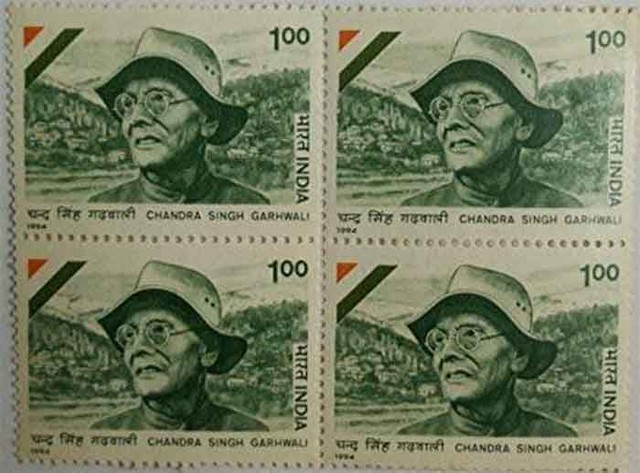
After independence he was also involved with the communist movement for some time. A postage stamp was issued in his name . In his last days he was involved in preparing a people-based development plan for a part of the Himalayan region. He had to endure a lot of economic hardships. He died after a life of many struggles and constructive activities in 1979 at the age of 88 following illness.

He and his fellow soldiers will be always remembered by the world peace movement for their courage and sacrifice in refusing to fire on peaceful protesters offering non-violent resistance. Thereby a new and glorious chapter was added and a new dimension was given to the history of non-violent struggles against injustice.

As he and his soldiers were Hindus and the overwhelming majority of the protesters were Pathan Muslims, Chandra Singh and his soldier mates also became a powerful symbol of communal harmony, and remain so to this day.

Rahul Sanskrityayan has written a detailed and great biography of Chandra Singh Garhwali in Hindi. Still his noble sacrifice is not as well known at world level as it deserves to be known, and his story should be told to a larger world audience.

Bharat Dogra is a veteran journalist and author.

12 February 2021

Source: countercurrents.org

Beyond Donald Trump

By Andrew Bacevich

When Martin Luther King preached his famous sermon “Beyond Vietnam” at Riverside Church in New York City in April 1967, I don’t recall giving his words a second thought. Although at the time I was just up the Hudson River attending West Point, his call for a “radical revolution in values” did not resonate with me. By upbringing and given my status as a soldier-in-the-making, radical revolutions were not my thing. To grasp the profound significance of the “the giant triplets of racism, extreme materialism, and militarism” to which he called his listeners’ attention was beyond my intellectual capacity. I didn’t even try to unpack their meaning.

In that regard, the ensuing decades have filled a void in my education. I long ago concluded that Dr. King was then offering the essential interpretive key to understanding our contemporary American dilemma. The predicament in which we find ourselves today stems from our reluctance to admit to the crippling interaction among the components of the giant triplets he described in that speech. True, racism, extreme materialism, and militarism each deserve — and separately sometimes receive — condemnation. But it’s the way that the three of them sustain one another that accounts for our nation’s present parlous condition.

Let me suggest that King’s prescription remains as valid today as when he issued it more than half a century ago — hence, my excuse for returning to it so soon after citing it in a previous TomDispatch. Sadly, however, neither the American people nor the American ruling class seem any more inclined to take that prescription seriously today than I was in 1967. We persist in rejecting Dr. King’s message.

Martin Luther King is enshrined in American memory as a great civil rights leader and rightly so. Yet as his Riverside Church Address made plain, his life’s mission went far beyond fighting racial discrimination. His real purpose was to save America’s soul, a self-assigned mission that was either wildly presumptuous or deeply prophetic.

In either case, his Riverside Church presentation was not well received at the time. Even in quarters generally supportive of the civil rights movement, press criticism was widespread. King’s detractors chastised him for straying out of his lane. “To divert the energies of the civil rights movement to the Vietnam issue is both wasteful and self-defeating,” the New York Times insisted. Its editorial board assured their readers that racism and the ongoing war were distinct and unrelated: “Linking these hard, complex problems will lead not to solutions but to deeper confusion.” King needed to stick to race and let others more qualified tend to war.

The Washington Post agreed. King’s ill-timed and ill-tempered presentation had “diminished his usefulness to his cause, to his country, and to his people.” According to the Post’s editorial board, King had “done a grave injury to those who are his natural allies” and “an even greater injury to himself.” His reputation had suffered permanent damage. “Many who have listened to him with respect will never again accord him the same respect.”

Life magazine weighed in with its own editorial slap on the wrist. To suggest any connection between the war in Vietnam and the condition of Black citizens at home, according to Life, was little more than “demagogic slander.” The ongoing conflict in Southeast Asia had “nothing to do with the legitimate battle for equal rights here in America.”

How could King not have seen that? In retrospect, we may wonder how ostensibly sophisticated observers could have overlooked the connection between racism, war, and a perverse value system that obsessively elevated and celebrated the acquisition and consumption of mere things.

More Than the Sum of Its Parts

In recent months, more than a few stressed-out observers of the American scene have described 2020 as this nation’s Worst. Year. Ever. Only those with exceedingly short memories will buy such hyperbole.

As recently as the 1960s, dissent and disorder occurred on a far larger scale and a more sustained basis than anything that Americans have endured of late. No doubt Covid-19 and Donald Trump collaborated to make 2020 a year of genuine misery and death, with last month’s assault on the Capitol adding a disconcerting exclamation point to the nightmare.

But recall the headline events following King’s Riverside Church presentation. The year 1968 began with the Tet Offensive in Vietnam, which obliterated official claims that the United States was “winning” the war there. Next came North Korea’s audacious seizure of a U.S. Navy ship, the USS Pueblo, a national humiliation. Soon after, President Lyndon Johnson’s surprise decision not to run for reelection turned the race for the presidency upside down.

In April, an assassin murdered Dr. King, an event that triggered rioting on a scale dwarfing 2020’s disturbances in Minneapolis, Minnesota, Portland, Oregon, and Kenosha, Wisconsin. (Mere days after the assassination, as I arrived in Washington for — of all things — a rugby tournament, fires were still burning and the skies were still black with smoke.) That June, not five years after his brother was shot and killed, Senator Robert Kennedy, his effort to win the Democratic presidential nomination just then gaining momentum, fell to an assassin’s bullet, his death stunning the nation and the world. The chaotic and violent Democratic National Convention, held in Chicago that August and broadcast live, suggested that the country was on the verge of coming apart at the seams. By year’s end, Richard Nixon, back from the political wilderness, was preparing to assume the reins as president — a prospect that left intact the anger and division that had been accumulating over the preceding 12 months.

True enough, the total number of American deaths caused by Covid-19 in 2020 greatly exceeds those from a distant war and domestic violence in 1968. Even so — and even without the menacing presence of Donald Trump looming over the political scene — the stress to which the nation was subjected in 1968 was at least as great as what occurred last year.

The point of making such a been-there/done-that comparison is not to suggest that, with Trump exiled to Mar-a-Lago, Americans can finally begin to relax, counting on Joe Biden to “build back better” and restore a semblance of normalcy to the country. Rather the point is that the evils afflicting our nation are deep-seated, persistent, and lie beyond the power of any mere president to remedy.

America’s Twenty-First-Century Racist Wars

A devotion to life, liberty, and the pursuit of happiness defines the essence of the American way of life. So the Founders declared and so we are schooled to believe. Well, yes, replied Dr. King in 1967, but racism, materialism, and militarism have likewise woven themselves into the fabric of American life. As much as we may prefer to pretend otherwise, those giant triplets define who we are as much as Jefferson’s Declaration or the Framers’ Constitution do.

For various reasons, Donald Trump not least among them, racism today again ranks atop the hierarchy of issues commanding national attention. Political progressives, champions of diversity, cultural elites, and even multinational corporations attentive to the bottom line profess their commitment to ending racism (as they define it) finally and forever. Some not-trivial portion of the rest of the population — the white nationalists chanting “You will not replace us,” for example — hold to another view. The elimination of racism, assuming such a goal is even plausible, will surely entail a further protracted struggle.

By 1967, King had concluded that winning that fight required expanding the scope of analysis. Hence, the imperative of speaking out against the Vietnam War, which until that moment he had hesitated to do. For King, it had become “incandescently clear” that the ongoing war was poisoning “America’s soul.” Racism and war were intertwined. They fed upon one another.

By now, it should be incandescently clear that our own forever wars of the twenty-first century, fought on a distinctly lesser scale than Vietnam, though over an even longer period of time, have had a similar effect. The places that the United States bombs, invades, and/or occupies typically fall into the category of what President Trump once disparaged as “shithole countries.” The inhabitants tend to be impoverished, non-white, non-English speaking, and, by American standards, often not especially well-educated. They subscribe to customs and religious traditions that many Americans view as primitive if not altogether alien.

That the average G.I. should deem the lives of Afghans or Iraqis of lesser value than the life of an American may be regrettable, but given our history it can hardly be surprising. A persistent theme of American wars going back to the colonial era is that, once the shooting starts, difference signifies inferiority.

Although no high-ranking government official and no senior military officer will admit it, racism permeates our post-9/11 wars. And as is so often the case, poisons generated abroad have a curious knack for finding their way home.

With few exceptions, Americans prefer to ignore this reality. Implicit in the thank-you-for-your-service air kisses so regularly lofted toward the troops is an illusion that wartime service correlates with virtue, as if combat were a great builder of character. Last month’s assault on the Capitol should finally have made it impossible to sustain that illusion.

In fact, as a consequence of our post-9/11 “forever wars,” the virus of militarism has infected many quarters of American society, perhaps even more so in our day than in King’s. Among the evident results: the spread of racist and extreme right-wing ideologies within the ranks of the armed services; the conversion of police forces into quasi-military entities with a penchant for using excessive force against people of color; and the emergence of well-armed militia groups posing as “patriots” while conspiring to overturn the constitutional order.

It’s important, of course, not to paint such a picture with too broad a brush. Not every soldier is a neo-Nazi — not even close. Not every cop is a shoot-first, then-knock racist thug. Not every defender of the Second Amendment conspires to “stop the steal” and reinstall Donald Trump in the Oval Office. But bad soldiers, bad cops, and traitors who wrap themselves in the flag exist in disturbingly large numbers. Certainly, were he alive today, Martin Luther King would not flinch from pointing out that the American penchant for war in recent decades has yielded a host of perverse results here at home.

Then there’s King’s third triplet, hidden in plain sight: the “extreme materialism” of a people intent on satisfying appetites that are quite literally limitless in a society that has become ever more economically unequal. Americans have always been the people of more. Enough is never enough. True in 1776, this remains true today.

A nation in which “machines and computers, profit motives and property rights” take precedence over people, King warned in 1967, courts something akin to spiritual death. King’s primary concern was not the distribution of material wealth, but the obsessive importance attributed to accumulating and possessing it.

Embracing equity as a major theme, the Biden administration holds to a different view. Its stated aim is to enable the “underserved and left behind” to catch up, with priority attention given to “communities of color and other underserved Americans.” In short: more for some, but not for others.

Such an effort will inevitably produce a backlash. Given a culture that deems billionaires the ultimate fulfillment of the American dream, the only politically acceptable program is one that holds out the promise of more for all. Since its very first days, the purpose of the American Experiment has been to satisfy this demand for more, even if perpetuating that effort today inflicts untold damage on the natural environment.

Prophetic Deficit

In his Riverside Church sermon, King mused that “the world now demands a maturity of America that we may not be able to achieve.” In the decades since, has our nation “matured” in any meaningful sense? Or have the habits of consumption that defined our way of life in 1967 only become more entrenched, even as Information Age manipulations to which Americans willingly submit reinforce those habits further?

Maturity suggests wisdom and judgment. It implies experience put to good use. Does that describe the America of our time? Again, it’s important to avoid painting with too broad a brushstroke. But ours is a country in which 74 million Americans voted to give Donald Trump a second term, a larger total than any prior presidential candidate ever received. And ours is a country in which millions believe that a cabal of Satan-worshiping pedophiles controls the apparatus of government.

Whether wittingly or not, when Joe Biden committed himself in 2020 to saving “the soul of America,” he was echoing Martin Luther King in 1967. But saving the nation’s soul requires more than simply replacing Trump in the Oval Office, issuing a steady stream of executive orders, and reciting speeches off a teleprompter (something that Biden does with evident difficulty).

Saving that soul requires moral imagination, a quality not commonly found in American politics. George Washington probably possessed it. Abraham Lincoln surely did. For a brief moment when delivering his Farewell Address, President Dwight D. Eisenhower spoke in a prophetic voice. So, too, did Jimmy Carter in his widely derided but enduringly profound “Malaise Speech” of 1979. But as this mere handful of examples suggests, the rough and tumble of political life only rarely accommodates prophets.

While Joe Biden may be a decent enough fellow, at no point in his long but not especially distinguished political career has he ever been mistaken for possessing prophetic gifts. Much the same can be said about the highly credentialed political veterans with whom he has surrounded himself: Kamala Harris, Antony Blinken, Lloyd Austin, Jake Sullivan, Janet Yellen, and the rest. When it comes to diversity, they check all the necessary boxes. Yet none of them gives even the slightest indication of grasping the plight of a nation held in the grip of King’s giant triplets.

As a devout Christian and a preacher of surpassing eloquence, King knew that salvation begins with an admission of sinfulness, followed by repentance. Only then does redemption become a possibility.

Only by acknowledging the evil caused by the simultaneous presence of racism and materialism and militarism at the heart of this country will it be remotely possible for the United States to take even the first few halting steps toward redemption. We await the prophetic voice that will awaken the American people to this imperative.

Andrew Bacevich, a TomDispatch regular, is president of the Quincy Institute for Responsible Statecraft.

12 February 2021

Source: countercurrents.org

The Guardian revealed its true face in sacking a columnist for criticising US military aid to Israel

By Jonathan Cook

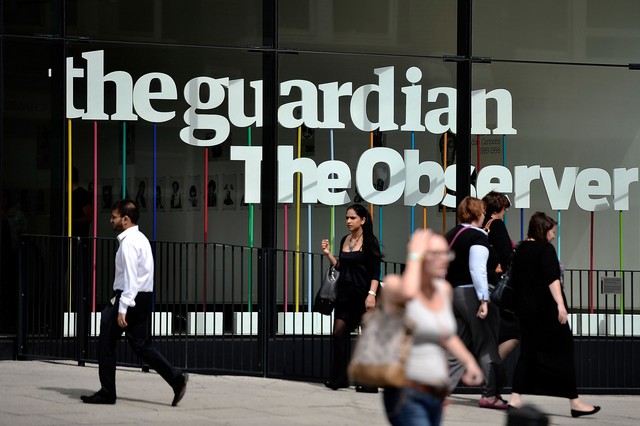
The revelation that a leftwing journalist, Nathan J Robinson, has been sacked as a Guardian US columnist for criticising Israel on Twitter – and that he was pressured to keep quiet about it by Guardian editors – should come as no surprise. He is only the latest in a long line of journalists, myself included, who have run foul of the Guardian’s unwritten but tightly policed constraints on what can be said about Israel.

In the tweet below, I have listed a few of the more prominent – and public – examples of journalists who have suffered at the Guardian’s hands over their coverage of Israel. The thread can opened by clicking on the tweet:

The Guardian sacks a columnist – and indicates he should keep quiet – after he comments on US aid to Israel. Nathan J Robinson is surprised by his treatment, but others – myself included – were similarly forced out into the cold after criticising Israel [https://t.co/7KXoB6l3OB]

— Jonathan Cook (@Jonathan_K_Cook) February 10, 2021

The unspoken Guardian rule we broke was to suggest one of the following: that there might be inherent contradictions between Israel’s claim to be a democracy and its self-definition in exclusivist, chauvinist, ethnic terms; or that Israel’s self-declared status as a militaristic, ethnic, rather than civic, state might be connected to its continuing abuses and crimes against Palestinians; or that, because Israel wishes to conceal its ugly, anachronistic ethnic project, it and its defenders might act in bad faith; or that the US might be actively complicit in this ethnically inspired, colonial project to dispossess Palestinians.

Equivocating editorial

Paradoxically, the Guardian is widely seen as the “mainstream” English-language publication most critical of Israel. It has long shored up its reputation with the left by publishing seemingly forthright, uncompromising material on Israeli-Palestinian issues.

Part of that is a historic credit it earnt. There was a time, long ago, when the Guardian’s pages were, for example, the only place in the mainstream to host – if rarely – the late, great Palestinian intellectual Edward Said. The paper even once allowed its former South Africa correspondent, who had transferred to Israel, to compare in detail the two countries’ systems of apartheid. It caused a furore – much of it instigated by the Israeli embassy in London – that made the paper even more shy of taking on the Israel lobby.

That is reflected in the perverse fact that today Israeli human rights groups are far more courageous in speaking plainly about Israel than the Guardian. When B’Tselem recently published a report stating that Israel operated an apartheid system oppressing Palestinians not just in the occupied territories but in the whole area under its rule – including inside Israel where officials falsely claim 1.8 million Palestinian citizens have equal rights with Jewish citizens – the paper published a mealy-mouthed editorial whose equivocations contrasted starkly with B’Tselem’s passionate and clear critique of a racist system of separate rights.

Even then, the Guardian would never have conceded what it reluctantly did in the editorial had B’Tselem not forced its hand.

Decades late, and after much agonised handwringing, a Guardian editorial appears to concede that B’Tselem might have a point in arguing Israel is an apartheid state. One can feel Jonathan Freedland wincing at the very thought [https://t.co/Pf0rlcjvyS]

— Jonathan Cook (@Jonathan_K_Cook) January 18, 2021

Low bar on Israel

The other reason why the Guardian looks so good on Israel and Palestine is that the rest of the corporate media is far, far worse. The bar is so low that the Guardian has to do very little to impress. Its unwavering support for Israel – and we will get to the reasons for that in a moment – only becomes clear when someone prominent steps forward to speak as clearly about what’s really wrong with Israel as B’Tselem recently did.

That invisible line on Israel was crossed by Jeremy Corbyn too, of course – one of the many aspects of his socialist-lite platform the corporate Guardian could not abide. That was why the Guardian was only too ready to join – and often lead – the campaign of smears against him and the Labour party under his leadership that conflated trenchant criticism of Israel (anti-Zonism) with antisemitism. One has to be naïve indeed to believe that the Guardian’s treatment of Corbyn – its simplistic regurgitation of the Board of Deputies’ talking points – was done in good faith.

My latest: The Guardian is still posturing as a helpless bystander in the bitter feuds dividing the Labour party, when in reality it was an active participant in sabotaging Corbyn’s efforts to make British politics more honest and accountable [https://t.co/CLCxPzERO9]

— Jonathan Cook (@Jonathan_K_Cook) August 10, 2020

In fact, the Guardian’s relations with Israel and Zionism date back to the founding editor of the modern paper, C P Scott. A staunch Zionist, Scott was critically important in liaising between the British government and the Zionist movement in the drafting of the 1917 Balfour Declaration – the colonial document that effectively committed Britain to dispossessing the native Palestinians, who weren’t even named in it, of their homeland.

The Guardian acted effectively as midwife both to the self-declared Jewish state of Israel and to the Nakba – the mass programme of ethnic cleansing – that was necessarily required to create a Jewish state on the Palestinians’ homeland. And, as documented in the book Disenchantment, the Guardian has indulged Israel ever since, much as a parent would a wayward child. It can be critical, even sharply sometimes, but it is resolutely protective of Israel’s image and the interests Israel has defined for itself as a Jewish state.

And for that reason, the Guardian historically developed close ties to the liberal Jewish community in the UK, much of it in London and Manchester. Many liberal Jewish journalists found the paper a natural home and an ideological fit in contrast to the rest of the UK’s corporate media, which was highly conservative and often openly antisemitic. A culture of critical but unerring support for Israel was always the Guardian’s default position.

Antisemitism smears

But to understand why Robinson became the latest victim of the Guardian’s tough policing of speech around Israel, we need to dig a little deeper.

Robinson is also editor of a small, independent, socialist magazine called Current Affairs. As such, the issues he highlights invariably break with the US corporate media’s craven coverage on a wide range of issues.

His sarcastic, but pointed tweet criticising the billions of dollars the US is sending to Israel so it can buy more weapons to kill Palestinians – and during a pandemic in which Americans are being denied the full promised $2,000 checks – was treated by the Israel lobby, as most criticism of Israel is nowadays, as evidence of “antisemitism”. This was the same kind of antisemitism that Corbyn, Ken Loach and many others on the socialist left have been accused of indulging.

The tweet, which Robinson deleted under Guardian pressure, was only antisemitic if you choose to see it that way – which, of course, is exactly how Israel’s apologists would like you to see it. Understandably, the nearer critics get to the nub of what is wrong with a self-declared Jewish state ruling over Palestinians, or with the US blank cheque for that Jewish state, the more this lobby goes into overdrive.

An email to Robinson from US editor John Mulholland, who I worked under for a time when he was editing the Observer, the Guardian’s Sunday sister paper, included a line below the main body of text complaining about Robinson’s tweet:

“Saying that the only Jewish state controls the most powerful country in the world is clearly antisemitic. The myth of ‘Jewish power’ informs murderous hatred. Delete this and apologise.”

It is unclear who this instruction came from – an influential reader, Mulholland himself or someone even more senior in the Guardian hierarchy. It matters little. Mulholland is the very embodiment of what the Japanese call a “salaryman”. He has scaled the greasy pole effortlessly by absorbing and loyally enforcing the corporate values of the Guardian business model.

Silencing socialist critiques

But the problem with the Guardian’s interpretation of Robinson’s tweet is that there is precisely nothing in the tweet to indicate that this was its meaning. It is pure projection. Robinson’s tweet critiqued a relationship in which the US indisputably pours huge sums of military aid into Israel – money desperately needed at the moment by US citizens hit financially by the pandemic. That “aid” is going to a state described by its own human rights groups as an apartheid regime and one that may soon be investigated by the International Criminal Court for war crimes. That should not even count as an opinion. It is a fact.

My latest: Politics, not international law, will decide whether Israelis are ever put in the dock by the ICC for war crimes. And already western states are rallying to Israel’s side to ensure it continues acting with impunity [https://t.co/salXNn6ZYt]

— Jonathan Cook (@Jonathan_K_Cook) February 11, 2021

It is the Guardian’s own antisemitic interpretation of the tweet that suggests this is because Israel “controls” the US. More likely, Robinson believes that the US sends the aid because Israel serves the west’s ugly colonial interests in the Middle East. Israel “earns” that aid – money for armaments – from the US by acting as its regional colonial “heavy”. (And, let’s note, Egypt originally earned its similarly generous US aid for ending its state of hostilities with Israel in 1979 by signing a peace agreement.)

The deeper question in assessing the Guardian’s sacking of Robinson – as well as its campaign to smear Corbyn – is this: what line do we as the left cross when we critique Israel? Is the Guardian really protecting Israel from an antisemitic tweet, as Mulholland appears to believe? Or is it policing leftwing speech that highlights the continuing imperialist, colonial nature of our western societies and their economic models of exploitation, domestic and foreign, on which corporate media like the Guardian depend?

First, smear a few prominent figures on the socialist left as antisemites. Then refer to those on the socialist left who challenge the smears as ‘controversial’.

Hey presto, soon you can describe socialism as antisemitic [https://t.co/1zZrZHGdqL]

— Jonathan Cook (@Jonathan_K_Cook) February 10, 2021

What we have here, disguised as a defence of Jews, is a gradual outlawing of socialist critiques of western states and their crimes. This is happening as those critiques gain ever greater visibility and purchase, assisted by social media and its brief democratisation (for good and bad) of public discourse.

Consistent worldview

Socialists like Robinson, Corbyn and Loach have a worldview. It is their way of analysing societies and geopolitics that makes sense of how state power operates, and how elites maintain and expand their control of resources to the detriment of others and the planet. Socialism demands change. It requires the reordering of society to ensure much more equal relations between individuals and states to end pervasive poverty and suffering.

We cannot therefore believe both that the US is an imperial, colonial power sponsoring Arab dictators, religious extremism and war crimes in the Middle East to control access to the region’s oil reserves – and also believe that Israel, which assists some of those dictators and attacks others, cultivates its own forms of religious extremism, commits its own war crimes, and is heavily subsidised by the US, has nothing to do with any of that.

Socialists see Israel as integral to how western states, especially the sole global military superpower headquartered in Washington, continue to project their power into the Middle East. They see Israel as a proxy for a western colonial project that never went away. Thinking that doesn’t make socialists antisemitic. It makes them consistent, it means their worldview makes sense of all those seemingly disparate events going on around the globe – disparate only because that is the way corporate media presents its narratives to prevent readers from joining up the dots.

Passive media consumption

This kind of analysis may well look antisemitic to those – liberals and conservatives – who have no worldview, no values beyond the dog-eat-dog, social Darwinism our western societies have cultivated in them through years of passive media consumption. Robinson’s tweet doubtless looked antisemitic to Mulholland, to Guardian editor Kath Viner, to senior columnist Jonathan Freedland, the paper’s resident antisemitism witchfinder general. But that is because none of them are socialists.

They can read Robinson’s tweet only through the limited perspective of their own entrenched liberalism. If they were socialists, they would never have been allowed anywhere near the senior editorial positions they hold at the Guardian. And the tiny number of Guardian journalists who claim to be leftwing working under them – figures like Owen Jones and George Monbiot – have learnt where the invisible trip-wires are that they must avoid not to lose their employment and their platforms. Which is why you will not see any solidarity from Guardian staff either over Robinson’s mistreatment or over the threat his sacking poses to the speech rights of the left.

Noam Chomsky Stumps Andrew Marr

This has long been the beauty of the “free” press model for the corporate media. It has allowed journalists to say anything they want so long as the corporate media decides whether they are given a platform from which to say it. And the corporate media has only given a platform to those journalists who have demonstrated that they can be trusted not to stray too far from what is today’s neoliberal orthodoxy at home and neoconservative orthodoxy abroad.

The Guardian has always had *terrible* employment practices. Back in the 1990s I and many others were kept on precarious short-term contracts for years. It was the tight leash intended to train us into Guardian groupthink. I finally got on staff because of union pressure [https://t.co/8RfzZZ4fCe]

— Jonathan Cook (@Jonathan_K_Cook) February 11, 2021

Illusion of freedom

Socialism has begun to revive – if often only as a growing disillusionment with late-stage, planet-destroying capitalism – because for the first time there have been large platforms from which socialists can speak. Paradoxically, those new platforms, like Twitter, have been corporate-run too.

Our plutocratic governments, run in the interests of a corporate elite, and the media, owned by a corporate elite, are battling hard to end that right. They would prefer to maintain the illusion of western freedom. And so they have been trying to silence socialists in ways that make it look like they have the public’s consent. They are recruiting us to silence ourselves. They are, as ever, manufacturing consent for our expulsion from the public square.

Glenn Greenwald: ‘On Thursday, Parler was the most popular app in the US. By Monday, three of the four Silicon Valley monopolies united to destroy it.. With virtual unanimity, leading US liberals celebrated this use of Silicon Valley monopoly power’ [https://t.co/kCajH8GMjX]

— Jonathan Cook (@Jonathan_K_Cook) January 12, 2021

We must fight back. We need to understand that old corporate media like the Guardian are not an ally to the left, they are the enemy. And that the new social media platforms to which we have briefly been given access will soon be snatched away from us unless we fight tooth and nail to keep them.

The battle itself is our weapon. Because if we allow ourselves to be swept from the public square without a struggle, if our story is written for us, not by us, none of the onlookers – the wider public – will ever grasp what was really at stake. They will remain blissfully unaware not only of what socialism might have achieved, but certain that we are all far better off now that those “antisemites” will never again be allowed a voice.

Jonathan Cook won the Martha Gellhorn Special Prize for Journalism.

12 February 2021

Source: countercurrents.org

How Russia is capitalising on US Retreat in the Middle East

By Ramzy Baroud

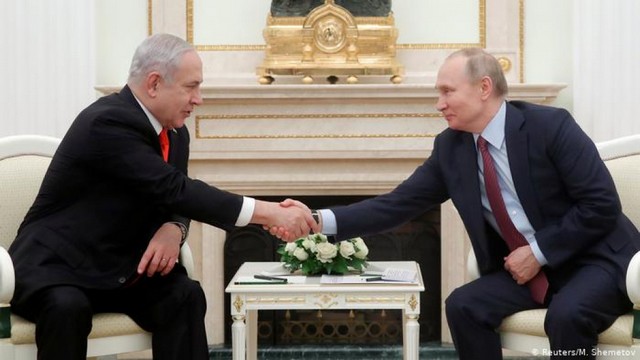
Israeli anxiety was palpable after Israel’s prime minister, Benyamin Netanyahu, waited for days to be contacted by the new US president, Joe Biden, after the latter’s inauguration. While much is being read into Biden’s decision, including Washington’s lack of enthusiasm to return to the ‘peace process’, Moscow is generating attention as a possible alternative to the USA by hosting inter-Palestinian dialogue and discussing the future with leaders of Palestinian political groups.

Clearly, a political shift is taking place on both fronts: the USA away from the region and Russia back to it. If this trend continues, it could lead, in the not-too-distant future, to a major paradigm shift. The Israelis are justifiably concerned at the potential loss of the unconditional support of their American benefactors. ‘There are 195 countries in the world, and…Biden has not contacted 188 of them,’ Herb Keinon wrote in The Jerusalem Post, adding, ‘but only in Israel, people are concerned about the significance of this delay.’ The concern is justified as Israel has been Washington’s most prominent ally for years, both in the Middle East and globally.

It is unclear whether Netanyahu’s relegation during Biden’s early days in office is an indicator that Israel – indeed, the Middle East – is no longer an American priority, or whether it is just a warning message to Netanyahu, who has been a vocal supporter of Biden’s predecessor, Donald Trump. Thanks to Netanyahu’s foreign policy calculation, support for Israel has, in recent years, become an unprecedented partisan issue in US politics. While the overwhelming majority of Republicans support Israel, only a minority of Democrats now do so.

Netanyahu’s recent behaviour – supportive of Republican president Trump and hostile to Democratic president Barack Obama – earned him a special status within Republican ranks and made him persona non grata among Democrats. It is equally true, however, that the USA seems to want to politically and militarily divest from the Middle East altogether.

In Biden’s initial days in office, a major restructuring has already taken place among the staff of the US National Security Council, flipping the previous structure ‘where the Middle East directorate was much bigger than it is now and the Asia portfolio was managed by a handful of more junior staffers’, according to Politico.

However, it is not only Washington that is shifting its geostrategic centre of gravity. Russia, too, is undergoing a major restructuring in its foreign policy priorities. As Washington retreats from the Middle East, Moscow cements its presence in the region, which began gradually with its calculated involvement in Syria in 2015. Moscow now offers itself as a political partner and a more balanced mediator between Israel and the Palestinians.

Like the USA, Russia might not necessarily see its political involvement as a precursor to actually solving the Israel occupation, though Moscow, unlike Washington, insists on the centrality of international law and UN resolutions in the quest for a just solution. Middle East analyst at the Polish Institute of International Affairs, Michał Wojnarowicz, arguesthat Russia’s involvement in the Palestinian-Israeli issue is consistent with its overall Middle East strategy, aimed at building ‘a network of influence among regional actors and boost its image as an attractive political partner’.

The New York Times offered a variation of this view in 2016, when Moscow began translating its strategic gains in Syria to political capital throughout the region. It was during this time that the USA-sponsored ‘peace process’ had reached a dead end, giving Russia the opportunity to float the idea of Moscow-sponsored talks between Israelis and Palestinians. ‘Russia’s new-found Middle East peace push, part of President Vladimir V. Putin’s reinsertion of Moscow into the region in a profound way after years of retreat, seems to be about everything but finding peace in the Middle East,’ the paper argued. ‘Instead, it is about Moscow’s ambitions and competition with Washington.’

At the time, Netanyahu rejected the Russian overture, hoping that a US Republican administration would grant Israel all its demands without having to make any concessions. The Palestinians, including movements like Hamas and Islamic Jihad that have been isolated by the USA and other western powers, found in Moscow a welcoming environment, and, crucially, an international power able to balance Washington’s blind support for Israel.

Despite Israel’s refusal to engage with the Palestinians under Russian auspices, many Palestinian delegations have visited Moscow, culminating, in January 2017, in a political breakthrough when Fatah, Hamas and other factions held serious talks in Moscow with the hope of bridging their differences. Although that round of talks did not result in Palestinian unity, it served as Russia’s political debut in a conflict that had lain squarely within the American geopolitical space.

Since then, Russia has remained involved through well-structured efforts championed by Putin’s special envoy Mikhail Bogdanov. These efforts are channelled through three different approaches: inter-Palestinian dialogue, Palestinian-Israeli dialogue and, more recently, intra-Fatah dialogue. The latter, especially, is indicative of the nature of Moscow’s involvement in the multi-layered conflicts at work in the region. Even when Palestinian groups are finalising their previous agreements in Cairo, top Palestinian officials continue to coordinate their actions with Moscow, and with Bogdanov, personally. Russia’s credibility among Palestinian groups is boosted by similar credibility among ordinary Palestinians as well, especially as it emerged in January that Russia will supply Palestinians with the Sputnik V COVID-19 vaccine, scheduled to be available in the Occupied Palestinian Territory soon.

Moreover, while Washington publicly declared that it will not roll back any of Trump’s pro-Israel actions, Russian Foreign Minister Sergei Lavrov is pushing for an international peace conference on Palestine, which he hopes will be held in the coming months. The USA now has no other option but to slowly retreat from its previous commitments to the ‘peace process’, and, in fact, form the region as a whole, leaving an opening for Russia, which is laying claim to the role of peace broker, a seismic change that many Palestinians are already welcoming.

Ramzy Baroud is a Non-resident Senior Research Fellow at the Afro-Middle East Centre, and the Editor of The Palestine Chronicle.

11 February 2021

Source: www.amec.org.za

A Murderous System Is Being Created Before Our Very Eyes

By Nils Melzer

A made-up rape allegation and fabricated evidence in Sweden, pressure from the UK not to drop the case, a biased judge, detention in a maximum security prison, psychological torture – and extradition to the U.S., where he could face up to 175 years in prison for exposing war crimes. For the first time, the UN Special Rapporteur on Torture, Nils Melzer, speaks in detail about the explosive findings of his investigation into the case of WikiLeaks founder Julian Assange.

1. The Swedish Police constructed a story of rape

Nils Melzer, why is the UN Special Rapporteur on Torture interested in Julian Assange?

That is something that the German Foreign Ministry recently asked me as well: Is that really your core mandate? Is Assange the victim of torture?

What was your response?

The case falls into my mandate in three different ways: First, Assange published proof of systematic torture. But instead of those responsible for the torture, it is Assange who is being persecuted. Second, he himself has been ill-treated to the point that he is now exhibiting symptoms of psychological torture. And third, he is to be extradited to a country that holds people like him in prison conditions that Amnesty International has described as torture. In summary: Julian Assange uncovered torture, has been tortured himself and could be tortured to death in the United States. And a case like that isn’t supposed to be part of my area of responsibility? Beyond that, the case is of symbolic importance and affects every citizen of a democratic country.

Why didn’t you take up the case much earlier?

Imagine a dark room. Suddenly, someone shines a light on the elephant in the room – on war criminals, on corruption. Assange is the man with the spotlight. The governments are briefly in shock, but then they turn the spotlight around with accusations of rape. It is a classic maneuver when it comes to manipulating public opinion. The elephant once again disappears into the darkness, behind the spotlight. And Assange becomes the focus of attention instead, and we start talking about whether Assange is skateboarding in the embassy or whether he is feeding his cat correctly. Suddenly, we all know that he is a rapist, a hacker, a spy and a narcissist. But the abuses and war crimes he uncovered fade into the darkness. I also lost my focus, despite my professional experience, which should have led me to be more vigilant.

Let’s start at the beginning: What led you to take up the case?

In December 2018, I was asked by his lawyers to intervene. I initially declined. I was overloaded with other petitions and wasn’t really familiar with the case. My impression, largely influenced by the media, was also colored by the prejudice that Julian Assange was somehow guilty and that he wanted to manipulate me. In March 2019, his lawyers approached me for a second time because indications were mounting that Assange would soon be expelled from the Ecuadorian Embassy. They sent me a few key documents and a summary of the case and I figured that my professional integrity demanded that I at least take a look at the material.

And then?

It quickly became clear to me that something was wrong. That there was a contradiction that made no sense to me with my extensive legal experience: Why would a person be subject to nine years of a preliminary investigation for rape without charges ever having been filed?

Is that unusual?

I have never seen a comparable case. Anyone can trigger a preliminary investigation against anyone else by simply going to the police and accusing the other person of a crime. The Swedish authorities, though, were never interested in testimony from Assange. They intentionally left him in limbo. Just imagine being accused of rape for nine-and-a-half years by an entire state apparatus and by the media without ever being given the chance to defend yourself because no charges had ever been filed.

You say that the Swedish authorities were never interested in testimony from Assange. But the media and government agencies have painted a completely different picture over the years: Julian Assange, they say, fled the Swedish judiciary in order to avoid being held accountable.

That’s what I always thought, until I started investigating. The opposite is true. Assange reported to the Swedish authorities on several occasions because he wanted to respond to the accusations. But the authorities stonewalled.

What do you mean by that: «The authorities stonewalled?»

Allow me to start at the beginning. I speak fluent Swedish and was thus able to read all of the original documents. I could hardly believe my eyes: According to the testimony of the woman in question, a rape had never even taken place at all. And not only that: The woman’s testimony was later changed by the Stockholm police without her involvement in order to somehow make it sound like a possible rape. I have all the documents in my possession, the emails, the text messages.

«The woman’s testimony was later changed by the police» – how exactly?

On Aug. 20, 2010, a woman named S. W. entered a Stockholm police station together with a second woman named A. A. The first woman, S. W. said she had had consensual sex with Julian Assange, but he had not been wearing a condom. She said she was now concerned that she could be infected with HIV and wanted to know if she could force Assange to take an HIV test. She said she was really worried. The police wrote down her statement and immediately informed public prosecutors. Even before questioning could be completed, S. W. was informed that Assange would be arrested on suspicion of rape. S. W. was shocked and refused to continue with questioning. While still in the police station, she wrote a text message to a friend saying that she didn’t want to incriminate Assange, that she just wanted him to take an HIV test, but the police were apparently interested in «getting their hands on him.»

What does that mean?

S.W. never accused Julian Assange of rape. She declined to participate in further questioning and went home. Nevertheless, two hours later, a headline appeared on the front page of Expressen, a Swedish tabloid, saying that Julian Assange was suspected of having committed two rapes.

Two rapes?

Yes, because there was the second woman, A. A. She didn’t want to press charges either; she had merely accompanied S. W. to the police station. She wasn’t even questioned that day. She later said that Assange had sexually harassed her. I can’t say, of course, whether that is true or not. I can only point to the order of events: A woman walks into a police station. She doesn’t want to file a complaint but wants to demand an HIV test. The police then decide that this could be a case of rape and a matter for public prosecutors. The woman refuses to go along with that version of events and then goes home and writes a friend that it wasn’t her intention, but the police want to «get their hands on» Assange. Two hours later, the case is in the newspaper. As we know today, public prosecutors leaked it to the press – and they did so without even inviting Assange to make a statement. And the second woman, who had allegedly been raped according to the Aug. 20 headline, was only questioned on Aug. 21.

What did the second woman say when she was questioned?

She said that she had made her apartment available to Assange, who was in Sweden for a conference. A small, one-room apartment. When Assange was in the apartment, she came home earlier than planned, but told him it was no problem and that the two of them could sleep in the same bed. That night, they had consensual sex, with a condom. But she said that during sex, Assange had intentionally broken the condom. If that is true, then it is, of course, a sexual offense – so-called «stealthing». But the woman also said that she only later noticed that the condom was broken. That is a contradiction that should absolutely have been clarified. If I don’t notice it, then I cannot know if the other intentionally broke it. Not a single trace of DNA from Assange or A. A. could be detected in the condom that was submitted as evidence.

How did the two women know each other?

They didn’t really know each other. A. A., who was hosting Assange and was serving as his press secretary, had met S. W. at an event where S. W. was wearing a pink cashmere sweater. She apparently knew from Assange that he was interested in a sexual encounter with S. W., because one evening, she received a text message from an acquaintance saying that he knew Assange was staying with her and that he, the acquaintance, would like to contact Assange. A. A. answered: Assange is apparently sleeping at the moment with the “cashmere girl.” The next morning, S. W. spoke with A. A. on the phone and said that she, too, had slept with Assange and was now concerned about having become infected with HIV. This concern was apparently a real one, because S.W. even went to a clinic for consultation. A. A. then suggested: Let’s go to the police – they can force Assange to get an HIV test. The two women, though, didn’t go to the closest police station, but to one quite far away where a friend of A. A.’s works as a policewoman – who then questioned S. W., initially in the presence of A. A., which isn’t proper practice. Up to this point, though, the only problem was at most a lack of professionalism. The willful malevolence of the authorities only became apparent when they immediately disseminated the suspicion of rape via the tabloid press, and did so without questioning A. A. and in contradiction to the statement given by S. W. It also violated a clear ban in Swedish law against releasing the names of alleged victims or perpetrators in sexual offense cases. The case now came to the attention of the chief public prosecutor in the capital city and she suspended the rape investigation some days later with the assessment that while the statements from S. W. were credible, there was no evidence that a crime had been committed.

But then the case really took off. Why?

Now the supervisor of the policewoman who had conducted the questioning wrote her an email telling her to rewrite the statement from S. W.

What did the policewoman change?

We don’t know, because the first statement was directly written over in the computer program and no longer exists. We only know that the original statement, according to the chief public prosecutor, apparently did not contain any indication that a crime had been committed. In the edited form it says that the two had had sex several times – consensual and with a condom. But in the morning, according to the revised statement, the woman woke up because he tried to penetrate her without a condom. She asks: «Are you wearing a condom?» He says: «No.» Then she says: «You better not have HIV» and allows him to continue. The statement was edited without the involvement of the woman in question and it wasn’t signed by her. It is a manipulated piece of evidence out of which the Swedish authorities then constructed a story of rape.

Why would the Swedish authorities do something like that?

The timing is decisive: In late July, WikiLeaks– in cooperation with the «New York Times», the «Guardian» and «Der Spiegel» – published the «Afghan War Diary». It was one of the largest leaks in the history of the U.S. military. The U.S. immediately demanded that its allies inundate Assange with criminal cases. We aren’t familiar with all of the correspondence, but Stratfor, a security consultancy that works for the U.S. government, advised American officials apparently to deluge Assange with all kinds of criminal cases for the next 25 years.

2. Assange contacts the Swedish judiciary several times to make a statement – but he is turned down

Why didn’t Assange turn himself into the police at the time?

He did. I mentioned that earlier.

Then please elaborate.

Assange learned about the rape allegations from the press. He established contact with the police so he could make a statement. Despite the scandal having reached the public, he was only allowed to do so nine days later, after the accusation that he had raped S. W. was no longer being pursued. But proceedings related to the sexual harassment of A. A. were ongoing. On Aug. 30, 2010, Assange appeared at the police station to make a statement. He was questioned by the same policeman who had since ordered that revision of the statement had been given by S. W. At the beginning of the conversation, Assange said he was ready to make a statement, but added that he didn’t want to read about his statement again in the press. That is his right, and he was given assurances it would be granted. But that same evening, everything was in the newspapers again. It could only have come from the authorities because nobody else was present during his questioning. The intention was very clearly that of besmirching his name.

Where did the story come from that Assange was seeking to avoid Swedish justice officials?

This version was manufactured, but it is not consistent with the facts. Had he been trying to hide, he would not have appeared at the police station of his own free will. On the basis of the revised statement from S.W., an appeal was filed against the public prosecutor’s attempt to suspend the investigation, and on Sept. 2, 2010, the rape proceedings were resumed. A legal representative by the name of Claes Borgström was appointed to the two women at public cost. The man was a law firm partner to the previous justice minister, Thomas Bodström, under whose supervision Swedish security personnel had seized two men who the U.S. found suspicious in the middle of Stockholm. The men were seized without any kind of legal proceedings and then handed over to the CIA, who proceeded to torture them. That shows the trans-Atlantic backdrop to this affair more clearly. After the resumption of the rape investigation, Assange repeatedly indicated through his lawyer that he wished to respond to the accusations. The public prosecutor responsible kept delaying. On one occasion, it didn’t fit with the public prosecutor’s schedule, on another, the police official responsible was sick. Three weeks later, his lawyer finally wrote that Assange really had to go to Berlin for a conference and asked if he was allowed to leave the country. The public prosecutor’s office gave him written permission to leave Sweden for short periods of time.

And then?

The point is: On the day that Julian Assange left Sweden, at a point in time when it wasn’t clear if he was leaving for a short time or a long time, a warrant was issued for his arrest. He flew with Scandinavian Airlines from Stockholm to Berlin. During the flight, his laptops disappeared from his checked baggage. When he arrived in Berlin, Lufthansa requested an investigation from SAS, but the airline apparently declined to provide any information at all.

Why?

That is exactly the problem. In this case, things are constantly happening that shouldn’t actually be possible unless you look at them from a different angle. Assange, in any case, continued onward to London, but did not seek to hide from the judiciary. Via his Swedish lawyer, he offered public prosecutors several possible dates for questioning in Sweden – this correspondence exists. Then, the following happened: Assange caught wind of the fact that a secret criminal case had been opened against him in the U.S. At the time, it was not confirmed by the U.S., but today we know that it was true. As of that moment, Assange’s lawyer began saying that his client was prepared to testify in Sweden, but he demanded diplomatic assurance that Sweden would not extradite him to the U.S.

Was that even a realistic scenario?

Absolutely. Some years previously, as I already mentioned, Swedish security personnel had handed over two asylum applicants, both of whom were registered in Sweden, to the CIA without any legal proceedings. The abuse already started at the Stockholm airport, where they were mistreated, drugged and flown to Egypt, where they were tortured. We don’t know if they were the only such cases. But we are aware of these cases because the men survived. Both later filed complaints with UN human rights agencies and won their case. Sweden was forced to pay each of them half a million dollars in damages.

Did Sweden agree to the demands submitted by Assange?

The lawyers say that during the nearly seven years in which Assange lived in the Ecuadorian Embassy, they made over 30 offers to arrange for Assange to visit Sweden – in exchange for a guarantee that he would not be extradited to the U.S. The Swedes declined to provide such a guarantee by arguing that the U.S. had not made a formal request for extradition.

What is your view of the demand made by Assange’s lawyers?

Such diplomatic assurances are a routine international practice. People request assurances that they won’t be extradited to places where there is a danger of serious human rights violations, completely irrespective of whether an extradition request has been filed by the country in question or not. It is a political procedure, not a legal one. Here’s an example: Say France demands that Switzerland extradite a Kazakh businessman who lives in Switzerland but who is wanted by both France and Kazakhstan on tax fraud allegations. Switzerland sees no danger of torture in France, but does believe such a danger exists in Kazakhstan. So, Switzerland tells France: We’ll extradite the man to you, but we want a diplomatic assurance that he won’t be extradited onward to Kazakhstan. The French response is not: «Kazakhstan hasn’t even filed a request!» Rather, they would, of course, grant such an assurance. The arguments coming from Sweden were tenuous at best. That is one part of it. The other, and I say this on the strength of all of my experience behind the scenes of standard international practice: If a country refuses to provide such a diplomatic assurance, then all doubts about the good intentions of the country in question are justified. Why shouldn’t Sweden provide such assurances? From a legal perspective, after all, the U.S. has absolutely nothing to do with Swedish sex offense proceedings.

Why didn’t Sweden want to offer such an assurance?

You just have to look at how the case was run: For Sweden, it was never about the interests of the two women. Even after his request for assurances that he would not be extradited, Assange still wanted to testify. He said: If you cannot guarantee that I won’t be extradited, then I am willing to be questioned in London or via video link.

But is it normal, or even legally acceptable, for Swedish authorities to travel to a different country for such an interrogation?

That is a further indication that Sweden was never interested in finding the truth. For exactly these kinds of judiciary issues, there is a cooperation treaty between the United Kingdom and Sweden, which foresees that Swedish officials can travel to the UK, or vice versa, to conduct interrogations or that such questioning can take place via video link. During the period of time in question, such questioning between Sweden and England took place in 44 other cases. It was only in Julian Assange’s case that Sweden insisted that it was essential for him to appear in person.
3. When the highest Swedish court finally forced public prosecutors in Stockholm to either file charges or suspend the case, the British authorities demanded: «Don’t get cold feet!!»

Why was that?

There is only a single explanation for everything – for the refusal to grant diplomatic assurances, for the refusal to question him in London: They wanted to apprehend him so they could extradite him to the U.S. The number of breaches of law that accumulated in Sweden within just a few weeks during the preliminary criminal investigation is simply grotesque. The state assigned a legal adviser to the women who told them that the criminal interpretation of what they experienced was up to the state, and no longer up to them. When their legal adviser was asked about contradictions between the women’s testimony and the narrative adhered to by public officials, the legal adviser said, in reference to the women: «ah, but they’re not lawyers.» But for five long years the Swedish prosecution avoids questioning Assange regarding the purported rape, until his lawyers finally petitioned Sweden’s Supreme Court to force the public prosecution to either press charges or close the case. When the Swedes told the UK that they may be forced to abandon the case, the British wrote back, worriedly: «Don’t you dare get cold feet!!»

Are you serious?

Yes, the British, or more specifically the Crown Prosecution Service, wanted to prevent Sweden from abandoning the case at all costs. Though really, the English should have been happy that they would no longer have to spend millions in taxpayer money to keep the Ecuadorian Embassy under constant surveillance to prevent Assange’s escape.

Why were the British so eager to prevent the Swedes from closing the case?

We have to stop believing that there was really an interest in leading an investigation into a sexual offense. What WikiLeaks did is a threat to the political elite in the U.S., Britain, France and Russia in equal measure. WikiLeaks publishes secret state information – they are opposed to classification. And in a world, even in so-called mature democracies, where secrecy has become rampant, that is seen as a fundamental threat. Assange made it clear that countries are no longer interested today in legitimate confidentiality, but in the suppression of important information about corruption and crimes. Take the archetypal WikiLeaks case from the leaks supplied by Chelsea Manning: The so-called «Collateral Murder» video. (Eds. Note: On April 5, 2010, WikiLeaks published a classified video from the U.S. military which showed the murder of several people in Baghdad by U.S. soldiers, including two employees of the news agency Reuters.) As a long-time legal adviser to the International Committee of the Red Cross and delegate in war zones, I can tell you: The video undoubtedly documents a war crime. A helicopter crew simply mowed down a bunch of people. It could even be that one or two of these people was carrying a weapon, but injured people were intentionally targeted. That is a war crime. «He’s wounded,» you can hear one American saying. «I’m firing.» And then they laugh. Then a van drives up to save the wounded. The driver has two children with him. You can hear the soldiers say: Well it’s their fault for bringing their kids into a battle. And then they open fire. The father and the wounded are immediately killed, though the children survive with serious injuries. Through the publication of the video, we became direct witnesses to a criminal, unconscionable massacre.

What should a constitutional democracy do in such a situation?

A constitutional democracy would probably investigate Chelsea Manning for violating official secrecy because she passed the video along to Assange. But it certainly wouldn’t go after Assange, because he published the video in the public interest, consistent with the practices of classic investigative journalism. More than anything, though, a constitutional democracy would investigate and punish the war criminals. These soldiers belong behind bars. But no criminal investigation was launched into a single one of them. Instead, the man who informed the public is locked away in pre-extradition detention in London and is facing a possible sentence in the U.S. of up to 175 years in prison. That is a completely absurd sentence. By comparison: The main war criminals in the Yugoslavia tribunal received sentences of 45 years. One-hundred-seventy-five years in prison in conditions that have been found to be inhumane by the UN Special Rapporteur and by Amnesty International. But the really horrifying thing about this case is the lawlessness that has developed: The powerful can kill without fear of punishment and journalism is transformed into espionage. It is becoming a crime to tell the truth.

What awaits Assange once he is extradited?

He will not receive a trial consistent with the rule of law. That’s another reason why his extradition shouldn’t be allowed. Assange will receive a trial-by-jury in Alexandria, Virginia – the notorious «Espionage Court» where the U.S. tries all national security cases. The choice of location is not by coincidence, because the jury members must be chosen in proportion to the local population, and 85 percent of Alexandria residents work in the national security community – at the CIA, the NSA, the Defense Department and the State Department. When people are tried for harming national security in front of a jury like that, the verdict is clear from the very beginning. The cases are always tried in front of the same judge behind closed doors and on the strength of classified evidence. Nobody has ever been acquitted there in a case like that. The result being that most defendants reach a settlement, in which they admit to partial guilt so as to receive a milder sentence.

You are saying that Julian Assange won’t receive a fair trial in the United States?

Without doubt. For as long as employees of the American government obey the orders of their superiors, they can participate in wars of aggression, war crimes and torture knowing full well that they will never have to answer to their actions. What happened to the lessons learned in the Nuremberg Trials? I have worked long enough in conflict zones to know that mistakes happen in war. It’s not always unscrupulous criminal acts. A lot of it is the result of stress, exhaustion and panic. That’s why I can absolutely understand when a government says: We’ll bring the truth to light and we, as a state, take full responsibility for the harm caused, but if blame cannot be directly assigned to individuals, we will not be imposing draconian punishments. But it is extremely dangerous when the truth is suppressed and criminals are not brought to justice. In the 1930s, Germany and Japan left the League of Nations. Fifteen years later, the world lay in ruins. Today, the U.S. has withdrawn from the UN Human Rights Council, and neither the «Collateral Murder» massacre nor the CIA torture following 9/11 nor the war of aggression against Iraq have led to criminal investigations. Now, the United Kingdom is following that example. The Security and Intelligence Committee in the country’s own parliament published two extensive reports in 2018 showing that Britain was much more deeply involved in the secret CIA torture program than previously believed. The committee recommended a formal investigation. The first thing that Boris Johnson did after he became prime minister was to annul that investigation.
4. In the UK, violations of bail conditions are generally only punished with monetary fines or, at most, a couple of days behind bars. But Assange was given 50 weeks in a maximum-security prison without the ability to prepare his own defense

In April, Julian Assange was dragged out of the Ecuadorian Embassy by British police. What is your view of these events?

In 2017, a new government was elected in Ecuador. In response, the U.S. wrote a letter indicating they were eager to cooperate with Ecuador. There was, of course, a lot of money at stake, but there was one hurdle in the way: Julian Assange. The message was that the U.S. was prepared to cooperate if Ecuador handed Assange over to the U.S. At that point, the Ecuadorian Embassy began ratcheting up the pressure on Assange. They made his life difficult. But he stayed. Then Ecuador voided his amnesty and gave Britain a green light to arrest him. Because the previous government had granted him Ecuadorian citizenship, Assange’s passport also had to be revoked, because the Ecuadorian constitution forbids the extradition of its own citizens. All that took place overnight and without any legal proceedings. Assange had no opportunity to make a statement or have recourse to legal remedy. He was arrested by the British and taken before a British judge that same day, who convicted him of violating his bail.

What do you make of this accelerated verdict?

Assange only had 15 minutes to prepare with his lawyer. The trial itself also lasted just 15 minutes. Assange’s lawyer plopped a thick file down on the table and made a formal objection to one of the judges for conflict of interest because her husband had been the subject of WikiLeaks exposures in 35 instances. But the lead judge brushed aside the concerns without examining them further. He said accusing his colleague of a conflict of interest was an affront. Assange himself only uttered one sentence during the entire proceedings: «I plead not guilty.» The judge turned to him and said: «You are a narcissist who cannot get beyond his own self-interest. I convict you for bail violation.»

If I understand you correctly: Julian Assange never had a chance from the very beginning?

That’s the point. I’m not saying Julian Assange is an angel or a hero. But he doesn’t have to be. We are talking about human rights and not about the rights of heroes or angels. Assange is a person, and he has the right to defend himself and to be treated in a humane manner. Regardless of what he is accused of, Assange has the right to a fair trial. But he has been deliberately denied that right – in Sweden, the U.S., Britain and Ecuador. Instead, he was left to rot for nearly seven years in limbo in a room. Then, he was suddenly dragged out and convicted within hours and without any preparation for a bail violation that consisted of him having received diplomatic asylum from another UN member state on the basis of political persecution, just as international law intends and just as countless Chinese, Russian and other dissidents have done in Western embassies. It is obvious that what we are dealing with here is political persecution. In Britain, bail violations seldom lead to prison sentences – they are generally subject only to fines. Assange, by contrast, was sentenced in summary proceedings to 50 weeks in a maximum-security prison – clearly a disproportionate penalty that had only a single purpose: Holding Assange long enough for the U.S. to prepare their espionage case against him.

As the UN Special Rapporteur on Torture, what do you have to say about his current conditions of imprisonment?

Britain has denied Julian Assange contact with his lawyers in the U.S., where he is the subject of secret proceedings. His British lawyer has also complained that she hasn’t even had sufficient access to her client to go over court documents and evidence with him. Into October, he was not allowed to have a single document from his case file with him in his cell. He was denied his fundamental right to prepare his own defense, as guaranteed by the European Convention on Human Rights. On top of that is the almost total solitary confinement and the totally disproportionate punishment for a bail violation. As soon as he would leave his cell, the corridors were emptied to prevent him from having contact with any other inmates.

And all that because of a simple bail violation? At what point does imprisonment become torture?

Julian Assange has been intentionally psychologically tortured by Sweden, Britain, Ecuador and the U.S. First through the highly arbitrary handling of proceedings against him. The way Sweden pursued the case, with active assistance from Britain, was aimed at putting him under pressure and trapping him in the embassy. Sweden was never interested in finding the truth and helping these women, but in pushing Assange into a corner. It has been an abuse of judicial processes aimed at pushing a person into a position where he is unable to defend himself. On top of that come the surveillance measures, the insults, the indignities and the attacks by politicians from these countries, up to and including death threats. This constant abuse of state power has triggered serious stress and anxiety in Assange and has resulted in measurable cognitive and neurological harm. I visited Assange in his cell in London in May 2019 together with two experienced, widely respected doctors who are specialized in the forensic and psychological examination of torture victims. The diagnosis arrived at by the two doctors was clear: Julian Assange displays the typical symptoms of psychological torture. If he doesn’t receive protection soon, a rapid deterioration of his health is likely, and death could be one outcome.

Half a year after Assange was placed in pre-extradition detention in Britain, Sweden quietly abandoned the case against him in November 2019, after nine long years. Why then?

The Swedish state spent almost a decade intentionally presenting Julian Assange to the public as a sex offender. Then, they suddenly abandoned the case against him on the strength of the same argument that the first Stockholm prosecutor used in 2010, when she initially suspended the investigation after just five days: While the woman’s statement was credible, there was no proof that a crime had been committed. It is an unbelievable scandal. But the timing was no accident. On Nov. 11, an official document that I had sent to the Swedish government two months before was made public. In the document, I made a request to the Swedish government to provide explanations for around 50 points pertaining to the human rights implications of the way they were handling the case. How is it possible that the press was immediately informed despite the prohibition against doing so? How is it possible that a suspicion was made public even though the questioning hadn’t yet taken place? How is it possible for you to say that a rape occurred even though the woman involved contests that version of events? On the day the document was made public, I received a paltry response from Sweden: The government has no further comment on this case.

What does that answer mean?

It is an admission of guilt.

How so?

As UN Special Rapporteur, I have been tasked by the international community of nations with looking into complaints lodged by victims of torture and, if necessary, with requesting explanations or investigations from governments. That is the daily work I do with all UN member states. From my experience, I can say that countries that act in good faith are almost always interested in supplying me with the answers I need to highlight the legality of their behavior. When a country like Sweden declines to answer questions submitted by the UN Special Rapporteur on Torture, it shows that the government is aware of the illegality of its behavior and wants to take no responsibility for its behavior. They pulled the plug and abandoned the case a week later because they knew I would not back down. When countries like Sweden allow themselves to be manipulated like that, then our democracies and our human rights face a fundamental threat.

You believe that Sweden was fully aware of what it was doing?

Yes. From my perspective, Sweden very clearly acted in bad faith. Had they acted in good faith, there would have been no reason to refuse to answer my questions. The same holds true for the British: Following my visit to Assange in May 2019, they took six months to answer me – in a single-page letter, which was primarily limited to rejecting all accusations of torture and all inconsistencies in the legal proceedings. If you’re going to play games like that, then what’s the point of my mandate? I am the Special Rapporteur on Torture for the United Nations. I have a mandate to ask clear questions and to demand answers. What is the legal basis for denying someone their fundamental right to defend themselves? Why is a man who is neither dangerous nor violent held in solitary confinement for several months when UN standards legally prohibit solitary confinement for periods extending beyond 15 days? None of these UN member states launched an investigation, nor did they answer my questions or even demonstrate an interest in dialogue.
5. A prison sentence of 175 years for investigative journalism: The precedent the USA vs. Julian Assange case could set

What does it mean when UN member states refuse to provide information to their own Special Rapporteur on Torture?

That it is a prearranged affair. A show trial is to be used to make an example of Julian Assange. The point is to intimidate other journalists. Intimidation, by the way, is one of the primary purposes for the use of torture around the world. The message to all of us is: This is what will happen to you if you emulate the WikiLeaks model. It is a model that is so dangerous because it is so simple: People who obtain sensitive information from their governments or companies transfer that information to WikiLeaks, but the whistleblower remains anonymous. The reaction shows how great the threat is perceived to be: Four democratic countries joined forces – the U.S., Ecuador, Sweden and the UK – to leverage their power to portray one man as a monster so that he could later be burned at the stake without any outcry. The case is a huge scandal and represents the failure of Western rule of law. If Julian Assange is convicted, it will be a death sentence for freedom of the press.

What would this possible precedent mean for the future of journalism?

On a practical level, it means that you, as a journalist, must now defend yourself. Because if investigative journalism is classified as espionage and can be incriminated around the world, then censorship and tyranny will follow. A murderous system is being created before our very eyes. War crimes and torture are not being prosecuted. YouTube videos are circulating in which American soldiers brag about driving Iraqi women to suicide with systematic rape. Nobody is investigating it. At the same time, a person who exposes such things is being threatened with 175 years in prison. For an entire decade, he has been inundated with accusations that cannot be proven and are breaking him. And nobody is being held accountable. Nobody is taking responsibility. It marks an erosion of the social contract. We give countries power and delegate it to governments – but in return, they must be held accountable for how they exercise that power. If we don’t demand that they be held accountable, we will lose our rights sooner or later. Humans are not democratic by their nature. Power corrupts if it is not monitored. Corruption is the result if we do not insist that power be monitored.

You’re saying that the targeting of Assange threatens the very core of press freedoms.

Let’s see where we will be in 20 years if Assange is convicted – what you will still be able to write then as a journalist. I am convinced that we are in serious danger of losing press freedoms. It’s already happening: Suddenly, the headquarters of ABC News in Australia was raided in connection with the «Afghan War Diary». The reason? Once again, the press uncovered misconduct by representatives of the state. In order for the division of powers to work, the state must be monitored by the press as the fourth estate. WikiLeaks is a the logical consequence of an ongoing process of expanded secrecy: If the truth can no longer be examined because everything is kept secret, if investigation reports on the U.S. government’s torture policy are kept secret and when even large sections of the published summary are redacted, leaks are at some point inevitably the result. WikiLeaks is the consequence of rampant secrecy and reflects the lack of transparency in our modern political system. There are, of course, areas where secrecy can be vital. But if we no longer know what our governments are doing and the criteria they are following, if crimes are no longer being investigated, then it represents a grave danger to societal integrity.

What are the consequences?

As the UN Special Rapporteur on Torture and, before that, as a Red Cross delegate, I have seen lots of horrors and violence and have seen how quickly peaceful countries like Yugoslavia or Rwanda can transform into infernos. At the roots of such developments are always a lack of transparency and unbridled political or economic power combined with the naivete, indifference and malleability of the population. Suddenly, that which always happened to the other – unpunished torture, rape, expulsion and murder – can just as easily happen to us or our children. And nobody will care. I can promise you that.
______________________________

Prof. Nils Melzer is the Human Rights Chair of the Geneva Academy of International Humanitarian Law and Human Rights.

8 February 2021

Spurce: www.transcend.org

I’m A Prisoner at Guantanamo Bay and I Have a Message for President Biden

By Ahmed Rabbani

I have no interest in revenge, but I would like people to know what happened to me and how it has been swept under the carpet.

4 Feb 2021 – President Biden is someone who has suffered his own personal tragedies: first losing his wife and daughter in 1972 to an accident, and then his son Beau from a brain tumor. He has felt so much pain; I hope that means he will understand mine. The last two decades of my life have been a nightmare without end — and the worst of it is that my family are also trapped inside it.

I sit here writing this in Guantánamo Bay, and I can only hope the president finds some empathy for my situation, and that of the other detainees who languish here in this terrible prison.

When I was kidnapped from Karachi in 2002 and sold to the CIA for a bounty with a false story that I was a terrorist called Hassan Ghul, my wife and I had just had the happy news that she was pregnant. She gave birth to my son Jawad a few months later. I have never been allowed to meet my own child. President Biden is a man who speaks of the importance of family. I wonder if he can imagine what it would be like to have never touched his own son. Mine will soon be 18 years old, and I have not been there to help him or to guide him.

I have been locked up for his entire childhood, without charges or a trial. In that time, the president has served a full term as a Senator, eight years as vice president of the US, and challenged Donald Trump for the presidency and won, fulfilling his life’s ambition. I doubt I would have done anything like that, but I can’t help but question what I might have done with those years, had they not been stolen.

When Biden took the oath of office to become vice president in January 2009, at Barack Obama’s side, he joined an administration that had sworn to close Guantánamo. An executive order, issued that week, promised to “restore the standards of due process and the core constitutional values that have made this country great even in the midst of war”. Obama promised on his second day in office to close “Gitmo” for good.

I am not here to judge him for the failure to carry out those plans in the face of obstruction in Congress or to suggest that it will be easy to close Guantánamo now. But it gives me heart that the US is again led by a president who believes in justice and the rule of law.

The Senate Intelligence Committee report on CIA torture was completed “on his watch,” as they say, in 2014. It’s a report that I feature in. It says that I was tortured for 540 days in the ‘Dark Prison’ in Afghanistan “without authorization” — whether that makes it better or worse, I am still undecided. I can confirm that the torture did take place, although I couldn’t have counted the days myself: the days and nights blended into one while I was hung from a bar in a black pit, in agony as my shoulders dislocated.

I doubt that President Biden can understand what this torture is like; to hear a woman screaming in the next room and to be told it is your wife, and that if you do not do as they insist, they will rape her or kill her.

I have no interest in revenge, but I would like people to know what happened to me and how it has been swept under the carpet – so that we are protected from presidents like Biden’s predecessor who might make someone face it again. The stain of torture can be excised from American history. Biden and his administration can’t just put their heads in the sand and pretend it did not happen.

The US is currently paying $13.8 million a year just to keep me here, so he could save a lot of money by just letting me go home. I am just taxi driver from Karachi, a victim of mistaken identity. The CIA even captured the real Hassan Ghul, but after interrogating him they let him go and kept me imprisoned. Perhaps they are embarrassed by their mistake?

As Biden settles in the White House, he will be living in splendor. I don’t want to compare the Oval Office to my cell here in Guantánamo. However, it strikes agony into my heart to think about how my family — without a father or husband — live in such miserable conditions.

The new president will attend fancy banquets, while I am in year seven of a hunger strike, protesting the fact that I am held without trial. I am under half of the weight I was when I was first seized in Karachi, and the way it has been going, even while they force-feed me, I will die here in my cell.

President Biden has the power to do something. I would like justice, obviously, for all the abuse I have suffered, but most importantly, I do not want to go home in a coffin or a body bag. I just want to go home to my family, and to finally – for the first time — hold my son.

Ahmed Rabbani, Guantánamo ISN 1461, supplied this op-ed via the human rights organization Reprieve.

8 February 2021

Source: www.transcend.org

Rising?

By Mazin Qumsiyeh

3 Feb 2021 – Last few nights, I slept very little and not just because I had a lot of work (95% of it volunteer work) but because of thinking, reading and trying to analyze where we as a people (Homo sapiens) are going. Questions that swirl in my mind are things like have we as a people:

  • learned anything from the pandemic or are we going to continue down the unsustainable paths of greed, consumerism, and injury to our planet,
  • the ability to switch to empathy, caring, honesty, and dignity.

The answers I was getting challenged soul and mind. Vaccine apartheid is being practiced and not just in Palestine (Israeli colonizers get it, Palestinians don’t) but around the world as rich (white ruled) countries who became rich because of a history of colonization and oppression get it while developing/poor countries impoverished by the attacks of the West (like Yemen and Syria) do not.

As my readers know, my wife and I have returned to Palestine in 2008 leaving an economically comfortable life in the USA. My main reason for returning was that I had thought that we could contribute to challenging the global system from here better than from the US (both are occupied). We thought we could help young people here more than in the US. We thought we could help build an environment where young people are empowered by building institutions here (like Palestine Institute for Biodiversity and Sustainability at Bethlehem University – PalestineNature.org) and teaching at universities (I taught and still teach at several universities). In retrospect I would say a) we underestimated the challenges, and b) we were right that the work here is far more important than in the USA. The two things are not incompatible. Let me explain:

  1. More challenge than anticipated: The engineered mental colonization was much deeper than we thought. See published chapter about this with one young person http://www.palestinenature.org/research/B46-QumsiyehandAmr.pdf. This is so pervasive in all levels of society from governments to NGOs to academia. It is pervasive from leaders to common people on the street. It holds up progress. It is not an insurmountable challenge. As discussed in that chapter, we should start with small foci, emphasize those principled who act for the good of others, those who self sacrifice, and those who lose their lives in the struggle (martyrs). Those heroes light the way for so many; they are our role models; they keep the hope alive. For others, we merely have to remind them regularly and persistently that apathy or going along with the status quo is not god even for themselves from a selfish standpoint. We all eventually die. And as Jesus said: What good is it for someone to gain the whole world, and yet lose or forfeit their very self? Or as is known from Islam: the greater Jihad is the inner jihad to reform our own self (Hadith). Or the Golden Rule found in all religions do unto others what you like done to you (or don’t do to others what you don’t like being done to you).
  2. Correct choice: The US still needs a lot of work and I hope my first trip abroad will be to the US continue trying to change its policies. But Palestine needs even more. The Palestinian factions are meeting in Cairo to try to iron out the details o the arrangements in terms of election. I disagreed with Oslo process of capitulation (the second Nakba for us – see Edward Said and my 1990s writings on this) including its delusion of a state under occupation/elections under occupation etc. Many independent voices are not happy with this. They may reluctantly vote. But if people are to run in elections, they should have a clear program which 98% of the Palestinian people would support. Below highlights key points agreed to by many people (various discussions over the past few weeks with key figures) that should/must be included in such electoral program to produce the needed societal change. But anyway, working on the ground on these things is a must for all of us.

Suggested Electoral Platform/Program for Palestine

  1. Principles in politics: Support for te Universal Declaration of Human rights (UDHR) including rights of refugees, rejection of discrimination based on religion (e.g. we do not support a Jewish, an Islamic, or a Christian state but states of their people). Palestinian UN recognized human rights are not negotiable. These rights include:
    • the right of return for refugees to their homes and lands and to be compensated for their suffering,
    • the full equality to women (in all aspects of social, educational and economic rights,
    • the right to education to all,
    • the right to due process of law,
    • the right to clean and healthy environment,
    • right to food/sustenance and shelter among others per UDHR.
  2. There shall be complete freedom of expression through all communication strategy. A legislative law that nullifies the so called “electronic crimes decree” and replaces it with a clear law that guarantees all people rights including freedom of speech and freedom of the press must be produced.
  3. There must be mechanisms created to weed out corruption, nepotism and other unethical behaviors in all levels of society. Laws and systems must be instituted that allows return of any public money and REFORM (perhaps a truth and reconciliation committee) and this must go hand in hand with reform of the judiciary and making it completely independent of executive and legislative branches. (We must weed out political appointment of judges). This way legal system is used effectively in case of reconciliation and truth committees fail to address the needs of change.
  4. Government service is service for the people. a) The president, legislative council members, and national council members should serve no more than five years renewable with election for a maximum of 10 years in each position. b) Legislators shall not get salary from government nor any special benefit. c) They are serving their country on a volunteer basis. No one should serve in the government who has engaged in any corrupt practices (carrying favor, bribes etc.).
  5. Society must take care of its vulnerable communities. This includes taking care of the haircap (special need) and elderly population.
  6. Our environment must be protected. The legislative council shall issue laws the give incentives for a green economy and disincentives for pollution, use of disposable items (e.g. plastic).
  7. We recognize that Oslo accords were a disaster for the Palestinian people and in anycase has expired in 1999 (they were interim accords for five years). We enter these elections not because we agree to the corrupt system that allowed elections for prisoners but because it provides a platform to present principled positions articulated above. We thus commit not to engage in any process that strengthens the status quo under occupation. We commit to weaken this authority and re-strengthen an independent PLO working outside of the limited power of the Oslo legislative council.

____________________________________________

Mazin Qumsiyeh, associate professor of genetics and director of cytogenetic services at Yale University School of Medicine, is founder and president of the Holy Land Conservation Foundation and ex-president of the Middle East Genetics Association.

8 February 2021

Source: www.transcend.org