” which will now allow nationals from the Muslim-majority countries previously targeted into the United States


By Richard Falk
3 Feb 2021 – The post below consists of my responses to questions posed by Merve Ayadogan of the Anadolu Agency in Turkey, focused on the significance of the B’Tselem Report that recently concluded that Israel imposes an apartheid regime to sustain Jewish supremacy on both Israel itself and all of the Occupied Palestine. The Published version on February 3, 2021 was crafted for the readers of the news agency.
*******************************
Q 1: An Israeli human rights group, B’Tselem has labelled Israel as an “apartheid state” over its policy of favoring Jews over the Palestinians earlier this month. How would you comment on this declaration? Could it ease the Israeli aggression on Palestinians?
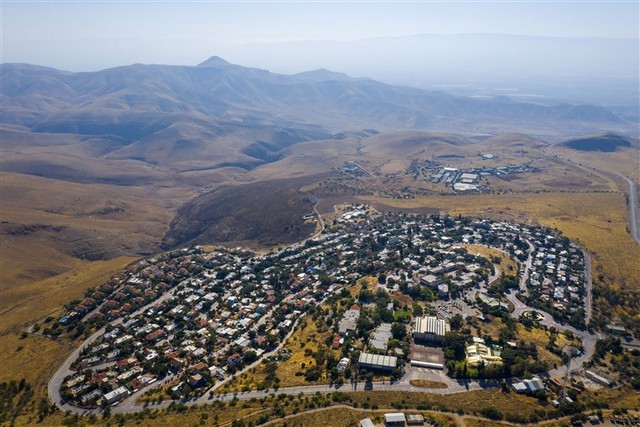
It is definitely an important development when Israel’s most respected human rights organization issues a report that confirms earlier UN reports and allegations that the Palestinians are victimized by an apartheid regime that seeks to impose policies and practices that ensure the supremacy of Jews by victimizing the Palestinian people throughout the whole of historic Palestine. Such a de facto one-state reality of unified Israeli control suggests that the internationally endorsed goal of a negotiated two-state solution has been superseded by Israeli ambitions to complete the Zionist project of establishing a Jewish exclusivist state on the entire ‘promised land’ of ‘biblical Israel.’ These ambitions were implicitly acknowledged by Israel in 2018 when it enacted a Basic Law that asserted that only the Jewish people had a right to self-determination within the state of Israel, that the internationally unlawful settlement enterprise deserved national support, and that Hebrew was the only official language. Not only were Palestinians being subordinated despite being citizens, but so were Druze and Christian minorities.
It should be appreciated that ‘apartheid’ is listed as a Crime Against Humanity in Article 7(j) of the Rome Statute governing the activities of the International Criminal Court in The Hague. Although the crime of apartheid is derived from the South African racist regime that proudly declared itself to be a governance structure based on apartheid ideas of separate and unequal development, it has become a generic crime given an authoritative definition in the 1976 International Convention on the Suppression and Punishment of the Crime of Apartheid. The Government of Israel, especially in international settings such as the UN, is outraged by allegations of apartheid that it repudiates as nothing other than a vicious form of anti-Semitism. The internationally acclaimed Israeli journalist, Gideon Levy, writing in Haaretz, goes beyond the B’Tselem Report in his insistence that Israel plus the territory it occupies is an apartheid regime: “The reality of apartheid and Jewish supremacy from the Jordan River to the sea is hidden only from the blind, the ignorant, the propagandists and the liars.”
One of the contributions of the Report is to identify the elements of Israeli apartheid by reference to specific policies and practices that are relied upon to maintain Jewish supremacy over non-Jews within its sovereign territory. Among these are discriminatory standards applicable to immigration, giving Jews worldwide an unrestricted ‘right of return’ while denying Palestinian any immigrations rights even if parents or grandparents were born within its territory. Other important instances of discrimination based on ethnicity concern land tenure, citizenship and nationality rights, freedom of mobility, security of residence, administration of law, and issuance of building permits. It is clear that these apartheid features vary from domain to domain, from Israel proper to East Jerusalem, West Bank, and Gaza, but the core undertaking is stable: exploitative domination by Jews over non-Jews, especially Palestinians.
There is one mysterious weakness in my reading of the B’Tselem Report: the erasure of seven million or so Palestinian refugees and involuntary exiles. The Report deals with apartheid. only in the context of the control of territory rather than its deliberate and intended design of exerting control of people, and yet from 1948 to the present, Palestinians have suffered as a people, whether subject to Israeli territorial control or not, with hundreds of thousand being displaced and dispossessed from 1948 onwards as integral to the
Israeli overall plan to be a Jewish majority state that could lay a legitimating claim to being a democracy. In effect, ‘ethnic cleansing’ was a necessity, given Israel claims to legitimacy as a democracy. Palestinian forced to abandon their homeland by becoming refugees or exiles are at least as much a victim of apartheid as are Palestinians living under Israeli territorial control.
I have no reason to believe that Israel will act more humanely toward Palestinians as a result of the B’Tselem Report, but will condemn the report, as has already happened, as an instance of ‘Jewish anti-Semitism.’ As with BDS, Israeli first defenders will deliberately confuse criticism of criminally unlawful governing policies in Israel with hatred of Jews. A peaceful and secure future for both peoples will not arise until Israel dismantles apartheid and agrees to treat Palestinians in accordance with human rights standards, including respect for the Palestinian right of self-determination, as well as a genuine endorsement of racial equality.
Q 2: Despite pledging a new beginning in the Middle East, during Obama-era we saw a rise in conflicts and emerge of Daesh terror. Then came the Trump administration and we saw an atrophy in US-Palestine relations due to former president’s controversial decisions in favor of Israel. Now the newly-elected US President Joe Biden has directed his administration an immediate renewal of relations with Palestine and its people, what do you think of Biden administration’s policy regarding Palestine, the Middle East and wider region? Could we expect an “unseen” US policy for the region?
It is basically too early to tell whether the Biden presidency will do more than roll back some of Trump’s extremist moves. My best guess would be continuity with the approach to Israel/Palestine taken during the Obama period, with the special relationship fully reaffirmed, and Israel protected against censure and nonviolent pressures of the sort associated with the BDS Campaign or at the UN. Much will be revealed by how the Biden administration approaches Iran, particularly whether it attaches new conditions to the revival of Nuclear Program Agreement (JCPOA) of 2015 from which Trump withdrew. The suspensions of arms deals with Saudi Arabia and the UAE are welcome signs that Biden’s foreign policy might be directed at achieving some demilitarization of the Middle East with special emphasis placed on ending chaos and strife in Yemen, Syria, and Libya, as well as promoting stability in Iraq and Lebanon. It seems likely that Israel will continue to exert a strong influence on U.S. policy toward the region, and the Biden leadership has promised to consult with Israel before making any new policy moves in the region. At the same time, it is my impression is that Biden’s priorities will be overwhelmingly domestic (COVID, economic recovery), and that he will try hard to avoid the distractions of adopting controversial foreign policy positions. Even more troublesome than the Middle East, is an escalation of tensions with China and Russia, which definitely seems to be on the radar screen of Antony Blinkon and other top foreign policy advisors.
Q 3: Former US President Trump announced a “peace plan” which is widely known as “the deal of the century.” Do you think it was a realistic initiative?
The Trump plan was essentially a demand that Palestinians agree to political surrender with respect to their struggle for basis rights in exchange for economic assistance in improving the quality of their daily lives. In the post-colonial age of robust nationalism to expect a people to accept subordination in their own homeland and
The renunciation of their inalienable right of self-determination is unrealistic, besides being contrary to the spirit of the post-colonial ethos. Such a one-sided proposal as put forward by the Trump presidency was nothing other than a tactic of geopolitical bullying, and should not be confused with genuine peacemaking.
Q 4: How would you comment on the position of international community regarding Palestine conflict?
The international community seems stuck in a time warp by its continued adherence to the totally discredited Oslo diplomacy, which was premised on a two-state solution. As B’Tselem Report clearly demonstrates, the one-
state reality has become the only foundation of any future meaningful peace process, posing a challenge of how to arrange for future governance on a basis of true ethnic equality. Until this happens, UN and internationalist initiatives will be irrelevant. It is my belief that what hope exists for a just solution will arise from Palestinian resistance and global solidarity initiatives exerting sufficient pressure on the Israeli leadership so as to cause a recalculation of national interests. It is useful to remember that it was this combination of developments that explains the abrupt and unexpected collapse of the South African apartheid regime.
Q 5: Though UN has commented on the illegality of the settlements that Israel continues to develop on the occupied Palestinian territories, the organization still falls short in bringing about a peaceful solution. What should the UN do to ensure security, accountability, human rights and dignity for the Palestinian people?
The UN did pass a strong anti-settlements resolution at the end of 2016 by a 14-0 vote in the Security Council, with the U.S. abstaining, during the last days of the Obama presidency. [SC RES 2334, 23 Dec 2016] It was the strongest reassertion of UN authority in recent years, yet it led nowhere when it came to implementation. As Israel has repeatedly demonstrated over the course of its history, it will not be swayed by international law or UN directives, and will experience no adverse consequences for such defiance. It has now provocatively challenged the Biden presidency by approving 3,000 new permits for unlawful settlement construction, many of the approved new structures are situated deep in the West Bank, signaling Israel’s continuing establishment of unlawful facts on the ground to reinforce its refusal even to consider the negotiated emergence of a viable Palestinian state. It is important that the UN agenda continue to document Israeli wrongdoing as this will encourage and legitimize civil society activism. It is only Palestinian resistance from within and global solidarity from without that can have any prospect of achieving Palestinian rights and a peaceful future for both peoples.
____________________________________
Richard Falk is a member of the TRANSCEND Network, an international relations scholar, professor emeritus of international law at Princeton University, Distinguished Research Fellow, Orfalea Center of Global Studies, UCSB, author, co-author or editor of 60 books, and a speaker and activist on world affairs.
8 February 2021
Source: www.transcend.org

Written by Medea Benjamin and Nicolas J. S. Davies
In 2004, journalist Ron Suskind quoted a Bush White House advisor, reportedly Karl Rove, as boasting, “We’re an empire now, and when we act, we create our own reality.” He dismissed Suskind’s assumption that public policy must be rooted in “the reality-based community.” “We’re history’s actors,” the advisor told him, “…and you, all of you, will be left to just study what we do.”
Sixteen years later, the American wars and war crimes launched by the Bush administration have only spread chaos and violence far and wide, and this historic conjunction of criminality and failure has predictably undermined America’s international power and authority. Back in the imperial heartland, the political marketing industry that Rove and his colleagues were part of has had more success dividing and ruling the hearts and minds of Americans than of Iraqis, Russians or Chinese.
The irony of the Bush administration’s imperial pretensions was that America has been an empire from its very founding, and that a White House staffer’s political use of the term “empire” in 2004 was not emblematic of a new and rising empire as he claimed, but of a decadent, declining empire stumbling blindly into an agonizing death spiral.
Americans were not always so ignorant of the imperial nature of their country’s ambitions. George Washington described New York as “the seat of an empire,” and his military campaign against British forces there as the “pathway to empire.” New Yorkers eagerly embraced their state’s identity as the Empire State, which is still enshrined in the Empire State Building and on New York State license plates.
The expansion of America’s territorial sovereignty over Native American lands, the Louisiana Purchase and the annexation of northern Mexico in the Mexican-American War built an empire that far outstripped the one that George Washington built. But that imperial expansion was more controversial than most Americans realize. Fourteen out of fifty-two U.S. senators voted against the 1848 treaty to annex most of Mexico, without which Americans might still be visiting California, Arizona, New Mexico, Texas, Nevada, Utah and most of Colorado as exotic Mexican travel spots.
In the full flowering of the American empire after the Second World War, its leaders understood the skill and subtlety required to exercise imperial power in a post-colonial world. No country fighting for independence from the U.K. or France was going to welcome imperial invaders from America. So America’s leaders developed a system of neocolonialism through which they exercised overarching imperial sovereignty over much of the world, while scrupulously avoiding terms like “empire” or “imperialism” that would undermine their post-colonial credentials.
It was left to critics like President Kwame Nkrumah of Ghana to seriously examine the imperial control that wealthy countries still exercised over nominally independent post-colonial countries like his. In his book, Neo-Colonialism: the Last Stage of Imperialism, Nkrumah condemned neocolonialism as “the worst form of imperialism.” “For those who practice it,” he wrote, “it means power without responsibility, and for those who suffer from it, it means exploitation without redress.”
So post-World War Two Americans grew up in carefully crafted ignorance of the very fact of American empire, and the myths woven to disguise it provide fertile soil for today’s political divisions and disintegration. Trump’s “Make America Great Again” and Biden’s promise to “restore American leadership” are both appeals to nostalgia for the fruits of American empire.
Past blame games over who lost China or Vietnam or Cuba have come home to roost in an argument over who lost America and who can somehow restore its mythical former greatness or leadership. Even as America leads the world in allowing a pandemic to ravage its people and economy, neither party’s leaders are ready for a more realistic debate over how to redefine and rebuild America as a post-imperial nation in today’s multipolar world.
Every successful empire has expanded, ruled and exploited its far-flung territories through a combination of economic and military power. Even in the American empire’s neocolonial phase, the role of the U.S. military and the CIA was to kick open doors through which American businessmen could “follow the flag” to set up shop and develop new markets.
But now U.S. militarism and America’s economic interests have diverged. Apart from a few military contractors, American businesses have not followed the flag into the ruins of Iraq or America’s other current war-zones in any lasting way. Eighteen years after the U.S. invasion, Iraq’s largest trading partner is China, while Afghanistan’s is Pakistan, Somalia’s is the UAE (United Arab Emirates), and Libya’s is the European Union (EU).
Instead of opening doors for American big business or supporting America’s diplomatic position in the world, the U.S. war machine has become a bull in the global china shop, wielding purely destructive power to destabilize countries and wreck their economies, closing doors to economic opportunity instead of opening them, diverting resources from real needs at home, and damaging America’s international standing instead of enhancing it.
When President Eisenhower warned against the “unwarranted influence” of America’s military-industrial complex, he was predicting precisely this kind of dangerous dichotomy between the real economic and social needs of the American people and a war machine that costs more than the next ten militaries in the world put together but cannot win a war or vanquish a virus, let alone reconquer a lost empire.
China and the EU have become the major trading partners of most countries in the world. The United States is still a regional economic power, but even in South America, most countries now trade more with China. America’s militarism has accelerated these trends by squandering our resources on weapons and wars, while China and the EU have invested in peaceful economic development and 21st century infrastructure.
For example, China has built the largest high-speed rail network in the world in just 10 years (2008-2018), and Europe has been building and expanding its high-speed network since the 1990s, but high-speed rail is still only on the drawing board in America.
China has lifted 800 million people out of poverty, while America’s poverty rate has barely budged in 50 years and child poverty has increased. America still has the weakest social safety net of any developed country and no universal healthcare system, and the inequalities of wealth and power caused by extreme neoliberalism have left half of Americans with little or no savings to live on in retirement or to weather any disruption in their lives.
Our leaders’ insistence on siphoning off 66% of U.S. federal discretionary spending to preserve and expand a war machine that has long outlived any useful role in America’s declining economic empire is a debilitating waste of resources that jeopardizes our future.
Decades ago Martin Luther King Jr. warned us that “a nation that continues year after year to spend more money on military defense than on programs of social uplift is approaching spiritual death.”
As our government debates whether we can “afford” COVID relief, a Green New Deal and universal healthcare, we would be wise to recognize that our only hope of transforming this decadent, declining empire into a dynamic and prosperous post-imperial nation is to rapidly and profoundly shift our national priorities from irrelevant, destructive militarism to the programs of social uplift that Dr. King called for.
Medea Benjamin is cofounder of CODEPINK for Peace, and author of several books, including Inside Iran: The Real History and Politics of the Islamic Republic of Iran.
Nicolas J. S. Davies is an independent journalist, a researcher with CODEPINK and the author of Blood On Our Hands: the American Invasion and Destruction of Iraq.
3 February 2021
Source: countercurrents.org
By Gov. Bill Richardson
My last encounter with Aung San Suu Kyi, my friend of more than 20 years, was a painful one. I was invited to Myanmar in January 2018 as part of an international panel the government set up to advise on the Rohingya crisis. By that point, more than 700,000 Rohingya Muslims had been forced to flee their homes and two Reuters reporters had been jailed after uncovering evidence of mass graves.
At one meeting, I argued that Suu Kyi must let me help her take action to stop the atrocities committed by the Tatmadaw, as the Myanmar military is known, and to free the journalists. She refused. Soon after, I quit the panel and left the country. It was obvious she was complicit in enabling the atrocities, and was unwilling to accept the consequences.
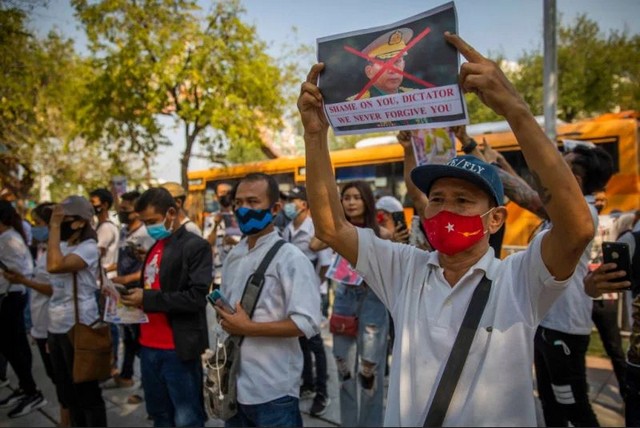
Genocide and democracy are not compatible. You cannot turn a blind eye and enable mass atrocities in the name of saving a democratization project or to protect your own power. Suu Kyi’s appeasement of the Myanmar military empowered them to eventually take over by force, which they did in the early morning hours of Feb. 1. It also left her stripped of most of the international support and admiration she previously held, at a time she needs it the most.
To be clear, the perpetrator of the coup—and the entity to be held fully accountable—is the Tatmadaw. Just hours before the newly elected parliament was to be seated, the Tatmadaw detained de facto head of state Suu Kyi and dozens of other government and civil society leaders. Alleging baseless claims of mass voter fraud, the military transferred all power to the commander-in-chief and declared a year-long state of emergency.
The coup is a disaster for the people of Myanmar. It is also an opportunity for the Biden Administration to put into practice the core principles of its foreign policy approach, including restoring American commitments to diplomacy, multilateralism, and moral leadership.
The White House has signaled it would consider immediately imposing or reimposing sanctions on the military and their business interests, and they must follow through on that. Unilateral U.S. sanctions, however, would have little effect on their own, so the U.S. should use this opportunity to coordinate parallel sanctions as well as arms embargoes among its allies and, despite Chinese and Russian opposition, within the United Nations Security Council. Some U.S. allies in the region will be reluctant to impose sanctions, but the Biden administration can and should lean on Japan, India, Singapore, South Korea, and others to leverage their closer ties with Myanmar to express their disapproval.
The immediate objective of these efforts must be to apply pressure on the Tatmadaw to reverse the coup, respect the results of the November elections, and to allow the new Parliament to be seated. All those detained must be freed. Communications – internet and phone service – must remain open. But a reversal of the coup is not enough.
The U.S. must also establish a clear line in the sand that the international community will not tolerate crimes against humanity as a byproduct of the democratization process. Before the coup, Myanmar was a fundamentally flawed quasi-democracy at best. The military’s power and interests were guaranteed and written into the 2008 Constitution and Suu Kyi lacked the moral leadership to push for a democratic vision that respected and protected human rights. More than 800,000 Rohingya remain living as refugees in Bangladesh with no safe path to return to their homes in Myanmar and millions in Myanmar face a risk of violence and rights abuses. In order for Myanmar to continue its democratic journey, the atrocities committed against the Rohingya must end, and a safe return of the refugees guaranteed.
A return to the status quo would be a terrible mistake. For too long, the U.S. has been willing to look past Myanmar’s atrocities driven by the misplaced hope that a democratic Myanmar will emerge and the misplaced fear that a values-driven policy will drive Myanmar to China. But this bears repeating: genocide and democracy are not compatible.
The Biden administration has made a good start on its commitment to ensuring that human rights and democracy are the cornerstones of U.S. foreign policy. This is an opportunity for them to align U.S. values and interests, stand with the Myanmar people, and to prioritize the establishment of a genuine democracy and not one that tolerates genocide.
Bill Richardson is a former Congressman, Governor, U.S. Ambassador to the United Nations, and Secretary of Energy.
3 February 2021
Source: time.com