Just International

Encircling China and Praising India: The US Strategic Framework for the Indo-Pacific

By Dr Binoy Kampmark

The feeling from Rory Medcalf of the Australian National University was one of breathless wonder. “The US government,” he wrote in The Strategist, “has just classified one of its most secretive national security documents – its 2018 strategic framework for the Indo-Pacific, which was formally classified SECRET and not for release to foreign nationals.”

Washington’s errand boys and girls in Canberra tend to get excited by this sort of thing. Rather than seeing it as a blueprint for imminent conflict with China, a more benign reading is given: how to handle “strategic rivalry with China.” Looming in the text of the National Security Council’s US Strategic Framework for the Indo-Pacific (SFIP) is a generous doffing of the cap to Australia’s reckless, self-harming approach towards China. As an unnamed senior US official (of course) told Axios, the Australians “were pioneers and we have to give a lot of credit to Australia.” Australian senior intelligence advisor John Garnaut is given high praise for his guiding hand. When war breaks out between Beijing and Washington, we know a few people to thank.

The SFIP, declassified on January 5, is very much a case of business as usual and unlikely to shift views in the forthcoming Biden presidency. The timing of the release suggests that the Trump administration would like to box its predecessor on certain matters, notably on China.

In a statement from National Security Advisor Robert C. O’Brien, the SFIP “provided overarching strategic guidance for implementing the 2017 National Security Strategy within the world’s most populous and economically dynamic region”. The National Security Strategy, in turn, recognised “that the most consequential challenge to the interests of the United States, and those of our allies and partners, is the growing rivalry between free and repressive visions of the future.” Beijing is cast in the role of repressive force in “pressuring Indo-Pacific nations to subordinate their freedom and sovereignty to a ‘common destiny’ envisioned by the Chinese Communist Party.”

The imperium’s interests, according to the SFIP, must be guarded (“strategic primacy in the Indo-Pacific region”); a “liberal economic order” must be promoted while China is to be prevented “from establishing new, illiberal spheres of influence”. North Korea is deemed of high importance in terms of whether it threatens the US and its allies, “accounting for both the acute present danger and the potential for future changes in the level and type of threat posed” by Pyongyang. The US is also to retain “global economic leadership while promoting fair and reciprocal trade.”

One of the “top interests” of the US in the Indo-Pacific is identified in pure power terms: retaining “economic, diplomatic, and military access to the most populous region in the world and more than one-third of the global economy”. Washington is keen to preserve “primacy in the region while protecting American core values and liberties at home.” But there is the spoiling presence of China, aspirational superpower, and keen for its bit of geopolitical pie. “Strategic competition between the United States and China will persist, owing to the divergent nature and goals of our political and economic systems.”

China is ever the cheeky opportunist, seeking to “circumvent international rules norms to gain an advantage.” Beijing “aims to dissolve US alliances and partnerships in the region” exploiting “vacuums and opportunities created by these diminished bonds.” With this in mind, US defence strategy should be “capable of, but not limited to: (1) denying China sustained air and sea dominance inside the ‘first island chain’ in conflict; (2) defending the first-island-chain nations, including Taiwan; and (3) dominating all domains outside the first island-chain.”

The document also acknowledges an untidy region of shifting power balances and increased defence spending, which will “continue to drive security competition across the Indo-Pacific”. Japan and India are singled out for special mention in that regard. A measure of angst is registered: “Loss of US pre-eminence in the Indo-Pacific would weaken our ability to achieve US interests globally.”

The authors of the SFIP are unashamed about the fistful of principles that will maintain US power, the sort that masquerades in popular language as the “liberal rules-based order”. Desirable objectives include the US being the “preferred partner” of “most nations” in the region; and that these powers “uphold the principles that have enabled US and regional prosperity and stability, including sovereignty, freedom of navigation and overflight, standards of trade and investment, respect for individual rights and rule of law, and transparency in military activities.” No wobbling will be permitted; allies will have to get in line.

India, “in cooperation with like-minded countries,” figures as a shining hope. Its rise is deemed essential, serving as “a net provider of security and Major Defense Partner”. What is envisaged is a strategic partnership “underpinned by a strong Indian military able to effectively collaborate with the United States and our partners in the region to address shared interests.”

For its spiky anti-China message, the nature of the economic relationship with Beijing is hard to ignore, provided it is conducted on US terms. The strategy is, to that end, most Trumpian in character, emphasising the need to “prevent China’s industrial policies and unfair trading practices from distorting global markets and harming US competitiveness.”

In what has become a tradition of the Trump administration, the Framework document does not tally with messages from other equivalent national security assessments. The officials of empire are not speaking with a coherent voice. The 2019 Indo-Pacific Strategy Report by the Department of Defense, for instance, makes good mention of Russia as a “revitalized malign actor”. (Pentagon pundits can never seem to give the bear, or their paranoia, a rest.) Despite tardy economic growth occasioned by Western sanctions and a fall in oil prices, Moscow “continues to modernize its military and prioritize strategic capabilities – including its nuclear forces, A2/AD systems, and expanded training for long-range aviation – in an attempt to re-establish its presence in the Indo-Pacific region.”

The authors of the Framework document are, in sharp contrast, barely troubled by Moscow and, surprisingly, sober on the issue. “Russia will remain a marginal player in the Indo-Pacific region relative to the United States, China and India.” Abhijnan Rej of The Diplomat could not help but find this inconsistency odd. “So Russia is a threat in a public document but not one in a classified one?”

As for India, the 2019 IPSR does much to avoid exaggeration and elevation. “Within South Asia, we are working to operationalize our Major Defense Partnership with India, while pursuing emerging partnerships with Sri Lanka, the Maldives, Bangladesh and Nepal.” The Pentagon notes an increase in the “scope, complexity and frequency of our military exercises” with India. But for all that, New Delhi hardly remains a jewel of defence strategy relative to such traditional allies as South Korea and Japan.

The SFIP, in contrast, makes a bold stab at linking the goals of maintaining US regional supremacy with New Delhi’s own objectives. This is bound to cause discomfort in the planning rooms, given Indian Prime Minister Narendra Modi’s rhetoric on regional multipolarity. An article of faith in Indian policy on the matter is ensuring that no single power dominates the region. Another potential concern is the prospect that India is being thrown into the US-China scrap.

Medcalf concludes his assessment of the framework document with his own call for what promises to be future conflict. “America,” he insists, “cannot effectively compete with China if it allows Beijing hegemony over this vast region, the economic and strategic centre of gravity in a connected world.” The conflict mongers will be eagerly rubbing their hands.

Dr. Binoy Kampmark was a Commonwealth Scholar at Selwyn College, Cambridge.

15 January 2021

Source: countercurrents.org
Video: The Capitol Hill Fiasco 2021

By David W. Mathisen

Global Research Editor’s Note

We bring to the attention of our readers this carefully documented analysis of the so-called “Storming of the Capitol” by David W. Mathisen.

With regard to the coverage of the Wednesday Capitol Event, Global Research will be publishing opposing and contradictory points of view by several of our authors.

We are dealing with a complex and far-reaching political process. We are at the crossroads of a major political, economic and social crisis which has bearing on the future of the United States. This crisis must be the object of debate and analysis rather than confrontation of opposing political narratives.

***

I am continuously surprised that men and women believe whatever the corporate media tells them, even after we see beyond any doubt that they have been lying to us for over 50 years about the murders of President John F. Kennedy, Dr. Martin Luther King, Jr., and Robert F. Kennedy, and about the events of September 11, 2001.

The supposed “Storming of the Capitol” that took place on January 06, 2021 does not make any sense on its face: there is simply no way a gaggle of “protestors” can burst into the Capitol Building unless they are deliberately allowed to do so. Footage shown during the event has all the appearances of drama: stage-acting (and not very convincing acting, either).

But what about the supposed fatal shooting of one so-called protestor?

Let’s take a look at the footage and see the very serious questions that footage raises. These questions are not being addressed at all by anyone in the corporate media or the government.

And yet despite these obviously suspicious facts, there is a heavy psychological resistance to admitting the possibility that the media (as well as the men and women occupying government office) are lying to your face. It is much less threatening to believe the media rather than our own eyes. But it causes internal displacement to do so.

Please watch my video, The Capitol Hill Fiasco and consider these important questions.

Thank you for watching.

January 11, 2021. Please note that David Mathisen’s video has been taken down by Vimeo.

January 12, 2021. Video has been uploaded on BitChute.

_____________________________

Important Note:

Only a few hours after posting this video, the friendly face of censorship arrived in the form of an email from google / youtube informing me that my video had been taken down for “content containing malicious harassment,” along with a cartoon image of a referee blowing a whistle:

The following link to Youtube is no longer active

“The Capitol Hill Fiasco 2021,

They also removed the video, along with the numerous positive comments provided by viewers from around the world, and for a time the blank screen where the video used to be stated that the video had been removed for violation of “harassment and cyberbullying.”

As you can see from the content of their email, these overseers of what content may be allowed into the public have included the patronizing consolatory statement that: “We know that this might be disappointing, but it’s important to us that YouTube is a safe place for all.”

Please note that “disappointing” is not the correct word to describe what is going on here.

This video provides analysis of an extremely important event which impacts everyone in the united states and indeed has interest for everyone in the world (since the behavior of the united states and its officials impacts men and women in many other nations). For google and the persons they describe as “our team” of reviewers to declare that this analysis “violates our Community Guidelines” and to take it upon themselves to censor it is unconscionable.

I have since uploaded the video to another platform not controlled by google, and as you can see from the video there is no way to describe this video as harassing or bullying, and in fact the end of the video features a reference to Mahatma Gandhi and his strategy of non-violence.

In response to this censorship, I lodged a protest (youtube condescendingly terms it an “appeal”), which I have reproduced below (only 800 characters allowed):

Prior to being taken down, the video was seen by about 258 viewers, and had received about 43 “likes” and about 16 comments.

Thank you to those who liked and commented and shared, prior to the censorship of this content in violation of the inalienable right, articulated in the Bill of Rights as the First Amendment but obviously belonging to all men and women everywhere, regardless of the despicable efforts of petty tyrants to curtail that right, to freedom of speech and the press.

Note that misguided persons often rush in at this point to argue that “private corporations can do whatever they want: the First Amendment only restricts the federal government in the united states.”

That is untrue and mistaken.

Google and youtube can only exist in their present form and business model through the use of the electromagnetic spectrum, which is a gift of nature (or a gift of the gods, as the ancients would see it), much like the rivers and ports and oceans and soil of the land.

The electromagnetic spectrum is not a creation of any man or woman, any more than is the sea or the sunshine or the oil under the earth. It is properly understood to belong to the public domain, belonging to the people of the nation (those allowed to be born into that nation by the gods), and thus companies such as google / you tube are permitted to use that spectrum at the good pleasure of the people (that’s why the government, which is supposed to represent the people, in a democracy, allocates spectrum and that is right and proper).

Thus, google and you tube do not have any undisputed right to “do whatever they want” with the spectrum that is loaned to them by the people or by their representative government.

It is very much akin to banks, who are tightly controlled by the government because as anyone who studies the matter will understand, banks are given a special privilege to issue money — a privilege that is “loaned” to them by the government, because that power belongs only to the representatives of the people. If the banks abuse that privilege or violate their charter, it will be taken away. Google and you tube’s charters should have been taken away a long time ago already, along with other abusers of the inalienable rights given to all men and women — rights which it is the government’s first duty to protect and preserve.

David W. Mathisen is the author of eight books about the connections of the world’s ancient myths to the stars.

9 January 2021

Source: www.globalresearch.ca

Jack Ma vs Xi Jinping: the future of private business in China

By Tom Mitchell, Yuan Yang, Ryan McMorrow

Four years ago, when Ant Group’s premier money market fund was racing to a peak of more than $260 billion (€213.5 billion) worth of assets under management, many of China’s state-owned banks and their regulators started to get agitated. In a series of calls and meetings with Jack Ma, Ant’s founder, bank executives and regulatory officials demanded that its Yu’E Bao fund be reined in.

“Yu’E Bao was pulling a lot of money from the banks,” says one person familiar with the discussions. “The banks were worried about the impact on liquidity and wanted Ant to take measures to minimise the impact. The conversations were pretty tense.”

In the end, Mr Ma had to back down and Yu’E Bao imposed caps on how much people could deposit. Between March and December of 2018, its funds under management fell by a third to $168 billion and stood at $183 billion last September.

The showdown would prove to be a prelude to the much bigger confrontation that now pits the Chinese Communist party and President Xi Jinping against not just Ant but also Alibaba, the ecommerce group founded by Mr Ma.

The stand-off, which has sparked rampant speculation about Mr Ma’s whereabouts, could become a defining moment for the future of private business in Mr Xi’s China.

On December 24th, China’s market regulator announced it was launching an antitrust probe into Alibaba and sent investigators to its headquarters in the eastern Chinese city of Hangzhou, Mr Ma’s hometown. The announcement came just two weeks after the party’s politburo said it would target monopoly businesses to prevent the “disorderly expansion of capital”.

The move on Alibaba also came two months after financial regulators dramatically cancelled Ant’s planned $37 billion initial public offering, which would have been the world’s largest.

Squeeze on business

Taken together, the measures amount to an unprecedented squeeze on a business empire whose ubiquitous services are central to the functioning of China’s pioneering online economy.

Ant says Alipay, its payment app, is regularly used by 700 million people – half of China’s total population – and 80 million merchants, processing payments worth 118 trillion renminbi (€15 trillion) in the group’s last financial year.

Alibaba’s shares have fallen by almost 30 per cent since the regulatory showdown began in late October, putting a big dent in the net worth of Mr Ma, who has not been seen in public since then.

Over the same period his fortune has declined from $62 billion to $49 billion, according to Bloomberg data. The Hurun China Rich List estimated that Mr Ma had been the country’s richest man as recently as October 20th but would now rank fourth, his top slot taken by a bottled water tycoon, Zhong Shanshan.

The results of the showdown will say a lot about the sort of economy that China is developing. If Ant and Alibaba are crippled by regulators – or its founder is personally targeted by investigators – it will go down as a landmark moment in the party’s fickle relationship with China’s private sector even though Mr Ma is, ironically, a party member himself.

Since Deng Xiaoping launched the “reform and opening” era 40 years ago, the party has become ever more dependent on private sector companies for economic growth, job creation and tax revenues. But the party’s fixation with control, especially since Mr Xi came to power almost a decade ago, also triggers periodic crackdowns on the sector and prominent entrepreneurs.

Settlements

Yet there is another potential outcome that would indicate a less fraught relationship between the party/state and business. The investigations into Ant and Alibaba could lead to the sort of settlements that are not dissimilar to those pursued in the United States and the European Union against large finance and technology groups.

That would leave Mr Ma’s two flagship companies humbled but still formidable and highly profitable national champions. Even then, a strong political message would have been sent.

“Chinese internet magnates can still enjoy thriving businesses and enormous fortunes if they are able to convince the top leadership of their loyalty,” says Chen Long at Plenum, a Beijing-based consultancy. “The top leadership wants to ensure that neither Ma nor anyone else ever crosses the red line of trying to exert personal influence over government policies again – at least not publicly. The government will support them on the condition that they serve the national interest first.”

Mr Ma has not appeared in public since October 24th, when he gave a high-profile speech critical of the same state-owned banks he clashed with over Yu’E Bao’s rapid growth, as well as regulators who he said often sacrifice innovation on the altar of stability. According to people involved in the listing, the speech angered Mr Xi, who made the final decision to halt the Ant IPO.

“To innovate without taking risks is to strangle innovation,” Mr Ma said. “There is no such thing as riskless innovation in the world. Very often, an attempt to minimise risk to zero is the biggest risk itself.”

He was speaking at the same forum where Wang Qishan, Mr Xi’s powerful vice-president and former anti-corruption tsar, had earlier emphasised the paramount importance of financial system stability.

“Efforts should be made to prevent and lower financial risks . . . security always ranks first,” Mr Wang said. “While new financial technologies have improved efficiency and brought convenience, financial risks have been heightened.”

In an unprecedented public rebuke of Ant two months later, on December 26th, China’s central bank criticised Ant for being too cavalier about financial risk and taking advantage of regulatory loopholes. But as frustrated as regulators are with Ant, they cannot ignore the beneficial effects of the financial revolution it has led in China.

“Ant Group,” People’s Bank of China vice-governor Pan Gongsheng admitted in his otherwise critical comments, “has played an innovative role in developing financial technology and improving the efficiency and inclusiveness of financial services”. The central bank, he added in a nod to jittery entrepreneurs, was also “unshakeable” in its commitment to “protect property rights and promote entrepreneurship”.

Mr Ma has long enjoyed support from officials in a range of State Council ministries, as well as the lead financial regulators, who appreciate the contributions of Ant, Alibaba and their rivals, all of whom have transformed China’s economy and made its online services sector a global leader.

When his status as a party member was first confirmed only two years ago, it was in the context of an award he was receiving from the party’s Central Committee for “making China a leading player in the international ecommerce industry, internet finance and cloud computing”.

Alibaba and Ant’s ecommerce and online payment services were even more critical at the height of China’s successful battle to contain coronavirus, providing essential services to the hundreds of millions of people caught in draconian lockdowns.

Speech

“There are different lines of thought within the regulators,” Mr Chen says. “Until Jack Ma’s speech, the pro-growth people had the upper hand. But Xi thought the speech was too much and a second [risk-averse] group took the lead. If his speech hadn’t happened, everything would have been fine.”

Disappearing acts are unusual for Mr Ma, who also missed the November finale of his African reality TV show – Africa’s Business Heroes. He routinely gives flamboyant musical performances at Alibaba events and hobnobs with heads of state and government leaders.

As China’s most successful private entrepreneur, Mr Ma enjoys unique status in China – and overseas. His fluent English has made him a huge celebrity on the international conference circuit, with a star quality unmatched by any of his private or state-sector peers.

When Mr Xi hosted the G20 leaders summit in Hangzhou in 2016, some of his guests also visited Mr Ma – something that irked the Chinese president, according to one diplomat involved and other people familiar with the matter.

Mr Ma’s VIP callers included Indonesian president Joko Widodo, Canadian prime minister Justin Trudeau and the then Italian premier, Matteo Renzi. Foreign leaders were offered limited time slots and the Chinese foreign ministry was mostly cut out of the process.

Over the past week, rumours about Mr Ma’s whereabouts have abounded on China’s carefully monitored social media channels, while domestic media outlets have received strict instructions from censors about the stories they can and cannot run on Ant and Alibaba’s regulatory troubles.

Many of Mr Ma’s friends and colleagues strongly dispute suggestions that he is personally in any sort of legal jeopardy, let alone on the run. “He is in China and not travelling because of Covid, not anything else. He’s lying low,” says one friend of Mr Ma.

Another friend who communicates with Mr Ma regularly adds: “Everyone is asking me if he’s in danger, but he’s doing fine. He responds [to messages and calls] quickly and seems like he’s in good spirits. Discussions with regulators are still very much in process so he just has to stay quiet until they are resolved.”

Leadership missteps

Friends add that while Mr Ma may now regret the consequences of his October 24th speech, he meant what he said and still believes passionately in what he sees as Ant’s mission to transform the provision of financial services in the world’s second-largest economy.

Yu’E Bao, which translates as “account balance treasure”, was started in 2013 and allowed anyone in China, from restaurant staff to the urban yuppies they serve, to deposit as little as Rmb1 (13 cent) in a money-market fund and earn more interest than they could in a Chinese savings deposit account.

Just four years later it became the world’s largest money market fund, surpassing JPMorgan’s US government money market fund.

The fund’s success was a dramatic demonstration of Ant’s potential. But it was also a threat to one of China’s most powerful vested interest groups – state banks and the officials who regulate them. The central bank was also concerned. In its annual financial stability report published in late 2019, the PBoC said it would “strengthen regulation of systematically important money market funds”, without mentioning Yu’E Bao by name.

“When a taxi driver can deposit one renminbi in a money-market fund and get interest, that’s a big breakthrough,” says a former Alibaba executive. “Jack feels what Ant is doing is good for society.”

Mr Ma’s companies have rebounded strongly from regulatory disputes before, although Ant and Alibaba never faced scrutiny as intense as they now do. Ant’s run-in with banks and regulators over Yu’E Bao, for example, did little to hinder its overall business or influence. Ant’s credit business grew so large that it now facilitates about one-tenth of all of China’s non-mortgage consumer loans.

The group also aligned its interests with those of powerful investors. Ant’s first fundraising in 2015 brought in a slew of well-connected shareholders, all of whom were set to be rewarded handsomely in the IPO. The Chinese government’s social security fund and a group of state-owned insurers held stakes in Ant valued at, respectively, R48 billion and R45 billion at the IPO price.

Shares belonging to an investment vehicle put together by Boyu Capital, whose executives have included the grandson of former Chinese president Jiang Zemin, were valued at R15 billion. Even China Central Television, the country’s state broadcaster, held Ant shares worth R3 billion.

“Financial regulators have been very concerned about Ant’s growing power and ability to push back against any attempts to bring it under control,” says one Chinese government adviser. “Previous attempts to bring Ant under more control were not really working because it was so big and so powerful. There is now clearly a very dramatic shift.”

Bill Deng, a former Ant executive and co-founder of XTransfer, a cross-border payments platform, says Mr Ma may have become too confident.

“For a long time, regulators let Ant expand and I think [management] became a bit too complacent,” he says. “If there are hundreds of people praising you, you can get overly optimistic. Financial deleveraging policies have been a trend for several years now and the government is extremely careful when it comes to finance.”

Healthy growth

The cancellation of Ant’s IPO triggered a cascade of official and state media criticism of the fintech group. Regulators have also made clear they want the group to shift many of its businesses – including payments, lending, insurance and wealth management – into a new, more tightly regulated holding vehicle. This will increase Ant’s capital requirements and lower its valuation.

Authorities see the holding company model as a way to rein in large financial conglomerates while increasing their transparency. They also want Ant to share its vast trove of consumer data with the central bank – something it has refused to do before.

Having to wait for a smaller return than they almost locked in a few months ago will be disappointing for Ant’s investors, but there are worse alternatives.

“The Chinese government does not want to kill Ant, but to make sure it grows in a healthy way,” says Mr Deng. “Ant can surpass its current obstacles. If they have patience, they will be able to rise again.”

As for the antitrust investigation into Alibaba, a manageable outcome for the group would include an end to exclusivity arrangements that restrict merchants from selling on rival platforms. Alibaba could also potentially face a large fine – the maximum allowed would be 10 per cent of its previous year’s revenues – if it is deemed to have violated China’s anti-monopoly law.

“Debates about exclusivity have been going on for years, it’s a competitive market,” says the former Alibaba executive. “I don’t think Alibaba is going to get broken up. It’s just that the methods by which they fight for the market are going to be more regulated.”

12 January 2021

Source: www.ft.com

The fall of the U.S. idol

By Thomas Piketty

After the invasion of Capitol Hill, the bewildered world wonders how the country that has long presented itself as the self-proclaimed leader of the « free » world could have fallen so low. To understand what has happened, it is urgent to leave the myths and idolatry on one side and to go back to history. In reality, the Republic of the United States has, since its beginnings, been run through by weaknesses, violence and considerable inequalities.

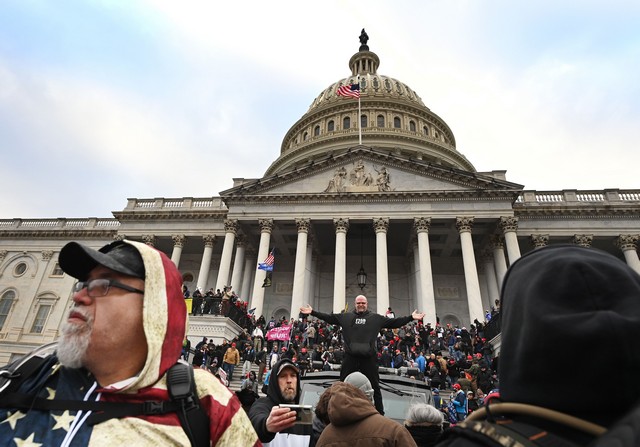
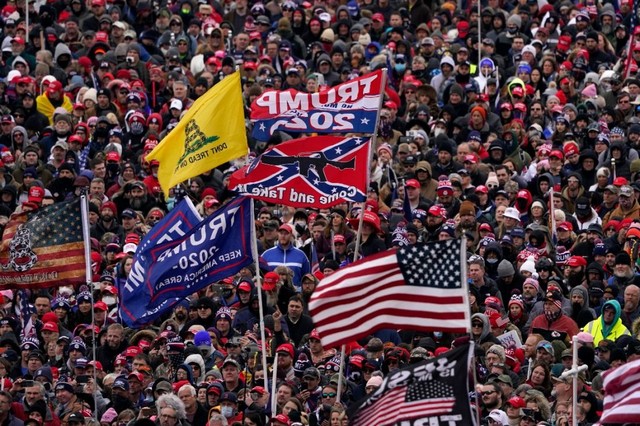
The Confederate flag, the emblem of the pro-slavery South during the Civil War of 1861-1865, which was waved a few days ago by the rioters on the floor of the federal parliament was not there by chance. It refers to very heavy conflicts that need to be confronted.

The system of slavery played a central role in the development of the United States, and indeed of Western industrial capitalism as a whole. Of the fifteen presidents who succeeded one another until Lincoln’s election in 1860, no fewer than eleven were slave owners, including Washington and Jefferson, both of whom were born in Virginia, which in 1790 had a population of 750,000 (of which 40% were slaves), equivalent to the combined population of the two most populous northern states (Pennsylvania and Massachusetts).

After the 1791 revolt in Santo Domingo (the jewel in the French colonial system and the biggest concentration of slaves in the Atlantic world at the time), the south of the United States became the world centre of the plantation economy and underwent rapid growth. The number of slaves quadrupled between 1800 and 1860; cotton production increased tenfold and fed the European textile industry. But the North-East of the USA and especially the Mid-West (the birthplace of Lincoln) developed even more rapidly. These two groups relied on a different economic model, based on the colonisation of the West and free labour, and wanted to block the expansion of slavery in the new territories in the West.

After his 1860 victory, Lincoln, a Republican, was ready to negotiate a peaceful and gradual end to the slaveholders, with compensation for the owners, as had happened during the British and French abolitions in 1833 and 1848. But the Southerners preferred to play the secession card, like some of the white settlers from South Africa and Algeria in the 20th century, in an attempt to preserve their world. The Northerners refused their departure, and the war began in 1861.

Four years later, and after the death of 600,000 persons (as many as the cumulative total of all the other conflicts in which the country took part, including the World Wars, Korea, Vietnam and Iraq), the conflict ended with the surrender of the Confederate armies in May 1865. But the Northerners did not consider the Black population were ready to become citizens, let alone property owners, and they let the Whites regain control of the South and impose a strict system of racial segregation, which was to allow them to retain power for another century, until 1965.

In the meantime, the United States became the world’s leading military power and was able to put an end to the cycle of nationalist and genocidal self-destruction which opposed the European colonial powers against each other between 1914 and 1945. The Democrats, who were the party of the erstwhile pro-slavery South, managed to become the party of the New Deal. Driven by communist challenge and African-American mobilization, they conceded civil rights without reparations.

But as from 1968, the Republican Nixon recovered the white Southerners’ vote by denouncing the social largesse that the Democrats would grant to blacks through clientelism (a little like the way in which the right-wing in France suspects the left of Islamo-leftism when it evokes anti-Muslim discrimination).

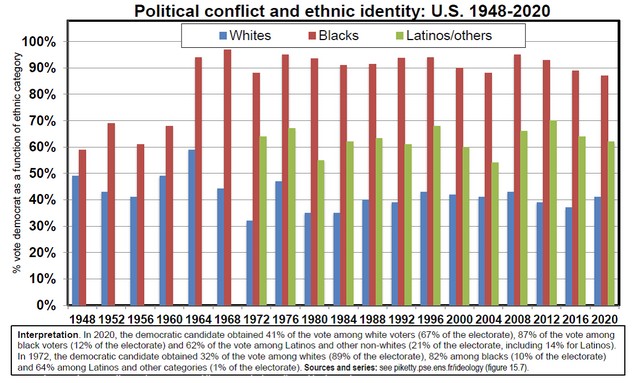
A major reversal of the alliance as then took place, amplified by Reagan in 1980 and Trump in 2016. Since 1968, Republicans have won a clear majority of the white vote in all presidential elections, while Democrats have always obtained 90% of the black vote and 60-70% of the Latino vote. Meanwhile, the share of whites in the electorate has steadily declined from 89% in 1972 to 70% in 2016 and 67% in 2020 (against 12% for Blacks and 21% for Latinos and other minorities), fuelling the hardening of the Capitol’s Trumpists and threatening to plunge the Republic of the United States into an ethno-racial conflict with no way out.

What can we conclude from all this? According to a pessimistic reading, supported by many of the most educated groups who henceforth vote for the Democrats (which allows the Republicans to present themselves now as anti-elite, even though they continue to include a good part of the business elite, if not as yet appealing to the intellectual elite), Republican voters are described as « deplorable » and ‘beyond redemption’. Democratic administrations are said to have done everything they could to improve the lot of the most disadvantaged, but the racism and acrimony of the white working classes apparently prevents them from seeing it.

The problem is that this vision leaves little room for a democratic solution. A more optimistic approach to human nature might be as follows. For centuries, people from different ethno-racial backgrounds have lived with no contact with each other except through military and colonial domination. The fact that they have recently been living together in the same political communities is a major civilisational advance. But it continues to give rise to prejudice and political exploitation that can only be overcome by more democracy and equality.

If the Democrats want to regain the socially disadvantaged vote, whatever its origin, then more needs to be done in terms of social justice and redistribution. The road ahead will be long and arduous. All the more reason to get started now.

Thomas Piketty joined the London School of Economics (LSE) in 2015 as the distinguished Centennial Professor.

12 January 2021

Source: www.lemonde.fr

The Assault on the U.S. Capitol and the Problem of Right-Wing Radicalization

By Richard Rubenstein

As we know, the United States Capitol building in Washington, D.C. was invaded on January 6th by right-wing protestors bent on disrupting the proceedings of a joint session of Congress called to certify the results of Joe Biden’s and Kamala Harris’s election as U.S. president and vice-president. The house in which I am now writing this editorial is located two short blocks from the Capitol, and from my study I could hear the shouts of the crowd, punctuated by sirens, helicopter noises, and occasional explosive “bangs” later revealed to be the sound of flash grenades detonating. My impulse to walk a short distance to see what was happening was short-circuited by a phone call from my daughter, who said, “Turn on your television, and don’t you dare go there. You haven’t avoided the coronavirus just to be shot by some Proud Boy!” One look at the chaos onscreen confirmed the correctness of her advice.

The events of January 6

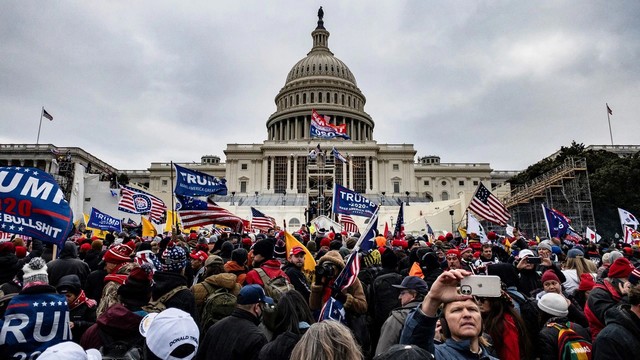
The facts, as lawyers like to say, are not in dispute. Donald Trump, the outgoing president, invited his supporters to come to Washington to demonstrate against the certification of the Biden/Harris victory on the grounds that the election was “rigged” and its outcome the result of massive fraud in the voting and vote count. The facts that Trump and his allies had filed more than sixty lawsuits in state and federal courts making the same claims, and that their complaints were uniformly rejected by Republican- as well as Democratic-appointed judges, were simply ignored. A crowd estimated by the police at 40,000-45,000 listened for more than one hour on the National Mall as Trump repeated his charges, insisted that he had won the election in a “landslide,” and branded the vote a “disgrace.” He then invited his followers to march to the Capitol to insist that election results be rejected.

It took almost no time for the crowd to surround the building, which was virtually unprotected by police or other security forces. A few score members of the U.S. Capitol Police, a special force used to police the Capitol grounds, were quickly and thoroughly outnumbered by demonstrators, who climbed the stairs and walls on both sides of the building, smashed windows, and entered the building, going so far as to occupy Congressional offices and the U.S. Senate chamber. Six people died in the assault – a woman demonstrator shot by police as she tried to enter the chamber of the House of Representatives; a Capitol policeman struck on the head by a demonstrator wielding a fire extinguisher canister; and four protestors who suffered heart attacks or strokes during the violence. Searches of the building and grounds immediately afterward turned up automatic weapons, ammunition, paraphernalia for taking hostages, and live pipe bombs.

President Trump watched the fracas on television with his family, then issued a statement praising the rioters, but asking them to go home. Two days later, with calls for his resignation or impeachment mounting, he issued another statement regretting the violence. One day after this, he issued another statement regretting his prior statement.

The problem restated

Recently, a television interviewer asked me to discuss “short term” and “long term” solutions to the problems revealed by the assault on the Capitol. I began by talking about the need to prosecute demonstrators who had invaded the building or hurt other people, and to hold Trump responsible for the violence, perhaps by having a joint session of Congress censure him. Short term solutions would also include reviewing the colossal security failure that permitted the attack to occur and quickly designing improved measures to protect the Capitol and other potential targets from future attack. (Far Right groups have already announced their intention to hold “peaceful armed demonstrations” in Washington and other capitals on January 17.) It seems clear, however, that aside from a few punitive or protective actions, there really are no short-term solutions to discuss. Since the problem is long-term, so are the solutions.

Let me say clearly that the problem is not merely Donald Trump. This maleficent demagogue with fascistic leanings is surely a problematic leader, but he is a symptom and constituent of a much larger problem: the intense polarization of U.S. politics that has tribalized American political conflicts. Once thought of as struggles between competitive “interest groups,” these conflicts increasingly resemble the ethnic, racial, religious, values-based communal conflicts that have long plagued nations in other parts of the world. The 74 million U.S. citizens who voted for Trump in 2020 and the 79 million who voted against him consider themselves members of communities united by common cultural, political, and moral tastes and values. Socioeconomic issues involving growing income and wealth inequality, job insecurity, poverty, and precarity, not to mention the near collapse of social services in many rural and urban communities, are actually at the heart of this polarization. But, since challenging the overall health of the capitalist order is still taboo, these issues are increasingly translated into ethnocultural grievances and a search for scapegoats.

In saying this, I am aware that many readers will suppose that I am talking about right-wing white supremacists, religious fanatics, and conspiracy theorists. Of course, I am, at least in part. Watching the attack on television, it was impossible not to notice the Confederate flags being carried into the Capitol building, the “Camp Auschwitz” sweatshirt worn by one demonstrator, and the QAnon regalia sported by others. Although investigations of the perpetrators are still at an early stage, it is likely that they will reveal the active presence of neo-fascist groups like the Proud Boys, Oath Keepers, and other Far Right militias.

But anti-Trump forces, no less than pro-Trumps, have come increasingly to constitute a political tribe. Their ethnocultural grievances tend to be directed against conservatives stereotyped en masse as violent white supremacists, and their particular scapegoat is Donald Trump himself, seen as a primary cause of political decay rather than as a representative of a decaying system. Largely college educated, they are quite conscious of themselves as a distinct culture group superior to the benighted, manipulable “deplorables” who oppose unrestricted immigration, the liberal news media, gun control regulations, and the Deep State.

The bulk of Trump supporters are regularly described by respected U.S. newspapers and journals as “whites without a college education.” This means is that they are members of the working class (a term scrupulously avoided by the American press) whose standard of living was declining sharply even before the COVID pandemic worsened their situation. But the more educated, technologically sophisticated, urbane masses who tend to support liberal Democratic candidates are also wage workers. This points to an enormous, highly consequential split between sectors of the working class – a split that has become the basis for a status differentiation which gravely undermines social unity. Some workers feel that their work is honorable and important and that they have an economic future, while others, humiliated and despairing, seek a recompense for their declining status in dreams of vanished glory and myths of racial superiority. Still others suffer from economic insecurity, poverty, and violence-ridden neighborhoods because they are people of color: the victims of systemic, trans-generational racial and ethnic discrimination.

The solution reimagined

We cannot talk about solutions to the problems that generated the attack on the U.S. Capitol without understanding their social roots. To halt the radicalization of many workers by the Far Right, one of these sources of conflict – the split between more and less “skilled” strata of the working class – must be recognized and overcome. But how to accomplish this without understanding that such splits are products of the normal operations of an unplanned socioeconomic system driven by the compulsion to maximize short-term profits? Dividing workers into viciously competitive status groups may not be the result of any conspiracy by owners or elite “opinion-makers,” but the results are the same whether the strategy is consciously designed or adopted spontaneously, as a sort of Darwinian response to threats to the supremacy of Big Capital. Divisions between white workers and workers of color have long been encouraged or tolerated for the same reasons. If Joe Biden is serious about “bringing Americans together” – a goal that he never tires of confirming – he will need to start by bringing sectors of the working class together, whether or not this pleases the wealthy donors who finance the Democratic Party’s electoral campaigns.

Since the problem is long term, the solution must be long term. It seems clear that the movement that elected Donald Trump will outlast his demise, just as the jihadi movement on several continents has outlasted the disappearance of charismatic leaders from bin Laden to al Baghdadi. The challenge, in both cases, is to prevent larger and larger segments of the movement from moving from conservatism to fascism, and from mostly nonviolent protest to calculated, organized terrorism. The January 6 attack on the Capitol was not an act of terrorism, in my view, nor was it an “insurrection” or a “coup,” even though it was an illegal occupation aimed at disrupting Congress in the performance of its duties. But, even if one thinks that a comparison with Mussolini’s March on Rome or Hitler’s 1923 Munich putsch is apt, the question is how to prevent 1923 from becoming 1933 – how to stop the mass radicalization that could produce a violent neofascist movement with mass support.

It might help to begin by admitting that nobody has yet proposed an effective ready-made answer to this question. The results of a decade of research into “CVE” – countering violent extremism – have not been particularly encouraging. In part, I think, this is because of the difficulty of recognizing that the problems requiring solution are systemic, not just the result of bad leaders or policies. Political tribalization in America is not a recent development. The modern roots of the current crisis go back at least to the 1960s and 1970s when young radicals on the left participated in a controversial “cultural revolution,” and to the 1980s and 1990s, when right-wing forces launched a cultural counter-revolution under the banners of states’ rights, rugged individualism, and evangelical religion. The intense polarization that presently confronts us is the product of a systemic crisis, not just the appearance of demagogic leaders, and can be challenged only by measures that restore failing socioeconomic and political systems to health.

Our job, from here on, must be to diagnose those failures correctly and to propose imaginative and practical cures. To do this will involve challenging widely held taboos and convincing people to allow themselves to think more freely about the sort of society that they want to create for themselves and their descendants. This in turn requires sustained conversation – dialogue, if you like – between social groupings that have been far more inclined to tune into self-confirming social media and news sources than to talk with members of another tribe.

Punishing the perpetrators of the assault on the Capitol is both warranted and necessary. President Trump should surely be held responsible for encouraging a mob to surround the building and threaten Congress. But punitive measures alone will not help us to conduct these desperately needed inter-tribal conversations. Punish the perpetrators and secure our public sites, certainly. But start these dialogues now!

Richard E. Rubenstein is a member of the TRANSCEND Network for Peace Development Environment and a professor of conflict resolution and public affairs at George Mason University’s Jimmy and Rosalyn Carter Center for Peace and Conflict Resolution.

11 January 2021

Source: www.transcend.org

State Terrorism: Remembering General Soleimani

By Richard Falk

8 Jan 2021 – 2020 hardly began when the news reported the shocking MQ9 Reaper Drone assassination of General Qassim Soleimani on January 3rd shortly after he landed at the Baghdad Airport to begin a discreet diplomatic mission to reduce tensions between Iran and Saudi Arabia. At the time, I felt this was provocative and self-defeating, as well as unlawful and criminal, as to deed and precedent. After a year those initial reactions seem even more appropriate than they did at the time. If the United States is setting the operative rules of world politics it is doing itself no positive service by such behavior, and with drones proliferating at a rapid rate, encouraging forces of disorder, whether governments or political movements. Published below are two efforts of mine to comprehend the many facets of this most unfortunate and humanly tragic incident, which was reinforced by the apparent Mossad murder by remotely controlled explosives of the senior Iranian nuclear scientist Mohsen Fakhrizadeh on November 27th while driving in a suburb of Tehran. The first selection is a short essay entitled ‘Remembering General Soleimani,’ and the second is an interview titled Responses Questions of Tasnim News Agency on the 1st anniversary of General Qassim Soleimani’s Assassination by U.S. drone on 3 Jan 2020.

********************************

Remembering General Qassim Soleimani

This first anniversary of the assassination of General Qassim Soleimani, provides an occasion to remember not only the man but the nature of the act, the precedent set, and degree to which Iran and the region have become the main hunting ground of post-colonial Western imperialism. It is also relevant to take note of Mossad’s apparent responsibility for the targeted killing of Iran’s leading nuclear scientist, Mohsen Fakhrizadeh, ten months later. Although for the world 2020 will be primarily remembered for the COVID-19 pandemic, but for Iranians, although themselves hard hit by the virus further aggravated by U.S. sanctions maintained despite many international humanitarian pleas, the year will be long primarily associated with these acts of state terror.

Without shame or even the typical ruse of ‘deniability,’ Donald Trump made no secret of his role in ordering, and even claiming credit for the killing of General Soleimani, while this statesman/military commander was arriving in Baghdad at the invitation of the Prime Minister of Iraq to engage in discussions with Saudi Arabian officials with the purpose of deescalating regional tensions. Trump claimed without the slightest proof that killing Soleimani staved off an imminent attack on American diplomatic facilities. As the UN Special Rapporteur for Extrajudicial and Arbitrary Executions, Agnés Callimard, made clear in an official Human Rights Council report concentrating on this event that the use drone weaponry to assassinate a top leader of a foreign country, without presenting a shred of evidence for the purported U.S. justification that there existed a threat of an attack on American diplomatic facilities, is more serious than a violation of international human rights law. According to her report the assassination amounts to ‘an act of war’ that violated the core norm of the UN Charter, which in Article 2(4) prohibits recourse to aggressive forms of international force. The world is fortunate that Iran did not exercise its defensive rights beyond a gesture of retaliation that caused no fatalities. The fact that the assassination occurred in Iraq, a third country, without the consent of the government was a further aggravating factor. It continues to produce calls for the withdrawal of U.S. armed forces from the country, and has bolstered those Iraqi forces demanding an end to the U.S. occupation that began more than 17 years ago.

There are additional lessons to be learned in thinking about the life and death of General Soleimani. An important lesson for Americans is to appreciate the degree to which tying their role in the Middle East to Israeli priorities brings negative consequences for the wider national interests in the region. The most important achievement of General Soleimani was to be the most effective anti-ISIS leader in the struggle against extremist barbarism in the region, which built upon his earlier efforts to weaken the Taliban in Afghanistan. In effect, the only real threat to legitimate American security interests came from ISIS, and earlier Al Qaeda. Seen in this light, to regard Iran as Enemy #1 was to misinterpret U.S. interests, and to perpetuate earlier mistakes in grand strategy, above all the 2003 attack and subsequent occupation of Iraq, in ways that were extremely costly in lives, expenses, and reputation, while producing a political outcome that realized none of the goals of this military (mis)adventure. If U.S interests in the Middle East were appraised free from distortions attributable to the Israeli lobby and the pro-Israeli bureaucracy in Washington, Netanyahu’s leverage in Washington would not exist, and long ago the U.S. Government would have taken the sensible step of normalizing relations with Iran, which would have diminished chaos and tensions thoughout the entire MENA region.

I believe that Obama arrived at the White House with the intention to achieve this reset of U.S./Iran relation. Obama tried skillfully to move out of a policy orbit shaped in Tel Aviv and Riyadh, angering the Israeli leadership to such an extent that the Trump presidency, despite its overall irresponsibility, was enthusiastically embraced by an Israel extremely displeased with the Obama effort despite its limited results. What Obama tried to do was to remove anxieties about Iran’s nuclear program in exchange for the removal of sanctions, formalized in the Joint Comprehensive Program of Comprehensive Action (JCPOA) agreement unanimously supported by the P-5 membership of the Security Council plus Germany in 2015. I was surprised at the time that Iran was willing to accept a diplomatic outcome that curtailed its nuclear program without raising objections to Israel’s arsenal of nuclear weapons. Nevertheless, for Israel and Saudi Arabia JCPOA was treated as a betrayal, and Trump re-bonded with these two states by repudiating and then withdrawing from this breakthrough agreement in 2018. Without question Trump seemed motivated to undo this major diplomatic achievement by his predecessor as president to dramatize his anachronistic commitment to an ‘America First’ foreign policy that rejected internationalism in all its forms. Trump also withdrew from the Paris Climate Change Agreement for similar anti-Obama, ultra-nationalist reasons.

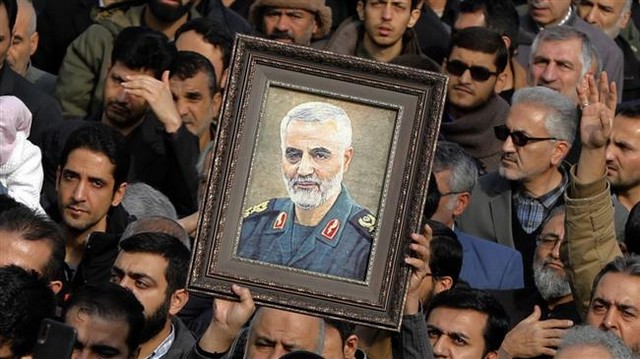
We are led to wonder, with the advent of the Biden presidency, whether the Obama approach will be restored with respect to Iran, and if so, in what manner and with what effort to balance such an accommodating diplomacy with Iran while trying not to upset Israeli support groups too much, having witnessed at close range Israel’s dirty pushback tactics. The litmus test of Baden’s diplomacy will be revealed by whether Washington insists on more stringent limitations on Iran’s nuclear enrichment capabilities, and even more so, if it links its renewed participation in the JCPOA with a demand that Iran disavow its regional diplomacy in such countries as Syria, Yemen, and Lebanon. Such one-sided enlargements of the scope of what is agreed beyond its nuclear program is highly unlikely to be acceptable in Iran, and for good reasons, given the interventions of Saudi Arabia and Israel in these conflicts. This anticipated reluctance would also antagonize hardline opinions in Iran, and likely partly express a lingering resentment about the targeted killing of General Soleimani, an individual who was not only beloved and revered by the Iranian people but was considered an extremely promising future president for the country, someone regarded by close Iranian observers as second in importance only to the Supreme Guide, who was beloved by Ayatollah Ali Khamenei.

************************************
Responses to Tasnim News Agency on the 1st Anniversary of General Qassim Soleimani’s Assassination by U.S. Drone on 3 Jan 2020

Q1: As you know, the US assassinated Lieutenant General Soleimani, the commander of the Quds Force of the Islamic Revolution Guards Corps (IRGC), along with Abu Mahdi al-Muhandis, deputy head of Iraq’s Hashd al-Sha’abi, and their companions by targeting their vehicles outside Baghdad International Airport on January 3. The act of terror was carried out under the direction of Trump, with the Pentagon taking responsibility for the strike. How do you see the role of Israel, Saudi Arabia, and certain Arab states in the region in killing?

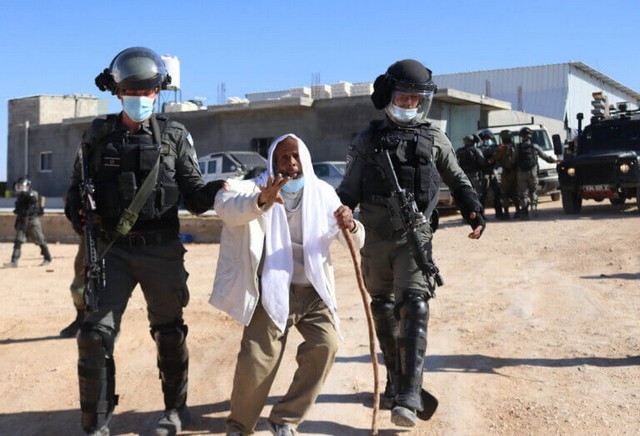
R1: I have no inside information on the undisclosed connections between the states mentioned in the question and the assassination of Lieut. General Soleimani, but offer some generalizations based on the public reactions of these governments to the event and their general approach to the confrontation with Iran. Two things are clear. First, Israel and Saudi Arabia officially and explicitly welcomed the killing of Gen. Soleimani for reasons different than those put forward by the United States, while disavowing any connection with the event; secondly, the Arab governments, and even some Israeli strategists, acknowledged being wary of the possible consequences associated with feared Iranian retaliations and a regional escalation of tensions. It seemed that the most respected analysts of Israeli security interests were urging their government to do its utmost to deescalate the confrontational approach that had been previously advocated. Such moderating moves seemed to reflect an awareness of the vulnerabilities of Israel and the Gulf countries to Iranian missile attacks and overall worries about regime security. With these considerations in mind, it makes sense that these governments insisted that the U.S. acted on its own, without prior consultation or encouragement. Some reports in the Arab media alleged that Qatar should be viewed as complicit because the drone that responsible for this act of state terror was apparently launched from the U.S. Udeid air base in their country, but there was no indication of any advanced knowledge, much less participation, by Qatar before the attack was launched. The apparent reconciliation between Qatar and the Saudi-led Gulf coalition at the start of 2021 may also be interpreted as part of this moderating trend, perhaps also a cautionary reaction to the defeat of Trump’s bid for reelection and uncertainties associated with how Biden will approach the region.

Of great concern is the failure of the United Nations, especially the Security Council, to condemn the event. The UN Special Rapporteur for Extrajudicial, Summary, or Arbitrary Executions, Agnés Callamard, did issue a report on July 6, 2020 that concluded that the targeted killing of such a prominent military leader as General Soleimani was not only a violation of international human rights law, but ‘an act of war’ that violated Article 2(4) of the UN Charter. This important report does highlight the use of drones as creating a class of weaponry that erodes the distinction between war and peace, and creates a threat to all countries and their population. The international tolerance of such state behavior is totally unacceptable, aggravated in this instance by being openly authorized by the head of state of a Permanent Member of the UN Security Council. The rapid proliferation of attack drones also adds a destabilizing dimension that makes the Soleimani killing a particularly dangerous precedent.

In short, for Israel the elimination of Iran’s most effective military commander was viewed as reducing the security threat posed by Iran’s regional influence in Syria, Yemen, Iraq, Lebanon, supposedly surrounding Israel with unpredictable political forces. Eliminating the architect of Iran’s regional influence was viewed as a positive development from the perspective of Israeli security that deems itself as virtually ‘at war’ with Iran. Yet even some Israeli strategic commentary at the time of the assassination tended to worry about such a high-profile assassination being treated as an ‘act of war’ by Iran intensifying risks of an unwanted all out conflict urging, contrary to Trump and Netanyahu, offsetting concessions to Iran. Some Israeli security experts urged the unconditional revival of the JCPOA deal relating to Iran’s nuclear program and even the elimination of sanctions.

For Saudi Arabia, in particular, although insisting that it had no role in the assassination viewed it partly through the perspective of finally overcoming Trump’s refusal to respond to the psychologically and material damaging September 2019 drone attack on the state-owned Aramco oil facilities in Abqaiq and Ehurais located in eastern Saudi Arabia. These attacks although emanating from Yemen were attributed to Iran, at least indirectly. In this regard, the assassination was interpreted as responsive to the Saudi (and Israeli) criticisms of the Obama presidency’s moves toward normalization with Iran, as well as of Trump’s allegedly timid responses to prior provocations and some concern that withdrawals of American forces from Iraq, which was viewed with alarm as the beginning of U.S. strategic disengagement from the region.

Q2: General Soleimani is viewed by the world’s freedom-seeking people as the key figure in defeating Daesh/ISIS, the world’s most notorious terrorist group, in the Middle East battles. What are your thoughts on Gen. Soleimani’s character and his role in fighting terrorism?

R2: I am aware of the revered status of Gen. Soleimani for his various roles in defense of the Iranian Revolution and in opposition to the spread of U.S. and Israeli influence in the region. He had that rare quality of being a military commander whose intelligence and political leadership were widely appreciated at all levels of Iranian society, from the Supreme Guide to the Iranian citizenry. Over the course of the last ten years there have been many reports that he was being urged to become a presidential candidate in Iran. It is significant in my view that Gen. Soleimani was killed while on a diplomatic mission mediated by Iraq to reduce tensions between Iran and Saudi Arabia. There is no reason to believe that the assassination was timed to disrupt such a move, but its occurrence surely had the effect of intensifying regional tensions in a highly provocative, lawless manner that generated widespread calls in Iran and Iraq for revenge and retaliation. Iran has formally issued a warrant for the arrest of Trump on charges of premeditated murder, which according to the Iranian penal code imposes a death sentence. Iran has asked Interpol for assistance in inducing police forces around the world to implement the arrest warrant.

By and large, commentators on the assassination in the West, including critics of Trump’s presidency, viewed the event from a narrow American perspective. This meant highlighting Gen. Soleimani’s role both in Iraqi violent resistance to the American occupation and in giving overall help to the general opposition throughout the region to Washington’s strategic priorities, including Hezbollah and Hamas, the Damascus government, and the Houthi insurgency in Yemen. What was not stressed, and rarely acknowledged, was Gen. Soleimani extremely effective role not only in defeating Daesh (or ISIS) in the Syria and Iraq, but also in temporarily neutralizing the Taliban in Afghanistan. As the Mossad official, Yossi Alpher, correctly noted of the fallen military leader: “He was a highly intelligent strategic thinker who understood how to wage asymmetric warfare.” Contrast this assessment with the words of Thomas Friedman, the liberal icon of American journalism, writing in an opinion piece published in the immediate aftermath of the event. Friedman praised Trump for ordering the assassination of “possibly the dumbest man in Iran and the most overrated strategist in the Middle East.” [“Trump Kills Iran’s Most Overrated Warrior,” Jan. 3, 2020.] Why dumb? Because Gen. Soleimani role in expanding Iran’s regional resistance to U.S. regional interventions prompted Washington to take major countermeasures that had an overall disastrous impact on Iran. In effect, the United States’ imperial role was legitimate, and to challenge it, was not only illegitimate but self-defeating as the killing of their leading military commander demonstrates.

Viewing Gen. Soleimani’s role more objectively, a larger geopolitical distortion is revealed. The United States real security concerns over the course of the past twenty years were associated with eliminating threats of transnational extremist violence that culminated in the 9/11 attacks on the World Trade Center and Pentagon in 2001. It is only through an acceptance of Israel’s and the Gulf monarchies’ regional priorities that made rational either the attack on Iraq in 2003 or the repeated efforts to destabilize Iran. To some extent Obama did somewhat recognize that reaching an accommodation with Iran and continuing to support the national security of Israel were not necessarily contradictory. In contrast, Trump, whether wittingly or not, subordinates U.S. national interests to the Israeli/Gulf sectarian view of Middle East politics. At this point, with the imminent prospect of Biden’s presidency there is reason to be cautiously hopeful about the formulation of a policy for the Middle East that is more coherent, less Israeli driven, less guided by impulse, and more oriented toward achieving stability rather than seeking ‘solutions’ based on coercive diplomacy.

Q3: How do you see the future of the region after the assassination of Gen. Soleimani? Do you think that foreign troops including the US forces will be forced out of the region and Iraq at people’s will?

R3: The turmoil throughout the region, along with interventions by geopolitical actors, makes predictions hazardous. There are some encouraging indications that Biden seeks to revive JCPOA as soon as possible and seeks order and moderation throughout the Middle East. Such post-Trump modifications will not be undertaken without taking Israel’s views into account, but to what extent is at present unknown. Israel will certainly try its best to condition the renewal of American participation in JCPOA on imposing new, more stringently restrictions on Iran’s nuclear program. Israel is also likely to insist that the U.S. receive assurances from Iran that it will no longer extend material support Islamic political tendencies in the region as exemplified by Hezbollah and Hamas. Upholding such assurances would be correlated with reducing sanctions. It seems unlikely that Iran would be willing to end its support for self-determination and human rights in Israel/Palestine, Yemen, and Lebanon, and more controversially, governmental legitimacy and counterinsurgency in Syria. And if such a political surrender were to be accepted by Iran’s current elected leadership, it would be effectively challenged from within the country.

The Arab acceptance of normalization agreements with Israel are not likely to be challenged by the Biden presidency, although brought about by American inducements, including advanced weaponry and a greater commitment of the U.S. to extend its security protection beyond Israel. In this regard, should a second Arab Spring occur in Gulf countries or Egypt, it is likely that Washington will more overtly side with the established order, no matter how repressive.

Of relevance as well is whether China and Russia will play more active diplomatic roles in the region, either seeking alignment or as offering an alternative to the American imperial presence. Such speculation depends in part on whether the U.S. adopts confrontational approaches to Russia in relation to Ukraine and Crimea and to China with respect to international trade relations and tensions in the South China Seas. Unless the U.S. disengages from its reliance on global militarism as the basis of its foreign policy, which seems highly unlikely, there are almost certain to be troubled waters in many parts of the world, including the Middle East. More than Trump, the Biden presidency is likely to adopt a foreign policy of the sort that resurrects the ‘bipartisan consensus’ that was borne shortly after the World War II, and persisted throughout the long Cold War. The essence of this consensus is the exaggeration of security threats so as to justify political support for high peacetime military budgets.

It is finally possible that energy geopolitics will also exert an influence over how relations with Iran evolve. It seems to serve OPEC’s interest to restrict Iran’s energy export markets, but if European or Asian demands rise, the reintegration of Iran in the world economy is like to receive strong backing that could change the balance in the Middle East, especially if confrontation with China dominates U.S. foreign policy in the years ahead.

Richard Falk is a member of the TRANSCEND Network, an international relations scholar, professor emeritus of international law at Princeton University, Distinguished Research Fellow, Orfalea Center of Global Studies, UCSB, author, co-author or editor of 60 books, and a speaker and activist on world affairs.

11 January 2021

Source: www.transcend.org

The Face of Things to Come

By Walden Bello

7 Jan 2021 – By mid-February 2021, American deaths from Covid-19 may well surpass the country’s 405,400 deaths during the Second World War.

By around mid-May, more Americans will have died from Covid-19 than during the Civil War, which killed 655,000, and the Spanish flu pandemic of 1918, when 675,000 are estimated to have perished.

The unraveling of American politics

Yet America’s largely self-inflicted Covid-19 disaster may be eclipsed by the US’s political unraveling, which has proceeded with warp speed in the last few weeks, with the once-celebrated American way of succession in power via the ballot box dealt a body blow by a large sector of the electorate that has marched in lock step with their leader in refusing to accept the results of the presidential elections.

Joe Biden will be seated this time around, but this may well be a Pyrrhic victory purchased at the cost of being regarded as illegitimate in the eyes of the majority of the 71 million Americans under the spell of Donald Trump. Future electoral contests for power may well end up being decided by a strong dose of street warfare, as the US goes the way of Germany’s ill-fated Weimar Republic. The violent storming of the Capitol by a Trumpian mob underlined the face of things to come.

America’s crisis has been building up for decades, and Covid-19 has merely accelerated the march to its dramatic denouement. Central to explaining this crisis is the erosion of white supremacy, a condition that the Republican Party has exploited successfully since the late sixties, through the so-called “Southern Strategy” and racist dog-whistle politics, to make the party the representative of a racial majority that is threatened subliminally by the demographic and cultural expansion of non-white America.

An added contribution to the Republican consolidation of its white political bastion has been the desertion by the Democratic Party of its white working-class base – the pillar of the once-solid “New Deal Coalition” put together by Franklin Delano Roosevelt – as “Third Way” Democrats from Clinton to Obama legitimized and led in promoting neoliberal policies.

America displaced

Neoliberalism has been central to the concurrent and seemingly irreversible economic crisis of the US. By preaching that it would lead to the best of all possible worlds for America and everyone else if capital were free to search for the lowest priced labor around, neoliberal theory provided the justification for shipping manufacturing capacity and jobs to China and elsewhere in the global South, leading to rapid deindustrialization, with manufacturing jobs falling from some 18 million in 1979 to 12 million in 2009.

Long before the Wall Street Crisis of 2008, such key U.S. industries as consumer electronics, appliances, machine tools, auto parts, furniture, telecommunications equipment, and many others that had been the giants of the capitalist global production system had been relegated to history, that is, transferred to China.

With highly paid manufacturing and white-collar jobs sent elsewhere, the US became one of the world’s most unequal countries, prompting economist Thomas Piketty to exclaim, “I want to stress that the word ‘collapse’… is no exaggeration. The bottom 50 percent of the income distribution claimed around 20 percent of national income from 1960 to 1980; but that share has been divided almost in half, falling to just 12 percent in 2010-2015. The top centile’s share has moved in the opposite direction, from barely 11 percent to more than 20 percent.”

Trump smelled opportunity here that a Democratic leadership tied to Wall Street ignored, and he made anti-globalization a centerpiece of his 2016 electoral platform. And, by tying anti-globalization to anti-migrant rhetoric and dog-whistle anti-black appeals, he was able to break through to the white working-class that had already given signals it was ready to be racially swayed as early as the Reagan era in the 1980s.

Ironically, the combination of neoliberalism’s ideological conviction and corporate America’s hunger for super-profits made China’s state-managed economy the so-called “workshop of the world,” contributing centrally to the creation in just 25 years of a massive industrial base that has resulted in China’s becoming the new center of global capital accumulation, displacing the United States and Europe.

Xi Jin Ping has his pulse on the New China, infusing confidence to millions of Chinese with an ideology that combines the vision of ever-rising living standards with nationalist pride that China has forever left behind the “century of shame” from the mid-1850s to the mid-1950s.

America’s ideological malaise

Even as an ideologically motivated Chinese population emerges from the Coronavirus crisis, convinced that China’s ability to contain Covid-19 proves the superiority of China’s authoritarian methods of governance, the current spirit of American society is perhaps best captured by William Butler Yeats’ immortal lines: “The best lack all conviction, while the worst are full of passionate intensity.” American ideology—and there is an American ideology—is suffering from a profound loss of credibility, and not only among non-Americans but among Americans themselves.

Two primordial beliefs undergird this ideology, and both have been irretrievably eroded: the so-called “American Dream” and “American Exceptionalism.”

The American Dream has long lost its sheen, except perhaps to immigrants. To people on the left, the American Dream is now mentioned only in cynical terms, as a lost Golden Age of relative social mobility that was destroyed by neoliberal, anti-worker policies. To those on the far right, the American Dream is one that liberals have taken from whites through all sorts of affirmative action programs and given to racial and ethnic minorities.

The subtext of the Trumpian counterrevolution has been, in fact, restoring the American dream, the bright prospects of social ascent, to its rightful owners, that is, to white Americans, and to them only.

As for American Exceptionalism, the idea that America is God’s own country, this has had two versions, and both have long lost credibility among large numbers of Americans. There is the liberal version of America as the “indispensable country,” as former US Secretary of State Madeline Albright put it, where the US serves as a model for the rest of the world.

This is supposed to be America’s “soft power,” of which Frances Fitzgerald wrote: “The idea that… the mission of the United States was to build democracy around the world had become a convention of American politics in the 1950s,” so that “it was more or less assumed that democracy, that is, electoral democracy combined with private ownership and civil liberties, was what the United States had to offer the Third World. Democracy provided not only the basis for opposition to Communism but the practical method to make sure that opposition worked.”

Cold War liberals believed that it was America’s responsibility to spread democracy through force of arms, if necessary, and it was this ambitious project’s tremendous cost in lives lost and sovereignty of nations violated that led to the historic emergence of the New Left in the US beginning with the Vietnam War. The effort to resurrect this missionary democracy to justify the US invasion of Iraq in the early 2000s received widespread repudiation both domestically and globally.

The conservative version of American Exceptionalism was first forcibly expressed in the early 1980s by Jeane Kirkpatrick, Ronald Reagan’s ambassador to the United Nations, who said that the United States was indeed exceptional and unique and that its democracy was not for export as other countries lacked the cultural requisites to water it, thus providing the justification of American support for dictators like the Philippines’ Ferdinand Marcos and Chile’s Augusto Pinochet.

When Donald Trump appropriated the right’s ideological legacy, democracy itself was taken out of what was supposed to be unique to the United States. In his rabidly anti-immigrant and pro-police speech at the Republican National convention in August 2020, not once was the word “democracy” mentioned.

What was unique to America, in Trump’s view, was the spirit of the conquest of the land and the West by white “ranchers and miners, cowboys and sheriffs, farmers and settlers,” a white world made possible by the likes of “Wyatt Earp, Annie Oakley, Davy Crockett, and Buffalo Bill.” Those names of television characters that Trump apparently loved as a child did not exactly resonate with non-whites nor with the rest of the world.

Another hallowed institution threatened

With Trump inciting resistance to democracy and his Republican base marching to his tune, as the storming of the Capitol so vividly illustrated, the next four years promise to be an era of unrestrained political strife.

And with civilian politicians increasingly unable to break the political stalemate, another hallowed American institution might well become extinct: the subordination of the country’s military leadership to civilian authorities. To those for whom military intervention in the name of “political stability” is unthinkable, they have only to see how many unthinkable things Trump has done to American political traditions in just the last few months, with undying support from his large mass base.

They have only to look at Chile, where that country’s proud tradition of military non-intervention in politics ended in a military coup in 1973, after rightwing resistance to the lawfully elected President Salvador Allende had stalemated the democratic process and led to violent street warfare instigated by right-wing paramilitary gangs like Patria y Libertad that resemble today’s Proud Boys, American Nazis, and the Klan.

More like the rest of us

In recent days, many American and foreign commentators on US politics have evinced shock that the country that invented modern logistics could only get four million of the projected 20 million people vaccinated for Covid-19 by the end of 2020. But there are even more previously “unthinkables” that are likely to occur as an America plunged into the depths of political and economic crises becomes more like the rest of the world, as Americans become more like the rest of us ordinary mortals.

Walden Bello is the co-founder of and current senior analyst at the Bangkok-based Focus on the Global South, the International Adjunct Professor of Sociology at the State University of New York at Binghamton, and National Chairperson of Laban ng Masa, a progressive coalition of organizations and individuals in the Philippines.

11 January 2021

Source: www.transcend.org

‘One State is a Game Changer’: A Conversation with Ilan Pappe and Awad Abdelfattah on the One Democratic State Campaign

By Ramzy Baroud and Romana Rubeo

As the US ruling elites have fully succumbed to Israel’s political discourse on Palestine, the Israeli government of right-wing Prime Minister, Benjamin Netanyahu, may feel that it, alone, is capable of determining the future of the Palestinian people.

This conclusion is, perhaps, gleaned from Israel’s behavior in recent years and months. The expansion of illegal Jewish settlements, the plan to annex large swathes of the Occupied Palestinian Territories and the entrenching of the existing system of apartheid and perpetual colonialism are all evidence that demonstrates Israel’s renewed sense of empowerment.

Israel is further emboldened by the fact that the so-called ‘international community’ has, thus far, failed to challenge American and Israeli intransigency. The European Union, which is fighting for its own identity, let alone survival, is proving to be a marginal force in Israel and Palestine. Without American guidance, the EU seems incapable of leading its own independent initiatives.

Moreover, the lack of an alternative global power that could offset the political imbalance created by Washington’s blind and unconditional support for Tel Aviv is making it difficult, if not impossible, for the Palestinian leadership to invest in an entirely new political paradigm.

Normalization among various Arab countries and Israel has added yet more fuel to the fire. Without official Arab solidarity, the Palestinian leadership, which has historically defended its position based on some kind of a collective Arab vision, now feels orphaned, abandoned.

But all is not lost. The dismantling of the US-engendered ‘peace’ paradigm should not automatically indicate that Palestinians are not capable of championing their own political vision for liberation and freedom. On the contrary, the US and its ‘moderate’ allies in the region have always represented an obstacle to Palestinian freedom. For this camp, the objective was maintaining the status quo of endless, futile talks without a timeframe, without a legal frame of reference and without any mechanism that is meant to place any kind of pressure or accountability on the Israeli occupier to bring its military occupation to an end.

Palestinians and their allies are now engrossed in a process of introspection, revisiting old maxims, challenging tired clichés, and imagining a new future where dead ‘solutions’ are no longer an option and where justice is not tailored to fit the expectations and demands of the occupying party.

A one democratic state, as envisaged by the Haifa-based One Democratic State Campaign (ODSC) is one of these initiatives that hopes to take the conversation on a possible shared future from being an academic subject to an active political process with actual, measurable support on the ground. This is the only way, according to the group, that the minimal requirements for justice can be achieved. These include the right of return for Palestinian refugees who are still scattered, in their millions, in many refugee camps in Palestine and throughout the ‘shataat’ (diaspora).

On December 30, we reached out to Israeli historian Ilan Pappe, a well-known author and highly regarded academic and the respected Palestinian political analyst, Mr. Awad Abdelfattah, who is also the coordinator of the ODSC.

We asked both intellectuals to make a case of why the two-state solution is not a viable answer to the Israeli occupation and apartheid and why a one democratic state is possible and just.

Ilan Pappe on why a two-State Solution was never viable:

“The two-state solution was never viable. There were times when, maybe, it looked a little more viable for a few weeks after the June 1967 war, when the Jewish settlers came to the West Bank. But it was not viable even then, because it did not fit the basic policy of the Zionist movement since its inception and its arrival in Palestine in the late 19th century. Zionism is a settler-colonial movement and Israel is a settler-colonial state.

“Its support – and this includes what is even called the ‘peace camp’ in Israel – for a two-state solution is an idea that says that you do not have to directly control every part of historical Palestine in order to establish your dominance and hegemony between the River Jordan and the Mediterranean. So, if you can squeeze the Palestinians into small Bantustans and allow them to have a flag and a semblance of a government, there are quite a few Israelis who do not mind at all, so long as this will be the last and final kind of settlement for the Palestine question. Which means no real political rights for the Palestinians, no right of return for the refugees and keeping all Palestinians in different parts of historical Palestine, at best as second-rate citizens, at worst, as subjects in an apartheid state.

“I think the two-state solution was never a viable solution because what really mattered was the Israeli interpretation of the two-state solution. This interpretation was always accepted unconditionally by the United States. Because of this, even the European countries did not dare to challenge this interpretation and, as we have unfortunately seen recently, some Arab regimes are also beginning to accept the Israeli interpretation. For a while, they tried to challenge it in the Arab League’s famous Peace Plan in 2002. This is not being tried any more.

“I think we have only had one option since the creation of the State of Israel, and this was to replace a settler-colonial state with a genuine, democratic state for all.”

Awad Abdelfattah on why Israel is not serious about peace and why one state is a strategic Palestinian choice:

“I am a Palestinian with Israeli citizenship, one of the survivors of the Nakba, one of the descendants of the people who succeeded in remaining in their homeland. I belong to that group of the Palestinian people who have been struggling peacefully inside the State of Israel against all forms of discrimination and apartheid. Despite that, we have been under continued and systematic colonization.

“For many years, people (even those who support the Palestinian cause) did not look at Israel as a settler-colonial state. We, Palestinians within the Green Line, have played an important role in exposing the nature of this regime and to show that the occupation in the West Bank and in the Gaza Strip is not something separate from the existing Israeli regime. The opposite is true. It is an extension of this regime.

“We have to expose to the world that we, Palestinians with Israeli citizenship, are not treated equally and I think we should recognize that Israel is not keen on making any peace with anybody, either Palestinians or the Arab world. If Israel was indeed serious in wanting peace, then it should have made peace with its own non-Jewish citizens (this is the term that Israel uses to describe us). So, I think we can have a strategic role in promoting the ‘One Democratic State’.

“The apartheid regime cannot be sustainable. I think Israel is behaving like the Crusaders in Palestine. It will never be sustainable. I do not say that this is going to happen soon, but I do not think that this unjust and cruel apartheid regime can be sustained, because half of the Palestinian people are still in their homeland and they are determined to resist, not to surrender, despite the grim reality that they are living.”

Ilan Pappe on why one state is gaining momentum among Palestinian youth:

“There is a big difference between the opinion of the younger generations and the older generations when it comes to the one-state solution. When you ask the older generation, the despair from the two-state solution as a feasible idea is, indeed, the main motive for rejecting the two-state solution. However, if you go to the younger generation (and do remember that more than 50% of Palestinians are under 18; it is a very young population) their belief in the one-state is based on a certain moral, ideological infrastructure. It is not just about despairing over the two-state solution; it is the genuine belief that, post-liberation, Palestine should be a place where they would like to live.

“It is not just a dream of having another Arab state, like Egypt. We have to remember that they are also part of the Arab Spring generation, so the aspirations here are not just about national independence. This is far more than just having a one-state because the two-state does not work. This is really a genuine idea that we need to respect human rights and civil rights and, in the case of Palestine, the rights are very clear – from the right of return for the refugees to the making sure that Palestine is part of the Arab world and the Muslim world; making sure that within that world, Palestine can be a lighthouse when it comes to human rights and civil rights.

“I think this is why the topic is never limited to Palestine, geographically or morally. We have seen this during the demonstrations in the Arab world at the time of the Arab Spring. So many demonstrators from Morocco to Bahrain were carrying the Palestinian flag because of what it symbolizes to them, even in their own country.

“I think that despair comes more from political elites. Yes, they are right in their own analysis, that their belief in the two-state solution was, in a way, betrayed by the Israelis and the international community. There is no doubt about it, but I think that the main push for the one-state solution will come from a popular movement with a lot of young people in it, building their own future, not just the future of the present leadership who, I think, will join, whether it is because they are desperate or because they will be loyal to ideas that they themselves once believed in – and they should remember – in the 1960s and 70s.

“So I think there is good potential for support on the Palestinian side for this idea. The question is whether there will be an organization that will democratically and authentically represent the symbols. Because if this will happen, I think it is a game-changer which will force everyone in the region – and in the world – to look very differently at the Palestine Question.”

(To watch the interview in full click here)

Ramzy Baroud is a journalist and the Editor of The Palestine Chronicle.

Romana Rubeo is an Italian writer and the managing editor of The Palestine Chronicle.

11 January 2021

Source: countercurrents.org
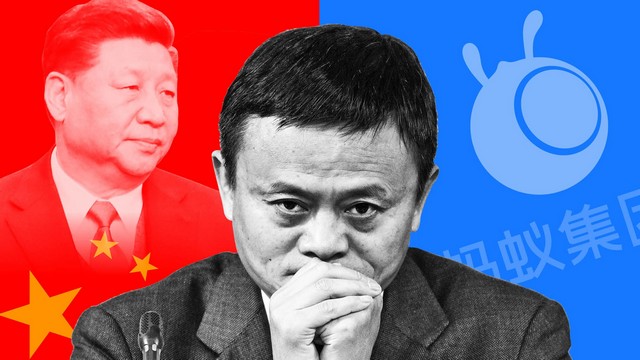
60 Israeli teens sign public letter objecting to military service over Israel’s policies of apartheid, neoliberalism, and denial of the Nakba

A letter signed by 60 Israeli senior year high school students in which they refused their compulsory enlistment in the Israeli military is now public…It is historical and novel in that for the first time, it addresses not merely the 1967 occupation, but also the 1948 Nakba, the “continuing Nakba”, and the “violent occupation” of “72 years”. That is, it visions and frames the 1967 occupation as a part of the whole Israeli endeavor since its inception. It notes, for example, that: ‘The actions of the Israeli military in 2020 are nothing but a continuation and upholding of the legacy of massacre, expulsion of families, and land theft, the legacy which “enabled” the establishment of the State of Israel, as a proper democratic state, for Jews only.’

In Israel, conscientious objectors like these are often jailed. In 2003 five male conscientious objectors were sentenced to about 2 years prison. The longest-serving female conscientious objector is Hillel Kaminer, who was released from prison after 150 days, in 2016. It is doubtful that those to whom the letter is addressed to will be very affected by it. The most ‘liberal’ among them is probably Benny Gantz, former army chief of staff, who has boasted of bringing Gaza back to the “stone age” as his entry card into politics two years ago. Israeli society is “violent, militaristic, oppressive, and chauvinistic”. Yet there are many among us who listen very closely to what these young people are saying. And here they are defining a critical discourse. The 1967 occupation is not the start and it is not the end. It is part of Israel’s overarching project of occupation; it’s the state in its entirety, enacting “Apartheid policies” as part of its very nature. The “proper democratic state” is a sad joke, it is for Jews only.

Text of the letter:
We are a group of Israeli 18-year-olds at crossroads. The Israeli state is demanding our conscription into the military. Allegedly, a defense force which is supposed to safeguard the existence of the State of Israel. In reality, the goal of the Israeli military is not to defend itself from hostile militaries, but to exercise control over a civilian population. In other words, our conscription to the Israeli military has political context and implications. It has implications, first and foremost on the lives of the Palestinian people who have lived under violent occupation for 72 years. Indeed, the Zionist policy of brutal violence towards and expulsion of Palestinians from their homes and lands began in 1948 and has not stopped since. The occupation is also poisoning Israeli society–it is violent, militaristic, oppressive, and chauvinistic. It is our duty to oppose this destructive reality by uniting our struggles and refusing to serve these violent systems–chief among them the military. Our refusal to enlist to the military is not an act of turning our backs on Israeli society. On the contrary, our refusal is an act of taking responsibility over our actions and their repercussions.

The military is not only serving the occupation, the military is the occupation. Pilots, intelligence units, bureaucratic clerks, combat soldiers, all are executing the occupation. One does it with a keyboard and the other with a machine gun at a checkpoint. Despite all of this, we grew up in the shadow of the symbolic ideal of the heroic soldier. We prepared food baskets for him in the high holidays, we visited the tank he fought in, we pretended we were him in the pre-military programs in high school, and we revered his death on memorial day. The fact that we are all accustomed to this reality does not make it apolitical. Enlistment, no less than refusal, is a political act.

We are used to hearing that it is legitimate to criticize the occupation only if we took an active part in enforcing it. How does it make sense that in order to protest against systemic violence and racism, we have to first be part of the very system of oppression we are criticizing?

The track upon which we embark at infancy, of an education teaching violence and claims over land, reaches its peak at age 18, with the enlistment in the military. We are ordered to put on the bloodstained military uniform and preserve the legacy of the Nakba and of occupation. Israeli society has been built upon these rotten roots, and it is apparent in all facets of life: in the racism, the hateful political discourse, the police brutality, and more.

This military oppression goes hand in hand with economic oppression. While the citizens of the Occupied Palestinian Territories are impoverished, wealthy elites become richer at their expense. Palestinian workers are systematically exploited, and the weapons industry uses the Occupied Palestinian Territories as a testing ground and as a showcase to bolster its sales. When the government chooses to uphold the occupation, it is acting against our interest as citizens– large portions of taxpayer money is funding the “security” industry and the development of settlements instead of welfare, education, and health.

The military is a violent, corrupt, and corrupting institution to the core. But its worst crime is enforcing the destructive policy of the occupation of Palestine. Young people our age are required to take part in enforcing closures as a means of “collective punishment,” arresting and jailing minors, blackmailing to recruit “collaborators” and more– all of these are war crimes which are executed and covered up every day. Violent military rule in the Occupied Palestinian Territories is enforced through policies of apartheid entailing two different legal systems: one for Palestinians and the other for Jews. The Palestinians are constantly faced with undemocratic and violent measures, while Jewish settlers who commit violent crimes– first and foremost against Palestinians but also against soldiers- are “rewarded” by the Israeli military turning a blind eye and covering up these transgressions. The military has been enforcing a siege on Gaza for over ten years. This siege has created a massive humanitarian crisis in the Gaza Strip and is one of the main factors which perpetuates the cycle of violence of Israel and Hamas. Because of the siege, there is neither drinkable water nor electricity in Gaza for most hours of the day. Unemployment and poverty are pervasive and the healthcare system lacks the most basic means. This reality serves as the foundation on top of which the disaster of COVID-19 has only made things worse in Gaza.

It is important to emphasize that these injustices are not a one-time slippage or straying away from the path. These injustices are not a mistake or a symptom, they are the policy and the disease. The actions of the Israeli military in 2020 are nothing but a continuation and upholding of the legacy of massacre, expulsion of families, and land theft, the legacy which “enabled” the establishment of the State of Israel, as a proper democratic state, for Jews only. Historically, the military has been seen as a tool which serves the “melting pot” policy, as an institution which crosscuts social class and gender divides in Israeli society. In reality, this could not be further from the truth. The military is enacting a clear program of ‘channeling’; soldiers from upper-middle class are channeled into positions with economic and civilian prospects, while soldiers from lower socioeconomic backgrounds are channeled into positions which have high mental and physical risk and which do not provide the same head start in civil society. Simultaneously, women’s representation in violent positions such as pilots, tank commanders, combat soldiers, and intelligence officers, is being marketed as feminist achievement. How does it make sense that the struggle against gender inequality is achieved through the oppression of Palestinian women? These “achievements” sidestep solidarity with the struggle of Palestinian women. The military is cementing these power relations and the oppression of marginalized communities through a cynical co-opting of their struggles.

We are calling for high school seniors (shministiyot) our age to ask themselves: What and who are we serving when we enlist in the military? Why do we enlist? What reality do we create by serving in the military of the occupation? We want peace, and real peace requires justice. Justice requires acknowledgment of the historical and present injustices, and of the continuing Nakba. Justice requires reform in the form of the end of the occupation; the end of the siege on Gaza; and recognition of the right of return for Palestinian refugees. Justice demands solidarity; joint struggle; and refusal.

12 January 2021

Source: palestineupdates.com

The Trump Administration’s Parting Outrage Against Cuba

Written by Medea Benjamin and Leonardo Flores

On January 11, in his final days before leaving office, Secretary of State Mike Pompeo added one parting blow to the series of bludgeons his administration has inflicted on Cuba for four years: putting the island on the list of “state sponsors of terror” that includes only Iran, North Korea and Syria. The designation drew swift condemnation from policymakers and humanitarian groups as a decision widely characterized as “politically motivated.” It comes six years after the Obama administration had removed Cuba from the same list as part of his policy of rapprochement.

In the six years since, Trump’s State Department could not point to a single act of terror sponsored by Cuba. Instead, Secretary Pompeo based his decision on Cuba’s alleged support for the ELN (National Liberation Army – Colombia’s second-largest guerilla group) and the harboring of a handful of U.S. fugitives wanted for crimes committed in the 1970s, including renowned Black revolutionary Assata Shakur. Lacking more specific accusations, the State Department criticized Cuba for its supposed “malign interference in Venezuela and the rest of the Western Hemisphere.”

These claims don’t stand up to scrutiny. Regarding the ELN, the gist of the story is that the Trump administration is punishing Cuba for its role in attempting to bring peace to the long-simmering conflict in Colombia. ELN negotiators arrived in Cuba in 2018 for peace talks with the Colombian government. As part of the protocols for these meetings, ELN negotiators were allowed entry into Cuba and promised safe passage back into Colombia after their conclusion. Guarantor countries, including Cuba and Norway, assumed responsibility for their safe return. The talks collapsed in January 2019 following an ELN car bombing in Bogotá that killed 22 people. Colombia requested the extradition of the negotiators, but Cuba refused because the Colombia government will not honor the previous government’s commitment to guaranteeing the negotiators’ freedom upon returning home.

Regarding Secretary Pompeo’s other arguments, Cuba’s main influence in the Western Hemisphere has been the opposite of “malign”: it has deployed its doctors throughout the region and the world, saving thousands of lives during the Covid-19 pandemic. And when it comes to harboring terrorists, it’s worth noting that for decades the United States harbored Luis Posada Carriles, mastermind of a 1973 bombing that killed 73 people on a Cuban commercial airliner.

Cuba’s placement on the state sponsors of terror list is meant to be a thorn in any plan by the Biden administration for rapprochement. Taking Cuba off the list will require a review process that could take months, delaying any new initiatives to roll back Trump-era policies. It will also cause further pain to Cuba’s economy, already battered by tightened sanctions and the pandemic that has devastated the island’s tourism industry. The new terrorism label will likely scare off many businesses that import to Cuba, banks that finance transactions with Cuba and foreign investors.

A week before the designation, nine U.S. Senators wrote to Secretary Pompeo and warned that such a step “will politicize our national security.” It has drawn strong condemnation from Senator Patrick Leahy, who said it made a “mockery of what had been a credible, objective measure,” and House Foreign Affairs Chairman, Representative Gregory Meeks who said the hypocrisy from President Trump less than a week after he incited a domestic terror attack was “stunning but not surprising.”

Faith group Pastors For Peace was one of many organizations to condemn the designation: “We know that this latest act, in the waning days of the Trump administration, is not only an aggressive act against Cuba, but aggression against the incoming administration who have pledged to return to a policy leading to peace and civilized relations with our island neighbor.”

Policy group ACERE (which CODEPINK is a part of) drew a connection between the designation and recent events at home: “Perpetuating the myth that Cuba is a threat to the American people – while minimizing the threat posed by far-right extremists at home – is an embarrassment to our country on the world stage.”

The real motive behind this move is to offer a parting gift to the Cuban exile community and its allies that have been loyal supporters of the Trump administration and helped oust several Democratic members of Congress in the last election. This is par for the course for an administration that has repeatedly used sanctions for political gain with no regard for the Cuban people who, for four years, have borne the brunt of sanctions affecting everything from energy, tourism, medicines, remittances and flights. Just like millions of U.S. citizens, Cubans are counting the days until the Trump administration becomes history and hoping the next administration will offer some relief.

Medea Benjamin is an author, activist and cofounder of the peace group CODEPINK.

Leonardo Flores is a Latin American policy expert and a campaign coordinator with CODEPINK.

13 January 2021

Source: countercurrents.org