Just International

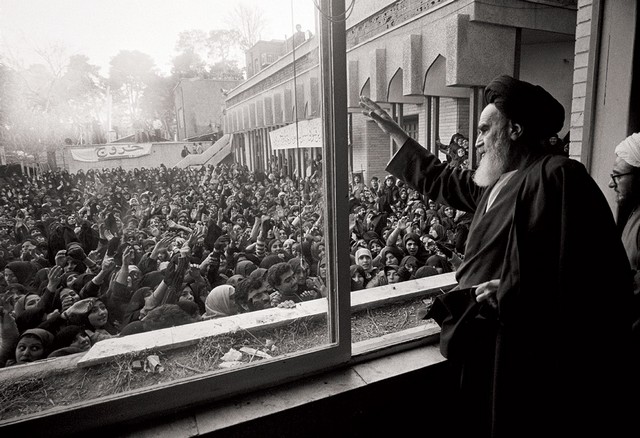
Revisiting Meeting Ayatollah Khomeini in January, 1979

By Richard Falk

10 Jun 2020 – This post is a slightly modified text of responses to Javad Heiran-Nia’s interview questions that was published on 2 Jun 2020 in Mehr News. From the Iranian publication I received some criticisms to the effect that I failed to associate Ayatollah Khomeini’s legacy with the repressiveness of the policies and practices of the Islamic Republic of Iran. I refrained from such commentary after some reflection as I consider that the political movement led by AK was under serious, credible, and continuous threat from the moment it challenged the Shah’s rule, and that in recent years that threat has been intensified by the aggressive coalition of anti-Iranian forces consisting of the United States, Israel, and Saudi Arabia.

With the role of Ali Khamenei, as AK’s chosen successor, coming to an end, attention has again been given to upholding AK’s legacy and respecting his mentorship.

In view of the Washington supported coup in 1953 that overturned the democratic election of Mohammad Mossadegh, it was reasonable to take exceptional steps to safeguard the new government, a process that became entangled with authoritarian and repressive features of governance, which certainly followed from AK’s leadership. How such an issue should be addressed is a complicated ethical and political matter that needs to be carefully contextualized. I will attempt to do this in a subsequent post.

*********************************

1. A few days before the victory of the Islamic Revolution of Iran, you had a meeting with Ayatollah Khomeini. What memories do you have of that meeting and what conversations took place during that meeting?

The conversation took place a few days before Ayatollah Khomeini returned to Iran after being resident in France during most of the revolutionary challenge directed at the Shah’s governing structure after being expelled by Iraq in 1978. It was for me a memorable meeting after spending. ten days in Iran on a factfinding mission to understand the revolutionary developments better. The three of us (Ramsey Clark, Philip Luce, and myself) were deeply impressed by Ayatollah Khomeini’s keenness of mind and clarity of vision about why a transformed Iran was necessary and desirable. I was particularly struck by the uncompromising nature of AK’s vision, which clearly rejected the reform of the old order and insisted on the establishment of a new order from top to bottom, starting with the institutions of the state. It struck me then and now as an unconscious embrace of Islamic Leninism in the context of building the new on the wreckage of the old.

I would stress a few themes from several hours of conversation:
–uppermost in AK’s mind in our meeting was the menacing prospect of a counterrevolutionary intervention organized by the United States so as to restore the Shah to the Peacock Throne. He seemed to be worried that what happened in 1953 to reverse the outcome of democratic elections that had brought the nationalist leadership of Mossadegh to power would be repeated. He sought our opinion as Americans, but we could only express our hope that such an intervention would not happen. We did indicate that the Carter presidency had important pro-interventionist high officials, thinking especially of Carter’s National Security Advisor, Zbigniew Brzezinski;
–AK also expressed the view that he hoped that normalized relations with the U.S. would become possible, but expressed his opinion that this could only happen if the U.S. refrained from interference in Iran and fulfilled existing state contracts, including those concerned with the national security of Iran, and most of all, AK stressed respecting the will of the Iranian people as embodied in the unfolding revolutionary process;
–AK strongly emphasized his insistence on comprehending the anti-Shah revolution as being in its essence Islamic, and not primarily a nationalist Iranian phenomenon. In general, AK expressed the view that the imposition of European style states on the region after World War I when the Ottoman Empire collapsed, distorted and disrupted the most fundamental affinities and identities of the Iranian people, which centered on belonging to the community of Muslim faithful, a non-territorial community that assigned only secondary significance to national boundaries and identities. AK conveyed his view that territorial sovereign states were not highest form of political integration, and regretted the termination of the Caliphate by Turkey as part of Kemal Ataturk’s conception of a modernizing, secular state, which broke its non-territorial bonds;
–AK also suggested to us that there should be accountability for the crimes committed by officials in the Shah’s government, and indicated his expectation that this challenge of political transition would be addressed by what he called ‘Nuremberg-style trials.’ It is has never been officially explained why this never happened, but there is speculation that public trials were abandoned because the accused Shah high officials would testify to CIA links of AK’s entourage, the disclosure of which would be awkward for the new leadership;
–AK also indicated that he hoped personally to resume a religious life upon returning to Iran leaving the government to be run by politicians and experts, expecting an Islamic orientation in a new post-revolutionary constitution, perhaps hoping for the application of his ideas about ‘Islamic Government,’ but he didn’t openly tell us this;
–AK also expressed open hostility to other instances of dynastic rule in the Islamic world, focusing especially on Saudi Arabia. He made clear that monarchy was inconsistent with the principles of Islam, and that the Saudi monarchy was no more legitimate as a source of governing authority than had been the Shah’s rule in Iran.

2. That meeting was before the revolution was completed and the revolution had not yet reached a definite victory. What special feature of Ayatollah Khomeini attracted your attention? Was Ayatollah Khomeini sure of the victory of the revolution?

It was our impression that AK was very confident that with the abdication of the Shah, which had occurred a few days earlier, the victory of the revolution was assured, and only an intervention by the U.S. or NATO or a staged coup could alter this outcome. His focus was upon defending the revolutionary victory against future internal, as well as external attempts to reverse the will of the Iranian people and how to plan a smooth transition from the old imperial order of the Shah to some version of an Islamic republic. We did not sense an openness on AK’s part to political pluralism or dissenting. Views.

We were particularly struck by the moral and political clarity of AK, and to some extent by the severity of his demeanor, which seemed averse to any kind of compromise with respect to the transition from the old Iran to what he envisioned as the new Iran. It became evident to us that AK regarded the revolution as motivated by the desire to obtain deliverance of the Iranian people from corrupt, secular, modernizing, oppressive governance structures tied to the West. He expect that this discredit past would be replaced by institutions and practices rooted in Islamic values, assuring virtuous policies and a political process guided by religious leaders.

3. In defense of the Islamic Revolution of Iran, you wrote an article in the New York Times that led.to attacks on you. What were the reasons for writing that article and what were the attacks?

I was encouraged to write the article by the Opinion Page Editor of the NY Times who acknowledged to me that very little was known about AK by the American people, and that their own coverage had been inadequate. I had the impression that this interest arose because of the growing understanding that the political struggle was over, and that the forces led by AK had prevailed. It was felt to be important to grasp this new reality in Iran so as to adapt to this unexpected nonviolent expression of the self-determination rights of the Iranian people. It should be recalled that this revolutionary challenge was confusing to Americans who in the dominant Cold War atmosphere had supported Islamic political aspirations, aside from in relation to Israel/Palestine, and were for the first time confronting a political development that was both anti-Marxist but also anti-West.

I was attacked because the article was critical of the Shah’s regime and expressed guarded optimism about the future of Iran under this new revolutionary leadership. The Times had titled the piece ‘Trusting Khomeini’ without consulting me. It was this title more than the content of the article that seemed to infuriate people who were either were loyal to the Shah or felt that America’s strategic interests suffered a serious and unacceptable setback when the Shah was overthrown. The Shah’s government was regarded as a strong regional ally, a source of oil for the West, a crucial element in the U.S. effort to contain Soviet expansion, and an ally willing to absorb political heat for exporting oil to Israel and apartheid South Africa.

4. In the conversation, you introduced Ayatollah Khomeini as a real and elite revolutionary. What was the difference between the Iranian revolution and the revolutions of the 20th century, and how much do you appreciate the role of Ayatollah Khomeini in leading the Islamic Revolution in Iran?

AK struck me as a true revolutionary, but not in the familiar modes of left secular politics, inspired by Marxist and Leninist thought. AK was definitely not a reformer, but someone who wanted an entirely new governing structure animated by Islamic values that was not oriented around Enlightenment rationalism, leftist proletarianism, and the values and priorities of modernity as it evolved in the West after the Industrial Revolution. Unlike other Western revolutions, AK had advocated and practiced a politics of revolutionary nonviolence in the manner of Gandhi throughout the political struggle, but it was pragmatically motivated. Unlike Gandhi, AK supported the violent defense of the revolutionary outcome in responding to internal and external enemies, and never urged the incorporation of nonviolent ideas into the new constitutional framework. It is tempting to speculate that Gandhi might not have been assassinated if he had followed AK’s manner of shifting from the revolutionary ethos of nonviolence to the post-revolutionary acceptance of internal and national security. Yet this might also have meant that India never became a constitutional democracy that accepted ideological diversity.

When we met, the character of AK’s leadership role after the collapse of the Shah’s regime was very much in doubt. AK himself seemed ambivalent about his future role, stressing his intention to reside in Qom and resume his madrassa life after his return to Iran. It had seemed while in Paris that AK might be the face of the revolution but not necessarily the ultimate leader. When AK returned to Iran these perceptions changed, perhaps altering his own ideas about his preferred future role. First, was the dramatic evidence that AK enjoyed a fervent and mass following among the Iranian people, which no one else in the country could hope to match. Secondly, despite returning to Qom, AK still remained the ascendant political figure in the country with government officials making constant trips to visit him, and gain his advice and approval. AK was persuaded to make his home in Tehran rather than Qom, and take charge of the post-revolution state-building process and organizing responses to security challenges. AK’s. special role as leader became formalized in a religious idiom. He was not given any standard designation as president or prime minister, but the novel title of ‘supreme guide’ that expressed both the Islamic orientation of the government and the religious nature of his leadership that was vested with authority to override elected officials, including the president of the Islamic Republic. It was AK’s political supremacy, as well as the explicitly Islamic governance structures, which led outside commentators to regard Iran as a ‘theocracy,’ with features that have endured after AK’s death in 1989. I find it relevant that AK’s. successor, Ayatollah Ali Kamenei, always keeps the picture of AK by his side when he gives TV interviews as if to exhibit his deference to AK’s legacy and mentorship.

5. In your opinion, what were the characteristics of Ayatollah Khomeini’s personality that attracted the people and revolutionary groups and ultimately led to the victory of the Islamic Revolution?

As I suggested earlier, AK conveyed a visionary confidence that what he proposed was the embodiment of Islamic virtue and teaching, and that this was the basis for carrying the revolution forward after the fall of the Pahlavi dynasty. Throughout the revolution when many believed that AK should accept a compromise, and if that was not done, his movement would be defeated and destroyed by a military coup or outside intervention, or some combination. As someone rooted in religious tradition and conviction, who had borne witness to his beliefs by accepting exile rather than defer to the authority of the Shah, AK never wavered in the course of prolonged exile in Iraq. AK remained firm in his belief that the Iranian people deserved a government that was not beholden to Western decadence and its hostility to Islam. In this sense, AK embodied an opposition leader who through ideas, vision, and personal courage inspired the people of Iran to risk their lives in fighting for a new political order, and adopted tactics that led to a surprise victory over what was regarded as the strongest and most ruthless regime in the Middle East, which enjoyed the unqualified backing of the United States.

6. What is the legacy of Ayatollah Khomeini for the revolutionary and freedom-seeking currents of other countries?

The legacy of AK may be best grasped by comparing the fate of Egypt since the Arab Spring of 2011 with that of the Islamic Republic of Iran. The overthrow of Mubarak by the Egyptian masses was followed by an accommodation with the governing structures of the old order, which directly led to tensions that generated a counterrevolution that restored the old regime to power in a harsher form than it had possessed before the Arab Spring uprising. In contrast, the clarity of AK’s practice and policies led to the durability of the Iranian revolutionary process in the face of many threats to weaken or destroy what Iran had become. This durability survived a Western- backed all-out military attack by Iraq on Iran in 1980 designed to weaken if not reverse the revolutionary changes brought about in 1979, and through continuous harassment and threats from such regional adversaries as Israel and Saudi Arabia with nuclear weapons as well as geopolitical pressures mounted by the United States, backed by many threats and policies of ‘maximum pressure.’

The legacy of AK can also understood by his unconditional insistence on a clean break with Iran’s dynastic secularism and its replacement by a revolutionary new political order built on the firm foundation of Islamic principles, which not only constructed an Islamic state, but reshaped the education, social mores, and the economy of the country to harmonize with this pervasive Islamic profile. To realize this vision that would have seemed utopian until it became established in the first years of AK’s leadership was one of the great accomplishments of the last century in completing the work of decolonization. Meeting the many challenges directed at Iran’s political survival by internal, regional, and global adversaries should also be considered as one of the great de-westernizing achievements of the last 75 years. It was a largely unacknowledged contribution to the demise of European colonialism and Western imperialism. This remains an ongoing struggle that has changed its character over time, although not its essence, and is not fully resolved. A major dimension of AK’s legacy is that he managed to bring stability to the Islamic Republic by overcoming formidable obstacles during the first difficult decade of its existence. Unfortunately, for Iran the struggle goes on with no end in sight, and even intensified confrontation given the belligerent coordination of an aggressive anti-Iranian coalition of the governments of the United States, Israel, and Saudi Arabia.

Richard Falk is a member of the TRANSCEND Network, an international relations scholar, professor emeritus of international law at Princeton University, Distinguished Research Fellow, Orfalea Center of Global Studies, UCSB, author, co-author or editor of 60 books, and a speaker and activist on world affairs.

15 June 2020

Source: www.transcend.org
The Police May Pull the Trigger, but It’s the System That Kills

By Richard E. Rubenstein

Fifty years ago this year, I published my first book, entitled Rebels in Eden – an exploration of mass political violence in America focusing on the uprisings that had by then incinerated substantial portions of the inner city communities of Los Angeles, New York, Newark, Detroit, Chicago, Baltimore, and Washington, as well as scores of smaller towns and cities.[i] Those riots were far more destructive than anything experienced in the protests following the recent killings of George Floyd, Breonna Taylor, and Ahmaud Arbery by police and ex-police officers. The sixties uprisings killed several hundred people (almost all Black civilians), injured more than 12,000, and caused billions of dollars in property damage.

What Hasn’t Changed

Rebels in Eden was reviewed in popular journals like TIME and Newsweek and was widely read, along with a small flood of similar publications. But, what difference did any of this make? The haunting question, the one that remains unanswered even as anti-police demonstrations mobilize hundreds of thousands of protestors in the U.S. and Europe, involves the persistence of oppression. Why has so little significant change taken place in the half century since Detroit and Newark went up in flames? And how can social transformation finally take place?

Three key facts about racial uprisings in the United States in the sixties and at present are worth keeping in mind:

First, these outpourings of anger and hope are deeply political, although they are not highly programmatic or tightly organized. They are most definitely not the work of outside agitators, “a few mean and willful men” (President Lyndon Johnson’s words), or “antifa” (Donald Trump’s response to recent protests). Nor are they mere “commodity riots” driven by the desire to rip off retail stores. Despite the authorities’ tendency to deny their representative quality, they reflect the views and feelings of a wide spectrum of enraged and oppressed people. They express passionate demands for justice, fair treatment, recognition, and community control, as well as deep feelings of alienation from privileged white America.

Second, both the current wave of protests and virtually all the sixties riots were triggered by actual or reported cases of police brutality. Relations between inner-city communities and the police were poisonous fifty years ago and remain so now despite the integration of many urban police departments. Yet, policing is only one part of a larger problem that my book called “internal colonialism”: the systematic impoverishment, exploitation, humiliation, and neglect of minority communities by white governments and businesses. Indeed, to focus on police brutality as the primary matter of concern reverses cause and effect and virtually guarantees that the problem will not be solved. (I will have more to say about this shortly.)

Third, many of these ills were described by the National Commission in Civil Disorders (Kerner Commission), whose famous 1968 Report outlined a series of reforms intended to help end the separation between “two Americas, one white and one black.”[ii] One year later, the National Commission on the Causes and Prevention of Violence produced a series of studies that reached substantially similar conclusions. But the public officials in charge of these efforts never recognized that since the basic problem was systemic, reforms that didn’t go to the heart of the system wouldn’t solve it. Well-intentioned reform proposals were not enough. The people’s suffering would continue, as it has now done for two more generations.

The key issue, then, is what it means to say that the problem is systemic, and what range of solutions this implies. Michelle Alexander, author of the classic study of mass incarceration, The New Jim Crow, has recently offered three answers in response. In an eloquent New York Times article, Prof. Alexander argues that Americans need to face their own racial history and present racism. They must also “reimagine justice” (“Can’t we design alternative approaches to poverty, drug abuse, mental illness, trauma and violence that would do less harm than police, prisons, jails and lifelong criminal records?” she asks.) And finally, they must “fight for economic justice,” which she identifies with the principles and programs espoused by the former presidential candidate Bernie Sanders. [iii]

All this makes good sense – yet, there is something missing in the prescription. What makes oppressive systems oppressive is that they are integrated, or nested “like Chinese boxes,” as Johan Galtung pointed out in a famous article on structural violence.[iv] Racism, police brutality, and economic injustice can be thought of as separate boxes, but they are part of one self-reinforcing system. And that system’s defining characteristic – the feature most resistant to change – is that it is based on the production of goods and services for profit, not to satisfy basic human needs.

This compulsion to turn a profit is inbuilt – a structural feature, not a matter of choice. Either you reduce your costs, including labor costs, or you lose out to competitors around the globe who can reduce them. As a result, American-style capitalism produces poverty and inequality with the same inevitable regularity with which it produces pickup trucks and hamburgers. Moreover, the production of poverty generates intense ongoing conflict among working people. It unleashes a struggle over who will get decent jobs and who won’t, which neighborhoods will prosper and which will become derelict, whose children will be educated and whose neglected – and who will be targeted for punishment by callous or frightened police.

Of course, racism plays a key role in deciding the outcome of these struggles. Where there is no leadership capable of mobilizing working people to change the profit system, ethnic and racial “tribes” fight it out along tribal lines. But let’s be clear about one thing: the police in Black or Latinx neighborhoods don’t act like armies of occupation simply because they are racist. They act that way because they are occupiers: forces administering poverty-stricken, disorderly areas on behalf of rulers who own pretty much everything worth owning in a proprietary society. In theory, one can imagine a capitalist nation that is not racist, i.e., one where poverty and inequality are distributed among workers on some basis other than race or ethnicity. In practice, I know of no such nation – certainly not the Britain that despises its Black, Asian, and Eastern European immigrants or the France of the banlieus.

The upshot is this: changing the system that murdered George Floyd and so many others will not happen by recognizing America’s racist heritage or by imposing new restrictions on the police, as important those corrective measures are. Recall that the great wave of protests and riots in the sixties culminated in reforms proposed by national commissions, some of which were actually written into law. There are many reasons that these reforms had so little effect, but one big reason is undeniable: America’s inner cities remained impoverished, exploited, and neglected – de facto war zones dominated by the struggle to survive. Promises of economic renewal made by every national administration since John F. Kennedy’s went unfulfilled. As the great Chicago community organizer Edward “Buzz” Palmer, once told me, “Everyone promised us jobs and income, but only one industry delivered, at far too high a price: the illegal drug industry.”

Strategies for Change

In short, separating social problems into categories labeled “racism,” “police brutality,” and “economic justice,” and trying to solve them by reform measures dealing with one category at a time, has proven to be a recipe for failure. We need to deal with the system as a system, not as a collection of unrelated parts. This suggests three possible approaches which one can label reformist, radical, and revolutionary.

Reformist approaches that deal with the system as a system require that reforms of police behavior and “consciousness raising” with regard to racism be closely linked to measures designed to improve the economic and physical health of impoverished communities. This is the approach implied by Michelle Alexander’s call to develop “alternative approaches to poverty, drug abuse, mental illness, trauma and violence.” For example, if police departments are “defunded” to some extent by eliminating funds used to purchase military-style weapons and equipment, the funds so saved can be used to train community residents to provide socially needed services for people in need. Or, if minor offenses are decriminalized and nonviolent offenders released from prison, as many experts recommend, this would permit (and require) that education and employment opportunities be provided either by governments or subsidized industries.

Another way to conceptualize this approach (actually originated in the sixties by Sargent Shriver, Lyndon Johnson’s point man in the “War on Poverty”) is to insist that all such reforms be part of a program for community development that aims to satisfy communal needs for jobs and income, health, education, and political participation. Mentioning the ill-fated War on Poverty, however, calls attention to the fact what while certain initiatives such as the Job Corps and Operation Head Start became long-lived additions to the federal arsenal of welfare programs, the effort to end poverty soon foundered on the shoals of an imperialist war in Indochina and capitalist norms prescribing “business as usual.” One’s attention must therefore be directed to more radical alternatives.

Radical approaches, in the view of some commentators, include the basic ideas advanced by Bernie Sanders and the “progressive” wing of the Democratic Party, in particular, higher taxation of the rich, tighter regulation of certain businesses, more and better social services such single-payer health care, free education through college, and mobilizing the country to cope with climate change. While recognizing that certain conflicts of interest between social classes exist – a radical position in the American political context – the Sanders movement was careful not to challenge the foundational institutions of capitalism, including the profit-driven market, the sanctity of private property, and private ownership of virtually all major industries. More to the point of our present discussion, many Black and Latinx activists noted that the program offered little that was specifically directed toward solving the problems of minority communities.

What might have constituted a radical approach to those problems – a way to address them directly without necessarily calling into question the everyday norms of American capitalism? Two answers come to mind: (1) delivery on the Great Society’s promises to rebuild and revitalize impoverished cities and rural communities, and (2) renewal of the principles and programs originally adopted in the 1930s by the New Deal. The first strategy would call for massive aid by government agencies and private companies to areas in need on the analogy of the Marshall Plan in Europe or the Tennessee Valley Authority’s activities in the American South. The second would reestablish the principle that where private enterprise cannot provide jobs, income, and economic development to a region or people in distress, the federal government will serve as the employer, income-provider, and developer of last resort. Both ideas are radical in the sense that they have the potential to produce rapid change of a change-resistant system. Neither, however, is revolutionary. The New Deal saved American capitalism from the ravages of Depression, and the Marshall Plan enabled Europe to rebuild a capitalist order following World War II.

Revolutionary approaches require consideration because it is not clear that the market-driven system, at this stage of its development, is capable of supporting a program of massive aid for impoverished and oppressed communities. Over the past half century, socioeconomic inequalities in the U.S. have increased without letup, wage levels have stagnated, the conditions of life in poor urban and rural areas have deteriorated, and the economy has fallen into the hands of a handful of dominant technological and financial corporations. Equally important, the American system is imperialist, spending about one trillion dollars annually to ensure global military supremacy – a commitment that has been affirmed by the leaders of both major political parties.

Finally, a combination of military spending, tax cuts for the wealthy, and costly environmental crises (the latest crisis being the coronavirus plague) has raised the U.S. budget deficit almost to the level of its total GDP, making major new social programs highly unlikely.

Put more simply, this means that the failure to end poverty and racism in America is not fortuitous; the profit system simply does not prioritize satisfying basic human needs. The question then becomes how to transform this system into one in which crucial social and economic decisions are made by ordinary citizens, not by the owners of capital — and how to do this without the sort of violence that often shatters revolutionary hopes. Anti-capitalist sentiment is now growing very rapidly in America, particularly among the “millennial” generation.[v] If it becomes clear that the system which regularly produces racism, police brutality, and poverty is incapable of altering its priorities, we can expect this sentiment to generate new political formations and new strategies for revolutionary change.

Acknowledge racism? Yes! “Defund” the police? Certainly. But none of this will get oppressed communities where they want to go unless America’s capitalist order is transformed or redirected toward the satisfaction of human needs.

NOTES:

[i] Richard E. Rubenstein, Rebels in Eden: Mass Political Violence in the United States (Little, Brown, 1970)

[ii] Report of the National Advisory Commission on Civil Disorders (Bantam, 1968)

[iii] Michelle Alexander, The New Jim Crow: Mass Incarceration in an Age of Colorblindness (New Press, 2010). Her New York Times article, “America, This Is Your Chance,” (June 8, 2020) may be found at https://www.nytimes.com/2020/06/08/opinion/george-floyd-protests-race.html

[iv] Johan Galtung, “Violence, Peace, and Peace Research,” Journal of Peace Research, 6:3 (1969)

[v] Max Ehrenfreund, “A Majority of Millennials Now Reject Capitalism, Poll Shows,” Washington Post, April 26, 2016. https://www.washingtonpost.com/news/wonk/wp/2016/04/26/a-majority-of-millennials-now-reject-capitalism-poll-shows/

Richard E. Rubenstein is a member of the TRANSCEND Network for Peace Development Environment and a professor of conflict resolution and public affairs at George Mason University’s Jimmy and Rosalyn Carter Center for Peace and Conflict Resolution.

15 June 2020

Source: www.transcend.org
The Corona Pandemic and Trump’s Trade War against China: America’s Dependence on “Made in China”. Potential Disruption of the US Economy

By Prof Michel Chossudovsky

Introduction

The US has been threatening China with trade sanctions for several years. At the outset of the Trump administration in January 2017, Washington not only envisaged punitive trade measures, it also called for “an investigation into China’s trade practices” focussing on alleged violations of U.S. intellectual property rights.

This initiative was then followed by renewed threats to “impose steep tariffs on Chinese imports [into the US], rescind licenses for Chinese companies to do business in the United States….” And then in September of 2019 “The Trump administration enacted tariffs on roughly $112 billion worth of Chinese imports,”

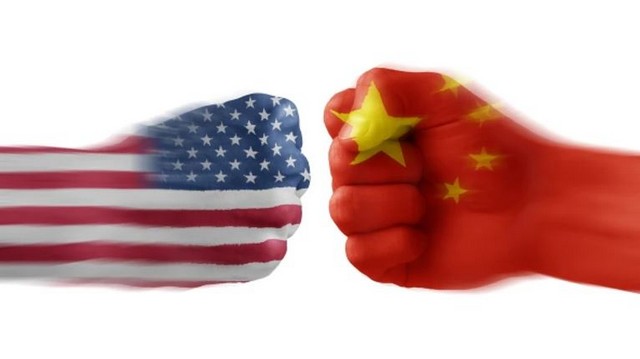
An understanding of the geopolitical and strategic dimensions is crucial. The conflict with China is not limited to bilateral trade. President Trump’s political rhetoric directed against China has become increasingly aggressive. Washington’s unspoken objective is to derail China’s Belt and Road Initiative (BRI) which consists in developing trade relations with a large number of partner countries in major regions of the World.

China’s Belt and Road Initiative (BRI) predicated on Eurasian economic integration is viewed by Washington as an encroachment on US hegemonic interests.

“Over time the BRI could threaten the very foundations of Washington’s post-WWII hegemony”,(Thomas P. Cavanna The Diplomat)

US hegemony is also coupled with US militarization of strategic waterways in the East and South China seas combined with numerous US military bases in locations within proximity of China.

In a bitter irony, the rhetorical gush of threats by president Donald Trump, was accompanied by seemingly “constructive” bilateral trade negotiations leading up to the signing of the First Phase of a detailed and comprehensive Economic and Trade Agreement between the United States and China in mid-January 2020 at the very outset of the coronavirus pandemic in China.

According to U .S. analysts this historic Agreement signed on January 15, 2020 would “hopefully signal the beginning of the end of the trade war“.

But that did not happen.

China-US Relations and The Corona Pandemic

Two weeks after the signing of the Agreement, the Trump administration announced the curtailment of air travel with China, which was accompanied by the disruption of transportation and trade relations with China, with repercussions on China’s export manufacturing sector.

Trump’s decision on January 31, 2020 was taken immediately following the announcement by the WHO Director General of a Public Health Emergency of International Concern (PHEIC) (January 30, 2020). In many regards, this was an act of “economic warfare” against China.

And then, following Trump’s January 31st decision to curtail air travel and transportation to China, a campaign was launched in Western countries against China as well against ethnic Chinese. The Economist reported that “The coronavirus spreads racism against and among ethnic Chinese”

“Britain’s Chinese community faces racism over coronavirus outbreak”

According to the South China Morning Post (Hong Kong):

“Chinese communities overseas are increasingly facing racist abuse and discrimination amid the coronavirus outbreak. Some ethnic Chinese people living in the UK say they experienced growing hostility because of the deadly virus that originated in China.”

And this phenomenon happened all over the U.S.

US-China Trade. America’s Dependence on “Made in China”

While China is the object of tariffs, trade restrictions, not to mention veiled threats, what the Trump administration fails to comprehend is that the United States is heavily dependent on commodity imports from China.

The unspoken truth is that America is an import led economy with a weak industrial and manufacturing base, heavily dependent on imports from the PRC. Despite America’s financial dominance and the powers of the dollar, there are serious failures in the structure of America’s “Real Economy”: i.e marked by the closing down of factories as well as failures at the level of both physical and social infrastructure.

This Import-led economic structure has a long history. It was the result of US policies formulated in the late 1970s and early 1980s to delocate a large part of its industrial base to “low cost” locations in China including the Special Economic Zones (SEZ) (created in 1979) and the “development zones” or “special trading areas” (established in 14 designated coastal cities in 1984).

A large share of US manufacturing was relocated, followed by a later stage of relocation of several high technology production sectors.

High Technology

The US no longer has a hegemony in high technology production and intellectual property. In the course of the last decade, China has consolidated its position. China is now leading in several areas of high tech development and production which are dependent on Chinese owned intellectual property.

This inevitably had repercussions on California’s Silicone Valley, the once prosperous cradle of high tech industries and research labs.

A contradictory relationship has evolved in which the US is not only dependent on “Made in China” imported manufactured goods, China has surpassed the US in several areas of high technology including the telecom industry and 5G:

All the cases form a big picture in which Washington and its allies are suppressing Chinese telecom companies. Huawei is the world’s largest telecom equipment maker and second largest smartphone manufacturer in the world. It also produces high-quality chips. It is pathetic that such a comprehensive high-tech enterprise [Hwawei] is accused and undermined. The US is realizing its political purposes by judicial means. (Global Times, January 17, 2019)

According to the Wharton Business School (University of Pennsylvania, emphasis added):

“China’s technology sector has grown so rapidly in the last two decades that it is pushing the United States out of its long-held position at the top of the digital food chain. Advancements by companies like Huawei, WeChat, Baidu, Tencent and others are helping the Chinese economy grow at an unprecedented rate and influencing the global economy. China and the U.S. are battling to be the leader in 5G technology, a fight it seems that Chinese tech companies are winning.

According to author Rebecca Fanning “The U.S. needs a policy that can address China’s rise in technology”. It would appear that the “policy” contemplated by Washington precludes the notion of US “acceptance” of China’s lead in several high technology sectors.

“China has top-down government directives that are propelling the country forward in all kinds of technology sectors. The “Made in China 2025” [plan] has designated time periods where China is going to lead globally in certain sectors, and the U.S. really does not have anything that’s the equivalent to that.” (Wharton School Interview, emphasis added)

The “Made in China 2025” 中国制造2025 first launched by Beijing in May 2015, essentially consists in supporting the high technology sectors while also upgrading China’s industrial base in manufacturing. The Made in China 2025 agenda also “highlights green manufacturing, energy saving and new energy vehicles, high-end equipment manufacturing, including new information technology and robotics…” (Global Times, May 20, 2015)

Made in China: Retail Trade in the US

Imagine what would happen if president Trump decided from one day to the next to significantly curtail America’s “Made in China” imports. It would be absolutely devastating, disrupting the consumer economy, an economic and financial chaos.

A large share of goods displayed in America’s shopping malls, including major brands is “Made in China”.

“Made in China” also dominates the production of a wide range of industrial inputs, machinery, building materials, automotive, parts and accessories, etc. not to mention the extensive sub-contracting of Chinese companies on behalf of US conglomerates.

What the Trump Administration does not comprehend is how the US trade deficit ultimately benefits the US Economy. It contributes to sustaining America’s retail economy, it also sustains the growth of America’s GDP.

“Made in China” is the backbone of retail trade which indelibly sustains household consumption in virtually all major commodity categories from clothing, footwear, hardware, electronics, toys, jewellery, household fixtures, food, TV sets, mobile phones, etc.

Ask the American consumer: The list is long. “China makes 7 out of every 10 cellphones sold Worldwide, as well as 12 and a half billion pairs of shoes’ (more than 60 percent of total World production). Moreover, China produces over 90% of the World’s computers and 45 percent of shipbuilding capacity (The Atlantic, August 2013) .

It is the source of tremendous profit and wealth in the US. Consumer commodities imported from China’s low cost economy are often sold at the retail level ten times their factory price. This process creates a “value added” which then leads to an increase in Gross Domestic Product.

In a wide range of economic activities, production does not take place in the USA. The producers have given up production.

The US trade deficit with China is instrumental in fuelling the profit driven consumer economy which relies on Made in China consumer goods.

Case studies suggest that China imports trigger an increase in value added in the US of 8-10 times the factory price of the commodities imported from China. What this means is that a large share of US GDP growth is attributable to production outside the US, namely China. Without Chinese imports, the US growth of GDP would inevitably be undermined.

What this signifies is that in real economy terms, China is the largest national economy Worldwide.

Chinese policy makers are fully aware that the US economy is heavily dependent on “Made in China”.

Trump: The “Paper Tiger”. How does the Coronavirus Crisis affect US-China Relations?

With an internal market of more than 1.4 billion people, coupled with The Belt and Road initative and a buoyant global export market, the veiled threats by President Trump are not always taken seriously. Trump is “A Paper Tiger”. In the words of Mao Zedong:

“Now U.S. imperialism is quite powerful, but in reality … it is nothing to be afraid of, it is a paper tiger. Outwardly a tiger, it is made of paper, unable to withstand the wind and the rain… (US Imperialism is a Paper Tiger, Selected Works, 1951)

Bilateral Trade Crisis

US imports from China have declined significantly as a result of the pandemic, the impacts on US retail trade are potentially devastating. In this review, we should distinguish between the following factors:

1) The disruption in trade largely triggered by concrete economic factors (production, supply lines, international transport caused by the corona crisis. This process of disruption was largely initiated in late January early February).

2) The disruption of a political and geopolitical nature largely related to accusations and threats by the Trump administration, claiming that China is responsible for “spreading the virus”. These accusations started in April. At the time of writing, there is no evidence that president Trump’s accusations have a bearing on the April commodity trade figures analyzed below. In April the tendency was towards a recovery of US-China trade.

Disruption in US-China Commodity Trade

It is difficult to assess the implications of the most recent wave of Trump accusations. Despite Trump’s most recent threats, the January 15th, 2020 bilateral US-China trade agreement has been signed.

2018-2019 Data

US imports from China were of the order of $452.243 billion. In contrast, US exports from the US to China were of the order of $106.627 billion reflecting a significant decline in bilateral US-China trade in relation to 2018.

The US trade deficit with China in 2019 was a staggering $345.617 billion.

January-April 2020

The available monthly figures for 2020 suggest a substantial decline in (monthly) US commodity imports from China (in relation to 2019): A 28.3% decline (average over first three months of 2o2o in relation to first 3 months of 2019), largely attributable to the coronavirus crisis.

What are the prospects? The decline of US imports from China in the month of March was of a staggering 36.5% in relation to March 2019.

Does this figure indicate a significant collapse in US-China trade?

While China’s export economy is in the process of normalization in the wake of the China pandemic, the political confrontations including the accusations directed against China by president Trump could potentially lead to a “slump” in US-China bilateral trade.

Moreover, according to figures quoted by the the Financial Times (largely attributable to the deep-seated financial crisis which started in February 2020), the value of newly announced Chinese direct investment projects into the US has fallen by about 90%: $200m in the first quarter of 2020, down from an average of $2bn per quarter in 2019.

“Chinese direct investment into the US stood at $5bn, a slight drop from $5.4bn in 2018 and well off a recent peak of $45bn in 2016, when Chinese companies were much more free to acquire US counterparts”

What is significant, however, is that China’s overall exports (dollars) in April rose by 3.5% (in relation to April 2019), according to data from China’s General Administration of Customs released in early May. While these figures reflect a recovery of China’s overall export trade, China’s exports to the US in April experienced a significant decline, namely 7.9%.

A major redirection of China’s exports has taken place:

A 3.5 % overall increase in exports coupled with a 7.9% decline in exports to the US, which inevitably will have a detrimental impact on the U.S. economy.

Exports to the US in April were of the order of the order of 32,060.4 million (compared to 34,798.9 million in April 2019). In contrast, compensating for the decline in exports to the US, China’s Eurasian trade has picked up.

China’s total imports in April 2020 fell 14.2% in relation to the same period in 2019. China’s trade surplus for the month of April was a staggering $45.34 billion.

China Viewed as a “Threat” by the Trump Whitehouse.

How will US-China Relations evolve?

The US president is not only blaming China for the corona pandemic without a shred of evidence, his newly appointed Director of National Intelligence (DNI) Rep. John Ratcliffe stated unequivocally at the US Senate confirmation hearing:

“I view China as the greatest threat actor right now,”

“Look with respect to COVID-19 and the role China plays; the race to 5G; cybersecurity issues: all roads lead to China,” he told the panel. (emphasis added)

To which the Senate Committee asked him to clarify:

“whether he would politicize the intelligence process to keep the president happy”.

Does this appointment have a bearing on the future of US-China relations?

On May 21, Rep Ratcliffe was nominated as Director of National Intelligence (DNI) with a mandate to “counter threats from great powers” on behalf of the Trump Whitehouse.

The Director of the DNI oversees and coordinates 16 intelligence bodies, including the CIA, the National Security Agency (NSA), and the FBI’s counterintelligence division.

The head of the DNI has links to the White House. While the DNI coordinates the various Intel entities, it is not intelligence agency. Declarations from the head of the DNI are more of political nature. Will Ratcliffe’s declarations be used in support of Trump’s 2020 election campaign?

***

Michel Chossudovsky is an award-winning author, Professor of Economics (emeritus) at the University of Ottawa, Founder and Director of the Centre for Research on Globalization (CRG), Montreal, Editor of Global Research.

14 June 2020

Source: www.globalresearch.ca

Tearing down statues isn’t vandalism. It’s at the heart of the democratic tradition

By Jonathan Cook

It is easy to forget how explicitly racist British society was within living memory. I’m not talking about unconscious prejudice, or social media tropes. I’m talking about openly celebrating racism in the public space, about major companies making racism integral to their brand, a selling-point.

Roberston’s, Britain’s leading jam maker, made their orange marmalade sweeter to generations of (white) British children by associating it with a “golliwog”. One of the fondest memories I have of my childhood breakfasts was collecting golliwog tokens on the jar label. Collect enough and you could send away for a golliwog badge. More than 20 million badges were issued. I remember proudly wearing one.

Most white children, of course, absorbed – with the unquestioning trust of a young, unformed mind – the racist assumptions behind those golliwog figures. There are still Britons, like this Conservative councillor in Bristol, who never grew up. They continue to celebrate their breakfast-time lessons in racism – and can count on a newspaper, like the Metro, to give their views an unchallenged airing.

Racism was not just a feature of my childhood breakfasts. Friends had golliwog dolls in their beds, and Little Black Sambo story books on their shelves. Leisure time was spent watching TV shows like the BBC’s Black and White Minstrels Show – black-up as family, round-the-campfire entertainment – or comedies like It Ain’t Half Hot Mum (with grinning, ridiculous locals providing the exotic backdrop to a nostalgic romp around the British empire) and Mind Your Language (with simple-minded “immigrants” from the former colonies struggling through English-language classes).

Victims of empire

Britain’s education system played its part too. History and other subjects took it as read that Britain had a glorious past in which it once ruled the world, spreading enlightenment and civilisation to the dusky natives. The only significant event I can recall from lessons on Britain’s colonial involvement in India is the Black Hole of Calcutta, a dungeon so cramped with prisoners that many dozens suffocated to death one night in 1756. That event, from more than 200 years ago, was obviously explained to me with such impassioned horror by my teacher that it left an indelible scar on my memory.

Many years later, overlaid by my much later leftwing politics, I recalled the Black Hole deaths as referring to British crimes against the native Indian population, and saw it as a hopeful indication that British schools even in my time were beginning to address the terrors of colonialism.

But when I looked it up, I found my assumption about the episode was entirely wrong. It was native Indians rebelling against the rule of the East India Company, a trading corporation that became more powerful than the king through its pillage of India, who forced British mercenaries into the Black Hole. Paradoxically, the East India Company’s foot-soldiers – there to oppress the local population and plunder India’s resources – died in the very dungeon the firm had built to punish Indians.

History classes were designed to impress on me British victimhood even as Britain was in the midst of raping, pillaging and murdering its way around the globe.

Jar sales versus complaints

Until I researched this post I had also assumed that Roberston’s quietly shelved the golliwog badge back in the early 1970s. But no. Apparently the badges were still available for children until 2002. In the tiniest of makeovers in the 1980s, Robertson’s reinvented the golliwog as a cuddly “golly”.

It is hard to imagine a spokeswoman for a major corporation – in this case, Rank Hovis McDougall – defending the use of the golliwog now as they did back in 2001:

“We receive around 10 letters a year from people who object to the [golliwog] character. That compares to 45m jars of jam and mincemeat sold annually.”

The scales of trade: 45 million jars a year weighed against 10 killjoys. Golliwogs were simply good for business, given the cultural climate that had been manufactured for the British public. In a way, you have to appreciate the corporation’s honesty.

The linked Guardian article is worth reading too. Less than 20 years ago the country’s only “liberal-left” newspaper felt quite able to report the dropping of Robertson’s golliwog character in faintly nostalgic terms, an example of “Gosh, how the times, they are a-changin” journalism, instead of the unalloyed disapproval we would now expect.

Corporate sloganeering

Those approaches contrast sharply, of course, with today’s sloganeering from Nike, Reebok, Amazon and many other corporations as they hurry to show their support for Black Lives Matter in the wake of George Floyd’s murder by Minneapolis police officer Derek Chauvin late last month.

https://twitter.com/Reebok/status/1266792697941164032.

Have the assumptions of the corporate world changed so dramatically over the past 18 years, or have their priorities remained exactly the same: to make money by making us identify with what they need to sell us?

Golliwogs no longer shift product. What does is empty corporate slogans about equal rights, humanity and dignity – as long as corporations don’t have to deal with inequality in their boardrooms, or, more importantly, recognise the humanity of labourers in their Third World factories or their local warehouses.

The trade that built Bristol

All of this is a prelude to discussing the pulling down at the weekend of a statue in Bristol to Edward Colston, a notorious slave trader in the late 17th century. He helped to build the city from the profits he and others made from trafficking human beings – people whose lives and suffering the traders considered as insignificant as the animals many of us consume today.

https://twitter.com/bbcrb/status/1269644536281776128.

Slave traders like Colston headed a business that had only two possible outcomes for those who were its “product”.

For countless millions of Africans, the slave trade forced them into permanent servitude in conditions set by their white owner, who did not consider them human. For countless millions more, the slave trade meant death. Death if they resisted. Death if the traders lacked food for all of their human cargo. Death if the slaves fell ill in the appalling conditions in which they were transported. Death if their bodies could no longer take the punishment of their enslavement.

Colston’s slave trade – and related trades like the colonial plunder run by the East India Company – built cities like Bristol. They funded the British empire. These trades enriched a political class whose descendants are still educated in private schools venerating that ugly past – because those same schools produced the merchants that once ruled and pillaged the planet. The same children then go on to attend prestige universities where they are still trained to rule and plunder the world – if now largely through transnational corporations.

Some even go on to become prime minister.

Spotlight on history

The ignominious removal of Colston statue’s and its dumping in Bristol’s harbour are being widely condemned from all sides of the narrow political spectrum: from Sajid Javid, until recently chancellor of the exchequer in the ruling Tory party, to Sir Keir Starmer, the leader of the opposition Labour party.

The rationales for opposing this act of rebellion by ordinary people against the continuing veneration of slave traders and white supremacists are illuminating. They tell us more about how we are still shaped by our golliwog upbringings than we may care to admit. After all, by today’s standards Colston would qualify to stand trial in the Hague on charges of crimes against humanity and genocide.

Some have compared the tearing down of his statue to the 2001 destruction of the Bamyan statues in Afghanistan by the Taliban. Other see in it the equivalent of book-burning by the Nazis. But obviously the erasure of Colston’s statue in a shared public space – a central square in Bristol – neither disappears a work of art nor does it erase Colston from history.

Those who value the statue as a historical record – or even as a work of art – are fully entitled to dredge it up from the harbour and install it in a museum, ideally one dedicated to the horrors of the slave trade and British society’s long ignorance of its own imperial history and crimes.

Those who fear censorship or the erasure of historical knowledge should not worry either. They can still find out all about Colston in history books and on the internet. Here is his Wikipedia page. None of that has been erased or is ever likely to be.

In fact, far from erasing history, the protesters managed to shine a very bright spotlight on a part of British history our political elite would much rather was glossed over or ignored.

Who to commemorate?

Other critics suggest that it is wrong to impose modern standards and values on a man who died 300 years ago. And that if we did the same more widely, there would be no statues left in Britain’s city centres. It is the tyranny of political correctness, they argue. Instead, we should acknowledge that cities like Bristol would not exist without the trade that enriched it, and that the British public would not be able to enjoy our cities’ public parks and grandiose buildings.

Except Colston did not simply abide by the standards of his day, appalling as we view those standards now. There were abolitionists prominent when Colston was around. He made a choice, an economic choice to be on the wrong side of history. He made a decision to put profit before conscience, as many of us do to this day. He set a terrible example to those around him, as many of us do now. His is an influence we should wish to oppose and diminish, not venerate and emulate.

True, there is no point in judging Colston himself all these centuries later. He was a product of his time and class. But we should judge those who wish retrospectively to approve a decision taken in the 1890s to erect a statue to Colston, more than 170 years after he died, when slavery had long ago been abolished in the UK. We should also judge those who think it fine to gratuitously insult today, through the elevation of a statue, the many people in Bristol whose ancestors suffered unimaginable horrors and suffering because of Colston. That has nothing to do with democracy; it is race hatred.

https://twitter.com/Jonathan_K_Cook/status/1270332482676822016.

The choice we can make now is to celebrate in our most public, most collective, shared spaces the values we hold dearest – not values that appeared acceptable to our ancient forebears. No one would oppose Russians pulling down a statue of Stalin, or Germans destroying statues of famous Nazis. Nor, we should note, did most westerners object in 2003 when a group of Iraqis were helped – by US and UK troops after an illegal invasion – to pull down a giant statue of Saddam Hussein on primetime TV.

The public square is public. It should represent values that can be embraced by wider society, not just those who cling to a narrow, ugly and outdated idea of Britishness – or still cherish, like our Bristol councillor, the role of slave traders like Colston in building his city.

Shared values in public space

Even without Colston, Britain will continue to commemorate its imperial past – and obfuscate its historic crimes. Books and art works in this vein litter libraries and art galleries across the country. But those are different spaces from the public square. We choose to read a book or enter a gallery, but we cannot avoid our city centres. By definition, a statue in a public park or square commemorates and venerates the person it depicts and the actions associated with them. Books and art galleries are where we contemplate, study and discuss. If an art exhibition is well curated, the products of imperial and colonial history should not glorify the past to visitors, but clarify and contextualise it.

Rather than oppose the protesters for targeting Colston’s statue, or worry about the fate of similar statues, critics should consider why it is that so many British cities are stuffed with art works commemorating Britons who committed war crimes and crimes against humanity.

What does that say about our supposedly glorious past or about the wealth that paid for our cities? Is that a history we should continue to glorify? Should we shrink from the truth, pretending it never happened? Or is time we confronted the past honestly? Should we not wonder what it tells us about the present that we and our parents have been so insensitive to the hostile spaces we created in our major cities for those descended from the victims of our imperial crimes?

And even more challenging, should we not wonder how far we have actually moved on from the imperial “adventures” of slave traders like Colston? Are modern Britain’s foreign “adventures” – now called “interventions” – in countries like Afghanistan and Iraq so very different? Like Colston, we have tried to shape black and brown people’s destinies in our interests, with little regard to the death and suffering we have inflicted on them in the process. Exposing Colston’s crimes hints at the crimes to which we are party too.

Fear of the ‘mob’

The concerns of those opposed to the pulling down of the Colston statue aren’t really about erasure of history or about anachronistic values. Their worry is located elsewhere.

For some it is the sense that a part of our collective nostalgia, our evenings warmed by a cathode tube as we watched It Ain’t Half Hot Mum, with us imagining that our Britishness – our identity, culture and institutions – represented something wholesome and good has been snatched away. We do not want to feel bad, so we cling on the past as though it were good.

Our cuddly golliwog has been kidnapped from our bed. How will we ever be able to go back to sleep?

But for others, I think, the concern is more contemporary than nostalgic. It is sublimated into the criticisms of Javid and Starmer that the crowds who pulled down the statue were lawbreakers, they were violating the democratic process, they were taking the law into their own hands, they were unleashing chaos and anarchy.

https://twitter.com/sajidjavid/status/1269669492424146945.

There is an obvious rejoinder. People in Bristol had spent many years trying to get the statue of Colston taken down through democratic means. They should not have needed to. It should have been obvious to the city’s authorities that it was offensive to revere a slave trader in a public square. The city should have taken action without prompting. Instead it did nothing.

It is a sign of the absolute failure of the democratic process – its calcification – that popular pressure could not bring about the removal of Colston’s statue. Had Bristol’s councillors really been sensitive to the issue, had the local media really represented the values we all profess to believe in, Colston’s statue would have been removed long ago. The lack of any urgency to end his elevated status in Bristol only emphasises how Britain’s political class actually relates to imperialism and colonialism.

Stripped of all rationalisations, what this is really about, once again, is a fear of the mob.

Progress through protest

In his TV series A House Through Time, historian David Olusoga has been documenting Bristol’s history through a single grand house, built on money earnt from the slave trade. Last week he considered the period when it was the abode of John Haberfield. In the early 19th century Haberfield twice had a role – first as Bristol council’s legal adviser and then as mayor – in dealing with activists who would soon become the Chartists. They were the “mob” of that time who believed political corruption should end and that they, and not just the gentry, should have the vote.

Bristol’s leaders tried to jail the ringleaders in 1831 but that provoked larger demonstrations. The protesters took over Queen’s Square. Notably, paintings from the time disapprovingly show a drunken man carousing on top of a statue to a venerated public figure (Colston’s statue had yet to be erected). Bristol’s leaders responded by sending in the dragoons, the police force of the day. The dragoons charged towards the crowds on their horses, using their sabres to cut down dozens of the protesters for demanding a right we all take for granted today. Some 100 protesters were put on trial, and four men hanged, despite a petition from 10,000 of Bristol’s residents appealing to the monarch for clemency.

It seems Bristol’s political class today are little more responsive to the popular will than they were 200 years ago.

The point is that the gains made by ordinary people, and conceded so reluctantly by the establishment, always came through confrontation. Rights were won because of events termed “riots”, because of popular protest, because of disobedience. Protest – violent and non-violent, explicit and threatened – was at the root of everything we now identify as progress.

Comforting illusions

It is a comforting illusion that things today are so very different from 1831. We want to believe our voice now counts, that we have the power, that we are in charge, even though the vote our ancestors struggled so hard for has been stripped of value, our voices silenced. We are given a choice between two political parties equally captured by corporate money and interests.

We want to believe we have a free press even though the media is owned by billionaires. Its job is to keep us uninformed, docile, disorganised and divided. We want to believe that our police forces are there to serve, even when they prevent demonstrations and use violence against us (and against some of us more than others). We want to believe our societies no longer exploit and enslave, our wilful blindness helped by corporations that keep modern slavery out of sight in far-off lands. Goods are sold to us on the basis of the deception that all lives matter.

All lives will matter when the weakest among us, the poorest, the most oppressed and the most exploited are given the chance for dignity and the right to flourish. That cannot happen when we live in deeply unequal societies, when we reward bankers before nurses and teachers, and when we refuse to address the historical injustices that continue to shape both our understanding of the world we live in and our opportunities to succeed.

Colston and his statue represent everything ugly and debased about our past and our present. If British leaders are still in thrall to the poison of our imperial history, then ordinary people must show the way through protest, defiance and disobedience – as they have done down through the ages. As they did once again at the weekend.

This essay first appeared on Jonathan Cook’s blog: https://www.jonathan-cook.net/blog/

Jonathan Cook won the Martha Gellhorn Special Prize for Journalism.

13 June 2020

Source: countercurrents.org

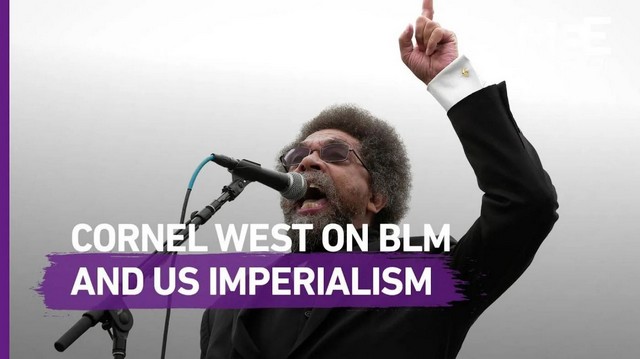
Cornel West: Black Lives Matter and the fight against US empire are one and the same

By Azad Essa

Acclaimed thinker and activist says conversations over police brutality are inseparable from discussions over Washington’s imperial policies

Cornel West on Black Lives Matter protests and US imperialism

It’s impossible to talk about the devaluation of Black lives without talking about militarism and the far-reaching tentacles of US empire, Cornel West has told Middle East Eye.

In a wide-ranging interview about the current protests gripping the United States, and the spread of the Black Lives Matter movement to the rest of the world, the acclaimed theologian and philosopher said conversations over the murder of George Floyd and police brutality are inseparable from discussions over Washington’s imperial policies.

West also hit out at former president Barack Obama. The Black Lives Matter movement emerged during his second term in office, when the US had a Black attorney general and a Black secretary of homeland security.

Floyd, an unarmed African-American, was killed in Minneapolis on 25 May after a white police officer knelt on his neck for almost nine minutes.

Police had been called after the 46-year-old reportedly purchased a pack of cigarettes from a convenience store with a counterfeit $20 bill.

“I can’t breathe,” Floyd could be heard repeating in the video of his arrest that has since triggered global outrage.

For African Americans, the incident told of a crassness and humiliation that they were simply no longer willing to tolerate. “Is that what a black man’s life is worth? $20?” Floyd’s brother, Philonise, said in his testimony to Congress on Thursday, a day after this brother was laid to rest.

“What we have to do is recognise that the funeral of George Floyd, where tears are flowing… they have [similar] funerals in the West Bank because of US policy [and] US bombs mediated through [the] Israel Defense Forces,” West told MEE.

“They have funerals like that in Yemen… they got funerals like that in Pakistan, in Afghanistan. They’ve got funerals like that in Mali.

“They’ve got funerals like that all around the world that the United States is very much playing a disproportionate role in facilitating, if not playing a direct role. So in the tradition of Martin Luther King Jr, we have to be morally consistent in our critique of US racism, militarism, poverty, as well as materialism,” West said.

‘Worth of a Black man’

At a time in which America has entered a deep economic depression following the scourge of Covid-19 related-deaths, unprecedented unemployment levels, and a deeply divided political climate under President Donald Trump, Floyd’s murder has triggered some of the largest protests the US has seen since the civil rights movement.

Protests have taken place across all 50 states, in towns and cities of all sizes. On any given day, multiple rallies and vigils take place in New York City, Washington DC, Chicago and other major metropolises.

Demonstrators have also called for defunding and abolishing the police, arguing that policing practices are institutionally racist and new systems need to be introduced.

It is widely acknowledged that Black people are shot and killed at disproportionate rates by the police, leaving entire communities perennially terrified and uneasy.

“I think that the fundamental impulse behind the rage is the indictment of elites who are unaccountable. So it has to do with police power and police murder in the Black community,” West said.

“It has to do with Wall Street power and Wall Street crimes in terms of the legalised looting that’s been taking place for so long on Wall Street, with high levels of wealth inequality flowing from there. It has to do with Pentagon power, and the not just the drones dropped on innocent people all around the world in Yemen and Libya and Pakistan and Afghanistan and other places.”

‘Obama the war criminal’

West reserved some of his choicest criticism for former president Barack Obama, who spoke in favour of the Black Lives Matter protests last week.

“It’s amazing to see brother Barack Obama out there acting like he’s part of the vanguard and struggling against police power when Black Lives Matter emerged under his administration, with his Black attorney general, with his Black [secretary of] homeland security,” West said.

“But he helped militarise those police departments. He helped generate the levels of poverty when he had bailed out the Wall Street criminals. And we haven’t gotten to the foreign policy yet, in terms of dropping bombs on innocent brothers and sisters in different parts of the world, especially in the Middle East, and Asia. We haven’t even gotten to the killing of innocent Palestinian brothers and sisters with the US-supported Israel Defense Forces,” West added.

The US has provided Israel with $142.3bn, making it the largest cumulative recipient of US foreign assistance since World War II, the majority of which has been military assistance. Since the September 2001 attacks on the World Trade Center and the Pentagon, the US-led “war on terror” has seen invasions in Afghanistan and Iraq, resulting in hundreds of thousands of deaths and millions of people displaced.

West, once a supporter of Obama, has been an ardent critic following Obama’s handling of the financial crisis, which saw his policies bail out banks and ensure major bank executives were let off the hook for their roles in the crisis. Under Obama, economic inequality in the US skyrocketed.

He has since called Obama a “black face of the American empire and he [has], in my view, commit[ted] war crimes with his drones in Pakistan and Yemen and Somalia and Libya”.

Obama’s administration oversaw regime change in Libya and helped to normalise the 2013 Abdel Fattah el-Sisi-led coup in Egypt, quelling democratic civilian aspirations in Cairo, which had repercussions throughout the entire region.

Obama also administered 542 drone strikes that killed an estimated 3,797 people, including 324 civilians, during his time as president.

‘We got to be honest’

Though police brutality in the US has a long and chequered history linked to the protection of white property, joint training exercises between Israel and US police, commentators say, have fundamentally changed the nature of policing in the US.

“As soldiers in the Israeli army regularly receive orders to shoot to kill, always with the assumption that they are neutralising a dangerous enemy, the training they give to US police has translated into the rapid-fire murders we have seen there in recent years,” as Nada Elia writes.

West said that talking about the connections between Black Lives Matter and US militarism should not be treated as a “luxury”.

Over the past few weeks, corporate brands, themselves with dubious labour practices in the US or abroad, have felt the need to make statements in support of the movement, too. Ben & Jerry’s, the Vermont-based ice cream brand, was venerated for its stern message on dismantling white supremacy, a plaudit that was short-lived once activists pointed out that the brand was still profiting from its operations in Israeli settlements.

“My experience on the ground is that when people now see the politicians and the neo-liberal spokespersons come forward and act as if they are so militant, act as if they are so radical, they say, hey, we were born at night, but not last night,” West said.

“In the end, if you really want Black people to be free, and I do, Black people will never be free under a system of predatory capitalism. We will never be free under a system with imperial tentacles, [we] will never be free with Pentagon elite running amok with militaristic policies and killing people in Latin America and in the Caribbean, and so forth.

“So it is not a luxury which is theoretical or academic, to say ‘Oh, we don’t have time for interconnectivity and interdependency, [and] we’ve got to deal with this particular issue’. That particular issue is always already connected.

“It’s like asking Palestinian brothers and sisters, let’s just talk about the plight and predicament of Palestinians without talking about US imperial policies. You can’t do it, if you really love Palestinians.

“I say the same thing about my Jewish brothers and sisters. They are catching hell in France, they are catching hell in Russia. They are catching hell in various parts. Anti-Jewish sentiment goes hand in hand as well with other systems. So in that way I get pretty fired up when people want to try [and isolate issues so much] that they downplay the systematic character of the oppression.

“No, we’ve got to be honest, in terms of what freedom is all about. We got to be honest, in terms of what we are up against.”

*Full interview with Cornel West will be published on Monday 15 June on Middle East Eye.

12 June 2020

Source: www.middleeasteye.net

The Aftermath Of 2019 Bolivian Coup

By Yanis Iqbal

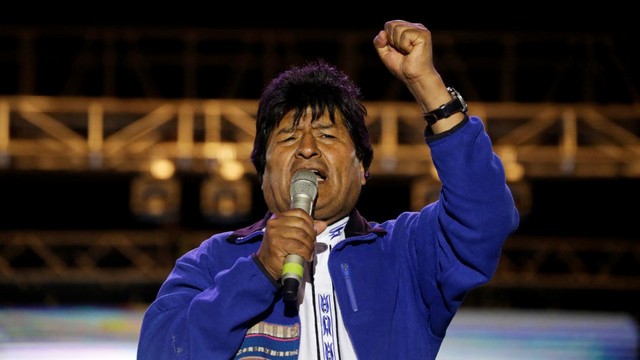
Ever since the racist right-wing government of Jeanine Anez has assumed power, Bolivia is continuously experiencing politico-economic tumult. Recently, seven legislators of the Movement towards Socialism (MAS) filed a complaint against the Ministers of Government and Defense, Arturo Murillo and Luis Fernando López, for misconduct in the purchase of riot gear equipments. As per the complaint, the post-coup Bolivian government unfavorably cancelled its purchase with the Brazilian corporation Condor. Thereafter, the Bolivian government signed an agreement with an American company named Bravo Tactical Solutions. The Shifting of purchase to Bravo Tactical Solution has allegedly cost the Bolivian government a surcharge of $2 million. This recent incident of dishonest dealing is one among the 35 cases of corruption which have occurred since Evo Morales, the radical Aymara socialist president of Bolivia, was illegally overthrown with the help of US support. Prominent among these cases was the ventilator scandal in which the governmental coup-plotters purchased 170 unusable ventilators worth $1.2 million for $4.7 million. Due to the public outrage which this corruption scandal generated, the health minister Marcelo Navajas had to be suspended.

The increasing numbers of corruption scandals are highlighting a fundamental feature of the new post-coup government: the new government does not care for the well-being of the Bolivian populace. The historical conditions in which it emerged shaped it as an authoritarian administration which had to act as the handmaiden of US imperialism and neoliberalism. To better understand these structural features of the post-coup government which are going to play out importantly in the future, we need to examine the circumstances in which it rose to power.

In November 2019, the democratically elected socialist president of Evo Morales was ousted through a US-orchestrated coup. This coup was initially spawned by the Organization of American States (OSA) which published a report falsely claiming that the 2019 Bolivian elections were rigged. In the report, OAS expressed “its deep concern and surprise at the drastic and hard-to-explain change in the trend of the preliminary results revealed after the closing of the polls”. Despite being “long on accusations and short on facts”, this report was uncritically absorbed and iterated by major publishing outlets without any qualms. Later on, OAS’s audacious prevarications were disproved by MIT in an article published by Washington Post in which it said that “As specialists in election integrity, we find that the statistical evidence does not support the claim of fraud in Bolivia’s October election”. Moreover, an independent verification carried out by The Center for Economic and Policy Research also found that there wasn’t any “quantitative evidence of an irregular trend as claimed by the OAS”.

In spite of subsequent refutations, OAS had already done much damage through its strategically organized falsification campaign. Using the utterly spurious OAS report on October elections, the far-right of Bolivia started to conflagrate the political environment. On November 4 2019, Luis Fernando Camacho, a multi-millionaire businessman from separatist Santa Cruz, promised to “bring the Bible back to the palace of government”. Furthermore, he told Morales to resign within 24 hours and pompously said to a crowd of supporters: “I’m not going with weapons, I’m going with my faith and my hope; with a Bible in my right hand and a resignation letter [for Morales] in my left hand.” Camacho somehow managed to enter the main hall of the presidential palace and placed the bible on a Bolivian flag. After the turmoil of Bolivian coup had settled, Fernando Camacho met Luis Almagro, head of the OAS, in Washington DC who praised Camacho’s “commitment to democracy”. In addition, Camacho was also a guest speaker at the Inter-American Dialogue, a Washington DC-based think tank, whose shadowy aim is to “foster democratic governance, prosperity, and social equity in Latin America and the Caribbean”.

The symbolic act of placing the bible on a Bolivian flag defines the core anti-indigenist ideology of Fernando Camacho. This ideology wants to relegate the indigenous people to a position of secondary citizens and aspires to ruthlessly subjugate them. The burning of Wiphala flags by Camacho’s supporters highlights the hatred for a plurinational state which is not coerced by Catholicism into mistreating the 36 indigenous groups of Bolivia. But despite its toxic features, the coup plotters garnered backing from USA which, through its conspicuous silence, gave tacit consent to the ongoing violence. Right-wing gangs ransacked the home of Evo Morales, assaulted MAS officials and publicly tortured a female socialist mayor. The final blow came with the November 8-10, 2019 mutinies of the military and police when top Army General Williams Kaliman asked Morales to leave. It is pertinent to remember that Williams Kaliman was trained at the School of Americas which, through its engagement in the dirty wars of Argentina, Chile, Colombia, Guatemala, Peru, El Salvador, Ecuador, Honduras, Panama and Nicaragua, has acquired a variety of names such as School of Assassins, School of Coups and School of Dictators.

After the military proclamation, Evo Morales had to resign and flee to Mexico. Jeanine Anez, a right wing catholic politician from a miniscule party named Democrat Social Movement, was approved as the interim president of Bolivia by a parliament without the presence of the majority of its elected representatives. Anez ordered a national blockade and selectively sent helicopters to right-wing legislators in order to prevent MAS officials from joining the assembly where they command a two-thirds majority. Through this governmental gangsterism carried out in cahoots with right-wing mobs, Jeanine Anez proclaimed herself as the president and euphorically announced with an oversized bible in her hands that “God has allowed the Bible to come back into the palace. May he bless us.” Furthermore, the new cabinet which Anez announced includes the personal lawyer of Fernando Camacho and it is not surprising that Anez has close affinities with Camacho’s anti-indigenist rhetoric. In a tweet, she said that she dreams “of a Bolivia free of satanic indigenous rites. The city is not for Indians; let them go back to the highlands or the Chaco”.

Donald Trump expressed his full approval for the patently unjust events of Bolivia by triumphalistically saying that the resignation of Evo Morales was “a significant moment for democracy in the Western Hemisphere”. Trump actually meant to say that it was a significant moment for ruthless neoliberalism in the Western Hemisphere. With Evo Morales gone, the large lithium reserves of Bolivia, which account for 70% of world’s supply, are exposed to the predatory interests of western transnational corporations. Moreover, Bolivia has considerable amount of indium which is an important component of LCD and with the ouster of Evo’s resource nationalism, these precious metals too can be easily plundered by foreign companies. Access to these resources has been made easier through the foreign policy shift which Anez’s post-coup government has initiated. She has exited the left-leaning Bolivarian Alliance for the Peoples of our America and Union of South American Nations to join the Lima Group which is subservient to USA and supports the right-wing self-proclaimed president of Venezuela Juan Guaido. Anez has also closed Bolivia’s diplomatic offices in Iran and Nicaragua and both these countries have been under the radar of US sanctions.

Through a president servile to US imperialism, Bolivia has again become an enclave for US operations. The US Agency for International Development (USAID), which had been expelled by Evo Morales from Bolivia in 2013, has re-entered Bolivia. This is an important event considering the fact that USAID has previously engaged in subversive activities against Evo Morales. In the past years, USAID had been managing a “decentralization and autonomy” program through a US company named Casals and Associates in the region of Media Luna (Half-moon) where powerful business interests and separatist sentiments are located. USAID has also run a program called “Strengthening Democratic Institutions (SDI)” through which it has worked to “enrich the dialogue on decentralization; improve management of departmental budgetary resources; and promote regional economic development.” All this eyewash of decentralization and regional autonomy masks the underlying objective which is to divide Bolivia and end the unified working class support base of Evo Morales through a strategy of organized separatism.

USAID has tried to augment the strength of opposition parties through two US entities named International Republican Institute (IRI) and National Democratic Institute (NDI). These two entities received their funding from the Department of State and the National Endowment for Democracy (NED) and professionally coordinated to destabilize the socialist government of Evo Morales. Here, we come across another major actor on the Bolivian political terrain which has been prominent in the violent putsch of MAS government: National Endowment for Democracy (NED). In 2019, NED ran programmes such as Countering Disinformation in the Political Process, Informing Citizens Via Digital Platforms, Monitoring the National Electoral Process, Promoting an Informed Electorate, Providing Independent Analysis and Information, Providing Independent Political News and Election Information and Stimulating an Informed National Debate. These NED tactics conclusively point towards a scheme of carefully choreographed propaganda and electoral interventionism which contributed to the 2019 Bolivia coup. Contemporary manifestations of this propagandist-electoral warfare include the funding of Santa Cruz Civic Committee and Santa Cruz Youth Committee (of which Fernando Camacho was a member) by NED, shipment of weapons by US to a militarized opposition group in Bolivia through the Chilean port of Iquique and the involvement of U.S. Senators Ted Cruz, Robert Menendez, and Marco Rubio in the discussion of a civil-military transition government which “would allege fraud in the electoral process and would not recognize Morales’ electoral victory”.

The overwhelming influence of USA on the new post-coup government is the reason behind the growing number of corruption cases. This administration was constructed in order to siphon money off from public spending and transfer it to foreign corporations. For this to happen, authoritarian measures have to be taken which militarize the country and crack down on protests. The creation of a “special apparatus of the Prosecutor’s office” to arrest deputies related to MAS, arrest of more than 100 MAS officials and the investigation of 600 former authorities of the executive branch depicts the ongoing governmental crackdown on MAS members. Jeanine Anez’s government has not even spared the civilians and already 36 civilians have been killed by police and military. These killings include the massacre of Senkata in El Alto and the massacre of Sacaba in Cochabamba. Plans are being made to increase military strength for more brutal repression and the use of Israeli military services to train Bolivia’s armed forces is a decisive step in this direction. Along with this witch hunt against MAS members and killings of dissident civilians, the post-coup government is also waging an info-warfare in which the communication minister Roxana Lizárraga is taking “pertinent actions, including deportation, against journalists who commit sedition.” To prevent a critical media from emerging, Russia Today, TeleSUR and foreign outlets have been removed from the cable system and 53 community radio stations have been closed. The new Bolivian government has also signed an agreement with a US-based company called CLS strategies to provide “strategic communications counsel” and it was this same company whom US State Department had allocated $100,000 to spread disinformation against Bolivia through social media platforms. During this entire authoritarian clampdown, neoliberalism is being pursued and the passing of Supreme Decree 4232 is a good example of this. This decree allows the use of genetically modified seeds for five crops i.e. sugarcane, cotton, soy, wheat and corn. Permitting the usage of genetically modified seeds will also allow for use of glyphosate, an herbicide and agro-toxin injurious to human health and used in Colombia by Monsanto for aerial fumigation which increased child deaths, caused respiratory ailments and skin diseases.

Under the post-coup right-wing government, Bolivia is undergoing tremendous upheaval. US imperialism and right-wing militarism are continuously unwinding the major achievements of Evo’s government and are utilizing the Coronavirus lockdown to consolidate power. But despite the repressive political environment, a positive development was the announcement by the Supreme Electoral Court that general elections would be held on 6 September, 2020. According to an opinion poll conducted in March 2020, Luis Arce and David Choquehuanca, the candidates of MAS for president and vice president respectively, are the most preferred among the Bolivian citizens. This means that the revolutionary optimism of fearless Bolivians is still intact and they have not been cowed down by US imperialism.

Yanis Iqbal is a student and freelance writer based in Aligarh, India and is interested in studying the existential conditions of subaltern classes.

10 June 2020

Source: countercurrents.org

How the Saudis, the Qataris, and the Emiratis Took Washington

Co-Written by Morgan Palumbo & Jessica Draper

It was a bare-knuckle brawl of the first order. It took place in Washington, D.C., and it resulted in a KO. The winners? Lobbyists and the defense industry. The losers? Us. And odds on, you didn’t even know that it happened. Few Americans did, which is why it’s worth telling the story of how Saudi, Emirati, and Qatari money flooded the nation’s capital and, in the process, American policy went down for the count.

The fight began three years ago this month. Sure, the pugilists hadn’t really liked each other that much before then, but what happened in 2017 was the foreign-policy equivalent of a sucker punch. On the morning of June 5th, Saudi Arabia, the United Arab Emirates (UAE), Egypt, and Bahrain announced that they were severing diplomatic ties with Qatar, the small but wealthy emirate in the Persian Gulf, and establishing a land, air, and sea blockade of their regional rival, purportedly because of its ties to terrorism.

The move stunned the Qataris, who responded in ways that would later become familiar during the Covid-19 pandemic — by emptying supermarket shelves and hoarding essentials they worried would quickly run out. Their initial fears were not unwarranted, as their neighbors, Saudi Arabia and the United Arab Emirates, were even reported to be planning to launch a military invasion of Qatar in the weeks to come (one that would be thwarted only by the strong objections of Donald Trump’s then-Secretary of State Rex Tillerson).

To make sense of this now three-year-old conflict, which turned aspects of American policy in the Middle East ranging from the war in Yemen to the more than 10,000 American military personnel stationed in Qatar into political footballs, means refocusing on Washington and the extraordinary influence operations the Saudis, Emiratis, and Qataris ran there. That, in turn, means analyzing Foreign Agents Registration Act (FARA) documents filed by firms representing all three countries since the spat began. Do that and you’ll come across a no-punches-barred bout of lobbying in the U.S. capital that would have made Rocky envious.

The Saudis Come Out Swinging

The stage had been set for the blockade of Qatar seven months before it began when Donald Trump was elected president. Just as his victory shocked the American public, so it caught many foreign governments off guard. In response, they quickly sought out the services of anyone with ties to the incoming administration and the Republican-controlled Congress. The Saudis and Emiratis were no exception. In 2016, both countries had reported spending a little more than $10 million on FARA registered lobbying firms. By the end of 2017, UAE spending had nearly doubled to $19.5 million, while the Saudi’s had soared to $27.3 million.

In the months following Donald Trump’s November triumph, the Saudis, for instance, added several firms with ties to him or the Republicans to an already sizeable list of companies registered under FARA as representing their interests. For example, they brought on the CGCN Group whose president and chief policy officer, Michael Catanzaro, was on Trump’s transition team and then served in his administration. To court the Republican Congress, they hired the McKeon Group, run by former Republican Representative Buck McKeon, who had previously served as chairman of the House Armed Services Committee.

And that was just registered foreign agents. A number of actors who had not registered under FARA were actively pushing the Saudi and Emirati agendas, chief among them Elliott Broidy and George Nader. Broidy, a top fundraiser for Trump’s campaign, and Nader, his business partner, already had a wide range of interests in both Saudi Arabia and the UAE. To help secure them, the two men embarked on a campaign to turn the new president and the Republican establishment against Qatar. One result was a Broidy-inspired, UAE-funded anti-Qatar conference hosted in May 2017 by a prominent Washington think tank, the Foundation for Defense of Democracies. It conveniently offered Representative Ed Royce (R-CA) a platform to discuss his plans to introduce a bill, HR 2712, that would label Qatar a state sponsor of terrorism. It was to be introduced in the House of Representatives just two days after the conference ended.

Qatar, mind you, had been a U.S. ally in the Middle East and was the home of Al Udeid Air Base, where more than 10,000 American soldiers are still stationed. So that bill represented a striking development in American-Qatari relations and was a clearly traceable result of Saudi and UAE lobbying efforts.

The unregistered influence of players like Broidy and Nader was evidently backed by other FARA-registered Saudi and UAE foreign agents actively pushing the bill. For example, Qorvis Communications, a long-time public relations mouthpiece for the Saudis, circulated a document titled “Qatar’s History of Funding Terrorism and Extremism,” claiming that country was funding Al-Nusra, Hamas, the Muslim Brotherhood, and other groups. (Not surprisingly, it included a supportive quote from David Weinberg, a senior fellow at the Foundation for Defense of Democracies.)

While that anti-Qatar crusade was ramping up in Washington, the president himself was being wooed by the Saudi royals in Riyadh on his first official trip abroad. They gave him the literal royal treatment and their efforts appeared to pay off when, just a day after the blockade began, Trump tweeted, “During my recent trip to the Middle East I stated that there can no longer be funding of Radical Ideology. Leaders pointed to Qatar — look!”

A week after the imposition of the blockade, the Emirati ambassador to the United States, Yousef al-Otaiba, wrote a Wall Street Journal op-ed calling for Al Udeid Air Base to be moved to the UAE, a development the Qataris feared could open the door for an eventual invasion of their country.

However, this Saudi and Emirati onslaught did not go unanswered.

Qatar Strikes Back

Tamim bin Hamad al-Thani, the emir of Qatar, was caught flat-footed by the influence operations of the Saudis and the United Arab Emirates. The year before Donald Trump became president, the Qataris had spent just $2.7 million on lobbying and public relations firms, less than a third of what the Saudis and UAE paid out, according to FARA records. But they now moved swiftly to shore up their country’s image as a crucial American ally. They went on an instant hiring spree, scooping up lobbying and public-relations firms with close ties to Trump and congressional Republicans. Just two days after the blockade began, for instance, they inked a deal with the law firm of former Attorney General John Ashcroft, paying $2.5 million for just its first 90 days of work.

They also quickly obtained the services of Stonington Strategies. Headed by Nick Muzin, who had worked on Trump’s election campaign, the firm promptly set out to court 250 Trump “influencers,” as Julie Bykowicz of the Wall Street Journal reported. Among others, Stonington’s campaign sought to woo prominent Fox News personalities Trump paid special attention to like former Arkansas Governor Mike Huckabee. He was paid $50,000 to travel to Qatar just months later.

In September 2017, the Qataris also hired Bluefront Strategies to craft a comprehensive multimedia operation, which was to include commercials on all the major news networks, as well as digital and printed ads in an array of prominent publications, and a “Lift the Blockade” campaign on social media. Meanwhile, ads on Google and YouTube were to highlight the illegality of the blockade and the country’s contributions to fighting terrorism. Bluefront Strategies was to influence public opinion before the next session of the U.N. General Assembly that month. Qatar and its proxies then used the campaign “to target key decision-makers attending the General Assembly, including Trump” to gain support on that most global of stages.

Its agents weren’t just playing defense, either. They actively attacked the Saudi lobby. For example, Barry Bennett of Avenue Strategies, a PR firm they hired, sent a letter to the assistant attorney general for national security accusing Saudi Arabia and the Saudi American Public Relation Affairs Committee (SAPRAC) of FARA violations in their funding of an expensive media campaign meant to connect Qatar’s leaders with violent extremism and acts of terror.

Such counterpunches proved remarkably successful. SAPRAC eventually felt obliged to register with FARA. Meanwhile, Huckabee tweeted, “Just back from a few days in surprisingly beautiful, modern, and hospitable Doha, Qatar.” Finally, at that U.N. meeting, President Trump actually sat down with Emir al-Thani of Qatar and said, “We’ve been friends a long time… I have a very strong feeling [the Qatar diplomatic crisis] will be solved quickly.” They both then emphasized the “tremendous” and “strong” relationship between their countries.

The Qataris next mounted a concerted defense against HR 2712. Lobbying firms they hired, particularly Avenue Strategies and Husch Blackwell, launched a multifaceted campaign to prevent that legislation from passing. Elliott Broidy even claimed in a lawsuit that the Qatari government and several of its lobbyists had hacked his email account and distributed private emails of his to members of Congress in an attempt to discredit his work for the Saudis.

In November 2017, Barry Bennett from Avenue Strategies went on the attack, using a powerful weapon in Washington politics: Israel. He distributed a letter to members of Congress written by a former high-ranking official in the Israeli national security establishment explicitly stating that Qatar had not provided military support to Hamas, as HR 2712 claimed it had.

Three months later, Husch Blackwell all but threatened Congress and the Trump administration with the cancellation of a $6.2 billion Boeing contract to sell F-15 fighters to the Qatari military (and the potential loss of thousands of associated jobs) if the bill passed and sanctions were imposed on that country. All of this was linked to a concerted effort by Qatari agents to contact “nearly two dozen House offices, including then House Majority Leader Kevin McCarthy,” to prevent the bill’s passage, according to a report by the Foreign Influence Transparency Initiative at the Center for International Policy where we work. Ultimately, HR 2712 died a slow death in Congress and never became law.

The Saudi Bloc’s Battle for the War in Yemen

Just as Qatar started to turn the tide in the fight for influence in Washington, the Saudis and their allies faced another problem: Congress began moving to sever support for the Saudi-led war in Yemen. On February 28, 2018, Senator Bernie Sanders (I-VT) introduced a joint resolution to withdraw U.S. support for that war. According to FARA filings, Brownstein Hyatt Farber Schreck, LLP, representing the Saudi ministry of foreign affairs, contacted several members of the Senate Committee on Foreign Relations, particularly Democrats, presumably to persuade them to vote against the measure.

That March, the firm sent out dozens of emails to members of Congress inviting them to a gala dinner with the key Saudi royal, Crown Prince Mohammed bin Salman himself. According to the invitation from the CGCN Group, another FARA-registered firm representing the Saudis, the “KSA [Kingdom of Saudi Arabia]-USA Partnership Gala Dinner” was to emphasize the “enduring defense and counter-terrorism cooperation” and “historic alliance” between the two countries. It would end up taking place just two days after the Senate voted to table Sanders’s bill.

Emirati lobbyists similarly reached out to Congress to maintain support for their role in that war. Hagir Elawad & Associates, for example, distributed an op-ed written by the UAE minister of state for foreign affairs justifying the war, as well as a letter written by that country’s ambassador, Yousef al-Otaiba, to 50 congressional contacts defending the Saudi-led coalition’s efforts to avoid civilian casualties and arguing that “the United States has a clear stake in the coalition’s success in Yemen.”

When that conflict began, Qatar was still a member of the coalition, but the imposition of the blockade led it to withdraw its forces from Yemen. Qatari officials then used the country’s media empire, centered on the broadcaster Al Jazeera, to highlight the disastrous aspects of the ongoing war. In doing so, they provided the Saudis and Emiratis with yet another reason to focus their own influence machines on both Qatar’s and Al Jazeera’s destruction. (That network’s closure was, in fact, one of the original 13 demands the Saudis and Emiratis had made for lifting the blockade.)

From the moment it was founded in 1996, Al Jazeera had been an instrument of Qatari soft power, so it was hardly surprising that the UAE had long pressured members of Congress to force the network to register under FARA as a foreign agent. And Emirati lobbying efforts were not in vain. In early March 2018, 19 members of Congress signed and sent a letter to then-Attorney General Jeff Sessions urging the Justice Department to demand that Al Jazeera be registered under FARA. Another such letter sent to the Justice Department in June 2019 by six senators and two representatives asked “why Al Jazeera and its employees have not been required to register.” According to FARA filings, all but one of those representatives had either received campaign contributions from or been contacted by a Saudi or Emirati lobbying firm. Al Jazeera, however, has yet to register.

The Murder of Jamal Khashoggi

Despite the efforts of Saudi and Emirati lobbyists in the early months of 2018, the emir of Qatar still managed to land an invitation to the Oval Office. At their meeting that April 10th, President Trump again described al-Thani as a “friend” and a “great gentleman” as well. The emir, in turn, thanked the president for “supporting us during this blockade.”

If Trump’s cozying up to him was a setback for the Saudis, the murder of critic and Washington Post contributing columnist Jamal Khashoggi nearly did in the Saudi lobbying juggernaut as well. The CIA later confirmed that the crown prince himself had ordered that Saudi citizen’s assassination at the country’s consulate in Istanbul, Turkey.

As a result, some lobbying firms cut ties with the kingdom and its influence on Capitol Hill waned, as did positive public opinion about Saudi Arabia. In December 2018, the Senate passed the Sanders bill to end support for the war in Yemen. Both houses of Congress also passed a War Powers resolution to end involvement in that conflict, a historic congressional move in this century, even if later vetoed by President Trump (as were a series of attempts to block his treasured arms sales to Saudi Arabia and the United Arab Emirates).

Given the president’s unyielding support for the Saudis and Emiratis as especially lucrative customers for this country’s defense industry, the Qataris have clearly decided to crib the Saudi playbook. In May, that country purchased 24 Apache helicopters for $3 billion and, a few months later, agreed to pay for and manage a $1.8 billion expansion of Al Udeid Air Base to ensure the American military’s continued presence for the foreseeable future. In doing so, Qatar was visibly at work coopting two of the most powerful lobbies in Washington: the military and the weapons makers.

And the Winners Are…

Though Qatar faced a near-existential threat to its survival when the blockade began, three years later it’s not only surviving, but thriving thanks significantly to its influence operations in Washington. They have helped immeasurably to deepen economic, diplomatic, and military relations between the two countries.

Meanwhile, the emir’s rivals in Riyadh not only failed to make their blockade a success, but saw their influence wane appreciably in the U.S. as they stumbled from one public relations fiasco to the next. Even their staunchest defender, Donald Trump, recently threatened to sever U.S. military support for the Kingdom if the Saudi royals didn’t end their oil war with Russia (which they promptly did).

In truth, however, the real loser in this struggle for influence hasn’t been Saudi Arabia or the Emiratis, it’s been America. After all, the efforts of both sides to deepen their ties with the military-industrial complex (reinforcing the hyper-militarization of U.S. foreign policy) and increase their sway in Congress have ensured that the real interests of this country played second fiddle to those of Middle Eastern despots. Certainly, their acts helped ensure near historic levels of arms sales to the region, while prolonging the wars in Yemen and Syria, and so contributing to death and devastation on an almost unimaginable scale.

None of this had anything to do with the real interests of Americans, unless you mean the arms industry and K Street lobbyists who have been the only clear American winners in this never-ending PR war in Washington. In the process, those three Persian Gulf states have delivered a genuine knockout blow to the very idea that U.S. foreign policy should be driven by national — not special — interests.

Morgan Palumbo is a researcher with the Foreign Influence Transparency Initiative at the Center for International Policy.

Jessica Draper is a researcher with the Foreign Influence Transparency Initiative and Arms and Security Project at the Center for International Policy.

10 June 2020

Source: countercurrents.org

The Shallow Deep-State Goes Deeper as It Moves Toward Martial Law

By Edward Curtin

I am not trying to be cute and play with words. That title is meant to convey what it says, so let me explain.

The people who own the United States and their allies around the world have a plan. It is so simple that it is extremely devious. Their plan has been in operation for many years. It has most people bamboozled because it is Janus-faced by design, overt one day, covert the next, but both faces operate under one controlling head. Some call this head the Deep-State. Even the Deep-State calls itself the Deep-State in a double fake. It is meant to make people schizoid, which it has.

The so called Deep-State has been given many names over the years. I will not bore you with them, except to say that it was once called the power elite. They are the upper classes, the super wealthy who control the financial institutions, Wall Street, the intelligence agencies, the corporate media, the internet, the military, and the politicians. They are multinational.

They are the wealthy nihilists who care not one jot for the rest of the world. They operate in secret, yet also run above-ground organizations such as the World Bank (WB), the World Health Organization (WHO), the U.S. Agency for International Development AID (USAID), etc. Their bloodstream runs on war, the preparations for war, and economic exploitation of the world. All wealthy people are not party to their machinations, but they are almost always complicit in profiting from their crimes, unless they are very stupid. Or play stupid. Since I am talking about a great confidence game, that is quite common.

Other people, all other classes, the poor, middle-classes, even a portion of the upper middle classes mean nothing to the power elite unless they can serve their interests. They are always waging class warfare to maintain their domination and control. Their recent version of this class war is underway in the United States and in many other countries. As of today, they are using race fears to create chaos and outrage to disguise their class warfare that is leading to the imposition of martial law. Soon they will shift back to the coronavirus fraud. Back and forth, in and out, now you see it, now you don’t.

By shutting down the world’s economy, they have destroyed the livelihoods of hundreds of millions of people and are creating poverty on a vast scale. Much famine and death will follow. In the United States alone, 40-45 million people have applied for unemployment insurance and job loss is the greatest since the Great Depression. The reason: a massive propaganda campaign created around Covid-19 fear porn.

This class war is not new, but it is conducted today at warp speed since these people control the technology that has allowed them vastly increased power. In the U.S.A., it is conducted as usual under the guise of Republicans versus Democrats, the two representative political factions that are the faces of the controlled “opposition,” who are actually allies in the larger confidence game. Keeping “hope” alive is central to their strategy. Mind control is what they do. Speed is their greatest ally. Race is central to their game plan. They always say they are protecting us.

It is all a lie. A show. Nothing but a spectacle for the gullible. A shadow play.

The current president, Donald Trump, is the choice of one faction of these psychopaths. This year, Joseph Biden, is the shaky presumptive choice of the other. Both are deranged puppets. Regular people fight over who is better or worse because they are living inside what Jim Garrison, the former District Attorney of New Orleans and the only person to ever bring a trial in the assassination of President Kennedy, long ago called “the doll’s house.”

It is a place where illusions and delusions replace reality. It is 24/7 propaganda. It keeps people engaged. It gives them something to argue about, one team to root for. It’s a sport. It is similar to Plato’s Cave. Fire has been replaced with electronic lighting and screens, but little has changed.

The sick system of exploitation is oiled and greased with the tantalizing bait of hope dangled for the masses. Shit slogans like “We are all in this together.”

But there is no hope for this system.

But when the propaganda is so slick that it creates a double-bind, people grasp at any neurotic “solution” out of frustration. As I write, huge angry crowds are out in the streets protesting the sick murder of a black man, George Floyd, by a white cop. Police infiltrators have started violent looting. Chaos reigns, as planned. Such killings are routine, but someone turned a switch for this one when just yesterday operation corona lockdown with its fear and fake statistics had everyone cowering behind masks at home as the economic lives of vast numbers were destroyed in a flash. For today, the masquerade is in the streets. Many good people are caught up in it. In a few days the scene will shift and we can expect another “bombshell.” These surprises will keep happening one after another for the foreseeable future. Shock and Awe for the home crowd. The war come home. The controllers know you can’t wage war against the rest of the world unless you do so at home as well.

When one group within the deep-state won the internecine battle in 2016 and “shocked” the country with the election of the comical Trump, the other deep-state group called the Democrats, immediately set in motion a plan to try to oust him or to make it seem as if they were trying to do so. The naïve thought this may happen, and their deluded yearning has been stretched until the 2020 presidential election, although some probably think Trump might go before then. He won’t.

So many people have destroyed their minds and relationships because they can’t see through the fraud.

Early in 2017, as the outgoing front man for the CIA/warfare/Wall St. state, Barack Obama, left his time bombs for the future. The pink pussy hats were sent out marching to open the show. Russia-gate was launched; eventually impeachment was tried. The Democrats. with their media allies, went on a non-stop attack. It was all so obvious, so shallow in its intent, as it was meant to be. But millions who were in the doll house were outraged, obsessed, frantic with rage. They bought the con-game. Both those who hate Trump and those that love him have spent almost four years foaming at the mouth, breathless.

Trump was cast as the personification of evil. A relentless attack on Trump began and has continued all this time. It is pure theater. Trump remains at the helm, as planned, holding the Bible aloft in a style reminiscent of a Bible thumping Klansman from The Birth of a Nation. Only the ignorant thought it might have been different. He knows how to perform his role. He is a fine actor. He outrages, spews idiocies, as he is supposed to do. That Mussolini style stance, that absurd hair, the pout. Just perfect for an arch-villain. It’s so obvious that it isn’t. Herein lies the trick.

And who profits from his policies? The super-rich, of course, the power-elite. Who just stole 6-10 trillion dollars of public money under the hilariously named Cares Act? The super-rich, of course, the deep-state. It was a bi-partisan bank robbery from the public treasury carried out under the shadow of Covid-19, whose phony hyped up numbers were used to frighten the populace into lockdown mode as the Republican and Democratic bank robbers smiled in unison and announced forcefully, “We care!” We are here to protect you.

Remember how Barack Obama “saved” us by bailing out Wall St. and the big banks to the tune of trillions in early 2009. Then waged unending wars. Left black Americans bereft. He cared, too, didn’t he. Our leaders always care.

Obama was the black guy in the white hat. Trump is the white guy in the black hat. Hollywood on the Potomac, as Gary Wills called it when Ronald Reagan was the acting-president. Now Obama’s war-loving side-kick, the pale-faced, twisted talking Biden is seriously offered as an alternative to the Elvis impersonator in the White House. This is the false left/right dichotomy that has the residents of the doll’s house in its grip.

If you can’t see what’s coming, you might want to break out of the house, take off your mask, go for a walk, and take some deep breaths. The walls are closing in.

Knees will be on everyone’s necks in the months ahead.

Edward Curtin is a writer whose work has appeared widely.

9 June 2020

Source: countercurrents.org

Crisis Means Danger And Opportunity

By John Scales Avery

In written Chinese, the word “crisis” is represented by two characters. One of these, taken alone, means “danger”. The other, by itself, means “opportunity”. A crisis nearly always leads to great change. There is a danger that this will be a change for the worse. But there also is the opportunity to change society for the better – to reform and improve it. Both paths are present in a crisis like our present one. We must strive with all our strength to make society take the right path.

Our present crisis

In the midst of the COVID-19 pandemic, which is in itself a crisis, many American cities have erupted in massive protests over the senseless killing by police of yet another black man – George Floyd. The country is deeply divided. Throughout the world there have been anti-racist protests, partly in sympathy with the US protesters, and partly because racism exists in many countries.

Donald Trump, who was elected on an openly racist platform, and who has been a racist in both word and deed during his term of office, has reacted by threatening to use the US army against citizens of his own country, calling the demonstrators “lowlifes and loosers”, and telling governors, “If you don’t dominate, you are wasting your time”.

After hiding in a White House bunker, Donald Trump ordered officers to clear a path for him so that he could be photographed holding a Bible in front of St. John’s Episcopal Church. The forces used tear gas and flash grenades against peaceful protesters in Lafayette Square.

Trump’s threats to use federal troops were too much for defense secretary, Mark Esper, who insisted that military personnel “be used as a matter of last resort, and only in the most urgent and dire of situations”.

Another rebuke came from Trump’s former secretary of defense, James Mattis, who said, “Donald Trump is the first president in my lifetime who does not try to unite the American people. We know that we are better than the abuse of executive authority that we witnessed in Lafayette Square. We must reject and hold accountable those in office who would make a mockery of our constitution”.

What will happen if Trump loses the 2020 election but refuses to give up the White House, claiming that the votes were counted incorrectly? Will the military support him? This danger has to be considered. We must remember the testimony before Congress of Trump’s former associate Michael Cohen, who said, “I fear that if he loses the election in 2020, there will never be a peaceful transition of power”.

The Great Depression brought Hitler to power

The present COVID-19 pandemic has had an enormous economic impact. Economists fear that it will produce a depression comparable to the Great Depression of the 1930’s, It is interesting to compare what happened then with what might happen today.

The Great Depression brought Hitler to power. Before the economic depression struck, the Nazis were a very minor party, winning only 3 per cent of the votes to the Reichstag in the 1924 elections. But in the 1932 elections, the Nazis won 33 per cent of the votes, more than any other party. In 1933, Hitler was appointed chancellor, and head of the German government.

In Denmark, the Great Depression lead to social reform

In sharp contrast to what happened in Germany, the crisis of the Great Depression led Denmark to the social reforms that have made the country so prosperous and happy as it is today.

On January 30, 1933, representatives from labor and management met in the apartment of the Danish prime minister, Thorvald Stauning. During the entire day, and late into the night, they discussed possible solutions to the economic crisis, but they could not agree. Finally, after midnight, Stauning offered his exhausted guests some whisky, so that they could relax a little. As if by magic, the whisky seemed to dissolve the differences separating the delegates, and an historic agreement was reached. It proved to be the model for the Danish welfare state.

Denmark has very high taxes, but in return for these, its citizens receive many social services, such as free health care. The taxes are sharply progressive so the rich pay very much, and the less wealthy very little. Thus the contrast between rich and poor is very much reduced in Denmark. This is a form of socialism, but at the same time, Denmark has a market economy.

If they qualify for university education, the tuition is free, and students are given an allowance for their living expenses. Mothers or alternatively fathers, can take paid leave of up to 52 weeks after the birth of a child. After that, a creche is always available, so that mothers can return to their jobs. When the child becomes too old for the creche, day care centers are always available.

For children of school age, after-school clubs are available where children can practice arts and crafts or other activities under supervision until their parents come home from work.

In 2017. Denmark ranked 2nd in the world (after Norway) in the World Happiness Report. In a number of other years, Denmark has ranked 1st. In compiling the report, researchers ask people in a given country whether they are happy, and record how many say “yes”. Interestingly, in Denmark, women are the most happy of all.

Denmark has also been one of the leaders in addressing the climate emergency, thus demonstrating that the widely discussed Green New Deal strategy can actually be put into practice.

Which path will we take?

The present crisis will undoubtedly lead to great change, but will it be takeovers by neo-fascist leaders such as Trump? Or will the change be social reforms, such as those initiated in Denmark by Stauning? Will the Green New Deal be part of our recovery from the present economic crisis? We stand at a critical point in history. Each of us has the duty to strive with all our strength to persuade our societies to make the right choice.

John Scales Avery is a theoretical chemist at the University of Copenhagen.

9 June 2020

Source: countercurrents.org

How Che Guevara Taught Cuba to Confront COVID-19

By Don Fitz

Beginning in December 1951, Ernesto “Che” Guevara took a nine-month break from medical school to travel by motorcycle through Argentina, Chile, Peru, Colombia, and Venezuela. One of his goals was gaining practical experience with leprosy. On the night of his twenty-fourth birthday, Che was at La Colonia de San Pablo in Peru swimming across the river to join the lepers. He walked among six hundred lepers in jungle huts looking after themselves in their own way.

Che would not have been satisfied to just study and sympathize with them – he wanted to be with them and understand their existence. Being in contact with people who were poor and hungry while they were sick transformed Che. He envisioned a new medicine, with doctors who would serve the greatest number people with preventive care and public awareness of hygiene. A few years later, Che joined Fidel Castro’s 26th of July Movement as a doctor and was among the eighty-one men aboard the Granma as it landed in Cuba on December 2, 1956.

Revolutionary Medicine

After the January 1, 1959, victory that overthrew Fulgencio Batista, the new Cuban constitution included Che’s dream of free medical care for all as a human right. An understanding of the failings of disconnected social systems led the revolutionary government to build hospitals and clinics in underserved parts of the island at the same time that it began addressing crises of literacy, racism, poverty, and housing. Cuba overhauled its clinics both in 1964 and again in 1974 to better link communities and patients. By 1984, Cuba had introduced doctor-nurse teams who lived in the neighborhoods where they had offices (consultorios).

The United States became ever more bellicose, so in 1960 Cubans organized Committees for Defense of the Revolution to defend the country. The committees prepared to move the elderly, disabled, sick, and mentally ill to higher ground if a hurricane approached, thus intertwining domestic health care and foreign affairs, a connection that has been maintained throughout Cuba’s history.

As Cuba’s medical revolution was based on extending medical care beyond the major cities and into the rural communities that needed it the most, it was a logical conclusion to extend that assistance to other nations. The revolutionary government sent doctors to Chile after a 1960 earthquake and a medical brigade in 1963 to Algeria, which was fighting for independence from France. These set the stage for the country’s international medical aid, which grew during the decades and now includes helping treat the COVID-19 pandemic.

In the late 1980s and early ’90s, two disasters threatened the very existence of the country. The first victim of AIDS died in 1986. In December 1991, the Soviet Union collapsed, ending its $5 billion annual subsidy, disrupting international commerce, and sending the Cuban economy into a free fall that exacerbated the AIDS epidemic. A perfect storm for AIDS infection appeared on the horizon. The HIV infection rate for the Caribbean region was second only to southern Africa, where a third of a million Cubans had recently been during the Angolan wars. The embargo on the island reduced the availability of drugs (including those for HIV/AIDS), made existing pharmaceuticals outrageously expensive, and disrupted the financial infrastructures used for drug purchases. Desperately needing funds, Cuba opened the floodgate of tourism.

The government drastically reduced services in all areas except two: education and health care. Its research institutes developed Cuba’s own diagnostic test for HIV by 1987. Over twelve million tests were completed by 1993. By 1990, when gay people had become the island’s primary HIV victims, homophobia was officially challenged in schools. Condoms were provided for free at doctor’s offices and, despite the expense, so were antiretroviral drugs.

Cuba’s united and well-planned effort to cope with HIV/AIDS paid off. At the same time that Cuba had two hundred AIDS cases, New York City (with about the same population) had forty-three thousand cases. Despite having only a small fraction of the wealth and resources of the United States, Cuba had overcome the devastating effects of the U.S. blockade and had implemented an AIDS program superior to that of the country seeking to destroy it. During this Special Period, Cubans experienced longer lives and lower infant mortality rates in comparison to the United States. Cuba had inspired healers throughout the world to believe that a country with a coherent and caring medical system can thrive, even against tremendous odds.

COVID-19 Hits Cuba

Overcoming the HIV/AIDS and Special Period crises prepared Cuba for COVID-19. Aware of the intensity of the pandemic, Cuba knew that it had two inseparable responsibilities: to take care of its own with a comprehensive program and to share its capabilities internationally.

The government immediately carried out a task that proved very difficult in a market-driven economy –altering the equipment of nationalized factories (which usually made school uniforms) to manufacture masks. These provided an ample supply for Cuba by the middle of April 2020, while the United States, with its enormous productive capacity, was still suffering a shortage.

Discussions at the highest levels of the Cuban Ministry of Public Health drew up the national policy. There would need to be massive testing to determine who had been infected. Infected persons would need to be quarantined while ensuring that they had food and other necessities. Contact tracing would be used to determine who else might be exposed. Medical staff would need to go door to door to check on the health of every citizen. Consultorio staff would give special attention to everyone in the neighborhood who might be high risk.

By March 2, Cuba had instituted the Novel Coronavirus Plan for Prevention and Control. Within four days, it expanded the plan to include taking the temperature of and possibly isolating infected incoming travelers. These occurred before Cuba’s first confirmed COVID-19 diagnosis on March 11. Cuba had its first confirmed COVID-19 fatality by March 22, when there were thirty-five confirmed cases, almost one thousand patients being observed in hospitals, and over thirty thousand people under surveillance at home. The next day it banned the entry of nonresident foreigners, which took a deep bite into the country’s tourism revenue.

That was the day that Cuba’s Civil Defense went on alert to respond rapidly to COVID-19 and the Havana Defense Council decided that there was a serious problem in the city’s Vedado district, famous for being the largest home to nontourist foreign visitors who were more likely to have been exposed to the virus. By April 3, the district was closed. As Merriam Ansara witnessed, “anyone with a need to enter or leave must prove that they have been tested and are free of COVID-19.” The Civil Defense made sure stores were supplied and all vulnerable people received regular medical checks.

Vedado had eight confirmed cases, a lot for a small area. Cuban health officials wanted the virus to remain at the “local spread” stage, when it can be traced while going from one person to another. They sought to prevent it from entering the “community spread” stage, when tracing is not possible because it is moving out of control. As U.S. health professionals begged for personal protective equipment and testing in the United States was so sparse that people had to ask to be tested (rather than health workers testing contacts of infected patients), Cuba had enough rapid test kits to trace contacts of persons who had contracted the virus.

During late March and early April, Cuban hospitals were also changing work patterns to minimize contagion. Havana doctors went into Salvador Allende Hospital for fifteen days, staying overnight within an area designated for medical staff. Then they moved to an area separate from patients where they lived for another fifteen days and were tested before returning home. They stayed at home without leaving for another fifteen days and were tested before resuming practice. This forty-five-day period of isolation prevented medical staff from bringing disease to the community via their daily trips to and from work.

The medical system extends from the consultorio to every family in Cuba. Third-, fourth-, and fifth-year medical students are assigned by consultorio doctors to go to specific homes each day. Their tasks include obtaining survey data from residents or making extra visits to the elderly, infants, and those with respiratory problems. These visits gather preventive medicine data that is then taken into account by those in the highest decision-making positions of the country. When students bring their data, doctors use a red pen to mark hot spots where extra care is necessary. Neighborhood doctors meet regularly at clinics to talk about what each doctor is doing, what they are discovering, what new procedures the Cuban Ministry of Public Health is adopting, and how the intense work is affecting medical staff.

In this way, every Cuban citizen and every health care worker, from those at neighborhood doctor offices through those at the most esteemed research institutes, has a part in determining health policy. Cuba currently has eighty-nine thousand doctors, eighty-four thousand nurses, and nine thousand students scheduled to graduate from medical studies in 2020. The Cuban people would not tolerate the head of the country ignoring medical advice, spouting nonsensical statements, and determining policy based on what would be most profitable for corporations.

The Cuban government approved free distribution of the homeopathic medicine PrevengHo-Vir to residents of Havana and Pinar del Rio province. Susana Hurlich was one of many receiving it. On April 8, Dr. Yaisen, one of three doctors at the consultorio two blocks from her home, came to the door with a small bottle of PrevengHo-Vir and explained how to use it. Instructions warn that it reinforces the immune system but is not a substitute for Interferon Alpha 2B, nor is it a vaccine. Hurlich believes that something important “about Cuba’s medical system is that rather than being two-tiered, as is often the case in other countries, with ‘classical medicine’ on the one hand and ‘alternative medicine’ on the other, Cuba has ONE health system that includes it all. When you study to become a doctor, you also learn about homeopathic medicine in all its forms.”

Global Solidarity in the Time of COVID-19

A powerful model: Perhaps the most critical component of Cuba’s medical internationalism during the COVID-19 crisis has been using its decades of experience to create an example of how a country can confront the virus with a compassionate and competent plan. Public health officials around the world were inspired by Cuba’s actions.

Transfer of knowledge: When viruses that cause Ebola, mainly found in sub-Saharan Africa, increased dramatically in the fall of 2014, much of the world panicked. Soon, over twenty thousand people were infected, more than eight thousand had died, and worries mounted that the death toll could reach into hundreds of thousands. The United States provided military support; other countries promised money. Cuba was the first nation to respond with what was most needed: it sent 103 nurse and 62 doctor volunteers to Sierra Leone. Since many governments did not know how to respond to the disease, Cuba trained volunteers from other nations at Havana’s Pedro Kourí Institute of Tropical Medicine. In total, Cuba taught 13,000 Africans, 66,000 Latin Americans, and 620 Caribbeans how to treat Ebola without themselves becoming infected. Sharing understanding on how to organize a health system is the highest level of knowledge transfer.

Venezuela has attempted to replicate fundamental aspects of the Cuban health model on a national level, which has served Venezuela well in combating COVID-19. In 2018, residents of Altos de Lidice organized seven communal councils, including one for community health. A resident made space in his home available to the Communal Healthcare System initiative so that Dr. Gutierrez could have an office. He coordinates data collections to identify at-risk residents and visits all residents in their homes to explain how to avoid infection by COVID-19. Nurse del Valle Marquez is a Chavista who helped implement the Barrio Adentro when the first Cuban doctors arrived. She remembers that residents had never seen a doctor inside their community, but when the Cubans arrived “we opened our doors to the doctors, they lived with us, they ate with us, and they worked among us.”

Stories like this permeate Venezuela. As a result of building a Cuban-type system, teleSUR reported that by April 11, 2020, the Venezuelan government had conducted 181,335 early Polymerase Chain Reaction tests in time to have the lowest infection rate in Latin America. Venezuela had only 6 infections per million citizens while neighboring Brazil had 104 infections per million.

When Rafael Correa was president of Ecuador, over one thousand Cuban doctors formed the backbone of its health care system. Lenin Moreno was elected in 2017 and Cuban doctors were soon expelled, leaving public medicine in chaos. Moreno followed recommendations of the International Monetary Fund to slash Ecuador’s health budget by 36 percent, leaving it without health care professionals, without personal protective equipment, and, above all, without a coherent health care system. While Venezuela and Cuba had 27 COVID-19 deaths, Ecuador’s largest city, Guayaquil, had an estimated death toll of 7,600.

International medical response: Cuban medicine is perhaps best known for its internationalism. A clear example is the devastating earthquake that rocked Haiti in 2010. Cuba sent medical staff who lived among Haitians and stayed months or years after the earthquake. U.S. doctors, however, did not sleep where Haitian victims huddled, returned to luxury hotels at night, and departed after a few weeks. John Kirk coined the term disaster tourism to describe the way that many rich countries respond to medical crises in poor countries.

The commitment that Cuban medical staff show internationally is a continuation of the effort that the country’s health care system made in spending three decades to find the best way to strengthen bonds between caregiving professionals and those they serve. By 2008, Cuba had sent over 120,000 health care professionals to 154 countries, its doctors had cared for over 70 million people in the world, and almost 2 million people owed their lives to Cuban medical services in their country.

The Associated Press reported that when COVID-19 spread throughout the world, Cuba had thirty-seven thousand medical workers in sixty-seven countries. It soon deployed additional doctors to Suriname, Jamaica, Dominica, Belize, Saint Vincent and the Grenadines, St. Kitts and Nevis, Venezuela, and Nicaragua. On April 16, Granma reported that “21 brigades of healthcare professionals have been deployed to join national and local efforts in 20 countries. The same day, Cuba sent two hundred health personnel to Qatar.

As northern Italy became the epicenter of COVID-19 cases, one of its hardest hit cities was Crema in the Lombardy region. The emergency room at its hospital was filled to capacity. On March 26, Cuba sent fifty-two doctors and nurses who set up a field hospital with three intensive care unit beds and thirty-two other beds with oxygen. A smaller and poorer Caribbean nation was one of the few aiding a major European power. Cuba’s intervention took its toll. By April 17, thirty of its medical professionals who went abroad tested positive for COVID-19.

Bringing the world to Cuba: The flip side of Cuba sending medical staff across the globe is the people it has brought to the island—both students and patients. When Cuban doctors were in the Republic of the Congo in 1966, they saw young people studying independently under streetlights at night and arranged for them to come to Havana. They brought in even more African students during the Angolan wars of 1975–88 and then brought large numbers of Latin American students to study medicine following Hurricanes Mitch and Georges. The number of students coming to Cuba to study expanded even more in 1999 when it opened classes at the Latin American School of Medicine (ELAM). By 2020, ELAM had trained thirty thousand doctors from over one hundred countries.

Cuba also has a history of bringing foreign patients for treatment. After the 1986 nuclear meltdown at Chernobyl, 25,000 patients, mostly children, came to the island for treatment, with some staying for months or years. Cuba opened its doors, hospital beds, and a youth summer camp.

On March 12, nearly fifty crew members and passengers on a British cruise ship either had COVID-19 or were showing symptoms as the ship approached the Bahamas, a British Commonwealth nation. Since the Braemar flew the Bahamian flag as a Commonwealth vessel, there should have been no problem disembarking those aboard for treatment and return to the United Kingdom. But the Bahamian Ministry of Transport declared that the cruise ship would “not be permitted to dock at any port in the Bahamas and no persons will be permitted to disembark the vessel.” During the next five days, the United States, Barbados (another Commonwealth nation), and several other Caribbean countries turned it away. On March 18, Cuba became the only country to allow the Braemar’s over one thousand crew members and passengers to dock. Treatment at Cuban hospitals was offered to those who felt too sick to fly. Most went by bus to José Martí International Airport for flights back to the United Kingdom. Before leaving, Braemar crew members displayed a banner reading “I love you Cuba!” Passenger Anthea Guthrie posted on her Facebook page: “They have made us not only feel tolerated, but actually welcome.”

Medicine for all: In 1981, there was a particularly bad outbreak of the mosquito-borne dengue fever, which hits the island every few years. At the time, many first learned of the very high level of Cuba’s research institutes that created Interferon Alpha 2B to successfully treat dengue. As Helen Yaffe points out, “Cuba’s interferon has shown its efficacy and safety in the therapy of viral diseases including Hepatitis B and C, shingles, HIV-AIDS, and dengue.” It accomplished this by preventing complications that could worsen a patient’s condition and result in death. The efficacy of the drug persisted for decades and, in 2020, it became vitally important as a potential cure for COVID-19. What also survived was Cuba’s eagerness to develop a multiplicity of drugs and share them with other nations.

Cuba has sought to work cooperatively toward drug development with countries such as China, Venezuela, and Brazil, Collaboration with Brazil resulted in meningitis vaccines at a cost of 95¢ rather than $15 to $20 per dose. Finally, Cuba teaches other countries to produce medications themselves so they do not have to rely on purchasing them from rich countries.

In order to effectively cope with disease, drugs are frequently sought for three goals: tests to determine those infected; treatments to help ward off or cure problems; and vaccines to prevent infections. As soon as Polymerase Chain Reaction rapid tests were available, Cuba began using them widely throughout the island. Cuba developed both Interferon Alpha 2B (a recombinant protein) and PrevengHo-Vir (a homeopathic medication). TeleSUR reported that by April 20, over forty-five countries had requested Cuba’s Inteferon in order to control and then get rid of the virus.

Cuba’s Center for Genetic Engineering and Biotechnology is seeking to create a vaccine against COVID-19. Its Director of Biomedical Research, Dr. Gerardo Guillén, confirmed that his team is collaborating with Chinese researchers in Yongzhou, Hunan province, to create a vaccine to stimulate the immune system and one that can be taken through the nose, which is the route of COVID-19 transmission. Whatever Cuba develops, it is certain that it will be shared with other countries at low cost, unlike U.S. medications that are patented at taxpayers’ expense so that private pharmaceutical giants can price gouge those who need the medication.

Countries that have not learned how to share: Cuban solidarity missions show a genuine concern that often seems to be lacking in the health care systems of other countries. Medical associations in Venezuela, Brazil, and other countries are often hostile to Cuban doctors. Yet, they cannot find enough of their own doctors to go to dangerous communities or travel to poor and rural areas as Cuban doctors do.

When in Peru in 2010, I visited the Pisco policlínico. Its Cuban director, Leopoldo García Mejías, explained that then-president Alan García did not want additional Cuban doctors and that they had to keep quiet in order to remain in Peru. Cuba is well aware that it has to adjust each medical mission to accommodate the political climate.

There is at least one exception to Cuban doctors remaining in a country according to the whims of the political leadership. Cuba began providing medical attention in Honduras in 1998. During the first eighteen months of Cuba’s efforts in Honduras, the country’s infant mortality dropped from 80.3 to 30.9 deaths per 1,000 live births. Political moods changed and, in 2005, Honduran Health Minister Merlin Fernández decided to kick Cuban doctors out. However, this led to so much opposition that the government changed course and allowed the Cubans to stay.

A disastrous and noteworthy example of when a country refused an offer of Cuban aid is the aftermath of Hurricane Katrina in 2005. After the hurricane hit, 1,586 Cuban health care professionals were prepared to go to New Orleans. President George W. Bush, however, rejected the offer, acting as if it would be better for U.S. citizens to die rather than to admit the quality of Cuban aid.

Though the U.S. government does not take kindly to students going studying at ELAM, they are still able to apply what they learn when they come home. In 1988, Kathryn Hall-Trujillo of Albuquerque, New Mexico, founded the Birthing Project USA, which trains advocates to work with African-American women and connect with them through the first year of the infant’s life. She is grateful for the Birthing Project’s partnership with Cuba and the support that many ELAM students have given. In 2018, she told me: “We are a coming home place for ELAM students—they see working with us as a way to put into practice what they learned at ELAM.”

Cuban doctor Julio López Benítez recalled in 2017 that when the country revamped its clinics in 1974, the old clinic model was one of patients going to clinics, but the new model was of clinics going to patients. Similarly, as ELAM graduate Dr. Melissa Barber looked at her South Bronx neighborhood during COVID-19, she realized that while most of the United States told people to go to agencies, what people need is a community approach that recruits organizers to go to the people. Dr. Barber is working in a coalition with South Bronx Unite, the Mott Haven Mamas, and many local tenant associations. As in Cuba, they are trying to identify those in the community who are vulnerable, including “the elderly, people who have infants and small children, homebound people, people that have multiple morbidities and are really susceptible to a virus like this one.”

As they discover who needs help, they seek resources to help them, such as groceries, personal protective equipment, medications, and treatment. In short, the approach of the coalition is going to homes to ensure that people do not fall through the cracks. In contrast, the U.S. national policy is for each state and each municipality to do what it feels like doing, which means that instead of having a few cracks that a few people fall through, there are enormous chasms with large groups careening over the edge. What countries with market economies need are actions like those in the South Bronx and Cuba carried out on a national scale.

This was what Che Guevara envisioned in 1951. Decades before COVID-19 jumped from person to person, Che’s imagination went from doctor to doctor. Or perhaps many shared their own visions so widely that, after 1959, Cuba brought revolutionary medicine anywhere it could. Obviously, Che did not design the intricate innerworkings of Cuba’s current medical system. But he was followed by healers who wove additional designs into a fabric that now unfolds across the continents. At certain times in history, thousands or millions of people see similar images of a different future. If their ideas spread broadly enough during the hour that social structures are disintegrating, then a revolutionary idea can become a material force in building a new world.

Don Fitz is on the editorial board of Green Social Thought.

9 June 2020

Source: countercurrents.org