Just International

Uninhabitable: Gaza Faces the Moment of Truth

By Jonathan Cook

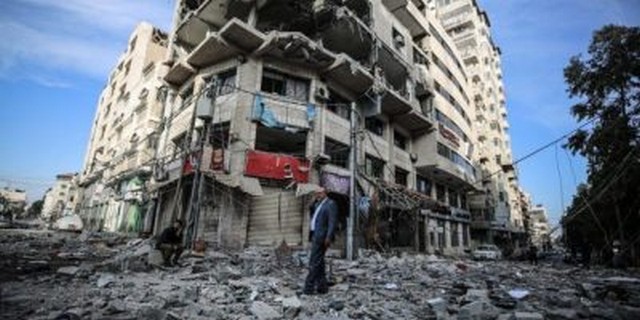
13 Oct 2019 – Israel has ignored warnings by the United Nations that Gaza is about to become uninhabitable, acting as if Palestinians there can be caged, starved and abused indefinitely. Now crises are unfolding on all fronts – social, economic, political and humanitarian – and Israel is running out of time to find solutions

The only way Israelis can be made to sit up and take note of the disaster unfolding next door in Gaza, it seems, is when they fear the fallout may spill out of the tiny coastal enclave and engulf them too. Environmental experts from two Israeli universities issued a report in June warning that the imminent collapse of Gaza’s water, sewage and electricity infrastructure would soon rebound on Israel.

Gideon Bromberg, the Israeli director of EcoPeace Middle East, which commissioned the report, told journalists: “Without urgent, vigorous action, plagues and infections will break out that could cost a great many lives, both in Israel and in Gaza, and no fence or Iron Dome [Israel’s missile interception system] can thwart them.” Israel’s liberal Haaretz newspaper paraphrased another of Bromberg’s comments: “If something isn’t done, the upshot could be political horror in the form of hundreds of thousands of Gazans fleeing for their lives toward Israel – for fear of catching disease.”

Bromberg and others on Israel’s left are well aware that Gaza’s 2 million Palestinians were long ago dehumanized in the eyes of most Israeli Jews, who think of them as nothing more than terrorists or terrorist sympathizers who deserve their sorry fate. Stories of Gaza’s endless suffering a short distance from Israelis’ homes are unlikely to shame them into action. They can be roused only out of self-interest – a fear for their own safety and the wellbeing of their loved ones.

Gaza’s problems, however – the fact that it is one of the most densely populated, poorest and polluted places on the planet – are not an accident, or the consequences of some natural cataclysm. The crisis there is entirely man-made – and one that has been engineered over decades by Israel.

Israel effectively treated the Strip as a dumping ground – a holding pen – for the mass of refugees it created by dispossessing the Palestinians of their homeland in 1948. Nearly three-quarters of Gaza’s inhabitants are descended from the refugees of that war, Palestinians who were forced off their lands in what is now Israel and denied the right ever to return to their homes.

Having exiled them, Israel was nonetheless prepared to use the Palestinians of Gaza as a cheap labor force – for a time. It was possible until the 1990s for Palestinians to exit Gaza relatively easily to work in Israel’s dirtiest and lowest-paying jobs. But as the occupation entrenched, Israel was forced into a rethink by two developments.

First, Palestinians under occupation, including in Gaza, launched a lengthy campaign of mass civil disobedience against their occupiers in the late 1980s, known as the first intifada, that included general strikes, a refusal to pay taxes, boycotts of Israeli goods and stone-throwing. And second, Gaza’s population has grown exponentially, at a pace that outstripped the capacity of this tiny territory – measuring just 25 miles in length and some 5 miles across – to accommodate them.

In response, Israeli leaders pushed for a more clear-cut physical separation from Gaza. The rallying cry of politicians of the time was: “Us here, them over there.”

Israel’s out-of-sight, out-of-mind approach was soon given diplomatic sanction in the Oslo Accords of the mid-1990s. Israel surrounded Gaza with high-security fences and armed watchtowers, established an exclusion zone along its sea coast, and revoked the general exit policy.

Ariel Sharon’s disengagement of 2005, when the last remaining Jewish settlers were pulled out of the enclave, marked the completion of Israel’s separation policy. The occupation did not end, however. Israel still controlled Gaza’s airspace, its land perimeters and coastal waters. Israel soon imposed a blockade, preventing goods as well as people from entering or leaving, a blockade it tightened dramatically when the Palestinian faction Hamas won elections in the occupied territories in 2006.

Since then, Israel has transformed the holding center into a super-max prison. This year it finished a submarine barrier with sophisticated sensor systems along the coast. Israel is currently enlarging the perimeter fence to make it 20 feet high and fortifying it with remotely controlled gun towers, while all-seeing drones patrol the skies above Gaza.

The first dire warning about conditions in Gaza was issued in 2015, a year after Israel’s massive attack on the enclave known as Protective Edge, in which more than 2,200 Palestinians were killed, including over 550 children, and 17,000 families left homeless. A report by the United Nations Conference on Trade and Development (UNCTAD) argued that Gaza would be “uninhabitable” by 2020 if the trends then current continued. None of those trends has been halted or reversed. Which means Gaza is about to slide into a fully fledged humanitarian catastrophe entirely created by Israel, and implicitly supported by the silence and inaction of western states.

But while Israel has managed to keep the Palestinian inhabitants of Gaza cooped up like underfed and abused battery chickens, it is starting to find it is much harder to contain the various crises – social, economic, political and humanitarian – unfolding in the enclave. Slowly Israel is waking up to the fact that Palestinians don’t behave like chickens.

Rockets, kites and marches

Inevitably Gaza’s inhabitants have reacted to the slow tightening by Israel of its chokehold on their enclave. But by the time of the Palestinians’ second uprising, which began in late 2000, the kind of mass civil disobedience that charaterised the first intifada was no longer possible. Gaza’s population was by that stage imprisoned behind a fence. The factions, especially Hamas, instead tried to break free of their confinement by launching primitive Qassam rockets into Israel.

Largely ineffective as a weapon of death or destruction, the rockets have nonetheless spread fear in Israeli communities close to the enclave. But their use has had mostly negative repercussions for Gaza. Israel responded with extra-judicial executions of Palestinian leaders in Gaza that typically killed many more bystanders, and used the rockets to justify ever-more severe forms of collective punishment that culminated in the blockade. What little western sympathy there had been for Gaza drained away as Israel, assisted by the western media, edited out the context for the rockets – Gaza’s imprisonment by its occupier – and presented a simplistic, ahistorical narrative of terror attacks on innocent Israelis driven, it was implied, only by the Jew hatred of Islamic extremists.

While popular support in Gaza for the rocket attacks has ebbed over time, Palestinians there have learned the hard way that they cannot afford passivity. As soon as the rockets fall silent, Israel and the world forget about Gaza. The west’s hypocrisy has been plain: it condemns the inhabitants of Gaza for struggling against their imprisonment by firing rockets, but then ignores their plight when they play according to diplomatic rules.

Over the past year and a half, the rockets have been largely replaced by a couple of popular initiatives that were launched with two aims in mind: to make Gaza’s suffering visible again, and to challenge Israeli and western prejudices about the enclave. Both initiatives mark a return to the type of mass civil disobedience exemplified by the first intifada, but recast for an era in which the Palestinians of Gaza have limited opportunities to confront their oppressor directly.

The first are incendiary kites and balloons – Israel inevitably adds the label “terror” to these balloons and kites – sent over the perimeter fence to set fire to the agricultural lands of the Israeli communities that prosper close by at Gaza’s expense. The damage caused to Israel’s local economy is intended to serve as a pale mirror of the massive economic destruction Israel has inflicted on Gaza’s economy over many decades, including, as we shall see, to its farmland. The balloons are a way, like the rockets, to remind Israelis that Palestinians are suffering out of sight, on the other side of the fence, but do so without risking the civilian deaths entailed by the rockets’ use.

The second popular initiative has been a weekly mass protest, largely non-violent, called the Great March of Return, close to the perimeter fence. The title is meant to remind observers that most Palestinians in Gaza are denied the right to return to the hundreds of villages their families were expelled from by Israel in 1948 and which are now located on the other side of the fence. Tens of thousands of marchers regularly defy Israeli restrictions that have declared hundreds of meters of Gaza’s land inside the fence as a “no-go zone”.

The protesters’ goal is to ensure that Israel and the west cannot overlook Gaza’s suffering and desperation, or shirk their responsibility for the catastrophe unfolding there, or continue to erase the deeper historical injustice caused by Israel when it dispossessed the Palestinians of their homeland in 1948. The protests are a potent reminder that this crime against the Palestinians has to be addressed before any lasting resolution of the Israeli-Palestinian conflict can occur.

Israeli officials have every reason to want the very opposite for Gaza. They need its suffering overlooked; the Palestinians there mute, or at least violent in ways that Israel can re-characterize as terrorism; and the historical injustices forgotten. They have therefore worked hard to suggest that the protests are not a natural expression of Gaza’s anger, frustration and desperation in the face of a humanitarian catastrophe engineered by Israel, but a new, veiled terror strategy organized by Hamas. The marchers are not civilians, Israel argues, but hardcore Hamas activists who want to destroy Israel.

That has rationalized Israel’s extremely violent response, with snipers using live fire against the protesters. Those shot include large numbers of children, wheelchairs users, as well as paramedics and journalists identifiable by their clothing. Israel has executed more than 200 protesters, nearly a quarter of them children. A further 32,000 have been injured – an average of 500 a week.

One of the investigators in a UN commission of inquiry into Israel’s handling of the protests concluded that its military forces “have intentionally shot children, they’ve intentionally shot people with disabilities, they’ve intentionally shot journalists.” That was confirmed in July when the Israeli media revealed that snipers had been ordered to routinely shoot the protesters in the upper leg, in an apparent effort to deter people from attending. This order continued even when it became clear that a significant proportion of those shot were dying from their wounds or needed a leg amputated. Only very belatedly did commanders order that protesters be shot in the ankle to reduce the number of deaths.

The logic of settler colonialism

Israelis’ widespread indifference to the fate of Palestinians, most especially in the case of Gaza, is deeply entangled in the ideology Israel embodies. Zionism is viewed in much of the west simplistically: as purely a salvation movement, one that created a “lifeboat” for Jews – in the shape of Israel – at a time of profound need as the Nazi Holocaust ravaged large parts of European Jewry. But Zionism, in both its Christian and Jewish forms, long predates that genocide. Its roots are to be found in European settler colonial ideologies that emerged from the 17th century onwards.

Settler colonialism is markedly different from traditional colonialism. The latter, illustrated by Britain’s relationship with India, is characterized by colonists arriving in another land to exploit the resources and labor of the native people. Whatever treasure was unearthed in the colonies – rubber, tea, tulips, sugar, diamonds, oil – was shipped back to the motherland, where it helped to support the lavish lifestyles of an elite. Great amounts of violence were needed to force the native population to submit. The colonists also tried to rationalize the resource grab, both to themselves and to the indigenous population, traditionally through religion and ideas of improvement – the “white man’s burden”. Colonists prospered until the native population found a way to expel them.

Settler colonialism, by contrast, has a different rationale – what scholars have termed the “logic of elimination”. Settler societies are not there primarily to exploit the natives, though they may in part do that too for a time. They are there to replace them. And there are three possible routes by which that ambition can be achieved.

The first – what might be termed the Americas model – is to exterminate the natives, to wipe them out so there can be no local challenge to the settler colonial project. The second – what might be called the Israel model – is to ethnically cleanse the natives, to drive them out of the coveted territory to another place. And the third – what might be termed the South Africa model – is resorted to chiefly when it has not been possible to fully realize the first or second models. Apartheid regimes herd the natives out of sight into ghettoes – often called homelands, reservations or, in South Africa’s case, Bantustans – where they can be largely ignored, deprived of their rights and access to resources.

Settler societies can adopt more than one model over time, or they may experiment with different models. In the United States, for example, settlers exterminated much of the Native American population and then drove the remnants into reservations. In South Africa, apartheid also required ethnically cleansing the black population from lands coveted by white settlers.

Israel too has adopted a mixed model. In 1948, and then again in 1967, it carried out mass ethnic cleansing operations. During the 1948 Nakba, literally the Catastrophe, Zionists expelled more than 80 per cent of Palestinians living inside the borders of what was about to become the Jewish state of Israel. Afterwards, Israel adopted a system of apartheid against the remnants of the native population, first inside its recognized borders (as I outlined in a previous edition of the Link) and later in the occupied territories.

In Israel today, some 93 per cent of territory has been “nationalized” exclusively by the state on behalf of Jewish people around the world, while Palestinian “citizens”, a fifth of Israel’s population, have been penned into little more than 2 per cent of Israeli territory. In the occupied territories, meanwhile, the settlers have directly seized 42 per cent of the West Bank for themselves, while the Israeli government directly controls more than 60 per cent of the territory, what was declared “Area C” in the Oslo Accords.

Israel’s monstrous vision

Ethnic cleansing and apartheid have been the mainstays of Israel’s approach to the Palestinians inside Israel, in the West Bank and in East Jerusalem. But over the past 15 years its policy towards Gaza appears to have moved in an additional direction – towards elements of what might be called a model of incremental genocide.

“Genocide” is an emotive term, and one few people wish to use in relation to Israel, given the extermination of many millions of European Jews at the hands of the Nazis. But it is a term that exists outside of, and apart from, the Holocaust. It has a meaning clearly defined in international law, and one that is key to analysing and evaluating political situations and their likely future trajectories. The term was coined precisely to offer tools for early detection so that genocides could be prevented from taking place, not simply labeled once the atrocity was over. To preclude genocide as a possible explanation for Israel’s behavior in Gaza is to prioritize the historic sensitivities of some Jews over the current, urgent and existential threats to a substantial part of the Palestinian people.

The United Nations adopted a Convention on the Prevention and Punishment of the Crime of Genocide in 1948, the year of Israel’s creation. It defined genocide as:

any of the following acts committed with intent to destroy, in whole or in part, a national, ethnical, racial or religious group, as such:

a) Killing members of the group;
b) Causing serious bodily or mental harm to members of the group;
c) Deliberately inflicting on the group conditions of life calculated to bring about its physical destruction in whole or in part;
d) Imposing measures intended to prevent births within the group;
e) Forcibly transferring children of the group to an other group.

Genocide is confirmed by only one of these five acts, and there should at least be a suspicion – as we shall see – that Israel is effecting the second and third in Gaza.

Israeli academics too have noted the need for another term – in addition to ethnic cleansing and apartheid – to describe Israel’s policy towards the Palestinians, especially in Gaza. The late Israeli sociologist Baruch Kimmerling, one of the country’s foremost scholars of Israeli and Palestinian nationalism, invented a word – politicide – to avoid the term genocide. In 2003, years before Israel’s blockade and repeated attacks on Gaza had begun, he defined politicide as having two effects:

The first is the destruction of the Palestinian public sphere, including its leadership and social and material infrastructure. The second effect is to make everyday life for the Palestinians increasingly unbearable by destroying the private sphere and any possibility of normalcy and stability. … All of these conditions are … designed to lower Palestinian expectations, crush their resistance, isolate them, make them submit to any arrangement suggested by the Israelis, and eventually cause their voluntary mass emigration from the land.

It hardly matters whether we describe the Israeli plan outlined by Kimmerling as incremental genocide or politicide; he accurately presents Israel’s monstrous vision of a half-life for Palestinians in the occupied territories in which they are stripped not only of their rights but also of their humanity. On this view, Palestinians are conceived of not so much as lesser beings but as non-beings whose fate should not trouble us.

Putting Gaza on a diet

There have been three clear signals from senior Israeli officials of the strategic shift in thinking about Gaza, of how the limits of what is imaginable have been gradually shifting.

The first was articulated in 2006 by Dov Weissglass, an adviser to the Israeli prime minister of the time, Ehud Olmert. He alluded to Israel’s new approach to Gaza during an interview with the Haaretz newspaper. “It’s like an appointment with a dietician. The Palestinians will get a lot thinner, but won’t die,” he said, referring to Israel’s recent imposition of an economic blockade on Gaza, backed by an aid boycott by western governments. Most observers at the time dismissed his comment as hyperbole. But later it emerged that Weissglass had actually been describing a policy that was about to be implemented by the Israeli army.

In 2012, after a three-year legal battle by Gisha, an Israeli human rights group, Israel was forced to disclose a document called “Red Lines” that had been drafted in early 2008. At that time, as the blockade was tightened still further, the Israeli defense ministry requested calculations by health officials of the minimum number of calories needed by Gaza’s inhabitants to avoid malnutrition. Those figures were then translated into truckloads of food Israel was supposed to allow in each day at the crossings.

But in practice the military authorities ignored the advice of the government’s own calorie-counters. While the health ministry determined that Gazans needed daily an average of 2,279 calories each to avoid malnutrition – requiring 170 trucks a day – military officials found a host of pretexts to whittle down the trucks to a fraction of the original figure. An average of only 67 trucks – much less than half of the minimum requirement – entered Gaza daily. This compared to more than 400 trucks that had been entering before the blockade began.

Israeli officials had deducted trucks based both on an over-generous assessment of how much food could be grown locally and on differences in what they termed the ”culture and experience” of food consumption in Gaza, a rationale that was never explained. Gisha, which fought for the document’s publication, observed that Israeli officials had ignored the fact that, as we shall see, the blockade had severely impaired Gaza’s farming industry, with a shortage of seeds and chickens that had led to a dramatic drop in food output.

Further, the UN noted that Israel had failed to factor in the large quantity of food from each day’s supply of 67 trucks that never actually reached Gaza. That was because Israeli restrictions at the crossings created long delays as food was unloaded, checked and then put on to new trucks. Many items spoiled as they lay in the sun.

And on top of this, Israel adjusted the formula so that the number of trucks carrying nutrient-poor foods like sugar were doubled while the trucks carrying nutrient-rich food like milk, fruit and vegetables were greatly reduced, sometimes by as much as a half. Robert Turner, director of the UN refugee agency’s operations in the Gaza Strip, observed at the time: “The facts on the ground in Gaza demonstrate that food imports consistently fell below the red lines.”

The question was why, if the politicians and generals were advised by health experts that Gaza needed at least 170 trucks a day, did they oversee a policy that allowed in only 67? How could such a policy be described?

A return to the Stone Age

Another clue to Israel’s thinking was provided in early 2008, at about the time defense officials were putting Gaza on a diet. Matan Vilnai, a former army general and at that point Israel’s deputy defense minister, discussed on Israeli radio a vicious bout of bloodletting that had killed more than 100 Palestinians, on one side, and an Israeli student, on the other. For the first time Qassam rockets fired from Gaza had hit the center of the southern Israeli city of Ashkelon.

Vilnai told the interviewer: “The more Qassam fire intensifies and the rockets reach a longer range, they [the Palestinians of Gaza] will bring upon themselves a bigger shoah because we will use all our might to defend ourselves.” The comment was picked up by the news agency Reuters because the Hebrew word “shoah” – literally “disaster” – was long ago reserved to describe the Holocaust, in which millions of European Jews were murdered by the Nazis. Its use in any other context had become virtually taboo. Appreciating the potential damage the remark could do, Israel’s foreign ministry immediately launched a propaganda offensive to persuade the world’s media that Vilnai was only referring to a general “disaster”, not a holocaust.

Few Israelis were deceived. Haaretz’s cultural commentator, Michael Handelzalts, noted that “whatever connotations the word [shoah] had before the Nazis embarked on their systematic extermination of the Jews, today it means – with quotation marks or without them, with “the” preceding it or without it – just that.” Why would Vilnai select this extremely provocative and troubling word to frame his threat to the Palestinians?

At the time, few could have understood that Vilnai’s “shoah” comment would take physical form a few months later in the first of a series of horrifying military rampages by Israel in Gaza. In late 2008-09, and again in 2012 and 2014, Israel wrecked Gaza, destroyed many thousands of homes and its key infrastructure, including its power plant, and left many thousands dead and many tens of thousands wounded and disabled. Tens of thousands more found themselves homeless.

The first of these attacks, in winter 2008, came under close scrutiny from the UN through a fact-finding mission led by a South African jurist, Richard Goldstone. The panel’s report suggested that the Israeli army – as well as Hamas – had committed war crimes and crimes against humanity during Israel’s three-week Operation Cast Lead. It noted Israel’s use of unconventional weapons such as white phosphorus, the destruction of property on a massive scale, and the taking of civilians, including young children, as human shields. And significantly it concluded that Israel had targeted civilians “as a matter of policy”.

After the report’s publication, Goldstone, who is Jewish, faced an immense backlash from Jewish communities in the US and South Africa that painted him as a traitor. Jewish leaders in South Africa even prevented him from attending his grandson’s bar mitzvah. Though his jurist colleagues did not, Goldstone eventually retracted his support for parts of the report, most importantly the reference to Israel targeting civilians as policy.

However, there were plenty of reasons to conclude that this was exactly what Israel had done – as would be confirmed by Israel’s subsequent attacks, including the even more savage Protective Edge of 2014. Breaking the Silence, an organization of whistle-blowing Israeli soldiers, collected many testimonies from soldiers indicating that they received orders to carry out operations with little or no regard for the safety of civilians. Some described the army as pursuing a policy of “zero-risk” to soldiers, even if that meant putting Palestinian civilians in danger.

Similarly, leaflets produced by the military rabbinate – apparently with the knowledge of the army top brass – urged Israeli ground troops, an increasing number of whom are religious and from the settlements, to show no mercy to Palestinians. It characterized the Palestinians as the Philistines, the Biblical enemy of the Jews, and told them Israel was waging “a war on murderers”. In a sign of the extent to which the army is being taken over by such religious extremists, Ofer Winter, who extolled his troops in 2014 to attack Palestinians in Gaza as “blasphemers”, was appointed commander of the 98th Division, Israel’s most elite combat troops, in July 2019.

But even more significantly, in October 2008, a few months after Vilnai’s “shoah” comment and two months before the launching of Cast Lead, the Israeli army formally divulged a new military policy known as the Dahiya Doctrine. In fact, it had first been field-tested during the 2006 summer offensive on Lebanon that had left much of that country in ruins after waves of missile strikes. Gadi Eisenkot, the general widely credited with developing the doctrine, clarified its goal:

We will apply disproportionate force on [any area resisting Israel] and cause great damage and destruction there. From our standpoint, these are not civilian villages, they are military bases. This is not a recommendation. This is a plan.

A short time later, the Israeli commander overseeing the Cast Lead attack on Gaza, Yoav Galant, echoed Eisenkot, saying the aim of the military operation was to “send Gaza decades into the past.” Israel’s intention was to lay waste to Gaza’s infrastructure, forcing survivors to eke out a bare existence rather than resist Israel.

In early 2019, Benny Gantz, who had overseen the even more brutal Operation Protective Edge of 2014, fought a general election as head of a new party named Blue and White. He and the other generals who led the faction played up their military credentials with a series of campaign videos. One showed the wastelands of Gaza after the 2014 attack, a camera hovering over a sea of rubble as far as the eye could see. Alongside these images, the video boasted: 6,231 targets destroyed and 1,364 terrorists killed, and it concluded: “Parts of Gaza have been sent back to the Stone Age.”

An economy in collapse

For more than a decade Israel has pursued a consistent and barely veiled double policy: destroying Gaza’s infrastructure with massively violent military attacks – laying waste to tens of thousands of homes, the enclave’s only power station, farms, schools, universities, hospitals, factories – while at the same time putting the population on a near-starvation diet through a punishing, long-term blockade. This has been rationalized by both rabbis and army commanders using language designed to degrade the humanity of Palestinians, characterizing them as “murderers” and their communities as “military bases”.

And behind the scenes, Israel has also assisted in a third, wider strategic approach toward Palestinians under its rule that has impacted Gaza in ways that have intensified the effects of the two other policies.

Ariel Sharon pulled the settlers from Gaza in 2005 without an agreement with, or handover to, Mahmoud Abbas’s Palestinian Authority, the Palestinians’ supposed government-in-waiting. Denied the chance to take credit for Israel’s disengagement, the PA was forced on to the back foot. Its Hamas rivals presented Israel’s withdrawal as a victory for its strategy of violent resistance, in contrast to the ineffectiveness of the PA’s diplomatic approach and security coordination with Israel. Hamas leaders argued that it was they who had chased Israel out of Gaza, the occupier’s tail between its legs.

That, in part, set up Hamas for its win in the Palestinian legislative elections, as well as for its violent confrontation in Gaza with Abbas’s Fatah faction and ultimately Hamas’s takeover of the enclave in 2007. Over the next 12 years, the geographic and ideological split between the Fatah-ruled West Bank and Hamas-run Gaza has only deepened. By default, the division has turned the PA into Israel’s ally in isolating and punishing Hamas – and by extension Gaza. The PA has imposed its own form of blockade on Gaza, most significantly withholding transfers of revenues to the enclave, leaving public-sector workers, the largest employed group in the occupied territories, on severely reduced salaries. The harmful effects have been felt across the enclave, because typically the salary of each Palestinian in employment supports a much larger extended family.

Combined, these three factors have engineered the near-collapse of Gaza’s economy.

In 1999, even after Israel had sealed off Gaza from Israel with an electronic fence, some 40,000 workers – about 15 per cent of the labor force – were still employed in Israel, many of them on construction sites in and around Tel Aviv or in the Erez industrial zone. Today, those jobs are unavailable to Gaza’s besieged inhabitants.

Slightly over half the population now live below the poverty threshold, on less than $4.60 a day, and a similar number are unemployed. A third of them live in extreme poverty. The Israeli human rights group B’Tselem concluded in June that Gaza’s isolation and misery was a policy the Israeli government had chosen. Israel, it said, had brought about the enclave’s “economic collapse and trapped its residents in a small, closed job market, with no prospects of development and no future. Israel could change this stifling reality right now. Instead, it chooses to force Gaza residents to live in a state of poverty, stagnation and hopelessness.”

Meanwhile, Gaza’s private business sector has been reeling from the combined effects of the blockade and repeated military assaults. Although there were once eight crossing points between Gaza and Israel, today exports are possible only through one, the Kerem Shalom cargo terminal. Before the blockade, some 120 trucks passed out of Gaza each day to Israel, the Arab world and Europe carrying clothing, food, beverages and furniture. Today, that number never rises above nine trucks, and on numerous occasions none have been allowed through. Israel tightens restrictions at Kerem Shalom as a way to collectively punish Gaza’s population for rocket fire into Israel or protests at the fence.

Consider the following industries that were crucial to Gaza’s economy:

Textile Factories: For many years, Gaza’s low wages encouraged Israeli clothing companies to order garments from the enclave’s factories. But after Israel tightened the blockade in 2007, it became all but impossible for these factories to get their products out. According to the Union of Palestine Textile Industries, 90 per cent of Gaza’s 930 sewing factories closed as a result, leaving 35,000 workers without jobs. A slight easing of the restrictions in 2015, which allowed exports to the West Bank and Israel, has led to the partial reopening of some 40 factories.

However, those that have resumed operation are in a precarious situation. The regular interruption in the electricity supply, and the high price of generating power privately, have added significantly to production costs. Israel still denies exit permits to most merchants and trade association heads, making it difficult to develop and expand their businesses. Israel’s refusal to allow in equipment, such as sewing machines, and supplies, such as linens, continues to damage the industry. And hanging over all the factories is the permanent threat of a new Israeli assault on Gaza, which would not only disrupt exports but could lead to any of the buildings being targeted for destruction.

Construction Industry: Construction should be Gaza’s one guaranteed growth industry, given the extraordinary levels of destruction wreaked repeatedly on the enclave by Israel. But in practice the sector is in deep trouble. Whereas once construction accounted for a third of Gaza’s Gross Domestic Production, today it supplies less than a fifth of Gaza’s now much-reduced GDP. The industry has sustained massive damage from Israel’s military operations: 2014’s Protective Edge alone destroyed some 100 steel, cement, and brick works. And the sector knows its factories are high on the hit-list in any future attacks.

Also, the so-called Gaza Reconstruction Mechanism, agreed between Israel and the UN after the 2014 assault as a way to rebuild a devastated Gaza, has imposed strict regulations on materials that can be brought into the enclave, and requires Israeli approval before any infrastructure projects can be undertaken. Given the added difficulties faced by most Palestinian families securing a bank loan without assured employment, construction firms have very limited opportunities for work.

A study published in May by the Palestinian Federation of Industries found that construction is operating at only about 15 per cent of its capacity, which is continuing to shrink. This year there were only 1,840 people employed in construction compared to 3,170 last year – a decline of 42 per cent. Many contractors are rapidly relocating their Gaza operations abroad, to Arab countries such as Jordan, Syria and Iraq.

Agriculture: Since Israel erected a fence around Gaza, it has used heavy equipment to uproot trees and foliage, flattening and scarring a wide area of land on the Gaza side of the perimeter, leaving it desolate. A third of the enclave’s arable land falls within this Israeli-defined no-man’s land, zones that can stretch up to half a mile inside Gaza. In 2012 the International Red Cross negotiated an agreement to allow Gaza’s farmers to grow short crops up to .2 miles from the fence and taller crops up to half a mile. But the farmers are still reluctant to enter these approved areas: experience shows they risk being shot. Irrigation systems and water pumps in range of Israel’s automated gun towers are also regularly targeted.

Since 2007 the blockade has prevented farmers exporting to the West Bank and Israel, their main markets. And restrictions on imports of animal vaccines have led to outbreaks of disease among livestock. Polluted water sources mean that food is likely to be contaminated with bacteria, parasites and industrial runoff. And during Israel’s military operations, outlying farms have been repeatedly targeted. Protective Edge of 2014 caused $500 million of direct and indirect damage to the farming sector, destroying irrigation wells and greenhouses as well as killing farm animals.

In addition, Israel has regularly fumigated the farmers’ lands with herbicides to damage crops, on the pretext of increasing the field of vision along the perimeter fence. The chemicals Israel uses include Roundup, which is suspected of being carcinogenic and banned in some countries. Some 30 spraying operations took place between 2014 and 2018, damaging a total of 3,500 acres of farmland and pasture, according to Gaza’s agriculture ministry.

Forensic Architecture, a research group that has modeled the drift from the spraying operations, accuses Israel of creating “a dead zone of entire swathes of formerly arable land”. According to the Red Cross, irrigation pools as far as half a mile from the perimeter fence have been polluted, and the herbicide residues remaining in the ground pose a threat to those eating produce grown on sprayed land. Hundreds of farmers are reported to have suffered losses worth thousands of dollars each from the spraying, but compensation claims have been rejected by the Israeli courts.

Fishing Industry: Fishing is traditionally one of Gaza’s most important commercial activities – as well as providing locally sourced food. In recognition of that fact, the Oslo accords, signed a quarter of a century ago, established the fishing limit off Gaza’s coast at 20 nautical miles. Israel, however, has refused to abide by the agreement: the navy has never allowed Gaza’s boats to fish more than 15 miles from the coast. But more typically Israel has restricted fishing to 3 or 6 nautical miles, a range that makes it all but impossible to catch commercial quantities of fish.

Furthermore, closures – banning fishermen entirely from access to Gaza’s coastal waters – have been repeatedly instituted by Israel as a punitive measure, most recently over the launching of incendiary balloons and the protests at the perimeter fence. Ismail Haniyeh, the political head of Hamas, has called this “a policy of extortion.” Israeli human rights groups, meanwhile, note that it constitutes “collective punishment” – a war crime.

According to B’Tselem, back in 2000 there were 10,000 registered fishermen, while today there are only 3,500. In practice, however, no more than half that figure actually go out in boats. The blockade means that most cannot find materials like fibreglass to repair their vessels or motor parts. Nearly all of Gaza’s fishermen are reported to be living below the poverty line of $4.60 a day. Meanwhile, the price of fish has soared, given the scarcity, leaving few in Gaza able to afford it.

Israel’s navy also regularly confiscates boats, claiming they have strayed outside its imposed fishing zone, and then refuses to return them for months or years. Many fishermen cannot afford costly GPS equipment, leaving them unsure whether they are inside the prescribed area. The navy, meanwhile, appears to enforce a “buffer zone” that makes unintentional “violations” by boat crews more likely.

The fisherman also risk being arrested or shot when they head out into Gaza’s waters. In the seven months to July of this year, Israel fired on fishing boats more than 200 times, injuring 15 crew members, according to Al Mezan, a Palestinian human rights group. Another 30 fishermen were seized and detained in Israel.

One recent story that gained some attention was the shooting of 31-year-old Khader Al-Saaidy, a father of three. Like most fishermen, he has had regular run-ins with the Israeli navy over the years. His small boats have twice been impounded and not returned, costing him some $16,000 to replace them. Then two years ago he was shot in the leg while out fishing, and a friend alongside him was shot in the face, losing the sight in an eye. On that occasion Al-Saaidy was jailed for 14 months.

In February his boat was attacked again. This time, naval commandos fired a hail of rubber-coated steel bullets from close range, hitting him 15 times in the upper body. Some of the bullets shattered his eye sockets. The boat was seized by the navy and towed to Ashdod. He was later taken to an Israeli hospital in Ashkelon, where one eye was removed. Hospital staff told him the second eye could be saved with complicated surgery. But he was dumped by the army at the Gaza crossing four days later and has been denied a permit to attend follow-up appointments in Israel ever since. Under questioning from the Israeli Haaretz newspaper, military authorities said he was not eligible to enter Israel because his injuries “did not constitute mortal danger”.

Hospitals on the brink

Al-Saaidy’s need for health care in Israel – and the military’s refusal to allow him to enter for treatment – are difficulties that have become common as Gaza’s health sector has collapsed under the combined strain of more than decade of a blockade and a series of military assaults.

The blockade has prevented medicines and basic equipment reaching Gaza, leading to severe shortages of infant formula, as well as medicines for cancer, kidney failure, diabetes and hypertension. It has been impossible for staff to keep up to date with the latest procedures and medical knowledge, and qualified medical staff are reported to be in short supply. Israel’s intermittent bombing sprees have severely damaged hospitals, medical centers, ambulances, as well killing and injuring medical staff. In 2014 Israel bombed five hospitals. Electricity shortages have made it difficult for medical centers to keep operating or reliably provide treatments like dialysis.

All of this has happened as Israel’s attacks have inflated the need for emergency medical care and rehabilitation services, stretching Gaza’s war-battered health sector to breaking point. Casualties from Protective Edge of 2014 alone included more than 2,200 dead and a further 11,000 seriously wounded, with many needing long-term treatment for disabilities. And since March 2018 some 500 Palestinian protesters a week on average – including 60 children – have needed emergency care for injuries inflicted by snipers at the perimeter fence. So far some 140 of these casualties have required amputations, including 30 children. Another 1,700 of the wounded are expected to lose a leg over the next two years because of complications Gaza’s medical centers cannot cope with, according to the UN.

Local health services also need to deal with the lasting effects of toxic environmental changes. Non-conventional weapons used by Israel during its attacks have dramatically increased the number of low birth-weight babies and birth defects over the past decade. And more of the urban population has been exposed to heavy metals as Palestinian entrepreneurs have improvised solutions to deal both with electricity shortages, by manufacturing primitive batteries, and with the blockade, by cannibalizing electrical parts. Research published in June showed that most children near such workshops had dangerously high levels of lead in their blood.

Water has an intimate connection to public sanitation and health. Water pollution and the lack of sewage treatment threaten the outbreak of major diseases like cholera and diptheria, especially among children. So far such epidemics have been largely held in check by UNRWA’s vaccination program. But with the US having defunded the refugee agency since 2018, combined with a shortage of antibiotics, the risk of contagion has grown.

According to a study by the RAND corporation four years ago, gastrointestinal infections from water pollution accounted for a quarter of all illnesses in Gaza and 12 per cent of child deaths. Rates are believed to have increased since then, with the spread of rotavirus, salmonella and cholera. A recent Palestinian report suggested that up to 60 per cent of all illnesses in Gaza may be the result of water pollution. Another study showed that Gaza’s schools share one toilet between 75 students and one sink among 80 children. Hand washing and toilet flushing are necessarily kept to a minimum, further risking the spread of disease.

Most families in Gaza have to rely on purified water to drink, but that requires them to spend as much as a third of their income on water purchases. With unemployment estimated at 57 per cent of the population, more and more families cannot afford treated water, relying instead on the short periods the authorities turn on the tap in their area.

Possibly in response to fears like those expressed by Israeli researchers about the risk of epidemics in Gaza spreading beyond the fence, Israel has belatedly agreed to limited new water supplies for Gaza. After a decade of objections, Israel allowed a desalination plant in Gaza to open in 2017. However, as it can produce only a third of Gaza’s shortfall in supplies, the treated water is currently being mixed with polluted water to extend the volume of water coming out of taps.

Babies left to die alone

Although Israel is entirely culpable for the health crisis in Gaza, and accountable for it in international law, it has taken only the most minimal responsibility for those in desperate need of treatment. Even when Israel does provide medical care for sick Palestinians from Gaza in its own hospitals, the Palestinian Authority has to foot the bill.

As the blinded fisherman Khader Al-Saaidy found, however, it is extremely difficult to get permits from Israel to leave Gaza for treatment – whether in Israeli hospitals or in Palestinian-run ones in East Jerusalem. Israel usually requires proof that without intervention from a hospital outside Gaza the patient is at serious risk of death. Even then, many of the patients approved for a permit or, in the case of children, their escorts, are subjected to intimidation to turn informer before they are allowed to leave.

Israel’s permit rules have created a spate of heartbreaking cases for the families of young children. According to Physicians for Human Rights, Israel issued 7,000 permits for children to leave Gaza for treatment last year, but approved a parent accompanying them in only 2,000 cases. Instead a majority of the children were escorted by an elderly relative such as a grandparent or aunt. Such children with life-threatening conditions were therefore forced to travel and endure complicated and frightening treatment without a mother or father present.

Israel’s policy applies to babies too. In the first six months of this year, 56 infants from Gaza were separated from their parents while in hospital, and six died alone. Hiba Swailam, aged 24, found herself in precisely this situation after severe complications during pregnancy. She was permitted to leave Gaza to have her triplets delivered two months early at Al-Makassed Hospital in East Jerusalem. However, her permit expired long before the triplets were well enough to return with her to Gaza. She was therefore forced to leave them behind. One died after nine days, and another after two weeks. According to doctors at Al-Makassed, one of the babies could have survived if it had been breastfed. The surviving baby spent months alone at the hospital, cared for by nurses, with Swailam only able to see her baby by video. Only when the story was finally picked up by Britain’s Guardian newspaper did the Israeli authorities relent and issue Swailam with a permit to collect her baby daughter.

One of the nurses at Al-Makassed, Ibtisam Risiq, noted the psychological effects on such babies: “They need love. Their heart rates go up. They are depressed.” But soon even Al-Makassed’s services may no longer be available to patients from Gaza. The US cuts to funding implemented by Trump last year have also targeted the East Jerusalem hospital.

Gaza’s medical centers need to deal with more than the population’s physical health. The enclave’s severe isolation and a decade of repeated bombardments and devastation have taken a heavy psychological toll, especially on children. One psychologist recently told the documentary-maker Harry Fear that Gaza’s entire population was traumatized to some degree. The enclave’s limited mental health services, however, have no hope of dealing with such an epidemic of emotional and mental trauma. The task is made still harder by the fact that patients suffering from conditions like depression, anxiety, panic attacks, and PTSD cannot be reassured that the source of their trauma is behind them. Constantly hanging over Gaza is the threat of another round of destruction, another wave of bloodletting.

In March a study by the Norwegian Refugee Council found that more than two-thirds of children who live near the perimeter fence suffered from what it termed “psycho-social distress.” Some 42 per cent had seen at least one bomb explosion, while a third knew someone who had been killed in an attack. One in 14 had lost their own home to a bomb or missile. More than half felt no hope for the future, and 81 per cent struggled academically because of the conflict. “Gaza’s humanitarian crisis has left an entire generation emotionally damaged,” said the council’s local director, Kate O’Rourke. “It takes years of work with these children to undo the impact of trauma and restore their sense of hope for the future.”

The situation is not likely to improve soon. UNRWA slashed in half its mental health budget late last year as the loss of US funding started to bite. Counseling for children was among the services to be cut.

The moment of truth arrives

By most measures, Gaza is already uninhabitable for the vast majority of its population. But as next year’s deadline set by the UN nears, Israel is faced with a stark choice. Given the “logic of elimination” at the core of settler colonial ideologies like Zionism, Israel, as previously noted, has to choose one of three paths in relation to Gaza’s inhabitants: genocide, ethnic cleansing or apartheid. But if as the UN says, and the preceding text highlights, Gaza is about to become uninhabitable, then apartheid will soon no longer be an option. Penning 2 million people up inside an uninhabitable prison amounts not to apartheid but, by default, to slow-motion genocide.

So the Israeli public and the watching world are rapidly arriving at a moment of truth. Is Israel going to stand by as Gaza sinks into the terminal humanitarian catastrophe its policies have created? Can it avoid the spread of disease, or hordes of Palestinians fleeing Gaza to escape such epidemics, as its own experts have forecast? And will western states remain complicit through their silence and financial, diplomatic and military support of Israel? In an age of 24-hour rolling news and social media, death on such a large scale may prove too unpalatable.

But if this is the case – if genocide is not acceptable, and apartheid no longer sustainable – that leaves Israel and the US with only one alternative: another major episode of ethnic cleansing.

I have documented elsewhere the strenuous efforts over the past decade by Israel and the United States to force Egypt to accept the reinvention of northern Sinai, the peninsula neighboring Gaza, as a new Palestinian state, and one that would house most of Gaza’s inhabitants.

In this vision, making Gaza uninhabitable is not, as it currently appears, a dead-end strategy leading to genocide. Rather it is an accumulation of pressure on the people of Gaza and the watching international community designed to make it impossible for the Egyptian leadership to deny the enclave’s residents access to Sinai. Like a tube of toothpaste, Gaza is being squeezed ever more forcefully on the assumption that, when the cap is removed – the Egyptian land crossing into Sinai is finally open – the enclave’s inhabitants will flood out, desperate to breathe again.

In 2014 the Israeli media reported on this plan, dubbed “Greater Gaza”. At that time an Arab newspaper interviewed a former anonymous official close to Hosni Mubarak, the Egyptian president ousted in 2011. He said Egypt had come under concerted pressure from 2007 onwards – when Hamas took over the enclave – to annex Gaza to northern Sinai. Five years later, according to the same source, Mohamed Morsi, who led a short-lived Muslim Brotherhood government, sent a delegation to Washington where the Americans proposed that “Egypt cede a third of the Sinai to Gaza in a two-stage process spanning four to five years”.

Since 2014, it appears, Morsi’s successor, General Abdel-Fattah al-Sisi, has faced similar lobbying. Suspicions that the Egyptian dictator might have been close to capitulating were fuelled at that time by Abbas himself. In an interview on Egyptian TV, he said Israel’s Sinai plan had been “unfortunately accepted by some here [in Egypt]. Don’t ask me more about that. We abolished it.”

But Sisi’s hand has since weakened. Both Abbas and Hamas are more isolated than ever, and the situation in Gaza more desperate. Israel has cultivated much closer ties to the Gulf states as they fashion joint opposition to Iran. Egypt is reported to have come under renewed pressure from the Gulf to concede territory in Sinai to help Trump with the long-delayed political elements of his “deal of the century”.

Since last year, indications are that the Trump administration is pursuing an Israeli plan to gradually shift the center of Gaza’s economic life into Sinai by constructing a free-trade industrial zone there as well as major infrastructure projects, such as a new power plant. That was the thrust of a document leaked earlier this year to the Israel Hayom, a free daily funded by Sheldon Adelson – a paper largely seen as a mouthpiece for Netanyahu and his government – that purported to be a leaked version, or at least a draft, of the Trump peace plan.

The advantages to Israel are that it would make the international community permanently responsible for Gaza’s economic welfare and leave Egypt and the wider Arab world in charge of pacifying, controlling, and punishing the people of Gaza should they protest their conditions. The Sinai plan would be viewed by western states as formally ending the occupation of Gaza and its 2 million inhabitants and provide a precedent for gradually relocating Palestinians from the West Bank and East Jerusalem to Sinai as well. Israel would finally be off the hook for the crimes it has committed since 1948.

Can Israel and the US really achieve all of this? Time will tell. But meanwhile, Gaza’s 2 million inhabitants are unlikely to be offered much relief from the horrifying reality of life in their prison – a prison that in only a few months will officially be judged uninhabitable.

_____________________________________________

Jonathan Cook is an award-winning British journalist based in Nazareth, Israel, since 2001.

14 October 2019

Source: www.transcend.org
Iran’s Gulf Peace Proposal: HOPE

By Richard Falk

7 Oct 2019 – Interview about the Hormuz Peace Endeavor (HOPE)-Gulf Peace & Security—Javad Heiran-Nia (Oct 6, 2019) to be published in Farsi

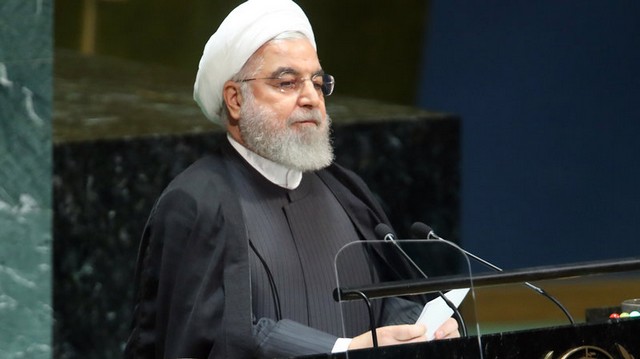
Question: President Rouhani, President of Iran, in his speech at the UN General Assembly depicts Iran’s plan for Persian Gulf security and sub-regional order. What is your assessment of this plan?

Richard Falk: As I understand President Hassan Rouhani’s plan it concentrates upon regionalizing the protection of navigation and safeguarding of energy flows in the Persian Gulf with a particular emphasis on providing security for oil tanker traffic. The proposal comes against a background of months of warmongering threats, harsh sanctions, and dangerous incidents that pose unacceptable risks of provoking violent incidents, and even war. The Hormuz Peace Endeavor as set forth by Rouhani, with the brilliantly appropriate acronym of HOPE, relies upon, and proposes a regionalization of responsibility as the recommended method for upholding future peace and security, vesting exclusive authority for this new undertaking in countries with territories neighboring the Persian Gulf. To make the plan operative, and contribute to a broader stability, the Rouhani plan insists on the prior removal of U.S. military forces from the Gulf countries as a vital precondition. This is an understandable, and constructive, vital element in this innovative approach, yet it is likely to be such a major stumbling block as to make HOPE a non-starter. Such an outcome would be sad and discouraging, and it would be up to enlightened governments and an aroused public opinion to prevent this from happening.

In its most fundamental features, HOPE should be perceived as an initiative that contrasts with the American backed Alliance for Safety and Protection of Maritime Navigation (MESA). The suggested initial membership of MESA consists of Saudi Arabia, Bahrain, UAE, Australia, UK, and of course the US. MESA is an undisguised geopolitical alliance structure that presupposes the perpetuation, and even the aggravation, of present conflict patterns rather than proposing a scheme that looks toward reconciliation. The dominant members of MESA are global actors that have a colonial past in the Middle East, while its regional members are central players in the anti-Iran coalition. The contrasting visions of HOPE and MESA security for the Persian Gulf and the Straits of Hormuz could not be more divergent.

I agree with the motivations for the arrangement as outlined by President Rouhani in his speech to the General Assembly. It is structured in a manner that identifies security with peace, regional presence, and territorial proximity, and seeks both the exclusion of global geopolitics and a sidelining of sectarian tensions, which is to be achieved by the inclusion of the Sunni-led Gulf Cooperation Council GCC) in the administration of the plan. HOPE also favors giving the UN a supervisory and backup role, while showing respect for international law. As would be expected, MESA conspicuously ignores the UN and international law. I wish that political conditions allowed HOPE could become the framework for reducing tensions and establishing a Gulf peace system, which if successfully implemented would likely have additional stabilizing effects throughout the Middle East. HOPE could also set a valuable precedent for resolving other intra-regional conflicts non-violently, especially those rooted in legacies of colonial exploitatiion.

Unfortunately, the initiative seems unrealistic at this time given the way geopolitics is being practiced in the region as epitomized by the ‘maximum pressure’ approach adopted by the Trump presidency, which includes unlawful sanctions inflicting severe hardships on the Iranian people. This shift to coercive diplomacy is also leading to the total breakdown of the 2015 JCPOA, which while operational, had met regional nonproliferation concerns until the provocative Trump unilateral withdrawal from the agreement in 2018.

The United States will doubtless refuse to remove its military presence from the Gulf, and will almost certainly be supported in that posture by several Arab governments, most notably Saudi Arabia, and by the non-Gulf state of Israel whose leverage in Washington should never be overlooked. In justification for this refusal it would be argued that without the military capabilities of the U.S. there could be a breakdown of internal order in several Gulf countries. This prospect point both to the crippling lack of self-confidence on the part of the monarchies on the Arab side of the Persian Gulf. It calls attention to the awkward reality that several of these government would likely collapse if not propped up by the American military presence.

The wider concern surrounds the widely held view that such an American disengagement from the Gulf would alter the regional balance of power throughout the Middle East. Further, it would be assumed that the new balance would swing in favor of Iran if the event U.S. agrees to end its military presence in the Gulf sub-region even if it does so gradually, and in a manner coordinated with the effective implementation of HOPE. Overall, such a process would undoubtedly contribute to peace and stability throughout the entire Middle East.

2- The important point of this plan is to give the United Nations a supervisory role. This role did not exist in Iran’s earlier plans for the Persian Gulf. Why is such a role justified for the UN?

The UN role is essential and highly desirable, but would only become feasible in the event that it enjoyed the passive backing, that is, at least the absence of active resistance, on the part of the United States and Saudi Arabia. For reasons set forth in the prior response, it seems wildly improbable to expect any acceptance of a UN role in relation to any proposal of the sort that Rouhani outlined so long as Donald Trump is the U.S. President. Even without Trump, there would likely be strong resistance in Washington, Riyadh, and Tel Aviv to the removal of American military forces. The UN could not undertake such a delicate mission without the genuine political backing of the Arab Gulf countries, and this cannot be obtained under current conditions without encouragement by the United States.

3-While the United States seeks to link Persian Gulf security to the Bab al-Mandeb Strait and the Shamat region, Iran believe that the security 0f Persian Gulf region is belong to this region. Linking Persian Gulf Security to Other Areas Doesn’t it complicate the region’s security issues?

The agreement is only understandable and constructive if limited in its scope to the Persian Gulf and the Strait of Hormuz. Introducing other areas within the scope of the plan makes it even more unlikely to be seriously considered, much less politically capable of realization. An expanded ambition for HOPE introduces several complications into a setting that is already an almost impossible diplomatic impasse. Such broadening would also make opposition to the initiative seem more reasonable. Iran should maintain its advocacy of HOPE as the alternative to the kind of precarious situation that exists presently, which would likely deteriorate further if the counter-plan of MESA becomes operational.

4-The United States is working to make the issue of Persian Gulf security more international in the form of a maritime coalition and more countries entering the Persian Gulf. Iran, however, believes that regional security should be provided by regional countries, including the Persian Gulf Cooperation Council, along with Iran and Iraq. Which perspective will find the dominant aspect?

The underlying conceptual issue is whether to entrust the security of the Persian Gulf to an arrangement that relies on an accommodating initiative overseen by regionalgeopolitics rather than to continue the high-tension pressures exerted by globalgeopolitics. In the abstract such reliance makes great sense, but if the proposal is evaluated politically is seems situated more in the realm of utopianism rather than in the domain of pragmatic problem-solving, The political difficulty with a regional approach is the question of whether enough trust exists, or can be brought into being, to embark on a plan that so undermines the intrusive regional role of the United States and requires a highly unlikely show of national self-confidence by the Gulf monarchies. Any removal of the U.S. as military supporter of the conflictual status quo, as already suggested, would be fiercely resisted given the present atmosphere by at least Israel and Saudi Arabia, and maybe by others as well, including the UAE and Egypt.

It should be remembered that ever since World War II, and to some extent earlier, the West regarded control of the Persian Gulf and the region to be a high strategic priority. After World War I the region was effectively subject to the authority and administration the European colonial powers. This European security arrangement persisted until the U.S. displaced Britain and France in 1956 in the aftermath of the Suez Operation, which had the unexpected outcome of shifting global management of regional affairs from Europe to the United States.

The Carter Doctrine, as enunciated in 1980 in the context of the Islamic Revolution in Iran and the Soviet intervention in Afghanistan, made it clear that the United States was committing itself to recourse to a major war, if necessary, to keep the Soviet Union from increasing its regional influence in ways that threatened Western control over access and supply lines associated with energy markets in the Gulf.

After the Cold War ended, the increasingly conservative American foreign policy establishment saw the Middle East as replacing Europe as the core of its global strategic ambitions, and interfered in the internal affairs of several countries believing it could solidify this ambition for regional hegemony in the Middle East by promoting regime change in countries that resisted its geopolitical policies in the region, centering on Gulf oil, Israeli security, and nuclear nonproliferation. The 9/11 attacks on the World Trade Center in 2001 became another policy rupture that made the American homeland seems vulnerable to extremism that emanated from the Islamic world, although ironically its ally Saudi Arabia with which the U.S. had a Special Relationship was closely and visibly linked to this mega-terrorist while Iran, the supposed adversary, had no connection whatsoever. Nevertheless, the Middle East became a primary combat zone in the new American emphasis on global counterterrorism, which along the way produced the first battlefield without borders in human history, while hostility toward Iran was actually intensified.

The 2003 invasion and subsequent occupation of Iraq shattered the viability of a Washington option to impose its political will on crucial Middle East countries beneath the banner of ‘democracy promotion,’ counter proliferation, and counterterrorism, but it didn’t transform alignments or give rise to any intention to disengage militarily, although there were significant shifts in tactics after the Iraq disaster. The failure in Iraq to produce a stable sequel to the autocratic rule of Saddam Hussein reminds us that the confrontation between Iran and the West can be traced back to the 1953 coup, notoriously engineered by the CIA. This epic instance of a regime changing intervention restored the Shah to power, displaced the democratically elected nationalist leader, Mohammed Mossadegh, from power 25 years later, handed out economic prizes to the largest American oil companies, reasserting colonialist priorities at the expense of Iran’s inalienable right of self-determination. It also led to Islamic Republic, a total repudiation of both the internal and international goals of what had been hailed by Washington in 1953 as a great strategic victory.

This historical narrative suggests that for the United States to give HOPE a chance it would have to become willing to repudiate its approach to Gulf security maintained over the course of more than 60 years. Yet HOPE offers the region and Washington a new opportunity to realign its foreign policy with peace, justice, international law, and the authority of the UN. The plan outlined by President Rouhani should be further developed by the government in Tehran. It should be presented to the world as a serious and constructive proposal. As such it would constitute a formidable diplomatic challenge to the ways of war, threat, and risk that currently prevail and cannot end well. HOPE needs to win the struggle to convince world public opinion before it can expect to achieve the intended, highly desirable, diplomatic breakthrough. Such a result would be a great victory for those forces dedicated to peace, justice, and law, and not only in the Gulf.

__________________________________________

Richard Falk is a member of the TRANSCEND Network, an international relations scholar, professor emeritus of international law at Princeton University, Distinguished Research Fellow, Orfalea Center of Global Studies, UCSB, author, co-author or editor of 40 books, and a speaker and activist on world affairs.

14 October 2019

Source: www.transcend.org
SHARED PROSPERITY VISION 2030

By Chandra Muzaffar

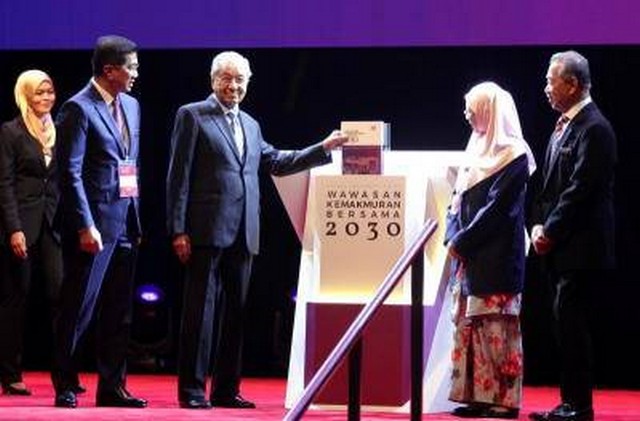
While presenting the Shared Prosperity Vision (SPV) 2030 to the people, Prime Minister Tun Dr Mahathir Mohamad highlighted two major challenges facing the nation —- corruption and socio-economic disparities. He argued that corruption and abuse of power had stunted Malaysia’s development and the equitable distribution of its economic pie. Rural-Urban disparities; regional disparities; disparities between classes; and disparities among ethnic communities have also hampered and hindered our progress. If the government and the people can concentrate upon these two challenges in the next decade, SPV 2030 would be attainable.

It is significant that even before the launching of SPV 2030 on 5th October 2019, the Pakatan Harapan(PH) government had already initiated a number of measures to combat corruption. Enhancing the independence of the Anti-Corruption Commission would be one of them. Requiring all PH legislators to declare their assets and liabilities to the people would be another positive move. A law that would underscore transparency and accountability in political and electoral financing is in the offing. This would undoubtedly curb the scourge of money politics. It is money politics which began in Sabah in the seventies and worsened in the Peninsula in the eighties and nineties that is partly responsible for the rapid decline of ethics in public life.

There is much more to be done in the battle against graft. Very few concrete measures have been taken to curb the pervasive agent/proxy culture in procurement exercises. Close kith and kin of those who wield executive power have yet to be barred from bidding for state contracts.

Firm, uncompromising action against those who may have strayed from the straight and narrow, though better than before, has still to become the norm. The tendency to avoid harsh, punitive action against the wrongdoer persists. This sometimes deteriorates into attempts to cover up obvious flaws and foibles of personnel in public institutions. Cover-ups are also known to occur when public officials are bribed by individuals pursuing their own private agendas.

It is partly because these negative attitudes continue to express themselves that rooting out corruption in Malaysia is a herculean task. If it can be reduced significantly by 2030, it would be a magnificent achievement. Individuals at all levels of society and all institutions in the public and private sectors should make this their mission. The national leadership in particular should set the right example for the rest of the citizenry by adhering to the highest standards of moral rectitude.

In addressing the challenge of socio-economic disparities, the first task of the government is to re-define the National Poverty Line ( NPL). The current official poverty rate does not reflect realities on the ground. It appears that poverty is more widespread than what government statistics suggest which is why it makes sense to adopt a Multi-Dimensional Poverty Index (MPI) that takes into account factors such as health, education, consumption patterns and household demographics. The SPV 2030 also emphasises the importance of enhancing vocational and technical skills. Our failure to do so should be understood in the larger context of our inability to develop a strong base in mathematics and science in our education system — a vital prerequisite for any society that seeks to industrialise.

While the spread of science and skills will help to reduce disparities, there should be a more determined drive to generate new high income economic activities, harness new sources of wealth and institute new forms of economic and social organisation that will raise the standard of living of the majority. Research and Development (R&D) will undoubtedly play a major role in all this and should focus upon our own rich biodiversity. Shouldn’t we also re-visit the role of cooperatives as a mechanism in the production, distribution and consumption of goods and services especially since we are grappling with the challenge of containing escalating cost of living? At the same time, we should ask whether it would ever be possible to narrow socio-economic disparities in Malaysia or any other society for that matter if we do not also curb the excessive accumulation of wealth by a tiny minority? In other words, shouldn’t we contemplate the introduction of a wealth tax of sorts that targets the super-rich?

There should be constant monitoring of the implementation of SPV 2030. The rakyat should be informed from time to time of the progress made in combating corruption and reducing disparities. Vision 2020 was not subjected to constant public evaluation and analysis. True, there was a major review in 1996 five years after the Vision was announced but in the last 23 years there has been no attempt to examine the implementation of the Vision’s 9 strategic challenges. One hopes that SPV 2030 will not meet the same fate.

Even more important, we should appraise SPV 2030 within the framework of our national philosophy, the Rukunegara. Whether visions and programmes with specific timelines help to further the aspirations of the Rukunegara and strengthen its principles should be on the radar of the government and the people all the while. For instance if the goal of ‘shared prosperity’ is accomplished it would make the Rukunegara’s aspiration of a ‘just society’ much more meaningful just as success in fighting corruption and narrowing disparities will embellish the Rukunegara’s fourth principle, the rule of law.

In this regard, it is significant that His Majesty the Yang di-Pertuan Agong, Al-Sultan Abdullah Ri’ayatuddin Al-Mustafa Billah Shah, has on a number of occasions recently called upon the leaders and the people to make the Rukunegara their guide. It is time that we heed his advice. The federal Parliament for instance can adopt a simple resolution to that effect in its next session.

Kuala Lumpur.

11 October 2019.

Kashmir is no longer an `internal affair’

By Sumanta Banerjee

Despite all the cringing efforts made by our newly appointed foreign minister S. Jaishankar to cajole the UN and the European Community to fall in line with the Modi government’s claim that developments in Kashmir are India’s `internal affair’, the exposure of the horrid happenings in Srinagar and other parts of the Valley through the international media is making Modi stink in world public opinion.

While he keeps on hugging Trump – the latter giving him the certificate that he speaks `good English’ (which has elevated his stature among the English-speaking Indian elite) – Modi had always been regarded as a pariah of sorts by global human rights organizations like Amnesty International and Human Rights Watch, which had come out with reports exposing the atrocities by his government. But with his latest step of misadventure in Kashmir, he is attracting the attention of a wider segment of international institutions – an attraction which may not be to his liking. For instance, he has been put under the scanner of the Office of the High Commissioner of Human Rights (OHCHR). Following the crackdown in Kashmir after the abrogation of Article 370 , the OHCHR issued a statement from Geneva on August 22, 2019, saying: “ The shutdown of the internet and telecommunication networks without justification from the government, are inconsistent with the fundamental norms of necessity and proportionality …the blackout is a form of collective punishment of the people of Jammu and Kashmir, without even a pretext of a precipitating offence.”

The EEC which Modi is trying to woo, is not willing to back his Kashmir policy, as evident from the statement issued by the European Parliament’s Committee on Foreign Affairs (AFET) from Brussels on September 2, which demanded that the Indian government should immediately lift the curfew in Kashmir, which in its opinion, had created humanitarian crisis.

In spite of Modi’s efforts, with the help of a subservient media, to bolster up his image as a saviour of Kashmir (by abrogating Article 370) and tall claims of opening it up to investments from business houses, the ground reality in the Valley mocks at his image. However much the Adanis and Ambani type patron-cum-toadies among the business houses promise to set up industries in the Valley, they will have to face a hostile populace. They cannot be bought off by jobs, as long as they retain their traditional sense of self-respect as Kashmiris and unwilling to submit to a plan of industrialization that will destroy their environment and their identity. These crony capitalists will thus have to set up their industrial plants within walled barriers protected by security forces, and employ migrants from outside to man them.

There are two narratives. One flags pictures of Modi receiving thunderous applause from expatriate Indians at a meeting in Houston in September, and of Kashmiri youth joining the Indian army, on TV channels that are subservient appendage to the official media. The other narrative is of a counter demonstration held at the same Houston site by other sections of the Indian expatriate against Modi’s communal policies. Pictures of this demonstration never appeared on our TV channels. Nor did these channels show pictures of Indian security forces firing pellets to blind Kashmiri youth who pelt stones at them – visuals which are available to us through the BBC and other foreign news agencies. This latter narrative which has been confirmed by reports by the UN is dismissed by the Modi government as `fallacious’, alleging that the reports were not based on direct ground level evidence. But ironically, it is the Indian government itself which had been denying the UN High Commissioner for Human Rights – despite its repeated requests all these years – unrestricted access to Kashmir to investigate into allegations of human rights violation. Given this restriction, the OHCHR naturally had to depend on reports of local Kashmiri human rights activists and reporters, and Indian civil liberties organizations (which enjoy international reputation) for the preparation of its reports.

The Modi government’s policy of gerrymandering

By announcing its decision to scrap Articles 370 and 35-A, the Modi government has gerrymandered the UNO-guaranteed constitutional geography of the state of Jammu and Kashmir, and robbing it of its autonomous rights. Following this announcement, the Indian government is not only barring foreign observers (from the UN), but even Indian Opposition politicians from visiting the Valley. It prevented a team led by the Congress leader Rahul Gandhi, CPI(M) leader Sitaram Yechury, CPI leader Mr. Raja and others from stepping out from the Srinagar airport in August. Later that month, it made an exception in the case of Yechury, who was allowed to meet his sick party colleague, M.Y. Tarigami (in house-arrest), but on the condition that he would not open his mouth to the media, or the public, during his stay in Kashmir ! Sometime later, it allowed the National Conference representatives to meet their leaders Faruq Abdullah and Omar Abdullah in their houses, which have been turned into prisons. By such a gesture, the Modi government may want to impress the world public with an image of normalcy in Kashmir. But it cannot hide the fact that the National Conference leaders , as well as those from the People’s Democratic Party still remain in police custody, under house-arrest, confined to their homes.

In these circumstances, the government’s decision to hold Block Development Council elections in Jammu and Kashmir on October 24, appears like a hypocritical façade. With all the political parties there, refusing to take part in the polls because of the absence of a free environment, the elections will naturally lead to the victory of the candidates of the BJP – the only party to contest the polls.

Similarly, when the Jammu and Kashmir governor announced that schools and colleges have been reopened – to give a semblance of normalcy – the Kashmiri people rejected his appeal by refusing to send their children to the education institutions in protest against the presence of the Indian armed forces there, and in the midst of an environment of military occupation.

These are signs of a simmering popular civil disobedience of, and non-cooperation with, the current dispensation that rules Kashmir. The Kashmiri people are kept incommunicado from the rest of India and the world, although protests keep erupting and heard by social activists who circulate them through alternative media. Reacting to such exposures of human rights violation by the Indian armed forces, the Indian government spokespersons, in a knee-jerk reaction of sorts, denounce them as intervention in our internal affairs.’ Domestic critics of these measures inside India are branded as anti-nationalists,’ secessionists,’ and Pakistani agents.’ These terms are used by the ruling party at the Centre to stifle all criticism against its plan to impose a centralized unitary system of governance to replace the federal system. As it is, it is alienated from the local people in Kashmir in the north-west, and Nagaland and Manipur in the north-east. It also faces opposition from the regional parties in the south, which protest against increasing central encroachment on their autonomy. The Modi government has not only failed to sort out these `internal affairs,’ but has further created a mess by the abrogation of Section 370, as a result of which there is sure to be exacerbation of violence in the volatile Valley, where street protests are already breaking out.

Modi offers Imran Khan a platter

But apart from further antagonizing the people of the Valley, by taking this rash step, Modi has virtually handed the tangled up issue of Kashmir to his counterpart in Pakistan on a platter. Imran Khan has jumped on this as an opportunity to fish again in the troubled waters of Kashmir. While shedding crocodile tears over the plight of the Kashmiris, pledging support to their `freedom fight’, and appealing to the conscience of the UN and the international public opinion about the human rights violation by the Indian security forces, Imran Khan is canny enough (as he is advised by his bosses in the Pakistan army headquarters and the ISIS) to use this opportunity to his best advantage. There is wide-spread disgruntlement among the public in the Valley against the continuing curfew and occupation by security forces, who are raiding homes and indiscriminately picking up young Kashmiri Muslims and torturing them in their custody. Although suppressed by the Indian media, their voices are being heard all over the world through the international media like the BBC, Washington Post, New York Times, and other means. (Re: Washington Post video of a Kashmiri father breaking down after his minor son was taken away by the security forces – https:www.telegraph.ndid.com>shock-torture-to-kashmiris>cid).

It is this mood of public anger that is providing the Pakistani military establishment with an excellent chance to send its terrorist infiltrators into the Valley to recruit the disgruntled youth there, and expand its base in a movement which originally began as demand for `azadi’ (an independent Kashmir – free from both Indian and Pakistan administration), but getting disoriented towards a pro-Pak direction. Ominous signs are already being seen in pictures of some protestors waving Pakistan flags in street demonstrations.

Modi’s image abroad versus the ground reality in India

Narendra Modi has managed to shake hands with Trump, his political twin , at the G 7 summit – a scene celebrated as some sort of a historical event by the Indian media, trumping it as US approval of the Indian government’s latest policy on Kashmir. But given Trump’s opportunist mercurial temperament, he greets Imran Khan and shakes hands with him (in a replica of the Modi-Trump handshake) promising to mediate in the Kashmir dispute ! After all, Trump needs Imran Khan and his army to extricate the US from the mess that both had created in Afghanistan.

Frankly speaking, Narendra Modi has made the Indian state stink in world public opinion. He has managed to reduce India’s position to that of a skunk that is abhorred by the UN Human Rights Commission, which has repeatedly come out with reports exposing the violation of human rights by his soldiers in Kashmir, as well as other parts of India. Under his stewardship, the Indian media owners have been turned into his stooges – threatened by the rats of CBI, ED and other agencies. The international body of journalists, Committee to Protect Journalists (CPJ), in its latest statement issued on August 23, 2019 expressed concerns over the situation (in Kashmir) and demanded immediate steps to restore communications.

The ugly smell emanating from the Valley – from pellet-blinded youngsters, curfew-bound citizens deprived of medical needs, enforced silence on house-arrest bound politicians – is spreading a foul miasma in other parts of India. The Centre’s policy of clamping down on Kashmir (spreading even to extent of preventing Indian national Opposition party leaders to enter Srinagar) is a premonition of what is awaiting the rest of India, and the fate of regional and national political parties. Under Modi’s governance, with the dissemination of the Opposition (whose leaders and members are joining the ruling party in droves – indicating the totally a-political and opportunist instincts of the MLAs and MPs who were nominated by the Congress, CPI, CPI(M) and other secular parties during all these years), we may soon have a Latin-America type `banana republic,’ under the rule of a single party and its mafia, consisting of mercenary politicians.

Role of the security forces

A very important prop for the present Indian republic is made up of security forces operating under various nomenclatures like the CRPF, BSF, Assam Rifles and other para-military organizations. They have gained notoriety for their misdeeds – the most infamous being the Kunan-Poshpora incident of gang-rape of Kashmiri women by the Rajputana Rifles security forces during search operations in the twin villages on February 23 and 24, 1991. A few years later, in Manipur in 2004, a young woman Thangjam Manorama was abducted, raped and killed by the 17th Assam Rifles personnel. In a demonstration of protest, Manipuri mothers stood in the nude in front of the camp of the para-military soldiers, shouting the sslogan: “Indian army, rape us “ !

Both these events, which caught international attention, took place during the Congress regime at the Centre. After having coming to power, since 2014 the BJP regime has further nourished these rapist and murderous instincts among the security forces, through the anti-Muslim vitriolic speeches that its MLAs and MPs spew out in public, and by allowing the Sangh Parivar –sponsored cow-protection vigilantes to lynch Muslims. The BJP leaders have come out openly in support of the accused security force personnel involved in the rape of a woman in Jammu’s Kathua in January, 2018.

It is this encouragement from the ruling power that nourishes the anti-Muslim sentiments among the members of the para-military forces, who would go to any extreme to appease their twin employers – the Amit Shah led Home Ministry, and the Rajnath Singh led Defence Ministry. A typical example of this aggressive mood is provided by the speech of a CRPF constable during a debate organized by the National Human Rights Commission on September 27, 2019. The debate was on how terrorism and militancy can be tackled effectively while observing human rights. The female constable, Khushboo Chauhan won a consolation prize for supporting the hanging of Afzal Guru, the suspect in the Parliament attack case, in the following terms: “ Us ghar mein ghus key maaraingey, jis ghar se Afzal niklegey; woh koch nahin palnaye dengey, jis koch se Afzal niklega” (will enter and hit the home from which Afzal would come; will not let the foetus survive in the womb from which Afzal will be born). She went further, urging the Indian jawans: “Get up brave soldiers of the country….Give a roar, and pierce a tricolour into the chest of that Kanhaiya (the former Jawaharlal Nehru University students union president)… (Re: The Wire website, October 7, 2019).

The assonance between the hate speeches of the Sangh Parivar leaders and the CRPF constable – using the same rhetoric – belies the claim of impartiality of our security forces when it comes to domestic protests by dissenters, and also underlines their attitude towards human rights.

Responsibility of the UN and international agencies

In such a situation, it is necessary for the UN to step in – as it had done on similar occasions of civil strife in other parts of security the world. It has to persuade the Indian state to desist from further exacerbating the civil strife in Kashmir (which had been going on for the last several decades – and is likely to increase due to the further alienation of the people in the Valley because of the Modi government’s recent decision to revoke Article 370 ). It has also to persuade the neighbouring state of Pakistan state to desist from provocative statements and actions (like infiltration of terrorists), that inflame such strife in the Valley.

As far as the Indian government is concerned, it cannot kick off the Kashmir problem under the carpet of internal affairs.’ It had always been internationally described as a controversial issue of unresolved aspirations and rights of a people inhabiting a divided territory. Even the UN recognizes it as a disputed territory’ by officially describing the Indian part as Indian-administered Kashmir,’ and the other part as Pakistan-administered Kashmir’ – since it involves two hostile states with a history of wars. Both India and Pakistan are bound by the agreements that the UN had formalized to settle disputes between the two. Any disruption of the status quo – agreed upon by the two states under UN supervision at different stages of the conflicts – threatens to jeopardize regional stability in the sub-continent. Under its Charter, the UN is responsible for both preventing such a catastrophe, and protecting the people of Kashmir from the violation of human rights.

The UN Charter gives the Security Council primary responsibility for the maintenance of international peace and security. In fulfilling the responsibility, the Council can introduce operations for establishing peace. Chapter VII of the Charter authorizes the UN to deploy peace operations in `volatile post-conflict’ situations where the “ state is unable to maintain security and public order”. Explaining the mandate of such missions, the UN Security Council in its resolution 1674, in 2006, said that it included “(i) the protection of civilians… (ii) facilitation of the provision of humanitarian assistance…(iii) protection of citizens is given priority in decisions about the use of available capacity and resources, including information and intelligence resources…”

On each of the above counts, Kashmir today needs the deployment of UN peace operations in a situation where the Indian state has been “ unable to maintain security and public order.”

UN presence in Kashmir

It is not that UN had never intervened in what India calls its internal affairs’ today. The United Nations Military Observer Group (UNMOG) was set up for both India and Pakistan in January, 1949, its members deployed in its respective headquarters in the Indian-administered Kashmir’, and the `Pakistan- administered Kashmir’. Its mandate was to conduct field trips and area recce along the Line of Official Control (that divides the two parts of Kashmir) to investigate into allegations of ceasefire violations by either of the two states, and then to submit its findings to the UN Secretary General.

In complete violation of this UN mandate, the Modi-led BJP government in 2014 asked the UNMOG, based in Srinagar to wind up its work, and in 2017 its External Affairs Ministry reiterated that it had no mandate to monitor the situation in Kashmir. Curiously enough, the Pakistan government continues to host the UNMOG on its territory without curbing its activities. According to the then UN Secretary General’s 1949 decision to deploy the UNMOG in Kashmir, its mandate could only be terminated by the UN Security Council.

For taking a unilateral decision to curb the role of the UNMOG, the Indian government should have been summoned and reprimanded by the UN much earlier. But the UN can still make amends for its past acts of negligence by being pro-active in Kashmir today by deploying its Peace-Keeping forces.

Need for UN Peace-keeping Operations in Kashmir

As explained earlier, the Indian government has not been able to meet the standards required according to the mandate of UN peace-keeping to protect the rights of citizens of the part of Kashmir that it administers – as evident from the successive damning reports by both Indian and international human rights groups, and more importantly by UN investigative reports that highlighted acts of violation of human rights.

In such a situation, the UN is entitled to intervene in a territory of its member state where its people are devastated by civil conflicts. In such circumstances, the UN had in the past, deployed its peace-keeping forces in strife-ridden states like Cyprus, Afghanistan, Golan Heights, Congo and many other states.

Under the UN mandate of peace-keeping, “Peace-enforcement involves the application, with the authorization of the Security Council, of a range of coercive measures, including the use of military force….Such actions are authorized to restore international peace and security in situations where the Security Council has determined the existence of a threat to peace, or act of aggression..” (Re: United Nations Peace Keeping Operations: Principles and Guidelines. 2008)

We are still awaiting the final decision of the UN Security Council on the dispute over Kashmir. But it is highly recommended that the territory is put under the UN peace-keeping forces, which are authorized to use “coercive measures,” that will thankfully oust the much maligned Indian security forces from the Valley, and replace them with a UN-monitored international peace-keeping forces.

Sumanta Banerjee is a political and civil rights activist and social scientist. Email: banerjee.sumban@gmail.com

11 October 2019

Source: countercurrents.org

Some In Hong Kong Feel Frustrated, As Their City Is Losing To Mainland China

By Andre Vltchek

Text and Photos: Andre Vltchek

Hong Kong is losing to Mainland China. Its poverty rates are high, it suffers from corruption and savage capitalism.It is now the most expensive city on earth. People are frustrated, but paradoxically, they are blaming socialist Beijing for their problems, instead of the legacy of British colonialism. ‘Across the line’, Shenzhen, Shanghai, Beijing, Xiang and other cities are leaving Hong Kong behind in almost all fields.

*

When my dear friend and a great concert pianist from Beijing, Yuan Sheng, used to live in New York, recording, giving concert and teaching at prestigious Manhattan School of Music, he told me that he used to cry at night: “In the United States, they smear China. I felt hurt, defenseless”.

He returned to Beijing, gave back his Green Card and began teaching at Beijing Conservatory.He never regretted his decision. “Beijing is much more exciting than New York, these days”, he told me.

It is obvious that Beijing is booming: intellectually, artistically; in fact, in all fields of life.

Yuan’s friend, who returned from London and became a curator at the iconic “Big Egg” (the biggest opera house on earth), shared her thoughts with me:

“I used to sit in London, frustrated, dreaming about all those great musicians, all over the world. Now, they come to me. All of them want to perform in Beijing. This city can make you or break you. Without being hyperbolic, this is now one of the most important places on earth. Just under one roof, in one single night, we can have a Russian opera company performing in our big halls, in another one there is a Chinese opera, and a Bolivian folklore ensemble in a recital hall. And this is only one of Beijing’s theatres.”

When the Chinese artists and thinkers are fighting for the prime with their Western counterparts, it is usually Beijing, Shanghai and Shenzhen, ‘against’ London, Paris and New York. Hong Kong is ‘somewhere there’, behind, suddenly a backwater.

While Hong Kong University and the City University of Hong Kong used to be the best in China, many Mainland institutions of higher learning, including Peking University and Tsinghua, are now producing many more cutting-edge creative thinkers. I spoke at all of these schools, and can confirm that the young people in Beijing and Shanghai are extremely hardworking, endlessly curious, while in Hong Kong, there is always that mildly arrogant air of exceptionalism, and lack of discipline.

It used to be that the so-called “Sea Turtles” (students who went abroad and to Hong Kong, and then returned to Mainland China), were treated like celebrities, but now, it is much easier to get a job with the Mainland China’s diplomas.

Recently, while filming the riots in Hong Kong, I was told by a receptionist at one of the major shopping plazas:

“We do not treat visitors from Mainland China well. And, they lost interest in Hong Kong. Before, they used to come here, to admire out wealth. Now, most of them are avoiding this place. What we have, they have, too, and often better. If they travel, they rather go to Bangkok or Paris.”

These days, the contrast between Xiang, Shanghai, Beijing and Hong Kong is shocking. Mainland infrastructure is incomparably better. Public areas are vast, and cultural life much more advanced than that in a former British colony.

While the Mainland Chinese cities have almost no extreme poverty, (and by the end of 2020 will have zero), in Hong Kong, at least 20% are poor, and many simply cannot afford to live in their own city. Hong Kong is the most expensive place on earth. Just to park a car in could easily cost over US$700 per month, for just working hours. Tiny apartments cost over a million US dollars. Salaries in Hong Kong, however, are not higher than those in London, Paris or Tokyo.

The city is run by an extreme capitalist system, ‘planned’ by corrupt tycoons/developers.The obsolete British legal system here is clearly geared to protect the rich, not the majority. That was essentially why the “Extradition Bill” was proposed: to protect Hong Kong inhabitants from the unbridled, untouchable, as well as unelected de facto rulers.

But there is this ‘deal’, negotiated before Hong Kong was returned where it belongs, which is – to China. “One country, two systems”. It is an excellent contract for the turbo-capitalist magnates, and for the pro-Western “activists”. And it is extremely bad one for the average people of Hong Kong. Therefore, after months of riots sponsored by the West, the Hong Kong administration scrambled the bill.

*

Young hooligans know very little about their city. I talked to them, extensively, during their first anti-Beijing riots in 2014 (so-called “Umbrella Revolution”).

Correctly, then and now they have been frustrated about the declining standards of living, about the difficulties to get well-paid jobs and find affordable housing. They told me that ‘there is no future for them’, and that ‘their lives are going nowhere’.

But quickly, their logic would collapse. While realizing what tremendous progress, optimism and zeal could be observed in the People’s Republic of China, under the leadership of the Communist Party, they would still be demanding more capitalism, which is actually ruining their territory. In 2014, and now, they are readily smearing the Communist Party.

Being raised on the shallow values of selfishness and egotism, they are now betrayed their own country, and began treasonous campaigns, urging foreign powers, including US and UK, to “liberate them”. All for just fleeting moment of fame, for a “selfie uprising”.

To liberate from whom? China does not, (unfortunately for Hong Kong), interfere in Hong Kong’s economic and social affairs. If anything, it builds new infrastructure, like an enormous bridge now connecting Hong Kong with Macau (a former Portuguese colony) and a high-speed train system, linking Hong Kong with several cities in Mainland China.

More restrain Beijing shows, more it gets condemned by the rioters and Western media, for ‘brutality’. More subway stations and public property get destroyed by rioters, more sympathy flows for them from the German, US and British right-wing politicians.

*

For decades, the British colonialists were humiliating people of Hong Kong, while simultaneously turning their city into a brutal, and by the Asian standards, ruthless and fully business oriented megapolis.Now people are confused and frustrated. Many are asking, who they really are?

For Hong Kong, this is a difficult moment of soul-searching.

Even those who want to “go back to UK”, can hardly speak English. When asked “why do they riot”, they mumble something about ‘democracy’ and ‘freedom’ in the West, plus ‘evilness of Beijing’. Brochures of some obscure, extremist Japanese religious cults get distributed. It is one big intellectual chaos. Rioters know nothing about Syria, Afghanistan, Venezuela, countries which are being ruined by the West.

Leaders like Joshua Wong are proudly colluding with the Western embassies.To praise Chinese socialism publicly is now dangerous – people get beaten by the “pro-democracy” rioters, for such “crimes”.

Highly educated and overly-polite Singapore is literally sucking out hundreds of foreign companies from Hong Kong. Its people speak both English and Mandarin. In Hong Kong, great majority speaks only Cantonese. Many foreigners are also relocating to Shanghai.Not only big businesses: Shanghai is now full of European waiters.

Even tourism is down in Hong Kong, by 40%, according to the recent data.

Absurdly: the rioters want precisely what the Communist Party of China is providing: they want real struggle against corruption, as well as determined attempt to solve housing crises, create new jobs, and provide more public services. They want better education, and generally better life. They want “Shanghai or Beijing”, but they say that they want to be a colony of the UK, or a dependency of the USA.

They loosely define communist goals, and then they shout that they are against Communism.

*

China is now ready to celebrate its 70th Anniversary of the Founding of The People’s Republic of China.

Clearly, the West is using Hong Kong to spoil this great moment.

After leaving Hong Kong, in Shanghai, I visited a brilliant, socialist realism exhibition at the iconic, monumental China Art Museum. Country under the leadership of President Xi is once again confident, revolutionary and increasingly socialist; to horror of declining West. It is a proud nation with great, elegant cities constructed by the people, for the people, and with progressively ecological countryside. Its scientific, intellectual and social achievements speak louder than words.

Contrast between Hong Kong and Shanghai is tremendous, and growing.

But do not get me wrong: I like Hong Kong. I have more than 20 years of history with that old, neurotic and spoiled lady. I can feel her pulse. I love old trams and ferries, and out-of-the-way islands.

But Hong Kong’s charm lies in its decay.

Mainland China’s beauty is fresh. China is one of the oldest cultures on earth, one of the deepest. But it feels crisp, full of hope and positive energy. Together with its closest ally, Russia, it is now working and fighting for the entire world; it is not selfish.

Hong Kong is fighting only for its vaguely defined uniqueness. Actually, it is not Hong Kong that is fighting, as most of people there want to be where they truly belong – in their beloved nation – China. It isa gang of kids with their face-masks that is fighting. In brief: a relatively big group of pro-Western extremists, whose leaders are putting their fame above the interests of the people.

*

Hong Kong has no “Big Egg”; no famous theatre where the greatest musicians are stunning the world. Its only art museum is closed for reconstruction, for years, and will re-open only at the end of 2019. Its cultural life is shallow, even laughable, for the place which is branding itself as the “Asia’s World City”. There are no great discoveries made here. It is all business. Big, big business. And creeping decay.

Beijing could ‘liberate’ Hong Kong, easily; to give it purpose, pride and future.

But young hooligans want to be liberated by Washington, instead. They want to be re-colonized by London. And they do not consult their fellow citizens. That clearly reflects their idea about ‘democracy’. Not the “rule of the people”, but the “rule of the West”.

Not only they feel spite for their country, but they also scorn and intimidate their fellow citizens who just want to have their meaningful life, based onthe Chinese values.

*

[First published by NEO – New Eastern Outlook – A journal of Russian Academy of Sciences]

Andre Vltchek is a philosopher, novelist, filmmaker and investigative journalist.

10 October 2019

Source: countercurrents.org

Pakistan establishes China Pakistan Economic Corridor (CPEC) Authority for expediting delayed projects

By Abdus Sattar Ghazali

Pakistan on Monday (Oct 7) established the China Pakistan Economic Corridor (CPEC) Authority to speed up the delayed projects as Prime Minister Imran Khan arrived in Beijing

The establishment of CPEC Authority was aimed at accelerating the pace of CPEC related activities.

Multi-billion dollar CPEC was launched in 2015 and several projects under the first phase are close to completion. But the progress on CPEC next phase projects have reportedly slowed since Prime Minister Imran Khan came to power last year.

The Pakistani media has reported that most of the CPEC-related projects have stalled due to certain reasons, including prevailing financial crunch confronting the government and non-cooperation’ of the bureaucracy due to fear of the National Accountability Bureau, the anti-corruption watchdog.

The CPEC is the flagship project of President Xi Jinping’s multi-billion Belt and Road Initiative (BRI).

The CPEC has also become a major irritant in India-China relations with New Delhi voicing its opposition to the infrastructure project as it traverses through Pakistan-administered Kashmir. India is wary of not only Pakistan becoming the recipient of all of this development but also of the increasing role of China in the region.

The CPEC was one of the major topics of discussion during Imran Khan’s two-day (Monday, Tuesday) talks with Chinese President Xi Jinping and Premier Li Keqiang.

The CPEC Authority shall be primarily responsible for coordination, monitoring and evaluation to ensure implementation of CPEC activities. It shall exercise its powers and perform its functions in line with the framework and memorandum of understanding signed between Pakistan and China.

Pakistan has also amended tax laws to give income, sales tax and custom duty exemptions to Gwadar Port and Gwadar Free Zone to enabled them to deal with transit trade.

Meanwhile media reports said Prime Minister Imran Khan has decided to hand over cash-bleeding Pakistan Steel Mills (PSM) to China for its revival.

The federal Minister for Planning, Development and Reforms Makhdum Khusro Bakhtyar said Sunday that the government would offer the steel sector to China for bilateral cooperation in an effort to reduce about $2bn current imports on account of scrap and steel products.

The cooperation in this field would help the country enhance Pakistan Steel Mills capacity to three million tonnes, he said, explaining that Pakistan’s steel requirement was currently nine million tonnes and was estimated to increase to 12m tonnes within a few years as economy starts to grow. At present, the country’s total steel production stood at 4.5m tonnes.

“All the existing projects under the CPEC portfolio have been streamlined and there is no slowdown anywhere,” the minister said.

The CPEC is an economic ‘corridor’ or zone between China and Pakistan started in 2015 and eventually, on completion, will be connecting a number of countries in South and Central Asia for trade and industrial purposes.

Originally valued at $46 billion, the value of CPEC projects is worth $62 billion as of 2017.

A vast network of highways and railways are to be built under the aegis of CPEC that will span the length and breadth of Pakistan.

Modern transportation networks built under CPEC will link seaports in Gwadar and Karachi with northern Pakistan, as well as points further north in western China and Central Asia.

A 1,100 kilometer long motorway will be built between the cities of Karachi and Lahore as part of CPEC, while the Karakoram Highway from Hasan Abdal to the Chinese border will be completely reconstructed and overhauled.

Pakistan’s railway network will also be extended to eventually connect to China’s Southern Xinjiang Railway in Kashgar. The estimated $11 billion required to modernize transportation networks will be financed by subsidized concessionary loans.

The corridor will include 2,000 kilometres transport link between Kashgar in North-Western China to Pakistan’s Gwadar Port on the Arabian Sea via roads, railways and pipelines.

The CPEC’s potential impact on Pakistan has been compared to that of the Marshall Plan undertaken by the United States in post-war Europe. Pakistani officials predict that CPEC will result in the creation of upwards of 2.3 million jobs between 2015–2030, and add 2 to 2.5 percentage points to the country’s annual economic growth.

The real pivot in this game is port of Gwadar. Located near the Strait of Hormuz, Gwadar will save 12,900 KMs of sea route which Middle Eastern energy supplies take to reach China’s eastern board through Strait of Malacca. This new route from Gwadar will serve a dual purpose for China — shorter land route and a strategic advantage in the form of reduced dependence upon India and US. It will also help China in the development of some of its least developed regions in the west.

Pakistan gives 23-year tax exemption to Chinese firm operating in Gwadar

Pakistan has decided to grant a tax exemption to a Chinese firm for 23 years to facilitate the establishment of its industrial units at Gwadar Port in Balochistan.

China Overseas Ports Holding Company Gwadar (COPHC) Chairman Zhang Baozhong told a press conference in Islamabad on Tuesday the tax exemption will be a turning point for Pakistan’s economy and now billions of dollars will be invested in Gwadar.

The COPHC and its four subsidiaries are responsible for operating the seaport and its economic zones for a period of 23 years.

The concessions had been guaranteed in the Gwadar Port Concession Agreement but the successive governments were not notifying them. However, President Dr Arif Alvi on Monday promulgated two ordinances to set up China-Pakistan Economic Corridor Authority and Tax Laws Amendment Ordinance 2019.

“I believe Gwadar will be the largest contributor to the gross domestic product (GDP) growth in seven years,” said the chairman, adding that 95% of the production in the Gwadar Free Zone would be exported.

Currently, Karachi remained the single largest contributor to the national economic output.

“We have completed the master plan of the Gwadar Free Zone that will be built in four phases over a period of seven years,” said Baozhong. “Once the zone is fully developed in seven years, 47,000 jobs will be created for the locals, and its annual sales will be $1 billion.”

On the troubles faced in reaching this point, the COPHC chairman said, “Today is a big day and I had to struggle for seven years to secure these tax concessions, which had been promised in the Gwadar Port Concession Agreement. I had been running up and down for seven years and everybody made promises with me but nobody helped.”

“So far, 41 investors have come forward to invest about $500 million in Gwadar Free Zone in the first phase,” said the port operator. “These industries are being set up in sectors of logistics, edible oil, piping, and halal food.”

He said the $500 million investment would create 5,000 jobs for the locals in phase one alone, adding that the free zone developer had made it binding for the investors to complete the physical infrastructure in six months and start production within one year.

Abdus Sattar Ghazali is the Chief Editor of the Journal of America (www.journalofamerica.net) email: asghazali2011 (@) gmail.com

11 October 2019

Source: countercurrents.org

Time to Rebel

By Chris Hedges

Monday, Oct. 7. marks the start of what the British-based group Extinction Rebellion is calling the International Rebellion. Thousands of people will occupy the centers of some 60 cities around the globe, including Madrid, Amsterdam, Paris and New York, to stage nonviolent occupations of bridges and roads for at least a week. The goal is to paralyze commerce to force the ruling elites to respond to the climate emergency. I will be at Battery Park in New York to join them Monday morning.

The protests, which organizers say will likely lead to hundreds of arrests, will employ a variety of tactics, including activists who will superglue themselves to trains, subways and buildings as well as build temporary encampments to disrupt traffic. The New York event will open at 9:30 a.m. Monday with a “funeral march” from Battery Park. At 2 p.m. Monday, organizers will set up base in Washington Square Park and use it as a staging area. Activists will congregate at the park and fan out in groups across the city to carry out protests. The disruptions during the week in New York will occur in a variety of locations, including in the Financial District and at the New York Stock Exchange, Columbia University and major cultural institutions. In Chicago, there will be an attempt to occupy City Hall and Daley Plaza. London activists, who shut much of the city down in April for 10 days and saw 1,000 arrests, are planning to hold out for three weeks.

“It is our sacred duty to rebel in order to protect our homes, our future, and the future of all life on Earth,” Extinction Rebellion writes. This is not hyperbolic. We have, as every major climate report states, very little time left. Indeed, it may already be too late.

“People have to go to the capital city,” said Roger Hallam, the co-founder of Extinction Rebellion and a researcher at King’s College London, when we spoke earlier this year. “That’s where the elite is, the business class. That’s where the pillars of the state exist. That’s the first element. Then you have to have a lot of people involved. They have to break the law. There’s no point in just doing a march. They have to literally close down the streets. They have to remain nonviolent. That’s absolutely crucial. Once you get violent, police and the state have an excuse to remove you. It’s got to be cultural. You make it into a sort of Woodstock affair. Then thousands more people come onto the streets.
“There’s a fundamental difference between breaking the law and not breaking the law. It’s a binary difference. When you break the law, then you’re massively more effective in terms of material and psychological influence as well as media interest. The more dramatic the civil disobedience, the better. It’s a numbers game. You want people blocking the streets, but you need 10, 20, 30 thousand. You don’t need 3 million. You need enough for the state to have to decide whether to use repression on a mass scale or invite you into the room. The gambit, of course, particularly in the U.K., is that the state is weak. It’s been hollowed out by neoliberalism. They’re going to find themselves overwhelmed. We will get in the room.”

The group stresses what it calls a “pre-social-media age” strategy for organizing. It has created decentralized structures to make decisions and issue demands. It sends out teams to give talks in communities. It insists that people who participate in the actions of Rebellion Extinction undergo “nonviolent direct-action” training so they will not be provoked by the police or opposition groups.

“Most of the recent mass mobilizations have been social-media-fueled,” Hallam said. “Consequently, they have been chaotic. They are extremely fast mobilizations. Social media’s a bit like heroin. It’s a high, but then it collapses, like we’ve seen. It becomes chaotic or violent. A lot of modern social movements put stuff on social media. It gets clogged up with trolls. There are lots of radical-left organizations arguing about different privileges. We’ve circumvented that and gone straight to the ‘common people,’ as you might say. We’ve held meetings in village town halls and city halls. We go around the country in a 19th-century sort of way, saying, ‘Hey guys. We’re all fucked. People are going to die if this isn’t sorted out.’ The second half of the talk is: There’s a way of dealing with this called mass civil disobedience.

“Nonviolent discipline, as the research shows, is the No. 1 criterion for maximizing the potential for success. This is not a moral observation. Violence destroys movements. The Global South has been at it for a few decades. Violence just ends up with people getting shot. It doesn’t lead anywhere. You might as well take your chances and maintain nonviolent discipline. There’s a big debate within the radical left over the attitude toward the police. This debate is a proxy for the justification of violence. As soon as you don’t talk to police, you’re more likely to provoke police violence. We try to charm the police so they’ll arrest people in a civilized way. The metropolitan police [in London] are probably one of the most civilized police forces in the world. They have a professional team of guys who go to social protests. We’ve been in regular communication with them. We say to the police, ‘Look, we’re going to be blocking the streets. We’re not going to not do that because you ask us not to.’ That’s the first thing to make clear. This is not an item for discussion. They know it’s serious. They don’t try to dissuade us. That would be silly. What they are concerned about is violence and public disorder. It’s in our interest as civil disobedience designers not to have public disorder, because it becomes chaotic.”

“You’re basically holding the economy of a city to ransom,” he said of the shutdowns. “It’s the same dynamic as a labor strike. You want to get into the room and have a negotiation. Extinction Rebellion hasn’t quite decided what that negotiation is going to be. We’ve got three demands—the government tells the truth, the carbon emissions go to zero by 2025, which is a proxy for transformation of the economy and the society, and we have a national assembly which will sort out what the British people want to do about it. The third demand [calling for a national assembly] is a proxy for transforming the political structure of the economy. It proposes a different, concrete form of democratic governance, based around sortition rather than representation. This has had a big influence in Ireland and Iceland. The optimal transition is going to be from the corrupted ‘representational’ model to a sortition model in the same way aristocratic law shifted to representational law at the end of the 17th and beginning of the 19th century.

“The intelligent people on the political left have woken up to the fact that we’ve got an existential emergency that could destroy human society in the next 10 years. It’s in the cards. A lot of us have already gone through the grief process. But these [newly awakened] people just had that enlightenment. They’re in shock. They’re maintaining a veneer of ‘It’s sort of OK.’ This is what the Green Deal [a United Kingdom government policy initiative] is about. It is an attempt to pretend that industrialization can stay the same. We can all still be wealthy. We can all still have great jobs. It is like Roosevelt’s New Deal. But the New Deal was based on the idea that we can carry on plundering nature and nothing’s going to happen. Maybe that was right in the 1930s, but it’s not right anymore. It’s a matter of physics and biology. We simply cannot maintain these levels of consumption. They haven’t reckoned with that. One of the main reasons the climate debate has not gotten into a serious mode over the last 30 years is because people who are in charge of informing the public are terrified of telling the public that they can’t have the high consumer lifestyle anymore. It’s a taboo. But like any addiction, there comes a moment of truth. We’re there now.”

“For 30 years we’ve had one political metaphysic, reform,” he said. “You either reform or you are irrelevant. But now, we have two massive, exponentially increasing structural faults—the inequality problem and the climate problem. A lot of people—because of path dependency dynamics—have worked for 30 years in this lost-cause sort of space. They’re desperate for change. For 30 years, they’ve been putting their money on reform. The tragedy—and you can see this in the history of political struggle going back hundreds of years—is there’s a flip where the reformists lose control. They’re still living in the past world. The revolutionaries, who everyone thinks are ridiculously naive, suddenly come to the fore. It’s usually a quake. It’s not a gradualist thing. It’s a double tragedy because it’s a quake and the revolutionaries usually aren’t organized. I think that’s what’s happening now. It has very big implications for [resistance against] fascism. Unless you have a clearheaded mass mobilization on the left, which is connected with the working class, you’re not going to be able to stop the fascism.”

These protests are a welcome antidote to the choreographed and ineffectual climate marches of the past in which protesters dutifully stayed in police-designated areas and dispersed after a few hours. The goal is not simply to protest but to throw a wrench into the machine. The group has 10 working principles that center on nonviolent resistance. These principles are:

We have a shared vision of change: to create a world that is fit for generations to come.

We set our mission on what is necessary, mobilizing 3.5% of the population to achieve system change – using ideas such as “momentum-driven organizing” to achieve this.

We need a regenerative culture, creating one that is healthy, resilient and adaptable.

We openly challenge ourselves and this toxic system, leaving our comfort zones to take action for change.

We value reflecting and learning; as we follow a cycle of action, reflection, learning and planning for more action, we learn from other movements and contexts as well as our own experiences.

We welcome everyone and every part of everyone, and work actively to create safer and more accessible spaces.

We actively mitigate for power, breaking down hierarchies of power for more equitable participation.

We avoid blaming and shaming; we live in a toxic system, but no one individual is to blame.

We are a nonviolent network; using nonviolent strategies and tactics is the most effective way to bring about change.

We are based on autonomy and decentralization, collectively creating the structures we need to challenge power.

Anyone who follows these core principles and values can take action in the name of Extinction Rebellion.

You can see interviews I did with Hallam, who was jailed two weeks ago by British police in preemptive effort to curtail the rebellion here, here and here.

The longer we live in denial, the worse it will get. There is no way out. Floods, droughts, monster hurricanes, cyclones, extreme heatwaves, crop failure, mass displacement and the breakdown of society are now inevitable. This is our future. The democratic methods for change—voting, lobbying, petitions, education and protests—have proved to be spectacular failures. The corporate forces that have seized control of our political and economic systems will, unchecked, drive us into extinction for profit. All we have left is nonviolent, disruptive civil disobedience. A rebellion. And if we fail, we will at least obliterate our despair, find solace in a community of resisters and restore our emotional health and our dignity by fighting back against those who are engineering the ecocide.

Chris Hedges writes a regular column for Truthdig.com.

7 October 2019

Source: countercurrents.org

Will Confronting Iran Lead to War or Peace?

By Richard Falk

1 Oct 2019 – This is a slightly modified version of an interview published in The Nation on 25 Sep following the 14 Sep attack on Saudi oil facilities. It follows a pattern, with respect to Iran, of accusations, denials, and public uncertainties. This combination of elements, given the leadership in Washington and Tehran, one blustering, the other inflexible, can easily produce an unintended stumble into war.

A second shorter interview is appended, conducted prior to the attacks, by Iranian journalist M.J. Hassani of Tasnim News Agency. It illustrates the seeming rigidity of Iran’s Supreme Guide, considered as having the final word on government policy, exceeding that of the elected leadership.

*******************************

Daniel Falcone’s Introduction to the Interview: After accusations of Iranian drone attacks on Saudi oil facilities, Iranian officials and authorities indicated that “full-fledged war” with the United States could be imminent, prompting Aramco, Saudi Arabia’s state oil company, to suspend oil production by nearly 6 million barrels per day. US Secretary of State Mike Pompeo referred to the purported aggression as an “unprecedented attack on the world’s energy supply.” The allegations caused other countries to ostracize Iran at the United Nations General Assembly and significantly complicated the prospects of a multilateral nuclear deal.

Falcone: Can you provide some context for this latest series of headlines regarding the “Iranian threat.” Is this just “old wine new bottles?”

Falk: The magnitude of this attack on Saudi oil facilities makes the situation more dangerous even if it is considered as nothing more than a quantitative escalation of Iran’s response to US sanctions and other provocations, an Iranian version of Trump’s proclaimed policy of applying ‘maximum pressure’ to bring Iran to its knees. Yet it could be a qualitative escalation if the attack is treated as the biggest test of the US commitment to dominance in the region since 1956 when the US sided with the UN in calling for France, the UK, and Israel to withdraw from the Sinai after the Suez Operation. As Falcone suggests, the American Secretary of State, Mike Pompeo, made war-mongering remarks, including calling the attacks ‘an act of war.’ It is hard to deny that such an attack is an act of war, but against whom, by whom, has not been firmly established.

And yet, the hawks in the room clamor for blood, and do not seem to mind if the result is an all out regional war. Stephen A. Cook, the respected Council on Foreign Relations Middle East expert, endorsed this qualitative line of interpretation when he ended his analysis of the attack with some inflammatory words: “If Trump does not respond militarily, the United States should just pack up and go home.” [see Cook, “This is the Moment that Decides the Future of the Middle East,” Flash Points, Sept. 18, 2019]

At the same time, Trump seems to be inclined, at least for the present, to regard the attacks on the Abqaiq oil processing facility and the Khurais oil field as a big serving of the old wine. Trump in typical fashion has displayed both bluster and restraint. At least verbally Trump has spoken in a muscular vein, insisting that if Iranian responsibility for the attack can be demonstrated, then he will retaliate in some proportionate manner. Even under these circumstances, possibly with his eye on November 2020, Trump seems determined to avoid acts that would start an unwanted war. Although ambiguously, Trump still somewhat surprisingly appears to be keeping the diplomatic door ajar. He has been quoted as saying, probably much to Israel’s chagrin, “I know they [the Iranians] want to make a deal..at some point it will work out.” It will not work out if Trump uses this transactional language when approaching the religious leadership of Iran, even if directed at President Rouhani who leads the moderate forces in Tehran. To talk of ‘a deal’ is to demean the process, and helps explain the deep distrust of any American move toward negotiation that was unreservedly expressed recently by Iran’s supreme guide, Ayatollah Khamenei. U.S. leaders and diplomats should by now have learned that the language of the bazaar does not work if the objective is to find an agreement that serves the interests of both sides.

Falcone: With Iran, Trump seems to be caught in a pickle. On the one hand, he needs to undo the Obama legacy in the region with the Joint Comprehensive Plan of Action (JCPOA). On the other hand, he runs the risk of looking like a neoconservative. What’s going on in your estimation?

Falk: I think you are correct in sensing the conflicting pressures on Trump. He cannot go back on his repudiation of the JCPOA agreed upon in 2015 and its Obama approach without seeming to be giving in to Iran’s pressure. At the same time, he evidently does not want to follow the Bolton/neocon/Pompeo path that leads to open military action, and most likely followed by a devastating war. In this sense, Trump’s ideal outcome would be some sort of diplomatic accommodation that he could ‘sell’ as a demonstration that ‘maximum pressure’ has yielded results. Whether he could spin such an outcome as a victory outside of his base seems doubtful as there would be many critics who would insist that any such result, even if it disguised the revival of JCPOA with another round of negotiations and a new name, would be viewed as at best a repetition of what had been achieved by the P5 + 1 Obama diplomacy of 2015. In fact, it now seems that to get any agreement with Iran there would have to be a much more solid commitment by the US and its allies that sanctions could not be again re-imposed on Iran in the future without a collective decision by the parties to the agreement. Such a condtion might possibly also be reinforced requiring a confirming decision on sanctions by the UN Security Council. If I were negotiating on Iran’s behalf, I would certainly insist on ironclad assurances that sanctions could not be renewed by a unilateral decree issued in Washington. Perhaps, Iran could be persuaded to accept some joint arrangements on regional peacekeeping and nonintervention that could be sold in Washington, and maybe even in Jerusalem and Riyadh as curtailing Tehran’s projection of regional power.

Falcone: John Bolton was recently fired. Can you talk about his role in the administration to get us to this point. I’m wondering if his dismissal is mere optics and the Bolton-Pompeo foreign policy is firmly in Trump’s hand.

Falk: We should realize by now that Trump’s highly quixotic style is resistant to all attempts at rational analysis. We do not really know whether Trump was reacting to Bolton’s belligerence with respect to foreign policy or to his aggressive, pushy personality that has long offended many prominent persons without achieving promised foreign policy victories. For instance, his advocacy of maximum pressure did not produce the desired regime change in Iran, or even a pullback on its regional involvements as in Gaza, Lebanon, and Yemen. All it did was to raise regional tensions to dangerous heights.

It does not appear that there is any sign of an ideological shift in the White House, although there does seem to be a more complex approach preferred by Trump, which fuses bluster and threats with this resolve to avoid outright combat, war, and any course of action that might lead to American casualties. This zigzag pattern of diplomatic maneuvering has so far seemed capable of absorbing Trump’s drastic mood swings and off the chart impulsiveness. The fact that it drives crazy the rational think tank gurus who dominate the Beltway can be regarded as a plus for Trump. Perhaps, the best explanation of Bolton’s dismissal was his fiery independence, which must have been fundamentally at odds with Trump’s insistence on low-profile deference from his top advisors and the shaping and reshaping of foreign policy on the basis of a constant search for transactional gains (even at the cost of diplomatic setbacks), which treats global policymaking as if it is just a replica of how to succeed in the urban real estate market without trying too hard.

It is lamentable that Bolton’s successor as National Security Advisor, Robert O’Brien, seems to be a milder version of the same hawkish pedigree, although seemingly more bureaucratic, less ascerbic, in style. A few years ago, O’Brien published a book of essays [While America Slept: Restoring American Leadership to a World in Crisis] that was highly critical of the supposed passivity of Obama’s foreign policy. In recent years, as State Department coordinator of hostage releases O’Brien has proven his value by being a Trump enthusiast, which in the present climate is the best credential a person can have who seeks a promotion to a high-status position in the federal government.

Falcone: How does oil, sanctions, and our relations with the Saudis contribute to the rising tensions in the region and the dangerous possibility of escalations?

Falk: There is no doubt that the sanctions imposed on Iran, coupled with the repudiation of the JCPOA, has escalated the conflict, and resulted partly from Washington seeking to please the Saudis and Israelis by adopting a more confrontational approach to Iran. As well, in the background is the dream scenario of toppling the regime, or at least forcing it to plead for mercy. There is no doubt that sanctions have caused great harm as measured by social and economic conditions in Iran, a collective and indiscriminate punishment mainly inflicted on the Iranian civilian population. Such coercion violates the UN Charter and international law. This punitive behavior against Iran resembles what was done to the Iraqi population in the twelve years after the First Gulf War. The frustrations with this reliance on sanctions eventuated in a devastating attack and occupation of Iraq initiated by George W. Bush in 2003. The Iraq War ended in a costly strategic failure given its supposed goals, including a boost to extremism concretely exhibited by the rise of ISIS almost in direct response to the heavy-handed American occupation policies in Iraq.

The prolonged strife in Yemen is part of this mindless militarism. It has included strong American backing for a brutal Saudi intervention from the aiir that has caused widespread suffering on the part of a largely helpless society, posing serious threats of massive famine and disease epidemics

Falcone: I’ve noticed whenever Trump wants to avoid delivering a foreign policy message and tone that sounds like Bush or Clinton he trots Pence out there to do the dirty work. Is this, in your view, to promote war with Iran yet try to create an intentional distance from neoliberals and neoconservatives?

Falk: As always, it is hard to interpret the logic behind Trump’s moves, or even to believe that a discoverable logic exists. He seems to act without calculating gains and losses unless money is involved, but is focused on trying to achieve immediate results that bring him notoriety if not glory. If there is a policy failure, then Trump does his best to shift the blame to others. Perhaps, because confronting Iran is a risky kind of diplomatic venture, it is best to put Pence out in front as often as possible, and thus seek to distance himself from responsibility if and when policy breakdowns occur. Trump consistently personalizes foreign policy and his leadership role demands above all that media attention is focused on himself. Trump stretches the reality of almost any situation to implausible extremes making it necessary to exonerate himself from distasteful and dysfunctional behavior by inverting and inventing facts, lying when it seems helpful, and disseminating fake news without blushing.

Falcone: Of course Israel will always be pertinent in figuring out the US method to the madness concerning Iran. How can following the US-Israeli alliance help us to get a sense of potential war with Iran. Or has this war already been underway?

Falk: The connections with Israel are vital to an understanding of the US role in the Middle East, and especially in the context of Washington’s ‘special relationships’ with Israel and Saudi Arabia. The Israeli relationship is more deeply rooted in American politics than is the Saudi connection, which seems interest-based, relating not only to oil but also to its status as the world’s primary arms purchaser. With respect to both countries, it is arguable that these special relationships are contrary to American national interests in the Middle East, and also lead to behavior contrary to America’s professed values. With regard to the Saudis, their huge investment in the dissemination worldwide of a fundamentalist Wahhabite doctrine of Islam would seem radically at odds with the US counterterrorist strategy, especially since 9/11. If Iran’s indirect involvement in the attacks on the Saudi oil facilities is established, then it would allow us to make a challenging comparison with the Saudi direct and indirect involvement in the 9/11 attacks, which according to the official version of the events implicated 15 Saudis of the 19 hijackers.

Most damaging is the FBI evidence of Saudi support for the attacks that killed almost 3,000 Americans that has been withheld all these years until families of victims finally obtained their release. The efforts of the presidency of George W. Bush with inappropriate help from the FBI director at the time who happened to be Robert Mueller, to shield Saudi embassy officials and others close to the royal family from any accountability, or even scrutiny. Only the pressure of survivors and survivor families seems finally to be prying some of this information loose in the course of a law suit charging Saudi complicity in 9/11. Shockingly, yet to be expected, hardly a word appears in the mainstream media, and even now Trump’s Attorney General, William Barr, is invoking the state secrets act to justify on national security grounds withholding evidence that evidently would further incriminate Saudi Arabia. These developments coming to light 17 years after 9/11 should give pause to those who still question the primacy of geopolitics and the unacceptable behavor of the deep state when it comes to the conduct of American foreign policy or even the protection of national interests and the wellbeing of American citizens. It also raises haunting questions about the effects of these two special relationships, and reminds us of the ugly connivance and coverup of the Israeli assault on the USS Liberty back in 1967 that killed 44 American naval personnel. For those who seek the full exposure of this incident, I urge a reading of Joan Mellen’s Blood in the Water, written with the cooperation of leading officers of the Liberty who survived the attack. In effect, bad as Trump is on these issues, he cannot be blamed for everything. These pernicious special relationships long preceded his presidency, and were bipartisan.

As for Israel, the relationship has definitely turned Arab public opinion and popular sentiments strongly against the US, and made the US continued dominance in the region depend on propping up anti-democratic autocratic leaders. The whole policy of confronting Iran has for many years been driven by the Netanyahu leadership, gravely weakening America’s role as a responsible global leader, and risking a war that would be a humanitarian and geopolitical disaster.

How far Israel, as a state, and Netanyahu, personally, are to blame for the escalated confrontation with Iran is difficult to assess, but it would seem to be substantial. What stands out for me is how supposed American ‘patriots’ can continue to swallow the toxic kool aid of these two special relationships. It may be time to reconsider what constitutes patriotism and what constitutes treason. In a world where Edward Snowden, Chelsea Manning, and Julian Assange are viewed as criminals but John Bolton, Mike Pompeo, and Donald Trump are viewed as national patriots there is something terribly wrong with our political language.

********************************

Tasnim News Agency Interview Questions by M. J. Hassani

17 Sept 2019

Hassani: On Tuesday, Leader of the Islamic Revolution Ayatollah Seyed Ali Khamenei deplored the US’ calls for talks with Iran as a trick and said that Tehran will not negotiate bilaterally or multilaterally with Washington at any level. What do you think about Ayatollah Khamenei’s remarks?

Falk: With all due respect, I think that Ayatollah Khamenei’s remarks are phrased in too unconditional language. I believe that it is not desirable to shut the door to what I call ‘restorative diplomacy,’ and thereby avoid any further devastation caused by the current reliance on ‘coercive diplomacy’ by the adversaries of Iran and by Iran’s ‘active resistance.’ Trump is unpredictable and impulsive, and should not be challenged so directly as he might act irrationally in ways that could be mutually catastrophic. At the same time, the Iranian religious leader is correct to express the view that Iran will not engage in normalization talks so long as the United States and Israel seek to impose unacceptable restraints on Iran as a sovereign nation, while they engage in unrestrained and unaccountable military action throughout the entire Middle East.

Hassani: The reason behind this approach is that Iran sees the US calls for negotiation as a trick aimed at imposing its demands on the Islamic Republic and pretending that the “maximum pressure” policy has worked. This is while Iran has not given in to the US pressures so far. Is the reason justified? How do you assess Iran’s policy of “active resistance” against the US?

Falk: I agree with the view that Iran should not be lured into a negotiation that gives the US a public relations victory by claiming the success of its ‘maximum pressure’ approach, but this should be done by Tehran in ways that also expresses Iran’s search for an improved regional and global political atmosphere that is geared toward peace and co-existence rather than war and hostility. I believe Iran has effectively made its point that it will not back down in the face of harsh sanctions and other hostile acts that are contrary to international law. Now it can seize the initiative by proposing a constructive approach that shows that it seeks normalization on the basis of sovereign equality, and is not seeking confrontation for the sake of confrontation.

Hassani: Iran has described the US return to the 2015 nuclear deal, known as the Joint Comprehensive Plan of Action (JCPOA), and the removal of sanctions against the Islamic Republic as the only way that Washington can hold talks with Iran. How do you see the prospect of open diplomacy between Iran and the US as well as the other parties to the JCPOA?

Falk: Trump has wrongly, and for regressive political reasons, condemned the JCPOA, but would have incredible political difficulty and embarrassment if he now were to affirm it. The motivation for condemning JCPOA had to do with his efforts to repudiate Obama’s diplomacy and to show total solidarity with Israel, and is not really about the 2015 agreement, except incidentally. I think Iran should propose to reconvene the countries that negotiated in 2015, and produce a new agreement based on intervening developments, but making it clear that this would not be an acceptance of any preconditions put forward by Washington, and would not relate to non-nuclear issues.

Hassani: Can we regard the Islamic Republic’s strategy of “active resistance” against the US pressures as successful given Ayatollah Khamenei’s assertions?

Falk: I think ‘active resistance,’ depending somewhat on how it is defined has been successful so far, but in some ways a dangerous and high risk policy if adhered to much longer. Iran, having made its point effectively, should move to higher ground by proposing constructive deescalating steps such as reconvening the P5 +1 group to come up with a new framework agreement covering Iran’s nuclear program and the ending of US sanctions. The way forward should not be a continuation of the present, but an effort to occupy this high ground of law, morality, and peaceful conflict resolution. It may also be appropriate at this time to propose an emergency meeting of the UN Security Council, which likely would be rejected by Trump, but would put Iran in a favorable light internationally as creatively engaging in restorative diplomacy. Taking a longer view, Iran should consider reviving discussion of a nuclear free zone for the entire Middle East, including Israel, a country that acquired nuclear weapons by stealth and covert assistance from those states now most objecting to Iran’s nuclear program.

__________________________________________

Richard Falk is a member of the TRANSCEND Network, an international relations scholar, professor emeritus of international law at Princeton University, Distinguished Research Fellow, Orfalea Center of Global Studies, UCSB, author, co-author or editor of 40 books, and a speaker and activist on world affairs.

7 October 2019

Source: www.transcend.org
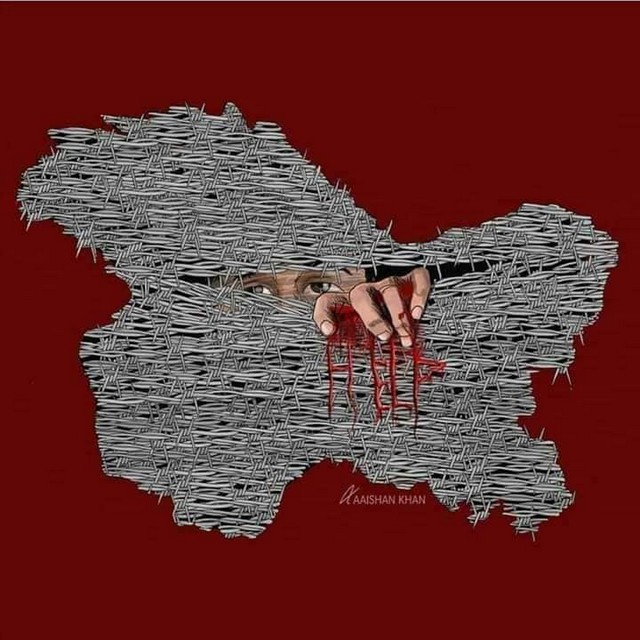
At $716 Billion, the US Military Budget Is Bigger Than Those of 144 Countries Combined and Largest Contributor to Climate Change

By Antonio C. S. Rosa

“State sovereignty is a goner. Bankism and Military Capitalism rule the world in all respects now.
“Militaries are the ultimate manifestation of direct, structural and cultural violence—a cancer that must be extirpated from humanity.”

********************

  • Imperialism: A policy or ideology of extending a country’s power and influence through colonization, use of military force, or any other means.
  • Neocolonialism: The use of economic, political, cultural, military or other pressures to control or influence other countries, especially former dependencies and economically-dependent, less powerful countries.
  • Neoliberalism: The 20th-century resurgence of 19th-century ideas associated with laissez-faire economic liberalism and free-market capitalism. It shares many attributes with other concepts that have contested meanings, including democracy.
  • Fascism: A form of far-right, authoritarian ultranationalism characterized by dictatorial power, forcible suppression of domestic or external opposition backed by an overwhelming military, and strong regimentation of society and of the economy.

*******

It’s no coincidence that US military emissions tend to be overlooked in climate change studies:

*The US Military Is a Bigger Polluter than More than 100 Countries Combined – Quartz – June 28, 2019

*Meet the Money behind the Climate Denial Movement – Smithsonian Magazine – Nearly a billion dollars a year is flowing into the organized climate change counter-movement.

*The U.S. Now Solves Problems with Troops, Not Diplomats – The Conversation – Is the USA a bully? 3 Oct 2019

*The U.S. Spends More on Its Military Than 144 Countries Combined – Institute for Policy Studies – The numbers are stark increases from last year’s differences. July 25, 2019

________________________________________________

Antonio Carlos da Silva Rosa, born 1946, is founder-editor of the pioneering Peace Journalism website, TRANSCEND Media Service-TMS (from 2008), an assistant to Prof. Johan Galtung, Secretary of the International Board of the TRANSCEND Network for Peace Development Environment, and recipient of the Psychologists for Social Responsibility’s 2017 Anthony J. Marsella Prize for the Psychology of Peace and Social Justice.

7 October 2019

Source: www.transcend.org
The Africa-Palestine Conference: South Africa must lead the way

By Ramzy Baroud

On 16 September, I visited South Africa, a country where many Palestinians have always felt welcomed, if not overwhelmed by the degree of genuine and meaningful solidarity. While having the honour to address many audiences in six major cities, I have also learned a great deal. An important and sobering lesson is that while apartheid laws can be dismissed in a day, economic apartheid and massive inequality can linger on for many years. Thanks to my interactions with many South African intellectuals, activists and ordinary folk, I learned not to romanticise the South African struggle, a crucial lesson for those of us fighting to end Israeli apartheid in Palestine.

My hosts at the Afro-Middle East Centre ensured that I met with diverse audiences, including top members of the African National Congress, the leadership of the country’s two major trade union federations, anti-apartheid scholars and activists, and a large number of students and other people throughout the country.

The main, obvious, conclusion from all these meetings and interactions is that South Africans are serious about their solidarity with Palestine, and that they see themselves as partners in the Palestinian struggle for justice and peace. While South Africans are always ready to take their solidarity with Palestine to a whole new level, however, there is a general feeling that decisive political moves can prove costly for South Africa.

True, the South African government has taken several steps in the right direction. On 14 May 2018, Pretoria recalled its ambassador to Israel, Sisa Ngombane, to protest the killing of hundreds of unarmed protesters taking part in the Great March of Return in besieged Gaza. On 5 April 2019, it began to actively downgrade its ties with Israel, in response to a call made by the ANC conference in December 2017.

While these steps are significant, South Africa is yet to take the kind of action that, when combined with others measures of international solidarity, could finally force Israel to dismantle its system of Apartheid in Palestine. The problem is not the lack of willingness nor that of diplomatic doublespeak. There is a growing, and justifiable, sense that Arab governments no longer see the liberation of Palestine as a common objective. While the Arab peoples remain committed in their support of Palestinians, Arab governments have fallen into warring camps and political divisions.

Yet, a top ANC leader told me that South Africa’s policy regarding Palestine is guided by the agendas of the Arab League and the Palestine Liberation Organization (PLO). Sadly, neither the Arab League nor the PLO are serving the roles they were entrusted with decades ago. The former is mired in divisions, and the latter has been effectively replaced by the provisional, factional Palestinian Authority in Ramallah. Using ineffectual organizations as a legal and moral frame of reference is hurting South Africa’s chances of converting its solidarity with Palestine into tangible political assets.

The other dilemma is that the African continent itself is no longer united regarding Palestine. Israel has successively driven a wedge between African countries, which, at one point, were united in their unconditional support of the Palestinian struggle against Israeli military occupation and Apartheid.

Israel’s successes in Africa, especially through the penetration of the Economic Community of West African States (ECOWAS), have made Tel Aviv a political player on the African continent. Boosted by the welcome he received from various African leaders, Israeli prime minister Benjamin Netanyahu had hoped to hold the ‘Israel-Africa Summit’ in October 2017. Thanks to the efforts of African countries like South Africa and Algeria, the conference was postponed indefinitely.

If Israel continues to score political victories while facing little resistance, however, it will eventually dominate the African continent. The absurdity of this goes beyond the struggle in Palestine. A continent that was ravaged by colonialism, racism and apartheid should not embrace the likes of Israel, the exemplification of the very ills that have cost Africa so dearly for hundreds of years.

In fact, the issue of solidarity with Palestine and the pressing need to block Israel’s scourges in Africa are intrinsically linked. In this very link, South Africa can find a way to reclaim its natural role as a vanguard against racism and apartheid everywhere.
My suggestion to the ANC was that South Africa should update its frame of reference, moving away from tired clichés of a defunct, two-state solution and such, to a whole new way of thinking. And it should not go about doing it alone; all of Africa and all Palestinians should be part of this effort.

I strongly believe that South Africa is ready to counter Israel’s efforts on the continent by initiating an Africa-Palestine Conference, a major gathering that aims to harness all the solidarity for the Palestinian people throughout all African countries. Whether such a conference is held under the auspices of the African Union (AU) or independently by a single member state (or even a political party), the gathering of like-minded African and Palestinian leaders, parliamentarians, scholars and civil society leaders can develop a new frame of reference, which South Africa, the African continent, and, in fact, the rest of the world can use as a guiding principle of new thinking on Palestine. Based on the call made by Palestinian civil society in 2005 to boycott, divest from and sanction Israel, the Palestinian people have been demanding and expecting this new thinking for at least fifteen years.

Those who might find the idea that Africa can lead the way on forming a new, global understanding on Palestine far-fetched need to remember that it was the Organization of African Unity’s resolution 77 (XII) of August 1975 that recognised and condemned the ‘organic link’ between ‘the racist regime in occupied Palestine and the racist regime in Zimbabwe and South Africa’. That very resolution served as a major frame of reference used in UN Resolution 3379 of November 1975, which determined that ‘Zionism is a form of racism and racial discrimination’.

Africa must reclaim its position as a global leader in the fight against racism and apartheid, and South Africa is very qualified to spearhead these efforts, because, after all, as iconic South African leader Nelson Mandela once said, ‘We all know too well that our freedom is incomplete without the freedom of the Palestinians.’

Ramzy Baroud is a journalist, author and editor of The Palestine Chronicle.

4 October 2019

Source: www.amec.org.za