Just International

Bombing of detention center in Libya kills at least 44 refugees

By Bill Van Auken

Scores of African refugees were killed or wounded when the detention center in which they were being held in a western suburb of the Libyan capital of Tripoli took a direct hit in a bombing early Wednesday.

Libyan officials reported that 44 of the refugees had been killed outright and another 130 wounded, but the death toll was expected to rise as bodies were still being pulled from the rubble and many of those wounded suffered grievous injuries. Survivors of the bombing were seen late Wednesday still huddled near the bombed-out detention center, terrified of another attack and having no means of seeking safety.

Photographs published by the Libyan media showed a horrific scene, with the floor of the detention center, located in a hanger-style building, littered with bodies, severed limbs, clothes, bags and mattresses, and the walls covered in blood.

Bodies laid out after bombing of migrant dentention center east of Tripoli. Credit UNHCR

The attack was the bloodiest single incident in a renewed civil war that has gripped the country for the past three months, killing at least 700 people and displacing an estimated 90,000.

The Tripoli-based government blamed the attack on warplanes supporting the Libyan military strongman “Field Marshal” Khalifa Haftar, whose forces have laid siege to Tripoli since April in a bid to topple the UN-backed President Fayez Serraj, whose weak puppet regime is dependent upon a collection of Islamist militias for support.

Haftar’s forces, with their strongholds in eastern and southern Libya, claim to act in the name of a rival government located in Tobruk based upon a House of Representatives elected in 2014. They insisted that the damage was done by a mortar attack by militias supporting the Tripoli regime. Borrowing a page from the Pentagon, a statement issued in the name of Haftar’s Libyan National Army (LNA) stated, “Our air forces are meticulous in their targeting and take into account all the measures that protect civilians.”

The LNA had announced on Monday that it would carry out increased airstrikes on the Libyan capital as “traditional means” of besieging the capital were not working, according to Al Jazeera. It warned civilians to stay away from areas of “confrontation.”

Of course, the African refugees, detained against their will and under inhuman conditions by the Libyan regime and its militia backers, had no means of heeding this advice. The hangar where they were imprisoned was located adjacent to military facilities belonging to the militias in the eastern Tripoli suburb of Tajoura.

After its roof was damaged in an attack two months ago, the United Nations High Commissioner for Refugees (UNHCR) issued a warning about the dangerous position of the prison.

“We called for an urgent evacuation then; they remained detained inside that center and sadly people have paid the tragic price of that with their lives last night,” Charlie Yaxley, spokesman for the Mediterranean and Africa at the UNHCR, told Al Jazeera.

The LNA’s escalation of its airstrikes follows the fall of the town of Gharyan, about 50 miles south of the capital, to militias backing the Tripoli regime. The LNA had taken the town in April and had been using it as a base for its siege of Tripoli.

The reversal of fortunes for Haftar’s army followed Turkey’s more aggressive intervention in support of the government of President Serraj, providing it with arms and flying armed drones out of the Tripoli airport on its behalf. The LNA claims to have destroyed three of these drones on the tarmac.

The LNA, meanwhile, has received major military support from the dictatorship of Gen. Abdel Fattah el-Sisi in Egypt, as well as from the Persian Gulf oil monarchies of the United Arab Emirates and Saudi Arabia. Both Egypt and the UAE have sent warplanes to provide air cover for the LNA. The aim of these regimes, which constitute Washington’s closest allies in the Arab world, is to install a military-dominated dictatorship along the lines of what exists in Cairo.

While the US and European powers are all formally committed to supporting the puppet regime of President Serraj in Tripoli, President Donald Trump spoke by phone with Haftar, after he had launched his offensive in April, discussing what the White House described as their “shared vision” for Libya.

Haftar, a former general in the Libyan army who turned coat after being captured during Libya’s war with Chad in the 1980s, was brought by the CIA to the US, living for 20 years near the agency’s headquarters in Langley, Virginia. He was sent back to Libya to join the US-NATO war for regime change in 2011 that ended in the toppling and lynch mob murder of the country’s long-time ruler, Muammar Gaddafi.

Last week, it was reported that militias loyal to the Tripoli regime captured US-made Javelin anti-tank missiles after taking control of an LNA base. The missiles were in shipping crates whose markings indicated that they had been provided by Washington to the UAE.

The United Nations Security Council held a closed-door meeting late Wednesday on the latest atrocity in Libya but was unable to produce a statement condemning the attack because the US representative refused to sign on without approval from Washington. This under conditions in which various governments and agencies have denounced the slaughter of refugees as a crime against humanity.

The hypocrisy of these denunciations is breathtaking. The mass killing that took place outside of Tripoli is the direct outcome of policies pursued by all of the major imperialist powers in their drive to lay hold of Libya’s oil reserves, the largest on the African continent, and in their global war against refugees.

The US-NATO rape of the country in 2011, carried out under the false banner of “human rights” and preventing an allegedly imminent massacre of dissidents in the eastern city of Benghazi, killed tens of thousands of Libyans and destroyed the country’s infrastructure and institutions, setting the stage for eight years of unending conflict and civil war.

Meanwhile, the fate of those slaughtered in Tajoura, along with that of thousands of others held in concentration camps throughout Libya, is the direct result of a reactionary campaign waged by the major European powers. They have trained, armed and financed the Libyan coast guard to intercept refugees seeking to escape war, oppression and poverty by crossing the Mediterranean. Those who are captured are returned to concentration camps in Libya, where they are imprisoned under conditions that have been described as tantamount to torture, in many cases held for ransom, sold into slavery or murdered.

A particularly foul and crucial role in this imperialist onslaught has been played by an entire coterie of pseudo-left organizations, politicians and academics in Europe and America who amplified and embellished upon the phony pretexts of “humanitarian” intervention to justify a war of imperialist aggression against a former colonial country.

Originally published by WSWS.org

4 July 2019

Source: countercurrents.org

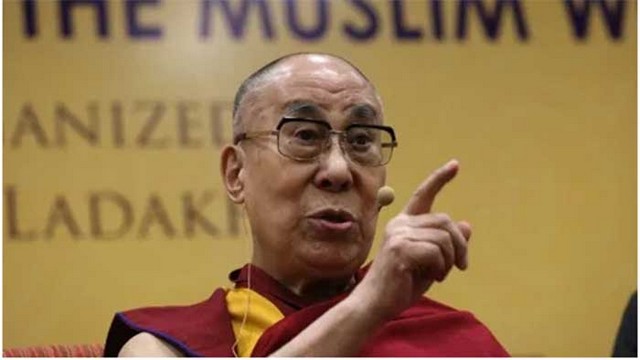
Et tu, Dalai Lama?

By Dr P S Sahni

Disturbing though are Dalai Lama’s recent public views[i]
That Europe would be teeming with Muslims& Africans
If refugees continue to be let in that Continent
Without a return ticket in their pockets

Pray why should you think that it would be wrong
To allow persecuted Muslims & Africansasylum or refugee status
Have you forgotten that as a Tibetan Monk you and your followers fled Tibet
And got a red carpet welcome in India?

And have availed of similar benefits, nay largesse for six decades
Courtesy the large heartedness of the Indian people
During the golden period of secularism in the 1950s and 1960s
When you appeared to be at peace with that ideology

Now that there is a tectonic shift
In the global political environment
You have shown your true colours
Like Aung San SuuKyi in Burma

Perhaps one’s perception is wrong
Could your change in stance
Be because of fear or favour
Understandable, but not condonable

But you must understand that as a guest of honour in India
Highly respected and loved all over the world
Your views could be misused by the vested interests
To tear the social fabric apart and not just in Europe

Trump barred people from seven Muslim majority countries to enter USA
Thus strengthening the myth of ‘Clash of Civilizations’
Propagated by the international media
Controlled as it is by the Jewish lobby

Remember the plight of Rohingya Muslims
Forced to run away from Myanmar
And of Muslims from Bangladesh
Being hunted and hounded out from India

One strays but appreciates though that after a long political struggle
Genuine frustrations creep in at not succeeding
In the declared objective of creating
An independent Tibet out of a sovereign China

Your struggle for right to self-determination of Tibetans
Gets projected in a different light
Though similar struggles in Kashmir and Northeast India
Get dubbed by the establishment as works of “tukde-tukde” gangs!

Muslims and African refugees in Europe need Buddha’s compassion
Not your purported final solution
For if these migrants were to be sent back to their countries of origin
While conditions there are volatile, they would be eliminated!

[i]https://www.thesun.co.uk/news/9389672/dalai-lama-keep-europe-muslim-african-migrants-sent-home/

Dr. P. S. Sahni is a member of PIL Watch Group & AIDS BhedbhavVirodhiAndolan.

Views are personal. Email: pilwatchgroup@gmail.com

2 July 2019

Source: countercurrents.org

Trump’s peace plan has been designed to fail – exactly like its predecessors

By Jonathan Cook

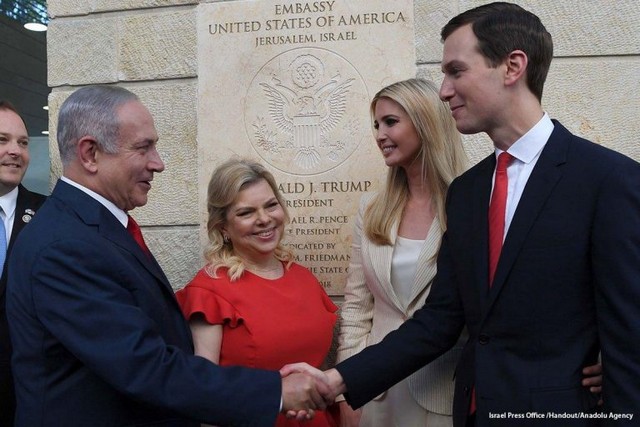
Nazareth: Donald Trump’s supposed “deal of the century”, offering the Palestinians economic bribes in return for political submission, is the endgame of western peace-making, the real goal of which has been failure, not success.

For decades, peace plans have made impossible demands of the Palestinians, forcing them to reject the terms on offer and thereby create a pretext for Israel to seize more of their homeland.

The more they have compromised, the further the diplomatic horizon has moved away – to the point now that the Trump administration expects them to forfeit any hope of statehood or a right to self-determination.

Even Jared Kushner, Trump’s son-in-law and architect of the peace plan, cannot really believe the Palestinians will be bought off with their share of the $50 billion inducement he hoped to raise in Bahrain last week.

That was why the Palestinian leadership stayed away.

But Israel’s image managers long ago coined a slogan to obscure a policy of incremental dispossession, masquerading as a peace process: “The Palestinians never miss an opportunity to miss an opportunity.”

It is worth examining what those landmark “missed opportunities” consisted of.

The first was the United Nations’ Partition Plan of late 1947. In Israel’s telling, it was Palestinian intransigence over dividing the land into separate Jewish and Arab states that triggered war, leading to the creation of a Jewish state on the ruins of most of the Palestinians’ homeland.

But the real story is rather different.

The recently formed UN was effectively under the thumb of the imperial powers of Britain, the United States, and the Soviet Union. All three wanted a Jewish state as a dependent ally in the Arab-dominated Middle East.

Fuelled by the dying embers of western colonialism, the Partition Plan offered the largest slice of the Palestinian homeland to a minority population of European Jews, whose recent immigration had been effectively sponsored by the British empire.

As native peoples elsewhere were being offered independence, Palestinians were required to hand over 56 per cent of their land to these new arrivals. There was no chance such terms would be accepted.

However, as Israeli scholars have noted, the Zionist leadership had no intention of abiding by the UN plan either. David Ben Gurion, Israel’s founding father, called the Jewish state proposed by the UN “tiny”. He warned that it could never accommodate the millions of Jewish immigrants he needed to attract if his new state was not rapidly to become a second Arab state because of higher Palestinian birth rates.

Ben Gurion wanted the Palestinians to reject the plan, so that he could use war as a chance to seize 78 per cent of Palestine and drive out most of the native population.

For decades, Israel was happy to entrench and, after 1967, expand its hold on historic Palestine.

In fact, it was Palestinian leader Yasser Arafat who made the biggest, unreciprocated concessions to peace. In 1988, he recognised Israel and, later, in the 1993 Olso accords, he accepted the principle of partition on even more dismal terms than the UN’s – a state on 22 per cent of historic Palestine.

Even so, the Oslo process stood no serious chance of success after Israel refused to make promised withdrawals from the occupied territories. Finally, in 2000 President Bill Clinton called together Arafat and Israeli prime minister Ehud Barak to a peace summit at Camp David.

Arafat knew Israel was unwilling to make any meaningful compromises and had to be bullied and cajoled into attending. Clinton promised the Palestinian leader he would not be blamed if the talks failed.

Israel ensured they did. According to his own advisers, Barak “blew up” the negotiations, insisting that Israel hold on to occupied East Jerusalem, including the Al Aqsa mosque, and large areas of the West Bank. Washington blamed Arafat anyway, and refashioned Israel’s intransigence as a “generous offer”.

A short time later, in 2002, Saudi Arabia’s Peace Initiative offered Israel normal relations with the Arab world in return for a minimal Palestinian state. Israel and western leaders hurriedly shunted it into the annals of forgotten history.

After Arafat’s death, secret talks through 2008-09 – revealed in the Palestine Papers leak – showed the Palestinians making unprecedented concessions. They included allowing Israel to annex large tracts of East Jerusalem, the Palestinians’ expected capital.

Negotiator Saeb Erekat was recorded saying he had agreed to “the biggest [Jerusalem] in Jewish history” as well as to only a “symbolic number of [Palestinian] refugees’ return [and a] demilitarised state … What more can I give?”

It was a good question. Tzipi Livni, Israel’s negotiator, responded, “I really appreciate it” when she saw how much the Palestinians were conceding. But still her delegation walked away.

Trump’s own doomed plan follows in the footsteps of such “peace-making”.

In a New York Times commentary last week Danny Danon, Israel’s ambassador to the UN, candidly encapsulated the thrust of this decades-long diplomatic approach. He called on the Palestinians to “surrender”, adding: “Surrender is the recognition that in a contest, staying the course will prove costlier than submission.”

The peace process was always leading to this moment. Trump has simply cut through the evasions and equivocations of the past to reveal where the West’s priorities truly lie.

It is hard to believe that Trump or Kushner ever believed the Palestinians would accept a promise of “money for quiet” in place of a state based on “land for peace”.

Once more, the West is trying to foist on the Palestinians an inequitable peace deal. The one certainty is that they will reject it – it is the only issue on which the Fatah and Hamas leaderships are united – again ensuring the Palestinians can be painted as the obstacle to progress.

The Palestinians may have refused this time to stumble into the trap, but they will find themselves the fall guys, whatever happens.

When Trump’s plan crashes, as it will, Washington will have the chance to exploit a supposed Palestinian rejection as justification for approving annexation by Israel of yet more tranches of occupied territory.

The Palestinans will be left with a shattered homeland. No self-determination, no viable state, no independent economy, just a series of aid-dependent ghettos. And decades of western diplomacy will finally have arrived at its preordained destination.

A version of this article first appeared in the National, Abu Dhabi.

Jonathan Cook won the Martha Gellhorn Special Prize for Journalism.

2 July 2019

Source: countercurrents.org

War threats mount as Iran exceeds limit on enriched uranium stockpile

By Bill Van Auken

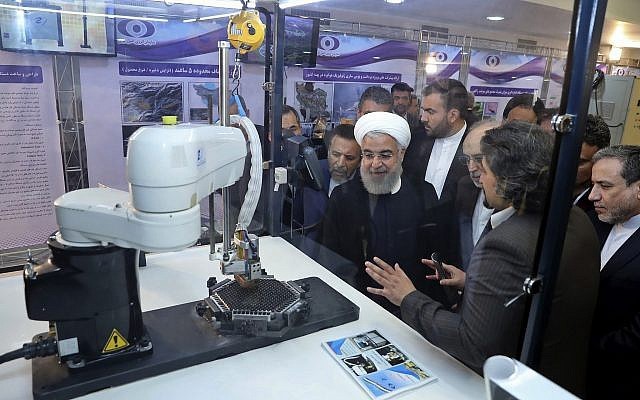
The International Atomic Energy Agency (IAEA) confirmed Iran’s announcement Monday that it has breached the limit imposed by the 2015 nuclear agreement on the amount of enriched uranium the country is allowed to stockpile.

The deal, known as the Joint Comprehensive Plan of Action (JCPOA), reached between Tehran and six major world powers—the US, China, Russia, Britain, France and Germany—limited the stockpile to 300 kilograms.

Iran warned that it would deliberately exceed this amount in response to the failure of the European signatories to alleviate the re-imposition of punishing US sanctions after the Trump administration unilaterally tore up the nuclear agreement in May of last year.

The increase in the stockpile is a largely symbolic act, which Tehran insists it is entitled to take under the terms of the agreement in response to Washington’s abrogation of the deal and its “maximum pressure” campaign to strangle the country’s economy. It is not clear whether Iran would have ended up with a larger stockpile in any case, given the difficulty in exporting excess enriched uranium and heavy water as a result of the US sanctions regime.

Tehran has set another deadline of July 7, after which it is expected to increase the rate of enrichment of uranium beyond the 3.67 percent limit imposed by the accord. Again, such a step would be of a symbolic character, given that uranium must be enriched to around 90 percent for use in a nuclear weapon. It would have to be increased to 20 percent to significantly reduce the time needed to reach that level.

The government of the Islamic Republic of Iran has insisted, both before and after the signing of the 2015 agreement, that its nuclear program has been dedicated to peaceful purposes only and that it has never sought nuclear weapons. The predecessor regime, the US-backed puppet dictatorship of the Shah, was actively seeking nuclear weapons capability before its overthrow in the 1979 Iranian Revolution.

The US State Department responded to the Iranian announcement with a bellicose statement demanding that Iran be barred from enriching uranium “at any level.”

“The Iranian regime, armed with nuclear weapons, would pose an even greater danger to the region and to the world,” the State Department declared. “The United States is committed to negotiating a new and comprehensive deal with the Iranian regime to resolve its threats to international peace and security. As long as Iran continues to reject diplomacy and expand its nuclear program, the economic pressure and diplomatic isolation will intensify.”

The White House, meanwhile, issued a bizarre statement claiming that “there is little doubt that even before the deal’s existence, Iran was violating its terms.”

US imperialism has implemented sanctions with the stated aim of reducing Iranian oil exports to zero by targeting any country importing Iranian crude and any financial institutions facilitating such transactions with secondary sanctions and exclusion from US markets.

At the same time, it has ringed Iran with thousands of additional US troops, a naval armada and a nuclear-capable B-52-led bombing strike force placing the threat of a major regional and even world war on a hair trigger.

Trump himself claimed last month that he called off air strikes that could have triggered a spiraling escalation into a catastrophic conflict with only 10 minutes to spare before bombs and missiles were set to fly. The US bombardment had been ordered in response to Iran’s downing of a $200 million Global Hawk spy drone that Tehran charged had violated Iranian airspace.

The “new and comprehensive deal” that Washington proposes to negotiate with Iran is based not merely on its complete renunciation of its nuclear program, but also an abject surrender to US dominance in the Middle East that would turn the country into a semi-colony of Washington. As for American “diplomacy”, this consists of an attempt to starve the Iranian population into submission, combined with the relentless buildup to war.

The response of the European powers to Iran’s announcement of its breach of the cap on its enriched uranium stockpile was muted. There were reports that the European signatories to the deal would issue a joint statement and that French President Emmanuel Macron might be dispatched to Tehran for direct talks with the Iranian government. The immediate aim appears to be to dissuade Tehran from taking the further step of increasing its level of uranium enrichment.

Last Friday, at a meeting in Vienna between Iran and the remaining signatories to the nuclear deal, the European powers announced that they had set up the long-promised EU-Iran exchange mechanism, Instex, had been brought online as a means of allowing European and other companies to do business with Iran, while evading US sanctions.

Tehran, while acknowledging the action as a positive step, treated it as too little, too late, demanding that the European powers do more to defy Washington and guarantee Iran the ability to sell its oil on the world market.

The British government, which is the most closely aligned with Washington and has sent its own military assets into the region, responded with a threat.

“We want to preserve that deal because we don’t want Iran to have nuclear weapons but if Iran breaks that deal then we are out of it as well,” British Foreign Minister Jeremy Hunt, a candidate to succeed Theresa May as prime minister, said Monday.

The most direct threats, however, came from Israel, which demanded that the European powers retaliate against Iran’s breaching of the stockpile limit by re-imposing sanctions. “You committed to act as soon as Iran violates the nuclear deal, you committed to activate the mechanism of automatic sanctions that were determined by the security council. So I’m telling you: do it. Just do it,” Israeli Prime Minister Benjamin Netanyahu ranted on Monday.

Netanyahu’s statement came in the wake of a major Israeli bombardment of Iranian and Iranian-linked forces deployed in Syria in support of the government of President Bashar al-Assad against the Al Qaeda-linked militias deployed as part of a Western-backed regime change war.

The strikes, carried out by 10 Israeli warplanes sent into Lebanese airspace as well as Israeli warships, hit at least 10 targets across the country, including an airbase in the suburbs of Damascus. Among the victims were at least six civilians, including an infant and two children. At least another 21 were wounded.

The Israeli intelligence-linked website Debka reported that the raids had been postponed in advance of unprecedented talks held last week between US National Security Adviser John Bolton, a leading proponent of a US war against Iran, and his Israeli and Russian counterparts. The apparent aim of the discussions was to secure Russia’s collaboration in a bid to drive Iran and Iranian-backed forces out of Syria. Monday’s strikes indicate that Bolton’s bid failed.

The Jerusalem Post on Monday reported that a debate within the Israeli military and intelligence apparatus has heated up over whether to launch a preemptive strike against Iran’s nuclear facilities.

According to the report, one faction believes that “Israel’s military and deterrence are so strong that Jerusalem could order a surgical strike on the Islamic republic’s nuclear facilities and likely avoid a major conflict from Tehran’s proxies,” in particular Lebanon’s Hezbollah militia, which is capable of firing large numbers of rockets at Israeli cities.

“This camp appears ready to order a preemptive strike earlier, possibly before Iran has enough enriched uranium for a bomb, even if it cannot yet deliver the explosive material,” the paper reported. It added that “those calling for putting the preemptive strike option front and center probably have gained at least a temporary upper hand.”

Whether or not the Israeli tail succeeds in wagging the US dog in precipitating an attack on Iran, US imperialism is driven to war by its own crisis and internal contradictions. It is continuing a decades-long campaign to militarily assert its hegemony over the oil-rich Middle East in order to deny or ration its resources to American capitalism’s main rivals, in particular China. The logic of this campaign leads inexorably toward a third world war.

Originally published by WSWS.org

2 July 2019

Source: countercurrents.org

Campaign for official recognition of Sikh Genocide launched in Surrey

By Gurpreet Singh

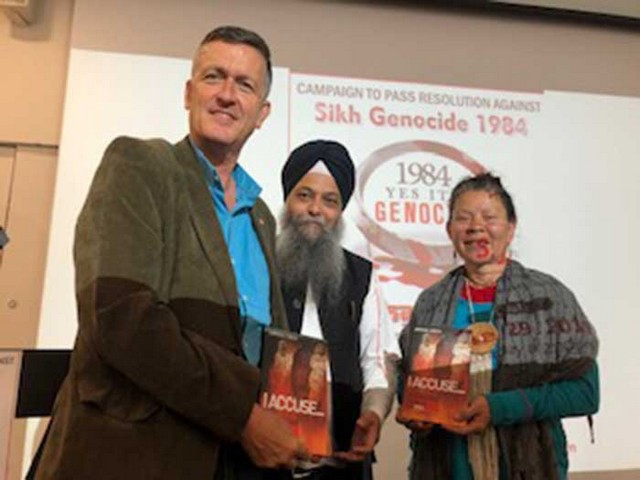
The campaign for recognition of the 1984 Sikh massacre as Genocide in the Canadian parliament has been launched in Surrey on Saturday, June 29.

Thousands of Sikhs were murdered all across India in the first week of November 1984 following the assassination of then-Prime Minister Indira Gandhi by her Sikh bodyguards. The activists of the slain leader’s ruling Congress party were involved in the pogrom that was aided and abetted by the police. The mobs identified innocent Sikhs, burnt them alive and raped their women to avenge the murder of Indira Gandhi. This was all done to win the next general election by polarizing the Hindu majority against the Sikhs who merely make two percent of the country’s population.

In New Delhi alone close to 3,000 Sikhs were murdered. So far only one senior politician has been convicted after 34 years, while most senior politicians remain unpunished.

The South Asian activists came together at Surrey-Newton Library on Saturday to launch the campaign that was opened by Indigenous activist Kwistel Tatel. She expressed her solidarity with the cause and mentioned how Indigenous peoples have been subjected to Genocide in Canada. The organizers of the Saturday event also extended their unconditional support for recognizing structural violence against Indigenous women as Genocide.

Only recently the report of the Murdered and Missing Indigenous Women and Girls inquiry report described the problem as Genocide. Much like right wing political parties in Canada which refuse to recognize it as Genocide, the Indian state has repeatedly refused to recognise the 1984 massacre as such.

Former New Democratic MP and a strong voice for human rights Svend Robinson also spoke at the event. He was the only Canadian politician who showed up and assured to take the campaign to its logical end.

None of the elected officials from among the local Sikh community was in attendance, even though the organizers had invited them. Whereas Robinson came all the way from Burnaby to show his support, the Surrey MPs, MLAs and Councillors were conspicuous by their absence.

Notably, the Indian government had denied visas to at least two Indo Canadian politicians in the past for campaigning for Sikh Genocide motions in the parliament and the Ontario Legislature. They are Surrey-Newton MP Sukh Dhaliwal and New Democratic Leader Jagmeet Singh.

Saturday’s event coincides with the fourth anniversary of a Sikh Genocide motion passed by the New Delhi assembly on June 30, 2015. The motion was brought by Aam Aadmi Party MLA Jarnail Singh who was previously a journalist and shot into prominence after throwing a shoe at the former Indian Home Minister P. Chidambaram during a press conference in protest against his attempt to shield those involved in the massacre.

Singh, who also authored a book on the 1984 massacre, was the keynote speaker at the Saturday event. He presented copies of his book to Robinson and Tatel on the occasion.

Others who spoke included independent journalist and poet Gurvinder Singh Dhaliwal, Barjinder Singh from Sikh Nation – a group of volunteers that started an annual blood drive in memory of the victims of the massacre – other Sikh activists Dharam Singh, Gurmukh Singh Deol and Kesar Singh Baghi, a Muslim activist Syed Wajahat, prominent painter Jarnail Singh, besides rationalist society leader Avtar Gill.

A moment of silence was held at the beginning of the event in memory of Tabrez Ansari, a Muslim man who was recently lynched in India by the Hindu fundamentalists who owed allegiance to the currently ruling right wing Hindu nationalist Bhartiya Janata Party (BJP) that is bent upon turning India into a Hindu theocracy. The speakers also touched upon the complicity of the BJP in a 1984-like massacre of Muslims in Gujarat in 2002. Indian Prime Minister Narendra Modi was the Chief Minister of Gujarat back then and is widely accused of being complicit in the mass murder of Muslims.

Gurpreet Singh is a Canada- based journalist who publishes Radical Desi- a monthly magazine that covers alternative politics.

1 July 2019

Source: countercurrents.org

Hundreds of thousands of protesters flood Khartoum demanding end of army rule in Sudan: 7 protesters killed

By Countercurrents Collective

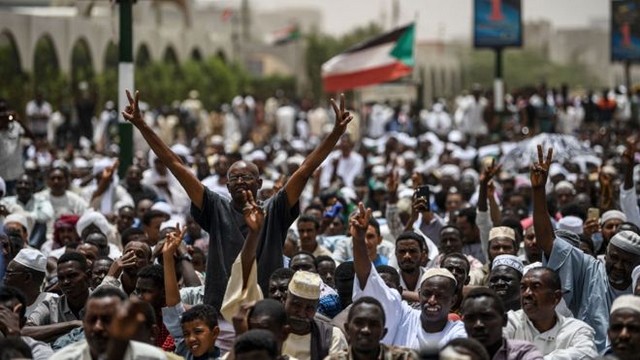
Hundreds of thousands of protesters flooded Khartoum Sunday demanding end of army rule in Sudan while security forces killed at least seven protesters. There are reports of 181 injuries also. The army rule is supported by Islamist groups favoring Sharia law.

Sunday’s mass demonstrations – “Millions March” – were the first since security forces killed more than 100 people during the bloody dispersal of a protest camp outside the military headquarters on June 3. The military headquarters was the focal point of the people’s months-long struggle for democracy.

Protest rallies were held in other cities of Sudan also.

Biggest demonstration

Media reports said:

Sunday’s demonstration was a massive show of strength by the pro-democracy movement.

People joined the biggest demonstration since the junta took power, despite an internet blackout and the security forces blocking bridges to prevent people from joining the Million March.

Protesters waved the Sudanese flag and chanted “civilian, civilian” and “blood for blood” in Khartoum during the Millions March as security forces looked on.

Opposition groups posted videos of what they said were rallies in other cities.

There was no immediate comment from the ruling Transitional Military Council (TMC) which had warned a day earlier that the coalition would bear the responsibility for any loss of life or damage resulting from the rallies.

Sunday’s demonstrations were also the largest since a deadly security service raid on a protest camp on June 3, which is being called as the “June 3rd massacre.” Military leaders have denied ordering the June 3 raid and said a crackdown on criminals nearby had spilled over to the sit-in. The ruling military council has said some officers had been detained for presumed responsibility.

Military rulers replaced long-time President Omar al-Bashir on April 11 after months of demonstrations against his rule. Opposition groups kept up their streets protests as they pressed the military to hand over government affairs to civilians. The June 30 protest coincides with the 30th anniversary of the 1989 coup by al-Bashir.

Talks broke down and protests paused after security services raided a sit-in protest outside the defense ministry on June 3. Mediators led by the African Union and Ethiopian Prime Minister Abiy Ahmed have since been trying to broker a return to direct talks.

There has been a run of smaller demonstrations in recent days, and the Forces for Freedom and Change (FFC), the opposition coalition, called for a million people to turn out Sunday.

Members of the Sudanese Professionals’ Association (SPA), one of the main opposition groups, said security services raided its headquarters Saturday night as it was about to give a news conference.

The Central Committee of Sudan Doctors said four people were killed in Khartoum’s twin city of Omdurman while one protester died after being hit by a bullet in the chest in the town of Atbara.

“There are several seriously wounded by the bullets of the military council militias in hospitals of the capital and the provinces,” it added.

An AFP report said:

Security forces fired tear gas to disperse demonstrators near the presidential palace and three other districts in Khartoum.

Tear gas was also fired in Omdurman and the eastern town of Gadaref.

“We are here for the martyrs of the [June 3] sit-in. We want a civilian state that guarantees our freedom. We want to get rid of military dictatorship,” one 23-year-old protester named only as Zeinab told AFP.

The junta has said it is prepared to resume talks with the opposition.

On Saturday, paramilitary forces broke up a news conference called by the SPA.

The military said it would hold the opposition responsible for any violence or loss of life in the protests.

Gen Dagalo, also known as Hemeti, warned of “vandals” and a “concealed agenda” that might take advantage of the demonstrations.

Gen Dagalo was formerly an ally of Bashir but switched sides to force him out of power.

He commands one of Sudan’s most dreaded paramilitary forces and has been accused of both human rights abuses in the conflict in Darfur and of using the paramilitaries to crack down on protesters on 3 June.

Keep up the revolution

A CNN report said:

“Just fall, just fall,” Hadia chanted, her voice cutting through the din as a convoy of paramilitaries rolled past a mass of flag-waving protesters in downtown Khartoum.

She was one of the protesters who hit the streets on Sunday, responding to calls by protest leaders to keep up their “revolution” and pressure the ruling generals to hand power to civilians.

Despite clouds of tear gas and a large deployment of the feared paramilitary Rapid Support Forces (RSF), cheering crowds thronged the avenues of the capital.

Wrapped in large Sudanese flags, protesters whistled, cheered and chanted the slogans of the uprising.

“Civilian! Civilian!” they shouted, accompanied by a pulsing cacophony of car horns.

“Free revolutionaries, we will finish the job!”

At times, the processions trailed through intersections where riot police and RSF troops were deployed, accompanied by pick-ups mounted with heavy machine guns.

“We want a civilian government … we want a safe country and prosperity,” hollered Hadia Abdel Rahman, her one year-old daughter balanced on her hip.

“We celebrated Eid (main Islamic festival) with the sound of bullets and the blood of martyrs,” said Hadia.

“Our children are being killed in the streets,” added the 29-year-old.

Khaled Abdel Karim carried on his shoulders his four-year-old nephew, who was carrying a large Sudanese flag.

“The country has been suffering for 30 years … We are here to let the younger generations know” what happened, Abdel Karim said.

“We must anchor in them the love of the nation.”

The revolution will not die

Marchers on Sunday also passed the homes of some people killed since protests broke in December after the government tripled the price of bread.

The mother of Mahjoub al-Taj and dozens of demonstrators stood in a small dusty courtyard named in honor of her son.

“We are all Mahjoub,” they chanted in unison.

They paused only to quietly recite a short prayer in memory of the student, killed in December during clashes near his university.

“You are all my children,” said his mother, a Sudanese flag tied around her shoulders.

She shifted slowly between sobs and protest chants, tears running down her cheeks.

Nada Adel, a pink veil loosely framing her face and pierced nose, said the protests would continue until the generals handed over power.

“We’re fed up with the military. For decades, this country has been ruled by the military. It didn’t work and it will not work,” said the 28-year-old.

“Despite what they did at the sit-in, despite the people they killed … the revolution will not die in the hearts of the youth.”

Solidarity rallies

Protests have been planned in major cities around the world such as Washington, London, Dublin, Kuala Lumpur, etc., in solidarity with the Sudanese protesters.

1 July 2019

Source: countercurrents.org

Two Years Later, Trump Has Failed to Reverse America’s Decline

By Dilip Hiro

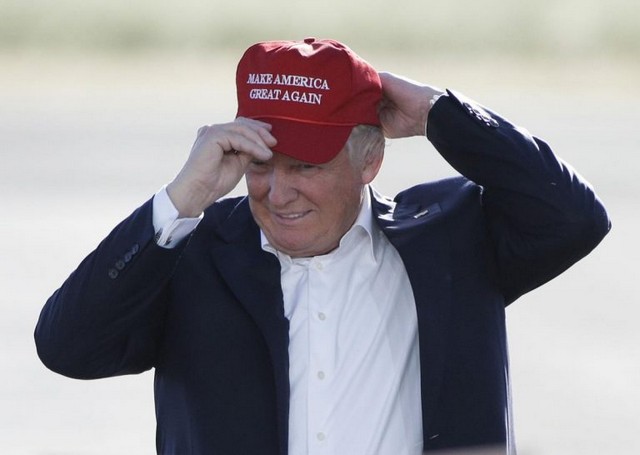
Make America Great Again? Don’t count on it.

Donald Trump was partly voted into office by Americans who felt that the self-proclaimed greatest power on Earth was actually in decline — and they weren’t wrong. Trump is capable of tweeting many things, but none of those tweets will stop that process of decline, nor will a trade war with a rising China or fierce oil sanctions on Iran.

You could feel this recently, even in the case of the increasingly pressured Iranians. There, with a single pinprick, Supreme Leader Ayatollah Ali Khamenei effectively punctured President Trump’s MAGA balloon and reminded many that, however powerful the U.S. still was, people in other countries were beginning to look at America differently at the end of the second decade of the twenty-first century.

Following a meeting in Tehran with visiting Japanese Prime Minister Shinzo Abe, who brought a message from Trump urging the start of U.S.-Iranian negotiations, Khamenei tweeted, “We have no doubt in [Abe’s] goodwill and seriousness; but regarding what you mentioned from [the] U.S. president, I don’t consider Trump as a person deserving to exchange messages with, and I have no answer for him, nor will I respond to him in the future.” He then added: “We believe that our problems will not be solved by negotiating with the U.S., and no free nation would ever accept negotiations under pressure.”

A flustered Trump was reduced to briefly tweeting: “I personally feel that it is too soon to even think about making a deal. They are not ready, and neither are we!” And soon after, the president halted at the last minute, in a distinctly humiliating retreat, U.S. air strikes on Iranian missile sites that would undoubtedly have created yet more insoluble problems for Washington across the Greater Middle East.

Keep in mind that, globally, before the ayatollah’s put-down, the Trump administration had already had two abject foreign policy failures: the collapse of the president’s Hanoi summit with North Korean leader Kim Jong-un (followed by that regime’s provocative firing of several missiles over the Sea of Japan) and a bungled attempt to overthrow the regime of Venezuelan President Nicolás Maduro.

America’s Global Standing at a Record Low

What’s great or small can be defined in absolute or relative terms. America’s “greatness” (or “exceptional” or “indispensable” nature) — much lauded in Washington before the Trump era –should certainly be judged against the economic progress made by China in those same years and against Russia’s advances in the latest high-tech weaponry. Another way of assessing the nature of that “greatness” and what to make of it would be through polls of how foreigners view the United States.

Take, for instance, a survey released by the Pew Research Group in February 2019. Forty-five percent of respondents in 26 nations with large populations felt that American power and influence posed “a major threat to our country,” while 36% offered the same response on Russia, and 35% on China. To put that in perspective, in 2013, during the presidency of Barack Obama, only 25% of global respondents held such a negative view of the U.S., while reactions to China remained essentially the same. Or just consider the most powerful country in Europe, Germany. Between 2013 and 2018, Germans who considered American power and influence a greater threat than that of China or Russia leapt from 19% to 49%. (Figures for France were similar.)

As for President Trump, only 27% of global respondents had confidence in him to do the right thing in world affairs, while 70% feared he would not. In Mexico, you undoubtedly won’t be surprised to learn, confidence in his leadership was at a derisory 6%. In 17 of the surveyed countries, people who lacked confidence in him were also significantly more likely to consider the U.S. the world’s top threat, a phenomenon most pronounced among traditional Washington allies like Canada, Great Britain, and Australia.

China’s Expanding Global Footprint

While 39% of Pew respondents in that poll still rated the U.S. as the globe’s leading economic power, 34% opted for China. Meanwhile, China’s Belt and Road Initiative (BRI) launched in 2013 to link the infrastructure and trade of much of Southeast Asia, Eurasia, and the Horn of Africa to China (at an estimated cost of four trillion dollars) and to be funded by diverse sources, is going from strength to strength.

One way to measure this: the number of dignitaries attending the biennial BRI Forum in Beijing. The first of those gatherings in May 2017 attracted 28 heads of state and representatives from 100 countries. The most recent, in late April, had 37 heads of state and representatives from nearly 150 countries and international organizations, including International Monetary Fund (IMF) chief Christine Lagarde and United Nations Secretary-General Antonio Guterres.

Leaders of nine out of 10 Association of Southeast Asian Nations attended, as did four of the five Central Asian republics. Strikingly, a third of the leaders participating came from Europe. According to Peter Frankopan, author of The New Silk Roads, more than 80 countries are now involved in some aspect of the BRI project. That translates into more than 63% of the world’s population and 29% of its global economic output.

Still, Chinese President Xi Jinping is intent on expanding the BRI’s global footprint further, a signal of China’s dream of future greatness. During a February two-day state visit to Beijing by Saudi Crown Prince Mohammed bin Salman, Xi suggested that, when it came to Riyadh’s overly ambitious economic plan, “our two countries should speed up the signing of an implementation plan on connecting the Belt and Road Initiative with the Saudi Vision 2030.”

Flattered by this proposal, the crown prince defended China’s use of “re-education” camps for Uighur Muslims in its western province of Xinjiang, claiming it was Beijing’s “right” to carry out antiterrorism work to safeguard national security. Under the guise of combating extremism, the Chinese authorities have placed an estimated one million Uighur Muslims in such camps to undergo re-education designed to supplant their Islamic legacy with a Chinese version of socialism. Uighur groups had appealed to Prince bin Salman to take up their cause. No such luck: one more sign of the rise of China in the twenty-first century.

China Enters the High-Tech Race With America

In 2013, the German government launched an Industry 4.0 Plan meant to fuse cyber-physical systems, the Internet of things, cloud computing, and cognitive computing with the aim of increasing manufacturing productivity by up to 50%, while curtailing resources required by half. Two years later, emulating this project, Beijing published its own 10-year Made in China 2025 plan to update the country’s manufacturing base by rapidly developing 10 high-tech industries, including electric cars and other new-energy vehicles, next-generation information technology and telecommunications, as well as advanced robotics and artificial intelligence, aerospace engineering, high-end rail infrastructure, and high-tech maritime engineering.

As with BRI, the government and media then publicized and promoted Made in China 2025 vigorously. This alarmed Washington and America’s high-tech corporations. Over the years, American companies had complained about China’s theft of U.S. intellectual property, the counterfeiting of famous brands, and the stealing of trade secrets, not to speak of the pressuring of American firms in joint ventures with local companies to share technology as a price for gaining access to China’s vast market. Their grievances became more vocal when Donald Trump entered the White House determined to cut Washington’s annual trade deficit of $380 billion with Beijing.

As president, Trump ordered his new trade representative, the Sinophobe Robert Lighthizer, to look into the matter. The resulting seven-month investigation pegged the loss U.S. companies experienced because of China’s unfair trade practices at $50 billion a year. That was why, in March 2018, President Trump instructed Lighthizer to levy tariffs on at least $50 billion worth of Chinese imports.

That signaled the start of a Sino-American trade war which has only gained steam since. In this context, Chinese officials started downplaying the significance of Made in China 2025, describing it as nothing more than an inspirational plan. This March, China’s National People’s Congress even passed a foreign direct-investment law meant to address some of the grievances of U.S. companies. Its implementation mechanism was, however, weak. Trump promptly claimed that China had backtracked on its commitments to incorporate into Chinese law significant changes the two countries had negotiated and put into a draft agreement to end the trade war. He then slapped further tariffs on $200 billion in Chinese imports.

The major bone of contention for the Trump administration is a Chinese law specifying that, in a joint venture between a foreign corporation and a Chinese company, the former must pass on technological know-how to its Chinese partner. That’s seen as theft by Washington. According to Senior Fellow at the Carnegie Endowment for International Peace Yukon Huang, author of Cracking the China Conundrum: Why Conventional Economic Wisdom Is Wrong, however, it’s fully in accord with globally accepted guidelines. Such diffusion of technological know-how has played a significant role in driving growth globally, as the IMF’s 2018 World Economic Outlook report made clear. It’s worth noting as well that China now accounts for almost one-third of global annual economic growth.

The size of China’s market is so vast and the rise in its per capita gross domestic product — from $312 in 1980 to $9,769 in 2018 — so steep that major U.S. corporations generally accepted its long-established joint-venture law and that should surprise no one. Last year, for instance, General Motors sold 3,645,044 vehicles in China and fewer than three million in the U.S. Little wonder then that, late last year, following GM plant closures across North America, part of a wide-ranging restructuring plan, the company’s management paid no heed to a threat from President Trump to strip GM of any government subsidies. What angered the president, as he tweeted, caught the reality of the moment: nothing was “being closed in Mexico and China.”

What Trump simply can’t accept is this: after nearly two decades of supply-chain restructuring and global economic integration, China has become thekey industrial supplier for the United States and Europe. His attempt to make America great again by restoring the economic status quo ante before 2001 — the year China was admitted to the World Trade Organization — is doomed to fail.

In reality, trade war or peace, China is now beginning to overtake the U.S. in science and technology. A study by Qingnan Xie of Nanjing University of Science and Technology and Richard Freeman of Harvard University noted that, between 2000 and 2016, China’s global share of publications in the physical sciences, engineering, and mathmatics quadrupled and, in the process, exceeded that of the U.S. for the first time.

In the field of high technology, for example, China is now well ahead of the United States in mobile payment transactions. In the first 10 months of 2017, those totaled $12.8 trillion, the result of vast numbers of consumers discarding credit cards in favor of cashless systems. In stark contrast, according to eMarketer, America’s mobile payment transactions in 2017 amounted to $49.3 billion. Last year, 583 million Chinese used mobile payment systems, with nearly 68% of China’s Internet users turning to a mobile wallet for their offline payments.

Russia’s Advanced Weaponry

In a similar fashion, in his untiring pitch for America’s “beautiful” weaponry, President Trump has failed to grasp the impressive progress Russia has made in that field.

While presenting videos and animated glimpses of new intercontinental ballistic missiles, nuclear-powered cruise missiles, and underwater drones in a March 2018 television address, Russian President Vladimir Putin traced the development of his own country’s new weapons to Washington’s decision to pull out of the 1972 Anti-Ballistic Missile (ABM) treaty with the Soviet Union. In December 2001, encouraged by John Bolton, then under secretary of state for arms control and international security, President George W. Bush had indeed withdrawn from the 1972 ABM treaty on the spurious grounds that the 9/11 attacks had changed the nature of defense for America. His Russian counterpart of the time, the very same Vladimir Putin, described the withdrawal from that cornerstone of world security as a grievous mistake. The head of Russia’s armed forces, General Anatoly Kvashnin, warned then that the pullout would alter the nature of the international strategic balance, freeing up countries to restart arms buildups, both conventional and nuclear.

As it happened, he couldn’t have been more on the mark. The U.S. is now engaged in a 30-year, trillion-dollar-plus remake and update of its nuclear arsenal, while the Russians (whose present inventory of 6,500 nuclear weapons slightly exceeds America’s) have gone down a similar route. In that televised address of his on the eve of the 2018 Russian presidential election, Putin’s list of new nuclear weapons was headed by the Sarmat, a 30-ton intercontinental ballistic missile, reputedly far harder for an enemy to intercept in its most vulnerable phase just after launching. It also carries a larger number of nuclear warheads than its predecessor.

Another new weapon on his list was a nuclear-powered intercontinental underwater drone, Status-6, a submarine-launched autonomous vehicle with a range of 6,800 miles, capable of carrying a 100 megaton nuclear warhead. And then there was his country’s new nuclear-powered cruise missile with a “practically unlimited” range. In addition, because of its stealth capabilities, it will be hard to detect in flight and its high maneuverability will, theoretically at least, enable it to bypass an enemy’s defenses. Successfully tested in 2018, it does not yet have a name. Unsurprisingly, Putin won the presidency with 77% of the vote, a 13% rise from the previous poll, on record voter turnout of 67.7%.

In conventional weaponry, Russia’s S-400 missile system remains unrivalled. According to the Washington-based Arms Control Association, “The S-400 system is an advanced, mobile, surface-to-air defense system of radars and missiles of different ranges, capable of destroying a variety of targets such as attack aircraft, bombs, and tactical ballistic missiles. Each battery normally consists of eight launchers, 112 missiles, and command and support vehicles.” The S-400 missile has a range of 400 kilometers (250 miles), and its integrated system is believed to be capable of shooting down up to 80 targets simultaneously.

Consider it a sign of the times, but in defiance of pressure from the Trump administration not to buy Russian weaponry, President Recep Tayyip Erdogan of Turkey, the only Muslim member of NATO, ordered the purchase of batteries of those very S-400 missiles. Turkish soldiers are currently being trained on that weapons systems in Russia. The first battery is expected to arrive in Turkey next month.

Similarly, in April 2015, Russia signed a contract to supply S-400 missiles to China. The first delivery of the system took place in January 2018 and China test fired it in August.

An Expanding Beijing-Moscow Alliance

Consider that as another step in Russian-Chinese military coordination meant to challenge Washington’s claim to be the planet’s sole superpower. Similarly, last September, 3,500 Chinese troops participated in Russia’s largest-ever military exercises involving 300,000 soldiers, 36,000 military vehicles, 80 ships, and 1,000 aircraft, helicopters, and drones. Codenamed Vostok-2018, it took place across a vast region that included the Bering Sea, the Sea of Okhotsk, and the Sea of Japan. Little wonder that NATO officials describedVostok-2018 as a demonstration of a growing Russian focus on future large-scale conflict: “It fits into a pattern we have seen over some time — a more assertive Russia, significantly increasing its defense budget and its military presence.” Putin attended the exercises after hosting an economic forum in Vladivostok where Chinese President Xi was his guest. “We have trustworthy ties in political, security and defense spheres,” he declared, while Xi praised the two countries’ friendship, which, he claimed, was “getting stronger all the time.”

Thanks to climate change, Russia and China are now also working in tandem in the fast-melting Arctic. Last year Russia, which controls more than half the Arctic coastline, sent its first ship through the Northern Sea Route without an icebreaker in winter. Putin hailed that moment as a “big event in the opening up of the Arctic.”

Beijing’s Arctic policy, first laid out in January 2018, described China as a “near-Arctic” state and visualized the future shipping routes there as part of a potential new “Polar Silk Road” that would both be useful for resource exploitation and for enhancing Chinese security. Shipping goods to and from Europe by such a passage would shorten the distance to China by 30% compared to present sea routes through the Malacca Straits and the Suez Canal, saving hundreds of thousands of dollars per voyage.

According to the U.S. Geological Survey, the Arctic holds petroleum reserves equal to 412 billion barrels of oil, or about 22% of the world’s undiscovered hydrocarbons. It also has deposits of rare earth metals. China’s second Arctic vessel, Xuelong 2 (Snow Dragon 2), is scheduled to make its maiden voyage later this year. Russia needs Chinese investment to extract the natural resources under its permafrost. In fact, China is already the biggest foreign investor in Russia’s liquefied natural gas (LNG) projects in the region — and the first LNG shipment was dispatched to China’s eastern province last summer via the Northern Sea Route. Its giant oil corporation is now beginning to drill for gas in Russian waters alongside the Russian company Gazprom.

Washington is rattled. In April, in its latest annual report to Congress on China’s military power, the Pentagon for the first time included a section on the Arctic, warning of the risks of a growing Chinese presence in the region, including that country’s possible deployment of nuclear submarines there in the future. In May, Secretary of State Mike Pompeo used a meeting of foreign ministers in Rovaniemi, Finland, to assail China for its “aggressive behavior” in the Arctic.

In an earlier speech, Pompeo noted that, from 2012 to 2017, China invested nearly $90 billion in the Arctic region. “We’re concerned about Russia’s claim over the international waters of the Northern Sea Route, including its newly announced plans to connect it with China’s Maritime Silk Road,” he said. He then pointed out that, along that route, “Moscow already illegally demands other nations request permission to pass, requires Russian maritime pilots to be aboard foreign ships, and threatens to use military force to sink any that fail to comply with their demands.”

An American Downturn Continues

Altogether, the tightening military and economic ties between Russia and China have put America on the defensive, contrary to Donald Trump’s MAGA promise to American voters in the 2016 campaign. It’s true that, despite fraying diplomatic and economic ties between Washington and Moscow, Trump’s personal relations with Putin remain cordial. (The two periodically exchange friendly phone calls.) But among Russians more generally, a favorable view of the U.S. fell from 41% in 2017 to 26% in 2018, according to a Pew Research survey.

There’s nothing new about great powers, even the one that proclaimed itself the greatest in history, declining after having risen high. In our acrimonious times, that’s a reality well worth noting. While launching his bid for reelection recently, Trump proposed a bombastic new slogan: “Keep America Great” (or KAG), as if he had indeed raised America’s stature while in office. He would have been far more on target, however, had he suggested the slogan “Depress America More” (or DAM) to reflect the reality of an unpopular president who faces rising great power rivals abroad.

Dilip Hiro, a TomDispatch regular, is the author of After Empire: The Birth of a Multipolar World among many other books. His latest book is Cold War in the Islamic World: Saudi Arabia, Iran and the Struggle for Supremacy(about which he has recorded this podcast).

Follow TomDispatch on Twitter and join us on Facebook.

1 July 2019

Source: countercurrents.org

Is China the World’s Loan Shark?

By Deborah Brautigam

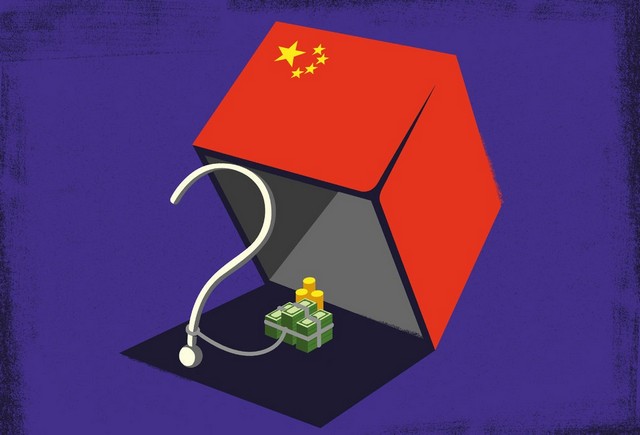
WASHINGTON — Representatives from more than 150 countries began to gather in Beijing on Friday for a grand forum to celebrate China’s grand Belt and Road Initiative. Since its formal unveiling in 2013, B.R.I. — a vast, worldwide web of infrastructure-development projects mostly funded or sponsored by the Chinese government — has generated both tremendous enthusiasm and tremendous anxiety.

Some call the colossal program a new Marshall Plan, arguing that it could radically reduce the costs of international trade as well as underpin the economic transformation of poor countries.

Others accuse China of using B.R.I. as a way to flex its economic muscle for political gain on the sly. The whole effort is a cover for “debt-trap diplomacy,” goes one common criticism — or, to borrow from John R. Bolton, the United States national security adviser, China is making “strategic use of debt to hold states in Africa captive to Beijing’s wishes and demands.” (Some American Democrats seem to agree with him, at least about this.)

Yes, debt is on the rise in the developing world, and Chinese overseas lending is, for the first time, a part of the story. But a number of us academics who have studied China’s practices in detail have found scant evidence of a pattern indicating that Chinese banks, acting at the government’s behest, are deliberately over-lending or funding loss-making projects to secure strategic advantages for China.
Sign Up for Jamelle Bouie’s Newsletter

Join Jamelle Bouie as he shines a light on overlooked writing, culture and ideas from around the internet.

The main example of these purported ploys is the Hambantota Port in southern Sri Lanka: The government handed control over the port to a Chinese company in 2017 after struggling to make its loan payments to China. But that’s a special case, and it is widely misunderstood.

China does not publish details about its overseas lending, but the China-Africa Research Initiative at Johns Hopkins University (which I direct) has collected information on more than 1,000 Chinese loans in Africa between 2000 and 2017, totaling more than $143 billion. Boston University’s Global Development Policy Center has identified and tracked more than $140 billion in Chinese loans to Latin America and the Caribbean since 2005.

Based on the findings of both institutes, it seems that the risks of B.R.I. are often overstated or mischaracterized.

Take Africa. The International Monetary Fund estimates that as of late January some 17 low-income African countries already were in, or were at risk of, “debt distress,” or of experiencing difficulties in servicing their public debt. We at the China Africa Research Initiative created debt profiles for those countries based on our data on Chinese loans as well as statistics from the World Bank and the I.M.F. — and we discovered that a crowd of global banks and bondholders were involved: notably, in Mozambique, Credit Suisse; or in Chad, the Anglo-Swiss mining giant Glencore. In some of the 17 countries the I.M.F. identified as vulnerable, including Cameroon and Ethiopia, China was the single-largest creditor, but non-Chinese lenders still held the majority of the debt. Only in Djibouti, the Republic of Congo and Zambia did Chinese loans account for half or more of the country’s public debt.

In its 2019 study on China in Latin America and the Caribbean, the Global Development Policy Center concluded that, aside from “the important possible exception of Venezuela,” financing from China alone did not appear to be driving borrowers above the I.M.F’s debt-sustainability thresholds.
Editors’ Picks
At 75, Taking Care of Mom, 99: ‘We Did Not Think She Would Live This Long’
When Your House Won’t Let You Go
‘Had I Catfished My Wife?’: A Debut Midlife-Crisis Memoir

In most of Africa and Latin America, in other words, China’s lending is significant, but fears that the Chinese government is deliberately preying on countries in need are unfounded.

Ms. Brautigam is an expert on China-Africa relations at Johns Hopkins University.

26 April 2019

Source: www.nytimes.com

Thai anti-junta activist attacked, latest in ‘pattern’ of violence

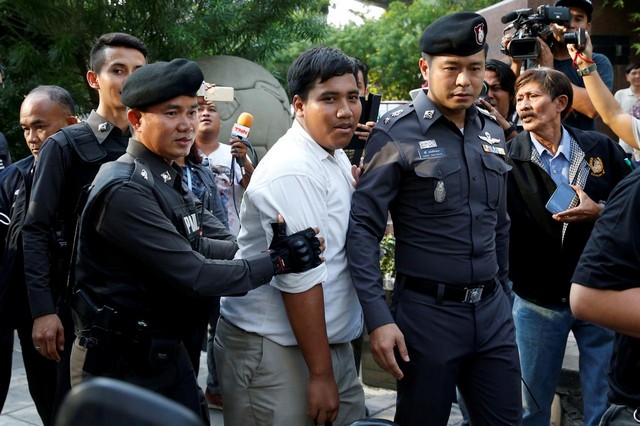
BANGKOK (Reuters) – Unknown assailants attacked and wounded a Thai pro-democracy activist on Friday, apparently the latest victim of what rights groups call a systematic campaign of violence against critics of the army following a disputed election.

Sirawith Seritiwat, 27, was attacked by four men wielding clubs near his home in a Bangkok suburb leaving him in hospital with serious head injuries, his mother said.

“The doctor says they are concerned about his eyes because of the impact on the optic nerve,“ Sirawith’s mother, Patnaraee Charnkit, told reporters.

“His eyes are open but he is unresponsive,“ she said.

A police officer confirmed the late morning attack, saying the number of assailants was not known and police were investigating.

Rights groups say there have been seven violent attacks on activists since a March 24 election that resulted in former junta leader Prayuth Chan-ocha staying on as a civilian prime minister under election rules written by the junta.

A similar number of attacks on activists took place in the year before the vote, they say. Patnaraee said it was the second time this month that her son had been assaulted.

“What we’re seeing is a pattern,“ Sunai Phasuk, senior Thai researcher for Human Rights Watch, said of the attacks on critics of the military’s involvement in politics.

“It shows that after the election, Thailand remains in a climate of fear and the country is not on a path towards a return to democratic rule.”

The military seized power in a 2014 coup and remains in charge until a new cabinet is sworn in, something that Prayuth says will likely happed by mid-July.

Opposition parties say the electoral system was designed to extend and legitimise military domination of civilian government.

A government spokesman was not immediately available for comment.

Reporting by Panu Wongcha-um and Panarat Thepgumpanat; Editing by Robert Birsel.

28 June 2019

Source: www.reuters.com

Lynching is the game changer in New India

By Mustafa Khan

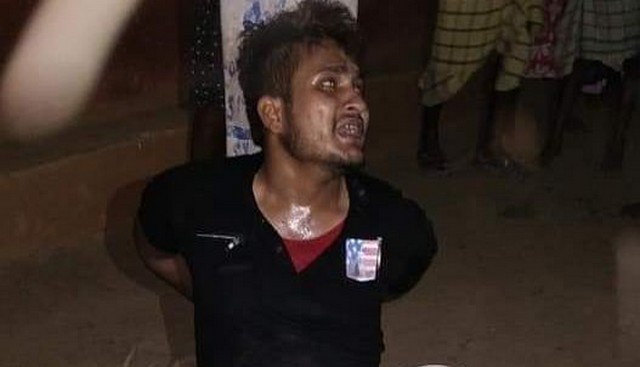
The lynching of Tabrez Ansari was by means of threat and violence perpetrated with utter impunity for hours at end, nay, for days together. This is the darkest hour in the history of India which marks a departure of Narendra Modi from the first term as PM since he remained silent in most of such cases instead of condemning. It heralds the worst for the minorities. The miracle is that Tabrez survived to illustrate this fact four days and then died. Sure sign of phenomenalism. The realities and facts of today undoubtedly point it, coercion, a form of terrorism. Such is the power and efficacy of the second Reich of Modi that the remains of the cause of terror travelled to Japan within the week of his junket. Such inveterate is our PM that as CM of Gujarat he could ask the police to not come in the way of RSS, HVP, ABVP and let Hindus vent their anger in 2002. Those who revealed the truth of it, Haren Pandya and Sanjiv Bhat, met their end at his hand. Dissent is the crying need of today if we want our democracy to thrive and not throttled. What matters to him is that the Diaspora in 2002 was with him and now in Japan they encore him. ‘Jai Shri Ram.’ ‘Vande Matrum.’ The first slogan was never uttered with the same ferocity then. The second is in praise of India as a mother goddess, which Muslim refuse to utter because of idolatry. That is how the juggernaut of dividing India continues.

But what is painful is that those who lynched Tabrez coerced him to utter such slogans umpteen times, ad absurdum. When he was in jail after two days the main accused Papu Mandal went there and asked in surprise:‘Ab tak yeh mara kyon nahin? [why did he not die till now?]’ The wife of Tabrez and his mother in law were also there whom the police threatened that they would break their knees if they did not go out. (1) The young widow passed out at the sight of her husband.

It is strange that only the crime of theft is registered but not of attack on the victim and his death! They forced him to chant against his will. This is part of the definition of terror and then they left him as a living mummy that amounts to lynching and essentially terrorism. He died on account of the torture. The police aggravated the condition by not paying attention to the serious condition.

There are no reasons to believe that a man could have done thieving hardly a month after marriage. He had a job of a welder in Pune and was visiting his village for Id festival. He was to return back to Pune soon to resume his work. This is not a “cut and paste” allegation of terror, as the Jharkhand minister would like us to believe. It is sheer terror. It has put on notice the minorities that they are at the mercy of the majority Hindus. When Menahem Begin and his groups of terrorists bombed Hotel David in Jerusalem they had put the imperialist British on notice that their days were over and Israel would be created.

Despite of the gravity of the lynching of the week Modi went to G20 meeting in Japan. He spoke succinctly on the global threat of terrorism on June 28. Terrorism is the greatest threat to humanity. It kills not only innocent people but also has most disastrous effect on economic opportunity and poses threat to social stability and to remove it, we have to close all the means that support communalism and extremism.

This is a sham statement because he and his right wing groups and party do not believe what he is pontificating there. What is rampant in India is precisely due to him: communalism and extremism. Tabrez’s lynching is the living proof of it. If it cannot change the game then it is hunting with the hounds and playing with the hare. But can he play until kingdom come!

The world is a large stage and he cannot strut and fret forever
Life’s but a walking shadow, a poor player,
That struts and frets his hour upon the stage,
And then is heard no more. It is a tale
Told by an idiot, full of sound and fury,
Signifying nothing.

(1) https://www.thehindu.com/news/national/other-states/jharkhand-lynching-case-tabrez-would-have-been-alive-if-given-minimum-medical-attention/article28136106.ece

Mustafa Khan is a political commentator

29 June 2019

Source: countercurrents.org