Just International

The War of Oil Tankers

By Dr Elias Akleh

The economic war waged by Trump’s administration against Iran seems to have been escalated to involve false flag attacks against oil tankers in the Gulf of Oman at the mouth of the Strait of Hormuz. Within a one-month period two terrorist attacks; Emirati Al Fujairah attack in May 12th and the Gulf of Oman attack in June 13th, were perpetrated against large oil tankers.

After an hour of each attack Trump’s administration and its Gulf stooge countries; Saudi Arabia and UAE, hastened to point their accusing fingers towards Iran without any evidence and even before any independent investigation of the attacks. Britain joined the US accusation of Iran through its Foreign Secretary; Jeremy Hunt, who accused Iran calling on it to stop all forms of destabilizing activities that pose serious danger to the region. Jeremy Corbyn; the British Labour leader, warned Hunt not to fuel a military escalation that began with the US withdrawal from Iran nuclear deal without any credible evidence. Russia, China, Germany and the EU called for self-restrained and not to rush into conclusions and accusations of any party until the end of investigation.

Although the Gulf of Oman is the most guarded and monitored area by the most sophisticated surveillance equipment yet no strong evidence was produced to substantiate the American accusations. The footage that CENTCOM had produced to incriminate Iranian IRGC of removing an unexploded limpet mine; an alleged evidence of Iran’s involvement, is so blurry that one cannot distinguish whether it was really an Iranian boat or what its crew was doing. It is hard to believe that the sophisticated surveillance system could not produce a clear picture of the boat. Ambiguity is intentional here.

When Yutaka Katada; the president of Kokuka Sangyo, the owner of damaged Kokuka Courageous ship, explained that a mine does not damage a ship above the see level, and that his crew saw “flying objects” hitting the ship, CENTCOM produced other stories to divert attention away from the footage. Originally officials claimed that the USS Bainbridge; a guided missile destroyer, picked up the crew members of the oil tankers. When Iranian TV broadcasted all 44 crew members in its hospitality after rescuing them, American officials changed their story claiming that tanker crew was detained by Iran after first being rescued by “un-named” another vessel.

To gain more credibility to its accusations US officials told CNN that hours before the tankers attack on Thursday the Iranians spotted an American drone flying overhead and launched a surface-to-air missile but missed the drone, which reportedly observed Iranian vessels closing in on the tankers. Yet no video of this allegation was introduced to confirm that these boats had conducted any attack.

These unsubstantiated accusations reminded me of the lies of 1964 Tonkin Gulf incident, the lies of the 2003 Iraq war and the lies of Syrian Assad’s chemical attack against his own people among many other lies. In 1964 President Lyndon Johnson’s administration lied to the Congress that North Vietnamese forces attacked the USS Maddox boat in order to get the Congress authorization to wage war against innocent Vietnam. In 2003 the lies of “weapons of mass destruction” and “the mushroom cloud” lead to the destruction of a whole country; Iraq. In 2017 Assad was accused of using chemical weapons against civilians of his own people when he was winning the war against American/Israeli/Saudi ISIS terrorist groups. The US bombed Syrian bases in response.

The credibility of successive American administrations had long been lost, and their flagrant lies throughout their history had been clearly exposed. Mike Pompeo; the present US Secretary of State, has recently proudly confessed to this fact: “I was the CIA director. We lied … we cheated … we stole. We had entire training courses. It reminds you of the glory of the American experiment.” In this video.

Yet this lying cheating thief had the audacity to face the whole world and to deceptively accuse Iran of attacking the oil tankers:

“It is the assessment by the United States government that the Islamic Republic of Iran is responsible for the attacks that occurred in the Gulf of Oman today. This assessment is based on intelligence, the weapons used, the level of expertise needed to execute the operation, recent similar Iranian attacks on shipping, and the fact that no proxy group operating in the area has the resources and proficiency to act with such a high degree of sophistication.”

The resources proficiency to act with high degree of sophistication Pompeo has mentioned are characteristics of the American and Zionist Israeli underground Special Forces.

The question of “who benefits” will lead us to the real perpetrators. It is highly unlikely and illogical for Iran to attack Japanese owned ships while the Japanese Prime Minister; Shinzo Abe, was visiting Iran in a mediating mission between the US and Iran.

Unlike the western powers it is not a character of the Iranian government to attack the ship; Front Altair, belonging to one of Iran’s closed allies and friend; John Frederiksen, the owner of the Frontline Tanker Company, who helped Iran deliver its oil to its destinations during the “tanker war” with Iraq in the 1980’s.

Iran seeks peace and security in the region, which explains it’s signing the 2015 nuclear agreement accepting the international monitoring of its nuclear facilities unlike nuclear Israel who has not signed the NPT agreement. Also Iran had given European countries ample time to comply with the nuclear deal after the American withdrawal. Peace and security in the Persian Gulf area; the heaviest oil traffic, is very important for Iran. Iran had approached all the Gulf States with a call to sign a non-aggression pact and a partnership to form a local unified security system in the Gulf.

To prove its innocence Iran had called for independent international investigation in the 12th May Al-Fujairah attack against four oil tankers that must include all surveillance records of the area in order to expose the ‘state actor’ behind the attack. Fear of the results of such an investigation led UAE, Saudi Arabia, Britain and US to reject such call demanding the world to accept their accusations of Iran without any substantial evidence.

On the other hand we see Trump unilaterally withdrawing from the Iran nuclear agreement and imposing sanctions threatening the whole world not to buy Iranian oil in order to impose a new agreement; a mafia style technique. Iranian refusal to re-negotiate the deal and it’s brushing off all Trump’s direct and indirect invitation for negotiation gradually dropping off all pre-conditions, led Trump eventually to deploy the USS Abraham Lincoln aircraft carrier strike group to the Persian Gulf to increase the pressure on Iran.

Trump’s administration does not want war with Iran. Such a war would devastate the region as well as the whole world. In the case of a military war every country without exception in the Middle East would be severely affected. All the American military bases in the region would be an easy target for the Iranian missiles. All the American naval ships would also be easy targets to the many Iranian speed torpedo boats. The casualties and the destruction would be astronomical.

The real goal of the Trump’s administration is to increase tension and enmity between Iran and the Gulf States. This policy started in 1979 after the Islamic Revolution in Iran with the expulsion of the Shah regime, the American hostage crises, the closure of the Israeli embassy and turning its building over to the Palestine Liberation Organization (PLO). This enmity developed when the US encouraged Iraqi Saddam Hussein to wage the eight years’ war against Iran with the financial support of the Gulf Arab States.

The spread of Iranophobia within the Gulf Arab oil producing states has become a priority in the American foreign policy since Iran had extended its financial aid and military expertise to Lebanese Hezbollah and Palestinian resistance groups against Israeli occupation, supported Syrian Assad regime against Israeli/American/Saudi created terrorist group ISIS, and supported Yemen against Saudi/Emirati military aggression.

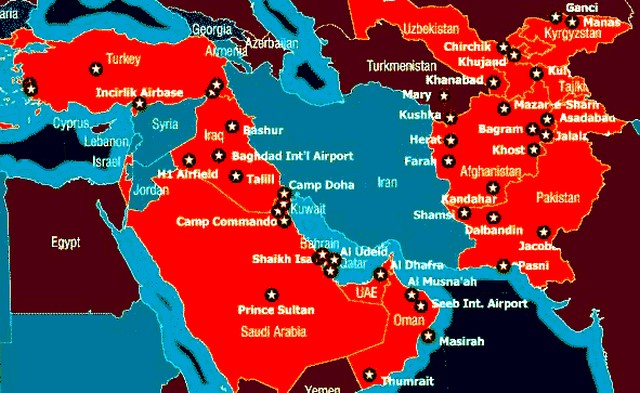
This Iranophobia led the Gulf Sunni Arab States to open their countries to American military bases ostensibly to protect them from Shi’ites Persian threats, such as the alleged nuclear threat. These bases have also served to replenish Israeli weapons stockpiles used in its wars of aggression against Egypt, Lebanon and Palestinians. Saudi Arabia and the UAE are the biggest buyers of American weapons. It is estimated that between 35% – 40% of American weapons sale go to these two Gulf States; many of which had rusted in the desert in the past, others were diverted to terrorist groups in Syria, while others are being used to destroy Yemen. The American military industrial complex rakes hundreds of billions of dollars in weapons sales to these countries.

The oil tankers attack had also relieved Trump from Congressional pressure opposing the $400 billion weapons sale to Saudi Arabia. The sales deal would go through now under the justification of “exceptional security circumstances” in the Gulf.

Those Gulf Arab states are America’s milking cows as Trump had described Saudi Arabia many times. The proposed Iran’s Gulf non-Aggression Pact and Gulf Unified Security System would free these milking cows from the American grip. Thus no war against Iran but false flag attacks in and around the Persian Gulf would serve to increase Iranophobia and keep those milking cows in the American barn.

The US is recently extracting enough shale oil for local consumption. Yet the cost of this shale oil is more expensive than the Gulf oil and it is still not marketable. The attack incidents on the oil tankers have raised the price of oil. The price will go even higher in order to cover the expenses of American naval vessels escorting oil tankers for security reasons. The price of Gulf oil barrel would match and at times may exceed the price of American shale oil barrel. Thus, American shale oil will become marketable.

There is another aggressive player in the region, who could be the perpetrator of false flag attacks besides the US; and that is Zionist Israel. Israeli military hegemony in the region extended from 1948 to 2000; a period were the Israeli terrorist army had accomplished one victory after the other against its poorly armed Arab neighbors. This had changed in 2000 when Hezbollah was able to expel Israeli forces from occupied Lebanese territories.

Prior to 2000 Israel was able to wage wars, whose victims were Arabs, and whose destructions were Arab cities and neighborhoods. The year 2000 ushered a rebirth of strong Arab resistance axis. After 2000 Israel was never able to achieve planned goals of its aggressive wars against Lebanon or even against besieged Gaza, let alone achieve complete victory. Israeli army faced defeats and more casualties than it can afford. Israeli major cities and colonies have become easy targets to accurate and more powerful Gaza’s and Hezbollah’s missiles.

Israel resorted to AIPAC and to 911 false flag attack to push the US to fight its wars against Arabs and to have American young troops die for Israel. After 911 attacks Islamophobia spread in the US, who waged war against Iraq, and created and armed ISIS groups to destroy Syria. Iraq and Syria were strong supporters to the Palestinian cause.

Iranian strong support to Arab resistance axis made it a big obstacle to the Zionist Greater Israel Project. Despite the fact that president Trump and many military officers in the Pentagon are opposed to war on Iran, some Zionist stooges in the White House such as Evangelical Vice President Pence, warmongering John Bolton, and secretary of state Mike Pompeo are pushing for war against Iran. Zionist Israelis as well as American Zionist Christians want a devastating war in the Middle East that would destroy or at least weaken all Arab countries allowing Zionists to accomplish their Greater Israel Project no matter who or what the casualties are.

Zionist Israelis are high suspects in the attacks on the oil tankers. They have “the resources and proficiency to act with such a high degree of sophistication” to quote Pompeo.

The first Al Fujairah false flag attack hardly provoked any mentionable international reactions. The second Gulf of Oman false flag attack provoked some international reaction as well as calls for self-restrain and real investigation. A third false flag attack would be more intense and may take place within the Persian Gulf itself, and could provoke impulsive military reaction that could spark a larger military confrontation, especially now after the US is sending initially 3,000 additional troops as part of 13,000 to the Persian Gulf, while Britain is sending 100 more special forces marines to join their 500 soldier comrades in the new British naval base in Mina Salman in Bahrain.

Dr. Elias Akleh is an Arab American from a Palestinian descent.

19 June 2019

Source: countercurrents.org
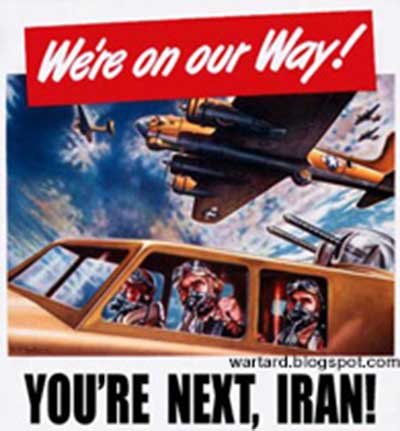
Last Nation Standing – Iran

By Dan Lieberman

Although the Trump administration has given many reasons for its aggressive attitude toward the Islamic Republic of Iran, the more prominent reasons emerge from Iran failure to assure (1) it will never pursue nuclear weapons, (2) will not supply weapons to Hezbollah and Hamas, and, (3) will not threaten Israel.

Only Iranian pursuit of nuclear weapons can affect the security of the mighty United States (US), and that pursuit cannot occur until expiration of The Joint Comprehensive Plan of Action (JCPOA) allows additional enrichment, which, unless the JCPOA is terminated before it expires, is not until, about 2030. Seems the US can wait to see how events progress, talk with Iran as that date nears, and postpone action for at least a decade. With those considerations, why the US aggressive behavior toward Iran? Maybe, because Iran is “The Last Nation Standing.”

What does this mean? Well, there is a common thread in US actions of aggressive behavior toward certain nations that have not actually threatened the security of the United. The common thread is Israel, and after the decline of all of these nations that have not threatened the security of the United States, Iran is the Last Nation Standing.

Sudan

Not a nation to be recommended to any citizen — having been corrupt, intolerant, and ruled by a despot — once wealthy with minerals and gushing oil, Sudan had possibility of becoming a strong and vibrant African nation, US policies of countering terrorism, assisting South Sudan rebels, and Interfering in the Darfur civil war contributed to preventing that outcome.

Link of a car bomb at the World Trade Center in New York to Osama bin Laden, who had residence in Sudan, prompted the US State Department to add Sudan to its list of state sponsors of terrorism. Afterwards, the United States accused Sudan of harboring members of several terrorist organizations, and, In October 1997, imposed economic, trade and financial sanctions. These sanctions occurred despite Sudan, starting in 1995, offering extradition or interviews of arrested al-Qaeda operatives, as well as allowing access to the extensive files of Sudanese intelligence. According to a CIA source, as reported in the Guardian, Sept 30, 2001, “This represents the worst single intelligence failure in this whole terrible business. It is the key to the whole thing right now. It is reasonable to say that had we had this data we may have had a better chance of preventing the attacks.”

A Congressional Research Service report at https://www.theatlantic.com/international/archive/2011/07/us-played-key-role-in-southern-sudans-long-journey-to-independence/241660/ exposed U.S. support of the southern Sudanese struggle. It listed actions going back to the Clinton era, including the provision of more than $20 million surplus U.S. military equipment to frontline states of Uganda, Eritrea, and Ethiopia, which the report says “helped reverse military gains made by the [Sudanese] government against the southern rebels”.

The US congress heightened the insurrection in Sudan’s Darfur province by passing an amendment, H.Con.Res.467 — 108th Congress (2003-2004), amended 07/22/2004, which “States that Congress declares that the atrocities unfolding in Darfur, Sudan, are genocide, and urges the Administration to refer to such atrocities as genocide.” The amendment gathered world opinion against the Sudanese government. Not clarified were that, although the public accepted the figure of 400,000 killings of people in Darfur, this genocide had no verification of the number of killings, no displayed mass graves, and no images of a great number of bodies.

Before he left the U.S. State department, former US Deputy Secretary of State Robert Zoellick stated, “It’s a tribal war. And frankly I don’t think foreign forces want to get in the middle of a tribal war of Sudanese.”(ABC News on-line, November 9, 2005)

A peace agreement, which ended the second Sudanese civil war in 2005 and restored southern autonomy, moved the United States, on September 9, 2009, to ease the sanctions on Sudan. On July 9, 2011, South Sudan became independent and reduced Sudan to a pipeline for South Sudan oil. After Sudan became a diminished state, barely able to survive, the United States lifted economic and trade sanctions. Independent South Sudan fared worse — involved in its own civil war, human rights violations, and social and economic turmoil.

Homeland Security News Wire, 24 October 2012
“Israeli planes destroy Sudanese arms factory suspected of producing chemical weapons for Hamas.”

[https://www.jta.org/2012/05/17/global/south-sudan-worlds-youngest-nation-developsunlikely-friendship-with-israel]

“According to James Mulla, the director of Voices of Sudan, a coalition of U.S.-based Sudanese-interest organizations, Israel’s support proved pivotal to the Anyana’s success during the first Sudanese civil war, which ended in 1972.

Over the years, there have been reports of the Israelis continuing to aid South Sudanese rebels during Sudan’s second civil war, which lasted from 1983 to 2005 and resulted in an estimated 1.5 million to 2.5 million deaths.”

Libya

Due to Libya Leader Moammar Gadhafi’s support for radical revolutions, the United States found reason to have strained relations with Libya. Sanctions soon followed. In March 1982, the U.S. Government prohibited imports of Libyan crude oil into the United States and expanded the controls on US origin goods intended for export to Libya. Licenses were required for all transactions, except food and medicine. In April 1985, all Export-Import Bank financing was prohibited.

On April 14, 1986, the United States launched air strikes against Libya in retaliation for “Libyan sponsorship of terrorism against American troops and citizens.” Five military targets and “terrorism centers” were hit, including Gadhafi’s headquarters.

After Libya halted its nuclear program, renounced terrorism, accepted responsibility for inappropriate actions by its officials, and paid appropriate compensation to the victims’ families for the bombing of a US commercial airplane over Lockerbie, Scotland, the United Nations (UN) lifted sanctions, the US terminated the applicability of the Iran and Libya Sanctions Act to Libya, and President Bush signed an Executive Order terminating the national emergency with respect to Libya, which ended economic sanctions. All was going well until 2011.

Despite the lack of clarity of the 2011 rebellion against Gadhafi and specious reasons for NATO and US roles to defend the rebels, the U.S. government cut ties with the Gadhafi regime, sanctioned senior regime members, and, together with several European and Arab nations, managed to have the UN authorize military intervention in the conflict. The intervention demolished the Gadhafi regime, an outspoken antagonist of Israel, and enabled the rebels to obtain victory, another fallen nation and, still, in 2019, an embattled nation.

JEWISH TELEGRAPHIC AGENCY, February 22, 1973
“Israel Downs Libyan Passenger Plane; 70 Killed, 13 Survive; Bad Weather May Have Caused Plane to Stray.”

Egypt

Prime Minister of Egypt, Anwar Sadat, signing of a peace treaty with Israel stimulated the US to normalize relations with combative Egypt. The most populous and leading nation of the Arab world, principal defender of Arab rights, which had waged several wars with Israel, became a weakened observer to the hostilities affecting the Middle East.

Syria

The US never favored the Assad regimes, cut relations, and wished them to go away. Nevertheless, after the September 11, 2001 attacks on US soil, the Syrian Government tried limited cooperation with the US War on Terror. Syrian intelligence alerted the US of an Al-Qaeda plan, which was to fly a hang glider loaded with explosives into the US Navy’s Fifth Fleet headquarters in Bahrain. Syria was also a destination for US captives outside of its borders in its rendition program. According to US officials, as reported by Nicholas Blanford, in a Special to The Christian Science Monitor, May 14, 2002, Syrian information was instrumental in catching militant Islamists around the world.

Syria’s opposition to the Iraq War deteriorated relations. Serious contention arose because of a US claim that the Syrian Government permitted foreign fighters to cross the Syrian border and enter Iraq. In May 2004, the Bush administration enacted the Syria Accountability and Lebanese Sovereignty Restoration Act, which imposed sanctions on Syria, banned the majority of exports to Syria except food and medicine, and prohibited the export of most goods containing more than 10 percent US manufactured component parts

Syria’s descent into near oblivion started with its civil wars, in which foreign fighters (ISIS and al-Nusra) entered Syria from NATO’s Turkey (no retribution to Turkey for allowing ISIS to enter Syria), and a multitude of insurgents fought with and against one another until Assad, with assistance from Russia, Iran and Hezbollah, overcame the insurgencies. WikiLeaks, in 2011, released diplomatic cables between the US embassy in Damascus and the State Department, which revealed that the US had given financial support to political opposition groups and their related projects through September 2010.

In December 2012, President Barack Obama announced the US would formally recognize the Syrian Opposition Coalition as the legitimate representative of the Syrian people.

With ISIS defeated and a limping Assad government barely managing to have the nearly destroyed nation survive, United States Ambassador to the United Nations. Nikki Haley. affirmed that “the priority of the United States policy concerning Bashar al-Assad is to no longer to force him out of power.” Bombed almost daily by Israeli missiles and planes, the hopelessly weak Syria cannot retaliate.

Haaretz, Sep 08, 2018
“Israel Secretly Armed and Funded 12 Syrian Rebel Groups, Report Says.”

Iraq

insufficient for US strategists that a decade of sanctions had only crippled Iraq, the US administration, citing strong intelligence reports that proved Saddam Hussein was developing weapons of mass destruction, invaded and destroyed Iraq. Anyone examining the reports could ascertain their falseness and show that Iraq was no more dangerous to the security of the United States than Venezuela. The already severely weakened Iraq, which always had the possibility of becoming a strong and vibrant nation, and was no threat to the US, suffered the mightiest of blows and fell with hardly a whimper.

NY Times, June 9, 1981
“Israeli jets destroy iraqi atomic reactor; attack condemned by u.s. and arab nations.”

Haaretz, Apr 03, 2003
“The war in Iraq was conceived by 25 neoconservative intellectuals, most of them Jewish (ED: Avid Israel supporters), who are pushing President Bush to change the course of history.”

Iran

No matter what Iran does, the US perceives Iran as an enemy and a threat to not only the Middle East, but to world order. All this hostility, despite the facts that (1) the Iranians showed willingness to create a new Afghanistan by pledging $560 million worth of assistance, almost equal to the amount that the United States pledged at the Tokyo donors’ conference in January 2002, (2) according to the U.S. envoy to Afghanistan, Richard Dobbins, Iran played a “decisive role in persuading the Northern Alliance delegation to compromise its demands of wanting 60 percent of the portfolios in an interim government,” (3) Iran arrested Al-Qaeda agents on its territory and, because Al-Qaeda linked the Shiite Muslims, represented by Iran and Hezbollah, with Crusaders, Zionists, and Jews as its most bitter enemies, had ample reason to combat terrorist organizations, and (4) Iran has no reason for or capability of attacking the US or its western allies.

What do all these defeated nations, which have suffered from US aggressive tactics, have in common — they were no threat to the US and each was a severe antagonist of Israel — Sudan. Libya, Egypt, Syria and Iraq — each capable of achieving power, and now powerless. The US sacrificed its soldiers in battles, spent excessive sums of money, gained animosities from other nations for its aggressive efforts, and for one principal reason — to protect Israel.

Why does the US protect Israel?

Some believe the US protects Israel to have a western footprint in the Middle East, similar to that of using South Korea to have a footprint in Asia. Others speak of the foothold enabling oil control.

These arguments have contradictions. The US can acquire support from almost all Middle East nations by not supporting Israel, no longer is dependent on Middle East oil, and can actually lower oil prices and have more access to petroleum by encouraging Iran oil production.

Let’s talk real. The destructions visited upon the described nations have done little to advance US security and economy. Therefore, the reason for the actions and US support of Israel must be political — politicians are coopted by catering to the religious right community and other Israel defenders. US administrations are willing to sacrifice American lives and give exorbitant financial assistance to Israel in trade for electoral support from Israel’s backers. All this despite Israel making decisions counter to US interests, such as allowing a Chinese firm, in which the Chinese government has a major stake, to run the Israeli port of Haifa, which hosts joint U.S.-Israeli naval drills and visits from American vessels.

Due to US aggressive tactics, the antagonists to Israel have fallen, and Iran is the last nation standing.

Dan Lieberman edits Alternative Insight, a commentary on foreign policy, economics, and politics.

19 June 2019

Source: countercurrents.org
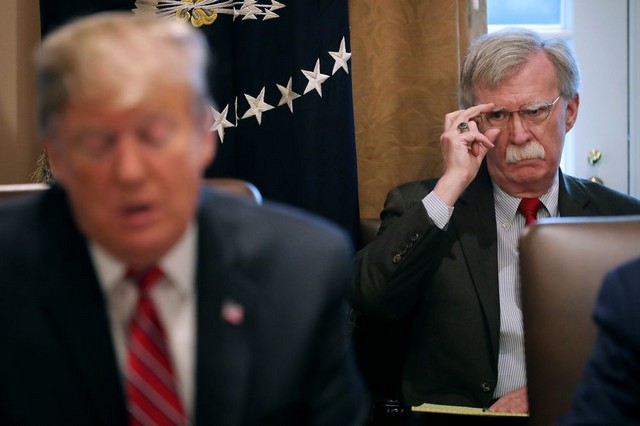
The Trump-Bolton Duo Is Just Like the Bush-Cheney Duo: Warmongers Using Lies to Start Illegal Wars

By Prof Rodrigue Tremblay

[False flag operations:] “The powers-that-be understand that to create the appropriate atmosphere for war, it’s necessary to create within the general populace a hatred, fear or mistrust of others regardless of whether those others belong to a certain group of people or to a religion or a nation.” James Morcan (1978- ), New Zealander-born Australian writer.

[Definition: A ‘false flag operation’ is a horrific, staged event—blamed on a political enemy—and used as pretext to start a war or to enact draconian laws in the name of national security].

“Almost all wars begin with false flag operations.” Larry Chin (d. of b. unknown), North American author, (in ‘False Flagging the World towards War. The CIA Weaponizes Hollywood’, Dec. 27, 2014).

“Definition of reverse projection: attributing to others what you are doing yourself as the reason for attacking them.” John McMurtry (1939- ), Canadian philosopher, (in ‘The Moral Decoding of 9-11: Beyond the U.S. Criminal State’, Journal of 9/11 Studies, Feb.2013).

“That there are men in all countries who get their living by war, and by keeping up the quarrels of nations, is as shocking as it is true; but when those who are concerned in the government of a country, make it their study to sow discord, and cultivate prejudices between nations, it becomes the more unpardonable.” Thomas Paine (1737-1809), American Founding father, pamphleteer, (in ‘The Rights of Man’, c. 1792).

“I was the CIA director. We lied, we cheated, and we stole. It was like — we had entire training courses. It reminds you of the glory of the American experiment.” Mike Pompeo (1963- ), former CIA director and now Secretary of State in the Trump administration, (in April 2019, while speaking at Texas A&M University.)

***

History repeats itself. Indeed, those who live by war are at it again. Their crime: starting illegal wars by committing false flag attacks and blaming other countries for their own criminal acts. On this, the Donald Trump-John Bolton duo is just like the George W. Bush-Dick Cheney duo. It is amazing that in an era of 24-hour news, this could still going on.

We recall that in 2002-2003, the latter duo, with the help of U.K.’s Tony Blair, lied their way into a war of aggression against Iraq, by pretending that Saddam Hussein had a massive stockpile of “weapons of mass destruction”and that he was ready to attack the United States proper. On October 6, 2002, George W. Bush scared Americans with his big Mushroom Cloud analogy. —It was all bogus. —It was a pure fabrication that the gullible (!) U.S. Congress, the corporate media, and most of the American public, swallowed hook, line and sinker.

Now, in 2019, a short sixteen years later, the same stratagem seems to being used to start another illegal war of aggression, this time against the country of Iran. The masters of deception are at it again. Their secret agents and those of their Israeli and Saudi allies, in the Middle East, seem to have just launched an unprovoked attack, in international waters, against a Japanese tanker, and they have rushed to the cameras to accuse Iran. They claim that the latter country used mines to attack the tanker.

This time, they were unlucky. —The owner of the Japanese tanker, the Kokuka Courageous, immediately rebuked that “official” version. Yutaka Katada, president of the Kokuka Sangyo shipping company, declared that the attack came from a bombing from above the water. Indeed, Mr. Katada told reporters:

“The crew are saying it was hit with a flying object. They say something came flying toward them, then there was an explosion, then there was a hole in the vessel.”

His company issued a statement saying that “the hull (of the ship) has been breached above the waterline on the starboard side”, and it was not hit by a mine below the waterline, as the Trump administration has insinuated. —[N. B.: There was also a less serious attack on a Norwegian ship, the Front Altair.]

Thus, this time the false flag makers have not succeeded. But, you can be sure that they will be back at it, sooner or later, just as they, and their well financed al-Qaeda allies, launched a few false flag “chemical” attacks in Syria, and blamed them on the Syrian Assad government.

Donald Trump has too much to gain personally from a nice little war to distract the media and the public from the Mueller report and from all his mounting political problems. In his case, he surely would benefit from a “wag-the-dog” scenario that John Bolton and his friends in the Middle East could easily invent. As a matter of fact, two weeks ago, warmonger John Bolton was coincidently in the Middle East, in the United Arab Emirates, just before the attacks!

Besides the Japanese ship owner’s denial, it is important to point out that at the moment of the attack on the Japanese tanker, the Japanese Prime Minister, Mr. Shinzo Abe, was in Iran, having talks with the Iranian government about economic cooperation between the two countries about oil shipments. Since Iran is the victim of unilateral U. S. economic sanctions, to derail such an economic cooperation between Japan and Iran could have been the triggered motivation to launch a false flag operation. It did not work. But you can be sure that the responsible party will not be prosecuted.

Conclusion

We live in an era when people with low morals, sponsored by people with tons of money, can gain power and do a lot of damage. How our democracies can survive in such a context remains an open question.

*

Note to readers: please click the share buttons below. Forward this article to your email lists. Crosspost on your blog site, internet forums. etc.

This article was originally published on the author’s blog site: Dr. Rodrigue Tremblay.

International economist Dr. Rodrigue Tremblay is the author of the book “The Code for Global Ethics, Ten Humanist Principles”, of the book “The New American Empire”, and the recent book, in French “La régression tranquille du Québec, 1980-2018“.

18 June 2019

Source: www.globalresearch.ca

Trump enjoys bipartisan support for his plan to eradicate the Palestinian cause

By Jonathan Cook

The White House’s prolonged financial bullying of the Palestinian Authority (PA), the Palestinians’ government-in-waiting, has reached the point where there are now credible warnings that it is close to collapse. The crisis has offered critics further proof of the administration’s seemingly chaotic, often self-sabotaging approach to foreign policy matters.

Meanwhile, US officials charged with resolving the Israeli-Palestinian conflict have demonstrated ever more blatant bias, such as the recent claims by David Friedman, the ambassador to Israel, that Israel is “on the side of God” and should have the “right to retain” much of the West Bank.

Again, critics view the Trump administration’s approach as a dangerous departure from the traditional US role of “honest broker”.

Such analyses, however common, are deeply misguided. Far from lacking a strategy, the White House has a precise and clear one for imposing a solution to the Israeli-Palestinian conflict – President Donald Trump’s so-called “deal of the century”. Even without publication so far of a formal document, the plan’s contours are coming ever more sharply into relief, as its implementation becomes observable on the ground.

Repeated delays in announcing the plan are simply an indication that Trump’s team needs more time to engineer a suitable political environment for the plan to be brought out of the shadows.

Further, the Trump administration’s vision of the future for Israelis and Palestinians – however extreme and one-sided – has wide, bipartisan support in Washington. There’s nothing especially “Trumpian” about the administration’s emerging “peace process”.

Choking off aid

Paradoxically, that was evident last week, when leading members of the US Congress from both sides of the aisle introduced a bill to boost the ailing Palestinian economy by $50m. The hope is to create a “Partnership Fund for Peace” that will offer a financial fillip to Israelis and Palestinians seeking to resolve the conflict – or, at least, that is what is being claimed.

This sudden concern for the health of the Palestinian economy is a dramatic and confusing U-turn. Congress has been an active and enthusiastic partner with the White House in choking off aid to the PA for more than a year.

Mohammad Shtayyeh, the Palestinian prime minister, told the New York Times last week that the PA was on the brink of implosion. “We are in a collapsing situation,” he told the newspaper.

The PA’s crisis comes as no surprise. Congress helped initiate it by passing the Taylor Force Act in March 2018. It requires the US to halt funding to the PA until it stops paying stipends to some 35,000 families of Palestinians jailed, killed or maimed by Israel.

On the brink of collapse

Previous US administrations might well have signed a waiver to prevent such legislation from going into effect – just as presidents until Trump blocked a congressional law passed in 1995 demanding that the US move its embassy to Jerusalem.

But the Trump White House is not interested in diplomatic face-saving or reining in the pro-Israel zealotry of US legislators. It fervently and explicitly shares the biases that have long been inherent in the US political system.

In line with the Taylor Force Act, the White House has cut off vital funds for Palestinians, including to UNRWA, the United Nations’ refugee agency for Palestinians, and to hospitals in Israeli-occupied East Jerusalem.

The decision by Congress to throttle the PA has had further repercussions, leaving Israeli Prime Minister Benjamin Netanyahu exposed domestically. Not daring to be seen as less anti-PA than US legislators, Netanyahu implemented his own version of the Taylor Force Act earlier this year.

Since February, he has withheld a portion of the taxes Israel collects on behalf of the PA, the vast bulk of its income, equal to the stipends transferred to the Palestinian families of prisoners and casualties of Israeli violence – or those who Israel and the US simplemindedly refer to as “terrorists”.

That, in turn, has left Mahmoud Abbas, the Palestinian president, in an impossible position. He dare not be seen accepting an Israeli diktat that legitimises withholding Palestinian money, or one that defines as “terrorists” those who have sacrificed the most for the Palestinian cause. So he has refused the entire monthly tax transfer until the full amount is reinstated.

Now, just as these various blows against the PA finally threaten to topple it, the US Congress suddenly prepares to step in and bail out the Palestinian economy with $50m. What on earth is going on?

‘Money in return for quiet’

The small print is telling. The PA, the Palestinians’ fledgling government, is not eligible for any of the US Congress’s promised largesse.

If the legislation passes, the money will be handed to “Palestinian entrepreneurs and companies”, as well as non-governmental organisations, willing to work with the US and Israel on “people-to-people peace-building” programmes and “reconciliation between Israelis and Palestinians”.

In other words, the legislation is actually designed as another strike against the Palestinians’ existing leadership. The PA is being bypassed yet again, as the US and Israel try to bolster an alternative economic, rather than political, leadership.

This move by US representatives is not occurring in a vacuum. Since the effective collapse of the Oslo accords nearly two decades ago, Washington has sought to downgrade a national conflict that needs a political solution into a humanitarian crisis that needs an economic one.

It is a variation on Netanyahu’s long-standing goal to smash the Palestinian national struggle and replace it with so-called “economic peace”.

Where once the goal of peacemaking was “land in exchange for peace” – that is, a Palestinian state in return for an end to hostilities – now the aim is “money in exchange for quiet”. The US is now formally supporting Israel’s efforts at economic pacification.

Outrage at new elections

The Trump administration has devised a two-stage process for neutralising Palestinians.

Firstly, Trump’s son-in-law, Jared Kushner, has been tasked with winning over Arab states, particularly those in the oil-rich Gulf, to stump up money for pacifying Palestinians and their neighbours.

This is the aim of an investment conference due to be held in Bahrain later this month – the lynchpin of the “deal of the century”, not simply a prelude to it.

That was why Trump himself was so visibly outraged at the delay caused by Netanyahu’s decision to dissolve the Israeli parliament last month, a reflection of his political weakness as he faces imminent corruption trials. The new elections in Israel, Trump grumbled, were “ridiculous” and “messed up”.

The intention of the Bahrain conference is to use tens of billions of dollars raised by Washington to buy off opposition to the Trump deal, chiefly from Egypt and Jordan, which are critical to the pacification programme’s success.

Any refusal by the Palestinians to surrender, either in Gaza or the West Bank, could have major repercussions for these neighbouring states.

Search for alternative leaders

Secondly, Friedman is at the centre of efforts to identify recipients for the Gulf-funded handouts. He has been seeking to forge a new alliance between the settlers, with whom he is closely aligned, and Palestinians who may be willing to help in the pacification project. Late last year, he attended a meeting of Palestinian and Israeli business leaders in the West Bank city of Ariel.

Afterwards he tweeted that the business community was “ready, willing and able to advance joint opportunity & peaceful coexistence. People want peace and we are ready to help! Is the Palestinian leadership listening?”

Friedman has made no bones about where his – and supposedly God’s – priorities lie, throwing his weight behind the growing clamour in Israel to annex much of the territory that was once seen as integral to creating a Palestinian state. With that as the administration’s lode star, the task is now to find a Palestinian leadership prepared to stand by as the finishing touches are put on a Greater Israel ordained by God.

Concerns in Washington about the PA’s unwillingness to comply were voiced last week by Kushner, though he dressed them up as doubts about the Palestinians’ ability to govern themselves. He said of the PA: “The hope is that they, over time, will become capable of governing.” He added that the real test of the administration’s plan would be whether Palestinian areas became “investable”.

“When I speak to Palestinian people, what they want is they want the opportunity to live a better life. They want the opportunity to pay their mortgage,” he said.

Washington is therefore looking to influential families in the West Bank that could potentially be recruited with bribes to serve as an alternative, compliant leadership. In February it was reported that around 200 businesspeople, Israeli mayors and heads of Palestinian communities met in Jerusalem “to advance business partnerships between Israeli and Palestinian entrepreneurs”.

Corrupt tribal fiefdoms

It has been natural for the Trump administration to look to a business elite – one that, it hopes, will be prepared to forgo a national solution if the economic environment is liberalised enough to allow for new regional and global investment opportunities.

These individuals belong to extended families that dominate the West Bank’s major cities. Such powerful families may be prepared to assist in the elimination of the PA, in return for a corrupt patronage system allowing them to take control of their respective cities.

Palestinian analysts, like Samir Awad, a politics professor at Bir Zeit University near Ramallah, have told me that the Israeli and US vision of Palestinian “autonomy” may amount to little more than a system of tribal fiefdoms, reminiscent of Afghanistan.

There are already a few Palestinian partners emerging, such as Hebron businessman Ashraf Jabari, who is reportedly planning to attend the Bahrain conference.

He and other business leaders have been quietly developing ties with counterparts in the settler movement, such as Avi Zimmerman. Together, they have set up a joint chamber of commerce covering the West Bank.

It is precisely such initiatives that are being promoted by Friedman and would be eligible for grants from the $50m fund the US Congress is currently legislating.

Ultimately, these Palestinian business “partners” could form an elite to serve as an ostensible national address for the international community in its dealings with the Palestinian people.

Sword over PA’s head

The PA doesn’t have to be discarded for the Trump plan to progress. But alternative national and local leaderships need to be cultivated by Washington to serve both as a sword hanging over the PA’s head, to encourage it to capitulate, and as an alternative ruling class, should the PA fail to submit to the “deal of the century”.

In short, Washington is playing a game of chicken with Abbas and the PA. It is determined that the Palestinians will blink first.

Deeply implicated in Washington’s vision, even if largely out of sight, are the Arab states, whose role is to strong-arm whatever Palestinian leadership is required for the Greater Israel “deal of the century” to be implemented.

The burden of managing the Israeli-Palestinian conflict will shift once again. When Israel occupied the Palestinian territories in 1967, it became directly responsible for the welfare of Palestinians living there.

Since the mid-1990s, when the Palestinian leadership was allowed to return under the Oslo accords, the PA has had to shoulder the task of keeping the territories quiet on Israel’s behalf. Now, after the PA has refused to sign off on Israel’s ambitions to take for itself East Jerusalem and much of the West Bank, the PA is increasingly seen as having outlived its usefulness.

Instead, Palestinian expectations may have to be managed via another route – through the key Arab states of Saudi Arabia, the United Arab Emirates, Egypt and Jordan. Or, as Palestinian analyst Hani al-Masri recently noted, the Bahrain conference “foreshadows the beginning of abandoning the [Palestine Liberation Organization] as the Palestinians’ representative, thereby opening the door … for a new era of Arab patronage over the Palestinians to take hold.”

Years of imperial overreach

Under Trump, what has changed most significantly in the US approach to the Israeli-Palestinian conflict is the urgency of Washington’s efforts to set aside the Palestinian national struggle once and for all.

Since the Six-Day War of 1967, US administrations – with the possible exception of Jimmy Carter’s – had only a marginal interest in forcing a settlement on Israelis and Palestinians. Aside from lip service to peace, they were mostly content to leave the two sides to engage in an asymmetrical struggle that always favoured Israel. This was sold as “conflict management”.

But after 15 years of US imperial overreach in the Middle East – and faced with major foreign policy setbacks in Iraq and Syria, and Israel’s related failures in Lebanon – Washington desperately needs to consolidate its position against rivals and potential rivals in this oil-rich region.

Russia, China, Turkey, Iran, and even Europe, are jostling in different ways for a more assertive role in the Middle East. As it tries to counter these influences, the US wishes to bring together its main allies in the region: Israel and the key Arab states, led by Saudi Arabia.

Although secret ties between the two sides have been growing for some time, unresolved tensions remain over Israel’s demand that it be allowed to maintain regional superiority in military and intelligence matters. That has been obvious in current power battles playing out in Washington.

The Trump administration last month declared extraordinary measures to bypass Congress so that it could sell more than $8bn in weapons to Saudi Arabia, the UAE and Jordan. In retaliation, Congressional leaders close to Israel vowed they would block the arms sales.

Splinter in region’s windpipe

In the White House’s view, little further progress can be made until the Palestinian splinter stuck deep in the Middle East’s windpipe is removed.

Most Arab leaders care nothing for the Palestinian cause, and have come to bitterly resent the way the Palestinians’ enduring struggle for statehood has complicated their own dealings in the region, especially with Iran and Israel.

They would enthusiastically embrace a full partnership with the US and Israel in the region, if only they could afford to be seen doing so.

But the Palestinians’ struggle against Israel – and its powerful symbolism in a region that has experienced so much malign Western interference – continues to serve as a brake on Washington’s efforts to forge tighter and more explicit alliances with the Arab states.

Serious case of hubris

As such, the Trump administration has concluded that “conflict management” is no longer in US interests. It needs to isolate and dispose of the Palestinian splinter. Once that encumbrance is out of the way, the White House believes it can get on with forging a coalition with Israel and most of the Arab states to reassert its dominance over the Middle East.

All of this will likely prove far harder to achieve than the Trump administration imagines, as US Secretary of State Mike Pompeo intimated last week in private.

But it would be wrong nonetheless to assume that the strategy behind Trump’s “deal of the century”, however unrealistic, is not clear-sighted in both its aims and methods.

It would be similarly misguided to believe that the administration’s policy is a maverick one. It is operating within the ideological constraints of the Washington foreign policy elite, even if Trump’s “peace plan” lies at the outer margins of the establishment consensus.

The Trump administration enjoys bipartisan backing from Congress both for its Jerusalem embassy move and for economic measures that threaten to crush the PA, a government-in-waiting that has already made enormous compromises in agreeing to statehood on a tiny fraction of its people’s historic homeland.

No doubt the Trump White House is suffering from a serious case of hubris in trying to eliminate the Palestinian cause for good. But that hubris, however dangerous, we should remember, is shared by much of the US political establishment.

Jonathan Cook is a Nazareth- based journalist and winner of the Martha Gellhorn Special Prize for Journalism.

18 June 2019

Source: www.informationclearinghouse.info

Former President Mohamed Morsi dies in Egypt’s kangaroo court

By Abdus Sattar Ghazali

Egypt’s former President Mohamed Morsi died in a kangaroo court Monday (June 17).

The public prosecutor said the 67-year-old Morsi collapsed in a defendants’ cage in the courtroom and was pronounced dead in hospital.

Morsi had a history of health issues, including diabetes and liver and kidney disease. He had suffered from medical neglect during his imprisonment, compounded by the poor conditions in jail.

There have been various reports over the years that Morsi had been mistreated and tortured in jail, with activists saying on Monday his death should be seen in context of the Egyptian authorities’ systematic isolation and mistreatment of political detainees.

“The government of Egypt today bears responsibility for his death, given their failure to provide him with adequate medical care or basic prisoner rights,” Human Rights Watch said in a statement to Al Jazeera.

Independent Detention Review Panel

Last year, a report by three British members of parliament, under the Independent Detention Review Panel, warned that the lack of medical treatment could result in Morsi’s “premature death”.

In a statement released after Morsi’s death, Crispin Blunt, the panel’s chairman, said his death in custody was representative of Egypt’s inability to treat prisoners in accordance with both Egyptian and international law.

“The Egyptian government has a duty to explain his unfortunate death and there must be proper accountability for his treatment in custody. We found culpability for torture rests not only with direct perpetrators but those who are responsible for or acquiesce in it,” he said in a statement.

“The only step now is a reputable independent international investigation.”

Solitary confinement

Throughout his imprisonment, Morsi was only allowed three visits from his family.

The first was in November 2013, and the second, which only his wife and daughter were allowed to see him, was in June 2017.

The final visit where his entire family was permitted to see him in the presence of security forces was in September 2018.

The former president’s son, Abdullah Mohamed Morsi, told Reuters news agency that the family did not know the location of his body. He added that the authorities had refused to allow Morsi be buried at his family’s cemetery.

Morsi, who was facing at least six trials, had been behind bars for nearly six years and was serving a 20-year prison sentence for a conviction arising from the killing of protesters during demonstrations in 2012. He was also serving a life sentence for espionage in a case related to the Gulf state of Qatar.

Other charges against the former president included jailbreak, insulting the judiciary and involvement in “terrorism”.

Morsi became Egypt’s first democratically elected president in 2012, one year after the Arab Spring uprising saw the end of President Hosni Mubarak’s 30-year rule.

He was then deposed and arrested in July 2013 by US-client General Abdel Fattah el-Sisi who later assumed the title of Field Marshal and became President.

Morsi served just one year of a four-year term, while the organisation to which he belonged, the Muslim Brotherhood, has since been outlawed.

“Morsi’s trial was not shown on live TV, he was put on a glass soundproof cage,” Al Jazeera’s Jamal Elshayyal reported.

“He wasn’t allow to see his lawyers one-to-one and he wasn’t allowed family visits; his family repeatedly complained that aside from the solitary confinement he also wasn’t being given the medical treatment he should have,” added Elshayyal.

“Therefore, these are the facts that we know. Whatever the state decides to tell us afterwards has to be taken in the context,” Elshayyal added.

International probe into Morsi’s death urged

In a joint statement, Amr Darrag, a senior member of the Muslim Brotherhood and a minister of planning and international cooperation under Morsi, and Yehia Hamed, a former Egyptian investment minister under Morsi, said an international independent investigation into the death of Morsi should be made public.

“The Egyptian regime knew that the continued denial of access to medical treatment would lead to his premature death. To that effect, the death of President Morsi is tantamount to state sponsored murder,” they said in the statement.

“The first democratically elected President has died through a concerted and active campaign by the Egyptian regime. This is a gross violation of international law. It must not be allowed to stand.”

Global reaction to Morsi’s death

Recep Tayyip Erdogan, the president of Turkey, on Monday blamed Egypt’s “tyrants” for the death of Morsi. “History will never forget those tyrants who led to his death by putting him in jail and threatening him with execution,” Erdogan said in a televised speech in Istanbul.

The Turkish leader called the former Egyptian president a “martyr”. “May Allah rest our Morsi brother, our martyr’s soul in peace,” said Erdogan, who had forged close ties with the former president.

Pakistan’s religious-political party, Jamaat-e-Islami, said the “Muslim world has lost a true hero”.

“Morsi stood tall in the face of all pressures aimed at forcing him to withdraw his struggle for fundamental rights of the people of Egypt and his support to Palestine,” the group’s chief Senator Siraj-ul- Haq said in a statement on Twitter.

He announced that the party on Tuesday would hold funeral prayers in absentia for Morsi across Pakistan.

Amnesty International

Amnesty International urged Egyptian authorities to investigate the death of Morsi.

Magdalena Mughrabi, deputy director for the Middle East at Amnesty International, said Morsi’s death “raises serious questions about his treatment in custody.”

“We call on Egyptian authorities to conduct an impartial, thorough and transparent investigation into the circumstances of Mursi’s death, including his solitary confinement and isolation from the outside world,” the London-based rights group said in a twitter post.

It also called for an investigation into the medical care Morsi was receiving, and for anyone found responsible for mistreatment to be held accountable.

Human Rights Watch

Sarah Leah Whitson, executive director of Human Rights Watch’s Middle East and North Africa division, called Morsi’s death “terrible but entirely predictable”, given the government’s failure to allow him adequate medical care.

“What we have been documenting for the past several years is the fact that he has been in the worst conditions. Every time he appeared before the judge, he requested private medical care and medical treatment,” Whitson told Al Jazeera.

“He was been deprived of adequate food and medicine. The Egyptian government had known very clearly about his declining medical state. He had lost a great deal of weight and had also fainted in court a number of times.

“He was kept in the solitary confinement with no access to television, email or any communication with friends and family,” Whitson said, arguing that there would not be a credible independent investigation on Morsi’s death “because their [Egyptian government] job and role is to absolve themselves of wrongdoing ever”.

Abdus Sattar Ghazali is the Chief Editor of the Journal of America (www.journalofamerica.net) email: asghazali2011 (@) gmail.com

18 June 2019

Source: countercurrents.org
If Donald Trump Is the Symptom… Then What’s the Disease?

By Tom Engelhardt

Don’t try to deny it! The political temperature of this country is rising fast. Call it Trump change or Trump warming, if you want, but grasp one thing: increasingly, you’re in a different land and, whatever happens to Donald Trump, the results down the line are likely to be ever less pretty. Trump change isn’t just an American phenomenon, it’s distinctly global. After all, from Australia to India, the Philippines to Hungary, Donald Trumps and their supporters keep getting elected or reelected and, according to a recent CNN poll, a majority of Americans think Trump himself will win again in 2020 (though, at the moment, battleground-state polls look grim for him).

Still, whether or not he gets a second term in the White House, he only seems like the problem, partially because no president, no politician, no one in history has ever gotten such 24/7 media coverage of every twitch, tweet, bizarre statement, falsehood, or fantasy he expresses (or even the clothes he wears). Think of it this way: we’re in a moment in which the only thing the media can’t imagine saying about Donald Trump is: “You’re fired!” And believe me, that’s just one sign of a media — and a country — with a temperature that’s anything but 98.6.

Since you-know-who is always there, always being discussed, always @(un)realdonaldtrump, it’s easy enough to imagine that everything that’s going wrong — or, if you happen to be part of his famed base, right (even if that right isn’t so damned hot for you) — is due to him. When we’re gripped by such thinking and the temperature’s rising, it hardly matters that just about everything he’s “done” actually preceded him. That includes favoring the 1%, deporting record numbers of illegal immigrants, and making war(unsuccessfully) or threatening to do so across significant parts of the planet.

Here, then, is the question of the day, the sort you’d ask about any patient with a rising temperature: If Donald Trump is only the symptom, what’s the disease?

Blowback Central

Let me say that the late Chalmers Johnson would have understood President Trump perfectly. The Donald clearly arrived on the scene as blowback — the CIA term of tradecraft Johnson first put into our everyday vocabulary — from at least two things: an American imperium gone wrong with its never-ending wars, ever-rising military budgets, and ever-expanding national security state, and a new “gilded age” in which three men (Bill Gates, Jeff Bezos, and Warren Buffett) have more wealth than the bottom half of society and the .01% have one of their own, a billionaire, in the Oval Office. (If you want to add a third blowback factor, try a media turned upside down by new ways of communicating and increasingly desperate to glue eyes to screens as ad revenues, budgets, and staffs shrank and the talking heads of cable news multiplied.)

Now, I don’t mean to sell Donald Trump short in any way. Give that former reality TV star credit. Unlike either Hillary Clinton or any of his Republican opponents in the 2016 election campaign, he sensed that there were voters in profusion in the American heartland who felt that things were not going well and were eager for a candidate just like the one he was ready to become. (There were, of course, other natural audiences for a disruptive, self-promoting billionaire as well, including various millionaires and billionaires ready to support him, the Russians, the Saudis… well, you know the list). His skill, however, never lay in what he could actually do (mainly, in these years, cut taxes for the wealthy, impose tariffs, and tweet his head off). It lay in his ability to catch the blowback mood of that moment in a single slogan — Make America Great Again, or MAGA — that he trademarked in November 2012, only days after Mitt Romney lost his bid for the presidency to Barack Obama.

Yes, four years later in the 2016 election, others began to notice the impact of that slogan. You couldn’t miss the multiplying MAGA hats, after all. Hillary Clinton’s advisers even briefly came up with the lamest response imaginable to it: Make America Whole Again, or MAWA. But what few at the time really noted was the crucial word in that phrase: “again.” Politically speaking, that single blowback word might then have been the most daring in the English language. In 2016, Donald Trump functionally said what no other candidate or politician of any significance in America dared to say: that the United States was no longer the greatest, most indispensable, most exceptionable nation or superpower or hyper-power ever to exist on Planet Earth.

That represented a groundbreaking recognition of reality. At the time, it didn’t matter whether you were Barack Obama, Hillary Clinton, or Marco Rubio, you had to acknowledge some version of that formula of exceptionalism. Trump didn’t and, believe me, that rang a bell in the American heartland, where lots of people had felt, however indirectly, the blowback from all those years of taxpayer-funded fruitless war, while not benefitting from infrastructure building or much of anything else. They experienced blowback from a country in which new billionaires were constantly being created, while the financial distance between CEO salaries and those of workers grew exponentially vaster by the year, and the financing of the political system became a 1% affair.

With that slogan, The Donald caught the spirit of a moment in which both imperial and economic decline, however unacknowledged by the Washington political elite, had indeed begun. In the process, as I wrote at that time, he crossed a psychologically taboo line and became America’s first declinist candidate for president. MAGA captured a feeling already at large that tomorrow would be worse than today, which was already worse than yesterday. As it turned out, it mattered not at all that the billionaire conman spouting that trademarked phrase had long been part of the problem, not the solution.

He caught the essence of the moment, in other words, but certainly didn’t faintly cause it in the years when he financed Trump Tower, watched his five Atlantic City casinos go bankrupt, and hosted The Apprentice. In that election campaign, he captured a previously forbidden reality of the twenty-first century. For example, I was already writing this in June 2016, five months before he was elected president:

“In its halcyon days, Washington could overthrow governments, install Shahs or other rulers, do more or less what it wanted across significant parts of the globe and reap rewards, while (as in the case of Iran) not paying any price, blowback-style, for decades, if at all. That was imperial power in the blaze of the noonday sun. These days, in case you hadn’t noticed, blowback for our imperial actions seems to arrive as if by high-speed rail (of which by the way, the greatest power on the planet has yet to build a single mile, if you want a quick measure of decline).

“Despite having a more massive, technologically advanced, and better funded military than any other power or even group of powers on the planet, in the last decade and a half of constant war across the Greater Middle East and parts of Africa, the U.S. has won nothing, nada, zilch. Its unending wars have, in fact, led nowhere in a world growing more chaotic by the second.”

Mind you, three years later the United States remains a staggeringly powerful imperial force, with hundreds of military bases still scattered across the globe, while its economic clout — its corporations control about half the planet’s wealth — similarly remains beyond compare. Yet, even in 2016, it shouldn’t have been hard to see that the American Century was indeed ending well before its 100 years were up. It shouldn’t have been hard to grasp, as Donald Trump intuitively did, that this country, however powerful, was already both a declining empire — thank you, George W. Bush for invading Iraq! Mission Accomplished! — and a declining economic system (both of which still looked great indeed, if you happened to be profiting from them). That intuition and that slogan gave Trump his moment in… well, dare I call it “the afternoon sun”? They made him president.

MTPGA

In a sense, all of this should have been expectable enough. Despite the oddity of Donald Trump himself, there was little new in it, even for the imperial power that its enthusiasts once thought stood at “the end of history.” You don’t need to look far, after all, for evidence of the decline of empires. You don’t even have to think back to the implosion of the Soviet Union in 1991, almost three decades ago in what now seems like the Stone Age. (Admittedly, Russian President Vladimir Putin, a brilliant imagineer, has brought back a facsimile of the old Soviet Union, even if, in reality, Russia is now a rickety, fraying petro-state.)

Just take a glance across the Atlantic at Great Britain at this moment. And imagine that three-quarters of a century ago, that modest-sized island nation still controlled all of India, colonies across the planet, and an impressive military and colonial service. Go back even further and you’ll find yourself in a time when it was the true superpower of planet Earth. What a force it was — industrially, militarily, colonially — until, of course, it wasn’t.

If you happen to be looking for imperial lessons, you could perhaps say that some empires end not with a bang but with a Brexit. Despite all the pomp and circumstance (tweeting and insults) during the visit of the Trump royal family (Donald, Melania, Ivanka, Jared, Donald Jr., Eric, and Tiffany) to the British royals, led by a queen who, at 93, can remember better days, here’s something hard to deny: with Brexit (no matter how it turns out), the Earth’s former superpower has landed in the sub-basement of history. Great Britain? Obviously that adjective has to change.

In the meantime, across the planet, China, another once great imperial power, perhaps the greatest in the long history of this planet, is clearly on the rise again from another kind of sub-basement. That, in turn, is deeply worrying the leadership, civilian and military, of the planet’s “lone superpower.” Its president, in response, is wielding his weapon of choice — tariffs — while the U.S. military prepares for an almost unimaginable future war with that upstart nation, possibly starting in the South China Sea.

Meanwhile, the still-dominant power on the planet is, however incrementally, heading down. It’s nowhere near that sub-basement, of course — anything but. It’s still a rich, immensely powerful land. Its unsuccessful wars, however, go on without surcease, the political temperature rises, and democratic institutions continue to fray — all of which began well before Donald Trump entered the Oval Office and, in fact, helped ensure that he would make it there in the first place.

And yet none of this, not even imperial decline itself, quite captures the “disease” of which The Donald is now such an obvious symptom. After all, while the rise and fall of imperial powers has been an essential part of history, the planetary context for that process is now changing in an unprecedented way. And that’s not just because, since the 1945 atomic bombings of Hiroshima and Nagasaki, growing numbers of countries have come to possess the power to take the planet down in a cataclysm of fire and ice (as in nuclear winter). It’s also because history, as we’ve known it, including the rise and fall of empires, is now, in a sense, melting away.

Trump change, the rising political temperature stirred by the growing populist right, is taking place in the context of (and, worse yet, aiding and abetting) record global temperatures, the melting of ice across the planet, the rise of sea levels and the future drowning of coastlines (and cities), the creation of yet more refugees, the increasing fierceness of fires and droughts, and the intensification of storms. In the midst of it all, an almost unimaginable wave of extinctions is occurring, with a possible million plant and animal species, some crucial to human existence, already on the verge of departure.

Never before in history has the rise and decline of imperial powers taken place in the context of the decline of the planet itself. Try, for instance, to imagine what a “risen” China will look like in an age in which one of its most populous regions, the north China plain, may by century’s end be next to uninhabitable, given the killing heat waves of the future.

In the context of both Trump change and climate change, we’re obviously still awaiting our true transformative president, the one who is not a symptom of decline, but a factor in trying to right this country and the Earth before it’s too late. You know, the one who will take as his or her slogan, MTPGA (Make The Planet Great Again).

Tom Engelhardt is a co-founder of the American Empire Project and the author of a history of the Cold War, The End of Victory Culture.

17 June 2019

Source: countercurrents.org
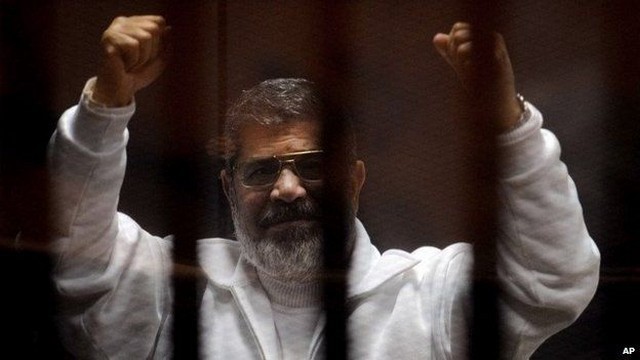
US secretary of state declares “military response” to Iran “being considered”

By Peter Symonds

US Secretary of State Mike Pompeo yesterday continued the Trump administration’s belligerent threats against Iran, declaring in an interview on CBS “Face the Nation” that the US was “considering a full range of options.” Asked if that included “a military response,” he declared “of course.”

Pompeo blustered his way through the interview, dismissing any suggestion that the US had no evidence to prove that Iran had attacked two oil tankers in the Gulf of Oman last Thursday. He insisted that a grainy video released by the US Central Command showed a small boat of the Islamic Revolutionary Guard Corp (IRGC) approached and removed an unexploded limpet mine from the Japanese-owned Kokuta Courageous.

Last Friday, Yukata Katada, the president of the Kokuka Sangyo shipping company that owns the Kokuta Courageous tanker, rejected the claim that the ship had been damaged by limpet mines. “The crew are saying it was hit with a flying object. They saw something flying toward them, then there was an explosion, then there was a hole in the vessel. Then some crew witnessed a second shot.”

Confronted with these remarks yesterday on Fox News Sunday, Pompeo simply dodged the question, declaring that “the intelligence community has lots of data, lots of evidence” and “the American people should rest assured we have high confidence with respect to who conducted the attacks.” He provided no evidence or data, however.

The Secretary of State gave a similar response when asked on CBS about comments by German Foreign Minister Heiko Maas that the video was “not enough.” Pompeo baldly declared that Maas had seen “a great deal more than just the video” but did not elaborate. In a not-so-subtle swipe at Germany, he added that “there are countries that just wish this should go away and they want to act in a way that is counterfactual.”

Germany is not the only country to question the lack of evidence. Japan Todayreported yesterday that the Japanese government had also requested further proof. “The US explanation had not helped us to go beyond speculation,” a senior government official said.

Another source close to Prime Minister Shinzo Abe told the website: “These are not definitive proof that it’s Iran. Even if it’s the United States that makes the assertion, we cannot simply say we believe it.”

The source also noted that the attacks on the tankers took place as Abe was meeting with Iranian Supreme Leader Ayatollah Ali Khamenei during his trip to Iran to try to mediate between Tehran and Washington. He said the attacks had “severely affected the prime minister’s reputation” and “making mistakes when determining facts is impermissible.”

Clearly Japan and Germany simply do not believe the US allegations and suspect that the incident could well be a provocation organized by the US or an ally to provide the justification for war against Iran. Commenting on US claims that the sophistication of the attacks “proved” it was Iran, a Japanese foreign ministry official told JapanToday: “That [argument] would apply to the United States and Israel as well.”

Iran has emphatically denied any involvement in the incident. In rejecting the allegations, Iranian President Hassan Rouhani branded the US as “a serious threat to the stability of the region.”

The Trump administration deliberately ratchetted up tensions with Tehran when, in breach of UN resolutions, it abrogated the 2015 Iranian nuclear deal with the five permanent members of the UN Security Council plus Germany. The US has re-imposed and intensified crippling economic sanctions on Iran with the express aim of reducing its energy exports to zero.

The US decision to confront Iran is not just aimed at Iran but at allies such as Germany and Japan, as well as open rivals such as China and Russia. In the wake of the 2015 agreement and the partial lifting of sanctions, these and other countries have been developing economic and political relations with Tehran. Largely excluded, Washington is exploiting sanctions and the threat of brute military force to sabotage these ties.

In what amounted to a blunt threat, Pompeo implied that the threat of war would force other countries to line up with the US. On Fox News Sunday, he noted that “very little of our crude oil comes through the Gulf,” then added that other countries—China, Japan, South Korea, Indonesia—were highly dependent. “I am confident that when they see the risk, the risk to their own economies and their own people… they will join us,” Pompeo boasted.

At this stage only Britain and several Gulf States have backed the US claims. Crown Prince Mahammed bin Salman, who is implicated in the murder of journalist Jamal Khashoggi last October, declared over the weekend that Saudi Arabia “will not hesitate to deal with any threat to our people, sovereignty and vital interests.” Yesterday, US F-15 fighter jets flew in formation with Saudi warplanes in the Gulf region.

Last month, the Trump administration ordered the USS Lincoln’s carrier battle group, a bomber strike force led by nuclear-capable B-52s, along with 900 additional ground troops and a Patriot missile battery into the region. Leaked plans also revealed that up to 120,000 troops could be deployed to the region.

On Friday, according to the New York Times, Trump’s National Security Adviser John Bolton, a notorious warmonger, met for three hours with acting Defence Secretary Patrick Shanahan and Joint Chiefs of Staff chairman, General Joseph Dunford, to discuss the tanker attacks.

The Pentagon is reportedly weighing sending as many as 6,000 additional troops to the Gulf region, along with warships and fighter jets. Washington is also trying to assemble an international coalition to provide warships to escort tankers through the Gulf. Asked about these plans yesterday, Pompeo refused to comment.

When pressed on CBS as to whether Trump had the legal authority to attack Iran, Pompeo dismissed the suggestion that the US Congress would have to approve such action. He declared that “the American people should be very confident… [that] we will always do the hard task it takes to protect American interests, wherever they are.”

The Trump administration is engaged in a reckless drive to war against Iran on the basis of lies. The US military build-up in the Gulf region, including the prospect of military manoeuvres in the narrow Strait of Hormuz, sets the stage for provocations that provide the trigger for a catastrophic conflict that would draw in other powers.

Originally published in WSWS.org

17 June 2019

Source: countercurrents.org
The Holocaust and the Nakba: The Jew as the Arab

By Hamid Dabashi

16 Jun 2019 – Last month Al Jazeera Media Network suspended two journalists over a video that “downplayed and misrepresented the Holocaust”. The short clip, which was published by AJ+ Arabic, was taken down after the network said in a statement that it had “contravened its editorial standards”.

In an email to staff, Yaser Bishr, executive director of Al Jazeera’s digital division, announced that there will be “a mandatory bias and sensitivity training programme”. Given the resurgence of anti-Semitism, it is indeed important to scrutinise coverage of the Jewish Holocaust and be vigilant.

In this sense, it is commendable that the Doha-based network has taken action. But when it comes to crimes committed by European powers, Al Jazeera is by far not the only one that should be undergoing “sensitivity training”.

Whether it is the transatlantic slave trade, the genocide of native populations in the Americas and Australia, or massacres of varying scales in the Middle East, Asia and Africa, mass atrocities committed by European imperialism and settler colonialism are regularly downplayed and misrepresented. And so are the crimes of other non-European imperial powers.

As racism, white supremacy and sectarianism are on the rise across the world, we indeed need to take care not only to give the Jewish Holocaust immediate and constant attention it needs, but also all other colossal calamities in world history committed in the name of the imagined superiority of one group of humans over the rest.

Can ‘We’ Feel the Pain of Others?

As it happens the incident with the AJ video coincided with a major Holocaust exhibition in New York at the Museum of Jewish Heritage: A Living Memorial to the Holocaust. With more than 700 original items from Auschwitz and 400 photographs, it is the largest ever travelling exhibition about the Nazi death camps.

It is important to have such exhibitions to remind us of the horrors of the Holocaust and the dangers that racist ideologies pose to humanity. But when reflecting on this enormous tragedy, it is difficult to do so in historical isolation, especially from the other tragedy that followed after the end of World War II: the Nakba or the dispossession of the Palestinian people and the systematic theft of their homeland by European settler colonialists.

The Nakba, too, has been downplayed and misrepresented, time and again, in the mainstream media across the world. And beyond that, it is in fact the official policy of the state of Israel to systemically and consistently deny Palestinian suffering. In fact, the whole Israeli settler colony is built on the denial of the very existence of a Palestinian people, let alone their Nakba.

Should the Israelis then not go through “sensitivity training” as well, the way Al Jazeera has decided to do with its staff – both Arab and non-Arab? And what sort of “sensitivity training” would or could ever address or correct that catastrophe? Could the children of European Jews who escaped the Holocaust ever comprehend the pain and suffering of the Palestinians who were uprooted to make space for Zionist settlements?

In Regarding the Pain of Others (2003), American author and philosopher Susan Sontag reflects on how it is impossible for an image of other people’s suffering to convey the horror of the actual events. To make her point, she goes through a series of photographic representations of disasters, Francisco Goya’s The Disasters of War, photographs of the American Civil War, the lynching of African-Americans in the South, the Nazi death camps, the Rwanda genocide, and the attacks in New York City on September 11, 2001.

Sontag rightly warns: “No ‘we’ should be taken for granted when the subject is looking at other people’s pain.” That is, those who have never experienced the pain they are observing in an image or on the TV screen will never fully comprehend it; they will never be a “we” with the person living that pain.

Nevertheless, she argues, it is still important to display images of suffering to society. She writes: “Who are the ‘we’ at whom such shock-pictures are aimed? That ‘we’ would include not just the sympathizers of a smallish nation or a stateless people fighting for its life, but – a far larger constituency – those only nominally concerned about some nasty war taking place in another country. The photographs are a means of making ‘real’ (or ‘more real’) matters that the privileged and the merely safe might prefer to ignore.”

In this sense, how can Jews in and outside Israel and Palestinians come together to form this “we” – to begin to see and sympathise with each other’s pain? An exhibition such as the one in New York could be a great opportunity to have the history of Jewish suffering, that of the Holocaust in particular, re-historicised so Palestinians too could feel the sustained course of their suffering documented and acknowledged.

But is such a curatorial politics even conceivable?

The Jew as the Arab

Indeed, there have been such attempts already. In a recently published volume, The Holocaust and the Nakba: A New Grammar of Trauma and History (2018), edited by Bashir Bashir and Amos Goldberg, a number of leading scholars and critical thinkers reflect on the differences and similarities of the two traumatic events. And it is precisely here where the Jew and the Palestinian can come together.

The point in this volume is not to assimilate these two collective horrors into each other. Rather, the point is the common emotive universe in which Jews and Palestinians can converse from the site of their collective traumas, addressing the suffering and pain of the other.

A cruel history has cast innocent Palestinians and innocent Jews against each other, a false hostile binary manufactured by a history of nasty European colonialism that has culminated and triumphed in the Zionist colonisation of Palestine.

But from the terror of that colonial cruelty two peoples, Jews and Palestinians, emerge as similar victims of the dastardly European racism against Jews and colonialism against Palestinians, a fact that squarely places Zionists not on the side of the Jews but on the side of European colonialists.

No amount of “sensitivity training” can ever replace the necessity of the Jew and the Arab to see each other’s history of suffering as their own: Close their eyes for one moment and imagine themselves in the shoes of the other.

Hamid Dabashi is the Hagop Kevorkian Professor of Iranian Studies and Comparative Literature at Columbia University.

17 June 2019

Source: www.transcend.org

When Secular Israelis Claim “God Gave This Land to Us”

By Rabbi Brant Rosen

23 May 2019 – Israeli Ambassador to the UN, Danny Danon, created something of viral sensation last week when, during a speech in the Security Council, he dramatically brandished a Bible and declared,

“This is the deed to our land.”

He then continued:

From the book of Genesis; to the Jewish exodus from Egypt; to receiving the Torah on Mount Sinai; to the gates of Canaan; and to the realization of God’s covenant in the Holy Land of Israel; the Bible paints a consistent picture. The entire history of our people, and our connection to Eretz Yisrael, begins right here.

Danon’s use of an ancient religious text as justification for the State of Israel’s right to the land was likely an astonishing moment for many. What on earth was a secular Israeli doing lecturing the UN on “God’s covenant in the Holy Land of Israel?” For those familiar with Zionist pedagogy however, his comments were neither unusual nor unprecedented.

When I heard about Danon’s Biblical tutorial, I immediately recalled a famous story about a 1937 meeting between David Ben-Gurion and Lord Peel, who was then heading the British Royal Peel Commission of Inquiry into the potential partition of Mandate Palestine. According to the story, Lord Peel asked Ben-Gurion where he was born and Ben-Gurion replied that he was from Plonsk, Poland. Lord Peel responded that the Arab leaders with whom he had met were all born in Palestine and most of the Jewish leaders were from Eastern Europe. Peel noted that the Arab people had a kushan (Ottoman land deed) that entitled them to the land – and asked Ben-Gurion if he also had a document that proved the land belonged to him.

At that point, Ben-Gurion became aware of the Bible upon which he had just sworn as a commission witness. He grabbed it, held it up and exclaimed, “Here is your kushan. It is the world’s most highly respected book and I believe that you British regard it with much respect too. We must have this land!”

This phenomenon – that of otherwise secular Israeli Jews proclaiming “God gave this land to us” – is not particularly uncommon. It is actually rooted in the unique form of nationalist ideology that gave rise the state of Israel. If we are to grasp this mentality properly then, we must first understand the early ideological trends that motivated Israel’s original settlers and eventual founders.

Many scholars have pointed out that Zionists – particularly those from Russia and Poland – were markedly influenced by the ideas of European Romantic nationalism (also known as “ethnic nationalism,” “organic nationalism” or “integral nationalism”) an intellectual movement that spread across Europe in the mid-19th century. The early seeds of this ideology were planted in the ideas of Rousseau, Hegel and particularly the German philosopher Johann Gottfried von Herder, who posited that “each nation is separate, distinguished by climate, education, custom, tradition, and heredity.”

These ideas were a powerful part of the ideological fabric of 19th century Europe from which Zionism emerged. In his book “The Founding Myths of Israel,” Israeli historian Zeev Sternhell notes that “Herder’s thinking had tremendous importance in Eastern Europe” during the 19th century and that these ideas were formative for important Labor Zionists such as A.D. Gordon, Berl Katznelson and David Ben-Gurion. Sternhell’s work compellingly demonstrates how otherwise secular socialists could espouse an ideology that articulated a deeply spiritual – and at times almost mystical connection of the Jewish people to land, history, language and ritual:

A cultural-organic conception of the nation necessarily included religion, which it saw as an inseparable part of national identity. This was the case in Eastern Europe, but also in Western Europe, in France and Spain. French integral nationalism was no less Catholic than Polish nationalism, and religion played the same role in it as it did in Poland or Romania. It was a focus of unity and identity, over and beyond social divisions. In integral nationalism religion had a social function, unconnected with its metaphysical content. Generally, it was a religion without God; in order to fulfill its function as a unifying force, religion required only external symbols, not inner content (p. 56, emphasis mine.)

In other words, the settlers and eventual founders of the Jewish state instrumentalized religion, emphasizing its social function to unify the people under one national identity. Indeed, the idea of a “religion without God” can be clearly discerned in the words of many pivotal Zionists. Thus Gordon, the father of Labor Zionism, could in one breath excoriate traditional Judaism with incredible vehemence while claiming that “the greatness of nationalism is its cosmic dimension” (p. 62). Sternhell also describes the venerable Labor Zionist figure, Berl Katznelson, as “a kind of secular rabbi whose strength lay in a direct contact with a sect of believers” (p. 135).

As my anecdote above demonstrates, Ben-Gurion’s world view was also deeply motivated by this mindset. Decades after lifting a Bible before Lord Peel, Ben-Gurion famously convened a study group of archeologists, academics and military officers to read and discuss the Biblical book of Joshua. It was well known that Joshua, which describes the Israelite conquest of Canaan in vivid detail, was Ben-Gurion’s favorite book of the Bible. In keeping with the ways of Romantic nationalists, he considered the Bible to be the Jewish people’s “national epic,” connecting them to a glorious ancient past as well as the a justification for their contemporary settlement of the land.

As American scholar Rachel Haverlock has noted:

Similar to other national movements, Zionism appealed to the glories of an ancient past and brought biblical words and phrases into spoken Hebrew. The Hebrew Bible served as a linguistic source and literary template in the prestate Yishuv and early decades of the State of Israel…

Ben-Gurion saw the biblical war narrative as constituting an ideal basis for a unifying myth of national identity. Not only could modern Israelis relate to the processes of conquest and settlement, but through the prism of Joshua they could also understand them as reenactments of the biblical past (“The Joshua Generation: Conquest and the Promised Land ” p. 309.)

The use of the Bible as national epic was not the exclusive provenance of Labor Zionists. Zeev Jabotinsky, the founder of Revisionist Zionism (the ideology of the present-day Likud party) wrote the 1927 novel, “Samson the Nazirite,” which portrays Samson as a Jewish national hero. Though Jabotinsky was a passionate opponent of Labor Zionism, he and his socialist Zionist compatriots clearly shared a deep attachment to the trappings of Romantic nationalism.

Since the founding of the state (when the Bible was invoked in its Declaration of Independence), these romantic mythic narratives have since exerted an indelible hold over Israeli socio-political culture. Well before Danon’s UN pronouncement one could choose from a myriad of examples. To offer but one more: Netanyahu’s 2015 speech before Congress, in which invoked the Biblical book of Esther to drive home the “threat” of present day Iran to the state of Israel. (“Today the Jewish people face another attempt by yet another Persian potentate to destroy us.”)

With the political ascendency of the settler movement, it might be said that the Romantic nationalism Israel’s of socialist founders has found common cause with religious Zionists who use the Bible to make unabashedly fundamentalist claims on the land. Thus, an extreme nationalist Israeli politician like Ayelet Shaked can be accurately described as “a secular woman from left-leaning Tel Aviv (who has) become the most successful spokesperson for the religious-nationalist party and the settlement movement it strongly supports.” In a sense, we might say that the trajectory of contemporary Zionism has hopelessly conflated secular nationalism and religious ideology into one Biblically-based claim to historic Palestine.

In the end, however, whether it is used by Labor Zionists, Revisionist Zionists or right wing West Bank settlers, the use of the Bible as the “Jewish people’s deed of sale” to the land of Israel represents a radical break with Jewish history, throughout which Jews regarded this text as a religious – not a political – document. It is also a profoundly fraught enterprise, particularly when you consider that the Zionist national epic includes God’s command in the book of Joshua for the Israelites to take the land by force and dispossess its Canaanite residents.

In an era that is currently witnessing the rise of romantic/ethnic (read “white”) nationalism throughout the world once more, it is critical that nations honestly assess what it is that truly binds them together. Is it one people’s “organic right” to a particular land or a commitment to the individual rights of all who dwell upon it?

__________________________________________________

Rabbi Brant Rosen: I’m the Midwest Regional Director for the American Friends Service Committee and the rabbi of Tzedek Chicago.

17 June 2019

Source: www.transcend.org

EU Blasted for Ever Closer Cooperation with Terror Regime in Israel

By Stuart Littlewood

“Public funds contributed by European taxpayers are channeled to a country that not only disregards human rights but also uses the most advanced knowledge and technology for the very violation of human rights…. This is not compatible with the values Europe upholds.”

12 Jun 2019 – One hundred and fifteen European researchers and academics have delivered a stinging rebuke to Federica Mogherini, High Representative of the European Union for Foreign Affairs and Security Policy and Vice-President of the European Commission, and Carlos Moedas, European Commissioner for Science, Research and Innovation.

In a beautifully crafted letter, they express the outrage felt throughout the world, and especially in European countries, including the UK, at the EU’s policy of rewarding the war crimes and crimes against humanity committed by Israel. Each new act of unspeakable brutality, each new onslaught of disproportionate force against civilians brings fresh privileges, fresh cooperation, fresh embraces from an enthusiastic EU elite.

Perhaps the most shameful thing about Europe’s relations with Israel is the EU-Israel Association Agreement which came into force in 2000. This is about special trading and other privileges, and its purpose is to promote (1) peace and security, (2) shared prosperity through, for example, the creation of a free trade zone, and (3) cross-cultural rapprochement. It governs not only EU-Israel relations but Israel’s relations with the EU’s other Mediterranean partners, including the Palestinian National Authority.

To enjoy the Association’s privileges Israel undertook to show “respect for human rights and democratic principles” as set out as a general condition in Article 2, which says:

Relations between the parties, as well as all the provisions of the Agreement itself, shall be based on respect for human rights and democratic principles, which guides their internal and international policy and constitutes an essential element of this Agreement.

“Essential” being the operative word. Respecting human rights and democratic principles is not optional. Article 2 allows steps to be taken to enforce the contractual obligations regarding human rights and to dissuade partners from pursuing policies and practices that disrespect those rights. The Agreement also requires respect for self-determination of peoples and fundamental freedoms for all.

Israel relies heavily on exports to Europe, so the EU could by now have forced an end to the brutal occupation of the Holy Land instead of always rewarding it.

Well, that’s a joke for a start. Given Israel’s contempt for such principles the EU, had it been an honourable group, would have enforced Article 2 and not let matters slide. It would have suspended Israel’s membership until the Israeli regime fully complied. Israel relies heavily on exports to Europe, so the EU could by now have forced an end to the brutal occupation of the Holy Land instead of always rewarding it.

The signatories to the letter to Mogherini and Moedas aptly quote the warning by Israel’s own human rights group B’Tselem:

If the international community does not come to its senses and force Israel to abide by the rules that are binding to every state in the world, it will pull the rug out from under the global effort to protect human rights in the post-World War II era.

Here is that excellent letter by the researchers and academics:

To: Ms Federica Mogherini – High Representative of the European Union for Foreign Affairs and Security Policy

To: Mr Carlos Moedas – European Commission, DG for Research and Innovation
Brussels, June 4, 2019

Re: Letter from European researchers and academics concerning Israel’s participation in Horizon Europe

Dear M. Federica Mogherini, Dear Mr Moedas,

We researchers and academics from Europe are writing to you in order to express our deep concern about the participation of Israel and its military companies in EU Research Programs. While we write, new Israeli raids flare up and the smoldering remnant of Gaza protesters of the Great March of Return, already forgotten and forsaken. More than 270 unarmed civilians were killed during the March of return, including women, children and persons with disabilities and thousands more were injured [28,939, of whom 7,247 by live fire]. They were only demanding their rights enshrined in international law: end of the illegal blockade and for the right of return to their ancestral homes from which they were expelled.

A report of the United Nation’s Independent Commission of Inquiry published earlier this year concluded that the Israeli army might have committed war crimes and crimes against humanity by indiscriminately killing health workers, journalists and unarmed protesters who did not pose any imminent threats to the soldiers.

Relentless violence rages again after 11 years of inhumane siege and three military assaults that shattered the fabric of normal life. Gaza is declared to be uninhabitable by 2020 according to a report by the UN, but this “environmentally defined” deadline reflects only the intentionality of an imposed series of emergencies, followed each time by a further decrease in health, energy, food independence and commerce after each episode of armed aggression since 2007.

The hermetic siege combined with the systematic large scale military destruction is slowly strangling nearly the two million inhabitants of Gaza. None of the basic civilian infrastructure such as hospitals and power plants, was ever sufficiently rebuilt after each of the three military assaults due to severe restrictions by the blockade. Electricity is available only a few hours a day, 98 peer cent of water is not drinkable, and many hospitals periodically stop functioning due to lack of medication, spare parts of machinery, electricity and fuel. Permission for patients to leave in order to receive life-saving treatment elsewhere has been continually declining in time. Tools for education, number of teachers, and rebuilding of schools are severely impaired. The inhabitants of Gaza have been consistently denied basic human rights and human dignity.

The disproportionate use of force on the civilians amounting to war crimes has also been systematic throughout all, long and short term, military operations, including the almost daily assaults to fishermen and agricultural workers.

These facts have been meticulously documented in authoritative reports by the UN and human rights organizations and widely condemned by the international community. Yet Israel’s policies of aggression and repression have continued.

This ongoing impunity is allowing Gaza, the world’s largest open air prison, to be used as a military test field. In each offensive Israel deployed, tested and perfected new high-tech military weapons and surveillance systems. These new cutting edge high-tech products are exhibited and sold as “battle-tested”, an exclusive label Israeli homeland security industry boasts. Israel became the world’s top arms exporter per capita.This grave violation of human rights is thus highly profitable for Israel’s war industry, disclosing another side of the claim of “only self-defense” and the interests beyond the lack of measure in the aggressions on Palestinians of Gaza.

Nonetheless, in spite of continual and serious breaches of international law and violation of human rights, and regardless of the commitment for upholding human rights of European countries, Israel enjoys an exceptionally privileged status in dealing with Europe, also through the Association Agreement, and has been receiving grants from the European Commission in the area of research and innovation (FP7 and its successor Horizon 2020).

Funds are granted even to Israeli arms producers such as Elbit Systems and Israel Aerospace Industries Ltd (IAI), the producers of lethal drones that were used in the Gaza military assaults against civilians, together with numerous academic institutions that have close ties with Israeli military industry.

We appeal to the European Union to impose a comprehensive military embargo on Israel, as long as Israel continues to blatantly violate human rights. We are deeply disturbed that public funds contributed by European taxpayers are channeled to a country that not only disregards human rights but also uses most advanced knowledge and technology for the very violation of human rights. We believe that knowledge and innovation should serve progress in humanity and society, not to develop dual-use or military research of a country that has a record history of grave human rights violations. This is not compatible with the values Europe upholds.

In 2017 more than 150 European trade unions, political parties, human rights organizations and faith groups from over 16 European countries issued a call urging the EU to uphold its legal responsibilities and exclude Israeli military companies from EU Framework Programs.

We support Amnesty International’s call for a military embargo on Israel, issued last year following the attacks on the unarmed protesters of the Great March of Return using maiming bullets and brutal means by the Israeli army, unnecessary in that context.

Youth of Gaza appealed to you to stop funding Israeli manufacturers of weapons and surveillance system that guard their open-air prison, maimed them and destroyed their future. In support of their outcry we call upon European Union and European Commission to suspend the Association Agreement with Israel and exclude Israel as an eligible partner for Horizon Europe (successor of Horizon 2020), as long as it refuses to comply with the rules of international law. We also share the concern of B’Tselem, Israeli human rights organization, which stated “If the international community does not come to its senses and force Israel to abide by the rules that are binding to every state in the world, it will pull the rug out from under the global effort to protect human rights in the post-World War II era.

Signatories*:

1. Dr Nozomi Takahashi, Center for Inflammation Research, VIB-Ghent University, Belgium
2. Marc Van Ranst,Department of Microbiology, Immunology and Transplantation, KU Leuven,Belgium
3. Dr Leander Meuris, Medical Biotechnology, VIB-Ghent University, Belgium
4. Tarek Meguid,
5. Em. John Dugard, Universities of Leiden and the Witwatersrand (UN Special Rapporteur onthe human rights situation in the Occupied Palestinian Territory 2001-2008)
6. Em. Herman De Ley, Ghent University, Belgium
7. Dr Andrea Balduzzi, Università di Genova, Italy
8. Giuliano Donzellini, University of Genua, Italy
9. Sergio Morra,University of Genua, Italy
10. Paolo Bartolini, University of Genua, Italy
11. Dr Angela Waldegg, Austria
12. Salvatore Palidda,University of Genua, Italy
13. Andrea Sbarbaro,office worker (psychologist),University of Genua, Italy
14. Marcello Maneri, University of Milano-Bicocca, Italy
15. Dr Syksy Räsäne, University of Helsinki, Finland
16. Prof. Haseeb Shehadeh, University of Helsinki, Finland
17. Paola Manduca, Former Associate Professor Genetics,University of Genoa, Italy
18. Em.Giorgio Forti, Unuversità degli Studi di Milkano, Italy
19. Adjunct Professor Pertti Multanen, University of Tampere, Finland
20. Dr Angela Flynn, University College Cork, Ireland
21. Docente ordinario Giuseppe Mosconi, Università di Padova, Italy
22. Anna Boato, Uniiversità di Genova, Italy
23. Dr Ronit Lentin, Trinity College Dublin, Ireland,
24. Mathias Urban, Desmond Chair of Early Childhood Education, Dublin City University, Ireland
25. Sancia Gaetani, Già Istituto Nazionale Nutrizione, Italy
26. James Roche, Lecturer,Technoligical University Dublin, Ireland
27. Angelo Baracca,University of Florence, Italy
28. Giorgio M. Giallocosta, University of Genoa, Italy
29. Prof PhD Alessandro Bianchi, Department Informatics – Univ. Bari, Italy
30. Prof Elisabetta Donini, University of Turin, Italy
31. Luca Queirolo Palmas,University of Genoa, Italy
32. Rosella Franconi, Senior scientist, Italy
33. Pediatric surgeon Bruno Cigliano, University “Federico II” Naples-Italy
34. Vittorio Agnoletto,University of Milan, Italy
35. Prof.Andrea Frova, Università di Roma “La Sapienza”, Physics Dept, Italy
36. Prof. Mariapiera Marenzana, Ministry of Education, Italy
37. Massimo Di Rosa, Italy
38. Iain Chambers, University of Naples, “Orientale”, Italy
39. Dr Paola Rivetti, Dublin City University, Ireland
40. Lidia Curti, University of Naples, Italy
41. Kati Juva, Helsinki University Central Hospital, Finland
42. Hessel Christiane, Epouse de l’Ambassadeur de France Stéphane Hessel, France
43. Bruno Lapauw, Ghent University, Belgium
44. Matthieu Lenoir, Ghent University, Belgium
45. Stef Craps, Ghent University, Belgium
46. Dr De Baerdemaeker Luc, Ghent University, Belgium
47. Ana Cabal, University of Antwerp, Belgium
48. Dr Kristina Mercelis, Belgium
49. Arch assistant. Geert Pauwels, Vrije Universiteit Brussel, Belgium
50. Van Laere, Royal academy for Archaeology of Belgium
51. Karel Arnaut, KU Leuven – IMMRC, Belgium
52. Dr Willie van Peer, University of Munich, Austria
53. Dr Em. Frans Daems,University of Antwerp, Belgium
54. Omar Jabary Salamanca, Ghent University, Belgium
55. Jan Delrue, KU Leuven University, Belgium
56. Prof. Christian Kesteloot, KU Leuven University, Belgium
57. Em. Aviel Verbruggen, University of Antwerp, Belgium
58. Medical student Serhat Yildirim,Ghent University , Belgium
59. Emer. Piet Mertens, KU Leuven, Belgium
60. Associate Professor Nadia Fadil, KU Leuven, Belgium
61. Prof. Dr Patric Jacobs, Ghent University, Geology Deparment, Belgium
62. Honourary Professor Michel Vanhoorne, Ghent University, Belgium
63. Docent Jan Wyns, Belgium
64. Prof. Marc David, Universiteit Antwerpen, Belgium
65. Pieter Rombouts, Ghent University, Belgium
66. Mireille Gleizes, Belgium
67. Dr Barbara Van Dyck, University of Sussex, UK
68. Prof. Claude Veraart, University of Louvain (UCL), Belgium
69. Professeur Honoraire Pierre Gillis, Université de Mons, Belgium
70. Researcher Patrick Italiano, University of Liege, Belgium
71. Professeur Ordinaire Honoraire André Gob, Université de Liège, Belgium
72. Researcher Jacques Moriau, ULB, Belgium
73. Philosopher Marc Vandepitte, Technische Scholen Mechelen, Belgium
74. Abdessalam Faraj, Belgium
75. PhD Gillet S. University of Namur, Belgium
76. Prof. Mateo Alaluf, Université Libre de Bruxelles, Belgium
77. Em. Biesemans Monique, Vrije Universiteit Brussel, Belgium
78. Prof. Fred Louckx, Vrije Universiteit Brussel, Belgium
79. Marc Jacquemain, University of Liege, Belgium
80. Germain Marc, Université de Lille, France
81. Professeur-chercheur Lucienne Strivay, Université de Liège, Belgium
82. Gilles-Maurice de Schryver, Ghent University, Belgium
83. Researcher Andrew Crosby, Université libre de Bruxelles, Belgium
84. Bert Cornillie, KU Leuven, Belgium
85. Docent Dario Giugliano, Accademia di Belle Arti di Napoli, Italy
86. de Beer Daniel, Université Saint-Louis, Belgium
87. Researcher M Louise Carels, Université de Liège, Belgium
88. Victor Ginsburgh, Université libre de Bruxelles, Belgium
89. Prof. Heinz D. Hurwitz, Université Libre de Bruxelles, Belgium
90. A. Maria Aurora De Angelis, SOAS University of London, UK
91. Dr Jef Peeters, KU Leuven, Belgium
92. Prof. Magda Devos, University of Ghent, Belgium
93. Prof. Norbert Van den Bergh, Gent University, Belgium
94. Prof. Stefan Kesenne, University of Antwerp, Belgium
95. Dr Em. Madeline Lutjeharms, Vrije Universiteit Brussel, Belgium
96. Marie Scheirlinck, Belgium
97. Koen Verrept, VUB, Belgium
98. Roberto Beneduce, University of Turin, Italy
99. Patricia Willson, Université de Liège, Belgium
100. Prof. Christiane Schomblond, Université Libre de Bruxelles, Belgium
101. Prof. Florimond De Smedt, Vrije Universiteit Brussel, Belgium
102. Professeur Honoraire Mormont Marc, Université de Liège, Belgium
103. Dr Zahidi, University of Antwerpen, Belgium
104. PhD Leena Saraste, Finland
105. Prof. P. Marage, Université Libre de Bruxelles, Belgium
106. Prof. Michel Gevers, Université catholique de Louvain, Belgium
107. Senior Research Associate Giselle Corradi, Ghent University, Belgium
108. Tiziana Terranova, Italy
109. Honorary Prof. Albert Martens, Katholieke Universiteit Leuven, Belgium
110. Prof. Vandermotten Christian, Université Libre de Bruxelles, Belgium
111. Jean-Claude Gregoire, Université libre de Bruxeles, Belgium
112. Researcher Xavier May, Université Libre de Bruxelles, Belgium
113. Dr Duez Colette, University of Liege, Belgium
114. PhD Tanneke Herklots, the Netherlands,
115. Prof. Marc De Meyere, Gent University, Belgium.

*Institutions are added for identification purposes only. All signatories have signed the letter in a personal capacity.

17 Jun 2019

Source: www.transcend.org