Just International

Endless procedural abuses show Julian Assange case was never about law

By Jonathan Cook

It is astonishing how often one still hears well-informed, otherwise reasonable people say about Julian Assange: “But he ran away from Swedish rape charges by hiding in Ecuador’s embassy in London.”

That short sentence includes at least three factual errors. In fact, to repeat it, as so many people do, you would need to have been hiding under a rock for the past decade – or, amounting to much the same thing, been relying on the corporate media for your information about Assange, including from supposedly liberal outlets such as the Guardian and the BBC.

At the weekend, a Guardian editorial – the paper’s official voice and probably the segment most scrutinised by senior staff – made just such a false claim:

Then there is the rape charge that Mr Assange faced in Sweden and which led him to seek refuge in the Ecuadorian embassy in the first place.

The fact that the Guardian, supposedly the British media’s chief defender of liberal values, can make this error-strewn statement after nearly a decade of Assange-related coverage is simply astounding. And that it can make such a statement days after the US finally admitted that it wants to lock up Assange for 175 years on bogus “espionage” charges – a hand anyone who wasn’t being wilfully blind always knew the US was preparing to play – is still more shocking.

Assange faces no charges in Sweden yet, let alone “rape charges”. As former UK ambassador Craig Murray recently explained, the Guardian has been misleading readers by falsely claiming that an attempt by a Swedish prosecutor to extradite Assange – even though the move has not received the Swedish judiciary’s approval – is the same as his arrest on rape charges. It isn’t.

Also, Assange did not seek sanctuary in the embassay to evade the Swedish investigation. No state in the world gives a non-citizen political asylum to avoid a rape trial. The asylum was granted on political grounds. Ecuador rightly accepted Assange’s concerns that the US would seek his extradition and lock him out of sight for the rest of his life.

Assange, of course, has been proven – yet again – decisively right by recent developments.

Trapped in herd-think

The fact that so many ordinary people keep making these basic errors has a very obvious explanation. It is because the corporate media keep making these errors.

These are is not the kind of mistakes that can be explained away as an example of what one journalist has termed the problem of “churnalism”: the fact that journalists, chasing breaking news in offices depleted of staff by budget cuts, are too overworked to cover stories properly.

British journalists have had many years to get the facts straight. In an era of social media, journalists at the Guardian and the BBC have been bombarded by readers and activists with messages telling them how they are getting basic facts wrong in the Assange case. But the journalists keep doing it anyway. They are trapped in a herd-think entirely divorced from reality.

Rather than listen to experts, or common sense, these “journalists” keep regurgitating the talking points of the British security state, which are as good as identical to the talking points of the US security state.

What is so striking in the Assange coverage is the sheer number of legal anomalies in his case – and these have been accumulating relentlessly from the very start. Almost nothing in his case has gone according to the normal rules of legal procedure. And yet that very revealing fact is never noticed or commented on by the corporate media. You need to have a blind spot the size of Langley, Virginia, not to notice it.

If Assange wasn’t the head of Wikileaks, if he hadn’t embarrassed the most important western states and their leaders by divulging their secrets and crimes, if he hadn’t created a platform that allows whistleblowers to reveal the outrages committed by the western power establishment, if he hadn’t undermined that establishment’s control over information dissemination, none of the last 10 years would have followed the course it did.

If Assange had not provided us with an information revolution that undermines the narrative matrix created to serve the US security state, two Swedish women – unhappy with Assange’s sexual etiquette – would have gotten exactly what they said in their witness statements they wanted: pressure from the Swedish authorites to make him take an HIV test to give them peace of mind.

He would have been allowed back to the UK (as he in fact was allowed to do by the Swedish prosecutor) and would have gotten on with developing and refining the Wikileaks project. That would have helped all of us to become more critically aware of how we are being manipulated – not only by our security services but also by the corporate media that so often act as their mouthpiece.

Which is precisely why that did not happen and why Assange has been under some form of detention since 2010. Since then, his ability to perform his role as exposer of serial high-level state crimes has been ever more impeded – to the point now that he may never be able to oversee and direct Wikileaks ever again.

His current situation – locked up in Belmarsh high-security prison, in solitary confinement and deprived of access to a computer and all meaningful contact with the outside world – is so far based solely on the fact that he committed a minor infraction, breaching his police bail. Such a violation, committed by anyone else, almost never incurs prosecution, let alone a lengthy jail sentence.

So here is a far from complete list – aided by the research of John Pilger, Craig Murray and Caitlin Johnstone – of some of the most glaring anomalies in Assange’s legal troubles. There are 17 of them below. Each might conceivably have been possible in isolation. But taken together they are overwhelming evidence that this was never about enforcing the law. From the start, Assange faced political persecution.

No judicial authority

  • In late summer 2010, neither of the two Swedish women alleged Assange had raped them when they made police statements. They went together to the police station after finding out that Assange had slept with them both only a matter of days apart and wanted him to be forced to take an HIV test. One of the women, SW, refused to sign the police statement when she understood the police were seeking an indictment for rape. The investigation relating to the second woman, AA, was for a sexual assault specific to Sweden. A condom produced by AA that she says Assange tore during sex was found to have neither her nor Assange’s DNA on it, undermining her credibility.


  • Sweden’s strict laws protecting suspects during preliminary investigations were violated by the Swedish media to smear Assange as a rapist. In response, the Stockholm chief prosecutor, Eva Finne, took charge and quickly cancelled the investigation: “I don’t believe there is any reason to suspect that he has committed rape.” She later concluded: “There is no suspicion of any crime whatsoever.”


  • The case was revived by another prosecutor, Marianne Ny, during which time Assange was questioned and spent more than a month in Sweden waiting for developments in the case. He was then told by prosecutors that he was free to leave for the UK, suggesting that any offence they believed he had committed was not considered serious enough to detain him in Sweden. Nonetheless, shortly afterwards, Interpol issued a Red Notice for Assange, usually reserved for terrorists and dangerous criminals.


  • The UK supreme court approved an extradition to Sweden based on a European Arrest Warrant (EAW) in 2010, despite the fact that it was not signed by a “judicial authority”, only by the Swedish prosecutor. The terms of the EAW agreement were amended by the UK government shortly after the Assange ruling to make sure such an abuse of legal procedure never occurred again.


  • The UK supreme court also approved Assange’s extradition even though Swedish authorities refused to offer an assurance that he would not be extradited onwards to the US, where a grand jury was already formulating draconian charges in secret against him under the Espionage Act. The US similarly refused to give an assurance they would not seek his extradition.


  • In these circumstances, Assange fled to Ecuador’s embassy in London in summer 2012, seeking political asylum. That was after the Swedish prosecutor, Marianne Ny, blocked Assange’s chance to appeal to the European Court of Human Rights.


  • Australia not only refused Assange, a citizen, any help during his long ordeal, but prime minister Julia Gillard even threatened to strip Assange of his citizenship, until it was pointed out that it would be illegal for Australia to do so.


  • Britain, meanwhile, not only surrounded the embassy with a large police force at great public expense, but William Hague, the foreign secretary, threatened to tear up the Vienna Convention, violating Ecuador’s diplomatic territory by sending UK police into the embassy to arrest Assange.

Six years of heel-dragging

  • Although Assange was still formally under investigation, Ny refused to come to London to interview him, despite similar interviews having been conducted by Swedish prosecutors 44 times in the UK in the period Assange was denied that right.


  • In 2016, international legal experts in the United Nations Working Group on Arbitrary Detention, which adjudicates on whether governments have complied with human rights obligations, ruled that Assange was being detained unlawfully by Britain and Sweden. Although both countries participated in the UN investigation, and had given the tribunal vocal support when other countries were found guilty of human rights violations, they steadfastly ignored its ruling in favour of Assange. UK Foreign Secretary Phillip Hammond, flat-out lied in claiming the UN panel was “made up of lay people and not lawyers”. The tribunal comprises leading experts in international law, as is clear from their CVs. Nonetheless, the lie became Britain’s official response to the UN ruling. The British media performed no better. A Guardian editorial dismissed the verdict as nothing more than a “publicity stunt”.


  • Ny finally relented on interviewing Assange in November 2016, coming to London after six years of heel-dragging. However, she barred Assange’s lawyer from being present. That was a gross irregularity that Ny was due to be questioned about in May 2017 by a Stockholm judge. Apparently rather than face those questions, Ny decided to close the investigation against Assange the very same day.


  • In fact, correspondence that was later revealed under a Freedom of Information request shows that the British prosecution service, the CPS, pressured the Swedish prosecutor not to come to the London to interview Assange through 2010 and 2011, thereby creating the embassy standoff.


  • Also, the CPS destroyed most of the incriminating correspondence to circumvent the FoI requests. The emails that surfaced did so only because some copies were accidentally overlooked in the destruction spree. Those emails were bad enough. They show that in 2013 Sweden had wanted to drop the case against Assange but had come under strong British pressure to continue the pretence of seeking his extradition. There are emails from the CPS stating, “Don’t you dare” drop the case, and most revealing of all: “Please do not think this case is being dealt with as just another extradition.”


  • It also emerged that Marianne Ny had deleted an email she received from the FBI.


  • Despite his interview with Ny taking place in late 2016, Assange was not subseqently charged in absentia – an option Sweden could have pursued if it had thought the evidence was strong enough.


  • After Sweden dropped the investigation against Assange, his lawyers sought last year to get the British arrest warrant for his bail breach dropped. They had good grounds, both because the allegations over which he’d been bailed had been dropped by Sweden and because he had justifiable cause to seek asylum given the apparent US interest in extraditing him and locking him up for life for political crimes. His lawyers could also argue convincingly that the time he had spent in confinement, first under house arrest and then in the embassy, was more than equivalent to time, if any, that needed to be served for the bail infringement. However, the judge, Emma Arbuthnot, rejected the Assange team’s strong legal arguments. She was hardly a dispassionate observer. In fact, in a properly ordered world she should have recused herself, given that she is the wife of a government whip, who was also a business partner of a former head of MI6, Britain’s version of the CIA.


  • Assange’s legal rights were again flagrantly violated last week, with the collusion of Ecuador and the UK, when US prosecutors were allowed to seize Assange’s personal items from the embassy while his lawyers and UN officials were denied the right to be present.

Information dark ages

Even now, as the US prepares its case to lock Assange away for the rest of his life, most are still refusing to join the dots. Chelsea Manning has been repeatedly jailed, and is now facing ruinous fines for every day she refuses to testify against Assange as the US desperately seeks to prop up its bogus espionage claims. In Medieval times, the authorities were more honest: they simply put people on the rack.

Back in 2017, when the rest of the media were still pretending this was all about Assange fleeing Swedish “justice”, John Pilger noted:

[QUOTE]

In 2008, a secret Pentagon document prepared by the “Cyber Counterintelligence Assessments Branch” foretold a detailed plan to discredit WikiLeaks and smear Assange personally. The “mission” was to destroy the “trust” that was WikiLeaks’ “centre of gravity”. This would be achieved with threats of “exposure [and] criminal prosecution”. Silencing and criminalising such an unpredictable source of truth-telling was the aim.” …

According to Australian diplomatic cables, Washington’s bid to get Assange is “unprecedented in scale and nature”. …

The US Justice Department has contrived charges of “espionage”, “conspiracy to commit espionage”, “conversion” (theft of government property), “computer fraud and abuse” (computer hacking) and general “conspiracy”. The favoured Espionage Act, which was meant to deter pacifists and conscientious objectors during World War One, has provisions for life imprisonment and the death penalty. …

In 2015, a federal court in Washington blocked the release of all information about the “national security” investigation against WikiLeaks, because it was “active and ongoing” and would harm the “pending prosecution” of Assange. The judge, Barbara J. Rothstein, said it was necessary to show “appropriate deference to the executive in matters of national security”. This is a kangaroo court.

[END QUOTE]

All of this information was available to any journalist or newspaper that cared to search it out and wished to publicise it. And yet not one corporate media outlet has done so over the past nine years. Instead they have shored up a series of preposterous US and UK state narratives designed to keep Assange behind bars and propel the rest of us back into the information dark ages.

Jonathan Cook won the Martha Gellhorn Special Prize for Journalism.

29 May 2019

Source: countercurrents.org
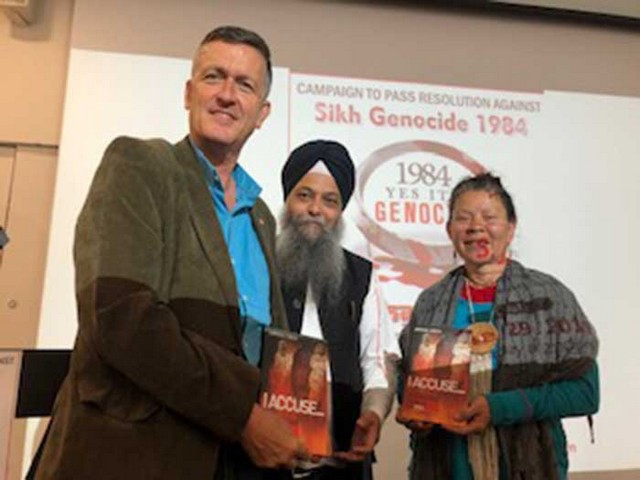
Was Dr Payal Tadvi victim of a hate crime ?

By Vidya Bhushan Rawat

While in truly technical terms Dr Payal Tadvi committed suicide on May 22nd 2019 in her hostel room in Mumbai, but for all practical reasons, I would call it a murder, a crime which was not merely racial hatred but also look like Islamophobia as she seem to belong to tribal community practicing Islamic faith. The twenty six year old Gynecologist was pursuing her post graduate course and would have become the first doctor from her community. It is so difficult for the Adivasis to come up and stand when there is so much of concealed hatred. It is reported that Payal has complained to higher authorities about the continuous harassment by her savarna colleagues and room mates namely Dr Hema Ahuja, Dr Bhakti Mehra and Dr Anikta Khandelwal who were her seniors too. They would not only not allow her to perform surgeries but were regularly harassing and humiliating her.

Payal had informed this to her mother Abeda Tadvi and father Salim who live in Jalgaon and work in Zila Parishad office. She was a very hard working girl, a brave one who passed out her MBBS degree in Gynecology from Miraj. A report in the Hindu, quoting her husband Dr Salman Tadvi says, “When she came to Nair Hospital for her postgraduation, she was asked to temporarily share a room with Dr. Hema Ahuja and Dr. Bhakti Mehar. The two began harassing her soon,” “The two doctors would go to the toilet and wipe their feet on her mattress and litter it. When she would be away, they would taunt her that she was spending time with her husband,” he said.

Her mother Abeda Tadvi is a cancer patient and has been listening to her daughter and standing with her all the time. She said : “My daughter was extremely strong. But this constant abuse eventually broke her. The three accused should be punished so that it sets an example for others who traumatise and torture students like Payal.”

How do you define this treatment given to Payal by her savarna seniors? This is pure hate crime ? All those who are insulting Dalits and Adivasis, humiliating them, compelling them to commit suicide, attacking them, their habitat, their land are criminals and should be dwelt under hate crime laws. The savarna hate crime must be now on the top of the government agenda if it want to win ‘sabka vishwas’, trust of all. The three savarna doctors must be prosecuted with stringent laws so that this become an example but we know very well that the government and its officers have never been sincere in following the constitution and implementing the rule of law otherwise Dr Payal would not have died. Where are the institutional mechanism to protect SC-ST students. Her death is an institutional killing like that of Rohit Vemula and the BYL Nair Hospital, Mumbai can not get away from its accountability in this regard. Why are institutional mechanism not strong to deal with the discrimination which is rampant in our educational institutions. Why was there no ‘committee’ which could have taken action against these three girls. If there is a committee then what did it do ? Who are the members of the committee ? Are there SC-ST members in these committees ? Can we trust those committees where no member belong to these communities.

For clarification of many, unlike the scheduled castes, the tribes have got reservation irrespective of faiths. Payal belonged to Bhil community which has about 2.7% people practicing Islam though around Maharashtra. Total number of Bhils and Gonds in India is nearly 2.8 crore, which is 27% of the total adivasi population in India.Among the Muslim Tribal communities 1.32 lakhs live in Jammu and Kashmir and 1.12 lakh hails from Maharashtra where Bhils are the biggest tribal community where Islam is one of the practicing faiths.

Dr Payal was killed by the three seniors who happened to be women. She became the victim of hate crime where her tribal identity practicing Islamic faith might have further aggravated her troubles. How can the racists hate-mongers allow a tribal Muslim doctor, full of confidence and equally meritorious, to stand shoulder to shoulder with them. This is the crisis that the caste Hindus suffer. First they blame that the SC-ST dont have merits and when people come and join them, they become so notorious that they create all the obstacles so that these students leave their courses mid way and return their home. Those who remain in the institutions are continuously harassed in the hope they will give up. Payal did not leave the hostel and decided to stay put. There is a limit of patience. She was after all just 26 years old with no one to help her or even console her. This is how girls from Dalit Adivasi communities face when they are in these manuwadi institutions. The whole atmosphere in these so called institutions of merit is so suffocating with brahmanical arrogance that it kills the students from the Dalit Bahujan Communities.

With more and more brahmanisation process in these institutions, further obstacles are being created so that students dont come up and leave. That is a strategy by the savarna elite where the institutions and their caste owners to are party to hate crime. Will Maharashtra government act and get this case heard in a fast track court so that the hate criminals get the maximum punishment. Let the government develop mechanism in all our colleges, universities, institutions as well as offices like Women Cell, develop special cell for SC-ST communities so that such murders are not repeated and India show its commitment against caste and race based prejudices which are order of the day.

Our salute to Dr Payal Tadvi . her fighting spirit will remain alive and her death will always remind us the grave nature of discrimination that exists in our minds and body against Dalits and Adivasis. We will remain the most barbaric, uncivilised and highly prejudiced society If India does not address this issue with honesty. With so many people being kept outside humanity and denial of justice to them will never make us a great nation. Time to show real intent to fight against hate crimes on Dalits and Adivasis.

Vidya Bhushan Rawat is a social and human rights activist.

28 May 2019

Source: countercurrents.org
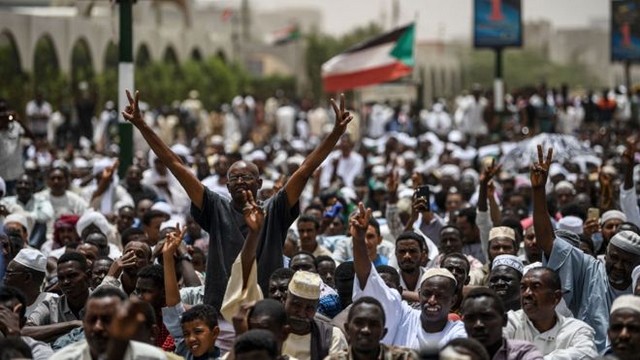
India News Roundup: Mother walks with dead son’s body in Uttar Pradesh

By Countercurrents Team

In Shahjahanpur of Uttar Pradesh a mother walked with her dead son’s body home as the hospital denied ambulance. The deceased child had been admitted to the hospital after he encountered high fever. It was alleged that three ambulances were parked at the hospital but the authorities failed to spare one.

The doctors of the concerned hospital dismissed the claims of the parents. The father of the deceased told the news agency, ANI that the doctors asked them to take their child to another hospital. The hospital also refused to give them a vehicle for going to another hospital.

With no money in their pockets, the deceased decided to walk to another hospital. The mother of the deceased alleged that her son had passed away on their way to the hospital.

The emergency medical officer, Anurag Parashar stated that they had admitted a child named Afroz in their hospital at 8:10 pm. Parashar added that since the condition of the child was not good, they asked the parents to take him to Lucknow for proper treatment. Parashar alleged that on hearing this, the parents of the child ‘scoffed’ and said that they will take their child wherever they want. After saying this, the parents of the deceased allegedly left.

Madhya Pradesh Farmer, Family Of Five Consumes Poison In Suicide Pact, Unable To Repay Rs 1.6 Lakh Debt

In Madhya Pradesh a small scale farmer killed himself in a suicide pact along with his family. Ashok Prajapati, a resident of Rewa district attempted suicide with his wife and three children by consuming poison. While Ashok, his wife Sunita and their 14-year-old son died their two other children are still undergoing treatment in a hospital.

According to Ashok’s father his son was a small scale farmer and after years of facing losses, he borrowed Rs 1.6 lakhs from a local moneylender to start a brick kiln.

The troubles started after Ashok failed to repay the loan. He was allegedly getting threats from the money lender. And on Friday night, he gave poison-laced soft drink to his children and wife before consuming himself.

Bihar man asks vendor his name, shoots at him on knowing he is Muslim

In a suspected case of hate crime, an inebriated man here asked a street vendor his name and then shot him in the back on learning that he is a Muslim, police said on Monday.

The suspect, Rajiv Yadav, also asked the man, Mohammed Qasim, to go to Pakistan, they said. On the compliant of Qasim, a case has been registered against Yadav, who is absconding, Station House Officer Neeraj Kumar Singh said.

“The incident took place at Kumbhi village in Cheria Bariyarpur police station area of the district on Sunday. An FIR has been registered and search is on for Rajiv Yadav. We are making efforts to bring the accused to book at the earliest,” he said.

A video of Qasim, who sells detergents to make a living, expressing his ordeal while undergoing treatment at a hospital, has gone viral on social media.

The clip shows Qasim alleging that the man fired at him in an inebriated state after asking him his name.

“I was on my daily round when the attacker stopped me and asked me my name. When I replied, he exclaimed – you are a Muslim. What are you doing here? You should go to Pakistan. He, thereafter, whipped out a pistol and opened fire. The bullet hit me in my back. His firearm had just one bullet. As he proceeded to load more ammunition, I shoved him away and ran for my life,” Qasim, who is in his 30s, alleged, adding that bystanders did not come to his rescue.

CPI leader Kanhaiya Kumar, who had contested from Begusarai in the Lok Sabha elections but lost by a huge margin to BJP’s Giriraj Singh, said leaders who spread hate for political gains were to be blamed for the incident.

“For such incidents, leaders and their cronies who spread hate for their political gains are responsible. We will not rest until the guilty are punished,” he tweeted.

Hijab-clad student in Bengal college ‘harassed’ by Jai Shri Ram chanting men

A 23-year-old hijab-clad student of North Bengal Medical College in Siliguri was allegedly threatened and intimidated by a group of 10-12 men chanting ‘Jai Shri Ram’ inside the institution campus on Saturday.

“I along with a friend around 10 PM were returning from the canteen after dinner when we saw a group of 10-12 men standing on the road. We were walking on our own but after noticing my attire they started shouting ‘Jai Shreei Ram’ while pointing fingers at us. Later they started thumping their feet to intimidate us. We immediately ran away to save ourselves,” said the final-year medical student.

The student maintained that she had never seen the accused in the college campus earlier. The local police initially refused to take her complaint but later asked her to remove the word ‘threatened’ from the FIR, she said. The FIR, though, was finally filed the next day with the word added.

“I am a hijab-wearing Muslim, I always wear this attire. I have never faced such harassment in my life. There was no one in the street that day to save us. Is this how we have to live now?” she added.

4 year old kid stripped, burnt with Hot Khichdi for asking extra egg in West Bengal Childcare Centre

In a disgusting and disturbing incident in West Bengal, a 4-year-old boy was stripped and burnt with steaming khichdi at a government-run child development centre since the boy asked for an extra egg for breakfast. The shocking incident of the kid crying in pain happened in Raghunathganj area of Murshidabad district on Friday. This happened in a state-funded organisation where children up to six years are given supplementary nutrition, immunization, and non-formal education.

The incident came to light after the child’s mother lodged a police complaint against the woman after her son came home crying. As per Hindustan Times, a case has been filed against the woman who has gone into hiding since the shocking incident.

28 May 2019

Source: countercurrents.org
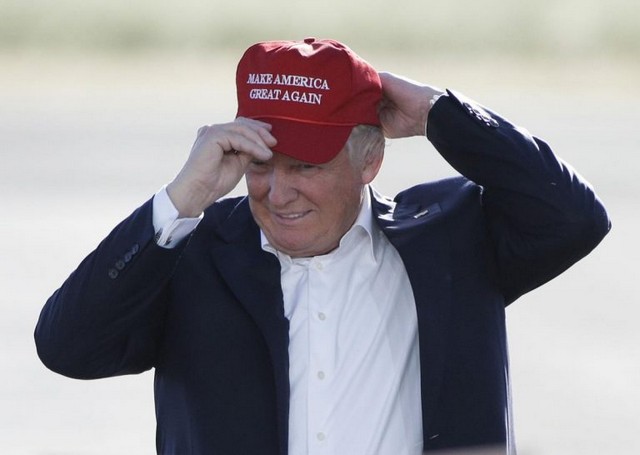
Patrice Lumumba: the most important assassination of the 20th century

By Georges Nzongola-Ntalaja

Patrice Lumumba, the first legally elected prime minister of the Democratic Republic of the Congo (DRC), was assassinated 50 years ago today, on 17 January, 1961. This heinous crime was a culmination of two inter-related assassination plots by American and Belgian governments, which used Congolese accomplices and a Belgian execution squad to carry out the deed.

Ludo De Witte, the Belgian author of the best book on this crime, qualifies it as “the most important assassination of the 20th century”. The assassination’s historical importance lies in a multitude of factors, the most pertinent being the global context in which it took place, its impact on Congolese politics since then and Lumumba’s overall legacy as a nationalist leader.

For 126 years, the US and Belgium have played key roles in shaping Congo’s destiny. In April 1884, seven months before the Berlin Congress, the US became the first country in the world to recognise the claims of King Leopold II of the Belgians to the territories of the Congo Basin.

When the atrocities related to brutal economic exploitation in Leopold’s Congo Free State resulted in millions of fatalities, the US joined other world powers to force Belgium to take over the country as a regular colony. And it was during the colonial period that the US acquired a strategic stake in the enormous natural wealth of the Congo, following its use of the uranium from Congolese mines to manufacture the first atomic weapons, the Hiroshima and Nagasaki bombs.

With the outbreak of the cold war, it was inevitable that the US and its western allies would not be prepared to let Africans have effective control over strategic raw materials, lest these fall in the hands of their enemies in the Soviet camp. It is in this regard that Patrice Lumumba’s determination to achieve genuine independence and to have full control over Congo’s resources in order to utilise them to improve the living conditions of our people was perceived as a threat to western interests. To fight him, the US and Belgium used all the tools and resources at their disposal, including the United Nations secretariat, under Dag Hammarskjöld and Ralph Bunche, to buy the support of Lumumba’s Congolese rivals , and hired killers.

In Congo, Lumumba’s assassination is rightly viewed as the country’s original sin. Coming less than seven months after independence (on 30 June, 1960), it was a stumbling block to the ideals of national unity, economic independence and pan-African solidarity that Lumumba had championed, as well as a shattering blow to the hopes of millions of Congolese for freedom and material prosperity.

The assassination took place at a time when the country had fallen under four separate governments: the central government in Kinshasa (then Léopoldville); a rival central government by Lumumba’s followers in Kisangani (then Stanleyville); and the secessionist regimes in the mineral-rich provinces of Katanga and South Kasai. Since Lumumba’s physical elimination had removed what the west saw as the major threat to their interests in the Congo, internationally-led efforts were undertaken to restore the authority of the moderate and pro-western regime in Kinshasa over the entire country. These resulted in ending the Lumumbist regime in Kisangani in August 1961, the secession of South Kasai in September 1962, and the Katanga secession in January 1963.

No sooner did this unification process end than a radical social movement for a “second independence” arose to challenge the neocolonial state and its pro-western leadership. This mass movement of peasants, workers, the urban unemployed, students and lower civil servants found an eager leadership among Lumumba’s lieutenants, most of whom had regrouped to establish a National Liberation Council (CNL) in October 1963 in Brazzaville, across the Congo river from Kinshasa. The strengths and weaknesses of this movement may serve as a way of gauging the overall legacy of Patrice Lumumba for Congo and Africa as a whole.

The most positive aspect of this legacy was manifest in the selfless devotion of Pierre Mulele to radical change for purposes of meeting the deepest aspirations of the Congolese people for democracy and social progress. On the other hand, the CNL leadership, which included Christophe Gbenye and Laurent-Désiré Kabila, was more interested in power and its attendant privileges than in the people’s welfare. This is Lumumbism in words rather than in deeds. As president three decades later, Laurent Kabila did little to move from words to deeds.

More importantly, the greatest legacy that Lumumba left for Congo is the ideal of national unity. Recently, a Congolese radio station asked me whether the independence of South Sudan should be a matter of concern with respect to national unity in the Congo. I responded that since Patrice Lumumba has died for Congo’s unity, our people will remain utterly steadfast in their defence of our national unity.

Georges Nzongola-Ntalaja is professor of African and Afro-American studies at the University of North Carolina at Chapel Hill and author of The Congo from Leopold to Kabila: A People’s History

17 January 2011

Source: www.theguardian.com

Why the Hindi Belt Voted for Modi? – A Ground-level Account

By Dr Gilbert Sebastian

Sachin Mathew (name changed), one of my students who completed M.A. in at the Central University of Kerala subsequently did his B.Ed. and worked in a school in the rural part of Gorakhpur, the district the Chief Minister of Uttar Pradesh, Yogi Adityanath hails from. He had given me an interesting account of the actual conditions prevailing there. I asked him to write about it but was not inclined to write it. So I thought of making this brief note which is not, by any means, to denigrate our fellow citizens in north India but for the understanding of the compatriots of south India, especially, Kerala, Tamil Nadu and Andhra Pradesh which refused to give a second tenure to the Modi government. This is for the understanding of these south Indians who wonder why Modi government won a second term in spite of the note-ban which was an “organised loot and legalised plunder”, according to Manmohan Singh; the Rafale Deal which was the “Largest Defence Scam” in Indian history according to Adv. Prashant Bhushan; writing off the debts of 3 lakh 16 thousand crore rupees of big industrialists; acute farm crisis driving an average of 12,000 farmers to suicide every year; price rise; grueling unemployment; mob lynchings; etc. The pinch of the stomach made little impact on the electoral outcome in 2019. The majoritarian nationalist rabble-rousing on terrorist attacks especially at Pulwama and the surgical strike at Balakot in Pakistan were sufficient to win the votes of the north Indians. This signaled a return of nationalist ideology – communal and anti-Pakistan in character quite unlike the secular and anti-imperialist nationalism of the Nehru era.

Returning to the discussion on Gorakhpur, the Principal cum Owner of the school is a matriculation-failed person. Sachin Mathew was the most educated person among the teachers of the school. The fees in the school is around 3000 rupees per month. Yet the demand for education was so high that the students were sitting so cramped on the school benches that they could not free their hands for writing.

On the average, the supply of electricity in the district is only for four hours a day even as the summer heat goes up to 40-45 degree Celsius.

An average house in the area was a hall in which they live on the one side and their animals live on the other side. The youth dress impeccably with tucked in shirts and shoes. But if you visit their places of stay, it is clear that they live in very unhygienic conditions. Flies cover the food they offer so it is hard to follow their friendly prodding, ‘Khao, khao’ (Eat, eat). So Sachin Mathew decided not to visit their houses anymore.

When they hear that he was from Kerala, they express their high regard for the state which they say is very educated and equipped with knowledge of English and this appreciation is also reflected in the high demand for getting educated in schools where teachers from Kerala teach. But they invariably ask a Malayalee whether he/she eats beef and they add, ‘How could you do this? The cow is like your mother.’ Sachin Mathew hails from a Christian background in north Kerala. They give a complacent smile when they hear that he is from a Christian background. But they start hurling communal abuses as soon as they hear about Muslims.

The narrative above may cast light on the culture and living conditions of an average rural locality in north India and could make us understand why Modi was voted back to power. Rural underdevelopment and miserable living conditions in the Hindi belt go hand in hand with communal anti-Muslim sentiments, obviously powered by dominant class politics. The fertile land of the Gangetic plain makes agriculture an earning proposition. So people are able to afford costly education but the quality of education remains so low.

Article 45 under Directive Principles of the Constitution of India says, “The State shall endeavour to provide, within a period of ten years from the commencement of this Constitution, for free and compulsory education for all children until they complete the age of fourteen years.” (emphasis added). This promise remains belied even after 69 years of the inauguration of the Constitution and the prime responsibility lies with the dominant class politicians who should be asked to give an explanation. India would have been a very different country if at least, basic literacy was provided to all Indian citizens so that they would be aware of their basic rights and would not be swayed by communal passions. This is of extreme importance for the future of India because once the delimitation of constituencies is carried out by 2025, the seat share of south Indian states will further go down and the Hindi belt with a growing population would overwhelmingly determine the shared destiny of India. It may be underlined that the biggest challenge, in the days to come is to win people over from the grip of communal ideology.

Dr. Gilbert Sebastian is an Assistant Professor at the Central University of Kerala, Kasaragod.

26 May 2019

Source: countercurrents.org
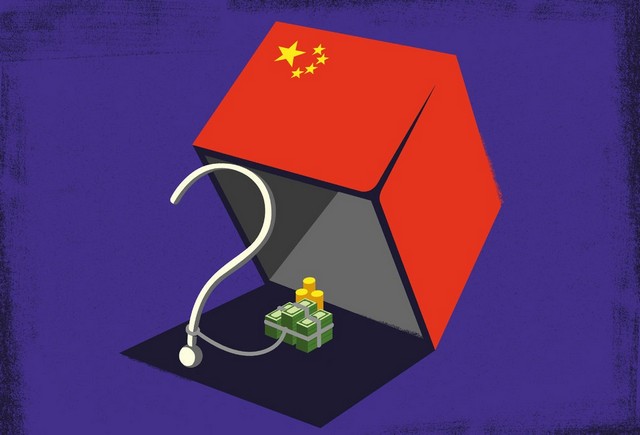
Madonna’s Fake Revolution: Eurovision, Cultural Hegemony and Resistance

By Dr Ramzy Baroud

Rim Banna, a famous Palestinian singer who translated Palestine’s most moving poetry to song passed away on March 24, 2018, at the age of 51. Rim captured the struggle for Palestinian freedom in the most dignified and melodious ways. If we could imagine angels singing, they would sound like Rim.

When Rim died, all Palestinians mourned her death. Although a few international outlets carried the news of her passing at a relatively young age, her succumbing to cancer did not receive much coverage or discussion. Sadly, a Palestinian icon of cultural resistance who had inspired a whole generation, starting with the First Palestinian Intifada in 1987, hardly registered as an event worthy of remembrance and reflection, even among those who purport to champion the Palestinian cause.

Compare Rim to Madonna, an ‘artiste’ who has stood for self-aggrandizing personal fame and money-making. She has championed the most debased moral values, utilizing cheap entertainment while catering to the lowest common denominator to remain relevant in the music world for as long as possible.

While Rim had a cause, Madonna has none. And while Rim symbolized cultural resistance, Madonna symbolizes globalized cultural hegemony – in this case, the imposition of consumerist western cultures on the rest of the world.

Cultural hegemony defines the US and other Western cultures’ relationship to the rest of the world. It is not culture as in the collective intellectual and artistic achievements of these societies, but as a set of ideological and cultural tools used by ruling classes to maintain domination over the disadvantaged, colonized and oppressed.

Madonna, along with Michael Jordan, the Beatles and Coca Cola represent far more than mere performers and fizzy drinks, but also serve as tools used to secure cultural, thus economic and political dominance, as well. The fact that in some cities around the world, especially in the Southern hemisphere, Coca Cola “flows more freely than water” speaks volumes about the economic toll and political dimension of cultural hegemony.

This issue becomes critical when a pro-Israel Madonna decides to perform in Israel, as she has done repeatedly in the past, as part of the Eurovision contest. Knowing who she is and what she stands for, her decision should not come as a surprise; after all, in her September 2009 Tel Aviv concert, she sang while wrapped in an Israeli flag.

Of course, it is essential that artistes of her caliber and the contestants representing 41 different countries, are reminded of their moral responsibilities towards occupied and oppressed Palestinians. It is also important that Israel is confronted regarding its unrelenting efforts to mask its apartheid and war crimes in Palestine.

Indeed, the whitewashing of Israeli human rights violations using art – also known as “art washing” – should not be allowed to continue when Gaza is under siege, where Palestinian children are shot and killed daily without remorse and without the least legal accountability.

This is why such artistic events are important for the Israeli government and society. Israel has used Eurovision as a distraction from the blood and gore that has been taking place not far from that venue. Those who labored to ensure the success of the event, knowing fully how Israel is using the brand as an opportunity to normalize its war against Palestinians, should be thoroughly ashamed of themselves.

But, on the other hand, should we be the least surprised? Aren’t such global music events, as Eurovision, at the heart of the western-centric globalization scheme of cultural hegemony, which sole purpose is to enforce a capitalist view of the world, where western culture is consumed as a commodity, no different from a McDonald’s sandwich or a pair of Levi jeans?

Calling on 60-year-old Madonna to refrain from entertaining apartheid Israel can be considered beneficial as a media strategy, for it helped highlight, although momentarily, an issue that would have been otherwise absent from news headlines. However, by placing so much focus on Madonna, and whatever human rights’ values she supposedly stands for, we also take the risk of inadvertently validating her and the consumerist values she represents. More, in this Madonna-driven trajectory, we are also neglecting Palestine’s cultural resistance, the core drive behind Palestinian ‘somoud’ – steadfastness – over the course of a century.

In response to her critics, Madonna answered, “I’ll never stop playing music to suit someone’s political agenda nor will I stop speaking out against violations of human rights wherever in the world they may be.” In the eyes of many who are ignorant of the facts, such an answer may appear as if an ‘empowered’ response to those who are trying to sway a genuine, pure artiste from following her calling.

In fact, Madonna is an expert in appearing as if morally-guided, yet never translating such morality to anything meaningful in reality. In a speech described as “powerful” by the Rolling Stone Magazine, Madonna declared during a Women’s March in Washington D.C. in 2017 “to the rebellion, to our refusal as women to accept this new age of tyranny. Where not just women are in danger, but all marginalized people.”

Of course, Palestinian, Lebanese and Syrian women – who have paid a heavy price for Israeli Occupation, war and marginalization – are not to be included in Madonna’s false revolution. And the chances are, shortly after she sings and dances in a jubilant, apartheid Israel, she will once more take on many platforms as if the Rosa Parks of revolutionary art.

While it is important that we keep the pressure on those who engage and validate Israel politically, economically and culturally, these efforts should come secondary to embracing Palestine’s culture of resistance. Behaving as if Madonna’s stage shenanigans represent true culture, while ignoring Palestinian culture altogether, is similar to academics addressing decolonization from the point of view of the colonizer, not the colonized. The truth is, nations cannot truly rid themselves from the colonial mindset without having their narratives take the center-stage of politics, culture and every other aspect of knowledge.

“The intellectual’s error consists in believing that one can know without understanding and, even more, without feeling and being impassioned,” wrote Italian anti-fascist intellectual, Antonio Gramsci. This entails the intellectual and the artist to feel “the elementary passions of the people, understanding them and, therefore, explaining and justifying them.”

The truth is that appealing to Madonna’s moral sense without immersing ourselves passionately in the art of Rim Banna will, in the long run, do Palestinians no good. Only embracing Palestine’s culture of resistance will, ultimately, keep the self-serving, hegemonic and cheap cultural messages of the Madonnas of this world at bay.

– Ramzy Baroud is a journalist, author and editor of Palestine Chronicle.

22 May 2019

Source: countercurrents.org
Strait of Hormuz, Sabotage Attack and the Sabre-Rattling

By Lirar Pulikkalakath

“The people of Iran should stand united in the face of this, and they will deliver a strong punch to the mouth of the American secretary of state and anyone who backs them” (Dehghanpisheh and Andrew 2018)). Almost one year back, Ismail Kowsari, the deputy commander of the Islamic Revolutionary Guards Corps (IRGC), Iran’s elite military force, responded strongly at Mike Pompeo, United States (US) secretary of state for threatening ‘the strongest sanctions in history’ on Iran. Mr. Kowsri’s harsh response was against the statement of the latter that the US would impose new penalties on Iran if the country did not make any changes in its position towards various regional and international issues, including dropping its nuclear program and pulling out of the Syrian civil war. Now the region is in an alarming situation after the sabotage attack on four oil tanks in the Strait of Hormuz on 14th May of this year. There were reports of four commercial vessels sabotaged near Fujairah emirate of the United Arab Emirates (UAE). This location is one of the world’s largest bunkering hubs lying just outside the Strait of Hormuz. Media reported that the attacks were conducted by Yemen’s Houthi rebels, supported by Iran. As West Asia is known for its political instability, regional Wars and international interventions, this attack is a warning of deepening tensions between the US, its GCC allies, and Iran could be coming to a head.

Strategic Importance of the Strait of Hormuz

Strait of Hormuz is a narrow seaway that connects the Indian Ocean with the Persian/ Arabian Gulf. Historically, the waterway has connected Persian and Arab civilisations with Pacific Asia, Indian subcontinent, and the Americas (Weitz 2018). This strategic seaway also links major crude oil producers of the West Asian countries to markets in the Asia Pacific region, West and beyond. The area also has much significance since one-third of the world’s sea-borne oil passes through it every day.

The strait is only 33 to 95 km wide throughout its length. Oman and Iran are the countries nearest to the Strait, and they share territorial rights over the strategic water body (Briney 2019). “The international shipping lane at the entrance to the Gulf is in Oman’s territorial waters, but farther up the tankers enter an area that Iran claims as within its sovereignty. Accordingly, it would be relatively easy to interrupt marine transportation to and from the Gulf” (Guzansky 2010). The widths of the chokepoint, however, is much narrower (about three km wide in each direction). “Because the waters are not deep enough for oil tankers throughout the strait’s width” (Briney 2019). Thus, the sea route makes one of the most challenging busy commercial shipping lane in the world.

In the year 2016, the waterway accounted for 30% of all sea-borne trade of crude oil and natural gas. The bulk of these natural resources comes from countries like UAE, Saudi Arabia, Iran, Iraq and Kuwait and Qatar. The U.S. Navy’s Bahrain-based Fifth Fleet, tasked to protect commercial ships is in this area (Moussa 2018). All the facts have given the Strait of Hormuz a strategically significant water body.

Context of the Sabotage Attack

According to media reports and statements made by officials of the UAE and Saudi governments, there were four oil tankers targeted in and around the Strait of Hormuz. When two of the sabotaged oil tankers belong to Saudi, another one belonged to the UAE. The fourth one belongs to the Thome Group, a Norwegian company. Importantly the first three ships belonging to the arch-rival of Iran and the most reliable allies of the US in West Asia. It is also important to note that tensions between the US and Iran had risen since last year when Donald Trump withdrew from the Iran nuclear deal or the Joint Comprehensive Plan of Action (JCPOA) signed in 2015.

The Iranian government had warned about the closing of the Strait many times since then, especially in the context of potential sanctions that could be levied upon Iranian oil exports. President Donald Trump has given countries until November 4, 2018, to stop importing petroleum from Iran. These attempts were part of a new campaign of pressure and confrontation against Iran, a staunch enemy of the US and its close allies (Chang 2019). Of course, verbal confrontation tension between the two was already heightened after the designation of the IRGC as a terrorist organisation, by the US government, withdrawal from the JCPOA, and the imposition of new sanctions on the Islamic Republic. Adding fuel to this, at the beginning of May 2019, the US sent the USS Abraham Lincoln, the aircraft carrier, and B-52 bombers to the Gulf (Freer 2019).

As an impact of these series of confrontation and pressure from each part, Iran’s oil exports have fallen significantly. Additionally, the US also warned at five of Iran’s biggest remaining customers, especially India and China, to stop purchasing Iranian oil. The move to deploy aircraft carriers strike group is an attempt to cut Iranian oil exports to zero in response to an ‘unspecified’ threat.

Responses of Major Actors

Neither the UAE nor the Saudi government assigned blamed any country publicly. But there were reports that the US officials suspect that Iran and its proxies are behind the attack. “worrisome and dreadful” is the statement made by Iran’s foreign ministry after the incidents and asking for an investigation. Al Jazeera reported that the Qatar government is attempting to defuse the tensions between the regional powers by holding talks in Tehran (Freer 2019).

Conclusion

The Strait of Hormuz is one of the busiest commercial sea routes especially for oil trade in the world. This route is vital in linking oil producing countries in the Arabian/ Persian Gulf region to markets in Europe, Asia, North America and other regions. Iran has been threatening to close the Strait at different occasions whenever the country was in trouble and international pressure. Since the Iran- Iraq War in the 1980s, it has attempted to interrupt the strategically vital waterway. But the sabotage attack in the second week of May 2019 on four oil vessels and two oil pipelines at the strategic shipping lane has further escalated the existing tension in the region. The attack can have dire consequences on the international political economy. It can lead to the decline in the shipping of oil from the Arab/ Persian Gulf region that will be resulted in the price hike. Energy security and the economy of major Asian economies like India, Japan, China, and South Korea will be most affected. Any interruption in this waterway can affect the oil producers in the Gulf region, including Iran. Because, they rely on this passage for commerce; to export oil and natural gas and import food products. Anyhow, the regional cold war and the threat from Iranian authority to close the waterway has created an alarming situation in the region. There is possibility for a close encounters between Iran and its regional enemies like Saudi Arabia and UAE. In this potential War, the former may get the support of Houthis from Yemen and Hezbollah from Lebanon, and the latter will get help from the U.S. Anyhow another war will be a catastrophe to the entire region of West Asia and international economy.

References

Briney, Amanda (2019), “Strait of Hormuz”, ThoughtCo, April 10, [Online: web] Accessed 17 May 2019, URL: https://www.thoughtco.com/strait-of-hormuz-1435398

Chang, Edward (2019), “The Real Iran Military Threat: Close the Strait of Hormuz (Watch Oil Prices Jump): Could this happen?”, The National Interest, May 16.

Dehghanpisheh, Babak, Andrew Heavens (2018), “Commander says Iran’s people will punch U.S. Secretary of State in the mouth”, Huffpost, May 22.

Freer, Courtney (2019), “Gulf Uncertainty Reigns amid Iran-US showdown”, Aljazeera, 16 May.

Guzansky, Yoel (2010), “The Straits of Hormuz: Strategic Importance in Volatile Times”, The Institute for National Security Studies (INSS) Insight No. 204, September 3, [Online: web] Accessed 18 May 2019, URL: https://www.inss.org.il/publication/the-straits-of-hormuz-strategic-importance-in-volatile-times/

Moussa, Ziad (2018), “Strait of Hormuz: Its strategic importance for sea-borne oil (Lebanon) -, By The East, July 6, [Online: web] Accessed 18 May 2019, URL: https://www.bytheeast.com/2018/07/06/strait-of-hormuz-its-strategic-importance-for-sea-borne-oil/

Weitz, Rockford (2018), “Why is the Strait of Hormuz important?”, The Conversation, July 9, [Online: web] Accessed 18 May 2019, URL: https://theconversation.com/why-is-the-strait-of-hormuz-important-99496

Dr. Lirar Pulikkalakath is Assistant Professor at the School of International Relations and Politics, Mahatma Gandhi University, Kerala, India.

20 May 2019

Source: countercurrents.org
The New Politics of Starvation

By Dan Lieberman

President Donald Trump’s use of the most vicious aspects of economic warfare prompt another examination of the politics of starvation.

After George W. Bush’s administration, Presidents Barack Obama and Donald Trump lessened Bush’s aggressive war policies and leaned to economic warfare. Sounds harmless when compared to exploding bombs, but it is not — economic warfare can crush an adversary without firing a shot. Gone to its extreme, economic warfare has the force of a neutron bomb; it disables the nation’s infrastructure and debilitates its population. Isolation from the international financial system, material embargos, and other sanctions reduce living standards and bring populations close to starvation The most serious aspects of economic warfare are major crimes and a form of terrorism.

Iran, Cuba, North Korea, and Iraq endured the most punishing sanctions from the United States. Results of sanctions against these countries, models for the effects of sanctions, show that sanctions have rarely accomplished their stated purposes and their intentions may be for other reasons — stalling economic progress, weakening challenges to antagonistic actions, advancing dominance, and promoting regime change.

Iran
Disturbed with the rule of Ayatollah Ruhollah Khomeini, and infuriated by the hostage taking of 52 of U.S. embassy personnel by extreme Islamic students and militants, President Jimmy Carter froze several billions of dollars in Iranian bank deposits, gold and other properties, and followed with a 1980 embargo on trade with and travel to Iran. These punitive actions accomplished nothing for the United States, strengthened the Ayatollah’s Authority and hardened the student demands for releasing the captured embassy officials.

President Reagan, who partially owed his climb into the executive office to the hostage crisis, showed contempt for Iran’s resolution of the problem. Driven by the unproven assertion that Iran was involved in the 1983 bombing of a marine barracks in Beirut, and favoring Saddam Hussein’s Iraq in the Iraq-Iran war, the U.S. president imposed additional sanctions on the Islamic Republic. and, in 1987, banned all imports from Iran.

Duriing the Clinton administration, the Iran-Libya Sanctions Act (ILSA) penalized all foreign companies that provided investments over $20 million for the development of petroleum resources.

Iran’s entrance into the atomic age provoked a series of new sanctions. Economic warfare soon reached full scale by subduing Iran’s earnings from its most precious resource and export – oil. The U.S. Congress passed unilateral sanctions that targeted Iran’s energy and banking sectors. Sanctions did not halt Iran’s nuclear activities, or prevent it from signing contracts with foreign firms to develop its energy resources. Exports slowly grew to an estimated $82 billion in 2012, with liberated Iraq and independent China filling the gap as trading partners.

Nevertheless, economic warfare affected Iran’s industries and welfare. In October 2012, Iran’s currency, the rial, fell to a record low against the US dollar, losing about 80 per cent of its value in one year. Lack of spare parts and inability to replace planes affected aviation safety. Real growth rate in GDP, at a steady six per cent a year during the first decade of the twenty first century, fell to two per cent in 2011-2012. One report, citing officials from the U.S. Departments of State and Energy, concluded that gasoline imports in the Shah’s former kingdom declined from 130,000 barrels a day in 2009 to 50,000 barrels a day in 2011. Machinery wears, and the costs and time for repairs rapidly increased. A nation of educated professionals, who depended upon access to foreign technology and scientific cooperation, had their access to knowledge severely curtailed.

In a October 5, 2012 report to the UN General Assembly, UN Secretary General Ban Ki-moon summarized effects of sanctions on Iran’s population.

The sanctions imposed on the Islamic Republic of Iran have had significant effects on the general population, including an escalation in inflation, a rise in commodities and energy costs, an increase in the rate of unemployment and a shortage of necessary items, including medicine,.

The embargoes have also hampered humanitarian operations, as the imposed restrictions on Iran’s banking system have halted the imports of medicines needed for treating diseases like cancer and heart and respiratory conditions.

The Obama administration eventually eased restrictions on the sale of medicines to Iran, and, after the Joint Comprehensive Plan of Action, in which Iran halted and downsized its uranium enrichment, the UN lifted sanctions. In a following year, Iran GDP increased 15 percent.

On May 8, 2018, U.S. President Donald Trump announced that the United States would withdraw from the Iran nuclear deal. and U.S. sanctions came into effect again in November 2018. President Trump articulated his plan for renewed sanctions as, “to bring Iran’s oil exports to ‘zero’ and remove a main source of revenue for the regime.” Trump imposed the ultimate harm afforded by economic warfare — starve the people and have them revolt against the regime.

That has not happened nor is predicted to occur. World Bank statistics from:
https://www.worldbank.org/en/country/iran/publication/economic-update-april-2019 indicate a severe slowing of the economy and steady rise of inflation.

As shown in the charts, oil production, and GDP growth dropped monotonicallyandseverely. Currency value suffered an initial shock and had some recovery. Inflation was up 40%, especially in food (up 60%) — — a suffering economy, a suffering people, and no political gain for the U.S.

Cuba
Immediately after the 1960 Cuban revolution, the United States imposed an embargo against Cuba. Fifty plus years of sanctions have not succeeded in accomplishing the purposes for which the United States proposed the sanctions — compensation to U.S. firms nationalized by Cuba and the overthrow of the Castro regime. The only result of the embargo has been deprivation of the Cuban people.

Although the United Nations General Assembly on November 2, 1995, voted 117 to 3 to recommend an end to the U.S. embargo against Cuba, President Clinton, on March 12, 1996, signed into law the misnamed Cuban Liberty and Democratic Solidarity Act. This Act imposed penalties on foreign companies doing business in Cuba, permitted U.S. citizens to sue foreign investors who make use of American-owned property seized by the Cuban government, and denied foreign investors in Cuba’s industry to enter the U.S.

The World Health Organization (WHO) complimented pre-90’s Cuba for its public health system, which had been credited with eliminating hunger and malnutrition and wiping out infectious diseases. A tightened embargo reinforced Cuba’s suffering after Russia withdrew subsidies. and, soon, Cuba of the mid-90’s portrayed another image. The American Association for World Health and the American Public Health Association ascertained that the embargo caused significant deterioration in Cuba’s food production and health care:

  • Cuba was banned from purchasing nearly 1/2 of new drugs on the market.
  • Physicians had access to only 890 medications, down from 1,300 in 1989.
  • Deterioration of water supply increased water borne diseases.
  • Daily caloric intake dropped by 33% between 1989 and 1993.

In 2000, the Clinton administration finally allowed Cuba to have some relief from an aggressive economic warfare. The administration allowed the sale of agriculture and medicine to Cuba for humanitarian purposes. According to the USDA’s Foreign Agricultural Service, U.S. agricultural exports to Cuba reached $380 million in 2004. However, after hitting a peak of $710 million in 2008, U.S. food sales to Cuba declined over 50 percent by the year 2011. Reasons for the decline were largely economic – lack of foreign currency and better financial terms being offered by other countries.

Dollars and Sense, 2009, The Costs of the Embargo, by Margot Pepper

Representatives of a dozen leading U.S. business organizations, including the U.S. Chamber of Commerce, signed a letter in December urging Barack Obama to scrap the embargo. The letter pegs the cost to the U.S. economy at $1.2 billion per year. The CPF’s estimates are much higher: up to $4.84 billion annually in lost sales and exports. The Cuban government estimates the loss to Cuba at about $685 million annually. Thus the blockade costs the United States up to $4.155 billion more a year than it costs Cuba.

After a period of harsh policy toward Cuba under President George W. Bush, President Obama announced in late 2014 that Washington and Havana would begin normalizing relations. To that end, the Obama administration achieved three pillars of normalization: 1) the removal of Cuba’s designation as a state sponsor of terrorism, which allowed Cuba to access international finance; 2) the reestablishment of diplomatic relations; and 3) relaxed restrictions on travel and trade through executive action. The embargo remained in place.

In 2017, the Trump administration reversed some of the changes made under President Obama, but the vast majority remained U.S. policy. Despite some tighter trade sanctions and limitations on authorized travel, there are still legal pathways for Americans to export and travel to Cuba. On the list of new sanctions is allowing Americans to sue foreign companies in Cuba that are profiting from or using properties that were seized during the Cuban revolution.

From CBS News, May 11, 2019.

Havana — The Cuban government announced Friday it is launching widespread rationing of chicken, eggs, rice, beans, soap and other basic products in the face of a grave economic crisis. Commerce Minister Betsy Díaz Velazquez told the state-run Cuban News Agency that various forms of rationing would be employed in order to deal with shortages of staple foods.

Díaz blamed the hardening of the U.S. trade embargo by the Trump administration. Economists give equal or greater blame to a plunge in aid from Venezuela, where the collapse of the state-run oil company has led to a nearly two-thirds cut in shipments of subsidized fuel that Cuba used for power and to earn hard currency on the open market.

Another suffering economy, suffering people, and no political gain for the U.S.

North Korea
The proud and impoverished nation of North Korea has been continually subjected to sanctions, threats of economic sanctions, and hastily withdrawn sanctions. The media is peppered with the words: “U.S. Lifts sanctions,” “U.S. recommends sanctions,” “South Korea wary of sanctions.” It’s difficult to know if North Korea is being sanctioned or being forced into being sanctioned. After its 2006 claim of conducting a nuclear test, the DPRK (Democratic People’s Republic Korea) leaders responded to intended sanctions by labeling them as “a declaration of war.”

The DPRK has,suffered from economic warfare, which includes restrictions on trade and financial transactions. Export of sensitive dual-use items (items that have both military and non-military uses) have, at times, been prohibited. During March 2012, the politics of starvation entered the situation; angered by an intended North Korea missile test, the U.S. suspended food aid to the “hermit kingdom.”

WASHINGTON (Reuters) – The United States has suspended planned food aid to North Korea as Pyongyang vows to push ahead with a plan to launch a long-range missile in defiance of international warnings, U.S. military officials said on Wednesday.

Under President Obama, sanctions increased as a policy of “strategic patience;” the US waited for North Korea to change its bad behavior before engaging with the state. As a result, trade between North Korea and China increased and sanctions did not encourage Kim Jong-An to discuss de-nuclearization.

On September 21, 2017, President Donald Trump, as part of his administration’s “maximum pressure” campaign, allowed severing from its financial system and/or freezing assets of companies, businesses, organizations, and individuals who traded in goods, services, or technology with North Korea.

U.S. negotiations with North Korea have a built-in error; they request de-nuclearization in exchange for improved relations and reduction in sanctions. Not considered is that North Korea’s development of a nuclear arsenal was a response to its regard of U.S. actions in the Korean peninsula as a direct threat to its regime and the developments had no relation to sanctions. Therefore, the DPRK will not trade de-nuclearization for relief of sanctions, and that approach is a non-starter.

Sanctions, intended to collapse the North Korea regime, have not halted its development of nuclear weapons and guided missile delivery systems. They have collapsed the economy and harmed the North Korean people; starvation during droughts have occurred. Although some international assistance has been provided to North Korea, the intensive economic warfare waged against the “hermit kingdom” has exacerbated its problems, without any apparent benefit to its principal antagonist, the United States.

Iraq
If Iraq were Pompeii, then the US would be Mt. Vesuvius.
The sanctions against Iraq began August 6, 1990, four days after Hussein invaded Kuwait, and featured a near-total financial and trade embargo. Resultant suffering has been outlined in a UN Report on the Current Humanitarian Situation in Iraq, submitted to the Security Council, March 1999. Due to the length of the report, only significant features are mentioned.

Before the Gulf War

  • before 1991 Iraq’s social and economic indicators were generally above the regional and developing country averages.
  • Up to 1990, the Food and Agricultural Organization (FAO) cited Iraq as having one of the highest per capita food availability indicators in the region.
  • According to the World Health Organization (WHO), prior to 1991, health care reached approximately 97% of the urban population and 78% of rural residents. A major reduction of young child mortality took place from 1960 to 1990; with the infant mortality rate at 65 per 1,000 live births in 1989 (1991 Human Development Report average for developing countries was 76 per 1,000 live births). UNICEF indicates that a national welfare system assisted orphans and children with disabilities and supported the poorest families.
  • Before 1991, southern and central Iraq had well developed water and sanitation systems, composed with two hundred water treatment plants (“wtp’s”) for urban areas and 1200 compact wtp’s to serve rural areas, as well as an extensive distribution network. WHO estimates that 90% of the population had access to an abundant quantity of safe drinking water.

From Sanctions After the Gulf War

  • Economist Intelligence Unit estimates that Iraqi GDP may have fallen by nearly 67% in 1991, and the nation had “experienced a shift from relative affluence to massive poverty” and had infant mortality rates that were “among the highest in the world.”
  • The United Nations Population Fund (UNFPA) estimated the maternal mortality rate increased from 50/100,000 live births in 1989 to 117/100,000 in 1997. The under-five child mortality rate increased from 30.2/1000 live births to 97.2/1000 during the same period. The United Nations Department of Economic and Social Affairs (DESA) calculates that the infant mortality rate rose from 64/1000 births in 1990 to 129/1000 in 1995 (the Human Development Report set the average infant mortality rate for Least Developed Countries at 109/1000). Low birth weight babies (less than 2.5 kg) rose from 4% in 1990 to around a quarter of registered births in 1997, due mainly to maternal malnutrition.
  • Calorie intake fell from a pre-war 3120 to 1093 calories per capita/per day in 1994-95. The prevalence of malnutrition in Iraqi children under five almost doubled from 1991 to 1996 (from 12% to 23%). Acute malnutrition in Center/South rose from 3% to 11% for the same age bracket.
  • The World Food Program (WFP) estimated that access to potable water decreased to 50% of the 1990 level in urban areas and 33% in rural areas.
  • School enrollment for all ages (6-23) declined to 53%. According to a field survey conducted in 1993, as quoted by UNESCO, in Central and Southern governorates, 83% of school buildings needed rehabilitation, with 8613 out of 10,334 schools having suffered serious damages. The same source indicated that some schools with a planned capacity of 700 pupils actually have 4500 enrolled in them. Substantive progress in reducing adult and female illiteracy ceased and regressed to mid-1980 levels. More families are forced to rely on children to secure household incomes. Figures provided by UNESCO indicate that drop-outs in elementary schools increased from 95,692 in 1990 to 131,658 in 1999.

Sanctions, and its toll on the Iraqi people, continued until the U.S. invasion of Iraq in 2003.

Excerpts from Invisible War: The United States and the Iraq Sanctions, Joy Gordon. Harvard University Press, 2010, describe the extent of irrational economic warfare conducted by the United states against a defenseless Iraq.

While the United States consistently justified its policies in terms of preventing Iraq from developing weapons or threatening its neighbors, the U.S. policy went well beyond any rational concern with security. There was an elaborate architecture of policies that found a dozen other ways to simply do gratuitous harm that had not the least relation to the threat Iraq might have posed to its neighbors or to anyone else.

For thirteen years the United States unilaterally prevented Iraq from importing nearly everything related to electricity, telecommunications, and transportation, blocked much of what was needed for agriculture and housing construction, and even prohibited some equipment and materials necessary for health care and food preparation.

As the criticism grew, there is no sign that anyone in the U.S. administration, and only a tiny handful within Congress, actually took it to heart– actually questioned the sanity and legality of reducing an entire civilization to a preindustrial state, of bankrupting an entire nation for the purpose of containing one tyrannical man.

On May 12, 1996, Madeleine Albright, then U.S. Ambassador to the United Nations, appeared on the CBS program 60 Minutes. Commentator Lesley Stahl asked, “We have heard that half a million children have died. I mean, that’s more children than died in Hiroshima. Is the price worth it?” Madeleine Albright replied, “we think the price is worth it.” Is that an expected response from a normal human being?

The U.S. 2003 invasion of Iraq accomplished what sanctions failed to accomplish — push Iraq to total ruin. A question, “Why war, if had sanctions, or why sanctions if need to go to war?”

CONCLUSION
As shown, sanctions never accomplished their stated purposes and gravely harmed populations. The economic warfare had equivalents to military war. The country that took the offensive became the aggressor, as in any war, and the destruction to the defending state was equally brutal. In the one-sided engagement, the civilian population of the defending nation suffered greatly and the aggressor country suffered few losses. The economic wars never achieved the results that the offended party desired, and no peace treaties were signed. The struggles remained an open issue.

A limited form of economic warfare may, at times, have a legitimate purpose. A complete economic war, that invades all aspects of a country’s life and continues until it debilitates the population, cannot be accepted. In a military campaign, atrocities and human rights violations are often committed. Although no shots are fired and battlefields are not identifiable, economic warfare cannot camouflage its atrocities and disguise its human rights violations.

Dan Lieberman is the editor of Alternative Insight, a web based newsletter.

20 May 2019

Source: countercurrents.org

At least 100,000 infants die every year in ten conflict-zones, says report

By Countercurrents Team

Every year in just ten conflict-affected countries at least 100,000 infants die who in the absence of conflict would survive, says a new report British charity Save the Children.

The study applied the findings in The Lancet’s study to the ten worst conflict-affected countries, which estimates that in the last five years alone more than 550,000 infants have died due to the reverberating impact of conflict. The total for children under five is 870,000.

The Save the Children study says these estimates by The Lancet are imperfect; but these are indicative and may be highly conservative. However, the estimates suggest that every year in just ten conflict-affected countries at least 100,000 infants die who in the absence of conflict would survive.

The new report said: 420 million children are living in conflict zones.

A “conflict zones” or “conflict-affected areas”, according to the Peace Research Institute in Oslo (PRIO), is within 50km of where one or more conflict events took place in a given year, within the borders of a country. The Uppsala Conflict Data Programme (UCDP), the world’s foremost provider of metrics on organized violence, defines armed conflict as a situation when armed force is used by an organized actor against another organized actor, or against civilians, resulting in at least 25 battle-related deaths in one calendar year.

The report – Stop the War on Children, Protecting children in 21st century conflict – estimated the number of children (420 million) living in conflict zones – nearly one in five of the global population – is a rise of nearly 30 million children from 2016.

The report written by George Graham, Mariam Kirollos, Gunvor Knag Fylkesnes, Keyan Salarkia and Nikki Wong from Save the Children was assisted by the research team from the PRIO.

The research found the number of children living in conflict zones is now double the number at the end of the Cold War.

10 hardest-hit countries

The ten countries hit the hardest are Afghanistan, Yemen, South Sudan, the Central African Republic, the Democratic Republic of Congo (DRC), Syria, Iraq, Mali, Nigeria and Somalia. These countries have been identified on the basis of nine indicators that include:

  • The prevalence of reports of each of the six grave violations.
  • Conflict intensity (measured by the number of recorded casualties).
  • Total child population living in conflict-affected areas.
  • The proportion of children living in conflict zones relative to the population of the country as a whole.

The study found children are increasingly directly targeted in some areas to become child soldiers or suicide bombers.

In other cases, children die due to the indirect consequences of war such as starvation, lack of sanitation and lack of access to safe shelter.

Children may also be caught in the crossfire of battles, which are increasingly being fought in urban areas, or they become the victim of landmines and bombings.

Key findings of the report include:

  • 420 million children – nearly one-fifth of children worldwide – are living in a conflict zone; a rise of nearly 30 million children from 2016.
  • The number of children living in conflict zones has doubled since the end of the cold war.
  • 142 million children are living in high-intensity conflict-zones; that is, in conflict zones with more than 1,000 battle-related deaths in a year.
  • New analysis from Save the Children shows that the numbers of ‘grave violations’ of children’s rights in conflict reported and verified by the UN have almost tripled since 2010.
  • Hundreds of thousands of children are dying every year as a result of indirect effects of conflict – including malnutrition, disease and the breakdown of healthcare, water and sanitation.

The report said:

“The nature of conflict – and its impact on children – is evolving. Intra-state conflict is increasing, as are the numbers of armed actors involved. The world is witnessing deliberate campaigns of violence against civilians, including the targeting of schools, the abduction and enslavement of girls, and deliberate starvation.”

Conflict-length

Conflicts are long, in terms of time, in the present day-world. The reports said:

“Armed conflicts are more protracted; for instance, the most prominent conflict in recent times – the war in Syria – has lasted longer than the Second World War. The longer a conflict lasts the greater the indirect harm caused as essential services cease to function. And in many protracted situations the lines between ‘conflict’ and ‘peace’ have become blurred.”

The study found increase in new type of conflict zone – urban areas. The study said:

“Conflict is also increasingly urban; in Mosul and Mogadishu, for example, children, their homes and their schools are on the front line, vulnerable to indiscriminate attack. In today’s armed conflicts, there is often no longer a clearly demarcated battlefield: children’s homes and schools are the battlefield.”

The Save the Children report bared a few hard facts:

“Increasingly, the brunt of armed violence and warfare is being borne by children. Children suffer in conflict in different ways to adults, partly because they are physically weaker and also because they have so much at stake – their physical, mental and psychosocial development are heavily dependent on the conditions they experience as children.

“Conflict affects children differently depending on a number of personal characteristics – significantly gender and age, but also disability status, ethnicity, religion and whether they live in rural or urban locations. The harm that is done to children in armed conflict is not only often more severe than that done to adults, it has longer lasting implications – for children themselves and for their societies. Children suffer in conflict in three broad ways:

Children may be deliberately targeted.

The commission of atrocities against children is an exceptionally powerful way of terrorizing a population – and, hence, a preferred military tactic for armed forces and groups in many of today’s conflicts. Children are also often targeted because they may be easily manipulated and exploited, for instance, as soldiers or suicide bombers. Schools become targets for tactical reasons – for example, as a recruiting ground or because they are being used for military purposes.

Children suffer due to indiscriminate or disproportionate military action.

For example, they may be killed or injured by landmines or the use of explosive weapons with wide-area effect in populated areas.

Children suffer on a huge scale from the indirect consequences of conflict.

These include displacement; the breakdown of markets and essential public services, such as healthcare, water and sanitation; and pervasive insecurity. While indirect effects and direct violations are both part of the same continuum of harm inflicted on children by modern conflict, these indirect consequences of conflict affect and kill many more children. More still miss out on school and the chance of a better future.

Key dimension of the crisis

The report identified three key dimensions of the crisis facing children in conflict today:

“• States and armed non-state actors are failing to uphold standards in their own conduct or to insist on this from their allies and from others over whom they have influence.

“• Governments are taking too little action to hold perpetrators of violations to account for their crimes.

“• Not enough is being invested in practical action on the ground to protect children in conflict and to support their recovery.”

This report argues, “children suffering in conflict today are not primarily suffering from a deficit of identified rights. Rather, they are suffering from a crisis of compliance with those rights. Armed actors, often including government forces, are committing violations against children. And they are often being met by, at best, international indifference and, at worst, complicity.”

The study used data collated by the Uppsala Conflict Data Programme (UCDP), the world’s foremost provider of metrics on organized violence. This dataset provides the geographical location, timing and intensity of recorded conflict events globally, covering the years 1990–2017.

It should be mentioned that the UN Security Council has identified six grave violations against children in situations of armed conflict:

  • killing and maiming of children
  • recruitment and use of children as soldiers
  • sexual violence against children
  • abduction of children
  • attacks on schools and hospitals
  • denial of humanitarian access.

Schools and hospitals

The report said:

“There were 1,432 verified attacks on schools in 2017, making it one of the worst years in recorded history for attacks on education. Much of Syria and Yemen’s education infrastructure has been reduced to rubble by missiles and bombs. According to UNICEF, one third of Syria’s schools have been destroyed or damaged or are occupied.40 One in ten schools in Yemen have been destroyed or damaged. As a result, an estimated 2 million children in Yemen and 2 million children in Syria are out of school. In Ukraine, at least 750 education facilities have been damaged or destroyed since the start of the conflict. In Nigeria, Boko Haram has killed an estimated 2,295 teachers and UNICEF estimates that more than 1,400 schools have been destroyed, damaged or looted, primarily in the North East zone, and more than 600,000 children have lost access to education.

“The military use of schools continues in Syria, Yemen, Sudan, the Philippines and Afghanistan. In some contexts, schoolgirls have been specifically targeted for sexual violence and by armed groups who oppose female education. For instance, in the DRC, militiamen abducted 17 girls from primary schools in 2017 and raped them over the course of several months. In Balochistan Province, Pakistan, a girls’ school was specifically targeted using improvised explosive devices.

“Hospitals, clinics and other health facilities are also a frequent target for military use and/or attacks, and medical personnel are also targeted. To take just two examples: in Syria the UN verified 108 attacks on hospitals and medical personnel in 2017, resulting in the killing of six and injury to at least 29; in South Sudan, at least 20% of the country’s 1,900 medical facilities had closed as of December 2017 due to the conflict, with 50% functioning at extremely limited capacity. Violence disrupts healthcare systems precisely when children need them more than ever.”

20 May 2019

Source: countercurrents.org

Four Simple Steps the U.S. Media Could Take to Prevent a Trump War with Iran

By Mehdi Hasan

Here we go again. Sixteen years after the U.S. media helped the Bush administration spread myths and lies about the threat posed by Iraq to the United States and its allies, the Trump administration is spreading similar myths and lies about the threat posed by Iran.

The 64,000-rial question, therefore, is whether or not journalists have learned any lessons whatsoever from the Iraqi WMD debacle of 2003.

Well, consider these recent headlines:

“US deploying more Patriot missiles to Middle East, amid Iranian threats” (CNN)

“Pentagon Builds Deterrent Force Against Possible Iranian Attack” (New York Times)

“U.S. Says Iran Likely Behind Ship Attacks” (Wall Street Journal)

“Iranian threats led to White House’s deployment announcement, U.S. officials say” (Washington Post)

The evidence for these hawkish headlines? For this stream of alarmist media reports about “threats” and “attacks” from Iran? Yes, you guessed it: statements provided to reporters by U.S. officials hiding behind a cloak of anonymity. In some cases, just one official. Take the Wall Street Journal’s scoop:

An initial U.S. assessment indicated Iran likely was behind the attack on two Saudi Arabian oil tankers and two other vessels damaged over the weekend near the Strait of Hormuz, a U.S. official said, a finding that, if confirmed, would further inflame military tensions in the Persian Gulf.

Why would you trust the word of a single official on such a sensitive and contentious issue? And why, oh why, would you rely on the testimony of a member of the Trump administration, known globally, of course, for its stringent and unbending adherence to the truth?

Also: If you’re going to trust a single anonymous official, in this administration of fanatical hawks and shameless dissemblers, why not trust this particular official who was quoted in the New York Times?

One American official, speaking on the condition of anonymity to discuss confidential internal planning, said the new intelligence of an increased Iranian threat was “small stuff” and did not merit the military planning being driven by Mr. Bolton. The official also said the ultimate goal of the yearlong economic sanctions campaign by the Trump administration was to draw Iran into an armed conflict with the United States.

Plenty of journalists say they want to learn the lessons of Iraq. But the sad reality is that many of my colleagues in the media are, wittingly or unwittingly, becoming complicit in this administration’s cynical and dangerous attempt “to draw Iran into an armed conflict with the United States.”

So what to do? Here are four suggestions.

1. Stop the Stenography

Simply passing along the claims of U.S. officials to readers or viewers, without checking whether they are true or not, is not even close to the definition of journalism. Reporters are not supposed to be stenographers to the people in power; they’re supposed to hold power to account.

Showing blind faith in U.S. officials on national security issues, in particular, makes no sense whatsoever. The United States has a long history of starting, or escalating, conflicts on the basis of fraudulent threats and provocations. Remember Vietnam and the Gulf of Tonkin lies? Remember the first Gulf War and the false congressional testimony about Kuwaiti babies being thrown out of incubators by Iraqi troops? Remember how George W. Bush not only fabricated a threat from non-existent WMDs but also plotted to provoke Saddam Hussein into shooting down a U.S. plane “painted in U.N. colors”?

Then there is Iran. Last week, in a radio interview, Chuck Hagel, the former Republican senator and defense secretary under Barack Obama, accused the Trump administration of “baiting Iran in a very dangerous way.”

We all know, of course, that John Bolton wants to bomb Iran. He has said so himself, on the op-ed pages of the New York Times.

So why aren’t reporters more skeptical of the administration’s claims on Iran? Why are they so keen to slavishly and uncritically repeat them to the public, as if they came down on stone tablets from on high?

Take Barbara Starr, CNN’s veteran Pentagon correspondent. Last week, she tweeted:

Just In: US officials tell me the threats from Iran included “specific and credible” intelligence that Iranian forces and proxies were targeting US forces in Syria, Iraq and at sea. There were multiple threads of intelligence about multiple locations, the officials said. #Iran

— Barbara Starr (@barbarastarrcnn) May 6, 2019

This week, however, the most senior British general in the U.S.-led coalition against ISIS told reporters that “there’s been no increased threat from Iranian-backed forces in Iraq and Syria.”

Oops.

“Fool me once,” as President George W. Bush so famously was unable to say, “shame on you. Fool me twice, shame on me.”

2. Get Your Facts Straight

Iran does not have nuclear weapons. Iran does not have a nuclear weapons program. Iran has complied with the terms of the nuclear deal.

These three statements represent the consensus view of, among others, the U.S. intelligence community, Israeli security chiefs, top U.S. generals, and, perhaps most importantly, the International Atomic Energy Agency (IAEA). If, as a journalist, you report differently, then you have a blockbuster scoop. But there’d better be something behind it beyond the musings of anonymous White House officials.

Yet the New York Times reported earlier this week that the Pentagon’s plan to send 120,000 U.S. troops to the Middle East partly depends on whether Iran decides to “accelerate work on nuclear weapons.”

How can the Iranians “accelerate work” on weapons that do not exist?

3. Context, Context, Context

We are constantly shown images on our TV screens of Iranians burning U.S. flags or chanting “Death to America.” But wouldn’t it be useful if journalists also provided much-needed context to this long-running conflict between the United States and Islamic Republic? Could they try to explain to their readers or viewers how there are legitimate and long-standing grievances on both sides?

After all, how many Americans are aware of the fact that the Eisenhower administration toppled the democratically elected government of Iranian Prime Minister Mohammad Mossadegh in a CIA coup in 1953? Or that the Carter administration offered safe haven to the repressive dictator, the Shah of Iran, after he fled from the Iranian Revolution in 1979? Or that the Reagan administration helped Saddam Hussein’s Iraq use poison gas against Iranian forces in the Iran-Iraq war? Or that George H.W. Bush’s administration refused to apologize to Iran after a U.S. navy warship shot down an Iranian civilian airliner, killing all 290 passengers onboard?

It isn’t that hard for journalists to provide historical context in their reporting. Here’s Bernie Sanders laying it out briefly and bluntly, in February 2016, during a Democratic presidential debate with Hillary Clinton:

Nobody knows who Mossadegh was, democratically elected prime minister of Iran. He was overthrown by British and American interests because he threatened oil interests of the British. And as a result of that, the Shah of Iran came in, terrible dictator. The result of that, you had the Iranian Revolution coming in, and that is where we are today.

4. Get Better Sources

Why only quote, or rely on, administration officials? Or men and women in uniform? Or folks from hawkish D.C. think tanks?

Why can’t we hear from skeptical and anti-war voices, too? From Iranian Americans perhaps?

A month before the Iraq invasion, in February 2003, Fairness & Accuracy in Reporting, or FAIR, produced a study of 393 on-camera sources who had appeared in stories about Iraq on network news. According to FAIR, a whopping three out of four (76 percent) sources were current or former government and military officials, compared to a minuscule 6 percent of sources who were skeptics about the need for a conflict with Iraq. Meanwhile, less than 1 percent — or three out 393 sources! — were “identified with organized protests or anti-war groups.”

I have a suggestion for reporters and anchors looking for guests and sources on the current crisis: If they got Iraq wrong, don’t ask them about Iran.

With a know-nothing yet belligerent president in the Oval Office, a national security adviser who has dreamt of war for decades, and the Saudis baying for blood, the importance of fair and accurate reporting on Iran, and the threat that it may or may not pose, cannot be overstated. Think about this: Hundreds of thousands of Iraqi civilians, as well as more than 4,400 American troops, might be alive today had U.S. media organizations — with a few honorable exceptions — done their job in 2003.

In fact, a year after the invasion, in May 2004, the editors of the New York Times issued a stark mea culpa, under the headline “The Times and Iraq.” “Controversial” information about Iraq and weapons of mass destruction, they admitted, was “insufficiently qualified or allowed to stand unchallenged. Looking back, we wish we had been more aggressive in re-examining the claims as new evidence emerged — or failed to emerge.”

“Editors at several levels who should have been challenging reporters and pressing for more skepticism,” they continued, “were perhaps too intent on rushing scoops into the paper. … Articles based on dire claims about Iraq tended to get prominent display, while follow-up articles that called the original ones into question were sometimes buried. In some cases, there was no follow-up at all.”

Is the New York Times planning on issuing another mea culpa entitled “The Times and Iran” a year or two from now? Do U.S. reporters, anchors, and editors really want more Middle Eastern blood on their hands? If not, they need to fix their rather credulous and increasingly hawkish coverage of Iran and the Trump administration — and fix it fast.

_______________________________________________________

Mehdi Hasan – mehdi.hasan@​theintercept.com

20 May 2019

Source: www.transcend.org