Just International

US – Led Coup In Venezuela: The Plot Thickens

Co-Written by Kevin Zeese & Margaret Flowers

A lot has happened and we have learned more since last week when we wrote, Venezuela: What Activists Need To Know About The US-Led Coup. This article updates activists so we remain well-informed and can educate others in the face of a bi-partisan and corporate media narrative supporting the coup.

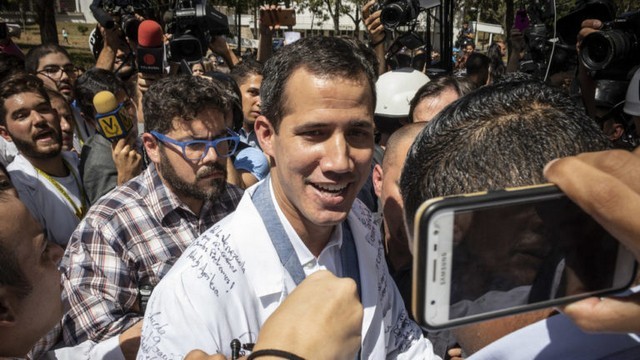
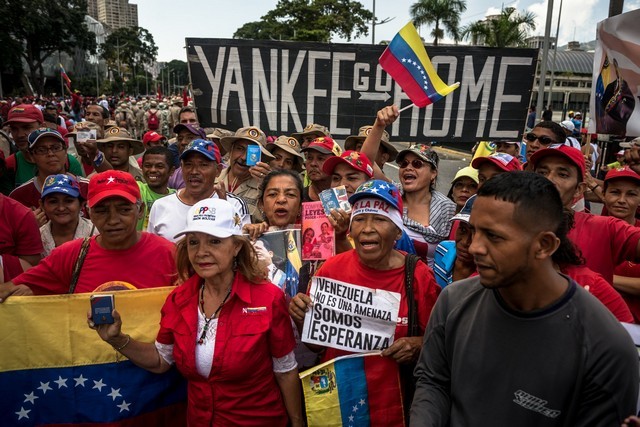
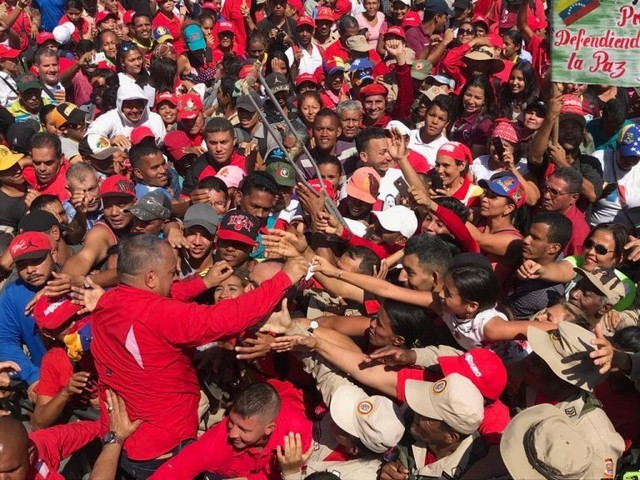
This weekend, there were competing protests in Venezuela. At a protest celebrating the 20th anniversary of the Bolivarian Process, the day Hugo Chavez was sworn into office, tens of thousands watched as President Maduro called for National Assembly elections. The current Assembly has been in contempt of court since July 2016 and their decisions were nullified because they have refused to remove illegally-elected members. The defunct legislature’s president, Juan Guaido, appointed himself president of the country in violation of Venezuelan law and is under investigation.

Some scenes at Guaido’s rallies were surreal. At the Caracas rally where Guaido spoke, the stage featured massive US and Israeli flags and in the crowd, there were pro-Trump puppets, one with Trump as the Statute of Liberty with a Christian cross around his neck. At another rally, opposition protesters removed the Venezuelan flag replacing it with the US flag.

Details of long term plan for Venezuela’s oil and domination of Latin America

First, it is important to understand why the US is supporting this poorly thought out and poorly planned coup. The Trump coup is a new phase of the long-term goals of US foreign policy when it comes to Venezuela and Latin America.

Vijay Prashad describes the long-term reality of US coups and domination of Latin America in The U.S. 12-Step Method to Conduct Regime Change, writing what is happening in Venezuela is “nothing unique in American history.” Prashad describes the coup in Chile, which Nixon and Kissinger began in 1970 and completed in 1973. In Venezuela, the National Endowment for Democracy, USAID and CIA have been involved in regime change operations and building opposition to Hugo Chavez and Nicolas Maduro from the beginning of this century. The US spends tens of millions of dollars annually to support opposition oligarchs and big business interests.

The Grayzone Project documents the more than ten-year effort by US regime change operatives that created a series of young opposition leaders including fake president Juan Guaido. Guaido was a little known right-wing politician who came in second in a legislative election in the second smallest state in Venezuela. He was thrust on the national scene by the coup. In our last article, we described how Canadian and US officials encouraged him to become a self-appointed president.

In our next Clearing the FOG, we interview Dan Cohen of the Grayzone Project. You’ll find it here.

The Wall Street Journal, in “U.S. Push to Oust Venezuela’s Maduro Marks First Shot in Plan to Reshape Latin America,” reveals the motive is to place Latin America back under US control. Commenting on this article, Yves Smith expresses how the US seems to have not learned from the failed wars in the Middle East, which cost the US trillions and created chaos and suffering while weakening the US’ global standing.

Eric Draitser at Counterpunch focuses on how this coup is about defeating what is perceived as socialism in Venezuela. The defeat of Chavismo is critical to the US controlling the region. Venezuela cannot be allowed to refuse US domination. John Bolton made the coup very personal this week, threatening Maduro to accept Guaido’s offer of amnesty or find himself in the Guantanamo Bay prison.

Mexico and Uruguay announced an international conference set to take place in Montevideo on February 7, but the US is rejecting dialogue. The US and coup plotters do not want dialogue, they want regime change and nothing less.

Dimitri Orlov points to the end of the fracking boom in the US as a reason why there is haste in trying to dominate Venezuela. He writes “the fracking bonanza is ending. Most of the sweet spots have already been tapped; newer wells are depleting faster and producing less while costing more.” Fracking is already losing billions and soon will be losing trillions of dollars. As a result, a “rather large oil shortage is coming, and it will rather specifically affect the US, which burns 20% of the world’s oil.” While a sensible country would use this as a reason for a rapid transition to a clean energy economy, the US seeks to prop up its oil companies by stealing Venezuela’s oil.

The US signaled how abusive it could become by appointing war criminal Elliot Abrams to the coup team. The Intercept details Abrams’ long-term work of violently crushing democracy. His record: In the 1980s, 75,000 Salvadorans died mostly from government death squads; in Guatemala, he supported a government that committed widespread human rights violations in a war that killed 200,000 people; in the Contra War in Nicaragua, Abrams pled guilty to lying to Congress about the Iran-Contra Deal that resulted in tens of thousands of deaths. After he was pardoned by George H.W. Bush, Abrams returned to the White House of George W. Bush where among other things he gave the green light to the failed coup against Hugo Chavez in 2002.

The Economic War as An Excuse for Humanitarian Intervention

The Grayzone Project reports on documents that expose US plans for economic war in Venezuela. Ben Norton writes, the “documents acknowledge that Washington has been using what it clearly describes as ‘financial weapons’ to wage ‘economic warfare’ on the oil-rich South American nation.” Sanctions began under Bush in 2004, escalated under Obama when he declared Venezuela a national security threat in 2015 and escalated under Trump. Sanctions imposed by Trump have bled Venezuela of billions of dollars.

WikiLeaks published an excerpt from what it titled the “US coup manual,” which describes how the US uses “financial weapons” to wage “economic warfare.” These documents describe how sanctions and other punitive economic policies are not a mere prelude to war; they are a form of war. As Norton writes, the US is not considering war, but has “already been waging a war, for years.”

Even under this tremendous economic war, which worsened with a drop in oil prices, the Maduro government has focused on uplifting people. Telesur describes gains made under Maduro’s administration:

  • Venezuela expanded its free health care coverage to more than 60 percent of the population.
  • Earlier this year, the United Nations Program for Development placed Venezuela among the countries with the highest Human Development Index, surpassing most Latin American countries.
  • Venezuela has built 3 million homes for the poor and working class, 1.6 million under Maduro, to house up to ten million people in a population of 30 million.
  • Maduro’s administration has provided more than 4,800,000 computers, over 100 million technology textbooks to students across the country, and more than 20,000 schools have received new computer equipment.
  • Venezuela ranks sixth in the world in terms of enrollment in primary education and has increased its coverage of secondary education to 73 percent of the population.
  • There have also been gains in civil rights of historically oppressed sectors of Venezuelan society, like women, Afro-Indigenous people and the LGBTQ community.

These gains do not make Venezuela a socialist economy, indeed Norway is more socialist than Venezuela. Venezuela remains a capitalist country with 70% of the economy in private businesses. Some on the left criticize Maduro for not moving the country more rapidly to institute a socialist economy. Why is Venezuela attacked and not Norway? Glen Ford of Black Agenda Report argues another reason they are targeted is racism. Another is that Venezuela has rejected US domination.

The combination of tremendous drops in oil prices, the US economic war and oligarch’s undermining the economy has resulted in the economy shrinking by 50% in five years – worse than the US depression.

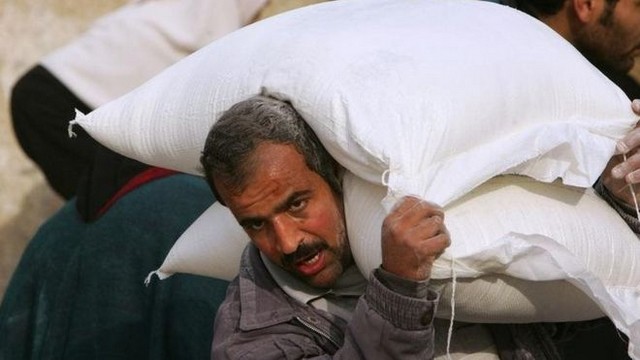
This week, John Bolton offered to send humanitarian assistance at the request of Guaido. When Venezuela has tried to buy essential goods and pharmaceuticals, they have been blocked and offered humanitarian aid instead. This presents a problem because if Venezuela accepts humanitarian aid, then it would provide an excuse for the Organization of American States (OAS) to intervene. And it would allow US institutions such as USAID into the country to bring the aid.

The irony of the US offering aid while conducting an economic war is evident. The UN rapporteur said that sanctions are killing people in Venezuela. Mark Weisbrot of the Center for Economic and Policy Studies writes that the US is seeking to take control of Venezuela even if their actions are illegal and kill thousands of people.

Venezuela wouldn’t need aid if it were not for the sanctions and blockade. Venezuela, which has the second largest gold reserves, is currently raising hundreds of billions of dollars by selling 29 tons of gold reserves to UAE as well as selling gold to Russia.

The Flawed Coup is Failing Because of Mistaken Assumptions

An eye witness account from Venezuela describes how the coup is lacking popularity. A protest called earlier in the week had a very small turnout. Jessica Dos Santos, who writes about daily life in Venezuela, describes people trying to live normal lives and while people have criticisms of Maduro, they are more opposed to US intervention. She writes “when it comes to fighting against foreign intervention, then there isn’t much to think about: Our home country is and must be first. And this is because of our love for it, but also because we have historical awareness. There isn’t one single nation that has come out better after a US or NATO intervention. In addition to that, intervention presupposes that we don’t have the capacity to solve our own problems.”

Moon of Alabama described big flaws in the poorly thought out Trump coup. This includes false perceptions on the ground in Venezuela where they underestimated support for Maduro and opposition to US imperialism among people and the military. He describes the lack of support for the coup in the Venezuelan constitution, with their misinterpretation of Article 233, which requires the president to be unable to serve in order for the president of the National Assembly to replace him. Further, he describes how Guaido has no support base and how the coup was rushed without input from the Pentagon, Southcom, or Department of Justice, who were likely to oppose such a measure.

Guaido is now being investigated in Venezuela. His assets have been frozen and he is not allowed to leave the country. In most countries, he would already have been imprisoned. The vast majority of the military has stood by Maduro. CNN interviewed fake “veterans” not even in Venezuela asking for US military aid. And there have been false reports that the military was recruiting minors (youth) to rise up against Maduro.

Support the Venezuelan People: End the Sanctions and Prevent War

Maduro sent a video message to the people of the United States describing the false media coverage and urging people of the United States to stop their government from intervening in Venezuela. He said “If the U.S. intends to invade us, they will have a Vietnam worse than they can imagine. Let’s not allow violence,” urging viewers to “not permit a new Vietnam in Venezuela.”

People in the United States have a lot of work to do to convince the government not to intervene in Venezuela, i.e. end economic sanctions, stop military threats. Max Blumenthal interviewed members of Congress and asked them about whether the US was meddling in Venezuela. Most denied it or were misinformed and those that understood what was going on refused to speak out. Some have spoken out against the coup, notably, Tulsi Gabbard, Ro Khanna, Barbara Lee, Bernie Sanders, and the Progressive Caucus, although even some of them perpetuate falsehoods about the situation.

Being in solidarity with the people of Venezuela means opposing war and intervention. A recent poll found 86% of Venezuelans oppose war and 81% oppose the economic sanctions.

The threat of war against Venezuela is real. The US already has military bases in Colombia. There was more evidence this week. John Bolton displayed a notepad that said “5,000 troops to Colombia” and US military transport planes are flying over and landing in Colombia.

Activists must demand the United States follow the rule of law. The coup and sanctions violate international law as this letter from NGOs to the United Nations explains. Idriss Jazairy, the UN Special Rapporteur on the negative impact of the unilateral coercive measures, explains how the US economic sanctions violate international law. He wrote, “Coercion, whether military or economic, must never be used to seek a change in government in a sovereign state. The use of sanctions by outside powers to overthrow an elected government is in violation of all norms of international law.” The United Nations Secretary-General Antonio Guterres recognized Maduro as president and rejected Guaido’s claim to the presidency.

The OAS, which is dominated by the United States, refused to recognize Guaidoand rejected intervening in Venezuela. Even the Lima Group, made up of right-wing governments in Latin America that oppose Venezuela, has rejected military intervention.

This article and Venezuela: What Activists Need To Know About The US-Led Coup, provide people with the information they need to combat the false media narrative about Venezuela. The Alliance for Global Justice has prepared an activist tool kit on Venezuela.

Protests have already been held in the US and around the world have already been held and more are being organized. On Monday, February 4, 2019 at 3PM, at the United States Permanent Mission to the United Nations located on the corner of 45th Street and First Avenue, NYC. On February 23, the one month anniversary of the soup, there will be a national day of actions protesting the coup.

This week Popular Resistance joined a call for a national march on Saturday, March 16, in Washington, D.C. against the Trump administration’s effort to engineer a coup in Venezuela and start a new devastating war there. If we unite and mobilize, we can stop this war and end US sanctions in Venezuela.

Kevin Zeese and Margaret Flowers are directors of Popular Resistance

4 February 2019

Source: countercurrents.org
US issues new threats of war for oil against Venezuela

By Eric London

President Trump, Vice President Pence and National Security Advisor John Bolton escalated threats to launch a war against Venezuela, as large pro- and anti-government demonstrations filled Venezuela’s streets on Saturday.

In an interview with CBS’s “Face the Nation” program that aired before the Super Bowl yesterday, Trump reiterated that military intervention “is an option.” Pence assured a crowd of far-right Venezuelan exiles in Miami on Friday that “this is no time for dialogue, it is the moment for action, and the time has come to end the Maduro dictatorship once and for all… Those looking on should know this: all options are on the table.”

Bolton, who helped author the playbook that was used to launch the 2003 invasion of Iraq, issued a blunt threat Friday that the US would kill or jail and torture Venezuelan President Nicolas Maduro if he did not resign. Comparing Maduro to Nicolae Ceaușescu and Benito Mussolini—both of whom were killed—Bolton told right-wing radio host Hugh Hewitt: “The sooner he takes advantage of that [i.e., resignation], the sooner he’s likely to have a nice quiet retirement on a pretty beach rather than being in some other beach area like Guantanamo.”

Self-proclaimed “interim president” Juan Guaidó, the US and their allies in South America and Europe are preparing a new provocation aimed at forcing the Venezuelan military to abandon Maduro, with Guaidó announcing that the US will deliver aid at three locations along the Venezuelan border in the coming days.

While Maduro and the Venezuelan military leadership have said they will refuse the aid, the US hopes that images of crowds gathering to receive food and medication will either provoke the military to defect to the opposition and help distribute the aid or provide valuable propaganda footage justifying the need for a “humanitarian” intervention.

Over the weekend, hundreds of armed Colombian soldiers dressed in battle fatigues deployed to one of the three “aid distribution” centers, Cúcuta, on the Venezuela-Colombia border. Colombia’s far-right President Iván Duque issued a statement proclaiming, “Few hours remain to the Venezuelan dictatorship.” At a press conference last week announcing Washington’s moves to topple Maduro, Bolton held under his arm a note pad with the words written in plain view: “5,000 troops to Colombia.”

Guaidó also announced that one of the “aid” locations would be on the border with Brazil, which deployed troops to the border last year, while the third would be on an island in the Caribbean.

The stepped-up pressure produced an initial crack in the Venezuelan military, which remains the backbone of the Maduro government. Over the weekend, one Air Force general and a small group of mid-level Air Force officials defected and issued public statements calling on their colleagues to join them.

Germ án Ferrer, a sitting Venezuelan legislator and United Socialist Party member who opposes Maduro, told the CBC that Maduro has disabled combat aircraft for fear the Air Force will turn on the government.

The US is imposing blanket sanctions on Venezuelan oil that amount to a blockade on oil exports. This act of economic war is intended to increase social misery.

Shannon O’Neil of the Council on Foreign Relations told a conference call of bankers, government officials and oil executives last week that the sanctions will lead to “more deprivation, even given the low base we’re at, more among the population.” The sanctions will force thousands to flee the country, she added: “You’re going to see more refugees pouring into countries throughout the hemisphere and elsewhere around the world.”

The Brookings Institution explained that the present stage of the coup operation is aimed at “building an off-ramp for the Maduro regime.” In the parlance of US imperialism, countries whose leaders do not take the “off-ramp” are, like Saddam Hussein in Iraq, Gaddafi in Libya and Assad in Syria, subject to a hailstorm of bombs and missiles from the air and US troops or proxy armies on the ground.

As the Council on Foreign Relations’ O’Neil told the corporate conference call, “If it [sanctions] doesn’t work in dislodging this regime, then there’s not a lot left in the toolkit besides things like military intervention.”

A military intervention in Venezuela—population 30 million—could kill hundreds of thousands or millions of people and transform Latin America into an imperialist slaughterhouse.

The geopolitical intelligence think tank Stratfor recently noted, “A military intervention could quickly snowball into one of the largest worldwide military operations since the 2003 invasion of Iraq.”

Francisco Toro, a Washington Post columnist and anti-Maduro think tank analyst, told the Council on Foreign Relations gathering that a military intervention would lead to “a kind of Syrian civil war” and confrontation between nuclear-armed powers.

He said: “There is this definite threat that if a military operation takes any amount of time in Venezuela, that other countries then start to move in too. And you can imagine, easily, Brazil moving into the southeast, Colombia into the southwest. You can imagine Russia trying to defend its oil interests, because Russia has big oil investments in Venezuela. You can imagine China doing I don’t know what. And Cuba has already intelligence penetration into the Venezuelan armed forces.”

Maduro’s strategy is three-fold. First, he is seeking to present himself as palatable to US imperialism and open to negotiation with the far-right opposition. Second, he is using the threat of “another Vietnam” as bargaining leverage against a US military intervention. Third, he is violently crushing working class opposition over inflation, poverty and record levels of social inequality.

Maduro rejected the demand of several European imperialist powers that he announce by February 2 the holding of new presidential elections. As the deadline passed, European governments—including the UK, France, Spain, Austria, Portugal, Belgium, the Netherlands and Germany—officially joined the US in recognizing Guaidó as president.

Maduro will now participate in large military exercises scheduled to last from February 5 to February 10. His government has also reportedly armed tens of thousands of members of a civilian reserve force with World War Two-era bolt-action rifles in anticipation of a possible invasion.

Key to the government’s strategy is a ferocious military crackdown on working class demonstrations and food riots. While the military and police have maintained a more passive presence at “official” demonstrations held by the right-wing opposition, government forces have murdered dozens of workers and youth participating in demonstrations over lack of access to food, water and other basic necessities.

The Maduro regime has responded to these demonstrations, which largely take place at night in the slum areas, with midnight raids by death squads, “disappearing” working class opponents in an effort to terrorize the areas that once were bastions of support for Maduro’s predecessor, Hugo Chávez Frias. The corporate media does not report these crackdowns.

In this way, Maduro is attempting to prove to his opponents in the US and Europe—as well as his backers in Russia and China—that he remains the best option for ending instability and keeping the oil flowing.

At its roots, Washington’s intensifying efforts at regime-change in Venezuela are part of a “pivot to Latin America” aimed at eradicating Chinese and Russian influence and transforming the whole Western Hemisphere into the exclusive cheap-labor and primary resource platform for US imperialism.

In November 2018, when Bolton announced the “Troika of Tyranny”—Cuba, Venezuela and Nicaragua—he was elaborating the strategic view that the US cannot successfully conduct operations against Russia in Eastern Europe, against China in South Asia, or against both Russia and China in Central Asia, without eliminating their presence in “America’s backyard” and freeing up the region’s resources for the US war machine. The establishment of a US-ruled “Fortress Americas” was a central foreign policy component of the “America First” movement in the early 1940s.

In a March 2018 document published by the US Army War College titled “The Strategic Relevance of Latin America in the US National Security Strategy,” the Army notes that in the aftermath of the fall of the dictatorships of the 1970s and 1980s, “most democratic societies in the Western Hemisphere” are “feckless and unconsolidated, thereby representing a threat to the national security of the United States by external actors (such as China and Russia) opposing US interests in the region.”

The strategy document indicated another reason for possible military operations in Venezuela: the need for the US military to test its operating capacities in heavily populated urban areas.

“Latin American megacities are also a laboratory for the US Army in cooperation with its strategic partners in addressing another important issue, or, perhaps, an old issue in the post-Cold War international system: how to fight a conventional war in an unconventional environment,” the document states. “Megacities are the new arena for conflicts in the 21st century. Therefore, the US Government and Army cannot afford to be caught off guard when called upon to exercise and accomplish its mission.”

Originally published by WSWS.org

4 February 2019

Source: countercurrents.org
Mystery of the Venezuelan Gold: Bank of England Is Independent of UK Govt – But Not of Foreign Govt

By George Galloway

20 Jan 2019 – Pirates don’t have to look like Johnny Depp in Pirates of the Caribbean. They can fly the Union Jack rather than the skull and crossbones. They can be called the Bank of England rather than the Jolly Roger.

The ‘Old Lady of Threadneedle Street’ is a port in a stormy world for all kinds of countries in which to moor their national wealth. And it’s not even necessarily voluntary.

After the fall of the communist regime in Albania, I had a brief tenure as joint chairman of the Britain-Albania Society with the Tory MP Steve Norris. He and I had to move mountains to try and persuade the British government (which then entirely controlled the Bank of England) to give the Albanians back their gold, which had been seized by the British during Second World War.

This week’s brigandry – unnoticed by any commentator I read – took place in an era when the Bank of England is officially independent of government control. And yet it was triggered by a phone call from a foreign government official.

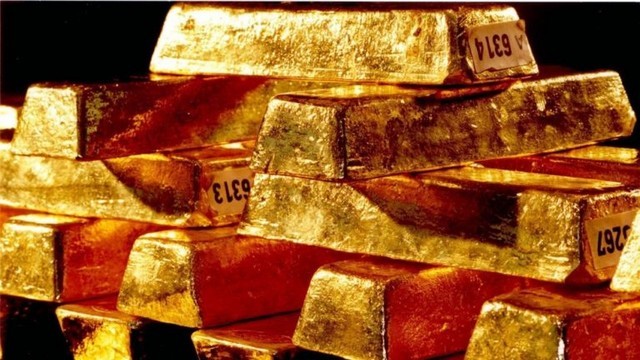
The bank’s decision to seize – a polite word for steal – more than a billion dollars’ worth of Venezuelan gold was reported to have been ordered by the governor after a call from US National Security Advisor John Bolton and Secretary of State Mike Pompeo – not even the president himself.

If I’m right, then this decision to damage – hopefully irreparably – the safety of deposits in the Bank of England was taken by an unelected, unaccountable Canadian citizen (who only got his British citizenship in November). He is here today but gone tomorrow as the governor of the Bank of England. The foreign policy of the state – whose bank it is – was thus at least anticipated if not usurped by Bolton, a minor official of a foreign country. Was that what the Tory champions of Brexit had in mind when they campaigned for Britain to “take back control”?

Of course the governor, Mark Carney, will have known that Bolton was pushing at an open bank vault door and that Britain is no more independent from the United States than the Bank of England is independent from the British government.

In addition, no Caribbean crocodile could shed tears more insincere than those currently being shed by British politicians for the “poor suffering people” of Venezuela. After all, what kind of monster could seize a billion dollars from “poor and suffering people”?

In around 72 hours last week, Venezuelan President Nicolas Maduro was transformed from somebody hardly anyone in Britain had ever heard of, into the new “Hitler on the Nile.”

This appellation was first applied in post-war Britain to President Nasser of Egypt when he nationalized the Suez Canal. Unfortunately for the imperium, this was actually in Egypt, the country of which he was the president. After all, to paraphrase Donald Rumsfeld, it wasn’t Britain’s fault that God put Britain’s canals in other people’s countries.

And there have been many since: Yasser Arafat, Muammar Gaddafi, Bashar Assad, Slobodan Milosevic, Vladimir Putin, and more.

The transformation has been astonishing to watch, even for me, who has been active in politics for 50 years.

All the carefully tended gardens of NGOs, “independent journalists,” and experts all flooded forward with their long-husbanded narratives about the perfidy of the Chavez revolution in Venezuela. They did universally suffer two disadvantages however: none of them could even pronounce the name of the man in a street in Caracas whose self-proclaimed presidency they were recognizing. And none of them appeared to know that the US had been imposing a medieval siege of sanctions, sabotage and subversion against Venezuela. At least none of them mentioned it.

None of them, like in every other foreign regime-change operation they’d pushed for, had the remotest idea of what would happen in Venezuela if they succeeded, not least how the many millions of armed Chavez supporters might take to their government being overthrown by foreigners. It is hard to work out whether these journalists and politicians demanding civil war on the world’s biggest oil-fields are criminally insane, just criminals, or whether they can plead diminished responsibility on the grounds they didn’t actually know what had already happened in Afghanistan, Iraq, Yemen, Syria, Ukraine, etc.

The demonization of Venezuela across even those Western countries which scarcely have functioning governments themselves has been a tidal wave. The pitiful resources Venezuela has invested in solidarity work in Britain – or if they did invest it no-one can explain where it went – was summed up by the complete refusal of the Venezuelan Solidarity Campaign to put someone up for my RT show Sputnik last week, referring me to the Cuba Solidarity Campaign next door.

They, in turn, suggested the Englishman who ably edits the British newspaper, the Morning Star. Seldom can a big and important oil-rich country – vulnerable to Western invasion as it has predictably turned out to be – have bothered to make so few friends.

Events on the ground in Venezuela will decide what happens next, however. In my view, there will be many cutlasses flashing and slashing before this is through. And just like in all the other cases I’ve referre

______________________________________

George Galloway was a member of the British Parliament for nearly 30 years. He presents TV and radio shows and is a film-maker, writer and a renowned orator.

4 February 2019

Source: transcend.org

Venezuela: What Activists Need to Know about the US-Led Coup

By Kevin Zeese and Margaret Flowers

28 Jan 2019 – Two things stand out about the US coup in Venezuela.

  • First, it is unusually open. Typically, the US tries to hide its coups.
  • Second, the coup is built on a series of obvious falsehoods, yet the bi-partisans in Washington, with a few exceptions, keep repeating them.

First, we will correct the falsehoods so readers are all working from the same facts. Second, we will describe how this coup is being defeated. It will be another major embarrassment for the Trump administration and US foreign policy.

It is important to understand Venezuela has become a geopolitical conflict as Russia and China are closely allied with Venezuela. China and Russia coming into the backyard of the United States challenges the antiquated Monroe Doctrine.

Venezuela has the largest oil reserves in the world and the second largest gold reserves, as well as diamonds and other minerals such as coltan (needed for electronic devices). And, Venezuela is taking over as president of OPEC and will be in a position to push for oil payments in non-dollar currencies or in cryptocurrencies, a major threat to the US dollar.

Correcting the Record

There are a series of false statements repeated by DC officials and corporate media to justify the coup that are so obvious, it is hard to believe they are not intentional. In his two-paragraph comment on the coup, even Senator Bernie Sanders repeated them.

1. Truth: President Nicolás Maduro is the legitimate president.

President Maduro was re-elected on May 20, 2018, in response to the opposition demanding an early election. The legitimacy of the election of Maduro is so evident that it must be assumed those who say he is illegitimate are either intentionally false or ignorant. The election was scheduled consistent with the Venezuelan Constitution and in consultation with opposition parties. When it became evident that the opposition could not win the election, they decided, under pressure from the United States, to boycott the election in order to undermine its legitimacy. The facts are 9,389,056 people voted, 46% of eligible voters. Sixteen parties participated in the election with six candidates competing for the presidency.

The electoral process was observed by more than 150 election observers. This included 14 electoral commissions from eight countries among them the Council of Electoral Experts of Latin America; two technical electoral missions; and 18 journalists from different parts of the world, among others. According to the international observers, “the elections were very transparent and complied with international parameters and national legislation.”

Venezuela has one of the best electoral systems in the world. Voter fraud is not possible as identification and fingerprints are required for each voter. Voting machines are audited before and immediately after the election. Venezuela does something no other country in the world does — a public, citizen’s audit of a random sample of 53% of voting machines that is televised. All 18 parties signed the audits.

Maduro won by a wide margin, obtaining 6,248,864 votes, 67.84%; followed by Henri Falcón with 1,927,958, 20.93%; Javier Bertucci with 1,015,895, 10.82%; and Reinaldo Quijada, who obtained 36,246 votes, 0.39% of the total.

This same voting system has been used in elections that Maduro’s party has lost in governor’s and legislative elections. Venezuela is a real democracy with transparent elections. The United States could learn a good deal about real democracy from Venezuela.

2. Truth: The economic crisis is caused by outside intervention, internal sabotage and the decline in oil prices.

There is no doubt the economic situation in Venezuela is dire. The cause is the economic war conducted by the United States, the major decline in oil prices and economic sabotage by the opposition. In essence, the United States and opposition created problems in the Venezuelan economy and now say Maduro must be replaced because of problems they created.

Oil was discovered in Venezuela in the early part of the 20th Century and has dominated the economy since then. The Dutch Disease, the negative impact of an economy based on one natural resource, causes a sharp inflow of foreign currency, which raises the value of the country’s currency, making the country’s other products less price competitive. It is cheaper to import products rather than create them. This makes it more difficult for segments of the economy like agriculture and manufacturing to develop.

Chavez/Maduro sought to diversify the economy. They put in place thousands of communes and hundreds of thousands of people working in cooperatives to build agriculture and manufacturing. When the global price of oil was cut by more than half, it collapsed Venezuela’s public finances undermining these efforts. The economic war by the US made it difficult for Venezuela to borrow and trade with some countries.

Economic sanctions against Venezuela began under President Obama, and the Trump administration escalated them with financial sanctions. United States sanctions cost Venezuela some $6 billion since August, according to an October analysis. Measures against the nation’s oil industry have prohibited the Venezuelan majority-owned company, CITGO, from sending profits back to Venezuela, a $1 billion loss to the government yearly. Now, the Bank of England is refusing to return $1.2 billion in gold reserves after US officials, including Secretary of State Michael Pompeo and National Security Adviser John Bolton, lobbied them to cut Venezuela off from its overseas assets.

The US economic war and sabotage of the economy by business interests has been exposed as part of the effort to remove Maduro by creating social unrest and lack of confidence in the government. This has included hoarding of goods, storing essentials in warehouses and selling Venezuelan goods in Colombia.

In September 2018, Venezuela pointed to a false media campaign exaggerating migration from Venezuela. They highlighted statistics from the United Nations High Commissioner for Refugees to affirm that Venezuela has the fewest volunteer migrants in the continent. They pointed out 5.6 million Colombians have fled violence in their country and live in Venezuela. Venezuela has programs that have helped thousands of Venezuelans return home.

Socialism strengthens economies, as demonstrated in Portugal. Indeed, one criticism of Venezuela is that the Bolivarian Process is moving too slowly to put in place a socialist economy. There is a need for more sectors to be nationalized and put under democratic control of the people.

3. Truth: The opposition is violent, not the Maduro government.

Opposition protesters have been extremely violent. One tactic of the opposition was to be violent and then film the government’s response to make the government look violent. When Abby Martin was confronted by opposition protesters, they told her, “Do not film anything that we do. Just film what the government does to us.” She reported on the violence saying, “the vast majority has been caused by either indirect or direct violence by the opposition.”

Martin reports the opposition attacked hospitals, burned down the Housing Ministry, assassinated Chavistas and attacked citizen communes such as an art commune that gave free dance and music lessons to local children. Afro-Venezuelans were burned alive. Protesters pulled drivers out of buses and torched the buses. When photos and videos of opposition violence were put on social media, Martin and her colleague, Mike Prysner, became the target of a false media campaign on social media. The opposition did all they could to prevent them from reporting the truth using hundreds of death threats and threats they would be lynched.

In 2017, Venezuela Analysis reported that violent opposition protests included an attack on a maternity hospital endangering the lives of more than 50 newborn babies. Another report described the opposition using snipers to shoot government officials and civilians. Opposition newspapers urged that blunt objects be used to “neutralize” pro-government protesters, resulting in serious injuries and death.

Steve Ellner also reported that violence was coming from the opposition. He pointed to attacks at grocery stores, banks, buses, and government buildings. Other commentators described specific incidents of violence by the opposition including killing people. Maduro ordered the arrest of a retired general who tweeted how to use wire to decapitate people on motorcycles, which happened, and how to attack armored vehicles with Molotov cocktails.

Documents show that violence was the opposition’s strategy. They sought to “Create situations of crisis in the streets that will facilitate US intervention, as well as NATO forces, with the support of the Colombian government. Whenever possible, the violence should result in deaths or injuries.”

The tales of government violence are rooted in lies. The government’s response was Maduro calling for a peace conference describing it as “a national peace conference with all the country’s political sectors … so we Venezuelans can try to neutralize violent groups.”

4. Truth: The National Assembly acted in violation of the law and is in contempt of court.

The National Assembly is not the only democratic body in Venezuela. Indeed, its actions since the opposition won a majority have violated the law and protected the violence of the opposition with an embarrassing amnesty bill.

On December 6, 2015, the opposition won a parliamentary majority in the Assembly. There were allegations of vote buying in Amazonas state that were investigated by the National Electoral Council, another branch of the government. The Supreme Court barred four legislators from Amazonas taking office, two from the opposition, one allied with the opposition and one from the ruling party. The National Assembly allowed three candidates to take office. The Assembly has been held in contempt of court since July 2016 and their decisions were nullified.

Before the court ruling, the Assembly passed an amazing amnesty law, which granted amnesty for crimes the opposition has committed since 1999 (Chavez’ election). The law is an admission of guilt and provides a well-organized catalog of crimes including felonies, crimes committed at public rallies, terrorist acts involving explosives and firearms and undermining the economy. They essentially admitted exactly what Chavez/Maduro have claimed — crimes to overthrow the government for 17 years. Venezuela’s Supreme Court ruled the amnesty law was unconstitutional. Inaccurately, the Trump administration calls the Assembly Venezuela’s only remaining democratic institution.

This January, a subsidiary of the state oil company asked the Assembly to intervene claiming the president cannot make reforms to mixed public-private oil businesses without the prior approval of the National Assembly. On January 16, the court ruled that the Assembly was still in contempt of court and could not act. This is also when the Assembly elected Juan Guaidó as their president, who would later appoint himself President of Venezuela, as part of the US-led coup. Guaidó’s election to head the legislature was illegal and nullified by the court.

The Assembly still exists but remains in a state of contempt of the judiciary. It can rectify the situation by removing the lawmakers accused of electoral fraud. The Assembly refuses to do so because their goal is to remove Maduro from office and they need a super-majority to do so.

A Timeline of the US Coup in Venezuela

In “Anti-Maduro Coalition Grew from Secret Talks,” the Associated Press explains the coup was “only possible because of strong support from the Trump administration, which led a chorus of mostly conservative Latin American governments that immediately recognized Guaidó.”

Since August 2017, Donald Trump has been saying that military interventionagainst Venezuela was a distinct possibility. AP describes this as a “watershed moment” in the coup planning. They report Trump pressuring aides and Latin American countries to invade Venezuela. In September, the New York Times reported that the Trump administration had been meeting with coup plotters since mid-2017.

The Wall Street Journal reports Trump has long viewed Venezuela as one of his top-three foreign policy priorities, with Iran and North Korea. Trump requested a briefing on Venezuela on his second day in office, talking of the immense potential of Venezuela to become a rich nation through its oil reserves. AP reports that Trump “personally sparked” this as he brought up regime change in Venezuela in every meeting with Latin American leaders.

After Maduro was re-elected, administration plans began taking shape, driven in part by key members in the National Security Council and anti-Maduro advocates in Congress like extreme interventionist Senator Marco Rubio.

On November 1, John Bolton zeroed in on Latin America, calling Cuba, Nicaragua, and Venezuela a “troika of tyranny.” On January 2, Bolton met with his Brazilian and Colombian counterparts to collaborate to “return Venezuela to its democratic heritage.”

On January 10, Maduro was sworn in for his second term, Pompeo spoke with opposition leader Guaidó, pledging support. Canada also played a key role, AP reports that Foreign Minister Chrystia Freeland spoke to Guaidó the night before Maduro’s inauguration offering Canada’s support. This was 13 days before Guaidó announced he was president of Venezuela.

On January 12, the State Department backed Guaidó’s move to invoke his authority as president of the assembly, saying, “It is time to begin the orderly transition to a new government.” On January 15, the National Assembly declared Maduro as illegitimate. The Trump administration worked to get allies lined up to support Guaidó’. By January 18, the Venezuela Foreign Minister was describing a US coup in progress.

The night before Guaidó’s announcement on January 23, Vice President Mike Pence put out a video message encouraging Venezuelans to overthrow their government, saying, “We are with you. We stand with you, and we will stay with you.” Guaidó also received a phone call from Pence the night before he appointed himself president where he pledged that the U.S. would back Guaidó.

Guaidó declared that Maduro’s government was illegitimate and he was assuming the presidency. In a well-coordinated charade, almost instantly, Trump recognized Guaidó as the country’s rightful leader. To further demonstrate the preconceived, tightly coordinated and efficiently carried out the coup, US allies, among them Canada, Brazil, Argentina, Colombia, Chile, and Peru, quickly recognized the coup president.

The Trump administration is claiming Guaidó represents the lawful government and is entitled to all Venezuelan revenues. The State Department notified the Federal Reserve that Guaidó is the agent for access to Venezuelan assets in US banks.

Nearly as quickly, Maduro drew statements of support from Russia, China, Turkey, Mexico, Cuba, Bolivia, and others. The Venezuelan Supreme Court called for an investigation into the National Assembly and Guaidó, regarding the illegal usurpation of Executive power. The Venezuelan military announced it supported Maduro and Russia warned the US not to intervene militarily.

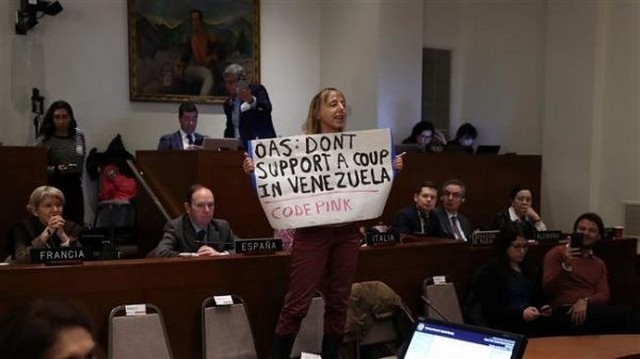
On January 25, the Organization of American States, which is traditionally a US tool, rejected a resolution to recognize Guaidó. Medea Benjamin of CODE PINK interrupted Pompeo at the OAS holding a sign that said: “a coup is not a democratic transition!” Venezuelan Foreign Minister Jorge Arreaza thanked Benjamin, saying, “With her protest, she revealed the macabre coup plan against Venezuela, we will always prevail, thank you!” Eighteen countries defeated the proposal.

At the UN Security Council meeting on January 26, Russia’s UN Ambassador Vassily Nebenzia accused the United States of attempting “to engineer a coup d’etat.” He demanded to know whether the Trump administration “is ready to use military force” against Venezuela. European countries gave Venezuela eight days to hold an election, a suggestion Venezuela rejected. Secretary of State Mike Pompeo called Venezuela an “illegitimate mafia state.” He accused Russia and China of trying “to prop up Maduro.”

Both China and Russia have told the US not to intervene in Venezuela’s internal affairs. In December, Russia sent two nuclear-capable strategic Tu-160 bombers to Venezuela along with an An-124 heavy military transport plane and an II-62 long-haul plane. As of December, Russia has one brigade in Venezuela and was discussing sending a second military brigade to Venezuela even before the coup due to the continued threat of intervention from the United States.

China has lent over $50 billion to Venezuela through oil-for-loan agreements over the past decade and has become a partner in the Venezuelan oil industry. In December, seven months since signing a financial business venture with China, Venezuela’s oil production has doubled to 130,000 barrels per day. The take-over of Venezuela’s oil would also be an attack on China. China and Venezuela signed 28 bilateral strategic cooperation agreements on September 14 in the areas of oil, mining, security, technology, finance, and health.

Demonstrating the nature of the coup president, the first acts that Guaidó took were to seek a loan from the International Monetary Fund, which would put Venezuela in debt to western bankers and under their control, and to privatize the Venezuelan oil industry, which would rob Venezuela of the funds being used to lift up the poor and working class.

The appointment by Mike Pompeo of Elliott Abrams as the person in charge of overseeing operations “to restore democracy in Venezuela” is an ominous sign. It is scandalous and demonstrates the most extreme elements of the US establishment are leading the charge. Abrams was convicted during the Iran-Contra scandal, supported US-backed death squads in Guatemala and El Salvador in the 1980s, played a key role in the Reagan administration support for the murderous Contras in Nicaragua and was the person who gave approval for the US-backed coup in Venezuela in 2002.

Analyst Vijay Prashad writes the coup violated the charters of the United Nations and of the Organisation of American States and describes efforts to call on the military to rise up against the government have failed. The Trump administration is now threatening a total oil embargo on Venezuela and is leaving the “military option” open.

The concerted campaign by the US and Canada to install Juan Guaidó as the new ‘self-declared’ interim President of Venezuela has been met with initial failure. Unfortunately, the illegal and undemocratic attempts to destabilize the country and overthrow the democratically-elected President will continue with harmful consequences. The people of Venezuela are rising once again to defend their country against hostile foreign intervention. It is essential that we support them in this fight. Many groups are holding solidarity rallies and issuing statements of support. Find rallies and protests here and here.

While Sanders got all the facts wrong about Venezuela, he did reach the right conclusion: “The United States has a long history of inappropriately intervening in Latin American countries. We must not go down that road again.” People in the United States have an important role to play in supporting Venezuela and defeating the coup.

__________________________________________________

Kevin Zeese and Margaret Flowers are directors of Popular Resistance.

4 February 2019

Source: transcend.org

Trump’s Brilliant Strategy to Dismember U.S. Dollar Hegemony

By Michael Hudson

1 Feb 2019 – The end of America’s unchallenged global economic dominance has arrived sooner than expected, thanks to the very same Neocons who gave the world the Iraq, Syria and the dirty wars in Latin America. Just as the Vietnam War drove the United States off gold by 1971, its sponsorship and funding of violent regime change wars against Venezuela and Syria – and threatening other countries with sanctions if they do not join this crusade – is driving European and other nations to create their alternative financial institutions.

This break has been building for quite some time, and was bound to occur. But who would have thought that Donald Trump would become the catalytic agent? No left-wing party, no socialist, anarchist or foreign nationalist leader anywhere in the world could have achieved what he is doing to break up the American Empire. The Deep State is reacting with shock at how this right-wing real estate grifter has been able to drive other countries to defend themselves by dismantling the U.S.-centered world order. To rub it in, he is using Bush and Reagan-era Neocon arsonists, John Bolton and now Elliott Abrams, to fan the flames in Venezuela. It is almost like a black political comedy. The world of international diplomacy is being turned inside-out. A world where there is no longer even a pretense that we might adhere to international norms, let alone laws or treaties.

The Neocons who Trump has appointed are accomplishing what seemed unthinkable not long ago: Driving China and Russia together – the great nightm1are of Henry Kissinger and Zbigniew Brzezinski. They also are driving Germany and other European countries into the Eurasian orbit, the “Heartland” nightmare of Halford Mackinder a century ago.

The root cause is clear: After the crescendo of pretenses and deceptions over Iraq, Libya and Syria, along with our absolution of the lawless regime of Saudi Arabia, foreign political leaders are coming to recognize what world-wide public opinion polls reported even before the Iraq/Iran-Contra boys turned their attention to the world’s largest oil reserves in Venezuela: The United States is now the greatest threat to peace on the planet.

Calling the U.S. coup being sponsored in Venezuela a defense of democracy reveals the Doublethink underlying U.S. foreign policy. It defines “democracy” to mean supporting U.S. foreign policy, pursuing neoliberal privatization of public infrastructure, dismantling government regulation and following the direction of U.S.-dominated global institutions, from the IMF and World Bank to NATO. For decades, the resulting foreign wars, domestic austerity programs and military interventions have brought more violence, not democracy.

In the Devil’s Dictionary that U.S. diplomats are taught to use as their “Elements of Style” guidelines for Doublethink, a “democratic” country is one that follows U.S. leadership and opens its economy to U.S. investment, and IMF- and World Bank-sponsored privatization. The Ukraine is deemed democratic, along with Saudi Arabia, Israel and other countries that act as U.S. financial and military protectorates and are willing to treat America’s enemies are theirs too.

A point had to come where this policy collided with the self-interest of other nations, finally breaking through the public relations rhetoric of empire. Other countries are proceeding to de-dollarize and replace what U.S. diplomacy calls “internationalism” (meaning U.S. nationalism imposed on the rest of the world) with their own national self-interest.

This trajectory could be seen 50 years ago (I described it in Super Imperialism [1972] and Global Fracture [1978].) It had to happen. But nobody thought that the end would come in quite the way that is happening. History has turned into comedy, or at least irony as its dialectical path unfolds.

For the past half-century, U.S. strategists, the State Department and National Endowment for Democracy (NED) worried that opposition to U.S. financial imperialism would come from left-wing parties. It therefore spent enormous resources manipulating parties that called themselves socialist (Tony Blair’s British Labour Party, France’s Socialist Party, Germany’s Social Democrats, etc.) to adopt neoliberal policies that were the diametric opposite to what social democracy meant a century ago. But U.S. political planners and Great Wurlitzer organists neglected the right wing, imagining that it would instinctively support U.S. thuggishness.

The reality is that right-wing parties want to get elected, and a populist nationalism is today’s road to election victory in Europe and other countries just as it was for Donald Trump in 2016.

Trump’s agenda may really be to break up the American Empire, using the old Uncle Sucker isolationist rhetoric of half a century ago. He certainly is going for the Empire’s most vital organs. But it he a witting anti-American agent? He might as well be – but it would be a false mental leap to use “cui bono” to assume that he is a witting agent.

After all, if no U.S. contractor, supplier, labor union or bank will deal with him, would Vladimir Putin, China or Iran be any more naïve? Perhaps the problem had to erupt as a result of the inner dynamics of U.S.-sponsored globalism becoming impossible to impose when the result is financial austerity, waves of population flight from U.S.-sponsored wars, and most of all, U.S. refusal to adhere to the rules and international laws that it itself sponsored seventy years ago in the wake of World War II.

Dismantling international law and its courts

Any international system of control requires the rule of law. It may be a morally lawless exercise of ruthless power imposing predatory exploitation, but it is still The Law. And it needs courts to apply it (backed by police power to enforce it and punish violators).

Here’s the first legal contradiction in U.S. global diplomacy: The United States always has resisted letting any other country have any voice in U.S. domestic policies, law-making or diplomacy. That is what makes America “the exceptional nation.” But for seventy years its diplomats have pretended that its superior judgment promoted a peaceful world (as the Roman Empire claimed to be), which let other countries share in prosperity and rising living standards.

At the United Nations, U.S. diplomats insisted on veto power. At the World Bank and IMF they also made sure that their equity share was large enough to give them veto power over any loan or other policy. Without such power, the United States would not join any international organization. Yet at the same time, it depicted its nationalism as protecting globalization and internationalism. It was all a euphemism for what really was unilateral U.S. decision-making.

Inevitably, U.S. nationalism had to break up the mirage of One World internationalism, and with it any thought of an international court. Without veto power over the judges, the U.S. never accepted the authority of any court, in particular the United Nations’ International Court in The Hague. Recently that court undertook an investigation into U.S. war crimes in Afghanistan, from its torture policies to bombing of civilian targets such as hospitals, weddings and infrastructure. “That investigation ultimately found ‘a reasonable basis to believe that war crimes and crimes against humanity.’”[1]

Donald Trump’s National Security Adviser John Bolton erupted in fury, warning in September that: “The United States will use any means necessary to protect our citizens and those of our allies from unjust prosecution by this illegitimate court,” adding that the UN International Court must not be so bold as to investigate “Israel or other U.S. allies.”

That prompted a senior judge, Christoph Flügge from Germany, to resign in protest. Indeed, Bolton told the court to keep out of any affairs involving the United States, promising to ban the Court’s “judges and prosecutors from entering the United States.” As Bolton spelled out the U.S. threat: “We will sanction their funds in the U.S. financial system, and we will prosecute them in the U.S. criminal system. We will not cooperate with the ICC. We will provide no assistance to the ICC. We will not join the ICC. We will let the ICC die on its own. After all, for all intents and purposes, the ICC is already dead to us.”

What this meant, the German judge spelled out was that: “If these judges ever interfere in the domestic concerns of the U.S. or investigate an American citizen, [Bolton] said the American government would do all it could to ensure that these judges would no longer be allowed to travel to the United States – and that they would perhaps even be criminally prosecuted.”

The original inspiration of the Court – to use the Nuremburg laws that were applied against German Nazis to bring similar prosecution against any country or officials found guilty of committing war crimes – had already fallen into disuse with the failure to indict the authors of the Chilean coup, Iran-Contra or the U.S. invasion of Iraq for war crimes.

Dismantling Dollar Hegemony from the IMF to SWIFT

Of all areas of global power politics today, international finance and foreign investment have become the key flashpoint. International monetary reserves were supposed to be the most sacrosanct, and international debt enforcement closely associated.

Central banks have long held their gold and other monetary reserves in the United States and London. Back in 1945 this seemed reasonable, because the New York Federal Reserve Bank (in whose basement foreign central bank gold was kept) was militarily safe, and because the London Gold Pool was the vehicle by which the U.S. Treasury kept the dollar “as good as gold” at $35 an ounce. Foreign reserves over and above gold were kept in the form of U.S. Treasury securities, to be bought and sold on the New York and London foreign-exchange markets to stabilize exchange rates. Most foreign loans to governments were denominated in U.S. dollars, so Wall Street banks were normally name as paying agents.

That was the case with Iran under the Shah, whom the United States had installed after sponsoring the 1953 coup against Mohammed Mosaddegh when he sought to nationalize Anglo-Iranian Oil (now British Petroleum) or at least tax it. After the Shah was overthrown, the Khomeini regime asked its paying agent, the Chase Manhattan bank, to use its deposits to pay its bondholders. At the direction of the U.S. Government Chase refused to do so. U.S. courts then declared Iran to be in default, and froze all its assets in the United States and anywhere else they were able.

This showed that international finance was an arm of the U.S. State Department and Pentagon. But that was a generation ago, and only recently did foreign countries begin to feel queasy about leaving their gold holdings in the United States, where they might be grabbed at will to punish any country that might act in ways that U.S. diplomacy found offensive. So last year, Germany finally got up the courage to ask that some of its gold be flown back to Germany. U.S. officials pretended to feel shocked at the insult that it might do to a civilized Christian country what it had done to Iran, and Germany agreed to slow down the transfer.

But then came Venezuela. Desperate to spend its gold reserves to provide imports for its economy devastated by U.S. sanctions – a crisis that U.S. diplomats blame on “socialism,” not on U.S. political attempts to “make the economy scream” (as Nixon officials said of Chile under Salvador Allende) – Venezuela directed the Bank of England to transfer some of its $11 billion in gold held in its vaults and those of other central banks in December 2018. This was just like a bank depositor would expect a bank to pay a check that the depositor had written.

England refused to honor the official request, following the direction of Bolton and U.S. Secretary of State Michael Pompeo. As Bloomberg reported: “The U.S. officials are trying to steer Venezuela’s overseas assets to [Chicago Boy Juan] Guaido to help bolster his chances of effectively taking control of the government. The $1.2 billion of gold is a big chunk of the $8 billion in foreign reserves held by the Venezuelan central bank.”[2]

Turkey seemed to be a likely destination, prompting Bolton and Pompeo to warn it to desist from helping Venezuela, threatening sanctions against it or any other country helping Venezuela cope with its economic crisis. As for the Bank of England and other European countries, the Bloomberg report concluded: “Central bank officials in Caracas have been ordered to no longer try contacting the Bank of England. These central bankers have been told that Bank of England staffers will not respond to them.”

This led to rumors that Venezuela was selling 20 tons of gold via a Russian Boeing 777 – some $840 million. The money probably would have ended up paying Russian and Chinese bondholders as well as buying food to relieve the local famine.[3] Russia denied this report, but Reuters has confirmed is that Venezuela has sold 3 tons of a planned 29 tones of gold to the United Arab Emirates, with another 15 tones are to be shipped on Friday, February 1.[4] The U.S. Senate’s Batista-Cuban hardliner Rubio accused this of being “theft,” as if feeding the people to alleviate the U.S.-sponsored crisis was a crime against U.S. diplomatic leverage.

If there is any country that U.S. diplomats hate more than a recalcitrant Latin American country, it is Iran. President Trump’s breaking of the 2015 nuclear agreements negotiated by European and Obama Administration diplomats has escalated to the point of threatening Germany and other European countries with punitive sanctions if they do not also break the agreements they have signed. Coming on top of U.S. opposition to German and other European importing of Russian gas, the U.S. threat finally prompted Europe to find a way to defend itself.

Imperial threats are no longer military. No country (including Russia or China) can mount a military invasion of another major country. Since the Vietnam Era, the only kind of war a democratically elected country can wage is atomic, or at least heavy bombing such as the United States has inflicted on Iraq, Libya and Syria. But now, cyber warfare has become a way of pulling out the connections of any economy. And the major cyber connections are financial money-transfer ones, headed by SWIFT, the acronym for the Society for Worldwide Interbank Financial Telecommunication, which is centered in Belgium.

Russia and China have already moved to create a shadow bank-transfer system in case the United States unplugs them from SWIFT. But now, European countries have come to realize that threats by Bolton and Pompeo may lead to heavy fines and asset grabs if they seek to continue trading with Iran as called for in the treaties they have negotiated.

On January 31 the dam broke with the announcement that Europe had created its own bypass payments system for use with Iran and other countries targeted by U.S. diplomats. Germany, France and even the U.S. poodle Britain joined to create INSTEX — Instrument in Support of Trade Exchanges. The promise is that this will be used only for “humanitarian” aid to save Iran from a U.S.-sponsored Venezuela-type devastation. But in view of increasingly passionate U.S. opposition to the Nord Stream pipeline to carry Russian gas, this alternative bank clearing system will be ready and able to become operative if the United States tries to direct a sanctions attack on Europe.

I have just returned from Germany and seen a remarkable split between that nation’s industrialists and their political leadership. For years, major companies have seen Russia as a natural market, a complementary economy needing to modernize its manufacturing and able to supply Europe with natural gas and other raw materials. America’s New Cold War stance is trying to block this commercial complementarity. Warning Europe against “dependence” on low-price Russian gas, it has offered to sell high-priced LNG from the United States (via port facilities that do not yet exist in anywhere near the volume required). President Trump also is insisting that NATO members spend a full 2 percent of their GDP on arms – preferably bought from the United States, not from German or French merchants of death.

U.S. overplaying its position is leading to the Mackinder-Kissinger-Brzezinski Eurasian nightmare that I mentioned above. In addition to driving Russia and China together, U.S. diplomacy is adding Europe to the heartland, independent of U.S. ability to bully into the state of dependency toward which American diplomacy has aimed to achieve since 1945.

The World Bank, for instance, traditionally has been headed by a U.S. Secretary of Defense. Its steady policy since its inception is to provide loans for countries to devote their land to export crops instead of giving priority to feeding themselves. That is why its loans are only in foreign currency, not in the domestic currency needed to provide price supports and agricultural extension services such as have made U.S. agriculture so productive. By following U.S. advice, countries have left themselves open to food blackmail – sanctions against providing them with grain and other food, in case they step out of line with U.S. diplomatic demands.

It is worthwhile to note that our global imposition of the mythical “efficiencies” of forcing Latin American countries to become plantations for export crops like coffee and bananas rather than growing their own wheat and corn has failed catastrophically to deliver better lives, especially for those living in Central America. The “spread” between the export crops and cheaper food imports from the U.S. that was supposed to materialize for countries following our playbook failed miserably – witness the caravans and refugees across Mexico. Of course, our backing of the most brutal military dictators and crime lords has not helped either.

Likewise, the IMF has been forced to admit that its basic guidelines were fictitious from the beginning. A central core has been to enforce payment of official inter-government debt by withholding IMF credit from countries under default. This rule was instituted at a time when most official inter-government debt was owed to the United States. But a few years ago Ukraine defaulted on $3 billion owed to Russia. The IMF said, in effect, that Ukraine and other countries did not have to pay Russia or any other country deemed to be acting too independently of the United States. The IMF has been extending credit to the bottomless it of Ukrainian corruption to encourage its anti-Russian policy rather than standing up for the principle that inter-government debts must be paid.

It is as if the IMF now operates out of a small room in the basement of the Pentagon in Washington. Europe has taken notice that its own international monetary trade and financial linkages are in danger of attracting U.S. anger. This became clear last autumn at the funeral for George H. W. Bush, when the EU’s diplomat found himself downgraded to the end of the list to be called to his seat. He was told that the U.S. no longer considers the EU an entity in good standing. In December, “Mike Pompeo gave a speech on Europe in Brussels — his first, and eagerly awaited — in which he extolled the virtues of nationalism, criticised multilateralism and the EU, and said that “international bodies” which constrain national sovereignty “must be reformed or eliminated.”[5]

Most of the above events have made the news in just one day, January 31, 2019. The conjunction of U.S. moves on so many fronts, against Venezuela, Iran and Europe (not to mention China and the trade threats and moves against Huawei also erupting today) looks like this will be a year of global fracture.

It is not all President Trump’s doing, of course. We see the Democratic Party showing the same colors. Instead of applauding democracy when foreign countries do not elect a leader approved by U.S. diplomats (whether it is Allende or Maduro), they’ve let the mask fall and shown themselves to be the leading New Cold War imperialists. It’s now out in the open. They would make Venezuela the new Pinochet-era Chile. Trump is not alone in supporting Saudi Arabia and its Wahabi terrorists acting, as Lyndon Johnson put it, “Bastards, but they’re our bastards.”

Where is the left in all this? That is the question with which I opened this article. How remarkable it is that it is only right-wing parties, Alternative for Deutschland (AFD), or Marine le Pen’s French nationalists and those of other countries that are opposing NATO militarization and seeking to revive trade and economic links with the rest of Eurasia.

The end of our monetary imperialism, about which I first wrote in 1972 in Super Imperialism, stuns even an informed observer like me. It took a colossal level of arrogance, short-sightedness and lawlessness to hasten its decline — something that only crazed Neocons like John Bolton, Eliot Abrams and Mike Pompeo could deliver for Donald Trump.

NOTES:

[1] Alexander Rubenstein, “It Can’t be Fixed: Senior ICC Judge Quits in Protest of US, Turkish Meddling,” January 31, 2019. https://www.mintpressnews.com/icc-judge-quits-turkish-meddling/254443/

[2] Patricia Laya, Ethan Bronner and Tim Ross, “Maduro Stymied in Bid to Pull $1.2 Billion of Gold From U.K.,” Bloomberg, January 25, 2019. https://www.bloomberg.com/news/articles/2019-01-25/u-k-said-to-deny-maduro-s-bid-to-pull-1-2-billion-of-gold . Anticipating just such a double-cross, President Chavez acted already in 2011 to repatriate 160 tons of gold to Caracas from the United States and Europe.

[3] Patricia Laya, Ethan Bronner and Tim Ross, “Maduro Stymied in Bid to Pull $1.2 Billion of Gold From U.K.,” Bloomberg, January 25, 2019,. https://www.bloomberg.com/news/articles/2019-01-25/u-k-said-to-deny-maduro-s-bid-to-pull-1-2-billion-of-gold

[4] Corina Pons, Mayela Armas, “Exclusive: Venezuela plans to fly central bank gold reserves to UAE – source,” Reuters, January 31, 2019. https://www.reuters.com/article/us-venezuela-politics-gold-exclusive/exclusive-venezuela-prepares-to-fly-tonnes-of-central-bank-gold-to-uae-source-idUSKCN1PP2QR

[5] Constanze Stelzenmüller, “America’s policy on Europe takes a nationalist turn,” Financial Times, January 31, 2019.

_______________________________________________________

Michael Hudson is President of The Institute for the Study of Long-Term Economic Trends (ISLET).

4 February 2019

Source: transcend.org

‘Moral Disgrace’: EU Parliament Lectures World on Rule of Law, Then Destroys Legality in Venezuela

By John Laughland

1 Feb 2019 – It’s a moral disgrace when the EU Parliament, which lectures the world on the need to respect the rule of law, uses legal language to tell lies about the legality of the situation in Venezuela, and to destroy that legality.

Exciting news from France: Marine le Pen is the country’s new president. After the Macron regime plunged the country into political crisis, Mrs Le Pen took the oath of office on Place de la Concorde on Friday before a small crowd of gilets jaunes (yellow vests) specially assembled – with the TV cameras – for the occasion.

Proclaiming that she was acting according to Article 7 of the Constitution of the 5th Republic, Mrs Le Pen announced that Emmanuel Macron is no longer in office. To be sure, the government and civil service, the police and the armed forces all continue to operate normally, and Mr Macron continues to work in the Elysée Palace as usual, while Mrs Le Pen is under investigation for financial irregularities. But as she has received official recognition from both Russia and China, she has now become the legitimate president of France.

Of course, this fictitious scenario is ridiculous. But it is no more ridiculous than the recognition of Juan Guaido as president of Venezuela, voted by the European Parliament on January 31, one week after the recognition of him by US President Donald Trump.

Indeed, Brussels’ vote in favour of recognition is even more absurd than recognising Marine Le Pen because, unlike her, Juan Guaido has never been a candidate in his country’s presidential election, let alone been elected to it, and until a few weeks ago no one, not even in Venezuela, had even heard of him.

The resolution voted by the European Parliament is actually worse than President Trump’s “recognition” of Guaido on January 23. Four political groups in the European Parliament, acting independently of one another before later agreeing on a common resolution, sat down to formulate their texts, in legal language, which state that Juan Guaido is the legitimate president “according to Article 233 of the Venezuelan constitution.”

That they did this, and that the common resolution was then voted by all but 100 or so MEPs, is a frightening illustration of power of groupthink. Or perhaps it is just dishonesty. No one who has ever read Article 233 of the Venezuelan constitution could possibly conclude that it says anything of the kind.

On the contrary, Article 233 is precisely what Juan Guaido violated when he performed his little stunt of proclaiming himself president in a public square in Caracas on January 23.

Most countries’ constitutions have articles like Article 233 of the Constitution of the Bolivarian Republic of Venezuela. It deals with what happens if the president of the Republic does not, or cannot, fulfil his duties.

It lists six circumstances in which his term can be cut short: if he dies; if he resigns; if he is removed from office by a ruling of the country’s supreme court; if he is proclaimed physically or mentally unfit after a formal medical procedure validated by the National Assembly and by the supreme court; if he abandons his office; or if he is impeached by a popular referendum.

Not a single one of these conditions has been fulfilled: President Maduro has not resigned; he is not dead or unfit; he has not been impeached by the courts or by the people. Worse, Article 233 goes on to say who takes power if the presidency falls vacant – which it has not – and, guess what? It specifies that it is the vice-president who takes over, in this case Mrs Delcy Rodriguez, not the president of the National Assembly (Guaido).

The only circumstance in which the president of the National Assembly takes over is if the president has not been inaugurated. As Maduro has been president since 2013, it is impossible to pretend that this is the case. He took the oath of office for his second term on January 10, in front of the president of the Supreme Tribunal of Justice.

Maduro’s opponents in the European Parliament, like the head of the Spanish conservative Partido popular delegation, Esteban Gonzalez Pons, claim that the inauguration of 10 January was invalid. In support of this claim, in an open letter sent to the president of the European Parliament on January 24, Mr Pons quotes Article 231 of the constitution:

“The candidate elected shall take office as President of the Republic on January 10 of the first year of his constitutional term, by taking an oath before the National Assembly.”

If one took Mr Pons at his word, one might perhaps believe that Maduro’s inauguration had indeed been invalid. But Mr Pons’ dishonesty is easily demonstrated: he does not quote the next sentence of this same Article 231 which says:

“If for any supervening reason, the person elected President of the Republic cannot be sworn in before the National Assembly, he shall take the oath of office before the Supreme Tribunal of Justice.”

So, the form of inauguration which Maduro’s enemies from Venezuela’s former colonial power in Europe claim is anti-constitutional is, in reality, specifically provided for in the constitution.

As Mr Pons also knows perfectly well, although he chooses to hide this too from his readers, there is a very good “supervening reason” why Maduro could not be sworn in before the National Assembly. It is that it was dissolved in 2017 for electoral fraud. The assembly had sworn in members whose elections had been declared invalid by the Supreme Court, which incidentally is the guardian of the constitution when it comes to electoral disputes.

In all other circumstances – in Poland, for instance, or in Hungary – members of the European Parliament typically demand that judges be given total independence and the right to overrule the decisions of elected assemblies if they deem laws anti-constitutional.

On Venezuela, by contrast, MEPs deploy precisely the opposite argument: the European Parliament pronounced in its resolution that the (dissolved) National Assembly was the only legitimate body in Venezuela, i.e. that the Supreme Court has no legitimacy.

It is obvious that there is a serious political crisis in Venezuela, between a presidency elected by universal suffrage and a political class in the parliament which opposes him. For foreign powers to wade into such a crisis is politically foolish and incidentally quite illegal under international law. But when a body like the European Parliament, which lectures the whole world on the need to respect the rule of law, uses legal language to tell outright lies about the legality of the situation in another country, and to destroy that legality, it is a moral disgrace.

John Laughland, who has a doctorate in philosophy from the University of Oxford and who has taught at universities in Paris and Rome, is a historian and specialist in international affairs.

4 February 2019

Source: transcend.org

US Stops All Aid to Palestinians in West Bank and Gaza

By Yolande Knell

The US has confirmed it stopped all aid to Palestinians in the occupied West Bank and Gaza, in a step linked to new anti-terrorism legislation.

1 Feb 2019 – More than $60m (£46m) in annual funds for the Palestinian security services has now ended, and – while Israel has backed some previous cuts in US aid for Palestinians – officials have expressed concern about this move.

It is thought that co-operation with Israeli forces, which helps keep relative calm in the West Bank, could be affected.

The Anti-Terrorism Clarification Act (ATCA), passed by Congress and then signed into law by President Donald Trump last year, has just come into force.

This allows Americans to sue those receiving foreign aid from their country in US courts over alleged complicity in “acts of war”.

At a news conference on Thursday, senior official Saeb Erekat said the Palestinian Authority (PA) had sent a letter to the US state department asking them to end funding because of a fear of lawsuits.

“We do not want to receive any money if it will cause us to appear before the courts,” he said.

The PA denies Israeli accusations that it incites militant attacks.

“We are not seeking anything, the Americans have made their decision, but we will continue to participate in the fight against terrorism in the region,” Mr Erekat went on.

He pointed out that there were currently cases against three banks operating in the Palestinian territories before US courts, and that in the past, several attempts to allow US victims of Palestinian attacks to sue the PA and Palestine Liberation Organisation had failed because of a lack of jurisdiction.

Despite a large hole in its budget, the PA maintains that the halt in US aid will not affect the work of its security forces.

“At the request of the Palestinian Authority, we have wound down certain projects and programmes funded with assistance under the authorities specified in ATCA in the West Bank and Gaza,” a US official told the BBC on Friday.

“All USAID assistance in the West Bank and Gaza has ceased.”

It is not clear how long the halt will remain in effect.

But the Palestinian official said no steps were currently being taken to close the USAID mission in the Palestinian territories and no decision had been made about future staffing at the US embassy in Jerusalem.

Last year, Washington cut hundreds of millions of dollars of aid to the Palestinians, which included funding of humanitarian projects – such as health, education and infrastructure – supported by USAID.

This was widely viewed as a way of pressing Palestinian officials to restart peace talks with Israel and re-engage with the White House ahead of the announcement of its promised Middle East peace plan.

The Trump administration also ended all US funding for the UN agency for Palestinian refugees, UNRWA. It had previously been the largest donor to UNRWA, giving more than $360m in 2017.

Recently US government scholarships awarded to Palestinian students have been suspended and hundreds of Palestinian and foreign workers working on US-funded programmes have lost their jobs.

“Our work was really important. We’d made a big impact but now we’re stopping a lot of our projects in the middle,” said one Palestinian whose position in law and order supported by USAID was terminated this week.

“We were really helping to build the capacity of the Palestinian police and prosecutors, helping them to carry out their investigations and daily work,” the man said. “It’s a huge setback.”

US support for creating professional Palestinian security services dates back to the creation of the PA after the breakthrough 1993 Oslo Peace Accords.

While an EU-funded programme has offered training to civil police, the US focused on the national security forces, intelligence and presidential guard.

Reports suggest that Palestinian, US and Israeli officials have been seeking means to keep sending money to these security forces in the West Bank.

Speaking on Israeli radio on Thursday, security cabinet minister Yuval Steinitz said “we will find a solution”, adding that he could not go into details.

Yolande Knell BBC News, Gaza.

4 February 2019

Source: transcend.org

UN Rapporteur: US Sanctions against Venezuela Causing Economic and Humanitarian Crisis

By Irish Examiner

28 Jan 2019 – A former United Nations rapporteur has criticised the US for engaging in “economic warfare” against Venezuela which he claimed was the real reason for the economic and humanitarian crisis facing the country.

Alfred de Zayas, who last year became the first UN rapporteur to visit Venezuela for 21 years, also suggested in his recently published UN report, that US sanctions on the country are illegal and could amount to “crimes against humanity” under international law.

Mr De Zayas, an American lawyer, writer, historian and former secretary of the UN Human Rights Council (HRC), presented his Venezuela report to the HRC in September.

In the report, which can be read in full here, Mr De Zayas recommended, among other actions, that the International Criminal Court investigate economic sanctions against Venezuela as possible crimes against humanity under Article 7 of the Rome Statute.

In the report conclusions Mr De Zayas, who is an expert in the fields of human rights and international law, went on to say the solution to the Venezuelan crisis lay “in good faith negotiations between the Government and the opposition, an end to the economic war, and the lifting of sanctions.”

The US imposed sanctions against Venezuela began in 2015 under President Barack Obama and have intensified under Donald Trump.

US sanctions against Venezuela prohibit dealing in currencies and stop US-based companies or people from buying and selling new debt issued by the state-run oil body, PDVSA or the government.

The US Department of State’s sanctions and justifications can be read here

In his report Mr De Zayas said modern-day economic sanctions and blockades are comparable with medieval sieges of towns.

“Twenty-first century sanctions attempt to bring not just a town, but sovereign countries to their knees.”

Since 2015 around 1.9m people have fled the country and inflation has reached 60,324%.

Speaking to The Independent yesterday Mr de Zayas also suggested his research into the causes of the country’s economic crisis has so far largely been ignored.

“When I come and I say the emigration is partly attributable to the economic war waged against Venezuela and is partly attributable to the sanctions, people don’t like to hear that. They just want the simple narrative that socialism failed and it failed the Venezuelan people,” Mr de Zayas told The Independent.

Mr de Zayas went on to suggest that sanctions are part of a US effort to overthrow the Venezuelan government and instal a friendlier regime.

“I’ve seen that happen in the Human Rights Council, how the United States twists arms and convinces countries to vote the way they want them to vote, or there will be economic consequences, and these things are not reflected in the press,” he told The Independent.

Venezuela has the largest oil reserves in the world and other abundant natural resources including gold, bauxite and coltan.

“If you crush this government and you bring in a neoliberal government that is going to privatise everything and is going to sell out, a lot of transitional corporations stand to gain enormous profits and the United States is driven by the transnational corporations,” the former UN special rapporteur told The Independent.

“The business of the United States is business. And that’s what the United States is interested in. And they can’t [currently] do business with Venezuela.”

In his report, Mr de Zayas expressed concern that those calling the situation a “humanitarian crisis” are being “weaponised” to discredit the government and make violent overthrow more “palatable”.

Amnesty, for example, have said the Maduro government is responsible for “the worst human rights crisis in the country’s history,”

“There is nothing more undemocratic than a coup d’état and nothing more corrosive to the rule of law and to international stability when foreign governments meddle in the internal affairs of other states,” he told The Independent.

“Only the Venezuelans have a right to decide, not the United States, not the United Kingdom … What is urgent is to help the Venezuelan people through international solidarity – genuine humanitarian aid and a lifting of the financial blockade so that Venezuela can buy and sell like any other country in the world – the problems can be solved with good faith and common sense.”

Mr De Zayas is one of over 70 signatories of an open letter, along with with Noam Chomsky and over 70 other academics and experts, who have condemned what they described as a US-backed coup attempt against the Venezuelan government.

Mr De Zayas personal blog can be read here.

4 February 2019

Source: transcend.org

CNN Goes ‘Undercover’ to Manufacture Consent for Coup Attempt in Venezuela

By Kevin Gosztola

29 Jan 2019 – A CNN “exclusive” report from inside Venezuela aired multiple times on the network on January 28. It is a prime example of how influential media outlets in the U.S. effectively create propaganda for the opposition, which now is receiving funds from President Donald Trump’s administration.

For the four-minute report, CNN correspondent Nick Paton Walsh went “undercover” amidst what the network described as the “deepening crisis in Venezuela” in order “to capture the desperation gripping the nation.”

The segment highlighted hyperinflation at grocery chains, Venezuelans lined up in queues for fuel and food, particularly in Caracas, and opposition demonstrations on January 23, when opposition leader Juan Guaido declared himself president of the country.

“This was the day when change was meant to come,” Walsh stated.

It suggested President Nicolas Maduro’s government has given “handouts” to Venezuelans for years to buy their loyalty, but now “handouts” are no longer enough. Opponents like to equate social programs to “handouts” because corporate elites favor de-nationalization and privatization of services.

Walsh interviewed a rank-and-file officer in the Venezuela military and granted him anonymity. The officer stated, “I would say 80 percent of soldiers are against the government. Some even go to demonstrations. But the big fishes, the senior officers, are the ones eating, getting rich while the bottom we have it hard.”

Video showed the opposition throwing stones at a military airfield in a standoff that apparently has lasted “for months.” One part of the barricade was on fire.

Sitting with his back against what appeared to be a concrete barricade, like he was part of the opposition hurling objects, Walsh declared, “They may be throwing stones here, but what they really need is the army to switch sides.”

Walsh offered no comment on what it would mean for democracy in Venezuela if the military played an instrumental role in helping Guaido and a U.S.-led group of countries oust Maduro.

Another part of the report featured street children in Caracas. A 14 year-old boy recounted how his brother was killed in July by a member of a gang. He said he has to go through the garbage for food and beg so he does not go hungry.

Walsh did not show a cause-and-effect relationship, yet the boy’s poverty was wryly attributed to a “socialist utopia that now leaves nearly every stomach empty.”

On the surface, the report may have seemed balanced and neutral because CNN spoke to citizens caught in the middle of the political crisis. Yet, there was no clips of the tens of thousands of Maduro supporters who marched through Caracas the same day that Guaido claimed he was the country’s interim president.

CNN also omitted the role of U.S. sanctions and other measures in making Venezuela’s economic recovery nearly impossible.

According to Mark Weisbrot, co-director of the Center for Economic and Policy Research (CEPR), sanctions did not create hyperinflation in the country. However, they have made it incredibly difficult for the government to restructure their debt for a recovery.

In 2017, weeks before the Trump administration imposed new sanctions, a former top State Department official predicted they would cause the government to “default on their bonds and a collapse of internal investment and oil production.” They would spur “civil unrest, refugee flows across their borders, and a cutoff of Venezuelan financial support to Cuba and Haiti that could lead to migration flows to the United States.” (Note: It was estimated in June 2018 that about 35,000 refugees were crossing from Venezuela to Colombia each day.)

The same day that CNN aired their report the U.S. Treasury Department sanctioned the country’s state-owned oil company, Petroleos de Venezuela, S.A. (PdVSA). The company is a “primary source of Venezuela’s income and foreign currency,” including U.S. dollars and Euros, according to the Department.

National security adviser John Bolton said the sanctions would block $7 billion in assets and result in the loss of $11 billion in proceeds from exports over the next year.

Even after the Trump administration announced oil sanctions, CNN still largely ignored the potential effect of sanctions when it aired this “undercover” report another time.

Oil sanctions are likely to intensify the suffering for Venezuelans, not make their lives better. In the 1990s, Iraq faced sanctions from the United Nations on their oil exports as well as restrictions on other foreign trade. To many, it was “one of the decade’s great crimes” because the sanctions contributed to the deaths of 500,000 Iraqi children.

In Iran, the poor bear the brunt of sanctions on oil that were re-imposed by the Trump administration. Financial Times reported in October on millions of Iranians, who were already stretched as “the value of the rial” had “plunged more than 70 per cent against the US dollar over the past year.”

“The sharp drop has pushed up import costs and stoked inflation, eroding purchasing power and leaving the most impoverished struggling to pay for basic goods such as meat, dairy products, and fruit,” FT noted.

As journalist Gregory Shupak previously highlighted for Fairness and Accuracy In Reporting (FAIR), “When Venezuelan President Nicolas Maduro in November 2017 proposed a meeting with creditors to discuss a restructuring of the country’s public debt, the Trump administration warned U.S. bondholders that attending this meeting could put them in violation of U.S. economic sanctions against Venezuela, which can be punished with 30 years in jail and as much as $10 million dollars in fines for businesses.”

“That same month, the U.S. government added further sanctions that prevent Venezuela from doing what governments routinely do with much of their debt, which is ‘roll it over’ by borrowing again when a bond matures. The sanctions also made it difficult if not impossible for Venezuela to undertake debt restructuring, a process wherein interest and principal payments are postponed and creditors receive new bonds, which the sanctions explicitly prohibit.”

Additionally, Francisco Rodriguez noted for Foreign Policy in 2018, “Ninety-five percent of Venezuela’s export revenue comes from oil sold by the state-owned oil company. Cutting off the government’s access to dollars will leave the economy without the hard currency needed to pay for imports of food and medicine. Starving the Venezuelan economy of its foreign currency earnings risks turning the country’s current humanitarian crisis into a full-blown humanitarian catastrophe.”

This is not the first time that the opposition in Venezuela has destroyed the economy to help it win power. Back in 2002, the same year that President Hugo Chavez faced a coup backed by the U.S. government, his opponents “called for a massive strike in the country’s oil sector.”

“The strike brought oil production to a standstill and caused a double-digit recession in an attempt to get Chavez to resign,” Rodriguez recalled. “This event single-handedly convinced Venezuelans that they could not trust a political movement that was willing to destroy the economy in order to attain power. In a recall referendum held two years later, voters resoundingly backed Chavez.”

None of this history seems to matter to CNN anchors, who subscribe to the Washington bipartisan foreign policy consensus on Venezuela. Nor do they mention that it is not only Maduro’s security forces that commit violence. The opposition was involved in lynchings, burning people alive, and erecting barricades that cause deadly accidents in 2017. Some opposition leaders, including exiles like Lorent Saleh, have ties to neo-fascists.

When CNN anchor Jim Sciutto introduced the report, he mentioned Guaido had again urged the people of Venezuela to “hit the streets to demand new elections” in an effort to oust Maduro. It is easy to see how playing the report after this statement might help gin up sympathy for Guaido’s calls to action.

But apparently there is reason to believe the opposition may have the support of leaders from several Latin American and Western countries but still be struggling to win over the people.

Walsh noted the country is not seeing daily mass street protests. Guaido’s message may be resonating with some of the middle class, but it is not a message that inspires those in the slums, who have their own “poverty-based fight.”

In other words, it is likely that lower classes in Venezuela remain skeptical of the opposition because they fear it will mean inviting outside corporate interests to raid government assets and natural resources so they may enrich themselves. This would potentially lead to cuts or an end to social welfare programs that they utilize to help them survive.

This skepticism toward the opposition among Venezuelans is not something CNN wants to feature in its limited coverage of the attempted coup. But it should be viewed as a key reason to doubt the consensus around support for the opposition, which news networks are working to manufacture.

Kevin Gosztola is managing editor of Shadowproof.

4 February 2019

Source: transcend.org

International Appeal: Stop 5G on Earth and in Space

By Arthur Firstenberg

To the UN, WHO, EU, Council of Europe and Governments of all nations:

We the undersigned scientists, doctors, environmental organizations and citizens from (__) countries, urgently call for a halt to the deployment of the 5G (fifth generation) wireless network, including 5G from space satellites. 5G will massively increase exposure to radio frequency (RF) radiation on top of the 2G, 3G and 4G networks for telecommunications already in place. RF radiation has been proven harmful for humans and the environment. The deployment of 5G constitutes an experiment on humanity and the environment that is defined as a crime under international law.

Executive summary

Telecommunications companies worldwide, with the support of governments, are poised within the next two years to roll out the fifth-generation wireless network (5G). This is set to deliver what is acknowledged to be unprecedented societal change on a global scale. We will have “smart” homes, “smart” businesses, “smart” highways, “smart” cities and self-driving cars. Virtually everything we own and buy, from refrigerators and washing machines to milk cartons, hairbrushes and infants’ diapers, will contain antennas and microchips and will be connected wirelessly to the Internet. Every person on Earth will have instant access to super-high-speed, low- latency wireless communications from any point on the planet, even in rainforests, mid-ocean and the Antarctic.

What is not widely acknowledged is that this will also result in unprecedented environmental change on a global scale. The planned density of radio frequency transmitters is impossible to envisage. In addition to millions of new 5G base stations on Earth and 20,000 new satellites in space, 200 billion transmitting objects, according to estimates, will be part of the Internet of Things by 2020, and one trillion objects a few years later. Commercial 5G at lower frequencies and slower speeds was deployed in Qatar, Finland and Estonia in mid-2018. The rollout of 5G at extremely high (millimetre wave) frequencies is planned to begin at the end of 2018.

Despite widespread denial, the evidence that radio frequency (RF) radiation is harmful to life is already overwhelming. The accumulated clinical evidence of sick and injured human beings, experimental evidence of damage to DNA, cells and organ systems in a wide variety of plants and animals, and epidemiological evidence that the major diseases of modern civilization—cancer, heart disease and diabetes—are in large part caused by electromagnetic pollution, forms a literature base of well over 10,000 peer-reviewed studies.

If the telecommunications industry’s plans for 5G come to fruition, no person, no animal, no bird, no insect and no plant on Earth will be able to avoid exposure, 24 hours a day, 365 days a year, to levels of RF radiation that are tens to hundreds of times greater than what exists today, without any possibility of escape anywhere on the planet. These 5G plans threaten to provoke serious, irreversible effects on humans and permanent damage to all of the Earth’s ecosystems.

Immediate measures must be taken to protect humanity and the environment, in accordance with ethical imperatives and international agreements.

5G will result in a massive increase in inescapable, involuntary exposure to wireless radiation

Ground-based 5G

In order to transmit the enormous amounts of data required for the Internet of Things (IoT), 5G technology, when fully deployed, will use millimetre waves, which are poorly transmitted through solid material. This will require every carrier to install base stations every 100 metres[1] in every urban area in the world. Unlike previous generations of wireless technology, in which a single antenna broadcasts over a wide area, 5G base stations and 5G devices will have multiple antennas arranged in “phased arrays” [2],[3] that work together to emit focused, steerable, laser-like beams that track each other.

Each 5G phone will contain dozens of tiny antennas, all working together to track and aim a narrowly focused beam at the nearest cell tower. The US Federal Communications Commission (FCC) has adopted rules [4] permitting the effective power of those beams to be as much as 20 watts, ten times more powerful than the levels permitted for current phones.

Each 5G base station will contain hundreds or thousands of antennas aiming multiple laser-like beams simultaneously at all cell phones and user devices in its service area. This technology is called “multiple input multiple output” or MIMO. FCC rules permit the effective radiated power of a 5G base station’s beams to be as much as 30,000 watts per 100 MHz of spectrum,[4] or equivalently 300,000 watts per GHz of spectrum, tens to hundreds of times more powerful than the levels permitted for current base stations.

Space-based 5G

At least five companies[5] are proposing to provide 5G from space from a combined 20,000 satellites in low- and medium-Earth orbit that will blanket the Earth with powerful, focused, steerable beams. Each satellite will emit millimetre waves with an effective radiated power of up to 5 million watts[6] from thousands of antennas arranged in a phased array. Although the energy reaching the ground from satellites will be less than that from ground-based antennas, it will irradiate areas of the Earth not reached by other transmitters and will be additional to ground-based 5G transmissions from billions of IoT objects. Even more importantly, the satellites will be located in the Earth’s magnetosphere, which exerts a significant influence over the electrical properties of the atmosphere. The alteration of the Earth’s electromagnetic environment may be an even greater threat to life than the radiation from ground-based antennas (see below).

Harmful effects of radio frequency radiation are already proven

Even before 5G was proposed, dozens of petitions and appeals[7] by international scientists, including the Freiburger Appeal signed by over 3,000 physicians, called for a halt to the expansion of wireless technology and a moratorium on new base stations.[8]

In 2015, 215 scientists from 41 countries communicated their alarm to the United Nations (UN) and World Health Organization (WHO).[9] They stated that “numerous recent scientific publications have shown that EMF [electromagnetic fields] affects living organisms at levels well below most international and national guidelines”. More than 10,000 peer-reviewed scientific studies demonstrate harm to human health from RF radiation.[10] [11] Effects include:

  • Alteration of heart rhythm[12]
  • Altered gene expression[13]
  • Altered metabolism[14]
  • Altered stem cell development[15]
  • Cancers[16]
  • Cardiovascular disease[17]
  • Cognitive impairment[18]
  • DNA damage[19]
  • Impacts on general well-being[20]
  • Increased free radicals[21]
  • Learning and memory deficits[22]
  • Impaired sperm function and quality[23]
  • Miscarriage[24]
  • Neurological damage[25]
  • Obesity and diabetes[26]
  • Oxidative stress[27]

Effects in children include autism,[28] attention deficit hyperactivity disorder (ADHD)[29][30] and asthma.[31]

Damage goes well beyond the human race, as there is abundant evidence of harm to diverse plant- and wildlife[32][33] and laboratory animals, including:

  • Ants[34]
  • Birds[35][36]
  • Forests[37]
  • Frogs[38]
  • Fruit flies[39]
  • Honey bees[40]
  • Insects[41]
  • Mammals[42]
  • Mice[43][44]
  • Plants[45]
  • Rats[46]
  • Trees[47]

Negative microbiological effects[48] have also been recorded.

The WHO’s International Agency for Research on Cancer (IARC) concluded in 2011 that RF radiation of frequencies 30 kHz – 300 GHz are possibly carcinogenic to humans (Group 2B).[49] However, recent evidence, including the latest studies on cell phone use and brain cancer risks, indicate that RF radiation is proven carcinogenic to humans[50] and should now be classified as a “Group 1 carcinogen” along with tobacco smoke and asbestos.

Most contemporary wireless signals are pulse-modulated. Harm is caused by both the high-frequency carrier wave and the low-frequency pulsations.[51]

The deployment of 5G satellites must be prohibited

The Earth, the ionosphere and the lower atmosphere form the global electric circuit[52] in which we live. It is well established that biological rhythms—of humans,[53][54] birds,[55] hamsters,[56] and spiders[57][58]—are controlled by the Earth’s natural electromagnetic environment and that the well-being of all organisms depends on the stability of this environment, including the electrical properties of the atmosphere.[59][60][61][62] Cherry, in a groundbreaking paper, [63] explained the importance of the Schumann resonances[64] and why ionospheric disturbances can alter blood pressure and melatonin and cause “cancer, reproductive, cardiac and neurological disease and death”.

These elements of our electromagnetic environment have already been altered by radiation from power lines. Power line harmonic radiation[65] reaches the Earth’s ionosphere and magnetosphere, where it is amplified by wave-particle interactions.[66][67] In 1985, Dr. Robert O. Becker warned that power line harmonic radiation had already changed the structure of the magnetosphere, and that the continued expansion of this effect “threatens the viability of all life on Earth”.[68] The placement of tens of thousands of satellites directly in both the ionosphere and magnetosphere, emitting modulated signals at millions of watts and millions of frequencies, is likely to alter our electromagnetic environment beyond our ability to adapt.[69]

Informal monitoring has already provided evidence indicating serious effects on humans and animals from the approximately 100 satellites that have provided 2G and 3G phone service from low orbit since 1998. Such effects cannot be understood only from consideration of the low levels of radiation on the ground. Knowledge from other relevant scientific disciplines must be taken into account, including the fields of atmospheric physics and acupuncture.[70][71][72][73] Adding 20,000 5G satellites will further pollute the global electric circuit[74][75] and could alter the Schumann resonances,[76] with which all life on Earth has evolved. The effects will be universal and may be profoundly damaging.

5G is qualitatively and quantitatively different from 4G

The idea that we will tolerate tens to hundreds of times more radiation at millimetre wavelengths is based on faulty modelling of the human body as a shell filled with a homogeneous liquid.[77][78] The assumption that millimetre waves do not penetrate beyond the skin completely ignores nerves,[79] blood vessels[80][81] and other electrically conducting structures that can carry radiation-induced currents deep into the body.[82][83][84] Another, potentially more serious error is that phased arrays are not ordinary antennas. When an ordinary electromagnetic field enters the body, it causes charges to move and currents to flow. But when extremely short electromagnetic pulses enter the body, something else happens: the moving charges themselves become little antennas that reradiate the electromagnetic field and send it deeper into the body. These reradiated waves are called Brillouin precursors.[85] They become significant when either the power or the phase of the waves changes rapidly enough.[86] 5G will probably satisfy both criteria.

In addition, shallow penetration in itself poses a unique danger to eyes and to the largest organ of the body, the skin, as well as to very small creatures. Peer-reviewed studies have recently been published, predicting thermal skin burns[87] in humans from 5G radiation and resonant absorption by insects,[88] which absorb up to 100 times as much radiation at millimetre wavelengths as they do at wavelengths presently in use. Since populations of flying insects have declined by 75-80 per cent since 1989 even in protected nature areas,[89] 5G radiation could have catastrophic effects on insect populations worldwide. A 1986 study by Om Gandhi warned that millimetre waves are strongly absorbed by the cornea of the eye, and that ordinary clothing, being of millimetre-size thickness, increases the absorption of energy by the skin by a resonance-type effect.[90] Russell (2018) reviews the known effects of millimetre waves on skin, eyes (including cataracts), heart rate, immune system and DNA.[91]

Regulators have deliberately excluded the scientific evidence of harm

Stakeholders thus far in the development of 5G have been industry and governments, while renowned international EMF scientists who have documented biological effects on humans, animals, insects and plants, and alarming effects on health and the environment in thousands of peer-reviewed studies have been excluded. The reason for the current inadequate safety guidelines is that conflicts of interest of standard-setting bodies “due to their relationships with telecommunications or electric companies undermine the impartiality that should govern the regulation of Public Exposure Standards for non-ionizing radiation”. [92] Professor Emeritus Martin L. Pall lays out the conflicts of interest in detail, and the lists of important studies that have been excluded, in his literature review. [93]

The thermal hypothesis is obsolete—new safety standards are needed

Current safety guidelines are based on the obsolete hypothesis that heating is the only harmful effect of EMFs. As Markov and Grigoriev have stated, “Today standards do not consider the real pollution of the environment with nonionizing radiation”.[94] Hundreds of scientists, including many signatories to this appeal, have proven that many different kinds of acute and chronic illnesses and injuries are caused without heating (“non-thermal effect”) from radiation levels far below international guidelines.9 Biological effects occur even at near-zero power levels. Effects that have been found at 0.02 picowatts (trillionths of a watt) per square centimetre or less include altered genetic structure in E. coli[95] and in rats,[96] altered EEG in humans,[97] growth stimulation in bean plants,[98] and stimulation of ovulation in chickens.[99]

To protect against non-thermal effects, duration of exposure must be considered. 5G will expose everyone to many more transmissions simultaneously and continuously, day and night without cessation. New safety standards are needed and should be based on cumulative exposure and not only on power levels but also on frequency, bandwidth, modulation, waveform, pulse width and other properties that are biologically important. Antennas must be confined to specific, publicly identified locations. To protect humans, antennas must be located far from where people live and work, and excluded from the public rights-of-way where people walk. To protect wildlife, they must be excluded from wilderness sanctuaries and strictly minimized in remote areas of the Earth. To protect all life, commercial communications satellites must be limited in number and prohibited in low- and medium-Earth orbits. Phased arrays must be prohibited on Earth and in space.

RF radiation has both acute and chronic effects

RF radiation has both immediate and long-term effects. Cancer and heart disease are examples of long-term effects. Alteration of heart rhythm[100] and changes in brain function (EEG)[101] are examples of immediate effects. A syndrome that was called radiowave sickness[102] in the former Soviet Union and is called electromagnetic hypersensitivity (EHS) around the world today[103] can be either acute or chronic. Professor Dr. Karl Hecht has published a detailed history of these syndromes, compiled from a review of more than 1,500 Russian scientific papers and the clinical histories of more than 1,000 of his own patients in Germany. Objective findings include sleep disorders, abnormal blood pressure and heart rate, digestive disorders, hair loss, tinnitus and skin rash. Subjective symptoms include dizziness, nausea, headache, memory loss, inability to concentrate, fatigue, flu-like symptoms and cardiac pain. [104]

The EUROPAEM EMF Guideline 2016 states that EHS develops when people are “continuously exposed in their daily life” to increasing levels of EMFs, and that “reduction and prevention of EMF exposure” is necessary to restore these patients to health.[105] EHS should no longer be considered a disease, but an injury by a toxic environment that affects an increasingly large portion of the population, estimated already at 100 million people worldwide,[106][107] and that may soon affect everyone[108] if the worldwide rollout of 5G is permitted.

The International Scientific Declaration on EHS and multiple chemical sensitivity (MCS), Brussels, declared in 2015 that “[i]naction is a cost to society and is not an option any more… [W]e unanimously acknowledge this serious hazard to public health… [urgently requiring] that major primary prevention measures are adopted and prioritized, to face this worldwide pan-epidemic in perspective” (emphasis added).[109]

World governments are failing in their duty of care to the populations they govern

In their haste to implement 5G and to encourage the unconstrained use of outer space, the European Union, United States and national governments worldwide are taking steps to ensure a “barrier-free” regulatory environment.[110] They are prohibiting local authorities from enforcing environmental laws,[111] and “in the interest of speedy and cost-effective deployment”, removing “unnecessary burdens… such as local planning procedures [and] the variety of specific limits on electromagnetic field (EMF) emissions and of the methods required to aggregate them”.[112]

Governments are also enacting laws to make wireless facilities a permitted use in all public rights-of-way.[113] To date, most wireless facilities have been located on private property at some distance from homes and businesses. In order for them to be spaced less than 100 metres apart as required by 5G, however, they will now be located on the sidewalk directly in front of homes and businesses and close above the heads of pedestrians, including mothers with babies.

Public notice requirements and public hearings are being eliminated. Even if there were a hearing and 100 scientific experts were to testify against 5G, laws have been passed making it illegal for local authorities to take their testimony into consideration. US law, for example, prohibits local governments from regulating wireless technology “on the basis of the environmental effects of radio frequency radiation”,[114] and courts have reversed regulatory decisions about cell tower placement simply because most of the public testimony was about health.[115] Insurers will not provide coverage against EMF risks,[116] and there is zero clarity as to what entity will bear legal responsibility for damage to life, limb and property arising from exposure to 5G, whether ground- or space-based.[117]

In the absence of an agreed comprehensive legal regime governing activities in outer space, legal liability for those activities is non-existent, despite the prospect of whole continents, the atmosphere and the oceans being put at risk by them.

International agreements are being violated

Children and duty of care

The United Nations Convention on the Rights of the Child: States shall “undertake to ensure the child such protection and care as is necessary for his or her well-being” (art. 3), “ensure… the survival and development of the child” (art. 6) and “take appropriate measures to combat disease… taking into consideration the dangers and risks of environmental pollution” (art. 24(c)).

The Nuremberg Code (1949) applies to all experiments on humans, thus including the deployment of 5G with new, higher RF radiation exposure that has not been pre-market tested for safety. “The voluntary consent of the human subject is absolutely essential” (art. 1). Exposure to 5G will be involuntary. “No experiment should be conducted, where there is an a priori reason to believe that death or disabling injury will occur” (art. 5). The findings of over 10,000 scientific studies and the voices of hundreds of international organizations representing hundreds of thousands of members who have suffered disabling injury and been displaced from their homes by already-existing wireless telecommunications facilities, are “a priori reasons to believe that death or disabling injury will occur”.

Duty to inform and EMFs

The World Telecommunication Standardization Assembly (2012) of the International Telecommunication Union (ITU) stated that “[t]here is a need to inform the public of the potential effects of exposure to electromagnetic fields (EMFs)” and invited Member States “to adopt suitable measures in order to ensure compliance with relevant international recommendations to protect health against the adverse effect of EMF”.

The Mid-term review of the European Environment and Health Action Plan 2004-2010 (2008): “The European Parliament… [n]otes that the limits on exposure to electromagnetic fields which have been set for the general public are obsolete, … obviously take no account of developments in information and communication technologies, of the recommendations issued by the European Environment Agency or of the stricter emission standards adopted, for example, by Belgium, Italy and Austria, and do not address the issue of vulnerable groups, such as pregnant women, newborn babies and children.”

Resolution 1815 (Council of Europe, 2011): “Take all reasonable measures to reduce exposure to electromagnetic fields, especially to radio frequencies from mobile phones, and particularly the exposure to children and young people.”

Environment

The Declaration of the United Nations Conference on the Human Environment (1972): “The discharge of toxic substances… in such quantities or concentrations as to exceed the capacity of the environment to render them harmless, must be halted in order to ensure that serious or irreversible damage is not inflicted upon ecosystems” (principle 6).

The World Charter for Nature (1982): “Activities which are likely to cause irreversible damage to nature shall be avoided… [W]here potential adverse effects are not fully understood, the activities should not proceed” (art. 11).

The Rio Declaration on Environment and Development (1992): “States have… the responsibility to ensure that activities within their jurisdiction or control do not cause damage to the environment of other States or of areas beyond the limits of national jurisdiction” (principle 2).

The United Nations World Summit on Sustainable Development (2002): “There is an urgent need to… create more effective national and regional policy responses to environmental threats to human health” (para. 54(k)).

The African Convention on the Conservation of Nature and Natural Resources (2017): “The Parties shall… take all appropriate measures to prevent, mitigate and eliminate to the maximum extent possible, detrimental effects on the environment, in particular from radioactive, toxic, and other hazardous substances and wastes” (art. 13).

Health and human rights

The Universal Declaration of Human Rights: “Everyone has the right to life, liberty and security of person” (art. 3).

The United Nations Global Strategy for Women’s, Children’s and Adolescents’ Health(2016-2030) has as objectives and targets to “transform”, by expanding enabling environments; to “survive”, by reducing maternal and newborn mortality; and to “thrive” by ensuring health and well-being and reducing pollution-related deaths and illnesses.

Space

The Outer Space Treaty (1967) requires that the use of outer space be conducted “so as to avoid [its] harmful contamination and also adverse changes in the environment of the Earth”(art. IX).

The United Nations Guidelines for The Long-Term Sustainability of Outer Space Activities (2018): “States and international intergovernmental organizations should address… risks to people, property, public health and the environment associated with the launch, in-orbit operation and re-entry of space objects” (guideline 2.2(c)).

World governments are playing dice with life on Earth

Albert Einstein famously asserted that “God does not play dice”.[118] Yet by pursuing the broadcast on Earth and from space of 5G, an unprecedented technology of millimetre waves previously used as an energy weapon in military operations and crowd control,[119] world governments are recklessly playing dice with the future of life on Earth.

To refuse to accept and apply relevant and valid scientific knowledge is ethically unacceptable. Existing research shows that 5G—and especially space-based 5G—contravenes principles enshrined in a host of international agreements.
We call upon the UN, WHO, EU, Council of Europe and governments of all nations,

1. (a) To take immediate measures to halt the deployment of 5G on Earth and in space in order to protect all humankind, especially the unborn, infants, children, adolescents and pregnant women, as well as the environment;

2. (b) To follow the United Nations Convention on the Rights of the Child and Council of Europe Resolution 1815 by informing citizens, including teachers and physicians, about the health risks (to adults and children) from RF radiation, and why they should and how they can avoid wireless communication and base stations, particularly in or near day-care centres, schools, hospitals, homes and workplaces;

3. (c) To favour and implement wired telecommunications instead of wireless;

4. (d) To prohibit the wireless/telecommunications industry through its lobbying organizations from persuading officials to make decisions permitting further expansion of RF radiation, including ground- and space-based 5G;

5. (e) To appoint immediately—without industry influence—international groups of independent, truly impartial EMF and health scientists with no conflicts of interest, [120] for the purpose of establishing new international safety standards for RF radiation that are not based only on power levels, that consider cumulative exposure, and that protect against all health and environmental effects, not just thermal effects and not just effects on humans;

6. (f) To appoint immediately—without industry influence—international groups of scientists with expertise in EMFs, health, biology and atmospheric physics, for the purpose of developing a comprehensive regulatory framework that will ensure that the uses of outer space are safe for humans and the environment, taking into account RF radiation, rocket exhaust gases, black soot, and space debris and their impacts on ozone, [121] global warming, [122] the atmosphere and the preservation of life on Earth. Not only ground-based but also space-based technology must be sustainable [123] for adults and children, animals and plants.

Please respond to the Appeal Administrator listed below,

detailing the measures you intend to take to protect the global population against RF radiation exposure, especially 5G radiation. This appeal and your response will be publicly available on www.5gSpaceAppeal.org.

Respectfully submitted,

Arthur Firstenberg, Appeal Administrator, info@5gSpaceAppeal.org

4 February 2019

Source: transcend.org