Just International

Bashir’s eroding domestic legitimacy

By Afro-Middle East Centre (AMEC)

The large-scale and wide geographic spread of protests in Sudan over the past few weeks pose a greater threat to the regime of President Omar Al-Bashir than ever before in his thirty-year grip on power. After the mobilisation over the period of weeks, the demonstrations on Thursday, 24 January were possibly the largest that Sudan has ever witnessed since the country’s independence. Sparked on 19 December 2018 by bread price hikes and foreign currency shortages, the uprisings mutated into direct calls for the regime’s downfall and for Bashir’s removal, epitomised in the pithy slogan “Tasqut bas!” (Let it [the regime] fall; enough!).

The protests began in the small town of Atbara, which, like most of the country, has been suffering the ill effects of the government’s austerity measures implemented through its 2018 budget. The budget removed bread subsidies, causing prices to triple from around one Sudanese pound a loaf to three pounds. The currency was also devalued thrice in 2018, and now stands at around fifty Sudanese pounds to one US dollar, down from six pounds to the dollar at the beginning of 2018. Worsening matters, inflation is at seventy per cent, and with shortages of currency, cash withdrawals have been restricted. Significantly, since 2011, Sudan has had to cope with the loss of around seventy per cent of government revenues as a result of the secession of the south to form South Sudan, which produced seventy-five per cent of Sudan’s oil. The economic crisis has been aggravated by economic mismanagement, patronage and wars in the Blue Nile and South Kordofan provinces where the government attempts to militarily suppress dissent in a similar manner to what it previously had unsuccessfully attempted in the south. These combined problems have drained state coffers, and Khartoum is seeking an IMF bailout.

Originally initiated by youth, the protests rapidly grew and escalated to include a broad spectrum of the society; it is currently led by the Sudan Professionals’ Association (SPA), a large organisation with members – mainly engineers, doctors and teachers – in and outside Sudan. The uprising spread throughout the country, including to Darfur, in spite of the government’s heavy-handed response, which resulted in fifty-one deaths and 1 000 arrests to date. Opposition parties, including the influential Umma Party and the Popular Congress Party (PCP) joined the protests. Umma’s Sadiq al-Mahdi, a former Sudanese president, recently ended his self-imposed exile and returned to Sudan from Egypt to participate in the protests. The involvement of these political forces, coupled with the government’s initially repressive approach, contributed to protesters’ demands evolving from economic to political calls for the regime’s ouster.

In addition, the Justice and Equality Movement (JEM) from Darfur and the Sudan People’s Liberation Movement North (SPLM-N) both suspended peace talks with the regime in an attempt to deliver additional pressure. Significantly, the protests are different to those in 2012-13, which were concentrated in the capital city. The current protests have sprouted in areas outside Khartoum, including in many rural areas, resulting in the regime being unable easily to contain them. Moreover, they are more representative of all sectors of Sudanese society, and the leading organisation, the SPA, is independent, not reliant on the state for political survival, and has much respect in Sudanese society. The SPA has also been able to leverage its links with the Sudanese diaspora, many of whom are professionals with influence in their host countries, as a means of amplifying the protests. The regime’s attempts to contain the protests by restricting the flow of information has thus been rendered largely impotent.

Protest leaders insist that their actions will remain peaceful, and, except for an initial attack on the offices of the ruling National Congress Party (NCP), that guideline is being adhered to. Even JEM leader Gibril Ibrahim, while expressing full support for the protests, said his group will not provide armed protection for the protesters, arguing that the best protection for them was their insistence on peaceful demonstrations.

Bashir reacted to the protests relatively quickly, within a week after the protests began. He initially insisted that the grievances were solely economic, and argued that the government would institute measures to mitigate citizens’ suffering. Later, on 31 December, he also tactically criticised the use of live ammunition by security forces, and established a committee to investigate protester deaths a day later. This was his attempt to contain protests, position himself as supporting legitimate demands and to dissuade protesters from advocating regime change. However, he also sought to externalise the reasons for the protests, claiming that they were sponsored by foreigners, and proposing that elections were the only method of initiating political change.

Although the protests indicate that the regime is facing unprecedented domestic pressure, Bashir’s position within the region remains strong, and his position in the international community has not been shaken much. By deploying troops to Yemen he has ensured backing from Saudi Arabia and the UAE, which also want to ensure that Sudan does not become an Iranian ally. Simultaneously, he receives support from Turkey and Qatar. Relations with Egypt were mended in October 2018, while Bashir’s role in concluding the South Sudanese power-sharing agreement ensures support from regional heavyweight Ethiopia. Even relations with the USA have improved, with the White House in the process of removing Sudan from its list of states it deems as sponsoring terrorism. Ties with Beijing remain warm, and Bashir is an EU partner in the attempt to limit migration from Africa to Europe. Relations with Russia too are good, and it was Russian nudging that persuaded Bashir to visit Syria’s Bashar al-Asad, in an attempt to break his isolation from the Arab world. It is no great surprise, then, that the crackdown on Sudan’s protests have received little condemnation from foreign states, which, in the cases of Qatar, the UAE, and Turkey, have promised aid in fuel and wheat. Significantly, Russian private security personnel, likely sanctioned by the administration, are assisting Bashir to contain protests.

With this weight of external support, a likely scenario moving forward is Bashir’s withdrawing his candidature for the 2020 presidential election. Although the NCP endorsed him as its candidate, and Egypt is insisting he stands, the current protests, coupled with the fact that the 2005 constitution will need amendments for him to run for a third term, will render his candidacy increasingly difficult. The NCP decision caused schisms within the party and the military. Influential figures such as former presidential advisor Amin Hassan Omar and former National Security and Intelligence Services head Nafie Ali Nafie opposed Bashir’s candidature. They might use the protests to force Bashir to step down in 2020.

However, it seems unlikely that there will be enough of a rupture within the NCP to ensure Bashir’s overthrow as an immediate response to the protests, especially since global powers are intent on ensuring regional stability. Events on the ground may however change arbitrarily, as was seen in the 24 January protests in Port Sudan, where military officers clashed with NIS officials, forcing the latter to extricate themselves from attempts to contain the protests. If such intrastate tensions become more widespread, the regime will find it much more difficult to contain the protests. Significantly Al-Bashir instituted a minor purge within the military in September 2018, indicating that he does not fully trust the institution’s loyalty. All of this, however, does not guarantee the sustainability of the uprising. As the uprisings in countries north of Sudan in 2011 showed, loosely organised uprisings with powerful slogans do not necessarily lead to revolutions of regime change.

28 January, 2019

Source: amec.org.za

Learning from Gandhi

Robert J. Burrowes

Mohandas Karamchand Gandhi was born on 2 October 1869: 150 years ago this year.

There will be many tributes to Gandhi published in 2019 so I would like to add one of my own.

This reflects not just my belief that he gave the world inspiration, ideas and powerful strategies for tackling violence in a wide range of contexts but because my own experience in applying his ideas has proven their worth. This included his awareness that led him to declare that ‘If we are to make progress, we must not repeat history but make new history. We must add to the inheritance left by our ancestors.’ and his encouragement to reflect deeply and listen to one’s ‘inner voice’: ‘you should follow your inner voice whatever the consequences’ and ‘even at the risk of being misunderstood’.

In essence, we can productively learn from history but we can build on it too. And, vitally, this includes dealing more effectively with violence.

So how did Gandhi influence me?

Shortly after midnight on 1 July 1942, my Uncle Bob was killed when the USS Sturgeon, a U.S. submarine, fired torpedoes into the Japanese prisoner of war (POW) ship Montevideo Maru. The ship sank immediately and, along with 1,052 other POWs, Bob was killed.

Apart from his older brother, my father’s twin brother was also killed in World War II. In Tom’s case, he was shot down over Rabaul on his first (and final) mission. He was a wireless air gunner on a Beaufort Bomber. See ‘The Last Coastwatcher: My Brothers’.

My childhood is dotted with memories of Bob and Tom. The occasional remembrance service, war medals and the rare story shared by my father.

In 1966, the year I turned 14, I decided to devote my life to finding out why human beings kill each other and to work out how such killing could be ended. The good news about this ‘decision’ is that, at 14, it all felt manageable! But I wasn’t much older before my preliminary investigations proved that even understanding why humans are violent was going to be a profound challenge. And I intuitively understood that I needed this understanding if any strategy to end violence was to be effective.

In any case, as one might expect, my research into violence and strategies for addressing it led me to nonviolence. I came across virtually nothing about nonviolence during my own studies at school and university but was regularly presented with news reports of people participating in activities – such as demonstrations and strikes – that I later learned to label ‘nonviolent action’.

In 1981 I decided to seek out materials on nonviolence and nonviolent action so that I could learn more about it. I had not been reading for long when the routine reference to Mohandas K. (or Mahatma) Gandhi, about whom I had heard a little and knew of his role in leading the Indian independence struggle, forced me to pay more attention to his life and work. So I sought out his writing and started to read some of his published work. An Autobiography: The Story of My Experiments with Truth was an obvious and early book but there were many others besides. I also read many books about Gandhi, to get a clearer sense of his life as a whole, as reported by his coworkers and contemporaries, as well as documented by scholars since his death. And I spent a great many hours in a library basement poring over The Collected Works of Mahatma Gandhi.

The thing that struck me immediately about Gandhi was that his own interest in tackling violence had a comprehensive ‘feel’ about it. That is, he was not just interested in the violence that occurs when nations fight wars or one person kills or injures another. He was interested in addressing the violence that occurs when individuals and nations exploit other individuals/nations (such as when British imperialism exploited India and Indians) and the violence that occurs when a structure (such as capitalism or socialism) exploits the individuals within it. In his words: ‘exploitation is the essence of violence’. He was interested in the violence that occurs when members of one social group (say, Hindus) ‘hate’ the members of another social group (such as Muslims). He was interested in the violence that occurs when men oppress women or caste Hindus oppress ‘untouchables’. He was interested in the violence that occurs when humans destroy the environment. And he was interested in the violence that one inflicts on oneself.

This comprehensive interest resonated deeply with me because, apart from war, my own childhood and adolescence had revealed many manifestations of violence ranging from the starvation of people in developing countries to the racism in the United States (highlighted by Rev. Martin Luther King Jr. during the 1960s) to the destruction of the environment, each of which had gradually but deeply embedded itself in my consciousness. Tackling violence was a far bigger task than the large one I had originally imagined. Violence is everywhere. Most importantly, it seemed to me, there was enormous violence directed against children in the family home but little was spoken or written about this.

So how did Gandhi explain violence and what was his strategy for addressing it?

Gandhi on Conflict and Violence

For Gandhi, conflict was a perennial condition. He also viewed it positively and considered it desirable. For him, it is an important means to greater human unity precisely because their shared conflict could remind antagonists of the deeper, perhaps transcendental, unity of life, which is far more profound than the bond of their social relationship.

He viewed violence differently, however. And, as might be gleaned from the many configurations of violence that concerned him, as noted above, he considered that violence was built into social structures and not into people.

Fundamentally, as Leroy Pelton characterized it, Gandhi understood that the truth cannot be achieved through violence (‘which violates human needs and destroys life’), because violence itself is a form of injustice. In any case, violence cannot resolve conflict because it does not address the issues at stake.

To reiterate then, for Gandhi there was nothing undesirable about conflict. However, Gandhi’s preoccupation was working out how to manage conflict without violence and how to create new social arrangements free of structural violence. The essence, then, of Gandhi’s approach was to identify approaches to conflict that preserved the people while systematically demolishing the evil structure. Nevertheless, he firmly believed that structural purification alone is not enough; self-purification is also essential.

In other words, in Gandhi’s view, resolving the conflict (without violence) is only one aspect of the desired outcome. For Gandhi, success also implies the creation of a superior social structure, higher degrees of fearlessness and self-reliance on the part of both satyagrahis (nonviolent activists) and their opponents, and a greater degree of human unity at the level of social relationships.

Two Key Questions

Despite the enormous influence that Gandhi had in shaping my own conception of conflict and the precise conception of nonviolence that should be used in dealing with it, I nevertheless remained convinced that two questions remained unanswered: What is the psychological origin of the violent behavior of the individual who perpetrates it? And what theory or framework should guide the application of nonviolent action so that campaigns of all kinds are strategically effective?

The first question is important because even if someone is trapped within a social structure (such as the class system) that is violent, the individual must still choose, consciously or unconsciously, to participate (as perpetrator, collaborator or victim) in the violence perpetrated by that structure or one must choose, consciously, to resist it. Why do so many individuals perform one of the first three roles and so few, like Gandhi himself, choose the role of resister?

The second question is important because while Gandhi himself was an astonishingly intuitive strategic thinker (whose 30-year nonviolent strategy liberated India from British occupation), no one before him or since his death has demonstrated anything remotely resembling his capacity in this regard.

Hence, while nonviolence, which is inherently powerful, has chalked up some remarkable successes, vital struggles for peace (and to end war); to halt assaults on Earth’s biosphere; to secure social justice for oppressed and exploited populations; to liberate national groups from dictatorship, occupation or genocidal assault; and struggles in relation to many other just causes limp along devoid of strategy (or use one that is ill-conceived). So badly are we failing, in fact, that humans now teeter on the brink of precipitating our own extinction. See ‘Human Extinction by 2026? A Last Ditch Strategy to Fight for Human Survival’.

Anyway, having studied Gandhi extensively and learned from his strategic approach to nonviolence (elements of which I was progressively including in nonviolent campaigns in which I was involved myself), I resumed my original research to understand the fundamental origin of human violence and also decided to develop a strategic theory and framework for addressing violence in the campaign context so that Gandhi’s strategic thinking could be readily copied by other nonviolent activists.

It turned out that developing this strategic theory and strategy was simpler than the original aim (understanding violence) and I have presented this strategic thinking on two websites: Nonviolent Campaign Strategy and Nonviolent Defense/Liberation Strategy.

Despite my preliminary efforts in the 1990s to encourage fellow activists to use this framework, it soon became clear that only the rarest of activists has the capacity to think strategically about an issue, even when presented with a framework for doing so.

The Origin of Human Violence

Consequently, the vital importance of understanding the origin of human violence was starkly demonstrated to me yet again because I knew it would answer key supplementary questions such as these: Why to do so many people live in denial/delusion utterly incapable of perceiving structural violence or grappling powerfully with (military, social, political, economic and ecological) violence? Why is it that so many people, even activists, are powerless to think strategically? How can activists even believe that success can be achieved, particularly on the major issues of our time (such as the threats of nuclear war, ecological devastation and climate cataclysm), without a focused and comprehensive strategy, particularly given elite resistance to such campaigns? See ‘The Global Elite is Insane Revisited’.

Hence, in an attempt to answer questions such as these, Anita McKone and I went into seclusion in an endeavor to understand how our own minds functioned so that we might better understand the minds of others. I hoped it would take a few months. It took 14 years.

So what is the cause of violence in all contexts and which, depending on its precise configuration in each case, creates perpetrators of violence, people who collaborate with perpetrators of violence, people who are passive victims of violence, people who live in denial/delusion, people who are sexist or racist, and activists who cannot think strategically (among many other adverse outcomes)?

Each of these manifestations of human behaviour is an outcome of the adult war on children. That is, adult violence against children is the fundamental cause of all other violence.

How does this happen? It happens because each child, from birth, is socialized – more accurately, terrorized – so that they fit into their society. That is, each child is subjected to an unrelenting regime of ‘visible’, ‘invisible’ and ‘utterly invisible’ violence until they offer the obedience that every adult – parent, teacher, religious figure… – demands.

So what constitutes ‘visible’, ‘invisible’ and ‘utterly invisible’ violence?

‘Visible’ violence includes hitting, screaming at and sexually abusing a child which, sadly enough, is very common.

But the largest component of damage arises from the ‘invisible’ and ‘utterly invisible’ violence that we adults unconsciously inflict on children during the ordinary course of the day. Tragically, the bulk of this violence occurs in the family home and at school. For a full explanation, see ‘Why Violence?’ and ‘Fearless Psychology and Fearful Psychology: Principles and Practice’.

‘Invisible’ violence is the ‘little things’ we do every day, partly because we are just ‘too busy’. For example, when we do not allow time to listen to, and value, a child’s thoughts and feelings, the child learns to not listen to themSelf thus destroying their internal communication system. When we do not let a child say what they want (or ignore them when they do), the child develops communication and behavioral dysfunctionalities as they keep trying to meet their own needs (which, as a basic survival strategy, they are genetically programmed to do).

When we blame, condemn, insult, mock, embarrass, shame, humiliate, taunt, goad, guilt-trip, deceive, lie to, bribe, blackmail, moralize with and/or judge a child, we both undermine their sense of Self-worth and teach them to blame, condemn, insult, mock, embarrass, shame, humiliate, taunt, goad, guilt-trip, deceive, lie, bribe, blackmail, moralize and/or judge.

The fundamental outcome of being bombarded throughout their childhood by this ‘invisible’ violence is that the child is utterly overwhelmed by feelings of fear, pain, anger and sadness (among many others). However, mothers, fathers, teachers, religious figures and other adults also actively interfere with the expression of these feelings and the behavioral responses that are naturally generated by them and it is this ‘utterly invisible’ violence that explains why the dysfunctional behavioral outcomes actually occur.

For example, by ignoring a child when they express their feelings, by comforting, reassuring or distracting a child when they express their feelings, by laughing at or ridiculing their feelings, by terrorizing a child into not expressing their feelings (for instance, by screaming at them when they cry or get angry), and/or by violently controlling a behavior that is generated by their feelings (for example, by hitting them, restraining them or locking them into a room), the child has no choice but to unconsciously suppress their awareness of these feelings.

However, once a child has been terrorized into suppressing their awareness of their feelings (rather than being allowed to have their feelings and to act on them) the child has also unconsciously suppressed their awareness of the reality that caused these feelings. This has many outcomes that are disastrous for the individual, for society and for the biosphere because the individual will now easily suppress their awareness of the feelings that would tell them how to act most functionally in any given circumstance and they will progressively acquire a phenomenal variety of dysfunctional behaviors, including some that are violent towards themself, others and/or the Earth.

So what do we do?

Well, if you want to make an enormous contribution to our effort to end violence, you can make the commitment outlined in ‘My Promise to Children’. If you need to do some healing of your own to be able to nurture children in this way, then consider the information provided in the article ‘Putting Feelings First’.

If you want to systematically tackle violence against the biosphere, consider (accelerated) participation in the fifteen-year strategy, inspired by Gandhi, outlined in ‘The Flame Tree Project to Save Life on Earth’. This project outlines a simple plan for people to systematically reduce their consumption, by at least 80%, involving both energy and resources of every kind – water, household energy, transport fuels, metals, meat, paper and plastic – while dramatically expanding their individual and community self-reliance in 16 areas, so that all environmental concerns are effectively addressed. As Gandhi observed 100 years ago: ‘Earth provides enough for every person’s need but not for every person’s greed.’

But, critically important though he believed personal action to be, Gandhi was also an extraordinary political strategist and he knew that we needed to do more than transform our own personal lives. We need to provide opportunities that compel others to consider doing the same.

So if your passion is campaigning for change, consider doing it strategically, as Gandhi did. See Nonviolent Campaign Strategy.

And if you want to join the worldwide movement to end all violence against humans and the biosphere, you can do so by signing the online pledge of ‘The People’s Charter to Create a Nonviolent World’.

Gandhi was assassinated on 30 January 1948. But his legacy lives on. You can learn from it too, if you wish.

29 January 2019

Robert J. Burrowes has a lifetime commitment to understanding and ending human violence.

US coup bid pushes Venezuela closer to invasion or civil war

By Bill Van Auken

The US-orchestrated regime change operation continued to escalate tensions in Venezuela Friday, pushing the country closer to civil war or an outright US invasion.

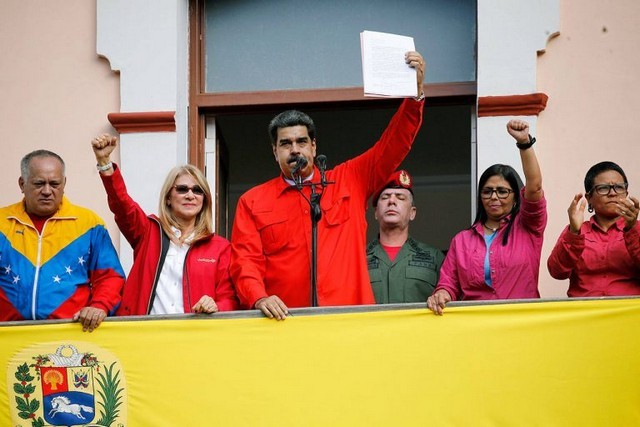
Venezuela’s President Nicolás Maduro and Juan Guaidó, a leader of the right-wing Voluntad Popular party and president of the country’s National Assembly, who proclaimed himself the country’s “interim president” Wednesday with immediate backing from Washington, spoke simultaneously on Friday at different locations in Caracas .

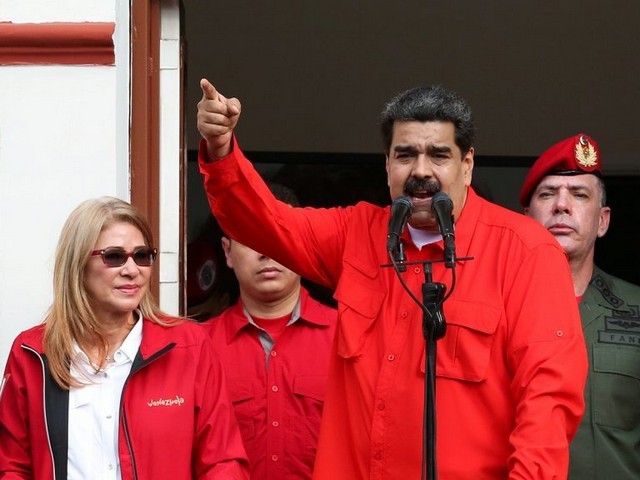
Maduro, speaking at a press conference in the Miraflores presidential palace, declared that his government was confronting “an advancing coup d’état promoted and financed by the United States of North America.” He charged that Guaidó was a puppet of Washington, who was incapable of taking any decisions without orders from the State Department.

He revealed that on the eve of the right-wing politician’s self-proclamation as the “president,” Guaidó had met with two leading representatives of the government, including Diosdado Cabello, an ex-military officer and leader of the ruling PSUV party, who is widely seen as a rival of Maduro’s within the chavista camp, to discuss initiation of a dialogue.

Guaidó had denied that any such meeting had taken place, but the government Friday released a videotape showing him and Cabello entering the meeting site.

Maduro reiterated the appeal for a dialogue, both with the United States and Guaidó, while insisting that his announcement of a break in diplomatic relations with Washington would not stop Venezuela from selling oil to the US, which accounts for 75 percent of the cash Venezuela gets for crude shipments.

US officials are reportedly discussing sanctions on the oil sector, which would have the effect of “making the economy scream,” the term used by the Nixon administration during the economic destabilization operations against Chile in advance of the fascist-military coup of 1973.

For his part, Guaidó spoke at a rally in eastern Caracas, ruling out any dialogue with the present government, vowing that anti-government demonstrations would be called next week and calling for the military to support him and overthrow Maduro.

This is the main concern of the Venezuelan right and its US backers, but as yet, the military high command, which has been a pillar of the governments of Maduro and his predecessor, the late Hugo Chávez, heading a large share of ministries as well as controlling the most lucrative state agencies, has shown no sign of deserting the government.

Washington, meanwhile, has escalated its offensive against the Maduro government. National Security Adviser John Bolton announced that the US will divert all assets held by the Venezuelan government in the US to the so-called “interim government” of Guaidó. This includes bank deposits as well as the properties held by Citgo, the US-based refining affiliate of the Venezuelan state oil company, PDVSA.

The financial analysis firm S&P Global Platts cited sources close to the right-wing opposition in Venezuela as stating that Guaidó was preparing to name a new board of directors for Citgo and to send his representatives to take over the company’s headquarters in Houston. Goldman Sachs reported that the corporate coup would be carried out in conjunction with the proclamation of a new National Law on Hydrocarbons, which would open up Venezuela’s oil reserves to more direct and comprehensive foreign exploitation.

That this is to be one of the first actions of the US-backed “interim president” is hardly an accident. The restoration of domination by US-based energy conglomerates over Venezuela’s oil reserves, the largest in the world, has been a strategic objective pursued by Washington under both Democratic and Republican administrations over the past two decades.

Meanwhile, the Bank of England, acting in compliance with demands from Washington, has stymied an attempt by the Venezuelan government to withdraw $1.2 billion in gold reserves from its coffers.

The other principal goal of the US-orchestrated coup is the rolling back of influence in Latin America by China and Russia, both of which have established close economic, political and military ties with Caracas. The regime change operation thus dovetails with the announced shift in US strategy toward “great power” conflict and carries with it the danger of a confrontation in the America’s between the world’s largest nuclear powers.

While the various capitalist governments and the corporate media outlets that are supporting and lionizing Guaidó all claim that his victory over Maduro would usher in a renaissance of Venezuelan “democracy,” the reality is that the right-wing opposition that he represents has never enjoyed broad popular support in Venezuela and has no commitment whatsoever to the democratic rights of the broad masses of working people. On the contrary, their rise to power would almost certainly be accompanied by a repressive bloodbath and the institution of dictatorial forms of rule required to impose the dictates of Washington and international finance capital.

In an unmistakable signal of Washington’s real intentions in Venezuela, US Secretary of State Mike Pompeo Friday named Elliot Abrams as the administration’s special envoy on Venezuela. Abrams, a right-wing veteran of the Reagan and Bush administrations, is the personification of the criminal, deceitful and thuggish character of US imperialism’s policies globally and, above all, in Latin America.

He was best known for defending the US-backed dictatorships in Central America in the 1980s and covering up for their bloody massacres, torture and assassinations. During the same period, he played a central role in the creating a covert and illegal network for funding the terrorist “Contra” organized by the CIA to attack Nicaragua. He was convicted of lying to Congress about the illegal operation but pardoned by President George H.W. Bush.

Washington has set the stage for a bloody settling of accounts in Venezuela by defying the Venezuelan government’s order to withdraw all of its diplomatic personnel from the country within 72 hours, a deadline that expires on Sunday. While the State Department has ordered the evacuation of all “non-essential” personnel from the country, it has left in place a skeleton crew of diplomats as bait for a potential military intervention.

Bolton on Friday said that the Trump administration has developed plans to defend the embassy but gave no details. Trump and his aides have repeatedly stated that “all options are on the table” in terms of military intervention in Venezuela. The Washington Post reported Friday that the Pentagon is refusing to comment on any operations regarding Venezuela or the position of any naval ships in the country’s vicinity, referring all questions to the National Security Council, which also has declined comment.

The ongoing coup in Venezuela is by no means the first such attempt by Washington. In 2002, the CIA and the Pentagon backed an abortive military coup staged by sections of the military and the ruling financial circles, together with the AFL-CIO-connected union federation, that removed the late former president Hugo Chávez from office for 48 hours, while installing Pedro Carmona, the president of the Venezuelan Federation of Chambers of Commerce, as “interim president”.

There were no credible allegations then that Chávez’s presidency was “illegitimate”—he had been re-elected two years earlier with a 60 percent majority. Yet the coup and the arrest of Venezuela’s elected president were portrayed in Washington as a triumph for “democracy”.

The New York Times saluted this “democratic” coup writing in truly Orwellian fashion that, with the military overthrow of an elected president, “Venezuelan democracy is no longer threatened by a would-be dictator.” After masses took to the streets in opposition to the coup, Carmona and his military henchmen were forced to retreat, with Chávez restored to the presidential palace.

The Times has weighed in once again in support of the ongoing Venezuelan coup with an editorial titled “Between Mr. Maduro and a Hard Place.” Reflecting the rightward shift of the erstwhile “liberal” political establishment for which the newspaper serves as a mouthpiece, the word “democracy” does not appear in the piece.

Rather, it is concerned with more practical matters of executing a successful regime change operation. Its principal concern is “how to pry Mr. Maduro out without a blood bath,” while acknowledging that the recognition of a rival US-backed president raises “terrifying prospects of carnage, especially should the military stand by Mr. Maduro,” which it so far has.

Nonetheless, the Times editorial board solidarizes itself with the imperialist intervention, writing, “The Trump administration is right to support Mr. Guaidó,” while counseling that, given long and bloody record of CIA coups and US-backed dictatorships in the region, Washington “must be seen as participating in a broad coalition of South American and other democratic nations…”

In other words, another “coalition of the willing” to mask the fact that in Venezuela’s case—as in Iraq’s 16 years ago—“democracy” is spelled “OIL.”

The Washington Post published a similar editorial backing the anointment of the State Department stooge Guaidó as president. It described the 35-year-old right-wing politician as “a young and dynamic new leader,” while the Times had hailed him as a “fresh young leader.”

The Post lays out scenarios for direct US military intervention. “Unless the lives of Americans are endangered and there is no other recourse, military intervention would be folly.”

Of course, the Trump administration’s defiance of the Venezuelan government’s order to close the US embassy in Caracas lays the groundwork for precisely such a claim that “lives of Americans are endangered.”

It should be recalled that the last two US invasions in the Americas—Panama in December 1989, and Grenada in October 1983—were carried out on the pretext of protecting US officials.

It goes on to suggest that “A multilateral operation to deliver humanitarian supplies to Venezuela or to its borders, in cooperation with the National Assembly, is one possibility” for installing Guaidó in power. The Post concludes that the main hope for regime change is for “the military to defy its commanders and support” Guaidó, i.e., carry out a coup.

These views largely dovetail with those of the Democratic Party leadership, which, having waged a bitter campaign against the Trump administration over alleged Russian “meddling,” has jumped to support the White House in its real and deadly meddling in the affairs of Venezuela.

Originally published in WSWS.org

26 January 2019

Source: countercurrents.org

Venezuela – An Appeal to Russia, China and all Unaligned Countries for Support of Sovereign Venezuela

By Peter Koenig

On 23 January 2018, the United States has initiated a coup against President Nicolás Maduro and his Government, by encouraging and fully supporting the “self-proclaimed” opposition leader, Juan Guaido, as interim President. Already days ago he had received the full support of President Trump, and today, in a special televised speech, US Vice-president Mike Pence declared that Venezuela’s Freedom begins with the new interim president, Juan Guaído
https://www.foxbusiness.com/politics/venezuela-established-its-freedom-with-new-interim-president-juan-guaido-vice-president-mike-pence .

RT reports that “the Venezuelan military will not accept a president imposed by ‘dark interests’, Defense Minister Vladimir Padrino said after Washington and a number of its allies recognized a lawmaker [Juan Guaído] as the new leader in Caracas.”

“The army will continue to defend the constitution and national sovereignty, Padrino said on Wednesday afternoon, hours after opposition lawmaker Juan Guaido was proclaimed interim president by the National Assembly, in a direct challenge to President Nicolas Maduro.”

Washington’s immediate recognition of Guaido as Venezuelan’s legitimate leader, was instantly followed by the Organization of American States (OAS), as well as Canada and France. Mexico apparently has declined to do so “for now”. Is the “for now” an indication that Lopez Obrador’s actions are already being controlled by Washington?

This is an appeal to Russia and China and to all unaligned nations that love their freedom and sovereignty – to stand up in defense of Venezuela’s freedom and sovereignty.

May they use their diplomatic leverage, and if that does not work on Washington’s ‘savages’ – use other means that the empire understands. Keeping Venezuela free from the yoke of the US and its vassal allies – is essential for all the people in Latin America who have already been subjected to US implanted subjugating and abusing dictators, who not only have ruined their countries’ economies, but created extreme poverty where there was prosperity before, i.e. Argentina, Brazil, Ecuador, Peru, Colombia, Paraguay, Uruguay – and Chile, which is well on her way to an economic and social demise.

Venezuela must stay and remain tall.

President Putin and Jinping – please do whatever you can and whatever you must, to stop the US bulldozer from overtaking Venezuela!

Ongoing unrest in the streets of Caracas and major Venezuelan cities, all inspired and fueled on by the United States, and also the OAS (Organization of American States), the Club of Lima (except for Mexico), its European puppet allies, is confusing and dividing the people and has already killed at least 16. It is not clear who is responsible for the killing, but undoubtedly opposition forces funded by outside sources and / or the Fifth Column (inside Venezuela) have a bloody hand in the Venezuelan violence. A western instigated civil war is a real risk.

This coup attempt is an abject illegal interference in another country’s sovereignty, with the ultimate violent and vicious goal that Washington has been practicing over the past 100 years around the globe – and ever with more impunity – of “regime change” to steel a non-conform, non-submissive government’s resources, and of course, to reach eventually the ultimate goal of full spectrum world dominance. Venezuela has by far the world’s largest known hydrocarbon (petrol and gas) reserves which is two days of shipping time away from Texas oil refineries, versus the Arabian Gulf from where today the US imports 60% of its petrol – a shipping time of 40-45 days, higher shipping costs, plus the risk of having to sail through the Iran-controlled Gulf of Hormuz.

In addition, Washington cannot tolerate any socialist country, let alone, one that is located in what Washington considers its backyard, like Venezuela, or, for that matter Cuba, Nicaragua and Bolivia. The other left-leaning South American country, Ecuador, has recently been “converted” with an internal “soft” coup, aka fake or manipulated elections. Those are usually operated through strong Fifth Columns funded from abroad – and with substantial menaces, including death threats.

So, Washington is dead set, especially with Trump and Pompeo at the apparent helm, who openly propagate a US (and allied, including NATO) invasion of Venezuela to “free” their “oppressed” people; to bring them from one of the only true democracies in the world (quote by Chomsky and the international election supervising US Carter Institute, among others) under the usurping dictatorship protection of the United States of America. Venezuelans will not tolerate such a farce. The 6 million Venezuelans who stood solidly behind Nicolas Maduro when they voted for him in May 2018, have already stood up – and will continue defending their freely and democratically elected President, despite the western media’s fake images of “tens of thousands” in the streets of Caracas demonstrating against legitimate President Maduro and for the self-proclaimed “interim president”, Juan Guaído.

This coup attempt reminds so much of another US State Department instigated but failed overthrow in April 2002 against President Hugo Chavez. The coup was botched by the Venezuelan military and the people of Venezuela. President Chavez was reinstated within 2 days. And the present coup so far has also failed.

President Maduro’s decision to break diplomatic relations with the US is therefore, not only logical, but totally legal. He has given all US diplomats 72 hours to leave the country. Now comes the other ‘coup’ – the US refuses to accept the legal expulsion of their diplomats from Caracas, because the self-proclaimed and US recognized “interim president” has called for all diplomats, first of all those from Washington, to stay in the country. Pompeo is threating Venezuela for any harm that may happen to US citizens, including diplomats during this upraising and what they consider “change of government”.

Here is Pompeo’s statement with regard to diplomatic relations with Venezuela.
Stay tuned to how this crisis will unfold.

May Venezuela’s friends and allies put all their might, diplomatic and other, at the support of Venezuela’s freedom and sovereignty.

Peter Koenig is an economist and geopolitical analyst. He is also a water resources and environmental specialist.

24 January 2019

Source: countercurrents.org

Mobilize And Defend Venezuela!

By Andre Vltchek

It is new and it is not new, but it is tremendously wicked and deadly – the latest type of coup the US invented and is now applying against Venezuela.

Of course, coups and attempted coups are what could be described as the ‘West’s specialties’, and have been utilized by the U.S., U.K. and other imperialist countries against innumerable unfortunate nations on all continents. In Latin America, basically each and every country has suffered from them, from the Dominican Republic to Chile and Argentina; in Asia, from Indonesia to Thailand, and in the Middle East from Iran to Egypt and Syria. Whenever people of some country dared to vote in the socialists, Communists, anti-colonialists or simply some decent bunch of people who were determined to serve their own population, the West corrupted and deployed local elites and military, overthrew elected or revolutionary governments and installed brutal servile regimes. Thousands died, sometimes millions, but the Empire couldn’t care less; as long as it got its way.

There has been a clear pattern to how the West constructed its terror acts against almost all truly freedom-loving nations.

But what the West is now doing to Venezuela is something else, and totally extreme; the hostile acts against President Maduro and his comrades are stripped of all the scruples and cosmetic “refinements” of the past. They supposed to demonstrate in the cruelest terms who the real ruler of the world is, and who is ‘in charge’. This is ‘Western democracy at its best’!

In the past, the US tried to overthrow Chavez, it attempted to starve Venezuela, to make its medical system collapse, then to assassinate Maduro. It produced a ‘deficit’ of food, even toilet paper. It ordered its lapdogs in Latin America to antagonize the Bolivarian revolution.

Now, in the latest development, the regime in Washington has simply hand-picked its favorite traitor inside the socialist republic of Venezuela – a treasonous cadre named Juan Guaido, (who served, briefly, as President of the National Assembly of Venezuela), “recognizing him” as the“interim President of the country”.

Of course, before Guaido first declared himself, pompously, President of Venezuela, he was almost immediately put into his place by the Venezuela’s Supreme Court, which disavowed him as the chief of the National Assembly. So, let us call him former chief.

But the Western mass media propaganda campaign kicked into top gear, and overnight became utterly unscrupulous.As a result, it is now becoming almost impossible to read any information about the Supreme Court ruling, unless one goes to non-Western sources.

So, let’s go ‘there’. As reported by Iranian Tasnim, on January 22, 2019:

“Venezuela’s Supreme Court head Maikel Moreno announced on Monday that the judges had disavowed Juan Guaido as the chief of the opposition-controlled National Assembly.”

And the RT, just one day earlier:

“Venezuela’s Supreme Court has declared all acts of the country’s National Assembly null and void, days after the opposition-held assembly declared President Nicolas Maduro’s election illegitimate.”

Also, the Venezuelan foreign minister, Jorge Arreaza, snapped at Guaido on 21stJanuary, 2019:

“You see this man, who nobody knows in Venezuela—you ask in the streets, “Who is Juan Guaidó?” and nobody knows him—but he’s being pushed to say that he is the new president, by the U.S.”

And he did say that! On the 23rd of January 2019,in front of his mob of supporters in Caracas.

And then, a day later, President Trump ‘recognized him’ as the country’s interim president. Canada did the same. The same did France, now a second-rate but increasingly rejuvenated imperialist and neo-colonialist power. Followed by that U.S. puppet – the Organization of American States (OAS), with such fascist countries on board, like Brazil, and Colombia now leading the pack.

Today, the world is clearly divided, as China, Russia, Iran, Turkey, Syria, South Africa, Bolivia, Cuba, Mexico, Uruguay and many others are firmly on the side of the legitimate revolutionary government of President Maduro.

Confrontation is inevitable.

Venezuela ordered all US diplomats to leave and it cut off all diplomatic ties with Washington. US refused to make its embassy staff depart from Caracas, declaring that the Venezuelan government is ‘illegitimate’.

This amounts to a declaration of war. The US refuses to recognize the sovereignty of Venezuela. It reserves the right to tell the Venezuelan people who their real president is! It only recognizes its own, supreme control over the hemisphere and the Planet, showing spite for international law.

It is childish, arrogant, outrageous, and surreal. But it is really happening. And unless it is stopped, right there, in Caracas, this new form of ‘spreading coups’, and enforcing global dictatorship, may spread to all other parts of the world.

*

Although there are many ‘new elements’ at play, the situation, to a great extent, resembles the ‘Syrian scenario’, as was conveyed to TASS, on January 24, 2019, by Venezuela’s Ambassador to Russia Carlos Rafael Faria Tortosa:

“The Venezuelan authorities know that the US is trying to stage a Syrian scenario with “government in exile” in Caracas… After US Vice President Michael Pence called for overthrowing our government, our president decided to sever diplomatic relations with the US authorities and asked US diplomats to leave Caracas in the next 72 hours. This is an adequate response which our brave president provided to flagrant interference… No country can allow any other country to state their opinions about the internal affairs of the state, especially when it comes to calls for overthrowing [the authorities].”

“We know what the next steps will be. The US will now have a justification [for their actions] that there are two governments in the country, like they did in our fraternal Syria with President Bashar Assad and its people. They created a government in exile, which led to great losses, to casualties, to demolition of the country’s infrastructure.”

Will Caracas ask Moscow directly for help, as Syria did years ago, while fighting for its survival? It is not certain, yet, although this possibility certainly exists. Venezuela is counting on increasing support from Russia, Iran, China, Cuba and other socialist or independent countries.

For Venezuela, the only way to survive, is to cut off all its dependency on the West, immediately. Washington is threatening Caracas with further sanctions and even with an oil embargo.

There is no reason to panic. But Maduro’s government has to rapidly and fully realign itself. There are many countries outside the NATO realm which are willing to buy Venezuelan oil, and/or fairly invest in its infrastructure and industry. Russia, Iran, China and Turkey are the most important ones, but there are many others.

There has to be new strategy on how to alleviate the pain of the ordinary Venezuelans. This, too, has to come from ‘outside the Western sphere of control’, even outside Latin America;a continent known for its brutal European-descendent elites, consistent lack of solidarity, courage, and acceptance of the West’s rule (the greatest modern-day hero of South America, Hugo Chavez, died attempting to build an united, proud, socialist Latin America, just to be stabbed in his back and spat at by many of the servile Latin American nations. Cuba was fully abandoned after the destruction of the Soviet Union, and had to be saved by China).

The country has to mobilize; it has to fight. Fight for its survival. With all its allies united, ready to defend Venezuela, the same as it has been happening in Syria.

Venezuela suffers and struggles for humanity, not just for itself. With the name of Chavez and socialism on its lips.

Russia is standing by its ally, Venezuela. On 24 January, 2019, Sputnik reported:

Russia warns the United States against military interference in Venezuela’s affairs, it would be a disaster, Russian Deputy Foreign Minister Sergei Ryabkov said on Thursday:

“As we see how the situation in Venezuela develops, we note the willingness of a certain group of countries, including the United States, to use different platforms such as the Organization of American States, to increase pressure on our ally Venezuela under different pretexts… But we have always supported and will support friendly Venezuela that is our strategic partner.”

From the country devastated by a similar destabilization campaign as the one that is taking place in Venezuela, the Syrian official press agency SANA carried a message of support for the legitimate Venezuelan government:

“The Syrian Arab Republic condemns in strongest terms going to extremes by the US and its blatant interference in the affairs of the Bolivarian Republic of Venezuela which constitutes a flagrant violation of all international norms and laws and a brazen attack against the Venezuelan sovereignty,” a source at the Foreign and Expatriates Ministry said on Thursday.

The source added that the destructive policies adopted by the US in different parts of the world and its disregard of the international legitimacy represents the main reason behind the tensions and the state of instability in our world…

The Syrian Arab Republic affirms its categorical rejection of the blatant US interferences, and it renews full solidarity with the Venezuelan leadership and people in preserving the sovereignty of the country and foiling the hostile schemes of the US administration…”

In the past, countries accepted the Western terror unleashed against them as something inevitable. But now, the situation is changing. Russia, Cuba and Syria, Iran and China, and now Venezuela, are refusing to surrender, or even to “negotiate with the terrorists”.

Aleppo, which I described as “the Middle Eastern Stalingrad”, stood tall, fought, resisted and defeated vicious enemies. Now Caracas, the Latin American Leningrad, is under siege, starving, but determined to fight against foreign invasion and treasonous cadres.

All over the world,people have to mobilize and fight, by all means, against fascism and for Venezuela!

*

Andre Vltchek is a philosopher, novelist, filmmaker and investigative journalist.

25 January 2019

Source: countercurrents.org

Maduro Reaffirms Willingness For Dialogue

By Press Release

The President of the Bolivarian Republic of Venezuela, Nicolas Maduro, welcomed the initiative taken by Mexico and Uruguay for a national dialogue and reaffirmed his willingness for a dialogue with all political sectors.

“I have seen that two Latin American governments have taken an initiative, which seems to me, must be the path. A diplomatic initiative, initiative for dialogue. The governments of Mexico and Uruguay have proposed what is believed to be an international initiative to promote a dialogue between parties in Venezuela for searching a negotiation, a national consensus,” he declared.

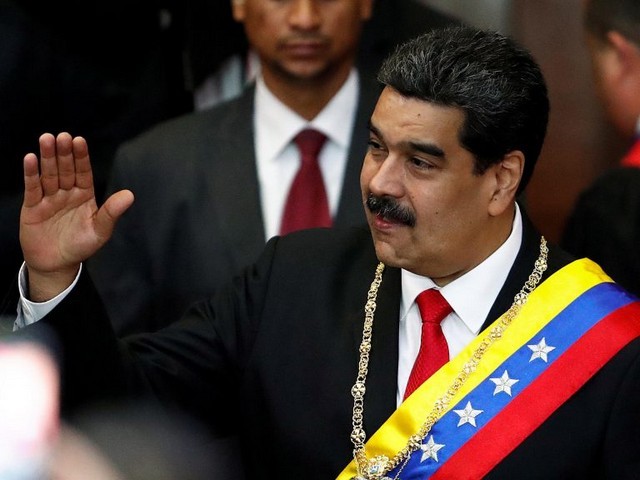
“To the governments of Mexico and Uruguay, I say, I am in agreement for a diplomatic initiative for a national dialogue in Venezuela. I am ready for a dialogue, a negotiation, for consensus”, he stated from the headquarters of the Supreme Court of Justice.

During the start of the judicial year 2019, he stressed that this dialogue must respect the Constitution of the Republic, and all political sectors of national life will participate in it.

He specified that Venezuela is now within a historical battle for international law in the face of coup attempt of the USA. “Interventionism is not the way,” declared Maduro.

Also, he thanked the governments of the world like Turkey, Russia, China among others, who have ratified their support for the sovereignty of Venezuela.

http://www.avn.info.ve/contenido/presidente-maduro-acepta-propuesta-mediadora-méxico-y-uruguay-para-diálogo-nacional

Translation by Sandeep Banerjee

25 January 2019

Source: countercurrents.org

Imperialist intervention in Venezuela: UPDATE

By Countercurrents.org

  • Maduro endorses dialogue call by Mexico, Uruguay
  • China and Russia extend support to Maduro
  • Regional allies Bolivia, Cuba, Nicaragua reiterate support Maduro and reject US-led intervention
  • Over 70 Experts call for US to stop interfering in Venezuela

On-going imperialist intervention in Venezuela is making situation tense. Imperialism is organizing provocative hostile acts to deteriorate situation in Venezuela. Following update has been prepared based on media reports:

In the face of on-going imperialist intervention and unlawful acts of the United States, Venezuelan President Nicolas Maduro ordered Thursday the closing of the embassy and consulates of his country in the United States, a day after breaking diplomatic relations with Donald Trump’s government.

Speaking from the Supreme Justice Court (TSJ), Maduro said that the international strategy’s objective is to intervene in Venezuela through a puppet president.

“There’s a great provocation, led by the U.S. empire, happening now in Venezuela. There’s no doubt in the world that it’s President Donald Trump who wants to impose a de facto, unconstitutional government. It’s a coup in Venezuela against the people and democracy,” said Maduro.

The crisis between the two governments escalated this week when the White House backed the swearing in of opposition lawmaker Juan Guaido as “interim president” against the constitution and international law. The Venezuelan president also gave the U.S. delegation until Sunday to leave the country.

Following Guaido’s self-swearing in, President Maduro called on the Venezuelan people to defeat what he termed a “coup attempt.”

“They want to break the republic, the nation, they want to declare an unconstitutional president … Their imperial lord Mike Pompeo organized this, it was him who gave the order,” Maduro said speaking of the attempted parliamentary coup against his elected progressive government.

He also explained that problems that the two countries had should have been resolved through diplomacy, without having to interfere in foreign countries issues.

“Imperialism was playing ahead. Since January 2018 it said: We won’t recognize any presidential election called in Venezuela,” he said.

Maduro said to be in favor of the call for dialogue made to the country as a whole by the governments of Uruguay and Mexico. “I can face the worst difficulties because I know I have the strength of the people.”

He also congratulated the Bolivarian National Armed Forces (FANB) for their support and recognition to the Bolivarian government

“The military power has spoken and it’s sticking to the Constitution, the homeland and the people. What the opposition right wing did was a false move, improvised, full of manipulation and lies. They can’t deal with the legitimate government,” he said.

Putin’s support to Maduro

Russia’s President Vladimir Putin pledged his support for the elected government of Venezuela during a phone call with President Maduro.

Putin criticized the “destructive external meddling” to which Venezuela has been exposed.

The Russian president has expressed his support to the legitimate authorities of Venezuela in this time of political crisis, which he said was caused by a “destructive external interference that grossly violates the most basic norms of the international law.”

Putin and Maduro also agreed to continue cooperation between the countries “in various fields.”

Russia, China, Iran and NATO-member Turkey condemned US interference in Venezuela’s domestic crisis, however, saying it could further complicate the situation.

Franco-Anglo imperialists

France and Britain joined the US-led chorus on Thursday. London claimed that Maduro is “not a legitimate leader” of Venezuela while Paris said that Maduro’s election was “illegal” and “Europe supports the restoration of democracy.”

Venezuela has endured a prolonged period of economic instability and hyperinflation, worsened by the gradually mounting external pressure. Maduro’s opponents blame the crisis on the socialist government, which, for its part, claims that the dissent is deliberately stirred up by the US and other foreign powers.

The US has greatly expanded its economic sanctions against Venezuela. The sanctions, however, have mainly hit the country’s citizens, many analysts argue.

The White House said on Thursday that it was ready to provide more than $20 million in humanitarian assistance to Venezuela, but Trump’s national security adviser John Bolton said the money should go to the “legitimate” Guaido-led government, despite the fact that Guaido was not elected by the Venezuelan people and assumed the role of interim president in what his critics say was an unconstitutional act. Bolton said the Trump administration was focused on cutting Maduro off from all sources of revenue.

Imperialists waging economic war

Venezuelan Defense Minister Vladimir Padrino accused the United States of waging “economic war” on his country and warned a coup was underway after the US recognized opposition leader Juan Guaido as interim president.

In a televised message on Thursday, Padrino insisted that elected president Nicolas Maduro was the only “legitimate” president. “I warn the people that there is a coup underway against our democracy and our president Nicolas Maduro,” he said.

Padrino recalled a failed coup attempt by the Bush administration in 2002, saying, “those of us who lived through the coup of 2002 have it etched into our minds, we never thought we’d see that again, but we saw it yesterday.”

Violence organized

The capital city of Caracas and several other Venezuelan cities saw scenes of violence Wednesday night, with reports of explosions and gunfire in multiple locations.

Clashes took place in the Jose Felix Ribas sector of Petare, the largest popular neighborhood of Caracas, with armed groups taking on different state security organs in close quarters. Local residents reported heavy gunfire and detonations, while a journalist for Colombian NTN24 reported that protesters launched a grenade under a bridge connecting Petare to Palo Verde in eastern Caracas.

There were likewise reports of barricades being set up, and clashes between armed groups and security forces in several neighborhoods of Caracas. Footage circulating on Twitter showed a group of masked youths hijacking and trying to take down a police truck in San Martin, which was later reportedly burned.

Graphic footage also appeared on social media showing a youth killed in the working class neighborhood of San Agustin, also in Caracas. The victim has been identified as 25-year-old Frank Correa, with local witnesses pointing the finger at FAES, the special forces of the Bolivarian National Police.

Clashes between protesters who set up barricades and security forces, who responded with water tanks, lasted into the early hours of Thursday. But it is unclear whether Correa’s death was related to these clashes or not.

Linares argues that there is a concerted effort to generate violence in popular neighborhoods, as opposed to the middle-class areas of Caracas where the “guarimba” protests mostly took place in 2014 and 2017.

The goal is to have these mercenary commando types, backed by the right-wing, generating chaos in popular neighborhoods.

Clashes between authorities and armed groups were also reported in the western Caracas sector of Boqueron in Sucre Parish, with special forces being deployed after police and National Guard personnel were forced to retreat.

Violence was also reported in other parts of the country, with witnesses denouncing attacks against public institutions in Anzoategui and Portuguesa States. In Yaracuy, 18-year-old Daniel Veliz was killed by a gunshot during an opposition protest, but no more details are known at this time.

In the central state of Barinas, local residents reported the murder of 30-year-old Gustavo Ramirez, nephew of former higher education minister Edgardo Ramirez, who was struck by a bullet to the head. Ramirez reportedly was not taking part in any demonstration but walked near an armed confrontation between opposition groups and security forces. Two other people have been reported dead in Barinas as a result of these clashes.

In the western state of Merida, reports emerged that a government supporter was shot dead and burned by masked people following an anti-government march. Witnesses identified the victim as Cohen German, who allegedly had a mental disability. A press conference to offer further details on the investigation has been set for Friday.

Different NGOs have put the number of casualties so far between 14 and 26, but several cases have yet to be confirmed and responsibilities ascertained.

Armed forces stand by Maduro

Venezuelan Defense Minister Vladimir Padrino Lopez issued a statement Wednesday evening voicing support for President Nicolas Maduro as commander-in-chief of the armed forces.

On Thursday morning, the top general gave a press conference, vowing, “The events of 2002 will never be repeated,” referring to the short-lived US-backed coup against former President Hugo Chavez in April 2002.

Padrino went on to reaffirm the National Bolivarian Armed Forces’ commitment to upholding the constitution in opposition to foreign meddling.

A few minutes earlier, the commanders of the eight Integral Strategic Defense Regions (REDI), responsible for the deployment of troops in each region of the country, also hosted a press conference from different locations, declaring “loyalty and absolute subordination” to President Maduro.

Guaido under pressure

On Wednesday evening, high-ranking Chavista figure and President of the National Constituent Assembly Diosdado Cabello revealed on his TV show “Con el mazo dando” that he had held a meeting with Guaido the day before.

“Guaido asked for a meeting yesterday, and I went because I’ll meet with anyone for the peace of this country,” Cabello stated.

Cabello claimed that Guaido had pledged to do one thing but had done the complete opposite and that the opposition lawmaker had sent him a message claiming he was “under pressure” to proclaim himself president. Despite not presenting any evidence, Cabello challenged Guaido to deny the events.

Former U.N. expert: U.S. attempted coup is against international laws

Alfred de Zayas, a former United Nations expert who visited Venezuela in 2017 as a U.N. representative, said that the United States is conducting an illegal coup in the country, which is against international laws.

“It is an attempted coup d’état. Now, we all believe in democracy… Now, there’s nothing more undemocratic than a coup d’état, and also boycotting elections,” Zayas commented.

“The mainstream media has been complicit in this attempted coup. … This reminds us of the run-up to the Iraq invasion of 2003,” the U.N. expert told Democracy Now.

When Zayas visited Venezuela as a rapporteur, he told the opposition members “you simply cannot topple the government, and Maduro is not simply going to roll over. I mean, there are 7, 8, 9 million Venezuelans who are committed Chavistas, and you have to take them into account. What are you going to do with them if you topple the government through a coup d’état?”

The U.N. expert also took a dig at the mainstream media who through fake news made the people believe that the U.S. intervention in Venezuela is good for the people of the country. He denounced the media campaign against the South American country, which has been termed to have a humanitarian crisis. “And, of course, there was no humanitarian crisis,” said Zayas.

He also compared the current situation with Chile’s Salvador Allende. An economic war was waged against Allende for three years. When the economic war was not successful in ousting Allende, a coup d’état by General Augusto Pinochet toppled Allende’s regime bringing 17 years of dictatorship.

“If the opposition really considers itself democratic, it has to play the democratic game, and it has to participate in the elections. They have chosen to boycott the elections over the last years,” he commented.

Stop Interfering in Venezuela: Experts say to US

Noam Chomsky, Alfred de Zayas, Sujatha Fernandes, Boots Riley, John Pilger and many others oppose US interventionism in Venezuela. The statement is worth the read.

The United States government must cease interfering in Venezuela’s internal politics, especially for the purpose of overthrowing the country’s government. Actions by the Trump administration and its allies in the hemisphere are almost certain to make the situation in Venezuela worse, leading to unnecessary human suffering, violence, and instability.

Venezuela’s political polarization is not new; the country has long been divided along racial and socioeconomic lines. But the polarization has deepened in recent years. This is partly due to US support for an opposition strategy aimed at removing the government of Nicolás Maduro through extra-electoral means. While the opposition has been divided on this strategy, US support has backed hardline opposition sectors in their goal of ousting the Maduro government through often violent protests, a military coup d’etat, or other avenues that sidestep the ballot box.

Under the Trump administration, aggressive rhetoric against the Venezuelan government has ratcheted up to a more extreme and threatening level, with Trump administration officials talking of “military action” and condemning Venezuela, along with Cuba and Nicaragua, as part of a “troika of tyranny.” Problems resulting from Venezuelan government policy have been worsened by US economic sanctions, illegal under the Organization of American States and the United Nations ― as well as US law and other international treaties and conventions. These sanctions have cut off the means by which the Venezuelan government could escape from its economic recession, while causing a dramatic falloff in oil production and worsening the economic crisis, and causing many people to die because they can’t get access to life-saving medicines. Meanwhile, the US and other governments continue to blame the Venezuelan government ― solely ― for the economic damage, even that caused by the US sanctions.

Now the US and its allies, including OAS Secretary General Luis Almagro and Brazil’s far-right president, Jair Bolsonaro, have pushed Venezuela to the precipice. By recognizing National Assembly President Juan Guaido as the new president of Venezuela ― something illegal under the OAS Charter ― the Trump administration has sharply accelerated Venezuela’s political crisis in the hopes of dividing the Venezuelan military and further polarizing the populace, forcing them to choose sides. The obvious, and sometimes stated goal, is to force Maduro out via a coup d’etat.

The reality is that despite hyperinflation, shortages, and a deep depression, Venezuela remains a politically polarized country. The US and its allies must cease encouraging violence by pushing for violent, extralegal regime change. If the Trump administration and its allies continue to pursue their reckless course in Venezuela, the most likely result will be bloodshed, chaos, and instability. The US should have learned something from its regime change ventures in Iraq, Syria, Libya, and its long, violent history of sponsoring regime change in Latin America.

Neither side in Venezuela can simply vanquish the other. The military, for example, has at least 235,000 frontline members, and there are at least 1.6 million in militias. Many of these people will fight, not only on the basis of a belief in national sovereignty that is widely held in Latin America ― in the face of what increasingly appears to be a US-led intervention ― but also to protect themselves from likely repression if the opposition topples the government by force.

In such situations, the only solution is a negotiated settlement, as has happened in the past in Latin American countries when politically polarized societies were unable to resolve their differences through elections. There have been efforts, such as those led by the Vatican in the fall of 2016, that had potential, but they received no support from Washington and its allies who favored regime change. This strategy must change if there is to be any viable solution to the ongoing crisis in Venezuela.

For the sake of the Venezuelan people, the region, and for the principle of national sovereignty, these international actors should instead support negotiations between the Venezuelan government and its opponents that will allow the country to finally emerge from its political and economic crisis.

US orders non-essential diplomatic staff: Leave Venezuela

The US has ordered all of its “non-essential” diplomats and embassy staff to leave Venezuela “for security reasons”.

The US has also warned US citizens in Venezuela that they should “strongly consider” leaving the country, after Maduro said the US should pull their staff out of Caracas “if they had any sense.”

Venezuela’s Foreign Minister Jorge Arreaza has accused the US – and President Donald Trump personally – of fomenting a coup in Caracas while Defense Minister Vladimir Padrino accused it of waging “economic war” on his country.

Washington is setting dangerous precedent: Correa

Washington’s reckless push for regime change in Venezuela might set a dangerous precedent, former president of Ecuador, Rafael Correa told RT.

A situation, in which a man “declares himself an ‘interim’ president” and immediately gets recognition from 11 Latin American countries and the US, is “unseen,” Correa said, commenting on the latest developments in the crisis-ridden Venezuela and referring to the opposition head Juan Guaido.

Correa also said that the opposition head “ignored the constriction, laws, election … procedures” in his self-manifestation as “nothing of this sort is in the constitution.”

However, those pushing for the coup were apparently not very much concerned about the legal formalities but were instead focused on their own interests, according to Correa, who said the development set a dangerous precedent for such an approach to be extended on any other country, whose “government the US does not like,” regardless of whether it is democratic or not.

One can talk about a new Operation Condor now,” Correa said, referring to the infamous campaign of state terror and purges of alleged Communists conducted by US-backed South American dictatorships beginning in 1975.

“This is an impressive blow,” the ex-president said, referring to the development in Venezuela. “They avoid resorting to the military [action], assassinations or kidnappings for now because they do not need it. One cannot rule out that they could still resort to such methods” in the future, Correa warned.

WikiLeaks warns

The US President’s decision to recognize Guaido as the county’s “interim president” may set off a “possible civil war” in the oil-rich nation, WikiLeaks has warned.

Trump’s move on recognizing Guaido as the “interim president” of Venezuela might prove disastrous for the country, which has endured years of instability, and spark an open full-blown conflict, the whistleblowing organization WikiLeaks tweeted.

It could lead to a “possible civil war in the country with the largest proven oil reserves,” it said.

25 January 2019

Source: countercurrents.org

“The Bleeding Wound”- Afghanistan and the Implosion of America

By Tom Engelhardt

As I approach 75, I’m having a commonplace experience for my age. I live with a brain that’s beginning to dump previously secure memories — names, the contents of books I read long ago (or all too recently), events, whatever. If you’re of a certain age yourself, you know the story.

Recently, however, I realized that this experience of loss, like so much else in our world, is more complex than I imagined. What I mean is that such loss also involves gain. It’s turned my mind to, and made me something of an instant expert on, one aspect of twenty-first-century America: the memory hole that’s swallowed up parts of our all-too-recent history. In fact, I’ve been wondering whether aging imperial powers, like old men and women, have a tendency to discard what once had been oh-so-familiar. There’s a difference, though, when it comes to the elites of the aging empire I live in at least. They don’t just dump things relatively randomly as I seem to be doing. Instead, they conveniently obliterate all memory of their country’s — that is, their own — follies and misdeeds.

Let me give you an example. But you need to bear with me here because I’m about to jump into the disordered mind of a man who, though two years younger than me, has what might be called — given present-day controversies — a borderline personality. I’m thinking of President Donald Trump, or rather of a particular moment in his chaotic recent mental life. As the New Year dawned, he chaired what now passes for a “cabinet meeting.” That mainly means an event in which those present grovel before, fawn over, and outrageously praise him in front of the cameras. Otherwise, Trump, a man who doesn’t seem to know the meaning of advice or of a meeting, held a 95-minute presidential ramble through the brambles in front of a Game of Thrones-style “[Iran] Sanctions Are Coming” poster of… well, him. The media typically ate it up, even while critiquing the president’s understanding of that HBO TV series. And so it goes in the Washington of 2019.

Excuse me if I seem to be wandering off subject (another attribute of the aging mind), but I’m about to plunge into history and our president is neither a historian, nor particularly coherent. Read any transcript of his and not only does he flip from subject to subject, sentence by sentence, but even — no small trick — within sentences. In other words, he presents a translation problem. Fortunately, he’s surrounded by a bevy of translators (still called “reporters” or “pundits”) and, unlike the translators in the president’s meetings with Russian President Vladimir Putin, we have their notes.

So here, as a start, is a much-quoted passage of his on this country’s never-ending Afghan War from that cabinet meeting, which reporters and pundits jumped on with alacrity and criticized him roundly for:

“We’re going to do something that’s right. We are talking to the Taliban. We’re talking to a lot of different people. But here’s the thing — because mentioned India: India is there. Russia is there. Russia used to be the Soviet Union. Afghanistan made it Russia, because they went bankrupt fighting in Afghanistan. Russia. So you take a look at other countries. Pakistan is there; they should be fighting. But Russia should be fighting.

“The reason Russia was in Afghanistan was because terrorists were going into Russia. They were right to be there. The problem is it was a tough fight. And literally, they went bankrupt. They went into being called Russia again, as opposed to the Soviet Union. You know, a lot [of] these places you’re reading about now are no longer a part of Russia because of Afghanistan.”

As I said, Donald Trump is no historian. So it’s true that the Red Army didn’t move into Afghanistan in 1979 thanks to a terrorist presence in Russia. And yes, every stray pen or talking head in Washington seemed to skewer the president for his ignorance of that reality, including the Atlantic’s eminent neocon pundit David Frum who basically claimed that the president was simply pushing the latest dish of pasta Putinesca our way. (“It’s amazing enough that any U.S. president would retrospectively endorse the Soviet invasion. What’s even more amazing is that he would do so using the very same falsehoods originally invoked by the Soviets themselves: ‘terrorists’ and ‘bandit elements.’ It has been an important ideological project of the Putin regime to rehabilitate and justify the Soviet invasion and occupation of Afghanistan…”)

While critics like Frum did begrudgingly admit that the Soviet fiasco in Afghanistan might have had just a teensy-weensy something or other to do with the implosion of the Soviet Union in 1991, less than two years after the Red Army limped home, the president, they insisted, basically got that wrong, too. The Soviet Union bankrupted by Afghanistan? Not in your dreams, buddy, or as the Washington Post‘s Aaron Blake wrote in a piece headlined “Trump’s Bizarre History Lesson on the Soviet Union, Russia, and Afghanistan”:

“The overlap between the fall of the Soviet Union and its foray into Afghanistan is obvious. The USSR invaded in 1979 and left a decade later, in 1989. The superpower dissolved shortly thereafter in 1991. But correlation is not causation… It was perhaps among the many reasons the USSR collapsed. But it was not the reason.”

And then, of course, came the next presidential tweet, and everyone — except me — moved on with alacrity. I was left alone, still dredging through my memories of that ancient conflict, which, these days, no one but the president would even think of bringing up in the context of the ongoing U.S. war in Afghanistan. And yet here’s the curious thing when it comes to an aging empire that prefers not to remember the history of its folly: Donald Trump was right that Russia’s Afghan misadventure is a remarkably logical place to start when considering the present American debacle in that same country.

Two Empires Trapped in Afghanistan

Let me mention one thing no one’s likely to emphasize these days when it comes to the Russian decision to enter that Afghan quagmire in 1979. At the highest levels of the Carter and then the Reagan administrations, top American officials were working assiduously to embroil the Soviets in Afghanistan and would then invest staggering sums in a CIA campaign to fund Islamic extremist guerrillas to keep them there. Not that anyone in Washington is likely to play this up in 2019, but the U.S. began aiding those Mujahidin guerrillas not after the Red Army moved in to support a pro-Soviet regime in Kabul, but six months before.

Here’s how President Carter’s national security advisor, Zbigniew Brzezinski, would describethe situation almost two decades later:

“According to the official version of history, CIA aid to the mujahidin began during 1980, that’s to say, after the Soviet army invaded Afghanistan. But the reality, kept secret until now, is completely different: on 3 July 1979 President Carter signed the first directive for secret aid to the opponents of the pro-Soviet regime in Kabul. And on the same day, I wrote a note to the president in which I explained that in my opinion this aid would lead to a Soviet military intervention.”

Asked if he had any regrets, Brzezinski responded:

“Regret what? The secret operation was an excellent idea. It drew the Russians into the Afghan trap and you want me to regret it? On the day that the Soviets officially crossed the border, I wrote to President Carter, saying, in essence: ‘We now have the opportunity of giving to the USSR its Vietnam War.’”

Think about that largely missing bit of history for a moment. Top U.S. officials wanted to give the Soviet Union a version of their own disastrous Vietnam experience and so invested billions of dollars and much effort in that proxy war — and it worked. The Soviet leadership continued to pour money into their military misadventure in Afghanistan when their country was already going bankrupt and the society they had built was beginning to collapse around them. They were indeed suffering from what General Secretary Mikhail Gorbachev came to call “the bleeding wound.” And if that isn’t the language of disaster (or bankruptcy or, perhaps more accurately, implosion), what is? Yes, Afghanistan, that “graveyard of empires,” wasn’t the only thing that took their world down, but the way their much-vaunted army finally limped home a decade later was certainly a significant factor in its collapse.

Now, let me tax your memory (and especially elite Washington’s) just a bit more. Think again about the history that led up to the American war President Trump was fretting about in that cabinet meeting. Under the circumstances, it wouldn’t be an exaggeration to say that Brzezinski and his successors were just a tad too successful — or, to put it another way, that they lured not one but two empires into their trap; the second being, of course, the American one.

After all, in that 10-year Afghan proxy war (1979-1989), they laid the foundations for the creation by a rich young Saudi named Osama bin Laden of a resistance outfit of Arab fighters. You know, “al-Qaeda,” or “the base.” They also funded other extremist Islamic figures and groups like Gulbuddin Hekmatyar or the Haqqani network that would, more than a decade after the Soviets straggled home, go to war against… well, us. And through their investment in that brutal quagmire, they also helped lay the foundations for the destruction and destitution of significant parts of Afghanistan, and so for the brutal civil war that followed in the early 1990s amid the ruins. Out of that, of course, came another group whose name might still ring a bell or two: the Taliban.

In other words, Brzezinski & Co. laid the foundations for what would become a nearly 30-year American quagmire war (with a decade off between its two parts) in a land that, in 1979, few Americans other than a bunch of hippies had ever heard of. Here, then, is a small hint for the president: you might consider starting to refer to Afghanistan — and I assure you this would be historically accurate (even if you were roundly criticized for it by the Washington punditariat) — as America’s “bleeding wound.”

No matter how many years it goes on, one thing seems probable: like the Red Army, the U.S. military will finally limp out of that country in defeat and will also, in some way, bring that defeat home with them. It may not be what finally bankrupts or implodes the great(er) and far wealthier imperial power of the Cold War era, but as with Russia it will surely lend a helping hand.

There’s No Success Like Failure in Washington

In a country in which implosive elements are already being mixed into its politics, President Trump had his finger on something when he brought up the Russian war in Afghanistan. However historically and syntactically mixed up he might have been, his brain was still far more on target than those of most of the wise men and women of the present Washington establishment.

Take David Frum. Who today thinks much about his role in the history of American folly? As a speechwriter for George W. Bush, however, he was memorably ordered to produce “in a sentence or two our best case for going after Iraq.” In other words, he was to make a case for the invasion of that country in the president’s 2002 State of the Union address. At that time, with America’s superpower enemy, the Soviet Union, long gone and the U.S. seemingly unopposed on planet Earth, he somehow found three weak countries — Iraq, Iran, and North Korea — to turn into a World War II-style “axis of evil.” In doing so, he produced this memorable passage for the president:

“States like these, and their terrorist allies, constitute an axis of evil, arming to threaten the peace of the world. By seeking weapons of mass destruction, these regimes pose a grave and growing danger. They could provide these arms to terrorists, giving them the means to match their hatred. They could attack our allies or attempt to blackmail the United States. In any of these cases, the price of indifference would be catastrophic.”

Mission accomplished! No matter that neither Iraq, nor the other two countries were anywhere near having nukes.

Donald Trump has often been accused of megalomania as if that were a unique trait of his, but that’s because we’ve blotted out Washington’s other megalomaniacs of this century. I’m thinking of the neocon officials of the Bush administration with their urge to turn this planet into an American possession and their disastrous invasion of Iraq. Because of that sense of amnesia, David Frum, Mr. Axis of Evil, like the rest of his neocon companions has, a decade and a half later, risen again in Washington. Like him, many of them are now critics of the Trump administration, while others, like National Security Advisor John Bolton, are ascendant in that very administration.

In the end, when it comes to history and memory, it all seems to prove one thing: if you want to ensure your success in twenty-first-century Washington, there’s no way you can be too wrong. (The key figures in that city these days are evidently only familiar with the first of those two famed lines in Bob Dylan’s “Love Minus Zero”: “She knows there’s no success like failure/And that failure’s no success at all.”)

You now have 60 seconds (and the clock’s already ticking) to answer a question: Who, in or out of the administration, critic, pundit, or official, was against the invasion of Iraq once upon a time? I think you know the answer to that one. If you were against the single most disastrous, megalomanic foreign policy act of this century, there’s no place for you in present-day Washington, not in the administration, either party in Congress, or even in memory. You are not worth listening to, writing about, thinking about, or remembering in any way. You are the anti-Frum and have been deposited in the proverbial dustbin of history along with all those other embarrassing memories like… to mention just one more… the myriad elections in other countries that the U.S. interfered with before we were shocked (shocked!) to discover that some country might have meddled with one of ours.

Think of those neocons, the ones who have yet again made it into positions of power or influence and respect in Washington, as the gang who helped pave the way for Donald Trump to become president. Think of them as the imploders. Think of them as our domestic bleeding wound and (when it comes to taking down the system) the truest pasta Putinesca around.

What Might Have Been?

And now that I’ve left you with a completely bad taste in your mouth, let me bring up another small forgotten memory, one that might qualify — in an alternate universe of memories at least — as utopian, rather than dystopian. I’m thinking about “the peace dividend.” You don’t remember it? Well, that’s not surprising. But after the Soviet Union disappeared in 1991 (something official Washington hadn’t faintly expected and initially greeted in a kind of stunned silence), it briefly seemed as if the great-power struggles that had preoccupied history since perhaps the fifteenth century were finally over. The U.S. was the lone superpower left on planet Earth. Enemies were beyond scarce. A judgment of some sort had been rendered and, for a brief moment, even in Washington, people began talking about that most miraculous of things: a peace dividend.

The staggering sums that had gone into the Pentagon and the rest of the national security state in the Cold War years were visibly no longer necessary. So it was time to bring it all — billions and billions of dollars that had long been invested in the militarization of our American world — home. There was, after all, nothing left to build up military power against and so that money could now be put into what wouldn’t for another decade be called “the homeland.”

In fact, though modest cuts were made in U.S. forces and military spending in those years, they would prove to be anything but a dividend and would soon enough simply evaporate in the face of the military-industrial complex and, of course, that “axis of evil.”

In the years that followed, the very idea of a peace dividend, even the phrase itself, would simply vanish. Still, just for a moment, in a country whose infrastructure is now crumbling, whose teachers are underpaid, whose health care system is under siege, it was possible to dream about a world in which the bleeding wounds of the planet might begin to be staunched. Imagine that and think about what the future might have been.

Tom Engelhardt is a co-founder of the American Empire Project and the author of a history of the Cold War, The End of Victory Culture.

24 January 2019

Source: countercurrents.org
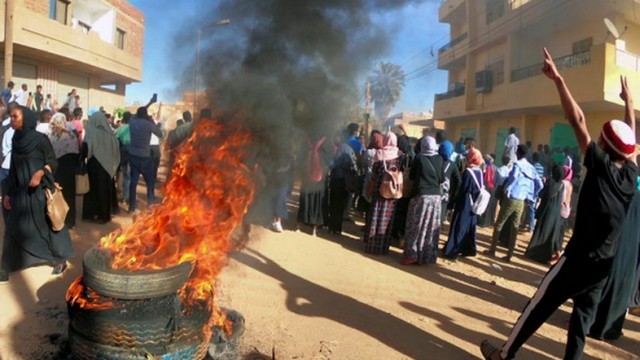
Imperialism’s Direct Intervention In Venezuela

By Farooque Chowdhury

First phase of imperialism’s direct intervention in Venezuela has started.

The US has “officially” recognized a self-proclaimed president of Venezuela as the country’s president while the rightists are trying to create chaos on Caracas streets. Guaidó, the self-proclaimed president, have been recognized by Argentina, Brazil, Colombia, Chile, Costa Rica, Ecuador, Guatemala, Paraguay and Peru, the countries collaborating with the US imperialism, followed the imperialist power within two hours of the US move. The Organization of American States (OAS) has also recognized Guaidó as president. Canada and France have extended its support to Guaidó. European Council president Donald Tusk expressed hoped the EU would “unite in support of democratic forces”. The imperial alliance is active.

Guaidó, an obscure lawmaker a few days ago and head of the National Assembly, called on the armed forces to disobey the constitutionally formed government of Venezuela. However, Venezuela’s defense minister has condemned Guaidó, a former student leader participating in protests against socialist leader Chavez.

US president Trump, in a statement, described Nicolas Maduro’s leadership as “illegitimate”. Trump’s statement said: “The people of Venezuela have courageously spoken out against Maduro and his regime and demanded freedom and the rule of law.”

Nicolas Maduro, who was sworn-in as president of Venezuela earlier this month, has declared breaking of diplomatic and political relations with the US. The measure is in response to Trump’s recognition of Guaidó. Venezuela has given the US diplomatic staff 72 hours to leave Venezuela. Maduro has declared all US diplomats persona non grata, after the imperial power recognized Guaidó as Venezuela’s president.

US secretary of state Pompeo rejected Venezuela’s move to cut ties with the US. Pompeo said the US did not recognize Maduro as leader of Venezuela. He said the US would conduct relations “through the government of interim President Guaidó” although there’s nothing like “government of President Guaidó”. Pompeo also urged Venezuela’s military to support efforts to restore “democracy”, and said the US would back Guaidó in his attempts to establish a government.

These developments are a continuation of a long drawn out imperialist intervention plan. The imperialist power, it seems, is determining issues like legitimacy and people’s representation in another country while it is passing through a government shutdown.

Maduro has accused Washington of trying to govern Venezuela from afar, and said the opposition was seeking to stage a coup. “We’ve had enough interventionism, here we have dignity, damn it!” president Maduro said in a televised address from the presidential palace while a huge assembly of people joined in solidarity to Maduro in front of Miraflores Palace, the presidential house in Caracas.

Venezuela’s foreign minister lashed out at “subordinate clowns” who he said followed the “owner of the imperialist circus”.

Bolivia declared, as tweeted by president Evo Morales, “solidarity with the people of Venezuela and brother Nicolas Maduro” in resisting the “claws of imperialism” in South America. Bolivia pledged full support to Maduro.

Mexico and Cuba also have expressed support to Maduro.

Maria Zakharova, spokesperson of the Russian foreign ministry, said the US “handpicking” of a government in Caracas perfectly illustrates the true Western sentiments toward international law, sovereignty and non-interference in internal affairs of states.

Therefore, Caracas is hot with imperialist intervention. More moves that are imperialist will follow. The moves will appear originating from within Venezuela although those were seeded externally.

Already there has appeared the Venezuelan Observatory of Social Conflicts. More such organizations and “opposition voices” will be organized and heard. They will provide figures – number of wounded and death, number of incidents of looting market places, number of incidents of arson, and similar many others.

There will appear voices of “conscience”, a part of which will be comprised of elements claiming to be “left” and “progressive”. These “left-progressive” elements will turn dear friends of and reliable sources of information for the mainstream media.

Neither the mainstream nor the “progressive-lefty friends” will ever raise the following questions:

1. Who has appointed the imperial power to determine the question of legitimacy in another land?

2. Shall the imperial power allow this practice – determining the question of legitimacy related to the imperial power or a state subservient to the imperial power by another state – to others?

3. Which state shall allow another state to issue a call to the state’s armed forces to rise in rebellion?

4. Is the self-proclaimed president above constitution of Venezuela?

5. Shall this incident be cited as a precedent in cases of other countries whenever imperialists will feel that that country is moving away from its orbit?

6. Is it going to be norm/practice in the area of international relations?

It’s a dangerous precedent set by imperial powers. It’s dangerous not only for the people of Venezuela, but for other countries also; because, imperialists can arrange similar set up of opposition/demonstration/claim to the seat of power in cases of other countries trying to move in a dignified way through a road fitting to the country’s need.

The incident shows:

1. Imperialists don’t consider constitution of other countries.

2. Imperialists consider they are the guardians of political practices and norms of all countries; and they stand above all constitutions of all countries.

3. Imperialists know best – which political system is best suited for people of any country; leading imperialists claim to rights above rights of people.

Who knows when which country will face imperialist wrath? Do the “progressive” and “lefty” “friends” looking at political incidents in countries through a black or white lens know? They examine the Bolivarian revolutionary process through that black or white lens, and they turn frustrated as they fail to find “great” bourgeois “democratic” practices there. They deny looking at the reality and limitations – essentially contradictions – in the society struggling for transformation. Thus they, at times, miss imperialism’s role there as they miss in other countries while they appear great crusaders for “democracy”. But the holy hearts don’t question: Why imperialism denies targeting them, the “brave fighters”, but target Venezuela, Chavez, Maduro?

Today’s direct imperialist intervention in Venezuela has not been organized overnight. So-called democratic forces were organized, trained, financed and armed slowly and clandestinely over a long period. Simultaneously, tarnishing image of Venezuela/Chavez/Maduro/the Bolivarian Revolution was carried on unceasingly, and a negative impression was constructed among wider international audience while an economic war against the Revolution was organized. The Venezuelan people’s sufferings due to imperialist intervention were portrayed as failures of the Revolution. There are cases of cancer patients – young, promising, old, infirm – facing death due to lack of essential drugs/equipments, which was due to imperialist economic war against the Revolution. Nevertheless, those stories go missing in the MSM.

So, one of the burning questions today: Shall this imperialist intervention succeed? The broad answer: It depends on the Revolution’s capacity to mobilize the people in the land of Bolivar. To be specific: Venezuela is not Chile of the time preceding murderer Pinochet’s coup backed by the imperial power. Today is not the days of imperialism’s Libya intervention. Today is not the days of betrayer Gorbachev.

The imperial power has its own deeper and wider problems, however. This condition of imperialism may advise it to resort to provocative acts – hot intervention, which is directly sending armed persons – to divert attention of people in its country. Or, with a cautious attitude, imperialism may try to mobilize proxies to intervene in Venezuela after creating a serious bloody situation – a lot of deaths, a lot of cases of arson, use of petrol bombs and homemade firearms, a serious law and order situation.

So, now is the time to stand in solidarity with the Bolivarian Revolution in Venezuela, handle non-hostile conditions in non-hostile way, and not to step into traps of provocations. And, it’s time to call upon the “brave, lefty, progressive friends” not to forget imperialism.

Farooque Chowdhury writes from Dhaka.

24 January 2019

Source: countercurrents.org

Headlines about China’s weak growth are somewhat misleading

Slowness is in the eye of the beholder

AMERICA’S PRESIDENT knows a catchy number when he sees one. Like much of the world’s media, Donald Trump tweeted this week that China’s growth in 2018 was its slowest in nearly three decades. This, he said, ought to compel it to make a “Real Deal” on trade with America. China’s growth of 6.6% last year was indeed the weakest since 1990, and it does want to end the trade war. But a closer look at the data shows why its leaders are less panicked than Mr Trump might think.

First, the sheer size of its economy means that China’s growth last year generated a record amount of new production. Nominal GDP increased by 8trn yuan ($1.2trn), well above the 5.1trn yuan added in 2007, when it notched up 14.2%, its fastest growth rate in recent decades. The point is simple—China is now growing from a much larger base—but it was overlooked in the flurry of headlines about its slowdown.
The changing nature of China’s growth also gives it some cushioning from the trade war. American tariffs are starting to inflict pain: Chinese companies have reported a sharp drop in export orders. But for the broader economy, foreign sales matter less than they used to. Although the falling trade surplus lopped half a percentage point from the growth rate last year, domestic demand more than plugged the shortfall (see chart). Consumption accounted for three-quarters of the growth rate last year, the most since 2000.

Finally, China has made modest progress towards cleaning up its financial system. The government had sought to rein in debt, which had soared over the past decade. Critics have observed that it has failed to deliver any real deleveraging, because debt-to-GDP levels have continued to creep up. But stabilisation, rather than outright deleveraging, was China’s real goal. It has had some success: the pace of debt accumulation slowed sharply. In 2015 it took more than four yuan of new credit to generate each yuan of incremental GDP. In 2018 that multiple fell to 2.5, in line with China’s average over the past 15 years.

Alongside these positives, however, there were some worrying signs. Nominal growth has slowed sharply, from an annual rate of 11.2% in the third quarter of 2017 to 8.1% in the final quarter of last year. It will slow further this year as inflation decelerates. Since nominal growth is closely correlated with corporate revenue growth, companies could be in for a tough year.

As for consumption, this year looks less promising than last. Companies have started cutting back on hiring and incomes are growing more slowly, weighing on consumer sentiment. The middle three quintiles of China’s population by income distribution saw earnings increase by only about 2% last year in real terms. Those of the richest quintile rose by 6.6%. Given that lower earners tend to spend more of their wages than the rich do, that is a poor basis for sustained growth in consumption. Sales of cars fell last year for the first time in more than two decades. Sales of mobile phones were also sluggish.

China has already pivoted towards more supportive economic policies. It has sped up spending on infrastructure, trimmed income taxes and relaxed some restraints on bank lending. This does not add up to a big stimulus package, but the direction is clear. If growth slows further, as seems likely, the government will move more boldly still.

There is no doubt that China would like to persuade Mr Trump to roll back tariffs on Chinese goods, which would both help its exporters and boost market sentiment. Bilateral talks are grinding on ahead of a March 1st deadline. Chinese negotiators are working on an offer that will satisfy their American counterparts, combining pledges to buy more American goods with reforms to treat foreign companies more fairly. But if Mr Trump truly believes what he tweets about the Chinese economy, he is at risk of overestimating the strength of America’s hand. China wants a trade deal, certainly, but it is not desperate.

24 January 2019

Source: economist.com