Just International

When it comes to Palestine and Kashmir, India and Israel are oppressors-in-arms

By Azad Essa

The hue of ‘democracy’ has given India and Israel special gravitas and legitimacy, while human rights violations continue unchecked

Hundreds march in Kashmir in May 2018 to support the Palestinian struggle (MEE/Fahad Shah)

In a back alley in downtown Srinagar, the capital of India-controlled Kashmir, a string of words splashed on a wall reads: “Long Live Palestine”. Nearby, “Free Gaza” screams from a shutter on a store. Across a tiny gulley, graffiti on a sidewall has been scratched off. If you stare hard enough, the words “Free Kashmir” rise like an apparition.

For many Muslims around the world, Palestine holds a special place in their political consciousness. Al-Aqsa Mosque, after all, is one of the most important sites in Islam. Those on the left – whether millennial radicals or grey-bearded Marxists – have also supported the Palestinian cause over the zealous imperialism of Zionist settler-colonialism, ethnic cleansing, displacement and war-mongering.

A personal matter
Israel’s invasions of Gaza over the past decade have repeatedly fuelled protests in countries as diverse as South Africa, the UK and Malaysia. But in Muslim-majority, India-controlled Kashmir, the subjugation of Palestinians is a personal matter – a reminder of their own condition. Kashmiris emerge on the streets with banners, and seeing no difference between their overlords and Israeli soldiers, they throw stones at Indian troops. While the Indian state tries to remove all graffiti that references Kashmiri liberation from the walls and steel shutters, there is little attempt to remove the spray paint that spells “Free Gaza”. The state apparently thinks that pro-Palestinian slogans are inconsequential and uninspiring.

Kashmiris have been among the first to organize and demonstrate. They emerge on the streets with banners, and seeing no difference between their overlords and Israeli soldiers, they throw stones at Indian troops. When the last Gaza offensive began in July 2014, Kashmiris took to the streets daily to protest against the Israeli bombardment. In one incident, Indian armed forces fired live ammunition at protesters in a district 60km from Srinagar, killing ninth-grader Suhail Ahmed.

Historical meditation
For decades, Kashmiris in Indian-controlled Kashmir have been demanding freedom, or at least the right to self-determination as promised by the 1948 UN Security Council Resolution 47. Kashmir has been claimed in full by both India and Pakistan since 1947. A de facto border separates the Indian-controlled from the Pakistani-controlled parts of Kashmir. Three out of the four wars fought between the two countries have been over the dispute.

Since the armed resistance began in 1988, more than 70,000 people have been killed, and thousands more are unaccounted for through enforced disappearances. Today, with around 700,000 troops amid a population of 14 million, Kashmir is the most militarized place on earth.

This is a society harassed by checkpoints and army convoys, terrorized by troops able to operate with impunity under the Armed Forces Special Powers Act, and mired in a legal malaise called the Public Safety Act that allows young boys to be picked up and held indefinitely without charge. This is not dissimilar to the Israeli policy of “administrative detention” that has seen thousands of Palestinians held indefinitely. For years, Indian forces have used lead-plated pellets as a method of “crowd control”. These have blinded 1,000 people and wounded 10,000 others, with injuries ranging from torn tissue to internal organ damage. As if violence was not enough, the Indian state regularly disconnects the internet and telephone services to discourage grassroots organizing and the dissemination of information, and to cut off Kashmiri people from the rest of the world.

Oppressors-in-arms
Though the strengthening of ties between India and Israel is a fairly recent phenomenon, they have rapidly developed an effective partnership based on strategic interests. India has repeatedly sent its police and Special Forces to Israel for training. Between 2013 and 2017, India was the largest importer of Israeli arms. Israeli Rafael’s Spice 2000 missiles as well as Heron drones reportedly played a significant role in India’s recent “surgical strike” in Pakistan on 26 February. Just days before the strike, India ordered 50 more drones in a deal worth $500m.

Crucially, Israel continues to collaborate with India to ensure that Kashmiris remain a subjugated people. And while the occupations of Palestine and Kashmir are not identical – there are certainly differences – Israeli and Indian ambitions are not dissimilar. In some ways, they feed off each other.

Israel has systematically ethnically cleansed Palestinians, taking over their homes, buying off resistance, quelling dissent, and appropriating elements of their culture – even cuisine – as part of a larger bid to remove the Palestinian footprint from these lands. As a result, Palestinians are essentially second-class non-citizens. In comparison, India, through a policy of “domestication” – or to use BJP leader Ram Madhav’s words, “instilling India” into Kashmiri Muslims – seeks to make Kashmiri Muslims relinquish their political identities and submit to the larger Indian project. They would then become “Indian Muslims”, who, by all measures of success and equity in Indian society, are second-class citizens. The endgame is to facilitate a demographic shift in Kashmir itself, bringing in more Hindus from India to settle into Kashmir.

Manufacturing consent
Then, there is the matter of language and manufacturing consent. Both Israel and India employ a sophisticated, securitized, statist language – parroted by their jingoistic media – that helps to legitimize the occupation, along with related human rights violations and crackdowns.

The quick resort to Islamophobia is an easy sell to justify their actions. Just as Israel describes its invasions of Gaza as a “defence” against “radical Islamist” Hamas members, Indians are still able to invoke their international brands of “Gandhi” and “yoga” while unleashing ammunition into protests by Kashmiri youth, saying that they are Pakistan-sponsored terrorists or radical jihadists. Israelis famously picnicked on hilltops to watch as the bombs rained down on Gaza in 2014. This week, as Indian jets flew over Pakistani territory to kickstart war, Indian celebrities cheered them on Twitter. It is a willful use of language, the blind loyalty of an elite, and the disconnection of local and international media that allows both Palestinians and Kashmiris to be vilified at any given opportunity.

Just as Israelis or Zionists intimidate academics, journalists and intellectuals who question Israeli policies, so too do the strong, often nationalistic Indian diaspora in media houses and schools around the planet attempt to suppress any discussion of Kashmir. Like Palestinians, many young Kashmiris, powerless in the face of state machinery, have resorted to stone-pelting. The fact that Indian authorities use disproportionate force – including burning down villages, homes and crops of those loosely acquainted with rebel fighters – is also conveniently ignored.

Public sentiment
Both Palestine and Kashmir have neighbours operating primarily on self-interest. If Palestine has Jordan and Egypt undermining its cause, Kashmir has Pakistan, which seeks little more than allegiance and a worthy alibi in India to deflect from the real and legitimate concerns of Kashmiris.

Finally, it’s a matter of public sentiment. When it comes to the larger Israeli and Indian publics, the vulgarity of the occupation has stripped them of their humanity to the point that they cheer for death and war. Israelis famously picnicked on hilltops to watch as the bombs rain down on Gaza in 2014. This week, as Indian jets flew over Pakistani territory to kick start war, Indian celebrities – including writers, actors, cricket stars, a former undersecretary at the UN, and a current UNICEF ambassador – cheered them on Twitter.

*Azad Essa is a reporter for the Middle East Eye based in New York City.

4 March 2019

Source: palestineupdates.com

“Julian Assange will never obey Big Brother”

By John Pilger

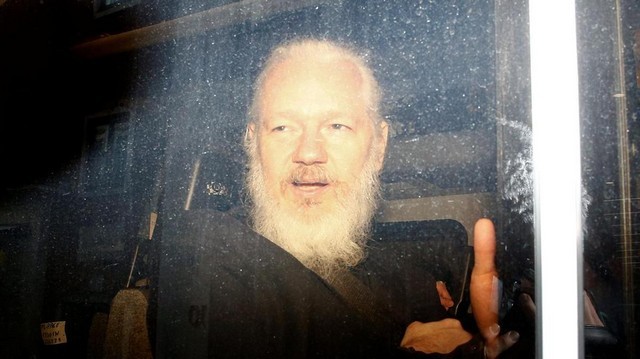
Whenever I visit Julian Assange, we meet in a room he knows too well.

There is a bare table and pictures of Ecuador on the walls. There is a bookcase where the books never change. The curtains are always drawn and there is no natural light. The air is still and foetid.

This is Room 101.

Before I enter Room 101, I must surrender my passport and phone. My pockets and possessions are examined. The food I bring is inspected.

The man who guards Room 101 sits in what looks like an old-fashioned telephone box. He watches a screen, watching Julian. There are others unseen, agents of the state, watching and listening.

Cameras are everywhere in Room 101. To avoid them, Julian manoeuvres us both into a corner, side by side, flat up against the wall. This is how we catch up: whispering and writing to each other on a notepad, which he shields from the cameras. Sometimes we laugh.

I have my designated time slot. When that expires, the door in Room 101 bursts open and the guard says, “Time is up!” On New Year’s Eve, I was allowed an extra 30 minutes and the man in the phone box wished me a happy new year, but not Julian.

Of course, Room 101 is the room in George Orwell’s prophetic novel, 1984, where the thought police watched and tormented their prisoners, and worse, until people surrendered their humanity and principles and obeyed Big Brother.

Julian Assange will never obey Big Brother. His resilience and courage are astonishing, even though his physical health struggles to keep up.

Julian is a distinguished Australian who has changed the way many people think about duplicitous governments. For this, he is a political refugee subjected to what the United Nations calls “arbitrary detention.”

The UN says he has the right of free passage to freedom, but this is denied. He has the right to medical treatment without fear of arrest, but this is denied. He has the right to compensation, but this is denied.

As founder and editor of WikiLeaks, his crime has been to make sense of dark times. WikiLeaks has an impeccable record of accuracy and authenticity which no newspaper, no TV channel, no radio station, no BBC, no New York Times, no Washington Post, no Guardian can equal. Indeed, it shames them.

That explains why he is being punished.

For example: Last week, the International Court of Justice ruled that the British Government had no legal powers over the Chagos Islanders, who, in the 1960s and 70s, were expelled in secret from their homeland on Diego Garcia in the Indian Ocean and sent into exile and poverty. Countless children died, many of them from sadness. It was an epic crime few knew about.

For almost 50 years, the British have denied the islanders’ the right to return to their homeland, which they had given to the Americans for a major military base.

In 2009, the British Foreign Office concocted a “marine reserve” around the Chagos archipelago.

This touching concern for the environment was exposed as a fraud when WikiLeaks published a secret cable from the British Government reassuring the Americans that “the former inhabitants would find it difficult, if not impossible, to pursue their claim for resettlement on the islands if the entire Chagos Archipelago were a marine reserve.”

The truth of the conspiracy clearly influenced the momentous decision of the International Court of Justice.

WikiLeaks has also revealed how the United States spies on its allies; how the CIA can watch you through your i-phone; how presidential candidate Hillary Clinton took vast sums of money from Wall Street for secret speeches that reassured the bankers that if she was elected, she would be their friend.

In 2016, WikiLeaks revealed a direct connection between Clinton and organised jihadism in the Middle East: terrorists, in other words. One email disclosed that when Clinton was US Secretary of State, she knew that Saudi Arabia and Qatar were funding Islamic State, yet she accepted huge donations for her foundation from both governments.

She then approved the world’s biggest ever arms sale to her Saudi benefactors: arms that are currently being used against the stricken people of Yemen.

That explains why he is being punished.

WikiLeaks has also published more than 800,000 secret files from Russia, including the Kremlin, telling us more about the machinations of power in that country than the specious hysterics of the “Russia-gate” pantomime in Washington.

This is real journalism—journalism of a kind now considered exotic: the antithesis of Vichy journalism, which speaks for the enemy of the people and takes its sobriquet from the Vichy government that occupied France on behalf of the Nazis.

Vichy journalism is censorship by omission, such as the untold scandal of the collusion between Australian governments and the United States to deny Julian Assange his rights as an Australian citizen and to silence him.

In 2010, Prime Minister Julia Gillard went as far as ordering the Australian Federal Police to investigate and hopefully prosecute Assange and WikiLeaks—until she was informed by the Australian Federal Police that no crime had been committed.

Last weekend, the Sydney Morning Herald published a lavish supplement promoting a celebration of “Me Too” at the Sydney Opera House on 10 March. Among the leading participants is the recently retired Minister of Foreign Affairs, Julie Bishop.

Bishop has been on show in the local media lately, lauded as a loss to politics: an “icon,” someone called her, to be admired.

The elevation to celebrity feminism of one so politically primitive as Bishop tells us how much so-called identity politics have subverted an essential, objective truth: that what matters, above all, is not your gender but the class you serve.

Before she entered politics, Julie Bishop was a lawyer who served the notorious asbestos miner James Hardie, which fought claims by men and their families dying horribly with asbestosis.

Lawyer Peter Gordon recalls Bishop “rhetorically asking the court why workers should be entitled to jump court queues just because they were dying.”

Bishop says she “acted on instructions … professionally and ethically.”

Perhaps she was merely “acting on instructions” when she flew to London and Washington last year with her ministerial chief of staff, who had indicated that the Australian Foreign Minister would raise Julian’s case and hopefully begin the diplomatic process of bringing him home.

Julian’s father had written a moving letter to the then Prime Minister Malcolm Turnbull, asking the government to intervene diplomatically to free his son. He told Turnbull that he was worried Julian might not leave the embassy alive.

Julie Bishop had every opportunity in the UK and the US to present a diplomatic solution that would bring Julian home. But this required the courage of one proud to represent a sovereign, independent state, not a vassal.

Instead, she made no attempt to contradict the British Foreign Secretary, Jeremy Hunt, when he said outrageously that Julian “faced serious charges.” What charges? There were no charges.

Australia’s Foreign Minister abandoned her duty to speak up for an Australian citizen, prosecuted with nothing, charged with nothing, guilty of nothing.

Will those feminists who fawn over this false icon at the Opera House next Sunday be reminded of her role in colluding with foreign forces to punish an Australian journalist, one whose work has revealed that rapacious militarism has smashed the lives of millions of ordinary women in many countries: in Iraq alone, the US-led invasion of that country, in which Australia participated, left 700,000 widows.

So what can be done? An Australian government that was prepared to act in response to a public campaign to rescue the refugee football player, Hakeem al-Araibi, from torture and persecution in Bahrain, is capable of bringing Julian Assange home.

The refusal by the Department of Foreign Affairs in Canberra to honour the United Nations’ declaration that Julian is the victim of “arbitrary detention” and has a fundamental right to his freedom, is a shameful breach of the letter and spirit of international law.

Why has the Australian government made no serious attempt to free Assange? Why did Julie Bishop bow to the wishes of two foreign powers?

Why is this democracy traduced by its servile relationships, and integrated with lawless foreign power?

The persecution of Julian Assange is the conquest of us all: of our independence, our self-respect, our intellect, our compassion, our politics, our culture.

So stop scrolling. Organise. Occupy. Insist. Persist. Make a noise. Take direct action. Be brave and stay brave. Defy the thought police.

War is not peace, freedom is not slavery, ignorance is not strength. If Julian can stand up to Big Brother, so can you: so can all of us.

John Pilger is an Australian journalist and documentary maker, based in London.

4 March 2019

Source: countercurrents.org
Why Has Kashmir Been Forgotten?

By Samreen Mushtaq & Mudasir Amin

Amid all the talks of India-Pakistan war, the issue at the very heart of present tensions has been completely ignored.

2 Mar 2019 – “What are they saying about jung [war] over there? Does it look like it will happen?” For days now our families in Kashmir have been asking us the same questions, hoping that here in New Delhi, we would have some answers.

Uncertainty and fear took over our home region on February 14, when a suicide attack in the Pulwama district of Indian-administered Kashmir killed more than 40 Indian soldiers. We were quickly and collectively denounced as national traitors, harassed and attacked across Indian cities. The Indian media and political elite called for “revenge” and started beating the drums of war.

The Indian government imposed a curfew, cut down the speed of the internet and deployed more troops in Kashmir. The police and security agencies carried out hundreds of overnight raids, arresting political leaders and activists. Jamaat–e-Islami, a political and religious organisation, was banned.

Meanwhile, the Indian military was put on high alert and raids were launched on targets in Pakistan, which prompted a Pakistani response. Heavy shelling across the Line of Control (LoC) which separates Indian- from Pakistan-administered Kashmir began.

Many Kashmiris were forced to flee, others started to stock up on food and other basic goods, fearing an escalation. Big red crosses were painted on rooftops of hospitals in the hope that the fighter jets constantly circling above would not hit them.

The Kashmiri people, who have already lived through decades of daily aggression against their bodies, homes, psyches, and memories, are now facing the real possibility of an all-out war.

It is in such circumstances that our families have been calling and messaging us from miles away, hoping to hear from us some soothing words. Every day, they have been recounting how their nights are spent counting the number of jets in the sky. Every day, we have been wondering if we should go home and face the war together with our loved ones.

Meanwhile, headlines about an India-Pakistan “confrontation”, “escalation” and an “impending war” have been dominating local and international media. News broadcasts have followed every detail of the Indian and Pakistani military actions, the attacks and the counter-attacks, the claims and the counter-claims. Reporters have documented every statement, every new development. Pundits have dissected every aspect of the conflict – from war capabilities to army structure, to weaponry and from military strategies to geopolitical realities.

Yet somewhere in all this noise about conflict and war, a simple fact has been left out: that Kashmir is the place where it is all being fought out. The Kashmir issue and the plight of Kashmiri people have been somehow rendered irrelevant, even though the current conflict between India and Pakistan has everything to do with the disputed region.

When international media talks of the history of India-Pakistan antagonism, it fails to recognise the fact that Kashmiris have borne the brunt of it. When Indian media talks about “terrorism”, it fails to mention the fact that Kashmir is one of the most heavily militarised zones in the world.

There was a certain irony in calls by Indian officials and public figures calling for Pakistan to uphold the Geneva Convention in its treatment of the captured Indian pilot. In Kashmir, India has failed to apply not just the Geneva Convention, but much of international law for that matter. Kashmiris are still being jailed on political charges and used as human shields, while the United Nations resolution which mandates a referendum on self-determination to be conducted in Kashmir is yet to be implemented.

The current anti-war activism in India is limited to small demonstrations and #NoToWar posts on social media. The elephant in the room is once again being ignored. No one is talking about what true peace would actually entail.

Dominant narratives propagated by the Indian state and the mainstream media are muffling Kashmiri voices. At this moment, it is important to hear them speak and tell their stories of war. The killings, torture, enforced disappearances, sexual violence, mass blinding through the use of pellet shotguns, and everyday harassment in Kashmir cannot be swept under the carpet and ignored. This violence needs to be made visible because continuing or escalating the current security policies of the Indian government will only result in disaster.

Indians have to realise that there will be no peace until the Kashmir issue is resolved. If they truly want “no war”, then they have to push first and foremost for the demilitarisation of Kashmir. And if they want international law respected, they should do so as well and hold the plebiscite mandated by the UN. Kashmiris should be allowed to decide their own fate.

Samreen Mushtaq is a researcher based in New Delhi.

Mudasir Amin is a researcher based in New Delhi.

4 March 2019

Source: transcend.org

Migrant Crisis in Europe? Look at Yemen

By Helen Lackner

Just to be clear, this means that more desperate people crossed the Red Sea into Yemen in 2018 than crossed the Mediterranean heading for Europe.

19 Feb 2019 – While Brexit is giving UK residents a break from media focus on desperate people attempting to reach wealthy Europe by crossing the Mediterranean by sea, a few figures should help to put things in perspective, as the issue will surely soon re-emerge in the headlines.

Xenophobia remains a fundamental rallying cry of the right throughout Europe, including the UK, and is all too frequently manifested through Islamophobic populism. This has already led to the implementation of anti-migrant policies by most regimes but particularly the far right ones in Eastern Europe.

This last year, they have been joined by the new Italian regime’s rhetoric and action in turning away humanitarian ships rescuing migrants in the Mediterranean. The hostile environment for migrants in Europe has led to a massive drop in arrivals: while many more than one million people arrived in 2015, only 144,000 did so in 2018. A few migrants who had managed to reach northern France and in particular the Calais of ‘jungle’ notoriety took to small boats to reach the UK: about 500 did so in 2018, including 200 in the last two months of last year. Some might wonder why this did not happen earlier, but this event gave the British government a temporary public relations respite from Brexit as Secretary of State Sajid Javid rushed to Dover to stem this terrifying influx!

A hidden migrant crisis in the Gulf of Aden

Meanwhile, more than 160,000 people arrived in Yemen in 2018 alone. Just to be clear this means that more desperate people crossed the Red Sea into Yemen than crossed the Mediterranean heading for Europe.

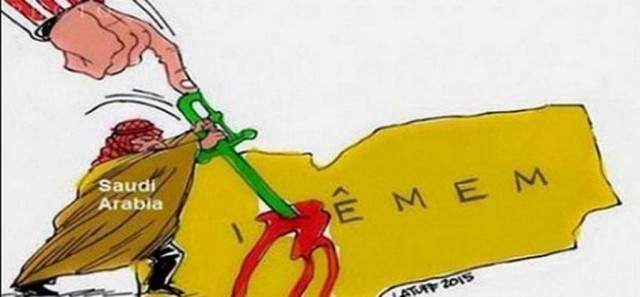
Yemen is in the midst of an internationalised civil war and suffering from the world’s worst humanitarian crisis according to the UN’s Secretary General. There has been no outcry about a ‘migrant invasion’ from the Yemeni Minister of the Interior, whether from the internationally recognised government or the Huthi movement that controls the capital Sana’a. Indeed Yemen has received and accepted close to a million Somali refugees since the 1990s, allowing them to work and live in the country, as Yemen is the only country in the Arabian Peninsula to recognise the 1951 UN Refugee Convention. Prior to the current war, the country’s authorities have been impressively hospitable to Somali refugees, though not to the thousands of Ethiopians and others who have crossed the Red Sea.

Migrants crossing into Yemen only make the headlines either when the Saudi-led Coalition planes bomb a boat crossing and kill its passengers (including people leaving on boats commissioned by UN agencies to repatriate them to the Horn of Africa) or when sufficiently large numbers of corpses wash up onto the Yemeni shores of the Arabian Sea. In both cases, they get little more than a few lines in obscure media.

The main route has also changed as a result of the war: while more than 70% of people crossed the Red Sea between 2010 and 2013, since then the figure has dropped to less than 20% with most heading for the Arabian Sea coast.

Who is heading for Yemen and why?

So why are more people still heading for Yemen than leaving? Who are they? And why do thousands head for a country in the midst of an internationalised civil war where millions are starving? Shouldn’t travel be in the other direction, with Yemenis trying to escape the disastrous conditions in their country?

Yemen is hardly ever the intended destination of these migrants. While travel to Saudi Arabia and the UAE via Oman used to be difficult in the past, travel conditions have become far more dangerous and expensive in recent years. At the beginning of the current decade, the Saudi regime built a fence along most of the border from the Red Sea coast eastwards to control immigration, and the situation has obviously worsened dramatically since the Saudi-led coalition has intervened in the civil war throughout the country since 2015. In 2018 the cost for getting from the southern Yemeni coast to Saudi Arabia was about USD 1200. But travelling to Saudi Arabia from east Africa via Yemen is significantly cheaper than reaching the southern coast of the Mediterranean, a trip costing at least USD 3000, a price which ignores possible ransoming and imprisonment by criminal gangs as well as the actual sea crossing.

Last year alone, 160,000 people in east Africa were sufficiently desperate to head for a country on the brink of famine and in the midst of a war. The overwhelming majority (92%) are Ethiopians and the rest are Somalis. Three quarters of them are adult men while women form 16% of the migrants and children, mostly boys, form 10%. They head for the southern Arabian Sea coast of Yemen, for two main reasons: the Red Sea coast is now a military zone with naval forces of the coalition firing at fishing boats and anything else that moves; on the African side much of the coast is in Eritrea. The southern Arabian Sea coast is more easily accessible from the different departure points in Somalia, both Berbera in ‘independent’ Somaliland and Bossasso in the ‘autonomous’ Puntland.

In the past 5 years, more than 700 corpses have been recovered on Yemen’s southern coast including 156 in 2018. Crossing into Yemen is the cheapest part of the trip, with fares ranging from USD 120 to USD 200. While many of those involved are aware of the war in Yemen, some are not. Amazingly thousands still cross in the belief that they will have an easy ongoing trip to their ultimate destination, Saudi Arabia. Once in Yemen, many seek additional income and try to find work, usually as unskilled labourers in agriculture and as car washers and other informal jobs in towns. This was difficult in the pre-war period and is almost impossible now the war is on. Some fall into the hands of criminals and are ill treated and ransomed, on a scale smaller than that found in Libya but sufficiently significant to be notable.

Most Somalis have left their homes because years of drought have made it impossible to cultivate the land and have killed their livestock, leading to worsening poverty, and destitution. Another reason is insecurity in their home areas. Although war has abated in Somalia, it is hardly a haven of peace and prosperity. In addition possible ill-treatment in Yemen has resulted in changed strategies for Somalis: while before 2011 many of them headed for Yemen as a final or temporary destination, since the beginning of this decade and, even more so, since the outbreak of war, their destination is Saudi Arabia, with no intention of remaining in Yemen.

Similarly Ethiopians, who now form the overwhelming majority of migrants, the thousands heading for Saudi Arabia, via Yemen, have clearly not noticed that their country is currently the great economic success story we read about occasionally in western media. Poverty, drought, lack of employment are key factors pushing them to face the risks of this very dangerous journey, regardless of the high risk of failure. Of 42,000 people expelled from Saudi Arabia in the 10 months starting mid-November 2017, 46% were Ethiopians, while 51% were Yemenis. The trend has accelerated with the changes in labour regulations in Saudi Arabia and in 2018 Saudi authorities have deported about 10,000 Ethiopians a month.

Although many have failed, very few have abandoned their ambitions and taken up the International Organisation of Migration’s offers of repatriation: between 2010 and 2018, only 24,000 returned home under these auspices, 77% of them Ethiopians and 16% Somalis. Of course, regardless of the risks, all migrants heading for Saudi Arabia, whether Ethiopian, Somali or Yemeni, dream of success and wealth after a few years of work in Saudi Arabia.

What about Yemenis?

Very few Yemenis try to escape the war. Most of those who head for Saudi Arabia do so to earn money and feed their families as they have done for the past half century. The new Saudi regime has introduced tough measures to ‘saudi-ise’ its labour force and reduce employment opportunities for foreigners as well as make their residence conditions expensive and unappealing. These measures have affected Yemenis as well as many other nationalities and probably reduced the number of Yemenis in Saudi Arabia to below one million. However arrivals since 2015 also include the leaders of the internationally recognised government, their attendants, and some of the war profiteers.

Other than the majority in Saudi Arabia and about 100,000 people of Yemeni origin in the United Arab Emirates, the war has led to the creation of new Yemeni communities in other neighbouring Arab states: Oman has received about 50,000 Yemenis since the war started. In Jordan 14.500 and in Egypt 8000 were registered with UNHCR by the end of 2018, representing a fraction of the Yemenis present in both these countries. Most Yemenis in these countries are professionals as well as political exiles who are maintaining more acceptable living standards and they also include people who have been unable to return to Yemen as a result of the coalition closure of Sana’a airport since mid-2016.

By contrast most of the few thousand Yemenis arriving in Djibouti are poverty stricken war-related refugees. A very few Yemenis have headed for Europe through the unofficial routes used by African migrants: the International Organisation for Migration recorded 326 Yemenis in the first 11 months of 2018, while a total of 353 had reached Greece in 2015, reflecting both Yemenis’ reluctance to leave their homes and the difficulties they encounter when travelling internationally.

Within Yemen itself, population movements have been massive: overall since the war started 3 million have been displaced, many of whom return home as soon as fighting abates in their areas, so about 1 million remain displaced. In the second half of 2018 alone, with the coalition military offensive against the city and other parts of the Hodeida governorate, more than one million people were displaced until the December 18 ceasefire, going to other parts of Yemen, often where they had relatives, but basically escaping from the air and ground attacks which led to heavy civilian casualties.

In conclusion, while this article has provided a few figures, readers should remember that each one of the individuals who make up the thousands and millions is experiencing the tragic, painful and frightening suffering associated with the tragedies described in the stories you can find on numerous websites and social media. So this represents a multiplicity of horror stories. Migrants heading into Yemen are facing extreme hardship conditions in addition to entering a country at war where most of the population are also suffering from famine conditions. What does all this say about living conditions and prospects in their own countries?

______________________________________________

Helen Lackner has worked in all parts of Yemen since the 1970s and lived there for close to 15 years.

4 March 2019

Source: transcend.org

How Climate Change Could End Washington’s Global Dominion

By Alfred W McCoy

Once upon a time in America, we could all argue about whether or not U.S. global power was declining. Now, most observers have little doubt that the end is just a matter of timing and circumstance. Ten years ago, I predictedthat, by 2025, it would be all over for American power, a then-controversial comment that’s commonplace today. Under President Donald Trump, the once “indispensable nation” that won World War II and built a new world order has become dispensable indeed.

The decline and fall of American global power is, of course, nothing special in the great sweep of history. After all, in the 4,000 years since humanity’s first empire formed in the Fertile Crescent, at least 200 empires have risen, collided with other imperial powers, and in time collapsed. In the past century alone, two dozen modern imperial states have fallen and the world has managed just fine in the wake of their demise.

The global order didn’t blink when the sprawling Soviet empire imploded in 1991, freeing its 15 “republics” and seven “satellites” to become 22 newly capitalist nations. Washington took that epochal event largely in stride. There were no triumphal demonstrations, in the tradition of ancient Rome, with manacled Russian captives and their plundered treasures paraded down Pennsylvania Avenue. Instead, a Manhattan real-estate developer bought a 20-foot chunk of the Berlin Wall for display near Madison Avenue, a sight barely noticed by busy shoppers.

For those trying to track global trends for the next decade or two, the real question is not the fate of American global hegemony, but the future of the world order it began building at the peak of its power, not in 1991, but right after World War II. For the past 75 years, Washington’s global dominion has rested on a “delicate duality.” The raw realpolitik of U.S. military bases, multinational corporations, CIA coups, and foreign military interventions has been balanced, even softened, by a surprisingly liberal world order — with sovereign states meeting as equals at the United Nations, an international rule of law that muted armed conflict, a World Health Organization that actually eradicated epidemic diseases which had plagued humanity for generations, and a developmental effort led by the World Bank that lifted 40% of humanity out of poverty.

Some observers remain supremely confident that Washington’s world order can survive the inexorable erosion of its global power. Princeton political scientist G. John Ikenberry, for example, has essentially staked his reputation on that debatable proposition. As U.S. decline first became apparent in 2011, he argued that Washington’s ability to shape world politics would diminish, but “the liberal international order will survive and thrive,” preserving its core elements of multilateral governance, free trade, and human rights. Seven years later, amid a rise of anti-global nationalists across significant parts of the planet, he remains optimistic that the American-made world order will endure because international issues such as climate change make its “protean vision of interdependence and cooperation… more important as the century unfolds.”

This sense of guarded optimism is widely shared among foreign-policy elites in the New York-Washington corridor of power. The president of the influential Council on Foreign Relations, Richard Haass, has typically arguedthat the “post-Cold War order cannot be restored, but the world is not yet on the edge of a systemic crisis.” Through deft diplomacy, Washington could still save the planet from “deeper disarray” or even “trends that spell catastrophe.”

But is it true that the decline of the planet’s “sole superpower” (as it was once known) will no more shake the present world order than the Soviet collapse once did? To explore what it takes to produce just such an implosion of a world order, it’s necessary to turn to history — to the history, in fact, of collapsing imperial orders and a changing planet.

Admittedly, such analogies are always imperfect, yet what other guide to the future do we have but the past? Among its many lessons: that world orders are far more fundamental than we might imagine and that their uprooting requires a perfect storm of history’s most powerful forces. Indeed, the question of the moment should be: Is climate change now gathering sufficient destructive force to cripple Washington’s liberal world order and create an opening for Beijing’s decidedly illiberal one or possibly even a new world in which such orders will be unrecognizable?

Empires and World Orders

Despite the aura of awe-inspiring power they give off, empires have often been the ephemeral creations of an individual conqueror like Alexander the Great or Napoleon that fade fast after his death or defeat. World orders are, by contrast, far more deeply rooted. They are resilient global systems created by a convergence of economic, technological, and ideological forces. On the surface, they entail a diplomatic entente among nations, while at a deeper level they entwine themselves within the cultures, commerce, and values of countless societies. World orders influence the languages people speak, the laws they live by, and the ways they work, worship, and even play. World orders are woven into the fabric of civilization itself. To uproot them takes an extraordinary event or set of events, even a global catastrophe.

Looking back over the last millennium, old orders die and new ones arise when a cataclysm, marked by mass death or a maelstrom of destruction, coincides with some slower yet sweeping social transformation. Since the age of European exploration started in the fifteenth century, some 90 empires, large and small, have come and gone. In those same centuries, however, there have been only three major world orders — the Iberian age (1494-1805), the British imperial era (1815-1914), and the Washington world system (1945-2025).

Such global orders are not the mere imaginings of historians trying, so many decades or centuries later, to impose some logic upon a chaotic past. Those three powers — Spain, Britain, and the United States — consciously tried to re-order their worlds for, they hoped, generations to come through formal agreements — the Treaty of Tordesillas in 1494, the Congress of Vienna in 1815, and the San Francisco conference that drafted the U.N. charter in 1945. Should Beijing succeed Washington as the world’s preeminent power, future historians will likely look back on its Belt and Road Forum, which brought 130 nations to Beijing in 2017, as the formal start of the Chinese era.

Each of these treaties shaped a world in the most fundamental ways, articulating universal principles that would define the nature of nations and the rights of all humans within them for decades to come. Over this span of 500 years, these three world orders conducted what could be seen, in retrospect, as a continuing debate over the nature of human rights and the limits of state sovereignty over vast stretches of the planet.

In their spread across disparate lands, world orders become coalitions of contending, even contradictory, social forces — diverse peoples, rival nations, competing classes. When deftly balanced, such a system can survive for decades, even centuries, by subsuming those contending forces within broadly shared interests. As tensions swell into contradictions, however, a cataclysm in the form of war or natural disaster can catalyze otherwise simmering conflicts — allowing challenges from rival powers, revolts by subordinate social orders, or both.

The Iberian Age

During the last thousand years, the first of these transformative cataclysms was certainly the Black Death of 1350, one of history’s greatest waves of mass mortality via disease, this one spread by rats carrying infected lice from Central Asia across Europe. In just six years, this pandemic killed up to 60% of Europe’s population, leaving some 50 million dead. As lesser yet still lethal epidemics recurred at least eight times over the next half-century, the world’s population fell sharply from an estimated 440 million to just 350 million people, a crash from which it would not fully recover for another two centuries.

Historians have long argued that the plague caused lasting labor shortages, slashing revenues on feudal estates and so forcing aristocrats to seek alternative income through warfare. The result: a century of incessant conflict across France, Italy, and Spain. But few historians have explored the broader geopolitical impact of this demographic disaster. After nearly a millennium, it seems to have ended the Middle Ages with its system of localized states and relatively stable regional empires, while unleashing the gathering forces of merchant capital, maritime trade, and military technology to, quite literally, set the world in motion.

As Tamerlane’s horsemen swept across Central Asia and the Ottoman Turks occupied southeast Europe (while also capturing Constantinople, the Byzantine empire’s capital, in 1453), Iberia’s kingdoms turned seaward for a century of exploration. Not only did they extend their growing imperial power to four continents (Africa, Asia, and both Americas), but they also created the first truly global order worthy of the name, commingling commerce, conquest, and religious conversion on a global scale.

Starting in 1420, thanks to advances in navigation and naval warfare, including the creation of the agile caravel gunship, Portuguese mariners pushed south, rounded Africa, and eventually built some 50 fortified ports from Southeast Asia to Brazil. This would allow them to dominate much of world trade for more than a century. Somewhat later, Spanish conquistadoresfollowed Columbus across the Atlantic to conquer the Aztec and Incan empires, occupying significant parts of the Americas.

Just weeks after Columbus completed his first voyage in 1493, Pope Alexander VI issued a decree awarding the Spanish crown perpetual sovereignty over all lands west of a mid-Atlantic line so “that barbarous nations be overthrown and brought to the [Catholic] faith.” He also affirmed an earlier Papal bull (Romanus Pontifex, 1455) that gave Portugal’s king rights to “subdue all Saracens and pagans” east of that line, “reduce their persons to perpetual slavery,” and “possess these islands, lands, harbors, and seas.”

To settle just where that line actually lay, Spanish and Portuguese diplomats met for months in 1494 in the tiny city of Tordesillas for high-stakes negotiations, producing a treaty that split the non-Christian world between them and officially launched the Iberian age. In its expansive definition of national sovereignty, this treaty allowed European states to acquire “barbarous nations” by conquest and make entire oceans into a mare clausum, or a closed sea, through exploration. This diplomacy would also impose a rigid religious-cum-racial segregation upon humanity that would persist for another five centuries.

Even as they rejected Iberia’s global land grab, other European states contributed to the formation of that distinctive world order. King Francis I of France typically demanded “to see the clause of Adam’s will by which I should be denied my share of the world.” Nonetheless, he accepted the principle of European conquest and later sent navigator Giovanni da Verrazzano to explore North America and claim what became Canada for France.

A century after, when Protestant Dutch mariners defied Catholic Portugal’s mare clausum by seizing one of its merchant ships off Singapore, their jurist Hugo Grotius argued persuasively, in his 1609 treatise Mare Liberum(“Freedom of the Seas”), that the sea like the air is “so limitless that it cannot become a possession of any one.” For the next 400 years, the twin diplomatic principles of open seas and conquered colonies would remain foundational for the international order.

Sustained by mercantile profits and inspired by missionary zeal, this diffuse global order proved surprisingly resilient, surviving for three full centuries. By the start of the eighteenth century, however, Europe’s absolutist states had descended into destructive internecine conflicts, notably the War of Spanish Succession (1701-1714) and a global Seven Years War (1756-1763). Moreover, the royal chartered companies — British, Dutch, and French — that by then ran those empires were proving ever less capable of effective colonial rule and increasingly inept at producing profits.

After two centuries of dominion, the French East India Company liquidated in 1794 and its venerable Dutch counterpart collapsed only five years later. Final fatal blows to these absolutist regimes were delivered by the American, French, and Haitian revolutions that erupted between 1776 and 1804.

The British Imperial Era

The British imperial age emerged from the cataclysmic Napoleonic Wars that unleashed the transformative power of England’s innovations in industry and global finance. For 12 years, 1803 to 1815, those wars proved to be a Black Death-style maelstrom that roiled Europe, leaving six million dead in their wake and reaching India, Southeast Asia, and the Americas.

By the time the Emperor Napoleon disappeared into exile, France, stripped of many of its overseas colonies, had been reduced to secondary status in Europe, while its erstwhile ally, Spain, was so weakened that it would soonlose its Latin American empire. Propelled by a tumultuous and historic economic transformation, Britain suddenly faced no serious European rival and found itself free to create and oversee a bifurcated world order in which sovereignty remained a right and reality only in Europe and parts of the Americas, while much of the rest of the planet was subject to imperial dominion.

Admittedly, the destruction caused by the Napoleonic wars may seem relatively modest compared to the devastation of the Black Death, but the long-term changes engendered by Britain’s industrial revolution and the finance capitalism that emerged from those wars proved far more compelling than the earlier era’s merchant companies and missionary endeavors. From 1815 to 1914, London presided over an expanding global system marked by industry, capital exports, and colonial conquests, all spurred by the integration of the planet via railroad, steamship, telegraph, and ultimately radio. In contrast to the weak royal companies of the earlier age, this version of imperialism combined modern corporations with direct colonial rule in a way that allowed for far more efficient exploitation of local resources. No surprise, then, that some scholars have called Britain’s century of dominion the “first age of globalization.”

While British industry and finance were quintessentially modern, its imperial age extended key international principles of centuries past, even if in grim secular guise. While the Dutch doctrine of “freedom of the seas” allowed the British navy to rule the waves, the earlier religious justification for domination was replaced by a racialist ideology that legitimized European efforts to conquer and colonize the half of humanity whom the imperialist poet Rudyard Kipling branded the “lesser breeds.”

Although the 1815 Congress of Vienna officially launched the British era by eliminating France as a rival, the 1885 Berlin Conference on Africa truly defined the age. Much as the Portuguese and Spanish had done at Tordesillas in 1494, the 14 imperial powers (including the United States) present at Berlin four centuries later justified carving up the entire continent of Africa by proclaiming a self-serving commitment “to watch over the preservation of the native tribes and to care for the improvement of the conditions of their moral and material well-being.” Just as that designation of Africans as “native tribes” instead of “nations” or “peoples” denied them both sovereignty and human rights, so the British century witnessed eight empires subjecting nearly half of humanity to colonial rule premised on racial inferiority.

Only a century after its founding, however, the contradictions that lurked within Great Britain’s global rule erupted, thanks to the way that two cataclysmic world wars coincided with the long-term rise of anti-colonial nationalism to create our current world order. The alliance system among rival empires proved volatile, exploding into murderous conflicts in 1914 and again in 1939. Worse yet, industrialization had spawned the battleship and the airship as engines for warfare of unprecedented range and destructive power, while modern science would also create nuclear weapons with the power to potentially destroy the planet itself. Meanwhile, the colonies that covered nearly half the globe refused to abide by the institutionalized denial of the very liberty, humanity, and sovereignty that Europe prized for itself.

While most of the 15 million combat deaths in World War I emerged from the destructive nature of trench warfare on the western front in France (compounded by 100 million fatalities worldwide from an influenza pandemic), World War II spread its devastation globally, killing more than 60 million people and ravaging cities across Europe and Asia. With Europe struggling to recover, its empires could no longer constrain colonial cries for independence. Just two decades after the war’s end, the six European overseas empires that had dominated much of Asia and Africa for five centuries gave way to 100 new nations.

Washington’s World Order

In the aftermath of history’s most destructive war, the United States used its unmatched power to form the Washington world system. American deaths in World War II numbered 418,000, but those losses paled before the 24 million dead in Russia, the 20 million more in China, and the 19 million in Europe. While industries across Europe, Russia, and Japan were damaged or destroyed and much of Eurasia was ravaged, the United States found itself left with a vibrant economy on a war footing and half the world’s industrial capacity. With much of Europe and Asia suffering from mass hunger, the swelling surpluses of American agriculture fed a famished humanity.

Washington’s visionary world order took form at Bretton Woods, New Hampshire, in 1944. There, 44 Allied nations created an international financial system exemplified by the World Bank and then, at San Francisco in 1945, by a U.N. charter to form a community of sovereign nations. In a striking blow for human progress, this new order resoundingly rejected the religious and racial divisions of the previous five centuries, proclaiming in the U.N.’s Universal Declaration of Human Rights the “equal and inalienable rights of all members of the human family,” which “should be protected by the rule of law.”

Within a decade after the end of World War II, Washington also had 500 overseas military bases ringing Eurasia and a chain of mutual defense pacts stretching from the North Atlantic Treaty Organization (NATO) to the Australia, New Zealand, United States Security Treaty (ANZUS), and a globe-girding armada of nuclear-armed warships and strategic bombers. To exercise its version of global dominion, Washington retained the seventeenth-century Dutch doctrine of “freedom of the seas,” later extending it even to space where, for more than half a century, its military satellites have orbited without restraint.

Just as the British imperial system was far more pervasive and powerful than its Iberian predecessor, so Washington’s world order went beyond both of them, becoming rigorously systematic and deeply embedded in every aspect of planetary life. While the 1815 Congress of Vienna was an ephemeral gathering of two dozen diplomats whose influence faded within a decade, the United Nations and its 193 member states have, for nearly 75 years, sustained 44,000 permanent staff to supervise global health, human rights, education, law, labor, gender relations, development, food, culture, peacekeeping, and refugees. In addition to such broad governance, the U.N. also hosts treaties that are meant to regulate sea, space, and the climate.

Not only did the Bretton Woods conference create a global financial system, but it also led to the formation of the World Trade Organization that regulates commerce among 124 member states. You might imagine, then, that such an extraordinarily comprehensive system, integrated into almost every aspect of international intercourse, would be able to survive even major upheavals.

Cataclysm and Collapse

Yet there is mounting evidence that climate change, as it accelerates, is creating the basis for the sort of cataclysm that will be capable of shaking even such a deeply rooted world order. The cascading effects of global warming will be ever more evident, not in the distant future of 2100 (as once thought), but within just 20 years, impacting the lives of most adults alive today.

Last October, scientists with the U.N.’s Intergovernmental Panel on Climate Change issued a “doomsday report,” warning that humanity had just 12 years left to cut carbon emissions by a striking 45% or the world’s temperature would rise by at least 1.5 degrees Celsius above preindustrial levels by about 2040. This, in turn, would bring significant coastal flooding, ever more intense storms, fierce drought, wildfires, and heat waves with damage that might add up to as much as $54 trillion — well over half the current size of the global economy. Within a few decades after that, global warming would, absent heroic measures, reach a dangerous 2 degrees Celsius, with even more devastation.

In January, scientists, using new data from sophisticated floating sensors,reported that the world’s oceans were heating 40% faster than estimated only five years earlier, unleashing powerful storms with frequent coastal flooding. Sooner or later, sea levels might rise by a full foot thanks to nothing but the thermal expansion of existing waters. Simultaneous reports showed that the rise in world air temperature has already made the last five years the hottest in recorded history, bringing ever more powerful hurricanes and raging wildfires to the United States with damages totaling $306 billion in 2017. And that hefty sum should be considered just the most modest of down payments on what’s to come.

Surprisingly fast-melting ice sheets in Greenland and the Antarctic will only intensify the impact of climate change. An anticipated rise in sea level of eight inches by 2050 could double coastal flooding in tropical latitudes — with devastating impacts on millions of people in low-lying Bangladesh and the mega-cities of southeastern Asia from Mumbai to Saigon and Guangzhou. Meltwater from Greenland is also disrupting the North Atlantic’s “overturning circulation” that regulates the region’s climate and is destined to produce yet more extreme weather events. Meanwhile, Antarctic meltwater will trap warm water under the surface, accelerating the break-up of the West Antarctic ice shelf and contributing to a rise in ocean levels that could hit 20 inches by 2100.

In sum, an ever-escalating tempo of climate change over the coming decades is likely to produce massive damage to the infrastructure that sustains human life. Seven hundred years later, humanity could be facing another catastrophe on the scale of the Black Death, one that might, once again, set the world in motion.

The geopolitical impact of climate change may be felt most immediately in the Mediterranean basin, home to 466 million people, where temperatures in 2016 had already reached 1.3 degrees Celsius above pre-industrial levels. (The current global average was still around 0.85 degrees.) This means that the threat of devastating drought is going to be brought to a historically dry region bordered by sprawling deserts in North Africa and the Middle East. In a telling example of how climate catastrophe can erase an entire world order, around 1200 BC the eastern Mediterranean suffered a protracted drought that “caused crop failures, dearth, and famine,” sweeping away Late Bronze Age civilizations like the Greek Mycenaean cities, the Hittite empire, and the New Kingdom in Egypt.

From 2007 to 2010, ongoing global warming caused the “worst three-year drought” in Syria’s recorded history — precipitating unrest marked by “massive agricultural failures” that drove 1.5 million people into city slums and, next, by a devastating civil war that, starting in 2011, forced five million refugees to flee that country. As more than a million migrants, led by 350,000 Syrians, poured into Europe in 2015, the European Union (EU) plunged into political crisis. Anti-immigrant parties soon gained in popularity and power across the continent while Britain voted for its own chaotic Brexit.

Projecting the Middle East’s history, ancient and modern, into the near future, the ingredients for a regional crisis with serious global ramifications are clearly present. Just last month, the U.S. National Intelligence Council warned that “climate hazards,” such as “heat waves [and] droughts,” were increasing “social unrest, migration, and interstate tension in countries such as Egypt, Ethiopia, Iraq, and Jordan.”

If we translate those sparse words into a future scenario, sometime before 2040 when average global warming is likely to reach that dangerous 1.5 degrees Celsius mark, the Middle East will likely experience a disastrous temperature rise of 2.3 degrees. Such intense heat will produce protracted droughts far worse than the one that destroyed those Bronze Age civilizations, potentially devastating agriculture and sparking water wars among the nations that share the Tigris and Euphrates rivers, while sending yet more millions of refugees fleeing toward Europe. Under such unprecedented pressure, far-right parties might take power across the continent and the EU could rupture as every nation seals its borders. NATO, suffering a “severe crisis” since the Trump years, might simply implode, creating a strategic vacuum that finally allows Russia to seize Ukraine and the Baltic states.

As tensions rise on both sides of the Atlantic, the U.N. could be paralyzed by a great-power deadlock in the Security Council as well as growing recriminations over the role of its High Commissioner for Refugees. Pummeled by these and similar crises from other climate-change hot spots, the international cooperation that lay at the heart of Washington’s world order for the past 90 years would simply wither, leaving a legacy even less visible than that block of the Berlin Wall in midtown Manhattan.

Beijing’s Emerging World System

As Washington’s global power fades and its world order weakens, Beijing is working to build a successor system in its own image that would be strikingly different from the present one.

Most fundamentally, China has subordinated human rights to an overarching vision of expanding state sovereignty, vehemently rejecting foreign criticism of its treatment of its Tibetan and Uighur minorities, just as it ignores equally egregious domestic transgressions by countries like North Korea and the Philippines. If climate change does, in fact, spark mass migrations, then China’s untrammeled nationalism, with its implicit hostility to the rights of refugees, might prove more acceptable to a future era than Washington’s dream of international cooperation that has already begun to sink from sight in the era of Donald Trump’s “great wall.”

In a distinctly ironic twist, a rising China has defied the long-standing doctrine of open seas, now sanctioned under a U.N. convention, instead effectively reviving the mare clausum version of imperial power by claiming adjacent oceans as its sovereign territory. When the Permanent Court of Arbitration, the original world court, unanimously rejected its claim to the South China Sea in 2016, Beijing insisted that the ruling was “naturally null and void” and would not affect its “territorial sovereignty” over an entire sea. Not only did Beijing in that way extend its sovereignty over the open seas, but it also signaled its disdain for the international rule of law, an essential ingredient in Washington’s world order.

More broadly, Beijing is building an alternative international system quite separate from established institutions. As a counterpoise to NATO on Eurasia’s western extremity, China founded the Shanghai Cooperation Organization in 2001, a security and economic bloc weighted toward the eastern end of Eurasia thanks to the membership of nations like Russia, India, and Pakistan. As a counterpoint to the World Bank, Beijing formed the Asian Infrastructure Development Bank in 2016 that quickly attracted 70 member nations and was capitalized to the tune of $100 billion, nearly half the size of the World Bank itself. Above all, China’s $1.3 trillion Belt and Road Initiative, 10 times the size of the U.S. Marshall Plan that rebuilt a ravaged Europe after World War II, is now attempting to mobilize up to $8 trillion more in matching funds for 1,700 projects that could, within a decade, knit 76 nations across Africa and Eurasia, a full half of all humanity, into an integrated commercial infrastructure.

By shedding current ideals of human rights and the rule of law, such a future world order would likely be governed by the raw realpolitik of commercial advantage and national self-interest. Just as Beijing effectively revived the 1455 doctrine of mare clausum, so its diplomacy will be infused with the self-aggrandizing spirit of the 1885 Berlin conference that once partitioned Africa. China’s communist ideals might promise human progress, but in one of history’s unsettling ironies, Beijing’s emerging world order seems more likely to bend that “arc of the moral universe” backward.

Of course, on a planet on which by 2100 that country’s agricultural heartland, the north China plain with its 400 million inhabitants, could become uninhabitable thanks to unendurable heat waves and its major coastal commercial city, Shanghai, could be under water (as could other key coastal cities), who knows what the next world order might truly be like. Climate change, if not brought under some kind of control, threatens to create a new and eternally cataclysmic planet on which the very word “order” may lose its traditional meaning.

Alfred W. McCoy, a TomDispatch regular, is the Harrington professor of history at the University of Wisconsin-Madison.

1 March 2019

Source: countercurrents.org
Britain’s witchfinders are ready to burn Jeremy Corbyn

By Jonathan Cook

“McCarthyism” is a word thrown around a lot nowadays, and in the process its true meaning – and horror – has been increasingly obscured.

McCarthyism is not just the hounding of someone because their views are unpopular. It is the creation by the powerful of a perfect, self-rationalising system of incrimination – denying the victim a voice, even in their own defence. It presents the accused as an enemy so dangerous, their ideas so corrupting, that they must be silenced from the outset. Their only chance of rehabilitation is prostration before their accusers and utter repentance.

McCarthyism, in other words, is the modern political parallel of the witch hunt.

In an earlier era, the guilt of women accused of witchcraft was tested through the ducking stool. If a woman drowned, she was innocent; if she survived, she was guilty and burnt at the stake. A foolproof system that created an endless supply of the wicked, justifying the status and salaries of the men charged with hunting down ever more of these diabolical women.

And that is the Medieval equivalent of where the British Labour party has arrived, with the suspension of MP Chris Williamson for anti-semitism.

Revenge of the Blairites

Williamson, it should be noted, is widely seen as a key ally of Jeremy Corbyn, a democratic socialist who was propelled unexpectedly into the Labour leadership nearly four years ago by its members. His elevation infuriated most of the party’s MPs, who hanker for the return of the New Labour era under Tony Blair, when the party firmly occupied the political centre.

Corbyn’s success has also outraged vocal supporters of Israel both in the Labour party – some 80 MPs are stalwart members of Labour Friends of Israel – and in the UK media. Corbyn is the first British party leader in sight of power to prefer the Palestinians’ right to justice over Israel’s continuing oppression of the Palestinians.

For these reasons, the Blairite MPs have been trying to oust Corbyn any way they can. First through a failed re-run of the leadership contest and then by assisting the corporate media – which is equally opposed to Corbyn – in smearing him variously as a shambles, a misogynist, a sympathiser with terrorists, a Russian asset, and finally as an “enabler” of anti-semitism.

This last accusation has proved the most fruitful after the Israel lobby began to expand the definition of anti-semitism to include not just hatred of Jews but also criticism of Israel. Labour was eventually forced to accept a redefinition, formulated by the International Holocaust Remembrance Alliance, that conflates anti-Zionism – opposition to Israel’s violent creation on the Palestinians’ homeland – with anti-semitism.

Guilt by association

Once the mud stuck through repetition, a vocal group of Labour MPs began denouncing the party for being “institutionally anti-semitic”, “endemically anti-semitic” and a “cesspit of anti-semitism”. The slurs continued relentlessly, even as statistics proved the accusation to be groundless. The figures show that anti-semitism exists only in the margins of the party, as racism does in all walks of life.

Meanwhile, the smears overshadowed the very provable fact that anti-semitism and other forms of racism are rearing their head dangerously on the political right.

But the witchfinders were never interested in the political reality. They wanted a never-ending war – a policy of “zero tolerance” – to root out an evil in their midst, a supposed “hard left” given succour by Corbyn and his acolytes.

This is the context for understanding Williamson’s “crime”.

Despite the best efforts of our modern witchfinder generals to prove otherwise, Williamson has not been shown to have expressed hatred towards Jews, or even to have made a comment that could be interpreted as anti-semitic.

One of the most experienced of the witchfinders, Guardian columnist Jonathan Freedland, indulged familiar McCarthyite tactics this week in trying to prove Williamson’s anti-semitism by association. The MP was what Freedland termed a “Jew baiter” because he has associated with people whom the witchfinders decree to be anti-semites.

‘Too apologetic’

Shortly before he found himself formally shunned by media commentators and his own parliamentary party, Williamson twice confirmed his guilt to the inquisitors.

First, he dared to challenge the authority of the witchfinders. He suggested that some of those being hounded out of Labour may not in fact be witches. Or more specifically, in the context of constant claims of a Labour “anti-semitism crisis”, he argued that the party had been “too apologetic” in dealing with the bad-faith efforts of those seeking to damage a Corbyn-led party.

In other words, Williamson suggested that Labour ought to be more proactively promoting the abundant evidence that it was indeed dealing with what he called the “scourge of anti-semitism”, and thereby demonstrate to the British public that Labour wasn’t “institutionally anti-semitic”. Labour members, he was pointing out, ought not to have to keep quiet as they were being endlessly slandered as anti-semites.

As Jewish Voice for Labour, a Jewish group supportive of Corbyn, noted:

The flood of exaggerated claims of antisemitism make it harder to deal with any real instances of antisemitism. The credibility of well-founded allegations is undermined by the less credible ones and real perpetrators are more likely not to be held to account. Crying wolf is dangerous when there are real wolves around the corner. This was the reality that Chris Williamson was drawing attention to.

As with all inquisitions, however, the witchfinders were not interested in what Williamson actually said, but in the threat he posed to the narrative they have created to destroy their enemy, Corbynism, and reassert their own power.

So his words were ripped from their context and presented as proof that he did indeed support witches.

He was denounced for saying what he had not: that Labour should not apologise for its anti-semitism. In this dishonest reformulation of Williamson’s statement, the witchfinders claimed to show that he had supported anti-semitism, that he consorted with witches.

No screening for documentary

Second, Williamson compounded his crime by publicly helping just such a readymade witch: a black Jewish woman named Jackie Walker.

He had booked a room in the British parliament building – the seat of our supposed democracy – so that audiences could see a new documentary on an earlier Labour witch hunt. More than two years ago the party suspended Walker over anti-semitism claims.

The screening was to inform Labour party members of the facts of her case in the run-up to a hearing in which, given the current atmosphere, it is likely she will be expelled. The screening was sponsored by Jewish Voice for Labour, which has also warned repeatedly that anti-semitism is being used malevolently to silence criticism of Israel and weaken Corbyn.

Walker was seen as a pivotal figure by those opposed to Corbyn. She was a co-founder of Momentum, the grassroots organisation established to support Corbyn after his election to the leadership and deal with the inevitable fallout from the Blairite wing of MPs.

Momentum expected a rough ride from this dominant faction, and they were not disappointed. The Blairites still held on to the party machinery and they had an ally in Tom Watson, who became Corbyn’s deputy.

Walker was one of the early victims of the confected claims of an Labour “anti-semitism crisis”. But she was not ready to roll over and accept her status as witch. She fought back.

From lynching to witch hunt

First, she produced a one-woman show about her treatment at the hands of the Labour party bureaucracy – framed in the context of decades of racist treatment of black people in the west – called The Lynching.

And then her story was turned into a documentary film, fittingly called Witch Hunt. It sets out very clearly the machinations of the Blairite wing of MPs, and Labour’s closely allied Israel lobby, in defaming Walker as part of their efforts to regain power over the party.

For people so ostensibly concerned about racism towards Jews, these witchfinders show little self-awareness about how obvious their own racism is in relation to some of the “witches” they have hunted down.

But that racism can only be understood if people have the chance to hear from Walker and other victims of the anti-semitism smears. Which is precisely why Williamson, who was trying to organise the screening of Witch Hunt, had to be dealt with too.

Party in disrepute

Walker is not the only prominent black anti-racism activist targeted. Marc Wadsworth, another longtime ally of Corbyn’s, and founder of the Anti-Racist Alliance, was “outed” last year in another confected anti-semitism scandal. The allegations of anti-semitism were impossible to stand up publicly, so finally he was booted out on a catch-all claim that he had brought the party “into disrepute”.

Jews who criticise Israel and support Corbyn’s solidarity with Palestinians have been picked off by the witchfinders too, cheered on by media commentators who claim this is being done in the service of a “zero tolerance” policy towards racism. As well as Walker, the targets have included Tony Greenstein, Moshe Machover, Martin Odoni, Glyn Secker and Cyril Chilson.

But as the battle in Labour has intensified to redefine anti-Zionism as anti-semitism, the deeper issues at stake have come to the fore. Jon Lansman, another founder of Momentum, recently stated: “I don’t want any Jewish member in the party to be leaving. We are absolutely committed to making Labour a safe space.”

But there are a set of very obvious problems with that position, and they have gone entirely unexamined by those promoting the “institutional anti-semitism” and “zero tolerance” narratives.

Lobby’s covert actions exposed

First, it is impossible to be a home to all Jews in Labour, when the party’s Jewish members are themselves deeply split over key issues like whether Corbyn is a force for good and whether meaningful criticism of Israel should be allowed.

A fanatically pro-Israel organisation like the Jewish Labour Movement will never tolerate a Corbyn-led Labour party reaching power and supporting the Palestinian cause. To pretend otherwise is simple naivety or deception.

That fact was demonstrably proven two years ago in the Al Jazeera undercover documentary The Lobby into covert efforts by Israel and its UK lobbyists to undermine Corbyn from within his own party through groups like the JLM and MPs in Labour Friends of Israel. It was telling that the party machine, along with the corporate media, did its best to keep the documentary out of public view.

The MPs loudest about “institutional anti-semitism” in Labour were among those abandoning the party to join the Independent Group this month, preferring to ally with renegade Conservative MPs in an apparent attempt to frustrate a Corbyn-led party winning power.

Institutional racism on Palestinians

Further, if a proportion of Jewish Labour party members have such a heavy personal investment in Israel that they refuse to countenance any meaningful curbs on Israel’s abuses of Palestinians – and that has been underscored repeatedly by public comments from the JLM and Labour Friends of Israel – then keeping them inside the party will require cracking down on all but the flimsiest criticism of Israel. It will tie the party’s hands on supporting Palestinian rights.

In the name of protecting the “Israel right or wrong” crowd from what they consider to be anti-semitic abuse, Labour will have to provide institutional support for Israel’s racism towards Palestinians.

In doing so, it will in fact simply be returning to the status quo in the party before Corbyn, when Labour turned a blind eye over many decades to the Palestinians’ dispossession by European Zionists who created an ugly anachronistic state where rights accrue based on one’s ethnicity and religion rather than citizenship.

Those in Labour who reject Britain’s continuing complicity in such crimes – ones the UK set in motion with the Balfour Declaration – will find, as a result, that it is they who have no home in Labour. That includes significant numbers of anti-Zionist Jews, Palestinians, Muslims and Palestinian solidarity activists.

Safe space for whom?

If the creation of a “safe space” for Jews in the Labour party is code, as it appears to be, for a safe space for hardline Zionist Jews, it will inevitably require that the party become a hostile environment for those engaged in other anti-racism battles.

Stripped bare, what Lansman and the witchfinders are saying is that Zionist Jewish sensitivities in the party are the only ones that count, that anything and everything must be done to indulge them, even if it means abusing non-Zionist Jewish members, black members, Palestinian and Muslim members, and those expressing solidarity with Palestinians.

This is precisely the political black hole into which simplistic, kneejerk identity politics inevitably gets sucked.

Right now, the establishment – represented by Richard Dearlove, a former head of the MI6 – is maliciously trying to frame Corbyn’s main adviser, Seumas Milne, as a Kremlin asset.

While the witchfinders claim to have unearthed a “pattern of behaviour” in Williamson’s efforts to expose their smears, in fact the real pattern of behaviour is there for all to see: a concerted McCarthyite campaign to destroy Corbyn before he can reach No 10.

Corbyn’s allies are being picked off one by one, from grassroots activists like Walker and Wadsworth to higher-placed supporters like Williamson and Milne. Soon Corbyn will stand alone, exposed before the inquisition that has been prepared for him.

Then Labour can be restored to the Blairites, the members silenced until they leave and any hope of offering a political alternative to the establishment safely shelved. Ordinary people will again be made passive spectators as the rich carry on playing with their lives and their futures as though Britain was simply a rigged game of Monopoly.

If parliamentary politics returns to business as usual for the wealthy, taking to the streets looks increasingly like the only option. Maybe it’s time to dust off a Yellow Vest.

Jonathan Cook won the Martha Gellhorn Special Prize for Journalism.

1 March 2019

Source: countercurrents.org

Israel is playing a big role in India’s escalating conflict with Pakistan

By Robert Fisk

When I heard the first news report, I assumed it was an Israeli air raid on Gaza. Or Syria. Airstrikes on a “terrorist camp” were the first words. A “command and control centre” destroyed, many “terrorists” killed. The military was retaliating for a “terrorist attack” on its troops, we were told.

An Islamist “jihadi” base had been eliminated. Then I heard the name Balakot and realised that it was neither in Gaza, nor in Syria – not even in Lebanon – but in Pakistan. Strange thing, that. How could anyone mix up Israel and India?

Well, don’t let the idea fade away. Two thousand five hundred miles separate the Israeli ministry of defence in Tel Aviv from the Indian ministry of defence in New Delhi, but there’s a reason why the usual cliche-stricken agency dispatches sound so similar.

For months, Israel has been assiduously lining itself up alongside India’s nationalist BJP government in an unspoken – and politically dangerous – “anti-Islamist” coalition, an unofficial, unacknowledged alliance, while India itself has now become the largest weapons market for the Israeli arms trade.

Not by chance, therefore, has the Indian press just trumpeted the fact that Israeli-made Rafael Spice-2000 “smart bombs” were used by the Indian air force in its strike against Jaish-e-Mohammed (JeM) “terrorists” inside Pakistan.

Like many Israeli boasts of hitting similar targets, the Indian adventure into Pakistan might owe more to the imagination than military success. The “300-400 terrorists” supposedly eliminated by the Israeli-manufactured and Israeli-supplied GPS-guided bombs may turn out to be little more than rocks and trees.

But there was nothing unreal about the savage ambush of Indian troops in Kashmir on 14 February which the JeM claimed, and which left 40 Indian soldiers dead. Nor the shooting down of at least one Indian jet this week.

India was Israel’s largest arms client in 2017, paying £530m for Israeli air defence, radar systems and ammunition, including air-to-ground missiles – most of them tested during Israel’s military offensives against Palestinians and targets in Syria.

Israel itself is trying to explain away its continued sales of tanks, weapons and boats to the Myanmar military dictatorship – while western nations impose sanctions on the government which has attempted to destroy its minority and largely Muslim Rohingya people. But Israel’s arms trade with India is legal, above-board and much advertised by both sides.

The Israelis have filmed joint exercises between their own “special commando” units and those sent by India to be trained in the Negev desert, again with all the expertise supposedly learned by Israel in Gaza and other civilian-thronged battlefronts.

At least 16 Indian “Garud” commandos – part of a 45-strong Indian military delegation – were for a time based at the Nevatim and Palmachim air bases in Israel. In his first visit to India last year – preceded by a trip to Israel by nationalist Indian prime minister Narendra Modi, Israeli PM Benjamin Netanyahu recalled the 2008 Islamist attacks on Mumbai in which almost 170 civilians were killed. “Indians and Israelis know too well the pain of terrorist attacks,” he told Modi. “We remember the horrific savagery of Mumbai. We grit our teeth, we fight back, we never give in.” This was also BJP-speak.

Several Indian commentators, however, have warned that right-wing Zionism and right-wing nationalism under Modi should not become the foundation stone of the relationship between the two countries, both of which – in rather different ways – fought the British empire.

Brussels researcher Shairee Malhotra, whose work has appeared in the Israeli newspaper Haaretz, has pointed out that India has the world’s third largest Muslim population after Indonesia and Pakistan – upward of 180 million people. “The India-Israel relationship is also commonly being framed in terms of a natural convergence of ideas between their ruling BJP and Likud parties,” she wrote last year.

Hindu nationalists had constructed “a narrative of Hindus as historically victims at the hands of Muslims”, an attractive idea to those Hindus who recall partition and the continuing turbulent relationship with Pakistan.

In fact, as Malhotra pointed out in Haaretz, “Israel’s biggest fans in India appear to be the ‘internet Hindus’ who primarily love Israel for how it deals with Palestine and fights Muslims.”

Malhotra has condemned Carleton University professor Vivek Dehejia for demanding a “tripartite” alliance between India, Israel and the US – since they have all suffered “from the scourge of Islamic terrorism”.

In fact, by the end of 2016, only 23 men from India had left to fight for Isis in the Arab world, although Belgium, with a population of only half a million Muslims, produced nearly 500 fighters.

Malhotra’s argument is that the Indian-Israeli relationship should be pragmatic rather than ideological.

But it is difficult to see how Zionist nationalism will not leach into Hindu nationalism when Israel is supplying so many weapons to India – the latest of which India, which has enjoyed diplomatic relations with Israel since 1992, has already used against Islamists inside Pakistan.

Signing up to the “war on terror” – especially “Islamist terror” – may seem natural for two states built on colonial partition whose security is threatened by Muslim neighbours.

In both cases, their struggle is over the right to own or occupy territory. Israel, India and Pakistan all possess nuclear weapons. Another good reason not to let Palestine and Kashmir get tangled up together. And to leave India’s 180 million Muslims alone.

Robert Fisk is The Independent’s multi-award-winning Middle East correspondent, based in Beirut.

28 February 2019

Source: www.independent.co.uk

Africa to back Palestine this #IsraeliApartheidWeek

“International solidarity is not an act of charity: It is an act of unity between allies fighting on different terrains toward … the development of humanity to the highest level possible”
FORMER MOZAMBICAN PRESIDENT, SAMORA MACHEL

The African continent is set to come alive between the 1st and 7th of April in support of Palestine. This year’s 15th international #IsraeliApartheidWeek (IAW) will be held in more African countries than ever before including Zambia, Botswana, Swaziland, Lesotho, Namibia, Kenya, Mozambique and several others.

“Africa For Palestine” is this year’s continental theme for #IsraeliApartheidWeek, wherein the campaign will focus on, among other things, the historic relationship between African liberation struggles and that of the Palestinians. The PLO and Palestinians have long been a friend to African liberation movements and countries, having provided us with military training, financial resources and various other forms of support and solidarity in our fight against Apartheid and other anti-Colonial struggles. Israel, on the other hand, has supported oppressive regimes and violent groups on the continent.

#IsraeliApartheidWeek (IAW) is an international series of self-organized rallies, protests, lectures, cultural performances, concerts, sports events, films and workshops held annually in over 250 cities, communities and campuses across the globe. #IsraeliApartheidWeek has previously hosted the former Chairperson of the African Union, National Speakers of Parliament, South Africa’s former President as well as several Cabinet Ministers, Mayors, Members of Parliament, artists, sports people as well as well-known musicians, comedians. and entertainers. #IsraeliApartheidWeek is endorsed by more than 110 African based organisations, trade unions, embassies, youth movements and other groups including the continents oldest liberation movement, the continent’s largest student movement and some of the continent’s largest trade unions.

The success of #IsraeliApartheidWeek lies in your involvement! Click here, if you belong to an African-based organization and would like to participate in this year’s camapain.

Want to know more about the campaign? Click here to read an article by last year’s #IsraeliApartheidWeek Africa Convener, Michia Moncho.

28 February 2019

Source: iawafrica.com

In Washington, Regime Change Is Truly And Urgently Needed

By Andre Vltchek

I am surprised that no one else is saying it, writing it, shouting it at each and every corner:

It is not Venezuela, Cuba, Nicaragua, and Iran that are in dire and crucial need of ‘regime change’. It is the United States of America, it is the entire European Union; in fact, the entire West.

And the situation is urgent.

The West has gonemad; it has goneso to speak,bananas; mental. And people there are too scared to even say it, to write about it.

One country after another is falling, being destroyed, antagonized, humiliated, impoverished. Entire continents are treated as if they were inhabited by irresponsible toddlers, who are being chased and disciplined by sadistic adults, with rulers and belts in their hands yelling with maniacal expressions on their faces: “Behave, do as we say, or else!”

It all would be truly comical, if it weren’t so depressing. But… nobody is laughing. People are shaking, sweating, crying, begging, puking, but they are not chuckling.

I see it everywhere where I work: in Asia, Latin America, Asia and the Middle East.

But why?

It is because North American and European countries are actually seriously delivering their ultimatum: you either, obey us and prostrate yourself in front of us, or we will break you, violate you, and if everything else fails, we will kill your leaders and all of those who are standing in our way.

This is not really funny, is it? Especially considering that it is being done to almost all the countries in what is called Latin America, to many African and Middle Eastern nations, and to various states on the Asian continent.

And it is all done ‘professionally’, with great sadistic craftsmanship and rituals. No one has yet withstood ‘regime change’ tactics, not even the once mighty Soviet Union, nor tremendous China, or proud and determined Afghanistan.

Cuba, Venezuela, DPRK and Syria may be the only countries that are still standing. They resisted and mobilized all their resources in order to survive; and they have survived, but at atremendous price.

*

The victims keep crying. A few independent countries keep expressing their outrage. But so far, there is no grand coalition, which would be ready to fight and defend each other: “one for all, all for one”.

Until the recent ‘rebellion’ at the UN, no one has been openly and seriously suggesting that international law should apply to all nations of the world, equally.

People talk about ‘peace’. Many are begging the brigands to ‘to stop’, to ‘have mercy’, to show some compassion. But,neither Europe nor North America has ever shown any compassion, for long, terrible centuries. Look at the map of the beginning of the 20th century, for instance: the entire world was colonized, plundered and subjugated.

Now it is all moving in the same direction. If the West is not stopped, our planet may not survive at all. And let us be realistic: begging, logical arguments and goodwill will not stop Washington, Paris or London from plundering and enslaving.

Anyone who has at least some basic knowledge of world history knows that.

So why is the world still not forging some true resistance?

*

Is Venezuela going to be the last straw? And if not Venezuela, that is if Venezuela is allowed to fall, is it going to be Nicaragua, Cuba or Iran next? Is anything going to propel people into action?

Are we all just going to look passively how, the socialist Venezuela, a country which has already given so much to the world, Venezuela which managed to create beautiful visions and concepts for our humanity, is going to be burned to ashes, and then robbed of all of its dreams, its resources and of its freedom?

Are we all such cowards? Is this what we – human beings – have actually become; been reduced to? Cowards and cattle, selfish and submissive beings; slaves?

All this, simply because people are too scared to confront the empire? Because they prefer to hide and to pretend that what is so obvious, is actually not taking place?

Therefore, let me pronounce it, so at least my readers do not have that ‘luxury’ of claiming that they were not told:

“This world is being brutalized and controlled by the fascist clique of Western nations. There is no ‘democracy’ left in this world, as there is near zero respect for international law in North American and European capitals. Colonialism has returned in full force. Western imperialism is now almost fully controlling the world.”

And begging, trust me – begging and talking of peace is not going to help.

During WWII, fascism had to be stopped. If not, it was goingto devour the entire planet.

In the past, tens of millions have already died fighting for freedom and for our mankind.

Yes, some nations tried to compromise and negotiate with Nazi Germany, but we all know where it all ended.

Now, the situation is the same. Or worse, perhaps much worse, because the West has nukes and a tremendous propaganda apparatus: it controls human brains all over the world with ‘mass media’, and ‘education’.

And because the citizens of the West are now much more brainwashed than the Germans and Italians were in the late 1930’s and early 1940’s; more brainwashed, more scared, submissive and more ‘disciplined’.

*

Look, seriously: are the people who are now writing those “peace essays”, in which they argue with the Western regime about who is right and who is wrong, seriously thinking that they are going to move people like Donald Trump, or Pompeo, or Abrams, or Rubio?

Do they believe that Washington is going to stop murdering millions of people all over the world? Or that the neo-colonialist plunder would stop, after the US Congress and Senate suddenly understands that it has been at the wrong side of history?

This is not some rhetorical question. I am serious: I demand answers!

Does ‘peace movement’ thinks that by amassing arguments it could stop Western expansionism? Yes or no?

Do they believe that Pompeo or Trump will suddenly hit their foreheads and exclaim: “You people are correct! We did not see this!” And call their troops, their thugs and mercenaries back?

If not, if this is not what peace movements believe would be done by North American and European leaders, then why all those thousands of wasted pages?

Would you go near a crocodile that is ready to devour an innocent child, and try to reason with it? Would you, seriously? Do you think it would stop, drop a few tears, wag its tail and leave?

*

Sometimes I tend to believe that ‘peace movements’ in the West are making things worse. They create false hopes, and they behave as if the empire is some entity that has a soul, and understands logic.They grossly underestimate the threat; the danger.

And they tend to analyze the Western threat from a Western perspective, using Western logic.

It somehow gets lost in interpretation that fascism, terror, and bestiality have to be confronted and fought.

One cannot negotiate with a group of countries which are already bathed in the blood of some 80% of the planet. If it was to happen, it would just be a mockery and it would simply humiliate everyone that is sincerely trying to stop the assassins.

*

Right now, Venezuela needs solidarity.It requires direct help, actions; not words. And so do many other countries.

Instead, it gets an endless avalanche of best wishes, as well as premature obituaries.

The Bolivarian Revolution has gotten plenty of colorful words. But what it urgently needs is volunteers, money, and internationalist brigades!

I know that billions of people all over the world are now cheering from their armchairs; in fact, doing absolutely nothing, while also spending zero. Their love for Venezuela is ‘platonic’.

I have just left Syria, where I was covering the Idlib war zone. There was not one single foreigner near me, during those days. Eva Bartlettand Vanessa Beeley usually work all over the toughest areas in Syria, but how many others do? And most of the time we work with near zero backing, just because we feel that it is our moral obligation to inform humanity.

I am wondering, how many foreigners are fighting for Venezuela, right now?

Who is going to face the Western spooks implanted into the Caracas and the Venezuelan borders with Colombia and Brazil? A few RT and TeleSur reporters, those true heroes, yes, but who else?

Only direct action can save Venezuela, and the world.

This is no time for debates.

This is worse, much worse than the late 1930’s.

The proverbial crocodile is here;its enormous ugly mouth open, ready to devour yet one more brilliant, proud country.

It is time to stick a big metal rod into its mouth. Now, immediately; before it gets too late.

Let us shout LONG LIVE VENEZUELA! But with our hands, muscles and purses, not just with our mouths.

And let us not be scared to declare: if anywhere, it is Washington where regime change is truly and urgently needed!

*

Andre Vltchek is a philosopher, novelist, filmmaker and investigative journalist.

27 February 2019

Source: countercurrents.org
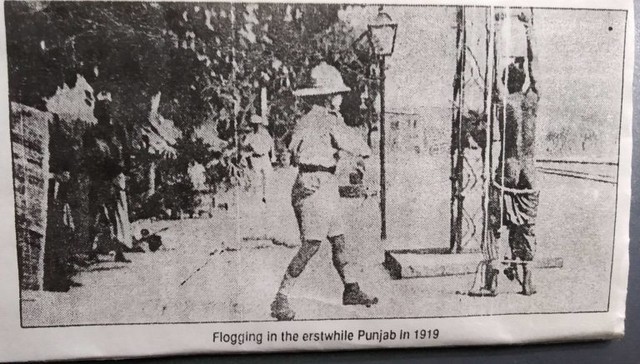
War on in Al-Aqsa: What Price Netanyahu’s Victory

By Dr Ramzy Baroud

On February 18, members of extremist Jewish groups raided the Al-Aqsa Mosque compound in Occupied Al-Quds (Jerusalem). They clashed with Palestinian worshippers, as the settlers attempted to shut down the gate of Al-Aqsa itself.

The clashes involved the Israeli army and police as well, who opened fire and brutally assaulted Palestinians, leading to scores of injuries.

On February 19, the Israeli army carried out the unusual step of shutting down Al-Rahma Gate, which leads to a section of the Al-Aqsa compound that has, itself, been shut down by the Israeli army since 2003.

The provocative decision to seal the gate was clearly made in advance, and the lock and key have the fingerprints of Israeli Prime Minister, Benjamin Netanyahu.

It is quite typical for Israeli politicians to carry out confrontational measures against Palestinians shortly before general elections are due. The nature of these measures is determined by the kind of political constituency that Israeli leaders aim to appease.

However, a war on Gaza, at least for now, is too risky an option for Netanyahu as it would take place too close to the April 9 elections date. Moreover, a botched Israeli attack on the Strip on November 11 caused Netanyahu a major embarrassment, forcing him to shelve the Gaza option for now.

That said, if the Israeli Prime Minister’s political standing grows too desperate in the coming weeks, a Gaza war may, once again, be placed on the table.

Indeed, the political union between Benny Gantz and Yair Lapid, which was declared on February 21, has certainly upped the ante for Netanyahu who has assumed that his election victory is a foretold conclusion.

Gantz and Lapid merged their two parties into one election list called Kahol Lavan (“Blue and White”), the single most serious electoral challenge for Netanyahu in years.

For the time being, Netanyahu has decided to appeal to the most messianic religious segments of Israeli society in order to keep his challengers at bay. This should come as no surprise as the religious, ultra-national far right has been backbone of the Israeli leader’s coalitions for a decade.

In fact, weeks before the Gantz and Lapid union, Netanyahu had taken several measures to show signs of goodwill towards his religious constituency.

One such overture was made on January 28, when Netanyahu ordered the UN unarmed international observers to leave the Occupied Palestinian city of Al-Khalil, where a few hundred armed Jewish settlers have been a constant source of violence. The Jewish settlers of Qiryat Arba’a live under the protection of a massive Israeli army contingent. Both groups have worked together to terrorize the Palestinian inhabitants of the city for many years.

A joint statement issued by several humanitarian organizations, including Oxfam, Norwegian Refugee Council (NRC) and Save the Children warned of the terrible fate awaiting the Palestinian community as a result of Netanyahu’s decision in Al-Khalil.

“Hundreds of civilians, including children, will see their safety put at risk by the withdrawal of international observers deployed in the city of Hebron,” the statement read.

True to form, attacks by Jewish settlers followed, as media and rights group reports point to a surge of violence against Palestinian civilians in the city.

By unleashing the wrath of Jewish settlers in Al-Khalil, Netanyahu wanted to communicate to his supporters that he remains committed to their settlement project, an unworthy cause that violates international law and comes at the price of protracted human suffering.

Similarly, the Israeli decision to shut down Al-Rahma Gate on February 19 was a pre-calculated move, aimed at uniting the entirety of the Israeli right, including the most extremist of all religious and settler groups behind Netanyahu’s leadership in the coming elections.

In fact, a trend began a few weeks earlier. On January 9, the Palestinian Ministry of Endowment documented a sharp increase of Israeli violations, involving the Israeli army and Jewish settlers at holy Palestinian sites throughout the month of December. According to the Organization, over 100 such violations were reported, including 30 different incursions into Al-Aqsa itself.

A raid on Al-Aqsa on January 7 involved more than the usual suspects, but was led by Israeli Agriculture Minister and a strong ally of Netanyahu, Uri Ariel.

This type of politically-motivated and highly militarized ‘visits’ to Al-Aqsa are reminiscent of the infamous ‘visit’ by late Israeli right-wing leader, Ariel Sharon in September 2000. At the time, Sharon wanted to increase his chances of becoming Israel’s next prime minister, and to ensure that his arch-rival (then, interestingly enough, the very Benjamin Netanyahu) did not win the Likud Party nomination. The gambit worked. Sharon sparked the Second Palestinian Uprising (2000-05), leading to the deaths of thousands and, of course, securing his seat at the helm of Israeli politics for years.

Netanyahu, ever studious and resourceful, has, indeed, mastered the art of political manipulation as his mentor and, once again, Al-Aqsa is the platform for this sinister Israeli politicking.

Netanyahu’s decision to strike an alliance with Otzma Yehudit (Jewish Power) – the rebranded party of the extremist late Meir Kahane – further demonstrates how the current surge of violence around the holy Palestinian sites is a pre-calculated political move by Netanyahu and his government.

The fact that Netanyahu would bring into his future coalition groups that are the ideological mutation of the Jewish Defense League – which is classified as ‘terrorist organization’’ by the US Federal Bureau of Investigation (FBI) – speaks volumes about the changing relationship between the US and Israel. Thanks to Washington’s blind support of Israel, Netanyahu feels politically triumphant and invincible, even above US’ own laws.

However, to achieve his pathetic dream of being Israel’s longest serving Prime Minister, Netanyahu should be wary of the bloody consequences that his reckless action is sure to yield. Indeed, Netanyahu may be provoking the kind of violence that is much bigger than his own ability to contain.

Al-Aqsa Mosque has served not only as a religious symbol for Palestinians, but a national symbol as well, representing their coveted freedom and serving as a source of hope and unity over the course of generations.

While the blood of Palestinians is irrelevant in Netanyahu’s quest for political dominance, the international community should take immediate measures to prevent what could become an Israeli-induced bloodbath in the coming weeks.

– Ramzy Baroud is a journalist, author and editor of Palestine Chronicle.

27 February 2019

Source: countercurrents.org