Just International

No food, no medicine and little hope: The many challenges Rohingyas face

By osburnoracle.com

Significant progress has been made in protecting hundreds of thousands Rohingya refugees in Bangladesh since they fled violence in Myanmar, but lives “will once again be at risk” if funding is not urgently secured, United Nations officials have said on the eve of the first anniversary of a military crackdown that forced them to flee their country.

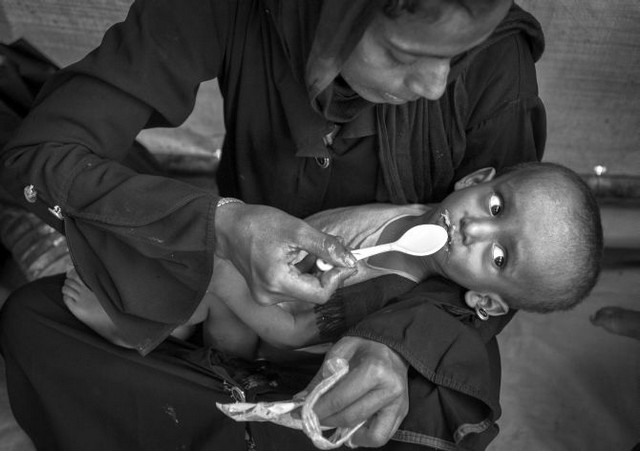
IMAGE: Rohingya Muslim refugee Hamida Khatun feeds her malnourished one- year-old son Ibrahim high calorie peanut paste at a field clinic by the NGO Action Against Hunger at the Kutupalong refugee camp in Cox‘s Bazar, Bangladesh. Kutupalong, shelters more than 600,000 refugees, making it the largest and most densely populated refugee settlement in the world, according to the Office of the UN High Commissioner for Refugees. Photograph: Kevin Frayer/Getty Images

Nearly 700,000 Rohingya, most of them Muslims, have been displaced from Rakhine since the military began a crackdown on militants last August. Most have crossed the border into Bangladesh, joining the 200,000 refugees already there.

Deputy Director-General of Emergency Preparedness and Response for the UN World Health Organisation Peter Salama told journalists in Geneva that deadly disease outbreaks had been held at bay in Bangladesh’s Cox’s Bazar despite “all the conditions being in place for a massive epidemic”.

Outbreaks of measles, diphtheria, polio, cholera and rubella have been contained, he said, noting that “thousands of lives” had been saved so far, thanks to the joint efforts of the Bangladesh government, WHO and partners.

“We need to sustain the vigilance for early warnings of infectious diseases,” Salama said. “That is still a major risk due to the environmental situation, the poor sanitation, the massive overcrowding, the way these people are being housed and we need to maintain our ability to scale-up outbreak response as required.”

IMAGE: Rohingya Muslim refugees crowd for food aid near Balukhali Refugee Camp. More than 600,000 Rohingya refugees have flooded into Bangladesh to flee an offensive by Myanmar’s military that the United Nations has called “a textbook example of ethnic cleansing”. Photograph: Kevin Frayer/Getty Images

His call to scale up help was echoed in Geneva by IOM, the UN migration agency, spokesperson Joel Millman.

“This was the fastest growing refugee crisis in the world and the challenges have been immense,” he said, highlighting comments by the agency’s Chief of Mission in Bangladesh Giorgi Gigauri. “Countless lives have been saved thanks to the generosity of the Government of Bangladesh, the local community and donor s and the hard work of all those involved in the humanitarian response. But we now face the very real threat that if more funding is not urgently secured, lives will once again be at risk.”

One year on from the exodus sparked by a military operation likened to ethnic cleansing by UN human rights chief Zeid Ra’ad al Hussein, more than 720,000 Rohingya people have arrived in Cox’s Bazar in southern Bangladesh.

They have joined an estimated 200,000 Rohingya refugees who were previously displaced.

IMAGE: A Rohingya refugee is examined by a doctor at a Samaritan‘s Purse diphtheria clinic in Balukhali camp. Life at camp, is tough with them queuing for hours to get rations due to little access to clean water, health care or food and the refugee camps turn into mud-baths whenever it rains. International aid groups and health workers have estimated at least 6,700 Rohingya had met with violent deaths and warn of potential outbreaks of cholera and other preventable diseases due to squalid conditions. Photograph: Allison Joyce/Getty Images

One of the camps, Kutupalong, shelters more than 600,000 refugees, making it the largest and most densely populated refugee settlement in the world, according to the Office of the UN High Commissioner for Refugees.

In addition to the challenge of providing people’s basic needs — shelter, water and sanitation and healthcare — the agency has carried out huge engineering work to reduce the risk of landslides and flooding. This also involved mobilising and training hundreds of refugee volunteers to serve as first responders in the event of a natural disaster, although the camps have largely withstood the adverse weather.

Another key area of concern is the health of some 60,000 pregnant Rohingya women in the camps. Many of them suffered gender-based violence “either prior or during the course of their flight” from Myanmar, WHO’s Salama said, adding that only one fifth of them will give birth in a suitable healthcare facility.

IMAGE: Rohingya refugees are seen in Balukhali camp. To date, the $950 million (Rs 6,628 crore) Rohingya 2018 appeal is only just over 30 per cent funded. Photograph: Allison Joyce/Getty Images

Partner agency UNHCR also underlined the calls for the international community to step up support for the Rohingya, who are stateless and unable to return to Myanmar. This is despite the UN’s signing of an official Memorandum of Understanding with the Government of Myanmar in June, to help establish conditions conducive for the safe, dignified and sustainable repatriation of the Rohingya.

According to OCHA, the UN Office for the Coordination of Humanitarian Affairs, the mainly Muslim Rohingya communities that have stayed in Rakhine state require urgent — and in some cases lifesaving — help.

Some 660,000 people are in need across Rakhine state including more than 176,000 in Northern Rakhine, OCHA spokesperson Jens Laerke said.

“We stand ready to go there as soon as access allows,” he added.

IMAGE: Rohingya Muslim refugees walk after crossing the border from Myanmar into Bangladesh close to the Naf River. The refugee population continues to swell further, with thousands more Rohingya Muslims making the perilous journey on foot toward the border, or paying smugglers to take them across by water in wooden boats. Photograph: Kevin Frayer/Getty Images

“Most humanitarian organisations that have been working in Northern Rakhine state for years have still not been able to resume programmes and services for these population which are some of the most vulnerable in the world.”

To date, the $950 million (Rs 6,628 crore) Rohingya 2018 appeal is only just over 30 per cent funded.

1 January 2019

Source: osburnoracle.com

In Praise of the Syria Withdrawal

By Richard Falk

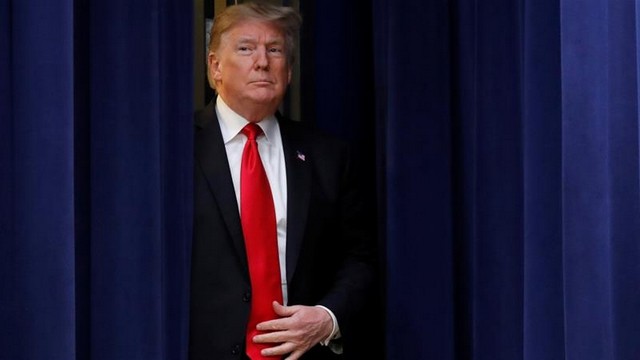
29 Dec 2018 – This interview was conducted by Daniel Falcone on December 20, 2018. Trump’s withdrawal of American troops from Syria that defied the bipartisan consensus that has shaped U.S. foreign policy since 1945 poses the biggest challenge to the Trump presidency, especially as it shook Israel’s confidence and coincides with woes of Wall Street. In coming weeks it should become clear whether the American version of the deep state remains asleep or perceives this ‘watershed moment’ (Friedman) as the opportunity to restore confidence in the pre-Trump version of world order.

Q1: As an expert on American foreign policy what is the true meaning and significance of trump pulling ground troops out of Syria. Is it this simple and straightforward?

Of course, with Trump we never know either the real motivation for an apparently abrupt decision of this sort or whether in the next day or so it might be reversed in an equally abrupt manner. It all depends on how the winds of his imperial ego are blowing. And this is not a reassuring awareness in the nuclear age. Gareth Porter, a reliable commentator on what goes on in Washington, has insisted that the decision was not abrupt, but long in the works, reflecting Trump’s correct insistence that the American military presence in the Middle East was not worth the costs or burdens, having little capacity to control political outcomes.

With Trump we should also assume that egocentric motivations of the moment are part of the story. We do know that such an inflammatory decision shifts attention away, at least briefly, from the Mueller developments that seem more threatening to Trump’s comfort zone day by day. Beyond these explanations, Trump can accurately claim that he is fulfilling one of his most emphatic pledges of his 2016 presidential campaign, namely, offering scathing criticism of costly interventions in the Middle East as the basis for his commitment to bring American troops home very soon. Such a pledge made a great deal of sense as the American experience with military interventions was a record of unacknowledged failure with a learning curve that hovered around zero.

The unprovoked attack on Iraq in 2003 followed by a prolonged occupation, was a flagrant violation of the prohibition on aggressive war, the core principle of the UN Charter and modern international law. It was also the cause of massive suffering and devastation, resulting in internal strife and constant chaos. The mindless occupation policy imposed by the United States deliberately inflamed sectarian tensions in Iraq, which in turn spread Sunni/Shi’ia turmoil throughout the region.

Geopolitically, as well, the Iraq War illustrated the dysfunctional nature of such uses of international force even when the superior military capabilities of the United States are brought to bear. A central strategic goal of the intervention was to weaken the regional footprint of Iran by placing a Western-oriented government on the Iranian border of a country ready and willing to have American military bases on its territory. The main effect of the American intervention and extended presence was the reverse of what was intended. Iranian regional influence in part because the American occupation approach sought to disempower the Sunni dominance that had been associated with Saddam Hussein’s regime and put in its place an Iran-oriented Shi’ite leadership. The Iraqi negative reactions to the Trump Christmas visit to American troops suggested that the U.S. presence in Iraq is far from secure, and continues to be an affront to Iraqi nationalism.

A further result of the purge of Sunni elements in the upper echelons of the Iraqi armed forces soon after the occupation began in 2003 was the formation of ISIS as a terrorist organization committed to the expulsion of the occupying forces from the Middle East and spreading governance under the auspices of radical Islamic leadership. In retrospect the real irony is that Saddam Hussein’s regime, although repressive and repulsive, was far preferable for the Iraqi people and even for American strategic goals in the Middle East than was the unlawful intervention and bungled occupation if unintended consequences are taken into account. Our war planners never were willing to come to terms with this systemic series of miscalculations, and more or less arrayed themselves beneath the notorious banner, ‘mission accomplished’ unfurled to honor the presence of George W. Bush on an American aircraft carrier. Although this banner was mocked due to the resistance encountered in the course of the occupation, it had a second life through the unwillingness of the national security establishment in Washington to heed the lessons of the Iraq failure. Rather than learning from failure, the experience was pushed aside and effectively forgotten.

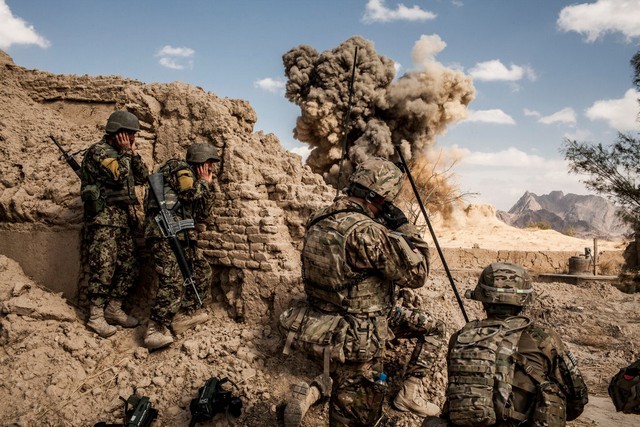
Trump claims that his policies for the past two years have defeated ISIS, making it prudent and appropriate from a national security perspective to withdraw American ground forces at this time. The claim as to ISIS is disputed by the entire defense establishment in the U.S., and seems to have contributed to the Secretary of Defense, General James Mattis, decision to submit a thinly veiled criticism of Trump’s withdrawal approach on strategic grounds, stressing especially the importance of acting in concert with allies. The decision has also been criticized as abandoning Syrian Kurds to the tender mercies of Assad’s regime and Erdogan’s Turkey. For the governments in Damascus and Ankara, the Kurds, while allied with the U.S. in its anti-ISIS campaign, pose threats to the territorial integrity and political stability of both Syria and Turkey. Such criticisms are suspect, assuming that on balance the American military presence in Syria, although small, played a positive stabilizing role. If my assessment is correct there is never an appropriate moment for withdrawing a combat presence from an overseas country previously the scene of an American intervention. We need to remember that this military involvement in Syria was already almost twice as long as World War II, with no convenient end in sight.

Q2: How do you assess the mainstream agenda setting media’s response to trump’s latest foreign policy decision regarding Syria?

My impression is that the media response has so far been dominated by the sort of bipartisan approach that earlier underpinned American foreign policy during the Cold War and produced the ‘Washington Consensus’ that provided ideological coherence for the neoliberal version of economic globalization. During the Cold War this militarization of foreign policy led to a series of interventions on the geopolitical periphery, culminating in the Vietnam War. With respect to the world economy, a capital-driven approach to economic policy that was largely indifferent to the human consequences of market forces resulted in gross inequities with respect to the distribution of the benefits of economic growth or its damaging ecological side effects. The experience of widening disparities of wealth and income became a structural feature of the world economy, and seems closely connected to the rage expressed by those multitudes. A majority of persons quite reasonably feel victimized by the policies accepted by the entire policy establishment, whether they identify as Democrats, Republicans, or independents. This rage has been translated into various forms of political frustration, including giving rise to an electoral tidal wave in the leading constitutional democracies around the entire world that brought to power demagogic figures whose defining message was to pose as enemies of the established order. In Trump’s case, he sloganized this hostility by a campaign promise ‘to drain the swamp.’ This political spectacle is enacted in various ways reflecting the distinctiveness of the autocrat and the particularities of each set of national circumstances.

In the American case, Trump’s approach has been to weaken constitutional structures of government, while strengthening the grip of Wall Street on the American economy via massive tax cuts for the wealthy and the dramatic weakening of regulatory authority with respect to labor practices and environmental protection.

The Syrian withdrawal decision is perceived as one more unacceptable consensus-disruptive move by Trump that includes a repudiation of one the pillars of the Cold War Era, namely, tight alliances epitomized by NATO. Such a unilateral move by Trump without any reliance on prior consultations with leading allies is seen as a further blow to American leadership of the Western democracies. The fact that the Trump decision was publicly endorsed by Putin at a time when Western elites are urging a more confrontational approach to Russia is taken by the media as a further sign that the U.S. is in a go it alone foreign policy.

The Mattis resignation letter very effectively encouraged the media to react in this manner. It challenges Trump in all but name, complaining both about alliance disruption and the failure to heed the views of those who opposed the Syrian pullout. He is obviously upset that his own advice, and that of his high-ranking colleagues, was ignored. His letter reminds readers of his extensive professional experience and knowledge that is relevant to understanding both the Syrian reality and the implausibility of claiming that ISIS is defeated. In essence, he deplores the military withdrawal from Syria, insisting that it will be of help to America’s principal rivals in the world, Russia and China, “whose strategic interests are increasingly in tension with ours.” The following sentence in the Mattis letter could have been written in the midst of the Cold War: “It is clear that China and Russia..want to shape a world consistent with their authoritarian model—gaining veto authority over other nations’ economic, diplomatic, and security decisions—to promote their own interests at the expense of their neighbors, America and our allies.” Mattis perceives the world as an arena for continuous geopolitical rivalry where a militarily proactive global posture is the only acceptable approach for the United States and the West.

It is not only that most influential media outlets side with the critics of this Trump initiative, but their failure to convey the rationale justifying his decision beyond saying that he is fulfilling a campaign pledge or shifting the national conversation away from the Special Counsel. If Trump follows up the withdrawal with a termination of air strikes in Syria, and makes a significant use of the funds saved by foregoing military operations to hasten a Syrian recovery from seven years of devastation, massive human displacement, and incredible civilian suffering, the policy should be acknowledged as a constructive and long overdue move then in a demilitarizing direction that begins to undo the immeasurable harm done by the Iraq War that commenced in March 2003, and was an assault on the international legal order, including the UN, from the outset.

I would predict that the national security establishment will condemn even this evidence of a serious shift toward disengagement from Middle East turmoil as an unwelcome retreat from American leadership, and a form of encouragement to its adversaries and rivals to take more risks to expand their zones of influence. If this is so, the mainstream media is sure to follow along, nightly parading a series of retired generals who bemoan this renunciation of the U.S. global security role of the past half century of a ‘forever war.’ What may be worse is the failure to treat the issue as even debatable. There is no media effort to balance criticism of Trump’s decision by presenting progressive voices drawn from civilian society.

It is common for media pundits to question policy choices so long as they do not touch the fundamental guidelines of structure and geopolitical priorities that have shaped the American global role ever since 1945. These fundamentals include the Atlantic Alliance as embodied in NATO, market-oriented constitutionalism as embedded in the neoliberal credo, and the globe-girdling military presence as typified by more than 800 overseas military bases, a sizable naval operation patrolling in every ocean, and a capability to wage hyper war from any point in space. The media will not challenge those that defend this security structure, and even Fox News and the Murdoch media outlets can be expected to be neutral, departing from their habitual acceptance of whatever Trump does.

It is not surprising that CNN news anchors such as Don Lemon or Chris Cuomo almost salivated in response to the Mattis letter, reading it aloud as if it was an instant classic in political rhetoric to be compared with the Gettysburg Address. Their anti-Trump animus was so intense that they did not even express any skepticism about Mattis’ geopolitical hubris in the letter that seemed both dated and overly belligerent. His words: “the US remains the indispensable nation in the free world.” Really. Such an opinion is not widely shared in most parts of the world. Many people and foreign leaders now worry far more about what the United States does than they do about China and Russia.

In my view the anti-Trump media frenzy does reflect well-grounded worries about Trump’s style and substance, yet it is failing to expose the citizenry to pluralist views, especially in foreign policy by shutting out almost completely progressive voices. The media may not be guilty of spreading fake news, but it is guilty of partisanship, ideological conformity, and hostility to critics on the left. In fact, the media blurs the issue by misleadingly treating the center and the liberal establishment as ‘the left.’

Q3: What are the important implications for the Syria pull out that coincides with harsh treatment of Iran? Does this negate any positive steps with Middle East diplomacy?

At this point it is difficult to tell whether the Syrian withdrawal will intensify Trump’s anti-Iran policy or lead to its weakening, and even its gradual abandonment. It seems as though neither Israel nor Saudi Arabia are comfortable with Trump’s latest move, partly because they were evidently not consulted, or even briefed, and partly because it could be interpreted as the beginning of a wider American disengagement from the Middle East and a long overdue phasing out of George W. Bush’s ‘war on terror’ launched after 9/11, continuing year after year without an endgame, although Obama at one point openly regretted this, and promised to devise one, but it never happened.

I am hard put to find any positive initiatives in recent Middle East diplomacy emanating from Washington. Trump/Kushner have carried the partisan pro-Israeli policies of earlier presidencies to absurdly one-sided extremes by way of announcing the embassy move to Jerusalem in December 2017, Washington’s silence about the weekly atrocities at the Gaza fence, cruel cuts the UNRWA funding, closing the PLO office in Washington, questioning Palestinian refugee status, a blind eye toward unlawful settlement expansion and the seeming acceptance of Israel’s recent moves in its Knesset toward a one-state apartheid solution. To refer to Israel as ‘the only democracy in the Middle East’ has become so obviously false that even Zionist militants have quietly abandoned the claim.

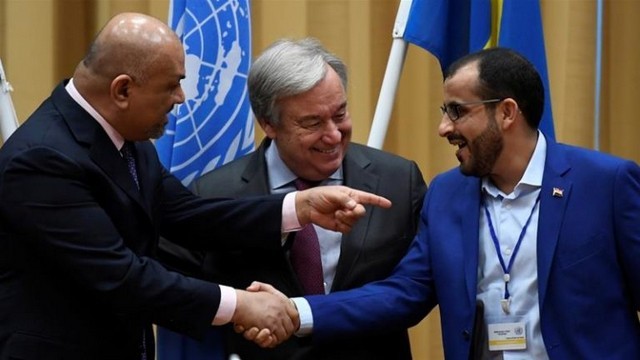
Perhaps, American pressures are moving Saudi Arabia and its allies to end their intervention in Yemen, previously materially and diplomatically backed by the United States, and pushing the civilian population to the very brink of starvation. The situation in Yemen is already being described as the worst famine in the past hundred years, putting at severe risk over 17 million Yemenis. If the Yemen War is brought finally to an end, it can be seen as an unintended consequence of the grotesque Khashoggi murder, creating strong incentives in Washington to rethink its embrace of Mohammed Bin Salmon as ally and partner. Or put more crudely, the arms sales bonanza with Riyadh could be in trouble unless the Yemen War is brought to an end before the humanitarian ordeal becomes catastrophic.

Q4: Trump’s doctrine has been called “me first.” Does this title apply in the case?

I have no reason to doubt that Trump’s actions with regard to Syria are basically reflections of his narcissistic political style as expressed at a particular moment through concrete actions. Yet, as earlier suggested, because Trump withdrew from Syria at this time on the basis of selfish motives, does mean that we should not evaluate the policy on its merits rather than through the eyes of the dominant political class in Washington that has brought grief to tens of millions for decades. These ‘experts’ have over time built up an intellectual and career dependence on global militarism and permanent warfare. It means, among other things, a stubborn refusal to take note of a string of failures where battlefield dominance has not translated into control of political outcomes, but instead ended in stinging political defeats. At bottom, there persists a stunning refusal to heed this central lesson of the Vietnam War, a refusal repeated in Afghanistan, Iraq, and with respect to most of the colonial wars. In each instance the side that won on the battlefield lost the war in the end, yet only after inflicting terrible damage and itself enduring heavy human, economic, and reputational costs. Nothing helpful was learned, and energies were devoted to how to reinvent counterinsurgency and counterterrorist doctrine so as to win such struggles for the political control of distant countries, and not be hampered by anti-war activism and elite skepticism.

If Trump stumbles onto a security path that ends such interventions in the global south we should celebrate the result, even if we withhold praise of Trump as a virtuous political actor. Beyond this, we should not be too quick to condemn his openness to a cooperative relationship with Russia if it helps the world avoid a second, more dangerous cold war that it can ill afford at this time of climate change. Trump might not know exactly what he is doing but bypassing Europe for a geopolitical bargain with Moscow might make realist sense given present historical circumstances, and it time self-styled realists themselves woke up to this benign possibility.

Of course, my wish for an end to militarism, nuclearism, and foreign interventions may be coloring my views, blindfolding me with respect to the dangers and risks that some associate with Trump’s march to the apocalypse. I acknowledge this, but I am also convinced that the conventional candidates of either political party would never in a thousand years pull the rug out from under this globalized militarism that could never tolerate a peaceful future for humanity. Humanity remains trapped in a cage sometimes called ‘the war system,’ which has the semblance of a permanent lockup.

Q5: Will liberal hawks react to same way to Syria as they typically do with Russia? This seems to be a failing strategy to reclaim the presidency in 2020. Do you agree?

I fear the centrist pragmatism of liberals, and not only the regressive approaches taken by hawks. These liberals have supported war after war as well as forged a strong new consensus that the time has come to challenge Russia and China once again. The logic is perverse: If Putin is pleased it is proof that Trump is wrong. Such reasoning seems to be dominant among the policy planners in Washington and the opinion and editorial commentary of CNN and the NY Times. Such issues are not even treated as fit subjects for debate and discussion. Instead, there are two or more guests with military or CIA backgrounds that take turns lambasting Trump’s Syria moves, especially as it has been coupled with a White House decision to halve the American troop contingent in Afghanistan by withdrawing 7,000 soldiers, hardly a rash decision considering that the American military presence in Afghanistan is about to enter its 17thyear, and stability for the country is further away than it was in 2002 when the occupation began.

As far as the 2020 election is concerned, it will be a great lost opportunity if the Democrats nominate a centrist liberal, who might be far more humane than Trump at home, but would likely recommit to the war of terror and a revival of American readiness to avoid political setbacks in various parts of the world, never having learned this supreme lesson that military intervention does not and should not work in the post-colonial world.

Of course, these days we cannot be sure of anything, including being confident that such a return to the old ways of doing foreign policy by a Democratic candidate would be an electoral disaster. Trump remains unpopular outside his base. This means that if the stock market stays down, trade wars reduce living standards in the country, the undocumented are cruelly deported or asylum seeking women and children are shot at the border, a smooth talking Democrat with the politically correct national security views would win, maybe even scoring a landslide.

But would this outcome be a victory for the peoples of the world? If Trump were to stay the Syrian withdrawal course, not a likely prospect, it might not be so easy to vote him out of office with a clear conscience. This suggestion is meant as a provocation to liberals and establishmentarians, but it does call attention to the likely frightful foreclosure of peaceful options for American voters given the likely choices in 2020. The liberal line in 2016 was that compared to Sanders, Hillary Clinton was electable and would get things done, and look where that bit of practical wisdom landed us!

Richard Falk is a member of the TRANSCEND Network, an international relations scholar, professor emeritus of international law at Princeton University, author, co-author or editor of 40 books, and a speaker and activist on world affairs.

31 December 2018

Source: transcend.org

Reflections on 2018, Forecasting 2019

By Robert J. Burrowes

In many ways it is painful to reflect on the year 2018; a year of vital opportunities lost when so much is at stake.

Whether politically, militarily, socially, economically, financially or ecologically, humanity took some giant strides backwards while passing up endless opportunities to make a positive difference in our world.

Let me, very briefly, identify some of the more crucial backward steps, starting with the recognition by the Bulletin of the Atomic Scientists in January that the year had already started badly when they moved the Doomsday Clock to two minutes to midnight, the closest it has ever been to ‘doomsday’ (and equal to 1953 when the Soviet Union first exploded a thermonuclear weapon matching the US capacity). See ‘It is now two minutes to midnight’.

This change reflected the perilous state of our world, particularly given the renewed threat of nuclear war and the ongoing climate catastrophe. It didn’t even mention the massive and unrelenting assault on the biosphere (apart from the climate) nor, of course, the ongoing monumental atrocities against fellow human beings.

Some Lowlights of 2018

1. The global elite, using key elite fora such as the Group of 30, the Trilateral Commission, the Bilderberg Group and the World Economic Forum, continued to plan, generate and exacerbate the many ongoing wars, deepening exploitation within the global economy, climate and environmental destruction, and the refugee crisis, among many other violent impacts, in pursuit of greater elite power, profit and privilege.

2. International organizations (such as the United Nations, the World Bank and International Monetary Fund) and national governments used military forces, legal systems, police forces and prison systems around the world to serve the global elite by defending its interests against the bulk of the human population, including those individuals and organizations audacious enough to challenge elite power, profit and privilege.

3. $US1.7 trillion was officially spent worldwide on military weapons to kill fellow human beings and other lifeforms, and to destroy the biosphere. See ‘Global military spending remains high at $1.7 trillion’.

However, so out-of-control is this spending that the United States has now spent $US21trillion on its military in the past 20 years for which it cannot even account! That’s right, $US1trillion each year, including 2018, above the official US national budget for killing is ‘lost’. See Army General Fund Adjustments Not Adequately Documented or Supported, ‘Has Our Government Spent $21 Trillion Of Our Money Without Telling Us?’ and ‘The Pentagon Can’t Account for $21 Trillion (That’s Not a Typo)’.

4. War and other military violence continued to rage across the planet wreaking devastation on many countries and regions, particularly in the Middle East and Africa. If you missed this, read what is happening to Yemen, described as ‘ the world’s worst [humanitarian] crisis in decades’ with ‘three quarters of the entire Yemeni population – 22 million women, children and men – dependent on some form of humanitarian assistance to survive.’ See ‘Yemen: UN chief hails “signs of hope” in world’s worst man-made humanitarian disaster’.

5. Not content with the nature and extent of the military violence they are inflicting already, during 2018 elites continued to plan how to do it more effectively in future with research and development of artificial intelligence just one manifestation of this: ‘an “arms race in AI” is now underway, with the U.S., China, Russia, and other nations (including Britain, Israel, and South Korea) seeking to gain a critical advantage in the weaponization of artificial intelligence and robotics’ so that ‘artificial intelligence will be applied to every aspect of warfare, from logistics and surveillance to target identification and battle management’. See ‘“Alexa, Launch Our Nukes!” Artificial Intelligence and the Future of War’.

6. The United States government unilaterally withdrew from the Intermediate Nuclear Forces (INF) Treaty (which limits the deployment of intermediate range nuclear weapons).

7. Another significant proportion of global private financial wealth – conservatively estimated by the Tax Justice Network in 2010 to already total between $US21 and $US32 trillion – has been invested virtually tax-free through the world’s still-expanding black hole of more than 80 ‘offshore’ tax havens (such as the City of London Corporation, Jersey, Guernsey, the Isle of Man, Bermuda, the Cayman Islands, Hong Kong, Nauru, St. Kitts, Antigua, Tortola, Switzerland, the Channel Islands, Monaco, Cyprus, Gibraltar and Liechtenstein). This is just financial wealth. ‘A big share of the real estate, yachts, racehorses, gold bricks – and many other things that count as non-financial wealth – are also owned via offshore structures where it is impossible to identify the owners.’ See Tax Justice Network.

Controlled by the global elite, Wall Street and other major banks manage this monstrous diversion of wealth under Government protection. ‘Their business is fraud and grand theft.’ Tax haven locations offer more than tax avoidance. ‘Almost anything goes on.’ It includes ‘bribery, illegal gambling, money laundering, human and sex trafficking, arms dealing, toxic waste dumping, conflict diamonds and endangered species trafficking, bootlegged software, and endless other lawless practices.’ See ‘Trillions Stashed in Offshore Tax Havens’.

8. The world’s major corporations continued to inflict enormous ongoing violence (in a myriad of ways) in their pursuit of endless profit at the expense of living beings (human and otherwise) and Earth’s biosphere by producing and marketing a wide range of life-destroying products ranging from nuclear weapons and nuclear power to junk food, pharmaceutical drugs, synthetic poisons and genetically mutilated organisms (GMOs). These corporations include those involved in the following industries: weapons manufacturers, major banks and their ‘industry groups’ like the International Monetary Conference, asset management firms, investment companies, financial services companies, fossil fuel (coal, oil and gas) corporations, technology corporations, media corporations, major marketing and public relations corporations, agrochemical (pesticides, seeds, fertilizers) giants, pharmaceutical corporations, biotechnology (genetic mutilation) corporations, mining corporations, nuclear power corporations, food multinationals and water corporations. You can see a list of the major corporations in this article: ‘The Global Elite is Insane Revisited’.

9. More than a billion people continued to live under occupation, dictatorship or threat of genocidal assault. See, for example, ‘500 Years is Long Enough! Human Depravity in the Congo’.

10. 36,500,000 human beings (mainly in Africa, Asia and Central/South America) were starved to death.

11. 18,250,000 children were killed by adults in wars, by starving them to death, and in a large variety of other ways.

12. 8,000,000 children were trafficked into sexual slavery; executed in sacrificial killings after being kidnapped; bred to be sold as a ‘cash crop’ for sexual violation, to produce child pornography (‘kiddie porn’) and ‘snuff’ movies (in which children are killed during the filming); ritually tortured and murdered as well as raped by dogs trained for the purpose. See ‘Humanity’s “Dirty Little Secret”: Starving, Enslaving, Raping, Torturing and Killing our Children’.

13. Hundreds of thousands of individuals were kidnapped or tricked into slavery, which now denies 46,000,000 human beings the right to live the life of their choice, condemning many individuals – especially women and children – to lives of sexual slavery, forced labor or as child soldiers. See ‘The Global Slavery Index’ and ‘46 million people living as slaves, latest global index reveals’.

14. Well over 100,000 people (particularly Falun Gong practitioners) in China, where an extensive state-controlled program is conducted, were subjected to forced organ removal for the trade in human organs. See Bloody Harvest and The Slaughter.

15. 15,750,000 people were displaced by war, persecution or famine. There are now 68,500,000 people, more that half of whom are children and 10,000,000 of whom are stateless, who have been forcibly displaced worldwide and remain precariously unsettled, usually in adverse circumstances. One person in the world is forcibly displaced every two seconds. See ‘Figures at a Glance’.

16. Millions of people were made homeless in their own country as a result of war, persecution, ‘natural’ disasters, internal conflict, poverty or as a result of elite-driven national economic policy. The last time a global survey was attempted – by the United Nations back in 2005 – an estimated 100 million people were homeless worldwide. As many as 1.6 billion people lack adequate housing (living in slums, for example). See ‘Global Homelessness Statistics’.

17. 73,000 species of life (plants, birds, animals, fish, amphibians, insects and reptiles) on Earth were driven to extinction with the worldwide loss of insects, including vital pollinators such as bees, now between 75% and 90%, depending on the species. See ‘Insect Decimation Upstages Global Warming’. Have you seen a butterfly recently?

18. Separately from global species extinctions, Earth continued to experience ‘a huge episode of population declines and extirpations, which will have negative cascading consequences on ecosystem functioning and services vital to sustaining civilization. We describe this as a “biological annihilation” to highlight the current magnitude of Earth’s ongoing sixth major extinction event.’ Moreover, local population extinctions ‘are orders of magnitude more frequent than species extinctions. Population extinctions, however, are a prelude to species extinctions, so Earth’s sixth mass extinction episode has proceeded further than most assume.’ See ‘Biological annihilation via the ongoing sixth mass extinction signaled by vertebrate population losses and declines’ and ‘Biological Annihilation on Earth Accelerating’.

19. Wildlife trafficking, worth up to $20 billion in 2018, is pushing many endangered species to the brink of extinction. Illegal wildlife products include jewelry, traditional medicine, clothing, furniture, and souvenirs, as well as some exotic pets, most of which are sold to unaware/unconcerned consumers in the West. See, for example, Stop Wildlife Trafficking.

20. 16,000,000 acres of pristine rainforest were destroyed (with more than 40,000 tropical tree species now threatened with extinction). See ‘Measuring the Daily Destruction of the World’s Rainforests’, ‘Estimating the global conservation status of more than 15,000 Amazonian tree species’ and ‘Half of Amazon Tree Species Face Extinction’.

21. Vast quantities of soil were washed away as we destroyed the rainforests, and enormous quantities of both inorganic constituents (such as heavy metals like cadmium, chromium, lead, mercury, nickel and zinc) and organic pollutants (particularly synthetic chemicals in the form of fertilizers, pesticides and herbicides) were dumped into the soil as well, thus reducing its nutrients and killing the microbes within it. We also contaminated enormous quantities of soil with radioactive waste. See Soil-net, ‘Glyphosate effects on soil rhizosphere-associated bacterial communities’ and ‘Disposing of Nuclear Waste is a Challenge for Humanity’.

22. The TEPCO nuclear power plant in Fukushima, Japan discharged 109,000 tons of radioactive waste into the Pacific Ocean killing an incalculable number of fish and other marine organisms and indefinitely contaminating expanding areas of that ocean. See ‘Fukushima: A Nuclear War without a War: The Unspoken Crisis of Worldwide Nuclear Radiation’.

23. Human use of fossil fuels to power aircraft, shipping and vehicles (among other purposes) released 10 billion metric tons (gigatons) of carbon dioxide into Earth’s atmosphere, a 2.7% increase over 2017. See ‘Global Carbon Budget 2018’ and ‘Carbon dioxide emissions will hit a record high globally in 2018’. As a measure of their concern elite-controlled governments and corporations around the world are currently planning or have under construction 1,380 new coal plants? That’s right. 1,380 new coal plants. In 59 countries. See ‘NGOs Release List of World’s Top Coal Plant Developers’ and ‘2018 Coal Plant Developers List’.

24. 90 billion land animals and 60 billion marine animals were killed for human consumption, more than 100 million animals were killed for laboratory purposes in the United States alone and there were other animal deaths in shelters, zoos and in blood sports. See ‘How Many Animals Are Killed Each Year?’

In addition, 40 million animals were killed for their fur. Approximately 30 million of these animals were raised on fur farms and killed, about 10 million wild animals were trapped and killed, and hundreds of thousands of seals were killed for their fur. See ‘How Many Animals are Killed Each Year?’

25. Farming of animals for human consumption released 7,100,000,000 tonnes of CO2-equivalent into Earth’s atmosphere. About 44% of livestock emissions were in the form of methane (which was 44% of anthropogenic CH4 emissions), 29% as Nitrous Oxide (which was 53% of anthropogenic N2O emissions) and 27% as Carbon Dioxide (which was 5% of anthropogenic CO2 emissions). See ‘GHG Emissions by Livestock’.

26. Human use of fossil fuels and farming of animals released 3.2 million metric tons of (CO2 equivalent) nitrous oxide (N2O) into Earth’s atmosphere. See ‘Nitrous oxide emissions’.

27. As a result of previous greenhouse gas (GHG) emissions and the consequent rise of about one degree celsius in the global temperature, causing the melting of Arctic permafrost and undersea methane ice clathrates, an incalculable quantity of methane was uncontrollably released into the atmosphere during 2018 (with the quantity being released getting ever closer to ‘exploding’). See ‘7,000 underground gas bubbles poised to “explode” in Arctic’ and ‘Release of Arctic Methane “May Be Apocalyptic,” Study Warns’.

28. Ice in the Antarctic is melting at a record-breaking rate, losing 219 billion tonnes of ice in 2018 at a rate that has accelerated threefold in the last five years. See ‘Antarctic ice melting faster than ever, studies show’.

29. An incalculable amount of agricultural poisons, fossil fuels and other wastes was discharged into the ocean, adversely impacting life at all ocean depths – see ‘Staggering level of toxic chemicals found in creatures at the bottom of the sea, scientists say’ – and generating ocean ‘dead zones’: regions that have too little oxygen to support marine organisms. See ‘Our Planet Is Exploding With Marine “Dead Zones”’.

30. At least 8 million metric tons of plastic, of which 236,000 tons were microplastics, was discharged into the ocean. See ‘Plastic waste inputs from land into the ocean’ and ‘Plastics in the Ocean’.

31. Earth’s fresh water and ground water was further depleted and contaminated. These contaminants included bacteria, viruses and household chemicals from faulty septic systems; hazardous wastes from abandoned and uncontrolled hazardous waste sites (of which there are over 20,000 in the USA alone); leaks from landfill items such as car battery acid, paint and household cleaners; the pesticides, herbicides and other poisons used on farms and home gardens; radioactive waste from nuclear tests; and the chemical contamination caused by hydraulic fracturing (fracking) in search of shale gas, for which about 750 chemicals and components, some extremely toxic and carcinogenic like lead and benzene, have been used. See ‘Groundwater contamination’, ‘Groundwater drunk by BILLIONS of people may be contaminated by radioactive material spread across the world by nuclear testing in the 1950s’ and ‘Fracking chemicals’.

32. The longstanding covert military use of geoengineering – spraying tens of millions of tons of highly toxic metals (including aluminium, barium and strontium) and toxic coal fly ash nanoparticulates (containing arsenic, chromium, thallium, chlorine, bromine, fluorine, iodine, mercury and radioactive elements) into the atmosphere from jet aircraft to weaponize the atmosphere and weather – in order to enhance elite control of human populations, continued unchecked. Geoengneering is systematically destroying Earth’s ozone layer – which blocks the deadly portion of solar radiation, UV-C and most UV-B, from reaching Earth’s surface – as well as adversely altering Earth’s weather patterns and polluting its air, water and soil at incredible cost to the health and well-being of living organisms and the biosphere. See ‘Geoengineering Watch’.

33. As one outcome of our dysfunctional parenting model and political systems, fascism continued to rise around the world. See ‘The Psychology of Fascism’.

34. Despite the belief that we have ‘the right to privacy’, privacy (in any sense of the word) was ongoingly eroded in 2018 and is now effectively non-existent, particularly thanks to Alphabet (owner of Google). Taken together, ‘Uber, Amazon, Facebook, eBay, Tinder, Apple, Lyft, Foursquare, Airbnb, Spotify, Instagram, Twitter, Angry Birds… have turned our computers and phones into bugs that are plugged in to a vast corporate-owned surveillance network. Where we go, what we do, what we talk about, who we talk to, and who we see – everything is recorded and, at some point, leveraged for value.’ Moreover, given Google’s integrated relationship with the US government, the US military, the CIA, and major US weapons manufacturers, there isn’t really anything you can do that isn’t known by those who want to know it. In essence, Google is ‘a powerful global corporation with its own political agenda and a mission to maximise profits for shareholders’ and it partly achieves this by expanding the surveillance programs of the national security state at the direction of the global elite. See ‘Google’s Earth: How the Tech Giant Is Helping the State Spy on Us’ and the documentary ‘The Modern Surveillance State’.

35. The right to free speech was ongoingly eroded in 2018. For just a couple of examples in the United States alone, see ‘Marc Lamont Hill On Getting Fired From CNN, His Remarks On Palestine + More’ and ‘A Texas Elementary School Speech Pathologist Refused to Sign a Pro-Israel Oath, Now Mandatory in Many States – so She Lost Her Job’.

36. Believing that we know better than evolution, humans created the first gene-edited baby in 2018. See ‘Why we are not ready for genetically designed babies’ and ‘China’s Golem Babies: There is Another Agenda’.

37. An incalculable amount of junk was added to the 100 trillion items of junk already in Space. See ‘Space Junk: Tracking & Removing Orbital Debris’.

38. Incalculable amounts of antibiotic waste, nuclear waste, nanowaste and genetically engineered organisms were released into Earth’s biosphere. See ‘Junk Planet: Is Earth the Largest Garbage Dump in the Universe?’

39. Ongoing violence against children – see ‘Why Violence?’ and ‘Fearless Psychology and Fearful Psychology: Principles and Practice’ – ensured that more people will grow up accepting (and quite powerless to challenge) our dysfunctional and violent world, as described above.

40. The corporate media, education and entertainment industries continued to distract us from reality ensuring that most people remain oblivious to our predicament and their own role in it, let alone what they can do to respond powerfully.

While the above list of the setbacks humanity and the Earth suffered in 2018 is very incomplete, it still provides clear evidence that humanity is rapidly entering a dystopian future far more horrific than the worst novel or film in the genre. The good news is that, at the current rate, this dystopian world will be shortlived as humans drive themselves over the edge of extinction. See ‘Human Extinction by 2026? A Last Ditch Strategy to Fight for Human Survival’.

But so that the picture is clear and ‘balanced’: were there any gains made against this onslaught?

Of course, it goes without saying that the global elite, international organizations (such as the United Nations), governments, corporations and other elite agents continued to live in delusion/denial endlessly blocking any initiative requiring serious action that would cut into corporate profits, or arguing over tangential issues of insignificant consequence to humanity’s future.

In short, I could find no record of official efforts during the year to plan for the development and implementation of a comprehensive, just and sustainable peace, but perhaps I missed it.

Separately from this, there have been some minor activist gains: for example, some western banks and insurance companies are no longer financially supporting the expansion of the western weapons industry and the western coal industry, some rainforest groups have managed to save portions of Earth’s rainforest heritage, and activist groups continue to work on a variety of issues sometimes making modest gains.

In essence however, as you probably realize, many of the issues above are not even being tackled and, even when they are, activist efforts have been hampered by inadequate analysis of the forces driving conflicts and problems, limited vision (particularly unambitious aims such as those in relation to ending war and the climate catastrophe), unsophisticated strategy (necessary to have profound impact against a deeply entrenched, highly organized and well-resourced opponent, with the endless lobbying of elite institutions, such as governments and corporations, despite this effort simply absorbing and dissipating our dissent, as is intended – as Mark Twain once noted: ‘If voting made a difference, they wouldn’t let us do it.’) and failure to make the difficult decisions to promote necessary solutions that are ‘unpopular’.

Fundamentally, these ‘difficult decisions’ include the vital need to campaign for the human population, particularly in the West, to substantially reduce their consumption – by 80% – involving both energy and resources of every kind as the central feature of any strategy to curtail destruction of the environment and climate, to undermine capitalism and to eliminate the primary driver of war: violent resource acquisition from Middle Eastern and developing nations for the production of consumer goods and services for western consumers.

While we live in the delusion that we can simply substitute renewable energy for fossil fuels and nuclear power (or believe such delusions that a 1.5 degrees celsius increase above the preindustrial temperature is acceptable or that we have an ‘end of century’ timeframe to solve the climate crisis), we ignore the fundamental reality that Earth’s biosphere is under siege on many fronts as a result of our endless extraction of its natural resources – such as fresh water, minerals, timber and, again, fossil fuels – for consumer production and the provision of services that go well beyond energy.

In short, for example, we will not save the world’s rainforests because we switch to renewable energy. We must reduce demand for the consumer products that require rainforest inputs. We must stop mining the Earth for minerals that end up in our mobile phones, computers, vehicles, ships and aircraft by not using the products and services these minerals make possible. We must stop eating meat and other animal products. And so the list goes on.

Forecasting 2019

In many ways it is painful to forecast what will happen in 2019 mainly because of the absurd simplicity of doing so: It will be another year when vital opportunities will be lost when so much is at stake.

Given the insanity of the global elite – see ‘The Global Elite is Insane Revisited’ – which will continue to drive the dynamics producing the lowlights mentioned above with the active complicity of their agents in governments and corporations coupled with a human population that is largely terrified, self-hating and powerless to resist – see ‘In Defense of the Human Individual’ – it is a straightforward task to forecast what will happen in 2019.

So let me forecast 40 lowlights for 2019:

1. See list above.

2. See list above.

3. See list above.

.

.

40. See list above.

So unless you play your part, 2019 and the few years thereafter will simply be increasingly worse versions of 2018 and it will all be over by 2026. See ‘Human Extinction by 2026? A Last Ditch Strategy to Fight for Human Survival’ which cites a wide range of scientific and other evidence which you are welcome to consider for yourself if this date seems premature.

Responding Powerfully

If you already feel able to act powerfully in response to this multifaceted crisis, in a way that will have strategic impact, you are invited to consider joining those participating in ‘The Flame Tree Project to Save Life on Earth’, which outlines a simple plan for you to systematically reduce your consumption, by at least 80%, involving both energy and resources of every kind – water, household energy, transport fuels, metals, meat, paper and plastic – while dramatically expanding your individual and community self-reliance in 16 areas, so that all environmental and climate concerns are effectively addressed.

If you are also interested in conducting or participating in a campaign to systematically address one of the issues identified above, you are welcome to consider acting strategically in the way that Mohandas K. Gandhi did. Whether you are engaged in a peace, climate, environment or social justice campaign, the 12-point strategic framework and principles are the same. See Nonviolent Campaign Strategy. And, for example, you can see a basic list of the strategic goals necessary to end war and halt the climate catastrophe. See ‘Strategic Aims’.

If you want to know how to nonviolently defend against a foreign invading power or a political/military coup, to liberate your country from a dictatorship or a foreign occupation, or to defeat a genocidal assault, you will learn how to do so in ‘Nonviolent Defense/Liberation Strategy’.

If you are interested in nurturing children to live by their conscience and to gain the courage necessary to resist elite violence fearlessly, while living sustainably despite the entreaties of capitalism to over-consume, then you are welcome to make ‘My Promise to Children’.

To reiterate: capitalism, war and destruction of the environment and climate are outcomes of our dysfunctional parenting of children which distorts their intellectual and emotional capacities, destroys their conscience and courage, and actively teaches them to over-consume as compensation for having vital emotional needs denied. See ‘Love Denied: The Psychology of Materialism, Violence and War’.

If your own intellectual and/or emotional functionality is the issue and you have the self-awareness to perceive that, and wish to access the conscience and courage that would enable you to act powerfully, try ‘Putting Feelings First’.

And if you want to be part of the worldwide movement committed to ending all of the violence identified above, consider signing the online pledge of ‘The People’s Charter to Create a Nonviolent World’.

In summary: if we do not rapidly, systematically and substantially reduce our consumption in several key areas and radically alter our parenting model, while resisting elite violence strategically on several fronts, homo sapiens will enter Earth’s fossil record within a few years. Given the fear, self-hatred and powerlessness that paralyses most humans, your choices in these regards are even more vital than you realize.

Robert J. Burrowes has a lifetime commitment to understanding and ending human violence. He has done extensive research since 1966 in an effort to understand why human beings are violent and has been a nonviolent activist since 1981.

1 January 2019

Cooking Books and Limiting Responsibility: The Goldman Sachs Playbook

By Dr Binoy Kampmark

Managing a bank will always be a more lucrative criminal enterprise than raiding one but this Brechtian styled analysis only goes so far. A closer look at the extraordinary nature of Goldman Sachs and its operations reveals not merely a bank but a flesh-eating cult of considerable proportion, brazen in its operations and indifferent to authorities. While states have been surrendering their functions to banks with more regularity than unconscious organ donors, the catch-up was bound to happen. In Malaysia, a country at times irritable with the liberties taken by financial institutions, a retaliation of sorts is taking place.

The Malaysian government now claims that the bank’s subsidiaries, two ex-bankers from Goldman Sachs and Malaysian financier Low Taek Jho, engaged in an enterprise of misappropriation to the tune of $2.7 billion. To that can be added claims of bribery and supplying false statements. But Goldman remains an old hand at this, already doing what it is famed for: minimising any alleged role of impropriety and declaring the sort of innocence best expressed by hardened criminals.

Wherever one turns to this mercenary of the finance world, the pattern is tried and familiar. Clients of varying moral persuasions are targeted; books and accounts are cooked to order; loans and purchases are arranged. The result is often murky and often seedy.

Examples of this proliferate in the financial jungle. Greece stands out as one such client, entering into derivatives contracts with Goldman permitting a part securitisation of debt that evaded European Union rules on reporting. This came via cross-currency swaps on a historically implied foreign exchange rate, meaning that a weaker Euro rate was used to obtain more Euros in exchange for Greece’s Yen and Dollar reserves. The derivatives effectively functioned as loans from Goldman to the Greek government, enabling an easy fudge on deficit and debt figures.

Malaysia, with its suitable stable of malleable figures and functionaries keen for the quite literal steal, was also ripe for arrangements. “We cannot have an egalitarian society – its impossible to have an egalitarian society,” claimed former Malaysian prime minister Najib Razak in September 2013 before an audience at the Grand Hyatt in San Francisco. Najib is now chief target of Malaysia’s current Mahathir administration.

That meeting also had another addition. Tim Leissner, one of the anointed from the Goldman Sachs Group, was there. In his role as Southeast Asia chairman, he presided over a financial empire with smooth channels of access to those in power. Najib’s coming to office in 2009 saw an approval of Goldman’s application to conduct fund management and corporate finance activities. Then came the deals with the state fund 1Malaysia Development Bhd (1MDB). Goldman made a stunning $600 million in raising $6.5 billion for 1MDB in 2012 and 2013 on three bond sales. Its justification for such a figure lay in the underwriting of risks undertaken by the bank itself.

The matter with the 1MDB fund started going off. It was rumoured that money was not going to the necessary infrastructure projects but making its way into private accounts. Najib is now the target of a corruption case that has legs linking him to a former subsidiary of IMDB, namely SRC international. Swiss prosecutors are investigating suspected misappropriations from the 1MDB amounting to $4 billion.

Leissner, like Najib, is out of favour, pleading guilty to US bribery charges in August. Investigators are now interested to see whether Goldman Sachs had the temerity to mislead bondholders and break anti-corruption laws.

The bank is attempting to run by the old playbook of limited responsibility. (It should be rebadged limitless irresponsibility.) Isolate the virus; defer focus and accountability. The rogue employee argument becomes the default position in such a manoeuvre. Leissner and managing director Ng Chong Hwa, have been singled out as the villainous architects, while Andrea Vella has been put out to grass – for the moment.

Such a tactic is known and questionable. “No matter how senior you are,” opined an anonymous former Goldman employee to CNBC, “there’s always somebody above you. So a lot of people had to decide they were comfortable committing billions of dollars to this.” Individuals like chief financial officer Stephen Scherr would have had a say, not to mention current CEO David Solomon and his predecessor Lloyd Blankfein.

That approach is also supplemented by the added incentive of libelling the client. When things go wrong, the customer is not always right. How, argues the company, could they have known that the raised revenue would be misappropriated? In a statement from Goldman, “Under the Malaysian legal process, the firm was not afforded an opportunity to be heard prior to the filing of these charge against certain Goldman Sachs entities, which we intend to vigorously contest.”

The institution knows it will get into regulatory hot water and insures against it. That’s the Goldman way. It will bet against the very same derivatives it sells to clients while using mortgage investment schemes that are immune to success. It will engage in insider trading and, as happened in April 2012, be fined a mere $22 million.

The sheer audacity of this financial institution is finally captured by its confidence that failings, when not given minor punishment, might well be rewarded by the state. Goldman Sachs is the sort of institution which has thrived on the largesse of government assistance – the old socialise your losses but privatise your gains sort of philosophy runs through its operational philosophy. It knows, whatever the weather, it will always be guaranteed a safe place to moor.

As the financial crisis of 2008-9 began to bite with ferocity, the banking concern received some $10 billion, followed by $12.9 billion in credit default swap insurance via the bailout of AIG. As John Lanchester pointed out at the time, the sensitive, well-thought out response of gratitude duly followed: the bank paid itself $16.7 billion in pay and bonuses for the first three quarters of the year. That’s bankocracy for you.

Dr. Binoy Kampmark was a Commonwealth Scholar at Selwyn College, Cambridge.

26 December 2018

Source: countercurrents.org

China, 40 years of Reform and Openness

By Pía Figueroa

I recently returned from my first trip to China and I am still thinking about everything I saw, which undoubtedly made me realize – once again – how much distortion comes from the press, manipulated by Western interests, on a daily basis. We construct our picture of the world on the basis of information given to us by the news and we blindly believe their interpretation of the facts from their point of view. These are narratives are at the service of the economic and geopolitical positioning of the major European and North American powers, which take for granted that the world is the way it is and built from there.

But have we ever been told, for example, how 740 million people, according to official figures, have been able to get out of extreme poverty in less than 40 years? That’s a lot of people! I think of Lula’s crusade in Brazil in 2003, with the goal of eradicating hunger and poverty, which was called “zero hunger” and was considered a success because it improved the living conditions of 23 million Brazilians. Here we are talking about 32 times more human beings whose destinies have completely changed.

I was told that when Mao died in 1976, the state could barely deliver a daily food ration to every Chinese family and that the people had two fabrics to wear: grey and olive green. It was an achievement of a revolution that took on a country decimated by poverty.

In the city of Chongqing, where I stayed, I didn’t meet anyone who didn’t have an application on their cell phone allowing them to understand each other by translating into the local language, and by the way, the iPhones were of the latest generation. Not to mention the many delicacies offered by food and clothing stores – the envy of any South American metropolis – where you pay with virtual money, scanning a QR code with a smartphone.

Why is China kept out of sight when in just four decades it has undergone an unparalleled change? It is perhaps one of the most extraordinary phenomena that has occurred, placing the Asian country in the current position of the second largest economy in the world.

This began two years after Mao’s death, on the basis of a program called “Reform and Openness” promoted by the then leader of the Chinese Communist Party, Deng Xiaoping. Between December 18 and 22, 1978, the third plenary of the party’s Central Committee was held, where it was approved that peasants, for the first time, could have ownership of their crops. This was followed by the establishment of Shenzhen – then a fishing village and now a thriving technological and manufacturing hub of 12.5 million people – as a “special economic zone” to experiment with a more flexible market system. Shenzhen is now described as the “Chinese Silicon Valley”.

Supporting the idea of a “socialism with Chinese characteristics”, Deng broke with the establishment and promoted several economic reforms aiming at agriculture, the liberalization of the private sector, the modernization of industry and the opening of China to foreign trade. In the years that followed, changes were implemented that were then considered very ambitious and went ahead despite opposition to Deng from the most conservative wing of the party.

The agricultural sector abandoned Mao’s system of a planned rural economy, increasing productivity and technology to become today’s huge export industry. It is remarkable that despite encouraging the migration of labour to the cities, today 46% of the Chinese population is still rural.

Private sector “chains” were also unleashed and, for the first time since the People’s Republic was created in 1949, the country opened up to foreign investment.

It was that opening to the outside world that contributed to increasing productive capacity, as well as new management methods. The changes led China, after a long process, to join the World Trade Organization in 2001, which definitively opened the doors to globalization, something which has contributed so much to its economic boom.

It is curious, but in all these years a lot has been written and reported on the effects of globalization in Eastern Europe, boasting of having brought great capital to the former Soviet Union. But much less has been reported in the Latin American press on what happened in the Asian giant.

It was not until 2008, when the global financial crisis broke out and the West embarked on the search for new markets, that China stood out from the rest, becoming the “factory of the world”.

Since then, here in my city (Santiago, Chile) we wear clothes made in China, we cook with Chinese utensils, our tools and furniture are produced by the Chinese, cars, computers and probably many other things are made in China.

Over there, women currently retire at 55 and men at 60. However, I observed a great vocation towards work, in everyone, towards keeping busy and being able to contribute. It’s as if they were building the future, with their eyes fixed on the horizon. A common future, of “shared communities for the common destiny of the human species,” as Xi Jinping said in his speech at this year’s opening session of the United Nations.

One of my friends in Chongqing told me that as soon as the speech was delivered, it was immediately translated into all the dialects spoken in China, printed as a book, inserted into envelopes and distributed in less than a month by mail to every home in that huge country. I was considerably surprised at the level of house-to-house clarification that the government does, and I asked him if he could send me a copy.

I have it now. It came to me in the mail. A copy of 197 pages printed in English, first quality.

This week Xi emphasized the importance of the “leadership” of the Communist Party in a speech celebrating the 40th anniversary of the country’s economic opening. The President stressed that China will continue on the path of openness and development, but following its own tempo. “We will decisively change what can be reformed and we will not decisively change what cannot be reformed.” He gave special importance to the fight against pollution.

“In a country like China, with 5,000 years of history and a population of more than 1.4 billion people, no manual can be considered a golden rule and there is no teacher who can give orders to the people,” he said.

For my part, I remain alert to the process of this admirable people who captivate my interest despite the suspicious way in which the West treats any information relating to them. A people that does not seem to suffer from the current crisis or doubt the options it has, but which is extremely busy and eager to build the future.

Pía Figueroa Co-Director of Pressenza, life-long humanist, author of several monographs and books.

22 December 2018

Source: pressenza.com

During Christmas USA Christian Americans Killing Jesus’ Brethren Goes On In Many Lands

By Jay Janson

If commensurate responsibility of Christian Americans for the death from starvation and bombing of increasingly more than 85 thousand darling Yemeni children has no sobering effect on Christian Americans enjoying Christmas, then there is no Jesus Christ in USA CHRISTmas nor in the CHRISTian religion as practiced by the great majority of Americans who call themselves CHRISTians. No wonder Rev. Jeremiah Wright’s loud and angry cry, “God bless America? No! God Damn America for her crimes against humanity

As Christmas is celebrated in churches throughout the USA, sermons will be heard relating the birth of God in human form here on Earth. Evangelists will preach opening one’s heart to Jesus as salvation during life and afterlife, leaving unmentioned that Americans go on taking the lives of Jesus’ brethren in many Mideastern lands – leaving unmentioned as well that all-knowing Jesus certainly must know Americans are killing HIS brethren in multiple nations while celebrating HIS Birthday.

Though some Christian clergy counsel non participation in the military, the way Martin Luther King did, the vast majority of church congregations will hear no mention of the massive deadly US military action going on at present and for years in Somalia, Afghanistan, Iraq, Libya, Syria and Yemen.

Not Separation of Church and State

This is not the often heralded ‘Separation of Church’ doctrine enforced by the government threat to lift a church’s non taxable status if its clergy criticizes its government’s military action bringing death to millions. This is the church in silent acquiescence to the taking of millions of lives.

Church Servile to State

Military chaplains bless soldiers off to kill and maim. Military Chaplains ‘serve’ in invasions that are sinful for Jesus, Who warns in the Bible, “You shall not murder,” (Matthew 19:18) This continual manslaughter is also a crime against humanity under the Nuremberg Principles in the United Nations Charter. Of course we presently still live in a lawless world wherein the military might of the USA, Europe, Canada, Australia and New Zealand ‘makes right.’

Murderous Apostasy

Given the teaching of Jesus, the Prince of Peace in the New Testament, this clergy led

silent accepting of the continual mass murder of people in their very own counties, as often as not in there very own homes, and silently accepting the lies in corporate mainstream media falsely justifying invasions and bombings, is mega horrific apostasy. Matthew 25:40 has the Lord saying, “Truly, I say to you, as you did it to one of the least of these my brothers and sisters, you did it to me.”

Already a week ago, even criminal corporate mainstream networks reported that eighty-five thousand Yemeni children had already died of starvation for the bombing Americans are involved in, but Americans have not seen fit to feeding the Yemeni children still alive. Matthew 25:41 has the Lord saying to those on his left, Depart from Me, you cursed, into the everlasting fire 42 for I was hungry and you gave Me no food;” 44 and they will answer Him, saying, ‘Lord, when did we see You hungry?’He will answer them, saying, “Assuredly, I say to you, inasmuch as you did not do it to one of the least of my brothers and sisters, you did not do it to Me.” New King James Version

If commensurate responsibility of Christian Americans for the death from starvation and bombing of increasingly more than 85 thousand darling Yemeni children has no sobering effect whatsoever on Christian Americans enjoying Christmas, then there is no Jesus Christ in USA Christmas nor in the Christian religion as practiced by the great majority of Americans who call themselves Christians in the United States of America. No wonder Rev. Jeremiah Wright’s loud and angry cry, “God bless America? No, no, God Damn America for her crimes against humanity! and American filmmaker Michael Moore’s condemning observation,“sick and twisted violent people that we’ve been for hundreds of years, it’s something that’s just in our craw, just in our DNA. Americans kill people, because that’s what we do. We invade countries. We send drones in to kill civilians.”

Two years ago at Christmas time in 2015, OpEdNews, CounterCurrents of Kerala, India and Minority Perspective of Birmingham, UK, among others, published: Christ’s Birthday in an America that Kills Jesus Multiple Times in Multiple Countries Daily In it Jesus warns harming God’s children is equivalent to harming the Lord. “As you did it to one of the least of these My brothers and sisters, you did it to Me.” This principle of a common humanity is basic to the Nuremberg Principles of International Law, written to prosecute anyone who would do what the Nazis did, which included bombing, invading and occupying innocent nations as Christian Americans have done since end of World War Two.

And four years ago, at Christmas 2013, the same publications carried Jesus’ Birthday in an Apostate USA that Kills HIM Everyday Multiple Times USA places itself above Jesus. Shoots an Afghani, Pakistani, Yemeni, Somalian, Bang! Boom! there goes Jesus, shot down again at the same time, for in (Matthew 25:40:) Jesus says, “Truly, I say to you, as you did it to one of the least of these my brothers, you did it to me.” “All who draw the sword will die by the sword. ‘ (Matt. 26:52) “you know the commandments: you must not kill” (Mark 10.18)

Someday, America’s rulers, those powerful speculating investor bankers will be forced to factor into calculations for capital gains the possibility of imprisonment, seizure of assets to compensate for wrongful death in the millions, injuries in the tens of millions, massive destruction of property and theft of natural resources. Those present colossal investments in a third world war with China, Russia, Iran, etc. will come to be seen as unprofitable and the planet saved.

P.S. Your servant peoples historian is not naive enough not to realize the lack of interest in the USA for much of the above mentioned. The awakening of a demand for the application of natural, scriptural and international law on genocide will come from the populations in victim nations. This is only to be expected, for as Albert Einstein pointed out, “War …would have disappeared long ago, had the sound sense of the nations not been systematically corrupted by commercial and political interests acting through the schools and the Press.”

Now to close, back to the long commercialized birthday celebration of Jesus, a Jesus, who was adamant about the damnation price for intentional and criminal homicide.

Jesus said, “you know the commandments: you must not kill…“ Mark 10.18

Jesus said, “why do you call me, “Lord, Lord” and not do what I say?” Luke. 6.46

Jesus said,“You must love your neighbor as yourself.” Luke 10.26-28

Jesus said, “This is my commandment: love one another, as I have loved you.” John. 14.22

Jesus said, “What I command you is to love one another.” John. 14.27

Jesus said, “You have learnt how it was said to our ancestors: ‘You must not kill; and anyone does kill he must answer for it before the court.’ But I say this to you: anyone who is angry with his brother will answer for it before the court.” Matt. 5.21-22

“Put your sword back in its place…for all who draw the sword will die by the sword.” Matt. 26:52

“Blessed are the peacemakers, for they shall be called sons of God.” Matt. 5:9

Full passage from Matthew 25:31-43

When the Son of Man comes in his glory, and all the angels with him, he will sit upon his glorious throne, and all the nations will be assembled before him. And he will separate them one from another, as a shepherd separates the sheep from the goats. He will place the sheep on his right and the goats on his left.

Then the king will say to those on his right, “Come, you who are blessed by my Father. Inherit the kingdom prepared for you from the foundation of the world. For I was hungry and you gave me food, I was thirsty and you gave me drink, a stranger and you welcomed me, naked and you clothed me, ill and you cared for me, in prison and you visited me.” Then the righteous will answer him and say, “Lord, when did we see you hungry and feed you, or thirsty and give you drink? When did we see you a stranger and welcome you, or naked and clothe you? When did we see you ill or in prison, and visit you?’

And the king will say to them in reply, “Amen, I say to you, whatever you did for one of these least brothers of mine, you did for me.”

Then he will say to those on his left, “Depart from me, you accursed, into the eternal fire prepared for the devil and his angels. For I was hungry and you gave me no food, I was thirsty and you gave me no drink, A stranger and you gave me no welcome, naked and you gave me no clothing, ill and in prison, and you did not care for me.’ (New International Version)

Jay Janson is an archival research peoples historian activist.

23 December 2018

Source: countercurrents.org

Cyprus: Deadly UK Military Bases, Refugee Camps …And Tourists

By Andre Vltchek

Text and Photos: Andre Vltchek

Believe it or not, but not long ago, Cyprus used to be the only country in the European Union that was governed by a Communist Party. And it was not really too long ago – between 2008 and 2013.

Also, relatively recently, unification of the Republic of Cyprus and the Turkish administered northern part of the island, appeared to be achievable.

And when Cyprus, like Greece, almost collapsed financially, it was Russia which offered to bail it out (before the EU did all it could to prevent this from happening).

Now it all seems like ancient history.

The city of Nicosia is still divided, with the Greek Cypriot and the Turkish immigration check-points located right in the middle of an old town. Graffiti painted in‘no man’s land’ demand an immediate end to the conflict: ‘One country; one nation solution’.

The crossing is busy.And to make it all somehow more colorful, perhaps, there is a huge white Pitbull, phlegmatically hanging around the border area. It does not bark; it is just there. Nobody knows whether he belongs to the Turkish or the Greek side, but it appears that he spends more time with the Turks, as, I suppose, they feed him better.

The Greek-speaking side of Nicosia looks like a slightly run-down EU provincial town. On their flank, Turks are smoking shisha (traditional Middle Eastern waterpipe), and their cafes appear to be more traditional, and the old architecture more elegant. In the southern part, freshly brewed coffee is called ‘Greek’, while a few meters north, you have to order ‘Turkish’, or at least ‘Arabic coffee’. Needless to say, you get the same stuff on both sides.

Otherwise, it is one island, one history and one sad and unnecessary partition.

*

The division of the nation is not the only madness here. Before you get used to the idea, you may go mental, finding out that there are two British administered territories still engraved into the island.

If you drive around, you will never notice that you are actually leaving Cyprus, and entering the U.K.Some car license plates are different to those regular Cypriot ones, but that’s about it.

You cross an invisible line, and you are in the UK; historically the most aggressive (militarily and ideologically) nation on the face of the earth.

You drive through some agricultural fields, but soon you see something very eerie all around the road: a few kilometers after passing the historic Crusader’s Kolossi Castle, there is an ocean of masts of different heights and shapes, as well as concrete, fortified military installations.The masts are ‘decorated’ with strange looking wires. It all looks like some old Sci-Fi movie.

Of course, if you come ‘prepared’, you know what you are facing: tremendous installations of the BBC propaganda apparatus aimed at destabilizing and indoctrinating the Middle East. But that is not all. This entire enclave – ‘Sovereign Base Areas of Akrotiri’(as well as Dhekelia a few dozens of miles to the east) -is here mostly in order to spy on the ‘neighborhood’ of the Middle East. While London is some 4 hours flight away, Syria is just a short distance across the water, and so is Lebanon.

Further south, after you leave the propaganda and spy installations behind, is a small village of Akrotiri; a typical picturesque Cypriot charming settlement, with an old church, narrow streets and humble local cafes.It sits on top of the hill. But you are, actually, inside the U.K. From here, you can see the blue sea, a salt lake and the city of Limassol; but you are on British turf. How come? Simple: after Cyprus achieved independence from the British Empire, in 1960, the Brits ‘were concerned’ that they could lose control over their military bases in Cyprus, and at least partially, influence over the Middle East.As this being unimaginable to the British imperialist mind, the U.K. arm-twisted the Cypriots into this bizarre arrangement which holds to this day.

One more kilometer further south, and you hit the wall and a gate, decorated with threatening warnings. You are at the perimeter of the RAF Akrotiri base. From here, since December 2015, the RAF is carrying out illegal (according to international law) airstrikes against the sovereign Syrian Arab Republic.

According to Jeffrey Richelson & Desmond Ball, The Ties the Bind: Intelligence Cooperation between the UKUSA Countries, (Unwin Hyman, Boston/London and others, 1990, p.194 note 145):

“As of 2010, around 3,000 troops of British Forces Cyprus are based at Akrotiri and Dhekelia. Ayios Nikolaos Station, in the ESBA, is an ELINT (electronic intelligence) listening station of the UKUSA Agreement intelligence network.”

That was then, but now things are getting even deadlier. Practically, the U.K. is at war with Syria. Many in Cyprus are deeply concerned that Syria could retaliate, sending missiles against the RAF bases, from which it is being bombed (legally, independent Syria has the full right to defend itself against the attacks from abroad). Such retaliation could endanger the lives of the inhabitants of Cyprus.

There have been protests and demands for the British forces to return to Cyprus both of the ‘sovereign bases’, but the U.K. shows no interest in ceding what it controls.

As early as in 2008, former left-wing President Demetris Christofias (who was also the General Secretary of AKEL, the Communist Party of Cyprus) tried to remove all British forces from the island, calling them a”colonial bloodstain”.However, he did not succeed, and in 2013 he decided to step down and not to seek re-election.

Dhekelia Base is carved into the eastern part of Cyprus, bizarrely encircling both Turkish-controlled and Greek-speaking villages.

In the past, the Cypriots fought against the British presence. Nowadays, in the era of omnipresent surveillance, sabotages and resistance had been replaced by toothless protests. Still, hundreds of local people have been detained, demanding the departure of British troops from the island.

*

Cyprus is still divided, although reunification talks began, once again, in 2015. Now it is possible to walk between the Republic of Cyprus and Northern Cyprus (controlled by Turkey).

It was not always this way. As Papadakis Yiannis wrote:

“On 15 July 1974, the Greek military junta under Dimitrios Ioannides carried out a coup d’état in Cyprus, to unite the island with Greece.”

Thousands of Turkish residents were displaced, many killed. Turkey invaded and the island got divided. But inter-cultural violence dated even further back than 1974. The history can be felt on every corner of Nicosia, and in many villages of the island. Northern Cyprus was never recognized by any other country except Turkey, but the division is still there. There are still entire de-populated towns that used to belong to the displaced Turkish and Greek inhabitants.

One of the eeriest is Kofinou, in the south of the island, which suffered on at least two occasions, unprecedented ethnic violence, which could be defined as ‘cleansing’. Once inhabited mainly by the Turkish Cypriots, Kofinou is now a ghost town, dotted with collapsed houses and agricultural structures, with foreign guest workers and farm animals living in appalling conditions.

*

Cyprus has two faces. It is proud to be one of the famous European tourist destinations. It is an EU member.

Simultaneously, it is a symbol of division.

Border fences between the Republic of Cyprus and Northern Cyprus are scarring its beautiful countryside. Deadly British military installations, theair force bases, as well as propaganda warfare and disinformation campaigns are brutalizing, physically and morally, almost the entire Middle East.

Here, in Cyprus, European and Russian tourists coexist, uneasily. The ideological war between the West and the rest of the planet is clearly felt in Pathos and other historic areas of the island.

Some British residents (around 50,000 of them), as well as countless British tourists, often behave insultingly towards the generally humble Russian visitors. Here, the British Empire still appears to be ‘in charge’.

In the port of Pathos, I passed by an elderly Russian couple, who seemed to be simply admiring an old water castle. A British couplewas passing by, then looked back and forged sarcastic, rude grimaces: “Those Russians,” uttered the man. This was not the only instance when I witnessed this sort of behavior.

In Cyprus, I drove exactly 750 kilometers, all around the island, trying to understand and define its present position, and its role in the ‘area’ and in the world.

I hoped to find reminiscences of at least some revolutionary spirit of the Communist (AKEL) government. But I almost exclusively found pragmatism, so typical for basically all European Union countries.Only questions like this were common: ‘Would Brexit be good or bad for Cyprus?’ Or: ‘Would the bombing of Syria be dangerous for the citizens of Cyprus?’

Symbolically, near the village of Kofinou, destroyed by the inter-cultural violence several decades ago, I found a tough-looking refugee camp, built mainly for the immigrants coming from the destabilized Middle East. It looks like a concentration camp. Locals call i

As I was driving around the area, I spotted, just a few kilometers from the camp, in front of an eerie and semi-abandoned farm, a huge goat.It was on its side; dying, in agony, in the middle of the road.

Cyprus has become a divided island with some hedonistic resorts, but also with terribly marginalized communities, located all over its territory.

One could easily conclude: this former British colony is still allowing, for a fee, the tremendous presence of the British/NATO military forces, as well as various spy facilities and propaganda outlets. RAF Tornado jet fighters are presently flying their ‘missions’ against Syria. Missiles are being fired from Akrotiri. People fleeing from the destroyed countries of the Middle East, are then detained in Cyprus, like criminals, behind barbed wire.

In the meantime, the people of Cyprus are calculating, whether all this is truly feasible, or not; whether to be an outpost of the empire is a good business, for as long as it pays, they will do very little to change the situation. Despite of its complex past and present, as well as its proximity to the Middle East, Cyprus is, after all, an integral partof Europe, and therefore of the Western empire.

*

[Originally published by NEO – New Eastern Outlook]

Andre Vltchek is a philosopher, novelist, filmmaker and investigative journalist.

22 December 2018

Source: countercurrents.org

The Good and the Bad in the New Peace Agreement on Yemen

By Osamah Al-Rawhani

19 Dec 2018 – More than two years after talks between the internationally recognised Yemeni government and the armed Houthi movement collapsed in Kuwait, the two warring sides finally sat down for another round of negotiations.

UN Special Envoy for Yemen Martin Griffiths managed to bring the two sides together for a week of talks in Rimbo, Sweden, which resulted in the announcement of a break-through agreement.

The document includes three provisions: a ceasefire along the Hodeidah front and the redeployment of armed forces out of the city and its port; an agreement on prisoner exchange; and a statement of understanding on the Yemeni city of Taiz.

For the 12 million Yemenis on the cusp of famine and for the country as a whole, this was a much-needed positive step towards peace. But it must be recognised that the agreement has some major limitations and much effort has to be made to secure its implementation.

The good and the bad in the Stockholm agreement

The ceasefire is a highly significant development given that Hodeidah’s port is the entry point for most of Yemen’s food imports, commercial goods and humanitarian aid; currently the country relies on imports for some 90 percent of its food and basic commodity needs.

This also marks the first time that Houthi forces have agreed to withdraw from one of the conflict’s most significant front lines. This makes the agreement seem “too-good-to-be-true”, and indeed, this may turn out to be the case. Various points in the agreement are vaguely worded and open to different interpretations by the warring parties. For example, it talks of “the mutual redeployment of forces from the city of Hodeidah and the ports of Hodeidah, Salif and Ras Issa”; the Houthis interpret this as removing military presence but not withdrawing, while the other side think that the Houthis should withdraw fully. This will be a key point of contention in the coming months.

Furthermore, the timeline of implementation is unreasonably tight. It was agreed that the ports shall be handed over within 14 days of the agreement (December 31) to local police and authorities and city – within three weeks (January 7, 2019). This time might not be enough for the Houthis to withdraw and it is also unclear to what authority they are supposed to handover the city.

Another challenge is the fact that Houthi forces and their affiliates have become highly entrenched in Hodeidah. Even if and when Houthi military forces make their exit, the handover of power would not be achieved immediately as local security forces – such as the police – are full of Houthi partisans and sympathisers. Dismantling these unofficial networks to re-balance civilian power will be difficult and will need to be approached carefully.

Under the Stockholm Agreement, the Redeployment Coordination Committee (RCC) will be tasked with addressing such issues, with the committee comprised of representatives from both warring parties and headed by UN officials. The international community should closely monitor the work of the RCC to limit the influence of spoilers and bolster the UN’s authority and capacity to push for the tangible steps necessary to implement the agreement.

The agreement on prisoner exchange and the statement of understanding on Taiz are also important. Agreeing on an executive mechanism for a prisoner swap is crucial to building confidence between the two parties. The release of prisoners will make a difference for thousands of Yemeni families, given that most people held by the Houthis are civilians imprisoned with no clear justification.

Making progress on Taiz is crucial, but the provision in the agreement, which calls for the formation of a joint committee from both sides of the conflict and the Yemeni civil society to determine the working mechanisms for upcoming consultations has not really resulted in any real action on the ground.

Another major downside of the Stockholm consultations is that they failed to reach an agreement on two other key issues: the reopening of Sanaa International Airport and the reunification of Central Bank of Yemen, which was split along conflict divide in September 2016.

These issues – along with the prisoner exchange – were central to the initial agenda of the Sweden peace talks, and reaching an accord on them would have had direct implications for both the economic and humanitarian crises in Yemen. By contrast, the most significant outcomes of the negotiation – those related to Hodeidah – were on the original agenda. Agreement on them was reached on the very last day of the talks.

How did the agreement come about?

It is worth pointing out that the success of the negotiations – partial as they maybe – would not have happened had the international community not pushed for it. This came at the tail of years of inaction and apparent lack of political will on the international level to push for a solution in Yemen. The war has been raging on for more than three years and for almost two it has been declared the world’s largest humanitarian crisis by the UN. In September, when UN envoy Griffiths attempted to bring the belligerents together in Geneva he failed. So why and how did he succeed in December?

One of the main reasons seems to be that the killing of Saudi journalist Jamal Khashoggi at the Saudi consulate in Istanbul in early October finally pushed many Western governments to shift their position on Riyadh and its intervention in Yemen.

Previously, the calculation in Western capitals seemed to be that business contracts with Saudi Arabia and the United Arab Emirates – Riyadh’s largest partner in the coalition campaign in Yemen – outweighed any humanitarian concerns. With the global media frenzy following the Khashoggi killing, and in turn the attention this brought to the Saudi-led military campaign in Yemen, continued Western support for Riyadh and Abu Dhabi became domestically less palatable for many politicians.

Most importantly, the coalition’s largest backers, the United States and the United Kingdom, began calling for a ceasefire in the Yemen war. Following this the US also ended its in-flight refuelling of Saudi-led coalition aircraft operating over Yemen, and US legislators have been forcefully pushing for the withdrawal of all military support to the Saudi-led campaign.

The US, and more so the UK, who previously hindered prospects for any new Yemen resolution at the United Nations Security Council, have shifted their positions dramatically. London in particular has begun to play a positive role in ending the conflict. The British mission to the UNSC has been crafting a new UN resolution calling for a ceasefire in Hodeidah and guarantees of safe passage for delivery of food and medicine and British Foreign Secretary Jeremy Hunt attended the peace talks in Sweden.

Moving forward, the international community needs to capitalise on the current momentum. This means both continuing to pressure the Saudi regime to end the conflict, while avoiding implicitly legitimising the armed Houthi movement’s control of areas in northern Yemen. Houthi oppression of the population and their syphoning off of state revenues to fund their war effort must be raised during future negotiations and addressed.

Too often, the international discourse on the war in Yemen has been characterised by oversimplification, and consistent failures to capture the inherent complexities of the conflict on the ground. To ensure and sustain peace in Yemen, peace agreements must serve the interests of the Yemenis and reflect their local dynamics and structures. In this sense, the Stockholm Agreement should be seen as a good start, but the hard work of securing peace in Yemen is only beginning.

Osamah Al-Rawhani is a Yemeni researcher based in the UK and Program Director of Sana’a Center for Strategic Studies.

24 December 2018

Source: transcend.org

Inside Banksy’s The Walled Off Hotel in Bethlehem

By Jonathan Cook

We check in to Banksy’s bizarre Palestinian hotel, where the hospitality is as peculiar as the message is powerful.

21 Dec 2018 – Anonymous British street artist Banksy made headlines in October when his $1.4 million artwork Girl with Balloon self-destructed by passing through a shredder concealed in its frame at a London auction moments after it had been bought.

But in the Palestinian city of Bethlehem, a much larger Banksy art project – a hotel boasting “the worst view in the world” – appears to be unexpectedly saving itself from similar, planned destruction.

When it opened in March last year, The Walled Off Hotel – hemmed in by the eight-metre-high concrete wall built by Israel to encage Bethlehem – was supposed to be operational for only a year. But nearly two years on, as I joined those staying in one of its nine Banksy-designed rooms, it was clearly going from strength to strength.

Originally, The Walled Off Hotel was intended as a temporary and provocative piece of installation art, turning the oppressive 700-kilometre-long wall that cuts through occupied Palestinian land into an improbable tourist attraction. Visitors drawn to Bethlehem by Banksy’s art – both inside the hotel and on the colossal wall outside – are given a brief, but potent, taste of Palestinian life in the shadow of Israel’s military infrastructure of confinement.

It proved, unexpectedly, so successful that it was soon competing as a top tourist attraction with the city’s traditional pilgrimage site, the reputed spot where Jesus was born, the Church of the Nativity. “The hotel has attracted 140,000 visitors – local Israelis, Palestinians, as well as internationals – since it opened,” says Wisam Salsa, the hotel’s Palestinian co-founder and manager. “It’s given a massive boost to the Palestinian tourism industry.”

Exception to Banksy’s rule

The Walled Off Hotel was effectively a follow-up to Banksy’s “Dismaland Bemusement Park”, created in the more familiar and safer setting of a British seaside resort. For five weeks, that installation in Weston-super-Mare, Somerset, England, offered holidaymakers a dystopian version of a Disney-style amusement park, featuring a nuclear mushroom-cloud, medical experiments gone wrong, boat people trapped on the high seas and the Cinderella story told as a car crash.

But unlike Girl with Balloon and Dismaland, Banksy appears uncharacteristically reluctant to follow through with the destruction of his Bethlehem creation. Some 21 months later, it seems to have become a permanent feature of this small city’s tourist landscape.

Given that Banksy is notoriously elusive, it is difficult to be sure why he has made an exception for The Walled Off Hotel. But given his well-known sympathy for the Palestinian cause, a few reasons suggest themselves. One is that, were he to abandon the hotel, it would delight the Israeli military authorities. They would love to see The Walled Off Hotel disappear – and with it, a major reason to focus on a particularly ugly aspect of Israel’s occupation. In addition, dismantling the hotel might echo rather uncomfortably Israel’s long-standing policy of clearing Palestinians off their land – invariably to free-up space for Jewish settlement.

Israel strenuously claims the wall was built to aid security by keeping out Palestinian “terrorists”. But the wall’s path outside The Walled Off Hotel seals off Bethlehem from one of its major holy sites, Rachel’s Tomb, and has allowed Jewish religious extremists to take it over.

A rare success story

In sticking by the hotel, Banksy appears to have been influenced by Palestinian “sumud”, Arabic for steadfastness, a commitment to staying put in the face of Israeli pressure and aggression. But significantly, there is a practical consideration: The Walled Off Hotel has rapidly become a rare success story in the occupied territories, boosting the struggling Palestinian economy. That has occurred in spite of Israel’s best efforts to curb tourism to Bethlehem, including by making a trip through the wall and an Israeli checkpoint a time-consuming and discomfiting experience.

Israel’s attitude was highlighted last year when the interior ministry issued a directive to travel agencies warning them not to take groups of pilgrims into Bethlehem to stay overnight. After an outcry, the government ­relented, but the message was clear.

Salsa notes that The Walled Off Hotel has not only attracted a new kind of visitor to Bethlehem, but has also persuaded many to spend time in other parts of the occupied West Bank, too.

Salsa understands the importance of tourism personally. He was an out-of-work guide when mutual friends first introduced him to Banksy in 2005, shortly after the wall cutting off Bethlehem from nearby Jerusalem had been completed. The city was economically dead, with tourists too fearful to visit its holy sites as armed uprisings raged across the occupied territories. The Second Intifada from 2000-2005 was the Palestinians’ response after Israel refused to grant them the viable state most observers had assumed was implicit in the Oslo Accords of the 1990s.

Banksy arrived in 2005 to spray-paint on what was then a largely pristine surface, creating a series of striking images. It unleashed a wave of local and foreign copycats. The wall in Bethlehem quickly became a giant canvas for artistic resistance, says Salsa.

Much later, in 2014, Banksy came up with the idea of the hotel. Salsa found a large residential building abandoned for more than a decade because of its proximity to the wall. In secret, The Walled Off was born. “It was a crazy spot for a hotel,” says Salsa. “It felt like divine intervention finding it. It was close to the main road from Jerusalem so no one could miss us.”

Palestinians’ reality

Importantly, the hotel was also in one of the few areas of Bethlehem inside “Area C”, parts of the West Bank classified in the temporary Oslo Accords as under full Israeli control. That meant the army could not bar Israelis from visiting. “Nowadays there are no channels open between Palestinians and Israelis. So The Walled Off Hotel is a rare space where Israelis can visit and taste the reality lived by Palestinians.

“True, Israelis mostly come to see the art. But they can’t help but learn a lot more while they are here.”

Salsa is happy that the Walled Off Hotel provides a good salary to 45 local employees and their families. His hope in setting up the hotel was to “encourage more tourists to stay in Bethlehem and for them to hear our story, our voice”.

But Banksy’s grander vision had been fully vindicated, he says. “The Walled Off Hotel gives tourists an experience of our reality.

“But it also emphasises other, creative ways to struggle and speak up. It offers art as a model of resistance.

“The hotel magnifies the Palestinian’s voice. And it makes the world hear us in a way that doesn’t depend on either us or the Israelis suffering more casualties.”

Global impact

The hotel’s continuing impact was underscored last month when it featured for the first time at the Palestinian stand at the annual World Travel Market in London, the largest tourism trade show in the world. The event attracts 50,000 travel agents, who conduct more than $4 billion in deals over the course of the show.

Banksy had announced beforehand that he would bring a replica of one of his artworks on the wall just outside the Bethlehem hotel: cherubs trying to prise open two concrete slabs with a crowbar. He also promised a limited-edition poster showing children using one of Israel’s military watchtowers as a fairground ride. A slogan underneath reads: “Visit historic Palestine. The Israeli army liked it so much they never left!” As a result, there was a stampede to the Palestinian stand, one of the smallest, that caught the show’s organisers by surprise.

Rula Maayah, the Palestinian tourism minister, praised Banksy for changing the image of Palestinian tourism by diverting younger people into the West Bank, often during a visit to Israel. “He promotes Palestine and focuses on the occupation, but at the same time he is talking about the beauty of Palestine,” she said.

At the Walled Off Hotel, however, Israel has made it much harder to see the beauty. Most windows provide little more than a view of the wall, which dwarfs in both height and length the Berlin Wall to which it is most often compared. That is all part of the Walled Off “experience” that now attracts not only wealthier visitors keen to stay in one the hotel’s rooms, but a much larger audience of day trippers.

So successful has the Walled Off Hotel proved in such a short space of time that even some locals concede it upstages the Church of the Nativity – at least for a proportion of visitors. A local taxi driver who was guiding two French sisters along the wall outside the hotel said many independent tourists now prioritised it ahead of the church.

Only wanting to be identified as Nasser, he said: “We may not know who Banksy is, but the truth is, he has done us a huge favour with this hotel and his art.”

Sanctuary in a police state

If Dismaland created a dystopian amusement park in the midst of a fun-filled seaside resort, the Walled Off Hotel offers a small sanctuary of serenity – even if a politically charged one – in surroundings that look more like a post-apocalyptic police state.

Along the top of the wall, there are innumerable surveillance cameras, as well as looming watchtowers, where ever-present Israeli soldiers remain out of view behind darkened glass. They can emerge unexpectedly, usually to make raids on the homes of unsuspecting Palestinians.

When I made a trip to the Walled Off in October, I parked outside to find half a dozen armed Israeli soldiers on top of the hotel’s flat roof. When one waved to me, I was left wondering whether I had been caught up in another of Banksy’s famous art stunts. I hadn’t. They were real – there to watch over Jewish extremists celebrating a religious holiday nearby at Rachel’s Tomb.

The hotel’s lobby, though not the rooms, are readily accessible to the public. It is conceived as a puzzling mixture: part cheeky homage to the contrived gentility of British colonial life, part chaotic exhibition space for Banksy’s subversive street art. Visitors can enjoy a British cream tea, served in the finest china, sitting under a number of Israeli surveillance cameras wall-mounted like hunting trophies or alongside a portrait of Jesus with the red dot of a marksman’s laser-beam on his forehead.

A history of resistance

The lobby leads to a museum that is probably the most comprehensive ever to document Israel’s various methods of colonisation and control over Palestinians, and their history of resistance.

At its entrance sits a dummy of Lord Balfour, the foreign secretary who 101 years ago initiated Britain’s sponsorship of Palestine’s colonisation. He issued the infamous Balfour Declaration promising the Palestinians’ homeland to the Jewish people. Press a button and Balfour jerks into life to furiously sign the declaration on his desk. Upstairs is a large gallery exhibiting some of the best of Palestinian art, and the hotel reception organises twice-daily tours of the wall.

Entry to the rooms is hidden behind a secret door, disguised as a bookcase. Guests need to wave a room key, shaped like a section of the wall, in front of a small statue of Venus that makes her breasts glow red and the door open.

A stairway leads to the second and third floors, where the landings are decorated with more fading colonial splendour and Banksy art. Kitsch paintings of boats, landscapes and vases of flowers are hidden behind tight metal gauze of the kind Israel uses to protect its military Jeeps from stone-throwers.

A permanent “Sorry – out of service” sign hangs from a lift, its half-open doors revealing that it is, in fact, walled up.

No mementos

Although the rooms are designed thematically by Banksy, only a few contain original artworks, most significantly in the Presidential Suite.

Hotels may be used to customers taking shampoos and soaps, even the odd towel, as mementos of their stay. But at the Walled Off, the stakes are a little higher. Guests are issued with an inventory they must sign on departing, declaring that they have not pilfered any art from their room. But it is the wall itself that is the dominant presence, towering over guests as they come and go, trapping them in a narrow space between the hotel entrance and an expanse of solid grey.

A proportion visit the neighbouring graffiti shop, Wall Mart, where they can get help on how to leave their mark on the concrete. Most of the casual graffiti is short-lived, with space regularly cleared so that new visitors can scrawl their messages and use art as a tool of resistance.

Protest pieces

Banksy’s better-known artworks, however, are saved from the spray-paint pandemonium elsewhere.

The crowbar-armed cherubs he brought to London were painted in time for Christmas last year, when he recruited film director Danny Boyle – of Slumdog Millionaire fame – to stage an alternative nativity play for local families in the hotel car park. The “Alternativity”, featuring a real donkey and real snow produced by a machine on the Walled Off’s roof, became a BBC documentary. Banksy had once again found a way to persuade prime-time TV to shine a light on Israel’s oppressive wall.

Another artwork is his “Er sorry”, a leftover from the Walled Off’s “apologetic street party” of November last year, marking the centenary of the Balfour Declaration’s signing. Children from two neighbouring refugee camps were invited to wear Union-Jack crash helmets and wave charred British flags. A person dressed as Queen Elizabeth II unveiled “Er Sorry” stencilled into the wall. It served both as a hesitant apology on behalf of Britain and as a play on the initials of the Queen’s official Latin title, Elizabeth Regina.

The event, however, illustrated that Banksy’s subversive message, directed chiefly at western audiences, does not always translate well to sections of the local Palestinian population. The party was hijacked by local activists who stuck a Palestinian flag into the Union Jack-adorned cake and chanted “Free Palestine”.

Is this ‘war tourism’?

Salsa outright rejects claims from some locals and foreign critics that the hotel is exploiting Palestinian misery and is an example of “war tourism”.

He points out: “The Balfour party got the media interested in a story they probably would not have covered otherwise, because it lacked violence and bloodshed.”

He adds that the area of Bethlehem in which the Walled Off is located would have been killed off by the wall were it not for Banksy investing his own money and time in the project. As well as the staff, it has brought work to tour guides, taxi drivers, neighbouring and cheaper hotels, shops and petrol stations. “That is a very important form of resistance,” he says.

It is also a rare example of Palestinians reclaiming land from the Israeli army. On the other side of the wall there had been a large army camp until the hotel started drawing significant numbers of visitors.

“The army didn’t like lots of tourists taking pictures nearby, so they moved further away, out of sight.”

Eternal memories

Canadian tourist Mike Seleski, 30, visited the hotel to see Banksy’s art before standing in front of the wall. He said he had heard about the Walled Off from an Israeli he befriended in Vietnam during a year travelling.

This was a detour from his stay in Israel – his only stop in the occupied territories. “I don’t like the usual tourist experiences,” he said. “It is important to hear the other side of the story when you travel.”

In every one of the 32 countries he has visited, he has stood to be photographed before a famous local spot holding a cardboard sign with words to reassure his worried mother: “Mum – I’m OK.”

In Bethlehem, he said it was obvious he’d take the photo in front of Banksy’s art on the wall, rather than the Church of the Nativity. “You see the wall on TV and forget about it. You get on with your life. But when you stand here, you realise Palestinians don’t have a choice. They simply can’t ignore it.”

Jonathan Cook is an award-winning British journalist based in Nazareth, Israel, since 2001.

24 December 2018

Source: transcend.org

Veterans For Peace Statement on Withdrawal of U.S. Troops from Syria

By Veterans For Peace

24 Dec 2018 – Veterans For Peace is pleased to hear that President Trump has ordered a total withdrawal of U.S. troops from Syria, where they had no legal right to be in the first place. Whatever the reasoning, withdrawing U.S. troops is the right thing to do.

It is incorrect to characterize the U.S. military intervention in Syria as “fighting terrorism,” as much of the media is doing. Although the U.S. fought against the ISIL Caliphate (aka “ISIS”), it also armed and trained Islamist groups, including al-Qaeda aligned forces, who are seeking to destroy the secular, multi-religious Syrian state and establish a harsh fundamentalist order of their own.

Furthermore, the U.S. aerial bombardment of the city of Raqqa, Syria, similar to its bombardment of Mosul, Iraq, was itself terror in the extreme, causing the deaths of tens of thousands of civilians. These are huge war crimes.

A continued U.S. presence in Syria would only prolong a policy that has been disastrous for all the peoples of the region, who have already suffered way too much as a result of years of U.S. intervention and occupation on their soil. It would also be a disaster for the troops who are being asked to carry out this impossible burden.

In these moments when those in power advocate for remaining at war, Veterans For Peace will continue holding true to our mission and understanding that war is not the answer. We sincerely hope that the withdrawal of U.S. troops from Syria will be total, and will be soon. We hope this will also lead to the withdrawal of U.S. troops from Afghanistan, where the U.S. government is currently in talks with the Taliban and an end to U.S. involvement in the Saudi-led war in Yemen, which is causing the death by starvation of tens of thousands of innocent children.

Veterans For Peace knows that the U.S. is a nation addicted to war. At this time of uncertainty, it is critically important that we, as veterans, continue to be clear and concise that our nation must turn from war to diplomacy and peace. It is high time to unwind all these tragic, failed and unnecessary wars of aggression, domination and plunder. It is time to turn a page in history and to build a new world based on human rights, equality and mutual respect for all. We must build momentum toward real and lasting peace. Nothing less than the survival of human civilization is at stake.

Veterans For Peace is an international organization made up of military veterans, military family members, and allies.

24 December 2018

Source: www.transcend.org