Just International

City of Xi’an And Why The New Chinese Silk Road Terrifies The West?

By Andre Vltchek

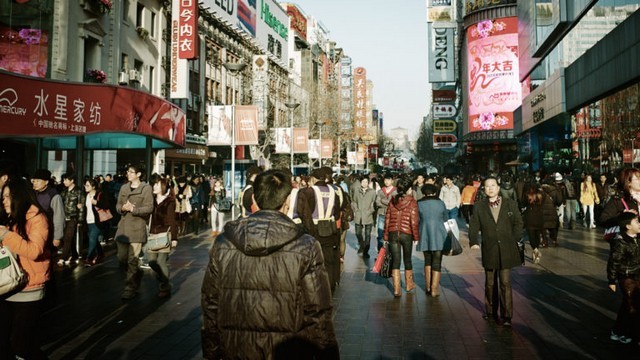
Snow is falling on the wide sidewalks of the historic city of Xi’an, but people don’t seem to be troubled by the bitter cold.

One of the oldest cities in China, Xi’an, is now vibrant, optimistic and stunningly beautiful. Sidewalks are paved with expensive stones and have more than enough space for pedestrians, electric bicycles, plants, trees and bus shelters.

Attempts by the Communist Party to turn China into an ‘Ecological Civilization’ are visible at every step: trees are revered and protected, comfortable walking is encouraged, while heavy duty, efficient and super modern public transportation is extremely cheap and ecological: the metro, and electric buses. All scooters are also electric, and so are the tricycles that are intended to transport passengers between the metro stations.

Compared to most Asian cities, but even to those in the United States and Europe, Chinese metropolises, including Xi’an, look like sort of urban areas of the future. But they are not ‘impersonal’, nor atomized. They are built for the people, not against them.

Xi’an is where the old Silk Road used to begin, connecting China to India, Central Asia and the Middle East.

It has a special significance and deep symbolism in Chinese history, and it is essential for China’s present and future.

Xi’an is the oldest of the four ancient capitals, and home to the Terracotta Army of Emperor Qin Shi Huang. This tremendous world heritage site is a titanic symbol of loyalty, endurance and optimism. According to the legend,the entire tremendous army followed its commander to the other life, ready to defend him, to fight for him and if necessary, to offer the ultimate sacrifice. What does it all really mean? Is it just an emperorthat these brave warriors are ready to sacrifice their lives for, withsmiles on their faces?Or is it the nation, or perhaps even the entire humanity they are determined to defend?

Whatever it is, it is enormous, and seeing the sheer size of the monument sends shivers all over my body.

*

Some fifty kilometers away, at the North Station of Xi’an City, an army of the fastest trains on earth is lined up at countless platforms. These beautiful bullet trains connect Xi’an with Beijing, Shanghai and soon, Hong Kong. Some of them are already speeding towards the city of Zhangye, which is the first step on the new rail Silk Road that will soon continue all the way towards the north-western tip of China, at Kashgar. And Kashgar is only 100 kilometers from the border with Kyrgyzstan, and 150 kilometers from Tajikistan.

If someone thinks that China is simply a north Asian country, far away from the rest of the world, they should think twice. In the center of Xi’an, there is a bustling neighborhood, similar to those found in any bustling city of the Middle East. There is a Grand Mosque, a bazaar, and endless lanes of colorful stalls, jewelry workshops, restaurants and halal eateries. Many women here wear colorful clothes and headscarves, while men cover their heads with skullcaps.

The western part of China is a vibrant mix of cultures from the north, as well as Central Asia. And the ancient capital of China – Xi’an – is well known and admired for its multi-cultural identity. Like the former Soviet Union, Communist China is an enormous and diverse country.

*

And the West doesn’t like what it sees.

It hates those super high-speed trains, which, at tremendous speed, as well as cheaply and comfortably, cover distances of thousands of kilometers. It hates where they are going: towards the former Soviet Central Asian republics, and soon, hopefully, towards Afghanistan, Pakistan, Iran, Russia, and one day, maybe even India.

It hates the optimistic spirit of the people of Xi’an, as well as the wise and at the same time,avant-garde environmental policies of China.

It hates that in cities like Xi’an, there are no slums, no homeless people, and almost no beggars: that instead of advertisements, there are beautiful paintings with messages highlighting socialist virtues, including equality, patriotism, respect for each other, democracy and freedom. It hates that most of the people here look determined, healthy, in good spirits, and optimistic.

The West passionately hates the fact that China is essentially Communist, with a centrally planned economy and tremendously successful social policies (by 2020, China will eliminate the last pockets of extreme poverty), even strive for the ecological civilization.

China defies Western propaganda, which hammers into the brains of the people that any socialist society has to be drab, uniform and infinitely boring. Compared to such a city as Xi’an, even the European capitals look dull, depressing, dirty and backward.

Yet China is not rich, not yet. At least on paper, (read: using statistics produced and controlled predominantly by the countries and by the organizations controlled by Washington, London and Paris), its HDI (Human Development Index, compiled by UNDP), is the same as Thailand’s. While the contrast between two countries is striking. Thailand, a feudal society glorified by the West, because of its staunch support during the Vietnam War and because ofits anti-Communist drive, is suffering from collapsed infrastructure (no public transportation outside Bangkok, awful airports and train system), monstrous, almost ‘Indonesian-style’ city planning (or lack of it), urban slums, endless traffic jams and basically no control of the government over business. In Thailand, frustration is everywhere, and the murder rate is consequently even higher than in the United States (per capita, according to INTERPOL data), while in China it is one of the lowest on earth.

But above all, the West hates China’s growing influence on the world, particularly among the countries that have been for centuries brutalized and plundered by European and North American corporations and governments. And it is scared that they will, eventually, fully understand that China is determinedtostop all forms ofimperialism, and to eradicate poverty in all corners of the world.

*

Xi’an is where the old and new Silk Roads have their starting points. The new one is called the Belt Road Initiative (BRI), and very soon it will account for tens of thousands of kilometers of railroads and roads connecting and crisscrossing Asia, Africa and Europe, pulling out of misery billions of men, women and children.Once completed, everybody will benefit.

But that is not how the West likes it. ‘Everyone benefiting’ is a totally foreign, even hostile concept, at least in the Western capitals. Only the West, plus those few ‘chosen’ and highly obedient countries (including Japan, South Korea and Singapore) have been, until now, allowed to prosper, forming a strictly ‘by appointment only’ club of nations.

China wants everyone to be rich, or at least not poor.

Most Asians love the idea. Africans love it even more. The new elegant train station in Nairobi, Kenya, is a new symbol, a promise of a better future. Tram lines in Addis Ababa, the construction of a high-speed train line that will go through Laos, all these are marvels unimaginable only a few years ago.

The world is changing, mainly thanks to the determined efforts of China and Russia to finally destroy Western colonialism (the ‘project’ that began so well right after WWII, but, except on paper, was never fullycompleted).

*

Xi’an is rising. In the West, they used to say that life in China is improving, but only for Beijing, Shanghai and Guangdong.

Later they said, for the Pacific coast, OK, life is better, but go further West… Xi’an, Chengdu, Kunming and other cities followed.

Then, the propagandists regrouped: ‘Chinese cities are doing well, but the countryside is suffering’. Then came President Xi’s brainchild – ‘Ecological civilization’, and decisive reforms aimed at improving the standards of living and quality of life all over the most populous country on earth. In 2018, for the first time in modern history, there was a reverse migration from Chinese cities, to the rural areas.

One has to repeat again and again, until it sinks into people’s brains: After 2020, there will be no extreme misery in China.

In our upcoming book “China and Ecological Civilization”, a dialogue between me and leading philosopher John Cobb Jr, John who has been working very closely with the Chinese government on issues of environment and education, explained:

“As I compare China’s success in giving serious attention to the well-being of its natural environment and needy citizens with that of European countries, my reason for betting on China is that I have some confidence that it will maintain governmental control of finance and of corporations generally. If it does this, it can also control the media. Thus, it has a chance of making financial and industrial corporations serve the national good as perceived by people not in their service. Less centralized governments are less able to control the financial and other corporations whose short-term interests may conflict with the common good.”

That may be the main reason why the West is horrified, and trying to antagonize China by all means: If China succeeds, colonialism will collapse, but also corporatism, which, like a fairy-tale monster devours everything in its sight.

*

Facing thousands of determined Terracotta soldiers, I felt the enormity of China.

I imagined hundreds of millions of men and women building the nation; millions of construction sites, not only in China itself, but also abroad. I recalled my neighbors in Nairobi, when I used to live in Africa – optimistic, well-natured but tough Chinese engineers, who used to power-walk, together, every night. I liked, I admired their spirit.

To me, they were like present-day Terracotta soldiers: brave, determined and loyal. Loyal not to the emperor, but to humanity. Not military men, but people who are constructing, building a much better world in all corners of the globe, often with their own hands. Despite the vitriolic spite and nihilism unleased against them by the West.

In Xi’an, I stood in front of the old gate, where everything began, many centuries ago; the old Silk Road. Now, everything was returning here, in a grand circle. The new beginning.

It was cold. It was beginning to snow. But I was immensely happy to be here, and I felt alive and full of optimism for the future of humanity.

I made a few symbolic steps. Millions did before me. Millions will, again, soon.

*

[First published by NEO – New Eastern Outlook]

Andre Vltchek is a philosopher, novelist, filmmaker and investigative journalist.

25 February 2019

Source: countercurrents.org

Is Israel’s tax grab a prelude to further hollowing out the PA?

By Jonathan Cook

Nazareth: Israel’s decision to withhold part of the taxes it collects on behalf of the Palestinian Authority and plunge it deeper into crisis starkly illustrates the hypocrisies and deceptions at the core of the two governments’ relationship.

Under the terms of what are now the quarter century-old Oslo accords, Israel is responsible for collecting about $200 million each month in taxes, which it is supposed to pass on to the PA, the Palestinian government-in-waiting in the West Bank.

The money belongs to the Palestinians but Israel has temporarily withheld it on several occasions in the past as a stick with which to beat the Palestinian leadership into line.

On this occasion, however, the stakes are far higher.

Last week Israeli Prime Minister Benjamin Netanyahu belatedly implemented a law passed last summer that requires his officials to retain part of the taxes owed to the Palestinians – those that the PA transfers to political prisoners’ families as a monthly stipend.

It echoes the Taylor Force Act, a law passed by the US Congress in 2016, that denies American economic aid to the PA until it stops sending those same stipends to 35,000 families of prisoners and those killed and maimed by the Israeli army.

The PA has tried to avert that threat by channelling the payments through a separate body, the Palestine Liberation Organisation.

Israel and Washington regard the prisoners simply as terrorists. But most Palestinians view them as heroes, those who have paid the highest price in the struggle for national liberation.

The Palestinian public no more believes the families should be abandoned for their sacrifices than Irish republicans turned their backs on those who fought British rule or black South Africans forsook those who battled apartheid.

Palestinian president Mahmoud Abbas called Israel’s actions “robbery” and said he would rather cut funding for health and education than for the prisoners and their families. “They are the most respected and appreciated part of the Palestinian people,” he declared.

Then he played his ace card. He said he would refuse all tax money from Israel until the full sum was reinstated.

That risks plunging the PA into financial meltdown and – most importantly for Israel – might ultimately lead to the disbanding of the Palestinian security services. Their job has long been to act as a security contractor, keeping order on Israel’s behalf in the West Bank.

The security forces hoovered up a massive 20 per cent of the PA’s $5.8 billion state budget last year.

The PA is already reeling from a series of hammer blows to the Palestinian economy. They include Donald Trump’s decision to cut all funding to UNRWA, the refugee agency for Palestinians, and to hospitals in Israeli-occupied East Jerusalem.

In addition, Abbas reportedly declined $60m in annual US aid for his security services last month for fear of exposing the PA to legal action. A new congressional measure makes aid recipients like the PA subject to American anti-terrorism laws.

But the current stand-off between Netanyahu and Abbas lays bare the duplicity of the situation for all to see.

The PA leader may say the prisoners are the most cherished Palestinian constituency but he also describes his security services’ co-ordination with Israel as “sacred”.

The security services’ role is to assist the Israeli army in foiling Palestinian attacks and in arresting the very Palestinians he extols. Abbas cannot realistically hold true to both positions at the same time.

Netanyahu, on the other hand, has nothing to gain from harming the Palestinian security services, which the Israeli army relies on.

The decision to withhold taxes was taken chiefly to boost his popularity as rival right-wing parties compete for who appears the most hawkish before April’s general election.

Paradoxically, in withholding the PA’s tax money, Netanyahu is punishing Abbas, his supposed peace partner, while showing a preference for Hamas, Abbas’s arch rival in Gaza.

Although Israel categorises Hamas as a terror organisation, Netanyahu has been allowing extra funds into Gaza from Qatar to alleviate the enclave’s dire conditions.

Further, there is something richly ironic about Netanyahu rebuking the PA for rewarding Palestinian “terrorists” in the same week he negotiated a deal to assist bringing Otzma Yehudit, or Jewish Power party, into the Israeli parliament.

The party is Israel’s version of the Ku Klux Klan, disciples of the late rabbi Meir Kahane, whose virulently anti-Arab Kach party was outlawed 25 years ago as a terror organisation.

So appalling is the prospect of this unholy alliance that even pro-Israel lobbies like the American Israel Public Affairs Committee (AIPAC) and the American Jewish Committee felt compelled to issue statements condemning Jewish Power as “racist and reprehensible”.

Netanyahu believes the extra votes Jewish Power will attract to the right in the election will ensure he has the support necessary to build a coalition that can keep him in power.

But there is another glaring flaw in Netanyahu’s tax grab.

If Abbas’s coffers run low, he will simply send even less money to Gaza, which is already being choked by Israel’s lengthy blockade.

That would intensify the unrest in Gaza, which could lead to rocket attacks into Israel and even larger mass protests by Palestinians at the perimeter fence encaging them.

At the same time, if things remain unresolved, an already fragile PA will move closer to collapse and Hamas might then be poised to fill the void left in the West Bank.

Loss of power for Abbas, combined with loss of a security contractor for Netanyahu, appear to make this confrontation mutually self-destructive – unless Netanyahu and the right have another card up their sleeve.

Hani Al Masri, a Palestinian policy analyst, has wondered whether Netanyahu is setting the stage for US President Donald Trump to introduce his long-awaited “peace deal” after the election.

Much of Netanyahu’s coalition is keen to annex Palestinian areas outside the main West Bank cities, destroying any hope of a Palestinian state ever emerging. Trump might be amenable.

In this scenario, argues Al Masri, Israel would aim to “end what remains of the PA’s political role, preserving only its administrative and security role”. It would be reduced to bin collections and law enforcement.

Should the PA reject the process of being hollowed out, Israel and the US would then look for an alternative, such as rule by local warlords in each Palestinian city and expanded powers for Israeli military rulers in the West Bank.

The denial of taxes to the PA may not yet presage its demise. But it points to a future in which Palestinian self-rule is likely to become an ever-more distant prospect.

A version of this article first appeared in the National, Abu Dhabi.

Jonathan Cook won the Martha Gellhorn Special Prize for Journalism.

26 February 2019

Source: countercurrents.org
Opinion: China Is Not Trying to Catch Africa in a Debt Trap

By George Lwanda

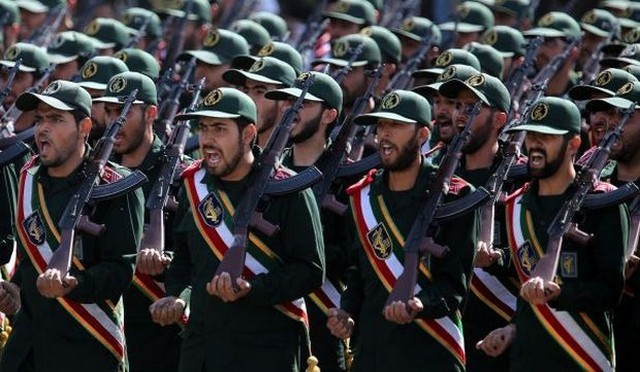
Imagine if you could, a world in which Africa is completely beholden to China — a world in which China is so obsessed with controlling Africa that it is willing to risk billions of dollars by trapping African countries in debt. As an African, it is a world hard to imagine for several reasons. For starters, what would China gain that it already is not getting from Africa by impoverishing it?

Apparently, that would allow China to influence decisions of African states. There are at least also two reasons why this would be politically suicidal. Firstly, it would discredit the “Beijing Consensus” as an alternative to the Washington consensus. Secondly, although Africa is a small player globally, it has the largest voting block at the U.N. general assembly. It’s therefore likely that an Africa feeling hard done by China would unnecessarily complicate Beijing’s attempts at global leadership at the multilateral level possibly making the isolation of China easier.

Interestingly, Africa debt statistics also don’t support the accusation. The globally accepted debt ceiling for developing countries is a debt-to-GDP ratio of 40%. Africa’s current debt-to-GDP ratio stands at 50%. While loans from China grew at a very fast rate especially between 2011 and 2016, the reality is that Chinese loans account for an insignificant portion of Africa’s total debt stock (5%). Additionally, only three of the 12 African countries under high debt distress have borrowed heavily from Beijing. They are Angola, Djibouti and Zambia. Loans to Djibouti are all toward the construction of bulk infrastructure aimed at reducing the cost of doing business and fostering regional integration such as a railway and water pipeline linking Ethiopia and Djibouti and the expansion of the country’s main port enabling the country to handle more cargo as well as meet sanitary and phytosanitary standards for exporting livestock.

In Zambia, there is sufficient evidence showing that its debt distress primarily emanates from the issuance of bonds denominated in foreign currencies. Over the last five years, the yield on Zambia’s bonds has increased from 6% to 17% forcing the country to borrow an extra $750 million to service bond payments, according to a Bloomberg report. Zambia is probably the country where the biggest form of Sino-phobia has raised its head when it comes to talk of Chinese loans. Clearly false claims have been peddled that China is about to take over some national assets such as the international airport and the national electricity utility company. It is inconceivable that China or any lender, would want to take ownership of assets that are not profitable. In the case of Zambia’s airport for example, on a busy day, the airport handles a total of about 13 passenger flights and an average of 10 flights a day. A big part of the airport’s lack of profitability is simply the lack of enough traffic numbers — something that can’t be solved by just changing management or ownership. Similarly, there are policy and structural issues affecting the national electricity utility company which would still render it loss making even after any takeover. That leaves Angola as the only country where Chinese loans are greater than non-Chinese loans — one country out of 54!

That said, Angola has its nuances. For example, senior Angolan officials privately admit that China pre-conditioned continued loans on the country securing a program with the IMF — hardly the actions of a country hellbent on holding Angola captive to its wishes and demands. More controversial has been China’s “resources-for-infrastructure” approach in which countries pay for infrastructure using commodities; popularly known as ‘Angola-mode’ has been routinely frowned on. One can only guess that this is because it is seen as a new Chinese way of doing things that is out of sync with the Washington Consensus. While the practice is indeed different, it is not necessarily new. China or rather, Japan used the same approach with China many years ago. At the time, China was poor but had natural resources that Japan needed. Chinese loans have also been accused of promoting bad governance in Angola even though the World Bank World Governance Indicators have consistently shown an improvement in government effectiveness, regulatory quality and the rule of law since 2000.

What external factor or player then is the cause of spiraling African debt? Before answering that, it is important to accept that a genuine concern about Chinese loans to Africa is the opaqueness of the loan conditions — especially in countries where the process of the state securing a loan is subject to constitutional oversight. This doesn’t make China responsible for Africa’s debt as available data strongly points to the fact that access to concessional lending to African countries diminished remarkably after the 2008 financial crisis as the main reason. This coupled with the fact that several African countries (such as Zambia and Ghana) graduated into middle-income status and therefore lost access to concessional funding. Confronted by the absence of concessional financing, African countries have resorted to private debt at high interest rates which are frankly unsustainable, as the Zambia example shows. In fact, according to S&P, private loans from non-Chinese sources account for 72% of Africa’s debt stock. The concessional nature of Chinese loans are hence attractive and pretty much a rational option.

Chinese loans are attractive for African governments because of at least three other reasons. Firstly, Africa is confronted by a huge infrastructure gap estimated at around $170 billion annually. To correct this, African leaders launched the Programme for Infrastructure Development in Africa (PIDA). The PIDA naturally dovetails with China’s focus on infrastructure assistance and the Belt and Road Initiative, providing an opportunity for Africa to reduce its infrastructure deficit. Coupling this, as several senior African government officials have told me, is the fact that China’s broader assistance to Africa breaks away from past development assistance models to Africa that were based on stringent austerity measures and is not like the approach of other partners who market themselves as experts in African development problems. The new U.S.-Africa strategy for example has been criticized for not consulting with African countries and for its focus on China and not African development initiatives.

Inevitably what will matter for Africa’s development is not where the loans come from but the extent to which Africa can use loans to enhance economic productivity in general and their ability to us use the assistance to protect national economies from exposure to commodity price fluctuations. This requires collaboration by Chinese and non-Chinese development partners to assist Africa to reduce the cost of doing business and create employment which will in turn broaden African governments’ revenue base. Furthermore, greater transparency in loan agreements would also facilitate a collaborative approach to assisting Africa by reducing the default risk for all parties (Chinese and non-Chinese).

George Lwanda is a policy adviser at the UNDP Africa Centre, and a 2018 Asia Global Fellow at the Asia Global Institute, The University of Hong Kong.

25 February 2019

Source: www.caixinglobal.com

White Helmets’ Staged Chemical Attack Videos and Other Trends in Modern Propaganda

By South Front

The scandal regarding the fake hospital video published by the White Helmets as a proof of the Douma chemical attack has reached its peak in the media and has caused reaction on the diplomatic level.

On February 13, BBC Syria’s producer Riam Dalati came out with a statement that “After almost 6 months of investigations” “[I] can prove without a doubt that the Douma Hospital scene was staged” and “no fatalities had occurred in the hospital.” Dalati added that he believes that “the attack did happen” but no Sarin was used and “everything else around the attack was manufactured for maximum effect.”

“I can tell you that Jaysh al-Islam ruled Douma with an iron fist. They coopted activists, doctors and humanitarians with fear and intimidation. In fact, one of the 3 or 4 people filming the scene was Dr. Abu Bakr Hanan, a “brute and shifty” doctor affiliated with Jaysh Al-Islam. The narrative was that “there weren’t enough drs [doctors]” but here is one filming and not taking part of the rescue efforts. Will keep the rest for later,” he wrote in a tweet chain on the topic.

An interesting fact that despite the confidence that the attack did take place and no Sarin was used, Dalati was not able to name the chemical substance used and said that it is up to the OPCW to make conclusions.

Even this halfway contradiction to the “Assad did it” version caused a wide attention because BBC was among the mainstream media organizations fueling anti-Assad hysteria when the video first appeared in April 2018. This joint propaganda effort became a formal justification of the US-led cruise missile attack on Syria.

Dalati’s statement widely circulated independent media organizations and was even commented by the Russian defense and foreign ministries. Foreign Ministry Spokeswoman Maria Zakharova described the revelation as a “theater of absurd.”

“Over the past years, and not only in Syria, we have seen just a tragic farce performed by the Western community and mass media, which on the one hand, speak about the high democratic goals and how they care about the civilians of a sovereign state, and on the other hand, they just do not give a damn about all laws, the international law, freedoms and rights of a nation and certain people,” Zakharova stressed.

She compared this case with the situation developing around Iraq prior to the start of the US intervention and recalled how then US ambassador to the UN Colin Powell was convincing the international community that there is a need to rescue “Iraq, Iraqi nation and democracy”.

The Russian Defense Ministry also commented on the issue by saying that Russia is not surprised by the appearance of new discrediting details.

“Many of today’s top-ranking politicians in the United States and Europe, then tearing their throats in ‘defending the peaceful Syrians from the terrible chemical attacks of the regime” and sanctioning missile and air strikes on Syria, will try to forget the topic in order to avoid moral, political and criminal liability,” defense ministry spokesman Major General Igor Konashenkov said.

An interesting fact is that mainstream media outlets and Western diplomats in fact ignored this situation. Furthermore, BBC officially stated that its Syria producer acted on his own and his claims are “personal opinions”, distancing itself from his conduct.

The Douma attack was not the first and only case when studio work was presented by the US-led block as a decisive evidence justifying its actions in the conflict. After the April 2017 attack in Khan Shaykhun, experts voiced concern that the video released by the White Helmets as a proof of the chemical attack conducted by the Assad regime was staged.

In fact, weaponized disinformation campaigns, staged videos and fake news are common approaches used by the US military and special services to promote their own agenda around the world. The US was actively using these tools during its intervention in Iraq and after it.

According to the later revelations, the employed programs were varying from placing Pentagon-provided articles in Iraqi newspapers as “unbiased news” to producing footage, which were made to look as if they had been “created by Arabic TV,” and CDs with fake al-Qaeda videos, which then distributed through various channels.

The employed propaganda approaches are constantly evolving. Therefore, propaganda coverage of the conflict in Syria has some differences with those which were observed in Iraq. Now, mainstream media, the Pentagon, the intelligence services and diplomats are actively using Hollywood-style approaches. This style of the coverage is based on providing catchy, even if horrible, pictures and videos influencing the emotions of the audience rather than convincing it with logical conclusions.

Just like with Hollywood movies, the mainstream news has increasingly been turning away from the logical narration of stories with realistic motivations to emotional judgements based on anonymous sources, non-verified images, pocket citizen journalists and even open speculation. The content developed within the framework of this approach is usually based on the results of social and psychological research. This allows results to be maximised by the targetted development of content and appropriate segmentation of the audience. An interesting and successful example of this audience reaction modelling can be seen in the mainstream media coverage of the Salisbury incident, which gave rise to large-scale hysteria in Western countries about Russian spies.

Considering that US defense officials openly admit that the Pentagon, as well as other institutions, are going to develop their influencing tools and irregular warfare capabilities further, it should be expected that the intensity and sophistication of disinformation campaigns waged around the globe will continue to increase.

25 February 2019

Source: transcend.org

The U.S.-Venezuela Aid Convoy Story Is Clearly Bogus, but No One Wants to Say It

By Adam H Johnson

21 Feb 2019 – No one actually thinks the same Donald Trump who kicked off his run for the White House by calling Mexicans rapists, and subsequently, as president, left Puerto Rico for dead after Hurricane Maria, cares at all about the Venezuelan poor. No one actually thinks the murderers row of Cold Warriors—led by two of the most extreme right-wingers in American politics, Venezuela envoy Elliott Abrams and national security adviser John Bolton—cares at all about the starving people in Venezuela or their plight. No one reading this, be they right, left, center, libertarian or communist, actually buys the prevailing narrative that the U.S. is sending “aid” to Venezuela as a humanitarian gesture.

So why is everyone pretending otherwise?

There are a number of reasons why these superficial narratives take hold, but I’d like to speculate on two of them.

First, the crisis in Venezuela is very real and very daunting. Without litigating who’s responsible for what, whether U.S.-led sanctions and economic sabotage are more to blame or the economic policies of Nicolás Maduro, one simple fact is true: The status quo is untenable. Perhaps, then, the instinct to “do something” is understandable. But as with previous crises, both organic and contrived, what that “something” is remains unclear. Liberals—as they did in the build-up to the invasions of Iraq and Libya—are easily pressured into this “do something” posture.

The way these things work, however, is that this vague moral directive often involves a combination of CIA and U.S. military intervention. During the Syrian conflict, for example, it meant U.S.- and NATO-led bombings of Syrian forces and a tacit declaration of war under the guise of “no-fly zones.” What’s never considered is a reduction or cessation of U.S. involvement, be it CIA weapons running, wide-scale bombing campaigns, or the imposition of sanctions—all of which prolong a given conflict or simply make it more violent.

Because a core tenet of American liberalism is to avoid assigning blame—at worst, its adherents believe, the U.S. is run by a bunch of bumbling do-gooders—what the American empire is actually doing to fuel a conflict cannot be debated, much less censured. And so the notion that we could simply cease our crippling sanctions, which even the pro-opposition Economist acknowledges are designed to “starve” the Venezuelan people, is simply not an option.

The current “something” in Venezuela we’re all compelled to “do” is ensure the arrival of a humanitarian aid convoy. The fact that the bulk of the international aid community has either distanced itself from this PR stunt or outright opposes it has been widely ignored by the mainstream media. One exception is NPR, which recently reported this inconvenient truth:

The U.S. effort to distribute tons of food and medicine to needy Venezuelans is more than just a humanitarian mission. The operation is also designed to foment regime change in Venezuela — which is why much of the international aid community wants nothing to do with it. Humanitarian operations are supposed to be neutral.

That’s why the International Committee of the Red Cross, United Nations agencies and other relief organizations have refused to collaborate with the U.S. and its allies in the Venezuelan opposition who are trying to force President Nicolás Maduro from power.

“Humanitarian action needs to be independent of political, military or any other objectives,” Stéphane Dujarric, the U.N. spokesman, told a press briefing last week in New York. “The needs of the people should lead in terms of when and how humanitarian assistance is used.”

In fact, no neutral observer of international aid thinks Bolton and Abrams’ convoy is anything but a mechanism to foment civil war and regime change. We know this because high-level administration officials and their allies on the right keep telling us that’s the case. As the New York Post recently proclaimed, “U.S. delivers aid to town bordering Venezuela to undermine President Nicolas Maduro.”

Donald Trump delivered a long and rambling speech in Miami last week and didn’t once mention human rights, instead railing against the evils of socialism. Former acting FBI director Andrew McCabe reflects in his new book that Trump has openly fantasized about overthrowing Maduro, something he has discussed in White House meetings. “That’s the country we should be going to war with,” Trump said, according to McCabe. “They have all that oil, and they’re right on our back door.”

Determined to maintain U.S. hegemony and control over the world’s largest-known oil reserves, the Trump officials plotting this latest coup aren’t even bothering to take its humanitarian pretext seriously. Why, then, are purportedly centrist and liberal media outlets?

A second matter to consider is how our government has weaponized the public’s sense of morality. Since the Spanish-American War, the U.S. has used humanitarian concerns as a shield against criticism or skepticism, and it has more or less worked every time. It’s why “aid” organizations like Air America used food transports to ship guns to anti-Communists in Indochina in the 1960s and ’70s. (Weapons were code-named “hard rice.”) And it’s why Elliott Abrams—the current quarterback of this latest affair in Venezuela—used humanitarian aid shipments to smuggle weapons to the Nicaragua’s Contras in the ’80s. Ultimately, these shipments allow for massive military buildups, without anyone in the media or Congress asking too many questions. After all, what kind of monster is opposed to helping starving people?

It’s impossible to know if the current shipments to Venezuela are being used to transport weapons, although Venezuelan authorities say they have intercepted American arms shipments. But given the history of the U.S. (to say nothing of Abrams’), and the fact that the Trump administration is openly calling for Maduro’s ouster while amassing forces along the Colombian border, it’s not exactly a long shot. Still, our political press dismisses the possibility as tin-foil hat stuff, at least in part because mocking wacky Latin American “conspiracy theories” is a mark of one’s seriousness in foreign policy circles.

Unlike a lot of U.S. regime change activities, reports indicate that this latest stunt was exceptionally rushed and slapdash. The Wall Street Journal paints a picture of a U.S. operation its architects believed would work in a day or two:

“The people who devised it in Caracas and sold it here [in Washington], sold it with the promise that if Guaidó made a move and [South American countries] and the U.S. came in behind, the military would flip and Maduro would go,” said a former senior U.S. official. “They thought it was a 24-hour operation.”

Because the large-scale military defections expected never took place (as they almost never do), the U.S. has had to resort to its Plan B for promoting conflict and galvanizing the Venezuelan opposition: On Sat., Feb. 23, President of the National Assembly Juan Guaidó will carry out a “humanitarian avalanche” at the Venezuelan border with Colombia and Brazil that, when one reads the fine print, sounds a lot like a U.S.-led invasion. Billionaire Richard Branson is reportedly organizing a “humanitarian aid” concert the night before. But we know this is a fig leaf, and we know this because those running this operation say so again and again. Bolton himself has speculated that Maduro could end up in a “beach area like Guantanamo.”

Despite all the evidence before them, MSNBC, CNN and countless other networks and publications across the ideological spectrum refuse to frame this humanitarian gambit as an act of hostility. Instead, knowing what they know and who they are covering, they have largely portrayed Trump, Bolton and Abrams as champions of the Venezuelan people.

It goes without saying that hundreds of thousands are suffering in Venezuela, and the instinct to alleviate that suffering is a healthy one. But a craven marketing stunt by far-right Cold Warriors—without any buy-in from actual aid organizations—cannot be taken at face value.

Just as the U.S. military has made calls to high-ranking Venezuelan officials, I am writing directly to the editors, television producers and reporters of our most prominent news outlets. I’m asking you to defect and come to the side of the patently obvious. Unlike the Pentagon, I can’t bribe you or promise you amnesty, but I can appeal to your basic sense of integrity and intellectual honesty: At best, you are helping provide cover for a campaign designed to starve the Venezuelan people; at worst, you are enabling a military conflict that will drag on for years.

One does not need to hold any normative opinions about the fate of Venezuela to be able to identify a naked PR campaign when they see one. Journalists with blue checkmarks on Twitter must say so before this gets any further out of hand.

Adam H. Johnson is a media analyst for Fairness and Accuracy in Reporting and is co-host of the Citations Needed podcast.

25 February 2019

Source: transcend.org

Can We Imagine Peace for Palestine?

By Richard Falk

While waiting without positive expectations for the Trump ‘deal of the century’ the Palestinian ordeal unfolds day by day. Many Israelis would like us to believe that the Palestinian struggle to achieve self-determination has been defeated, and that it is time to admit that Israel is the victor and Palestine the loser. Recent events paint a different picture. Every Friday since the end of March 2018 the Great March of Return has confronted Israel at the Gaza fence. Israel has responded with lethal force killing more than 250 Palestinians and injuring over 18,000, using grossly excessive force to deal with almost completely nonviolent demonstrations. The world allows these weekly atrocities to go without any concerted adverse reaction and the UN is awkwardly silent.

It would seem that there is a feeling in international circles that nothing much can be done to bring about a peaceful and just solution at this stage. Such a conclusion partially explains the various recent moves in the Arab world toward an acceptance of Israel as a legitimate state, which has included diplomatic normalization. Beyond these developments, Israel has joined with Saudi Arabia and the United States in a war mongering escalation of an unwarranted confrontation with Iran. In addition, Israel and Egypt are collaborating on security issues at the border and in the Sinai, as well as in developing off shore oil and gas projects.

All and all, this is a moment for stocktaking with respect to this conflict that has gone on for more than a century, and assessing what would be the best way forward.

A fundamental point is how peace might be made in a manner that realizes the fundamental right of the Palestinian people to achieve self-determination in a territorial space that was for centuries their own homeland. The prevailing assumption had been that a solution would be achieved by geopolitically framed negotiations between Israel and governmental representatives of the Palestinian people. The framing was entrusted to the United States, which itself insinuated a fatal flaw into the diplomatic process if the goal was to achieve a peaceful compromise that was fair to both sides. How could this happen if the stronger party had the unconditional backing of the geopolitical intermediary and the weaker party was not even clearly the legitimate representative of the Palestinian people?

Additionally, this already flawed framework was further abused by subordinating the so-called peace process to Zionist expansionist goals, expressed by annexing Jerusalem, denying refugee rights of return, and expanding unlawful settlements in occupied Palestine. Such a geopolitical framework, associated with the Oslo Framework of Principles, as adopted in 1993, has by now been widely discredited but not before Israel had used the past 25 years to achieve their expansionist goals, making the establishment of an independent Palestinian state a political impossibility, and putting the Palestinians in a far weaker position than when the Oslo approach was adopted.

Against this background, the perverse failure of the top down approach to a sustainable outcome has led to a public attitude of defeatism when it comes to achieving a peaceful compromise. The residual top down option is the coercive imposition of ‘peace’ by declaring an Israeli victory and a Palestinian defeat. In other words, if diplomacy fails, the winner/loser calculus of war is all that is left over.

Such thinking, although prevalent in elite circles, overlooks the historical agency of people, both those resisting injustice and those mobilized throughout the world in solidarity. These are the bottom-up kinds of political dynamics that changed the history of the last century. It was national mass movements that challenged successfully, although at heavy human costs, the unjust structures of colonialism and South African apartheid, and eventually prevailed despite military inferiority and geopolitical resistance. In other words, people had the superior historical agency despite their inferior capabilities on the battlefield and diplomatically. This populist potency is a reality with a potential to subvert the established order and for this reason is treated as irrelevant by mainstream thinking and policy planners.

It is precisely on the basis of this deconstruction of power and change that hope for a brighter Palestinian future lies. The strength of the Palestinian national movement is on the level of people as fortified by the moral consensus that Israeli apartheid colonialism is wrong, indeed a crime against humanity according to international criminal law [see Article 7 of the Rome Statute governing the International Criminal Court and the International Apartheid Convention of 1973 on the Suppression and Punishment of the Crime of Apartheid] It is this bottom up process of struggle, spearheaded by Palestinian resistance and given leverage by global solidarity initiatives such as the BDS [Boycott, Divestment, and Sanctions] Campaign as it gains momentum and heightens pressure. Historical outcomes are never certain, but the flow of history has been against this Israeli/Zionist combination of colonial appropriation of Palestine and the apartheid structures relied upon to maintain the subjugation of the Palestinian people.

Against this background, some general propositions can be put forward.

The Two-State Solution Is Dead

For several years, at least since the de facto abandonment of the Oslo diplomacy in 2014, the two-state solution has not been seen as a viable political option. Yet it continues to be affirmed by many governments and at the UN. This is not because there is any belief that it might finally happen, but because every other outcome seemed either impossible or too horrible to contemplate. In other words, many leading political figures and opinion leaders held onto the two-state approach as an alternative to zero. This reflect an impoverishment of the political and moral imagination, only capable of conceiving a solution to conflict as deriving from top down approaches; bottom up approaches are not even considered.

It seems better to admit the defeat of two-state diplomacy and take account of the existing situation confronting Palestinians and Israelis so as to consider alternatives. To come to this point, it might be helpful to explain why the two-state solution has become so irrelevant. Above all, it seems evident that the Likud leadership of Israel never wanted an independent Palestinian state established. Netanyahu pledged during the 2014 presidential campaign in Israel that a Palestinian state would never come into existence as long as he was Israel’s leader.

Perhaps, more fundamental, the settler movement has passed a point of no return. There are more than 600,000 Israeli settlers living in more than 130 settlements spread all over the West Bank and East Jerusalem. Settler leaders believe that the settlements have so changed the map of Israel to exclude any possibility of an independent Palestine, and their leaders now envisage the settler population growing to 2,000,000 to drive this point home.

True, the Palestinian Authority has long seemed ready to accept even a territorially abridged state, ceding sovereignty over the settlement blocs near the border, but insisting on its capital being in Jerusalem. A broad spectrum of Israeli political leaders agrees that the future of Jerusalem is non-negotiable, and that the city will remain forever unified under sole Israeli sovereignty and administration. Under these conditions it can be safely concluded that it is no longer plausible to consider seriously the two-state path to peace between the two peoples.

The Arab Accommodation Is Tenuous

Israel feels little pressure to seek a political compromise given present conditions. With Trump in the White House and Arab governments scrambling toward normalization and accommodation, Israeli leaders and public opinion seem ill-disposed to make concessions for the sake of peace. As such keeping the two-state non-solution alive as a Zombie solution is a way to proceed with Israel’s continuing efforts to expand the settlements while implementing its coercive version of a one-state solution.

There are strong reasons to feel that this Israeli confidence that the Palestinian demand for rights can be indefinitely ignored is premature and is likely tol be undermined by events in the near future. For one thing, the Arab moves toward normalization are unstable as is the entire region. If there is a renewal of Arab uprisings, in the spirit of 2011, it is quite possible that support for Palestinian self-determination would surge to the top of the regional political agenda, stronger form than ever before. The Arab people, as distinct from the governments, continue to feel deep bonds of solidarity with their Palestinian brothers and sisters.

Beyond this, should Trump presidency be defeated in 2020, there is likely to be an Israeli reevaluation of their interests. Such a prospect is heightened by signs that Jewish unconditional support for Israel is dramatically weakening, including in the United States. Furthermore, the global solidarity movement supportive of the Palestinian national movement is spreading and growing. It is becoming more militant, engaging moderate global public opinion, and has the symbolic benefit of strong backing in South Africa, which sees the fight for Palestinian rights as analogous to their own anti-apartheid campaign.

What Next?

Two conclusions emerge from this analysis: first, a continued reliance on the two-state diplomacy within a framework that relies on the United States as an intermediary or peace broker is now irrelevant and discredited. It is at this point only a distraction. Secondly, despite Israel’s recent gains in acceptance within the Middle East and its one-sided support in Washington, the Palestinian national movement persists, and under certain conditions, will mount a threat to Israel’s future.

In light of these conclusions, what is best to be done? It would seem that only a democratic and secular single state could uphold self-determination for both peoples, holding out a promise of sustainable peace. It would need to be carefully envisioned and promoted with international safeguards along the path toward realization. It does not seem a practical possibility at present, but putting it forward as the only outcome that can be regarded as just avoids despair and holds out hopes for a humane peace when the time is right. Such an outcome would require a major modification of Israeli goals.

In such a binational situation, the newly created single state could offer homelands to Jews and Palestinians, while finding a name for the new state that is congenial to both peoples. Maybe this will never happen, but it the most sustainable vision of a peaceful future that responds to decades of diplomatic failure, massive Palestinian suffering and abuse, and recognizes the moral authority and political potency of national resistance and global solidarity, a legislative victory by that unacknowledged Parliament of Humanity.

Richard Falk is a member of the TRANSCEND Network, an international relations scholar, professor emeritus of international law at Princeton University, author, co-author or editor of 40 books, and a speaker and activist on world affairs.

25 February 2019

Source: transcend.org

A Personal Testimony of Kashmiriyat

By Binu Mathew

When Kashmiris are being attacked across India, let me telly you a story about Kashmiriyat. Last summer I was in Kashmir with my family. We were coming back from Sonamarg. The road to Sonamarg goes through Zojila Pass, one of the highest motorable road in the world. It’s a desert land for dozens of kilometers. Even in summer the temperature is near freezing.

As we were coming back from Sonamarg, we spotted a man walking alone in the road in the freezing cold. It was also raining. Our driver Sultan stopped the taxi asked him what he’s doing in this chilling cold. Sultan told him he’ll freeze to death. He didn’t answer. Sultan asked him to get into the taxi. He got into the taxi and Sultan tried to get him into a conservation. He mumbled. He had no clue as to where he’s. He didn’t answer where he comes from. By his looks, he was not a Kashmiri. He’s probably from the Hindi heartland. Probably he was mentally deranged. Sultan handed him over to the police in the nearest police check post.

I’m sure that back home in Kerala, no driver would’ve picked up a stranger, evena a Malayali not speak of an OTHER, in similar circumstances to a family vehicle. That’s Kashmiriyat. With that incident I fell in love with Kashmir and Kashmiris. There are many other similar stories from that trip to Kashmir.

As ‘Indian’ people were on a murderous spree across India, attacking Kashmiri traders and Kashmiri students, people from Indian mainland who were travelling in Kashmir did not face any hardship. Kashmiriyat still still lives in the event of terrorist attcks and even when Kashmiri brethren are being attacked in mainland India.

Binu Mathew is the Editor of Counatercurrents.org.

23 February 2019

Source: Counatercurrents.org

Aid in reverse: how poor countries develop rich countries

By Jason Hickel

We have long been told a compelling story about the relationship between rich countries and poor countries. The story holds that the rich nations of the OECD give generously of their wealth to the poorer nations of the global south, to help them eradicate poverty and push them up the development ladder. Yes, during colonialism western powers may have enriched themselves by extracting resources and slave labour from their colonies – but that’s all in the past. These days, they give more than $125bn (£102bn) in aid each year – solid evidence of their benevolent goodwill.

This story is so widely propagated by the aid industry and the governments of the rich world that we have come to take it for granted. But it may not be as simple as it appears.

The US-based Global Financial Integrity (GFI) and the Centre for Applied Research at the Norwegian School of Economics recently published some fascinating data. They tallied up all of the financial resources that get transferred between rich countries and poor countries each year: not just aid, foreign investment and trade flows (as previous studies have done) but also non-financial transfers such as debt cancellation, unrequited transfers like workers’ remittances, and unrecorded capital flight (more of this later). As far as I am aware, it is the most comprehensive assessment of resource transfers ever undertaken.

The flow of money from rich countries to poor countries pales in comparison to the flow that runs in the other direction

What they discovered is that the flow of money from rich countries to poor countries pales in comparison to the flow that runs in the other direction.

In 2012, the last year of recorded data, developing countries received a total of $1.3tn, including all aid, investment, and income from abroad. But that same year some $3.3tn flowed out of them. In other words, developing countries sent $2tn more to the rest of the world than they received. If we look at all years since 1980, these net outflows add up to an eye-popping total of $16.3tn – that’s how much money has been drained out of the global south over the past few decades. To get a sense for the scale of this, $16.3tn is roughly the GDP of the United States

What this means is that the usual development narrative has it backwards. Aid is effectively flowing in reverse. Rich countries aren’t developing poor countries; poor countries are developing rich ones.

It’s not aid in reverse, illicit financial flows are more complicated than that

What do these large outflows consist of? Well, some of it is payments on debt. Developing countries have forked out over $4.2tn in interest paymentsalone since 1980 – a direct cash transfer to big banks in New York and London, on a scale that dwarfs the aid that they received during the same period. Another big contributor is the income that foreigners make on their investments in developing countries and then repatriate back home. Think of all the profits that BP extracts from Nigeria’s oil reserves, for example, or that Anglo-American pulls out of South Africa’s gold mines.

But by far the biggest chunk of outflows has to do with unrecorded – and usually illicit – capital flight. GFI calculates that developing countries have lost a total of $13.4tn through unrecorded capital flight since 1980.

Most of these unrecorded outflows take place through the international trade system. Basically, corporations – foreign and domestic alike – report false prices on their trade invoices in order to spirit money out of developing countries directly into tax havens and secrecy jurisdictions, a practice known as “trade misinvoicing”. Usually the goal is to evade taxes, but sometimes this practice is used to launder money or circumvent capital controls. In 2012, developing countries lost $700bn through trade misinvoicing, which outstripped aid receipts that year by a factor of five.

Forget ‘developing’ poor countries, it’s time to ‘de-develop’ rich countries

Multinational companies also steal money from developing countries through “same-invoice faking”, shifting profits illegally between their own subsidiaries by mutually faking trade invoice prices on both sides. For example, a subsidiary in Nigeria might dodge local taxes by shifting money to a related subsidiary in the British Virgin Islands, where the tax rate is effectively zero and where stolen funds can’t be traced.

GFI doesn’t include same-invoice faking in its headline figures because it is very difficult to detect, but they estimate that it amounts to another $700bn per year. And these figures only cover theft through trade in goods. If we add theft through trade in services to the mix, it brings total net resource outflows to about $3tn per year.

That’s 24 times more than the aid budget. In other words, for every $1 of aid that developing countries receive, they lose $24 in net outflows. These outflows strip developing countries of an important source of revenue and finance for development. The GFI report finds that increasingly large net outflows have caused economic growth rates in developing countries to decline, and are directly responsible for falling living standards.

Who is to blame for this disaster? Since illegal capital flight is such a big chunk of the problem, that’s a good place to start. Companies that lie on their trade invoices are clearly at fault; but why is it so easy for them to get away with it? In the past, customs officials could hold up transactions that looked dodgy, making it nearly impossible for anyone to cheat. But the World Trade Organisation claimed that this made trade inefficient, and since 1994 customs officials have been required to accept invoiced prices at face valueexcept in very suspicious circumstances, making it difficult for them to seize illicit outflows.

Still, illegal capital flight wouldn’t be possible without the tax havens. And when it comes to tax havens, the culprits are not hard to identify: there are more than 60 in the world, and the vast majority of them are controlled by a handful of western countries. There are European tax havens such as Luxembourg and Belgium, and US tax havens like Delaware and Manhattan. But by far the biggest network of tax havens is centered around the City of London, which controls secrecy jurisdictions throughout the British Crown Dependencies and Overseas Territories.

In other words, some of the very countries that so love to tout their foreign aid contributions are the ones enabling mass theft from developing countries.

The aid narrative begins to seem a bit naïve when we take these reverse flows into account. It becomes clear that aid does little but mask the maldistribution of resources around the world. It makes the takers seem like givers, granting them a kind of moral high ground while preventing those of us who care about global poverty from understanding how the system really works.

Poor countries don’t need charity. They need justice. And justice is not difficult to deliver. We could write off the excess debts of poor countries, freeing them up to spend their money on development instead of interest payments on old loans; we could close down the secrecy jurisdictions, and slap penalties on bankers and accountants who facilitate illicit outflows; and we could impose a global minimum tax on corporate income to eliminate the incentive for corporations to secretly shift their money around the world.

We know how to fix the problem. But doing so would run up against the interests of powerful banks and corporations that extract significant material benefit from the existing system. The question is, do we have the courage?

Join our community of development professionals and humanitarians. Follow @GuardianGDP on Twitter.

14 January 2017

Source: theguardian.com

The War On Venezuela Is Built On Lies

By John Pilger

Travelling with Hugo Chavez, I soon understood the threat of Venezuela. At a farming co-operative in Lara state, people waited patiently and with good humour in the heat. Jugs of water and melon juice were passed around. A guitar was played; a woman, Katarina, stood and sang with a husky contralto.

“What did her words say?” I asked.

“That we are proud,” was the reply.

The applause for her merged with the arrival of Chavez. Under one arm he carried a satchel bursting with books. He wore his big red shirt and greeted people by name, stopping to listen. What struck me was his capacity to listen.

But now he read. For almost two hours he read into the microphone from the stack of books beside him: Orwell, Dickens, Tolstoy, Zola, Hemingway, Chomsky, Neruda: a page here, a line or two there. People clapped and whistled as he moved from author to author.

Then farmers took the microphone and told him what they knew, and what they needed; one ancient face, carved it seemed from a nearby banyan, made a long, critical speech on the subject of irrigation; Chavez took notes.

Wine is grown here, a dark Syrah type grape. “John, John, come up here,” said El Presidente, having watched me fall asleep in the heat and the depths of Oliver Twist.

“He likes red wine,” Chavez told the cheering, whistling audience, and presented me with a bottle of “vino de la gente”. My few words in bad Spanish brought whistles and laughter.

Watching Chavez with la gente made sense of a man who promised, on coming to power, that his every move would be subject to the will of the people. In eight years, Chavez won eight elections and referendums: a world record. He was electorally the most popular head of state in the Western Hemisphere, probably in the world.

Every major chavista reform was voted on, notably a new constitution of which 71 per cent of the people approved each of the 396 articles that enshrined unheard of freedoms, such as Article 123, which for the first time recognised the human rights of mixed-race and black people, of whom Chavez was one.

One of his tutorials on the road quoted a feminist writer: “Love and solidarity are the same.” His audiences understood this well and expressed themselves with dignity, seldom with deference. Ordinary people regarded Chavez and his government as their first champions: as theirs.

This was especially true of the indigenous, mestizos and Afro-Venezuelans, who had been held in historic contempt by Chavez’s immediate predecessors and by those who today live far from the barrios, in the mansions and penthouses of East Caracas, who commute to Miami where their banks are and who regard themselves as “white”. They are the powerful core of what the media calls “the opposition”.

When I met this class, in suburbs called Country Club, in homes appointed with low chandeliers and bad portraits, I recognised them. They could be white South Africans, the petite bourgeoisie of Constantia and Sandton, pillars of the cruelties of apartheid.

Cartoonists in the Venezuelan press, most of which are owned by an oligarchy and oppose the government, portrayed Chavez as an ape. A radio host referred to “the monkey”. In the private universities, the verbal currency of the children of the well-off is often racist abuse of those whose shacks are just visible through the pollution.

Although identity politics are all the rage in the pages of liberal newspapers in the West, race and class are two words almost never uttered in the mendacious “coverage” of Washington’s latest, most naked attempt to grab the world’s greatest source of oil and reclaim its “backyard”.

For all the chavistas’ faults – such as allowing the Venezuelan economy to become hostage to the fortunes of oil and never seriously challenging big capital and corruption – they brought social justice and pride to millions of people and they did it with unprecedented democracy.

“Of the 92 elections that we’ve monitored,” said former President Jimmy Carter, whose Carter Centre is a respected monitor of elections around the world, “I would say the election process in Venezuela is the best in the world.” By way of contrast, said Carter, the US election system, with its emphasis on campaign money, “is one of the worst”.

In extending the franchise to a parallel people’s state of communal authority, based in the poorest barrios, Chavez described Venezuelan democracy as “our version of Rousseau’s idea of popular sovereignty”.

In Barrio La Linea, seated in her tiny kitchen, Beatrice Balazo told me her children were the first generation of the poor to attend a full day’s school and be given a hot meal and to learn music, art and dance. “I have seen their confidence blossom like flowers,” she said.

In Barrio La Vega, I listened to a nurse, Mariella Machado, a black woman of 45 with a wicked laugh, address an urban land council on subjects ranging from homelessness to illegal war. That day, they were launching Mision Madres de Barrio, a programme aimed at poverty among single mothers. Under the constitution, women have the right to be paid as carers, and can borrow from a special women’s bank. Now the poorest housewives get the equivalent of $200 a month.

In a room lit by a single fluorescent tube, I met Ana Lucia Ferandez, aged 86, and Mavis Mendez, aged 95. A mere 33-year-old, Sonia Alvarez, had come with her two children. Once, none of them could read and write; now they were studying mathematics. For the first time in its history, Venezuela has almost 100 per cent literacy.

This is the work of Mision Robinson, which was designed for adults and teenagers previously denied an education because of poverty. Mision Ribas gives everyone the opportunity of a secondary education, called a bachillerato.(The names Robinson and Ribas refer to Venezuelan independence leaders from the 19th century).

In her 95 years, Mavis Mendez had seen a parade of governments, mostly vassals of Washington, preside over the theft of billions of dollars in oil spoils, much of it flown to Miami. “We didn’t matter in a human sense,” she told me. “We lived and died without real education and running water, and food we couldn’t afford. When we fell ill, the weakest died. Now I can read and write my name and so much more; and whatever the rich and the media say, we have planted the seeds of true democracy and I have the joy of seeing it happen.”

In 2002, during a Washington-backed coup, Mavis’s sons and daughters and grandchildren and great-grandchildren joined hundreds of thousands who swept down from the barrios on the hillsides and demanded the army remained loyal to Chavez.

“The people rescued me,” Chavez told me. “They did it with the media against me, preventing even the basic facts of what happened. For popular democracy in heroic action, I suggest you look no further.”

Since Chavez’s death in 2013, his successor Nicolas Maduro has shed his derisory label in the Western press as a “former bus driver” and become Saddam Hussein incarnate. His media abuse is ridiculous. On his watch, the slide in the price of oil has caused hyper inflation and played havoc with prices in a society that imports almost all its food; yet, as the journalist and film-maker Pablo Navarrete reported this week, Venezuela is not the catastrophe it has been painted. “There is food everywhere,” he wrote. “I have filmed lots of videos of food in markets [all over Caracas] … it’s Friday night and the restaurants are full.”

In 2018, Maduro was re-elected President. A section of the opposition boycotted the election, a tactic tried against Chavez. The boycott failed: 9,389,056 people voted; sixteen parties participated and six candidates stood for the presidency. Maduro won 6,248,864 votes, or 67.84 per cent.

On election day, I spoke to one of the 150 foreign election observers. “It was entirely fair,” he said. “There was no fraud; none of the lurid media claims stood up. Zero. Amazing really.”

Like a page from Alice’s tea party, the Trump administration has presented Juan Guaido, a pop-up creation of the CIA-front National Endowment for Democracy, as the “legitimate President of Venezuela”. Unheard of by 81 per cent of the Venezuelan people, according to The Nation, Guaido has been elected by no one.

Maduro is “illegitimate”, says Trump (who won the US presidency with three million fewer votes than his opponent), a “dictator”, says demonstrably unhinged vice president Mike Pence and an oil trophy-in-waiting, says “national security” adviser John Bolton (who when I interviewed him in 2003 said, “Hey, are you a communist, maybe even Labour?”).

As his “special envoy to Venezuela” (coup master), Trump has appointed a convicted felon, Elliot Abrams, whose intrigues in the service of Presidents Reagan and George W. Bush helped produce the Iran-Contra scandal in the 1980s and plunge central America into years of blood-soaked misery.

Putting Lewis Carroll aside, these “crazies” belong in newsreels from the 1930s. And yet their lies about Venezuela have been taken up with enthusiasm by those paid to keep the record straight.

On Channel 4 News, Jon Snow bellowed at the Labour MP Chris Williamson, “Look, you and Mr Corbyn are in a very nasty corner [on Venezuela]!” When Williamson tried to explain why threatening a sovereign country was wrong, Snow cut him off. “You’ve had a good go!”

In 2006, Channel 4 News effectively accused Chavez of plotting to make nuclear weapons with Iran: a fantasy. The then Washington correspondent, Jonathan Rugman, allowed a war criminal, Donald Rumsfeld, to liken Chavez to Hitler, unchallenged.

Researchers at the University of the West of England studied the BBC’s reporting of Venezuela over a ten-year period. They looked at 304 reports and found that only three of these referred to any of the positive policies of the government. For the BBC, Venezuela’s democratic record, human rights legislation, food programmes, healthcare initiatives and poverty reduction did not happen. The greatest literacy programme in human history did not happen, just as the millions who march in support of Maduro and in memory of Chavez, do not exist.

When asked why she filmed only an opposition march, the BBC reporter Orla Guerin tweeted that it was “too difficult” to be on two marches in one day.

A war has been declared on Venezuela, of which the truth is “too difficult” to report.

It is too difficult to report the collapse of oil prices since 2014 as largely the result of criminal machinations by Wall Street. It is too difficult to report the blocking of Venezuela’s access to the US-dominated international financial system as sabotage. It is too difficult to report Washington’s “sanctions” against Venezuela, which have caused the loss of at least $6billion in Venezuela’s revenue since 2017, including $2billion worth of imported medicines, as illegal, or the Bank of England’s refusal to return Venezuela’s gold reserves as an act of piracy.

The former United Nations Rapporteur, Alfred de Zayas, has likened this to a “medieval siege” designed “to bring countries to their knees”. It is a criminal assault, he says. It is similar to that faced by Salvador Allende in 1970 when President Richard Nixon and his equivalent of John Bolton, Henry Kissinger, set out to “make the economy [of Chile] scream”. The long dark night of Pinochet followed.

The Guardian correspondent, Tom Phillips, has tweeted a picture of a cap on which the words in Spanish mean in local slang: “Make Venezuela fucking cool again.” The reporter as clown may be the final stage of much of mainstream journalism’s degeneration.

Should the CIA stooge Guaido and his white supremacists grab power, it will be the 68th overthrow of a sovereign government by the United States, most of them democracies. A fire sale of Venezuela’s utilities and mineral wealth will surely follow, along with the theft of the country’s oil, as outlined by John Bolton.

Under the last Washington-controlled government in Caracas, poverty reached historic proportions. There was no healthcare for those could not pay. There was no universal education; Mavis Mendez, and millions like her, could not read or write. How cool is that, Tom?

John Pilger is an Australian journalist and documentary maker, based in London.

23 February 2019

Source: countercurrents.org
Mensaje urgente a las fuerzas políticas y sociales del continente:

Mensaje urgente a las fuerzas políticas y sociales del continente:

Como enfatiza la Declaración del Gobierno Revolucionario de Cuba, del pasado 13 de febrero, “la escalada de presiones y acciones del Gobierno de los Estados Unidos para preparar una aventura militar disfrazada de intervención humanitaria”, no solamente constituye una amenaza real contra la Revolución Bolivariana, sino que entraña un peligro real para la paz continental. Washington no debería subestimar los costos de una agresión contra Venezuela. La posibilidad de una desastrosa regionalización del conflicto armado afectaría a nuestros pueblos y a todos sus sectores sociales, económicos y políticos.

Estamos ante una típica amenaza de guerra de agresión imperialista, se disfrace como se disfrace, cuyo objetivo principal es la apropiación, por parte de los Estados Unidos, de las mayores reservas certificadas de petróleo del planeta. Se evidencia, una vez más,el desprecio de Washington a las decenas de miles de víctimas civiles que podría producir una conflagración como la que está a la vista.

No sería solo un ataque contra la Revolución Bolivariana. En la lógica de los halcones que controlan la política de la administración de Trump hacia la América Latina, la acción es vista como una embestida final contra la izquierda y las fuerzas progresistas en el continente. Hoy es Venezuela, mañana serán Nicaragua, Bolivia o Cuba.

La defensa de la Revolución Bolivariana, en consecuencia, pasa a ser la primera trinchera en la lucha por la soberanía de Nuestra América, por el ideal de justicia social, paz con dignidad, y unidad latinoamericanista que nos legaran los fundadores de nuestras nobles naciones.

Reafirmamos la posición del Gobierno Revolucionario de Cuba, cuando recuerda que “se decide hoy en Venezuela la soberanía y la dignidad de América Latina y el Caribe y de los pueblos del Sur. Se decide también la supervivencia de las normas del derecho internacional y la Carta de las Naciones Unidas. Se define si la legitimidad de un gobierno emana de la voluntad expresa y soberana de su pueblo, o del reconocimiento de potencias extranjeras”.

Llamamos a la marcha unida y a mostrar al Imperio yanqui que los pueblos del continente sí tienen sentido de su independencia y soberanía.

Es momento oportuno para que las fuerzas del Foro de Sao Paulo reivindiquen el potencial político que representan. Nuestros pueblos lo demandan.
Los sectores políticos y sociales de izquierda, democráticos y patrióticos, tenemos por delante la posibilidad de demostrar que el mejor modo de decir, es hacer, como subrayó en su momento José Martí. Desde Cuba, les instamos a ganar la guerra: impidamos que se desate, garanticemos la paz para todos. Hagamos honor a esta histórica decisión de los antifascistas españoles: ¡no pasarán!

Partido Comunista de Cuba

(Unofficial translation)
Urgent message to the political and social forces of the continent:
As the Declaration of the Revolutionary Government of Cuba emphasizes, on February 13, “the escalation of pressure and actions of the United States Government to prepare a military adventure disguised as a humanitarian intervention”, not only constitutes a real threat against the Bolivarian Revolution , but it entails a real danger for continental peace.
Washington should not underestimate the costs of an aggression against Venezuela. The possibility of a disastrous regionalization of the armed conflict would affect our peoples and all their social, economic and political sectors.

We are facing a typical threat of imperialist aggression, disguised as it is disguised; whose main objective is the appropriation by the United States of the largest certified oil reserves on the planet. Once again, there is evidence of Washington’s contempt for the tens of thousands of civilian victims that a conflagration like the one in sight could produce.

It would not be just an attack against the Bolivarian Revolution. In the logic of the hawks that control the Trump administration’s policy toward Latin America, the action is seen as a final onslaught against the left and progressive forces on the continent. Today it is Venezuela; tomorrow it will be Nicaragua, Bolivia or Cuba.

The defense of the Bolivarian Revolution, consequently, becomes the first trench in the struggle for the sovereignty of Our America, for the ideal of social justice, peace with dignity, and Latin American unity that the founders of our noble nations bequeath to us.

We reaffirm the position of the Revolutionary Government of Cuba, when it recalls that “the sovereignty and dignity of Latin America and the Caribbean and of the peoples of the South are decided today in Venezuela. The survival of the norms of international law and the Charter of the United Nations are also decided. It will determine if the legitimacy of a government emanates from the express and sovereign will of its people, or from the recognition of foreign powers.”

We call for a united march to show the Yankee Empire that the peoples of the continent do have a sense of their independence and sovereignty. It is an opportune moment for the forces of the Sao Paulo Forum to reclaim the political potential they represent. Our people demand it. The political and social sectors of the left, democratic and patriotic, we have before us the possibility of demonstrating that the best way to say, is to do, as José Martí emphasized. From Cuba, we urge to win the war by preventing it from starting, let’s guarantee peace for all. Let us honor this historic decision of the Spanish antifascists: they will not pass!

Communist Party of Cuba