By Prof Michel Chossudovsky
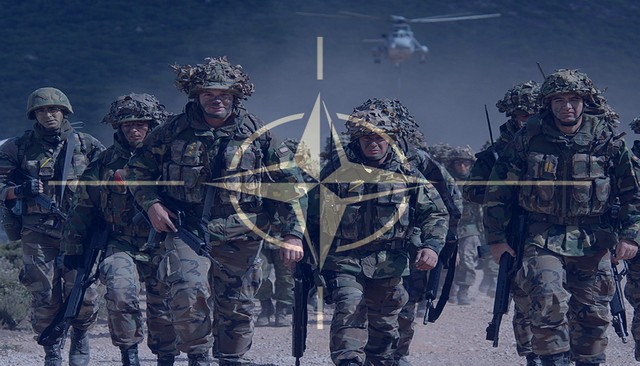
This text prepared in the context of the April 7 2019 Florence International Conference: No War, No NATO will centre on the key relationship between US-NATO military operations directed against targeted countries and the imposition of far-reaching neoliberal economic reforms both before and in the wake of US-NATO military interventions.
This article will also address the dangers and consequences of a Third World War as well the nature of advanced weapons systems deployed by the broader US-NATO coalition.
Extensive war crimes have been committed by NATO member states.
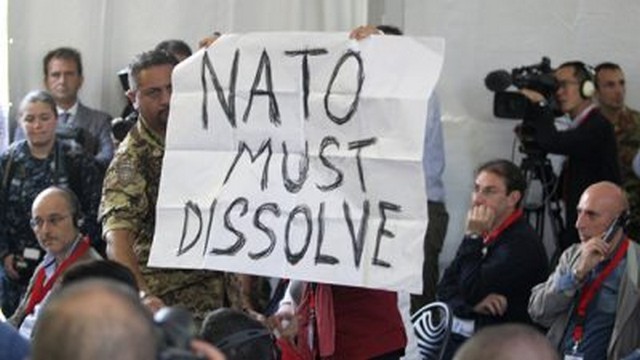
The object of the Florence Venue is NATO-EXIT. The Dismantling of NATO and the closure of US military bases.
There is a (somewhat contradictory) clause within the Treaty of the Atlantic Alliance (Article 13) which enables withdrawal from NATO. This clause has to be examined and a strategy must be envisaged.
In our conclusion we will address what types of actions are required by mass movements to reach this objective, bearing in mind that since the war on Iraq (2003), protest movements have been coopted and manipulated. While global warming makes the headlines, the dangers of nuclear war are barely mentioned. Why?
Odeon Theatre, Florence, Sunday April 7, from 10am to 18pm, Italian and English
Introduction and Overview
Washington’s unspoken hegemonic objective is Worldwide militarization and economic conquest. This imperial design is carried out through acts of war, military intervention, coups d’Etat, regime change, US sponsored insurgencies, cyber-warfare, economic sabotage and destabilization. “All options are on the table”.
We are at an important threshold in our history
In relation to all previous wars, today’s advanced military arsenal includes nuclear, biological, chemical and electromagnetic weapons which have the ability to destroy human life on a Worldwide scale.
War Propanganda
This military agenda is supported by an extensive propaganda apparatus.
The dangers of a World War are casually dismissed. War is portrayed as a humanitarian endeavor. The Mainstream media contends that war is a peace-making undertaking and that NATO should be granted the Nobel Peace prize.
Propaganda sustains the war agenda.
It provides a human face to war criminals in high office. Without media disinformation which upholds war as a peacemaking endeavor, America’s military agenda would collapse like a house of cards.
The imminent dangers of modern warfare are not front page news.
War is portrayed as a Peace-making endeavour. War Becomes Peace, Realities are turned upside down.
When the Lie becomes the Truth, there is no turning backwards. War criminals are portrayed as peace-makers.
War and Globalization. The Neoliberal Agenda
War and globalization go hand in hand. Militarization supports the imposition of macro-economic restructuring on targeted countries. It imposes military spending in support of the war economy at the expense of the civilian economy. It leads to economic destabilization and the demise of national institutions.
Military interventions are coupled with concurrent acts of economic sabotage and financial manipulation. The ultimate objective is conquest of both human and natural resources as well as political institutions.
Acts of war support a process of outright economic conquest. America’s hegemonic project is to transform sovereign countries into open territories. Debt conditionalities are imposed by foreign creditors. In turn, large sectors of the World population are impoverished through the concurrent imposition of deadly macro-economic reforms.
9/11 and the Invasion of Afghanistan. NATO and the “Global War on Terrorism”
The September 11, 2001 attacks (9/11) constitute an important and historical threshold. On the 12th of September 2001, the North Atlantic Council in Brussels invoking for the first time the doctrine of collective security (art. 5 of the Washington Treaty) adopted the following resolution:
“if it is determined that the [September 11, 2001] attack against the United States was directed from abroad [Afghanistan] against “The North Atlantic area“, it shall be regarded as an action covered by Article 5 of the Washington Treaty”. (emphasis added)
This historic decision was supported by media propaganda. There was no attack against the US by a foreign power. There were no Afghan jet fighters in the skies of New York. There was a terror event. But it was not an act of war by a foreign power against the United States of America.
Without a shred of evidence, Afghanistan was tagged as the state sponsor of the 9/11 high-jackers, all of whom were Saudi nationals. Allegedly Afghanistan was “protecting” 9/11 terror mastermind Osama bin Laden (who was an “intelligence asset”, recruited in the early 1980s by the CIA ). Osama bin Laden’s whereabouts were known. On the 10th of September (as documented by Dan Rather CBS News) Osama had been admitted to the urology department of a military hospital in Rawalpindi, by America’s staunchest ally Pakistan.
Moreover, in the course of September and early October 2001, the Afghan Taliban government on two occasions contacted the US State Department through diplomatic channels and offered to extradite bin Laden to the U.S. This issue was not covered by the media.
Bush responded:” We do not negotiate with terrorists”.
Barely 4 weeks following the 9/11 attack on October 7, 2001, US-NATO invaded Afghanistan, invoking the doctrine of collective security. There was no evidence that “Afghanistan had attacked America” on September 11, 2001.
It is worth noting, confirmed by military analysts that you do not prepare a large scale theatre war in Central Asia, thousands of miles away in a matter of 28 days. This issue was casually dismissed by the mainstream media. The war on Afghanistan had been prepared PRIOR to 9/11.
US-NATO’s Role in Recruiting and Financing Al Qaeda Affiliated Terrorists
NATO has self-proclaimed mandate to go after the terrorists.
Yet there is ample evidence that NATO was involved in supporting as well as recruiting Al Qaeda affiliated mercenaries in Kosovo, Libya and Syria.(among other countries)
In Syria, from Day One (March 17, 2011), the Islamist “freedom fighters” were supported, trained and equipped by NATO and Turkey’s High Command. According to Israeli intelligence sources (Debka, August 14, 2011):
NATO headquarters in Brussels and the Turkish high command are meanwhile drawing up plans for their first military step in Syria, which is to arm the rebels with weapons for combating the tanks and helicopters spearheading the Assad regime’s crackdown on dissent. … NATO strategists are thinking more in terms of pouring large quantities of anti-tank and anti-air rockets, mortars and heavy machine guns into the protest centers for beating back the government armored forces. (DEBKAfile, NATO to give rebels anti-tank weapons, August 14, 2011)
This initiative, which was also supported by Israel, Saudi Arabia and the Gulf States involved a process of organized recruitment of thousands of jihadist “freedom fighters”, reminiscent of the enlistment of the Mujahideen to wage the CIA’s jihad (holy war) in the heyday of the Soviet-Afghan war (1979-89).
In NATO’s war on Libya in 2011, support was channelled to the Al Qaeda affiliated jihadist opposition to the Gadaffi government.
The Legitimacy of Humanitarian Warfare
The twisted justifications for US-NATO led wars are:
- “The Just War” (Jus ad Bellum). NATO contends that all its wars are morally justifiable. This is tantamount to legitimizing extensive war crimes.
- “The Global War on Terrorism”. The counter-terrorism campaign is fake. Amply documented, NATO is involved in supporting and recruiting jihadist mercenaries (Syria 2011).
- “Responsibility to Protect” (R2P) with a view to instilling (Trump style) Western “democracy” Worldwide.
- Pre-emptive war as a means of “self-defense”, Attack them before they attack us. This doctrine also pertains to nuclear weapons, i.e. blow up the planet as a means of ‘self-defense”
- RussiaGate, “Self-defense” against Russia under the doctrine of collective security
- Pivot to Asia, Targeting China.
Financing US-NATO led Wars
In recent developments, President Trump has proposed major spending cuts in health, education, social infrastructure “while seeking a large increase for the Pentagon”. At the outset of his administration, president Trump confirmed that he was increasing the budget for the nuclear weapons program launched by Obama from 1.0 trillion to 1.2 trillion dollars. The stated objective was to make the world safer.
Throughout the EU, extended military spending coupled with austerity measures is leading to the demise of what was called the “Welfare State”.
NATO is committed to increasing military spending. It is the right thing to do to “keep our people secure, according to NATO Secretary General Jens Stoltenberg
This favors the weapons producers at the expense of social programs. Mass movements against neoliberal economic policy and social inequality (Yellow Vests) cannot, therefore, be divorced from the anti-war movement.
Globalization and the Corporate Power Structures
Global warfare sustains the Neoliberal Agenda and vice versa.
Neoliberalism broadly defined is not limited to a set of economic paradigms and structural reforms. What we are dealing with is an imperial project broadly serving powerful global overlapping interests:
- Wall Street and the Global Banking Apparatus
- The Military Industrial Complex,
- Big Oil,
- the Biotech conglomerates, Bayer-Monsanto et al
- Big Pharma,
- The Global Narcotics Economy and Organized Crime,
- the Media Conglomerates and the Information and Communication Technology Giants.
The military agenda is geared towards supporting and endorsing these powerful interests groups. There is of course within these sectors, mounting conflict between global conglomerates, each of which have their lobby groups.
The North Atlantic Treaty Organization (NATO)
NATO and the De Facto US Military Occupation of Western Europe
70 years ago NATO was born. In April 1949, The North Atlantic Treaty Organization (NATO) established what was designated as the doctrine of “Collective Security” under Art. 5 of the Washington Treaty.
NATO has a sordid history of aggression and war crimes:
Ever since its founding in April 1949, NATO has served as the vehicle to spur the arms race in the name of ‘peace through strength’. In that very same year, the Truman Administration in the United States secretly developed “Operation Dropshot’ to launch a devastating ‘first-strike’ against the former Soviet Union to completely obliterate that country. Throughout the ‘cold war’ years, the U.S. and its NATO allies always maintained an overwhelming military superiority over the USSR and the Warsaw Pact – a fact that they cynically concealed from public view at the time, but now readily admit. (Canadian Peace Congress)
The unspoken objective of NATO –which is of significance to our debate in Florence–, was to sustain under a different label, the de facto “military occupation” of Western Europe. The US not only continues to “occupy” World War II “axis countries” (Italy, Germany), it has used the NATO emblem to install US military bases throughout Western Europe, as well as in Eastern Europe in the wake of the Cold War, extending into the Balkans in the wake of NATO’s war on Yugoslavia.
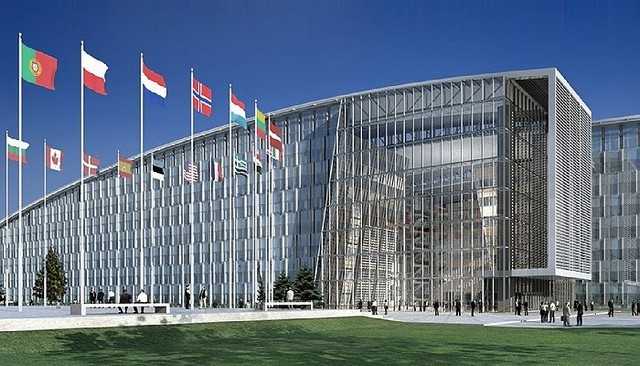
Today, NATO consists of 29 member states, most of which have US military facilities on their territory, with the largest deployments of US forces in Germany and Italy. Bear in mind these are not NATO bases. The latter are limited to command and logistics: e.g. SHAPE Supreme Headquarters Allied Powers Europe, Casteau, Belgium, NATO Allied Command Transformation, Norfolk, Virginia
- 12 founding member states in 1949 Belgium, Canada, Denmark, France, Iceland, Italy, Luxembourg, the Netherlands, Norway, Portugal,
- Greece and Turkey (1952),
- Germany (1955),
- Spain (1982)
- Czech Republic, Hungary and Poland (1999),
- Bulgaria, Estonia, Latvia, Lithuania, Romania, Slovakia (2004),
- Albania and Croatia (2009),
- Montenegro (2017)
A number of other countries have established partnership agreements with NATO. Israel is a de facto member of NATO, based on an agreement reached in 2003. In turn, the US has established a host of military alliances on a regional basis.
Source: NATO
Under the semblance of a multi-national military alliance, the Pentagon dominates NATO decision-making. The US controls NATO command structures, which are embedded into those of the US. The Supreme Allied Commander Europe (SACEUR) as well as the Supreme Allied Commander Atlantic (SACLANT) are Americans appointed by Washington. NATO current Secretary General Jens Stoltenberg is essentially a bureaucrat. He does not call the shots.
Two other key command structures Allied Command Transformation (ACT) and Allied Command Operations (ACO), “responsible for the planning and execution of all NATO military operations” were added in 2002.
Under the terms of the military alliance, NATO member states are harnessed into endorsing Washington’s imperial design of World conquest under the doctrine of collective security.
In 1949, NATO became a Cold War instrument which prevented and undermined the development of trade, political, social and cultural relations between Western Europe and the Soviet block including Eastern Europe.
For Washington, with the Pentagon pulling the strings, NATO has become a convenient military “multi-state proxy”.
The strategic objectives of the US with regard to NATO are:
1. The de facto US Military Occupation of Western, Eastern Europe and Canada through the establishment of US military bases in most NATO member states
2.The imposition of US Foreign Policy, requiring the acceptance (under the doctrine of collective security) of all US war plans by NATO member states (including military deployments on Russia’s doorstep)
3. A mechanism whereby the Pentagon finances its wars and military operations through contributions by each NATO member state, at tax-payers expense;
4. The conduct of US-led wars under the emblem of the NATO military alliance, thereby obliging NATO member states to deploy their military capabilities as well as “do the dirty work for us”, i.e. killing and destruction on behalf of Washington.
5. The extension of US influence in the post war period into the former colonies of Western European countries (France, Belgium, Italy, Britain)
Military Occupation is tagged as “Protection” and the governments of NATO member states are actually “Paying the U.S. to Occupy their countries”. It is all for a good cause. “Make the World Safer”:
“The biggest indignity yet was the ludicrous demand that NATO allies pay to host the American troops permanently garrisoned there – to essentially bankroll their own occupations. Last week, it was reported the US would begin asking some of its most hospitable allies – those nations home to hundreds of thousands of soldiers – to foot the bill for the cost of keeping them “safe.”(H. Busyinsi,
I should mention that in addition to recommending NATO for the Nobel Peace Prize, the media relentlessly presents NATO as an instrument of peace-making.
US Military Bases and Global Military Alliances
The Pentagon’s grip extends well beyond the 29 NATO member states. It also includes partner countries as well as a broad system of military alliances in all major regions of the World including Latin America, North Africa and the Middle East, sub-Saharan Africa, South Asia, South East Asia, East Asia (Japan, South Korea) and Oceania. Israel is a de facto NATO member state.
Military alliances and military occupation go hand in hand.
More generally the creation of military alliances has become a means to install US military bases in a large number of countries, including countries which were the victims of US led wars and military interventions. (eg Vietnam, Cambodia, Indonesia, Afghanistan, Iraq)
With the exception of NATO Strategic Command and its Logistics bases, there are no NATO military bases.
There are US bases located in host countries (including NATO member states) as well as national military bases under the jurisdiction of the NATO member states, often in a joint arrangement with the US.
Today there are approximately 39 US military bases in Germany (based on official sources), many of which are under a system of joint command with Germany and NATO.
In Italy, the major military bases are:
- Aviano Air Base, Pordenone
- Caserma Ederle, Vicenza
- San Vito Dei Normanni Air Station, near Brindisi
- Naval Air Station Sigonella, near Catania, Sicily
- Camp Darby, near Pisa and Livorno
According to an unconfirmed source, In Italy, there are about 100 US military bases and facilities
Cross-Cutting Coalitions: Sleeping with the Enemy
Of significance, beyond the scope of this article, are the broad structures of military alliances of Russia and China under the Shanghai Cooperation Organization (SCO).
Turkey (a member of NATO) is now collaborating with Russia as well as Iran. America’s staunchest ally Pakistan is now a full member of the SCO and is actively collaborating with China.
Geographic Combat Commands. US Military Bases Worldwide
America’s System of Geographic Combat Commands was established in the wake of World War II. It constitutes the foundations of global warfare, leading to the deployment of US Air, Navy and Land forces Worldwide, including the militarization of outer space and the deployment of nuclear weapons. In turn, all major theater wars are coordinated by US Strategic Command (USSTRATCOM) at Offutt Air Force Base, Nebraska,
The United States currently has more than 800 formal military bases in 80 countries. In turn, US-led military and economic alliances have played a key role in extending America’s sphere of influence.Once these military bases are established in countries, they remain. The host country becomes a de facto ally of the US.
From a strategic point of view with modern day warfare, the geographic combat commands are in some regards obsolete. They are largely geared towards controlling countries which host US military bases. They do not constitute an effective structure for waging strategic military operations against Russia or China.
800+ US Military Bases. Where are they Located
Joint Forces command agreements are signed between the US and its allies. The host countries must not only endorse US military doctrine, they also contribute sizeable financial resources which are used to fund US military operations. In this regard, NATO member states contribute financially to sustaining the US-led military apparatus.
The map below is incomplete. It does not include US bases under Joint Command
America’s allies are also caught in the nexus of sustaining the US weapons industry (“defense contractors”) through multibillion dollar purchase.
Nuclear War and Nuclear Weapons
“The Privatization of Nuclear War”
US Military Contractors Set the Stage
US-NATO interventions are presented as peacemaking endeavors. A new generation of “more usable” “low yield” nuclear weapons are categorized as “harmless to civilians”. This initiative was first formulated during the George W. Bush administration. The concepts are contained in the 2001 Nuclear Posture Review, adopted by the Senate in 2002.
Hiroshima Day 2003: Secret Meeting at Strategic Command Headquarters
On August 6, 2003, on Hiroshima Day, commemorating when the first atomic bomb was dropped on Hiroshima (August 6 1945), a secret meeting was held behind closed doors at Strategic Command Headquarters at the Offutt Air Force Base in Nebraska.
Senior executives from the nuclear industry and the military industrial complex were in attendance. This mingling of defense contractors, scientists and policy-makers was not intended to commemorate Hiroshima. The meeting was intended to set the stage for the development of a new generation of “smaller”, “safer” and “more usable” nuclear weapons, to be used in the “in-theater nuclear wars” of the 21st Century.
In a cruel irony, the participants to this secret meeting, which excluded members of Congress, arrived on the anniversary of the Hiroshima bombing and departed on the anniversary of the attack on Nagasaki. More than 150 military contractors, scientists from the weapons labs, and other government officials gathered at the headquarters of the US Strategic Command in Omaha, Nebraska to plot and plan for the possibility of “full-scale nuclear war”, calling for the production of a new generation of nuclear weapons – more “usable” so-called “mini-nukes” and earth penetrating “bunker busters” armed with atomic warheads.
According to a leaked draft of the agenda, the secret meeting included discussions on “mini-nukes” and “bunker-buster” bombs with nuclear war heads “for possible use against rogue states”:
Participants intimated:
“We need to change our nuclear strategy from the Cold War to one that can deal with emerging threats… The meeting will give some thought to how we guarantee the efficacy of the (nuclear) stockpile.”
The post 9/11 nuclear weapons doctrine was in the making, with America’s major defense contractors directly involved in the decision-making process.
The Hiroshima Day 2003 meetings had set the stage for the “privatization of nuclear war”. Corporations not only reap multibillion-dollar profits from the production of nuclear bombs, they also have a direct voice in setting the agenda regarding the use and deployment of nuclear weapons.
The nuclear weapons industry, which includes the production of nuclear devices as well as the missile delivery systems, etc., is controlled by a handful of defense contractors with Lockheed Martin, General Dynamics, Northrop Grunman, Raytheon and Boeing in the lead. It is worth noting that barely a week prior to the historic August 6, 2003 meeting, the National Nuclear Security Administration (NNSA) disbanded its advisory committee which provided an “independent oversight” on the US nuclear arsenal, including the testing and/or use of new nuclear devices. (The above text is an excerpt from Michel Chossudovsky’s Towards a World War Three Scenario, The Dangers of Nuclear War. Global Research, Montreal, 2011)
Dangerous Crossroads: The Future of Humanity is Threatened
Needless to say, the World is at a dangerous crossroads. The future of humanity is threatened. Lies and fabrications permeate US-NATO military doctrine. Those who decide believe in their own propaganda. Not only do they believe that tactical nuclear weapons are peace-making bombs, they are now putting forth the concept of a “Winnable Third World War”. Taking out China and Russia is on the drawing board of the Pentagon.
We are at the juncture of the most serious crisis in World history. A Third World War using nuclear weapons is terminal. This is not an understatement.
Military interventions are not limited to conventional warfare. What is at stake is a process of global warfare using advanced weapons systems. The safeguards of the Cold War era have been scrapped. The concept of “Mutually Assured Destruction” pertaining to the use of nuclear weapons has been replaced by the doctrine of preemptive nuclear war.
The INF Treaty is defunct. Nuclear weapons are portrayed by the media as peace-making bombs. They are no longer tagged as Weapons of Mass Destruction. They are to be used in what the Pentagon calls “bloody nose” operations.
In the 2001 Nuclear Posture Review (NPR) under the Bush administration, the Pentagon introduced the notion of pre-emptive nuclear war, namely the use of nuclear weapons on a first strike basis as a means of “self defense”.
The new generation of so-called tactical nuclear weapons (mininukes) has been been categorized as “low yield” and “more usable. The US Senate in 2002 approved their use in the conventional war theater. They are contemplated for use against North Korea and Iran.
They are tagged as “safe to the surrounding civilian population because the explosion is underground.” These “low yield” tactical nuclear bombs have an explosive capacity between one third and twelve times a Hiroshima bomb.
“More Usable” “Low Yield Nuclear Weapons Deployed in Five Non-Nuclear Weapons States: Germany, Italy, Belgium,The Netherlands, Turkey
The “Official” Nuclear Weapons States
Five countries, the US, UK, France, China and Russia are considered to be “nuclear weapons states” (NWS), “an internationally recognized status conferred by the Nuclear Non-Proliferation Treaty (NPT)”. Three other “Non NPT countries” (i.e. non-signatory states of the NPT) including India, Pakistan and North Korea, have recognized possessing nuclear weapons.
It is worth noting that North Korea was the only declared nuclear weapons state which voted YES at the UN General Assembly, in favor of the prohibition of nuclear weapons under Resolution L.41.
Nobody knows about this. WHY: Because the mainstream media has not mentioned it (“Fake News” through Omission) or as in the case of The Guardian and Bloomberg, the DPRK was casually lumped together with the other nuclear weapons states which voted NO (against the resolution).
“Oops News”. “We made a mistake”. We did not really check the UN General Assembly documents.
Israel: “Undeclared Nuclear State”
Israel is identified as an “undeclared nuclear state”. It produces and deploys nuclear warheads directed against military and civilian targets in the Middle East including Tehran.
Belgium, Germany, The Netherlands, Italy and Turkey: erroneously categorised as Non-Nuclear Weapons States”
The nuclear weapons capabilities of these five countries including delivery procedures are formally acknowledged. The US has supplied some 480 B61. thermonuclear bombs to five so-called “non-nuclear states”, including Belgium, Germany, Italy, the Netherlands and Turkey. In recent developments the B61.11 mini-nukes are to replaced by the recently developed B61.12. Based on 2014 data Italy possesses 50 B61 tactical nuclear weapons at its Aviano base. It is unclear whether these bombs are under US or National Command.
Casually disregarded by the Vienna based UN Nuclear Watchdog (IAEA), the US has actively contributed to the proliferation of nuclear weapons in Western Europe. As part of this European stockpiling, Turkey, which is a partner of the US-led coalition against Iran along with Israel, possesses some 90 thermonuclear B61 bunker buster bombs at the Incirlik nuclear air base. (National Resources Defense Council, Nuclear Weapons in Europe , February 2005) By the recognised definition, these five countries are “undeclared nuclear weapons states”.
The stockpiling and deployment of tactical B61 in these five “non-nuclear states” are intended for targets in the Middle East. Moreover, in accordance with “NATO strike plans”, these thermonuclear B61 bunker buster bombs (stockpiled by the “non-nuclear States”) could be launched “against targets in Russia or countries in the Middle East such as Syria and Iran” ( quoted in National Resources Defense Council, Nuclear Weapons in Europe, February 2005)
Click to See Details and Map of Nuclear Facilities located in 5 European “Non-Nuclear States”
The stockpiled weapons are B61 thermonuclear bombs. All the weapons are gravity bombs of the B61-3, -4, and -10 types.2 . Those estimates were based on private and public statements by a number of government sources and assumptions about the weapon storage capacity at each base .(National Resources Defense Council, Nuclear Weapons in Europe , February 2005)
Germany: Nuclear Weapons Producer
Among the five “undeclared nuclear states”, “Germany remains the most heavily nuclearized country with three nuclear bases (two of which are fully operational) and may store as many as 150 [B61 bunker buster ] bombs” (Ibid). In accordance with “NATO strike plans” (mentioned above) these tactical nuclear weapons are also targeted at the Middle East. While Germany is not categorized officially as a nuclear power, it produces nuclear warheads for the French Navy. It stockpiles nuclear warheads (made in America) and it has the capabilities of delivering nuclear weapons.
Moreover, The European Aeronautic Defense and Space Company – EADS , a Franco-German-Spanish joint venture, controlled by Deutsche Aerospace and the powerful Daimler Group is Europe’s second largest military producer, supplying .France’s M51 nuclear missile. Germany imports and deploys nuclear weapons from the US. It also produces nuclear warheads which are exported to France. Yet it is classified as a non-nuclear state.
Fidel’s Message on the Dangers of Nuclear War
In 2010, October 12 to 15, 2010, I had extensive and detailed discussions with Fidel Castro in Havana, pertaining to the dangers of nuclear war, the global economic crisis and the nature of the New World Order.
Fidel Castor and Michel Chossudovsky, October 2010
These meetings resulted in a wide-ranging and fruitful interview which was subsequently published by Global Research.
Recorded on the last day of the Conversations, October 15, 2010, Fidel Castro made the following statement:
In a nuclear war the “collateral damage” would be the life of all humanity.
Let us have the courage to proclaim that all nuclear or conventional weapons, everything that is used to make war, must disappear!
“The use of nuclear weapons in a new war would mean the end of humanity. This was candidly foreseen by scientist Albert Einstein who was able to measure their destructive capability to generate millions of degrees of heat, which would vaporize everything within a wide radius of action. This brilliant researcher had promoted the development of this weapon so that it would not become available to the genocidal Nazi regime.
Each and every government in the world has the obligation to respect the right to life of each and every nation and of the totality of all the peoples on the planet.
Today there is an imminent risk of war with the use of that kind of weapon and I don’t harbour the least doubt that an attack by the United States and Israel against the Islamic Republic of Iran would inevitably evolve towards a global nuclear conflict.
The World’s peoples have an obligation to demand of their political leaders their Right to Live. When the life of humankind, of your people and your most beloved human beings run such a risk, nobody can afford to be indifferent; not one minute can be lost in demanding respect for that right; tomorrow will be too late.
Albert Einstein himself stated unmistakably: “I do not know with what weapons World War III will be fought, but World War IV will be fought with sticks and stones”. We fully comprehend what he wanted to convey, and he was absolutely right, yet in the wake of a global nuclear war, there wouldn’t be anybody around to make use of those sticks and stones.
There would be “collateral damage”, as the American political and military leaders always affirm, to justify the deaths of innocent people.
In a nuclear war the “collateral damage” would be the life of all humanity.
Let us have the courage to proclaim that all nuclear or conventional weapons, everything that is used to make war, must disappear!”
Fidel Castro Ruz, October 15, 2010
Flashback: The Unspoken History of Nuclear War
The Manhattan Project established in 1939 together with Britain and Canada developed the first atomic bombs dropped on Hiroshima and Nagasaki. What was the purpose of the Manhattan Project? The official explanation is that it was America’s response to Nazi Germany’s intent to develop the atomic bomb. Bear in mind, the Manhattan project was launched in 1939, two years prior to America’s participation in World War II.
What is never mentioned in the history of nuclear weapons is that the Manhattan Project had formulated a plan to use nuclear weapons against the Soviet Union as early as 1942. In other words, the Nuclear Arms Race was not the product of the Cold War. It took it roots during World War II when the US and the Soviet Union were allies. And present US military doctrine is largely a continuation of the nuclear weapons program initiated under the Manhattan Project:
According to a secret document dated September 15, 1945, “the Pentagon had envisaged blowing up the Soviet Union with a coordinated nuclear attack directed against major urban areas.
All major cities of the Soviet Union were included in the list of 66 “strategic” targets. The tables below categorize each city in terms of area in square miles and the corresponding number of atomic bombs required to annihilate and kill the inhabitants of selected urban areas.
Six atomic bombs were to be used to destroy each of the larger cities including Moscow, Leningrad, Tashkent, Kiev, Kharkov, Odessa.
The Pentagon estimated that a total of 204 atomic bombs would be required to “Wipe the Soviet Union off the Map”. The targets for a nuclear attack consisted of sixty-six major cities.
To undertake this operation the “optimum” number of bombs required was of the order of 466 (see document below)
One single atomic bomb dropped on Hiroshima resulted in the immediate death of 100,000 people in the first seven seconds. Imagine what would have happened if 204 atomic bombs had been dropped on major cities of the Soviet Union as outlined in a secret U.S. plan formulated during the Second World War. (Michel Chossudovsky, “Wipe the Soviet Union Off the Map”, 204 Atomic Bombs against 66 Major Cities, US Nuclear Attack against USSR Planned During World War II, Global Research, October 27,
The document outlining this diabolical military agenda had been released in September 1945, barely one month after the bombing of Hiroshima and Nagasaki (6 and 9 August, 1945) and two years before the onset of the Cold War (1947).
The secret plan dated September 15, 1945 (two weeks after the surrender of Japan on September 2, 1945 aboard the USS Missouri, see image below) , however, had been formulated at an earlier period, namely at the height of World War II, at a time when America and the Soviet Union were close allies.
War with Russia and China
Nuclear Weapons were contemplated to be used against Russia since 1942, and against China since October 1949
Currently, there are detailed plans by the US military (which are in the public domaine) to wage war against both Russia and China.
Four non-compliant countries including China, Russia, Iran and North Korea have been singled out.
World War III scenarios have been contemplated by the Pentagon for more than ten years. They are the object of military simulations (which are classified). Leaked to the Washington Post in 2006, see Vigilant Shield global war scenario using nuclear weapons against China, Russia, Iran, North Korea
At the outset of 2019, War against China and Russia is on the drawing board of the Pentagon. The use of nuclear weapons is contemplated on a preemptive first strike basis.
- Recent reports (2015-2018) commissioned by the Pentagon confirm the details of Washington’s military agenda against China and Russia (see reports by the Rand Corporation’s War against China project and the 2018 National Defense Strategy Commission, War against China and Russia.
- On March 1st, 2018 president Vladimir Putin unveiled an array of advanced military technologies in response to renewed US threats to wipe the Russian Federation off the Map, as contained in Trump’s 2018 Nuclear Posture Review.
Below is a review of detailed war plans against Russia and China. These plans are in the public domaine. They are based on the premise that the US can win a nuclear war.
In May 2014, the Russian Aggression Prevention Act (RAPA) was introduced in the US Senate (S 2277), calling for the militarization of Eastern Europe and the Baltic States and the stationing of US and NATO troops on Russia’s doorstep:
S.2277 – Russian Aggression Prevention Act of 2014
Directs the President to: (1) implement a plan for increasing U.S. and NATO support for the armed forces of Poland, Estonia, Lithuania, and Latvia, and other NATO member-states; and (2) direct the U.S. Permanent Representative to NATO to seek consideration for permanently basing NATO forces in such countries.
In 2018: the US National Defense Strategy Commission report entitled “Providing for the Common Defense” outlines the contours of a war with Russia
The thrust of the report is that “global peace and stability” and “America’s own security, prosperity, and global leadership” are threatened by Russia and China.
Across Eurasia, grayzone aggression is steadily undermining the security of U.S. allies and partners and eroding American influence. Regional military balances in Eastern Europe, the Middle East, and the Western Pacific have shifted in decidedly adverse ways.
What the report recommends is the conduct of “preemptive” action against both China and Russia, with a view to sustaining US military superiority.
The United States needs more than just new capabilities; it urgently requires new operational concepts that expand U.S. options and constrain those of China, Russia, and other actors.
While the report does describe a possible war scenario with Russia or China, it recommends a sizeable increase in the US military budget. A recommendation which is currently carried out by president Trump.
War with China Scenario
In 2015, a detailed report by the Rand Corporation commissioned by the US Army outlines a war scenario with China
According to the Rand report:
Whereas a clear U.S. victory once seemed probable, it is increasingly likely that a conflict could involve inconclusive fighting with steep losses on both sides. The United States cannot expect to control a conflict it cannot dominate militarily.
http://www.rand.org/content/dam/rand/pubs/research_reports/RR1100/RR1140/RAND_RR1140.pdf
Attack China Preemptively (“In Self Defense”)
The report is notoriously ambiguous. It focusses on how a war can be avoided while analyzing the circumstances under which a preemptive war against China is a win for the US:
The presumption of this report is that China is threatening us, which justifies pre-emptive warfare. There is no evidence of a Chinese military threat. The purpose of the RAND report is that Chinese policymakers will read it. What we are dealing with is a process of military intimidation including veiled threats:
While the primary audience for this study is the U.S. policy community, we hope that Chinese policymakers will also think through possible courses and consequences of war with the United States, includ ing potential damage to China’s economic development and threats to China’s equilibrium and cohesion. We find little in the public domain to indicate that the Chinese political leadership has given this matter the attention it deserves.
The Report outlines “Four Analytic Scenarios” on how a war with China could be carried out:
The path of war might be defined mainly by two variables: intensity (from mild to severe) and duration (from a few days to a year or more). Thus, we analyze four cases: brief and severe, long and severe, brief and mild, and long and mild. The main determinant of intensity is whether, at the outset, U.S. and Chinese political leaders grant or deny their respective militaries permission to execute their plans to attack opposing forces unhesitatingly.
The concluding comments of the report underscore the potential weakness of China in relation to US-allied forces “…they do not point to Chinese dominance or victory.”
The report creates an ideological war narrative. It is flawed in terms of its understanding of modern warfare and weapons systems. It is largely a propaganda ploy directed against the Chinese leadership. It totally ignores Chinese history and China’s military perceptions which are largely based on defending the Nation’s historical national borders.
While the US, according to the report, does not contemplate the use nuclear weapons, the report examines the circumstances under which China might use nukes against the US to avoid defeat.The analysis is diabolical:
Thus, it cannot be entirely excluded that the Chinese leadership would decide that only the use of nuclear weapons would prevent total defeat and the state’s destruction. However, even under such desperate conditions, the resort to nuclear weapons would not be China’s only option: It could instead accept defeat. Indeed, because U.S. nuclear retaliation would make the destruction of the state and collapse of the country all the more certain, accepting defeat would be a better option (depending on the severity of U.S. terms) than nuclear escalation. This logic, along with China’s ingrained no-first-use policy, suggests that Chinese first use is most improbable. (p. 30)
In other words, China has the option of being totally destroyed or surrendering to the US. The report concludes as follows:
In a nutshell, despite military trends that favor it, China could not win, and might lose, a severe war with the United States in 2025, especially if prolonged. Moreover, the economic costs and political dangers of such a war could imperil China’s stability, end its development, and undermine the legitimacy of the state. (p 68)
Unconventional Warfare (UW)
Included in the Pentagon’s arsenal is the use of various instruments of subversion including the support of terrorist insurgencies as outlined the Army Special Operations Forces Unconventional Warfare manual (leaked by Wikileaks).
The emphasis is on using “surrogates”, namely irregular forces, non-state and paramilitary terrorist entities which will do the dirty work for us:
UW [Unconventional Warfare] must be conducted by, with, or through surrogates; and such surrogates must be irregular forces. Moreover, this definition is consistent with the historical reasons that the United States has conducted UW. UW has been conducted in support of both an insurgency, such as the Contras in 1980s Nicaragua, and resistance movements to defeat an occupying power, such as the Mujahideen in 1980s Afghanistan. UW has also been conducted in support of pending or ongoing conventional military operations (p. 1-2)
The stated purpose outlined in Army Field Manual is to use UW to support “insurgencies” and “resistance movements”. The “War on Terrorism” (WAT) is also defined as part of the UW arsenal:
“UW remains an enduring and effective means of warfighting and is recognized as a central effort in the WOT…
ARSOF namely Army Special Forces “support the WOT by providing forces trained and equipped”.
The report focusses on the use of special forces which are integrated into the fabric of the War on Terrorism (WOT). What this means in practice is the processing of embedding of US-NATO forces in Al Qaeda affiliated terrorist insurgencies in Afghanistan, Iraq, Syria, Libya, etc.
Unconventional Warfare (UW) also extends into the realm of financial manipulation, acts of sabotage, cyberwarfare etc. The Army Field Manual on UW also details and condones the instruments of Irregular Warfare (IW) which may resort to illegal activities such as the Iran-Contra:
“Transnational criminal activities, including narco-trafficking, illicit arms dealing, and illegal financial transactions, that support or sustain IW.”
The Anti-war Movement: How to Reverse the Tide
Pursuant to the Florence April 7, 2019 Stop NATO Conference, concrete actions would consist in:
- demanding the withdrawal from NATO by the 29 member states leading to the abolition of NATO.
- closing down of US bases and military facilities in all NATO member states
- the withdrawal of all US military personnel from NATO member countries
- the repeal of payments of NATO member countries for the financing of US military bases and facilities
- freezing of military budgets, reallocating resources to civilian social programs.
The mass movement would integrate anti-war protest with the campaign against the gamut of neoliberal economic reforms.
To achieve these objectives, what is required is the development of a broad based grassroots network which seeks to disable patterns of authority and decision making pertaining to war and the economy. This is by no means an easy and straightforward undertaking. The NGOs funded by Wall Street control a variety of “protest movements”. Since the Iraq war(2003) the anti-war movement is virtually non existent.
This network would be established nationally and internationally at all levels of society, towns and villages, work places, parishes. Trade unions, farmers organizations, professional associations, business associations, student unions, veterans associations, church groups would be called upon to integrate the antiwar organizational structure. Of crucial importance, this movement should extend into the Armed Forces as a means to breaking the legitimacy of war both within the command structure as well as among service men and women.
A related task (as a priority) would be to disable war propaganda through an effective campaign against media disinformation. (including support of the online independent and alternative media). This is no easy task given the wave of censorship against freedom of speech as well as the online manipulation of search engines and social media referrals.
What has to be achieved as a first priority is to dismantle the propaganda apparatus which sustains the legitimacy of war and neoliberalism. In that regard, the independent media has failed. The power structures behind the mainstream media, social media, etc, must be confronted.
Without this network of media disinformation, the war criminals in high office wouldn’t have a leg to stand on.
Beware however of the flow of ideas emanating from several alleged progressive NGOs and “Left intellectuals” who are often financed by the establishment foundations. These are the entities which organize the so-called protest movements, generously funded by corporate foundations.
Intellectuals should not be the driving force of a Worldwide anti-war movement. What is required is a democratization of research and analysis, which serves to support a mass grass roots movement. The complexity of the global system (its military,economic, political dimensions) must be understood by the grassroots of the movement.
Changes within the Armed Forces, Security, Intelligence Law Enforcement apparatus are required with a view to eventually democratizing the command structures. Democratizing the decision-making apparatus of police and law enforcement is also something to be contemplated.
It is worth mentioning that while millions of people across the World have gathered under the banner of “Global Warming” and Climate Change, todays wars including Syria, Yemen, Iraq, Afghanistan, Venezuela are not mentioned. Nor are the dangers of a Third World War.
The issue of poverty and Worldwide unemployment resulting from the imposition of neoliberal reforms is also sidetracked.
And the police apparatus is repressing the Yellow Vest movement.
There is also the unspoken issue pertaining to “Left intellectuals” who are often coopted into playing lip service in favor of US-NATO humanitarian wars including Yugoslavia (1999), Afghanistan (2001), not to mention Syria (2011) and Libya (2011).
While climate change is a legitimate concern, why are these protest movements limited to global warming. The answer is that many of the key organizations involved are generously funded by Wall Street foundations, including the Rockefellers, Tides, Soros., et al.
The Wall Street protagonists of war and neoliberalism are funding dissent against Wall Street. It’s what I would describe as “manufactured dissent”.
Challenging the Corporate Media
The corporate media would be directly challenged including major news outlets, which are responsible for channelling disinformation into the news chain. This endeavor would require a parallel process at the grass roots level, of sensitizing and educating fellow citizens on the nature of the war and the global crisis, as well as effectively “spreading the word” through advanced networking, through alternative media outlets on the internet, etc. It would also require a broad based campaign against the search engines involved in media censorship on behalf of the Pentagon.
The creation of such a movement, which forcefully challenges the legitimacy of the structures of political authority, requires a degree of solidarity, unity and commitment unparalleled in World history. It would require breaking down political and ideological barriers within society and acting with a single voice. It would also require eventually unseating the war criminals in high office, and indicting them for war crimes.
Abandon the Battlefield: Refuse to Fight
The military oath taken at the time of induction demands unbending support and allegiance to the US Constitution, while also demanding that US troops obey orders from their President and Commander in Chief:
“I,____________, do solemnly swear (or affirm) that I will support and defend the Constitution of the United States against all enemies, foreign and domestic; that I will bear true faith and allegiance to the same; and that I will obey the orders of the President of the United States and the orders of the officers appointed over me, according to the regulations and the Uniform Code of Military Justice. So help me God”
The President and Commander in Chief Donal Trump has blatantly violated all tenets of domestic and international law. So that making an oath to “obey orders from the President” is tantamount to violating rather than defending the US Constitution.
“The Uniform Code of Military Justice (UCMJ) 809.ART.90 (20), makes it clear that military personnel need to obey the “lawful command of his superior officer,” 891.ART.91 (2), the “lawful order of a warrant officer”, 892.ART.92 (1) the “lawful general order”, 892.ART.92 (2) “lawful order”. In each case, military personnel have an obligation and a duty to only obey Lawful orders and indeed have an obligation to disobey Unlawful orders, including orders by the president that do not comply with the UCMJ. The moral and legal obligation is to the U.S. Constitution and not to those who would issue unlawful orders, especially if those orders are in direct violation of the Constitution and the UCMJ.” (Lawrence Mosqueda, An Advisory to US Troops A Duty to Disobey All Unlawful Orders,
http://www.globalresearch.ca/articles/MOS303A.html,
See also Michel Chossudovsky, “We the People Refuse to Fight”: Abandon the Battlefield! March 18, 2006 )
The Commander in Chief is a war criminal. According to Principle 6 of the Nuremberg Charter:
“The fact that a person [e.g. Coalition troops] acted pursuant to order of his Government or of a superior does not relieve him from responsibility under international law, provided a moral choice was in fact possible to him.”
Let us make that “moral choice” possible, to enlisted American, and US-NATO Coalition servicemen and women.
Disobey unlawful orders! Abandon the battlefield! … Refuse to fight in a war which blatantly violates international law.
But this is not a choice which enlisted men and women can make individually.
It is a collective and societal choice, which requires an organizational structure.
Across the land in North America, Western and Eastern Europe and in all NATO coalition countries, the new anti-war movement must assist enlisted men and women to make that moral choice possible, to abandon military service at US military bases around the World, as well as in the battlefield in occupied Iraq and Afghanistan, as well as in Syria and Yemen.
This will not be an easy task. Committees at local levels must be set up across the United States, Canada, Britain, France, Italy, Japan among other countries, which have troops engaged in US led military operations.
We call upon veterans’ associations and local communities to support this process.
US-NATO coalition servicemen and women including senior military officers are victims of internal propaganda. This movement needs to dismantle the internal disinformation campaign. It must effectively reverse the indoctrination of coalition troops, who are led to believe that they are fighting “a just war”: “a war against terrorists”, a war against the Russians, who are threatening the security of America. It must also, as mentioned earlier, “democratize” the command structures.
The legitimacy of the US military authority must be broken.
What has to be achieved:
- Reveal the criminal nature of this military project,
- Break once and for all the lies and falsehoods which sustain the “political consensus” in favor of a pre-emptive nuclear war.
- Undermine war propaganda, reveal the media lies, reverse the tide of disinformation, wage a consistent campaign against the corporate media
- Break the legitimacy of the war-mongers in high office.
- Dismantle the US sponsored military adventure and its corporate sponsors.
- Bring Home the Troops
- Repeal the illusion that the State is committed to protecting its citizens.
- Uphold 9/11 Truth. Reveal the falsehoods behind 9/11 which are used to justify the Middle East Central Asian war under the banner of the “Global War on Terrorism” (GWOT)
- Expose how a profit driven war serves the vested interests of the banks, the defense contractors, the oil giants, the media giants and the biotech conglomerates
- Challenge the corporate media which deliberately obfuscates the causes and consequences of this war,
- Reveal and take cognizance of the unspoken and tragic outcome of a war waged with nuclear weapons.
- Call for the Dismantling of NATO
- Implement the prosecution of war criminals in high office
- Close down the weapons assembly plants and implement the foreclosure of major weapons producers
- Close down all US military bases in the US and around the World
- Develop an antiwar movement within the Armed Forces and establish bridges between the Armed Forces and the civilian antiwar movement
- Forcefully pressure governments of both NATO and non-NATO countries to withdraw from the US led global military agenda.
- Develop a consistent antiwar movement in Israel. Inform the citizens of Israel of the likely consequences of a US-NATO-Israeli attack on Iran.
- Confront the pro-war lobby groups including the pro-Israeli groups in the US
- Dismantle the homeland security state, call for the repeal of the PATRIOT legislation
- Call for the removal of the military from civilian law enforcement. In the US, call for the enforcement of the Posse Comitatus Act
- Call for the demilitarization of outer space and the repeal of Star Wars
- Call for the freezing of military budgets as well as a reallocation of resources in favor of the civilian economy
People across the land, nationally and internationally, must mobilize against this diabolical military agenda, the authority of the State and its officials must be forcefully challenged.
War can be prevented if people forcefully confront their governments, pressure their elected representatives, organize at the local level in towns, villages and municipalities, spread the word, inform their fellow citizens on the implications of a nuclear war, initiate debate and discussion within the armed forces.
What is required is the development of a broad and well organized grassroots antiwar network which challenges the structures of power and authority, the nature of the economic system, the vast amounts of money used to fund the war, the shear size of the so-called defense industry.
What is required is a mass movement of people which forcefully challenges the legitimacy of war, a global people’s movement which criminalizes war.
What is needed is to break the conspiracy of silence, expose the media lies and distortions, confront the criminal nature of the US Administration and of those governments which support it, its war agenda as well as its so-called “Homeland Security agenda” which has already defined the contours of a police State.
The World is at the crossroads of the most serious crisis in modern history. The US and its NATO allies have embarked on a military adventure, “a long war”, which threatens the future of humanity.
It is essential to bring the US war project to the forefront of political debate, particularly in North America and Western Europe. Political and military leaders who are opposed to the war must take a firm stance, from within their respective institutions. Citizens must take a stance individually and collectively against war.
We call upon people across the land, in North America, Western Europe, Israel, The Arab World, Turkey and around the world to rise up against this military project, against their governments which are supportive of US-NATO led wars, against the corporate media which serves to camouflage the devastating impacts of modern warfare.
The military agenda supports a profit driven destructive global economic system which impoverishes large sectors of the world population.
This war is sheer madness.
The Lie must be exposed for what it is and what it does.
It sanctions the indiscriminate killing of men, women and children.
It destroys families and people. It destroys the commitment of people towards their fellow human beings.
It prevents people from expressing their solidarity for those who suffer. It upholds war and the police state as the sole avenue.
It destroys both nationalism and internationalism.
Breaking the lie means breaking a criminal project of global destruction, in which the quest for profit is the overriding force.
This profit driven military agenda destroys human values and transforms people into unconscious zombies.
Let us reverse the tide.
Challenge the war criminals in high office and the powerful corporate lobby groups which support them.
Break the American inquisition.
Undermine the US-NATO-Israel military crusade.
Close down the weapons factories and the military bases.
Bring home the troops.
Members of the armed forces should disobey orders and refuse to participate in a criminal war.
[part of this section was written in 2010]
The original source of this article is Global Research
4 April 2019
Source: globalresearch.ca