Just International

A Nonviolent Strategy to Defeat a US Military Invasion of Venezuela

By Robert J. Burrowes

To the People of Venezuela

Recently I wrote an article explaining how you could defeat, using nonviolent strategy, the US coup attempt that is taking place in your country. See ‘A Nonviolent Strategy to Defeat the US Coup Attempt in Venezuela’.

I would like to complement that article by now briefly explaining how you can also defeat a military invasion by the United States and any collaborating invaders by using a strategy of nonviolent defense as well.

In making this suggestion, I acknowledge the extraordinary difficulties inflicted on Venezuela by the US sanctions imposed over many years as part of its ‘undeclared war against Venezuela’ (partly designed to destroy its progressive social banking model), explained straightforwardly by Ellen Brown in her article ‘The Venezuela Myth Keeping Us From Transforming Our Economy’ as well as alternative proposals to resolve the crisis, ranging from that by several governments to facilitate dialogue between the Venezuelan government and the opposition – see, for example, ‘Russia Proposes Venezuelan “Peaceful Measures” Initiative to UN’ – to Stephen Lendman’s suggestion that a peacekeeping force be deployed to Venezuela by such countries as Russia, China and non-aligned nations. See ‘Save Venezuelan Sovereignty: Oil Economy Destabilized. Peace-keeping Role by Russia, China, Non-alligned Nations?’

I understand that your first reaction to the idea of a strategy of nonviolent defense might be one of scepticism or even outright disbelief. However, if you are willing to consider what I write below, I will briefly explain why a strategy of nonviolent defense is theoretically and empirically sound, has often been successful in a wide range of contexts in the past, and why I believe it is important and how it can be done.

Of course, I am well aware that this history of successful nonviolent defense is little known because it has been, and still is, suppressed. And yet the history of nonviolent resistance in many diverse contexts clearly demonstrates that a strategy of nonviolent defense has the best chance of defending your country while minimizing the death and destruction in doing so (which does not mean that it would be without cost).

Moreover, if you want to read many carefully documented historical accounts of nonviolent struggles that were successful against military opponents, including those that were ruthlessly violent, you can do so in The Strategy of Nonviolent Defense: A Gandhian Approach. The book also carefully explains why these successes occurred without incurring heavy casualties on the defense, particularly in comparison to military campaigns and guerrilla struggles.

In my view then, the idea of implementing a strategy of nonviolent defense is important to consider for two essential reasons.

First, you are dealing with an opponent that is insane – see ‘The Global Elite is Insane Revisited’ with a more detailed explanation in ‘Why Violence?’ and ‘Fearless Psychology and Fearful Psychology: Principles and Practice’ – incredibly ignorant – see this interview of US Secretary of State, Mike Pompeo ‘Venezuelan military will realize Maduro’s time is up: Mike Pompeo’ which is critiqued in these articles ‘Pompeo: America “obligated” to fight “Hezbollah” in Venezuela to save “duly elected” Guaido’ and ‘Pompeo Attempts to Link Iran, Hezbollah to Crisis in Venezuela’ – and grotesquely violent – see ‘The History – and Hypocrisy – of US Meddling in Venezuela’ and Killing Hope: US Military and CIA Interventions Since World War II – that, history teaches us, is highly likely to destroy your country to gain the geostrategic advantage and natural resources that control of your country offers, as the people of Iraq and Libya, for example, can testify.

And second: no matter how committed and courageous are the (loyal) members of your military forces and civilian militia (the National Bolivarian Militia of Venezuela), and the military forces of any allies who will stand with you in the defense of Venezuela, even a ‘successful’ outcome, such as that which Syria may be on the verge of ‘celebrating’, will only come at enormous cost in terms of human lives, infrastructure (including national heritage), ecological impact and time, all of which can be far more gainfully employed to continue building Venezuela, including overcoming outstanding problems, as you decide.

The Background

As I know that you are well aware, given the declared interest of the US elite in stealing your natural resources, including oil – see, for example, ‘“Good for business”: Trump adviser Bolton admits US interest in Venezuela’s “oil capabilities”’ and ‘Regime Change for Profit: Chevron, Halliburton Cheer On US Venezuela Coup’ – the US elite has long interfered with – see, for example, ‘US Influence in Venezuela Is Part of a Two Centuries-old Imperial Plan’ – and threatened military invasion of Venezuela to seize control of these resources in clear violation of international law. For recent examples only, see ‘Trump pressed aides on Venezuela invasion, US official says’ and ‘Time for talks “long passed”: US weaponizes aid amid push for regime change in Venezuela’.

Consequently, the US administration has finally used the pretext of an unfair election result in 2018 to call for the overthrow of your government despite the widely accepted result, verified by independent sources, and even the testimony of a former US president that your electoral system is without peer. See ‘Former US President Carter: Venezuelan Electoral System “Best in the World”’.

Moreover, the US puppet Juan Guaidó, anointed by the US to replace your elected President, has effectively indicated his support for US intervention, which clearly reveals where his loyalties lie, his willingness to now provide a pretext for a US invasion, and his complete disregard for the well-being of those Venezuelans who will inevitably be killed, injured and/or dispossessed during an invasion to support the ‘neocon regime-changers’ in Washington. See ‘Venezuela’s self-proclaimed “president” Guaido isn’t ruling out “authorizing” US intervention’ and ‘The Cynicism of Empire: Sen. Rubio Tells Venezuelans to Overthrow Their Government… or Starve!’

This threat of military intervention, as the historical record clearly demonstrates, has every prospect of being carried out. See ‘Before Venezuela: The long history of U.S. intervention in Latin America’ and ‘Overthrowing other people’s governments: The Master List’.

Despite this threat, as you are aware, President Nicolás Maduro has persisted in offering to discuss the issues arising from this conflict while also calling on the international community to ‘“Stop Trump’s insane actions!” Venezuela’s Maduro talks to RT about avoiding war’ and even writing an appeal to the people of the United States which, of course, was ignored by the corporate media so that it does not even reach a wide audience. See ‘An Open Letter to the People of the United States from President Nicolas Maduro’.

While I applaud your President for his persistent calls for dialogue to resolve this issue – for a recent example, see ‘Maduro Asks International Community to End US’s Threats of War’ – there are simply three realities that make it highly unlikely that his call will be heeded, whether by the US administration that has already rejected such a call – see ‘Time for talks “long passed”: US weaponizes aid amid push for regime change in Venezuela’ – or by the international community, a substantial section of which has already declared their support for the US puppet Juan Guaidó, who has been carefully groomed for a decade for the role he is now playing. See ‘The Making of Juan Guaidó: How the US Regime Change Laboratory Created Venezuela’s Coup Leader’.

These three realities are those I mentioned above: You are dealing with an insane, incredibly ignorant and grotesquely violent opponent: an elite that seeks geopolitical control and endless resources for profit no matter what the cost to fellow human beings and the biosphere, as the record demonstrates.

Moreover, in seeking to secure its objectives, the US elite will endeavour to control the narrative in relation to Venezuela. Hence, as you have noticed, the corporate media is lying prodigiously about Venezuela as it ‘beats the drums of war’. See, for example, ‘Dissecting the jingoistic media coverage of the Venezuela crisis’, ‘Venezuela Blitz – Part 1: Tyrants Don’t Have Free Elections’, ‘Venezuela Blitz – Part 2: Press Freedom, Sanctions And Oil’ and ‘The BBC and Venezuela: bias and lies’.

For you and those of us outside Venezuela who have some knowledge of your country’s history, we are well aware of the enormous gains made by the Bolivarian movement, despite the enormously damaged country that the movement inherited. See, for example, ‘Venezuela: From Oil Proxy to the Bolivarian Movement and Sabotage’.

This progress, of course, does not mean that all problems have been resolved, most of which have been exacerbated by the sanctions imposed in recent years by the United States government. See, for example, the report by Alfred de Zayas on behalf of the United Nations Human Rights Council – ‘Report of the Independent Expert on the promotion of a democratic and equitable international order on his mission to the Bolivarian Republic of Venezuela and Ecuador’ – which identified the crisis the US ‘economic warfare’ was precipitating. See ‘Former UN Rapporteur: US Sanctions Against Venezuela Causing Economic and Humanitarian Crisis’.

Defending Against a US Military Invasion of Venezuela

So, while your effort to defeat the coup attempt continues, even if the United States military invades Venezuela before or after this issue is resolved, you have the powerful option of resisting any invasion effectively by employing a strategy of nonviolent defense.

I have explained the essential points of this strategy on the website Nonviolent Defense/Liberation Strategy. The pages of this website provide clear guidance on how to easily plan and then implement the twelve components of this strategy.

If you like, you can see a diagrammatic representation of this strategy by looking at the Nonviolent Strategy Wheel.

And on the Strategic Aims page you can see the basic list of 30 strategic goals necessary to defeat a military invasion. These strategic goals can easily be adopted, modified and/or added to if necessary, in accordance with your precise circumstances as you decide.

If you want to read a straightforward account of how to plan and conduct a nonviolent tactic so that it has strategic impact, you can do so here: ‘Nonviolent Action: Why and How it Works’.

This will require awareness of the difference between ‘The Political Objective and Strategic Goal of Nonviolent Actions’.

And, to ensure that the military violence directed against you is made as difficult as possible to perpetrate and, in many cases, does not eventuate, you are welcome to consider the 20 points designed to ensure that you are ‘Minimizing the Risk of Violent Repression’ whenever you take nonviolent action to defend yourselves when repression is a risk. This information is useful for both neutralizing violent provocateurs but also to ensure that invading military forces are compelled to deal with complex emotional and moral issues that do not arise against a violent opponent who is threatening them, and which will lead some, and perhaps very many, to desist as the historical record clearly documents. Again, for many examples, see The Strategy of Nonviolent Defense: A Gandhian Approach.

Conclusion

The US government and its sycophantic allies might not invade Venezuela. It may transpire that the diplomatic and other efforts of your government to defeat the coup and avert a US-led military invasion of Venezuela will be successful. There is also a fracturing of the opposition forces within Venezuela, in several ways, which works against the success of ongoing efforts to remove your government. See ‘Venezuela Regime Change “Made in the USA”’.

However, the extensive historical evidence of US interventions in violation of international law, the geostrategic and natural resource advantages that will accrue to the US elite from an invasion that removes your elected government, the anointment of a puppet president of Venezuela, the recent posturing and declarations by key members of the US administration and many US-allied governments, and the manufacture of public acquiescence by the corporate media all point heavily in the direction of invasion. And, as you are well aware, it is wise to treat this possibility seriously.

The elite conducting these preparatory moves is insane and, if it attacks Venezuela, there is a serious risk it will destroy your country as it has destroyed Iraq and Libya, especially if it meets significant military resistance. Their insanity precludes them caring about you, the people of Venezuela (even as they present any intervention as ‘humanitarian’). See ‘Love Denied: The Psychology of Materialism, Violence and War’. They care about nothing more than geostrategic advantage, eliminating progressive elements of your society’s development, and seizing your natural resources from which they can profit enormously.

Nevertheless, a strategy of nonviolent defense would enable you to defend yourselves and enable every last member of your population, irrespective of age and ability, to be strategically involved, as well as any solidarity activists overseas. It would also minimize the loss of life and destruction inflicted on your country.

Importantly, even if you suffer setbacks, unless and until you accept outright defeat, your strategy of nonviolent defense, ongoingly refined to maintain effective strategic coordination and to retain the initiative, will ultimately prevail.

As always, however, whether or not you decide to consider/adopt my suggestion, you have my solidarity.

13 February 2019

Robert J. Burrowes has a lifetime commitment to understanding and ending human violence.

In Hebron, Israel Removes The Last Restraint on Its Settlers’ Reign of Terror

By Jonathan Cook

Nazareth: You might imagine that a report by a multinational observer force documenting a 20-year reign of terror by Israeli soldiers and Jewish settlers against Palestinians, in a city under occupation, would provoke condemnation from European and US politicians.

But you would be wrong. The leaking in December of the report on conditions in the city of Hebron, home to 200,000 Palestinians, barely caused a ripple.

About 40,000 separate cases of abuse had been quietly recorded since 1997 by dozens of monitors from Sweden, Norway, Switzerland, Italy and Turkey. Some incidents constituted war crimes.

Exposure of the confidential report has now provided the pretext for Israeli prime minister Benjamin Netanyahu to expel the international observers. He shuttered their mission in Hebron this month, in apparent violation of Israel’s obligations under the 25-year-old Oslo peace accords.

Israel hopes once again to draw a veil over its violent colonisation of the heart of the West Bank’s largest Palestinian city. The process of clearing tens of thousands of inhabitants from central Hebron is already well advanced.

Any chance of rousing the international community into even minimal protest was stamped out by the US last week. It blocked a draft resolution at the United Nations Security Council expressing “regret” at Israel’s decision, and on Friday added that ending the mandate of the Temporary International Presence in Hebron (TIPH) was an “internal matter” for Israel.

The TIPH was established in 1997 after a diplomatic protocol split the city into two zones, controlled separately by Israel and a Palestinian Authority created by the Oslo accords.

The “temporary” in its name was a reference to the expected five-year duration of the Oslo process. The need for TIPH, most assumed, would vanish when Israel ended the occupation and a Palestinian state was built in its place.

While Oslo put the PA formally in charge of densely populated regions of the occupied territories, Israel was effectively given a free hand in Hebron to entrench its belligerent hold on Palestinian life.

Several hundred extremist Jewish settlers have gradually expanded their illegal enclave in the city centre, backed by more than 1,000 Israeli soldiers. Many Palestinian residents have been forced out while the rest are all but imprisoned in their homes.

TIPH faced an impossible task from the outset: to “maintain normal life” for Hebron’s Palestinians in the face of Israel’s structural violence.

Until the report was leaked, its documentation of Israel’s takeover of Hebron and the settlers’ violent attacks had remained private, shared only among the states participating in the task force.

However, the presence of observers did curb the settlers’ worst excesses, helping Palestinian children get to school unharmed and allowing their parents to venture out to work and shop. That assistance is now at an end.

Hebron has been a magnet for extremist settlers because it includes a site revered in Judaism: the reputed burial plot of Abraham, father to the three main monotheistic religions.

But to the settlers’ disgruntlement, Hebron became central to Muslim worship centuries ago, with the Ibrahimi mosque established at the site.

Israel’s policy has been gradually to prise away the Palestinians’ hold on the mosque, as well the urban space around it. Half of the building has been restricted to Jewish prayer, but in practice the entire site is under Israeli military control.

As the TIPH report notes, Palestinian Muslims must now pass through several checkpoints to reach the mosque and are subjected to invasive body searches. The muezzin’s call to prayer is regularly silenced to avoid disturbing Jews.

Faced with these pressures, according to TIPH, the number of Palestinians praying there has dropped by half over the past 15 years.

In Hebron, as at Al Aqsa mosque in Jerusalem, a Muslim holy site is treated solely as an obstacle – one that must be removed so that Israel can assert exclusive sovereignty over all of the Palestinians’ former homeland.

A forerunner of TIPH was set up in 1994, shortly after Baruch Goldstein, an Israeli army doctor, entered the Ibrahimi mosque and shot more than 150 Muslims at prayer, killing 29. Israeli soldiers aided Goldstein, inadvertently or otherwise, by barring the worshippers’ escape while they were being sprayed with bullets.

The massacre should have provided the opportunity for Yitzhak Rabin, Israel’s prime minister of the time, to banish Hebron’s settlers and ensure the Oslo process remained on track. Instead he put the Palestinian population under prolonged curfew.

That curfew never really ended. It became the basis of an apartheid policy that has endlessly indulged Jewish settlers as they harass and abuse their Palestinian neighbours.

Israel’s hope is that most will get the message and leave.

With Israeli Prime Minister Benjamin Netanyahu in power for a decade, more settlers are moving in, driving out Palestinians. Today Hebron’s old market, once the commercial hub of the southern West Bank, is a ghost town, and Palestinians are too terrified to enter large sections of their own city.

TIPH’s report concluded that, far from guaranteeing “normal life”, Israel had made Hebron more divided and dangerous for Palestinians than ever before.

In 2016 another army medic, Elor Azaria, used his rifle to shoot in the head a prone and badly wounded Palestinian youth. Unlike Goldstein’s massacre, the incident was caught on video.

Israelis barely cared until Azaria was arrested. Then large sections of the public, joined by politicians, rallied to his cause, hailing him a hero.

Despite doing very little publicly, TIPH’s presence in Hebron had served as some kind of restraint on the settlers and soldiers. Now the fear is that there will be more Azarias.

Palestinians rightly suspect that the expulsion of the observer force is the latest move in efforts by Israel and the US to weaken mechanisms for protecting Palestinian human rights.

Mr Netanyahu has incited against local and international human rights organisations constantly, accusing them of being foreign agents and making it ever harder for them to operate effectively.

And last year US President Donald Trump cut all aid to UNRWA, the United Nations’ refugee agency, which plays a vital role in caring for Palestinians and upholding their right to return to their former lands.

Not only are the institutions Palestinians rely on for support being dismembered but so now are the organisations that record the crimes Israel has been committing.

That, Israel hopes, will ensure that an international observer post which has long had no teeth will soon will soon lose its sight too as Israel begins a process of annexing the most prized areas of the West Bank – with Hebron top of the list.

A version of this article first appeared in the National, Abu Dhabi.

Jonathan Cook won the Martha Gellhorn Special Prize for Journalism.

13 February 2019

Source: countercurrents.org
Ethics Probe for Trudeau And Legitimacy Problem for Guaido

By Countercurrents.org

Justin Trudeau, the Canadian Prime Minister, and an over-active participant in imperialist intervention in Venezuela, and Juan Guaido, the self-proclaimed “interim president” of Venezuela, and one of the leading proxies in the imperialist venture are facing serious problem. The problems of the two leaders are of two types. But the two are related to interference, and both of the cases are producing similar effect – the problem of credibility.

Media reports said:

Trudeau is being investigated for illegally attempting to shield SNC-Lavalin, a Montreal engineering firm, from criminal fraud and corruption charges. The case involves millions of dollars in bribes to members of government in Libya, a victim of imperialist intervention.

However, Trudeau has “welcomed” the probe. The Conflict of Interest and Ethics Commissioner has launched the probe a few days ago. By that time, Trudeau has extended his interventionist role in Venezuela.

Two MPs from the New Democrat party made requests for the probe. Before the requests came, the Globe and Mail (G&M) carried a report on the issue last week.

According to the G&M report, the Canadian leader was at the heart of the case, which the Conservative opposition has termed an “unprecedented” effort to illegally influence a criminal proceeding. No law allows anyone to influence any criminal proceeding.

Trudeau, one of the leaders of the imperialist democratic world, allegedly pressured former justice minister and attorney general Jody Wilson-Raybould to curtail the criminal prosecution of a multi-million-dollar corruption and fraud case against SNC-Lavalin, redirecting the matter out of the courts, and into a “remediation agreement,” which would have spared the company the negative financial and reputational consequences of a criminal trial – the most devastating of which would include a 10-year ban from accepting government contracts, a stipulation which would economically cripple the firm.

When Wilson-Raybould refused to ask federal prosecutors to make the non-prosecution deal with SNC-Lavalin in December, according to the G&M, Trudeau essentially fired her, leaving her to wash up at Veterans Affairs, a significant demotion.

Trudeau denies the allegations. The Canadian leader claims: “Neither the current nor the previous attorney general was ever directed by me or anyone in my office to take a decision in this matter.”

Conservative Leader Albert Scheer said: “Obviously Justin Trudeau’s trying to hide something.”

SNC-Lavalin was charged with paying out $48 million in bribes to Libyan officials in the decade leading up to the NATO-led overthrow of Muammar Gaddafi’s government in 2011, payments intended to influence government decision-making, though the company was also charged with defrauding Libyan companies of about $130 million.

Intervention and corruption go hand-in-hand.

Problem of a proxy, Guaido

Roger D. Harris with the Campaign to End US/Canada Sanctions against Venezuela writes in “Juan Guaido: The Man Who Would Be President of Venezuela Doesn’t Have a Constitutional Leg to Stand On”:

Donald Trump, the U.S. President, imagines Guaido is the rightful president of Venezuela. But Guaido, a man of impeccable illegitimacy, was exposed by Dan Cohen and Max Blumenthal as “a product of a decade-long project overseen by Washington’s elite regime change trainers.”

Roger Harris refers to Argentinean sociologist Marco Teruggi, who described Guaido as “a character that has been created for this circumstance” of regime change.

These findings, writes Roger Harris, deconstruct Guaido’s constitutional credentials to be interim president of Venezuela.

Educated at George Washington University in Washington, DC, Guaido was unknown in Venezuela before thrusting in the active duty of a proxy warrior. A poll, conducted about a week ago, before Guaido appointed himself president of the country, 81% of Venezuelans had never even heard of the leader.

Roger Harris, also a board member for the 32-year-old anti-imperialist human rights organization Task Force on the Americas, informs:

US Vice President Pence phoned Guaido on the evening of January 22 and asked him how’d he like to be made president of Venezuela. The next day, Guaido announced that he considered himself president of Venezuela.

Only a few weeks before to that “historical” self-appointment, Guaido was selected as president of the country’s National Assembly. It was his party’s – Popular Will – turn for the presidency of the assembly.

He was elected to the assembly from a coastal area with 26% of the vote.

Guaido, even within his own party, was not in the top leadership.

Roger Harris, also an election observer in Venezuela for both of Maduro’s elections, most recently on a delegation with Venezuela Analysis and the Intrepid News Fun, writes:

“Popular Will, is a far-right marginal group whose most enthusiastic boosters are John Bolton, Elliott Abrams, and Mike Pompeo. Popular Will had adopted a strategy of regime change by extra-parliamentary means rather than engage with the democratic electoral process and had not participated in recent Venezuelan elections.”

Although anointed by Trump and company, writes Roger Harris, Popular Will is not representative of the “Venezuelan opposition,” a fractious bunch whose hatred of Maduro is only matched by their abhorrence of each other. Leading opposition candidate Henri Falcon, who ran against Maduro in 2018 on a neoliberal austerity platform, had been vehemently opposed by Popular Will. The party demanded that Falcon join their US-backed boycott of the election.

In the article, which was published in many alternative news and views outlets, Roger Harris informs:

Ultimas Noticias, a Venezuelan news outlet, reported that prominent opposition politician Henrique Capriles, who had run against Maduro in 2013, “affirmed during an interview that the majority of opposition parties did not agree with the self-swearing in of Guaido as interim president.”

Claudio Fermin, president of the party Solutions for Venezuela, wrote: “we believe in the vote, in dialogue, we believe in coming to an understanding, we believe Venezuelans need to part ways with the extremist sectors that only offer hatred, revenge, lynching.”

Key opposition governor of the State of Táchira, Laidy Gómez, has rejected Guaido’s support of intervention by the US, warning that it “would generate death of Venezuelans.”

The Guaido/Trump cabal does not reflect the democratic consensus in Venezuela, where polls consistently show super majorities oppose outside intervention. Popular opinion in Venezuela supports negotiations between the government and the opposition. The Maduro administration has embraced the negotiations as a peaceful solution to the crisis.

But the US government rejects a negotiated solution, in the words of Vice President Pence: “This is no time for dialogue; this is time for action.”

This intransigent position is faithfully echoed by Guaido. So while most Venezuelans want peace, the self-appointed president, backed by the full force of US military power, wrote in a New York Times op-ed that it was possible to “end the Maduro regime with a minimum of bloodshed.”

Roger Harris adds:

The Guaido/Trump cabal’s fig leaf for legitimacy is based on the bogus argument that Article 233 of the Venezuelan constitution gives the National Assembly the power to declare a national president’s “abandonment” of the office. In which case, the president of the National Assembly can serve as an interim national president, until presidential elections are held. The inconvenient truth is that Maduro has shown no inclination to abandon his post, and the constitution says no such thing.

In fact, the grounds for replacing a president are very clearly laid out in the first paragraph of Article 233 of the Venezuelan constitution and do not include fraudulent or illegitimate election, which is what the cabal has been claiming. In the convoluted logic of the US government and its epigones, if the people elect someone the cabal doesn’t like, the election is by definition fraudulent and the democratically elected winner is ipso facto a dictator.

The function of adjudicating the validity of an election, as in any country, is to be dealt with through court challenges, not by turning to Donald Trump for his approval. And certainly not by anointing an individual from a party that could have run in the 2018 election but decided to boycott.

The National Electoral Council (CNE), Venezuela’s separate electoral branch, has certified Maduro’s reelection, as have independent international observers. A transparent and redundant auditing process of the vote had been conducted at each polling station and all party representatives – including opposition ones – signed off on the validity of the process when the polls closed. Further, no appeal was filed by any of the boycotting parties, although Falcón – who ran – subsequently asserted irregularities in the process before the high court.

Maduro was sworn into office under Article 231 of the Venezuelan constitution before the Supreme Tribunal of Justice (TSJ), which is the separate high court branch of the Venezuelan government. The TSJ had previously found the National Assembly to be in judicial contempt under Article 336:7, because the assembly had sworn in three deputies temporarily suspended because of voting irregularities.

The far-right opposition has boycotted the high court as well as the electoral process. They contest the legitimacy of the TSJ because some members of the TSJ were appointed by a lame duck National Assembly favorable to Maduro, after a new National Assembly with a majority in opposition had been elected in December 2015 but not yet seated.

Even if President Maduro were somehow deemed to have experienced what is termed a falta absoluta (i.e., some sort of void in the presidency due to death, insanity, absence, etc.), the National Assembly president is only authorized to take over if the falta absoluta occurs before the lawful president “takes possession.” However, Maduro was already “in possession” before the January 10, 2019 presidential inauguration and even before the May 10, 2018 presidential election. Maduro had won the presidency in the 2013 election and ran and won reelection last May.

If the falta absoluta is deemed to have occurred during the first four years of the presidential term, the vice president takes over. Then the constitution decrees that a snap election for the presidency must be held within 30 days. This is what happened when President Hugo Chávez died while in office in 2013. Then Vice President Nicolas Maduro succeeded to the presidency, called for new elections, and was elected by the people of Venezuela.

If it is deemed that the falta absoluta occurred during the last two years of the six-year presidential term, the vice president serves until the end of the term, according to the Venezuelan constitution. And if the time of the alleged falta absoluta is unclear – when Maduro presided over “illegitimate” elections in 2018, as is claimed by the far-right opposition – it is up to the TSJ to decide, not the head of the National Assembly or even such an august authority as US Senator Marco Rubio. Or the craven US press (too numerous to cite), which without bothering to read the plain language of the Bolivarian Constitution, repeatedly refers to Guaido as the “constitutionally authorized” or “legitimate” president.

Roger Harris concludes the article with the following paragraph:

As Alfred de Zayas, United Nations independent expert on the promotion of a democratic and equitable international order, tweeted: “Article 233 of the Venezuelan constitution is inapplicable and cannot be twisted into legitimizing Guaido’s self-proclamation as interim President. A coup is a coup.”

13 February 2019

Source: Countercurrents.org

Stand With Yemen

Date: Saturday, 23rd February 2019

Time: 9AM – 2PM
Venue: International Institute of Islamic Civilization & Malay World (ISTAC)
24 Persiaran Tuanku Syed Sirajuddin, Taman Duta, 50480 Kuala Lumpur

Welcoming address by Tan Sri Razali Ismail, SUHAKAM

Keynote address by YAB Tun Dr Mahathir Mohamad, Prime Minister of Malaysia

Background

The war in Yemen has been on-going for the last three years. More than 10,000 Yemenis have been killed with tens of thousands wounded, many as a direct result of the Saudi-led bombing campaign supported by the United States and Britain and nine other African and Middle-East countries. Women and children in particular have borne the brunt of the hardship and deprivation of the war. More than 60,000 people have been killed in Yemen and an estimated 85,000 children under the age of five may have died from acute malnutrition. And some 3.5 million Yemenis have had to flee their homes and now live under the most deplorable conditions.

The Saudi blockade, in place since 2015, together with the deliberate targeting of means of food production and distribution in Yemen such as farms, fishing boats, ports and food factories have pushed Yemen – which imports 80% of its food – to the brink of famine reaching critical levels. The UN estimates that 130 children die every day in Yemen as a result of the war, famine and disease. To make matters worse, cholera and diphtheria are now also ravaging the land. There were 120,000 cases suspected of cholera between January and August 2018 with 19.3 million Yemenis do not have access to clean water and sanitation. According to UNICEF, more than 22 million Yemenis or 78% of the population need humanitarian assistance every day. The World Health Organization WHO also estimated that 1.8 million under the age of five suffer acute malnutrition including 500,000 children suffered from severe acute malnutrition.

According to UN estimates, around 8.4 million Yemenis are on the verge of starvation and do not know when their next meal will come from. No wonder then that Yemen’s situation has been described as the worst humanitarian catastrophe in the world.

Aims

To raise awareness of the conflict in Yemen and the unfolding humanitarian crisis there;
To encourage the Government of Malaysia to play a more active role in the search for a peaceful settlement of the conflict and in particular to assist in alleviating the suffering people of Yemen in their hour of need;
To encourage Malaysians and civil society groups to help raise funds for humanitarian assistance to Yemen;
To deliver a Declaration on Yemen to the Parliament.

PROGRAM

830 – 900AM: Registration & arrival of guests

900 – 915AM: Arrival of YAB Tun Dr Mahathir Mohamad,
Prime Minister of Malaysia

Brief remarks by Ambassador Dato Dennis Ignatius,
Chairman of Stand with Yemen Coalition

915 – 930AM: Officiating of Photo Exhibition by YAB Tun Dr Mahathir Mohamad & Tour

930 – 1000AM: Tun Dr Mahathir Mohamad to meet the Press at the Holding Room

Photo exhibition for participants

Adjournment to the Lecture Hall

1000 – 1005AM: Welcome remarks by the Rector of International Islamic University of Malaysia, Prof Dr Dzulkifli Abdul Razak

1005 – 1015AM: Remarks by Tan Sri Razali Ismail, Chairman of SUHAKAM

1015 – 1045AM: Keynote Address by YAB Tun Dr Mahathir Mohamad, Prime Minister of Malaysia

1045 – 1100AM: Tea break

1100 – 1110AM: Speech by Chairperson, Siti Jasmine Zulkifli

Qur’an recitation by Muhammad Thufail Sayuti,
Surah al-Hajj: 38-41

1110-1120AM: Opening speech by Tan Sri Razali Ismail, Chairman of SUHAKAM

1120- 1130AM: Video screening of “The War in Yemen – a first-hand account”
by Fatima Noman

1130 – 1230AM: Forum moderated by Dato’ Dr Ahmad Farouk Musa,
Islamic Renaissance Front

Panelists
1) Dr Abdul Rahman Al Maamari, Tangible Association for Yemeni Refugees – TAYR
2) Dr James M. Dorsey, Nanyang Technological University
3) Dr Chandra Muzaffar, International Movement for a JUST World
4) Dato’ Saifuddin Abdullah, Foreign Minister of Malaysia

1230 – 130PM: Discussion and Q&A

130 – 200PM: Lunch & Presentation by GPM on their
recent mission to Yemen at the Banquet Hall

200PM: Press Conference & Release of the Symposium Declaration
at the Ibnu Khaldun Room, Lower Ground, ISTAC

Speakers’ Profile:

Dr Abdul Rahman Al Maamari
Dr. Abdul Rahman Al-Maamari has a PhD in Post-colonial Literature from the National University of Malaysia (UKM). Currently a researcher and freelance translator, Dr. Al-Maamari devotes his time to assisting the Tangible Association for Yemeni Refugees (TAYR), an NGO which is registered under the UNHCR and based in Negeri Sembilan.

Dr James M. Dorsey
Dr James M. Dorsey is a Senior Fellow at the S. Rajaratnam School of International Studies at Singapore’s Nanyang Technological University focused on the Middle East and North Africa who publishes widely in peer-reviewed journals as well as non-academic publications. A veteran, award-winning foreign correspondent for four decades in the Middle East, Africa, Latin America, Europe and the United States for publications such as The Wall Street Journal, The New York Times and the Financial Times, James has met a multitude of the region’s leaders. As a journalist, James covered primarily ethnic and religious conflict, including some of recent history’s most dramatic events such as the 1973 Middle East war; the Lebanese civil war; the 1979 Soviet invasion of Afghanistan and the U.S.-backed insurgency that ultimately led to the withdrawal of Soviet troops; the Palestinian intifadas; the Iranian revolution, U.S. embassy hostage crisis and the Iran-Iraq war; the Iraqi invasion of Iraq and the toppling of Saddam Hussein; the Israeli-Palestinian peace process; the wars in Croatia, Bosnia, Kosovo and Serbia; the armed struggles in the Western Sahara, Algeria, the Philippines, Kashmir, Eritrea, Tigre, the Ogaden, Chad, Niger, Chechnya, the Caucasus and Georgia; the Columbian drug cartels; the fall of Noriega in Panama; the wars in Nicaragua and El Salvador; the Kurdish insurgency in south-eastern Turkey, post-revolution Iran and Saddam’s Iraq; and the war on terror. James writes a widely acclaimed blog, The Turbulent World of Middle East Soccer, has published a book with the same title, and authors a syndicated column. He is a frequent speaker at international conferences, workshops and seminars and is consulted by governments, corporations and judicial authorities. James won the Dolf van den Broek prize in 2003 and was a two-time nominee for the Pulitzer Prize in 1980 and 1988 as well as was a finalist for the 2012 European Press Prize; the Kurt Schork Award and the Amnesty International Media Award in 2002 and the Index on Censorship Award in 2012. James also co-directs the Institute of Fan Culture of the University of Wuerzburg.

Dr Chandra Muzaffar
Dr. Chandra Muzaffar is the President of the International Movement for a Just World (JUST), an international NGO based in Malaysia, which seeks to critique global injustice and to develop an alternative vision of a just and compassionate civilisation guided by universal spiritual and moral values. He has published extensively on civilizational dialogue, international politics, religion, human rights and Malaysian society. The author and editor of 32books in English and Malay, many of his writings have been translated into other languages. Among Chandra’s latest publications are,A World in Crisis: Is There a Cure?and Reflections on Malaysian Unity and Other Challenges. In l977, he founded a multi-ethnic social reform group called Aliran Kesedaran Negara (ALIRAN) which he led for 14 years. Today, apart from his role in JUST, Chandra sits on the board of a number of international NGOs concerned with social justice and civilizational dialogue. Chandra was Professor at, and Director of,the Centre for Civilisational Dialogue, University of Malaya (1997-1999) and Professor of Global Studies at Universiti Sains Malaysia (2007-2012) Chandra travels abroad frequently, giving lectures and speaking at seminars and conferences. He is also a regular speaker at meetings at home in Malaysia. Chandra is the recipient of a number of international awards related to his scholarship and social activism, including the Harry J. Benda Prize for distinguished scholarship on Southeast Asia by the Association of Asian Studies, North America (1989) and the Juliet Hollister recognition as an “inter-faith Visionary” by the New York based Temple of Understanding (2010)

YB Dato’ Saifuddin Abdullah
YB Dato’ Saifuddin Abdullah is the Malaysian Minister of Foreign Affairs. He serves as Chief Secretary of Pakatan Harapan Secretariat and Chairman of Youth Academy. Previously, he was CEO of Global Movement of Moderates (GMM), Deputy Minister of Higher Education, Member of Parliament for Temerloh and Member of UMNO Supreme Council. He is a progressive politician who advocates the idea of New Politics, youth empowerment and social entrepreneurship. He is also actively promoting debate and basketball. Before joining politics, he was President of the Malaysian Youth Council, Member of the United Nations Secretary General’s High-Level Panel on Youth Employment, Consultant of the Economic and Social Commission for Asia and the Pacific (ESCAP) and a student activist. Dato’ Saifuddin has published six books and is columnist at Sinar Harian, The Edge Malaysia and Sin Chew Daily.

Organizers:

Angkatan Belia Islam Malaysia (ABIM)
G25 Malaysia (G25)
Global Peace Malaysia (GPM)
International Movement for a Just World (JUST)
Islamic Renaissance Front (IRF)
Pertubuhan IKRAM Malaysia (IKRAM)
Sisters in Islam (SIS)
Suruhanjaya Hak Asasi Manusia Malaysia (SUHAKAM)
United Nations Association of Malaysia (UNAM)
Citizen’s Network for a Better Malaysia (CNBM)
Persatuan Patriot Kebangsaan (Patriot)

Media Partner:

Free Malaysia Today
To donate to the humanitarian aid fund for Yemen by Global Peace Mission Malaysia:

Maybank: 5642 2161 1602
Bank Islam: 1402 3010 02922 4
Ref: Yaman
Email: gpmkewangan@gmail.com

Harsh Turkish condemnation of Xinjiang cracks Muslim wall of silence

By Dr James M Dorsey

In perhaps the most significant condemnation to date of China’s brutal crackdown on Turkic Muslims in its north-western province of Xinjiang. Turkey’s foreign ministry demanded this weekend that Chinese authorities respect human rights of the Uighurs and close what it termed “concentration camps” in which up to one million people are believed to be imprisoned.

Calling the crackdown an “embarrassment to humanity,” Turkish Foreign Ministry spokesman Hami Aksoy said the death of detained Uighur poet and musician Abdurehim Heyit had prompted the ministry to issue its statement.

Known as the Rooster of Xinjiang, Mr. Heyit symbolized the Uighurs’ cultural links to the Turkic world, according to Adrian Zenz, a European School of Culture and Theology researcher who has done pioneering work on the crackdown.

Turkish media asserted that Mr. Heyit, who was serving an eight-year prison sentence, had been tortured to death.

Mr. Aksoy said Turkey was calling on other countries and United Nations Secretary-General Antonio Guterres to take steps to end the “humanitarian tragedy” in Xinjiang.

The Chinese embassy in Ankara rejected the statement as a “violation of the facts,” insisting that China was fighting seperatism, extremism and terrorism, not seeking to “eliminate” the Uighurs’ ethnic, religious or cultural identity.

Mr. Aksoy’s statement contrastèd starkly with President Recep Tayyip Erdogan’s declaration six months earlier that China was Turkey’s economic partner of the future. At the time, Turkey had just secured a US$3.6 billion loan for its energy and telecommunications sector from the Industrial and Commercial Bank of China (ICBC).

The Turkish statement constitutes the first major crack in the Muslim wall of silence that has enabled the Chinese crackdown, the most frontal assault on Islam in recent memory. The statement’s significance goes beyond developments in Xinjiang.

Like with Muslim condemnation of US President Donald J. Trump’s decision last year to recognize Jerusalem as the capital of Israel, Turkey appears to be wanting to be seen as a spokesman of the Muslim world in its one-upmanship with Saudi Arabia and to a lesser degree Iran.

While neither the kingdom or Iran are likely to follow Turkey’s example any time soon, the statement raises the stakes and puts other contenders for leadership on the defensive.

The bulk of the Muslim world has remained conspicuously silent with only Malaysian leaders willing to speak out and set an example by last year rejecting Chinese demands that a group of Uighur asylum seekers be extradited to China. Malaysia instead allowed the group to go to Turkey.

The Turkish statement came days after four Islamist members of the Kuwaiti parliament organized the Arab world’s first public protest against the crackdown.

By contrast, Pakistani officials backed off initial criticism and protests in countries like Bangladesh and India have been at best sporadic.

Like the Turkish statement, a disagreement between major Indonesian religious leaders and the government on how to respond to the crackdown raises questions about sustainability of the wall of silence.

Rejecting a call on the government to condemn the crackdown by the Indonesian Ulema Council, the country’s top clerical body, Indonesian vice-president Jusuf Kalla insisted that the government would not interfere in the internal affairs of others.

The council was one of the first, if not the first, major Muslim religious body to speak out on the issues of the Uighurs. Its non-active chairman and spiritual leader of Nahdlaltul Ulama, the world’s largest Muslim organization, Ma’ruf Amin, is running as President Joko Widodo’s vice-presidential candiate in elections in April.

The Turkish statement could have its most immediate impact in Central Asia, which like Turkey has close ethnic and cultural ties to Xinjiang, and is struggling to balance relations with China with the need to be seen to be standing up for the rights of its citizens and ethnic kin.

In Kazakhstan, Turkey’s newly found assertiveness towards China could make it more difficult for the government to return to China Sayragul Sautbay, a Chinese national of ethnic Kazakh descent and a former re-education camp employee who fled illegally to Kazakhstan to join her husband and child.

Ms. Sautbay, who stood trial in Kazakhstan last year for illegal entry, is the only camp instructor to have worked in a reeducation camp in Xinjiang teaching inmates Mandarin and Communist Party propaganda and spoken publicly about it.

She has twice been refused asylum in Kazakhstan and is appealing the decision. China is believed to be demanding that she be handed back to the Xinjiang authorities.

Similarly, Turkey’s statement could impact the fate of Qalymbek Shahman, a Chinese businessman of Kazakh descent, who is being held at the airport in the Uzbek capital of Tashkent after being denied entry into Kazakhstan.

“I was born in Emin county in China’s Xinjiang Uyghur Autonomous Region to a farming family. I wanted to go to Kazakhstan, because China’s human rights record was making life intolerable. I would have my ID checked every 50 to 100 meters when I was in Xinjiang, This made me extremely anxious, and I couldn’t stand it anymore,” Mr. Shahman said in a video clip sent to Radio Free Asia from Tashkent airport.

A guide for foreign businessmen, Mr. Shahman said he was put out of business by the continued checks that raised questions in the minds of his clients and persuaded local businessmen not to work with him.

Said Mr. Zenz, the Xinjiang scholar, commenting on the significance of the Turkish statement: “A major outcry among the Muslim world was a key missing piece in the global Xinjiang row. In my view, it seems that China’s actions in Xinjiang are finally crossing a red line among the world’s Muslim communities, at least in Turkey, but quite possibly elsewhere.”

Dr. James M. Dorsey is a senior fellow at the S. Rajaratnam School of International Studies, co-director of the University of Würzburg’s Institute for Fan Culture, and co-host of the New Books in Middle Eastern Studies podcast.

11 February 2019

Source: countercurrents.org
Why Venezuela’s People Are Suffering

By Eric Zuesse

INTRODUCTION

The case that will be documented here is that Venezuela’s people are suffering from a tragic national situation which actually cannot be reversed by anything that’s within the power of Venezuela’s Government to do or to block. In order to understand this very unfortunate reality (if one wants to understand it), one must first understand the relevant parts of the broader situation in the world that affects Venezuela. What’s dooming the country isn’t merely a local situation, but instead is global and environmental. It also is economic, pertaining to the role that Venezuela is playing in the global economy. But the economic factor is definitely not of the kind that it’s commonly assumed and alleged to be. It is instead very different.

Here, this very different reality will be both described and documented (instead of just founded upon assumptions — many of which are false — such as the standard, basically local, economic ‘explanation’ of Venezuela’s troubles is, which focuses on Venezuela’s socialism, or the economy’s being not sufficiently capitalist).

What it all comes down to, stated in its briefest terms, is that no nation can do anything but lose money by selling the world’s dirtiest oil, tar-sands oil, which costs $100+ to clean and produce, into a global oil market that’s paying less than $100 (currently around $65) per barrel. Venezuela was able to sell it profitably when oil-prices were high, but is getting crushed now, because its oil is no longer profitable to produce and sell. But 95% of Venezuela’s export-earnings come from oil. Unless and until oil-prices are again above $100 (which probably won’t happen again, except perhaps for very brief periods), Venezuela is doomed. Venezuela’s only chance to diversify its economy away from “the natural resources curse” (from which it especially suffers) was long ago, decades before the current Government came into power. That chance was missed. This ship is now sinking, and no one can save it. (And the U.S. Government and its allies have no actual interest in saving it, but only in exploiting it, parasitically.)

So, here the real history and context for what is happening in and to Venezuela will be presented, and the reader will be able easily to verify any detail of it (by means of the links) — on one’s own, (not accepting anything on mere ‘authority’, which, in such a politically charged matter as this, is almost invariably propaganda). The reader can verify any allegation here simply by clicking onto the given link, at any point in the presentation that might seem to be questionable.

These links are directly to the items of evidence, in the specific case of: why Venezuela’s people are suffering.

Here is that case — the realistic case, without any propaganda, but with only credible news reports and source-documents as constituting its basis — regarding this question.

THE CASE

The two lands that produce the world’s highest-cost-to-produce oil are Canada and Venezuela. Both extract their oil overwhelmingly from tar-sands, which is the dirtiest of all oil and thus (by far) the costliest to refine. (Thus, it’s called “extra-heavy crude”, and that is the least desirable type. It’s also the type that, in a global-warming world, should remain in the ground, never be burned at all, as will also be explained here.)

An accurate summary statement in Wikipedia is that, “With present technology, the extraction and refining of heavy oils and oil sands generates as much as three times the total CO2 emissions compared to conventional oil,[20] primarily driven by the extra energy consumption of the extraction process.” That reference at “[20]” also states: “As the price of oil rises and as conventional hydrocarbon resources become scarcer, increased exploration and production activity is occurring in heavy oil, tar sands, and bitumen deposits. While these contribute significantly to the global energy …, they also contribute a greater share to … the detriment of the global environment.” (That’s referring to “a greater share” of “detriment” than normal crude does.) As another source phrased this matter in more explicit terms: “85 gallons of water, two tons of soil, 700-1200 cubic feet of natural gas, and 170 pounds of greenhouse gases make one barrel of crude oil” from tar-sands. That oil is simply not usable as-is to go into refining, like, for example, the standard Brent crude is. Furthermore, to produce that barrel of tar-sands-derived oil requires also the production of tons of sheer waste, none of which is left behind from producing normal oil. The cost of dealing with that waste is not factored into the cost of the barrels of oil. For examples, the future “impact upon water supplies,” and that “this water is polluted by toxic substances,” are not counted in. Therefore, the full cost of such oil has never been calculated. And yet, even so, everyone recognizes that tar-sands-derived oils are the costliest to produce.

On 25 January 2013, HSBC Global Research issued a landmark report, “Oil & Carbon Revisited: Value at risk from ‘unburnable’ reserves”. It defined the key concept of “Unburnable reserves: The IEA’s World Energy Outlook (2012 edition) estimated that in order to have a 50% chance of limiting the rise in global temperatures to 2ºC, only a third of current fossil fuel reserves can be burned before 2050. The balance could be regarded as ‘unburnable’.”

The oil in Canada and in Venezuela is the world’s least burnable, the most “heavy,” and therefore it’s not only the costliest to produce, but it’s also the worst environmentally. There is consequently increasing pressure upon large investment funds such as Harvard’s 39-billion-dollar endowment fund, to disinvest in fossil fuels. Because of interlocked boards of directors or trustees, and the needs that such ‘charities’ have to appeal to wealthy donors, these public pressures are often (as in Harvard’s case) ignored, but the movement toward divestment is gradually gaining strength in the less corrupt investment funds.

On 13 December 2018, the environmental organization 350.org headlined “Landmark fossil fuel divestment reached! 1000+ institutions are withdrawing investments from coal, oil and gas companies”, and announced:

The 1000th institution to divest was the Caisse des dépôts et consignations (CDC), which manages France’s public sector pensions, savings, and investments worth €173 billion (USD$196 billion). It recently announced that from 2019 it will no longer invest in companies that make more than 10% of their business from coal – this implies that the top 200 companies in the coal-industry are now effectively blacklisted. …

On the momentum for divestment since 2013 – Nicolas Haeringer, an organiser who supports divestment groups globally, at 350.org said:

“This is a moral movement as well as a financial one. Just five years ago we had 181 divestment commitments and USD$50 billion shifted away from polluting industries and today we’re over 1000 and approaching USD$8 trillion dollars.”

This has already helped to drive many coal companies out of business. Though coal-mine owners and employees might lose from that, the entire world gains vastly more from it. Such a transition is called “progress.” Transition in the opposite direction — toward more bad than good — is called “regress,” or, simply, “harm.” Some people call it “conservatism,” but whatever it is, certainly isn’t progress. Not in any way. But that’s what the U.S. Government and the Canadian Government want: extreme conservatism — not conservation. And they view Venezuela’s tar-sands oil as being a prize that they could profit from if Venezuela’s Government could be ‘persuaded’ to reduce their environmental regulations on extracting it. However, in 2012, Venezuela strengthened, instead of weakened, its environmental laws. That strengthened the motivation for the U.S. and Canada to take over Venezuela. Hugo Chavez died in 2013, and Nicolás Maduro replaced him. Then, in 2016, Maduro instituted a new policy, to weaken environmental enforcement in Venezuela. Perhaps he was hoping that this would reduce the U.S.-and-allied efforts to overthrow him. Venezuela’s economy was already on the ropes. The U.S. continued its efforts to overthrow Maduro. Now desperate, he started selling off 12% of the land to international mining companies. Environmental enforcement at PDVSA also plunged, and on 24 November 2018, Bloomberg News bannered “Venezuela Is Leaking Oil Everywhere”. Apparently, the weaker Maduro gets, the worse he becomes. He had entered a doomed office as the president, and seems willing to do anything not to drown in it. Apparently, the weaker he gets, the more that U.S.-allied billionaires want to take over the country, entirely on their own terms. It’ll be like what had already happened in Greece, when the Syriza Party there capitulated to the international financial firms in 2015, and the Government stripped pensions, education, social services, etc., and privatized the infrastructure. But the path toward that end is quite different in Venezuela.

With the world’s increasing move toward renewables, the disinvestment in oil companies will increasingly be targeted toward selling the stock in the ones that have invested the most in oil fields in Canada and Venezuela. However, the situation is radically different for Venezuela than it is for Canada. Here is why:

The biggest market for Canadian oil is just next door, the United States. Most of the oil that’s imported into the U.S. comes from Canada. And, because most of the oil companies that are producing oil in Canada are U.S. owned or allied (such as in UK), the U.S. Government isn’t sanctioning Canada and trying to bring its Government down by reducing Canada’s oil-sales via sanctions, such as is the case with regard to Venezuela’s oil-sales. The U.S. Government doesn’t need to do that in order for America’s corporations to become enabled to sell the oil that comes from Canada: they’re already selling that oil, and Canada’s Government (as well as America’s Government) is already helping America’s companies to do this. America’s and Canada’s aristocracies are allied — not only with Venezuela’s aristocracy (which wants to replace Venezuela’s existing Government), but also with each others’ aristocracy.

Furthermore, unlike Venezuela, Canada isn’t nearly 100% dependent upon its oil-sales in order to support its economy, such as Venezuela tragically is. Venezuela receives around 95% of its export-income from its oil. That’s ridiculous and, for geostrategic and geoeconomic reasons, should never have been tolerated by Venezuela’s Government, but it nonetheless has been tolerated by them — and, for many decades, not only by Venezuela’s present Government. Indeed, Oil&Gas Journal headlined on 8 February 2010, “All about Orinoco” and reported that there had been “early efforts to produce heavy crude from the [Orinoco] belt” and these efforts “led PDVSA predecessors to output by the early 1980s of 93,000 b/d.” Furthermore, “Petroleos de Venezuela SA estimated 1.18 trillion bbl of oil in place in the Orinoco in 1987 and revised that in 2006 to a median of 1.3 trillion bbl, a maximum of 1.4 trillion bbl, and a minimum of 900 billion bbl.”

At that time, Richard Turcotte, of Peak Oil Matters, warned about this report, by headlining “A Look at Venezuela”, and pointing out that:

Unlike the light sweet crude oil produced by the U.S. and the light oil which has made Saudi Arabia such a force, the Orinoco oil is “heavy oil” found in oil sands — similar in characteristics to the tar sands bitumen found in Alberta, Canada. (See my prior post here.) The Venezuela oil is thus much harder to extract and refine, making it more costly. Significant investments of time and money are required to provide adequate refinery capabilities. Needless to say, extracting this heavy oil is a much more energy-and time-intensive effort than is the process for extracting the more familiar light crude. It is not anyone’s answer in the next few years.

Lead researcher and USGS geologist Chris Schenk admitted that their report is not asserting that the “technically recoverable” oil is in fact “economically recoverable.” That’s a significant distinction, and one that needs to be emphasized. All the presumed underground reserves in the world won’t mean much if it makes no sense to invest the time, effort, and money to try and extract them.

The USGS nonetheless estimates that a stunning 40 – 45% of that resource will be ultimately recoverable. One prominent geologist (and a former board member of Petroleos de Venezuela SA — Venezuela’s state oil company) is already on record as doubting anywhere near that amount can be recovered, and stated that much of what might actually be recoverable would in fact be too expensive to produce.

Perhaps Venezuela’s President Hugo Chavez and his predecessors were thinking that if the U.S. Government says that this oil is an asset, then it is reasonable to consider it to be an asset; but if the U.S. Government was instead merely aiming to get Venezuelans to think that it’s an asset so as to keep that country accepting its existing oil-monoeconomy (its over-dependence upon oil), then ultimately as the disappointment hits when the Venezuelan people experience the poverty after having hoped and tried to develop that ‘asset’, the U.S. Government will become welcomed in, to take over Venezuela’s failing Government. Anyway, that would be a conceivable reason why the U.S. Government would be promoting the ‘economic potential’ of the Orinoco belt. The aristocracy’s agents (in this case the petroleum industry) tend to be very clear-eyed about what’s of benefit to their paymasters. For whatever reason, the actual fact — that this oil was no asset — has remained hidden from the Venezuelan public. It still isn’t publicly acknowledged by Venezuela’s Government. Nor is it publicly recognized by America’s.

So, this tragic error (of presuming that tar-sands oil should be developed) goes back even to well before the time of Hugo Chavez. Moreover, it’s worth pointing out that the actual source of the ‘error’ is the petroleum industry itself, which, like the tobacco companies before it, constantly propagandized for increased production and sales, regardless of what the science says. A good example of that propaganda is the Editorial in Oil&Gas Journal on 24 January 2019, headlining “Costs, energy needs discredit ‘keep it in the ground’ agenda”. It says: “Preemptive opposition to oil and gas projects by ‘keep it in the ground’ activists promises needless hardship in two broad areas.” This is a denial of the entire concept of “unburnable reserves.” They want, instead, to burn it all — and even to keep prospecting to find yet more oil and gas (at this time of already greatly excessive inventories of cleaner reserves that should be burned before any of Canada’s or Venezuela’s filth is). They could lay off their entire teams of oil-explorers, who are wasting their time to find yet more dirty energy sources that won’t ever need to be used by anybody. Either these people are stupid and insane, or else they are psychopaths who care only about keeping their existing jobs and don’t care at all about the world that future generations will be experiencing. If their children knew, then what would they think of what their parents had done to the world that they will be living in?

Consequently (perhaps after — for whatever reason — listening too much to self-interested advisors), Venezuela’s Government has allowed itself to become trapped by its addiction to selling its extraordinarily filthy oil. There was no Governmental demand, no sufficient priority placed upon Venezuelan firms, for them to diversify the economy away from petroleum. Neither the present Government, nor any previous Government of Venezuela, did.

Hugo Chavez and Nicolás Maduro didn’t create this problem; but, now, and especially on Maduro’s watch, the oil-market transformations that result from the global-warming phenomenon are accelerating; and, unlike Canada, which is part of the U.S. empire, Venezuela isn’t receiving U.S. Government protection of its investors, and so there is no helping hand from the U.S. Government (i.e., from America’s aristocracy) to assist Venezuela’s oil sales (such as the U.S. does provide regarding Canada). There is, instead, to the contrary — as Venezuela’s Government has become weaker and weaker, and has less and less public support while global oil prices have plummeted — the grabbing hand, of both the U.S. and Canadian Governments, to take over Venezuela’s Government, whose biggest sin, actually, was to have left itself open to such a take-over, by its having failed to diversify its economy away from the country’s doomed, and dooming, extraordinarily costly-to-refine, and undesirable to refine, oil. It’s now just a coffin in the ground, but it’s nonetheless still the source of virtually all of Venezuela’s export sales. No government could sustain supporting such a zombie. It’s a deadweight that’s dragging Venezuela down and economically suffocating all Venezuelans. And the documentation that this situation exists is incontrovertible:

The current WTO report on Venezuela

indicates that 96.9% of the country’s exports are of “Fuels and mining products,” and that over 98% of this 96.9% consists of oils. Also shown is that the biggest five importers from Venezuela account for only 1.9% of Venezuela’s exports, and therefore all other countries account for 98.1%. So, when Venezuela loses its U.S. market, that would mean loss of only 0.6% of its total export market.

However, America’s sanctions will additionally cause some U.S. vassal nations such as in Europe to stop importing from Venezuela. So, Maduro is very vulnerable, indeed. Diversifying the markets (to that 98.1%) isn’t what was needed by Venezuelans; diversifying the economy was; and neither he nor his predecessors did any of that.

On February 2018, Petroleum Science headlined “Analysis of Venezuela’s oil-oriented economy: from the perspective of entropy” and reported that, “the current breakeven price has achieved to over $100/bbl in Venezuela.” Right now, oil is selling at around $65 per barrel. So, how can Venezuela make money selling its $100+ oil into the global $65 oil market? It’s just not possible, at least not sustainably. The Petroleum Science article therefore said that “it is unwise for Venezuela to count on selling raw oil to support the country’s economy,” because any per-barrel price that’s lower than Venezuela’s $100+ per barrel production cost will produce a loss on the sale of that barrel of oil, and because there will be very few if any future days when the per-barrel oil-price will again be above $100. The more that the world cuts back on petroleum and increases non-carbon energy-sources, the lower that the price of oil will become. And the more that investment funds steer clear of high-carbon firms, the lower the corporate stock of those companies will sink in value. Both investors and consumers are therefore going to be turning away from them.

When global oil prices were high, Venezuela could sell even its costly-to-refine oil profitably, but those times are now long gone and probably will never return, as the world increasingly switches away from fossil fuels. Especially tar-sands oils, such as from Canada and from Venezuela, should stay in the ground, and not only because today’s oil prices are too low to sustain selling them, but also because those extra-heavy oils are the worst to burn, from the standpoint of causing global warming.

As an example of this economic reality, a major U.S. corporate investor in Venezuelan oil is Chevron Corporation, and Zacks Investment Research headlined on 5 October 2011, “Chevron Sees Carabobo Oil in 2012”. It stated:

According to a company executive, U.S. energy behemoth Chevron Corp. (NYSE: CVX – News) may see the start-up of an oil field in Venezuela’s Orinoco Belt next year. The super-major is confident that it can commence production from Orinoco’s Carabobo Project 3 – which has estimated reserves of 66 billion barrels – in the third quarter of 2012. …

Chevron holds a 34% interest in Carabobo Project 3, while Venezuela’s national oil company Petroleos de Venezuela S.A. (or PDVSA) controls 60%. The remaining stake is owned by Venezuelan and Japanese firms.

Following the first production of 50,000 barrels per day, … [Chevron] is looking to boost volumes by an additional 50,000-100,000 barrels per day every two years. Carabobo 3, one of several Orinoco projects, is estimated to reach a maximum output of approximately 400,000-480,000 barrels of crude oil per day by 2016.

There is no public indication, at least not online, that even the “first production of 50,000 barrels per day” has been yet achieved, though it had been expected to occur within a year. Chevron’s 2017 Annual Report (covering the year 2016) is the latest online, and it doesn’t so much as even mention “Carabobo.” And this was after the 5 October 2011 prediction that “Carabobo 3, one of several Orinoco projects, is estimated to reach a maximum output of approximately 400,000-480,000 barrels of crude oil per day by 2016.” Clearly, that’s a poorly performing investment. Chevron’s current web-page on “Venezuela” says “Chevron has a 34 percent interest in Petroindependencia, S.A., which includes the Carabobo 3 Project,” but it provides no number of barrels of oil being produced there (if any) — not even now, in 2019. Bad investments die in silence and in obscurity, but good investments get trumpeted everywhere — and this one is being trumpeted nowhere.

Any oil sales from those fields will not only be delayed until when oil prices are again high enough to sell those dirty oils at a profit (which is increasingly unlikely ever to happen again). The investment values of those companies will likewise be especially hard hit as the problem of unburnable reserves becomes increasingly widely recognized and understood by the public. The public won’t remain ignorant and deceived about these matters forever. This is like a Ponzi scheme.

Russia’s Government seems determined never to accept this U.S. coup imposing America’s “regime-change” upon the sovereign nation of Venezuela, and has made the decision to send military assets, and to invest both in Venezuela’s Government and in the oil company. On January 29th, Russia’s Interfax News Agency headlined in Russian, “The Ministry of Finance of the Russian Federation hopes to get external debt payments from Venezuela”. The neoconservative Jamestown Foundation remarked about that on January 31st by saying that “These debts may eventually be written off by a new opposition Venezuelan government led by the self-proclaimed interim president, Juan Guaido, if it manages to push Maduro out (see EDM, January 28, 2019). Yet, even if Maduro somehow succeeds in clinging to power with Russian help, he will hardly have the resources to service the loans.” That, unfortunately, happens to be true. The only sensible reason why Russia would be committing itself to protecting Venezuela’s sovereignty would be in order to say to Washington that America’s long string of foreign regime-changes (Iraq, Libya, Syria, Honduras, Ukraine, etc.) has now ended — to establish the principle (as Russia has recently done in Syria) that no longer will Washington’s invasions and coups be tolerated, no more conquests (additions to its empire) will be allowed. Somebody has to draw the line, finally, and the other nuclear superpower could be the one to do it. Other than that, however, Russia, like other investors, can only experience losses from investments in Venezuela. Venezuela is now an asset only in “The Great Game”. Russia’s protecting in Venezuela the principle of national sovereignty — no coups, no conquests, at all — is as moral as America’s repeatedly rejecting that principle is immoral; but, as an investment, Venezuela simply is a loss. If “The Ministry of Finance of the Russian Federation hopes to get external debt payments from Venezuela,” then Russia’s Ministry of Finance should be expecting to be disappointed in that “hope.” But that hope wouldn’t, in any case, be a sound reason for what Russia is doing there. The only “asset” to be won in Venezuela is protection of the most basic principle of international law: the independence and sovereignty of each nation. Hitler and his fascist allies, and Stalin and his communist allies, violated that principle; but now fascist America and its allies routinely violate it. Venezuela’s allies (unlike Neville Chamberlain) are supporting the foundation-stone of international law: national sovereignty and independence. For the U.S. and its allies to reject the results of Venezuela’s (or of Syria’s or of Iran’s) elections is no basis for invalidating those results, and the U.S. Government’s stooge Juan Guaido is simply a Venezuelan traitor, and should be treated as such, by an appropriate trial for treason. Certainly, there is no Constitutional basis for Guaido’s power-grab, despite the lies to the contrary by the putchists such as in America and its allied regimes.

All oil-exploration should therefore now stop, and existing tar-sands oil fields should simply be abandoned altogether. Only the easiest-to-refine (the “lighter”) oils should be sold and burnt right now. There is going to be a rush for the exits in the stocks of those “extra-heavy oil” companies, and the only question is when it will happen. Regarding that rush, the situation is very different in Venezuela than it is in Canada, because the U.S. Government will delay as long as possible the collapse of Canada’s oil-sales, but the U.S. (and Canada) want to expedite the collapse of Venezuela’s — at least until and unless the current Venezuelan coup succeeds. (And Canada’s Foreign Minister, Chrystia Freeland, did the key preparatory work for U.S. President Trump to pull the plug on Venezuela’s Government; so, both of those governments have actually led in overthrowing and replacing Venezuela’s non-U.S.-allied Government.)

Venezuela became addicted to selling its filthy oil, but now can only lose money with every barrel it sells of its oil. Each day of the company’s operations is simply eating the company’s seed-corn — and there is nothing like Canada has, to soften the blow. That’s not only unsustainable, it has already become a crisis, and Washington is exploiting it.

PDVSA’s latest online financial report is for 2016

and it shows that “Profit before income tax” was $16,317,000 in 2014, then $1,469,000 in 2015, and then $955,000 — less than a million dollars — in 2016. During the three-year period, “Current assets” declined from $55.2 billion to $54.6 billion, and “Current liabilities” declined from $55.7 billion to $50.0 billion. “Financial debt” declined from $40.0 billion to $33.9 billion. “Total assets” declined from $217.4 billion to $189.7 billion; and “Total liabilities” declined from $127.7 billion to $102.6 billion. Probably the company is already operating in the red now, but with every year of deteriorating infrastructure, just wearing out, with more and more and longer deferred maintenance, and with a bad long-term prospect for profitability, could the Government even sell the company? If Trump succeeds and PDVSA and every other state-owned asset in Venezuela becomes privatized, Venezuela’s citizens will be left with nothing, and the only beneficiaries will be the international bankers, even as international investors will need to take haircuts on their existing Venezuelan loans. The oil that PDVSA sells shouldn’t even be bought; it should simply remain in the ground.

According to the latest public information, PDVSA showed less than a million dollars of profit in 2016 — and the trend was downward. Anyone in Venezuela who thinks that the country can be sustained in the future, as it was in the past, from the sale of Venezuela’s exceptionally costly-to-produce oil, isn’t taking into account the broader picture, and the impact that the global-warming phenomenon will inevitably have upon the fossil-fuels industries.

There may be ways to jiggle the books to make PDVSA fool some investors into buying the company, but only the international bankers would be profiting from a sale of that firm.

Foreign Policy magazine, which represents America’s aristocracy, headlined on 5 June 2018, “It’s Time for a Coup in Venezuela”, but even if that turns out to be the final solution to the Venezuelan problem for America’s aristocrats, it won’t solve anything for the Venezuelan public — basically like Hitler’s “final solution” did nothing to benefit Germany’s Jews. Germany’s aristocracy did nothing for Jews then, and America’s aristocracy will do nothing for Venezuelans now. They’re all on their own. The leaders of the U.S.-allied nations don’t want to save them, and instead follow in the fascist and Nazi tradition. The leaders in Venezuela’s current Government, who want to save them, simply can’t save them. It’s far too late for them to start now, to do what needed to start back in “the early 1980s of 93,000 b/d” from Venezuela’s Orinoco belt — which would have been for them to stop what ought never even to have been started there: extraction of that oil.

CONCLUSION

The poverty and violence that now rack Venezuela result from a broader situation in which selling what shouldn’t even be bought has run its miserable course until the final act, which is a Government that has reached the stage where it can produce income only for international bankers and for the aristocrats who control them. Any oil company now that would want to buy those assets would merely be adding to its assets — chiefly the dirty oil in the ground — ‘assets’ (oil reserves) that can never even be used (unless the propaganda becomes even more effective in the future than it has always been until now, which might be impossible to achieve). Oil companies already have lots more of that dangerous filth than anyone except people in finance will ever be able to benefit from buying or selling.

For Venezuelans, this is a great tragedy. The U.S. and its allies are (and have been) doing everything they can to exploit the tragedy.

It’s like a hungry lion chasing a fleeing exhausted deer, who now is finally trapped.

That’s the ugly reality.

—————

Investigative historian Eric Zuesse is the author, most recently, of They’re Not Even Close: The Democratic vs. Republican Economic Records, 1910-2010, and of CHRIST’S VENTRILOQUISTS: The Event that Created Christianity.

11 February 2019

Source: countercurrents.org
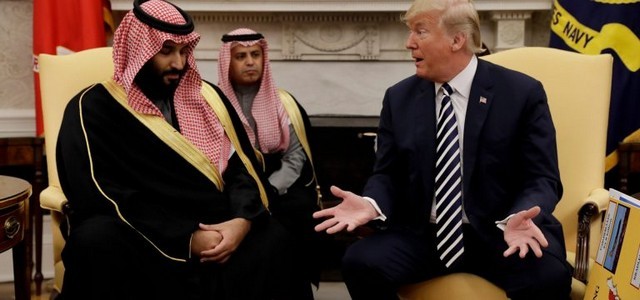
An open letter to the people of the U.S.A. from President Nicolás Maduro

By Nicolás Maduro

President Nicolás Maduro of Venezuela delivered this Feb. 7 message to the people of the U.S. through social media.

If I know anything, it is about the people, because just like you, I am a man of the people. I was born and raised in a poor neighborhood of Caracas. I was forged in the heat of popular and union struggles in a Venezuela submerged in exclusion and inequality. I am no tycoon; I am a worker of mind and heart. Today I have the great privilege of presiding over the new Venezuela, rooted in a model of inclusive development and social equality, which Comandante Hugo Chávez forged starting in 1998, inspired by the legacy of Simón Bolivar.

We are living today in a historical crossroad. There are days that will define the future of our countries, giving us a choice between war and peace. Your national representatives of Washington want to bring to their borders the same hatred that they sowed in Vietnam. They want to invade and intervene in Venezuela — they say, as they said then — in the name of democracy and freedom. But this is false. Their history of the usurpation of power in Venezuela is as false as the weapons of mass destruction in Iraq. It is a false argument, but it can have dramatic consequences for our entire region.

Venezuela is a country that, by virtue of its 1999 Constitution, has broadly expanded the participatory and protagonist democracy of the people, and that in an unprecedented way so that today Venezuela is one of the countries that has held the largest number of elections in the last 20 years. You may not like our ideology or how our society looks, but we exist and we are millions.

I address these words to the people of the United States of America to warn of the gravity and danger that some sectors in the White House intend, that is, to invade Venezuela with unpredictable consequences for my country and for the entire American region. President Donald Trump also intends to disrupt the worthy initiatives to open a dialogue promoted by Uruguay and Mexico, with the support of CARICOM, for a peaceful solution and dialogue on behalf of Venezuela. We know that for the good of Venezuela we have to sit down and talk because to refuse to dialogue is to choose the path of force. Keep in mind the words of John F. Kennedy: “Let us never negotiate out of fear. But let us never fear to negotiate.” Those who do not want to dialogue, are they afraid of the truth?

The political intolerance toward the Venezuelan Bolivarian model and the desires for our immense oil resources, minerals and other great riches have prompted an international coalition headed by the U.S. government to commit the serious insanity of waging a military attack on Venezuela under the pretext of a nonexistent humanitarian crisis.

The people of Venezuela have painfully suffered social wounds caused by a criminal commercial and financial blockade, which has been aggravated by the dispossession and robbery of our financial resources and assets in countries aligned with this demented onslaught.

And yet, thanks to a new system of social protection, of direct attention to the most vulnerable sectors of our society, we proudly continue to be a country in the Americas with high human development index and low inequality.

The U.S. people must know that this complex multiform aggression is carried out with total impunity and in clear violation of the Charter of the United Nations, which expressly outlaws the threat or use of force, among other principles and purposes, for the sake of peace and friendly relations between nations.

We want to continue being business partners of the people of the United States, as we have been throughout our history. Their politicians in Washington, on the other hand, are willing to send their sons and daughters to die in an absurd war, instead of respecting the sacred right of the Venezuelan people to self-determination and to safeguard their sovereignty.

Like you, people of the United States, we Venezuelans are patriots. And we shall defend our homeland with all our soul. Today Venezuela is united in a single cry: We demand the cessation of the aggression that seeks to suffocate our economy and socially suffocate our people, as well as the cessation of the serious and dangerous threats of military intervention against Venezuela.

We appeal to the good soul of U.S. society, a victim of its own leaders, to join our call for peace. Let us be all one people against warmongering and war.

Long live the peoples of America!

Nicolás Maduro

President of the Bolivarian Republic of Venezuela

11 February 2019

Source: countercurrents.org
The Making of Juan Guaidó: How the US Regime Change Laboratory Created Venezuela’s Coup Leader

By Dan Cohen and Max Blumenthal

Juan Guaidó is the product of a decade-long project overseen by Washington’s elite regime change trainers. While posing as a champion of democracy, he has spent years at the forefront of a violent campaign of destabilization.

29 Jan 2019 – Before the fateful day of January 22, fewer than one in five Venezuelans had heard of Juan Guaidó. Only a few months ago, the 35-year-old was an obscure character in a politically marginal far-right group closely associated with gruesome acts of street violence. Even in his own party, Guaidó had been a mid-level figure in the opposition-dominated National Assembly, which is now held under contempt according to Venezuela’s constitution.

But after a single phone call from from US Vice President Mike Pence, Guaidó proclaimed himself president of Venezuela. Anointed as the leader of his country by Washington, a previously unknown political bottom-dweller was vaulted onto the international stage as the US-selected leader of the nation with the world’s largest oil reserves.

Echoing the Washington consensus, the New York Times editorial board hailed Guaidó as a “credible rival” to Maduro with a “refreshing style and vision of taking the country forward.” The Bloomberg News editorial board applauded him for seeking “restoration of democracy” and the Wall Street Journal declared him “a new democratic leader.” Meanwhile, Canada, numerous European nations, Israel, and the bloc of right-wing Latin American governments known as the Lima Group recognized Guaidó as the legitimate leader of Venezuela.

While Guaidó seemed to have materialized out of nowhere, he was, in fact, the product of more than a decade of assiduous grooming by the US government’s elite regime change factories. Alongside a cadre of right-wing student activists, Guaidó was cultivated to undermine Venezuela’s socialist-oriented government, destabilize the country, and one day seize power. Though he has been a minor figure in Venezuelan politics, he had spent years quietly demonstrated his worthiness in Washington’s halls of power.

“Juan Guaidó is a character that has been created for this circumstance,” Marco Teruggi, an Argentinian sociologist and leading chronicler of Venezuelan politics, told The Grayzone. “It’s the logic of a laboratory – Guaidó is like a mixture of several elements that create a character who, in all honesty, oscillates between laughable and worrying.”

Diego Sequera, a Venezuelan journalist and writer for the investigative outlet Misión Verdad, agreed: “Guaidó is more popular outside Venezuela than inside, especially in the elite Ivy League and Washington circles,” Sequera remarked to The Grayzone, “He’s a known character there, is predictably right-wing, and is considered loyal to the program.”

While Guaidó is today sold as the face of democratic restoration, he spent his career in the most violent faction of Venezuela’s most radical opposition party, positioning himself at the forefront of one destabilization campaign after another. His party has been widely discredited inside Venezuela, and is held partly responsible for fragmenting a badly weakened opposition.

“‘These radical leaders have no more than 20 percent in opinion polls,” wrote Luis Vicente León, Venezuela’s leading pollster. According to León, Guaidó’s party remains isolated because the majority of the population “does not want war. ‘What they want is a solution.’”

But this is precisely why Guaidó was selected by Washington: He is not expected to lead Venezuela toward democracy, but to collapse a country that for the past two decades has been a bulwark of resistance to US hegemony. His unlikely rise signals the culmination of a two decades-long project to destroy a robust socialist experiment.

Targeting the “troika of tyranny”

Since the 1998 election of Hugo Chávez, the United States has fought to restore control over Venezuela and is vast oil reserves. Chávez’s socialist programs may have redistributed the country’s wealth and helped lift millions out of poverty, but they also earned him a target on his back.

In 2002, Venezuela’s right-wing opposition briefly ousted Chávez with US support and recognition, before the military restored his presidency following a mass popular mobilization. Throughout the administrations of US Presidents George W. Bush and Barack Obama, Chávez survived numerous assassination plots, before succumbing to cancer in 2013. His successor, Nicolas Maduro, has survived three attempts on his life.

The Trump administration immediately elevated Venezuela to the top of Washington’s regime change target list, branding it the leader of a “troika of tyranny.” Last year, Trump’s national security team attempted to recruit members of the military brass to mount a military junta, but that effort failed.

According to the Venezuelan government, the US was also involved in a plot, codenamed Operation Constitution, to capture Maduro at the Miraflores presidential palace; and another, called Operation Armageddon, to assassinate him at a military parade in July 2017. Just over a year later, exiled opposition leaders tried and failed to kill Maduro with drone bombs during a military parade in Caracas.

More than a decade before these intrigues, a group of right-wing opposition students were hand-selected and groomed by an elite US-funded regime change training academy to topple Venezuela’s government and restore the neoliberal order.

Training from the “‘export-a-revolution’ group that sowed the seeds for a NUMBER of color revolutions”

On October 5, 2005, with Chávez’s popularity at its peak and his government planning sweeping socialist programs, five Venezuelan “student leaders” arrived in Belgrade, Serbia to begin training for an insurrection.

The students had arrived from Venezuela courtesy of the Center for Applied Non-Violent Action and Strategies, or CANVAS. This group is funded largely through the National Endowment for Democracy, a CIA cut-out that functions as the US government’s main arm of promoting regime change; and offshoots like the International Republican Institute and the National Democratic Institute for International Affairs. According to leaked internal emails from Stratfor, an intelligence firm known as the “shadow CIA,” CANVAS “may have also received CIA funding and training during the 1999/2000 anti-Milosevic struggle.”

CANVAS is a spinoff of Otpor, a Serbian protest group founded by Srdja Popovic in 1998 at the University of Belgrade. Otpor, which means “resistance” in Serbian, was the student group that gained international fame — and Hollywood-level promotion — by mobilizing the protests that eventually toppled Slobodan Milosevic.

This small cell of regime change specialists was operating according to the theories of the late Gene Sharp, the so-called “Clausewitz of non-violent struggle.” Sharp had worked with a former Defense Intelligence Agency analyst, Col. Robert Helvey, to conceive a strategic blueprint that weaponized protest as a form of hybrid warfare, aiming it at states that resisted Washington’s unipolar domination.

Otpor was supported by the National Endowment for Democracy, USAID, and Sharp’s Albert Einstein Institute. Sinisa Sikman, one of Otpor’s main trainers, once said the group even received direct CIA funding.

According to a leaked email from a Stratfor staffer, after running Milosevic out of power, “the kids who ran OTPOR grew up, got suits and designed CANVAS… or in other words a ‘export-a-revolution’ group that sowed the seeds for a NUMBER of color revolutions. They are still hooked into U.S. funding and basically go around the world trying to topple dictators and autocratic governments (ones that U.S. does not like ;).”

Stratfor revealed that CANVAS “turned its attention to Venezuela” in 2005, after training opposition movements that led pro-NATO regime change operations across Eastern Europe.

While monitoring the CANVAS training program, Stratfor outlined its insurrectionist agenda in strikingly blunt language: “Success is by no means guaranteed, and student movements are only at the beginning of what could be a years-long effort to trigger a revolution in Venezuela, but the trainers themselves are the people who cut their teeth on the ‘Butcher of the Balkans.’ They’ve got mad skills. When you see students at five Venezuelan universities hold simultaneous demonstrations, you will know that the training is over and the real work has begun.”

Birthing the “Generation 2007” regime change cadre

The “real work” began two years later, in 2007, when Guaidó graduated from Andrés Bello Catholic University of Caracas. He moved to Washington, DC to enroll in the Governance and Political Management Program at George Washington University, under the tutelage of Venezuelan economist Luis Enrique Berrizbeitia, one of the top Latin American neoliberal economists. Berrizbeitia is a former executive director of the International Monetary Fund (IMF) who spent more than a decade working in the Venezuelan energy sector, under the old oligarchic regime that was ousted by Chávez.

That year, Guaidó helped lead anti-government rallies after the Venezuelan government declined to to renew the license of Radio Caracas Televisión (RCTV). This privately owned station played a leading role in the 2002 coup against Hugo Chávez. RCTV helped mobilize anti-government demonstrators, falsified information blaming government supporters for acts of violence carried out by opposition members, and banned pro-government reporting amid the coup. The role of RCTV and other oligarch-owned stations in driving the failed coup attempt was chronicled in the acclaimed documentary The Revolution Will Not Be Televised.

That same year, the students claimed credit for stymying Chavez’s constitutional referendum for a “21st century socialism” that promised “to set the legal framework for the political and social reorganization of the country, giving direct power to organized communities as a prerequisite for the development of a new economic system.”

From the protests around RCTV and the referendum, a specialized cadre of US-backed class of regime change activists was born. They called themselves “Generation 2007.”

The Stratfor and CANVAS trainers of this cell identified Guaidó’s ally – a libertarian political organizer named Yon Goicoechea – as a “key factor” in defeating the constitutional referendum. The following year, Goicochea was rewarded for his efforts with the Cato Institute’s Milton Friedman Prize for Advancing Liberty, along with a $500,000 prize, which he promptly invested into his political network.

Friedman, of course, was the godfather of the notorious neoliberal Chicago Boys who were imported into Chile by dictatorial junta leader Augusto Pinochet to implement policies of radical “shock doctrine”-style fiscal austerity. And the Cato Institute is the libertarian Washington DC-based think tank founded by the Koch Brothers, two top Republican Party donors who have become aggressive supporters of the right-wing across Latin America.

Wikileaks published a 2007 email from American ambassador to Venezuela William Brownfield sent to the State Department, National Security Council and Department of Defense Southern Command praising “Generation of ’07” for having “forced the Venezuelan president, accustomed to setting the political agenda, to (over)react.” Among the “emerging leaders” Brownfield identified were Freddy Guevara and Yon Goicoechea. He applauded the latter figure as “one of the students’ most articulate defenders of civil liberties.”

Flush with cash from libertarian oligarchs and US government soft power outfits, the radical Venezuelan cadre took their Otpor tactics to the streets, along with a version of the group’s logo, as seen below:

“Galvanizing public unrest…to take advantage of the situation and spin it against Chavez”

In 2009, the Generation 2007 youth activists staged their most provocative demonstration yet, dropping their pants on public roads and aping the outrageous guerrilla theater tactics outlined by Gene Sharp in his regime change manuals. The protesters had mobilized against the arrest of an ally from another newfangled youth group called JAVU. This far-right group “gathered funds from a variety of US government sources, which allowed it to gain notoriety quickly as the hardline wing of opposition street movements,” according to academic George Ciccariello-Maher’s book, “Building the Commune.”

While video of the protest is not available, many Venezuelans have identified Guaidó as one of its key participants. While the allegation is unconfirmed, it is certainly plausible; the bare-buttocks protesters were members of the Generation 2007 inner core that Guaidó belonged to, and were clad in their trademark Resistencia! Venezuela t-shirts, as seen below:

That year, Guaidó exposed himself to the public in another way, founding a political party to capture the anti-Chavez energy his Generation 2007 had cultivated. Called Popular Will, it was led by Leopoldo López, a Princeton-educated right-wing firebrand heavily involved in National Endowment for Democracy programs and elected as the mayor of a district in Caracas that was one of the wealthiest in the country. Lopez was a portrait of Venezuelan aristocracy, directly descended from his country’s first president. He was also the first cousin of Thor Halvorssen, founder of the US-based Human Rights Foundation that functions as a de facto publicity shop for US-backed anti-government activists in countries targeted by Washington for regime change.

Though Lopez’s interests aligned neatly with Washington’s, US diplomatic cables published by Wikileaks highlighted the fanatical tendencies that would ultimately lead to Popular Will’s marginalization. One cable identified Lopez as “a divisive figure within the opposition… often described as arrogant, vindictive, and power-hungry.” Others highlighted his obsession with street confrontations and his “uncompromising approach” as a source of tension with other opposition leaders who prioritized unity and participation in the country’s democratic institutions.

By 2010, Popular Will and its foreign backers moved to exploit the worst drought to hit Venezuela in decades. Massive electricity shortages had struck the country due the dearth of water, which was needed to power hydroelectric plants. A global economic recession and declining oil prices compounded the crisis, driving public discontentment.

Stratfor and CANVAS – key advisors of Guaidó and his anti-government cadre – devised a shockingly cynical plan to drive a dagger through the heart of the Bolivarian revolution. The scheme hinged on a 70% collapse of the country’s electrical system by as early as April 2010.

“This could be the watershed event, as there is little that Chavez can do to protect the poor from the failure of that system,” the Stratfor internal memo declared. “This would likely have the impact of galvanizing public unrest in a way that no opposition group could ever hope to generate. At that point in time, an opposition group would be best served to take advantage of the situation and spin it against Chavez and towards their needs.”

By this point, the Venezuelan opposition was receiving a staggering $40-50 million a year from US government organizations like USAID and the National Endowment for Democracy, according to a report by the Spanish think tank, the FRIDE Institute. It also had massive wealth to draw on from its own accounts, which were mostly outside the country.

While the scenario envisioned by Statfor did not come to fruition, the Popular Will party activists and their allies cast aside any pretense of non-violence and joined a radical plan to destabilize the country.

Towards violent destabilization

In November, 2010, according to emails obtained by Venezuelan security services and presented by former Justice Minister Miguel Rodríguez Torres, Guaidó, Goicoechea, and several other student activists attended a secret five-day training at a hotel dubbed “Fiesta Mexicana” hotel in Mexico. The sessions were run by Otpor, the Belgrade-based regime change trainers backed by the US government. The meeting had reportedly received the blessing of Otto Reich, a fanatically anti-Castro Cuban exile working in George W. Bush’s Department of State, and the right-wing former Colombian President Alvaro Uribe.

Inside the meetings, the emails stated, Guaidó and his fellow activists hatched a plan to overthrow President Hugo Chavez by generating chaos through protracted spasms of street violence.

Three petroleum industry figureheads – Gustavo Torrar, Eligio Cedeño and Pedro Burelli – allegedly covered the $52,000 tab to hold the meeting. Torrar is a self-described “human rights activist” and “intellectual” whose younger brother Reynaldo Tovar Arroyo is the representative in Venezuela of the private Mexican oil and gas company Petroquimica del Golfo, which holds a contract with the Venezuelan state.

Cedeño, for his part, is a fugitive Venezuelan businessman who claimed asylum in the United States, and Pedro Burelli a former JP Morgan executive and the former director of Venezuela’s national oil company, Petroleum of Venezuela (PDVSA). He left PDVSA in 1998 as Hugo Chavez took power and is on the advisory committee of Georgetown University’s Latin America Leadership Program.

Burelli insisted that the emails detailing his participation had been fabricated and even hired a private investigator to prove it. The investigator declared that Google’s records showed the emails alleged to be his were never transmitted.

Yet today Burelli makes no secret of his desire to see Venezuela’s current president, Nicolás Maduro, deposed – and even dragged through the streets and sodomized with a bayonet, as Libyan leader Moammar Qaddafi was by NATO-backed militiamen.

.@NicolasMaduro, jamas me has hecho caso. Me has fustigado/perseguido como @chavezcandanga jamás osó. Óyeme, tienes sólo dos opciones en las próximas 24 horas:

1. Como Noriega: pagar pena por narcotráfico y luego a @IntlCrimCourt La Haya por DDHH.

2. O a la Gaddafi.

Escoge ya! pic.twitter.com/pMksCEXEmY

— Pedro Mario Burelli (@pburelli) January 17, 2019

Update: Burelli contacted the Grayzone after the publication of this article to clarify his participation in the “Fiesta Mexicana” plot.

Burelli called the meeting “a legitimate activity that took place in a hotel by a different name” in Mexico.

Asked if OTPOR coordinated the meeting, he would only state that he “likes” the work of OTPOR/CANVAS and while not a funder of it, has “recommended activists from different countries to track them and participate in the activities they conduct in various countries.”

Burelli added: “The Einstein Institute trained thousands openly in Venezuela. Gene Sharpe’s philosophy was widely studied and embraced. And this has probably kept the struggle from turning into a civil war.”

The alleged Fiesta Mexicana plot flowed into another destabilization plan revealed in a series of documents produced by the Venezuelan government. In May 2014, Caracas released documents detailing an assassination plot against President Nicolás Maduro. The leaks identified the anti-Chavez hardliner Maria Corina Machado – today the main asset of Sen. Marco Rubio – as a leader of the scheme. The founder of the National Endowment for Democracy-funded group, Sumate, Machado has functioned as an international liaison for the opposition, visiting President George W. Bush in 2005.

“I think it is time to gather efforts; make the necessary calls, and obtain financing to annihilate Maduro and the rest will fall apart,” Machado wrote in an email to former Venezuelan diplomat Diego Arria in 2014.

In another email, Machado claimed that the violent plot had the blessing of US Ambassador to Colombia, Kevin Whitaker. “I have already made up my mind and this fight will continue until this regime is overthrown and we deliver to our friends in the world. If I went to San Cristobal and exposed myself before the OAS, I fear nothing. Kevin Whitaker has already reconfirmed his support and he pointed out the new steps. We have a checkbook stronger than the regime’s to break the international security ring.”

Guaidó heads to the barricades

That February, student demonstrators acting as shock troops for the exiled oligarchy erected violent barricades across the country, turning opposition-controlled quarters into violent fortresses known as guarimbas. While international media portrayed the upheaval as a spontaneous protest against Maduro’s iron-fisted rule, there was ample evidence that Popular Will was orchestrating the show.

“None of the protesters at the universities wore their university t-shirts, they all wore Popular Will or Justice First t-shirts,” a guarimba participant said at the time. “They might have been student groups, but the student councils are affiliated to the political opposition parties and they are accountable to them.”

Asked who the ringleaders were, the guarimba participant said, “Well if I am totally honest, those guys are legislators now.”

Around 43 were killed during the 2014 guarimbas. Three years later, they erupted again, causing mass destruction of public infrastructure, the murder of government supporters, and the deaths of 126 people, many of whom were Chavistas. In several cases, supporters of the government were burned alive by armed gangs.

Guaidó was directly involved in the 2014 guarimbas. In fact, he tweeted video showing himself clad in a helmet and gas mask, surrounded by masked and armed elements that had shut down a highway that were engaging in a violent clash with the police. Alluding to his participation in Generation 2007, he proclaimed, “I remember in 2007, we proclaimed, ‘Students!’ Now, we shout, ‘Resistance! Resistance!’”

Guaidó has deleted the tweet, demonstrating apparent concern for his image as a champion of democracy.

On February 12, 2014, during the height of that year’s guarimbas, Guaidó joined Lopez on stage at a rally of Popular Will and Justice First. During a lengthy diatribe against the government, Lopez urged the crowd to march to the office of Attorney General Luisa Ortega Diaz. Soon after, Diaz’s office came under attack by armed gangs who attempted to burn it to the ground. She denounced what she called “planned and premeditated violence.”

In an televised appearance in 2016, Guaidó dismissed deaths resulting from guayas – a guarimba tactic involving stretching steel wire across a roadway in order to injure or kill motorcyclists – as a “myth.” His comments whitewashed a deadly tactic that had killed unarmed civilians like Santiago Pedroza and decapitated a man named Elvis Durán, among many others.

This callous disregard for human life would define his Popular Will party in the eyes of much of the public, including many opponents of Maduro.

Cracking down on Popular Will

As violence and political polarization escalated across the country, the government began to act against the Popular Will leaders who helped stoke it.

Freddy Guevara, the National Assembly Vice-President and second in command of Popular Will, was a principal leader in the 2017 street riots. Facing a trial for his role in the violence, Guevara took shelter in the Chilean embassy, where he remains.

Lester Toledo, a Popular Will legislator from the state of Zulia, was wanted by Venezuelan government in September 2016 on charges of financing terrorism and plotting assassinations. The plans were said to be made with former Colombian President Álavaro Uribe. Toledo escaped Venezuela and went on several speaking tours with Human Rights Watch, the US government-backed Freedom House, the Spanish Congress and European Parliament.

Carlos Graffe, another Otpor-trained Generation 2007 member who led Popular Will, was arrested in July 2017. According to police, he was in possession of a bag filled with nails, C4 explosives and a detonator. He was released on December 27, 2017.

Leopoldo Lopez, the longtime Popular Will leader, is today under house arrest, accused of a key role in deaths of 13 people during the guarimbas in 2014. Amnesty International lauded Lopez as a “prisoner of conscience” and slammed his transfer from prison to house as “not good enough.” Meanwhile, family members of guarimba victims introduced a petition for more charges against Lopez.

Yon Goicoechea, the Koch Brothers posterboy, was arrested in 2016 by security forces who claimed they found found a kilo of explosives in his vehicle. In a New York Times op-ed, Goicoechea protested the charges as “trumped-up” and claimed he had been imprisoned simply for his “dream of a democratic society, free of Communism.” He was freed in November 2017.

Hoy, en Caricuao. Llevo 15 años trabajando con @jguaido. Confío en él. Conozco la constancia y la inteligencia con la que se ha construido a sí mismo. Está haciendo las cosas con bondad, pero sin ingenuidad. Hay una posibilidad abierta hacia la libertad. pic.twitter.com/Lidm8y5RTX

— Yon Goicoechea (@YonGoicoechea) January 20, 2019

David Smolansky, also a member of the original Otpor-trained Generation 2007, became Venezuela’s youngest-ever mayor when he was elected in 2013 in the affluent suburb of El Hatillo. But he was stripped of his position and sentenced to 15 months in prison by the Supreme Court after it found him culpable of stirring the violent guarimbas.

Facing arrest, Smolansky shaved his beard, donned sunglasses and slipped into Brazil disguised as a priest with a bible in hand and rosary around his neck. He now lives in Washington, DC, where he was hand picked by Secretary of the Organization of American States Luis Almagro to lead the working group on the Venezuelan migrant and refugee crisis.

This July 26, Smolansky held what he called a “cordial reunion” with Elliot Abrams, the convicted Iran-Contra felon installed by Trump as special US envoy to Venezuela. Abrams is notorious for overseeing the US covert policy of arming right-wing death squads during the 1980’s in Nicaragua, El Salvador, and Guatemala. His lead role in the Venezuelan coup has stoked fears that another blood-drenched proxy war might be on the way.

Cordial reunión en la ONU con Elliott Abrams, enviado especial del gobierno de EEUU para Venezuela. Reiteramos que la prioridad para el gobierno interino que preside @jguaido es la asistencia humanitaria para millones de venezolanos que sufren de la falta de comida y medicinas. pic.twitter.com/vHfktVKgV4

— David Smolansky (@dsmolansky) January 26, 2019

Four days earlier, Machado rumbled another violent threat against Maduro, declaring that if he “wants to save his life, he should understand that his time is up.”

A pawn in their game

The collapse of Popular Will under the weight of the violent campaign of destabilization it ran alienated large sectors of the public and wound much of its leadership up in exile or in custody. Guaidó had remained a relatively minor figure, having spent most of his nine-year career in the National Assembly as an alternate deputy. Hailing from one of Venezuela’s least populous states, Guaidó came in second place during the 2015 parliamentary elections, winning just 26% of votes cast in order to secure his place in the National Assembly. Indeed, his bottom may have been better known than his face.

Guaidó is known as the president of the opposition-dominated National Assembly, but he was never elected to the position. The four opposition parties that comprised the Assembly’s Democratic Unity Table had decided to establish a rotating presidency. Popular Will’s turn was on the way, but its founder, Lopez, was under house arrest. Meanwhile, his second-in-charge, Guevara, had taken refuge in the Chilean embassy. A figure named Juan Andrés Mejía would have been next in line but reasons that are only now clear, Juan Guaido was selected.

“There is a class reasoning that explains Guaidó’s rise,” Sequera, the Venezuelan analyst, observed. “Mejía is high class, studied at one of the most expensive private universities in Venezuela, and could not be easily marketed to the public the way Guaidó could. For one, Guaidó has common mestizo features like most Venezuelans do, and seems like more like a man of the people. Also, he had not been overexposed in the media, so he could be built up into pretty much anything.”

In December 2018, Guaidó sneaked across the border and junketed to Washington, Colombia and Brazil to coordinate the plan to hold mass demonstrations during the inauguration of President Maduro. The night before Maduro’s swearing-in ceremony, both Vice President Mike Pence and Canadian Foreign Minister Chrystia Freeland called Guaidó to affirm their support.

A week later, Sen. Marco Rubio, Sen. Rick Scott and Rep. Mario Diaz-Balart – all lawmakers from the Florida base of the right-wing Cuban exile lobby – joined President Trump and Vice President Pence at the White House. At their request, Trump agreed that if Guaidó declared himself president, he would back him.

Secretary of State Mike Pompeo met personally withGuaidó on January 10, according to the Wall Street Journal. However, Pompeo could not pronounce Guaidó’s name when he mentioned him in a press briefing on January 25, referring to him as “Juan Guido.”

Secretary of State Mike Pompeo just called the figure Washington is attempting to install as Venezuelan President “Juan *Guido*” – as in the racist term for Italians. America’s top diplomat didn’t even bother to learn how to pronounce his puppet’s name. pic.twitter.com/HsanZXuSPR

— Dan Cohen (@dancohen3000) January 25, 2019

By January 11, Guaidó’s Wikipedia page had been edited 37 times, highlighting the struggle to shape the image of a previously anonymous figure who was now a tableau for Washington’s regime change ambitions. In the end, editorial oversight of his page was handed over to Wikipedia’s elite council of “librarians,” who pronounced him the “contested” president of Venezuela.

Guaidó might have been an obscure figure, but his combination of radicalism and opportunism satisfied Washington’s needs. “That internal piece was missing,” a Trump administration said of Guaidó. “He was the piece we needed for our strategy to be coherent and complete.”

“For the first time,” Brownfield, the former American ambassador to Venezuela, gushed to the New York Times, “you have an opposition leader who is clearly signaling to the armed forces and to law enforcement that he wants to keep them on the side of the angels and with the good guys.”

But Guaidó’s Popular Will party formed the shock troops of the guarimbas that caused the deaths of police officers and common citizens alike. He had even boasted of his own participation in street riots. And now, to win the hearts and minds of the military and police, Guaido had to erase this blood-soaked history.

On January 21, a day before the coup began in earnest, Guaidó’s wife delivered a video address calling on the military to rise up against Maduro. Her performance was wooden and uninspiring, underscoring her husband’s political limits.

While Guaidó waits on direct assistance, he remains what he has always been – a pet project of cynical outside forces. “It doesn’t matter if he crashes and burns after all these misadventures,” Sequera said of the coup figurehead. “To the Americans, he is expendable.”

______________________________________

Max Blumenthal is an award-winning journalist and the author of several books.

Dan Cohen is a journalist and filmmaker.

11 February 2019

Source: transcend.org

Million across Yemen ‘just a Step Away from Famine’, with Food Available but Inaccessible

By UN News

While nearly 10 million people across Yemen remain “just a step away from famine”, the United Nations Emergency Relief Coordinator has spoken of his deep concern that a large food storage depot on the outskirts of the crucial port city of Hudaydah, has been out of bounds since last September.

7 Feb 2019 – “Enough grain to feed 3.7 million people for a month has sat unused and possibly spoiling in silos at the mills for more than four months”, said Mark Lowcock, in a statement on the depot, known as the Red Sea Mills. “No-one gains anything from this, but millions of starving people suffer”.

The World Food Programme (WFP) alone, has 51,000 metric tons of wheat stored there, a quarter of its in-country wheat stock and enough to feed 3.7 million people for a month. WFP has been unable to access the Mills since September 2018 because of fighting.

“These events are to be deplored.” —UN Humanitarian Coordinator

Last month two silos in the Government-controlled area were hit by mortar fire, probably destroying enough grain to feed hundreds of thousands of people for a month.

“These events are to be deplored” stressed Mr. Lowcock.

Access to the mills grows progressively more urgent as the longer they remain inaccessible, and the risk of grain spoilage is growing each day.

Citing security concerns, forces affiliated with the Houthi rebels, formally-known as Ansar Allah, have, to date, not allowed the UN to cross front lines to access the mills.

According to Mr. Lowcock, discussions continue with all parties. “I appreciate the genuine efforts that have been made on all sides to find a solution”, he said, “but it remains elusive”. He implored all parties “to finalize an agreement and facilitate access to the mills in the coming days”.

Meanwhile, the UN and its humanitarian partners are scaling up to reach 12 million people with emergency food assistance – a 50 per cent increase over 2018.

In December, the World Food Programme (WFP) reached a record 10 million people.

“We can save huge numbers of people, most of them in areas controlled by Ansar Allah” concluded Mr. Lowcock, “But we need more help to do that from the authorities who control these areas”.

Earlier this week, the Security Council stressed the “vital importance” of making progress towards a political agreement to end the conflict and “relieve the humanitarian suffering of the Yemeni people”.

‘Challenges remain’ implementing first steps of Stockholm peace deal

Meanwhile, in talks brokered by UN aimed at delivering the Hudaydah Agreement, which grew out of historic consultations between Government and Houthi leaders in Stockholm at the end of last year, challenges remain, the UN told correspondents in New York on Thursday.

The Redeployment Coordination Committee (RCC) met again, ending a session on Wednesday, which involves both sides, chaired by General Michael Lollesgaard, who is heading a team of UN observers and monitors, trying to negotiate the withdrawal of fighters from the Houthi-held port city, stabilize the fragile ceasefire, and open new humanitarian corridors.

“Nevertheless, challenges remain, not least the complex nature of the current frontlines,” said UN Spokesperson, Stephane Dujarric, adding that “to help overcome these issues, the RCC Chair tabled a proposal that proved acceptable, in principle, to both parties to move forward on the implementation of the Hudaydah Agreement. A preliminary compromise was agreed, pending further consultation by the parties with their respective leaders.”

He added that “both parties have given a firm commitment to observe and enhance the ceasefire in the interim”.

11 February 2019

Source: transcend.org

Venezuela: From Oil Proxy to the Bolivarian Movement and Sabotage. Abysmal Poverty under US Proxy Rule (1918-1998)

By Prof Michel Chossudovsky and Bonnie Faulkner

We discuss the economic and political crisis in Venezuela, its history as an oil proxy nation since the discovery of oil in 1918, through successive dictatorships, coups d’etats, a fake nationalization of the oil industry, the Chavista movement and destabilization through financial warfare, with a special emphasis on Michel Chossudovsky’s personal experience there conducting a study on poverty in 1975 as Advisor to the Venezuelan Minister of Planning.

The study commissioned by the Ministry of Planning (CORDIPLAN) (involving an interdiscilinary research team) headed by Michel Chossudovsky was entitled: “Venezuela: La Mapa de la Pobreza”. (Venezuela: The Poverty Map)

The report provided detailed estimates of poverty, focussing on nutrition, education, health, housing, employment and income distribution.

It also addressed the role of government policy. Venezuela’s oil wealth was not used to build schools and hospitals. The oil surplus was largely recycled into the hands of the oil giants and the local elites.

Upon its release, the draft report was confiscated by the Minister of Planning. It was subsequently shelved on orders of the Cabinet (Consejo de Ministros) of President Carlos Perez.

Michel Chossudovsky brought it out as a book in 1978, which created a bombshell. It dispelled the myth of “La Venezuela Millionaria”.

In the period prior to the Bolivarian Revolution, extending into the 1990s, the levels of poverty were abysmally high.

“More than 70 percent of the Venezuelan population did not meet minimum calorie and protein requirements, while approximately 45 percent were suffering from extreme undernourishment.

More than half of Venezuelan children suffered from some degree of malnutrition.

Infant mortality was exceedingly high.

23 percent of the Venezuelan population was illiterate. The rate of functional illiteracy was of the order of 42%.

One child in four was totally marginalized from the educational system (not even registered in the first grade of primary school).

More than half the children of school age never entered high school.

A majority of the population had little or no access to health care services.

Half the urban population had no access to an adequate system of running water within their home.

Unemployment was rampant.

More than 30 percent of the total workforce was unemployed or underemployed, while 67 percent of those employed in non-agricultural activities received a salary which did not enable them to meet basic human needs (food, health, housing, clothing, etc.).

Three-quarters of the labor force were receiving revenues below the minimum subsistence wage.”

(Michel Chossudovsky, excerpts from La Miseria en Venezuela, Vadell, Caracas, 1978, translated from Spanish)

The objectives of the US led Coup:

Install a US proxy regime,

Confiscate the country’s extensive oil wealth (Venezuela has the largest oil reserves Worldwide),

Impoverish the Venezuelan people.

TRANSCRIPT

This is Guns and Butter

Michel Chossudovsky: I think concretely also we understood that poverty was not the result of a scarcity of resources, because this was an oil-producing economy, but all the oil revenues were going into private hands. Of course, the big-oil U.S. was behind it. But what we understood was that it was the governments which were responsible for poverty.

I’m Bonnie Faulkner. Today on Guns and Butter, Michel Chossudovsky. Today’s show: Venezuela: From Oil Proxy to the Bolivarian Movement and Sabotage. Michel Chossudovsky is an economist and the Founder, Director and Editor of the Center for Research on Globalization, based in Montreal, Quebec. He is the author of 11 books including The Globalization of Poverty and the New World Order, War and Globalization: The Truth Behind September Eleventh and America’s War on Terrorism. Today we discuss the economic and political crisis in Venezuela, its history as an oil proxy nation since the discovery of oil in 1918, through successive dictatorships, the Chavista movement and destabilization, with a special emphasis on Michel Chossudovsky’s personal experience there conducting a study on poverty as Advisor to the Minister of Planning.

Bonnie Faulkner: Michel Chossudovsky, welcome.

Michel Chossudovsky: I’m delighted again to be on Guns and Butter.

Bonnie Faulkner: The president of Venezuela’s National Assembly since February 5th, Juan Guaidó, declared that he has temporarily assumed presidential powers, promising to hold free elections and end Nicolas Maduro’s “dictatorship.” President Trump announced that the U.S. would recognize Juan Guaidó as the legitimate president of Venezuela. According to The Wall Street Journal, Vice President Mike Pence called Guaidó the night before his announcement and pledged that the Trump administration would support him. Trump refused to rule out military action. In your recent article, Regime Change and Speakers of the Legislature: Nancy Pelosi vs. Juan Guaidó, Self-proclaimed President of Venezuela, you intimate that Trump’s declaration might constitute a dangerous precedent for him. Why?

Michel Chossudovsky: Well, ironically, the position of Speaker of the National Assembly of Venezuela, which is held by Juan Guaidó, is in some regards comparable to that of the Speaker of the U.S. House of Representatives and, of course, the leader of the majority party, the Democrats, which is currently held by Nancy Pelosi. There are certain differences from the constitutional standpoint, but what President Trump has intimated in declaring that the Speaker of the National Assembly of Venezuela is the interim president of Venezuela is tantamount to saying, “Hey, Donald Trump, what about Nancy Pelosi?” Somebody might intimate, either a U.S. politician including perhaps even President Maduro of Venezuela, “We would like Nancy Pelosi to be the President of the United States, and then, of course, we’ll go to the UN Security Council to have it endorsed.”

That illustrates the ridicule of political discourse but also the shear fantasy of U.S. foreign policy, that they should provide legitimacy to a Speaker of the House because they don’t like the President. Well, I don’t like the president of the United States of America and a lot of people don’t like him, but do we want to have Nancy Pelosi as our interim president? That, in fact, is something which could evolve in the current context of confrontation between President Trump and the Democratic Party, which now controls the U.S. House of Representatives.

Bonnie Faulkner: It looks like the Democrats in Congress are also threatening President Maduro. The House Foreign Affairs Committee has tweeted out, “We refuse to recognize the legitimacy of Maduro’s presidency. That’s why members are joining to introduce legislation to support the people of Venezuela and hold the illegitimate president accountable for the crisis he created.” So this is a bipartisan effort to unseat Maduro.

Michel Chossudovsky: Precisely. It is a novelty in relation to regime change. We have military coups in Venezuela going back to the early 20th century – a whole bunch of military coups. We have color revolutions, which instigate protest movements. That is already ongoing in Venezuela. Then we have this new formula of intimating that we don’t like the President; have him replaced by the Speaker of the House. And that’s, of course, a very dangerous discourse because, as I mentioned, it could backlash onto President Trump himself.

Bonnie Faulkner: Venezuela’s crisis came before the UN Security Council on Saturday, but they took no action because there was no agreement. Russia and China backed Maduro but France, Britain, Spain and Germany said they would recognize Juan Guaidó as president unless Venezuela calls a new presidential election within eight days. So here we have European nations demanding that Venezuela hold another election. Did Nicolas Maduro win the presidency of Venezuela democratically or not?

Michel Chossudovsky: He won the presidency of Venezuela democratically with a large majority. Conversely, France’s President Macron also won the presidential election with a rather feeble majority and nobody is questioning Macron’s presidency. Well, in fact, some people are because we have the Yellow Vest movement throughout France. That doesn’t seem to be making the headlines anymore and people are endorsing President Macron.

Well, there are several issues. These European leaders don’t have the support of their respective populations. In Venezuela support for President Maduro is divided, but that’s I think something that happens in a large number of countries. It’s not any different. The opposition is controlling the National Assembly but nonetheless, President Maduro gets a majority of support of the Venezuelan population.

The fact of the matter is that all these leaders in Europe are, first of all, caving in to U.S. foreign policy; they are essentially behaving as U.S. proxies. At the same time, their behavior and management of the republics that they represent, not including the United Kingdom, which is also in a big mess – well, one might say, how can they get away with this? Under a constitutional democracy, how is it that they could actually support the United States in calling for the Speaker of the National Assembly of Venezuela to become president of the country? It’s an absurd proposition, and that this would then get to the United Nations Security Council is even more absurd.

What should get to the United Nations Security Council is the mode of interference in the internal affairs of a sovereign country through the financing of opposition groups, the financing of terrorists and so on who are involved in triggering the protest movement and so on. It’s an evolving situation. It has certain features resembling in fact the Euromaidan in Ukraine. And, of course, the end objective is to unseat the president.

Now, he has very strong grassroots support because the Bolivarian Revolution has indeed led to major changes in the country, major achievements, under very contradictory circumstances as well as divisions within the Bolivarian movement.

I have been going back and forth to Venezuela for a very long period since I started very early in my career when I became Advisor to the Minister of Planning in the Carlos Andrés Pérez government of the mid-‘70s. I know the country inside-out.

It’s a very complex process, and I think people have to understand first of all that Venezuela has the largest oil reserves worldwide – more than Saudi Arabia – both traditional crude as well as tar sands, which are extensive but also very easy to manage and produce compared to those of Canada, for instance. What is at stake there is the battle for oil.

Historically, Venezuela has been an oil economy from its inception in 1918 when oil was discovered in the Maracaibo Bay. Then you had a whole series of military dictators.

The most prominent was, of course, Juan Vicente Gómez, who was really a proxy of the United States and big oil.

So big oil has controlled this country from the early 20th century and it was only in the ‘90s with the Bolivarian Revolution that they actually started to repeal this control of big oil with the government of Chávez, which essentially started to implement some major changes and shifts in the nature of state management, but under very contradictory circumstances, which I guess we’ll be discussing.

Bonnie Faulkner: How did you first get involved in Venezuela? Did you first go there in 1975, and under what auspices?

Michel Chossudovsky: Actually, one of my close friends when I was studying at the University of Manchester in economics was a person named Gumersindo Rodriguez. Now, Gumersindo Rodriguez was a bit older than I. He was active in the MIR, Movimiento Izquierda Revolucionaria, which was a leftist faction of the Democratic Action Party, Acción Democratica. He had close links to one of the prominent presidents, which was Romulo Betancourt, (left) but at the same time he was – to some extent the MIR were considered as renegades.

He went off to study in the UK and then when he returned and a new Acción Democratica government was formed he became Minister of Planning. And then he called me up and we met in New York. He said, “Would you like to come down, etc., to Caracas to work for the Planning Ministry as my Advisor?” I accepted and I went down in mid-1975 during the school break at the University of Ottawa.

Initially he wanted me to write his speeches, so I started writing his speeches. After a while I said, “Listen, Gumersindo, I would like to do something more substantive and set up a research group on poverty in this country, which is a serious issue.” So he said, “Okay, Michel. Go ahead. Set up the group. You have all the resources you need.”

I set up a group of about half-a-dozen people with consultants at the university and so on. I was a young researcher. It was a very challenging project. Very carefully we looked at concepts of what defines the standard of living, in other words, nutrition, education, health, employment, income distribution, the environment, the access to running water, the levels of malnutrition. We defined what was called a minimum family income, and this was supported with very careful analysis at the statistical level. I had a professor in nutrition at the university who advised me on various aspects.

This report was done in three months. It was a big push. I had to go back to Ottawa to the university in September where I was teaching economics, so we managed to finish the first draft of the report in a matter of months. We came up with incredible results, that the abysmal levels of poverty, largely basing our analysis on national statistics, the various surveys which were available, household budget surveys, the census data and also the input of a large number of intellectuals and so on. But not so much field work because simply we didn’t really have the time to do that. But we came up with results.

I think concretely also we understood that poverty was not the result of a scarcity of resources, because this was an oil-producing economy, but all the oil revenues were going into private hands. Of course, the big-oil U.S. was behind it. But what we understood was that it was the governments which were responsible for poverty because they weren’t recycling the oil revenues to a societal project. They weren’t using the oil revenues to finance education, health and so on, and the levels of unemployment were exceedingly high and so on.

Now, this is the background of poverty which prevailed when the Bolivarian Revolution occurred. I should mention that much of our data was based on the 1970s, but the 1980s were far worse, because then you had what was called El Caracazo in 1989, which was a process of economic and social collapse. It was instigated by the IMF. It led to hyperinflation, so it was a sort of classical neo-liberal intervention with strong economic medicine [shock therapy] where the prices of consumer goods went sky high. That happened in 1989.

Now, what I think is very important to underscore is that Venezuela in the 1970s and ‘80s was a very poor country with a lot of resources, namely oil, and that oil went into private hands. That was despite the fact that the oil industry was nationalized in 1975. Now, I should mention that when I arrived at the Ministry of Planning in 1975, that coincided more or less with the nationalization of the oil industry. But it was a fake nationalization.

Bonnie Faulkner: How do you mean a fake nationalization?

Michel Chossudovsky: Well, legally it was nationalization, but it was ultimately understood that the big oil companies were complicit in this nationalization and that they would get all the benefits and so on. And then also when it was nationalized, of course, there were payments to the oil companies. It was implemented by the government of Carlos Andrés Pérez and there was no question of actually saying, “Well, we’ve got the oil; what are we going to do with it?” The pattern of appropriation continued, the corruption within the state apparatus and so on.

Ironically, I was asked to draft a text which was to be used for the nationalization speech, which was a very important document, because it defined, what are you doing to do with the oil. I drafted an analysis of this, essentially saying the following: that the oil revenues would be recycled to a societal project alleviating poverty. It was explained conceptually that the oil money now belongs to the country and not to the oil companies, and consequently this is the avenue that we choose.

There was a drafting committee and they contacted me. I knew all these people; they were on the same floor in the Ministry of Planning building. But then the nationalization speech was read and published, and it was simply political rhetoric. It didn’t have any substantive perspective as to how these oil revenues would be used to improve the livelihood of the Venezuelan people, and that is something which Chavez actually formulated many years later. The Bolivarian Revolution said, yes, the oil is going to improve the conditions of the Venezuelan population and particularly the people who are below the poverty line.

Now, I should mention and that’s so important, we undertook an estimate of undernourishment, people who do not meet minimum calorie requirements, and we arrived at figures in excess of 70% of the Venezuelan population. That was part of the report which I submitted to the government at the time. I contacted my friend [medical doctor] at the university who specialized in nutrition and said, “This seems to be horrendously high.” His response, “No. You’re absolutely on. Your estimates are on the whole conservative.” He had focused also on the impacts on child malnutrition and so on. We had estimates of that as well from secondary sources.

That was the picture which existed in the mid-70s in Venezuela, an exceedingly poor country with tremendous wealth. That tremendous wealth, of course, was being appropriated and the elites in Venezuela were, of course, complicit in the role of the oil companies and the United States. The Rockefellers were involved. I knew about this because I was also very close to the Minister of Planning.

Now, what happened to our report? That’s very important. We submitted the report. I went back to Canada and my colleagues submitted the report to the minister. In fact, what happened is the moment I had instructed my colleague to have copies made of the report and to circulate this report within the ministries. Immediately upon having the photocopied 20 or 30 copies of the report the driver of the Minister of Planning – he [the Minister] was a very powerful figure – came in and confiscated everything. They confiscated everything. Then the team was dismissed and then when I returned to Caracas in early ’76 I still had an office but I was all by myself and, in fact, I had absolutely no functions or activities assigned to me. My team had been dispersed. They were still there, we still spoke, but we were not working as a team anymore.

What has happened is, first, that report was confiscated by the Minister of Planning and then it was shelved by the Council of Ministers of the Carlos Andrés Pérez government. The Council of Ministers reviewed it and said, “No, we don’t want it.”

The reasons they didn’t want it wasn’t the figures on poverty; it was how we analyzed the role of the state.

The state creates poverty.

Mind you, we have the same thing in the United States of America. The state creates poverty. Why? Because it spends more than $700 billion on so-called defense.

So we have that logic, but it was very clear that that kind of analysis could not go public. It couldn’t go public. It was only a couple of years later that I took the report and I brought it out as a book. It was published in 1978 and it became an immediate best seller. The first edition was sold out in nine days. It was adopted at the colleges and universities and high schools across Venezuela because it broke a myth. It broke the myth of what they call La Venezuela Miliónaria, that this was a rich country, sort of the Latin Saudi Arabia so to speak. But the social realities were otherwise.

Now when we look at what is happening in Venezuela today and where the U.S. policymakers say, “We want to come to the rescue of the people who have been impoverished,” this is a nonsensical statement. The history of Venezuela was a history of poverty right until Chavez becamec president. They retained that level of poverty and exclusion. Not to say that there aren’t very serious contradictions within the Bolivarian movement; that’s another issue.

I think that we have to assess what Venezuela was historically, starting with the dictatorships throughout – the last dictatorship was repealed in 1958. That was the dictatorship of Pérez Jiménez (left). But then you have a sort of bipartisan framework between what was called Acción Democratica, Democratic Action, and Copei, which were the Christian Democrats. It was a bipartisan structure very similar to that of the United States, going from one to the other and largely serving the interests of the elites rather than the broader population.

Bonnie Faulkner: You have said that Venezuela in 1918, basically, when oil was discovered, it became an oil colony. What was Venezuela like before oil was discovered? Do you have any idea?

Michel Chossudovsky: It was essentially an agrarian society, which was dominated by landlords. There were regional powers. What in Latin America are called los caudillos. In other words, these were essentially landlords and leaders in various regions of Venezuela, and it was largely an agrarian society producing coffee and cacao.

In fact, they would say, if somebody becomes a big landlord or a Caudillo, they would call him a Gran Cacao, which indicated that cacao (cocoa) was a – you could say that Venezuela was a cash crop economy, exporting coffee and cocoa to the Western markets, very similar to what we have in Central America, for instance.

Of course, it still had the legacy of Simon Bolivar in Caracas, an urban society which goes back to the Spanish colony, but it didn’t really have any particular momentum in terms of wealth formation until the emergence of oil in 1918. That is when U.S. big oil became involved in Venezuela, and it was essentially an oil colony of the United States, and a very important oil colony of the United States due to geography as well, because it’s not in the Middle East; it’s right there, very close to the United States.

So that was really ultimately the transition and that’s where, first of all, we saw more of the centralization of political power within the country and the development of an elite which were serving the interests of the oil companies.

Bonnie Faulkner: But then even before oil was discovered in 1918, Venezuela was still controlled by the elites. Was there crushing poverty then, as well?

Michel Chossudovsky: Well, there was certainly crushing poverty during that period, but what I’m suggesting there is that that crushing poverty was not alleviated with the discovery of oil. What happened is that the discovery of oil first of all created conditions of displacement of the agrarian economy. Agricultural production started to decline dramatically, and oil became essentially the sole industry in the country. There has been, or there was during the Bolivarian period under Chavez, concern that the rural economy had been more or less abandoned, and that was also the consequences of big oil.

Bonnie Faulkner: So then in 1992, Hugo Chavéz stages a coup d’état. Could you talk about Venezuela under Hugo Chavéz? Now, you’ve met him personally, haven’t you?

Michel Chossudovsky: Yes, I met him personally, rather briefly, when I attended the sessions of the Latin American Parliament. I think what was striking was that, first of all, he acknowledged the report which was published as a book entitled in Spanish, La Miseria en Venezuela, and he also intimated he would like me to get involved in an update of that – well, it wouldn’t be an update – a contemporary review of poverty, so that we could actually compare poverty in the 1970s to poverty in the early 2000s.

That proposal was discussed but it never really got off the ground. Had I been involved in doing a new poverty analysis, it would, of course, have been done in a very, very different way to what we did in the 1970s. But I still think that the analysis has to be made. The historical levels of poverty are there, and I had the opportunity of undertaking the study and releasing that information to the broader public in Venezuela.

As I mentioned, that destroyed a myth, the narrative that Venezuela in relation to other countries in Latin America was a rich country. It wasn’t a rich country. It was a country with tremendous wealth and a poor population with serious social divisions and high levels of inequality. That is what U.S. Foreign policy wants to restore. They want to restore Venezuela as a subordinate country with a poor population and elites that are aligned with the United States. That is the nature of the crisis which is ongoing today in Venezuela.

Bonnie Faulkner: Well, now, how would you assess the effect that Hugo Chavéz and his government had on Venezuela?

Michel Chossudovsky: This is a very complex process, because when Chavéz arrived to power initially, his first presidency was in 1999, and he became President in 1999 and then he continued again in 2007 until his death in 2013. The nature of the Venezuelan state apparatus was such that it was very difficult to start implementing reforms within the state apparatus. I knew that from the very beginning when I put together the team of people. I had a representative from the Ministry of Health and it turned out that she was sustaining essentially an elitist vision of health, and eventually I asked her to withdraw from the research group.

What Hugo Chavéz inherited was a structure of government which was very much still centered on the previous periods and required tremendous reform. You couldn’t simply go in and start instructing the officials to do this and that. There had to be a major reform of the state apparatus.

Now, what he did instead was to create projects which were parallel to the state system. Those were called the Misiones. They had also sort of grassroots. So there was a gradual process of reform of the state apparatus and at the same time there were activities which were grassroots which took place outside the realm let’s say of ministerial politics. They were geared towards literacy, education, health. They had tremendous support also from the Cuban doctors. In some regards, these were very successful undertakings.

I should mention from my own understanding is that there were serious divisions within the Bolivarian movement and I think also mistakes from the point of view as far as Chavez is concerned. From my standpoint, one of the biggest mistakes was to have, at an earlier period created, a United Socialist Party rather than a coalition. In other words, the intent of Chavéz was to create a political party which would be the United Socialist Party of Venezuela, of which he was also the leader, rather than create a coalition of parties which would gather different segments of Venezuelan society. So the thing became very polarized.

I should say there were divisions within the Chavista movement. There was also corruption within the Chavista movement. It was very difficult for the state to disassociate itself with the Venezuelan lobby groups, which were the rich families of Venezuela. But nonetheless, the results of this process were historically significant because first of all, the oil industry was already nationalized – well, it was nationalized by Carlos Andrés Pérez – but it was never really applied as a national process. And what Chavéz did was essentially to render this nationalization of petroleum as an active and key component in the recycling of revenue into the financing of social projects rather than into private hands. And that, of course, was ongoing. And the country had the resources to undertake these projects.

So that is the background. I should mention that – and that’s a separate issue – that there were already attempts to destabilize Chavéz from the presidency right from the outset, and it came as a result of the National Endowment for Democracy and its various actions in Venezuela in support of so-called opposition groups. I recall, again, and I should mention it, that in the 2012 elections, which Chavéz won, there was an attempt by various foundations, the NED but also Germany’s Hanns Seidel Foundation to support the opposition candidate. So there was direct interference in the electoral process.

Bonnie Faulkner: Were you saying that one of the ways that Hugo Chavéz tried to implement reform was not through reforming the government itself, but by creating a sort of a parallel structure. Is that what you were saying?

Michel Chossudovsky: Yes, that was certainly what occurred. Reforms were taking place within the state apparatus and the parallel structures were also there, and they were eventually linked up. But at the outset it was very difficult for the new government to come in and introduce major reforms in the state apparatus.

They then had a process of constitutional reform, which Chavéz implemented, and they created a constitutional assembly, which was the object of controversy. We’re dealing with a very complex process, because throughout his presidency up to his death there were conspiracies to destabilize the government, and there were people within the government who were playing a dirty game. I think that was clear. In fact, even to some extent Chavéz let that happen. There were contracts allocated with the Ministry of Public Works and so on. There were various cases of corruption within the Bolivarian government and there were serious problems regarding the structure of the state apparatus.

But it’s not to say that this was not known. But at the same time there was a grassroots movement. There was a process of democratization at the grassroots. I think that what was achieved was remarkable within a relatively short period of time. The historical levels of poverty were alleviated.

Bonnie Faulkner: It sounds like corruption played a very big part in Venezuela before Hugo Chavéz’s coup d’état and after his coup d’état when he got in charge. Many people are claiming that Venezuela’s economic collapse presently is linked to its socialist policies. What are Venezuela’s socialist policies and what do you make of this claim?

Michel Chossudovsky: I think that’s a little bit of a misnomer because, first of all, Venezuela was not a socialist economy. It was essentially a capitalist economy. What happened is that the government nationalized certain key industries. It created what were called the Communal Councils, it had the Misiones, which were largely focusing on issues of housing, healthcare and so on, but the economy was essentially a capitalist economy, a market economy. If you go to Caracas you see it. I think there was a socialist process which had been implemented but by no means was this a full-fledged socialist economy.

I think if we compare it to other Latin American countries, Venezuela in a sense would divorce itself from the so-called Washington consensus, namely the economic and social policies imposed by the Bretton Woods Institutions, e.g., World Bank, International Monetary Fund. It had its own structure for participatory democracy which were in some regards quite successful, particularly the Misiones.

In fact, the failures that we’re now seeing, rising consumer prices, hyperinflation, those are engineered. They’re engineered by manipulations of the foreign exchange market. We know this kind of mechanism because it’s what characterized the last months of the Chilean government of Salvador Allende in 1973 (left), where persistently the national currency was under attack leading to hyperinflation and so on and so forth. We might say that it’s part of the IMF, World Bank, Federal Reserve “remedy,” or action. It’s very easy for Wall Street to destabilize currencies. It’s been applied in many, many countries.

I recall when I was in Peru in the early ‘90s when President Alberto Fujimori came to power that in a single day the price of fuel went up 30 times, and that was following the IMF measures. Well, in the case of Venezuela, the manipulation is ongoing. The exchange rate is manipulated, and it is triggering poverty. There’s no question about it, that these acts of sabotage and financial warfare are creating abysmal poverty.

But that was not the result of a government policy; it was the result of intervention in the currency markets by speculators, and this is something which is well known and understood. If you want to destroy a country, you destroy its currency.

I should mention that I’ve had meetings with people at the Central Bank – not recently, but when I went to Venezuela some seven or eight years ago, I had those meetings at the Central Bank. The Central Bank of Venezuela did not really implement significant changes in the management of monetary policy which would avert this kind of action. But what I can say quite rightly is that if there’s poverty today in Venezuela it is not due to the Bolivarian Revolution; it is due to the fact that there are measures of sabotage and financial warfare which have been introduced with the view to undermining the Bolivarian missions in health, housing and so on simply by manipulating the currency markets, and that generates hyperinflation.

Bonnie Faulkner: How exactly does Wall Street attack a nation’s currency? What about the currency in Venezuela? Is it what you have referred to as a dollarized economy or not?

Michel Chossudovsky: I think it is a dollarized economy. That even prevailed before Chavez arrived to power. In other words, there’s a dual currency system. There’s the bolivar on the one hand, the national currency, and the dollar, and there’s a black market. And when there’s a black market which is unregulated – they never really manage to regulate the black market – when it’s unregulated well that’s what happens. People save in dollars because the national currency is very unstable and so on.

I think there were failures on the part of the Central Bank of Venezuela to ultimately come to terms with this issue. One of the reasons for that is that many of the people who were there, whom I knew, were of the old guard. They’re trained in monetary policy and macroeconomics and there was a need for some very careful reforms within the monetary system and mechanisms to protect the currency. That was fundamental.

Now, there’s also another element which played a role and that was the collapse of the oil market. That’s clear. The fact that the oil prices are exceedingly low backlashes on oil-producing countries, but that also affected other countries.

Bonnie Faulkner: And that oil collapse was manipulated, correct?

Michel Chossudovsky: The oil market collapse was manipulated, yes. I think the oil collapse was manipulated. There are mechanisms – I don’t want to get into that because it’s rather technical – but there are mechanisms of pushing prices of commodities up or down through speculative actions on the commodity exchanges. It’s well known and understood. There are ways of pushing currencies up and down through speculative actions. We know that from the 1997 Asian crisis, how the South Korean won collapsed. Those mechanisms are there. In economic jargon we call that naked short selling. When you introduce a naked short selling operation against a currency, it collapses, but there are ways for governments to actually avoid this short selling of their currencies. They have to regulate the currency market and unfortunately, in Venezuela that did not take place. Some proposals were put forth but they were never effective in protecting the currency.

Bonnie Faulkner: I’ve read that Venezuela is in debt to the tune of 60 billion. Does that debt have to be repaid in dollars?

Michel Chossudovsky: I presume that is a dollar debt, yes. It’s an external debt.

Bonnie Faulkner: How would they earn the dollars – by selling the oil?

Michel Chossudovsky: They’d sell the oil. I remind you that 60 billion dollars of external debt is not unduly high when you have oil revenues, but I expect that that debt was also accumulated with the collapse of the oil market. But, of course, yes, there are debt servicing obligations to repay that debt – of course, if there are problems of debt repayment then the creditors can implement measures which are detrimental to the Venezuelan economy and they’re doing it. There are a whole series of acts of sabotage. Just recently we see that the Bank of England has said, no, you can’t repatriate the gold that you’ve deposited in the Bank of England. They had gold deposited in the Bank of England which belongs to Venezuela and the response of the Bank of England said no, you can’t have it back. That’s another act of sabotage.

Bonnie Faulkner: It looks like Citgo, Venezuela’s main foreign energy asset, could be a target of the overthrow of Maduro, with the money from oil exports being sent to Guaidó instead of the Maduro government. I read that John Bolton was setting that out as a priority.

Michel Chossudovsky: Yeah, well, this is something which could have devastating consequences. But I don’t see it. First of all, there are institutional mechanisms as to how Guaidó would actually take control of these revenues. He’s not a government; he’s an individual. But what I think that what they’re doing now is to engineer mechanisms which will further destabilize the Venezuelan economy and also trigger some form of regime change.

Now, there’s another thing I’d like to mention, which I think is very important. What has been the response to this crisis? I saw recently a statement by a number of progressive authors and it essentially says that there should be mediation or negotiation between both sides. I think that that is something which is rather much misunderstood. There cannot be mediation between the government of Venezuela and a proxy for U.S. intelligence, which is Guaidó. In other words, what is being proposed is essentially to have a negotiated settlement between both sides, between the interim president, Juan Guaidó and the President of Venezuela, Maduro. In fact, Maduro has fallen for that proposal and has had I think some discussions with Guaidó or said he’s open to having conversations with him.

I think it should be obvious that this proposal is redundant and contradictory, because the leader of the National Assembly Juan Guaidó is a U.S. proxy. He’s an instrument of a foreign government who will then be negotiating on behalf of Washington.

Now, there’s always been negotiations within the Bolivarian process with opposition groups. They’ve always negotiated and discussed. But here, we’re dealing with something which is quite specific. You can’t negotiate with Juan Guaidó. He’s a U.S. proxy. And you can’t negotiate with the U.S. government. Well, there are internal divisions within Venezuela, but the President of Venezuela cannot negotiate with individuals who are committed to overthrowing the constitutionally elected President and replacing him with the Speaker of the House.

I think in Western countries we have to certainly take a stance and simply reject this opening by our governments, which are supporting the Speaker of the House and portraying him as an interim president of Venezuela. That’s the stance that we have to take.

There are certainly avenues of debate and negotiation within Venezuela, but it is very difficult for that to occur with a country which is under attack, which is the result of sabotage, financial warfare in the currency markets, threats to confiscate the revenues occurring from their oil exports, freezing the gold reserves in the Bank of England or freezing the accounts of assets overseas and so on. That is what has to stop and then there may be a period of transition where the country can restore its activities of normal government.

Bonnie Faulkner: Michel Chossudovsky, thank you.

Michel Chossudovsky: Thank you. Delighted to be on the program. Our thoughts today are with the people of Venezuela.

I’ve been speaking with Michel Chossudovsky. Today’s show has been: Venezuela: From Oil Proxy to the Bolivarian Movement and Sabotage.

Professor Michel Chossudovsky is the Founder, Director and Editor of the Center for Research on Globalization, based in Montreal, Quebec.

The Global Research website, globalresearch.ca, publishes news articles, commentary, background research and analysis.

Michel Chossudovsky is the author of eleven books including The Globalization of Poverty and the New World Order and War and Globalization: The Truth Behind September Eleventh. Visit globalresearch.ca.

Guns and Butter is produced by Bonnie Faulkner, Yarrow Mahko and Tony Rango. Visit us at gunsandbutter.org to listen to past programs, comment on shows, or join our email list to receive our newsletter that includes recent shows and updates. Email us at faulkner@gunsandbutter.org.

10 February 2019

Source: www.globalresearch.ca