Just International

Abolish Militarism and War

By Mairead Maguire

Dear Friends,

It is good to be here with you all. I would like to thank the organizers for inviting me to address the conference. Firstly I thank you all for your work for peace. It is good that we will have an opportunity in the next few days to get to know each other and together discuss what kind of a world we want to live in? There will be many different perspectives on this and the way forward, but let us agree to respect each other and to engage in deep listening and conversation no matter how hard and where the dialogue might take us!

Let us be encouraged by the fact that we have made an important first step when we agree to enter into dialogue, and when we agree that peace is both the means and the great achievable gift. It would be wonderful too no matter what area of social/political change we work in, if we can unite on a shared vision of a demilitarized world and find strength in agreeing we will not limit ourselves to civilizing and slowing down militarism, but demanding its total abolition.

Some people might argue that peace is not possible in such a highly militarized world. However, I believe that peace is both possible and urgent. It is achievable when we each become impassioned about peace and filled with an ethic that makes peace our objective and we each put into practice our moral sense of political/social responsibility to build peace and justice.

To build peace we are challenged to reject the bomb, the bullet, and all the techniques of violence. Unfortunately, we are constantly bombarded with the glorification of militarism and war; therefore building a culture of peace and nonviolence will not be an easy task. We are hearing about the building of a European army and we are asked to accept austerity and budget cuts to our health, education, etc. whilst increasing money to our own armies and also European military expansion.

The North Atlantic Treaty Organization-NATO, which should have been disbanded when the Warsaw Pact was dissolved, continue to carry out wars and proxy wars in many countries pushing towards the borders of Russia and resurrecting a cold war between the East and West. I believe that NATO should be disbanded and should be made accountable and make restitutions to the millions of people in countries such as Afghanistan, Iraq, Libya, and many others it has illegally attacked, invaded, destroyed. We will never be allowed by our governments, or our mainstream media, to hear many of the stories of the lives of so many civilians killed by US/NATO forces. NATO forces have targeted and assassinated individuals and entire families.

It is to all our shame in the International community, that their illegal criminal acts of horror and bloodletting which embodies the comeback of barbarism, is allowed to continue. NATO should be brought before the International Criminal Court for war crimes.

It would be all too easy to point fingers and play the blame game but unless we all take responsibility for the highly dangerous militarised situation with which we are faced in the world today, things will not get better.

Ireland with the militarization of its Foreign and Defence Policy has been unfaithful to the Irish peoples’ wish for a Neutral State and worse by being complicit in accommodating illegal wars. Ireland’s peace activists have been peacefully protesting US military use of Irish airports whereby over two and a half million armed US troops have passed through Shannon Airport on their way to and from the US-led Afghan and Iraq wars. I believe ireland should refuse permission to any further stopover and refueling facilities being granted to aeroplanes ferrying troops or munitions to the wars and also withdraw Irish participation from all NATO and EU military operations overseas.

Ireland is deeply admired in many countries and has a proud record in helping developing countries. Their role as mediators and peace negotiators is well known. I would like to propose that Ireland disband their army and focus their finance and people on developing their great expertise in the science of peacemaking through a Government Dept. of Peace. Recommitting to its tradition of neutrality and multilateralism, placing ethics, morality and justice as core values at the heart of its foreign policy would send out a clear message of Irish Government rejecting the road of militarism and war and choosing the road of peace and reconciliation, both locally and internationally.

For our survival through the UN we need to move to General and Complete Disarmament – including nuclear weapons. This is not an impossible dream. I commend the Irish Government in their work at UN to work for Nuclear Disarmament. I believe we can take hope from Pope Francis statement after pointing out the dangers of nuclear weapons when he says‚

‘The threat of their use, as well as their very possession, is to be firmly condemned.’

And the Pope quotes as an example the

‘historic vote at the UN the majority of the members of the international community determined that nuclear weapons are not only immoral, but also must be considered an illegal means of warfare.’

It is to be hoped that UK, Israel, USA and other nuclear armed states will begin to dismantle their nuclear weapons and help turn back the hands of the doomsday clock. Up to the end of 1961 at the United Nations general and complete disarmament was the aim of all governments. In a joint Soviet-United states statement of 20 Sep l961 they stated,

‘The goal of negotiations is to achieve agreement on a program which will ensure that disarmament is general and complete and war is no longer an instrument for settling international problems’.

Let us unite our voices to call for an end to enmity and war, and for President Trump and President Putin to join together with all world leaders in a World Peace Conference to work for an agreed Programme of General and Complete Disarmament. Such courageous leadership towards dialogue and disarmament would give hope to humanity.

Mairead Corrigan Maguire, co-founder of Peace People, is a member of the TRANSCEND Network for Peace Development Environment.

19 November 2018

Source: https://www.transcend.org/tms/2018/11/abolish-militarism-and-war/

Vandana Shiva on the Smallholder Farmers Who Feed the World

By Prof. Vandana Shiva

Opening of the We Feed the World exhibition in London, 11 Oct 2018. A photographic exhibition celebrating the smallholder farmers and fisherfolk who feed the world. www.wefeedtheworld.org

TRANSCEND Member Prof. Vandana Shiva is a physicist, ecofeminist, philosopher, activist, and author of more than 20 books and 500 papers.

12 November 2018

Source: https://www.transcend.org/tms/2018/11/vandana-shiva-on-the-smallholder-farmers-who-feed-the-world/

America’s ‘Indo-Pacific’ lacks currency and resonance

By Nile Bowie

When regional leaders gathered in Singapore and Papua New Guinea for the Association of Southeast Asian Nations (Asean) and Asia-Pacific Economic Cooperation (Apec) summits, many expected the United States to elaborate upon its new “Indo-Pacific” development strategy for the region.

But what began as an opportunity for the US and China to advance their competing visions for the region’s future development and economic integration ended in acrimony, with officials of the 21-member Apec grouping unable to agree for the first time on a joint communiqué as Washington and Beijing clashed over the statement’s language.

While fissures over trade, investment and maritime security between the world’s two largest economies appear no closer to resolution after the summits, speeches by US Vice President Mike Pence provided more clarity into the US’ Indo-Pacific gambit, which was unveiled in August but has so far failed to gain traction with regional leaders.

US Secretary of State Mike Pompeo initially announced the strategy to include a US$113 million investment package for technology, energy and infrastructure that he called a “down-payment on a new era of US economic commitment to the region.” That new commitment was unveiled alongside US$300 million in new funding for security cooperation.

Doubts about the strategy, seen by many as a vague move to counterbalance China’s economic heft, were rife among observers who compared the paltry amount pledged by Washington to Beijing’s US$1 trillion Belt and Road Initiative (BRI) infrastructure-spending drive.

While US officials have been at pains to impress the plan is not competing directly with Beijing’s initiatives, Pence’s remarks at regional summits and the US’ recent mobilization of large-scale public-private investments suggest the opposite: a coordinated American response to China’s signature economic initiative, backed by allies such as Australia, Japan and others.

“We do not offer a constricting belt or a one-way road,” Pence told Apec summit attendees during a blunt speech in Port Moresby that, while not directly naming China, warned of opaque infrastructure financing practices that could burden nations with unsustainable debt loads.

The idea that Beijing is mobilizing development financing in a bid to ensnare strategically important regional countries into sovereignty-eroding “debt traps” has gained currency among those with hawkish views on China, though it has arguably done little to blunt the region’s general receptiveness to the initiative.

Chinese President Xi Jinping defended the BRI during his Apec summit address, denying any “hidden political agendas” to weigh down countries with debt. Pence, meanwhile, used his sharply-worded address to persuade countries to choose “the better option” of American development financing.

Washington’s emphasis on infrastructure financing – which was not a component of the Barack Obama administration’s free trade-oriented Asia ‘pivot’ strategy – follows last month’s passage of the Better Utilization of Investment Leading to Development (Build) Act, which received rare bipartisan support from the US Congress.

The Build Act mandates the creation of a new agency, the US International Development Finance Corp (IDFC), which will make development financing loans and guarantees available around the world, giving – according to the White House – developing countries a viable alternative to “state-directed initiatives that come with hidden strings attached.”

The new legislation provides the soon-to-be-formed IDFC an exposure cap of US$60 billion, double what its predecessor agency, the Overseas Private Investment Corporation (OPIC), utilized for foreign aid expenditure. Unlike OPIC, the IDFC will be permitted to undertake investments in equity – just as BRI-linked lenders have done – in the global projects it finances.

That would mark a sea change from how America’s hitherto modest foreign assistance programs have operated in recent decades, generally focusing on technical assistance programs, civil society funding, disaster relief and small-scale infrastructure, rather than the big-ticket infrastructure and global development financing associated with China’s BRI.

In an op-ed published in the Washington Post, Pence wrote that the US would help build “world-class ports and airports, roads and railways, and pipelines and data lines.” Businesses, not bureaucrats, he wrote, would spearhead American efforts, “because governments and state-owned enterprises are incapable of building lasting prosperity.”

The narrative of business-led capitalism versus state-directed enterprises features prominently in the Indo-Pacific strategy’s offerings, which from the start emphasized how American private sector investment would yield more “transparent” and “sustainable” outcomes for developing countries.

Allied nations are also tipped to play a significant role, with Australia and Japan recently unveiling plans to collaborate with Washington on the funding of regional infrastructure programs.

All three countries, along with India, are part of the so-called Quadrilateral (Quad) security alliance that Beijing views as part of an ill-intentioned containment strategy.

Although the IDFC’s US$60 exposure cap pales in comparison to China’s development financing expenditure, some observers argue Washington could have an edge as a lender by offering mixed financing options that tap into strategic banking and private sector partners, as well as foreign lenders such as Japan, that offer concessionary interest rates.

IDFC won’t be formally established until 2019, and in the meantime, there is an ongoing discussion within the Trump administration regarding the implementation of new funding for American private sector companies, according to Michael Michalak, senior vice president and regional managing director of the US-ASEAN Business Council.

Michalak, a former US ambassador to Vietnam, told Asia Times that while the private sector will “try and get as much capital as they can” for use in projects across the region, members of the business community are “much more obviously pro-trade than the current administration” and not in favor of the White House’s policies toward China.

“I would say, everybody, without exception, thinks a trade war is a bad idea and that eventually it is going to hurt everybody involved,” he said. “The focus should be on rebuilding relationships with our trading partners, to try and use those relationships to get at the China issue, rather than going at it alone with heavy-handed tariff tactics.”

Michalak says the Trump administration’s trade policies and retreat from multilateralism have brought about “uncertainty” that has undermined American influence in the region. “Every time I talk with administration representatives at embassies or elsewhere, they are not talking about multilateral initiatives. It’s all bilateral.

“By doing bilateral, you’re not going to affect the entire rules-based system in a way that doing a multilateral agreement would,” says Michalak. “I don’t see them doing any multilateral initiatives, and, going forward, I don’t see the US as having the same kind of influence that it had in past administrations.”

Despite the Trump administration casting its global development financing aspirations as an alternative to China’s infrastructure spending, Michalak believes the American initiative is not intended to “go head-to-head” with BRI. The Build Act “is simply trying to improve the competitiveness of American companies in the infrastructure space,” he says.

By pulling back from multilateral trade deals, however, “the US just risks being left behind as the rest of the world is moving forward with integration and trying to decide rules on the digital economy,” said Michalak.

Despite bipartisan consensus among US lawmakers for countering Chinese initiatives, countries in the region appear more preoccupied with maneuvering around Washington’s zero-sum approach to trade and worsening ties with Beijing. And with multilateralism in tatters, witnessed in the Apec debacle, it remains to be seen whether Trump’s Indo-Pacific vision will have many takers.

Nile Bowie is a writer and journalist with Asia Times covering current affairs in Singapore and Malaysia.

19 November 2018

Source: http://www.atimes.com/article/americas-indo-pacific-lacks-currency-and-resonance/

Singapore’s ASEAN tenure marked by crises and disputes

By Nile Bowie

When Singapore took the reins last year of the Association of Southeast Asian Nations’ (Asean) rotating leadership, the regional grouping’s credibility and relevance was at stake.

Amid rising geopolitical tensions, maritime disputes in the South China Sea and abuses in Myanmar against the Rohingya Muslim minority that the United Nations has said constitute crimes against humanity, consensus has been elusive on issues that are dividing the region.

One year on, despite progress in enhancing certain areas of cooperation, the question of how the 10-member grouping intends to foster greater unity, coherence and relevance is no less pertinent now than when the city-state formally took over the revolving chair from the Philippines last November.

The grouping’s member states – along with top officials from China, Russia, South Korea, Japan and the United States – convened in Singapore this week for the 33rd Asean Summit, where Singapore’s Prime Minister Lee Hsien Loong gave perhaps his most frank assessment to date of US policy and the fractured state of multilateral cooperation.

“Countries, including major powers, are resorting to unilateral actions and bilateral deals, and even explicitly repudiating multilateral approaches and institutions,” the Singaporean premier said. “It is unclear if the world will settle into new rules and norms of international engagement, or whether the international order will break up into rival blocs.”

Asean’s chair is tasked with setting the agenda for the year’s multilateral engagements, facilitating official meetings, tabling new initiatives and serving as group spokesperson. The closing ceremony of the summit saw Singapore hand over Asean’s chairmanship to Thailand’s Prime Minister Prayut Chan-ocha, whose country will lead the grouping in 2019.

As Asean’s leader, Singapore presided over a period marked by a US-led pushback against multilateralism and trade tensions between America and China that saw the world’s two largest economies impose tit-for-tat tariffs, a move that has rattled supply chains with expectations of cooling growth across Southeast Asia.

Trade integration, rather than conflict resolution, was prioritized during the city-state’s stewardship of the grouping, bringing Asean in sync with a Chinese leadership that has taken the lead in extolling the virtues of free trade and openness at the expense of an American president who favors protectionism as a means to extract trade concessions.

As such, Washington has been left without a seat at the table as regional governments push to finalize the 16-member Regional Comprehensive Economic Partnership (RCEP), a trade pact between Asean, China, Japan, South Korea, India, Australia and New Zealand that will encompass more than half of the world’s population if and when it is concluded.

Hopes were high that RCEP, negotiated since 2013, would be concluded within this year. Asean economic ministers, however, failed to reach an agreement regarding issues such as lowering tariffs during this week’s summit in Singapore. Some believe the deal could be bogged down by politics with Australia, Indonesia, India and Thailand scheduled to hold polls in 2019.

Elsewhere, the 11-country Comprehensive and Progressive Agreement for Trans-Pacific Partnership (CPTPP) is expected to enter into force on December 30, with Vietnam being the latest nation to ratify the pact. An earlier version of the agreement was thrown into limbo when US President Donald Trump pulled out of the agreement during his first week in office.

Singapore focused its Asean chairmanship on themes of resilience and innovation, encompassing the promotion of free trade agreements (FTAs) as well as pacts related to e-commerce and new digital technologies, including a flagship “smart cities” urban planning concept aimed at improving access to public services across 26 Asean pilot cities.

Determining where the public relations end and the substantive outcomes begin, however, is an altogether different matter. Asean, which has traditionally worked by achieving consensus, has come no closer to reaching a purposeful outcome regarding the persecution of Rohingya Muslims in Myanmar, whose military stands accused of heinous rights abuses.

Singapore had previously called for the repatriation of displaced persons to Myanmar and reconciliation among communities, but earlier this year the city-state’s stance hardened somewhat. Minister for Foreign Affairs Vivian Balakrishnan urged Naypyidaw to give a full mandate to a commission of inquiry and hold those found responsible to account.

Signs of progress were seen in other areas. China and Asean announced in June that both sides had agreed upon a draft document to serve as a basis for further negotiations for a code of conduct that would outline the norms, rules and responsibilities that parties to territorial disputes in the South China Sea would be obligated to uphold.

The draft document came 16 years after a code of conduct was originally mandated in 2002 and since has seen the contested region’s dynamics dramatically shift in Beijing’s favor after years of reclamation and military fortification of islands it claims. Chinese Premier Li Keqiang recently said Beijing aims to complete negotiations on a code of conduct within three years.

“Under Singapore’s watch, Asean has strengthened and continued to juggle the different interests of all parties within the grouping while continuing to encourage international businesses to invest in the region,” says Felix Tan, an associate Lecturer with SIM Global Education in Singapore, who emphasized the organization’s defense of multilateralism.

“Disputes in the South China Sea and the Myanmar refugee crisis might have dented Asean’s cohesiveness and impacted the stability of the region, but Singapore handled it by encouraging Asean to cooperate and work in tandem within areas where other Asean countries can contribute significantly, such as diplomatic exchanges and dialogues.”

“During Singapore’s chairmanship, Asean has managed to temper the demands of the great powers such as China and the US,” said Tan, adding that Asean leaders are mindful of how great powers from outside the region would be able to manipulate the grouping if allowed to take center stage and exert “an overwhelming influence.”

Mark Valencia, an adjunct senior scholar at the National Institute for South China Sea Studies in Haikou, China, takes a dimmer view: “On Singapore’s watch, the South China Sea became an increasing focus of rivalry for dominance between China and the US,” he told Asia Times, adding that the grouping has become less central to regional security as a result.

“Asean was and is unable to mitigate this struggle and its deleterious effect on Asean unity and centrality in regional security,” he said. “This is not the fault or lack of effort on the part of [Foreign Minister] Balakrishnan and Singapore. Asean is caught up in a seminal great power contest and there is little that it can do to extricate itself or mitigate its effects.”

Valencia spoke favorably of a recent Asean agreement to introduce guidelines for managing unexpected encounters between military aircraft in the maritime region, but lamented that the guidelines would do little to prevent “intentional unfriendly encounters as we have seen in the continuing incidents between China and the US.”

Consensus between China and Asean on a draft document setting of terms of reference for future talks “reflects how little progress has been made” on the issue said Valencia, who highlighted outstanding issues such as the absence of a dispute settlement procedure.

“The situation is likely to get worse before it gets better,” he said.

Nile Bowie is a writer and journalist with Asia Times covering current affairs in Singapore and Malaysia.

15 November 2018

Source: http://www.atimes.com/article/singapores-asean-tenure-marked-by-crises-and-disputes/

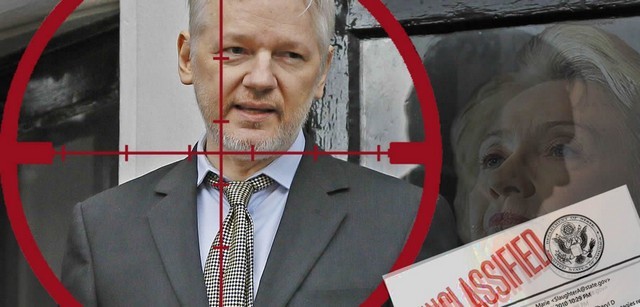
Crucifying Julian Assange

By Chris Hedges

What is happening to Assange should terrify the press. And yet his plight is met with indifference and sneering contempt.

Julian Assange’s sanctuary in the Ecuadorian Embassy in London has been transformed into a little shop of horrors. He has been largely cut off from communicating with the outside world for the last seven months. His Ecuadorian citizenship, granted to him as an asylum seeker, is in the process of being revoked. His health is failing. He is being denied medical care. His efforts for legal redress have been crippled by the gag rules, including Ecuadorian orders that he cannot make public his conditions inside the embassy in fighting revocation of his Ecuadorian citizenship.

Australian Prime Minister Scott Morrison has refused to intercede on behalf of Assange, an Australian citizen, even though the new government in Ecuador, led by Lenín Moreno—who calls Assange an “inherited problem” and an impediment to better relations with Washington—is making the WikiLeaks founder’s life in the embassy unbearable. Almost daily, the embassy is imposing harsher conditions for Assange, including making him pay his medical bills, imposing arcane rules about how he must care for his cat and demanding that he perform a variety of demeaning housekeeping chores.

The Ecuadorians, reluctant to expel Assange after granting him political asylum and granting him citizenship, intend to make his existence so unpleasant he will agree to leave the embassy to be arrested by the British and extradited to the United States. The former president of Ecuador, Rafael Correa, whose government granted the publisher political asylum, describes Assange’s current living conditions as “torture.”

His mother, Christine Assange, said in a recent video appeal, “Despite Julian being a multi-award-winning journalist, much loved and respected for courageously exposing serious, high-level crimes and corruption in the public interest, he is right now alone, sick, in pain—silenced in solitary confinement, cut off from all contact and being tortured in the heart of London. The modern-day cage of political prisoners is no longer the Tower of London. It’s the Ecuadorian Embassy.”
“Here are the facts,” she went on. “Julian has been detained nearly eight years without charge. That’s right. Without charge. For the past six years, the U.K. government has refused his request for access to basic health needs, fresh air, exercise, sunshine for vitamin D and access to proper dental and medical care. As a result, his health has seriously deteriorated. His examining doctors warned his detention conditions are life-threatening. A slow and cruel assassination is taking place before our very eyes in the embassy in London.”

“In 2016, after an in-depth investigation, the United Nations ruled that Julian’s legal and human rights have been violated on multiple occasions,” she said. “He’d been illegally detained since 2010. And they ordered his immediate release, safe passage and compensation. The U.K. government refused to abide by the U.N.’s decision. The U.S. government has made Julian’s arrest a priority. They want to get around a U.S. journalist’s protection under the First Amendment by charging him with espionage. They will stop at nothing to do it.”

“As a result of the U.S. bearing down on Ecuador, his asylum is now under immediate threat,” she said. “The U.S. pressure on Ecuador’s new president resulted in Julian being placed in a strict and severe solitary confinement for the last seven months, deprived of any contact with his family and friends. Only his lawyers could see him. Two weeks ago, things became substantially worse. The former president of Ecuador, Rafael Correa, who rightfully gave Julian political asylum from U.S. threats against his life and liberty, publicly warned when U.S. Vice President Mike Pence recently visited Ecuador a deal was done to hand Julian over to the U.S. He stated that because of the political costs of expelling Julian from their embassy was too high, the plan was to break him down mentally. A new, impossible, inhumane protocol was implemented at the embassy to torture him to such a point that he would break and be forced to leave.”

Assange was once feted and courted by some of the largest media organizations in the world, including The New York Times and The Guardian, for the information he possessed. But once his trove of material documenting U.S. war crimes, much of it provided by Chelsea Manning, was published by these media outlets he was pushed aside and demonized. A leaked Pentagon document prepared by the Cyber Counterintelligence Assessments Branch dated March 8, 2008, exposed a black propaganda campaign to discredit WikiLeaks and Assange. The document said the smear campaign should seek to destroy the “feeling of trust” that is WikiLeaks’ “center of gravity” and blacken Assange’s reputation. It largely has worked. Assange is especially vilified for publishing 70,000 hacked emails belonging to the Democratic National Committee (DNC) and senior Democratic officials. The Democrats and former FBI Director James Comey say the emails were copied from the accounts of John Podesta, Democratic candidate Hillary Clinton’s campaign chairman, by Russian government hackers. Comey has said the messages were probably delivered to WikiLeaks by an intermediary. Assange has said the emails were not provided by “state actors.”

The Democratic Party—seeking to blame its election defeat on Russian “interference” rather than the grotesque income inequality, the betrayal of the working class, the loss of civil liberties, the deindustrialization and the corporate coup d’état that the party helped orchestrate—attacks Assange as a traitor, although he is not a U.S. citizen. Nor is he a spy. He is not bound by any law I am aware of to keep U.S. government secrets. He has not committed a crime. Now, stories in newspapers that once published material from WikiLeaks focus on his allegedly slovenly behavior—not evident during my visits with him—and how he is, in the words of The Guardian, “an unwelcome guest” in the embassy. The vital issue of the rights of a publisher and a free press is ignored in favor of snarky character assassination.

Assange was granted asylum in the embassy in 2012 to avoid extradition to Sweden to answer questions about sexual offense allegations that were eventually dropped. Assange feared that once he was in Swedish custody he would be extradited to the United States. The British government has said that, although he is no longer wanted for questioning in Sweden, Assange will be arrested and jailed for breaching his bail conditions if he leaves the embassy.

WikiLeaks and Assange have done more to expose the dark machinations and crimes of the American Empire than any other news organization. Assange, in addition to exposing atrocities and crimes committed by the United States military in our endless wars and revealing the inner workings of the Clinton campaign, made public the hacking tools used by the CIA and the National Security Agency, their surveillance programs and their interference in foreign elections, including in the French elections. He disclosed the conspiracy against British Labour Party leader Jeremy Corbyn by Labour members of Parliament. And WikiLeaks worked swiftly to save Edward Snowden, who exposed the wholesale surveillance of the American public by the government, from extradition to the United States by helping him flee from Hong Kong to Moscow. The Snowden leaks also revealed, ominously, that Assange was on a U.S. “manhunt target list.”

What is happening to Assange should terrify the press. And yet his plight is met with indifference and sneering contempt. Once he is pushed out of the embassy, he will be put on trial in the United States for what he published. This will set a new and dangerous legal precedent that the Trump administration and future administrations will employ against other publishers, including those who are part of the mob trying to lynch Assange. The silence about the treatment of Assange is not only a betrayal of him but a betrayal of the freedom of the press itself. We will pay dearly for this complicity.

Even if the Russians provided the Podesta emails to Assange, he should have published them. I would have. They exposed practices of the Clinton political machine that she and the Democratic leadership sought to hide. In the two decades I worked overseas as a foreign correspondent I was routinely leaked stolen documents by organizations and governments. My only concern was whether the documents were forged or genuine. If they were genuine, I published them. Those who leaked material to me included the rebels of the Farabundo Marti National Liberation Front (FMLN); the Salvadoran army, which once gave me blood-smeared FMLN documents found after an ambush; the Sandinista government of Nicaragua; the Israeli intelligence service, the Mossad; the Federal Bureau of Investigation; the Central Intelligence Agency; the Kurdistan Workers’ Party (PKK) rebel group; the Palestine Liberation Organization (PLO); the French intelligence service, Direction Générale de la Sécurité Extérieure, or DGSE; and the Serbian government of Slobodan Milosovic, who was later tried as a war criminal.

We learned from the emails published by WikiLeaks that the Clinton Foundation received millions of dollars from Saudi Arabia and Qatar, two of the major funders of Islamic State. As secretary of state, Hillary Clinton paid her donors back by approving $80 billion in weapons sales to Saudi Arabia, enabling the kingdom to carry out a devastating war in Yemen that has triggered a humanitarian crisis, including widespread food shortages and a cholera epidemic, and left close to 60,000 dead. We learned Clinton was paid $675,000 for speaking at Goldman Sachs, a sum so massive it can only be described as a bribe. We learned Clinton told the financial elites in her lucrative talks that she wanted “open trade and open borders” and believed Wall Street executives were best-positioned to manage the economy, a statement that directly contradicted her campaign promises. We learned the Clinton campaign worked to influence the Republican primaries to ensure that Donald Trump was the Republican nominee. We learned Clinton obtained advance information on primary-debate questions. We learned, because 1,700 of the 33,000 emails came from Hillary Clinton, she was the primary architect of the war in Libya. We learned she believed that the overthrow of Moammar Gadhafi would burnish her credentials as a presidential candidate. The war she sought has left Libya in chaos, seen the rise to power of radical jihadists in what is now a failed state, triggered a massive exodus of migrants to Europe, seen Libyan weapon stockpiles seized by rogue militias and Islamic radicals throughout the region, and resulted in 40,000 dead. Should this information have remained hidden from the American public? You can argue yes, but you can’t then call yourself a journalist.

“They are setting my son up to give them an excuse to hand him over to the U.S., where he would face a show trial,” Christine Assange warned. “Over the past eight years, he has had no proper legal process. It has been unfair at every single turn with much perversion of justice. There is no reason to consider that this would change in the future. The U.S. WikiLeaks grand jury, producing the extradition warrant, was held in secret by four prosecutors but no defense and no judge. The U.K.-U.S. extradition treaty allows for the U.K. to extradite Julian to the U.S. without a proper basic case. Once in the U.S., the National Defense Authorization Act allows for indefinite detention without trial. Julian could very well be held in Guantanamo Bay and tortured, sentenced to 45 years in a maximum-security prison, or face the death penalty. My son is in critical danger because of a brutal, political persecution by the bullies in power whose crimes and corruption he had courageously exposed when he was editor in chief of WikiLeaks.”

Assange is on his own. Each day is more difficult for him. This is by design. It is up to us to protest. We are his last hope, and the last hope, I fear, for a free press.

“We need to make our protest against this brutality deafening,” his mother said. “I call on all you journalists to stand up now because he’s your colleague and you are next. I call on all you politicians who say you entered politics to serve the people to stand up now. I call on all you activists who support human rights, refugees, the environment, and are against war, to stand up now because WikiLeaks has served the causes that you spoke for and Julian is now suffering for it alongside of you. I call on all citizens who value freedom, democracy and a fair legal process to put aside your political differences and unite, stand up now. Most of us don’t have the courage of our whistleblowers or journalists like Julian Assange who publish them, so that we may be informed and warned about the abuses of power.”

Chris Hedges writes a regular column for Truthdig.com.

14 November 2018

Source: https://countercurrents.org/2018/11/14/crucifying-julian-assange/

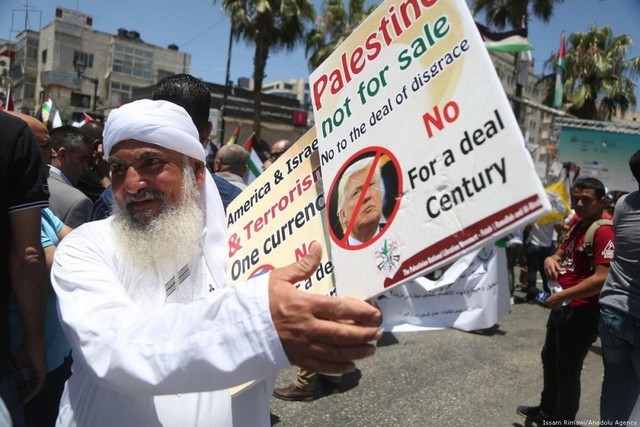
Trump’s ‘deal of the century’ and its impact on Palestinians

By Afro-Middle East Centre (AMEC)

With the US Republican Party having lost control of the House of Representatives, expectations are that the White House, under President Donald Trump, will have a difficult time meeting its domestic policy or legislative objectives. American presidents, in such circumstances, often focus their attention on foreign policy, attempting to achieve victories there rather than engaging the hopelessness of victories in domestic policy. In Trump’s case, one foreign policy issue that is closely linked to his retaining support within his electoral base is that of his full backing of Israel. It can be expected, then, that over the next few months Trump will focus on concluding what he calls his ‘deal of the century’, which aims to decisively establish Israel’s control of all Palestinian territory and end the Palestinian struggle.

The promise of an Israeli-Palestinian ‘deal’ featured prominently in Trump’s election campaign two years ago. Even then, it was clear that the deal he sought would guarantee Israel’s needs and would be imposed on Palestinians – whether they liked it or not. After assuming the presidency, Trump lobbied selected Arab leaders while virtually ignoring the Palestinian Authority (PA) or any other Palestinian interlocutor. It is accepted by many that his ‘deal of the century’ has largely been crafted already. Although its contents are yet to be made public, various leaks suggest it recycles Israeli demands that had previously been rejected by the Palestinians, and even by previous US administrations.

Ultimately, Trump’s ‘deal’ will likely enable Israel to continue illegal settlement building on Palestinian land; crush Palestinian ambitions of building a sovereign state with a capital in Jerusalem; subject West Bank Palestinians to continued military rule with a bantustan-type administration that controls none of its borders; ensure that there is no Palestinian-controlled airspace; and there will be no prospect of the realisation of the right of return for Palestinian refugees. Gaza will become a protectorate of Egypt, which will facilitate the Strip’s economic transformation, freeing Israel from the Gaza problem.
With Palestinians not being consulted, the PA has emphasised that it will have nothing to do with such a deal, and has rejected the USA as a mediator between it and Israel. The proposals, which are much worse for Palestinians than the disastrous Oslo Agreements of the 1990s were, have seemingly, however, been supported by certain Arab leaders.

Key players

Since assuming office in January 2017, Trump has repeatedly mentioned his efforts to conclude his deal. He appointed his son-in-law, Jared Kushner, as his special adviser in January 2017, making him the lead person in the ‘deal of the century’ initiative. Kushner and his father-in-law both relate to the resolution of the Israeli occupation as a business arrangement where Israel is the client that needs to be satisfied and Palestinians (and their land) the real estate that has to be disposed of. Kushner, a businessperson like Trump, is part of a family empire that has been funding illegal settlement building in the West Bank. His family contributed $315 000to the Friends of the Israeli Defense Forces (FIDF) between 2011 and 2013, and he served on the FIDF board until he joined the Trump administration. His father is also a close friend of Israeli prime minister Benyamin Netanyahu. Apart from Trump’s nepotistic streak, the other reason he appointed Kushner is because the latter ‘loves Israel’ and is intimately connected to Netanyahu. These connections mean that any deal will be heavily influenced by Netanyahu, who will definitely be pleased with the outcomes.

Trump also appointed Jason Greenblatt – a Trump confidante and lawyer – as his special envoy to the Middle East. Kushner and Greenblatt undertook numerous trips to the Middle East, meeting various Arab leaders and Israeli officials, as well as PA president Mahmoud Abbas (in August 2017), but ceased engaging the PA when the PA announced it would boycott US involvement in the process. That announcement followed Trump’s recognition of Jerusalem as Israel’s capital, and the move of the US embassy from Tel Aviv to Jerusalem in May 2018. In their many visits to the region, the pair met, on numerous occasions, with Saudi crown prince Mohammad Bin Salman (MbS), Egyptian president Abdel Fattah el-Sisi and the Jordanian king, Abdullah. MbS has been most involved with Kushner and Greenblatt, and has seemingly promised to give up most of the rights that Palestinians have demanded, and to accept the Trump deal. In April, he told heads of US-based Jewish groups, ‘Palestinians must accept the conditions that will be set up by this deal or shut up and stop complaining.’ He also attempted to bully the PA into accepting a US role and to accept US conditions. In December 2017, he even summoned Abbas to Riyadh to threaten him into acquiescing to the USA. However, MbS appears to differ on this matter with his father, Salman, who expressed support for the Palestinians and said Saudi Arabia remained committed to the 2002 Arab Peace Initiative, which proposed a Palestinian state along the 1967 armistice line, with East Jerusalem as its capital. Salman’s statement followed an MbS-Netanyahu secret meeting in Amman, facilitated by the Jordanian king, which signalled a strengthening public relations campaign for the acceptance of Trump’s conditions.

Trump regards Arab leaders’ support for his deal as critical for Israel’s pursuit of legitimacy, and the US goal of countering Iranian influence in the region. Abdullah played a key role in crafting the deal, trying thereby to safeguard Amman’s interests, particularly its role as the custodian of the holy sites in Jerusalem. Abdullah is also concerned about the potential implications of the deal’s announcement on Jordan, where a large number of Palestinian refugees reside. Jordan has thus served as a key meeting point for many Kushner-Greenblatt talks, signalling that Amman has been identified as a strategic partner in achieving their desired outcomes. The collaboration of Arab countries such as Egypt, Jordan and Saudi Arabia shows that Israel has made substantial headway in its relations in the region – with the support of the USA. Israel has been growing closer to Arab governments despite the latter’s proclaimed support for Palestinians.

On 15 August, Egypt’s intelligence chief Abbas Kamel arrived in Tel Aviv as his attempts to broker a ceasefire deal with Hamas and to implement economic reform in Gaza were under way. Egypt, like Saudi Arabia, has relations with Israel, although it also claims to support the Palestinians. Its involvement seeks to rid Israel of the political nuisance that Gaza has become, especially with the intensifying peaceful Friday return marches at the Israeli blockade fence.

The PA’s rejection of a US role in negotiations with Israel has not negatively affected the attitude of Arab leaders in Egypt and Jordan. This is despite Abbas’s efforts to forge a united Arab response in rejecting a US role, especially after Trump’s embassy move. With growing Palestinian disillusionment, and the worsening humanitarian conditions in Gaza, Trump’s ‘deal of the century’ is unlikely to be warmly welcomed by Palestinians, especially considering that the deal proposes old conditions that have long been rejected by Palestinians, and new conditions that are unacceptable to Palestinians and in violation of international law.

Contents of the ‘deal’

Although no official announcement has yet been made about the contents of Trump’s proposal, a number of leaks and positions articulated by the US president, Kushner and Greenblatt, suggest the general direction of the proposal and even certain specific provisions. It is no secret that the Trump administration takes its cue on Middle East issues from the Israeli government. The ‘deal of the century’ will therefore represent and uphold Israeli interests over and above everything else. For Palestinians, the demands for a state, an end to illegal settlement building, and the return of all Palestinian refugees will be subjugated to Israeli interests.

Jerusalem

When Trump met with Netanyahu in February 2017, in Washington, he said he supported what ‘both parties like’. ‘I’m looking at two-state and one-state,’ he said, ‘I’m very happy with the one that both parties like. I can live with either one.’ What he understood by a two- or one-state solution remained unclear. What isevident is that Trump is determined that there will not be a Palestinian capital in Jerusalem. He sealed this matter, in his mind at least, by the US decision to recognise Jerusalem as Israel’s capital. US recognition, the US and Israel believe, legitimises Israeli ambitions to annex all of Jerusalem and to deny any Palestinian claim to it, a plan set in motion after the 1967 war. Clearly, the ‘deal of the century’ is unlikely to refer to a Palestinian state in the way that Palestinians envision it.
Instead, MbS attempted to persuade Abbas to accept Abu Dis as the Palestinian capital in order to smooth the way for Trump’s proposal. A rural village that overlooks the old city of Jerusalem, Abu Dis was touted as the home for the Palestinian Legislative Council in 1995, in the wake of the Oslo Accords. The administration of then-US president Bill Clinton proposed renaming Abu Dis ‘Al-Quds’ (the Arabic name for Jerusalem) in order to deceive Palestinians, but it was roundly rejected by Palestinians. With a population of just 12 000, Abu Dis lies in ‘Area C’ of the West Bank, meaning it is fully under Israeli control. Part of the massive illegal settlement of Maale Adumim lies in the Abu Dis district. Palestinians will certainly reject Trump’s proposal for Abu Dis as a Palestinian capital, as they had previously done, knowing that such an acceptance will mean the permanent loss of Jerusalem and access to it, its holy sites and its 300 000 Palestinian residents.

Jerusalem’s status is a major issue of contestation, and if the protests that marked Trump’s Jerusalem decision are any indication, Palestinians will not accept the usurpation of the city by Israel and the USA. It is noteworthy that the Second Intifada was sparked by a large Israeli military entry into the Al-Aqsa mosque; placing the entire old city of Jerusalem under permanent Israeli control could spark another intifada.

Airspace, resources, borders

With Jerusalem promised to Israel by the USA, Trump’s proposal looks to craft a fictitious Palestinian ‘state’ crammed into tiny pieces of West Bank land separated from each other and from Gaza, and having no control over its borders, natural resources or airspace. The Palestinian ‘state’ will also have no sovereignty. The USA and Israel will attempt to convince the world that the bantustan they create is a state, and will attempt to gain entry for that entity to international bodies such as the UN by providing it the trappings of an independent state, much like apartheid South Africa attempted with its bantustans.

The Israeli government currently controls the territorial borders of the Occupied Palestinian Territory, Palestinian water sources and Palestinian airspace. Israel also collects Palestinian taxes on behalf of the PA, supplies electricity to Gaza (until last year when the PA refused to pay for Gaza’s electricity), and continues its military control of the West Bank. The Trumpian ‘state’ will maintain this reality. The Trump-Kushner proposal is being drafted based on the assumption that Palestinians will accept its conditions as long as a sufficiently large financial package incentivises it. Palestinians will almost definitely refuse this, and Palestinian airspace, resources and territorial borders will continue to be controlled by Israel.

Gaza

Trump’s plan for Gaza consists mainly of an economic initiative, with control of the strip largely being handed over to Egypt. Trump seems to believe that easing Gaza’s economic strain will solve the political headache that the strip represents for Israel. He will thus propose a free-trade zone in El-Arish in the Egyptian Sinai desert bordering Gaza. This plan, its drafters hope, will alleviate the deteriorating humanitarian conditions in Gaza, which were created by an eleven-year land and sea blockade by Israel and Egypt. The plan will propose that five industrial projects be established, which will be funded by the United Arab Emirates (UAE) and other Arab states. This plan resembles Israel’s long-time ambition to move responsibility for Gaza to Egypt.

The economic initiative seems to be based on a proposal by Israeli general Yoav Mordechai, which he had submitted to the Trump team in a White House meeting in March. It includes the construction of air and sea ports, and the establishment of a trade zone and power station. Mordechai’s plans are premised on Egyptian cooperation and supervision of the implementation of the projects. Egyptian president el-Sisi discussed the plan with Kushner and Greenblatt, who encouraged Egyptian intelligence officials to present the proposal to Hamas, the de facto rulers of Gaza. The plan to relegate Gaza to a quasi-Egyptian province is not new, and has been an idea that Israel has pushed since it redeployed its soldiers out of Gaza in August 2005. Israel seeks to cement and formalise Gaza’s separation from the West Bank and, with US encouragement, Egypt is expected to come to the party.

The plan will, undoubtedly, be rejected by Palestinians, especially the political and civil society groups that have been participating in the Friday marches of return at the Gaza-Israel fence. Egypt has thus been working tirelessly to get Hamas on board, as Egypt faces stiff pressure from Trump and the Saudi-supporting Arab states. Hamas has engaged in several talks with Egypt in pursuit of humanitarian relief in Gaza and reconciliation with the Fatah-led Palestinian Authority in Ramallah. The reconciliation project is in tatters because of non-cooperation from Fatah, but the Egyptians are keen to move ahead without the group, especially since most other Palestinian groups have accepted the Egyptian role. If implemented, the plan will alienate Hamas from the PA, which is facing an internal succession battle and declining Palestinian support. This week’s Israeli operation in Gaza, when a Hamas commander and seven other Palestinians were killed, might delay progress of the Egyptian initiative, but it is expected to resume soon with the next stage: negotiations around prisoner exchanges.

Return of refugees

Palestinians have always been very clear about the return of Palestinian refugees who were displaced in 1948 when Israel was created. The issue of refugees has thus been a huge sticking point in previous negotiations, with Israel refusing to recognise the right of return of the refugees, who now number around five million (about 700 000 were originally displaced) on the basis that they would be a ‘demographic threat’ to the ‘Jewish character’ of the Israeli state. The Kushner-Trump deal will certainly protect Israel on this issue. To lay the foundation for this protection, the USA has already cut funding to the UN Relief and Works Agency for Palestine Refugees in the Near East (UNRWA). Kushner said he wanted to expunge the refugee status of the five million Palestinians living in West Bank, Gaza, Jordan, Lebanon, Syria and other countries in the world. This plan has already been set in motion as Trump has started pressuring the Jordanian king, Abdullah, to strip Palestinians living there of their refugee status. This is consistent with Trump’s guarantee to secure and protect Israeli security. The attack against UNRWA is thus part of the US attempt at protecting Israeli interests by ensuring that Palestinian refugees lose their refugee status and can never return to their homes.

Conclusion

Trump hopes to end years of deadlock in talks between Israelis and Palestinians, even though biased US support for Israel has already been demonstrated. Trump, his son-in-law Kushner and the Israelis want an Israeli state with all of Jerusalem as its capital, while maintaining the status quo of Israel building and expanding illegal settlements in Palestinian territories, controlling Palestinian borders, resources and airspace, while subjecting Palestinians to indefinite military control. Under this arrangement, Palestinians will be given limited control over small parts of the West bank, separated from Gaza and Jerusalem. Gaza will be handed over to Egypt with an economic aid package to solve the deteriorating economic conditions created by the Israeli- and Egyptian-imposed land and sea blockade.

Abbas’s PA has refused to engage with the USA on the crafting of this deal, giving Trump, Kushner and Israelis the opportunity to label Palestinians as being opposed to peace, even though any PA involvement would have been unlikely to significantly influence the shape of the final proposal. The ‘deal’ has thus been negotiated without Palestinian input and will certainly not protect any Palestinian interests. Trump and the Israelis hope for international applause when they announce their ‘deal’, despite knowing that Palestinians will reject it. With the proposal having received the support of certain Arab leaders, Palestinians are being set up to lose their land and rights in exchange for crumbs from the Trump and Israeli table. The deal will simply reproduce old proposals which have been rejected multiple times, now packaged under the Trumpian label.

Afro-Middle East Centre (AMEC),
PO Box 411494, Craighall, 2024, Johannesburg, South Africa
info@amec.org.za, www.amec.org.za

13 November 2018

Source: http://www.amec.org.za/palestine/item/1577-trump-s-deal-of-the-century-and-its-impact-on-palestinians.html

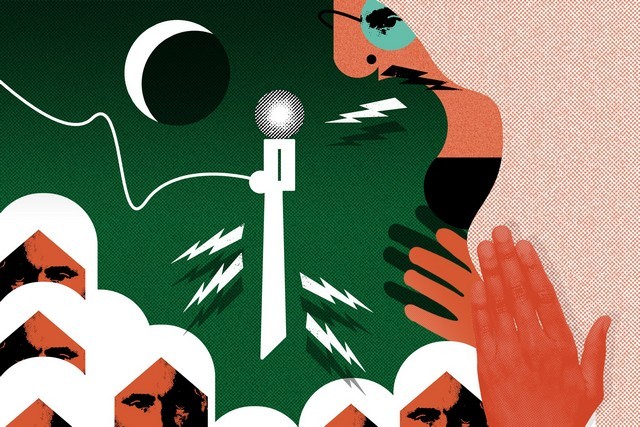
Saudi Arabia Is Misusing Mecca

By Khaled M. Abou El Fadl

The rulers of Saudi Arabia derive much of their legitimacy and prestige in the Muslim world from their control and upkeep of the Grand Mosque and the Kaaba in Mecca and the mosque of Prophet Muhammad in Medina. King Salman, like the rulers before him, wears the title of the “Khadim al-Ḥaramayn al-Sharifayn,” which is translated as the “Custodian of the Two Holy Mosques” or, more precisely, “The Servant of the Two Noble Sanctuaries.”

Despite the humility of the royal title, the Saudi monarchy has a long history of exploiting the podium of the Grand Mosque in Mecca by using its imams to praise, sanctify and defend the rulers and their actions.

In the aftermath of the murder of the journalist Jamal Khashoggi, as the world’s accusatory gaze was transfixed on Prince Mohammed bin Salman, the Saudi monarchy has again used the Grand Mosque to defend and deify the crown prince in a manner that makes its legitimacy and control of Mecca and Medina morally troubling like never before.

On Oct. 19, Sheikh Abdulrahman al-Sudais, the officially appointed imam of the Grand Mosque and the highest religious authority in the kingdom, delivered his Friday sermon from a written script. Friday sermons at the Grand Mosque are broadcast live on cable networks and social media sites, watched with great reverence by millions of Muslims and carry a great deal of moral and religious authority.

Imam Sudais delivered a troubling sermon, violating the sanctity of the sacred space he occupied. He referenced a saying attributed to Prophet Muhammad that once every century, God sends a mujaddid, a great reformer to reclaim or reinvigorate the faith. He explained that the mujaddid is needed to address the unique challenges of each age.

He proceeded to extol Prince Mohammed bin Salman as a divine gift to Muslims and implied that the crown prince was the mujaddid sent by God to revive the Islamic faith in our age. “The path of reform and modernization in this blessed land … through the care and attention from its young, ambitious, divinely inspired reformer crown prince, continues to blaze forward guided by his vision of innovation and insightful modernism, despite all the failed pressures and threats,” the imam declared, from the podium where Prophet Muhammad delivered his last sermon.

Invoking the debate following the Khashoggi murder, Imam Sudais warned Muslims against believing ill-intended media rumors and innuendos that sought to cast doubt on the great Muslim leader. He described the conspiracies against the crown prince as intended to destroy Islam and Muslims, warning that “all threats against his modernizing reforms are bound not only to fail, but will threaten international security, peace and stability.”

He cautioned that the attacks against “these blessed lands” are a provocation and offense to more than a billion Muslims. Imam Sudais used the word “muhaddath,” or “uniquely and singularly gifted” to describe Prince Mohammed. “Muhaddath” was the title given by Prophet Muhammad to Umar Ibn al-Khattab, his companion and the second caliph of Islam. The imam implicitly compared the crown prince to Caliph Umar.

Imam Sudais prayed for God to protect Prince Mohammed against the international conspiracies being woven against him by the enemies of Islam, the malingerers and hypocrites, and concluded that it was the solemn duty of all Muslims to support and obey the king and the faithful crown prince, the protectors and guardians of the holy sites and Islam.

Saudi clerics had never weaponized the podium of the prophet at the Grand Mosque so brazenly to serve the monarchy. No imam of the Grand Mosque had ever anointed a Saudi ruler as the mujaddid of the age or dared to imply as much.

The sermons in Mecca and Medina are read from a script, which is approved beforehand by Saudi security forces. While the king appoints a leading imam for the Grand Mosque and the Prophet’s Mosque in Medina, each imam has a number of officially appointed deputies who rotate in leading prayers and delivering sermons.

For decades, the sermons delivered in Mecca and Medina have been pietistic, dogmatic and predictable. They have always concluded with a prayer for the Saudi royals, but the imams would not attribute sacred qualities to the monarchy and insisted that the rulers should be obeyed only to the extent that they obey God.

A lot has changed since Prince Mohammed’s rise to power. The crown prince has imprisoned hundreds of prominent Saudi imams who have shown even a modicum of resistance — including very prominent and influential jurists such as Sheikh Saleh al-Talib and Sheikh Bandar Bin Aziz Bilila, former imams of the Grand Mosque. Saudi prosecutors have sought the death penalty for Salman al-Awdah, a prominent, reformist cleric who was arrested last September. Some reports claim that another prominent cleric, Sheikh Suleiman Daweesh, who was arrested in April 2016, has died in a Saudi prison after being tortured.

The only imams who seem to be allowed to lead prayers and give sermons at the Grand Mosque in Mecca and the Prophet’s Mosque in Medina are those who have agreed to go along with whatever the crown prince wants. Some influential Saudi scholars such as Sheikh Abd al-Aziz Al Rayes went as far as saying in a lecture that even if the Saudi ruler “fornicates in public on television for half an hour each day, you are still required to bring people together around the ruler, not to aggravate people against him.”

Imam Sudais’s recent sermon put Muslims at an axial turning point: Accept the crown prince as the divinely inspired reformer of Islam and believe and accept his words and deeds or you are an enemy of Islam. Muslim scholars reacted to the sermon primarily on social media with disdain and outrage. Numerous Arabic language comedy shows and talk shows on YouTube reacted with mockery and condemnation.

When an imam of the Grand Mosque calls upon Muslims to obediently accept Prince Mohammed’s incredulous narrative about the murder of Mr. Khashoggi; to accept his abduction, jailing and torture of dissenters, including imprisonment of several revered Islamic scholars; to ignore his pitiless and cruel war in Yemen, his undermining the democratic dreams in the Arab world, his support for the oppressive dictatorship in Egypt, it makes it impossible to accept the imam’s categorization of the crown prince as a divinely inspired reformer. The sanctified podium of the prophet in Mecca is being desecrated and defiled.

The control of Mecca and Medina has enabled the clerical establishment and the monarchy flush with oil money to extend their literalist and rigid interpretations of Islam beyond the borders of the kingdom. Most Muslims will always prefer a tolerant and ethically conscientious Islam to the variant championed by the crown prince and the acquiescent Saudi clergy.

By using the Grand Mosque to whitewash acts of despotism and oppression, Prince Mohammed has placed the very legitimacy of the Saudi control and guardianship of the holy places of Mecca and Medina in question.

Khaled M. Abou El Fadl is a law professor at the University of California, Los Angeles.

12 November 2018

Source: https://www.nytimes.com/2018/11/12/opinion/saudi-arabia-mbs-grandmosque-mecca-politics.html

A MOTHERS PLEA TO SAVE HER SON… held 8 years WITHOUT CHARGE by UK Government

By Mairead Maguire, Nobel Peace Laureate

On 4th November, 2018, Christine Assange, mother of Julian Assange, made a deeply moving video public appeal to save the life of her son Julian.

Julian Assange is Editor in Chief of Wikileaks. Because of Wikileaks reporting of acts during US/NATO’s illegal wars against Afghanistan, Iraq, etc., and the highlighting of corruption by USA/CIA and Corporate powers, and continuing his fight in disclosing the links between the private corporations and government agencies, Julian Assange has been threatened by high profile USA citizens, and a Grand Jury has been set up in America to try Julian Assange and Wikileaks, for their publications. For this he is being persecuted and deprived of his right to liberty, basic human rights etc., Six years ago Julian Assange, aware of these extradition plans of America, sought asylum in the Ecuadorian Embassy, in London, where he remains. Julian Assange is now six years within the Ecuadorian Embassy, and has now been detained WITHOUT CHARGES for eight years.

In her appeal for her sons life, Christine Assange says he is in immediate critical danger. He is now all alone, sick, cut off from all contacts including computer phone mail and being persecuted in the heart of London. Ms. Assange says‚

‘for the past six years the UK Gov. has refused his request for basic health care, fresh air, sunshine for vitamin D, access to proper medical and dental care. As a result his health has seriously deteriorated. Doctors have said the detention conditions are life threatening. In 2016 after in-depth investigations the UN ruled that Julians legal and human rights had been violated on multiple occasions and that he has been illegally detained in 2010 and they ordered his immediate release, safe passage and compensation. The UK Gov has refused to abide by this UN decision’.

When US Vice President Mike Pence visited Ecuador several months ago, behind scenes, Ecuador done a deal with US to have Julian Assange extradited for life to USA prison. Ecuador are trying to make this acceptable by saying that the US has agreed not to kill him. Now its a propaganda war with the US and UK to reduce his support enough to get away with it politically. The UK/US extradition act means he could be held in Guantanamo Prison and face torture, 45 years indefinite detention and/or death penalty.

Currently there is a court case in Ecuador fighting the threats to violate his asylum given by the previous President of Ecuador. There are strict protocol set down by the Ecuadorian Embassy regarding visitors and to date Julian has not managed to have visitors for many months now.

The Ecuadorian Embassy has admitted formal restrictions on Julian Assange and he is gagged from saying anything about politics, foreign policy human rights abuses, in fact anything critical about any country in the world.

This is political persecution of Julian Assange by high level people and it is punishment for exposing high level corruption when he was editor of Wikileaks.

Christine Assange has appealed to save her sons life, and her appeal deserves an immediate response by us all and the Parties responsible. Mr. Assange is not asking for special treatment, he simply insists that the UK applies standard laws and procedures to him. The United Nations Working Group on Arbitrary Detention’s opinion confirmed Mr. Assange’s right to liberty and right to protection. A text between Ecuador and the United Kingdom guaranteeing Assange would not be extradited to the USA,would provide an immediate resolution to the continued illegal and arbitrary detention of Mr. Assange.

Mr. Assange is an Australian Citizen and the Australian Government have a moral and legal responsibility to renew his passport and facilitate his safe return to his own country, should he wish to do so. Julian Assange deserves all our admiration and gratitude for his courage and bravery in truth-telling. He is an inspiration to us all, together with his colleagues at Wikileaks, who are paying a high price for informing the public and upholding our right to know when Governments’ violate human rights and international laws.

Mairead Corrigan Maguire, co-founder of Peace People, is a member of the TRANSCEND Network for Peace, Development and Environment.

Nobel Peace Laurete www.peacepeople.com

5 November 2018

Russia & China Invest in Infrastructure; U.S. Instead Spends on Military

By Eric Zuesse

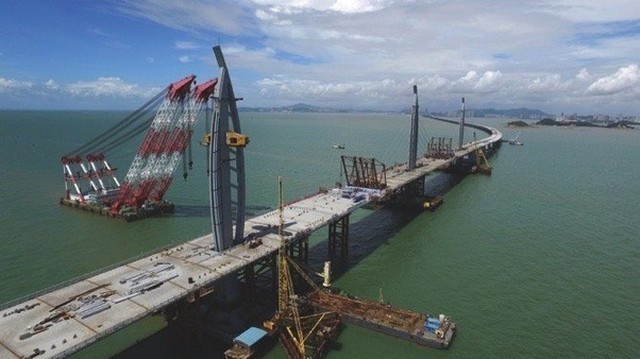
China’s “Belt and Road Initiative” is famous as an extension of their domestic infrastructure investments, but Russia is also investing heavily in infrastructure. Both countries need to do it in order to improve the future for their respective populations, and both Governments have avoided the Western development model of going heavily into debt in order to pay for creating and maintaining infrastructure. Both are, in fact, exceptionally low-debt Governments.

According to the “Global Debt Clock” at Economist, China has a public debt/GDP of 17.7%, and Russia’s is 8.0%. For comparison, America’s is 93.6%. (Others are: Germany 85.8%, Spain 91.2%, Italy 122.6%, Greece 147.1%, India 54.2%, Pakistan 47.0%, and Brazil 55.0%.)

The United States isn’t going into public debt in order to finance building or maintenance of infrastructure, but instead to finance expansions of its military, which is already (and by far) the world’s largest (in terms of its costs, but not of its numbers of troops).

While the U.S. Government now spends around half of the world’s military expenditures and plans to conquer Russia, China, and all countries (such as Iran and Syria) that cooperate with those ‘enemies’ (and please click onto a link wherever you question the truthfulness of an allegation made here), Russia and China plan to improve their infrastructures, in order to boost their national economies and to minimize the impacts that (the mainly U.S.-caused) global warming will have. These infrastructure projects are optimistic and long-term expenditures, which are being planned and built only because the countries that the U.S. aristocracy are targeting to conquer, expect the U.S. aristocracy to fail to achieve its clear #1 goal, of controlling the entire world and conquering them — of America’s rulers finally achieving the global fascist empire that, in World War II, Hitler and the other Axis powers had been hoping to become.

By contrast, U.S. infrastructure is rotting; and, while every recent U.S. President has promised to reverse that decline, none has done anything significant to repair this nation’s rotting infrastructure — it has always been just talk and empty promises. A nation that spends over a trillion dollars a year on ‘national defense’ can’t have much left over to spend on things that ‘can wait’ — such as repairing its bridges, roads, etc. — and so those repairs do wait, while even more money, than before, becomes devoted to purchases of new weaponry, such as the F-35 program.

Meanwhile, Russia and China prepare for their future, and hope it won’t be war.

On November 1st, Russian Television bannered “Russia, India & Iran want to create alternative trade route to Suez Canal – report” and described “The 7,200-kilometers long corridor [that] will combine sea and rail routes”:

The route will make it possible to deliver cargoes from India to the Iranian port of Bandar Abbas. Then, the goods will be transported by land to Bandar Anzali, Iran’s port on the Caspian Sea. After that, goods will be shipped to the Russian southern port of Astrakhan, from where they will move to Europe by rail. The new transport artery will potentially reduce the time and costs of shipping by up to 40 percent.

A linked news-report there headlined “Top of the world: Russia to build world’s northernmost railway in Arctic”, and another headlined “Japan turns to Trans-Siberian Railway to test potential connection with Russia, China & S. Korea”.

If the U.S. Government’s plans to destroy Russia succeed, then any of these new or extended infrastructures will either be destroyed or else be taken over by the U.S. and its allies. (If taken over, then presumably Japan’s aristocracy will be part of the new regime there that does so.) Consequently, building and extending these new infrastructures is Russia’s bet — and a concrete testimonial to the bet — that outright war by the destroyers can be avoided. The nations that America and its allies want to conquer are looking to the future, not to conquest or any type of war (though they must also be prepared for war, if the U.S. does invade). Right now, the U.S. and its NATO allies are holding the largest war-games in history, and these preparations to invade Russia are occurring all along and near Russia’s borders, in the countries that formerly were the Soviet Union’s Warsaw Pact military alliance. Though the U.S. and its allies say that Russia and China are threatening to them, these massings of soldiers and of tanks and planes on Russia’s borders are aggressions, not defensive at all as claimed. How would we Americans feel if Russia were doing this along America’s borders? Would we feel that Russia is defending itself, then? Russians have sound reason to be terrified by the U.S. and its allies. Americans were terrified by the Soviets when the issue was Soviet missiles located in Cuba only a hundred miles from the U.S. This country then threatened: if you do that, then we’ll launch war against you. Russia isn’t responding similarly, even though America’s threat to them is much bigger than that threat to the U.S. was in 1962 during the Cuban Missile Crisis.

All that today’s U.S. Government wants is to conquer the world, which now especially means Russia, China, and countries that do business with those ‘enemies’. Iran is also a major target of the U.S., because the U.S. aristocracy’s main allies are the Sauds and Israel, both of which hate and crave to destroy Iran. Though those three targeted countries want to avoid being conquered by the U.S. Government, most of their expenditures are for their own domestic economies, instead of for defending against the U.S. and its allies. (However, the U.S. and its allies are clearly and consistently the aggressor since 1991, and expanded their NATO alliance up to Russia’s borders; Russia didn’t expand its Warsaw Pact alliance up to America’s borders, but ended the Warsaw Pact in 1991. None of Russia’s expenditures are for conquering foreign countries, such as the U.S. alliance now is trying to do in countries such as Syria and Yemen, and perhaps soon in Iran, too; so, the U.S. Government has no excuse whatsoever in this matter, but pure guilt in it, pure aggression.)

There really is a difference between “The West” and “The East” in our era, but it’s more like the difference between The Axis powers in WW II versus The Allies, than it is between democracy versus dictatorship; and, in fact, the U.S. Government is the world’s only Government that has been scientifically analyzed to determine whether it is a democracy or instead a dictatorship, and it has consistently been found, in these rigorous studies, to be a dictatorship, against the public, by its billionaires, the aristocrats, and not a democracy, at all. Furthermore, the preponderance of the major outcome-indicators of the extent to which a given nation is a dictatorship or even a police-state, or is instead a democracy that’s ruled by its public, are showing that the U.S. is a dictatorship or even a police-state, and that the nations it calls its ‘enemies’ are more toward the democratic side — serving their respective public, instead of any such narrow and exclusive elite as the owners of “the military-industrial complex.” (U.S.-allied propaganda to the contrary alleging that the U.S. and its allies are the ones which are ‘democracies’, like this piece from the U.S. stooge-nations that constitute the EU, are always based on ranking — without clearly explaining how — the mere formalities of ‘democracy’, no authentic measures of democracy itself, but only the associated formalities, which often are mere fronts, behind which the given nation’s aristocracy control that given country.)

The U.S. has emerged into the very model of the modern dictatorship, relying maximally upon a coordination between deceit and military power. This is the reason why it now spends half of the world’s military costs — to serve its aristocracy, who have perfected Joseph Goebbels’s system of calling good bad, and bad good, and of otherwise imposing what the novelist George Orwell subsequently called “Newspeak” in its ‘news’-reporting and commentaries, to serve the controlling aristocracy, “Big Brother.” It’s here, and now. On November 1st, Jonathan Cook at Global Research headlined “Bolsonaro: A Monster Engineered by Our Media” and he explained how even the “liberal” aristocrats in the U.S. and its allied countries have brought back racist fascism, the ideology known as nazism, as a globally spreading plague now.

Here is how America’s master of Newspeak, Barack Obama, represented, to West Point Military Academy’s graduating cadets on 28 May 2014, the new, American, version, of Adolf Hitler’s beloved “Deutschland, Deutschland über alles, über alles in der Welt”:

The United States is and remains the one indispensable nation. [Every other nation is therefore ‘dispensable’; we therefore now have “Amerika, Amerika über alles, über alles in der Welt”.] That has been true for the century passed and it will be true for the century to come. … America must always lead on the world stage. If we don’t, no one else will. … Russia’s aggression toward former Soviet states unnerves capitals in Europe, while China’s economic rise and military reach worries its neighbors. From Brazil to India, rising middle classes compete with us. [He was here telling these future U.S. military leaders that they are to fight for the U.S. aristocracy, to help them defeat any nation that resists.] … In Ukraine, Russia’s recent actions recall the days when Soviet tanks rolled into Eastern Europe. But this isn’t the Cold War. Our ability to shape world opinion helped isolate Russia right away. Because of American leadership, the world immediately condemned Russian actions; Europe and the G7 joined us to impose sanctions; NATO reinforced our commitment to Eastern European allies; the IMF is helping to stabilize Ukraine’s economy; OSCE monitors brought the eyes of the world to unstable parts of Ukraine.

Actually, his — Obama’s — regime, had conquered Ukraine in February 2014 by a very bloody coup, and installed a racist-fascist anti-Russian Government there next door to Russia, a stooge-regime to this day, which instituted a racial-cleansing campaign to eliminate enough pro-Russia voters so as to be able to hold onto power there. It has destroyed Ukraine and so alienated the regions of Ukraine that had voted more than 75% for the democratically elected Ukrainian President whom Obama overthrew, so that those pro-Russia regions quit Ukraine. What remains of Ukraine after the U.S. conquest is a nazi mess and a destroyed nation in hock to Western taxpayers and banks.

Furthermore, Obama insisted upon (to use Bush’s term about Saddam Hussein) “regime-change” in Syria. Twice in one day the Secretary General of the U.N. asserted that only the Syrian people have any right to do that, no outside nation has any right to impose it. Obama ignored him and kept on trying. Obama actually protected Al Qaeda’s Syrian affiliate against bombing by Syria’s Government and by Syria’s ally Russia, while the U.S. bombed Syria’s army, which was trying to prevent those jihadists from overthrowing the Government. Obama bombed Libya in order to “regime-change” Muammar Gaddafi, and he bombed Syria in order to “regime-change” Bashar al-Assad; and, so, while the “U.S. Drops Bombs; EU Gets Refugees & Blame. This Is Insane.” And Obama’s successor Trump continues Obama’s policies, regarding not only Ukraine, but regarding also Yemen and Syria, and much else, except that Trump goes even more nazi than Obama did. The change from Obama to Trump was from soft nazi to hard nazi. That’s all. Trump is the U.S. regime’s going wild.

Every day, the U.S. regime murders lots of people in foreign lands. Today, as this is being written, on November 3rd, Syria News, which I’ve found to be far more reliably truthful about the situation in Syria than is for example the New York Times, headlined “US-Led Coalition Murders 15 Civilians in a New Bombing in Hajin”, and reported that, “Under the guise of fighting ISIS, the US and its cronies, are trying to establish a de facto barrier on the Syrian-Iraqi border which is run by ISIS and SDF, who both receive support from the US and both have occasional clashes [against each other] in between.” Aggression (and lying about it) is normal for the U.S. Government.

On January 19th, U.S. ‘Defense’ Secretary James Mattis said that“great power competition, not terrorism, is now the primary focus of U.S. national security,” and this means war by the U.S. against both Russia and China, and perhaps also Iran; but if the people of Europe don’t rise up against that plan, then not only will they have even more refugees from America’s “regime-change” bombs, but they will soon have Russia’s bombs retaliating against Europe itself for being a part of America’s aggression, via the NATO military alliance, an alliance that should have ended when the Warsaw Pact military alliance did, back in 1991. Either End NATO Now, or else join the carnage that America’s aristocracy are clearly determined to impose upon the world in order to conquer it. The choice is that simple.

The only ways that the global public can effectively fight back against the U.S.-and-allied aristocracies’ plan to enslave the entire world to their coercive and sanctions-laden ‘free market’ are:

(1) to boycott America’s brands and, as much as possible, conduct all international transactions in any other type of currency than the U.S. dollar; and,

(2) to vote against any politician who has endorsed America’s invasions, such as of Iraq 2003, Libya 2011, Syria 2012-, Yemen 2015-, and U.S. coups, including its coup that conquered Ukraine in 2014and installed a nazi Government there. And,

(3) to organize marches, if possible, against any U.S. military base occupying their nation. The occupying power needs to be expelled in order for the given nation’s public to control their own country.

Otherwise, the U.S. aristocracy can simply continue with its pillage of our planet. The global public needs to do its part, not to leave it to the targeted countries alone to try to put down this global resurgence of fascism, by America’s oligarchs. This also means abandoning the two aristocracies that work the most closely with America’s: Israel’s and Saudi Arabia’s (both of which target Iran and its allies, even more than they target Russia and its allies). The listed three steps are the only path toward a survivable planet: isolating and publicly shaming the nazis.

Also the Newspeak needs to end, right now, because without honesty, no type of progress is even possible.

All of these measures are not only morally right; they are necessary, because the present path leads to not only profound injustices, but a hellish global future.

Unfortunately, the U.N. cannot do any of these essential things. But only the global public can — and will, if there is to be continued life of this planet, and lives here that are worth living.

PS: For anyone who might consider odd that an American (the present writer) views Russia as a core ally of the American people, and views recent American Presidents (starting with George Herbert Walker Bush on 24 February 1990) as traitors to America — as being enemies of the American people and of the entire world — please consider the following historical facts:

According to Jan Ludvík’s “The Poverty of Statistics: Military Power, Defence Expenditure and Strategic Balance”, in the January 2014 Central European Journal of International and Security Studies (p. 157), the relative expenditures in order to win World War I were Russia 24%, UK 22%, U.S. 21%, France 20%, and Italy 13%. Russia spent the most of all the allies. In WW II, the relative expenditures in order to win were Russia 58%, UK 20%, U.S. 12%, France 10%. Yet again — and this time overwhelmingly — Russia spent the most of all the allies, 58% of the total allied cost. The only country that spent more on that war was Germany, which of course was on the losing (“Axis”) side, and which spent 37% more to lose that war than Russia spent to win it. During WW II, Germany spent 75% of its side’s entire costs; Japan spent 17%, and Italy spent 8%. So: WW I was mainly between Russia and Germany, and so was WW II. And that’s clear also from another calculation:

The same source (p. 159) indicates that Russia’s troops were 46% of those fighting on the winning side of WW I (and #2 on that was France with 20%), and were 55% of the troops fighting on the winning side of WW II. (France was #2 again in WW II, also 20%.)

Furthermore, in WW I, Russia’s troops were 38% more (in numbers) than both Germany’s and Austria’s put together; and, in WW II, Russia’s troops were 4% less than Germany’s, Japan’s and Italy’s combined, but were twice as many as Germany’s number.

So: by far the biggest contributions to the winning not only of WW II, but also of WW I, were made by one and the same country, both times: Russia. America’s contribution was much smaller, on both occasions. And, now, America’s leaders and their foreign allies have become nazis, heirs of Hitler’s tradition, who call Russia an “enemy,” for refusing to do what these nazis demand.

Of course, there were also other nations on each side of each of those wars (for example, Wikipedia lists over a dozen “Allies of World War I”), but Ludvik calculated the numbers only for these, the main ones, on both sides.

So: everyone who can should now become active on this!

—————

Investigative historian Eric Zuesse is the author, most recently, of They’re Not Even Close: The Democratic vs. Republican Economic Records, 1910-2010, and ofCHRIST’S VENTRILOQUISTS: The Event that Created Christianity.

8 November 2018

Source: https://countercurrents.org/2018/11/08/russia-u-s-instead-spends-on-military/

How not to pay homage to Maulana Azad

By Abhay Kumar

On November 11, 1888 Abul Kalam, better known as Maulana Azad, was born in Mecca and two years later his father came to Calcutta to consult a surgeon. Since then his family never went back and stayed in India. It is here that Maulana Azad was educated in traditional knowledge. He never went to any university and did not have modern education. He learnt English later. He had a great skill of writing and he wrote on politics, religion and theology.

In politics, he was very active during the Khilafat Movement in the early 1920s. He rose to become the president of the Congress and was one of the longest serving presidents of the Congress from the late 1930s to 1946. During the period, he participated in the British Cabinet Mission Talks, showed his great skill and reached an understanding with the Muslim League.

As per the agreement, the Muslim majority provinces would be given utmost autonomy and the central government would give all subjects, except defence, communication and foreign affairs, to provinces.

Just after the conclusion of the British Cabinet Mission Talks, Maulana Azad was happy that the communal dispute had been solved through discussion and even the Muslim League agreed to the formula. Note that the formula reflected the spirit of Azad, that is, the sharing of power among different social groups.

But his hope turned out to be a short-lived affair. Just before entering the Constituent Assembly, the newly- elected Congress President Jawaharlal Nehru gave a statement to the press that he was not fettered by the Cabinet Mission agreement, contradicting his own party and creating suspicion in the minds of Jinnah, his Muslim League and a considerable section of Muslims.

Maulana did not have much hope from the politics of Jinnah but why did Sardar Patel become supporter of the Partition? Why did Nehru refuse to accept Maulana Azad’s request that the Partition was not the solution to the communal problem? But the most shocking for Azad was the lack of will shown by Mahatma Gandhi at the last moment to oppose the Partition.

The message of Maulana Azad is undobtedly sharing of power as opposed to the concentration of power at one place. He also appealed all through his life to rise above the communal prejudice.

It was the same communal prejudice which was operating in the minds of top Congress leaders when Syed Mahmood and Mr Nariman, a Muslim and a Parsi respectively and the most deserving Congress candidates, were rejected. It happened in 1937 when the Congress came to power in Bihar and Bombay provinces. Both Rajendra Prasad and Sardar Patel worked to remove them in their respective province and ensured that Hindu Congress leaders should grab the post of chief ministership.

Maulana Azad then believed that the Congress nationalism had not become mature to rise above communal consideration. In spite of this, he was hopeful of the bright future for Muslims post-Partition and he appealed to them not feel unsafe in India where they lived for centuries.

Ironically, our governments have opened university and library after his name and launched several schemes after him and even posthumously conferred on him the highest civilian award Bharat Ratna in 1991/92. Despite that they have never tried to follow the real message of Maulana Azad.

On his coming birthday, we should ask our government and leaders about why the representation of minorities is going down with each passing days in Parliament, legislative assemblies and public and private institutions.

Are we really paying homage to Maulana Azad when the BJP formed a central government with full majority in 2014 and did not ensure victory for a single Muslim candidate on its banner? How could the same party not give a single ticket to Muslims in UP and still managed to win overwhelming majority?

Not to talk of a communal party, even Maulana Azad’s own Congress, which has been in power for several decades with the overwhelming support of Muslims, seems prepared to abandon the Muslim cause. It is, instead, trying to project itself more concerned about the majority Hindus. This shows how the Congress has deviated from Maulana Azad’s message as it is desperate to play soft Hindutva.

Abhay Kumar has recently submitted his PhD at Centre for Historical Studies, Jawaharlal Nehru University, New Delhi. His broad areas of interest include the Indian Muslims and social justice. His other writings are available at www.abhaykumar.org

7 November 2018

Source: https://countercurrents.org/2018/11/07/how-not-to-pay-homage-to-maulana-azad/