Just International

The Gulf Crisis Reassessed

By Richard Falk

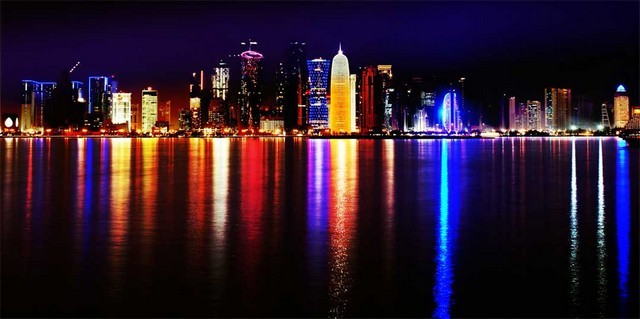
The dysfunctionality of the Gulf Crisis, pitting a coalition of four countries, Saudi Arabia, UAE, Bahrain, and Egypt against tiny Qatar, is emblematic of the descent into multi-dimensional chaos, conflict, and coercion that afflicts much of the Middle East. Qatar may be tiny, but it is wealthy and has chosen for itself a somewhat independent path, and for this reason has experienced the wrath of the more reactionary forces operative in the region and world. At the center of the dysfunction is the manipulation of the political discourse on terrorism, pointing accusing fingers without any regard for evidence or fabrication.

My text below seeks to put forward a dispassionate and objective analysis from the perspective of international law and diplomatic protocol of the so-called ’13 Demands’ (appended as an annex) directed at Qatar by the coalition almost a year ago. Despite having its own internal problems and challenges, Qatar has provided a relatively open political space compared to the rest of the region, encouraging media and educational diversity, giving asylum to political exiles and refugees, and showing sympathy, although inconsistently, for the aspirations of the Arab masses. This makes the Gulf Crisis a further setback for those seeking regional empowerment, sustainable development, and social, political, economic, cultural, and climate justice for the region as a whole. The intrusion of Trumpian geopolitics, especially the escalating confrontation with Iran, aggravates the disorders and dangers posed by the conflict patterns and irresponsible allegations with regard to terrorism now playing out in the region. I believe that by reflecting on the unreasonableness of the 13 Demands of the coalition it is possible to understand better the maladies affecting the entire region.

*************************

A Normative Evaluation of the Gulf Crisis

The Gulf Crisis erupted on June 5 2017 when a Saudi Arabian led coalition of four countries broke diplomatic relations with Qatar and Saudi Arabia closed its sole land border to Saudi Arabia and refused to allow their national air spaces to be used by flights from or to Qatar.[1] The imposition of a blockade is generally regarded as an act of war in contemporary international law, which is also a violation of the UN Charter’s prohibition of recourse to international force except in cases of self-defense against a prior armed attack. (UN Charter, Article 2(4), 51) These unilateral moves were then given a more concrete form on June 22 in the shape of ’13 Demands’ that instructed Qatar to comply within ten days, or face indefinite isolation. There followed failed attempts by Kuwait to mediate. From the start the leadership of Qatar expressed its immediate willingness for dialogue as the correct way to resolve the Gulf Crisis; as well, the United States and several principal countries in Europe urged a diplomatic resolution of the dispute as being in the interest of the Gulf region and the Middle East generally.

In this paper the 13 Demands of the Saudi coalition (Saudi Arabia, United Arab Emirates, Bahrain, and Egypt) are considered from the perspective of international law (including the UN Charter), the protocols of international diplomacy, and the framework of cooperation associated with the GCC framework. The paper analyzes these normative dimensions of international relations with special attention to the specific context associated with Qatar and the Coalition. This analysis is supplemented by a consideration of whether there are grounds for making some adjustments in Qatari policy based on its affinities with other states that are member of the GCC, including a large number of shared policy goals. From the outset, it seemed as if all sides in the conflict, at least outwardly, favored a prompt resolution of the crisis, but how this could be achieved given the sovereignty concerns of Qatar remains elusive 8 months later. The formidable obstacles to normalization are evident from the nature of the 13 demands of the Coalition and Qatar’s unshakable resolve to defend its independence and uphold its sovereign rights.

Attention is also given as to whether Coalition grievances have some policy merit if treated as a matter of ‘reasonableness’ within the GCC framework even if the 13 demands do not make the case that Qatar should change its behavior because its policies have been violating international law. Are there ways for the government of Qatar to alter its policies to satisfy the Coalition without sacrificing its fundamental identity as a fully sovereign state and member of the United Nations in good standing? In this regard, the internal values and expectations of the GCC with respect to the degree to which diversity of public order internal to the state is permissible and the extent to which domestic and foreign policy of a GCC member state needs to avoid causing impacts on the security of other GCC members are relevant considerations.

The 2014 Gulf Crisis

It seems important to realize that tensions between GCC members and Qatar have been present since the time of the GCC’s formation, but for reasons of internal cohesion these disagreements were for years kept below the surface. However, as these underlying tensions greatly intensified after the Arab Spring of 2011 it became increasingly difficult to maintain confidentiality as to policy differences. These differences climaxed as a result of the regional growth of influence of the Muslim Brotherhood, which was regarded as a serious threat by the Coalition states while being viewed rather more favorably by Qatar. It was hardly a secret that this rise of the Brotherhood was perceived as a hostile and potentially dangerous development by several GCC countries, and especially UAE and Saudi Arabia, as well as Bahrain.

In this regard, Qatar’s sympathy for the Arab uprisings and its relatively positive relationship with the Muslim Brotherhood struck a raw nerve in relations within the GCC, raising serious questions about the workability of the GCC as a collaborative alliance in the future. This discord broke into the open in March 2014 when Bahrain, Saudi Arabia, and UAE withdrew their ambassadors from Doha in an obviously coordinated move. In response, Qatar sought dialogue and reconciliation, and decided to leave its ambassadors in place rather than engage in reciprocal withdrawal. The Emir, Sheik Tamim, took a diplomatic initiative by seeking reconciliation in the course of several meetings with King Abdullah in Riyadh.

The Qatar position in response was articulated at the time by the then Minister of Foreign Affairs, Khaled bin Mohammed Al-Attiyah, who stressed early in the 2014 crisis that Qatar would not compromise with respect to its insistence on ‘independence’ for itself and other GCC members and in relation to showing support for peoples in the region seeking ‘self-determination, justice, and freedom.’ [Interview, Al-Arabiya, 5 March 2014] Such a position, especially after the MB did better than expected in elections, especially in Egypt, sharpened the tensions, with the Saudi-led Gulf monarchies being determined to do all in their power to promote counter-revolution in the region to the extent of criminalizing the MB as a terrorist organization. Qatar’s refusal to go along with such aggressive moves prompted the rupture in relations, but only temporarily.

With the encouragement of the non-aligned GCC members, Kuwait and Oman, there took place a GCC Summit in November 2014 that agreed to the Riyadh Supplemental Agreement that reaffirmed the GCC norms of non-interference and avoidance of behavior that poses a threat to the political stability of other members. GCC diplomatic relations were restored, and this first Gulf Crisis unrealistically viewed as having been resolved. The GCC was widely praised for surmounting its internal differences, and recognizing the strength of its fraternal bonds. Some optimistic commentators viewed this closing of ranks as a sign that the GCC had attained ‘maturity,’ but in retrospect the conflict was not overcome or compromised, but swept under the rug for the moment. The Riyadh Supplemental Agreement, although not a public document, apparently contains contradictory principles that allow both sides to find support for their positions. The Coalition can take heart from the commitment of participating governments not to adopt policies and engage in behavior that threatens other GCC members. Qatar can feel vindicated by the recognition and affirmation of the sovereign rights of GCC members.

Despite the formal resolution of the 2014 crisis it was evident even at the time that UAE, in particular, continued to be deeply opposed to what it regarded as Qatar’s positive relations with and public support for the MB. It was this rift as filtered through later developments, especially the sectarian and regional geopolitical opposition of the Coalition to Iran even in the face of difference of policy nuance among Coaltion member. The Coalition is not monolithic.. Nevertheless, certain tendencies are evident. Post-2014 Iran replaced the MB as the main adversary of the Coalition, while Qatar for entirely different reasons found itself in an economic and political position that demanded a level of cooperation with Iran, centered on the world’s largest natural gas field being shared by the two countries.

The Onset of the 2017 Crisis

While the American president, Donald Trump, was in Saudi Arabia for a formal state visit in May 2017, there were strong accusations directed at Qatar as funder and supporter of terrorism, not doing its part in the struggle against terrorism in the Middle East, views that were blandly endorsed by Trump without any plausible grounding in evidence. Following Trump’s departure, the Coalition hostile to Qatar was formed with the same GCC alignment of Bahrain, Saudi Arabia, and the UAE as antagonists and Kuwait and Oman as non-aligned. A major difference from 2014 was that the GCC initiative this time included the participation of Sisi’s Egypt, the new leader who had in 2013 overthrown the MB elected government and who received major economic assistance from GCC governments.

On 6 June 2017 the anti-Qatar coalition announced intention to confront Qatar because of alleged support of terrorism throughout the Middle East. This declaration included the announcement that diplomatic relations would be suspended and Qatar’s land border with Saudi Arabia would be closed, air space blocked; in addition, 19,000 Qatari individuals given two weeks to leave Coalition countries, and 11,300 Coalitional nationals living in Qatar were ordered to return home or face serious penalties, an unusual example of ‘forced repatriation.’ Unlike 2014, Qatar withdrew its ambassadors from the three coalition members plus Egypt.

These actions met with strong Qatari objections, although coupled with an offer of dialogue and advocacy of a political solution. Qatar’s initiative did not lead to a favorable response from the Coalition membership. In fact, the Gulf Crisis was actually aggravated when the Coalition tabled its 13 Demands with an ultimatum demanding compliance within ten days.

It should be pointed out that this unilateralism by the Coalition, especially on the part of countries with many shared interests, common undertakings, and overlapping relationships, is directly opposed to the letter and spirit of Article 2(3) of the United Nations Charter: “All Members shall settle their international disputes by peaceful means in such a manner that international peace and security, and justice, are not endangered.” Here, the Coalition made no effort whatsoever to resolve the crisis peacefully, either by way of a call for diplomacy prior to taking coercive steps or through agreeing to mediation in the immediate aftermath of the crisis. Instead, these Coalition’s coercive moves caused harm to both the public interest of the state of Qatar and to private citizens of Qatar whose professional and personal lives were disrupted in serious ways that constituted violations of international human rights standards.

‘13 Demands’ of Bahrain, Saudi Arabia, and UAE

The explicit focus of the 2017 crisis shifted its main attention to the campaign against terrorism, with a background allegation that Qatar had been funding and supporting terrorism in the Arab world for many years, and was thus an outlier in the GCC context. There were two dubious major assumptions accompanying the Coalition demands: (1) that the MB is correctly identified as a ‘terrorist organization;’ (2) that the members of the GCC Coalition, despite their own extensive funding of radical madrassas throughout the Muslim world, were less guilty than Qatar, of nurturing the terrorist threat in the Gulf and throughout the Middle East. In this respect, playing ‘the terrorist card’ by the Coalition obscured the extent to which the real explanation of the crisis had little to do with suppressing terrorism and much to do with confronting Iran, and thus disciplining Qatar in reaction to its disproportionate influence in the region, and controlling the terrorist discourse in a manner that corresponded with their strategy of considering as ‘terrorist’ any political movement that challenged in any way the legitimacy of Islamic dynastic rule. It is highly relevant that Qatar also is governed by dynastic monarchy, but in a manner that is far more consonant with international law than are its Coalition neighbors. Qatar is also more tolerant of diversity and dissent internally than other Coaltion members, but faces serious human rights challenges with respect to its non-Qatari residents who comprise the majority of the population.

The 13 Demands are set forth in a document released on June 6, 2017, giving a formal character to the Coalition’s disregard of international law and diplomatic protocol in its undertaking to control Qatar’s domestic and foreign policy. These demands can be examined from the perspective of international law and international human rights standards. It should be observed that the 13 demands are not presented in a reasoned way or with any attempt to be reconciled with either international law or diplomatic relations between sovereign states, especially here, where the relations are especially close given the juridical and practical collaborative activities of members of the GCC. As earlier comments make clear, there were clear tensions associated with Qatar’s perceived support for the MB, especially in Egypt, and its relative openness on issues of freedom of expression, which included criticism of Coalition countries.

What follows is brief commentary from the perspectives of international law and international diplomacy on each of the 13 demands:

1. Curb diplomatic ties with Iranand close its diplomatic missions there. Expel members of Iran’s Revolutionary Guards and cut off any joint military cooperation with Iran. Only trade and commerce with Iran that complies with US and international sanctions will be permitted.

This primary demand may be the most important political item on the list of 13, but it has no foundation in international law. Qatar as a sovereign state has complete freedom to establish whatever relationship it chooses to have with Iran.

From a diplomatic perspective this ‘demand’ can be interpreted as a request from the closely aligned states that constitute the Coalition, but if so construed, it is an occasion for discussion, and policy coordination, not coercive threats and actions.

As for the obligations associated with sanctions, there is no legal reason for Qatar to implement U.S. sanctions imposed on Iran. Qatar does have a limited obligation to uphold UN sanctions, but the Coalition has no standing, except possibly within a UN setting, to raise such an issue.

2. Sever all ties to “terrorist organisations”, specifically the Muslim Brotherhood, Islamic State, al-Qaida and Lebanon’s Hezbollah. Formally declare those entities as terrorist groups.

Formulating this request in the form of a ‘demand’ seems an inappropriate intrusion on a matter within the sovereign discretion of Qatar. As with the first demand, the call for severance of ties with the MB and Hezbollah are of great importance to the Coalition, but this is a political matter to be discussed either within the GCC or some other forum. For the Islamic State and al-Qaida there is little disagreement about there character as a ‘terrorist organization,’ but for the MB and Hezbollah the assessment is more contested, and thus a demand that they be “formally declared” as a terrorist organization is inappropriate from perspectives of international law and international diplomacy.

3. Shut down al-Jazeeraand its affiliate stations.

Such a demand is in flagrant violation of the right of freedom of expression as embodied in authoritative international law treaties and part of customary international law relating to human rights. In effect, Qatar is put under pressure to commit such a violation. It is especially objectionable as al-Jazeera and its affiliates conform to high standards of journalistic professionalism, and do not open their media outlets to hostile propaganda or hate speech. Demand (3) contravenes Articles 18 & 19 of the Universal Declaration of Human Rights.

4. Shut down news outlets that Qatar funds, directly and indirectly, including Arabi21, Rassd, Al-Araby Al-Jadeed and Middle East Eye.

The same legal rationale applies as set forth in response to Demand (3). Further, here there is an attempted interference with Qatar’s support for high quality media elsewhere that is a public good, giving the peoples of the Middle East and elsewhere exposure to alternative viewpoints on the main public issues of the day.

5. Immediately terminate the Turkish military presencein Qatar and end any joint military cooperation with Turkey inside Qatar.

This demand attempt to intervene in the internal security arrangements of Qatar, and as such challenges its sovereign rights on a matter of prime national concern. It is an attempted violation of the central norms of peaceful relations, as set forth in the influential Declaration on Principles of International Law Concerning Friendly Relation and Co-Operation Among States in Accordance with the Charter of the United Nations, GA Resolution 2625, 1970, especially principles b-e, stressing sovereignty and non-intervention.

If Turkey was somehow posing an existential threat to Coalition countries, then a diplomatic appeal to a fellow GCC member might be a reasonable initiative. As matters now stand Turkey has a diplomatic presence in all Coalition members, except Egypt where relations are kept at the level of Charges d’Affiares. There is some friction between Turkey and the UAE on various issues, and so tensions exist, including in relation to resolving the Gulf Crisis. On its face, Demand (5) is entirely unreasonable from both the perspective of international law and normal diplomacy.

6. Stop all means of funding for individuals, groups or organisations that have been designated as terroristsby Saudi Arabia, the UAE, Egypt, Bahrain, the US and other countries.

This may be the most extraordinarily inappropriate demand of all for two reasons. First, it removes from Qatar’s discretion the designation of “individuals, groups or organisations” that are deemed to be “terrorists.” This is an unacceptable intrusion on Qatar’s sovereign rights. And by including the United States it moves the source of Coalition grievance outside the framework of both the GCC and the Coalition. Egypt is also not a member of the GCC but at least a member of the Coalition.

It seems obvious that the effort here is to brand as terrorists those individuals and organizations associated with the MB and Hezbollah as directly targeted in Demand (2).

7. Hand over “terrorist figures”and wanted individuals from Saudi Arabia, the UAE, Egypt and Bahrain to their countries of origin. Freeze their assets, and provide any desired information about their residency, movements and finances.

Demand (7) suffers from the same deficiencies as (6) plus the added indignity of such vague and inflammatory designations as “‘terrorist figures’ and ‘wanted individuals.’” Such a demand could be formulated in acceptable diplomatic language as pertaining to those who had been convicted of crimes by courts in Coalition, and were subject to extradition following formal requests made to the Government of Qatar. Extradition would not be available if the person requested was convicted of ‘political crimes’ or if the trial process was not in accord with international standards, or if no extradition treaty or practice exists.

8. End interference in sovereign countries’ internal affairs. Stop granting citizenship to wanted nationals from Saudi Arabia, the UAE, Egypt and Bahrain. Revoke Qatari citizenship for existing nationals where such citizenship violates those countries’ laws.

Again as in Demand (7), the demanded action is a clear interference with core sovereign rights pertaining to the grant and withdrawal of citizenship of the State of Qatar, and as such an attempted violation of the norm prohibiting intervention. It seeks such a crude disregard of Qatari sovereignty as to constitute a grave diplomatic insult, which is a breach of protocol, especially inappropriate for countries supposedly collaborating on the basis of shared interests and common values within the GCC framework.

9. Stop all contacts with the political opposition in Saudi Arabia, the UAE, Egypt and Bahrain. Hand over all files detailing Qatar’s prior contacts with and support for those opposition groups.

As with Demand (8) to make such a demand public is to breach diplomatic protocol, as well as to express in this context of threat and insult issues that are within the sphere of Qatar’s internal security policies and practices. If the context were different, it might be that Coalition could make confidential requests to Doha institutions and officials for cooperation with respect to specific individuals deemed dangerous to one or more GCC member states, and even to Egypt. It might also be observed that reliable reports by the BBC and elsewhere that the UAE was holding a Qatari prince captive as a possible replacement for the Emir of Qatar. Such reports make this demand particularly objectionable and hypocritical.

10. Pay reparations and compensation for loss of life and other, financial losses caused by Qatar’s policiesin recent years. The sum will be determined in coordination with Qatar.

Demand (10) is on its face vague and unacceptable from the perspectives of international law and diplomacy. It is formulated as if “Qatar’s policies in recent yIears” can be assumed to be wrong and unlawful to such an extent as to justify a demand for “reparations and compensation.” This is not only an unlawful demand, it is irresponsibly asserted in a manner that any government would find to be insulting and totally unacceptable.

11. Consent to monthly audits for the first yearafter agreeing to the demands, then once per quarter during the second year. For the following 10 years, Qatar would be monitored annually for compliance.

As with the prior demand, Demand (11) seems such a departure from the canons of public diplomacy as to be inserted as a deliberate provocation on a fundamental matter of Qatar sovereign rights. In effect, Demand (11) is seeking a humiliating public surrender of Qatar’s sovereignty, and a basic repudiation of the most fundamental standard of international diplomacy—the equality of sovereign states. Under no conditions, short of terms imposed on a defeated government after a war can such a requirement of “monthly audits” for a period of ten years be deemed reasonable or acceptable.

12. Align itself with the other Gulf and Arab countries militarily, politically, socially and economically, as well as on economic matters, in line with an agreement reached with Saudi Arabia in 2014.

Unlike other demands, especially Demands (9)-(11), Demand (12) on its face seems relatively unobjectionable, and can be understood as a mere call for greater collaboration. It can also be read as unacceptably putting Qatar in a subordinate position of ‘aligning itself’ on policy matters with Coalition and unspecified other “Arab countries” rather than seeking policy coordination on the basis of sovereign equality and mutual respect. To the extent that it uses coercive language, it is diplomatically unacceptable.

13. Agree to all the demands within 10 days Agree to all the demands within 10 daysof it being submitted to Qatar, or the list becomes invalid.

Such an ultimatum is an unlawful challenge to the sovereign rights of Qatar and a serious breach of diplomatic protocol in relations between sovereign states, accentuated by common membership in the GCC. There is no rationale or justification given for this kind of hegemonic language or attempted control of Qatar’s lawful and discretionary policies and practices. Although rendered invalid by its language if not accepted within ten days, its renewed assertion by the Coalition makes Demand (13) incoherent, and of ambiguous relevance to efforts to resolve the Gulf Crisis.

Conclusion:

The analysis and appraisal of the 13 Demands from the perspective of international law and diplomatic protocol reaches the conclusion that not one of the demands is reasonable, in accord with respect for the sovereignty of Qatar, and respectful of the proper canons of diplomacy governing relations among sovereign states that are based on equality and mutual respect. In summary, the 13 Demands are incompatible with the principles set forth in GA Res. 2625, referenced above, that sets forth the principles for lawful and friendly relations among sovereign states, as well as with Article 2 of the UN Charter. Take as a whole, the demands seem so incompatible with respect for Qatar as a sovereign state as to appear intended to isolate the country or even create an atmosphere that prepared the way for regime-changing coup. Such a scenario, even if not executed, is incompatible with international law and the norms of friendly relations among states, especially, as here, among aligned states.

It might be useful at some point to make public use of this point-by- point analysis of the 13 Demands to underscore Qatar’s strong and unassailable position in refusing to accede to these demands. The fact that the Coalition has recently affirmed their insistence that Qatar accept the 13 Demands as the precondition for resolving the Gulf Crisis suggests the importance of a convincing set of explanations for Qatar’s refusal to respond favorable to the 13 Demands either singly or collectively.

This seeming effort to compel Qatar to except external pressures, including a demand of compliance with U.S. sanctions imposed on Iran sets a precedent that could work against the sovereignty of other GCC members in the future. The diplomatic posture with respect to Qatar seems t0 assert a collective right of GCC members to intervene in internal affairs of another member to a far greater extent that present supernational actors have ever in the past claimed.

It seems doubtful that the 13 Demands have any constructive role to play in a diplomacy of reconciliation among Gulf countries. Indeed, it would seem that a necessary first step toward the initiation of a diplomacy of reconciliation would be for the Coalition to abandon any further reference to the 13 Demands as possessing any relevance whatsoever in shaping future relations between Qatar and the GCC and Coalition.

***************

Annex: The 13 Demands

1. Curb diplomatic ties with Iranand close its diplomatic missions there. Expel members of Iran’s Revolutionary Guards and cut off any joint military cooperation with Iran. Only trade and commerce with Iran that complies with US and international sanctions will be permitted.

2. Sever all ties to “terrorist organisations”, specifically the Muslim Brotherhood, Islamic State, al-Qaida and Lebanon’s Hezbollah. Formally declare those entities as terrorist groups.

3. Shut down al-Jazeeraand its affiliate stations.

4. Shut down news outlets that Qatar funds, directly and indirectly, including Arabi21, Rassd, Al-Araby Al-Jadeed and Middle East Eye.

5. Immediately terminate the Turkish military presencein Qatar and end any joint military cooperation with Turkey inside Qatar.

6. Stop all means of funding for individuals, groups or organisations that have been designated as terroristsby Saudi Arabia, the UAE, Egypt, Bahrain, the US and other countries.

7. Hand over “terrorist figures”and wanted individuals from Saudi Arabia, the UAE, Egypt and Bahrain to their countries of origin. Freeze their assets, and provide any desired information about their residency, movements and finances.

8. End interference in sovereign countries’ internal affairs. Stop granting citizenship to wanted nationals from Saudi Arabia, the UAE, Egypt and Bahrain. Revoke Qatari citizenship for existing nationals where such citizenship violates those countries’ laws.

9. Stop all contacts with the political opposition in Saudi Arabia, the UAE, Egypt and Bahrain. Hand over all files detailing Qatar’s prior contacts with and support for those opposition groups.

10. Pay reparations and compensation for loss of life and other, financial losses caused by Qatar’s policiesin recent years. The sum will be determined in coordination with Qatar.

11. Consent to monthly audits for the first yearafter agreeing to the demands, then once per quarter during the second year. For the following 10 years, Qatar would be monitored annually for compliance.

12. Align itself with the other Gulf and Arab countries militarily, politically, socially and economically, as well as on economic matters, in line with an agreement reached with Saudi Arabia in 2014.

13. Agree to all the demands within 10 daysof it being Agree to all the demands within 10 daysof it being submitted to Qatar, or the list becomes invalid.

NOTE:

[1] The Gulf countries, in addition to Saudi Arabia, were the UAE and Bahrain; the fourth member of the Coalition was Egypt. This group of four is referred to as ‘the Coalition’ in this text.

Richard Falk is a member of the TRANSCEND Network.

19 March 2018

Source: https://www.transcend.org/tms/2018/03/the-gulf-crisis-reassessed/

Cuba a ‘Champion’ of Children’s Rights: UNICEF

By teleSUR

According to UNICEF, 99.5 percent of Cuban children under six years of age attend an early childhood education program or institution.

12 Mar 2018 – The United Nations Children Fund, or UNICEF, has declared Cuba a ‘champion’ in children’s rights.

RELATED: Cuba Kicks Off 27th International Book Fair, Strengthen Ties With China

María Cristina Perceval, the regional director for Latin America and the Caribbean region, said, Cuba’s exemplary model of early education, “Educa a Tu Hijo (Educate Your Child),” is being adopted by many other nations.

Perceval, who made the comments during a recent event in Cuba’s capital, Havana, also highlighted the significant advances made by the country in health. The Caribbean nation was the first to work towards the elimination of maternal and child transmission of HIV / AIDS in 2015.

Health and education policies form the core of Cuba’s socialist programs. Cuba first initiated the social program focused on children’s well-being, 26 years ago. The UNICEF in the region works in collaboration with the government in these social programs.

The ‘Educate Your Child’ initiative promotes the role of family and community in children’s formative years. Through the program, the government also prioritizes the participatory methodologies and social commitment in the area of child development.

“The government has installed a mechanism for communities to not only deal with emergency situations, but also with other phenomena, with efficacy, professionalism, and speed,” Perceval added.

“We are grateful to share this information that the education mechanism which incorporates childhood education, elimination of vertical transmission of HIV, and prevention of teen pregnancies. Champions, champions, champions!”

According to the 2016 UNICEF report which cited the official statistics from the Ministry of Education, “There are more than 855,000 children under six years of age in Cuba, of whom 99.5 percent attend an early childhood education program or institution.”

“Cuba has adopted a holistic approach to early childhood development (ECD), providing children under six and their families with a system of integrated services that aims to promote the best start in life for all children and the maximum development of each child’s potential,” the report added.

Perceval also pointed out that communities have played an essential role in “allowing with much humility to work on what is lacking,” adding that there is work to be done against gender violence in the region.

“The Federation of Cuban women is immensely fierce, but we have known that violent practices could occur in public spaces and have insisted on eradication of all types of child abuse in communities and institutions,” The U.N. senori official added.

telesurtv.net

19 March 2018

Source: https://www.transcend.org/tms/2018/03/cuba-a-champion-of-childrens-rights-unicef/

US State Dept.: “We want elections in Venezuela now, unless we’re not guaranteed a win, in which case they’re illegitimate.”

By Ricardo Vaz

6 Mar 2018 – With presidential elections announced in Venezuela, the US State Department moved quickly to declare that the contest was illegitimate and that its results would not be recognised. But less than a year ago the tune was quite different, as a cursory look through State Department briefings and press releases will show. We also examine how political developments from the past year have led to the current scenario, and how US demands for “free and fair” elections are not only arrogant and hypocritical but also misleading.

*****

We begin by taking a look at what the US State Department was constantly saying less than a year ago. We could equally document the statements of the OAS and its secretary Luis Almagro, the Venezuelan opposition, US-allied regional governments, or the mainstream media. But it is easier to just go to the source. Sadly, when it comes to Venezuela, none of the mainstream actors and media will deviate from the State Department.

As violent opposition protests raged on in the Spring of 2017, there were repeated calls for immediate elections:

“President Maduro […] should hold elections as soon as possible.” (March 29)

“We call for the government of Venezuela to […] hold elections as soon as possible” (March 30)

“We […] echo the Venezuelan people’s calls for prompt elections” (April 10)

“We call again upon the Government of Venezuela to […] hold prompt elections” (April 18)

“It’s the Venezuelan people who should decide Venezuela’s future, which is why we once again call on the Venezuelan authorities to promptly hold free, fair, and transparent elections.” (May 2)

“…what people are asking for today, which is for national presidential elections to restore legitimacy to whomever might rule Venezuela moving forward.” (May 30)

“The United States has joined with a growing number of courageous 1 democracies in our region to urge the Venezuelan Government to hold free elections” (June 20)

US officials were adamant that elections were the only legitimate way forward.

“How is legitimacy defined in a democracy? Through elections.” (May 30)

“At the end of the day, it’s all about consensus. It’s about finding a way forward for Venezuelans to depolarize their situation, and the best way to do that is through elections.” (May 30)

“Venezuela needs consensus. It needs a genuine consensus or at least a legitimate path forward. That’s what elections provide.” (June 19)

So what happened since then to make the US no longer believe that elections should be held tomorrow? Maduro made a bold gambit of calling elections for a Constituent Assembly to solve the country’s problems. The Venezuelan opposition decided not to participate and vowed to stop those elections from taking place. They miserably failed, and on July 30 over 8 million people voted in what was a remarkable show of strength by chavismo.

From that point both the opposition and the US were trapped, unable to move on from their blunder. And soon cracks started to open. After months of violent protests claiming that the “dictatorship” was about to be overthrown, the opposition then turned to its supporters and asked them to go and vote in regional elections. The result was a disaster, with chavismo winning 18 out of 23 states. The opposition could not muster more than the usual vacuous claims of fraud, and then (mostly) boycotted the December municipal elections, which resulted in a chavista sweep of over 90% of the municipalities.

With the political momentum on its side, the government decided to schedule presidential elections for April 22. According to Jorge Rodríguez, head of the government’s delegation in the Dominican Republic dialogue, this date was agreed with the opposition MUD representatives. But with opposition figures more discredited than ever the US decided to pre-emptively unrecognise the vote, simply because an opposition victory is far from guaranteed.

In the end the main opposition parties followed suit in boycotting the election, but former Lara governor Henri Falcón broke ranks and registered as a candidate. The MUD promptly expelled him, and the US allegedly threatened him with sanctions to stop him from running. Ironically, as a former chavista, Falcón might be the ideal “moderate” opposition candidate to attract the votes of disaffected chavistas. But the imperial masters are past hedging their bets, they are all-in for regime change.

After talks with Falcón and the forces backing him, the vote was postponed to May 20. The MUD doubled down on their position that “there are no opposition candidates” in this election, and up to now there has been no reaction from the State Department. At the same time it is hard to read this as anything but a move to further sideline the MUD after they backed out of the dialogue to stick to the hardline coming from Washington.

“Free and fair” elections

We should also take a moment to refute the US assertions about elections not being “free and fair” and the presence of international observers. The “free and fair” demand means to discredit all previous electoral processes, whose results did not please the US. Nevertheless, as many people outside the mainstream media have explained, the Venezuelan voting system is as hard to fool as it gets. In all the elections where the opposition decided to take part they got to place their observers in every voting centre. Tens of thousands of audits took place to match the electronic and paper tallies, witnessed and approved by these opposition observers, and there has not been a single allegation of tampering with the vote count.2

We could argue that the government makes use of state resources in its political campaigns. While this would hardly be exclusive to Venezuela, we should contend that the opposition has also made use of government resources, they just happened to come from the US government through its array of NED and USAID “democracy promoting”, “civil society building” programs, and that is just the overt part of it. Complaints about media coverage are also absurd when private media has the largest share of viewership and circulation and is overwhelmingly against the government, to say nothing about international media.

The demand for international monitoring is, at best, very dishonest from the State Department. First of all, despite the opposition walking away at the 11th hour, Maduro vowed to implement what had been agreed in the Dominican Republic dialogue, which included an open invitation for international observers to come to Venezuela for the upcoming election.

But that is not to say that previous elections did not have international observers. Organisations such as the Latin American Council of Electoral Experts (CEELA) have been present and endorsed the procedures, as well as other observers from multiple countries, Latin American and otherwise. The problem is that they do not dance to the tune of the US State Department.

It is absurd to claim that the presence of the OAS is a boost for fairness and transparency. We do not even have to look very far, just take the recent elections in Honduras. Massive, documented fraud allowed Juan Orlando Hernández to revert what was an irreversible trend in favour of his opponent. Having the US empire on your side will allow you to overrule statistics. This was so blatant that even the OAS and EU missions had to raise questions. But in the end Hernández was declared the winner, the State Department gave its approval and all these champions of democracy fell in line.

An even more shameful event took place in the Haiti presidential election of 2011. After the first round, the US (through the OAS), simply ordered the Haitian authorities to advance Michel Martelly to the second round, despite him not being one of the two most voted in the first round. They threatened to cut off all aid if this did not happen. So when these officials talk about the OAS as some guarantor of decency, not even they believe it themselves.

Democracy and elections

A small digression: we do not mean to equate democracy with elections like US officials constantly do in the above statements. The Venezuelan leaders have on occasion also fallen for this reductionism. Whether they believe it or not, it is the most obvious way to expose the western hypocrisy on the matter.

This reduction of democracy to voting has been one of the biggest triumphs of capitalist hegemony. People are effectively convinced that their entire political participation should be the single act of marking a cross on a ballot every 4 or 5 years. Politics is thus detached from the rest of society and “commodified” like everything else in capitalism, with campaigns becoming mere advertising shows and the wealthiest literally buying their influence.

The Bolivarian Revolution is revolutionary precisely because it challenged the inevitability of representative politics and opened new spaces for protagonist, participatory democratic experiments. From the communes to workers councils, even to the constituent processes, and despite the natural contradictions that have emerged, we have seen an expansion of democracy in its literal sense – popular power.

Hands Off Venezuela!

In the end it seems like the ideal scenario for the US would be something like the Yemeni model: a single, US-backed candidate on the ballot. With elections coming up this year in key US allied countries (Brazil, Colombia and Mexico), all of which have the potential to bring to power someone less friendly to US interests, the US cannot afford a defeat in Venezuela.

These arrogant, imperial demands that the Venezuelan elections should satisfy are just meant to provide cover for the growing threats and aggression against Venezuela, and the uncritical echo chamber that the media has become on this matter is a crucial asset. With suggestions of an upcoming oil embargo against Venezuela, at this point the goal is clearly to impose as much suffering as possible on the Venezuelans in order to topple the government.

For all its lofty rhetoric, the State Department is not looking out for the well-being of the Venezuelan people. Neither are its Venezuelan and regional puppets, nor the mainstream media, whose positions are simply State Department communiques with make-up. Standing up to these shameless imperialist attacks is essential if we wish to stand in solidarity with the Venezuelan poor and working-class, allowing them to freely choose their path, both in the upcoming elections and beyond.

NOTES:

1. “Courageous” is not the first adjective that comes to mind regarding lapdogs. []

2. A possible exception is the gubernatorial race in the state of Bolívar last October, where some electoral acts were circulated on social media showing a mismatch with regard to the electronic totals in the CNE website. But, perhaps because it would undermine the other constant claims of fraud, the opposition did not press the case. []

Ricardo Vaz writes for Investig’Action.

19 March 2018

Source: https://www.transcend.org/tms/2018/03/us-state-dept-we-want-elections-in-venezuela-now-unless-were-not-guaranteed-a-win-in-which-case-theyre-illegitimate/

Syria: It Would All Be Over by Now without the ‘Regime-Changers’

By Neil Clark

17 Mar 2018 – It was seven years ago this week that the conflict in Syria began. How might it have developed without the negative role played by Western powers and their regional allies?

Beware the Ides of March, the old saying goes. The 15th of March down the ages has seen not only the assassination of Julius Caesar and the Nazi invasion of Czechoslovakia; it was also the day, in 2011, that the conflict in Syria began.

According to the standard narrative, it was the intransigence and brutality of the Assad government (always referred to as a ‘regime’) that plunged Syria into chaos. But while it’s true that there was genuine discontent with the government for a number of valid reasons seven years ago, the divisions within Syria could have been overcome without much bloodshed, had certain countries not worked to sabotage any peaceful solutions to the crisis.

Read more: ‘Not proxy’: Lavrov says US, British, French special forces ‘directly involved’ in Syria war

Faced with a direct threat to its rule, the Assad government showed it was willing to make compromises. As early as March 26, 2011, the BBC was reporting that the government had released more than 200 political prisoners. There were also amnesties announced in May and June.

Not only that but important political changes were introduced as Assad acknowledged in a televised address that demands for reform were legitimate.

In February 2012, a new constitution, which ended the Ba’ath Party’s 40-year monopoly of power, was overwhelmingly endorsed in a national referendum. Article 8 of the new constitution stated:

“The political system of the state shall be based on the principle of political pluralism, and exercising power democratically through the ballot box.”

But these democratizing measures, which went far further than any “reforms” made by the US/UK’s authoritarian ally Saudi Arabia, and which have been praised, were loftily dismissed by the West.

It may have only been in the summer of 2011 when Western leaders were openly declaring “Assad must go,” but the truth is that regime change had been on the agenda for a long time.

We know from WikiLeaks that as early as December 2006 US officials were discussing how to destabilize the Syrian government. A cable from US Ambassador to Syria William Roebuck discussed the “potential vulnerabilities” of the Assad administration and the “possible means to exploit them.”

One of the “possible means” was to seek to divide the Shia and Sunni communities in Syria. In a section entitled PLAY ON SUNNI FEARS OF IRANIAN INFLUENCE, the ambassador wrote:

“There are fears in Syria that the Iranians are active in both Shia proselytizing and conversion of, mostly poor, Sunnis. Though often exaggerated, such fears reflect an element of the Sunni community in Syria that is increasingly upset by and focused on the spread of Iranian influence in their country through activities ranging from mosque construction to business.”

The date of the cable is highly significant. 2006 was the year that Israel, the US’s closest ally in the region, went to war in Lebanon but despite its clear military superiority, didn’t succeed in defeating Hezbollah. If Israel was to succeed in the future, the Syrian-Hezbollah-Iran axis would have to be broken.

Read more: Syria War: What the mainstream media isn’t telling you about Eastern Ghouta

In a television interview, former French Foreign Minister Roland Dumas said that Britain had been preparing to send gunmen into Syria two years before the anti-government protests of 2011 and identified Syria’s “anti-Israel stance” as being critical.

Of course the US and its allies had to pretend that what they were really after in Syria was ‘democracy.’ But had they genuinely wanted this, they would have supported and encouraged Assad’s reforms and sided with opposition figures who wanted peaceful, democratic change and not an armed uprising. Instead they did all they could to escalate the crisis, flooding the country with arms and facilitating the influx of radical Islamist fighters from many other countries.

The Western intervention in Syria, in pursuance of violent regime change, has been massive.

In June 2015, the Washington Post reported:

“At $1 billion, Syria-related operations account for about $1 of every $15 in the CIA’s overall budget… US officials said the CIA has trained and equipped nearly 10,000 fighters sent into Syria over the past several years — meaning that the agency is spending roughly $100,000 per year for every anti-Assad rebel who has gone through the program.”

At the same time, attempts to solve the conflict diplomatically were repeatedly sabotaged by the insistence that ‘Assad must go’ and by stepping up support for anti-government forces. Take the Kofi Annan peace plan in 2012.

“Within days of Annan’s peace plan gaining a positive response from both sides in late March, the imperial powers openly pledged, for the first time, millions of dollars for the Free Syrian Army; for military equipment, to provide salaries to its soldiers and to bribe government forces to defect. In other words, terrified that the civil war is starting to die down, they are setting about institutionalizing it,” noted my fellow Op-ed contributor Dan Glazebrook in Al-Ahram Weekly.

The help given to ‘rebels’ looked to be tilting the conflict in the favor of the regime-changers. While Western leaders warned of the dangers of hardline Islamist terrorism at home, they welcomed the gains made by such groups in Syria. A declassified US intelligence report from August 2012 admitted that

“The Salafist, the Muslim Brotherhood, and AQI (al-Qaeda Iraq) are the major forces driving the insurgency in Syria.” The report said that “AQI supported the opposition from the beginning.” It also predicted the establishment of a “Salafist principality in Eastern Syria” and said that this is “exactly what the supporting powers to the opposition want, in order to isolate the Syrian regime.”

Russia’s lawful intervention in September 2015, in defense of secular Syria, where people of all religions could once again live in peace, proved to be a game-changer and helped push back the advances made by Islamic State (IS, formerly ISIS) and other radical terrorist groups. The war could have been brought to an end in 2016, had the US and its allies given up with their regime change obsession and allowed Syrian forces, aided by their allies, regain control of the whole country. But they didn’t.

Read more: ‘400,000 deaths in Syria civil war directly attributed to US & allies’

In September 2016, with the ‘rebels’ on the back-foot, another ceasefire was agreed between then US Secretary of State John Kerry and his Russian counterpart, Sergey Lavrov.

Again it came to nothing. As I wrote here:

“While the S.A.A. [Syria Arab Army] had to halt its advances ‘rebels’ carried on with their attacks. In one 24-hour period Russian General Vladimir Savchenko said there had been no fewer than 55 rebel attacks, leading to the deaths of 12 civilians.”

And one week after the so-called ceasefire had started, US-led air raids ‘accidentally’ killed 62 Syrian soldiers at Deir ez-Zor. “From the very beginning there have been many of those, including in the US administration, seeking to break down these agreements,” lamented Lavrov. The fact is that the US hadn’t been serious about wanting an end to hostilities, and only wanted to use the ‘ceasefire’ as a cover for rearming/regaining ground.

As the Syrian government moved to liberate eastern Aleppo, the regime-changers became increasingly hysterical. In the UK, neocon Labour MP John Woodcock, a former chair of Labour Friends of Israel, called the Morning Star newspaper “traitorous scum” for using the word “liberation.”

Read more: US, UK call for unconditional truce in Yemen ASAP, keep sending arms to Saudis

But Aleppo was liberated and life slowly got back to normal. We’ve seen similar cries of “something must be done” by the regime-changers as Syrian forces move in to recapture rebel-held Eastern Ghouta. But interestingly the same people are, by and large, silent on the humanitarian catastrophe affecting Yemen. ‘Human rights’ only concern them when transgressions can be blamed on an ‘Official Enemy’ of the West.

Earlier this month, neocon writer Max Boot opined in the Washington Post:

“The way to save lives, I’ve sadly concluded, is to let [Syrian President Bashar] Assad win as quickly as possible. Aleppo was a charnel house in 2016. But now that it has fallen to Assad’s forces, pictures are circulating of civilians strolling through its rebuilt public park. It’s terrible that they have to live under Assad, but at least they’re alive. Tyranny is preferable to endless and useless war.”

But other regime-changers still prefer “endless and useless war” to an Assad victory and further democratic reforms. Unless that changes, the bloodshed will only continue.

Neil Clark is a journalist, writer, broadcaster and blogger.

19 March 2018

Source: https://www.transcend.org/tms/2018/03/syria-it-would-all-be-over-by-now-without-the-regime-changers/

Mr. Emerson’s Tombstone

By Wilfred M. McClay

Few small American towns exude a more winning charm than Concord, Massachusetts. Much of its charm flows from the respectful but unpretentious way it has preserved its past—an uncommon achievement in today’s America. On the northern edge of town stands an evocative reminder of revolutionary Concord: a faithful reconstruction of the “rude bridge” where, in April of 1775, a rag-tag band of American citizen-soldiers repulsed the British effort to seize their supply depot, and fired “the shot heard ’round the world.” And a visitor strolling the town’s peaceful streets has little difficulty conjuring the Concord of antebellum times, when that tiny village generated some of the most interesting literary activity in the nation’s history. In those days, Concord claimed such distinguished residents as Ralph Waldo Emerson (who wrote the “Concord Hymn” quoted above), Henry David Thoreau, Bronson and Louisa May Alcott, and sometime resident Nathaniel Hawthorne, whose brooding Old Manse, Emerson’s boyhood home, still stands silent watch over the hallowed eighteenth-century battlefield.

As it housed them in life, so Concord also provides their final resting place. All lie within conversational range of one another on Authors Ridge in Sleepy Hollow Cemetery, a rambling old burial ground that winds through picturesque hills and woods just a few hundred feet from the town center. As might be expected, Authors Ridge draws a steady stream of pilgrims seeking to connect with the lives of these eminent writers. But there is also something to be learned from the manner of their burial. For one thing, all are buried with their families, on ancestral family plots. Nothing remarkable about that, you will say. And yet it still comes as a bit of a surprise to be reminded that even writers who exalted the radical freedom of the individual, as Emerson did, were, in the end—before and after all else—other people’s sons, daughters, brothers, sisters, husbands, and wives. Which is to say that their self-made identities were deeply rooted in conditions and relationships they did not make and could not change. Sleepy Hollow is rich with such insights for students of American life.

A cemetery is always a good place for sober reflection. Infirmity and death are the great levelers, the surest reminders of our dependency, the most painful thorns in the flesh of human pride. As we cannot escape our bodies, so we cannot escape our origins. In death, some part of the truth about us generally comes out. For example, it is only after the hero’s death in F. Scott Fitzgerald’s The Great Gatsby that we find the missing piece in the puzzle of who Jay Gatsby really is, by meeting his grotesque father. At Sleepy Hollow one gleans similar insights. Take the case of Thoreau. In his life, and in his writings, there was no more fiercely independent soul. But the visitor to Sleepy Hollow has to look hard even to find his name, in the middle of a list of Thoreaus engraved on the collective family tombstone, or on his tiny individual stone. The manner of Thoreau’s burial reminds us that his independence was entwined with forms of dependency, something that his writings implicitly denied.

Similarly with Emerson’s grave, though it seems different at first glance. Being a man of comfortable means, Emerson could afford a large freestanding marker. But rather than using a conventional tombstone, he marked the spot with a giant boulder, identified as his grave by a small bronze plaque affixed to the rock. Needless to say, it is a surprising sight—and not an entirely harmonious one. Amid the tidy lots and meticulously carved Yankee tombstones, Emerson’s boulder looks a little out of place, like a grizzly bear at a Junior League luncheon. The stone itself is rough and ragged, as if it had been hauled up from deep in the bowels of the earth.

No doubt, these are just the impressions Emerson would have liked us to receive. His writings consistently linked the values of untrammeled individualism and unconstrained nature, and disparaged the conformism and artificiality of settled village life. Hence, this craggy tombstone would stand as permanent testimony to his intimate connection with the wild energies of nature, and his infinite contempt for a life lived within the safe margins of the conventional and the decorative. One might say, ringing a change on Michelangelo, that such a tombstone sought to free the stone from the sculpture. Perhaps our age, with its self-conscious penchant for parody and self-disparagement, is less sympathetic to such a romantic and self-dramatizing gesture (though I would be more inclined to blame postmodernism’s self-protective unwillingness to have the courage of its neo-romantic convictions). Still, whether one finds Emerson’s tombstone beautiful, arrogant, self-indulgent, ridiculous, or merely strange, one cannot deny that it makes a striking statement.

But there is one significant complication in the statement—or rather, one element in the picture that, when we notice it, subtly complicates the overall effect. Emerson’s grand and scruffy self-representation is flanked by two much smaller tombstones marking the graves of his wife Lidian and daughter Ellen. The two stones are identical in size, symmetrically placed, absolutely conventional in their shapes and engravings. They stand beside and support their man, like reliable and devoted aides-de-camp marching beside their wild and brilliant general. But they are an integral part of the picture. It is not a question of political correctness, but of historical correctness, to insist that these women were indispensable to Emerson’s success. For without the years of domestic felicity and stability provided by Lidian and Ellen, his pathbreaking career as itinerant lecturer, essayist, and freelance intellectual would have been inconceivable.

Any good biographer would point these things out. But there is also a much larger point to be made here, one encompassing not only Emerson’s family arrangements, or the more general relations between men and women in his day, but the entire tidy world of Concord and of the American Protestantism within which Emerson was nourished and against which he rebelled. No man is an island, let alone a freestanding boulder; and Emerson’s brand of heroic individualism silently presupposed—indeed, it took utterly for granted—a profound measure of social order, and a wide range of social, institutional, cultural, and moral supports provided by the family and community life into which he was born. In short, the two smaller tombstones that flank Mr. Emerson’s tombstone do more than commemorate his domestic life. They also remind us of all the social resources Emerson was able to rely upon in exploring the limits of a certain style of radical selfhood. An awareness of them should alert us to the fact that such radical selves are not nearly so radical and unencumbered as they seem. One might even posit that it takes a village to raise them.

Perhaps we appreciate the solidity of those supports in Emerson’s day even more than he did, precisely because of the tenuous status they enjoy in our own. Individualism looks very different played out in the mean streets, broken homes, and moral dissensus of today’s urban America than it did in the gentle walkways of Victorian Concord. It is the burden of what follows to explore some of the reasons why that is so. But to do so, one must address some important questions along the way. How did the Emersonian ideal of the autonomous self arise, and then become so prevalent in American society? Was it implicit in the nation’s very beginnings? Or did it arise out of some detour from those beginnings? If the latter, then when and where did the detour occur? If the former, then what are the implications for those of us who see that the ideal has now become pernicious and destructive?

To begin answering these questions, we must address ourselves to a still-prevalent misunderstanding of American history, one that has grossly overemphasized the nation’s “liberal” political tradition, with its emphasis upon individual liberty and individual rights, to the exclusion of other elements in the nation’s initial cultural makeup, particularly its religious traditions. The hold of that view has already been fading. But it was not so very long ago that most serious students of American politics and society were confident that the United States had been born “liberal” and “modern,” and that little more need be said of the matter. And why not? Everyone knew that the “first new nation” was erected on a solid foundation of anti-aristocratic, anti-monarchical, anti-colonial, and anti-papist sentiments. Everyone knew that the political works of John Locke were widely read in the colonies, and that the natural rights language of the Declaration of Independence unmistakably echoed Lockean phraseology.

The most eminent authorities, from Alexis de Tocqueville to Frederick Jackson Turner to Louis Hartz, seemed agreed that the conditions of American life prevented feudal or premodern institutions from succeeding here. Even a conservative like John Adams had lavished his prodigious energies upon a fiercely polemical book celebrating America’s freedom from “canon” (ecclesiastical) and “feudal” (aristocratic) law. It seemed plausible to argue, as Hegel, Goethe, and many others did, that America had come into the world without historical baggage—a living fragment of pure modernity which, having been detached from its compromising antecedents, now could manifest in pure, uncompromised form a regime, founded upon universalized individual rights, that Europe could manifest only partially and fractiously.

But this “liberal” view of American history that “everyone” imbibed was clearly inadequate, as a whole generation of scholars in American history has repeatedly demonstrated. It ignores the distinct and powerful elements of civic humanist or “republican” thinking in colonial and revolutionary America, elements that stressed the individual’s necessary involvement in, and dedication to, the polity. It downplays the wide influence of Scottish moral philosophy, with its emphasis upon the inherent sociality of human nature, and of faculty psychology, which stressed the need to subject human passions to rational and social control. It gives short shrift to the elements of English institutional and legal tradition that profoundly shaped North American colonial life. But most of all, it downplays the immense and pervasive influence of Protestant Christianity, especially as embodied in Calvinistic covenant theology and congregational church polity. Of course, these diverse influences manifested themselves differently in different regions of North America, making large-scale generalizations difficult. But the point is this: the “liberal” elements in early American political thought must always be understood as being propounded in tension with other, far more restrictive—and more communitarian—views of human nature and human society. Protestant Christianity must be regarded as the most important of these forces. To the extent that Protestantism underwrote an emphasis upon individuality, it was in the form of a constrained individuality.

It takes a rather willful eye to miss the moral and communitarian effects of the Protestant tradition upon early America. True, if looked at exclusively from the standpoint of its revolt against the authority of Rome, or its emphasis upon the priesthood of all believers, Protestantism could be seen as an individualistic, even antinomian, deviation from Christian orthodoxy—one that, moreover, carried the seeds of political liberalism in its theological rucksack, awaiting the day when those principles could be planted in secular soil. But this version of the story does not do full justice to historical reality. In looking at concrete instances one nearly always discovers that a fruitful tension exists between the individual and the communal, the liberating and the constraining, in American Protestantism.

One example. Few documents of early American life are better known, or more familiar to scholars, than John Winthrop’s 1630 speech “A Model of Christian Charity,” delivered aboard the Arbella as she crossed the Atlantic, bound for the New World. Although Winthrop described to his fellow Puritan settlers a covenantal community formed by the mutual consent of its individual members, his conception could hardly have been less egalitarian or liberal. He began by emphasizing that social hierarchy and inequality are divinely ordained—and concluded with a vision of the Massachusetts Bay Colony as a community “knit together in [its] work as one man,” committed to “make others’ conditions our own, rejoice together, mourn together, labor and suffer together, always having before our eyes our commission and community in the work, our community as members of the same body.” Notice, too, that Winthrop understood the strength of the community to flow from its faithful execution of its commission and its work—that is, the religious mission of the colony. Its communitarianism did not arise out of a mere dedication to community for community’s sake. The body in question was understood to be that of Christ.

The existence of such strong communitarian sentiments in colonial New England has to be placed alongside the fact that, from its earliest days, Protestant theology laid extraordinary stress upon the dignity, worth, and responsibility of the individual person. Just as the decision to constitute a body politic or form a congregation was meaningless unless built upon the voluntary consent of free individuals, so the decision to submit to God in Christ meant nothing unless it proceeded out of an individual’s utterly uncoerced movement of conscience. But this emphasis upon individual liberty did not mean that Protestants understood the individual as a radically free actor. Instead, it always understood individual liberty as operating under the direction of highly prescriptive and binding moral constraints. Freedom was inconceivable apart from such limits.

Protestants affirmed the primacy of the individual conscience in moral deliberation—but with the understanding that the individual conscience was unconditionally subject to God’s will, a will that could, moreover, be known definitively by every individual through an unmediated encounter with Holy Scripture. It emphasized the individual’s need for conversion, for an active and vibrant faith in the person of Christ, and for devotion to a life of holiness—while recognizing that these were the fruits not of one’s autonomous efforts, but of God’s free gift of saving grace. Reformed theology highlighted the role of grace by reemphasizing the doctrine of original sin, and therefore insisting upon the need for powerful external restraints and checks, particularly those founded in the scriptural texts, upon the naturally self-interested passions and uncontrolled behavior of a fallen and depraved humanity.

To say that a Reformed Protestant ethos permeated the political culture of eighteenth-century America is not to deny that there were any purely “liberal” notions of political freedom in competition with it. Indeed, by the time of the American Revolution, we do see the growing use of a secular language of strictly natural rights, expressed in some of the most famous texts of the period (e.g., Thomas Paine’s Common Sense and Jefferson’s Declaration of Independence). But the emergence of this language does not mean that it displaced all other ways of speaking and thinking about public life. Republicanism, Scottish common-sense philosophy and faculty psychology, English common law and history, Reformed Protestant moral theology and social corporatism—all of these formative strains continued to play a strong and visible role in the debates over the country’s political future.

That said, however, one can observe that the Constitution of 1787 presumed, as George Washington, John Adams, and many others were wont to say, a moral and religious people—but did not do very much directly to perpetuate such a people. It relied on other agencies of society to produce citizens capable of exercising political liberty in a morally responsible manner. While the Framers hoped to make ambition counteract ambition, they understood that thwarting vice is not the same thing as cultivating virtue.

Hence the importance of the First Amendment’s guarantees of religious liberty. As Mary Ann Glendon has pointed out, the Amendment’s “establishment” and “free exercise” clauses, far from being at odds with one another, speak with a single voice in support of the conscience-liberty that the Framers deemed indispensable to any religious practices that would shape and refine public morality. Such a view clearly represented an elaboration of the Protestant idea of “constrained individuality.” It is worth noting, too, that one sees this view displayed with equal vividness in the fears expressed by the Constitution’s opponents, who argued that the document was “godless” and took no direct responsibility for the cultivation of a pious and virtuous citizenry.

Either way, though, the Protestant view of the freely choosing individual who is constrained (and thereby made genuinely free) by education and formative training, and especially by the inculcation of transcendent biblical principles, remained a component of the new constitutional order, even if that view had become more of a background assumption than a stated conviction. Even the irreligious were likely to say some of the same things. Thomas Jefferson consistently stressed the critical importance of education as a way of impressing people with their “duties” as well as their “rights.” Writing in 1818 to the commissioners of the University of Virginia, he argued that education would be of the highest importance in generating “habits of application, of order, and the love of virtue”; only education “controls, by force of habit, any innate obliquities in our moral organization.” So whether one was speaking of original sin or “innate obliquities,” the practical result was the same: the newly liberated individual, whose freedom from “monkish” superstition Jefferson loved to celebrate, continued to require restraint and discipline if liberal and republican institutions were to survive and flourish. And it was not enough for those constraints to be applied externally, like so many fences and leashes. They needed to be completely internalized as well. The responsible democratic self would have to be (in David Riesman’s famous term) inner-directed, or self-constrained.

Once the new nation was firmly established in its new institutions, the problem of finding effective means of restraint soon became much more challenging. Beginning in the years after the War of 1812, the nation experienced an explosion of economic energy and growth, the fruits of industrial and market revolutions, opening up fresh opportunities for social advancement and individual transformation. The combination of rising general prosperity, expanding economic opportunity, rapid technological change, the increasing democratization of politics, and the ubiquity of popular evangelical Protestantism all tended to accentuate awareness of the “self” as an independent agent—if for no other reason than the weakening hold of other sources of identity. As Alexis de Tocqueville contended, a regime and society dedicated to social equality and social mobility inevitably tended to isolate the individual; and much of Tocqueville’s attention was devoted to the dangers unleashed by this individualism.

Reformers such as the educational pioneer Horace Mann continued to understand the problem as one of implanting the tools of self-regulation, educating naturally anarchic individuals for self-control and self-constraint. But in other cases one sees a subtle change in emphasis, from the inculcation of constraining values to a more wholesale reformation of “the self.” The change correlated with a distinct theological shift, in which the hard-edged Calvinism of colonial days began to be supplanted by a more optimistic and ambition-friendly Arminianism, which had traded in the stubbornly limited horizons of original sin for the more enticing possibility of moral perfection. For example, the Unitarian clergyman William Ellery Channing, whose 1838 lecture “Self-Culture” became a classic brief for the endless human capacity for self-improvement, argued that God had endowed the human race with the extraordinary power “of acting on, determining, and forming ourselves.” And Horace Bushnell, whose enormously influential child-rearing manual Christian Nurture (first published in 1847) made him the Dr. Spock of his era, saw the role of education less as the transmission of ideas and moral principles than of comprehensive self-making. In his ideal world, a child would be spared the friction and uncertainty of moral struggle by being provided an entire cultural and emotional set, imparted at such an early age as to be preconscious in nature. “The child,” he averred, “is to grow up a Christian, and never know himself as being otherwise.”

No need, then, for the herky-jerky emotionalism of evangelicalism, with its roller-coaster ride of sin and conversion, conviction and repentance, fall and redemption. Proper nurture could bypass the vagaries of nature and chance. No need anymore, either, for the doctrinal rigor and austere intellectualism of Jonathan Edwards’ Connecticut Valley Calvinism. Affects, not ideas, had consequences. Nurture was more important than instruction, feeling than thought, poetry than theology, character than intellect. Jefferson’s original ideal had been transformed by Bushnell into a largely psychological and sentimental education, a view of character formation that substituted properly formed affects and habits not only for external constraints, but for internal beliefs. Like Channing, he saw the goal of education as the construction of the optimal self—the kind of self that would have the power to continue endlessly in the task of its own self-making.

It is not hard to see that the very concept of “self-culture,” by being transformed into the cultivation of affect (or the “moral consecration of sentiment,” in Charles Taylor’s words), and at the same time being detached from a theology of inherent human limitation, ran the risk of making the activity of self-construction and self-refinement into an end in itself. That is precisely what happened in the thought of Emerson, whose Transcendentalism elevated the promptings of his inner nature to a status equal to that of divine revelation in nature, and thereby broke decisively from the older Protestant pattern of constrained individuality. Without a credible intellectual and theological basis for guiding and restraining it, the consecration of sentiment could easily lose its communitarian coziness, and become simply the worship of the imperial self and its vernal-wood impulses.

Boundlessness, not constraint, was the Emersonian watchword; indeed, he exclaimed, “the only sin is limitation.” Like Channing, Emerson believed that human potential was endless: “Before the immense possibilities of man,” he cried, “all mere experience, all past biography, however spotless and sainted, shrinks away.” Such immensity meant one should disdain the staleness of every thought or action that was inherited or derivative: custom, history, tradition, even society itself. The pieties of the past belong to the past; the free mind need not be detained by them, for “nothing is at last sacred but the integrity of your own mind.” The older view of the free self as a tense equilibrium of countervailing forces had been replaced by the romantic and holistic injunction to “trust thyself”—the very advice a Jonathan Edwards would have strenuously cautioned us against. That our present-day sages would be more likely to warn us against Edwards than against Emerson speaks volumes about the place where we have now arrived.

There was a procession, then, from self-control to self-culture to self-worship. “All religion, all solid things, arts, governments,” intoned Emerson’s great admirer, the poet Walt Whitman, “[fall] into niches and corners before the procession of souls along the grand roads of the universe.” One might say that we have been following those grand roads ever since, from Bunyan to Kerouac. Although we are not yet at the end of them, we are surely far enough along to see where they have been taking us, and the destination looks none too grand. We now live in an environment in which the Protestant idea has been nearly universalized, but at the expense of being truncated and diminished, à la Whitman, into little more than an unrestricted right of individual judgment, unbounded by any limiting principle or any source of authoritative moral rules or prescriptions. This sobering consideration brings us back to some of the questions raised earlier. Is it possible that the Protestant principle itself was flawed from the beginning, and bound to lead us into something like the moral chaos of our own day, with its worship of the sovereign self and its sovereign appetites? Is there a straight line leading from “the shot heard ’round the world” to endemic divorce, gangsta rap, and the North American Man-Boy Love Association?

In an 1892 speech called “The Solitude of Self,” Elizabeth Cady Stanton summarized “our Protestant idea” as “the right of individual conscience and judgment.” But that is only half the story, the sort of half-truth that is worse than a falsehood. The Protestant idea, to repeat, was always one of constrained individuality, which entailed a freely accepted obedience to a thoroughly internalized authority, whose prescriptions were expressed in an accessible and authoritative text. American Protestantism liberated the individual believer from the peremptory authority of the church and aristoi—Adams’ canon and feudal law—but not without putting in their place other sources of authority. This move, of course, hinged a great deal upon the trustworthiness of the Bible, which meant that if the assaults on scriptural authority by Darwinian science, “higher” criticism, and all the rest of modernity’s acids were successful, there would be little left behind in mainline Protestantism other than the affirmation and cultivation of the “separate self.”

One could argue that Protestantism is now paying the price for its textualist ways, its low ecclesiology, and its neglect of the communal and countercultural dimension of the Christian life. On the other hand, one does not need to be a fundamentalist to respond that, whatever the sources of mainline Protestantism’s current woes, an excessive attention to the Bible is not one of them. But the matter is too consequential for us to be content with scoring debating points. The fact remains that our civilization’s most effective pattern for ordered liberty, whether in matters religious or matters civil and constitutional, rests upon the constraining force of foundational texts, such as the Bible and the Constitution. To the extent that such foundational texts become “problematized” into impotence—to the extent that they are deemed to have no clear and fixed meaning available to all, and are thereby removed from the common person’s reach—to that extent will the church and the nation have yielded to new forms of canon and feudal law, administered by the currently ordained “communities of interpretation,” which will feel at liberty to make of a text what they wish.

This is of course precisely what is at stake when judges and constitutional lawyers speak of a “living Constitution” or “the life of the law” as a way of disregarding the clear meaning of a legal text. The crisis of modern literary criticism and the crisis of modern jurisprudence thus have some considerable connection with one another. Democratic liberty depends upon our ability to invest a text with ordering authority, to allow the text to stand as a rock of stability and secure point of reference to which one can repair amid the confusing and disorienting currents of life. But when such texts become rendered endlessly fluid and problematic, they eventually become the property of a hermeneutical class, which then constitutes itself, rather than the text, as the real ordering authority—a government, so to speak, of men and not laws. To point this out is invariably dismissed as philosophically naive, and there is some validity to the criticism. But surely it is infinitely more naive to think that a liberal and democratic order can continue to exist as such when its laws become unintelligible to its citizens—and the moral or religious principles upon which their constraining function depends are left without the support of generally accessible and authoritative texts. Those who are disdainful of such textual clarity ought at least to have the consistency of being equally disdainful of constitutional democracy, and of the rule of law itself.

This question of the fixity, transparency, and transcendent meaning of texts also points toward some of the objections to be made against the current communitarian movement, which arose as an attempt to answer the Emersonian hypertrophy of the self. The Protestant formula of constrained individuality is something very different from the idea of vesting authority in the community qua community. Both oppose the excesses of Emersonian individualism, but they do so in entirely different ways. Recall, in this connection, Winthrop’s emphasis upon the “commission” with which he and his followers were charged. They were asked to surrender their individual ambitions to the community, and bear one another’s burdens gladly. But they did this for Christ’s sake, not for the community’s sake. As one can clearly see from their copious diaries, they sought, and found, the meaning of their own lives by passing them through an immense filter of biblical stories, parables, prayers, and admonitions. It is a very different matter to attempt to constitute community without reliance upon the impersonal authority of a foundational text; and to imagine that one could produce the same effects without the same causes is folly. By failing to recognize this, many communitarians have merely inverted Emerson’s error, rather than correcting it.

One of the most notable weaknesses of the communitarians has been their skittishness about specifying behaviors that are right or wrong, and suggesting sanctions against the latter. Communitarians are in love with the idea of limits, but cannot agree on any limits to observe; they are in love with the idea of community, but find all real existing communities to be fatally flawed (too narrow, too insular, too homogeneous, too intolerant, etc.). Even at its best, communitarianism gives short shrift to the virtues of individualism—particularly of what might be called “individualism rightly understood.” As Reinhold Niebuhr argued, there is a profound moral need for the individual to be able, from time to time, to stand aloof from all social groupings, since all groups are dangerously corruptible, and all are subject to the interest-driven fallenness that governs human associations here below. But he never imagined that this individualism could or should exist without a network of constraints and supports.

So the question remains: Is there a way to restore something resembling the older Protestant settlement of constrained individuality, which navigates between the hazards of radical individualism and suffocating communitarianism? One would like to hope so, and the fate of much of the social policy of the years to come, particularly policy directed at the strengthening of families, will hinge upon that very task. It will be hard to get very far with that question without also coming to terms with some of the specific conflicts over the sources of moral authority that have long separated Catholics and Protestants, particularly Reformed Protestants.

But one way to begin thinking about the matter is suggested by the scene in Sleepy Hollow with which we began. The flanking stones of Emerson’s wife and daughter remind us that, for all the ways that we worry ourselves about individualism, it is in some ultimate sense an illusion, for there is really no such thing as an unencumbered self. There never has been, and never will be. Indeed, it is hard to imagine what such a creature would look like. The belief that the individual can live, as Emerson said, “without let or hindrance” means simply that one has forgotten about the sources of one’s being, not that those sources have ceased to exist. In the fullness of time, a reminder of those sources comes to us all.

But another reflection, more charitable and perhaps more valuable, also arises out of the contemplation of Emerson’s tombstone. It is the singular glory of the civilization we call “Western” that it places so high a value on the soul and conscience of the individual person. That this valuation has been allowed to grow beyond all bounds, like a heavenward-aimed Tower of Babel, should not finger it as flawed from the start, unless one is prepared to say that all the growth and constructive residue of history is vanity, and nothing more. (Partisans of that view may prefer to spend their Sleepy Hollow time at Mr. Hawthorne’s tombstone.) Emerson’s belief in the lavish creativity of the individual human spirit, and “the unsearched might of man,” was, like most heresies, an intensification of something true, if not quite true enough. Even the most grand and gloomy pessimists of our age are energized by a sense of Emersonian ambition when they sit down to tap out their dreary tomes (and fantasize about their sales figures). The expansive sense of individual possibility remains a part of who and what we are as a people, even in the most unexpected ways. To wish to extinguish that would be like wishing to extinguish life itself.

There are, however, far better ways to think about individual possibility. Addicted as we now are to the shallow and wasteful dynamic of unending generational rebellion—a dynamic that Emerson himself celebrated and helped to create—we often find it difficult to understand that one can both revere and criticize the actors of the past. But such a complex disposition is one of the chief achievements of a mature adulthood. It is capable of a love that pays homage to one’s antecedents without worshiping them—and knows the steep price of repudiating one’s ancestors, precisely because they are one’s own. Emerson spoke for a noble spark in the human spirit, though one that has ignited a dangerous conflagration by its own excesses. It is important for us to acknowledge that spark, and that error. For Emerson remains a part of our collective past that we should never repudiate entirely. He was a rebellious son, but also a cultural father. And it is generally a good thing to pay one’s respects to fallible fathers—even disturbers of the peace who fancied themselves boulders among stones, or lions among sheep. It is a good thing, because even the rowdiest of sons will come to lie down in the same earth as their fathers, and mothers, and wives. Thus is every individuality constrained, eventually.

Wilfred M. McClay teaches history at Tulane University, and is currently a fellow at the Woodrow Wilson International center for Scholars in Washington, D.C.

May 1998

Source: https://www.firstthings.com/article/1998/05/mr-emersons-tombstone

The Strategy of Tension Towards Russia and the Push to Nuclear War

By Colin Todhunter

The United States has devised on ongoing strategy of tension towards Russia. It has initiated economic sanctions against Moscow, concocted a narrative about ‘Russian aggression’ for public consumption and has by various means attempted to undermine and weaken the energy-dependent Russian eeconomy. It has moreover instigated a coup on Russia’s doorstep in Ukraine and is escalating tensions by placing troops in Europe.

The reality is that the US, not Russia, has around 800 military bases in over 100 countries and military personnel in almost 150 countries. US spending on its military dwarfs what the rest of the world spends together. For example, it outspends China by a ratio of 6:1.

But what does the corporate media in the West say about this? That the US is a ‘force for good’ and constitutes the ‘world’s policeman’ – not a calculating empire underpinned by militarism.

By the 1980s, Washington’s wars, death squads and covert operations were responsible for six million deaths in the ‘developing’ world. Other estimates suggests a figure closer to 20 million deaths in 37 nations since 1945.

Breaking previous agreements made with Russia/the USSR, over the past two decades the US and NATO have moved into Eastern Europe and continue to encircle Russia and install missile systems aimed at it. It has surrounded Iran with military bases. It is also ‘intervening’ in countries across Africa to weaken Chinese trade and investment links and influence. It intends to eventually militarily ‘pivot’ towards Asia to encircle China.

William Blum has presented a long list of Washington’s crimes across the planet since 1945 in terms of its numerous bombings of countries, assassinations of elected leaders and destabilisations. No other country comes close to matching the scale of such global criminality. Under the smokescreen of exporting ‘freedom and democracy’, the US has deemed it necessary to ignore international laws and carry out atrocities to further its interests across the globe.

The ultimate goal for the current century is to prevent any rival emerging to challenge Washington’s global hegemony. Washington’s long-term game plan for Russia has been to destroy is as a functioning state or to permanently weaken it so it submits to US hegemony. Getting a compliant leader installed would be ideal for the US; Putin is anything but.

Unfortunately, many members of the Western public believe the narrative about Putin as an aggressor. The lies being fed to the them are built on gullible, easily manipulated public opinion fanned by emotive outbursts from politicians and the media.

These politicians express fake concern for the lives of people in far-off lands, including outrage about alleged atrocities by people like Gaddafi or Assad. Meanwhile, these same politicians, under the guise of ‘humanitarian intervention’, are responsible for millions of deaths due to their illegal wars in Iraq, Syria, Libya and elsewhere.

A few years ago, former US Ambassador to Ukraine John Herbst spoke about the merits of the coup in Ukraine and the installation of an illegitimate government and the rise of fascist groups there. He called the violent removal of Ukraine’s democratically elected government as enhancing democracy. Herbst displayed all the arrogance associated with the ideology of US ‘exceptionalism’.

As if to underline this, in a recent interview for NBC, Vladimir Putin laid bare this warped mentality by stating:

“Please listen to me and take to your viewers and listeners what I am about to say. We are holding discussions with our American friends and partners, people who represent the government by the way, and when they claim that some Russians interfered in the US elections, we tell them (we did so fairly recently at a very high level): ‘But you are constantly interfering in our political life’. Would you believe it, they are not even denying it.”

He continued:

“Do you know what they told us last time? They said, ‘Yes, we do interfere, but we are entitled to do so, because we are spreading democracy, and you are not, and so you cannot do it.’ Do you think this is a civilised and modern approach to international affairs?”

We can see the smoking ruins, the ongoing violence, the mass displacement and the deaths that have resulted in Libya and across the Middle East as a result of exporting US ‘democracy’.

What Putin is really guilty of is calling for a multi-polar world, not one dominated by the US. It’s a goal that most of humanity is guilty of. It is a world the US will not tolerate.

In the wake of the recent use of a deadly nerve agent in the UK, PM Theresa May is accusing Russia of carrying out the attack. However, Russia has demanded evidence. Quite reasonable one would assume, but it has not been forthcoming. May believes that by saying and repeating there is unequivocal evidence to implicate Moscow will be enough to disguise the fact she cannot offer any. Former UK ambassador to Uzbekistan Craig Murray has written some revealing articles which undermine May’s accusation about Russian involvement.

While May offers moral outrage for public consumption about this attack, supposedly by a foreign power on two individuals on British territory, nothing is said in or by the media about her own disregard for the sovereign integrity of other nations, British involvement in destabilising Syria and the death the West has brought to countries in the Middle East.

Unfortunately, US and the West’s foreign policy is being driven on the basis of fake morality and duplicity.

The US wanted Afghanistan to hand over Bin Laden and refused to give the Afghan government evidence for him to be extradited (as international law requires), on the assumption he was guilty of the 9/11 attack in New York. The Afghan government asked for evidence and received none. The US illegally attacked and now has a foothold in mineral-rich, strategically important Afghanistan.

Saddam Hussein was accused of having weapons of mass destruction. He had none. Iraq was illegally attacked and invaded regardless on the basis of a ‘pack of lies’. Now Western oil interests have what they coveted all along.

Gaddafi was accused of slaughtering civilians as a pretext for his removal. Terror groups were used as NATO’s proxy army and France and Britain supplied air support. Libya lies in ruins and Gadhafi’s plans for unifying Africa and asserting African self-autonomy have met a similar fate.

In Syria, despite the official reasons for Western intervention, including support for a ‘democratic revolution’, what we have seen is imperialist intent backed by a ‘dirty war‘ to remove a sovereign government that would not comply with US interests.

And Russia is condemned for using deadly nerve agent on British soil. While the Labour party leader Jeremy Corbyn is smeared for demanding clear evidence that the Russian state was behind the attack, May and Trump think blanket condemnation without evidence will suffice.

Whether it is Bush and Blair or the current crop of political leaders, fake morality and deception is used time and again to further Washington’s global hegemony. With millions of dead in Iraq, Afghanistan, Syria and Libya as a result of US-led imperialism, Russia is constantly demonised simply because it will not acquiesce to Washington and serve as a vassal state.

Regardless of actual facts, the psychological operations about ‘Russian aggression’ directed at the public is unrelenting. All in support of the US, a country that has flagrantly abused international law to carry out illegal wars, torture, drone assassinations and mass murder as and when it deems necessary.

Before finishing, we should not overlook the way US militarism is being driven by a moribund neoliberal capitalism. According to William Robinson, professor of sociology at the University of California, the US and other states that have adopted the neoliberal agenda have turned to four mechanisms in the face of economic stagnation and massive inequalities: the raiding and sacking of public budgets; the expansion of credit to consumers and to governments to sustain spending and consumption; frenzied financial speculation; and militarism.

Robinson concludes that the “creative destruction” of the wars we see have served to throw fresh firewood on the smoldering embers of a stagnant global economy.

Be in no doubt that the ongoing death and destruction in the Middle East has been a boon to the arms industry and demonisation of Russia is a mouthwatering prospect this sector, which is pushing for a new cold war and financially lucrative weapons race.

In the meantime, Theresa May and pro-Washington establishment politicians and media will continue to try to tell the public about ‘Russian aggression’. May and other political leaders are doing the bidding of the interests they ultimately represent. These politicians must act in a manner that mirrors the scant regard for human life exhibited by the elite they serve. Whether it involves the role of the British in the 1943 Bengal famine, which killed up to four million, or the US dropping of atom bombs on Japan a couple of years later, it’s a defining trait of empire.

When Washington’s strategy of tension with a nuclear armed Russia stretches to breaking point, it won’t be millions who lie dead and wasted this time around; it will be the entire planet.

Colin Todhunter is an independent writer

17 March 2018

Source: https://countercurrents.org/2018/03/17/the-strategy-of-tension-towards-russia-and-the-push-to-nuclear-war/

In Pursuit of Peace and Justice: 100 Peace & Justice Leaders and Models (List #3)

By Anthony J. Marsella and Kathleen Malley-Morrison

(See Lists #1 and #2 here)

Continuing the Legacy . . .

9 Mar 2018 – With a continuing commitment to the work and consequences of Reverend Martin Luther King’s enduring efforts to promote peace and justice through non-violence, we submit a third list of living peace and justice leaders and models for recognition and distribution.

We are eternally grateful for Reverend King’s efforts to free people and nations from the brutal oppressions imposed by governments, nations, societies, organizations, and individuals. Regardless of the source, those who willfully support and sustain the evils of racism, prejudice, violence, and war, will yield to peace and justice leaders because of an inherent moral sense, even if denied in some.

Reverend King’s commitment to freedom from oppression and abuse compel us to continue his efforts far beyond the words, song, and promises of his day. His abuse from corrupt government offices and officials likely resulted in his assassination. Reverend King’s awareness of his persecution and perhaps assassination at the hands of his enemies did not prevent him from continuing his efforts; he knew even in his death, his truths would endure.

List 3

Like other prior published Lists, the individuals cited on this List come represent a variety of demographic markers including gender, ethnicity, race, age, nation, religion, and life- style persuasion.  By accessing the URL accompanying the person’s name, you can read of their peace and justice activism and advocacy.

We have reviewed each person’s contributions and were privileged to consider their listing.  It is axiomatic some individuals will be criticized by others for their presence because of masked activities. Clearly, in a world of fake news, misrepresentations, and hacking, errors may be made. Forgive us if this is the case. We are earnest in our effort to bring recognition to those whose efforts required courage and commitment.

Our choice of the number 100 is arbitrary, for there are thousands of individuals who deserve citation. Most are not listed; we will continue to create list for future efforts. Do not be dismayed! Patience! We believed it essential to develop lists of living peace and justice activists and advocates to encourage and foster peace and justice work.

In the omnipresent face of abuses and oppression, in the face of persecution from government and private sources demonstrated via the betrayal and misuse of the secret FISA Court’s politicization and weaponization,  we  recall and honor iconic peace and justice leaders of the past, including Mahatma Gandhi, Martin Luther King, Jr., Nelson Mandela, Samuel Gompers, Caesar Chavez, Larry Itliong, Rachel Corrie, Philip Berrigan & Daniel Berrigan, Glenn Paige, Hedy Epstein, Malcolm X, and scores of others.

Peace and justice advocates and activists, across time, are testimony to the enduring human spirit to resist oppression to claim liberty, and to endure, even when the costs are life. Individuals recognized on List 1, List 2, and now List 3 are part of the tradition of resistance to oppression, and the promotion of peace and justice.

There can be no greater honor! Regardless of religious persuasion, the beautiful words from the Sermon on the Mount resonate across time and place: Blessed are the peace makers, for they shall be called children of God.” (Matthew 5.9KJV).

Spirit of Our Times

There is a new spirit of encounter (e.g., Black Lives Matter); a new spirit of protest evidenced by DC gatherings for women and minority groups; a new spirit of communication among media free of government or wealth controls; there is a new spirit of protest against war and militarism, and the spending of a nation’s wealth on weaponry and endless war; there is a new spirit of concern for life and land, especially regarding anthropogenic climate changes; there is a new spirit of determination to expose the abuses of privilege and position by select government official who have politicized and weaponized laws for personal use (e.g., FISA).

These emerging changes signal and sustain “Hope!”  “Hope” is the life blood of progressive change. “Hope” can be suppressed and oppressed, but it cannot be defeated.  “Hope” endures because it is the essence of life.  Regardless of life forms and species, “Hope” is the evolutionary impulse pursuing survival and becoming.

We consider our efforts a beginning, and we will continue to publish new lists. This is so because the struggle for peace and justice is endless, and each day new people are rising to the call. This is as it should be, and must be, until such time as the forces of oppression fall before the forces of good; evil will continue, but human virtue, endowed in human conscience, will triumph!

Goals of Peace and Justice

Almost two decades ago, David Reiff (1999), in his classic paper, “The precarious triumph of human rights” (New York Times Magazine, August 8, pp. 36-4) articulated his view of “new moral order” characteristics; his thoughts were prescient:

  • Civil society;
  • Humanitarianism;
  • Human rights versus state sovereignty;
  • Emergence of human rights activists, development workers, aid experts committed to needs of an interdependent world;
  • Small is beautiful;
  • Democracy building;
  • Growth of NGOs;
  • Considering individual as well as state rights;
  • Plans for a permanent international criminal court.

To these, we would add the following:

  • Decentralization;
  • Grass-Roots participation;
  • Non-violence
  • Communication/networking;
  • Determination to question and to hold accountable those with wealth, power, position and person.

Before sharing our third list, we wish to include two charts offering graphic displays of essential material for appreciating living leaders.

CHART 1: PERSONAL CHARACTERISTICS OF PEACE AND JUSTICE LEADERS AND MODELS

CHART 2: ROLES AND STATUSES OF LIVING PEACE & JUSTICE LEADERS AND MODELS

THIRD LIST OF 100 PEACE ADVOCATES/ACTIVISTS:

1. Aalbers: Dan Aalbers

2. Abu-Jamal: Mumia Abu-Jamal

3. Agro: Ed Agro

4. Ahn: Christine Ahn

5. Arvold: Nancy Arvold

6. Avery:  John Scales Avery

7. Belafonte: Harry Belafonte

8. Belo: Carlos Filipe Ximenes Belo

9. Bemak:  Fred Bemak

10. Bennis: Phyllis Bennis

11. Bharti: Kriti Bharti

12. Bica: Camillo Mac Bica

13. Botari:  Mary Botari

14. Buchelt: Paul Buchheit

15. Carr: Stuart Carr

16. Ciafalo:  Nuria Ciafalo

17. Clements: Kevin Clements

18. Cook: Jonathan Cook

19. Cooper: Mary Pelton Cooper

20. Corseri: Gary Corseri

21. Ćudić: Edvin Kanka Ćudić

22. Daoudi: Mohammed Dajani Daoudi Daoudi

23. DeRivera: Joseph DeRivera

24. Eidelson: Judy Eidelson

25. Evans: Jodie Evans

26. Fabri: Mary Fabri

27. Faiz:  Faiz Ahmed Faiz

28. Feeley: Tom  Feely

29. Garris: Eric Garris

30. Gbowee: Leymah Gbowee

31. Gerstein: Lawrence H. Gerstein

32. Gibbons: Judith Gibbons

33. Giraldi: Philip Giraldi

34. Glover: Danny Glover

35. Goose: Stephen Goose

36. Gordon: Rebecca Gordon

37. Grassie: William Grassie

38. Gundle: Sarah Gundle

39. Halper: Jeff Halper

40. Hall: Harold Hall

41. Hand: Judith Hand

42. Harjo: Suzan Shown Harjo

43. Hartsough: David Hartsough

44. Hess: John Hess

45. Hill: Anita Hill

46. Hudson: Kate Hudson

47. Huerta: Dolores Huerta

48. Hunter: Daniel Hunter

49. Ivey: Allen Ivey

50. Jacevich: Mirsad “Miki” Jacevich

51. Jackson: Michael R. Jackson

52. Jianping: Cheng Jianping

53. Judge: Anthony Judge

54. Kaneza: Carine Kaneza

55. Karlin: Mark Karlin

56. Karman: Tawakkol Abdel-Salam Karman

57. Kavi: Ashok Row Kavi

58. Kehler: Randy Kehler

59. Kielburger:  Craig Kielburger

60. Khan: Imran Khan

61. Koenisberg: Richard A. Koenigsberg

62. Kokesh: Adam Kokesh

63. Kovalev: Sergei Kovalev

64. Kovic: Ron Kovic

65. Landis: Dan Landis

66. Levi: Lennart Levi

67. Lewis: John Lewis

68. Macy: Joanna Macy

69. Matache: Margareta Matache

70. Mbaezue: Chukwuemeka Emmanuel Mbaezue

71. McCourt: Jon McCourt

72. Muzaffar: Chandra Muzaffar

73. Navalny: Alexei Navalny

74. Olson: Brad Olson

75. Omalu: Bennet Omalu

76. Osorio: Jonathan Osorio

77. Paxton: Tom Paxton

78. Pineda-Marcon: Nella Pineda-Marcon

79. Qazi: Moin Qazi

80. Quan: Guo Quan

81. Raman: V. Raman

82. Rich: Frank Rich

83. Rodriguez:Jaime Rodriguez

84. Roth: Judy Roth

85. Rudmin: Floyd Rudmin

86. Salem: Walid Salem

87. Scahill: Jeremy Scahill

88. Shahshahani: Azadeh N. Shahshahani

89. Sloan: Todd Sloan

90. Smith: Zadie Smith

91. Snyder: Susi Snyder

92. Solnit: Rebecca  Solnit

93. Vredeveld: Angie Vredeveld

94. Watkins: Mary Watkins

95. Weiwei: Ai Weiwei

96. Welch: Bryant Welch

97. Wong: Paul T. Wong

98. Yoshinaga: Aiko Yoshinaga

99. Zarni: Maung Zarni

100.Zuniga: Bertha Zuniga

Join us in celebrating the individuals making our world a better place for all, individuals advancing the human and natural order. List 4 is in preparation.

Anthony J. Marsella, Ph.D., a member of the TRANSCEND Network for Peace Development Environment.

Kathleen Malley-Morrison, Ed.D., Director of the Group on International Perspectives on Governmental Aggression and Peace (GIPGAP).

12 March 2018

Source: https://www.transcend.org/tms/2018/03/in-pursuit-of-peace-and-justice-100-peace-justice-leaders-and-models-list-3/

Palestine BDS activists saddened by death of ally, Stephen Hawking

By BDS SOUTH AFRICA

The human rights and Palestine solidarity organisation, BDS South Africa, joins fellow Palestinian solidarity activists from across the globe in expressing our condolences on the passing of world-renowned physicist, Professor Stephen Hawking. In particular our condolences to his friends and family.

We remember Hawking not only for the brilliance of his scientific mind and achievements but also as an impassioned campaigner who lent his voice to various causes for justice – including the Palestinian struggle against Israeli Apartheid.

– In January 2009, during Israel’s invasion of the Palestinian Gaza Strip, in which more 1000 Palestinians were killed, Hawking said: “A people under occupation will continue to resist in any way it can…the situation [in Palestine] is like that in South Africa before 1990, that cannot continue.” Click here for video.

– In 2013, Hawking withdrew from an Israeli conference stating that, based on advice from Palestinian academics, he had decided to respect the BDS academic boycott of Israel. Click here.

– In 2016, through a public video message, Hawking congratulated Hanan al-Hroub, a Palestinian woman who won the Global Teacher Prize. “From one teacher to another, you are inspiration to people everywhere.” he said. Click here for video.

– Last year in 2017 Hawking used his Facebook page to support scientists in Palestine, calling for his followers to donate funds to a Palestinian Advanced Physics School. Click here.

Stephen Hawking, may we continue where you left, in creating a better more peaceful and just world. As we continue to pledge our solidarity with the Palestinians and all other oppressed peoples, we will carry with us your wise words: “Be curious. And however difficult life may seem, there is always something you can do. It matters that you don’t give up.” We will not give up, for the sake of the Palestinians, for your sake, and for the sake of a better world.

From South Africa, Hamba Kahle, dearest comrade Hawking!

ISSUED BY KWARA KEKANA ON BEHALF OF BDS SOUTH AFRICA

14 March 2018

Source: http://www.bdssouthafrica.com/post/palestine-bds-activists-saddened-death-ally-professor-stephen-hawking/

Why Is NATO Air Forces Moving From Turkey To Jordan

By Andre Vltchek

Text and Photos: Andre Vltchek

People in the Middle East are joking,cynically:

“From Incirlik, Turkey to Al-Azraq, Jordan with love.”

That is, if they pay any attention to the movement of NATO troops in this part of the world.

They should.

At least one substantial part of an incredibly deadly and aggressive force has beengradually relocated, from an ‘uncertain’ and according to the West suddenly ‘unreliable’ country(Turkey), to theimpoverished but obedient Kingdom of Jordan.

It is now clear that NATO is not sure, metaphorically speaking, which direction is Turkey going to flyin, and where it may eventually land. It is panicking and searching, ‘just in case’, foran exit strategy; almost for an escapeplan from the most important regional power.

Is the West really losing Turkey? Nobody knows. Most likely, nobody in Ankara is sure, either, including Mr. Erdogan.

But what if… What if Erdogan moves closer to Russia, even to China? What if Turkey’s relationship with Iran improves? What if Ankara has finally gotten tired of being humiliated, for years and decades, by the European Union? And what if it does not want to follow Washington’s diktat, anymore?

These ‘nightmarish’ scenarios are most likely turning many apparatchiks in Brussels, Washington and London, into insomniacs.

NATO does not want to leave anything to chance.If not Turkey, then where? Where should all those nukes, fighter jets, bombers and ‘Western military advisors’ go?

Incerlik, a giant air base located right on the outskirts of the Turkish city of Adana used to just be the perfect place. Incerlik has been, for many years,the most important andlethal air force base in the Middle East, from which the West has been intimidating and directly attacking various targets in the region, and where, as many Turkish experts believe, numerous extremist jihadi cadres operating in Syria and elsewhere, have been receiving their training.

Anything the West wants to bomb, be it in Syria, Iraq, or potentially Iran, Lebanon, Yemen or even Afghanistan, Incerlik is there, with perfect infrastructure and a ‘fantastic’ geographical location.For NATO, a dream-come-true place, really! But only until recently; until Mr. Erdogan’s era, until the 2016 failed coup, and the consequent,incomprehensible, but real ‘Turkish rebellion’.

Suddenly, Turkey is ‘not trusted anymore’; at least not in the Western capitals.

That is perhapsvery good for Turkey and its future, but definitely not for NATO.

So where to move Incerlik, really?

The Kingdom of Jordan seems to be the best candidate. Conveniently, it is greatly impoverished, and it has been historically submissive to its Western handlers. It is essentially dependent on foreign, mainly Western, aid and would do just about anything to please the rulers in Washington, London or Berlin.

Most importantly for the West, Amman is sufficiently oppressive, lacking any substantial opposition. If dissent gets too vocal, its members get kidnapped and tortured.

Therefore, it is natural that both Europeans and North Americans feel safe and at home here. In 2017, the German Wermacht moved its soldiers, pilots and Tornados, more than 200 people and dozens of airplanes in total, to Al-Azraq base, which is located only some 30 kilometers from the border with Saudi Arabia, and a similar distance from Syria. Iraq is just 200 kilometers away.

It is obvious that Angela Merkel and Recep Erdogan feel a certain (some would say ‘great’) distaste for each other.It is also a well-known fact that NATO countries like to work closely with oppressive, market-oriented and obedient countries.

But Jordan?

Even the official German television network, Deutsche Welle (DW), displayed clear cynicism towards the move, although it expressed, simultaneously, true understanding of the situation:

“King Abdullah II is a leader very much to the West’s liking. In contrast to the princes in the Arabian Peninsula, he is usually dressed in a dark suit. He received a military education in Britain and studied in Oxford and Washington. Under his leadership, Jordan has reliably positioned itself in line with Western politics in all major Middle East conflicts.

And this won’t change, according to Udo Steinbach, who was in charge of the Hamburg-based German Orient Institute for many years.

“He was a man of the West, he is a man of the West, and he has no alternative whatsoever to being a man of the West,” Steinbach said. “Jordan is a poor country, and without Western aid, it wouldn’t be able to survive at all.””

NATO has been already using Muwaffaq Salti airbase near Al-Azraq, for years, mainly toillegally bombnumerous targets located on the Syrian soil.

In Brussels, Al-Azraq is truly a ‘household name’, as it has been used by both NATO and the EU air forces, concretely by the Belgians (2014-2015), and now both Dutch and Germans. The US air forces were operating from here already for several years.

The base is situated in yet another gloomy part of the Middle East; economically depressed, with countless small businesses and factoriesthat have been closing down and now rusting and rotting, and with the almost totally drained-out Azraq Wetlands Reserve – an oasis once renowned as a ‘migratory birds’ sanctuary’.

The oasis used to extend almost all the way to the border with Saudi Arabia. Now most of the territory of the ‘reserve’ is dry. Not many birds would fly here, anyway, as they’d be confronted with the deafening roar of airplane engines and the engine-testing facilities, not unlike those that I witnessed in Okinawa.

The people who come to this corner of Jordan are mostly ‘adventurous’ Western tourists, ready to ‘explore’ the nearby castle which was once used as a base by the glorified sinister British intelligence agent,Thomas Edward Lawrence, otherwise known as “Lawrence of Arabia”. They also come to visit ‘wildlife reserves’ and several smaller archeological sites.

Ms. Alia, who works at the artisan center of Al-Azraq Lodge, confessed:

“Sometimes we are very scared here… It is because our place is sitting right next to perimeter of the air force base, while it is also serving as a hotel for foreign tourists. There are many reasons why someone could consider attacking this place…”

But is this really a ‘tourist’ inn, I ask, after observing numerous hangars and military planes from the parking lot, at the back of the structure. She hesitates for a few moments, but then replies:

“Originally this used to be an eco-lodge, but now the bookings are mainly from the base. Both Americans and Germans are staying here; while couple of years ago it was Belgians. Officers sometimes live here for one entire month – you know: training, meetings… They work inside the base, but sleep at our place.”

There is a “US Aid” sign screwed into the wall near the entrance to the inn. And there are countless black and white historical photos of the area, decorating the walls, as well as a figurine of a soldier wearing an old British colonial uniform.

Azraq town is dusty and half-empty. It is surrounded by the brutally dry desert. There are countless ruins of houses and services lining up along the main road. Some people live in misery, in torn up tents.

I stopped near a cluster of humble dwellings. An old woman wearing a black dress waved a cane at me, threateningly.

An old-looking man approached the car. He extended his hand towards me. It was wrinkled and hard. I shook it. I had no idea how old he was; most likely not too old, but he looked tired and dejected.

“Is this base,” I waved my hand, abstractly, towards the walls: “Is it helping the town, at least a little bit?”

The man stared at me for several seconds. Then he mumbled:

“Helping? Yes, perhaps… Perhaps not… I don’t really know.”

My driver and interpreter, who used to be a salesman only several years ago, before hitting hard times, commented, as we were slowly departing from Al-Azraq:

“It is very bad here! The situation is tragic. West Amman and this – as if two different universes would exist on a territory of one single country. Such a contrast! Well, you can see it yourself.”

I asked him, whether Jordanian people would mind having this deadly air force base expanding into their area, in their country? After all, the only purpose of it is to brutalize fellow Arab nations, while killing countless innocent human beings.

He shrugged his shoulders:

“They don’t care. Most of the people here don’t think about such things. They want to be able to eat, to get by. Government convinced them, that collaborating with the West could improve their standard of living. It’s all they think about. Our leaders, in the Gulf and here, are corrupt, and people are humiliated; they don’t see any bright future here, or any way out from the present situation…”

Around 70 kilometers towards the capital, Amman, we slow down, as we are passing several checkpoints and a concrete fence, which looks similar to those built by the West in Afghanistan. The driver wants me to know:

“Look, this is where they have been training the so-called Syrian opposition, for years.”

Back in Amman, I met several friends, mainly foreigners, who have been working here.

“There are already numerous Western air force bases operating in Jordan,” one of them said. “This topic is not discussed here, openly. Right or wrong, it does not matter. Nobody cares. The spine of this part of the world has been already broken.”

Al-Azraq is not only a large air force base. It is also a place synonymous with one of the major refugee camps in the Middle East. It is a new camp, built in the middle of the desert, designed to accommodate mainly Syrian people fleeing the war.

In 2016 and 2017 I worked here, or more precisely, I tried to work, before being chased away by aggressive local security forces.

Refugee crises,the Western military bases, foreign aid and tourism, these are the main sources of income for the Kingdom of Jordan.

In a sinister, surreal way, everything here comes around in a big circle, ‘makes perverse sense’: ‘Entire countries are being flattened from the military bases, which Jordan is willing to host on its territory; of course, for a hefty fee. Consequently, hundreds of thousands of desperate refugees would continue to flood to this ‘island of stability in the Middle East’, bringing further tens, even hundreds of millions of dollars in foreign aid into the coffers of Amman.’ No industry, production, or hard work is really needed.

Could this arrangement be defined as ‘immoral’? ‘And does it really matter?’ I was told on several occasions, during this as well as during my previous visits to the Kingdom of Jordan, that ‘nobody cares’. Almost all ideology, together with the spirit of solidarity and internationalism, has already been destroyed by the Western-sponsored education and media indoctrination programs and campaigns, camouflaged as ‘help’ and ‘aid’.

I say ‘almost’, because now, a flicker of hope is once again emerging. Not everything is lost, yet. A neighboring country – Syria – is still standing. It has fought and lost hundreds of thousands of its people, but it has almost managed to defeat the brutal Western intervention. This could be the most important moment in modern Arab history.

The people of the Middle East are watching. The people of Jordan are watching. Turkish people are watching. Apparently, the imperialists can be defeated. Apparently, collaboration is not the only way how to survive.

The huge NATO air force base is slowly moving from Turkey to Jordan.

The West has already lost Syria. It may be also losing Turkey.Who knows: one day even Jordan might wake up. Some say: the ‘Domino effect has begun.’

[Originally published by NEO – New Eastern Outlook]

Andre Vltchek is a philosopher, novelist, filmmaker and investigative journalist.

14 March 2018

Source: https://countercurrents.org/2018/03/14/why-is-nato-air-forces-moving-from-turkey-to-jordan/

Our Latest Oil Predicament

By Gail Tverberg

It is impossible to tell the whole oil story, but perhaps I can offer a few insights regarding where we are today.

[1] We already seem to be back to the falling oil prices and refilling storage tanks scenario.

US crude oil stocks hit their low point on January 19, 2018 and have started to rise again. The amount of crude oil fill has averaged about 365,000 barrels per day since then. At the same time, prices of both Brent and WTI oil have fallen from their high points.

Many people believe that the oil problem, when it hits, will be running out of oil. People with such a belief interpret a glut of oil to mean that we are still very far from any limit.

[2] An alternative story to running out of oil is that the economy is a self-organized system, operating under the laws of physics. With this story, too little demand for oil is as likely an outcome as a shortage of oil.

Oil and energy products are used to create everything, even jobs. If all humans have is energy from the sun, plus the energy that all animals have, then humans would be much more like chimpanzees. All humans would be able to do is gather plant food and catch a few easy-to-catch animals (earthworms and crickets, for example). They certainly could not extract oil or find uses for it.

It takes a self-organized economy to support the extraction and sale of energy products. We need a complex web that includes:

  • Equipment to extract the oil
  • Training for engineers and other workers
  • Devices that use oil, such as vehicles, farm equipment, road paving equipment
  • A financial system to enable transactions to purchase oil
  • Buyers with jobs that pay well enough that they can afford to buy goods made with oil

The things that go wrong can with this economy can be on the buyers’ end of the economy. Buyers can have jobs, but these jobs may not pay well enough for the buyers to afford the output of the economy. A falling share of the population may be able to afford cars, for example.

[3] It is possible that a recent rapid increase in oil supply is contributing to the current mismatch between supply and demand.

Data of the US Energy Information Administration indicates that US oil supply has recently begun to surge. It is not just crude oil production that is higher. Natural gas liquid production is higher as well. As a result, Total Liquids production is reported to have been more than 16 million barrels per day in November 2017.

Oil production of the rest of the world has been relatively flat, as planned.

Total world production, combining the amounts on Figures 2 and 3, set a new record of 99.1 million barrels of oil per day for November 2017, based on EIA data. This level is above the November 2016 level, which was the previous record at 98.9 million barrels per day.

At this high level of production, it is not surprising that the economy cannot absorb the full amount of extra supply.

There are also a number of issues that affect buyers’ demand for oil.

[4] The percentage of US residents who can afford to buy a new automobile or light truck seems to be falling over time.

If we look at the number of autos and trucks sold in the US, per 1000 population, we see a pattern of falling humps, as a smaller and smaller share of the population can afford a new car or light truck, each year. The big drops occur during the gray recessionary periods marked on the chart.

The first peak came in 1978, at 67.3 units. The second, slightly lower peak came in 1986, at 66.7. The third peak came in 2000 at 61.5 units. The fourth peak came in 2015, at 51.6 units. Early 2018 amounts suggest that the trend in units sold per 1000 population will continue its downward trend.

Part of what is happening is that vehicles are becoming longer-lasting, so that there is not as much need to buy new cars frequently. But having a short-lived, cheap car has an advantage, if it makes cars available to a larger percentage of the total population. With a vehicle, a person has a much better ability to participate in the US workforce. US Labor Force Participation Rates peaked in about the year 2000, which is about the time of the third peak in affordability.

[5] There was a steep rise in the cost of auto ownership in the 1995- 2008 period. This has since fallen back, but the cost is still high relative to the wages of many workers.

One estimate of the cost of auto ownership is the reimbursement rate that the US government allows businesses to pay workers who use their own cars for company business.

These costs peaked about 2008 and were reflected in high reimbursement rates for 2009 as well. More recently, buyers of cars have been helped by longer term loans and ultra-low interest rates. If interest rates rise at all, the share of people buying or leasing new vehicles can be expected to fall further from the level shown on Figure 4.

[6] Building homes also requires oil. There has been a sharp drop in US home building, both on an absolute basis, and on a per capita basis, since 2008.

Building homes is part of oil demand. It takes oil to transport all of the materials used (lumber, siding, wiring, pipes, appliances) to the place where the house will be built. Furthermore, many of the materials used in building a home are produced using petroleum products.

The number of homes built depends on the number of new households that can afford a separate place to live. The low level of building makes it look as if the economy is still seeing a pattern of young adults living with their parents much longer than in the past. If buildings are to be replaced every 75 years, my calculation suggests that about 6 housing units per 1000 residents need to be built each year. About 2.5 units per thousand are needed, just to keep up with rising population, if upgrading and remodeling can be done almost indefinitely.

The fact that there is little home building reduces the number of jobs available in the building industry. The lack of jobs in this industry helps hold down the demand for oil, because these workers would use their wages to buy goods for themselves, such as food and vehicles. Food is grown and transported using vehicles powered by oil.

The lack of home building also contributes to the nation’s homelessness problem. If there were plenty of inexpensive apartments, there would be fewer homeless people.

[7] There is no longer an oil price at which both oil exporters and oil importers are satisfied. Oil prices today are too low for oil exporters.

I started writing about oil producers complaining that oil prices were too low in early 2014. At that time, oil companies were looking back at prices of over $100 per barrel in 2013. They were saying that $100+ prices were too low to provide adequate funds for reinvestment in new fields. Now prices are in the $65 range, which is even farther below the desired level.

Oil exporters are especially unhappy about today’s low prices, because they need high prices in order to collect needed tax revenue. This is why OPEC members and Russia have been holding back production. The plan is to deplete the glut of oil in storage, and thus get prices up.

It is not at all clear, however, that consumers in oil importing countries can really withstand higher prices. The fact that Brent oil prices could only stay above $70 per barrel for one week on Figure 2 (in the red circle), suggests that consumers in major oil importing countries cannot really withstand oil prices at this high level. I have observed previously that a sustainable price, without adding a huge amount of debt each year, is only about $20 per barrel.

[8] If we analyze vehicle purchases by country, we can see that low oil prices since 2014 seem to be helping major oil importers but are hurting Tier 2 countries that are commodity-dependent.

In this chart, the grouping of Advanced Economies includes:

  • USA
  • Europe
  • Japan
  • Canada
  • Australia

For this grouping, growth in auto sales is again rising, but has not regained its prior level. This is somewhat similar to the indications in Figure 4, for the US only, looking at cars and light trucks. The main difference is in the last two years. Changes in currency relativities may be helping recent vehicle sales for the other countries in the grouping.

On this chart, the Tier 2 grouping includes:

  • Brazil
  • Russia
  • South Africa
  • South Korea
  • Malaysia
  • Mexico

This group includes several oil and other resource dependent countries. South Korea is perhaps more like the industrial countries in the first grouping. This grouping shows a downturn in the purchasing of vehicles in the last three years, when commodity prices have been depressed. If oil prices were higher, this group would probably be buying more vehicles.

Figure 8 shows that China’s auto sales have been growing rapidly. In fact, China has surpassed the Tier 2 average in per capita sales. In the past year, China’s growth in auto sales has flattened. But with China’s huge population, the absolute number of vehicles sold is still very high: 29.1 million vehicles, compared to 17.6 million for the United States, and compared to 20.9 million for Europe.

India and the Rest of the World account for surprisingly few vehicles sold. On Figure 8, their lines overlap at the bottom of the chart.

[9] The push toward raising interest rates and selling QE securities will tend to reduce oil prices and add to the oil glut.

I wrote about some of the issues involved in Raising Interest Rates Is Like Starting a Fission Chain Reaction. When interest rates are higher, economies are pushed in the direction of recession. All kinds of discretionary spending are reduced. Use of oil will almost certainly be reduced. This could lower oil prices significantly, as it did in 2008 (Figure 1).

[10] To a significant extent, China has been helping hold up world oil consumption, with its rapidly growing economy. It is hitting headwinds now, however.

The International Monetary Fund recently showed an exhibit indicating how China’s debt is growing very rapidly, but its growth in output is slowing. The combination could very easily lead to a credit crisis.

Now, the rest of the world depends on China for many imported goods. If China should have problems, it would indirectly affect oil demand elsewhere as well.

Even China’s recent ban on importing certain types of materials for recycling can be expected to have an adverse impact on oil demand. Very often, if a container is sent from China to the US or to Europe, there will be no exported goods to send back to China, except for material for recycling. If China refuses to take recycling, containers will need to be returned empty.

Recycling generally needs to be subsidized. Part of what this subsidy is used for is to pay the cost of shipping material to be recycled to China. If China does not take the recycling, this payment for shipping materials in the otherwise-empty containers will not be made. The shipping company will need to charge exporters more for the one-way trip, if the shipping company is to be profitable. This higher cost, by itself, is a deterrent to trade. In many ways, the higher shipping cost is like a tariff.

[11] Conclusion.

My expectation is that the general direction of oil prices is likely downward, especially if interest rates rise. A major financial disruption of any kind would have a similar effect. Gluts of oil can be expected with lower prices.

Many groups, including the IEA, have been warning about oil shortages because of inadequate investment in new production. Oil shortages, and energy shortages in general, have a multitude of adverse impacts on economies. One of them is loss of jobs, because jobs require the use of energy, for example, to deliver goods in a truck. If many more people are unemployed, there is less demand for oil.

Thus, it is not at all clear that a shortage of oil leads to high prices; it may very well lead to lower prices. Many people are confused about this issue, because the world demand gives a misleading impression of the mechanism involved. Lack of demand comes from part of the population not being able to afford cars and homes. It also comes from cutbacks in government spending and from failing businesses. In an interconnected system, even failing banks tend to reduce oil demand.

Another adverse impact of oil and energy shortages tends to be fighting and wars. The fact that the US seems to be raising its energy production, in apparent disregard for countries that have been trying to cut back, is likely to make some oil exporting countries quite angry. It could sow the seeds for another war.

Economists do not seem to understand that GDP growth rates don’t tell very much about the well-being of individual citizens in an economy. A major issue is wage disparity. If there are many very low wage people, there is likely to be downward pressure on the sale of automobiles, and on the purchase of petroleum products. Economists are likely to think everything is fine, up until a major crisis occurs.

Gail E. Tverberg graduated from St. Olaf College in Northfield, Minnesota in 1968 with a B.S. in Mathematics. She received a M.S. in Mathematics from the University of Illinois, Chicago in 1970.

14 March 2018

Source: https://countercurrents.org/2018/03/14/our-latest-oil-predicament/