Just International

Libya’s unending civil war: When weapons trump politics

By Afro-Middle East Centre (AMEC)

Three years have elapsed since Libya’s current power struggle began, with no end in sight. For a solution to be found it would need to be inclusive, focused more on governance, and clear consequences for military disruptions need to be stipulated. The increasing regional and international interference, especially militarily, is worrying in this regard.

Almost three years have elapsed since the reconvening of Libya’s General National Congress (GNC) in July 2014 and subsequent division of the country into two, now three, centres of power, with no conclusion forthcoming. The April meeting between the Government of National Accord’s (GNA) Fayez al-Sarraj and General Khalifa Haftar initially engendered some optimism. However, their differing understandings of the balance of forces, and views on ways out of the current impasse meant they were unable to agree on a unified statement. Continuing clashes in Sabha, in the south, mainly at the hands of forces aligned to Haftar, suggest that the Libyan National Army still believes in a military solution. This is despite attempts by global and regional powers to foster compromise. The 2014 Algeria plan and subsequent 2015 Skhirat (Morocco) agreement have had only limited success. Key in accounting for these failures has been the interference of foreign powers, and a lack of inclusiveness. Russia’s intensified support for the Libyan National Army (LNA), commanded by Haftar, has also been worrying.

With the Islamic State group (IS) largely ejected from its Libyan strongholds, a renewal of the 2015 Libyan political agreement (LPA) is required. However, for it to succeed it must be more inclusive, and expand its focus on governance. Moreover, clear consequences for outside interference need to be stipulated. A fresh election is a likely eventuality, as a means of finally solving the impasse. However, this will only succeed if it is seen as fair and representative, and if it is coupled with security reform.

Roots of the current divide

Former president Muammar Gaddafi’s personalised and extended authoritarian rule meant that governance institutions were severely deficient. Following the NATO-led ouster of the regime in 2011, the new National Transitional Council was not very successful in dealing with governance challenges. Social service provision was non-existent and armed militia flourished. A May 2013 political isolation law, passed under pressure from various militia, resulted in the removal of a small number of technocrats and politicians who had had minimal ties to the Gadhdhafi regime. This was aggravated by the limited support provided to Libya by international institutions, which incorrectly calculated that the removal of the regime would ensure a consolidation of democratic governance.

Disillusionment amongst the population increased, and by February 2014, remnants of the old regime under Haftar’s command began agitating for a revolt against the governing GNC. Initially prompting widespread opposition from Libya’s political and military elite, by May 2014 Haftar launched ‘Operation Dignity’ in an attempt to provide a Libyan version of the regional backlash against Islamists willing to participate in electoral politics. Successfully appealing to perceived marginalisation amongst eastern federalists, tribes and separatists, Haftar’s forces greatly increased their capacity, garnering support from the country’s naval and special forces.

The May 2014 parliamentary election exacerbated the situation. The emergent Council of Deputies (now called the House of Representatives (HoR)) was comprised of a limited number of Islamists, elected with a 20 per cent voter turnout. Fears of this ‘new’ marginalisation were greatly influenced by the 2013 Egyptian coup, which overthrew the Muslim Brotherhood’s (MB) Mohamed Morsi, and the declaration of the MB as a terrorist organisation by Gulf Arab heavyweights in March 2014; thus, Libyan Islamists sought to reconstitute the GNC. Under the Libya Dawn banner, sympathetic militia began supporting the GNC, and by July clashes intensified around Tripoli airport. As a result, the country experienced a de facto division between eastern and western Libya; the HoR relocated to Tobruk and intensified its support for Haftar’s dignity campaign, which now overtly sought to confront Islamist-leaning politicians and militia. Haftar garnered support from Egypt and the United Arab Emirates, which are both fearful of participatory Islamists and had led the regional campaign against them. Financial, intelligence and military support from the two states meant that Haftar’s Libyan National Army (LNA) has been able to consolidate control of much of the country’s east.

The situation has been aggravated by the growth of IS, which consolidated control of the Libyan city Sirte in May 2015. Western countries’ exaggerated perception of IS’s military strength, and their wariness over migration to Europe from Libya had seen countries such as Britain and France coordinate with Operation Dignity, unintentionally increasing suspicion amongst Islamist-leaning politicians and militias. This myopic focus saw these states push through the Libyan political agreement (LPA) in December 2015, in an attempt to create a ‘unified’ government, which would sanction direct intervention. The imposition of the LPA, which resulted in the formation of the Government of National Accord (GNA), stalled what was then a domestic process between local actors. The GNA, under the leadership of Fayez Sarraj, has thus received limited support from the GNC and HoR; and the Sarraj administration exercises limited territorial and administrative control. The HoR has voted against endorsing it, while parts of the GNC have formed the National Salvation government out of Tripoli.

Present situation

Currently there are three centres of power in the country: the GNA, GNC (Salvation government) and the HoR. The HoR remains based in Tobruk and has consolidated control over eastern Libya. Haftar’s forces have pushed GNC-supported militia, under the banner of the Benghazi Defence Brigades, out of most of Benghazi, and encircled Derna. Moreover, in September 2016 Haftar’s forces successfully captured Libya’s oil crescent, allowing it to control most of Libya’s oil, and enabling Haftar to increase his influence in the HoR. Through staffing local councils with military allies, Haftar is now more influential than the prime minister recognised by the HoR,  Abdullah al Thinni, and HoR speaker Ageela Saleh.

Conversely, the GNA controls parts of western and southern Libya, including the influential city of Misrata. Misratan forces support the Sarraj regime, which is regarded by the international community as the legitimate government. Parts of Libya Dawn are allied to the GNA; however, more hard-line groups have resolved to back the GNC and its head Khalifa al-Ghwell. Prior to March 2016 Sarraj operated out of Tunis; he has since managed to consolidate control in parts of Tripoli. Ghwell had attempted a coup in Tripoli in September 2016, but GNA-supported militia rapidly quelled this effort. Notably, many GNC-aligned militia have frequently interchanged support between the GNC and GNA, although most would support the GNA in a confrontation with Haftar. In March 2017, for example, the GNC-allied Benghazi Defence Brigades briefly gained control over the oil refineries of Ras Lanuf and Sidra, most likely with support from Misratan militia. Moreover, in April, GNC-aligned forces supported the thus far successful effort by Misrata’s Third Force to repel LNA troops from capturing the Tamnihint airbase in Sabha.

Conflict among the three parties is currently centred in the south and centre between the HoR and GNA, and in Tripoli between the GNA and GNC. At present, although Haftar’s forces have the best training and equipment, a military victory is unlikely. This is especially since the federalist and separatist elements that support Haftar in the east are not present in the west, because the Misratan militia are reasonably well trained and possess aerial capabilities, and because many western tribes still support the GNA. Recent clashes, between Misrata’s Third Force and Haftar, over aerial bases in the southern city of Sabha and over the strategic central city of Jufra will shape the military side of the conflict in the immediate term.

IS in Libya has been largely defeated, and only a few hundred fighters remain in the country’s south. This is mainly the result of actions of the Misratan militia under the al-Bunyan al-Marsoos operation, and because of support from US airstrikes. Sirte was regained in September, and IS is unlikely to regroup. Significantly, Sirte’s recapture weakened the Misratan militia, allowing Haftar’s forces to move west into Jufra. IS’s relatively rapid routing from Sirte does point to the group’s comparative weakness in the country and the often-exaggerated perception of its influence.

Politically, all three governments possess only nominal control over areas they claim to govern. Social services such as electricity and health care are often irregular and intermittent. Inflation has increased and the Libyan dinar has weakened. Oil production, the country’s main source of revenue, has increased to around 700 000 barrels daily. However, in recent months, the GNA and HoR have disputed the sharing of such revenue.

Efforts to form a unified government incorporating the HoR into the LPA have faltered. In December 2016 it was agreed that the LPA would be amended to include Haftar’s command of the Libyan army and to provide a greater role to the HoR in shaping policy, the two main factors impeding HoR endorsement. The subsequent meeting between Haftar and Sarraj reinforced this, especially as the two reportedly concurred on the need to reform the GNA’s presidential council to allow for HoR representation, and that Haftar would head a unified national army. However, it is unlikely that Sarraj would allow Haftar a voice on a reformed presidential council, and it is implausible that militia aligned to both the GNC and GNA would sanction the LNA being incorporated into the GNC’s presidential guard if it meant that their influence would be subsumed.

The March 2018 date for presidential and parliamentary elections, agreed upon by Haftar and Sarraj, provides a means out of the current impasse. However, for this to be successful, the election would need to be seen as fair and representative. Turnout would need to be greater than the 20 per cent seen in the 2014 poll, and stipulations for regional seat allocation would need to be enacted, especially since federalism and secession have previously had much appeal. Moreover, a formula for military unification would need to be concluded and implemented in the interceding period, failing which militia groupings would continue to hold sway.

Increasing role of foreign actors

Since its inception, the Libyan conflict has been greatly influenced by outside powers. Gadhdhafi’s overthrow can largely be attributed to international support for rebel groups and the NATO-enforced no-fly zone. Haftar’s forces had subsequently received vast amounts of military backing from Egypt and the UAE, which deployed ground and aerial forces into eastern Libya. Haftar’s recapture of Sidra and Ras Lanuf in March 2017 was planned in Egypt and executed with the assistance of UAE aircraft, based out of a UAE-controlled airbase in eastern Libya. The Misratan militia and those allied to the GNC receive support from Turkey and Qatar; however, this is limited when compared to foreign support for Haftar. The IS threat has meant that France, Britain and Algeria have also deployed special forces to the country. These have usually been in support of different militia groupings, including Haftar’s LNA, aggravating the conflict and often impeding efforts to engender political compromise.

Worryingly, Russia has intensified its focus on the country. Over the past year, both Sarraj and Haftar visited Moscow, and in January 2017 Haftar was hosted on the Russian Admiral Kuznetsov aircraft carrier. Comparable to its renewed focus on Egypt and support for the Asad regime in Syria, Moscow does not distinguish between militant extremist and participatory Islamists. It has thus militarily supported Haftar’s Operation Dignity and is likely to provide over two billion dollars of arms to the LNA. Haftar reportedly participated in a video conference with Russia’s defence minister, Sergei Shoigu, while on the Admiral Kuznetsov, and methods of circumventing the arms embargo were discussed. Haftar has thus been emboldened and has intensified his intentions to militarily confront Tripoli. Notably, prior to Gadhdhafi’s ouster, Moscow concluded over ten billion dollars in arms and trade deals with Libya, and is seeking to reactivate those agreements. In addition, agreements over Russian use of Libyan aerial and naval bases have also been concluded with the HoR in the east.

Thus, regional and international diplomatic and political manoeuvres have had only limited success. The Algeria initiative of September 2014 was impeded by Egyptian support for Haftar and a subsequent parallel Egyptian initiative. Conversely, the LPA has been hampered by the willingness of international actors to work with Haftar to combat militancy. Recently, Algeria, Egypt and Tunisia collaborated in an attempt to formulate a more localised solution to the Libyan crisis, which would involve all actors. This culminated in the Tunis Declaration of February 2017, which calls for the protection of Libya’s territorial integrity, involvement of all actors in finding a political solution, and desisting from the use of force by regional and international actors. It is difficult to see this being implemented, especially since neighbouring countries are already involved in the conflict, and because they believe their interests can better be guaranteed by Haftar prevailing. Egypt continues to support the LNA, while there are reliable reports that Russia seeks to work through Algeria to circumvent the Libyan arms embargo. Further, the UAE, through its organising and hosting of the meeting between Haftar and Sarraj, seeks to initiate its own negotiations. These will likely undermine those held by the Algeria-Tunisia-Egypt troika, which have African Union support.

Conclusion

While most international and regional actors concur that a political solution is the only means of solving Libya’s conflict, they maintain support for different parties. This support, military and financial, has emboldened these groups, which continue to seek a military victory. The consolidation of governance structures has thus not occurred as different groups divert resources to military efforts, and negotiations aimed at amending the LPA have stalled, owing to disagreements over who will be in command of the military. Though it was a possibility in 2014, secession is no longer on the cards, mainly because international actors are not in favour; however, polarisation between eastern and western Libya is calcifying, and secessionist sentiments occasionally arise in the south. In the immediate term, the confrontations in Jufra and Sabha will greatly influence which faction possesses the upper hand, but the outright military victory of a single faction is unlikely. International and regional powers need to ensure that good-faith negotiations are expedited. Key in this regard is facilitating the maintenance of a ceasefire and ensuring that military support from outside powers results in clear consequences. Building governance institutions, which was an aim of the Skhirat agreement, must be emphasised and pursued, and an agreement over the sharing of oil resources formulated. The LPA needs to be revised; however, caution must be exercised to ensure that the agreement represents the balance of forces and is not seen as favouring certain factions.

19 May 2017

How Al-Nusra Front Split Up From Islamic State?

By Nauman Sadiq

Since the beginning of the Syrian conflict in August 2011 to April 2013, Islamic State and al-Nusra Front (currently Jabhat Fateh al-Sham, JFS) were a single organization that chose the banner of “Jabhat al-Nusra.” Although the current al-Nusra Front is led by Abu Mohammad al-Julani but he was appointed as the emir of al-Nusra Front by Abu Bakr al Baghdadi, the leader of Islamic State, in January 2012.

Thus, the current al-Nusra Front is only a splinter group of Islamic State which split from its parent organization in April 2013 over a dispute between the leaders of the two organizations.

In March 2011, protests began in Syria against the government of Bashar al-Assad. In the following months, violence between demonstrators and security forces led to a gradual militarization of the conflict. In August 2011, Abu Bakr al-Baghdadi, who was based in Iraq, began sending Syrian and Iraqi jihadists experienced in guerilla warfare across the border into Syria to establish an organization inside the country.

Led by a Syrian known as Abu Mohammad al-Julani, the group began to recruit fighters and establish cells throughout the country. On 23 January 2012, the group announced its formation as Jabhat al-Nusra.

In April 2013, Abu Bakr al-Baghdadi released an audio statement in which he announced that al-Nusra Front had been established, financed and supported by the Islamic State of Iraq. Al-Baghdadi declared that the two groups were merging under the name “Islamic State of Iraq and Syria.” The leader of al-Nusra Front, Abu Muhammad al-Julani, issued a statement denying the merger and complaining that neither he nor anyone else in al-Nusra’s leadership had been consulted about it.

Al-Qaeda Central’s leader, Ayman al Zawahiri, tried to mediate the dispute between al-Baghdadi and al-Julani but eventually, in October 2013, he endorsed al-Nusra Front as the official franchise of al-Qaeda Central in Syria. Abu Bakr al-Baghdadi, however, defied the nominal authority of al-Qaeda Central and declared himself as the caliph of Islamic State of Iraq and Syria.

Keeping this background in mind, it becomes amply clear that a single militant organization operated in Syria and Iraq under the leadership of al-Baghdadi until April 2013, which chose the banner of al-Nusra Front, and that the current emir of the subsequent breakaway faction of al-Nusra Front, al-Julani, was actually al-Baghdadi’s deputy in Syria.

Thus, the Islamic State operated in Syria since August 2011 under the designation of al-Nusra Front and it subsequently changed its name to Islamic State of Iraq and Syria (ISIS) in April 2013, after which it overran al-Raqqa in the summer of 2013, then it captured parts of Deir el-Zor and fought battles against the alliance of Kurds and the Syrian regime in al-Hasakah. And in January 2014 it overran Fallujah and parts of Ramadi in Iraq and reached the zenith of its power when it captured Mosul in June 2014.

Moreover, many biased political commentators of the mainstream media deliberately try to muddle the reality in order to link the emergence of Islamic State to the ill-conceived invasion of Iraq by the Bush Administration in 2003. Their motive behind this chicanery is to absolve the Obama Administration’s policy of nurturing militants against the Syrian regime, since the beginning of the Syrian civil war until June 2014, when the Islamic State overran Mosul and the Obama Administration made a volte-face on its previous policy of indiscriminate support to Syrian opposition and declared a war against a faction of Syrian opposition: that is, the Islamic State.

Additionally, such Syria “experts” also try to find the roots of Islamic State in al-Qaeda in Iraq; however, the insurgency in Iraq died down after “the Iraq surge” of 2007. Al-Qaeda in Iraq became an impotent organization after the death of Abu Musab al-Zarqawi in June 2006, and the subsequent surge of troops in Iraq by the Bush Administration.

The re-eruption of insurgency in Iraq has been the spillover effect of nurturing militants in Syria against the Assad regime, when the Islamic State overran Fallujah and parts of Ramadi in January 2014 and subsequently captured Mosul in June 2014. The borders between Syria and Iraq are quite porous and it’s impossible to contain the flow of militants and arms between the two countries. The Obama Administration’s policy of providing money, arms and training to Syrian militants in the training camps located in the border regions of Turkey and Jordan was bound to backfire sooner or later.

Regarding the rebranding of al-Julani’s Nusra Front to “Jabhat Fateh al-Sham” in July 2016 and supposed severing of ties with al-Qaeda Central, it’s only a nominal difference because al-Nusra Front never had any organizational and operational ties with al-Qaeda Central and even their ideologies are poles apart.

Al-Qaeda Central is basically a transnational terrorist organization, while al-Nusra Front mostly has regional ambitions limited only to fighting the Assad regime in Syria and its ideology is anti-Shi’a and sectarian. In fact, al-Nusra Front has not only received medical aid and material support from Israel, but some of its operations against the Shi’a-dominated Assad regime in southern Syria were fully coordinated with Israel’s air force.

The purpose behind the rebranding of al-Nusra Front to Jabhat Fateh al-Sham and supposed severing of ties with al-Qaeda Central was to legitimize itself and to make it easier for its patrons to send money and arms. The US blacklisted al-Nusra Front in December 2012 and pressurized Saudi Arabia and Turkey to ban it too. Although al-Nusra Front’s name has been in the list of proscribed organizations of Saudi Arabia and Turkey since 2014, but it has kept receiving money and arms from the Gulf Arab States.

Notwithstanding, excluding the western Mediterranean coast and the adjacent major urban centers controlled by the Syrian regime and the Kurdish-controlled northeastern Syria, I would divide the Syrian theater of proxy wars into three separate and distinct zones of influence:

Firstly, the northern and northwestern zone along the Syria-Turkey border, in and around Aleppo and Idlib, which is under the influence of Turkey and Qatar. Both these countries share the ideology of Muslim Brotherhood and they provide money, training and arms to Sunni Arab jihadist organizations, such as al-Tawhid Brigade, Nour al-Din Zenki Brigade and Ahrar al-Sham, in the training camps located in the border regions of Turkey in collaboration with CIA’s MOM (a Turkish acronym for military operations center).

Secondly, the southern zone of influence along the Syria-Jordan border, in Daraa and Quneitra and as far away as Homs and Damascus. It is controlled by the Saudi-Jordanian camp and they provide money, weapons and training to the Salafist militant groups, such as al-Nusra Front and the Southern Front of the so-called “moderate” Free Syria Army (FSA) in Daraa and Quneitra, and Jaysh al-Islam in the suburbs of Damascus.

Their military strategy is directed by a Military Operations Center (MOC) and training camps located in the border regions of Jordan. Here, let me clarify that this distinction is quite overlapping and heuristic, at best, because al-Nusra’s jihadists have taken part in battles as far away as Idlib and Aleppo.

And finally, the eastern zone of influence along the Syria-Iraq border, in al-Raqqa and Deir al-Zor, which has been controlled by a relatively maverick Iraq-based jihadist outfit, the Islamic State, though it had received funding and weapons from Turkey and the Gulf Arab States before it turned rogue and overran Mosul and Anbar in Iraq.

Thus, leaving the Mediterranean coast and Syria’s border with Lebanon, the Baathist and Shi’a-dominated Syrian regime has been surrounded from all three sides by hostile Sunni forces: Turkey and Muslim Brotherhood in the north, Jordan and the Salafists of the Gulf Arab States in the south and the Sunni Arab-majority regions of Mosul and Anbar in Iraq in the east.

Nauman Sadiq is an Islamabad-based attorney, columnist and geopolitical analyst focused on the politics of Af-Pak and Middle East regions, neocolonialism and Petroimperialism.

14 May 2017

US closes in on $100bn deal to sell weapons to Saudi Arabia

By independent.co.uk

The United States is close to completing a series of arms deals for Saudi Arabia totaling more than $100bn, a senior White House official said on Friday, a week ahead of President Donald Trump’s planned visit to Riyadh.

The official, who spoke to Reuters on condition of anonymity, said the arms package could end up surpassing more than $300bn over a decade to help Saudi Arabia boost its defensive capabilities while still maintaining US ally Israel’s qualitative military edge over its neighbours.

“We are in the final stages of a series of deals,” the official said. The package is being developed to coincide with Mr Trump’s visit to Saudi Arabia. Mr Trump leaves for the kingdom on 19 May, the first stop on his maiden international trip.

Reuters reported last week that Washington was pushing through contracts for tens of billions of dollars in arms sales to Saudi Arabia, some new, others already in the pipeline, ahead of Mr Trump’s visit.

The US has been the main supplier for most Saudi military needs, from F-15 fighter jets to command and control systems worth tens of billions of dollars in recent years. Mr Trump has vowed to stimulate the US economy by boosting manufacturing jobs.

The package includes American arms and maintenance, ships, air missile defence and maritime security, the official said. We’ll see a very substantial commitment. In many ways it is intended to build capabilities for the threats they face.”

The official added: “It’s good for the American economy but it will also be good in terms of building a capability that is appropriate for the challenges of the region. Israel would still maintain an edge.”

While in Riyadh, the official said Mr Trump would attend three major events: a series of meeting with Saudi officials, a separate session with leaders of the six-nation Gulf Cooperation Council and a lunch with Arab and Muslim leaders, 56 of whom have been invited, to discuss combating extremism and cracking down on illicit financing.

Mr Trump will discuss how to counter the threat from Islamic State militants, the war in Yemen and threats of ballistic missiles and maritime shipping in the Red Sea, the official said.

US Navy commanders have accused Iran of jeopardising international navigation by “harassing” warships passing through the Strait of Hormuz. Gulf Arab states are optimistic about Mr Trump whom they see as a hawkish leader opposed to their adversary Iran.

A major part of the agenda with Gulf leaders will be the Syrian civil war amid calls for “de-escalation zones” in Syria to provide a safe haven for Syrian refugees.

Besides Saudi Arabia, Mr Trump’s first foreign trip will also include visits to Israel, the Vatican, Brussels for a NATO summit and Sicily for a Group of Seven summit.

14 May 2017

‘Enough is enough’: Norway’s trade unions vote to boycott Israel over Palestine

By rt.com

Norway’s largest trade union body has voted in favor of economic, cultural, and academic boycott of Israel over its treatment of Palestinians. In response, Tel Aviv said that the union “placed itself shoulder to shoulder with the worst enemies of Israel.”

The Norwegian Confederation of Trade Unions (LO) made the decision at the Congress on Friday, local media report. The Congress is the organization’s highest authority and holds its meetings every four years.

The Confederation should launch an effort “to achieve an international economic, cultural and academic boycott of Israel,” representatives at the gathering stated. It is not yet clear, however, how the proposed ban would be implemented.

The boycott would serve as an instrument for Palestine to be recognized as state, and to bring an end to Israel’s occupation of Palestinian land and the Gaza blockade, Norwegian media report, citing the Congress.

The confederation went against the recommendations of its newly elected leader, Hans-Christian Gabrielsen, and voted 193 (some media report 197) to 117 in favor of boycotting Israel. Gabrielsen said that the decision would hurt Palestinian workers. “The situation for Palestinian workers is fragile. Many rely on work in Israel,” he said.

Jan Olav Andersen, a member of the LO editorial committee who voted for the boycott, said “enough is enough.”

“This year is the fiftieth year since Israel’s violation of international law of occupation [of Palestine]… And diplomacy has not made the situation better,” he said.

The LO has “a strong position in society and has set its stamp on society’s development for more than 100 years,” according to its website. The umbrella organization is affiliated with 24 unions with around 900,000 workers.

The country’s foreign minister, Borge Brende, criticized the confederation’s vote, saying the government “strongly opposes” the idea.

According to the ambassador, “accepting the claim of return for millions of Palestinian refugees and their descendants, not to the Palestinian state but to Israel, means in reality the dissolution of the Jewish state.”

“By adopting these positions LO placed itself shoulder to shoulder with the worst enemies of Israel,” he added.

For decades, the Palestinian Territories – currently a non-member observer state at the United Nations – have been demanding that both the UN and the international community fully recognize their territories as an independent, sovereign nation.

At least 137 of the 193 UN member nations have recognized Palestine’s independence so far. In December 2016, the UN Security Council passed a resolution demanding that Israel “immediately and completely cease all settlement activities” on occupied Palestinian territories, with the US abstaining. It was the first resolution passed by the United Nations Security Council on the Israeli-Palestinian conflict in nearly eight years.

13 May 2017

Kashmir, A Way Forward

By Mir Suhail

Kashmir is said to be paradise on earth. However when India started implementing its policy of ” Kashmir baharat ka atoot ang hai  ( Kashmir is a integral part of India ) ”  , Kashmir once the valley of red apples became the valley of blood.

Successive Indian governments couldn’t resolve the problem and  Kashmiris kept the pot boiling. There is no solution in sight , unless through  tripartite talks between India, Pakistan and Kashmir.

Successive governments with spineless policies, tying the hands of the Kashmiri youths, deteriorated the situation so much so that the unarmed youths are killed like fireflies . What is most shocking is the Indian government’s claim that Kashmiri stone throwing youths are getting funds from Pakistani  agencies .Political analysts believe that Kashmir is slipping out of India’s hands. Many feel that India may eventually lose Kashmir if tough measures are not taken with immediate effect.

Now every Kashmiri believes that Kashmir is  not less than an open prison. A harsh open prison in which no sunlight comes in and there is regular torture in torture chambers .The cell is claustrophobic , trapped in it are not just Kashmiris, not just Muslims, not just stone-pelters , not just Gujjars and Pahadis , not just Ladhakis, but also the people of India and Pakistan. Someone locked us all in and threw away the keys away.

Kashmiris are willing to die for Kashmiri nationalism, they call it shahadat. One of the saddest moments of my life was to meet a 19-year-old student in North Kashmir ,  who said he wanted to die of ‘Indian bullets’ while pelting stones. His martyrdom, he said, will bring Freedom for Kashmir. He may not be around to see this Azaadi ( Freedom) , alas, but he wanted to escape the prison of life. His father was  killed when forces took his father when he was on his way home from his  shop , located near his house . Since his death many in the family are mentally unwell .The young boy wanted revenge. What madness is this?

Every home in Kashmir has such heartbreaking stories to tell. Kashmir may be heaven on earth for the tourists but it’s the saddest place on earth for its denizens.

And now Kashmiri students throw stones at Indian government forces again after the attack by Indian government forces on students, on April 09, 2017, in Govt Degree College Pulwama, the southern part  of Kashmir.  Fresh clashes erupted between Kashmiri students and Indian government forces  in every nook and corner of the valley .

As another set of toddlers turn into teenagers and learn stories of the repression of Kashmir from friends, family elders, books and journals, the internet and the graveyard memorials of the martyrs they get angry. As many as a Lakh of people have sacrificed their lives  for Kashmir . I asked the young boy, “How will your shahadat bring Azadi? “It will,” he insisted, “it will.” We will wait a 1000 years if we must , things change so fast , look at Syria , look at the West . How long will they hold on to us “.

Kashmir has become a factory of martyrs  . Like any factory, its processes are repetitive and banal. If someone is dead, with stones as their weapons, the  death produces a few more misconceptions among Indians . From  TV to Twitter , Facebook to Instagram , the mainland India calls him a terrorist, and Kashmiris  calls him a martyr and his name becomes a legend in his neighbourhood .

For most of the Kashmiris , it’s a wall you try to break down at your own risk.

I once again asked a question to a young and delicate business student. Is Kashmir a economic or social issue? He said ” neither it’s a economic nor a social issue , the aspirations of every Kashmiri is entirely political , freedom is what we want not jobs , giving people jobs is a step  but not a solution , the violence is a reminder that Kashmiris still don’t consider themselves as part of india and a proof that they never will “.

India has maintained a force of several hundred thousands of troops and paramilitary forces in Kashmir , which has turned it  into a military camp frequently under  curfew and always under the gun  .

When I asked such uncomfortable questions, even after being a member of  Students Union ( All J&K Students Union ) , some people  labeled me as an agent of political party. I stopped asking question since   people were not ready to answer me .

Kashmiris  have rights and aspirations that the world outside the Kashmir valley doesn’t want to know. Yet Kashmiris also have to understand their open wounds are as much  caused by the politcal class. Kashmiris are oppressed, yes, but the oppressor is not a single entity.  The PDP-BJP alliance is a marriage of convenience which is used to keep Kashmiris suppressed and confused.

As BJP general secretary Ram Madhav recently said of the use of human shield by the Indian Army in Kashmir, “All is fair in love and war.” This statement is a confirmation that India is at war with what it calls its own people. The statement also raises the question of love. Where is the love?

Ram Madhav’s idea of handling Kashmir is no different from  war tactics. It is to strengthen   wall of the  prison in which Kashmiris are caged in so Kashmiris can bang their heads on it with ever greater ferocity. It is not just Kashmiris who lose their lives in this prison. The body bags come home to the Indian hinterland too, a voice cries out that these lives could be saved if we had said all is fair in love .

But love is for the weak. India wants to be a strong and brave super prime time nation. India thinks it becomes a greater nation by blinding Kashmiris with pellet guns so that they see no evil anymore. They  wonder if india is losing Kashmir. They gave up on Kashmiris long ago in a hoary past we choose to forget. It was when Nehru went back on his promise to let Kashmiris decide and put Sheikh Abdullah in jail.

Videos and images from Kashmir travel via instant messengers straight into Pakistani phones via social media and TV studios.  The same events in Kashmir prompt Delhi’s TV studios  target Pakistan , by raising baseless allegations that Pakistan is  funding Kahmiri youths to pelt stones.

Kashmir is as much an emotive public issue in Pakistan as in India.  Indians, Pakistanis and Kashmiris can break down this triangular prison and break free. They can do so by picking up the formula  Manmohan and Musharraf had once discussed. Make borders irrelevant, demilitarise, give administrative autonomy, have joint control and eventually, some kind of joint sovereignty. A win-win situation that could make Kashmir belong to everyone. Lahoris could enjoy their holiday in Srinagar, and  punjabis in  Pakistani Punjab , a friendly relationship can be built on mutual trust

Mir Suhail is a Srinagar based journalist and  can be reached at suhailmir125@gmail.com

13 May 2017

New Moon over South Korea may doom US THAAD anti-missile system

By Rt.com

The alliance between the US and South Korea is expected to stay, but it is time for the new president in Seoul to rethink about how to deal with the THAAD anti-missile system, said Victor Gao from the China National Association of International Studies.

Moon Jae-in, who was sworn in as the new South Korean president, looks ready to forge closer ties in Asia, including with North Korea. America’s role in the region could be set to change as well, with Moon emphasizing that South Korea needs to stand its ground when it comes to Washington.

RT:  Should we expect new Seoul-Beijing alliance in the region with a new president?

Victor Gao: First of all, let’s congratulate President Moon for taking office at a very difficult time in South Korea, as well as on the Korean peninsula. As for relations between China and the Republic of Korea, it has been deteriorating mainly because of the US deployment of the THAAD system. And China-ROK economic relations have also taken a beating. Therefore, there is a lot of expectations for President Moon to really change course. First of all, I think we need to wait and see whether President Moon will have enough courage to discontinue the deployment of the THAAD in South Korea. And secondly, whether he will be able to pick up steam and strike for a rapprochement in relations with China and also – to follow the sunshine policy and improve the relations with DPRK. One word, which is very important: we do not want to see the breakout of war on the Korean peninsula; we want to see peace and stability maintained, and we devote our resources and focus on development rather than wars and conflicts.

RT:  Moon’s agenda seems to contradict the American one. Do you think Trump should be worried?

VG: I think the staunch alliance between the US and the Republic of Korea is expected to stay, but that doesn’t mean the deployment of the THAAD anti-missile system in ROK by the US is the right decision. It completely antagonizes China, as well as Russia. And keeping the THAAD system in South Korea will do more harm than any good for the people in South Korea, and eventually, the US is not going to gain anything. Therefore it is time for the new president in Seoul to rethink about how to deal with a THAAD anti-missile system in South Korea … I think the key questions are between North Korea and the United States. Therefore, South Korea is doing the right thing under the leadership of President Moon to position itself in a more conciliatory tone to DPRK through peaceful dialog with each other rather than warmongering.

The statements, views and opinions expressed in this column are solely those of the author and do not necessarily represent those of RT.

10 May 2017

French Presidential Election 2017: Nothing Succeeds Like Success. Macron “Selected”. Billionaires and Bankers Rejoice

By Diana Johnstone

There is great rejoicing tonight in places accustomed to rejoicing. The best champagne must be flowing in places that have plenty of it, chez Bernard Arnault, for example, first fortune in France (eleventh in the world), owner among so much else of the newspapers Parisien, Aujourd’hui France and Echos, all fervent supporters of Emmanuel Macron. The glasses should be clinking also wherever the peripatetic billionaire Patrick Drahi finds himself, born in Morocco, double French-Israeli nationality, resident of Switzerland, owner of a vast media and telecom empire, including the epitome of post-May ’68 turncoatism, the tabloid Libération, which ran a headline calling on voters to cast their ballots for Macron a day after the public campaign was legally over.

The list is long of billionaires, bankers and establishment figures who have a right to rejoice at the extraordinary success of a candidate who got elected President of the French Republic on the claim to be “an outsider”, whereas nobody in history has ever been so unanimously supported by all the insiders you can name.

There should also be satisfaction in the embassies of all the countries whose governments openly interfered in the French election – the U.S. of course, but also Germany, Belgium, Italy and Canada, among others, who earnestly exhorted the French to make the right choice: Macron, of course. All these champions of Western democracy can all join in gloating over the nonexistent but failed interference of Russia – for which there is no evidence, but part of the fun of a NATOland election these days is to accuse the Russians of meddling.

As for the French, abstention was nearly record-breaking, as much of the left could not vote for the self-proclaimed enemy of labor law but dared not vote for the opposition candidate, Marine Le Pen, because one just cannot vote for someone who was labeled “extreme right” or even “fascist” by an incredible campaign of denigration, even though she displayed no visible symptom of fascism and her program was favorable to lower income people and to world peace. Words count in France, where the terror of being accused of sharing World War II guilt is overwhelming.

Surveys indicate that as much as 40% of Macron voters chose him solely to “block” the alleged danger of voting for Marine Le Pen.

Others on the left voted for Macron vowing publicly that they will “fight him” once he is elected. Fat chance.

There may be street demonstrations in coming months, but that will have little impact on Macron’s promise to tear up French labor law by decree and free labor and management to fight it out between themselves, at a time when management is powerful thanks to delocalizations and labor is disorganized and enfeebled by the various effects of globalization.

As Jean Bricmont put it, outgoing French President François Hollande deserves a Nobel Prize for political manipulation.

At a time when he and his government were so unpopular that everyone was looking forward to the election as a chance to get rid of them, Hollande, with zealous assistance from of the major media, leading banks and oligarchs of various stripes, succeeded in promoting his little-known economic advisor into the candidate of “change”, neither left nor right, a totally fresh, new political star – supported by all the old politicians that the public wanted to get rid of.

This is quite an amazing demonstration of the power of “communications” in contemporary society, a triumph for the advertising industry, mainstream media and the billionaires who own all of that.

France was perceived as a potential weak link in the globalization project of eliminating national sovereignty in favor of the worldwide reign of capital. Thanks to an extraordinary effort, this danger has been averted. At least for now.

8 May 2017

The hazards of criticizing Israel

By Richard Falk

To “smear critics with allegations of anti-Semitism is to confuse criticisms of Israel’s state policies with anti-Semitism,” writes international law expert Richard Falk.

In recent years, there has been an increasing tendency by Western governments and some media to deal with criticism of Israel’s treatment of Palestinians by labelling critics as anti-Semites. The tactic, pioneered and promoted by the Israeli government, is to disable and discredit the messenger, and by so doing divert attention from an unwelcome message.

This has several unfortunate consequences. Most importantly, it avoids a careful inquiry into whether the Palestinians are victims of violations of international humanitarian law. Such an inquiry is not far-fetched since they have been living in the West Bank without rights under military administration for the past 50 years.

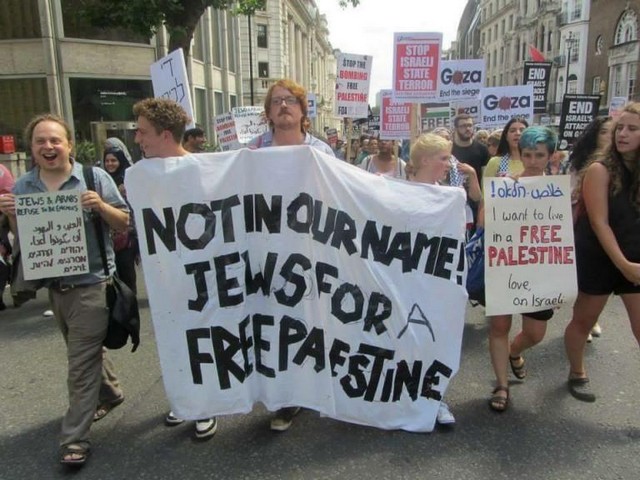
At the same time, to smear critics with allegations of anti-Semitism is to confuse criticisms of Israel’s state policies with anti-Semitism. Of course, some critics of Israel are anti-Semites. However, very many critics, including many Jews, such as those active in Jewish Voice for Peace, are certainly not. Real anti-Semitism, which is on the rise, ranges from prejudicial attitudes and practices against Jewish people to the kind of racial hatred and persecution of Jews that reached its climax during Nazi times, culminating in the Holocaust.

It should be appreciated that Zionism, a Jewish nationalist movement, is a political project of Jewish return, with roots in the late 19th century, which from its outset was controversial among Jews for a variety of reasons. The moral and legal dilemmas confronting Zionism from its inception arose from seeking to establish a Jewish state in a society already containing a large indigenous Arab population.

Thus anti-Zionism and anti-Semitism can reflect very different attitudes. In fact, there are several examples of prominent people who are anti-Semitic although pro-Zionist. It is also a feature of the Christian Zionist movement in the U.S. to be fanatically supportive of Israel while openly hoping that Jews will leave America.

I mention these considerations as background for my own recent experience. I have been personally attacked as “anti-Semitic” and “a self-loathing Jew” following the release of a United Nations-sponsored study that I co-authored investigating whether the available evidence supported a finding that Israel was guilty of apartheid — as defined by the UN Convention on Apartheid — due to the manner by which it controlled the Palestinian population.

This was an academic study I jointly undertook with Prof. Virginia Tilley, a world class expert on apartheid as a result of widely praised scholarly work on South African racism and apartheid. Before it was released by a UN regional commission in the Middle East, our report had been reviewed separately by three anonymous distinguished jurists from around the world who each urged publication.

As authors, we understood that our study, and especially its conclusions and recommendations, would be controversial. We welcome debate and discussion. However, to ignore the analysis and defame the authors is to close off discussion, and signal that international law and the Palestinian people don’t matter if you have geopolitics on your side. To accuse me of being a self-hating Jew as well as an anti-Semite is to further evade the challenge posed by our report.

I have worked on many issues over the course of my 60 years of university teaching, but until I began dealing with Israel and Palestine a decade ago I have never experienced this kind of attack on my person rather than my ideas.

Because the allegation that I am anti-Semitic is so baseless it is often accompanied by taking my views on other issues out of context, presenting them in a distorted form. I request that anyone who considers giving credence to attacks on my character investigate the context of any unsavoury views ascribed to me.

It is my opinion that our UN study that has provoked such controversy, and can be found online, deserves serious consideration. After half a century of failed diplomacy and harsh occupation, it is time to re-examine what can be done to create the conditions for a fair and sustainable peace for both peoples.

What our study proposes is that an essential precondition for such a desirable outcome depends on dismantling present systematic structures of domination that are relied upon by Israel to control the Palestinian people as a whole, whether they live under occupation or as refugees and involuntary exiles or as a discriminated minority in Israel itself. By thinking of the situation in this way we begin to understand that the conflict is most fundamentally about people and only secondarily about territory.

It is an illusion to suppose that ending the occupation, even if achieved, would bring peace. However, ending apartheid could.

Richard Falk is professor emeritus of international law at Princeton University.

9 May 2017

Israel’s New Cultural War of Aggression

By Richard Falk

A few weeks ago my book Palestine’s Horizon: Toward a Just Peace was published by Pluto in Britain. I was in London and Scotland at the time to do a series of university talks to help launch the book.

Its appearance happened to coincide with the release of a jointly authored report commissioned by the UN Social and Economic Commission of West Asia, giving my appearances a prominence they would not otherwise have had. The report concluded that the evidence relating to Israeli practices toward the Palestinian people amounted to ‘apartheid,’ as defined in international law.

There was a strong pushback by Zionist militants threatening disruption. These threats were sufficiently intimidating to academic administrators, that my talks at the University of East London and at Middlesex University were cancelled on grounds of ‘health and security.’ Perhaps, these administrative decisions partly reflected the awareness that an earlier talk of mine at LSE had indeed been sufficiently disrupted during the discussion period that university security personnel had to remove two persons in the audience who shouted epithets, unfurled an Israeli flag, stood up and refused to sit down when politely asked by the moderator.

In all my years of speaking on various topics around the world, I had never previously had events cancelled, although quite frequently there was similar pressure exerted on university administrations, but usually threatening financial reprisals if I was allowed to speak. What happened in Britain is part of an increasingly nasty effort of pro-Israeli activists to shut down debate by engaging in disruptive behavior, threats to security, and by smearing speakers regarded as critics of Israel as ‘anti-Semites,’ and in my case as a ‘self-hating,’ even a self-loathing Jew.

Returning to the United States I encountered a new tactic. The very same persons who disrupted in London, evidently together with some likeminded comrades, wrote viciously derogatory reviews of my book on the Amazon website in the U.S. and UK, giving the book the lowest rate possible rating, This worried my publisher who indicated that how a book is rated on Amazon affects sales very directly.

I wrote a message on my Facebook timeline that my book was being attacked in this way, and encouraged Facebook friends to submit reviews, which had the effect of temporarily elevating my ratings. In turn, the ultra-Zionists went back to work with one or two line screeds that made no effort whatsoever to engage the argument of the book. In this sense, there was a qualitative difference as the positive reviews were more thoughtful and substantive. This was a new kind of negative experience for me. Despite publishing many books over the course during this digital age I had never before had a book attacked in this online manner obviously seeking to discourage potential buyers and to demean me as an author. In effect, this campaign is an innovative version of digital book burning, and while not as vivid visually as a bonfire, its vindictive intentions are the same.

These two experiences, the London cancellations and the Amazon harassments, led me to reflect more broadly on what was going on. More significant, by far, than my experience are determined, well-financed efforts to punish the UN for its efforts to call attention to Israeli violations of human rights and international law, to criminalize participation in the BDS campaign, and to redefine and deploy anti-Semitism so that its disavowal and prevention extends to anti-Zionism and even to academic and analytic criticism of Israel’s policies and practices, which is how I am situated within this expanding zone of opprobrium.

Israel has been acting against human rights NGOs within its own borders, denying entry to BDS supporters, and even virtually prohibiting foreign tourists from visiting the West Bank or Gaza. In a remarkable display of unity all 100 U.S. senators recently overcame the polarized atmosphere in Washington to join in sending an arrogant letter to the new UN Secretary General, António Guterres, demanding a more friendly, blue washing, approach to Israel at the UN and threatening financial consequences if their outrageous views were not heeded.

Israel’s most ardent and powerful backers are transforming the debate on Israel/Palestine policy into a cultural war of aggression. This new kind of war has been launched with the encouragement and backing of the Israeli government, given ideological support by such extremist pressure groups as UN Watch, GO Monitor, AIPAC, and a host of others.

This cultural war is implemented at street levels by flame throwing militants that resort to symbolic forms of violence. The adverse consequences for academic freedom and freedom of thought in a democratic society should not be underestimated. A very negative precedent is being set in several Western countries. Leading governments are collaborating with extremists to shut down constructive debate on a sensitive policy issue affecting the lives and wellbeing of a long oppressed people.

There are two further dimensions of these developments worth pondering: (1) In recent years Israel has been losing the Legitimacy War being waged by the Palestinians, what Israeli think tanks call ‘the delegitimation project,’ and these UN bashing and personal smears are the desperate moves of a defeated adversary in relation to the moral and legal dimensions of the Palestinian struggle for rights.

In effect, the Israeli government and its support groups have given up almost all efforts to respond substantively, and concentrate their remaining ammunition on wounding messengers who bear witness and doing their best to weaken the authority and capabilities of the UN so as to discredit substantive initiatives; (2) while this pathetic spectacle sucks the oxygen from responses of righteous indignation, attention is diverted from the prolonged ordeal of suffering that has long been imposed on the Palestinian people as a result of Israel’s unlawful practices and policies, as well as its crimes against humanity, in the form of apartheid, collective punishment, ethnic cleansing, and many others.

The real institutional scandal is not that the UN is obsessed with Israel but rather that it is blocked from taking action that might exert sufficient pressure on Israel to induce the dismantling of apartheid structures relied upon to subjugate, displace, and dispossess the Palestinian people over the course of more than 70 years with no end in sight.

5 May 2017

Israeli ministers back nation-state bill delisting Arabic as official language

By RT.com

A ministerial legislation committee has approved a controversial bill that seeks to enshrine Israel’s status as a nation state of the Jewish people, but critics say it would undermine democracy and could lead to discrimination of non-Jews.

The proposed bill would become a new Basic Law, which serve as Israel’s constitutional legislation. It would declare Israel a Jewish nation state and a unique realization of its right to self-determination. It would also set Hatikva as the country’s national anthem, describe the country’s national symbol and flag, and designate Hebrew as Israel’s only official language, although Arabic would be given special status. The bill also mentions the Right of Return – the right of ethnic Jews to receive Israeli citizenship.

Critics of the bill say it makes non-Jews de facto second-rate citizens in Israel, arguing that its emphasis on Jewish identity undermines the country’s commitment to being a democratic state, as is stated in its Basic Laws.

The legislation was drafted in August of 2011 by Avi Dichter, an MP for the ruling Likud party, and has been floating around in various versions since. The bill was one of the factors leading to the collapse of the Israeli coalition government in November of 2014, as Prime Minister Benjamin Netanyahu, a strong supporter of the legislation, clashed with then-Ministers Tzipi Livni and Yair Lapid, who opposed it.

After winning a snap election in March of 2015, Netanyahu pledged to eventually pass a softer version of the controversial bill, but has faced opposition from some of his new ministers. In October of 2015, it was shelved to the chagrin of its supporters, only to return to the agenda now.

The bill is set to go to a preliminary vote on Wednesday during the first week of the Knesset’s summer session, the Jerusalem Post reported. The Justice Ministry will draft its own version within 60 days, and the two bills will be combined.

“I’ve been working on the Jewish State bill for six years,” Dichter recounted. “Six years to establish the simple and most basic truth: Israel is the nation-state of the Jewish People.”

Zehava Gal-On, chairwoman of the left-wing Meretz party, has criticized the proposed legislation.

“The result of the Jewish State bill is clear. Jews will get preference over all other citizens, clearly violating human rights, democracy, and the rights of the Arab minority in Israel,” she said.

7 May 2017