Just International

German Politicians Condemn Anti-Israel Protest As “Anti-Semitism”

By Dr Ludwig Watzal

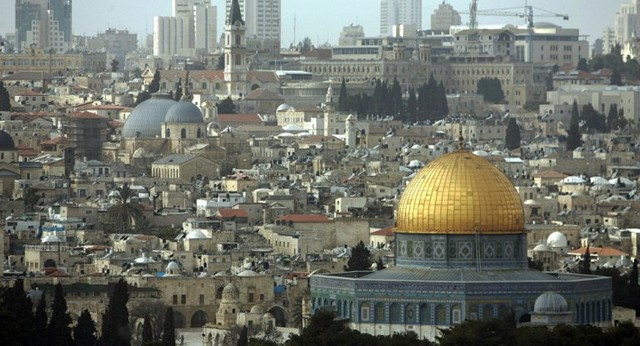
President Trump’s unilateral decision to declare Jerusalem as Israel’s capital earned him worldwide criticism and condemnation, except for Israel. Benjamin Netanyahu’s so-called charm offensive in Brussels, where he wanted to convince the EU to follow Trump’s example, was shunt by Federica Mogherini, the EU’s foreign policy chief, saying that “this move will not come.” She stressed the support of the EU for a two-state solution with Jerusalem as the capital of both states.

By the way, Netanyahu was not invited by the EU but asked himself to read the EU the riot act. Instead of kicking him out, the EU representatives endured him and became prominent and firm after he left the stage. Community, which tries to act as a global player, would have shown such a political rascal the door. Instead, they got insulting by Netanyahu and took it with a smile.

There have been widespread demonstrations all across the Muslim world, especially in occupied Palestine. Demonstrators also went into the streets in Lebanon, Turkey, Morocco, Sweden, and Berlin, protesting before US Embassies calling anti-American and anti-Israeli slogans.

Turkish President Erdogan uttered harsh criticism about Trump’s decision and Israel in particular, calling Israel a “terrorist state” and a “killer of children” slamming the Zionist regime as an “oppressive, occupation state.” And the US is a “partner in bloodshed” in the Middle East, so Erdogan. At a meeting of the Arab League in Cairo, Lebanon’s foreign minister Gebran Bassil, a Maronite Christian, called for sanctions against the US.

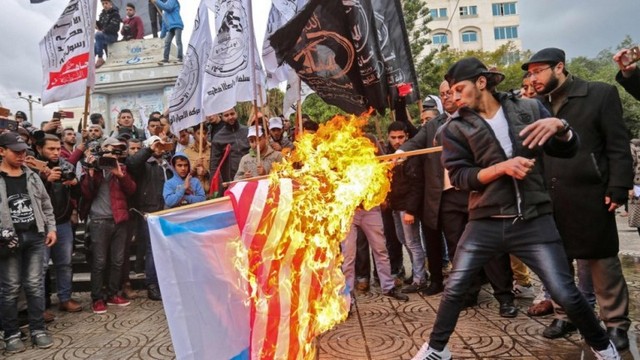
In Berlin, two thousand demonstrators gathered at the Brandenburg Gate close to the US Embassy, shouting anti-Israeli slogans and burning a self-made Israeli flag. This childish symbolism originated out of frustration, anger, lack of power and despair, created a hype among German politicians who branded it an act of “anti-Semitism.” One can ask why the demonstrators didn’t burn the American flag too, which would have made much more sense. The burning of flags is not a crime and falls under the right to demonstrate, as long as it’s not attached to a foreign embassy, which is considered a crime in Germany.

What criticism of Israel’s criminal behavior is concerned, the exercise of freedom of speech is in great danger. Among German politicians and the fawning media, the anti-Semitism-club is always at hand to make critics silence or stigmatize any Israel critics as “anti-Semites.” It still works, although we are living in the 21st century and not in the Middle Ages. With reference to Karl Marx one can say; a ghost is going around in Germany, the specter of anti-Semitism!

Unanimously, the German political class condemned the burning of the Israeli flag as a form of “anti-Semitism and xenophobia”, how Chancellor Merkel called it. Interior Minister Thomas de Maizière stated: “We don’t accept it when Jews or the state of Israel are disgraced in this way.” He continued saying: Germany is “bound in a special way to the state of Israel and people of Jewish belief.” And Foreign Minister Sigmar Gabriel  said that despite understandable criticism of Trump’s decision, “there is no right and also no justification to burn Israeli flags, incite hatred against Jews or question the right of Israel to exist.” Not enough of this political nonsense, Gabriel claimed that such acts do not only oppose Israel but also “the constitutional order of Germany.” None of the demonstrators denied Israel’s right to exists and nobody called the “constitutional order” into question, Mr. Gabriel. Perhaps the Foreign Minister doesn’t understand democracy.

Justice and “Censorship” Minister Heiko Maas was in on it declaring “Every form of anti-Semitism is an attack against us. There is no place for any anti-Semitism.”  Rightly so, but there has been no anti-Semitism at the Berlin rally only criticism against the Israeli occupier and its ally the US. Jens Spahn, a politician from Merkel’s CDU, wrote on Twitter: “We have been looking at imported anti-Semitism for too long out of the misreading of misunderstood tolerance.” One could continue this kind of political rhetoric on pages without any gain of knowledge.

The President of the Central Council of Jews in German, Josef Schuster, also added his two cents to it. According to him, the burning of the self-designed Israel flag was pure Anti-Semitism and a threat to Israel’s existence. Schuster never criticized Israel’s brutal occupation and the mistreatment of the Palestinian people. Not only the Central Council of Jews but also other Jewish functionaries are fighting tooth and nail against criticism of Israel. Even Jewish critics of Israel such as the editor-in-chief of the online magazine “the Semit,” Abraham Melzer, was slandered by the chairperson of the Jewish community in Munich, Charlotte Knobloch, as a “notorious anti-Semite.”  A court in Munich has forbidden her this slander, but Knobloch appealed the judgment.

One tenor in many articles was a kind of anti-Semitism that came with the refugees from the Arab world, although it was stressed that there is a latent anti-Semitism in Germany of about 20 percent among the population. It comes to no one’s surprise that all the headlines linked the demonstrations to “Anti-Semitism.” On a regular basis, many of the anti-Semitic “scandals” are initiated by infamous Jewish journalists. Too often, the press jumps on their bandwagon and the slander of innocents take its course.

The reaction of the political class is pure hypocrisy and ingratiation to Israel. The politicians kept mum when Israel committed war crimes against the population of the Gaza Strip killing several thousand. No word against settlements, house demolitions, land theft, random killings, settler inflicted terror, demolitions of institutions financed by the EU et cetera. Across-the-board, the German political class has no empathy for the oppressed Palestinians but only for the Zionist oppressor.

Dr. Ludwig Watzal works as a journalist and editor in Bonn , Germany . He runs the bilingual blog between the lines. http://between-the-lines-ludwig-watzal.blogspot.de/

13 December 2017

Source: http://www.countercurrents.org/2017/12/13/german-politicians-condemn-anti-israel-protest-as-anti-semitism/
Trump Administration’s Turnaround In Syria

By Nauman Sadiq

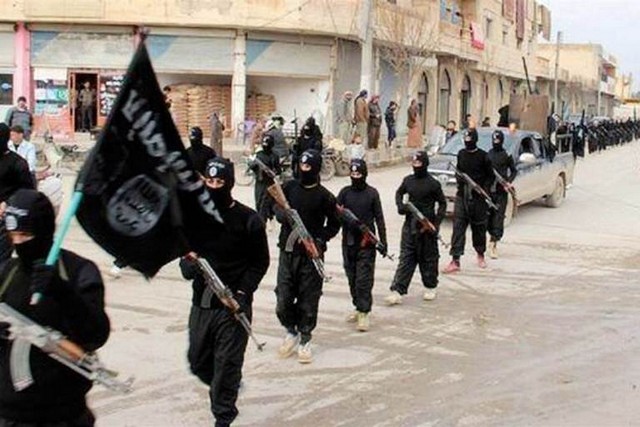
On the campaign trail, in his speeches as well as on TV debates with other presidential contenders, Donald Trump repeatedly mentioned that he has a ‘secret plan’ for defeating the Islamic State without elaborating what the plan is? To the careful observers of the US-led war against the Islamic State in Iraq and Syria, however, the outlines of Trump’s ‘secret plan’ to defeat the Islamic State, particularly in Syria, have now become obvious.

As far as the fight against the Islamic State in Iraq is concerned, the Trump administration has continued with the policy of its predecessor. The Trump administration’s policy in Syria, however, has been markedly different from the regime change policy of the Obama administration. Unlike Iraq, where the US has provided air and logistical support to Iraq’s armed forces and allied militias in their battle to retake Mosul from the Islamic State militants, the conflict in Syria is much more complex that involves the Syrian government, the opposition-affiliated militant groups and the Kurds.

Regarding the recapture of Palmyra from the Islamic State by the Syrian government forces, a March 2 article in the Washington Post carried a rather paradoxical headline: “Hezbollah, Russia and the US help Syria retake Palmyra” [1]. The article by Liz Sly offers clues as to how the Syrian conflict has transformed under the new Trump administration. Further, according to a March 31 article [2] for the New York Times by Michael Gordon, the US ambassador to the UN, Nikki Haley, and the Secretary of State, Rex Tillerson, have stated on the record that defeating the Islamic State in Syria and Iraq is the first priority of the Trump administration and the fate of Bashar al-Assad is of least concern to the new administration.

Under the previous Obama administration, the evident policy in Syria was regime change, and any collaboration with the Syrian government against the Islamic State was simply not on the cards. The Trump administration, however, looks at the crisis in Syria from an entirely different perspective, a fact which is obvious from Donald Trump’s statements on Syria during the election campaign, and more recently by the statements of Nikki Haley and Rex Tillerson. Moreover, unlike the Obama administration which was hostile to Russia’s interference in Syria, the Trump administration is on friendly terms with Assad’s main backer in Syria, Vladimir Putin.

It is stated in the aforementioned article by Liz Sly that the US carried out 45 air strikes in the vicinity of Palmyra against the Islamic State’s targets in the month of February alone, which must have indirectly helped the Syrian government troops and the allied Hezbollah militia recapture Palmyra along with Russia’s air support.

Although expecting a radical departure from the six-year-long Obama administration’s policy of training and arming Sunni militants against the Shi’a-led Syrian government by the Trump administration is unlikely, however, the latter regards Islamic jihadists as a much bigger threat to the security of the US than the former. Therefore, some indirect support and a certain level of collaboration with Russia and the Syrian government against radical Islamists cannot be ruled out.

What has been different in the respective Syria policy of the two markedly different US administrations, however, is that while the Obama administration did avail itself of the opportunity to strike an alliance with the Kurds against the Islamic State in Syria and Iraq, but it was simply not possible for it to come up with an out of the box solution and use the Shi’a-led government and allied militias against the Sunni Arab militant groups, particularly the Islamic State. The Trump administration, however, is not hampered by the botched legacy of the Obama administration in Syria, and therefore it has been willing to some extent to cooperate with the Kurds as well as the Russians and the Syrian government against the Islamic jihadists in Syria.

Two obstacles to such a natural alignment of interests, however, are: first, Israel’s objections regarding the threat that Hezbollah poses to its regional security; and second, Turkey, which is a NATO member and has throughout nurtured several Sunni militant groups during the six-year-long conflict, would have serious reservations against the new US administration’s partnership not only with the Russians and the Syrian government but also with the PYD/YPG Kurds in Syria, which Turkey regards as an offshoot of the separatist PKK Kurds in southeast Turkey.

Therefore, in order to allay the concerns of Washington’s traditional allies in the Middle East, the Trump administration has conducted a cruise missiles strike on al-Shayrat airfield in Homs governorate on April 6 after the chemical weapons strike in Khan Sheikhoun, but that isolated incident was nothing more than a show of force to bring home the point that the newly elected president, Donald Trump, is a ‘powerful and aggressive’ president, while behind the scenes he has been willing to cooperate with Russia in Syria in order to contain and eliminate the threat posed by Islamic jihadists to the security of the US and the rest of the world.

It would be pertinent to mention here that unlike the dyed-in-the-wool politicians, like Barack Obama and Hillary Clinton, who cannot look past beyond the tunnel vision of political establishments, it appears that Donald Trump not only follows news from conservative mainstream outlets, like the Fox News, but he has also been familiar with alternative news perspectives, such as Breitbart’s, no matter how racist and xenophobic.

Thus, Donald Trump is fully aware that the conflict in Syria is a proxy war initiated by the Western political establishments and their regional Middle Eastern allies against the Syrian government. And he is also mindful of the fact that the militants have been funded, trained and armed in the training camps located in the Turkey-Syria border regions to the north of Syria and the Jordan-Syria border regions to the south of Syria.

Finally, Karen De Young and Liz Sly made another startling revelation in a March 4 article [3] for the Washington Post that: “Trump has said repeatedly that the US and Russia should cooperate against the Islamic State, and he has indicated that the future of Russia-backed Assad is of less concern to him.” Thus, it appears, that the interests of all the major players in Syria have converged on defeating the Islamic jihadists, and the Obama era policy of regime change has been put on the back burner for all practical purposes.

Sources and links:

1- Hezbollah, Russia and the US help Syria retake Palmyra:

https://www.washingtonpost.com/world/syrian-army-retakes-the-ancient-city-of-palmyra-from-the-islamic-state/2017/03/02/fe770c78-ff63-11e6-9b78-824ccab94435_story.html

2- White House Accepts ‘Political Reality’ of Assad’s Grip on Power in Syria:

3- Pentagon plan to seize Raqqa calls for significant increase in U.S. participation:

https://www.washingtonpost.com/world/national-security/pentagon-plan-to-seize-raqqa-calls-for-significant-increase-in-us-participation/2017/03/04/d3205386-00f3-11e7-8f41-ea6ed597e4ca_story.html

Nauman Sadiq is an Islamabad-based attorney, columnist and geopolitical analyst focused on the politics of Af-Pak and Middle East regions, neocolonialism and petroimperialism.

13 December 2017

Source: http://www.countercurrents.org/2017/12/13/trump-administrations-turnaround-in-syria/

Trump’s Doomsday Jerusalem Speech

By Soraya Sepahpour-Ulrich

In 1995, a few short years after the official end of the Cold War when hope-filled nations were focusing on peace and prosperity, the United States Congress unanimously passed the “Jerusalem Embassy Act” into law.   The law recognized “Jerusalem” as the official capital of Israel. The passage of this law was left unnoticed by most.  Few objected to a law passed by the preeminent power of the new unilateral world order. Fewer still understood the consequences of the law.

On December 6, Donald Trump reminded the world of the decision made years ago.  There was outrage, but the true implications of this decision were not discussed.  Predictably, stories centered on Palestinians  – and Jews.  Some justified the decision while others condemned it. Many reasoned that the Palestinians had to be defended.  While others thought that it was up to the Arabs and Moslems to challenge America’s decision to recognize Jerusalem as Israel’s capital.

The Jerusalem question raised legal challenges to religious claims.   The cacophony of protests and cheers obscured the approaching doomsday scenario that had been in the making for decades.  Few understood.  None listened.  Others are in denial, believing religious zealotry to be a geopolitical game.  But what has been taking place under our noses is not a fight over real estate, or international law.  It is the power of madness, or the mad in power, that is enabling religious fanaticism to prevail at a cost to our collective humanity.

How could we not have seen this coming? Perhaps our logic challenged it; or our sense of decency denied the reality of what was happening.  It would seem too improbable, simply too far-fetched that we should denounce God with our science and yet usher in rupture to bring back the God science had disproved (Big Bang).   But how do we ignore Senator Broxon telling a cheering crowd “Now, I don’t know about you, but when I heard about Jerusalem — where the King of Kings where our soon coming King is coming back to Jerusalem, it is because President Trump declared Jerusalem to be capital of Israel”.

And how do we ignore Benjamin Netanyahu taking ownership of Jerusalem stating that the Bible, the holy book for Jews and Christians, had justified it.    Should we then be surprised that rabbis sent a letter of gratitude to Trump, praising him for “fulfilling prophecies”.   Prophecies do not sit well with modernity; nonetheless, they exist.  And attempts to fulfill them are not new.

In 1990, there was an attempt by the ‘Temple Mount Faithful’ to bring a cornerstone for a reconstructed Third Temple to the Temple Mount.  In 2000, Ariel Sharon staged a provocative visit to the Temple Mount and said: “The Temple Mount is in our hands and will remain in our hands. It is the holiest site in Judaism and it is the right of every Jew to visit the Temple Mount,”.

In 2006, the Israeli government began work on an exact replica of the Hurva synagogue on its original site. The story of the Hurva has received little attention other than coinciding with Joe Biden’s visit to Israel and that government’s insistence on building more illegal settlements.  But Hurva is the beginning of the end.  Rabbis have been tailored for the special kind of garments they will be wearing in a “rebuilt temple”.[i]

Tragically for the world, such fanaticism is coupled with deadly weapons, thanks to the United States government. In 1999, Warner D. Farr, LTC, U.S. Army presented his findings in the Counterproliferation papers, Future Warfare Series No. 2, USAF Counterproliferation Center.  This fascinating report, among other things, sounded the alarm over the probability of Gush Emunim, a right wing religious organization, or others, hijacking a nuclear device to “liberate” the Temple Mount for the building of the third temple.

America continued to fund Israel’s activities and shielded it from criticism.

So while the Western media paints a doomsday picture triggered by Moslems, and Mr. Trump, on cue from his Israeli boss points the accusatory finger at Moslems, there are far more precarious scenarios that are kept hidden from the public.   The irony being that the Moslems are the only ones safeguarding the world from a Doomsday scenario by refusing to abandon the one city where both Christian and Jewish Zionists want to bring the world to an end.

What is incomprehensible is why is it that the rest of the world is following this pied piper into Armageddon?   Surely is it not cowardice that prompts them to have Palestinians fight their battle.  Or perhaps they believe they can avert this religious zealotry in time to save their skins while continuing to make a prophet by shedding the blood of the innocent in Jerusalem.   How to explain their complicity and their madness other than to remind them to heed the words of Alexander the Great: “Remember upon the conduct of each depends the fate of all”.

Soraya Sepahpour-Ulrich is an independent researcher and writer with a focus on US foreign policy.

12 December 2017

Source: http://www.countercurrents.org/2017/12/12/trumps-doomsday-jerusalem-speech/

It’s Not Simply Jerusalem, It’s All Of Palestine

By Rima Najjar

What’s going on in Jerusalem is what has always been going on in Palestine since 1948 –the forced dispossession of Palestinian Arabs of their identity, land and heritage.

Because of Donald Trump’s declaration to move the US embassy to Jerusalem and the resultant global outrage regarding this decision, many people have become interested in understanding what is going on in Palestine and what the global ramifications might be.

They are finally becoming aware, after 69 years of Nakba, 69 anniversaries of Human Rights Day and 69 years of falsification of history, that the Palestinian people, like all other peoples in the world, do in fact have the right to self-determination and return.

Israel is surrounded by the Palestinians (among them 5 million UNRWA Palestine refugees in Gaza, the West Bank, Lebanon, Syria, and Jordan) it drove out of Palestine to establish the Apartheid settler colonial Jewish state there. These people are mostly, but not exclusively, Muslim in religion. They are the indigenous people of Palestine, Arab in culture, the true owners of the land.

But at the center of Zionist mythology is illegally-annexed Arab East Jerusalem.

As Hamid Dabashiwrites in Al-Jazeera:

If you want to understand the psychopathology at the root of the Zionist psychosis, you must go to the heart of their delusion, like an analyst placing a mentally sick person on a couch – and today there is no better place to see that psychotic colonial fixation at work than in an article, titled, Of Course Jerusalem Is Israel’s Capital, published (where else?) in the New York Times just hours before Donald Trump’s announcement that in his august moronic opinion, “Jerusalem is the capital of Israel….” Jerusalem has never been and will never be the capital of a racist apartheid European colonial garrison state that calls itself “Israel”. Never.

The unilateral declaration by the US president has caused so much protest because it recognizes Israel’s sovereignty over illegally annexed East Jerusalem with its ensuing residency revocation and forcible illegal transfer of many Palestinians from the city.

The declaration also goes against international law (14 of 15 Security Council members denounced it) as well as breaks with decisions on such “recognition” by every American president since Harry Truman formally recognized Israel on May 14, 1948. (See also Jerusalem as corpus separatum and its legal implications.)

But why is this happening now?

Harry Truman was swayed in his decision to recognize Israel by his political adviser, Clark Clifford, who wanted to secure the Jewish vote and funds essential for winning the US’s upcoming presidential election.

Donald Trump was also influenced in his decision by influential American Jews like Sheldon Adelson, Jared Kushner, Jason Greenblatt and US envoy to Israel David Friedman and by right-wing Christian evangelicals.

Today in US domestic politics, despite the disillusionment with Israel of the younger generation of American Jews, support for Zionism is loud and powerful among the traditional base of Zionism, as well as among Evangelical Christians and neo-fascists. The American Israel Public Affairs Committee (AIPAC) continues to have a death grip on both parties.

Shamefully, on this issue, as Stephen Zunes writes, “there is no real opposition party” in the US.

The Palestinian Authority is impotent, shackled by Oslo and the fraudulent promise of a “two-state solution” . It has zero leverage other than to dissolve itself and leave Israel and the US to foot the bill for the occupation.

Arab countries such as Jordan, Egypt and Saudi Arabia are American allies and heavily dependent on the US. These countries are not expected to act against their political self-interest. There is no “Arab supremacy” doctrine to parallel or counter the “Jewish supremacy” doctrine of Zionism.

When Palestinians say that Jerusalem or Palestine is Arab, they are referring to Palestinian Arabs of any religion, and not to a generic supremacist notion of Arabness in the political sense, the way Israel refers to Jews and Jewishness.

Arab countries are not likely to come to the rescue of Jerusalem, but Muslims (who are largely non-Arab) are – not least because of Jewish encroachment on al-Aqsa Mosque in Haram al-Sharif compound (see also Jerusalem’s Temple Mount: The Hoax of the Millennium! by Mike M. Joseph, 2011). And that’s where, unfortunately, the Islamophobic West’s anxieties are focused – not, as they ought to be, on warmongering Israel (See After Israel: Towards Cultural Transformation by Marcelo Svirsky 2014).

Through the Boycott, Divestment and Sanctions (BDS) Movement and other strategies for resistance, the Palestinian Authority must find a way to get rid of the racist “two state solution” concept, renounce the Oslo Accords, and come up with a democratic alternative, one that does not deny the humanity of Palestinian Arabs nor value the well-being of colonizing Jews (euphemistically called “settlers” or “immigrants”) over that of the indigenous people of historic Palestine – of any religion.

Rima Najjar is a Palestinian whose father’s side of the family comes from the forcibly depopulated village of Lifta on the western outskirts of Jerusalem. She is an activist, researcher and retired professor of English literature, Al-Quds University, occupied West Bank.

12 December 2017

Source: http://www.countercurrents.org/2017/12/12/its-not-simply-jerusalem-its-all-of-palestine/

Plunder Capitalism

By Paul Craig Roberts

I deplore the tax cut that has passed Congress. It is not an economic policy tax cut, and it has nothing whatsoever to do with supply-side economics. The entire purpose is to raise equity prices by providing equity owners with more capital gains and dividends. In other words, it is legislation that makes equity owners richer, thus further polarizing society into a vast arena of poverty and near-poverty and the One Percent, or more precisely a fraction of the One Percent wallowing in billions of dollars. Unless our rulers can continue to control the explanations, the tax cut edges us closer to revolution resulting from complete distrust of government.

The current tax legislation drops the corporate tax rate to 20%. This means that global corporations registered in the US will be taxed at a lower income tax rate than a licensed practical nurse making $50,000 per year. The nurse, if single, faces in 2017 a 25% marginal tax rate on all income over $37,950.

A single person is taxed at a rate of 33% on all income above $191,651. 33% was the top tax rate extracted from medieval serfs, and approaches the tax rate on US 19th century slaves. Such an upper middle class income as $191,651 sounds extraordinary to most Americans, but it is so far from the multi-million dollar annual incomes of the rich as to be invisible. In America, it is the shrinking middle and upper middle class incomes that bear the burden of income taxation. The rich with their capital gains from their equity holdings are taxed at 15%.

Even single individuals who earn between $1 and $9,325 are taxed at 10% on their pittance.

The neoliberal economists who are the shills for the rich, Wall Street, and the Banks-Too-Big-Too-Fail claim, erroneously, that by cutting the corporate income tax rate to 20% all sorts of offshored profits will be brought back to the US and lead to a booming economy and higher wages. This is absolute total nonsense. The money won’t come back, because it is invested abroad where labor costs are lower, if invested at all instead of buying back the corporation’s stock or buying other existing companies. After 20 years of offshoring US manufacturing and professional tradable skills and the incomes associated with the jobs, who is going to invest in America? The American population has no income with which to purchase the goods and services from new investment, and the American population’s credit cards are maxed out.

All that is going to happen is that Wall Street will calculate the lower tax rate into a higher equity price. Wall Street can do this without any of the offshored earnings coming home. Suddenly, everyone who owns equities will experience a boost in wealth, or the boost has already occurred in anticipation of the handout.

The deficit-conscious Republicans have put into the Bill for Enhancement of the Rich’s Wealth, cuts in social services in order to “save workers from higher interest rates from budget deficits.” This is more dishonesty. If the Fed lets real interest rates rise to any meaningful amount, derivatives will unwind, and the Fed will have to create trillions more in new dollars to keep its ponzi scheme in place. The deficit that results from the tax cut will be covered by the Fed purchasing the Treasuries, not by a rise in interest rates.

What we are witnessing in the US and indeed throughout the western world is the total failure of capitalism. Capitalism is now merely a looting machine. The financial sector no longer supplies capital for production. What the financial sector does is to turn discretionary consumer income into interest and fee payments to banks. Aggregate demand can only grow through debt expansion, and the consumers reach a point where they cannot expand their debt.

Capitalism, hiding behind “globalism,” which is misrepresented as a good thing when it is death itself, locates production where labor is cheapest, thus depriving First World labor of good wages and work opportunities and putting First World countries on the path to becoming Third World countries. Short-term profits and executive and board bonuses and stock options are maximized at the cost of the destruction of the domestic consumer market.

Plunder Capitalism also privatizes as much of the public sector, such as the military, as possible, thus driving up the cost of the Pentagon’s budget. Jobs that the soldiers themselves formerly did are given to politically-connected firms. What was once KP (kitchen patrol) is now provided by an outside private service. Private mercenaries hired by the Pentagon collect as much in a month as troops in the line of fire earn in a year. I don’t know that the army any longer has a supply organization other than the private business that has the contract.

Medicare and Medicaid are the next to be privatized, along with Social Security. The tax cut will result in deficit and high interest rate hype, and these lies will be used to save the workers from high interest rates on their mortgage, credit card, and student loan debt by scaling back or privatizing Medicare, Medicaid, and Social Security.

The environment and public lands will be sacrificed to the private profits of timber, mining, and energy companies. Grizzly bears and wolves are losing their protection under the endangered species act so that states can sell trophy hunting licenses to men who have to prove their manhood by killing an animal with a high-powerful rifle at a safe distance.

What we are witnessing is the complete looting of America and the entirety of the West. While the Western World collapses, the insouciant, submissive people sit there sucking their thumbs while they are being ruined.

Nothing is left of the West except looters at work.

This tax bill is an abomination, an act of brutal plunder. Its sponsors should be tarred and feathered and ridden out of town on a rail, if not hung from a lamp post.

Dr. Paul Craig Roberts was Assistant Secretary of the Treasury for Economic Policy and associate editor of the Wall Street Journal.

11 December 2017

Source: https://www.transcend.org/tms/2017/12/plunder-capitalism/

What Libya’s “Slave Auctions” Tell Us about the Humanitarian System

By Nanjala Nyabola

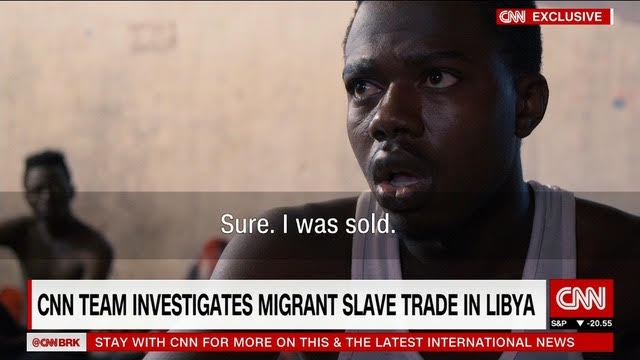
In the wake of the CNN report on human auctions in Libya, there has rightly been a surge in concern for the thousands of Africans languishing in inhumane conditions in detention camps.

Political leaders in Europe and Africa, including UN Secretary-General António Guterres and African Union Commission Chairperson Moussa Faki, have condemned the situation.

Notable also has been the spontaneous attention of African and African-American celebrities in the face of the silence by official Hollywood goodwill ambassadors for various international organisations.

After years of flailing diplomacy and lonely advocacy, it seems the world is finally ready to talk about the humanitarian disaster in Libya.

But while this new wave of attention is welcome and necessary, it does raise key questions.

Why did it take so long to have this near-unified voice of condemnation on a well-researched and well-covered issue that has been in the public domain for the better part of the last decade? Why now and not before? And more importantly, what does this delayed reaction say about race and racism in international humanitarian work?

The CNN film has had such a major impact in part because of the starkness of the imagery – the visuals reminiscent of the trans-Saharan and trans-Atlantic slave trades.

Although the men in the videos are not shackled, they are certainly imprisoned and, in a later part of the film, they detail the dire conditions in which they are held. Rape, beatings, starvation and murder all recur with alarming frequency in this contemporary slave trade.

The impact of injustice

Yet this information is not new. International organisations, politicians, and journalists have all reported the dire conditions facing African migrants in Libya from at least 2010.

Rather, this new urgency can be attributed in part to the rise of new forms of organising for racial justice.

Specifically, the Black Lives Matter movement has broadened the concerns of global racial solidarity, not just in the United States where it was born, but also across other racially divided societies like South Africa and Brazil.

African diasporas in France and in the United Kingdom have also organised chapters to fight local racial battles. The call for a new global compact for racial justice demanded in the streets of Baltimore, New York, Paris, Johannesburg, and Tel Aviv is finally being heard in offices in Geneva and New York.

Is global humanitarianism ready to talk about race?

It should be, considering that anti-black racism is the elephant in the room when it comes to the protection of refugees and migrants.

The vast majority of the world’s refugees and migrants today are Asian and African, unlike in the 1940s when the original instruments of protection were negotiated.

Most of these people remain in their region of origin. South-South migration is common in Africa where, for example, 20,000 Ethiopians and Eritreans try to reach southern Africa every year.

It’s important to situate contemporary human mobility in its proper place. With the notable exception of the cruel and inhumane global slave trade, the search for better opportunities, particularly in young men negotiating patriarchal masculinities, is – and has long been – common.

But the rules have changed.

In the 19th century as more and more young men took to the sea from southern Portugal as part of exploration and colonisation missions, the women they left behind would sing mournful songs, lamenting their departure and willing them to return safely, songs collectively known as Fado.

Now, hundreds of thousands of young African men and women die on their journeys abroad – from the North African deserts to the Mediterranean Sea, primarily as a consequence of increasingly inhumane policies towards human mobility. They are unmourned except when families finally get word that they have gone missing.

Criminalising migrants

Unlike European men in the last century who were celebrated for leaving home in search of opportunity or even adventure, young African men today are criminalised and punished, especially when they try to enter predominantly white societies.

Take another example. Hundreds of thousands of Rohingya have crossed into Bangladesh and have been largely welcomed, if under-resourced, while Australia expends much force and energy to keep hundreds of refugees violently contained on Manus Island. The same can be said of South Americans attempting to cross into the United States, and of course the frame of existential crisis that populist parties in Europe reserve for Muslim refugees from the Middle East.

If there is a global crisis of migration it is that societies are resorting to increasingly draconian measures to keep “The Other” out.

Contrast this panic with the treatment of predominantly white migrants or “expats”. Most countries in the world have migration policies that favour immigration by “expats” while penalising similar migration from predominantly black and brown populations.

This includes African countries like Kenya, which has kept half a million Somali refugees encamped with no legal status or pathway to citizenship for over 25 years.

On the campaign trail earlier this year, French President Emmanuel Macron emphatically offered France as a “second home” to American climate scientists concerned about the anti-science proclivities of Donald Trump’s administration.

But when African and European leaders met in Abidjan last week, Macron was equivocal in offering the same emphatic welcome to African migrants held in the detention centres in Libya – regardless of their qualifications.

Everyone wants “good migrants” – where “good” means primarily white and/or wealthy.

Ignoring the suffering

At the same time, consider that the barter of African bodies in Libya is not a question of a handful of criminals in the desert. It is a global system that rises to the highest level.

Deposed Libyan president Muammar Gaddafi routinely used the threat of allowing mass migration of black Africans to Europe in negotiations for improved political relations.

European governments have repeatedly paid African countries to take and keep African migrants and refugees in Africa. Black and brown bodies are constantly on sale in the modern era, but it is couched in the polite language of diplomatic negotiation and “helping them where they are”.

And the very act of feigning shock at information that has been in the public domain – reported by survivors and journalists alike – for so long speaks to an unwillingness to see the suffering of Africans.

Race and racism are at the heart of the ongoing refugee and migrant crisis, but, to date, humanitarianism has been reluctant to talk about it in stark terms.

The preferred language of protection is dry and technical, linked to statutes and conventions that were drafted at the time of Jim Crow and independence movements around the world.

Consider that the refugee convention entered into force in 1951 when most of Africa and the Caribbean was still colonised and three years before Brown v. Board of Education desegregated US schools.

New voices

The convention was not designed with ethnic minorities in mind and has struggled to adapt as the dynamics of refugee protection have shifted. It responded to the white-on-white crimes of World War II and is predicated on the goodwill of states towards citizens that arguably has never been extended to black or brown people.

Which is probably why, less than a week later, the momentum triggered by the CNN film is already fading. The United States has pulled out of the new global compact on migration, and the document agreed upon by EU and AU leaders in Abidjan is widely viewed as weak.

The stark visuals of the CNN report have forced a conversation on humanitarian protection to be openly and explicitly framed as a question of racial justice.

This has allowed new voices and new advocacy into the conversation. It remains unclear if this new momentum and direction of thought will translate into more meaningful action for those on the move.

Nanjala Nyabola – Nairobi-based writer and political analyst.

11 December 2017

Source: https://www.transcend.org/tms/2017/12/what-libyas-slave-auctions-tell-us-about-the-humanitarian-system/

From Barak to Trump

By Uri Avnery

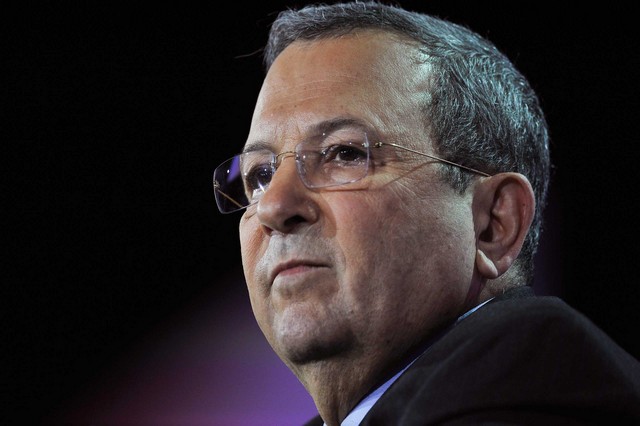
Ehud Barak has “broken the silence”. He has published an article in The New York Times attacking our prime minister in the most abrasive terms. In other words, he has done exactly the same as the group of ex-soldiers who call themselves “Breaking the Silence”, who are accused of washing our dirty linen abroad. They expose war crimes to which they have been witnesses, or even participants.

But apart from the attack on Binyamin Netanyahu, Barak has used the article to publish his Peace Plan. A former chief-of-staff of the Israeli army and a former prime minister, Barak is obviously planning a comeback, and his peace plan is part of the effort. There seems to be, anyhow, open season for Peace Plans in our region.

I respect the intelligence of Barak. Many years ago, when he was still the deputy chief-of-staff, he unexpectedly invited me for a talk. We discussed the military history of the 17th century (military history is an old hobby of mine) and I soon realized that he was a real expert. I enjoyed it very much.

On a spring evening In May 1999, I was part of a huge jubilant crowd in Tel-Aviv’s Rabin Square after Barak had won the Knesset elections and become prime minister. He promised us “the dawn of a new day”. In particular, he promised to make peace with the Palestinians.

Intellectually, Barak is superior to all other politicians on the Israeli scene. Soon enough it appeared that this may be a handicap.

Intelligent people tend to be arrogant. They despise people of lesser mental powers. Knowing that he had all the answers, Barak demanded that President Clinton call a meeting with Yasser Arafat.

On the morrow I spoke with Arafat and found him deeply worried. Nothing has been prepared, no prior exchange of views, nothing. He did not want to go to the meeting which he thought was bound to fail, but could not refuse an invitation from the president of the US.

The result was catastrophe. Barak, sure of himself as usual, presented his peace plan. It was more accommodating than any prior Israeli plan, but still fell far short of the Palestinians’ minimum. The meeting broke up.

What does a diplomat do in such circumstances? He announces that “we had a fruitful exchange of views. We have not yet reached total agreement, but the negotiations will go on, and there will be more meetings, until we reach agreement.”

Barak did not say that. Neither did he say: “Sorry, I am totally ignorant of the Palestinian point of view, and I shall now study it seriously.”

Instead, Barak came home and announced that Israel had proposed the most generous terms ever, that the Palestinians had rejected everything, that the Palestinians want to throw us into the sea, that we have “no partner for peace”.

If this had been declared by a right-wing politician, everybody would have shrugged. But coming from the leader of the Peace Camp, it was devastating. Its effects can be felt to this very day.

SO HERE comes Barak, the new Barak, with a brand-new Peace Plan. What does he say? The aim, he writes, is “separation” from the Palestinians. Not peace, not cooperation, just separation. Get rid of them. “Peace” is not popular just now.

How separation? Israel will annex the new Jewish neighborhoods in East Jerusalem and the “settlement blocs” – the clusters of Jewish settlements beyond the Green Line but close to it. He agrees to “land swaps”. And then comes the killer: “overall security responsibility in the West Bank will remain in the hands of the Israel Defense Forces as long as necessary.”

And the sad conclusion: “Even if it is not possible to solve the Israeli-Palestinian conflict at this stage – and it probably is not…”

If there is one Palestinian who would accept these terms, I shall be surprised. But Barak, then and now, does not care for the views and feelings of the Palestinians. Just like Netanyahu, who at least has the decency not to propose a “Peace Plan”. Unlike Trump.

DONALD TRUMP is not a genius like Barak, but he also has a Peace Plan.

A group of right-wing Jews, including his son-in-law (also no genius, he) have been working on this for months. He has proposed it to Mahmoud Abbas, Arafat’s successor, to the new Saudi Crown Prince and other Arab princes. It seems to provide for a Palestinian State composed of several small isolated enclaves on the West Bank, without Jerusalem and without an army.

This is sheer lunacy. Not one single Palestinian and not one single other Arab would accept this. Worse, anyone proposing such a caricature of a state betrays utter ignorance.

That’s where the real problem lies: it is much worse than just not knowing. It demonstrates abysmal contempt for the Palestinians and for Arabs in general, a basic belief that their feelings, if any, don’t matter at all. This is a remnant of colonial times.

Palestinians, and Arabs at large, do have deep feelings and convictions. They are a proud people. They still remember the times when Muslims were incomparably more advanced than the barbarian Europeans. To be treated like dirt by the US president and his Jewish entourage hurts them deeply, and may lead to a disturbance in our region that no Arab prince, hired by the USA, will be able to control.

THIS ESPECIALLY concerns Jerusalem. For Muslims, this is not just a town. It is their third holiest place, the spot from where the Prophet – peace be upon him – ascended to heaven. For a Muslim to give up Jerusalem is inconceivable.

The latest decisions of Trump concerning Jerusalem are – to put it mildly – idiotic. Arabs are furious, Israelis don’t really care, America’s Arab stooges, princes and all, are deeply worried. If disturbances erupt, they may well be swept away.

And what for? For one evening’s headline?

There is no subject in our region, and perhaps in the world – that is more delicate. Jerusalem is holy to three world religions, and one cannot argue with holiness.

In the past I have devoted much thought to this subject. I love Jerusalem (contrary to the founder of Zionism, Theodor Herzl, who was disgusted by it and left it in a hurry after one single night). The early Zionists disliked the city as a symbol of all that is wrong and foul in Judaism.

Some twenty years ago I composed a manifesto, together with my late friend, Feisal al-Husseini, the leader of Jerusalem’s Arabs and the scion of its most noble family. Hundreds of Israelis and Palestinians signed it.

Its title was “Our Jerusalem”. It started with the words: “Jerusalem is ours, Israelis and Palestinians, Muslims, Christians and Jews.”

It went on: “Our Jerusalem Is a mosaic of all the cultures, all the religions and all the periods that enriched the city, from earliest antiquity to this very day – Canaanites and Jebusites and Israelites, Jews and Hellenes, Romans and Byzantines, Christians and Muslims, Arabs and Mamelukes, Othmanlis and Britons, Palestinians and Israelis.

“Our Jerusalem must be united, open to all, and belonging to all its inhabitants, without borders and barbed wire in its midst.”

And the practical conclusion: “Our Jerusalem must be the capital of the two states that will live side by side in this country – West Jerusalem the capital of the State of Israel and East Jerusalem the capital of the State of Palestine.”

I wish I could nail this Manifesto to the doors of the White House.

URI AVNERY is an Israeli writer and peace activist with Gush Shalom. He is a contributor to CounterPunch’s book The Politics of Anti-Semitism.

11 December 2017

Source: https://www.transcend.org/tms/2017/12/from-barak-to-trump/

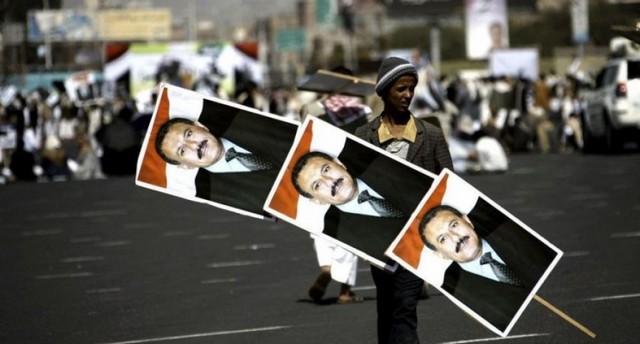
Yemen: Death of the snake dancer

By Afro-Middle East Centre (AMEC)

The 4 December death of former Yemeni president Ali Abdullah Saleh, at the hands of his former Houthi coalition partners, is a culmination of the differing interests that informed the coalition’s initial inception, and alludes to the intractable and unwieldy nature of the conflict’s many belligerents. Saleh’s death foreshadows further fragmentation of the warring coalitions, and is likely to ensure that ‘smaller’ wars transpire in the country’s northern highlands in addition to the existent southern conflicts. In addition, the rapid consolidation of the Houthi in Sana’a represents a blow to Saudi Arabia’s attempts to extricate itself from the unwinnable Yemeni quagmire and the UAE’s intention to support regional strongmen in an attempt to contain participatory Islamists.

Having once equated the task of governing Yemen to ‘dancing on the heads of snakes’, Saleh’s death was the result of his incessant duplicity, which saw him fight six wars with the Houthi between 2004 and 2010, with limited success, yet later successfully enticing them to unite with him in efforts to force the Abd Rabbuh Mansur Hadi government out of Sana’a in 2014. Prior to this Saleh emerged victorious in two civil wars between Yemen’s South and North; angered the USA by not supporting the 1991 Gulf War, but then received US support for his claimed role in the ‘global war on terror’; and withstood the 2011 Arab uprisings, in which he survived a failed suicide bombing in 2011. At the heart of Saleh’s actions was his belief that he alone could only hold Yemen together, and that the November 2011 Gulf Cooperation Council Initiative, negotiated by GCC states in an attempt to contain the Yemeni uprising from initiating real change, had betrayed him. Under the initiative, Saleh received immunity in return for his transfer of power to his then deputy, Hadi. He remained in control of the General People’s Congress (GPC) and was allowed to remain in Yemen, although he was forced to cease his attempt to transfer power to his son Ahmed Ali Abdullah Saleh. Saleh’s thirty-three years in control of Yemen had allowed him to entrench alliances with the country’s disparate military, civil and tribal elements, and he remained in de facto control over the elite Republican Guard and tribal leaders in the North. His acquiescence was thus imperative in ensuring the success of the Houthi takeover of Sana’a; Republican Guard forces refused to halt the Houthi move southward, especially in Sana’a and Abyan.

However, the partnership between Saleh’s GPC and the Houthi was bound to fail in light of their differing agendas, and was mainly a ‘marriage of convenience’. At the time, both Saleh and the Houthi were aggrieved at being left out of governing following the implementation of the GCC initiative. Despite having a place at the national dialogue conference between March 2012 and January 2014, which intended to chart a path forward for the country, both quickly realised that a Hadi-Islah coalition still controlled the day-to-day running of the state.

The Houthi remain sceptical of the GPC in light of their history of opposition, while many in the GPC oppose the Houthi’s religious fervour. The alliance was thus tactical; both sought to extend their influence by creating parallel governance structures. Already in February 2015 Saleh criticised the Houthi decision to dissolve the then government, and in March that year, Houthi–GPC conflict erupted over control of the Raymat military base in Sana’a. The subsequent Saudi coalition aerial intervention in March 2015 only served to postpone this inevitability.

Tensions had since increased owing to Houthi weariness over UAE attempts to lure Saleh away from the coalition. As part of these attempts, in June 2017 Saleh’s son Ahmed, the current ambassador to the UAE, met with Ahmed al-Asiri, Saudi Arabia’s former army spokesperson in charge of the Yemeni war and current advisor to Saudi’s defence minister, crown prince Mohammed bin Salman. Subsequently, ties frayed between Saleh and the Houthis as the Emirates sought to more overtly back the former president as an alternative to Hadi. In August, the intra-coalition violence heightened when the Houthi unsuccessfully sought to halt the GPC’s thirty-fifth anniversary celebrations. Last week’s clashes resulted in the deaths of over two hundred people and Saleh announcing his defection. The Houthi had been preparing for this eventuality since August and had consolidated control of the North’s religious institutions and finances.

Seeking to extricate itself from Yemen, Saudi Arabia supported the defection, and has since provided aerial cover to troops loyal to Saleh. However, Saleh’s death likely means that Mohammed bin Salman (MBS) has miscalculated on regional matters once again, especially since the Houthi have largely consolidated control over Sana’a. Further, the reported clash between MBS and Ahmed Ali Abdullah Saleh in 2015 would ensure that Riyadh does not wholly support him as an alternative to Hadi, inhibiting the fruition of UAE interests in the country. This is in a context in which Abu Dhabi is supporting the Southern Hirak and Southern Belt forces in Aden and Taiz in an attempt to counter the influence of the participatory Islamist Yemeni Islah party, which still receives support from Saudi Arabia.

Houthi troops have since managed to consolidate control of the Sawad and Raymat military bases, the two main GPC-affiliated bases in Sana’a; Saleh’s nephew Tariq, who commanded the Republican Guard, was killed, and his two sons, Salah and Madyan were arrested; and tribal shaykhs, such as the Hashed’s Mabkhout Mashraqi, have been forced to defect. This alludes to the fact that although the Houthi governance of the North is tenuous, the group’s military capacity has increased, and its control over finances in Sana’a has meant that it remains able to pay combatants.

Consequently, clashes in northern provinces are likely to intensify, especially since many tribes support Saleh, and because the UAE will intensify its support for Ahmed. Intra-northern clashes, similar to those between groups in the South, will increase, making a political solution more unlikely. This is especially since the GPC remains popular, as demonstrated by the tens of thousands that gathered in Sabeen Square in August 2017, in defiance of Houthi attempts to halt the party’s thirty-fifth anniversary celebrations. Further, the party’s long existence has enabled it to develop its institutional capacity, and it continues to maintain influence over Republican Guard units. In addition, Saleh’s death will make it more difficult for MBS to conceive a face-saving solution to the conflict, even though the Houthi have expressed their willingness to enter into negotiations. The current civil war is thus likely to continue, ensuring the country’s further fragmentation, and making it more difficult to envisage a solution that will allow the various political, tribal and military elements to reunite.

9 December 2017

Source: http://www.amec.org.za/yemen/item/1554-yemen-death-of-the-snake-dancer.html

American Muslims Reject Trump’s Move To Recognize Jerusalem As capital of Israel

By Abdus Sattar Ghazali

American Muslim civil advocacy groups Thursday (Dec 7) vehemently opposed President Donald Trump’s decision to recognize Jerusalem as the capital of Israel and to move the U.S. embassy to Jerusalem.

They were of the view that Trump’s announcement serves no one’s interest but undermines the Middle East peace process couple with inflaming anti-U.S. sentiment across the globe.

On Wednesday, a coalition of Muslim, Interfaith and human rights groups held a news conference outside the White House in Washington, D.C., to respond to President’s Trump’s announcement on the status of Jerusalem.

The Muslim groups argue that Trump’s announcement has offended the religious sensibilities of the world’s 1.6 billion Muslims, and empowered political and religious extremists of all stripes at home and abroad.

Israel captured Arab East Jerusalem in the 1967 Middle East war. It later declared both halves of the city as its “eternal and undivided capital”. The declaration is not recognized internationally. The Palestinians want the eastern sector as capital of their promised state and fiercely oppose any Israeli attempt to extend sovereignty there.

The status of Jerusalem is one of the most contentious issues of the long-running Israeli-Palestinian conflict. Most of the international community does not formally recognize Jerusalem as Israel’s capital, insisting the issue can only be resolved through final-status negotiations.

American-Arab Anti-Discrimination Committee [ADC]

President Trump’s announcement serves no one’s interest; instead, it will have an immediate and catastrophic impact internationally by undermining the Middle East peace process and inflaming anti-U.S. sentiment across the globe, the American-Arab Anti-Discrimination Committee (ADC) statement said adding:

“Israel’s annexation and claim over Jerusalem is completely illegal under international law, as recognized by the entire world. The fate of Jerusalem has always been understood to be resolved by a completed peace deal between Israel and Palestine. Up until today, this was the U.S.’s official stance on Jerusalem. Today, President Trump has completely reversed U.S. policy and greatly weakened the prospect any long-term chance at a substantive peace deal in the Middle East.”

“By endorsing Israel’s annexation of Jerusalem, President Trump is acting against international law, hurting U.S. interests at home and abroad, and destroying U.S. credibility on an international stage. The Trump Administration’s actions will not promote peace; conversely, the decision destroys the prospect of peace, promotes violence, and dismantles the U.S. credibility as a diplomatic force around the world,” the ADC statement concluded.

Council on American-Islamic Relations [CAIR]

On Wednesday, the Council on American-Islamic Relations (CAIR), the nation’s largest Muslim civil rights and advocacy organization, joined a coalition of Muslim, Interfaith and human rights groups at a news conference outside the White House in Washington, D.C., to respond to President’s Trump’s expected announcement this afternoon on the status of Jerusalem.

CAIR is calling on Americans of all backgrounds to contact their elected representatives to oppose Trump’s “reckless” change of policy on Jerusalem.

In a statement reacting to the president’s announcement on Jerusalem, CAIR National Executive Director Nihad Awad said:

“By overturning a decades-long policy adopted by administrations of both parties, President Trump is casting aside America’s role as a mediator in the Middle East conflict, harming our Muslim allies and our nation’s strategic foreign policy interests, offending the religious sensibilities of the world’s 1.6 billion Muslims, and empowering political and religious extremists of all stripes at home and abroad. This dangerous, counterproductive and self-serving move should be rejected by every American who looks forward to a just and comprehensive resolution to the Israeli-Palestinian conflict.”

Muslim Public Affairs Council [MPAC]

The Muslim Public Affairs Council (MPAC) said that President Trump’s decision has derailed the peace process and it is a disaster for peace.

In a statement the MPAC said the U.S.’s role in the Middle East conflict is critical, but Trump has diminished American leadership not just in the peace process but in the entire Middle East. “Because of his misguided, uninformed decision, Trump can expect political unrest, stifled peace processes, and further limitations to freedom of religion and freedom of speech.”

Trump’s move eliminates the possibility of the U.S. acting as a peace-broker and overturns decades of U.S. policy towards the region, including a longstanding position that Israeli-Palestinian grievances must be resolved through negotiations, the MPAC said adding: Trump has reversed 70 years of international consensus and many global leaders believe that he derailed any peace initiative between the Israelis and Palestinians.

UNSC resolution 478 declared Israel’s enactment of the 1980 Basic Jerusalem Law — that proclaimed a unified Jerusalem as the ”eternal and indivisible” capital of Israel — as a violation of international law. In 2016, former Secretary of State John Kerry said the city “is the most sensitive issue for both sides” and suggested it be the “internationally recognized capital of the two states,” the MPAC statement recalled.

A sacred site for Jews, Muslims, and Christians

Jerusalem is also a part of the Occupied Territories. Israelis moving into these territories is a violation of the Fourth Geneva Convention. Trump’s recognition of the city as the capital of Israel will cause a sharp spike in unrest and conflict.

In recognizing Israeli settlements in and around Jerusalem as legitimate, the U.S. is now out-of-step with the rest of the international community who consider these settlements to be illegal.

This land has historical significance to all three Abrahamic faiths. Jerusalem is the de facto capital of the Holy Land for Jews, Muslims, and Christians. The U.S. is violating the religious freedom of Palestinians by recognizing the city as the capital of the Jewish state. Past Israeli attempts to add oversight to Jerusalem have sparked violence.

Domestic implications of Trump’s recognition

To understand the reasoning behind this move, we must understand a segment of Trump’s Christian evangelical base. Some evangelicals believe that the return of the Jews to Israel, and Jerusalem in particular, is a prerequisite for the Second Coming of Jesus.

According to a Pew Research Center poll, support for Israel is stronger among American evangelicals than it is even among American Jews. The poll found that 82 percent of white evangelicals think God gave Israel to the Jewish people. Less than half as many American Jews or American Catholics agree.

In a Bloomberg poll, almost 60 percent of evangelicals say the U.S. should support Israel even if its interests diverge with American interests. In recognizing Jerusalem as the capital of Israel, Trump is fulfilling a campaign promise to this constituency at the expense of American interests.

Jewish Voice of Peace

Jewish Voice of Peace described Trumps decision as reckless, deeply irresponsible decision: for Palestinians, Israelis, and all of us. And it’s on us to stand up.

In an email Rabbi Alissa Wise, Deputy Director of JVP, said:

“What we need is a U.S. policy that recognizes and addresses the root causes of the ongoing crisis in Israel/Palestine, not one that drastically inflames already existing inequities.

“Trump’s announcement overtly aligns the U.S. with an increasingly expansionist Israel, at the expense of Palestinian people’s lives and rights, and without any regard for diplomacy.

“No country in the world has an embassy in Jerusalem today, because the international community doesn’t recognize Israeli jurisdiction over the city. And there’s near-global consensus that moving the Embassy is a very bad idea — from Egypt, Jordan, Turkey, and other countries in the region, and from Germany, France, and the European Union, not to mention many senior U.S. State Department officials.”

Is Donald Trump about to set the Middle East ablaze?

Jonathan Freedland wrote in the Guardian, President Trump is walking into a bone-dry forest with a naked flame, the world’s most intractable conflict. “It is the issue that has foiled multiple efforts at peacemaking over several decades. Both Israelis and Palestinians insist that Jerusalem must be the capital of their states, present and future, and that that status is non-negotiable.”

Freedland  quoted the Palestinian ambassador to London as sayings that Trump’s move amounts to “declaring war on 1.5 billion Muslims”.

“Why is Trump doing it? Perhaps he wants to show that he’s honoring his campaign pledges: now, along with his tax cut for the rich and his travel ban from mainly Muslim countries, he can tick the box marked Jerusalem. He said he would do it, and now he’s doing it, and to hell with the consequences,” Freedland concluded.

To borrow Stephen Lendman, fire and fury Trump warned North Korea about could erupt in Occupied Palestine and the Arab street.

Claiming to seek regional peace is a useful fiction, giving Israel maximum time to steal all valued Judea and Samaria land for exclusive Jewish development, Leman said adding:

“Trump’s decision is further proof of the peace process hoax, the latest chapter dead before initiated, according to Lendman. East Jerusalem as Palestine’s exclusive capital is fundamental for Palestinians.   The issue is nonnegotiable.

“Without it, peace is unattainable – precisely what Washington and Israel want, pretending otherwise. A legitimate peace process never existed, for sure not now with Ziofascists infesting the Trump administration.”

Abdus Sattar Ghazali is the Chief Editor of the Journal of America (www.journalofamerica.net) email: asghazali2011 (@) gmail.com

8 December 2017

Source: http://www.countercurrents.org/2017/12/08/american-muslims-reject-trumps-move-to-recognize-jerusalem-as-capital-of-israel/

Ojo! More Disasters Are Ready To Happen In The Middle East

By Dan Lieberman

You do not have to be an insider, a foreign policy expert, or a political pundit to realize that the Unholy Trinity, the new axis of evil – United States, Israel and Saudi Arabia – are preparing joint military actions against Iran and Hezbollah. The Spanish colloquial word, Ojo, meaning eye, expresses it all – careful – be on watch for the miscreants who have given us decades of war, civil strife, terrorism and destruction and have rarely had a day when they were not using their advanced weapons on some weak adversary. Events in the weeks of October, November, and early December 2017 tell the story.

The events:
(1) United States President Donald Trump refused to recertify the Iran nuclear agreement.
(2) Lebanon’s Prime Minister Saad Hariri traveled to Saudi Arabia, where he announced his intended resignation because of fear of being targeted and because “Iran has a grip on the fate of the region’s countries… Hezbollah is Iran’s arm not just in Lebanon but in other Arab countries too.”
(3) President Trump recognized Jerusalem as Israel’s capital, a move that will certainly provoke all Muslim nations and people, especially Iran.(4) Syrian government reported that Israeli missiles and warplanes attacked a military base near Damascus, which is reportedly used by Hezbollah and Iranian militia.
(5) Severe propaganda against Hezbollah revives aged and unproven accusations. Politico magazine, in an article, How Trump Is Going After Hezbollah in America’s Backyard, by Matthew Levitt, November 30, 2017.

The Trump administration is pushing back aggressively against what the intelligence community often refers to as the “Iran Threat Network” or ITN, and as part of that campaign it is especially keen to focus on the activities of Hezbollah, the pro-Iranian Lebanese militia, in Latin America. Now, new revelations about a Hezbollah cold case from 1994 underscore the importance of rolling back the group’s footprint in the region.

…the group (ED: Hezbollah) sent a suicide bomber to take down a flight on Alas Chiricanas Airlines, a Panamanian commuter airliner carrying mostly Jewish passengers, including several Americans. The case languished for years, but the FBI appears to have recently collected new information which, together with evidence gleaned from other current investigations, is likely to serve as the basis for a variety of actions aimed at Hezbollah, the lynchpin of the ITN and Iran’s most powerful proxy group.

(6) While pulverizing Yemen, Saudi Arabia accused Iran, without much evidence, of instigating and fortifying the Houthi’s in Yemen.
(7) Talal Silo, a senior commander and acting spokesperson of the U.S.-backed Syrian Democratic Forces (SDF), told a Turkish news agency “the SDF was actually founded as a cover for the U.S. arms aid to the YPG, adding that the United States did not monitor the provided weapons.”
(8) After Hadi al-Ameri, the head of the Iraq Badr Organization, said, in an interview with Iran’s Press TV, November 30, 2017, that Iraq’s Popular Mobilization Forces “will not allow a single U.S. soldier to remain in Iraq now that ISIS is being driven out of its last pockets in the country,” U.S. CIA Director Mike Pompeo sent a letter to a top Iranian military official on December 2, 2017, and warned that “the United States would hold Tehran accountable for any attacks it conducted on American interests in Iraq.”
(9) Jared Kushner, President Trump’s Middle East peace envoy, met with Saudi Arabia officials, and reports indicate he did this without consulting the State Department.
(10) Israeli Prime Minister, Benjamin Netanyahu, in a speech during December, said the Islamic Republic seeks to “conquer the Middle East,” and warned that Israel will not allow Iran to establish a foothold in Syria.

Why the sudden actions?

  • Syrian President Bashar al- Assad has strengthened his failing power and allowed Iran to establish a military presence in Syria.
  • Iran and Hezbollah have advanced their military capabilities and influence in the region.
  • Houthis remain as the principle power in Yemen
  • Kurds, who are friendly with Israel, failed to establish an independent state.
  • United States, Israel, and Saudi Arabia all have growing internal problems and are exhibiting increased isolation from other nations. They need a diversion.
  • Russia is replacing the United States as the Middle East power broker
  • The call is out – Stop Iran and Hezbollah before it is too late.

What do they actually fear?
Israel and Saudi Arabia have been able to disguise their true fears, and these fears are not what many believe. Iran and Hezbollah are no direct threats to the Saudis. Neither of these appointed antagonists have the capability or power to attack the Arabian Peninsula. Even, if they could accomplish the task, neither of them could gain anything. The U.S. fleet in the Persian Gulf makes certain Iran does not cross the waterway. So, what is the problem?

The House of Saud has a major problem – it takes in all the revenue, as if it is the casino manager, and continues repressing the Shi’a citizens in the Eastern province. Because the Shi’a citizens of Saudi Arabia consider themselves to be the original inhabitants of the peninsula and sit on the oil fields without enjoying an equal share of the profits from the black gold, the kingdom fears a rebellion and assumes that Iran and Hezbollah will support that rebellion. Meanwhile, the paranoid Saudis react to every stroke of protest in the region as if they are being attacked and hide their support for the oppressors by pretending that the Islamic State and Hezbollah are the instigators of the oppressed reaching out for their justified rights. The Saudis, who are the culprits, play victim and use Iran and Hezbollah to disguise their nefarious actions.

Israel, which constantly expands territory by seizing Palestinian lands, is determined to control all of Jerusalem, including the Haram al/Sharif (why it needed U.S. recognition of Jerusalem as its capital), feels no remorse in totally destroying the Palestinians, and finds Iran and Hezbollah as the last standing antagonists who can prevent it from accomplishing the Zionist objectives. Other antagonists have been sidetracked

  • The Sudan, a perceived Israel antagonist, which had potential of becoming a major nation, has been carved up to become two hapless nations, much due to U.S. actions.
  • The U.S. invasion overthrew Saddam Hussein and prevented Iraq from becoming a major power in the Middle East and a threat to Israel.
  • Libya, another Israel antagonist, from NATO military actions, has been destroyed and driven to anarchy.
  • Egypt and Jordan have been pacified.
  • Saudi Arabia and Gulf States are not a threat.

Israel expected Syria’s Assad would be defeated and a new government would eschew relations with Iran and Hezbollah. Overthrow of the Assad regime and replacement by a new government would deprive Hezbollah with a friendly border and easy access to its Iran ally. In Iraq, a Kurd success in establishing an independent state would have given Israel a lonely friend on the borders with Iraq and Iran. Because none of these expectations have been realized, a new approach to debilitating Iran and Hezbollah is being arranged.

Powerful and aggressive Israel behaves as the ultimate victim, mauling defenseless people, acting as if it is always being viciously attacked and must defend itself. Built on the most outrageous falsehoods and distortions of history (Israel’s PM Netanyahu: “There is no more historically justified and correct step now than recognizing Jerusalem, which has been the capital of the Jewish people for the past 3,000 years, as the capital of Israel.”), Israel condemns itself – if a nation cannot represent itself through historical truth and persists in acquiring identity by audacious prevarications, it is not a valid nation

The United States remains an anomaly in all the activities. Neither Sudan, nor Iraq, nor Libya posed any threat to the United States. Just the opposite from what was contemplated has happened; Iraq no longer counters Iran; the U.S. overthrow of Hussein has given Iran a dominant role in Iraq; the result of the Iraq and Libyan wars has been an expansion of international terrorism. Here we have the United States shedding blood to dethrone the leaders of states and not achieving any benefits but rather receiving more problems. Israel, which shed no blood, has received the major benefits. Is it improper to conclude that those who benefited mostly from the wars had maneuvered the United States into these engagements? The same with Syria – the United States has no interest in Syria and no reason to contend Hezbollah or Iran – neither of the latter is prepared to do damage to the United States. A revitalized Iran, with increased oil exports would benefit the United States by keeping oil prices low and enabling trade.

What are their objectives?
Evidently, the mighty triple alliance wants Iran and Hezbollah militarily subdued and Syria, similar to Jordan, as a pacified nation without contacts to Hezbollah and Iran. What can they do to achieve their objectives? They can

  • Keep Syria in a constant civil war and hope to install an anti-Iranian government – more years of death, destruction, and population displacement in Syria. Possible scenario.
  • Obtain agreements from Russia and Turkey that they will support a compromise, where Assad maintains present power, but Iran and Hezbollah leave Syria. Very likely.
  • Provoke a civil war in Lebanon in an effort to destroy Hezbollah’s military wing. Unlikely the Lebanese will be drawn into this plan.
  • Continually bomb military bases in Syria and Lebanon. Might happen, but will need to go on forever.
  • Bomb military bases in Iran. Too much effort, with too many losses, and no decisive outcome.

Go through the options and no result will entirely satisfy the Unholy Trinity. Iran’s homegrown military capability will still grow, Hezbollah will remain as an upstart, and Iran’s influence in Iraq can expand. Iraq and Iran cannot be easily contended without severe repercussions

What could happen?
The United States, Israel, and Saudi Arabia have demonstrated their contempt for international law and willingness to use massive destruction to achieve their aims.

The U.S. has dropped an atomic bomb, and been quick to engage in wars in Vietnam, Afghanistan, Iraq, and Libya, which caused hundreds of thousands, if not millions of casualties.

Israel has fought several wars against defenseless adversaries in Lebanon and Gaza, tried out their new weapons against civilians, and inflicted horror on many populations.

Saudi Arabia, in Libya, Bahrain, and Yemen, has involved itself in military actions against others who cannot easily retaliate. In Yemen, where a sovereign nation is engaged in a protracted civil war, Saudi Arabia has mercilessly bombed civilian targets and is perpetrating catastrophes leading to starvation and disease.

Neither the United States, nor Israel, nor Saudi Arabia ever considers limits of power. They have shown they will use all power, regardless of the damage to others, to accomplish their objectives. This portends Ojo! More disasters are ready to happen in the Middle East. I recommend circulating this Ojo warning to every person in the world and stuffing it in the mailboxes of every responsible authority. The possibility of a huge conflict is not small, its occurrence will be brutal, and everyone will greatly suffer.

Ojo!
Beware!

Dan Lieberman is DC based editor of Alternative Insight, a commentary on foreign policy, economics, and politics. He is author of the book A Third Party Can Succeed in America, a Kindle: The Artistry of a Dog, and a novel: The Victory (under a pen name). Dan can be reached at alternativeinsight@earthlink.net.

8 December 2017

Source: http://www.countercurrents.org/2017/12/08/ojo-more-disasters-are-ready-to-happen-in-the-middle-east/