Just International

Tambourine in hand, a Christian wakes up Muslims for Ramadan

By MEE and agencies

Michel Ayoub sees no contradiction in a Christian carrying out this traditional role and neither do local Muslims

ACRE, Israel – Michel Ayoub’s holy racket begins each day at 2am, when he steps into the cobbled streets of Acre’s old city with tambourine in hand, awakening Muslims for Ramadan.

His role as the city’s “mesaharati” is a traditional one during the sacred fasting month, but Ayoub is by no means a traditional holder of the position: He is Christian.

The 39-year-old Arab Israeli sees no contradiction in that, and neither do the Muslim residents of this ancient city in northwestern Israel, overlooking the Mediterranean Sea.

“We are the same family,” says Ayoub, who wears traditional Levantine dress as he meanders the alleyways, a keffiyeh draped over his shoulders, baggy sirwal pants held around his waist with an embroidered belt, a black-and-white turban tied around his head.

“There is only one God and there is no difference between Christians and Muslims.”

His voice rings out as he chants, piercing the silence of the empty streets decorated with traditional colourful lamps for Ramadan.

“You, sleeping ones, there is one eternal God,” he chants.

Houses begin to light up one by one. Some stick their heads out of their windows to greet him and tell him they have heard the call, awakening them for the “suhur”, the traditional Ramadan pre-dawn meal.

During the holy month, which began on 5 June, Muslims abstain from food and drink from sunrise to sundown, making the suhur an important meal before the long day ahead.

‘We would be lost’

Acre’s population of more than 50,000 includes Jews, Muslims, Christians and Baha’is.

It has been continuously inhabited since the Phoenician period, which began around 1500 BC.

It was the main port of the medieval Crusader Kingdom of Jerusalem and a major Ottoman walled city.

Napoleon tried to conquer the heavily fortified town in 1799 but was repelled by the Ottomans and a small British Royal Navy force.

The walled old city, complete with a well-preserved citadel, mosques and baths, is listed by UNESCO as a World Heritage site.

Today it is part of Israel, which captured it in the 1948 Arab-Israeli war surrounding the state’s creation.

About 28 percent of its population are Arab Israelis, who are Palestinians and their descendants who remained after the 1948 creation of Israel.

Most of the city’s Arabs are Muslims, but a minority, like Ayoub, are Christians.

Ancient tradition revived

The mesaharati tradition had disappeared from Acre until Ayoub, who usually works in construction, revived it 13 years ago. He says it was his way to preserve his grandfather’s heritage.

He says his grandfather, a fervent Catholic, listened to readings of the Quran every Friday during the main weekly Muslim prayers.

Partly for that reason, Ayoub says he grew up with the idea of coexistence, respect and knowledge of other religions.

By carrying on the mesaharati tradition, he says he was “only doing my duty by helping our Muslim brothers who endure hunger and thirst” during the fasting month.

Sabra Aker, 19, says she “grew up with Michel Ayoub’s wake-up calls during Ramadan”.

“If he didn’t come one day, we would be lost,” she says through the window of her home.

Safia Sawaid, 36, exits her home to ask if she can take a photo with Ayoub and her children.

“It’s great to see someone so attached to our culture and our traditions,” she says. “I hope that he will continue every year.”

Ayoub may even be grooming a successor to ensure the tradition does not end with him.

Ahmed al-Rihawi, 12, accompanies him on his nighttime mission, wearing sirwal pants, a black vest and a turban.

“He is a promising mesaharati,” Ayoub says. “He is very talented.”

21 June 2016

Bahrain strips Sheikh Isa Qassim of nationality

Bahrain has stripped a leading Shia spiritual leader of his Bahraini nationality following a request from the interior ministry.

The Bahrain News Agency quoted the interior ministry on Monday as saying that Sheikh Isa Qassim had played a key role in creating an “extremist” sectarian atmosphere and working to divide Bahraini society.

After the decision was announced, several hundred Qassim supporters gathered outside his house in the mostly Shia village of Diraz, carrying posters and chanting religious slogans.

Sayed Alwadaei, director of advocacy at the Bahrain Institute for Rights and Democracy, said in a statement that the decision will escalate tensions and may lead to violence.

Hezbollah warning
Hezbollah, the Lebanese Shia group, said the decision would have “grave consequences”, while Qassem Soleimani, the commander of Iran’s Revolutionary Guards, gave a warning of armed resistance to Bahrain’s rulers.

In a statement published by Fars news agency, Soleimani said: “The Al Khalifa [rulers of Bahrain] surely know their aggression against Sheikh Isa Qassim is a red line that crossing it would set Bahrain and the whole region on fire, and it would leave no choice for people but to resort to armed resistance.

“Al Khalifa will definitely pay the price for that and their blood-thirsty regime will be toppled.”

However, Saudi Arabia’s senior council of religious leaders, who follow a conservative Sunni ideology that is at odds with Iran’s Shia leadership, welcomed the actions taken by Bahrain.

A Bahraini interior ministry statement said Qassim had endorsed “the theory of theocracy” and had used his sermons to serve foreign interests, an apparent reference to Iran.

It said Qassim had harmed the supreme interests of the country in doing so.

A broadly worded article of the law in Bahrain allows the government to strip citizens of their nationality if “the person causes harm to the security of the state”.

Fresh crackdown
Qassim is the latest Bahraini Shia to lose his nationality in Bahrain. Rights groups say at least five were deported in recent months after having their citizenship stripped.

Recently the country’s largest Shia opposition group, Al-Wefaq, was suspended and Sheikh Ali Salman, its secretary general, sentenced to nine years in prison.

Also, last week Bahrain’s authorities detained Nabeel Rajab, a rights activist, on charges related to this criticism of the government.

Bahrain has been in turmoil since a 2011 uprising backed by majority Shia Muslims demanding greater rights from the Sunni-led monarchy.

The government crushed the protests with the help of its Sunni Arab Gulf allies suspicious of Iran and opposed to growing Shia influence in the region.

Bahrain hosts the US Navy’s 5th Fleet.

NATO Provocation Of Russia: The Political Establishment’s Hubris

By Ron Forthofer

There are dangerous provocations along Russia’s western border that have received little or incredibly one-sided coverage by the U.S. media. Thus the U.S. public is not aware of the possibility of a major conflict between two nuclear-armed powers occurring due to an accident or misinterpretation. The genesis of this current situation goes back in ancient history to 1989 and the fall of the Berlin Wall.

After the fall, the U.S. along with the West German leader Helmut Kohl, pushed for the reunification of West and East Germany. The Soviet Union allowed reunification based on the promise made by U.S. Secretary of State James Baker (under President H.W. Bush). Baker said if the Soviets would allow reunification, that NATO would not expand “one inch” further east.

This promise was key for the Soviets who remembered previous devastating invasions by Western European nations. For example, during WWII estimates are that the Soviet Union lost over 26 million people, about 13% of its 1939 population. The Soviet Union was thus understandably concerned about a possibly hostile military group coming closer to its border.

After the breakup of the Soviet Union, the U.S. had unchallenged military power. Given this situation, the Washington establishment increased the risk of a new cold war and the possibility of an eventual war with Russia. President Bill Clinton started this process when, in violation of the promise made to the Soviets, he supported the eastward expansion of NATO.

In 1996, George Kennan, architect of the U.S. containment policy towards the Soviet Union after WWII, warned that NATO’s expansion into former Soviet territories would be a “strategic blunder of potentially epic proportions.” In 1998, Thomas Friedman solicited Kennan’s reaction to the Senate’s ratification of NATO’s eastward expansion. Kennan said: ”I think it is the beginning of a new cold war. I think the Russians will gradually react quite adversely and it will affect their policies. I think it is a tragic mistake. There was no reason for this whatsoever. No one was threatening anybody else.”

Unfortunately, Presidents Clinton, George W. Bush and Barack Obama failed to heed Kennan’s wisdom and continued NATO’s eastward expansion. Given Russia’s weakened state in the 1990s, the political establishment thought there was little risk. However, while the U.S. was destroying Iraq and Afghanistan, Russia rebuilt its military. Blinded by its hubris, the U.S. political establishment was slow to grasp the impact of the rebirth of a strong rival.

In April 2008 at a NATO summit in Bucharest, NATO temporarily postponed discussion of membership for Georgia and Ukraine. At the summit, Russian President Vladimir Putin strongly opposed NATO membership for both of these nations on Russia’s border, viewing their membership as a security threat.

Reinforcing this point, later in 2008 Russia used military force to protect two breakaway provinces of Georgia with the goal of preventing Georgia from joining NATO. Despite Putin’s strong warning and military action, after the 2010 election of Ukrainian President Viktor Yanukovych, the U.S. increased its support of Ukrainians who favored connections with the West.

Removing Yanukovych, who opposed NATO membership, was the first step. In February 2014 after months of nonviolent protests, Yanukovych reached an agreement, mediated by EU foreign ministers, with the nonviolent political opposition for early elections. However, immediately following this compromise, members of the far right used violence and intimidation to oust Yanukovych. George Friedman, CEO of Stratfor, a U.S. firm known as the ‘Shadow CIA’, said: “It really was the most blatant coup in history.”

In response, in late February and early March 2014, Russia deployed some of its forces already in Crimea under a treaty and took control, conducted a vote that showed overwhelming support for rejoining Russia, and then annexed Crimea. The results of a vote in this situation may be suspect. However, it is likely that a vote conducted without the presence of the Russian troops would have yielded similar results. The U.S. also alleges that Russia provided militarily support to the Ukrainians in breakaway areas who opposed the far-right coup. There was initially intense fighting in these breakaway areas. Even though there have been ceasefire agreements, attacks by the Kiev government continue today with neo-Nazis playing an important role in the violence against the coup opponents.

Since these events, the U.S. and NATO have raised the ante by placing additional weapons systems and planning on rotating thousands of additional troops in Eastern Europe. The U.S. and NATO claimed their actions were prompted by Russia’s actions in Crimea and the breakaway areas. In response to these moves, Russia announced plans to create three new divisions.

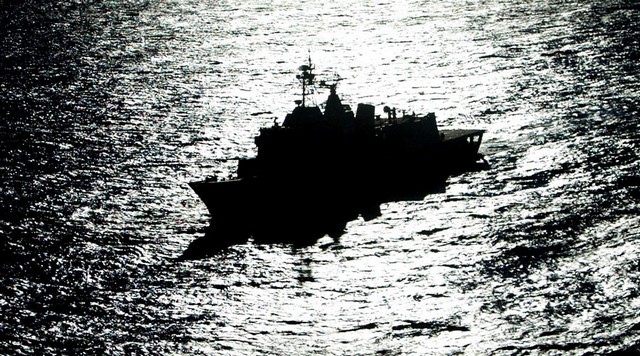
Posturing continues by both sides. During U.S. military exercises with Poland in the Baltic Sea in April 2016, two unarmed Russian jets came dangerously close to the USS Donald Cook, a guided missile destroyer. Adding to the tension, NATO recently concluded military exercises in the Baltic Sea area and also a massive military exercise with approximately 30,000 troops in Poland. The U.S. also has temporarily deployed a guided missile destroyer, the USS Porter, to the Black Sea for a brief tour there.

A mistake or misinterpretation could spark a conflict that no one wants. Given this possibility, why does the U.S. continue along this path when further expansion of NATO is not vital to U.S. security? Of particular importance and relevance, remember that this expansion is in violation of a U.S. promise not to expand NATO to the east. Since Russia views the expansion as a major threat to its security, Putin and Russia cannot back down. Amazingly, when we need statesmen, the geniuses in our political establishment think provoking another nuclear-armed power is a sane policy. If this establishment doesn’t face reality soon, Kennan’s worst fears could be realized.

Ron Forthofer, Ph.D. is retired Professor of Biostatistics at the University of Texas School of Public Health, Houston, Texas; former Green Party candidate for Congress and for Governor of Colorado. Email: rforthofer@comcast.net

21 June 2016

Warmongering And Necromancy: The US State Department Dissent On Syria

By Dr Binoy Kampmark

The entire messiness of the Syrian conflict should be an object lesson repudiating all alleged moral measures that come before it. Capitals across the Middle East, Eurasia, Europe and the United States have dirtied themselves in the endeavour, claiming to be protecting civilians when they have been merely fronting for various sides in the fight.

The great prize in US and more broadly speaking Western designs on Syria, is the removal of Syria’s Bashar al-Assad. Assad is the convenient figure of moral outrage, skint on the issue of following international laws, but determined to hold firm before groups he regards, with very good reason, as terrorist malefactors. He knows he can rely on Moscow to beef up his efforts, and bankroll the less savoury tasks of combating his enemies.

For years now, the notion of Assad being a target on the US bombing list has been very much at the fore. Then came the thundering effect of Islamic State forces and the continued role of al-Qaida elements fighting under various designations. In this scrambled mix could be added Free Syria Army forces, though that title remains a fluid, nonsensical one.

On Friday, the Obama administration was attempting to do some tidying up in the aftermath of a leaked internal memorandum cable critical of its position on Syria.[1] In the past, this has usually involved castigating the leaker, or whistleblower, and banging the person up for a few decades. On this occasion, the New York Times and Wall Street Journal got the spoils, and no one is set for the chop.

The note, signed by 51 American diplomats and conveyed via the dissent channel, revealed how easily the non-military wing of government can become militarised. (They may have always been so.) It advocates limited airstrikes on Assad’s forces to compel observance of the February 2016 Terms for a Cessation of Hostilities.[2]

In general terms, the officials in question believed “that the foundations are not currently in place for an enduring ceasefire and consequential negotiations.” US goals in the region would not be advanced “if we do not include the use of military force as an option to enforce the Cessation of Hostilities (CoH) and compel the Syrian regime to abide by its terms as well as to negotiate a political solution in good faith.”

The US State Department has not always covered itself in glory in its approach to war. When one is an arm of the imperial project, it is difficult to maintain the face of legality with that of brute force.

The dissenting memorandum is another one in this genealogical line of moral confusion, claiming that “strategic interests and moral convictions” should be asserted in targeting Assad.

The authors go so far as to claim that “the moral rationale for taking steps to end deaths and suffering in Syria, after five years of brutal war, is evident and unquestionable.” Such bible-bashing clarity neatly excludes the consequences of implementing such a moral program, one of which will be providing a helping hand to Islamist opponents.

Over Syria, policy makers have been frustrated, notably since President Barack Obama’s retreat on the issue of launching airstrikes on Assad’s forces in 2013 over the use of chemical weapons. That 51 diplomats saw fit to avail themselves of the dissent channel suggested more than a mild case of disagreement; it suggests a prevalent orthodoxy.

While the diplomats do not see merit in an invasion force, they wish for a “more military assertive US role in Syria, based on the judicious use of stand-off and air weapons, which would undergird and drive a more focused and hardnosed US-led diplomatic process”.

This is where the necromancy comes in. By using such strikes to press Assad, a miracle will take place, precipitating an end to civilian deaths and human rights violations and pushing disparate parties to the negotiating table. Since the days of the Vietnam War, we know what bombing parties to the diplomatic table looks like.

All the while, the focus of this strategy is meant to bolster the “moderate rebel groups’ role in defeating Da’esh, and help bring an end to the broader instability the conflict generates.” Such clarity; such cock-eyed confidence, given that a moderate, as Henry Kissinger suggested in discussing Iran’s politicians in 1987, is one who has run out of ammunition.

The note shows a continued anxiety within the US diplomatic corps that other powers continue to hold more chips than Washington. This may have its roots in some Freudian-genital complex, the inadequacy of how best to project influence and power. There is Russia, stealing one initiative after the next, attacking all groups fighting Assad. There is Assad, with his promise this month that he would take back “every inch” of Syria from forces aligned against him.

The position from the White House is one of lame duck stasis. “The president has always been clear that he doesn’t see a military solution to the crisis in Syria and that remains the case,” explained White House spokeswoman, Jen Friedman.[3] But with Hillary Clinton in the wings, there is every bit a chance that the diplomats may get their chicken hawk way.

Dr. Binoy Kampmark was a Commonwealth Scholar at Selwyn College, Cambridge. He lectures at RMIT University, Melbourne.

21 June 2016

Casino baron donated US$1.2 million to fund anti-Muslim hatred in U.S. – Report

By Imtiaz Muqbil

WASHINGTON, D.C., 6/20/2016 – Jewish casino baron Sheldon Adelson’s Family Foundation has been identified as one of 33 groups, institutions and individuals which provided or “enjoyed access to” at least US$205 million to “spread fear and hatred of Muslims” in the United States between 2008-13.

A report published by the Council on American-Islamic Relations (CAIR) and the Center for Race and Gender at University of California (UC) at Berkeley, discloses that the Adelson Family Foundation, founded in 2007 to “strengthen the State of Israel and the Jewish people,” awarded $1,225,000 to U.S. Islamophobia Network groups between 2011-2013. This includes $375,000 to the Endowment for Middle East Truth, $750,000 to the Middle East Media and Research Institute and $100,000 to Charles Jacobs’ Massachusetts-based Americans for Peace and Tolerance.

The report, titled “Confronting Fear,” names Fox News commentators, so-called think-tanks, websites, research centres and many other groups funding a network which is spreading lies and conspiracy theories and “has effectively supported undermining the Bill of Rights for all Americans to achieve the goal of vilifying Muslims.”

More information about Mr. Adelson’s extensive casino interests in Las Vegas, Macao and Singapore can be found here: https://en.wikipedia.org/wiki/Sheldon_Adelson

Another group identified is the Joyce and Donald Rumsfeld Foundation, named after the former U.S. Secretary of Defense.

The report will open up a clear window of opportunity for watchdog groups and universities worldwide to seek reverse accountability and start tracing the supporters and financiers of Islamophobic institutions, media and individuals in Asia, Europe and Africa.

In an introductory message to the report, Mr. Nihad Awad, Executive Director of CAIR, says, “Islamophobia has unfortunately moved from the fringes of American society to the mainstream.

“Viable contenders for the office of the presidency have suggested unconstitutional policies such as banning all Muslims from the United States or suggesting that a Muslims could not be president of the United States. Elected officials in 10 states have enacted legislation designed to vilify or otherwise target Islam.

“In at least two states, the way school text books are selected was changed because some activists wrongly believe that introductory religious courses that teach children Islam’s five pillars are “indoctrination” and “proselytization.” Islamophobic groups have enjoyed access to at least $205 million to spread fear and hatred of Muslims.”

Mr. Awad noted that in just November-December 2015 alone, 34 incidents were reported of mosques being targeted by vandals or those who want to intimidate worshippers. “This is more incidents than we usually record in an entire year,” he said.

He adds, “This report makes a case that those who value constitutional ideals like equal protection, freedom of worship, or an absence of religious tests for those seeking public office no longer have the luxury of just opposing the U.S. Islamophobia network’s biased messaging.

“The strategy outlined in this report is an evolution from the opposition-centric strategy CAIR’s Department to Monitor and Combat Islamophobia has pursued since we published Legislating Fear in 2012.

“The proposed strategy focuses instead on changing the environment. Islamophobia and groups that promote bias will likely always exist, but the current environment that grants anti-Islam prejudice social acceptability must change so that such bias is in the same social dustbin as white supremacism and anti-Semitism.”

In her message, Prof. Evelyn Nakano Glenn, Director, U.C. Berkeley Center for Race and Gender notes that the Islamophobia Research and Documentation Project (IRDP) was set up in 2008 to work with scholars and community organizations in “building strong partnerships and leading new projects focused on the study of Islamophobia.”

She adds, “Since 2008, IRDP has organized annual conferences at UC Berkeley, convening scholars from around the world who are leading cutting edge research on how Islamophobia is produced, structured, and deployed, and how it influences policies and political discourse. Researchers have also detailed the ongoing impact of Islamophobia on Muslim communities in the Bay Area, the U.S., and globally.

These annual conferences have had an important impact on the global community of scholars studying Islamophobia, and researchers and universities around the globe have reached out to IRDP to collaborate and learn from its model. These connections have led to rich partnerships and opportunities for the IRDP to co-host symposia and conferences in Europe, North Africa, Canada, and the Middle East.”

Prof Glenn cites the 2012 launch of the Islamophobia Studies Journal, the first peer-review academic journal in the U.S. with a primary interdisciplinary focus on Islamophobia. The journal has become a central resource for scholars to widely share and review innovative thinking in Islamophobia Studies. Additionally, IRDP continues to support students to build online communities that analyze current events and their intersections with issues related to Islamophobia.”

The latest “Confronting Fear” report documents the negative impact of Islamophobia in America, including:

* Anti-Islam bills became law in 10 states.

* At least two states, Florida and Tennessee, have passed laws revising the way they approve textbooks for classroom use as a direct result of anti-Islam campaigns.

* In 2015, there were 78 recorded incidents in which mosques were targeted. In both November and December of 2015, there were 17 mosque incidents reported during each of these months, numbers almost equivalent to an entire year’s worth of reports from the previous two years.

* Two recent phenomenon – “Muslim-free” businesses and armed anti-Islam demonstrations – raise deep concerns.

“The 2016 presidential election has mainstreamed Islamophobia and resulted in a number of un-constitutional proposals targeting Muslims,” Corey Saylor, director of CAIR’s Department to Monitor and Combat Islamophobia is quoted as saying in a CAIR media release. “‘Confronting Fear’ offers a plan for moving anti-Muslim bias back to the fringes of society where it belongs.”

“The work of the Islamophobia Research and Documentation Project at UC Berkeley is enriched and inspired by the partnership and the hard work undertaken jointly with CAIR to produce another annual report that exposes the bigotry-producing industry in America while providing opportunities and strategies on how best to reclaim an open, democratic and religiously-inclusive society,” Dr. Hatem Bazian, director of the Islamophobia Research and Documentation Project at the Center for Race and Gender at UC Berkeley, is quoted as saying.

Dr Bazian added: “The hope is that this report and others like it will provide the needed grounding for communities across the country to use for effective engagement with policy makers, educators, civil society leaders, and media outlets. Education and applied research is the best avenue to uplift and bring about a social justice transformation in society and this report is a step in that direction.”

The report presents a four-point strategy designed to achieve a shared American understanding of Islam in which being Muslim carries a positive connotation, and in which Islam has an equal place among the many faiths that together constitute America’s pluralistic society.

CAIR is America’s largest Muslim civil liberties and advocacy organization. Its mission is to enhance the understanding of Islam, encourage dialogue, protect civil liberties, empower American Muslims, and build coalitions that promote justice and mutual understanding.

The Center for Race and Gender (CRG) is an interdisciplinary research center at the University of California, Berkeley that fosters explorations of race and gender, and their intersections. CRG cultivates critical and engaged research and exchange among faculty and students throughout the university, between the university and nearby communities of color, and among scholars in the Bay Area, in the U.S., and around the globe.

France’s Syrian policy: If you can’t beat them – balkanize them!

By Catherine Shakdam

As the Syrian Arab Army is brokering new grounds against what mainstream media still calls “the opposition”, France has hardened its tone, keen to militarily enter the fray to salvage, or rather, claim its stake over Syria.
Earlier this June, media reports broke news that Paris invested its Special Forces in northern Syria to assist the Kurds in their efforts against ISIL – all part, Paris said, of a broader counter-terrorism operation in the region.

In an address made to the Public Senat TV, France Defense Minister, Jean-Yves Le Drian confirmed that Paris was “providing support through weapons supplies, air presence and advice.”

Minister Le Drian’s comment was further echoed by an another state official, when told AFP: ”France has deployed its special forces on the ground in northern Syria to advise rebels and help them fight Islamic State.”

If Western capitals have often been keen to cloud their intervention, to better manage, and orchestrate whatever political fallouts their actions might entail, France has been rather upfront, and I would say unapologetic about its decision to break steal in Syria.

But what is France exactly doing in Syria? And more importantly why now?

The answer to that question may partly lie with the title of a new report published by the Voice of America. The title reads: “France Deploys Special Forces in Syria as IS Loses Ground.”

An interesting choice of words indeed … But there’s more. “The confirmation of French ground assistance to the Kurdish-led Syrian Democratic Forces, the SDF, came as Syrian government warplanes intensified airstrikes on rebel-held districts of Aleppo. Airstrikes Wednesday killed at least 20 people and damaged three hospitals in the rebel parts of the city, according to local political activists and rescue workers known as the White Helmets.”

While many might read here confirmation that the West serves Syria’s democratic dreams against the dictatorial pride of President Bashar al-Assad – the leader that the political corporate media have taught all good thinking westerners to abhor – I read a political confession.

I see in France’s intervention an admission of guilt, a desire to remain politically relevant in the Levant, and a desire to assert control come what may.

Yes, I did get all that from VOA! Let me just say that Jamie Dettmer most certainly did not intend for so much information to transpire.

Allow me to walk you back to early 2011, when Syria was witnessing the first stages of an aggressive political takeover. Then, we were told that Syria was in the grip of a popular stand-off pitting President al-Assad regime against pro-democracy activists.

As violence gave way to unimaginable bloodshed and butchery (butchery that was criminally pinned on Damascus to better justify Western interventionism), ISIL surfaced, blurring the line between the now infamous opposition and terrorism.

Today, it is difficult to differentiate between the two. In truth, one may argue that both entities are the by-products of the same will: control, only expressed differently.

Now that months have turned into years, Syria has become a grand battlefield for all political and ideological deformities. One constant has remained throughout: President Bashar al-Assad has to go.

Syria’s war needs to be looked at from this perspective, and this perspective alone since President al-Assad’s deposition remains Western powers’ endgame. France’s new play here feeds directly into this political narrative, but from a different angle.

What angle?
Look at it this way. Herein so far Syria has been made to suffer one engineered revolution, terrorism, and military interventionism all in the name of regime change.

Still, Damascus has endured. In fact, Damascus did more than just endure; it has begun to fight back, and reclaim its land and its sovereignty. So much so that Terror found itself cornered. So much so that Western powers had to reassess their strategy, and imagine a new “opening” to manifest those goals they are so bent on bringing about.

What agenda?
This one is easy: Control.

Syria has always been about control. Control over Syria’s political narrative, control over Syria’s natural resources, and control over Syria’s geopolitical potential.

France you may recall is one of Syria’s long term political investor. Once upon a colonial time France played cartographer on the carcass of the Ottoman Empire so that “les colonies” would feed, and reflect its political ambitions in the Levant.

Today, decades after the Sikes-Picot agreement, France wants to ensure that its legacy will endure the test of time.

Now, for Western powers to assert control over Syria, chaos, or at the very least internal divisions would have to be risen. Since ISIL did fail at mainstreaming sectarianism – not for a lack of trying, it needs to be said – one card was left to be played: ethnic tensions, or rather, ethnic dissent.

France, you will note, planted its flag in northern Syria, in Kurdish territory. Would it be that far-fetched to imagine that Paris’ sudden interest in counter-terrorism has everything to do with building a French-Kurdish alliance to better undermine Damascus authority?

Yet President al-Assad has done a great job at defeating terror. Backed by Russia, Iran, and the Lebanese Hezbollah, the SAA has literally exploded ISIL’s network, sending thousands of its militants scurrying to the hills.

Why did the French feel compelled to intervene now – when they are not wanted – if not to serve their self-interests? Why indeed?

Semyon Bagdasarov, Director of the Moscow-based Center for Middle Eastern and Central Asian Studies, said in an interview with Svobodnaya Pressa he believes France’s move in Syria will herald in a balkanization attempt.

Since the West could not oust President Bashar al-Assad, it will now work to dismantle its sovereignty, playing ethnic empowerment to better control the political fate of the region.

In 2015, Samuel Ramani wrote for the Washington Post: “France’s hawkish attitude towards Assad and the large scale of its intervention in Syria can be explained by three factors. First, France is using its interventionist foreign policy in Syria and the Middle East more broadly, to reinforce its self-perception as a great power. Second, France is fulfilling its historic role of presenting an alternative foreign policy to that offered by the United States. Third, France regards its steadfast opposition to Assad as an opportunity to enhance security cooperation with anti-Assad Sunni countries in the Middle East, which also share France’s deep distrust of Iran.”

Enough said …

Catherine Shakdam is a political analyst, writer and commentator for the Middle East with a special focus on radical movements and Yemen. A regular pundit on RT and other networks her work has appeared in major publications: MintPress, the Foreign Policy Journal, Mehr News and many others.Director of Programs at the Shafaqna Institute for Middle Eastern Studies, Catherine is also the co-founder of Veritas Consulting. She is the author of Arabia’s Rising – Under The Banner Of The First Imam

19 June 2016

Obama Needs to Protect the Iran Deal

By Seyed Hossein Mousavian

To avoid that outcome, and allow full implementation of the nuclear deal, European and other non-American banks want concrete legal assurances from the United States government that they would not be punished if they entered Iran.

We firmly believe that President Obama has the power to provide such assurance, and that he should use it now.

To be specific, he should officially instruct his attorney general, and all subordinate American enforcement agencies, to refrain from prosecuting non-United States banks that wish to work with Iran. In other words, he should call a moratorium on American prosecution of foreign firms, sending the clear message that prosecution would not be the norm, but an improbable exception.

Such action would not be far-fetched. In fact, we believe that a strong case can be made that it would have precedents in the foreign-policy and constitutional history of the United States. For example, in 1831, Andrew Jackson’s attorney general, Roger B. Taney, issued a legal opinion in a case known as “Jewels of the Princess of Orange,” stating that the president, in his constitutional roles overseeing the execution of laws and conducting foreign affairs, also had the power to decide not to prosecute.

Since then, there have been other instances of presidential uses of executive power over law enforcement that have gradually consolidated the principle that the president, not courts or prosecutors, makes foreign policy. In 1981, for example, the Supreme Court in Dames & Moore v. Regan supported Ronald Reagan’s power to redirect a private claim against Iran to an independent claims tribunal in the Netherlands.

In sum, if the president finds that Washington politics make it impossible for him to work with Republicans to adapt domestic laws to the United States’ foreign-policy needs (and, at this point, to American obligations under international law), we believe that he can, and should, at least use his authority over law enforcement and foreign policy to protect the achievements of the nuclear deal.

The Iranian leadership, and with it the Iranian public, strongly believe that the American president has enough power and authority to solve the banking problem, and expect Mr. Obama to act accordingly. We believe that European countries share this expectation.

But time is running out, and nobody can be sure of the outcome of the coming presidential election. So Mr. Obama must act as quickly as possible. Prompt and specific reassurances from the administration that foreign banks would not be punished for conducting legitimate business with Iran would give financial institutions enough time to shape and sufficiently develop their business ties with Iran. That, in turn, would make it difficult for any new administration to reverse Mr. Obama’s policy of constructive engagement.

In other words, we believe that the remaining days of the Obama administration should be devoted to consolidating and stabilizing the post-agreement international order, and the numerous economic, political and security benefits it could bring everyone.

In the same vein, it is also said in Tehran that a few serious and sizable American investments in Iran — in fields allowable under current American laws — would send a very positive message to America’s allies, and allay the fear of other Western actors who might still be reluctant to enter the Iranian sphere.

Seyed Hossein Mousavian, a scholar at Princeton, is a former head of the Foreign Relations Committee of Iran’s National Security Council, and the author of “Iran and the United States: An Insider’s View on the Failed Past and the Road to Peace.” Reza Nasri is an international law expert at the Graduate Institute of International and Development Studies in Geneva who specializes in charter law, comparative law and legal aspects of Iran’s nuclear dosssier.

20 June 2016

NATO’s Jens Stoltenberg Toes The Line On Power And Politics

By Jim Miles

I wasn’t at first going to listen to Rosemary Barton’s interview (CBC) with NATO General Secretary Jens Stoltenberg considering I would probably not learn anything new. But I did and I didn’t – I did listen and I didn’t learn anything new, the interview only reinforced previously held ideas.

In general that falls into two parts. First it reminded me how much Rosemary Barton follows the mainstream media (MSM) message concerning Canada’s foreign policy in spite of the self-advertising as a hard hitting show host. Whether she is wilfully ignorant or just ignorant is hard to tell, but she continues to reiterate the MSM talking points about “Russian aggression” and accepts without question the comments made by Stoltenberg. The latter clearly demonstrates the acceptance of the MSM message as in certain other panel discussions she presents her tough talking side, which after all is what makes news entertaining.

As for Stoltenberg, he is simply the latest European stooge to operate under U.S. command within the overall NATO structure. His statements about Russia rebuilding its military, about the ’illegal’ annexation of Crimea, about not wanting a new cold war, and saying “we want to prevent conflict that is what we are doing” is all candy floss for the MSM to easily digest without having to chew on some harder contemporary/historical facts.

First, allow me to deconstruct the above positions.

Yes, Russia has rebuilt its military, very successfully if their operations in Syria are an example. But this was done with NATO being the aggressor pact, moving its boundaries right up to the Russian border in certain areas, and certainly much closer by several hundreds of kilometres in spite of Clinton’s (Bill) lie that NATO would not move into Eastern Europe after the reunification of Germany. NATO (and this includes Canada and the U.S.) demonstrated their capabilities for violent and destructive use of force in Libya as the prime example, but also aided the U.S. in Afghanistan, and more recently in the rather lame attacks on ISIS in Iraq/Syria. Lame in comparison to the major successes that the small Russian forces had after they entered the fight against ISIS.

As a further sign of aggression, the U.S. has moved nuclear capable missile sites into Poland and Romania. These are described as defensive, but considering the west’s history of military attacks against Russia (from Napoleon through the Bolshevik revolution to Hitler) the Russian perspective can hardly see these as defensive, especially against Iran, the latter being a non-nuclear capable country. Oh sorry Rosie, your MSM talking points probably tell you differently.

Saying “we want to prevent conflict that is what we are doing” is the same as Andrew Bacevich (“The United States War for the Greater Middle East.” Bacevich, Random House, 2016) saying the U.S. position is to have the biggest military and threaten anyone who doesn’t agree with them in order to have peace – in other words, we’ll threaten to bludgeon you and kill you if you do not agree to our imperial hegemony. And it’s not as if the U.S. has stopped developing and rebuilding nuclear and other forces – oh by the way did I mention the F-35 – that billion dollar boondoggle that Canada insists on buying into?

Russia annexed Crimea much to the consternation of the U.S. who were hoping to grab the Sevastopol military base and establish their NATO presence there as another piece of the puzzle in which to encircle and deconstruct Russia as an independent sovereign state. Read your history folks – this territory has centuries long association as a part of Russia. And what about the UN’s right of self-determination? The Crimeans voted clearly to ask to be annexed by Russia which the Duma accepted. This election was decidedly and clearly more democratic than anything the U.S. tried in Afghanistan or Iraq with the ‘chosen’ parachuted picks for leaders (Chalabi, Karzai). With the war in Syria ongoing, notice how quiet the MSM is about Israel and its illegal annexation of the Golan Heights.

Talking of parachuted leaders, oligarch Poroshenko is the NSA/CIA/state departments ‘man’ of the hour in Ukraine. The U.S. spent billions attempting to disrupt Ukraine enough that they could run in and grab all the goodies while making it yet another forward outpost for NATO on the Russian border. Just ask Victoria “F**k the EU” Nuland, a possible next secretary of state under the probably soon to be warhawk Clinton government. The murders in the Maidan and the Odessa murders can be attributed to the neonazi Bandera militias supported by U.S. actions. These same groups wanted to ethnically cleanse Donbass of its Russian population resulting in the creation of counter militias in the region to fight them off – thus the war in Eastern Ukraine, definitely not caused by Russian aggression, although undoubtedly supported by Russia.

This of course is but another part and parcel of the drive for U.S. hegemony over the world for “supreme spectrum dominance” that Russia and China are not allowing. Russia needs to be concerned and rightfully is concerned about the western nations conceit of arms that they will rule the world, that their Wall Street corporate dominated government (can you say oligarchs – same thing in western clothing) will control all people, all governments, and all resources.

Which of course leads to the lie about not wanting a “new cold war.” Too late, we are already in a hot war by proxy (Ukraine, Syria) and the sanctions and aggressive military moves towards Russia have already created a political ‘cold war.’ It’s just another talking point to try and say, “really, it’s not our fault, we didn’t want it.” If there ever is a real hot war, then kiss your ass goodbye – the U.S. has a first use nuclear policy thanks to Paul Wolfowitz among others in the neocon PNAC group – and Russia has developed – apparently – full spectrum defensive measures that ensure the U.S. will be destroyed as well.

Scary stuff, but it is the U.S. and its drive towards controlling Europe through the creation of NATO and the EU (encompassing military, financial, and political control through selected non-elected elites), of dominating Eurasia for its resources, and above all, controlling the financial markets for the fiat petrodollar supremacy based on Saudi oil sales using the US$.

Off on a bit of a tangent? Maybe for those of you not capable of global thinking, but that is the bottom line in all this – U.S./western oligarchs attempting – obviously – global control. Certainly not the MSM message, certainly not Rosemary Barton’s message, certainly not Jens Stoltenberg’s message, and unfortunately certainly not the Canadian government’s message as it follows along with U.S. foreign policy in all its aspects. So much for sovereignty.

Jim Miles is a Canadian educator and a regular contributor/columnist of opinion pieces and book reviews for The Palestine Chronicle. Miles’ work is also presented globally through other alternative websites and news publications.

20 June, 2016
Countercurrents.org

9/11 – The Biggest Conspiracy Against The American People And The Whole World

By Dr. Ludwig Watzal

Those who still believe in the official story of 9/11, are more naive than children, who still believe in Sancta Claus and the Easter Bunny. After having penetrated deeply into the matter, as I have edited the forthcoming book by 9/11 expert Elias Davidsson on this topic, which is going to be published in Germany, I can only appeal to the common sense of every citizen not to believe in the lies about the official narrative. The official legend on 9/11 is not only full of contradictions but also full of inconsistencies. The best example of this obfuscation is the 9/11 Commission Report, whose script was made in advance by Philip Zelikow and the Bush/Cheney gang. This report is the best prove for a cover-up for “higher” aims such as an endless “war on terrorism” and the expansion of the U. S. imperialism. This report makes no mention of the destruction of WTC No 7.

The 9/11 story is the biggest scam that has ever been dished out to the world , and the worst accomplices in this plot are the corporate media whose leading representatives have no qualms about destroying any skeptic socially or ridicule him as a weirdo or conspiracy theorists. According to them, many thousands of members of the different truth movements are simple “nuts”, although most of them are highly qualified experts, professionals and scientists who are not willing to accept the crap written in the 9/11 Commission Report.

After 24 hours, the 9/11 narrative was already set in stone, although no single evidence had been presented about the involvement of the legendary Osama bin Laden that he has been behind this extremely sophisticated executed attack. So mysterious his plannings of the 9/11 attacks were, so mysterious were the circumstances of his death and his alleged burial at sea. The total pulverization of the Twin Towers can be considered the eighth World Wonder. Everything and everybody turned into dust, except one passport of one of the alleged hijackers, which was found aside the few remains of two 110 story high-rises!

It’s very honorable that the four “Jersey Widows” are pushing the Obama administration to release the 28 secret pages of the 9/11 Commission Report in order to find out who else was involved in masterminding this vile crime against the American people besides presumably the Bush /Cheney administration. If Hillary Clinton becomes the next U. S. President, the cover-up and the distortion of truth will continue. She is the voice of the military-industrial-financial-intelligence-congressional-media complex that is the main beneficiary of this criminal engineering.

Global Research has published a reader on the 9/11 Terror Attacks.

Dr. Ludwig Watzal works as a journalist and editor in Bonn , Germany . He runs the bilingual blog between the lines. http://between-the-lines-ludwig-watzal.blogspot.de/
20 June, 2016
Countercurrents.org

‘Sushi’ children defy Sunni-Shia divide

By Nesrine Kamal

It is a storyline of an episode of a satirical Saudi TV series which has sparked wide debate on social media.

The plot: two babies switched at birth by mistake in a Saudi hospital and raised by two radical families – one Sunni, the other Shia.

Years later, the hospital discovers the error and each son, now a young man, goes to live with his real family.

When the fathers discover their sons were raised by a family from an “opposing” sect, they desperately attempt to change their offsprings’ religious perceptions, trying to convince them that they have not been following the “right doctrine”.

The series, Selfie, stars popular but controversial satirist Nasser al-Qasabi.

On Twitter, the comedian asked his audience to “fasten seatbelts” before the episode was shown. Afterwards it was praised by both Sunni and Shia viewers.

Although the Sunni and Shia branches of Islam share fundamental beliefs, they differ in religious practices, rituals and organisation. The intensity of the divide differs from one Islamic country to another.

The majority of Muslims in the world are Sunnis. Shia, who make up roughly 10% of the Muslim population, are a majority in Iraq, Iran and Bahrain.

They also constitute large sections of the population in Syria, Lebanon and Saudi Arabia, while they are a minority in Egypt and Jordan.

‘Sushi’ children

Sunni-Shia marriages illustrate the sensitivity of the sectarian divide in some countries.

While such unions are common in countries with large Shia populations like Iraq and Lebanon, they are rare in Egypt and Sunni-ruled Saudi Arabia.

The subject of “Sushi” children – a reference to the offspring of Sunni-Shia marriages – remains a sensitive topic for many.

Arij Umran (not her real name) spoke to the BBC about her experience as a young Saudi woman who was born to a Sunni father and a Shia mother.

“My parents met and got married in Iraq 40 years ago. Sunni-Shia marriages were not such a big deal back then. However, when they returned to Saudi Arabia, they started facing some difficulties.”

Arij says that as a child, she had to keep her mother’s doctrine a secret because many friends “stopped talking to her” when they found out her mother was a Shia.

She says her parents were open-minded and supportive of her choices. When she asked which doctrine she should follow, they said: “It is your duty to find out. You need to read, learn and tell us what you have decided”.

BBC Monitoring journalist Mina al-Lami, who was born in Iraq into a Sunni-Shia inter-marriage, says that having a parent from each sect was and continues to be common in Iraq, especially in mixed areas like the capital Baghdad.

“Growing up there, I didn’t even know there were two different sects until my early 20s,” Mina says. While Sunni-Shia marriages have dropped in Iraq after 2003 given sectarian tensions, they are still not unusual, she adds.

The issue was also tackled by the British-Iraqi filmmaker Hoda El Soudani in her documentary “Why Can’t I be a Sushi?”.

The filmmaker told the BBC: “My main intention was to objectively address as many key issues as possible that one sect may have towards the other sect, and then break down the misconceptions so that some kind of bridge could be built once they realise they have so much in common”.

She says she was motivated to address this sensitive subject after “seeing what is happening elsewhere: in Saudi Arabia, in Yemen, Iran, Iraq…”.

“The point is not to ask why there are differences of opinion, but rather why these differences have led to violence and animosity. To me, the conflict seems to be more political than religious, although it may be hiding behind the religious language.”

“People may say the film is painting a romanticised picture of Sunnis and Shia uniting, but I would say if it existed once, then it can exist again. I’m sure we can be less arrogant and more accepting of the other sect.”

“People needed to be reminded to go back to their roots and embrace the simplicity of just being a Muslim regardless of which sect one follows,” Hoda adds.

BBC Monitoring reports and analyses news from TV, radio, web and print media around the world. You can follow BBC Monitoring on Twitter and Facebook.

18 June 2016