Just International

Why The U.S Seeks To Stay In Afghanistan

By Jack A. Smith

07 January, 2014

@ Countercurrents.org

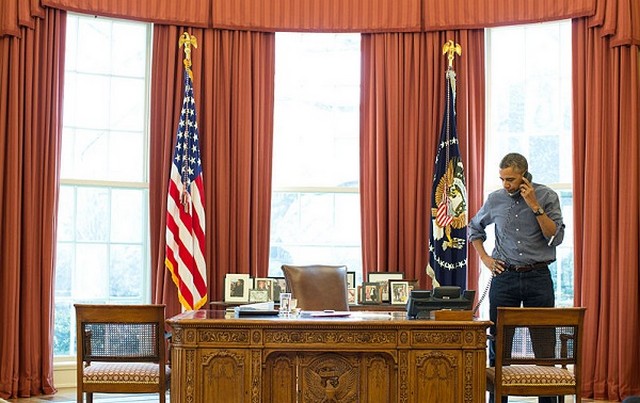
The U.S. is supposed to withdraw all its troops from Afghanistan by the end of this new year. But despite public opinion polls to the contrary, President Obama is seeking to leave several thousand Special Forces troops, military trainers, CIA personnel, “contractors” and surveillance listening posts for 10 more years in Afghanistan until the end of 2024.

The CNN/ORC International survey released Dec. 30 shows that 75% of the American people oppose keeping any U.S. military troops in Afghanistan after the scheduled pullout Dec. 31. Indeed, “a majority of Americans would like to see U.S. troops pull out of Afghanistan before the December 2014 deadline.”

The poll’s most important statistic is that “Just 17% of those questioned say they support the 12-year-long war, down from 52% in December 2008. Opposition to the conflict now stands at 82%, up from 46% five years ago. CNN Polling Director Keating Holland suggested the17% support was the lowest for any U.S. ongoing war.

A majority of Americans turned against the war against Afghanistan a few years go, but according to a Associated Press-GfK poll released Dec. 18 — these days 57% say that even attacking and invading Afghanistan in 2001was probably the “wrong thing to do.”

Clearly, the American people are truly fed up, but do not have a viable electoral alternative to a continuing military presence in Afghanistan. The era of the mass antiwar movement, which was supported by the great majority of Democrats, collapsed when Democrat Obama was elected. Democrats may acknowledge their views to pollsters but they rarely attend protests against Obama’s Afghan adventure or drone attacks in Pakistan, Yemen, Somalia and elsewhere.

President Obama is sticking to his original schedule of withdrawing “all ground troops” by the end of 2014, but the Special Forces, et al., are not technically “ground troops.” His intention to deploy a smaller but vital military presence is related to larger policy goals connected to the “pivot” to Asia.

The White House has been bargaining with the Kabul government for years to keep military forces in Afghanistan for another 10 years. In return the U.S. would pay multi-billions for the training and upkeep of the Afghan army and police and help finance the government at great expense until 2024.

It recently seemed an agreement was reached, but President Hamid Karzai says it cannot be signed until after a new president takes office after elections in April — a delay that upset the Oval Office.

According to Mara Tchalakov of the Institute for the Study of War: “With deep divisions in Afghanistan over the right of legal immunity for American soldiers and contractors, as well as the right to conduct night raids in private Afghan homes, Karzai is trying to buy time to build political support…. Waiting until after the election would buy time and leave open the possibility of renegotiating issues that could prove problematic as the election nears.”

At this stage it is not known who will win in April. Two-term Karzai cannot run for reelection, a blessing as far as the Obama Administration is concerned. He may be a puppet but he knows how to kick back on his own, especially about civilian deaths, night house invasions by U.S. troops, and Washington’s efforts to completely dominate the Kabul government.

The White House has a year to obtain a signed agreement and seems confident it will do so either before or soon after Karzai steps down, particularly if the anti-Taliban, pro-U.S. Northern Alliance and friendly political parties such as the Tajik-dominated Jamiat-e Islami, gain more influence.

Obama sought a similar arrangement in Iraq when U.S. troops were set to withdraw in December 2011, but a deal was rejected in the last months by Prime Minister Nouri al-Maliki, much to the administration’s chagrin.

In a sense Obama was lucky. If the several thousand American troops he sought had remained in Iraq they would have become embroiled in the al-Qaeda and jihadist Sunni uprising against the majority Shi’ite regime led by Maliki. In 2013 alone, over 7,300 civilians and 1,000 Iraqi security forces — overwhelmingly Shia —were slaughtered. Most of the deaths were from executions and bomb attacks.

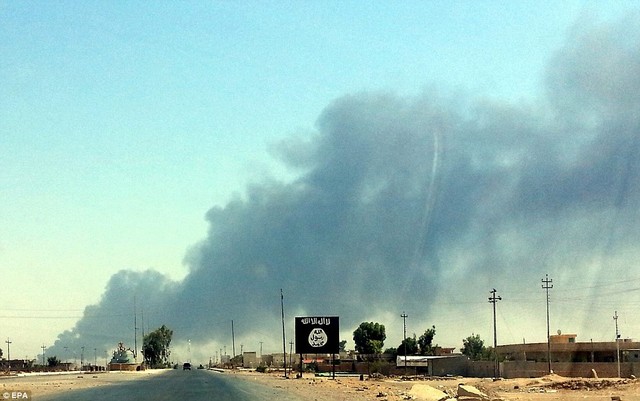
The White House may be extremely worried about closer ties between Shi’ite Iraq and Iran — an unintended consequence of the U.S. invasion and overthrow of the secular regime of Saddam Hussein — but it is now even more worried about Sunni jihadist gains in Iraq, particularly since jihadist elements began to dominate the rebel fighting in neighboring Syria. The al-Qaeda affiliate ISIS (Islamic State of Iraq and Greater Syria) is making significant gains in both countries.

According to The New York Times Dec. 26, Washington “is quietly rushing dozens of Hellfire missiles and low-tech surveillance drones to Iraq to help government forces combat an explosion of violence by a Qaeda-backed insurgency that is gaining territory in both western Iraq and neighboring Syria.”

On Jan. 3 the same newspaper reported: “Radical Sunni militants aligned with Al Qaeda threatened on Thursday to seize control of Fallujah and Ramadi, two of the most important cities in Iraq, setting fire to police stations, freeing prisoners from jail and occupying mosques, as the government rushed troop reinforcements to the areas.”

Afghanistan is especially important to Washington for two main reasons.

The obvious first reason is to have smaller but elite forces and surveillance facilities in Afghanistan to continue the fighting when necessary to protect U.S. interests, which include maintaining a powerful influence within the country. Those interests will become jeopardized if, as some suspect, armed conflict eventually breaks out among various forces contending for power in Kabul since the mid-1990s, including, of course, the Taliban, which held power 1996-2001 until the U.S. invasion.

The more understated second reason is that Afghanistan is an extremely important geopolitical asset for the U.S., particularly because it is the Pentagon’s only military base in Central Asia, touching Iran to the west, Pakistan to the east, China to the northeast and various resource-rich former Soviet republics to the northwest, as well as Russia to the north.

A Dec. 30 report in Foreign Policy by Louise Arbour noted: “Most countries in [Central Asia] are governed by aging leaders and have no succession mechanisms — in itself potentially a recipe for chaos. All have young, alienated populations and decaying infrastructure… in a corner of the world too long cast as a pawn in someone else’s game.”

At this point a continued presence in Afghanistan dovetails with Washington’s so-called New Silk Road policy first announced by then Secretary of State Hillary Clinton two years ago. The objective over time is to sharply increase U.S. economic, trade and political power in strategic Central and South Asia to strengthen U.S. global hegemony and to impede China’s development into a regional hegemon.

As the State Department’s Robert O. Blake Jr. put it March 23: “The dynamic region stretching from Turkey, across the Caspian Sea to Central Asia, to Afghanistan and the massive South Asian economies, is a region where greater cooperation and integration can lead to more prosperity, opportunity, and stability.

“But for all of this progress and promise, we’re also clear-eyed about the challenges. Despite real gains in Afghan stability, we understand the region is anxious about security challenges. That’s why we continue to expand our cooperation with Afghanistan and other countries of the region to strengthen border security and combat transnational threats.”

Blake did not define what “security challenges” he had in mind. But both China and Russia are nearby seeking greater trade and influence in Central Asia — their adjacent backyard, so to speak — and the White House, at least, may consider this a security challenge of its own.

The author is editor of the Activist Newsletter and is former editor of the (U.S.) Guardian Newsweekly. He may be reached at jacdon@earthlink.net or http://activistnewsletter.blogspot.com/

Beyond The Farcical Elections: The Black Swans Of Bangladesh

By Taj Hashmi

07 January, 2014

@ Countercurrents.org

The late National Professor Abdur Razzaque once told us in late 1970s in his atypical style: “ Shara jibon political science poira ahono Bangladesher politics ki zinish, eida buzte parlam na! ” [“After studying political science for so many years, I am still unable to understand what Bangladesh politics is all about”]. Nassim Nicholas Taleb’s bestseller, The Black Swan: The Impact of the Highly Improbable (2007), might explain the enigma of Bangladesh politics, and most importantly, what the country is going to face in the coming years beyond the 5 th January’s “Parliamentary Elections”, which experts and observers have classified as voter-less and rigged.

Only die-hard Awami League supporters and beneficiaries, and dull and dim people think Bangladesh has just crossed another milestone by holding the farcical polls to uphold democracy, and to “save the country” from “Islamist extremism” and “anti-Bangladesh” elements. Fareed Zakaria thinks that illiberal societies cannot run liberal democracy; they only run “illiberal democracies” despite all the fanfares of elections. However, as we cannot wait for an indefinite period for the transformation of the “illiberal” societies into the “liberal” ones to start democratic process, Bangladesh possibly came up with a unique solution to hold fair and acceptable elections under Neutral Caretaker Government in 1996.

The Hasina Government, for known reasons but no justifications (other than the ridiculous and laughable assertion that Caretaker Governments pave the way for military takeover) arbitrarily scrapped the provision for the Caretaker Government in the Constitution in 2011 through a compliant judiciary and parliament. In the backdrop of these flawed elections, now we realize that the Caretaker Government was done away with to perpetuate the “Awami Dynastic Democracy” to the detriment of the rival “BNP Dynasty”. And we know dynasties are not about democracy and human rights; they are all about self-glorification and plunder.

Most Western countries refused to send poll-observers to Bangladesh to rebuff the Hasina government’s obstinacy to hold one-party elections. Since January 2013 more than 500 people got killed at the hands of law-enforcers and political rivals. Twenty-two people got killed on the poll day alone.

The New York Times considers the polls “a bizarre election” due to the lack of competition, and that less than 25 per cent people voted this time against 87 per cent in the previous elections held in 2009. Aljazeera reveals that more than 200 poling stations were set on fire. We learn from the AFP that there were no queues to vote, and that only one person cast his vote in three hours at one poling centre. Interestingly, even the compliant Chief Election Commissioner admits the voter turn out was very low due to the stubborn resistance from the opposition parties. While 153 ruling party candidates were “elected” uncontested before the polls, the flawed polls have guaranteed more than two-third majority to the ruling coterie.

Now, are the ongoing political crises, social unrest, economic down turn, and growing violence – terrorism and state-sponsored killing through death squads – going to usher in the Black Swan era in Bangladesh? “Black Swan”, a common Western expression since the 16 th century, denotes a non-existing object or what was considered “non-existing”. All swans must be white became a false premise after the discovery of the black swan in Australia.

The Black Swan syndrome is also about the catastrophic impact of the “highly improbable” phenomenon on society. Bangladesh has already gone through its Black Swan moments in the past. Its liberation in the wake of a short civil-cum-liberation war signalled its first Black Swan moment, followed by other such moments after the killings of Mujib and Zia, and the two military takeovers in 1982 and 2007. Other Black Swan moments for Bangladesh came with the arrests and trial of “war criminals”(one of them has already been executed); the controversial scrapping of the provision of the Caretaker Government; and the holding of the flawed one-party elections.

The collective impact of these Black Swan Moments of our history is going to bring about the Black Swan Era of Bangladesh, which is likely to draw the country into a long-drawn civil war for decades, very similar to Iraq, Afghanistan and what Sri Lanka went through in the recent past for twenty-six years. Unless the Government annuls the results of the so-called elections; restores the provision of the Caretaker Government in the Constitution; releases all political detainees; stops judicial murder through compliant judiciary; and last but not least, disbands death squads by the RAB, police and party cadres to destroy political rivals and to smear their image, Bangladesh is not going to remain a functional democracy, even in the most limited sense of the expression.

The constant cry wolf by the ruling coterie, “Islamists are coming”, is likely to backfire. Closing all democratic outlets to force Islam-oriented people and political rivals to adopt terrorist means is reckless. Sooner the ruling elites realize it, the better. The over-polarized and fractious Bangladesh polity is as unpredictable as a not-so-dormant volcano, which has been erupting on an irregular basis since 1971. As the Black Swan of 1971 was unpredictable, so is the one looming in the corner.

As large-scale pre-poll violent attacks on rival party members, minorities and innocent civilians (many mercilessly burnt alive) indicated that Bangladesh was not at peace with itself, the post-poll attacks on political rivals and hapless non-Muslim communities indicate that the country is on the verge of an all-out civil war, nobody has witnessed after 1971. The organized, frequent and growing spate of political and communal violence indicates that the Bangladesh polity no longer lives in, what Nassim Taleb calls, Mediocristan , but has already moved to Extremistan . While the Black Swans of Mediocristan show up infrequently, and are not that vile and vicious, Extremistan experiences nasty and brutal Black Swans, more frequently.

* Dr Taj Hashmi teaches security studies at Austin Peay State University in Tennessee. He has published four books and Sage is publishing his Global Jihad and America: The Hundred-Year-War beyond Iraq and Afghanistan , in February 2014.

US, Iran Say They Will Not Send Troops To Iraq

By Bill Van Auken

07 January, 2014

@ WSWS.org

The US and Iran have declared their backing for the Iraqi government of Prime Minister Nouri al-Maliki Monday, while both governments felt compelled to rule out sending troops to support regime forces in the escalating battle in Iraq’s western Anbar province.

Fighting continued to rage in and around Ramadi, the provincial capital, and Fallujah, the scene of the bloody US military siege to crush resistance to American occupation in 2004.

US Secretary of State John Kerry, in the midst of a four-day diplomatic swing through the region—ostensibly centered on reviving the moribund Israeli-Palestinian negotiations—declared on Sunday at the end of a visit to Jerusalem that Washington would do “everything that is possible” to assist the Shia-dominated Maliki government and its security forces in suppressing the Islamist militants and tribal militias that have seized control of the two cities in the predominantly Sunni Anbar province.

He described the group Islamic State of Iraq and Syria (ISIS) as “the most dangerous players” in the region, but insisted that, “This is a fight that belongs to the Iraqis.” He added: “We are not, obviously, contemplating returning. We are not contemplating putting boots on the ground. This is their fight, but we’re going to help them in their fight.”

Even raising the prospect of sending troops back into Iraq—more than two years after President Barack Obama boasted that nearly a decade of US war and occupation had created a “sovereign, stable and self-reliant Iraq”—is a damning indictment of the catastrophic conditions created by US imperialism’s predatory interventions in the region.

The ongoing crisis in Anbar is a direct product of these interventions. On the one hand, it has been fueled by the policies of the sectarian and dictatorial regime of Maliki, installed under the US occupation, which has systematically marginalized, discriminated against and repressed the Sunni population, creating deep-seated anger that has given rise to popular protests and support for armed resistance.

On the other, it has been facilitated by the disastrous conditions created by the US-backed war for regime change across the border in Syria, in which Washington and its allies have supported Sunni Islamist forces in a sectarian-based insurgency against the regime of President Bashar al-Assad. One of the leading armed groups in this insurgency, which has established its control over a wide area near the Iraqi border, is the ISIS, the same group described by Kerry as “the most dangerous players” in the region.

Kerry did not spell out what assistance the US was contemplating short of sending American troops back into Iraq. It has already shipped some 75 Hellfire missiles to the Maliki regime and has pledged to begin delivering drones. The US has provided extensive intelligence to guide Iraqi military operations. Whether the US military may go further and begin conducting its own air strikes remains to be seen.

Reports from Ramadi and Fallujah indicate that Iraqi forces are already shelling the cities with artillery and bombing them from the air, killing scores of civilians and turning thousands more into internal refugees seeking shelter from the death and violence.

The Washington Post Monday quoted a local journalist in Fallujah as saying that the shells and bombs were falling on civilian areas of the city.

“It is back to the same as it was in 2004,” he said, referring to the murderous US siege of the city. “Before 2004, there was only one cemetery in Fallujah. Afterwards there were four cemeteries. Now the people fear there will be eight cemeteries.”

Meanwhile, in Tehran, the deputy chairman of Iran’s Joint Chiefs of Staff said that his government was also prepared to aid the Iraqi army in suppressing the Sunni militants in Anbar, while, like Kerry, insisting that any such assistance would stop short of sending in troops.

“We have not received any official request yet, but if they make a request, we will certainly provide them with equipment and consultations,” Brigadier General Mohammad Hejazi told reporters Sunday. He added that Iran would not conduct joint military operations with the US against Al Qaeda in Iraq.

The crisis in Anbar, which in large measure has spilled across the border from Syria, has erupted just weeks before peace negotiations scheduled in Geneva between the Syrian regime and the so-called “rebels” backed by the US and its allies.

While it is far from clear that the talks will take place, much less what “rebel” representatives Washington and its allies can cobble together to attend them, they have become a focal point in the political maneuvers following the US climb-down from its move toward direct intervention in Syria last September and the subsequent reaching of a tentative agreement on Iran’s nuclear program.

Kerry on Sunday appeared to revise Washington’s previous hardline opposition to any Iranian participation in the Syrian talks, suggesting that Tehran could “contribute from the sidelines.” Both Russia and Lakhdar Brahimi, the UN envoy organizing the conference, have voiced support for Iran participating as a full party to the talks. But the US position has been that Tehran must first accept the Western position that the talks must result in removing Assad, a close ally of Iran, from power.

The Iranian government issued a curt response Monday to Kerry’s remarks. Asked about his proposal for Tehran playing an apparently indirect and unofficial role in the Syria talks, a Foreign Ministry spokeswoman responded: “Tehran accepts only suggestions which conform to the honor of the Islamic Republic.” She added, “From the start of the Syria crisis, Iran has announced its fundamental stance based on the necessity of finding a political resolution. Any resolution must realize the rights of the people of Syria for determining their destiny and based on Syrian-Syrian talks.”

The State Department followed up on the exchange Monday. The New York Times reported that a department official told reporters in Washington that Iran could improve the prospects for its participation in the Syrian talks by pressuring the Assad regime to take certain steps.

“Those include calling for an end to the bombardment by the Syrian regime of their own people,” the official said. “It includes calling for and encouraging humanitarian access.”

The exchange makes it clear that the steps toward rapprochement between Washington and Tehran involve much more than the future of the Iranian nuclear program. Rather, at stake is a broader agenda of attempting to recalibrate the US-Iranian relationship in order to stabilize the US position in the Middle East so as to create more favorable conditions for the Obama administration’s “pivot to Asia” and confrontation with Washington’s rising rival, China.

There was no apparent recognition at the State Department of the irony of the US request for an Iranian gesture of good faith. It wants Tehran to convince the Assad regime to stop doing in Aleppo precisely what the Maliki regime is doing in Fallujah and Ramadi—and against the same forces—with US and Iranian backing.

CONFISCATION OF BAHASA BIBLES, THE 10 POINT SOLUTION AND FAITH

The confiscation of more than 300 copies of the Bible in Bahasa Malaysia and another 10 copies of the Bible in the Iban language by Enforcement Officers from the Selangor Islamic Affairs Department (JAIS) on 2nd January 2014 is a clear transgression of the 10-point Solution arrived at between the Federal Government and the Christian community on 2nd April 2011. The Solution was further reiterated in an official letter from the Malaysian Prime Minister, Dato Sri Mohd Najib, to Bishop Ng Moon Hing, Chairman of the Christian Federation of Malaysia on 11th April 2011.

Point number 5 in the 10-point Solution reads as follows. “Taking into account the interest of the larger Muslim community, for Peninsular Malaysia, Bibles in Bahasa Malaysia/ Indonesia, imported or printed, must have the words “Christian Publication” and the cross sign printed on the front covers.”  The confiscated Bahasa Bibles fulfilled those two conditions.

Likewise, Point number 7 in the Solution notes that, “A directive on the Bible has been issued by the Ketua Setiausaha (KSU) of the Home Ministry to ensure the proper implementation of this Cabinet decision. Failure to comply will subject the officers to disciplinary action under the General Orders. A comprehensive briefing by top officials including the Attorney-General will be given to all relevant civil servants to ensure good understanding and proper implementation of the directive.”

If this briefing has already been done — it is now two years and eight months since the Solution was announced — were JAIS officials, and indeed, officials in all the other religious departments throughout the country given maximum exposure to the Solution?  If they were fully informed, would they be guilty of “failure to comply” and would they be subjected to “disciplinary action” for confiscating the Bibles?

More than complying with the 10-point Solution, the JAIS officials had also failed to live up to the letter and the spirit of the Malaysian Constitution. A number of the points in the Solution such as those that deal with the printing and importation of the Bahasa Bible and their accessibility to Christians in both Sabah and Sarawak and the Malaysian Peninsula,  are in harmony with the principle of the Freedom of Religion embodied in Article 11 of the Constitution. At the same time, the conditions stipulated for the distribution of the Bahasa Bible which I have referred to are in line with Article 11(4) of the Constitution which suggests that “State law, and in respect of the Federal Territories of Kuala Lumpur, Labuan and Putra Jaya, federal law, may control or restrict the propagation of any religious doctrine or belief among persons professing the religion of Islam.”

Indeed, it is this fear among many Muslims that some Christian groups through the manipulation of Islamic terminologies may try to undermine their faith and convert them to Christianity which is partly responsible for their insistence upon their exclusive right to use  “Allah” and other related nomenclature.  Their apprehension is in a sense understandable, given the attempts by some Christian missionaries during the colonial epoch to impose their religion upon Muslims and people of other faiths. Even in the post-colonial period this has continued albeit in different forms and through different channels.

Apart from the fact that the constitutional provision on propagation of other religious doctrines among Muslims affords a degree of protection, we would do well to remember that it is the depth of our own faith and our knowledge and understanding of Islam which is our most invincible shield.  It is our duty and our responsibility to develop our inner strength and resilience.

And indeed, history has proven over and over again that Muslims by and large are not easily persuaded to abandon their religion. Though most of the Muslim world was colonised and was under Christian tutelage of sorts at one time, it is an irrefutable truth that very, very few Muslims embraced the religion of their masters. This has been observed by a number of Western thinkers themselves. That Muslim fidelity to the Oneness of God — Tawhid — is unshakeable has been demonstrated yet again in recent times in the utter failure of Christian evangelists to convert Muslims in Afghanistan and Iraq, in spite of the covert support they had received from the conquering powers.

This is why it is important to have faith in ourselves — and faith will sustain us.


Dr. Chandra Muzaffar is Chairman of the Board of Trustees of Yayasan 1Malaysia.

Petaling Jaya.

4 January 2014.

Glaring Western Hypocrisy On The Notion Of Human Rights

By Kourosh Ziabari

26 December, 2013

Countercurrents.org

Now that Iran is reconstructing its international relations through a dynamic nuclear diplomacy and gaining reputation as an emerging regional superpower, the United States and its allies, infuriated and frantic, consider it as worthwhile to test Iran’s patience by using the notion of human rights as a leverage for pressuring and annoying the Islamic Republic.

On Wednesday, December 18, the UN General Assembly adopted a resolution proposed by the Canadian government to condemn the alleged violations of human rights in Iran. 83 countries votes in favor, 36 against and 62 others abstained.

The adoption of the anti-Iran resolution, despite failing to get the vote of the majority of the 193 UN member states, comes on the heels of the sensitive and highly significant negotiations between Iran and the six world powers over Iran’s nuclear program, especially after Iran and the Sextet ratified the Joint Plan of Action on November 24, 2013 which stipulated limitations on certain portions of Iran’s nuclear program in return for relief from some of the sanctions imposed against Iran in the recent years.

Such a resolution which seems completely irrelevant and unbecoming amidst the important expert-level talks between the representatives of Iran and the five permanent members of the UN Security Council plus Germany to find a practical basis for implementing the Geneva accord, is undeniably counterproductive and unconstructive and will simply serve to increase the Iranians’ feeling of mistrust in the United States and the other Western states who voted in favor of the resolution.

All the European members of the UN General Assembly voted in favor of the resolution while some of them are themselves accused of violating the essential rights of their citizens. Aside from being detrimental to the spirit of Iran-West rapprochement which the new Iranian administration under President Hassan Rouhani sees itself committed to, the resolution clearly underlines the hypocritical and duplicitous approach of some of these countries to the notion of human rights.

It seems as some Western powers are utilizing the idea of human rights as a pretext for furthering their agenda of isolating such independent countries as Iran. It’s interesting that they don’t present any confirmable evidence to substantiate their claims, and instead resort to general statements, condemning in their own way what they say is the violation of the rights of Iranian people.

They blatantly close their eyes on the grave violations of the rights of religious and ethnic minorities as well as women in the countries with whom they are allied, such as Saudi Arabia, Bahrain, Yemen and Egypt, portraying everything in an upside-down manner, making the credulous people believe that it’s really Iran that violates the rights of its people.

But why is it so? The answer sounds simple. Confirming a country’s commitment to such values as human rights is a matter of alliance with the bullying powers who call themselves the sole defenders and pioneers of human rights. If you are an ally and a friend, they will commend you, and if you’re an adversary, they pull out all the stops to crush you.

The Canadian government that circulated the draft resolution against Iran is said to be one of the major violators and abusers of human rights in the Western world. In a December 2012 report, the Amnesty International noted that committees on racial discrimination, prevention of torture and children’s rights found “a range” of “ongoing and serious human rights challenges,” especially for indigenous peoples in Canada.

“By every measure, be it respect for treaty and land rights, levels of poverty, average life spans, violence against women and girls, dramatically disproportionate levels of arrest and incarceration or access to government services such as housing, health care, education, water and child protection, indigenous peoples across Canada continue to face a grave human rights crisis,” it said.

It’s been long objected by the people across the world who intend to travel to Canada for various purposes that the Canadian embassies in different countries treat the visa applicants in a derogatory, insulting and humiliating manner. Even in Iran, where Canada maintained an embassy which was unilaterally closed by the Ottawa government on September 7, 2012, the Iranian applicants of Canadian visa continuously complained of the rude behavior of the embassy staff and that the embassy prolonged the issuance of visas due to political reasons, leading to serious problems for those who wanted to travel to Canada on specific dates.

Canada also violates the rights of the aboriginal communities and the women in a very appalling and dreadful way.

According to a report published by the Native Women’s Association of Canada in 202, “aboriginal women continue to face violence in their lives every day… According to various statistics, Aboriginal women in Canada experience consistently higher rates of reported intimate violence than the overall female population. At least one in three is abused by a partner compared to one in ten women overall and there are some estimates of as high as nine in ten. Four out of five Aboriginal women have witnessed or experienced intimate violence in childhood.”

“A survey by Correctional Services of Canada pointed out that abuse played a more widespread part in the lives of Aboriginal women compared to non-native women. It indicated that 90% of Aboriginal and 61% of non-Aboriginal women had been physically abused, whereas 61% of Aboriginal and 50% of non-Aboriginal women had been sexually abused” in a given time, the report added.

The aboriginal Canadians have also face other types of discrimination and injustice in the recent decades, but there has been no UN General Assembly resolution to defend their rights and condemn the atrocities being committed against them.

The same goes with the U.S. allies in the Middle East which are surely the biggest human rights abusers in the world, but get away with their crimes and felonies thanks to their “passionate attachment” to Uncle Sam.

In Saudi Arabia, where the women are not allowed to drive cars, and constitute only 5% of the workforce, human rights are being trampled underfoot in the daylight, but no voice is raised in protest from the side of the world powers and international organizations. In Saudi Arabia, women and men are not allowed to work with each other in public offices. Even prior to 2008, the women were not allowed to enter hotels or furnished apartments without the permission of a male chaperon. Currently, every woman who wants to reside in a hotel for a few days should inform the nearest police station of her room reservation and the length of her stay.

Saudi Arabia is a Muslim country and a founding member of the Organization of Islamic Cooperation, but even the Shiite Saudis who comprise around 10% to 15% of the population are deprived of their basic rights, including practicing their religious and denominational tenets in public, reciting the prayers exclusive to the Shiites and visiting the shrines of their demised relatives.

In December 2012, the Saudi forces raided a house in the province of al-Jouf and detained 41 people for “plotting to celebrate Christmas.”

The state of civil liberties, political freedoms and the freedom of press is immensely deplorable and declining in Saudi Arabia. The minutest criticism of the House of Saud and the government can lead to the detention and even execution of a journalist or blogger, as it has been the case with the Saudi novelist and political author Turki al-Hamad and blogger Fouad al-Farhan.

These kinds of injustice and discrimination are being committed in a country which is the closest U.S. ally in the Middle East and one of its major trade partners in the whole Asian continent.

The situation in Bahrain or Yemen is not any much better. Bahraini activists and human rights advocates have reported hundreds of cases of extrajudicial killing, illegal detention and abuse of the critics of the Al-Khalifa regime, especially following the February 2011 uprising in the tiny Persian Gulf kingdom.

The violation of human rights in these Arab countries with which the United States and other Western governments have strategic alliances can be effortlessly neglected and ignored. It clearly indicates a flagrant duplicity on the notion of human rights.

Iran is making progress on its human rights record, but there’s nobody to confirm and attest to it. Of course what has propelled Canada, the United States and their European partners to adopt a resolution in condemnation of the so-called human rights violations in Iran, as they did in 2011 and 2012, is not that they really care for the rights of the Iranian people. It’s simply a matter of demonization and propaganda to vilify Iran and undermine its international stature and the fact that the public around the world are coming to a new understanding of Iran as a pacifist and beneficial member of the international community that is ready to allay the concerns of the world countries over its nuclear activities.

Kourosh Ziabari

Journalist, writer and media correspondent

www.KouroshZiabari.com

Every Person Has A Name

By Neve Gordon

01 January, 2014

@ London Review of Books

Ten days ago some 200 asylum seekers from Sudan and Eritrea marched to Jerusalem to protest against their mistreatment by the Israeli government. They had left a new ‘open’ detention facility in the Negev desert, where they are obliged to spend the night and attend three role calls during the day. They walked for about six hours to the nearest city, Beer-Sheva, my hometown. After spending the night at the bus station, they marched on to Nachshon, a kibbutz that had agreed to put them up for the night. The following day, they continued to the Knesset by bus.

There they demonstrated against an amendment to Israel’s Prevention of Infiltration Law, which allows the state to detain migrants who enter the country illegally for up to a year without trial, and to hold those already in Israel in the open detention facility indefinitely. Almost all the protesters had already spent more than a year in an Israeli prison before being moved to the open detention facility, and most if not all of them had submitted a request for asylum more than a year earlier, but had not received a response from the state. Several hours after the protesters arrived in Jerusalem, officers from the immigration police put them back on buses, some by force, while a clerk in the Ministry of Interior issued an order to imprison them for three months.

This imprisonment order, according to the Prevention of Infiltration Law, has to be reviewed by an administrative tribunal and approved within seven days. But on 23 December, the judge ruled that the tribunal did not have the authority to approve the order, which meant that the state had to release the asylum seekers and transfer them back to the open detention facility.

Yet, as the bells struck midnight on Christmas Eve, the state submitted an appeal to a higher court, asking it to verify the imprisonment order. Asaf Weitzen, a lawyer who works for the Hotline for Refugees and Migrants and represents 123 of the asylum seekers, said he was disturbed by the fact that in the appeal the asylum seekers have no names, only numbers.

The judge on duty scheduled a session for 9 o’clock the following morning: the process usually takes a few weeks. Weitzen asked the judge, Sara Dovrat, to bring the defendants to court in order to guarantee the basic right of the accused to hear the charges being brought against them. Dovrat accepted the state’s position that it was too complicated.

Dovrat went on to rule that the court’s authority to approve the imprisonment of the Sudanese and Eritreans needs to be examined in depth. In the meantime, the unnamed and absent asylum seekers would remain in prison. The judge overlooked an important lesson taught in every Israeli primary school: that the moral imperative that every person has a name is categorical and therefore universal.

Neve Gordon is a doctor of Politics and Government at Ben-Gurion University of the Negev, who writes on issues relating to the Israeli-Palestinian Conflict and human rights. He can be reached through his website www.israelsoccupation.info

New Year’s Message from Muammar Al Qaddafi


In 1989, the following message was released to the Christian World in the form of an open letter, by the revolutionary Muslim leader and martyr, Muammar Qaddafi.  Qaddafi is one of the few Muslim leaders who truly understood the revolutionary doctrine of Tawheed, recognizing the oneness of God and God’s Creation. He dedicated his life to the task of trying to unite us in the fight against tyranny for the good of all humankind.  In this New Year’s message, Qaddafi invites all believers to enter into reflection and dialogue to solve the crisis confronting humanity. 24 years ago it was sent all over the world, but of course was suppressed and remained largely unpublished. As we approach a new year, the Executive committee of ARM (African Revolutionary Movement) has re-released this message because it is as timely today as it was when it was first issued.  We must heed the Leader’s words if we are to overcome the nefarious forces which seek to drive a wedge between African and African, African and Arab, Arab and Arab, Muslim and Muslim and Christian and Muslim. This mayhem is having a devastating impact in Africa, the so-called Middle East, an area that we refer to as Afrabia, and the entire world. Certainly it is only the forces of white supremacy and imperialism that can benefit from such division and chaos.

An Open Letter to the Christian World from the Brother Leader

All the people of the world and perhaps Heaven’s Angels too, have grown weary of repeatedly exchanging the age old, false congratulation of ‘Happy New Year’.

Heads of State send such congratulatory expressions to one another while many of them proceed to commit actions which make the New Year an unfortunate, miserable and deadly one. Could we not meditate profoundly and recollect some verses from the Holy Quran, as well as the Holy Bible and the New Testament, which say: ‘But help ye one another unto righteousness and pious  duty. Help not one another unto sin and transgression.’

Let us remember how Christ vehemently reproached the people in the first sermon he gave in Jerusalem for having forgotten God’s Word and surrendering themselves to conceit. How he reproached the Priests for neglecting the service of God for their greed. How he reproached the Scribes for imparting corrupt teachings and giving up the Divine Law, and reproached the scholars for rendering the Law of God ineffective.

Now without a Christ to reprimand those who have forgotten God, those who are conceited, those who are greedy, those who are culturally corrupt and those who are transgressors of the Divine Law, we have but to reproach one another for our sins and to reprimand ourselves for such transgressions.

We must understand that we are far from the teachings of Christ and very close to the teachings of Satan. The great and rich powers spend fortunes to develop and manufacture nuclear weapons, intercontinental missiles, space programs and techniques to advance their psychological warfare programs, at a time when all the peoples of the earth are suffering from disease, malnutrition, starvation and the exorbitantly soaring cost of living.

These powers are led by Satan indeed. Their book is neither the Holy Quran nor the Holy Bible.

We are badly in need of a reiteration of the teachings of Christ where we shall find him calling for unity and saying – ‘Hands off Palestine, the birthplace of Christ – Grace be upon him – and hands off all the oppressed, colonized and persecuted peoples.’

How much the world needs Christ again. We need to abandon the excessive drinking, drug taking and immoral acts that people are encouraged to engage in around the world on every New Year’s eve and instead, on this particular night, we should go to places of worship to pray, ask forgiveness and to reflect upon the Divine Law and the way of life it prescribes for us all.

I know that the conceit of man and his straying from the right path is far stronger than my outcry, but nonetheless, I am offering the world these words. Let us remember this phrase from the Holy Bible – ‘AND IN THE BEGINNING WAS THE WORD…’

Muammar Al Qaddafi
1942-2011

Republished by ARM (African Revolutionary Movement)
Email: arm@riseup.net

Aam Aadmi Party: Beginning Of A Novel Experiment In Politics

By Dr Sandeep Pandey

30 December, 2013

@ Citizen News Service

With the formation of Aam Aadmi Party government in Delhi the country is going to witness a novel experiment in politics. The first target has been the VIP culture. Arvind Kejriwal has refused to accept security, beacon fitted vehicle and a government bunglow not only for himself but all his ministers. In a country where most people become politician to avail of all these facilities it is going to be a trend setting decision. In fact, the facilities given to people’s representatives and bureaucrats should be drastically cut down. This is an unnecessary wastage and burden on the tax payer.

People’s representatives and bureaucrats should use their own vehicles or public transport and own houses or guest houses. They get enough salary to take care of these expenses themselves. The bureaucracy is already preparing to hike its salaries and perks by proposing the seventh pay commission. The salaries of bureaucrats need to be cut down rather than increased. During the years of economic reforms the gap between the rich and the poor has galloped. It is time to revise the wages of unorganised sector in upward direction and not the service class.

The bureaucrats must also learn to mingle with people. In most offices of senior government officials one needs a pass to enter. The pass is made only if the office of the official informs the people at the gate. This implies that you cannot meet a bureaucrat unless you know him/her through some connection. It is possible for ordinary people to meet politicians at home but the bureaucrats don’t entertain people at home. This system of requiring a pass should be done away with. If AAP leaders can do without security why can’t the bureaucrats learn to come out of their secure environs.

The biggest change that the AAP government will bring about is restraining corruption. Since AAP doesn’t need black money to finance its politics, there is no need for their leaders to become part of the existing corrupt political culture. AAP is the first party after the communist parties which has kept account of its political donations and expenditure properly and made them public. The check on day to day corruption will be a big relief to the people and end of commission raj will bring efficiency in the system. Overall the governance will improve. Arvind Kejriwal started his social activism from fighting corruption in income-tax department, electricity department and in the Public Distribution System in lower income localities. His colleague Santosh Koli, who was recently killed, emerged from the grassroots struggle against corruption in PDS. PDS and other social welfare schemes are of great concern to the poor and can really help in poverty alleviation. Corruption is proving to be a big road block in ending poverty in this country.

The most amazing change that AAP is going to bring about is in the decision making process. People will be involved in most decisions taken in open meetings of mohalla sabhas. In a country where so far only the elite and that too in closed rooms has been taking decisions which impact the lives of majority of the people it is going to be a welcome departure. When decisions are taken collectively chances are that wrong decisions will not be taken. There will be checks and balances among people themselves. Hence chances of AAP MLAs becoming corrupt are slim as the people are going to keep a strict vigil on their representatives and AAP has put in place an internal Lokpal which will deal with complaints against people within the party. When political bosses don’t indulge in corruption it will be easier to put pressure on the bureaucracy to change its ways. Then bureaucracy and lower employees will have no excuse to justify corruption. AAP has changed the set of leaders at top. But it is going to be a tougher task to tame the arrogant and corrupt bureaucracy and the attendant government machinery. It is time that the idea of making service sector truly service oriented may be considered. People should not work in service sector for salaries and perks. They should volunteer to work for service sector. Like people have taken time out from their jobs to work for AAP a similar model could be considered for running the governments. Why do we need permanent bureaucrats? Most of them have used their service for personal aggrandizement anyway.

If people get involved in decision making and a number of things are done with collective labour we may not need as many government employees as there are presently whom it has become an uphill task to manage. Most of them have formed unions which oppose any progressive moves. For example, recently government school teachers in UP protested against the corruption in education department but there was no word uttered on teacher absenteeism in schools during the demonstration.

Mood in the country is upbeat. People are joining AAP in big numbers. There are some who want to contest election too. An IIT Kanpur engineer who is a ferrocement expert and presently teaches at MNREC, Allahabad, has offered his technology to AAP government to build houses for poor. Two serving engineers of UP Power Corporation Limited have told Citizen News Service (CNS) to work out cost of electricity so that AAP can fulfill its promise in Delhi. A policewoman called to say that she doesn’t trust politicians and Arvind must accept security. Common people feel it is their government and everybody wants to contribute in whatever they can. This is certainly sign of political transformation at work.

(The author is a Ramon Magsaysay Awardee and a senior social activist who writes for Citizen News Service – CNS. He is the Vice President of Socialist Party (India) and member, National Presidium, Lok Rajniti Manch. He has led National Alliance of People’s Movements (NAPM) and is a former faculty of IIT Kanpur. Presently he is a faculty at Indian Institute of Technology (IIT) BHU. He did his PhD from University of California, Berkeley and is a visiting faculty for a number of US Universities and IITs in India. Email: ashaashram@yahoo.com)

Shared under Creative Commons (CC) Attribution License

Iraq’s Persecuted Christians

By Hussein Al-Alak

29 December, 2013

@ Countercurrents.org

The Christmas day attacks against Iraq’s Christian community, has once again thrust this besieged and dwindling minority back into the media.

Iraqi Christians have been reduced from a sizeable minority of over 1.4 million people under Saddam, to less than 450.000, since the introduction of Democracy, in 2003.

But the Christmas day bomb attacks, which killed over thirty people and injured countless others, is not unique to Christians in Iraq and since Al-Qaeda made their first appearance after the US/UK invasion, for over a decade, Christianity has carried a certain death sentence.

Examples of Crimes

The Bishop of Mosul reported in 2006, that a fourteen year old boy had been found crucified in Al Basra. That same year, Paulos Iskandar, the Syriac-Orhtodox priest had his body dumped, having been beheaded by terrorists.

In March 2008, Paulos Faraj Rahho, archbishop of Mosul’s Chaldean community, was found dead after being abducted, while Youssef Adel, an Assyrian Orthodox priest, was fatally shot in a drive-by attack in Karrada, one of Baghdad’s safest and most diverse neighbourhoods.

In October 2010, an attack by the Islamic State of Iraq left 58 people dead, after more than 100 people had been taken hostage during the evening Mass, at the Our Lady of Salvation Catholic cathedral in Baghdad.

Other incidents include the looting of churches and bomb attacks against congregations. Priests, deacons and nuns have also been victims of sectarian kidnappings and killings, with corpses and decapitated heads being left on the doorsteps of churches.

What Next?

Many hostage negotiators, who deal directly with cases relating to Iraqi Christians, have noted different dialects of Arabic spoken by kidnappers, to that of Iraqi Arabic, with experts stating how ransom money is often used to fund further terrorist activities.

The increase in terrorist activities in Iraq, coincides with advances being made by Assad in neighbouring Syria, with groups like Al-Qaeda, taking advantage of the vast borders, to cross from Syria into Iraq.

The United States have called on regional leaders, to take measures to police the funding and recruitment for Jihadist groups, and to deter the flow of foreign fighters into Syria, which includes over 200 British citizens, who go on to conduct suicide bombings against innocent civilians in Iraq.

Hussein Al-Alak is a British based journalist and is chairman of the Iraq Solidarity Campaign UK. Hussein is also a member of the Royal British Legion and a mental health advocate for Combat Stress. You can follow him on Twitter @TotallyHussein. He blogs at http://totallyhussein.blogspot.co.uk

“Protect Our Children’s Privacy”

Hi, and Merry Christmas.

I’m honored to have the chance to speak with you and your family this year.

Recently, we learned that our governments, working in concert, have created a system of worldwide mass surveillance, watching everything we do.

Great Britain’s George Orwell warned us of the danger of this kind of information. The types of collection in the book — microphones and video cameras, TVs that watch us — are nothing compared to what we have available today. We have sensors in our pockets that track us everywhere we go.

Think about what this means for the privacy of the average person. A child born today will grow up with no conception of privacy at all. They’ll never know what it means to have a private moment to themselves — an unrecorded, unanalyzed thought. And that’s a problem, because privacy matters. Privacy is what allows us to determine who we are and who we want to be.

The conversation occurring today will determine the amount of trust we can place both in the technology that surrounds us and the government that regulates it. Together, we can find a better balance. End mass surveillance. And remind the government that if it really wants to know how we feel, asking is always cheaper than spying.

For everyone out there listening, thank you, and Merry Christmas.

http://vimeo.com/82666985