
By Karina Janitra
On 4 September 2026…
Macklemore used his performance as an opening act for Ed Sheeran at MetLife Stadium in New Jersey to deliver a clear political message: “Free Palestine.” He spoke about Palestinians in Gaza and the occupied West Bank and performed Hind’s Hall, his protest song associated with the Palestinian cause. His intervention quickly developed into a larger controversy about Palestine, Israel, Zionism and the limits of political expression.
For me, the most important part of Macklemore’s message was not a debate about identity, but the political reality he was attempting to highlight. Palestinians in Gaza and the West Bank have lived under different forms of Israeli military control, restrictions and displacement, while settlement expansion has continued in the occupied West Bank. In its 2024 advisory opinion, the International Court of Justice found that Israeli settlements in the West Bank and East Jerusalem are maintained in violation of international law and that Israeli policies involving settlements, land, infrastructure and permanent control amount to annexation of large parts of the Occupied Palestinian Territory. The Court also found that these policies obstruct the Palestinian people’s right to self-determination.
This legal context is important because the issue is not simply about two competing political opinions. International law does not allow an occupying power to acquire sovereignty over occupied territory through force. The ICJ stated that occupation is temporary and cannot transfer title or sovereignty to the occupying power. It concluded that Israel’s continued presence in the Occupied Palestinian Territory is unlawful and that the Palestinian people retain their right to determine their own political future.
The United Nations Security Council has similarly stated that Israeli settlements in Palestinian territory occupied since 1967, including East Jerusalem, have “no legal validity” and constitute a violation of international law. In June 2026, the UN Secretary-General again reported that settlement activity remained contrary to Security Council Resolution 2334. Gaza must also be understood within this wider question of Palestinian territory and control. Israel removed its permanent settlements and military presence from inside Gaza in 2005, but the ICJ later found that Israel continued to exercise important elements of authority over the territory, including control over borders, movement of people and goods, airspace and maritime access. In its 2024 opinion, the Court said Israel continued to have obligations under the law of occupation to the extent of its effective control; a later ICJ opinion in 2025 found that this effective control had increased significantly. A 2026 report from the Office of the UN High Commissioner for Human Rights described the period after October 2023 as involving mass displacement across Gaza and increasing displacement in the West Bank, alongside intensified Israeli control over Palestinian land and daily life.
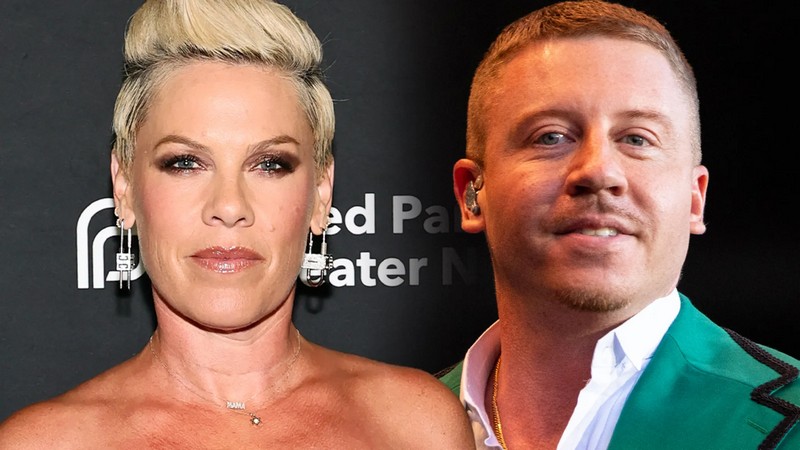
This is the political context in which I understand Macklemore’s message. Calling for a “Free Palestine” is not an abstract slogan when Palestinians continue to face occupation, settlement expansion, displacement and restrictions on their ability to exercise self-determination. His message brought these issues into a stadium where millions of people might otherwise encounter Palestine only through headlines. The controversy changed direction when P!NK became involved. After Macklemore’s performance, P!NK amplified a post from StopAntisemitism accusing him of confronting concertgoers with anti-Israel political messaging.
P!NK later clarified that she did not oppose the words “Free Palestine” and said that the original repost did not perfectly represent everything she wanted to say. She explained that she had concerns about the way Macklemore presented his message.
I think her clarification matters, because it would be inaccurate to claim that P!NK simply opposed every expression of Palestinian rights. However, I also think the reaction surrounding her repost illustrates a wider problem: a discussion that began with Palestinian rights, Israeli military actions and occupation was quickly reframed around whether Macklemore’s intervention should instead be understood through the issue of antisemitism.
The original political question was about Palestine: what is happening to Palestinians, what rights they possess, and whether Israel has the right to maintain territorial control over land occupied since 1967. International law provides important answers to some of those questions.
The ICJ has found that Israel cannot acquire sovereignty over occupied Palestinian territory through occupation or annexation, that its settlement regime in the West Bank and East Jerusalem violates international law, and that Palestinians possess a right to self-determination.
Yet once Macklemore spoke about these issues publicly, much of the conversation moved away from the substance of his criticism and toward the legitimacy of speaking about Israel in such direct terms.
For me, this is where the distinction between anti-Zionism and antisemitism becomes politically significant. Zionism emerged as a nationalist political movement seeking the establishment of a Jewish national home and ultimately a Jewish state in Palestine. Today the term covers several different political traditions and cannot accurately be reduced to a single position. Some Zionist currents have supported territorial compromise, while others, particularly parts of the religious-nationalist settlement movement, have supported establishing and expanding Israeli communities throughout the occupied West Bank on the basis of historical or religious claims to the land.
My criticism is directed at this political project and at Israeli state policies that have expanded control over Palestinian territory. From my perspective, settlement expansion, annexationist policies and attempts to establish permanent Israeli sovereignty over occupied Palestinian land should be examined in relation to Zionist territorial politics rather than being removed from that political history. This is especially relevant in the West Bank, where religious-nationalist Zionist movements have historically played an important role in establishing settlements and arguing that the territory should remain under Israeli sovereignty.
This does not mean that every person who identifies as a Zionist supports the same territorial programme. Zionism contains competing political traditions. But that diversity should also not prevent discussion of the role particular Zionist ideologies have played in Israeli settlement and territorial policy.
I believe Palestinian rights should be the central issue here. Palestinians should not have to prove that their demands for freedom are harmless before their political rights can be discussed. The question of whether Palestinians have a right to their land and political self-determination is not dependent on whether their demands make supporters of Israeli policy uncomfortable. The right to Palestinian self-determination is recognized under international law. The ICJ described that right as fundamental and found that Israel’s settlement and annexation policies obstruct Palestinians from freely determining their political status and pursuing their economic, social and cultural development.
For that reason, I do not think calls for Palestinian freedom should automatically be pushed into a debate about antisemitism when their actual target is Israeli state policy, occupation or Zionism as a political ideology. This is also why the framing of Macklemore’s performance matters to me. His message was not simply “against Israel.” He was drawing attention to Gaza, the West Bank and Palestinians living under conditions that international institutions have repeatedly described in terms of occupation, settlement, displacement and violations of international law.
When that message is immediately reframed through accusations of antisemitism, the focus can shift away from the people whose situation motivated the protest in the first place. Instead of asking why Macklemore was saying “Free Palestine,” the debate becomes whether he should have said it. Instead of discussing Israeli settlement expansion, the debate becomes whether criticizing the political ideology connected to Israel is acceptable. Instead of discussing Palestinian self-determination, the conversation becomes centred on the person delivering the criticism.
I think that shift can weaken meaningful discussion of Palestine. This does not require pretending that antisemitism does not exist or that it cannot appear in political movements. It clearly can. But criticism of Zionism as a political ideology, opposition to Israeli settlement policies and support for Palestinian self-determination need to remain possible subjects of political debate without automatically being transformed into something else. The difference matters particularly because the consequences for Macklemore were real.
On 14 September, he was removed from the remaining U.S. dates of Ed Sheeran’s tour after several venues indicated that they would not host the concerts if he remained on the lineup. The Israeli-American Council had previously called for his removal following his pro-Palestinian statements. Macklemore argued that accusations of antisemitism were being used to divert attention from accountability for Israeli actions. Other performers subsequently withdrew from the tour in solidarity with him. The controversy became large enough that Ed Sheeran eventually addressed it publicly. On 19 September, Sheeran described Israel’s treatment of Palestinians in Gaza as unjustifiable and also criticized injustice and settlement expansion in the West Bank. For me, this development reinforces why Macklemore’s original message should not disappear beneath the controversy surrounding it.
It is about Palestinians who have a recognized right to self-determination. It is about Israeli settlements that the Security Council and International Court of Justice have found contrary to international law. It is about policies of annexation and territorial control that the ICJ has said cannot legally transfer Palestinian sovereignty to Israel. And it is about Gaza, where Israeli military operations and extensive control have produced enormous humanitarian and political consequences for Palestinians.
I therefore see Macklemore’s decision to use his platform to say “Free Palestine” as part of a wider effort to keep Palestinian rights visible. The P!NK controversy is significant because it demonstrates how quickly that discussion can be redirected. P!NK had the right to explain her own reaction to Macklemore’s performance, and her later clarification showed that her position was more complicated than the original repost suggested. But her intervention also became part of a wider debate in which criticism of Israel and Zionism was increasingly discussed through the framework of antisemitism rather than through the political claims Macklemore was actually making.
Palestinian territory is not simply available for permanent acquisition because Israel exercises military or political power over it. International law explicitly rejects the acquisition of territory by force, and occupation itself does not create sovereignty. Palestinians have the right to political self-determination. Settlement and annexation policies that prevent them from exercising that right deserve direct criticism.
And Zionism, particularly when it is expressed through political projects seeking permanent Israeli sovereignty or settlement over occupied Palestinian territory, should be open to political criticism just like any other nationalist ideology. The central issue is the rights of Palestinians to land, freedom, dignity and self-determination, and the policies that continue to restrict those rights. Macklemore brought that issue onto a major public stage. Whatever controversy followed, that should remain at the centre of the conversation.
23 September 2026