Just International

Americans Are “In Charge” of the War Says French Journalist Who Returned from Ukraine

By Paul Joseph Watson

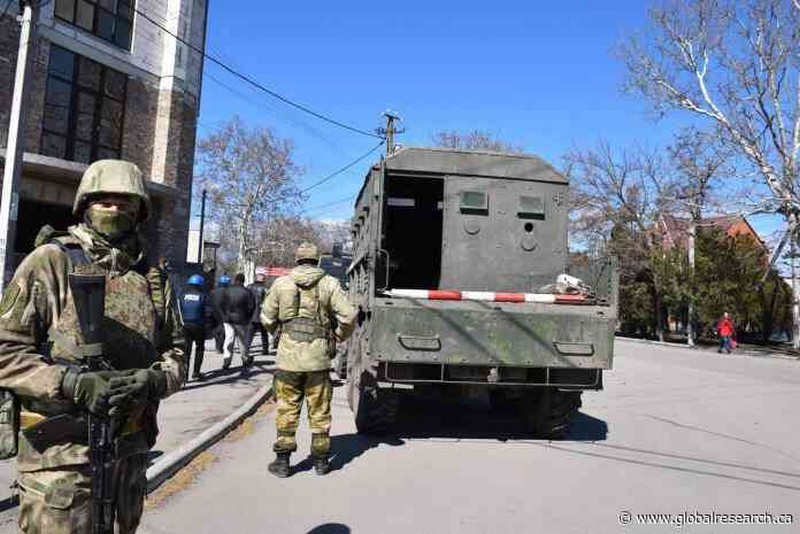
A French journalist who returned from Ukraine after arriving with volunteer fighters told broadcaster CNews that Americans are directly “in charge” of the war on the ground.

The assertion was made by Le Figaro senior international correspondent Georges Malbrunot.

Malbrunot said he had accompanied French volunteer fighters, two of whom had previously fought against ISIS.

“I had the surprise, and so did they, to discover that to be able to enter the Ukrainian army, well it’s the Americans who are in charge,” said Malbrunot.

Adding that he and the volunteers “almost got arrested” by the Americans, who asserted they were in charge, the journalist then revealed that they were forced to sign a contract “until the end of the war.”

“And who is in charge? It’s the Americans, I saw it with my own eyes,” said Malbrunot, adding, “I thought I was with the international brigades, and I found myself facing the Pentagon.”

Malbrunot also mentioned America providing Ukraine with switchblade suicide drones, something highlighted by Defense Secretary Lloyd Austin in a tweet that revealed Ukrainian soldiers were being trained to use the devices in Biloxi, Mississippi.

Citing a French intelligence source, Malbrunot also tweeted that British SAS units “have been present in Ukraine since the beginning of the war, as did the American Deltas.”

Russia is apparently well aware of the “secret war” being waged in Ukraine by foreign commandos who have been in the region since February.

Both the United States and the UK have publicly asserted that there won’t be “boots on the ground” in Ukraine, but apparently there has been a US-UK military presence since the start of the war.

“Polls showed in the run up to the war the overwhelming majority of Americans wanted our government to stay out of it but our leaders know best and are more than happy to risk World War III in defense of Ukraine’s puppet regime,” writes Chris Menahan.

*

Note to readers: Please click the share buttons above or below. Follow us on Instagram, Twitter and Facebook. Feel free to repost and share widely Global Research articles.

28 April 2022

Source: www.globalresearch.ca

The Alternative to The “Authoritarian New Normal”: Localization and Local Futures

By Colin Todhunter

‘World Localization Day’ will be celebrated on 20 June. Organised by the non-profit Local Futures, this annual coming together of people from across the world began in 2020 and focuses on the need to localise supply-chains and recover our connection with nature and community. The stated aim is to “galvanize the worldwide localization movement into a force for systemic change”.

Local Futures, founded by Helena Norberg-Hodge, urges us to imagine a very different world, one in which most of our food comes from nearby farmers who ensure food security year round and where the money we spend on everyday goods continues to recirculate in the local economy.

We are asked to imagine local businesses providing ample, meaningful employment opportunities, instead of our hard-earned cash being immediately siphoned off to some distant corporate headquarters.

Small farms would be key in this respect. They are integral to local markets and networks, short supply chains, food sovereignty, more diverse cropping systems and healthier diets. And they tend to serve the food requirements of communities rather than the interests of big business, institutional investors and shareholders half a world away.

If the COVID lockdowns and war in Ukraine tell us anything about our food system, it is that decentralised, regional and local community-owned food systems based on short(er) supply chains that can cope with future shocks are now needed more than ever.

The report Towards a Food Revolution: Food Hubs and Cooperatives in the US and Italy offers some pointers for creating sustainable support systems for small food producers and food distribution. Alternative, resilient food models and community supported agriculture are paramount.

Localization involves strengthening and rebuilding local economies and communities and restoring cultural and biological diversity. The ‘economics of happiness’ is central to this vision, rather than an endless quest for GDP growth and the alienation, conflict and misery this brings.

It is something we need to work towards because multi-billionaire globalists have a dystopian future mapped out for humanity which they want to impose on us all – and it is diametrically opposed to what is stated above.

The much-publicised ‘great reset’ is integral to this dystopia. It marks a shift away from ‘liberal democracy’ towards authoritarianism. At the same time, there is the relentless drive towards a distorted notion of a ‘green economy’, underpinned by the rhetoric of ‘sustainable consumption’ and ‘climate emergency’.

The great reset is really about capitalism’s end-game. Those promoting it realise the economic and social system must undergo a reset to a ‘new normal’, something that might no longer resemble ‘capitalism’.

End-game capitalism

Capital can no longer maintain its profitability by exploiting labour alone. This much has been clear for some time. There is only so much surplus value to be extracted before the surplus is insufficient.

Historian Luciana Bohne notes that the shutting down of parts of the economy was already happening pre-COVID as there was insufficient growth, well below the minimum tolerable 3% level to maintain the viability of capitalism. This, despite a decades-long attack on workers and corporate tax cuts.

The system had been on life support for some time. Credit markets had been expanded and personal debt facilitated to maintain consumer demand as workers’ wages were squeezed. Financial products (derivatives, equities, debt, etc) and speculative capitalism were boosted, affording the rich a place to park their profits and make money off money. We have also seen the growth of unproductive rentier capitalism and stock buy backs and massive bail outs courtesy of taxpayers.

Moreover, in capitalism, there is also a tendency for the general rate of profit to fall over time. And this has certainly been the case according to writer Ted Reese, who notes it has trended downwards from an estimated 43% in the 1870s to 17% in the 2000s.

The 2008 financial crash was huge. But by late 2019, an even bigger meltdown was imminent. Many companies could not generate enough profit and falling turnover, squeezed margins, limited cashflows and highly leveraged balance sheets were prevalent. In effect, economic growth was already grinding to a halt prior to the massive stock market crash in February 2020.

Fabio Vighi, professor of critical theory, describes how, in late 2019, the Swiss Bank of International Settlements, BlackRock (the world’s most powerful investment fund), G7 central bankers, leading politicians and others worked behind closed doors to avert a massive impending financial meltdown.

The Fed soon began an emergency monetary programme, pumping hundreds of billions of dollars per week into financial markets. Not long after, COVID hit and lockdowns were imposed. The stock market did not collapse because lockdowns occurred. Vighi argues lockdowns were rolled out because financial markets were collapsing.

Closing down the global economy under the guise of fighting a pathogen that mainly posed a risk to the over 80s and the chronically ill seemed illogical to many, but lockdowns allowed the Fed to flood financial markets (COVID relief) with freshly printed money without causing hyperinflation. Vighi says that lockdowns curtailed economic activity, thereby removing demand for the newly printed money (credit) in the physical economy and preventing ‘contagion’.

Using lockdowns and restrictions, smaller enterprises were driven out of business and large sections of the pre-COVID economy were shut down. This amounted to a controlled demolition of parts of the economy while the likes of Amazon, Microsoft, Meta (Facebook) and the online payment sector – platforms which are dictating what the ‘new normal’ will look like – were clear winners in all of this.

The rising inflation that we currently witness is being blamed on the wholly avoidable conflict in Ukraine. Although this tells only part of the story, the conflict and sanctions seem to be hitting Europe severely: if you wanted to demolish your own economy or impoverish large sections of the population, this might be a good way to go about it.

However, the massive ‘going direct’ helicopter money given to the financial sector and global conglomerates under the guise of COVID relief was always going to have an impact once the global economy reopened.

Similar extraordinary monetary policy (lockdowns) cannot be ruled out in the future: perhaps on the pretext of another ‘virus’ but possibly based on the notion of curtailing human activity due to ‘climate emergency’. This is because raising interests rates to manage inflation could rapidly disrupt the debt-bloated financial system (an inflated Ponzi scheme) and implode the entire economy.

Permanent austerity

But lockdowns, restrictions or creating mass unemployment and placing people on programmable digital currencies to micromanage spending and decrease inflationary pressures could help to manage the crisis. ‘Programmable’ means the government determining how much you can spend and what you can spend on.

How could governments legitimise such levels of control? By preaching about reduced consumption according to the creed of ‘sustainability’. This is how you would ‘own nothing and be happy’ if we are to believe this well-publicised slogan of the World Economic Forum (WEF).

The Great Reset: “You’ll own nothing and you’ll be happy.” (World Economic Forum)

But like neoliberal globalization in the 1980s – the great reset is being given a positive spin, something which supposedly symbolises a brave new techno-utopian future.

In the 1980s, to help legitimise the deregulated neoliberal globalisation agenda, government and media instigated an ideological onslaught, driving home the primacy of ‘free enterprise’, individual rights and responsibility and emphasising a shift away from the role of state, trade unions and the collective in society.

Today, we are seeing another ideological shift: individual rights (freedom to choose what is injected into your own body, for instance) are said to undermine the wider needs of society and – in a stark turnaround – individual freedom is now said to pose a threat to ‘national security’, ‘public health’ or ‘safety’.

A near-permanent state of ‘emergency’ due to public health threats, climate catastrophe or conflict (as with the situation in Ukraine) would conveniently place populations on an ongoing ‘war footing’. Notions of individual liberty and democratic principles would be usurped by placing the emphasis on the ‘public interest’ and protecting the population from ‘harm’. This would facilitate the march towards authoritarianism.

As in the 1980s, this messaging is being driven by economic impulses. Neoliberalism privatised, deregulated, exploited workers and optimised debt to the point whereby markets are now kept afloat by endless financial injections.

The WEF says the public will ‘rent’ everything they require: stripping the right of personal ownership under the guise of ‘sustainable consumption’ and ‘saving the planet’. Where the WEF is concerned, this is little more than code for permanent austerity to be imposed on the mass of the population.

Metaverse future

At the start of this article, readers were asked to imagine a future based on a certain set of principles associated with localization. For one moment, imagine another. The one being promoted by the WEF, the high-level talking shop and lobby group for elite interests headed by that avowed globalist and transhumanist Klaus Schwab.

As you sit all day unemployed in your high-rise, your ‘food’ will be delivered via an online platform bought courtesy of your programmable universal basic income digital money. Food courtesy of Gates-promoted farms manned by driverless machines, monitored by drones and doused with chemicals to produce crops from patented GM seeds for industrial ‘biomatter’ to be engineered, processed and constituted into something resembling food.

Enjoy and be happy eating your fake food, stripped of satisfying productive endeavour and genuine self-fulfilment. But really, it will not be a problem. You can sit all day and exist virtually in Zuckerberg’s fantasy metaverse. Property-less and happy in your open prison of mass unemployment, state dependency, track and chip health passports and financial exclusion via programmable currency.

A world also in which bodily integrity no longer exists courtesy of a mandatory vaccination agenda linked to emerging digital-biopharmaceutical technologies. The proposed World Health Organization pandemic treaty marks a worrying step in this direction.

This ‘new normal’ would be tyrannical, but the ‘old normal’ – which still thrives – was not something to be celebrated. Global inequality is severe and environmental devastation and human dislocation has been increasing. Dependency and dispossession remain at the core of the system, both on an individual level and at local, regional and national levels. New normal or old normal, these problems will persist and become worse.

Green imperialism

The ‘green economy’ being heavily promoted is based on the commodification of nature, through privatization, marketization and monetary valuation. Banks and corporations will set the agenda – dressed in the garb of ‘stakeholder capitalism’, a euphemism for governments facilitating the needs of powerful global interests. The fear is that the proposed system will weaken environmental protection laws and regulations to facilitate private capital.

The banking sector will engage in ‘green profiling’ and issue ‘green bonds’ and global corporations will be able to ‘offset’ (greenwash) their environment-degrading activities by, for example, protecting or planting a forest elsewhere (on indigenous people’s land) or perhaps even investing in (imposing) industrial agriculture which grows herbicide-resistant GMO commodity crop monocultures that are misleadingly portrayed as ‘climate friendly’. Imperialism wrapped in green.

Relying on the same thinking and the same interests that led the world to where it is now does not seem like a great idea. This type of ‘green’ is first and foremost a multi-trillion market opportunity for lining pockets and part of a strategy that may well be used to secure compliance required for the ‘new normal’.

The future needs to be rooted in the principles of localization. For this, we need look no further than the economics and the social relations that underpin tribal societies (for example, India’s indigenous peoples). The knowledge and value systems of indigenous peoples promote long-term genuine sustainability by living within the boundaries of nature and emphasise equality, communality and sharing rather than separation, domination and competition.

Self-sufficiency, solidarity, localization and cooperation is the antidote to globalism and the top-down tyranny of programmable digital currencies and unaccountable, monopolistic AI-driven platforms which aim to monitor and dictate every aspect of life.

*

Note to readers: Please click the share buttons above or below. Follow us on Instagram, Twitter and Facebook. Feel free to repost and share widely Global Research articles.

Renowned author Colin Todhunter specialises in development, food and agriculture. He is a Research Associate of the Centre for Research on Globalization (CRG) in Montreal.

26 April 2022

Source: www.globalresearch.ca

Palestine’s Widening Geography of Resistance: Why Israel Cannot Defeat the Palestinians

By Ramzy Baroud

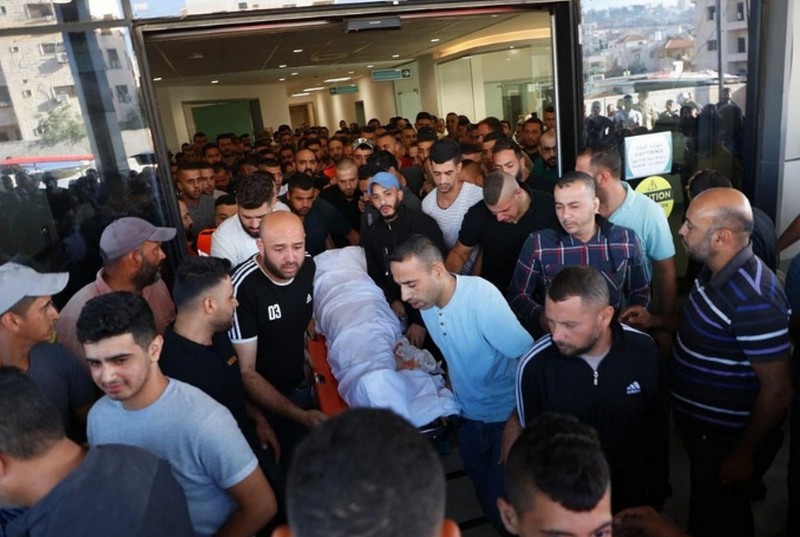
13 Apr 2022 – There is a reason why Israel is insistent on linking the series of attacks carried out by Palestinians recently to a specific location, namely the Jenin refugee camp in the northern West Bank. By doing so, the embattled Naftali Bennett’s government can simply order another deadly military operation in Jenin to reassure its citizens that the situation is under control.

Indeed, on April 9, the Israeli army has stormed the Jenin refugee camp, killing a Palestinian and wounding ten others. However, Israel’s problem is much bigger than Jenin.

If we examine the events starting with the March 22 stabbing attack in the southern city of Beersheba (Bir Al Saba’) – which resulted in the death of four – and ending with the killing of three Israelis in Tel Aviv – including two army officers – we will reach an obvious conclusion: these attacks must have been, to some extent, coordinated.

Spontaneous Palestinian retaliation to the violence of the Israeli occupation rarely follows this pattern in terms of timing or style. All the attacks, with the exception of Beersheba, were carried out using firearms. The shooters, as indicated by the amateur videos of some of the events and statements by Israeli eyewitnesses, were well-trained and were acting with great composure.

An example was the March 27 Hadera event, carried out by two cousins, Ayman and Ibrahim Ighbariah, from the Arab town of Umm al-Fahm, inside Israel. Israeli media reported of the unmistakable skills of the attackers, armed with weapons that, according to the Israeli news agency, Tazpit Press Service, cost more than $30,000.

Unlike Palestinian attacks carried out during the Second Palestinian Intifada (2000-05) in response to Israeli violence in the occupied territories, the latest attacks are generally more pinpointed, seek police and military personnel and clearly aimed at shaking Israel’s false sense of security and undermining the country’s intelligence services. In the Bnei Brak attack, on March 29, for example, an Israeli woman who was at the scene told reporters that “the militant asked us to move away from the place because he did not want to target women or children.”

While Israeli intelligence reports have recently warned of a “wave of terrorism” ahead of the holy month of Ramadan, they clearly had little conception of what type of violence, or where and how Palestinians would strike.

Following the Beersheba attack, Israeli officials referred to Daesh’s responsibility, a convenient claim considering that Daesh had also claimed responsibility. This theory was quickly marginalized, as it became obvious that the other Palestinian attackers had other political affiliations or, as in the Bnei Brak case, no known affiliation at all.

The confusion and misinformation continued for days. Shortly after the Tel Aviv attack, Israeli media, citing official sources, spoke of two attackers, alleging that one was trapped in a nearby building. This was untrue as there was only one attacker and he was killed, though hours later in a different city.

A number of Palestinian workers were quickly rounded up in Tel Aviv on suspicion of being the attackers simply because they looked Arab, evidence of the chaotic Israeli approach. Indeed, following each event, total mayhem ensued, with large mobs of armed Israelis taking to the streets looking for anyone with Arab features to apprehend or to beat senseless.

Israeli officials contributed to the frenzy, with far-right politicians, such as the extremist Itamar Ben Gvir, leading hordes of other extremists in rampages in occupied Jerusalem.

Instead of urging calm and displaying confidence, the country’s own Prime Minister called, on March 30, on ordinary Israelis to arm themselves. “Whoever has a gun license, this is the time to carry it,” he said in a video statement. However, if Israel’s solution to any form of Palestinian resistance was more guns, Palestinians would have been pacified long ago.

To placate angry Israelis, the Israeli military raided the city and refugee camp of Jenin on many occasions, each time leaving several dead and wounded Palestinians behind, including many civilians. They include the child Imad Hashash, 15, killed on August 24 while filming the invasion on his mobile phone. The exact same scenario played out on April 9.

However, it was an exercise in futility, as it was Israeli violence in Jenin throughout the years that led to the armed resistance that continues to emanate from the camp. Palestinians, whether in Jenin or elsewhere, fight back because they are denied basic human rights, have no political horizon, live in extreme poverty, have no true leadership and feel abandoned by the so-called international community.

The Palestinian Authority of Mahmoud Abbas seems to be entirely removed from the masses. Statements by Abbas reflect his detachment from the reality of Israeli violence, military occupation and apartheid throughout Palestine. True to form, Abbas quickly condemned the Tel Aviv attack, as he did the previous ones, making the same reference every time regarding the need to maintain “stability” and to prevent “further deterioration of the situation”, according to the official Wafa news agency.

What stability is Abbas referring to, when Palestinian suffering has been compounded by growing settler violence, illegal settlement expansion, land theft, and, thanks to recent international events, food insecurity as well?

Israeli officials and media are, once again, conveniently placing the blame largely on Jenin, a tiny stretch of an overpopulated area. By doing so, Israel wants to give the impression that the new phenomenon of Palestinian retaliatory attacks is confined to a single place, one that is adjacent to the Israeli border and can be easily ‘dealt with’.

An Israeli military operation in the camp may serve Bennett’s political agenda, convey a sense of strength, and win back some in his disenchanted political constituency. But it is all a temporary fix. Attacking Jenin now will make no difference in the long run. After all, the camp rose from the ashes of its near-total destruction by the Israeli military in April 2002.

The renewed Palestinian attacks speak of a much wider geography: Naqab, Umm Al Fahm, the West Bank. The seeds of this territorial connectivity are linked to the Israeli war of last May and the subsequent Palestinian rebellion, which erupted in every part of Palestine, including Palestinian communities inside Israel.

Israel’s problem is its insistence on providing short-term military solutions to a long-term problem, itself resulting from these very ‘military solutions’. If Israel continues to subjugate the Palestinian people under the current system of military occupation and deepening apartheid, Palestinians will surely continue to respond until their oppressive reality is changed. No amount of Israeli violence can alter this truth.

Dr. Ramzy Baroud is a journalist, author and editor of The Palestine Chronicle.

18 April 2022

Source: www.transcend.org

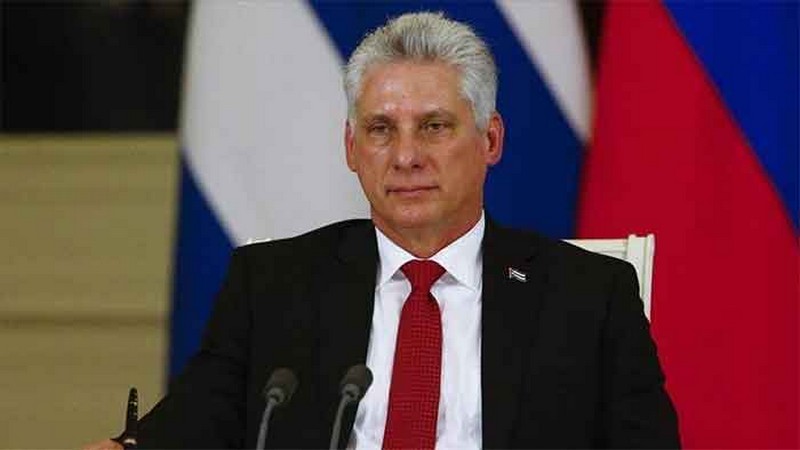
‘We Will Prevail’: A Conversation With Cuba’s President Miguel Díaz-Canel

By Manolo De Los Santos

In 1994, Miguel Díaz-Canel began a new position in Santa Clara, not far from his birthplace of Placetas, as the provincial secretary of the Cuban Communist Party. He set aside the air-conditioned car given to him and went to work each morning on his bicycle, his long hair and jeans defining him. Díaz-Canel organized rock concerts, spent time with his family at El Mejunje, the local LGBTQ cultural center, and roamed about talking to people on the streets. This closeness to the people defined his tenure at Santa Clara, which shaped the man who is now the president of Cuba.

In March, I spent a few hours talking to Díaz-Canel, who—born in 1960—has lived his entire life as Cuba struggled against the suffocating policies from Washington to shape its socialist path. Raised by a teacher and a factory worker, Díaz-Canel saw firsthand the Cuban Revolution’s comprehensive program of social justice in which millions of members of the working class, peasants, Black people, and women began to access for the first time on equal terms the right to work, study and live with dignity. Díaz-Canel’s generation grew up in a period under Fidel Castro’s leadership in which, despite the existence of a U.S. blockade, most Cubans saw their standards of living and quality of life rise significantly due to national development plans, favorable trade relations with the Soviet Union and a growing network of support in the nonaligned world. Díaz-Canel studied electrical engineering at the Central University of Las Villas, but early on in his career teaching engineering there, he devoted much of his time to local activism with the Young Communist League. That led him to an internationalist mission in Nicaragua where, along with thousands of Cuban doctors and teachers, he served among the poorest, often in remote corners of this Central American country that was then trapped under a U.S.-funded war of counterinsurgency.

Díaz-Canel returned from Nicaragua in 1989 as the USSR neared its final days and as the U.S. government seized the opportunity to tighten restrictions on Cuba. In 1991, Cuba entered a Special Period as trade fell by 80 percent. Cubans were eating less (caloric intake decreased by 27 percent from 1990 to 1996), long queues for food became common, electricity became a rare occurrence, and millions took to riding bicycles as the island faced a severe oil shortage under an intensified blockade. Díaz-Canel was one of those on a bicycle. Cuba’s resilience during the Special Period shaped his view of the world.

Special Period II

In 2018, Díaz-Canel was elected to be the president of Cuba. U.S. President Donald Trump had tightened the U.S. blockade on Cuba, with 243 new sanctions measures, the prevention of remittances from overseas Cubans coming to the island, and Cuba being placed back on the United States’ State Sponsors of Terrorism list. This campaign of maximum pressure has hurt the Cuban economy, which began to see fuel and food shortages that echoed the Special Period. The Biden administration has kept each and every one of these measures in place.

During the pandemic, the U.S. did not allow Cuba any relief from its unilateral blockade. The Cuban government spent $102 million on reagents, medical equipment, protective equipment, and other material; in the first half of 2021, the government spent $82 million on these kinds of materials. This is money that Cuba did not anticipate spending—money that it does not have because of the collapsed tourism sector. Despite the severe challenges to the economy, the government continued to guarantee salaries, purchase medicines, and distribute food as well as electricity and piped water. Overall, the Cuban government added $2.4 billion to its already considerable debt overhang to cover the basic needs of the population.

In this context, public discontent spilled onto the streets in 2021, notably on July 11. Díaz-Canel’s first instinct was to go to the heart of the matter and speak with the people. He went to great lengths not merely to dismiss their concerns but rather to understand them within the broader context of what Cuba was facing. Díaz-Canel said of the people that most of them are “dissatisfied,” but that their dissatisfaction was fueled by “confusion, misunderstandings, lack of information, and the desire to express a particular situation.” “Imagine facing that situation in a country that is attacked, blocked, demonized on social networks, and then COVID-19 arrives,” he told me. “Therefore, I am convinced that they [the U.S.] bet that Cuba had no way out: ‘They cannot sustain the revolution; they cannot get out of this situation.’”

Among the many creative responses to these many challenges was the decision by the Cuban government to develop its own vaccine. On May 17, 2020, Díaz-Canel called together Cuba’s scientists. “I told them, ‘Look, there is no alternative; we need a Cuban vaccine. Nobody is going to give us a vaccine. We need a Cuban vaccine that guarantees us sovereignty,’” he told me. Seven weeks later, in the second half of July, the first bottle of a Cuban vaccine candidate was ready. Soon after Cuba would have five vaccine candidates. Of these, three are already in use: Abdala, Soberana 02, and Soberana Plus. Two others are in the final stages of clinical trials and are quite promising, including one called Mambisa, which can be applied nasally. This is all short of a miracle considering that Cuba was only able to invest $50 million to develop these vaccines.

With the many economic problems that Cuba faces, President Díaz-Canel, in line with his predecessors Fidel and Raúl Castro, has renewed the principle of self-reliance. “We have to face the economic battle ourselves with the concept of creative resistance,” he said. With a growing number of workers in the non-state sector, the economy has encouraged small local businesses. A new energy has emerged between the state-led sectors of the economy and these growing new businesses.

In regular visits made by Díaz-Canel across the island, a great deal of emphasis is being placed on the local capacities of each municipality. He advocates a line of continuity with politics based on the ethics of José Martí and Fidel Castro, whose premise is to study the contradictions that exist in society, find the causes of those contradictions, and propose solutions that eliminate the causes. “We are defending the need to increasingly expand democracy on the basis of people’s participation and control in our society,” said Díaz-Canel. This approach has already opened the door to deep debates about how to eradicate the vestiges of racism that remain in society, the transformation of neighborhoods in disrepair, and a proposed legal code that would radically expand the rights of LGBTQ people, including marriage. In hundreds of meetings, many of which are recorded and televised, Díaz-Canel listens patiently to religious leaders, university students, artists, intellectuals, community organizers, social activists, and other sectors of Cuban society who have much to say. These meetings can quite often be tense. Díaz-Canel smiles and says, “We have learned tremendously, proposals are made, we can share criteria, we can clarify doubts, and then we all go out together to work.”

Cuba continues to face great challenges, and many problems remain to be solved.

Yet it’s clear that Díaz-Canel is leading a profound renewal of the Cuban Revolution in a process that seeks to face many complex challenges by empowering local leaders and citizens to become democratic problem-solvers within their communities. Those who continue to see the Cuban system as a repressive dictatorship refuse to come to terms with an evolving society that, despite the cruel violence from Washington, exists and is creating its own future.

Manolo De Los Santos is the co-executive director of the People’s Forum and is a researcher at Tricontinental: Institute for Social Research.

8 April 2022

Source: countercurrents.org

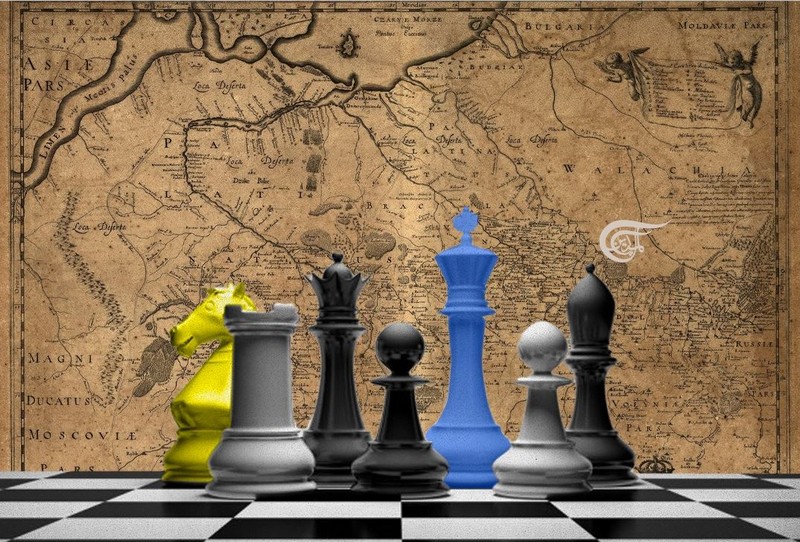
Ukraine Is a Pawn on the Grand Chessboard

By Rick Sterling

22 Apr 2022 – Zbigniew Brzezinski’s book, The Grand Chessboard, was published 25 years ago. His assumptions and strategies for maintaining ‘U.S. global dominance’ have been hugely influential in US foreign policy. As the conflict in Ukraine evolves, with the potential of escalating into world war, we can see where this policy leads and how crucial it is to re-evaluate.

The Need to Dominate Eurasia

The basic premise of “The Grand Chessboard” is outlined in the introduction:

  • * With the collapse of the Soviet Union, the United States is the sole global power
  • * Europe and Asia (Eurasia) together have the largest land area, population and economy
  • * U.S. must control Eurasia and prevent another country from challenging US dominance

Brzezinski sums up the situation:

“America is now the only global superpower, and Eurasia is the globe’s central arena.” He adds, “It is imperative that no Eurasian challenger emerges, capable of dominating Eurasia and thus of challenging America.”

The book  surveys the different nations in Eurasia, from Japan in the east to the UK in the west. The entire land mass of Europe and Asia is covered. This is the “grand chessboard” and Brzezinski analyzes how the US should “play” different pieces on the board to keep potential rivals down and the US in control.

Brzezinski’s Influence

Brzezinski was a very powerful National Security Advisor to President Carter. Before that, he founded the Trilateral Commission. Later he taught Madeline Albright and many other key figures in US foreign policy.

Brzezinski initiated the “Afghanistan Trap”. That was the secret 1979 US program to mobilize and support mujahedin foreign fighters to invade and destabilize Afghanistan. In this period, Afghanistan was undergoing dramatic positive changes. As described by Canadian academic John Ryan, “Afghanistan once had a progressive secular government, with broad popular support. It had enacted progressive reforms and gave equal rights to women.”

The Brzezinski plan was to utilize reactionary local forces and foreign fighters to create enough mayhem that the government would ask the neighboring Soviet Union to send military support. The overall goal was to “bog down the Soviet army” and “give them their own Vietnam”.

With enormous funding from the US and Saudi Arabia beginning in 1978, the plan resulted in chaos, starvation and bloodshed in Afghanistan which continues to today. Approximately 6 million Afghans became refugees fleeing the chaos and war.

Years later, when interviewed about this policy, Brzezinski was proud and explicit: “We didn’t push the Russians to intervene, but we knowingly increased the probability that they would.” When asked if he had regrets for the decades of mayhem in Afghanistan, he was clear: “Regret what? That secret operation was an excellent idea. It had the effect of drawing the Russians into the Afghan trap and you want me to regret it? …. Moscow had to carry on a war that was unsustainable for the regime, a conflict that brought about the demoralization and finally the breakup of the Soviet empire…. What is more important in world history? The Taliban or the collapse of the Soviet empire? Some agitated Muslims or the liberation of central Europe and the end of the Cold War?”

Afghanistan was a pawn in the US campaign against the Soviet Union. The amorality of US foreign policy is clear and consistent, from the destruction of Afghanistan beginning in 1978 continuing to the current starvation caused by US freezing of Afghan government reserves.

The blow-back is also clear. The foreign fighters trained by the US and Saudis became Al Qaeda and then ISIS. The 2016 Orlando nightclub massacre, where49 died and 53 were wounded was perpetrated by the son of an Afghan refugee who never would have come to the US if his country had not been intentionally destabilized. Paul Fitzgerald eloquently describes the tragedy in his article Brzezinski’s vision to lure Soviets into Afghan Trap now Orlando’s nightmare.

US Supremacy and Exceptionalism

The “Grand Chessboard” assumes US supremacy and exceptionalism and adds the strategy for implementing and enforcing this “primacy” on the biggest and most important arena: Eurasia.

Brzezinski does not countenance a multi-polar world. “A world without US primacy will be a world with more violence and disorder and less democracy and economic growth ….” and “The only real alternative to American global leadership in the foreseeable future is international anarchy.”

These assertions continue today as the US foreign policy establishment repeatedly talks about the “rules based order” and “international community”, ignoring the fact that the West is a small fraction of humanity. Toward the end of his book, Brzezinski suggests the “upgrading” the United Nations and a “new distribution of responsibilities and privileges” that take into account the “changed realities of global power.”

The Importance of NATO and Ukraine

With the dissolution of the Soviet Union and Warsaw Pact, many people in the West believed NATO was no longer needed. NATO claimed to be strictly a defensive alliance and its only rival had disbanded.

Brzezinski and other US hawks saw that NATO could be used to expand US hegemony and keep weapons purchases flowing. Thus he wrote that, “an enlarged NATO will serve well both the short-term and the longer-term goals of U.S. policy.”

Brzezinski was adamant that Russian concerns or fears should be dismissed. “Any accommodation with Russia on the issue of NATO enlargement should not entail an outcome that has the effect of making Russia a de facto decision making member of the alliance.” Brzezinski was skillful at presenting an aggressive and offensive policy in the best light.

Brzezinski presents Ukraine as the pivotal country for containing Russia. He says, “Ukraine is the critical state, insofar as Russia’s future evolution is concerned.” He says, “Without Ukraine, Russia ceases to be a Eurasian empire.” This is another example of his skillful wording because Ukraine as part of a hostile military alliance does not only prevent a Russian “empire”; it presents a potential threat. Kyiv is less than 500 miles from Moscow and Ukraine was a major route of the Nazi invasion.

Brzezinski was well aware of the controversial nature of Ukraine’s borders. On page 104 he gives a quote that shows many people of eastern Ukraine wanted out of Ukraine since the breakup of the Soviet Union. The 1996 quote from a Moscow newspaper reports, “In the foreseeable future events in eastern Ukraine confront Russia with a very difficult problem. Mass manifestations of discontent … will be accompanied by appeals to Russia, or even demands, to take over the region.”

Despite this reality, Brzezinski is dismissive of Russian rights and complaints. He bluntly says, “Europe is America’s essential geopolitical bridgehead on the Eurasian continent.” and “Western Europe and increasingly Central Europe remain largely an American protectorate.” The unstated assumption is that the US has every right to dominate Eurasia from afar.

Brzezinski advises Russia to decentralize with the free market and a loose confederation of “European Russia, a Siberian Russia and a Far Eastern Republic”.

Afghanistan Is the Model

Brzezinski realizes that Russia presents a potential challenge to US domination of Eurasia, especially if it allies with China. In the “Grand Chessboard”, he writes, “If the middle space rebuffs the West, becomes an assertive single entity, and either gains control over the South or forms an alliance with the major Eastern actor, then America’s primacy in Eurasia shrinks dramatically.” Russia is the “middle space” and China is the “major Eastern actor”.

What was feared by the US strategist has happened: For the past 20 years, Russia and China have been building an alliance dedicated to ending US hegemony and beginning a new era in international relations.

This may be why the US aggressively provoked the crisis in Ukraine. The list of provocations is clear: moral and material support for Maidan protests, rejection of the EU agreement (“F*** the EU”), the sniper murders and violent 2014 coup, ignoring the Minsk Agreement approved by the UN Security Council, NATO advisors and training for ultra-nationalists, lethal weaponry to Ukraine, refusal to accept Ukrainian non-membership in NATO, threats to invade Donbass and Crimea.

Before Russia’s intervention in Ukraine, active duty soldier and former Congresswoman Tulsi Gabbard said ,

“They actually want Russia to invade Ukraine. Why would they? Because it gives the Biden administration a clear excuse to levy draconian sanctions… against Russia and the Russian people and number two, it cements this cold war in place. The military industrial complex is the one who benefits from this. They clearly control the Biden administration. Warmongers on both sides in Washington who have been drumming up these tensions. If they get Russia to invade Ukraine it locks in this new cold war, the military industrial complex starts to make a ton more money …. Who pays the price? The American people … the Ukrainian people … the Russian people pay the price. It undermines our own national security but the military industrial complex which controls so many of our elected officials wins and they run to the bank.”

This is accurate but the reasons for the provocations go deeper. Hillary Clinton recently summed up the wishes and dreams of Washington hawks:

“The Russians invaded Afghanistan back in 1980 … a lot of countries supplied arms, advice and even some advisors to those who were recruited to fight Russia….a well funded insurgency basically drove the Russians out of Afghanistan…. I think that is the model people are now looking toward.”

US foreign policy has been consistent from Brzezinski to Madeline Albright, Hillary Clinton and on to Victoria Nuland. The results are seen in Aghanistan, Iraq, Yugoslavia, Libya, Syria and now Ukraine.

As with Afghanistan, the US “didn’t push Russia to intervene” but “knowingly increased the probability that they would.” The purpose is the same in both cases: to use a pawn to undermine and potentially eliminate a rival. We expect the US will make every to prolong the bloodshed and war, to bog down the Russian army and prevent a peaceful settlement. The US goal is just what Joe Biden said: regime change in Moscow.

Like Afghanistan, Ukraine is just a pawn on the chessboard.

Rick Sterling is a member of the TRANSCEND Network and an investigative journalist who lives in the SF Bay Area, California.

25 April 2022

Source: www.transcend.org

How Obama-Biden Team Empowered Terrorists in Syria

By Aaron Maté

Ukraine is the Obama-Biden team’s second major proxy war against Russia. The first was Syria, where US support for the insurgency helped create an Al Qaeda safe haven.

20 Apr 2022 – Hours after the Feb. 3 U.S. military raid in northern Syria that left the leader of ISIS and multiple family members dead, President Biden delivered a triumphant White House address.The late-night Special Forces operation in Syria’s Idlib province, Biden proclaimed, was a “testament to America’s reach and capability to take out terrorist threats no matter where they hide around the world.”

Unmentioned by the president, and virtually all media accounts of the assassination, was the critical role that top members of his administration played during the Obama years in creating the Al Qaeda-controlled hideout where ISIS head Abu Ibrahim al-Qurayshi, as well as his slain predecessor, Abu Bakr al-Baghdadi, found their final refuge.

In waging a multi-billion dollar covert war in support of the insurgency against Syrian President Bashar al-Assad, top Obama officials who now serve under Biden made it American policy to enable and arm terrorist groups that attracted jihadi fighters from across the globe. This regime change campaign, undertaken one decade after Al Qaeda attacked the U.S. on 9/11, helped a sworn U.S. enemy establish the Idlib safe haven that it still controls today.

A concise articulation came from Jake Sullivan to his then-State Department boss Hillary Clinton in a February 2012 email: “AQ [Al Qaeda] is on our side in Syria.”

Sullivan, the current national security adviser, is one of many officials who oversaw the Syria proxy war under Obama to now occupy a senior post under Biden. This group includes Secretary of State Antony Blinken, climate envoy John Kerry, USAID Administrator Samantha Power, Deputy Secretary of State Wendy Sherman, NSC Middle East coordinator Brett McGurk, and State Department Counselor Derek Chollet.

Their efforts to remake the Middle East via regime change, not just in Syria but earlier in Libya, led to the deaths of Americans – including Ambassador Christopher Stevens and three other U.S. officials in Benghazi in 2012; the slaughter of countless civilians; the creation of millions of refugees; and ultimately, Russia’s entry into the Syrian battlefield.

Contacted through their current U.S. government agencies, none of the Obama-Biden principals offered comment on their policy of supporting an Al Qaeda-dominated insurgency in Syria.

The Obama-Biden team’s record in Syria resonates today as many of its members handle the unfolding crisis in Ukraine. As in Syria, the U.S. is flooding a chaotic war zone with weapons in a dangerous proxy conflict against Russia, raising the threat of military confrontation between the world’s top nuclear powers. “I deeply worry that what’s going to happen next is that we will see Ukraine turn into Syria,” Democratic Senator Chris Coons told CBS News on April 17.

Based on declassified documents, news reports, and scattered admissions of U.S. officials, this overlooked history of how the Obama-Biden team’s effort to oust the Assad regime – in concert with allies including Saudi Arabia, Qatar, and Turkey – details the series of discrete decisions that ultimately led the U.S. to empower terror networks bent on its destruction.

Seizing Momentum – and Munitions – From Libya to Pursue Regime Change in Syria

The road to Al Qaeda’s control of the Syrian province of Idlib actually started hundreds of miles across the Mediterranean in Libya.

In March 2011, after heavy lobbying from senior officials including Secretary Hillary Clinton, President Obama authorized a bombing campaign in support of the jihadist insurgency fighting the government of Libyan leader Muammar Gaddafi. Backed by NATO firepower, the rebels toppled Gaddafi and gruesomely murdered him in October.

Buoyed by their quick success in Libya, the Obama administration set their sights on Damascus, by then a top regime change target in Washington. According to former NATO commander Wesley Clark, the Assad regime – a key ally of U.S. foes Iran, Hezbollah, and Russia – was marked for overthrow alongside Iraq in the immediate aftermath of 9/11. A leaked 2006 U.S. Embassy in Damascus cable assessed that Assad’s “vulnerabilities” included “the potential threat to the regime from the increasing presence of transiting Islamist extremists,” and detailed how the U.S. could “improve the likelihood of such opportunities arising.”

The outbreak of the Syrian insurgency in March 2011, coupled with the fall of Gaddafi, offered the U.S. a historic opportunity to exploit Syria’s vulnerabilities. While the Arab Spring sparked peaceful Syrian protests against the ruling Ba’ath party’s cronyism and repression, it also triggered a largely Sunni, rural-based revolt that took a sectarian and violent turn. The U.S. and its allies, namely Qatar and Turkey, capitalized by tapping the massive arsenal of the newly ousted Libyan government.

“During the immediate aftermath of, and following the uncertainty caused by, the downfall of the [Gaddafi] regime in October 2011,” the Defense Intelligence Agency reported the following year, “…weapons from the former Libya military stockpiles located in Benghazi, Libya were shipped from the port of Benghazi, Libya, to the ports of Banias and the Port of Borj Islam, Syria.”

The redacted DIA document, obtained by the group Judicial Watch, does not clarify whether the U.S. was directly involved in these shipments. But it contains significant clues. With remarkable specificity, it detailed the size and contents of one such shipment in August 2012: 500 sniper rifles, 100 rocket-propelled grenade launchers with 300 rounds, and 400 howitzer missiles.

Most tellingly, the document noted that the weapons shipments were halted “in early September 2012.” This was a clear reference to the killing by militants that month of four Americans – Ambassador Christopher Stevens, another State Department official, and two CIA contractors – in Benghazi, the port city where the weapons to Syria were coming from. The Benghazi annex “was at its heart a CIA operation,” U.S. officials told the Wall Street Journal. At least two dozen CIA employees worked in Benghazi under diplomatic cover.

Although top intelligence officials obscured the Benghazi operation in sworn testimony before the House Intelligence Committee, a Senate investigation eventually confirmed a direct CIA role in the movement of weapons from Libya to Syria. A classified version of a 2014 Senate report, not publicly released, documented an agreement between President Obama and Turkey to funnel weapons from Libya to insurgents in Syria. The operation, established in early 2012, was run by then-CIA Director David Petraeus.

“The [Benghazi] consulate’s only mission was to provide cover for the moving of arms” to Syria, a former U.S. intelligence official told journalist Seymour Hersh in the London Review of Books. “It had no real political role.”

The Death of a U.S. Ambassador

Under diplomatic cover, Stevens appears to have been a significant figure in the CIA program. More than one year before he became ambassador in June 2012, Stevens was appointed the U.S. liaison to the Libyan opposition. In this role, he worked with the Al Qaeda-tied Libyan Islamic Fighting Group and its leader, Abdelhakim Belhadj, a warlord who fought alongside Osama bin Laden in Afghanistan. After Gaddafi’s ouster, Belhadj was named head of the Tripoli Military Council, which controlled security in the country’s capital.

Belhadj’s portfolio was not limited to post-coup Libya. In November 2011, the Al Qaeda ally traveled to Turkey to meet with leaders of the Free Syrian Army, the CIA-backed opposition military coalition. Belhadj’s trip came as part of the new Libyan government’s effort to provide “money and weapons to the growing insurgency against Bashar al-Assad,” the London Telegraph reported at the time. On September 14, 2012 – just three days after Stevens and his American colleagues were killed – the London Times revealed that a Libyan vessel “carrying the largest consignment of weapons for Syria since the uprising began,” had recently docked in the Turkish port of Iskenderun. Once unloaded, “most of its cargo is making its way to rebels on the front lines.”

The known details of Stevens’ last hours on September 11 suggest that shipping weapons was at the top of his agenda. Although based in Tripoli and facing violent threats, he nonetheless made the dangerous trek to Benghazi around the charged anniversary of 9/11. According to a 2016 report from the House Intelligence Committee, one of Stevens’ last scheduled meetings was with the head of al-Marfa Shipping and Maritime Services Company, a Libyan firm involved in ferrying weapons to Syria. His final meeting of the day was with Consul General Ali Sait Akin of Turkey, where the weapons were shipped. Fox News later reported that “Stevens was in Benghazi to negotiate a weapons transfer.”

With the Libyan channel shut down by Stevens’ murder, the U.S. and its allies turned to other sources. One was Croatia, where Saudi Arabia financed a major weapons purchase in late 2012 that was arranged by the CIA. The CIA’s use of the Saudi kingdom’s vast coffers continued an arrangement from prior covert proxy wars, including the arming of the mujahideen in Afghanistan and of the Contras in Nicaragua.

Although the Obama administration claimed that the weapons funneled to Syria were intended for “moderate rebels,” they ultimately ended up in the hands of a jihadi-dominated insurgency. Just one month after the Benghazi attack, the New York Times reported that “hard-line Islamic jihadists,” including groups “with ties or affiliations with Al Qaeda,” have received “the lion’s share of the arms shipped to the Syrian opposition.”

Covertly Arming An Al Qaeda-Dominated Insurgency

The Obama administration did not need media accounts to learn that jihadists dominated the Syrian insurgency on the receiving end of a CIA supply chain.

One month before the Benghazi attack, Pentagon intelligence analysts gave the White House a blunt appraisal. An August 2012 Defense Intelligence Agency report, disseminated widely among U.S. officials, noted that “Salafi[s], the Muslim Brotherhood, and AQI [Al Qaeda in Iraq] are the major forces driving the insurgency.” Al Qaeda, the report stressed, “supported the Syrian opposition from the beginning.” Their aim was to create a “Salafist principality in eastern Syria” – an early warning of the ISIS caliphate that would be established two years later.

General Michael Flynn, who headed the DIA at the time, later recalled that his staff “got enormous pushback” from the Obama White House. “I felt that they did not want to hear the truth,” Flynn said. In 2015, one year after Flynn was forced out, dozens of Pentagon intelligence analysts signed on to a complaint alleging that top Pentagon intelligence officials were “cooking the books” to paint a rosier picture of the jihadi presence in Syria. (The Pentagon later cleared CENTCOM commanders of wrongdoing.)

The Free Syrian Army (FSA), the main CIA-backed insurgent force, also informed Obama officials of the jihadi dominance in their ranks. “From the reports we get from the doctors,” FSA officials told the State Department in November 2012, “most of the injured and dead FSA are Jabhat al-Nusra, due to their courage and [the fact they are] always at the front line.”

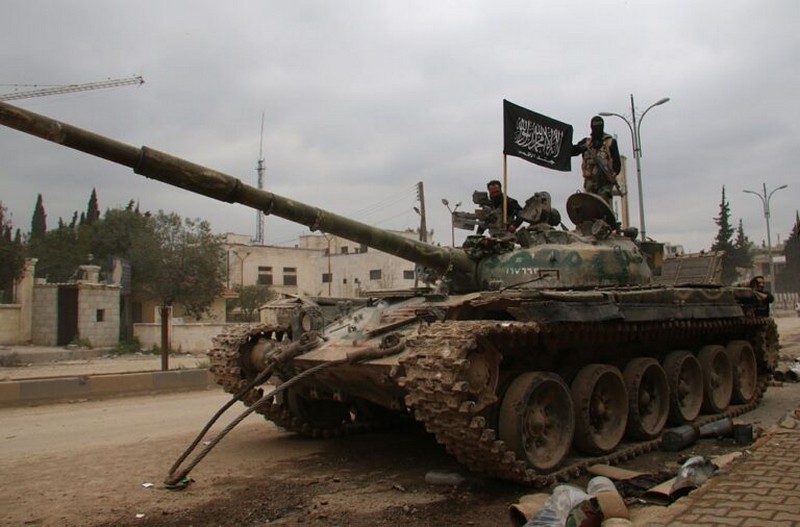
Jabhat al-Nusra (Al-Nusra Front) is Al Qaeda’s franchise in Syria. It emerged as a splinter group of Al Qaeda in Iraq after a falling out between AQI leader Abu Bakr al-Baghdadi, and his then-deputy, Mohammed al-Jolani. In 2013, Baghdadi relaunched his organization under the name of Islamic State of Iraq and Syria (ISIS). Jolani led his Syria-based Al Qaeda faction under the black flag of al-Nusra.

“[W]hile rarely acknowledged explicitly in public,” Charles Lister, a Gulf state-funded analyst in close contact with Syrian insurgent groups wrote in March 2015, “the vast majority of the Syrian insurgency has coordinated closely with Al-Qaeda since mid-2012 – and to great effect on the battlefield.” As one Free Syrian Army leader told the New York Times: “No FSA faction in the north can operate without al-Nusra’s approval.”

According to David McCloskey, a former CIA analyst who covered Syria in the war’s early years, U.S. officials knew that “al-Qaeda affiliated groups and Salafi jihadist groups were the primary engine of the insurgency.” This, McCloskey says, was “a tremendously problematic aspect of the conflict.”

In his memoir, senior Obama aide Ben Rhodes acknowledged that al-Nusra “was probably the strongest fighting force within the opposition.” It was also clear, he wrote, that U.S.-backed insurgent groups were “fighting side by side with al-Nusra.” For this reason, Rhodes recalled, he argued against the State Department’s December 2012 designation of al-Nusra as a foreign terrorist organization. This move “would alienate the same people we want to help.” (Asked about wanting to help an Al Qaeda-dominated insurgency, Rhodes did not respond).

In fact, designating al-Nusra as a terror organization allowed the Obama administration to publicly claim that it opposed Al Qaeda’s Syria branch while continuing to covertly arm the insurgency that it dominated. Three months after adding al-Nusra to the terrorism list, the U.S. and its allies “dramatically stepped up weapons supplies to Syrian rebels” to help “rebels to try and seize Damascus,” the Associated Press reported in March 2013.

‘There Was No Moderate Middle’

Despite being privately aware of Nusra’s dominance, Obama administration officials continued to publicly insist that the U.S. was only supporting Syria’s “moderate opposition,” as then-Deputy National Security Adviser Antony Blinken described it in September 2014.

But speaking to a Harvard audience days later, then-Vice President Biden blurted out the concealed reality. In the Syrian insurgency, “there was no moderate middle,” Biden admitted. Instead, U.S. “allies” in Syria “poured hundreds of millions of dollars and thousands of tons of weapons into anyone who would fight against Assad.” Those weapons were supplied, Biden said, to “al-Nusra, and Al-Qaeda and the extremist elements of jihadis coming from other parts of the world.”

Biden quickly apologized for his comments, which appeared to fit the classic definition of the Kinsley gaffe: a politician inadvertently telling the truth. Biden’s only error was omitting his administration’s critical role in helping its allies arm the jihadis.

Rather than shut down a CIA program that was aiding the Al Qaeda-dominated insurgency, Obama expanded it. In April 2013, the president signed an order that amended the CIA’s covert war, codenamed Timber Sycamore, to allow direct U.S. arming and training. After tapping Saudi Arabia, Turkey, and Qatar to fund its arms pipeline for insurgents inside Syria, Obama’s order allowed the CIA to directly furnish U.S.-made weapons. Just as with the regime change campaign in Libya, a key architect of this operation was Hillary Clinton.

Obama’s upgraded proxy war in Syria proved to be “one of the costliest covert action programs in the history of the C.I.A.,” the New York Times reported in 2017. Documents leaked by NSA whistleblower Edward Snowden revealed a budget of nearly $1 billion per year, or around $1 of every $15 in CIA spending. The CIA armed and trained nearly 10,000 insurgents, spending “roughly $100,000 per year for every anti-Assad rebel who has gone through the program,” U.S. officials told the Washington Post in 2015. Two years later, one U.S. official estimated that CIA-funded militias “may have killed or wounded 100,000 Syrian soldiers and their allies over the past four years.”

But these militias were not just killing pro-Syrian government forces. As the New York Times reported in April 2017, US-backed insurgents carried out “sectarian mass murder.”

One such act of mass murder came in August 2013, when the U.S.-backed Free Syrian Army joined an al-Nusra and ISIS offensive on Alawite areas of Latakia. A Human Rights Investigation found that the insurgents engaged in “the systematic killing of entire families,” slaughtering a documented 190 civilians, including 57 women, 18 children, and 14 elderly men. In a video from the field, former Syrian army general Salim Idriss, head of the U.S.-backed Supreme Military Council (SMC), bragged that “we are cooperating to a great extent in this operation.”

The Latakia massacres came four months after the U.S. ambassador to Syria, Robert Ford, hailed Idriss and his fighters as “the moderate and responsible elements of the armed opposition.” The role of Idriss’s forces in the slaughter did not cancel the administration’s endorsement. In October, the Washington Post revealed that the “CIA is expanding a clandestine effort … aimed at shoring up the fighting power of units aligned with the Supreme Military Council, an umbrella organization led by [Idriss] that is the main recipient of U.S. support.”

[In an emailed response to questions about U.S. policy in Syria, Ford says that there was “no question” that Free Syrian Army engaged in war crimes but noted, “We denounced [them] publicly at the time and in private.” Ford said the administration’s official stance that moderates were engaged in the fight was accurate in light of the facts on the ground. “Our definition of moderates in the armed opposition,” he wrote, “were people willing to negotiate a peaceful end to the war.”]

Officially, the upgraded CIA program barred direct support to al-Nusra or its allies in Syria. But once U.S. weapons arrived in Syria, the Obama administration recognized that it had no way of controlling their use – an apparent motive for waging the program covertly. “We needed plausible deniability in case the arms got into the hands of al-Nusra,” a former senior administration official told the New York Times in 2013.

One area where U.S. arms got into al-Nusra’s hands was the northwestern Syrian province of Idlib.

‘Al-Qaeda’s Largest Safe Haven Since 9/11’

In May 2015, an array of insurgent groups, dubbed the Jaish al-Fatah (“Army of Conquest”) coalition, captured Idlib province from the Syrian government. The fight was led by al-Nusra, and showcased what Charles Lister, the D.C.-based analyst with contacts to insurgents in Syria, dubbed “a far improved level of coordination” between rival militants, including the U.S.-backed FSA and multiple “jihadist factions.”

For Lister, the conquest of Idlib also revealed that the U.S. and its allies “changed their tune regarding coordination with Islamists.” Citing multiple battlefield commanders, Lister reported that “the U.S.-led operations room in southern Turkey,” which coordinated support to U.S.-backed insurgent groups, “was instrumental in facilitating their involvement in the operation” led by al-Nusra. While the insurgents’ U.S.-led command had previously opposed “any direct coordination” with jihadist groups, the Idlib offensive “demonstrated something different,” Lister concluded: To capture the province, U.S. officials “specifically encouraged a closer cooperation with Islamists commanding frontline operations.”

The U.S.-approved battlefield cooperation in Idlib allowed al-Nusra fighters to directly benefit from U.S. weapons. Despite occasional flare-ups between them, al-Nusra was able to use U.S.-backed insurgent groups “as force multipliers,” the Institute for the Study of War, a prominent D.C. think tank, observed when the battle began. Insurgent military gains, Foreign Policy reported in April 2015, were achieved “thanks in large part to suicide bombers and American anti-tank TOW missiles.”

The jihadist-led victory in Idlib quickly subjected its residents to sectarian terror. In June 2015, al-Nusra fighters massacred at least 20 members of the Druze faith. Hundreds of villagers spared in the attack were forced to convert to Sunni Islam. Facing the same threats, nearly all of Idlib’s remaining 1,200 Christians fled the province, leaving a Christian population that reportedly totals just three people today.

In a 2017 post-mortem on the Obama administration’s covert war in Syria, the New York Times described the insurgents’ conquest of Idlib as among the CIA program’s “periods of success.” This was certainly the case for Al Qaeda.

“Idlib Province,” Brett McGurk, the anti-ISIS envoy under Obama and Trump, and now Biden’s top White House official for the Middle East, said in 2017, “is the largest Al Qaeda safe haven since 9/11.”

U.S. Allows ISIS Takeover

Al Qaeda is not the only sectarian death squad that managed to establish a safe haven in the chaos of the Syria proxy war. Starting in 2013, al-Nusra’s sister-turned-rival group, ISIS, seized considerable territory of its own. As with Al Qaeda, ISIS’ land-grab in Syria received a significant backdoor assist from Washington.

Before Al Qaeda captured Idlib, the first ISIS stronghold in Syria, Raqqa, grew out of a similar alliance between U.S.-backed “moderate rebels” and jihadis. After this coalition seized the city from the Syrian government in March 2013, ISIS took full control in November.

When ISIS declared its caliphate in parts of Syria and Iraq in June 2014, the U.S. launched an air campaign against the group’s strongholds. But the Obama administration’s anti-ISIS offensive contained a significant exception. In key areas where ISIS’s advance could threaten the Assad regime, the U.S. watched it happen.

In April 2015, just as al-Nusra was conquering Idlib, ISIS seized major parts of the Yarmouk refugee camp on the outskirts of Damascus, marking what the New York Times called the group’s “greatest inroads yet” into the Syrian capital.

In the ancient city of Palmyra, the U.S. allowed an outright ISIS takeover. “[A]s Islamic State closed in on Palmyra, the U.S.-led aerial coalition that has been pummeling Islamic State in Syria for the past 18 months took no action to prevent the extremists’ advance toward the historic town – which, until then, had remained in the hands of the sorely overstretched Syrian security forces,” the Los Angeles Times reported in March 2016.

In a leaked conversation with Syrian opposition activists months later, then-Secretary of State John Kerry explained the U.S. rationale for letting ISIS advance.

“Daesh [ISIS] was threatening the possibility of going to Damascus and so forth,” Kerry explained. “And we know that this was growing. We were watching. We saw that Daesh was growing in strength, and we thought Assad was threatened. We thought, however, we could probably manage, that Assad would then negotiate” his way out of power.

In short, the U.S. was leveraging ISIS’s growth to impose regime change on Syrian President Bashar al-Assad.

The U.S. strategy of “watching” ISIS’s advance in Syria, Kerry also admitted, directly caused Russia’s 2015 entry into the conflict. The threat of an ISIS takeover, Kerry said, is “why Russia went in. Because they didn’t want a Daesh government.”

Russia’s military intervention in Syria prevented the ISIS government in Damascus that Kerry and fellow Obama administration principals had been willing to risk. Pulverizing Russian airstrikes also dealt a fatal blow to the Al Qaeda-dominated insurgency that the Obama team had spent billions of dollars to support.

From U.S. Enemy to ‘Asset’ in Syria

With U.S.-backed fighters vanquished and one of their main champions, Hillary Clinton, defeated in the November 2016 election, the CIA operation in Syria met what the New York Times called a “sudden death.” After criticizing the proxy war in Syria on the campaign trail, President Trump shut down the Timber Sycamore program for good in July 2017.

“It turns out it’s – a lot of al-Qaeda we’re giving these weapons to,” Trump told the Wall Street Journal that month.

With the exit of the Obama-Biden team, the U.S. was no longer fighting on Al Qaeda’s side. But that did not mean that the U.S. was prepared to confront the enemy that it had helped install in Idlib.

While Trump put an end to the CIA proxy war, his efforts to further extricate the U.S. from Syria by withdrawing troops were thwarted by senior officials who shared the preceding administration’s regime change goals.

“When President Trump said ‘I want everybody out of Syria,’ the top brass at Pentagon and State had aneurysms,” Christopher Miller, the Acting Secretary of Defense during Trump’s last months in office, recalls.

Jim Jeffrey, Trump’s envoy for Syria, admitted to deceiving the president in order to keep in place “a lot more than” the 200 U.S. troops that Trump had reluctantly agreed to. “We were always playing shell games to not make clear to our leadership how many troops we had there,” Jeffrey told Defense One. Those “shell games” have put U.S. soldiers in harm’s way, including four servicemembers recently wounded in a rocket attack on their base in northeastern Syria.

While thwarting a full U.S. troop withdrawal, Jeffrey and other senior officials have also preserved the U.S. government’s tacit alliance with Idlib’s Al-Qaeda rulers. Officially, al-Nusra remains on the U.S. terrorism list. Despite several name changes, the State Department has dismissed its rebranding efforts as a “vehicle to advance its position in the Syrian uprising and to further its own goals as an al-Qa’ida affiliate.”

But in practice, as Jeffrey explained last year, the U.S. has treated Al-Nusra as “an asset” to U.S. strategy in Syria. “They are the least bad option of the various options on Idlib, and Idlib is one of the most important places in Syria, which is one of the most important places right now in the Middle East,” he said. Jeffrey also revealed that he had communicated with al-Nusra leader Mohammed al-Jolani via “indirect channels.”

Jeffrey’s comments underscore a profound shift in the U.S. government’s Middle East strategy as a result of the Syria proxy war: The Syrian branch of Al Qaeda, the terror group that attacked the U.S. on 9/11, and which then became the target of a global war on terror aimed at destroying it, is no longer seen by powerful officials in Washington as an enemy, but an “asset.”

Since retaking office under Biden, the Obama veterans who targeted Syria with one of the most expensive covert wars in history have deprioritized the war-torn nation. While pledging to maintain crippling sanctions and keep U.S. troops at multiple bases, as well as announcing sporadic airstrikes, the White House has otherwise said little publicly about its Syria policy. The U.S. military raid that ended ISIS leader al-Qurayshi’s life in February prompted the only Syria-focused speech of Biden’s presidency.

While Biden trumpeted the lethal operation, the fact that it occurred in Idlib underscores a contradiction that his administration has yet to address. By taking out an ISIS leader in Al Qaeda’s Syria stronghold, the president and his top officials are now confronting threats from a terror safe haven that they helped create.

Aaron Maté is a journalist with The Grayzone, where he hosts “Pushback.” He is also a contributor to Real Clear Investigations and the temporary co-host of “Useful Idiots.”

25 April 2022

Source: www.transcend.org

The US Cries about War Crimes while Imprisoning a Journalist for Exposing Its War Crimes

By Caitlin Johnstone

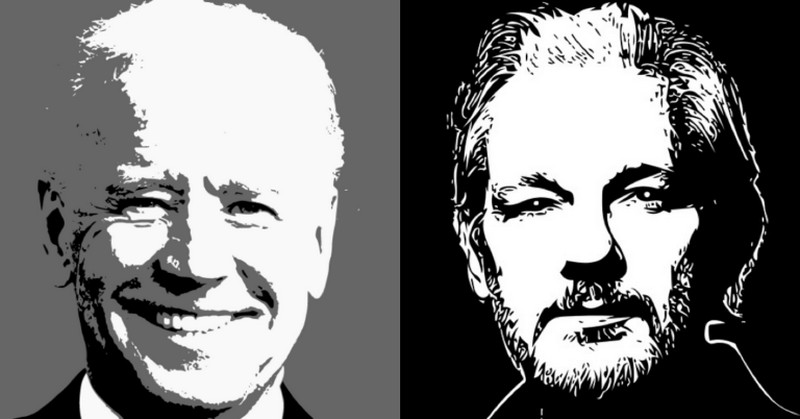
20 Apr 2022 – In what his lawyers have described as a “brief but significant moment in the case,” a British magistrates’ court has signed off on Julian Assange’s extradition to the United States, bringing the WikiLeaks founder one step closer to a US trial under the Espionage Act which threatens press freedoms worldwide.

The extradition case now goes to UK Home Secretary Priti Patel for approval, which will likely be forthcoming as Patel is a reliably loyal empire manager. After that point, Assange’s legal team will be able to launch an appeal.

This is happening at the same time the United States and the United Kingdom are loudly demanding accountability for alleged war crimes by the Russian military in Ukraine, which is interesting because attempting to bring accountability for war crimes is precisely why Julian Assange is in prison.

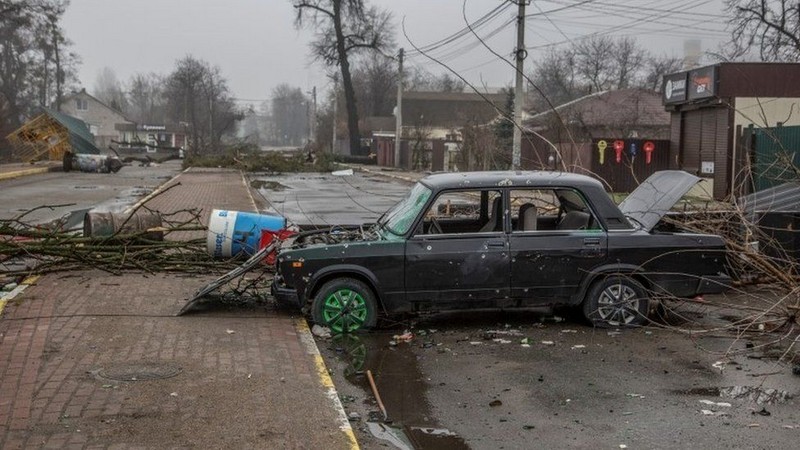
“He is a war criminal,” President Biden said of Vladimir Putin following allegations of war crimes in Bucha, Ukraine earlier this month. “I think it is a war crime. … He should be held accountable.”

And that’s all I’d like to say here today, really. That this discrepancy is very interesting.

I mean, can we take a moment to deeply appreciate the irony of this? Because it’s so obscene and outrageous it’s actually hard to take in unless you really let it absorb. The most powerful government in the world, which serves as the hub of the most powerful empire that has ever existed, is working to extradite a journalist for exposing its war crimes while simultaneously rending its garments over war crime allegations against another government.

I mean, damn. You would think a power structure that had recently been caught red-handed committing war crimes and is currently in the process of imprisoning a journalist for exposing those war crimes would at least have the sense not to yell too loudly about war crimes for a little while. But this is how confident the empire is in its ability to control the narrative.

Really take it in. Really digest it. The more you think about it, the freakier it gets. Not only is the empire persecuting a journalist for exposing its war crimes while at the same time demanding that others be held accountable for war crimes, it is also attacking the free press for reporting the truth about the powerful while at the very same time engaging in a massive propaganda operation which holds that it is involved in Ukraine to protect its freedom and democracy.

I mean, the gall. The absolute temerity. The balls on this empire, man.

I have said it before and I will say it again: Assange exposed many ugly realities about the powerful in his work with WikiLeaks, but everything that he has managed to expose thereafter simply by forcing them to prosecute him far surpasses the revelations in those publications.

If the highest form of journalism is exposing the darkest secrets of the most powerful people in the world, then Julian Assange is the highest form of journalist.

Caitlin Johnstone is a rogue journalist, poet, and utopia prepper who publishes regularly at Medium.

25 April 2022

Source: www.transcend.org
Dutch Journalist: ‘We are here, in Donbass, to awaken Westerners deluded by propaganda’

By Ekaterina Blinova

There are only a handful of Western journalists on the ground in Donbass, while the Western mainstream press is rubber-stamping fake news about the Ukrainian crisis using the same templates it previously exploited in Iraq, Libya and Syria, says Dutch independent journalist Sonja van den Ende.

Sonja van den Ende, an independent journalist from Rotterdam, Netherlands, went to the Donetsk and Lugansk People’s Republics as an embedded reporter with the Russian army to see how the special operation is unfolding with her own eyes.

The sound of shelling and explosion does not frighten her: she’s gotten used to it. Seven years ago, van den Ende worked in Syria, months before the Russians stepped in at the request of Syrian President Bashar al-Assad and changed the tide. The parallels between the Western mainstream press’ coverage of the Syrian and the Ukrainian conflicts are striking, according to her.

“They lie continuously about everything just to implement their own agenda,” van den Ende. “Like in Syria, President Assad was ‘the murderer’ and now President Putin is ‘the butcher.’ They had used this script for many years in Iraq, Venezuela and [other] countries which don’t comply with their agenda; they need a bad “guy”. But they (media) are not even there on the ground, they can’t judge. Only a handful of journalists from the West are here: Graham Philips, Patrick Lancaster, Anne-Laure Bonnel and me.”

However, this is not the only parallel, according to the Dutch journalist. She has drawn attention to Kiev’s fake reports and “false flag” operations including the Snake Island hoax, hype over Russia’s alleged “attack” on the Zaporozhye Nuclear Power Plant (NPP), the now-debunked story of Russia’s “strike” on a Mariupol hospital, and the most recent Bucha provocation, to name but a few. Van den Ende says that it resembles nothing so much as jihadists’ false flags and the White Helmet’s staged “gas attacks”. She specifically recalls the 4 April 2017 chemical provocation in Khan Sheikhun, Idlib, which was debunked by investigative reporters including Pulitzer-Prize winning journalist Seymour Hersh.

“The same happened in Bucha,” says the Dutch journalist. “Many witnesses are saying that the Russian army left on 30 March. Even the Ukrainian military who came in on 1 April didn’t report about corpses on the streets. This happened on 3 April, according to the Western media. Also, evidence is saying that the bodies had white armbands, the sign of the Russian army, the soldiers wear them. So the soldiers are killing the Russian Ukrainians? No way.”

Ukrainian Neo-Nazism is No Myth

Van den Ende talked to many Ukrainian civilians while travelling across Donbass. According to her, nearly everyone condemned the Kiev government for prohibiting the Russian language and depriving them of many cultural and domestic human rights.

“The majority of the people whom I spoke with were very happy that the [Russian special] operation has started,” the Dutch journalist says. “Of course, nobody wants violence and war, but they have been suffering already eight years from the war, carnage and destruction by the Ukrainian forces. The worst were the Nazi battalions, who were fighting along with the regular army.”

Ukrainian neo-Nazism is not a myth, emphasises van den Ende. When she visited the Ukrainian port city of Odessa in 2016 and 2017 she noticed the fascist sentiment which has been spreading across the nation for quite a while. Actually, Ukrainian Nazism has been there since the Second World War, says the Dutch journalist.

The ideological successors of Stepan Bandera, the Organisation of Ukrainian Nationalists (OUN), the 14th SS-Volunteer Division “Galicia,” and the Nachtigall Battalion went underground during the Soviet period. However, after many years these forces are alive again with the US, the UK and EU using them to destabilise Ukraine, she says. Previously, these Western geopolitical actors much in the same vein used Islamists to unseat Assad, adds the journalist.

According to van den Ende, after carrying out a 2014 coup d’etat in Ukraine, the minority of neo-Nazis grabbed power and have been terrorising mainly the eastern part of the country using very vicious and cruel Nazi-style methods for eight years.

Feeling Protected at Long Last

The West is continuously trying to blame Russia for all the damage inflicted on Ukrainian villages and towns. However, Eastern Ukrainian eye-witnesses say that most of destruction in the civilian areas was caused by the retreating Ukrainian army and neo-Nazi formations, including the notorious Azov Battalions, according to the Dutch journalist. In addition to using civilian facilities as shields, the Ukrainian military are reported to have indiscriminately shelled the positions they left and cede to the Russian forces.

To illustrate her point, van den Ende describes the shelling of a hospital in Volnovakha, in the Donetsk People’s Republic. The building was not bombed from the air, but attacked with grenades and rockets, she says, citing a Volnovakha resident.

“The West claims it was bombed by the Russians, but as a lady told me, that she worked there all her life, and that the Ukrainian [military] – who were quartered in the hospital – shelled and destroyed the facility and her house, which was next to the hospital.”
According to the Dutch journalist, Eastern Ukrainians are treated very well by the Russian army and regularly receive humanitarian aid in most locations. What’s more, the locals say that at long last they feel protected, she adds.

Fierce fight between the Ukrainian armed forces and neo-Nazi battalions on the one side and the Russia-backed DPR and LPR militias on the other side left many houses ruined. However, the people of Donbass have not given up, highlights the journalist.

“As a woman said: ‘We are strong, we can rebuild it, for our children and grandchildren, to have peace,’” notes van den Ende.

Is Russia Losing an Information War?

Some observers suggest that Russia is losing the information war with the West. The Western Big Media machine is working day and night with the backing of Big Tech, while most Russian news outlets have been either censored or completely silenced in the Western countries.

“No, Russia is not losing the information war completely,” argues van den Ende. “I think it’s up to us, the handful of Westerners, to awaken the majority of Westerners who are still asleep and getting bombarded with fake news and made-up stories day by day.”

One should bear in mind that this conflict is being fanned by the Western politicians in the first place, says the Dutch journalist. According to her, the West did completely the same in Syria but has largely lost that war.

The world is changing and the Western establishment has yet to reconcile itself with the emerging multipolar world order, according to van den Ende. She notes that Russian President Vladimir Putin outlined the beginning of this change in his 2007 Munich speech.

Although they opted to neglect his words at that time, it is becoming obvious that a unipolar world is gone for good, the journalist concludes.

8 April 2022

Source: www.globalresearch.ca

Pakistan’s Godfathers

Tariq Ali

Over the Pakistani airwaves, sports commentators frequently groan that the national cricket team – which most people follow with religious fervour – is ‘once again in trouble’. The same lament applies semi-permanently to Pakistan’s politics. This month has seen yet another crisis in the upper echelons of government. To avoid a no-confidence vote that his Party for Justice (PTI) would undoubtedly have lost, Prime Minister Imran Khan asked the President to dissolve parliament and call new elections. This unusual move was necessary, he explained, because the US, backed by the opposition parties, was engaged in a soft coup to topple him. The Opposition appealed to the Supreme Court, asking it to rule on the legality of the dissolution. On 7 April, the five judges unanimously agreed that the government had breached the constitution. They reconvened the Assembly and declared that the no-confidence motion must be brought by 9 April.

There are credible rumours that Khan tried unsuccessfully to sack his Chief of Staff, General Bajwa, and promote his old chum General Faiz Hamid (once head of the Inter-Services Intelligence), while planning to declare a state of emergency. The Army insists no such plan existed, but I have my doubts. Panicking politicians will do anything to retain power. (On the last such occasion in 1999, Prime Minister Nawaz Sharif attempted to kidnap his then Chief of Staff, General Musharraf, by keeping his plane in the air and not letting it land in Pakistan; he was soon out of a job and Musharraf seized power.) Ultimately, though, Khan’s efforts were futile. The Assembly met, the vote was held and the PTI defeated. The next morning, Shahbaz Sharif, president of the Pakistan Muslim League-Nawaz (PML-N) party, was sworn in as the new Prime Minister. Large, predominantly middle-class crowds gathered in the major cities to support the ousted leader. The main chants were anti-American.

Khan was once Pakistan’s most popular cricket captain, and a national idol after the team won the World Cup. This status helped to launch his political career. But unlike in cricket, where generational shifts have produced some fine new players, the country’s political parties rarely change with the times. Dynastic rule ensures that large reserves of capital, often illegally acquired, remain in the family. And the uniformed umpires at military GHQ in Rawalpindi, who make and break governments, are provided with huge grants of land and other perks. A retired senior general in India once complained to me: ‘If only I had been a general in Pakistan, I would not be spending my last years living on the tenth floor of this three-bedroomed apartment for retired officers in Delhi.’ And that was twenty-five years ago.

The basic structure of Pakistani politics can be briefly summarized as follows. There are essentially four political blocs in the country and one overwhelmingly dominant province – Punjab – whose votes decide each election result. Two of those blocs are dynastic parties: the Pakistan People’s Party, run by the Zardari-Bhutto clan, and the Muslim League-N, run by the Sharif family. The first was discredited by large-scale corruption during its reign. Asif Zardari, who served as President from 2008 to 2011, was a wizard on that front. No paper trail, no evidence and, hence, no one eager to betray him to the courts or the National Accountability Bureau in return for immunity. Nonetheless, the PPP was damaged by its shameless profiteering, and at the last general election it lost Punjab to the new kid on the block: Imran Khan and his PTI. Since then, the Zardari-Bhutto clan has been confined to the province of Sind. Its current leader is the young Bilawal Bhutto, who was given the role as a kind of heirloom after the tragic assassination of his mother Benazir. He and his cadre have been noisy but ineffective provincial politicians, who have turned Sind into little more than a despotic fiefdom.

Are the Sharifs any different? Alas not. During their heyday in power, looting public money was virtually institutionalized; Nawaz Sharif was ousted as Prime Minister in 2017 after the Panama Papers revealed that he had stashed millions of dollars offshore – a common practice among the younger Sharif family members. The clan has a power base in the cities, and enjoys support from commercial traders large and small, as well as big capital. As far as Pakistan’s oligarchs are concerned, the Sharifs are currently the safest pair of hands. They know how to run a business, so they can administer a modern state.

Then there is the bloc of Islamist parties, the largest of which is the JUI, led by Maulana Fazal-ur-Rehman. It enjoys some support in the frontier provinces: 26 seats in the Khyber Pakhtunkhwa and Baluchistan provincial assemblies. Despite its supposed piety, the JUI is no less motivated by commercial interests. It struck a deal with a previous PPP government to offer parliamentary support on condition that its leader was given the diesel franchise in his province. Ever since, he has been affectionately known as Maulana Diesel, or just ‘Diesel’.

When the PTI came to power in 2018, the Z-Bs and Sharifs alleged that there had been widespread ballot-rigging facilitated by the Army, but they failed to produce evidence. Notwithstanding the trustworthiness of the final tally, Khan had run a powerful campaign. He promised a fresh start and gained the confidence of young city-dwellers from all social classes, desperate for an alternative to the corrupt dynastic parties and the interference of the military establishment. But to build his electoral vehicle, Khan sought out advisers and fixers who were deeply embedded in the system, having previously worked with every other political grouping. They constituted a core of bandwagon careerists, many close to the Army, whose loyalties were liable to shift the minute they smelled change in the air. Quite a few ran for national and provincial assemblies on the PTI ticket. Most of them won, although the PTI failed to secure an overall majority.

Khan rapidly squandered the goodwill that followed his election victory. Clientelism, a major cause of public discontent, has blighted Pakistan since its inception, and the PTI did nothing to confront it. The departure of traditional industrialists (most of them Hindu) from Lahore and Karachi after the partition of 1947 left a vacuum that was filled by the direct intervention of the state and the dominant political party, the Muslim League. Subsequently, the industrial boom of the early 1960s consolidated a layer of nouveau riche capitalists in Lahore with close ties to the political class (while also enriching the remaining industrialists, mainly non-Sindhi parsis and bohras in Karachi). Today, one of Pakistan’s top five oligarchs is a construction mogul who became a billionaire by leveraging his elite connections to secure contracts for military and civilian projects. Malik Riaz describes himself as ‘Pakistan’s leading real estate developer and philanthropist’. His modesty is deceptive. He bankrolls political parties, police officers and members of the armed forces – buying and building homes for those in power. A recent recording shows him handing over a briefcase containing gold jewellery to one of the ‘First Lady’s’ couriers. The police have, on occasion, assisted his children in intra-elite disputes and shielded him from scrutiny. (This kind of collusion is beautifully captured in Mohsin Hamid’s 2014 novel, How to Get Filthy Rich in Rising Asia.)

Riaz embodies Pakistan’s iniquitous politics. Whether one classifies it as a military dictatorship or a managed democracy, its guiding principle is the reproduction of a filthy rich elite. The country lacks an education system or functioning health service; the poor, both in cities and outlying villages, are regularly evicted so that their land can be stolen and sold at exorbitant prices; the condition of women remains appalling, and on many social indicators Pakistan lags behind Bangladesh. Khan vowed to heal these ailments by ending corruption and building a proper social infrastructure. But in power he did no such thing. Accounts of wild corruption continued to circulate in PTI-controlled areas, with good reason. In lieu of a new social settlement, the government turned to the IMF, whose most recent impositions caused a massive rise in electricity and gas bills, crippling many middle-class households while contributing to rising malnutrition.

All of this was par for the course. But what annoyed leading members of Khan’s own party was the debacle in Punjab, where his wife insisted on handing the role of Chief Minister to the PTI parliamentarian Usman Buzdar: a man that even the most charitable observer would describe as a dim-witted and low-grade politician. The appointment divided Khan’s supporters, angered the Army and played into the opposition’s hands. The Z-Bs and Sharifs publicly accused Buzdar of being little more than a thieving cash-cow for the First Lady. They alleged that she, her first husband and her son were taking a cut from all the business deals he negotiated the province. Buzdar enflamed the situation through his own stupidity, arrogance and gangsterism, antagonizing many in the PTI. Two factional splits, both led by oligarchs, ensued.

As a result of this and other scandals, the opposition parties began to lay the groundwork for a no-confidence motion. Then came the US collapse in Afghanistan and Putin’s assault on Ukraine. After the Taliban’s triumph in Kabul, Khan declared that the Americans had ‘made a mess’: a common view in the region and elsewhere. The US expressed its displeasure at this remark, which was swiftly contradicted by a senior Pakistani military delegation participating in talks at the Pentagon. They reassured their American allies that Pakistan’s foreign and defence policies were decided by the Army, not the Prime Minister. That was that. Yet a few months later, Khan accidentally found himself in Moscow on the day Putin’s troops invaded Ukraine. He adopted the position taken by India and China, refusing to support either Putin’s invasion or the NATO-sponsored motion at the UN General Assembly. Again, this provoked the ire of the State Department, which published a communique singling out Khan for criticism.

At this point, the opposition campaign to eject the PTI mysteriously accelerated. The plotters thickened. Donald Lu, the US Assistant Secretary of State for South and Central Asian Affairs, allegedly warned Khan that there would be consequences if he managed to survive the impending no-confidence motion. It is not uncommon for imperial envoys to issue such threats (though they are usually delivered to the Army, which can be relied upon to call recalcitrant politicians to heel). But Lu’s actions indicate that the UN vote seriously upset the White House, which perceived it as a direct challenge to American hegemony. Shortly afterward, the Biden Administration began to publicly and foolishly threaten China, and it no doubt reprimanded India’s leaders in private. Yet it also paid particular attention to Pakistan, given the country’s nuclear status, proximity to Afghanistan and close links to China. Now, in light of Khan’s insubordination, the hegemon has evidently swung behind the opposition, hoping to install one of its leaders as PM.

The effect of US diplomatic pressure following the UN vote was immediately visible. General Bajwa made a public statement on Ukraine to re-tilt Pakistan towards the US. The bandwagon careerists jumped ship and began negotiating deals with the opposition. Meanwhile, the minority parties that had helped to secure Khan’s majority deserted him. PTI parliamentarians were offered substantial dosh to do the same. Zardari, the wizard of Sind, who had been languishing in hospital, temporarily left his sickbed to join the party games. Well-versed in such political crises, he was trusted by the entire opposition to buy out weak-kneed PTI members, whatever the cost.

12 April 2022

Source: newleftreview.org

Bucha Massacre and Genocide of Ethnic Russians in Ukraine

By Nauman Sadiq

In a speech to a meeting on socioeconomic support for the constituent entities of the Russian Federation on March 16, Russian President Vladimir Putin succinctly elucidated the salient reasons for pre-emptively mounting a military intervention in Ukraine in order to forestall NATO’s encroachment upon Russia’s security interests, and cited the genocide of ethnic Russians by ultra-nationalists as a principal reason for invading Ukraine.

“We are meeting in a complicated period as our Armed Forces are conducting a special military operation in Ukraine and Donbass. I would like to remind you that at the beginning, on the morning of February 24, I publicly announced the reasons for and the main goal of Russia’s actions.

“It is to help our people in Donbass, who have been subjected to real genocide for nearly eight years in the most barbarous ways, that is, through blockade, large-scale punitive operations, terrorist attacks and constant artillery raids. Their only guilt was that they demanded basic human rights: to live according to their forefathers’ laws and traditions, to speak their native Russian language, and to bring up their children as they want.

“Kiev was not just preparing for war, for aggression against Russia – it was conducting it … Hostilities in Donbass and the shelling of peaceful residential areas have continued all these years. Almost 14,000 civilians, including children have been killed over this time … Clearly, Kiev’s Western patrons are just pushing them to continue the bloodshed. They incessantly supply Kiev with weapons and intelligence, as well as other types of assistance, including military advisers and mercenaries.”

In the 2001 census, nearly a third of Ukraine’s over 40 million population registered Russian as their first language. In fact, Russian speakers constitute a majority in urban areas of industrialized eastern Ukraine and socio-culturally identify with Russia. Ukrainian speakers are mainly found in sparsely populated western Ukraine and in rural areas of east Ukraine.

Ethnic Russians constituted the social and political elite of Ukraine in the heyday of the Soviet Empire, but were reduced to second-class citizens following the break-up of the Soviet Union in the nineties. The state-sponsored persecution of ethnic Russians intensified across Ukraine following the colored revolution in January 2005, dubbed the Orange Revolution, orchestrated by the Western powers and their Ukrainian collaborators, subversively toppling the democratically elected president of Ukraine, Viktor Yanukovych.

But the real ethnic cleansing of Russians in Ukraine began after the 2014 Maidan coup, once again ousting pro-Russia Ukrainian President Viktor Yanukovych, and NATO powers initiated an eight-year war of attrition against Russia in Ukraine’s eastern Donbas region by nurturing the Ukraine’s infamous Azov Battalion, officially part of the National Guard of Ukraine, that has been widely acknowledged as a neo-Nazi volunteer paramilitary force connected with foreign white supremacist organizations.

Azov Battalion was initially formed as a volunteer group in May 2014 out of the ultra-nationalist Patriot of Ukraine gang, and the neo-Nazi Social National Assembly (SNA) group. As a battalion, the group fought on the frontlines against pro-Russia separatists in Donbas, the eastern region of Ukraine.

A few months after recapturing the strategic port city of Mariupol from the Russia-backed separatists, the unit was officially integrated into the National Guard of Ukraine on November 12, 2014, and exacted high praise from then-President Petro Poroshenko. “These are our best warriors,” he said at an awards ceremony in 2014. “Our best volunteers.”

The unit was led by Andriy Biletsky, who served as the leader of both the Patriot of Ukraine (founded in 2005) and the SNA (founded in 2008). In 2010, Biletsky said Ukraine’s national purpose was to “lead the white races of the world in a final crusade … against Semite-led Untermenschen [inferior races].” Biletsky was elected to parliament in 2014. He left Azov as elected officials cannot be in the military or police force. He remained an MP until 2019.

These forces were privately funded by oligarchs – the most known being Igor Kolomoisky, an energy magnate billionaire and then-governor of the Dnipropetrovska region. In addition to Azov, Kolomoisky funded other volunteer battalions such as the Dnipro 1 and 2, Aidar and Donbas units.

The Mint Press News recently reported:

“Zelensky’s presidential bid in 2019, which saw him win 73% of the vote, was successful on the basis that he was running in order to combat corruption and create peace in the country but, as the leaked documents known as the Pandora Papers revealed, he himself was storing funds in offshore bank accounts. Zelenskyy’s campaign was at the time boosted and bankrolled by Israeli-Ukrainian billionaire Igor Kolomoisky – who was himself accused of stealing $5.5 billion from his own bank.

“Muslims seem to be a major issue for the Azov Battalion. The Islamophobia present not only in Azov, but also in the National Guard of Ukraine, came through strongly on social media as the official National Guard site glorified the Azov Battalion as they dipped their bullets in pig fat. The video was directed at Muslim soldiers from Chechnya who are fighting on the side of Russia and were described as orcs by the National Guard on Twitter.”

In June 2015, both Canada and the United States announced they will not support or train the Azov regiment, citing its neo-Nazi connections. The following year, however, the US lifted the ban under pressure from the Pentagon, and the CIA initiated the clandestine program to nurture ultra-nationalist militias in east Ukraine. In October 2019, 40 members of the US Congress signed a letter unsuccessfully calling for the US State Department to designate Azov as a “foreign terrorist organization” (FTO).

In Feb. 2019, the Nation Magazine published a detailed think piece: “Neo-Nazis and the Far Right are on the March in Ukraine,” elaborating Ukraine’s far-right militant groups’ xenophobic and white supremacist political ideology.

“Then-Speaker of Parliament Andriy Parubiy cofounded and led two neo-Nazi organizations: the Social-National Party of Ukraine (later renamed Svoboda), and Patriot of Ukraine, whose members would eventually form the core of Azov.

“Even more disturbing is the far right’s penetration of law enforcement. Shortly after the Maidan coup in 2014, the US equipped and trained the newly founded National Police, in what was intended to be a hallmark program buttressing Ukrainian democracy. The deputy minister of the Interior—which controls the National Police—is Vadim Troyan, a veteran of Azov and Patriot of Ukraine.

“In 2015, the Ukrainian parliament passed legislation making two WWII paramilitaries—the Organization of Ukrainian Nationalists (OUN) and the Ukrainian Insurgent Army (UPA)—heroes of Ukraine, and made it a criminal offense to deny their heroism. The OUN had collaborated with the Nazis and participated in the Holocaust, while the UPA slaughtered thousands of Jews and 70,000-100,000 Poles on their own volition.”

Despite all the evidence of genocide and ethnic cleansing of Russians by the neo-Nazi militias in Ukraine to the contrary, the establishment media is abuzz with reports of alleged genocide of Ukrainians by the withdrawing Russian forces in the outskirts of the capital. Hundreds of dead bodies “buried in mass graves” were found in Bucha, a town 37 km (23 miles) northwest of Kyiv, allegedly massacred by the Chechen contingent of the Russian forces occupying the area.

Denying the spurious and unsubstantiated allegations of purported war crimes and genocide by Russian troops, Russia’s chief investigator Alexander Bastrykin, head of the Russian Investigative Committee, ordered a probe be opened on the basis that Ukraine had insidiously spread “deliberately false information” in order to malign Russia’s month-long military campaign in Ukraine.

In addition, Russia has requested a United Nations Security Council meeting on April 4 over purported war crimes by Russian forces in Ukraine’s Bucha, Russian First Deputy Permanent Representative to the United Nations Dmitry Polyanskiy said on Sunday.

“In light of the Ukrainian radicals’ provocation in Bucha, Russia has requested a meeting of the United Nations Security Council on Monday, April 4,” he wrote on his Telegram channel. “We will unmask Ukrainian provocateurs and their Western patrons.”

The Russian defense ministry said earlier on Sunday that all Russian troops had left the city of Bucha in the Kyiv region as far back as March 30, while the “evidence of crimes” surfaced four days later, when Ukrainian security forces and allied ultra-nationalist militias arrived in the city.

Baselessly leveling spurious accusations of alleged genocide and ethnic cleansing without a shred of evidence in order to vilify regional and global adversaries has become a preferred tool in the psyops’ arsenal of the corporate media in the recent years.

Following the rise of China as a major economic power in the 21st century, the mainstream media was similarly tasked by the security establishments to demonize the global rival by blowing out of proportions the sheer fabrication of alleged “genocide and ethnic cleansing” of Uyghur Muslim’s in China’s western Xinjiang province in order to drive a wedge between the rising industrial power and the energy-rich Islamic World.

Unlike several hapless Islamic countries in the Middle East, such as Afghanistan, Iraq, Libya and Syria, that went through US military occupation or interventions through regional proxies and where countless large-scale massacres have taken place creating millions of refugees, no such massacre or forced displacement of ethnic Uyghurs has ever been recorded in China’s Xinjiang, not even by the corporate media, the foremost purveyor of presumed Uyghur persecution in China.

After the deadly Urumqi riots in July 2009 between the Han and Uyghur ethnic groups in Xinjiang’s provincial capital in which scores of rioters on both sides were killed, China went through a series of violent terror attacks that rocked Xinjiang and the rest of China in the following years.

Dozens of civilians were hacked to death at a busy train station in China’s south. A Uyghur drove a car into crowds at Beijing’s Tiananmen Square. Forty-three died when militants threw bombs from two sports utility vehicles plowing through a busy market street in Urumqi. When Chinese President Xi Jinping visited Xinjiang in 2014, bombs tore through an Urumqi train station, killing three and injuring 79.

After experiencing the spate of terror attacks, Chinese authorities initiated de-radicalization programs in Xinjiang in which Uyghurs were encouraged to participate, as in the Western countries where Muslim immigrants were kept under surveillance and suspects with history of violent crimes were asked to attend de-radicalization programs in the aftermath of the 9/11 terror attack when anti-Muslim paranoia was at the peak.

Most of the aforementioned terror attacks in China were claimed by the East Turkistan Islamic Movement (ETIM), a fanatical transnational terrorist organization of Uyghurs that has taken part in jihadist insurgencies as far away as Afghanistan and Syria. The militant group has been declared a proscribed terrorist outfit by China, the United Nations and many regional countries, though the Trump administration removed its terrorist designation in 2020.

Much like the Uyghur diaspora in the Western countries being patronized by the security agencies and the corporate media to malign a global rival, there is another clandestine organization of Chinese dissidents based in the US that until the November 2020 presidential election enjoyed the protection of the US deep state and was used as a trump card to mount psychological warfare against the Chinese government.

Falun Gong was founded by its leader Li Hongzhi in China in the early 1990s. Today, Falun Gong maintains an informal headquarters, Dragon Springs, a 400-acre compound in upstate New York, located near the current residence of Li Hongzhi. Falun Gong’s performance arts extension, Shen Yun, and two closely connected schools, Fei Tian College and Fei Tian Academy of the Arts, also operate in and around Dragon Springs.

Since 1998, Li Hongzhi has settled as a permanent resident in the United States and maintains high-level contacts not only in the governments of the US and China but also enjoys immense political clout among Chinese diaspora across the world, thanks to the deep pockets of several billionaire Chinese oligarchs that Falun Gong boasts in its ranks, who generously contribute to finance the clandestine organization’s anti-China propaganda operations.

Forget about criticizing the secretive society, up until the elections it wasn’t even permitted to mention the name of Falun Gong on mainstream news outlets. It was simply described as “a religious and spiritual movement” that teaches “meditation techniques” to its members in all the information available in the public domain about the objectives and activities of the religio-political cult.

But in an explosive article for the New York Times in October 2020 to dispel a flurry of reports about the “Chinagate scandal” implicating the Biden campaign in the run-up to the US presidential election, Kevin Roose blew the lid off on the subversive organization and its media outlet, the Epoch Times, widely followed by Trump supporters, and alleged:

“For years, The Epoch Times was a small, low-budget newspaper with an anti-China slant that was handed out free on New York street corners. But in 2016 and 2017, the paper made two changes that transformed it into one of the country’s most powerful digital publishers.

“The changes also paved the way for the publication, which is affiliated with the secretive and relatively obscure Chinese spiritual movement Falun Gong, to become a leading purveyor of right-wing misinformation.

“First, it embraced President Trump, treating him as an ally in Falun Gong’s scorched-earth fight against China’s ruling Communist Party, which banned the group two decades ago and has persecuted its members ever since. Its relatively staid coverage of U.S. politics became more partisan, with more articles explicitly supporting Mr. Trump and criticizing his opponents.

“As the 2016 election neared, reporters noticed that the paper’s political coverage took on a more partisan tone. ‘They seemed to have this almost messianic way of viewing Trump as the anti-communist leader who would bring about the end of the Chinese Communist Party,’ Steve Klett, who covered the 2016 campaign for the paper, said.

“Where the paper’s money comes from is something of a mystery. Former employees said they had been told that The Epoch Times was financed by a combination of subscriptions, ads and donations from wealthy Falun Gong practitioners.

“Steve Bannon, the former chief strategist of the White House, is among those who have noticed The Epoch Times’s deep pockets. Last year, he produced a documentary about China with NTD. When he talked with the outlet about other projects, he said, money never seemed to be an issue. ‘I’d give them a number,’ Mr. Bannon said. ‘And they’d come back and say, We’re good for that number.’”

Nauman Sadiq is an Islamabad-based geopolitical and national security analyst focused on geo-strategic affairs and hybrid warfare in the Af-Pak and Middle East regions.

4 April 2022

Source: www.globalresearch.ca