Just International

Whose Child Is This?

By Anthony Marsella

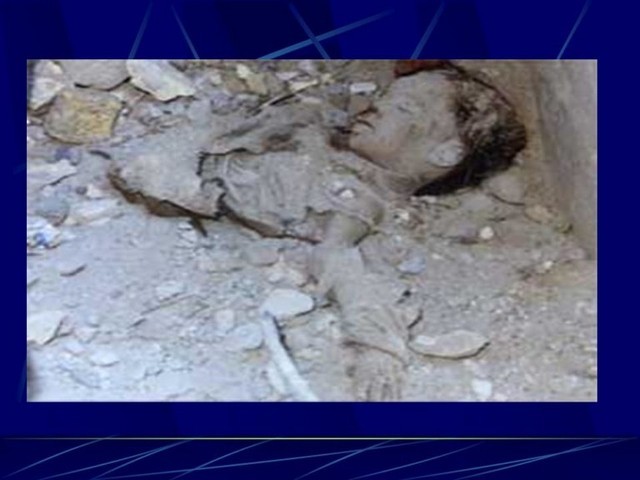
Whose Child is This? Whose child is this? Is this child an Iraqi . . . an Israeli . . . a Chechnyan . . . an Afghani . . . a Kurd . . . a Nigerian? Is she or he English, Indonesian, Spanish, Lebanese, Turkish, Congolese, Bosnian, Persian? Does it matter? Is this child not a daughter or son to each of us?

Is this child not a human being born of a union of a man and woman whose intimacy, whose passion, whose very breathe yielded a life that sought only to live . . . to enjoy some moments of laughter and delight, some moments of comfort and calm . . . to make yet another life.

Now this child rests amidst the dust and debris of war . . . lifeless . . . torn and shattered . . . killed by someone whom she or he never knew, and would likely never meet. Death from a distance. . . a bomb from a plane, a shell from a mortar, a strap of explosives . . . intentional and willing, calculated and planned, a measured effort to destroy.

The Source: an agent of death and destruction, a pilot or soldier, an insurgent or terrorist . . . does it matter? They have killed their own child . . . they have killed our child. And in doing so, they have diminished each of us as human beings, each of us as creatures of consciousness and conscience, each of us as reflections and carriers of life. Words cannot console her or his parents, if they, indeed, survived this horror. They are left with only endless pain . . . memories of a child eating, sleeping, playing . . . a reminder of a tragic moment inscribed in mortar and blood.

Enough! Enough! Stand, speak, write, act against those who advocate violence and hate no matter the source — be they presidents, prime ministers, generals, terrorists, mullahs, rabbis, dictators, ministers, true believers . . . tell them that we do not share their quest for power and greed. Tell them we do not share their hate, nor their blindness and indifference to suffering. Tell them we do not share their empty post-tragedy rhetoric designed to keep us mired in the fulfillment of their selfish needs. We are not pacified and contented by their explanations and assurances. We challenge and contest their motives! We resent and resist their excuses. How shallow their words in the face of dying or dead child.

THIS IS OUR CHILD! Today, we claim this child as our own, too late to keep her or him alive, too late to know her or his hopes and dreams, too late to know the promise and possibilities of their life had it been given the chance to be lived free of oppression, abuse, and indignity.

But we are not too late to affirm to all living children that we will try to protect you, to guard you, and to shelter you from the terror of war and violence, and from an untimely, painful, and meaningless death, by choosing peace over war, compassion over violence, voice over silence, and conscience over comfort.

Note: I first wrote this brief appeal in July, 2005, following a conference in Savannah, Georgia, in which Dr. Amer Hosin shared photos of death and suffering in the Middle East. I emailed this appeal in the December holiday season, when the poignant holiday carol, “What child is this?” is played endlessly on radio and television, testimony to Christian faith, but indirectly testimony to the consequences of violence against children, and the reality our hope for recovery and redemption reside in children – all children!

Today, as I viewed the now iconic photo of the stalwart Syrian boy, covered in dust, his mind and body shattered by bombs he could never fathom, and I recalled the iconic photo of the naked Vietnamese girl escaping napalm. I decided I must share this appeal today. It is upon all of us. What can we do to stop the destruction of life? What can we do end the reflexive response of violence and hate toward those we deem enemies.

I say to you, I plead with you now: “Hate begets violence, and violence begets hate, and always innocents become the victims.” We use the word “hate” daily, casually expressing our so often disgust or revulsion with something as benign as broccoli, or an athletic team. “I hate __________!

The powerful emotion of “hate” has escaped our conscious awareness! We “hate” too much, too often, too easily; the consequences of the word and the behaviors it implies are lost to us. Ask: Do I have a right to “hate?” Is “hate” a choice? What do I mean when I say I “hate”! Stare at the image of a dead Iraqi child? Embed the image of the struggling shocked Syrian boy in your mind. Make room for it! It is more important than so many other images you hold. Ask: Whose child is this? He or she is your child! If you deny this reality, then await the day the face returns to remind you of your failure, to haunt your minds as you look at your child.

Anthony J. Marsella, Ph.D., a member of the TRANSCEND Network for Peace Development Environment.

24 December 2018

Source: www.transcend.org

Russia’s New Rules Of Engagement In Syria

By Tyler Durden

Syria will adopt a new rule of engagement with Israel now that Russia has taken a tougher and clearer stance on the conflict between Israel and the “Axis of the Resistance”. Henceforth, Damascus will be responding to any Israeli strike. If it damages a specific military target it will reply with a strike against a similar objective in Israel. Decision makers in Damascus said, “Syria will not hesitate to hit an Israeli airport if Damascus airport is targeted and hit by Israel. This will be with the consent of the Russian military based in the Levant.”

This Syrian political decision is based on the clear position taken by Russia in Syria following the downing of its aircraft on September 18 this year. In 2015 when the Russian military landed in Syria, it informed the parties concerned (i.e. Syria, Iran and Israel) that it had no intention to interfere in the conflict between them and Hezbollah and that it would not stand in the way of Tel Aviv’s planes bombing Hezbollah military convoys on their way to Lebanon or Iranian military warehouses not allocated to the war in Syria.

This was a commitment to remain an onlooker if Israel hit Iranian military objectives or Hezbollah convoys transporting arms to Hezbollah from Syria to Lebanon, within Syrian territory. Russia also informed Israel that it would not accept any attacks on its allies (Syria, Iran, Hezbollah, and their allies) engaged in fighting ISIS, al-Qaeda and its allies. Israel respected the will of Moscow until the beginning of 2018, when it started to attack Iranian bases and Syrian military warehouses, though it never attacked a Hezbollah military position. Israel justified its attack against the Iranian base, a military facility called T4, by claiming it had sent drones over Israel.

Tel Aviv considered violation of its neighbors’ sovereignty as its exclusive prerogative. Damascus and Iran have responded with at least one confirmed shooting down of an Israeli F-16. Israel started to attack Syrian warehouses, mainly where Iranian missiles were stored. Iran has replaced every single destroyed warehouse with other more sophisticated precision missiles, capable of hitting any objective in Israel.

However, Russia’s neutrality towards Israel in the Levant turned out to be quite expensive. It has lost more than Iran, especially after the downing of its IL-20, and with it, 15 officers highly trained to use the most advanced communication and espionage systems.

Russia then brought to Syria its long-awaited advanced S-300 missiles and delivered them to the Syrian army while maintaining electronic coordination and radar command. The S-300 poses a danger to Israeli jets only if these violate Syrian airspace. Tel Aviv has kept its planes out of Syria since last September but launched long range missiles against a couple of targets.

For many months, the Russian President Vladimir Putin refused to receive Israeli Prime Minister Benjamin Netanyahu. Only through real harassment by the latter did Putin finally accept to briefly meet with Netanyahu over lunch or around the dinner table during a large Summit or meeting of Heads of State, without however accepting any compromise or reconciliation. Russia has now taken a clear position and has no intention of extending its embrace or pardon to Israel. Russia felt that its generosity (by closing its eyes to Israel’s activities in Syria) was neither recognized nor sufficiently appreciated by Tel Aviv.

This past week, Moscow agreed to receive an Israeli military delegation led by Major-General Aharon Haliva, following Israel’s insistence on breaking the ice between the two countries. However, Russia’s position is not expected to change in Syria and no Israeli bombing of Syrian or Iranian targets will be tolerated.

According to these sources:

“Russia has informed Israel that there are Russian officers present at every Syrian or Iranian military base and that any strike against Syrian or Iranian objectives would hit Russian forces as well. Putin will not allow his soldiers and officers to be struck down by Israel’s direct or indirect bombing”.

Moreover, Russia has given Syria the green light — said the source — to strike Israel at any time if and when Tel Aviv’s planes launch raids against Syrian military targets or launch long-range missiles without flying over Syria (for fear of the S-300 and to avoid seeing its jets downed over Syria or Lebanon).

The source confirmed that Syria — contrary to what Israel claims — now has the most accurate missiles, which can hit any target inside Israel. The Syrian armed forces have received unrevealed long and medium-range missiles from Iran. These operate on the GLONASS system – the abbreviation for Globalnaya Navigazionnaya Sputnikovaya Sistema, the Russian version of the GPS. Thus, the delivery of Iran and the manufacture of missiles inside Syria (and Lebanon) is now complete.

Israel, however, claims it has destroyed Syria’s missile capability, including that of the missiles delivered by Iran. According to the source, Damascus controls a very large number of precision missiles, notwithstanding those destroyed by Israel. “In Iran, the cheapest and most accessible items are the Sabzi and the missiles”, said the source.

The new Syrian rule of engagement — according to the source — is now as follows: an airport will be hit if Israel hits an airport, and any attack on a barracks or command and control center will result in an attack on similar target in Israel. It appears that the decision has been taken at the highest level and a clear “bank of objectives” has now been set in place.

The rules of engagement are changing and situation in the Levant theatre is becoming more dangerous; regional and international confrontations are still possible. The Middle East will not return to stability unless the Syrian war ends — a war in which the two superpowers, as well as Europe, Israel, Jordan, Saudi Arabia and Qatar, have played essential roles. The final chapters have not yet been written.

15 December 2018

Source: zerohedge.com

Imran Khan’s Pakistan stands up to US like a sovereign nation: Analyst

By presstv.com

Under the leadership of Prime Minister Imran Khan Pakistan has stood up to the United States from its position as a sovereign nation, and is demonstrating a clean break from the past, according to Adam Garrie, an independent political analyst and writer based in London.

Garrie made the remarks in an interview with Press TV on Saturday while commenting on a statement of Prime Minister Khan where he expressed regret over Pakistan’s past dealings with the United States, adding that Islamabad will not act as a “hired gun” for the US anymore.

“I would never want to have a relationship where Pakistan is treated like a hired gun — given money to fight someone else’s war. We should never put ourselves in this position again,” Khan said in a Washington Post interview on Thursday.

Khan’s latest comments came days after he had a heated exchange with US President Donald Trump.

He rejected Trump’s accusation that Pakistan had done “nothing” to fight terrorism despite receiving “billions” in US aid, underlining US failure in ending conflict in Afghanistan after spending nearly two decades in the country.

“Well, when Imran Khan first came to power and formed his government just a few months ago I went out on a limb but very confidently saying that that he would be the best political ruler that Pakistan has had since the late and great Muhammad Ali Jinnah,” Garrie said.

“And events that have happened over the last few months now that Imran is in the government, have totally vindicated this. He’s put very few feet wrong and many feet right in terms of foreign policy relations. He has embraced with that spirit of win-win multi-polarity,” he stated.

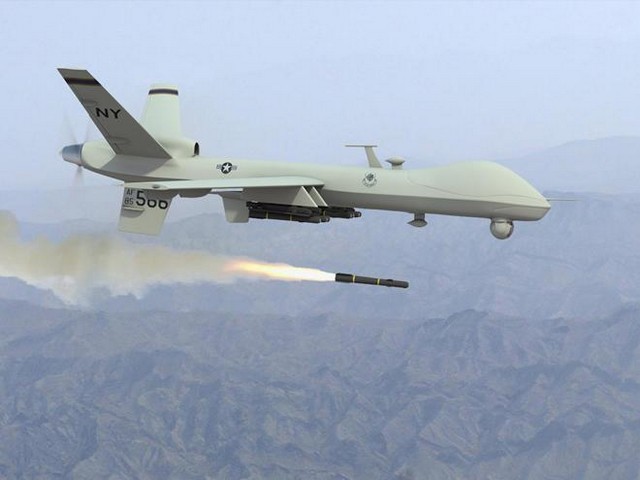
“At the same time he has done something that none of his predecessors in recent decades has done: He stood up to the United States from a position of a sovereign nation, as opposed to a nation with a neo-colonial mentality that can be bamboozled by the CIA , whose civilians can be butchered by unmanned drone strikes, and that the US can spit upon whether it was withdrawing so-called aid which is really frankly just reparations in disguise – and a measly, paltry amount at that,” the analyst said.

“And, so Imran is really putting his nation in a position, that’s repositioning it from one of subservience to one of regional leadership. This will in the coming years have positive economic repercussions and positive diplomatic repercussions,” he added.

“In some ways we have already seen the flowering of this as Donald Trump within weeks went from criticizing and frankly maligning Pakistan to now asking Islamabad for help in the exit war of America’s creation in Afghanistan which frankly the US started in the early 1980s or late 1970s, and which continued with only a short period of quasi abatement in this 1990s,” he stated.

“So because of this it would behoove anyone with a rational mindset to realize that you cannot solve the crisis in Afghanistan without Pakistan’s help and that indeed goes for all neighbors of the besieged Afghan nation,” the commentator noted.

“So it is anyone’s guess what the US will do now because especially under Trump an atmosphere of volatility pervades the general atmosphere where one day he is someone’s friend, one day he is someone’s enemy. This is true whether it’s Emanuel Macron, and Justin Trudeau or Vladimir Putin and Xi Jinping. But if Imran continues on the path that he is pursuing I believe that Pakistan’s best days are very much ahead,” he said.

“Of course, there are economic problems which need to be solved, and are being solved. But in terms of foreign policy, I think Pakistan’s new government really is demonstrating that it’s a clean break from the past, not just in terms of who the prime minister is but in terms of what he is doing. He’s creating a new mentality in terms not only of the general political atmosphere but in terms of all the policies that all of them are very positive thus far,” he concluded.

8 December 2018

Source: www.presstv.com

16 December – Victory Day or a Day of Disgrace: Some Reflections

By Abdullah Al Ahsan

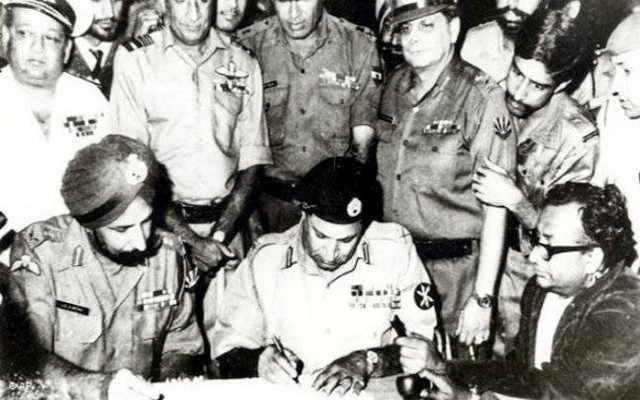
“On this day, 45 years ago, 93,000 members of Pakistani troops raised white flags and surrendered to Indian Army …,” wrote an Indian daily around this time two years ago. Indians celebrate December 16, 1971 as Vijay Diwas or victory day commemorating the event every year. For many reactionary caste-ridden Hindu nationalists this development came as a sweet revenge against almost thousand years of Muslim rule. Why these Hindu nationalists are are so Islamophobic? This phenomenon demands some reflections in the wider context of history.

The main challenge for these Hindu nationalists is history itself. History bears witness that Ikhtiar Uddin Muhammad Bakhtiar Khilji (d. 1206), a Turkish general, had spread political Islam in Bengal in 1203/4 with the help of only 18 horse-riders. The original author of the Indian national song Vanda Mataram, Bankim C Chatterjee, claimed that only a black sheep or an outcast could believe in such a claim. Unfortunately, these Islamophobic elements do not like to examine history properly. One must note that Islam was already known to the people of Bengal through traders and Sufis and there was a demand from the local population for political Islam. Islamophobics also ignore the fact that just next to India, throughout Southeast Asia, no Islamic political conquest occurred and yet the whole area hosts one of the highest concentrations of Muslims in the world today. One should also note that although liberal Hindu historians such as Jawaharlal Nehru or Shashi Throor recorded the economic prosperity that India had achieved under Muslim rule and how the British East India Company (EIC) destroyed the economy of Bengal, they hardly offer any credit to Muslim rulers of Bengal for their achievements. That is why one must evaluate the so-called Vijay Diwas in light of such Islamophobic mindset.

Indian nationalists clearly did not want Pakistan to come into existence. They wanted to see Pakistan collapse immediately. India subjugated the people of Kashmir, Hyderabad and Junagarh and imposed war in Kashmir. India also refused to deliver Pakistan’s due share funds from the central government budget and military hardware. Pakistan did not inherit any seat for its central government. Yet Pakistan survived almost miraculously. However, Pakistan became victim of its own burden for which it must conduct self-assessment. It has paid a very high price in 1971. Some references to the role of Zulfiqar Ali Bhutto, leader of what he called Naya or new Pakistan, will illustrate this point.

For any self-assessment, one must first admit that something has gone wrong and that there is a need for evaluating a given situation. However, this has not happened in Pakistan. Immediately after the election 1970 an arrogant Bhutto began to create obstacles for a peaceful political transition. He literally threatened the newly elected West Pakistani members of the parliament that if they had gone to East Pakistan to attend any session, their legs would be amputated. He then joined in a conspiracy with some military and civilian bureaucrats to crackdown on East Pakistanis who were genuinely demanding their legitimate rights. But military cracked down and Pakistan armed forces were accused of killing millions, raping hundreds and thousands and committing genocide. The new administration deliberately covered up the report of its own investigation on the subject. The containment was necessary because it found Mr. Bhutto was greatly responsible for the dismemberment of Pakistan. Pakistan’s refusal to take a stand on the allegations implied an acceptance of those claims. Almost half a century has passed since the event and although the event haunts many Pakistani psyches, the propaganda rhetoric against Pakistan has not been directly challenged. On this day Pakistan must revisit history and find out what went wrong.

Unfinished Battle of Faith or Stolen Victory

I have recently received two books related to the subject for review. The first one is The Political History of Muslim Bengal: An Unfinished Battle of Faith (Cambridge Scholars Publishing, 2019) by Mr. Mahmudur Rahman, editor of the popular Bangladeshi daily Amar Desh; and the other The Stolen Victory by Brig Sultan Ahmed, a Pakistani officer who served in East Pakistan in 1971. The last book was originally published in 1996 but has been re-published in 2018. Brig Sultan’s heroic resistance against the advancing Indian armed forces has been well-recognized both by Indians and international observers. He notes that, “India stole victory from Pakistan … Armed forces begged for battle … they were prepared to offer sacrifice of their lives to save the integrity and honour of their country. Their commanders, however, whose weak wills had been conquered, abjectly and ignominiously, surrendered (p.82).” His commander was rather interested in rewarding his “men, who ought to be given gallantry awards,” he reports (p.233).

Although many Bangladeshis celebrate December 16 as Bijoy Dibos or Victory Day, Editor Mahmudur Rahman seems to have a mixed feeling about the occasion. Reporting about the Pakistan army’s surrender document, he says, “No signature from the Bangladeshi representative was felt necessary by the Indian command (p. 168).” He also notes that, “The day of December 1971 is the most glorious in the history of post-1947 India as the dream of Nehru and Patel to divide Pakistan was fulfilled (p. 170).” Rahman also notes that, “President Yahya would later foolishly fall into the Indian trap by declaring war against India on 3 December 1971 at the height of Indian preparedness (pp 153-4).” He also records that, “Just one day before Niazi’s surrender, Zulfiqar Ali Bhutto surprisingly torpedoed the last chance for a face-saving withdrawal of the beleaguered Pakistani forces from Dhaka by rejecting a Polish proposal at the United Nations. Whether it was a deliberate act to complete the humiliation of arrogant armed forces of Pakistan, or sheer madness on the part of the head of the Pakistani delegation at UN remains unanswered (p. 169).” These are very penetrating observations for reflections on the significance of the day.

Rahman continues with his description of what he calls, “unfinished battle of faith.” In independent Bangladesh resumed a struggle for self-assertion of Muslim Bengal, which one perhaps may call – the shaping of Bangladeshi nationalism. This was happening mainly as opposed to an imposition of Indian hegemony immediately after the war in 1971. India wanted to see a Bhutan or Sikkim in Bangladesh. One event is particularly noteworthy in this context. On February 25, 2009 a segment of Bangladesh’s armed forces revolted and Rahman reports, “It had been an orgy of slaughter and rape. Fifty-seven officers, from major generals to lieutenants, had been murdered in cold blood (307).” The UK based Telegraph reported that “Bangladeshi army officers blame prime minister for mutiny.” It should be noted that in 1971, during the nine-month long war, Bengalis didn’t lose so many officers. The message to the armed forces was loud and clear: armed forces must be subservient to hegemonic power. Bangladesh army has witnessed many coups and counter coups since 1975, and must now be very careful about any such attempt in the future. Indian hegemony had now stood at a much firmer grounds. Since 2009 Bangladesh has turned into another vassal state along with Bhutan and Sikkim in the Indian neighbourhood.

According to Mahmudur Rahman, assertion of Muslim identity of Bengal would be essential to regain dignity of Bangladesh. But why Muslim Bengal? Doesn’t it sound communal? These questions demand some reference to history of Bengal. When the EIC occupied Bengal in 1757, it was Muslim Bengal, ruled under the prescriptions of Shari’ah. The land was economically very prosperous which had ensured participation of all communities in its prosperity. Adam Smith in 1776 recognized the importance of trade between Bengal and London. In order to consolidate power, the EIC established Calcutta Madrasah in 1781, Royal Asiatic Society of Bengal in 1784 which paved the way to colonial educational policy and what one may call Orientalism. Many British liberals such as Lord Macaulay, John Mill, James Mill, and the academic William Muir all worked for the EIC. The EIC literally crushed the local aristocracy and encouraged what came to be known as Bengal renaissance creating mostly a new Hindu landlord class. Both authors of the Indian national song, mentioned above, were products of this development. Britain’s Bengal experiment became model for colonial control in the 19th century. One must understand the demand for the restoration of Muslim Bengal in this context.

The Muslim Bengal concept explains why Bengalis not only demanded but became the backbone for the Pakistan demand. When the All India Muslim League, political party that led the Pakistan movement, was founded in 1906 Mr. Jinnah was invited to participate. But he rejected the idea calling it communal. However, with the passage of time his experience working with the so called Indian liberals changed his perception and he found solution to India’s problem in the Islamic worldview. The idea of Pakistan, of course, came from the poet-philosopher Muhammad Iqbal who wanted to see an independent India with equal rights and dignity for all. But he too was disappointed with the attitude of self-styled liberals such as MK Gandhi and Jawaharlal Nehru. Iqbal was also aware of the social Darwinist stricken Europe and found solution to the problem of humanity in his Pakistan demand. I find striking similarity between Mahmudur Rahman’s Muslim Bengal and Iqbal’s Pakistan idea.

Paigham-e-Pakistan

During my last visit to Pakistan about a month ago I was given a book entitled Paigham-e-Pakistan to review. This book has been published to counter the rise of extremist ideas in Pakistan in recent years. I thought the message of the book was timely, particularly following the last general election. In my view Imran Khan’s model state of Madinah is no different from Paigham-e-Pakistan envisioned by the poet Iqbal. I also find striking similarity between Iqbal’s vision and the demand for the restoration of Muslim Bengali identity.

Now, returning to the significance of December 16 – whether the day is a victory day or a day of disgrace – it all depends on where one stands. For someone who values human dignity and lessons from history, this day can’t be a victory day. This is particularly true in the context of the current situation in Bangladesh where the ruling party seems to have taken contract from India to impose Indian hegemony on the nation. In this struggle for self-assertion Bangladeshis need Pakistan’s support. However, Pakistan needs to come forward for its own sake. One must recognize with admiration Imran Khan’s citizenship offer to Bengalis living in Pakistan. This is the first government in Pakistan since 1971 which seems to recognize the importance of looking at its history rationally. On this day Pakistan should go further and recognize Bengal’s contributions to the Pakistan movement. History bears the witness that without Bengal’s contribution, Pakistan could not have been achieved. Pakistan should apologize for Bhutto’s arrogant behaviour and armed forces’ crackdown in 1971. This apology will have the potential to restore Pakistan’s own dignity. It will pave the way from disgrace to dignity.

Dr.Abdullah Al Ahsan is a member of the International Movement for a Just World (JUST).

19 December 2018

Bombings kill 62 in Somalia amid escalating US scramble for Africa

By Bill Van Auken

The US military’s Africa Command (AFRICOM) claimed on Monday to have killed 62 members of the al-Shabab Islamist militia in a series of six airstrikes over the weekend in a coastal region south of Somalia’s capital of Mogadishu.

The bombings were only the latest in a steadily escalating US air war in Somalia. They follow a pair of air strikes last month that the Pentagon claimed killed 37 al-Shabab members, a strike in October that it said claimed the lives of 60 fighters and another in November of last year that supposedly killed around 100.

In the latest bombing, as in all those that have preceded it, the Pentagon insisted that there were no “collateral” civilian casualties, following a longstanding ground rule that anyone killed by American bombs and missiles is by definition a targeted militant.

Somalia is one of the shadow wars that Washington is waging in Africa, with little or no information provided to the public, much less even a shred of popular approval.

In the latest attacks, AFRICOM reported that US warplanes carried out four strikes on December 15, leaving 34 people dead, and another two strikes on December 16 that killed 28.

The latest strikes bring the total for this year to 46, a significant rise over the 31 carried out last year, which was itself double the number conducted in 2016.

The Trump administration introduced sweeping changes to the rules of engagement in Somalia, casting aside previous restraints on bombing and other operations.

In addition to the air war, AFRICOM maintains a force of 500 US special operations troops on the ground in Somalia, its largest combat deployment on the continent. These troops participate in search-and-kill operations together with Somali government forces.

In addition, some 20,000 troops from Ethiopia, Kenya, Uganda and Burundi operate in Somalia under the auspices of the African Union and in conjunction with the US military operation.

Despite this array of military power, al-Shabab continues to hold sway over vast swathes of the country’s rural areas and is able to make frequent attacks throughout Somalia.

The government that the US is attempting to prop up in Mogadishu is riddled with corruption and crises, pretending to preside over a society that has been left shattered by a quarter of a century of US imperialist intervention.

In the week before the latest US airstrikes, the town of Baidoa, the capital of the southwestern Bay region of Somalia, was the scene of bloody clashes between protesters on the one side and Ethiopian troops and Somali security forces on the other that have left at least eight people dead, including one local legislator and a 10-year-old child.

The protests broke out after Ethiopian troops arrested Muhktar Robow, the former second-in-command of al-Shabab, who quit the group and became the leading candidate for the presidency of the southwestern state in what is the first of a series of regional elections. According to reports, he was tortured, flown to Mogadishu and imprisoned there.

Ethiopian troops are reported to have occupied Baidoa, driving tanks through residential neighborhoods.

The clashes are only the sharpest expression of the breakdown of relations between the central government in Mogadishu and the regional administrations, which have largely cut off cooperation with the capital as a result of multiple conflicts.

Meanwhile, in Mogadishu itself, legislators earlier this month initiated impeachment proceedings against President Mohamed Abdullahi Mohamed Farmajo charging him with signing “secret deals” with Ethiopia and Eritrea and acting unilaterally in the appointment of military commanders and judges. The lawmakers also accused the president of abusing his powers by authorizing the unlawful rendition of a leader of the Ogaden National Liberation Front (ONLF), Muse Qalbi Dhagah, a Somali national, from Somalia to Ethiopia.

The intensive US air strikes in Somalia came on the heels of Washington’s unveiling of a new policy in which the operations of AFRICOM, whose ranks have swelled to 7,500—compared to about 6,000 in 2017—are being overtly developed from the standpoint of Africa as an arena of great power conflict.

Until now, AFRICOM’s operations, which involve deployments of US forces in virtually every country of the continent, have been cast as part of the “global war on terrorism.” The strategy outlined last Thursday by US National Security Adviser John Bolton, however, placed counter-terrorism as Washington’s “second priority,” eclipsed by the imperative of confronting “great power competitors, namely China and Russia.”

Bolton’s rabid address, delivered before the right-wing think tank, the Heritage Foundation, indicted both Beijing and Moscow for pursuing “predatory practices” that “threaten the financial independence of African nations; inhibit opportunities for US investment; interfere with US military operations; and pose a significant threat to US national security interests.”

The thrust of Bolton’s speech was that China and Russia have been poaching—with considerable success—on territory that Washington views as its own semi-colonial preserve.

In particular, the national security adviser laid stress on the Horn of Africa and its strategic location on the shores of the route for much of the world’s seaborne oil traffic from the Middle East to Asia. He called attention to the building of a Chinese military base in Djibouti, just miles from where AFRICOM has its own main base on the continent, and on a proposed deal that would place Djibouti’s main Red Sea port facility under the management of a Chinese company, saying that this would shift “the balance of power in the Horn of Africa” in China’s favor.

In what was undoubtedly the most laughable segment of Bolton’s speech, he vowed that Washington would carefully review and substantially reduce its aid programs to African countries, vowing that it would not “fund corrupt autocrats, who use the money to fill their coffers at the expense of their people or commit gross human rights violations.”

This from a government that has provided unconditional defense of the Saudi monarchy, supporting its genocidal war in Yemen and covering up for its brutal murder of journalist Jamal Khashoggi inside its Istanbul consulate. One would never guess from Bolton’s sanctimonious speech that Washington has been the principal prop for African dictatorships, from that of Mobutu Sese Seko in the Congo onward.

Bolton’s speech, and the savage intensification of the US assault on Somalia constitute a warning: US imperialism views Africa as a battlefield in its global bid to employ military aggression as a means of defending its hegemony over every region of the planet. To the extent it faces challenges in terms of trade and investment from Russia and China, it will respond with intensified militarism, with the peoples of Africa suffering the consequences.

Bill Van Auken is a politician and activist for the Socialist Equality Party and was a presidential candidate in the U.S. presidential election of 2004, announcing his candidacy on January 27, 2004.

18 December 2018

Source: countercurrents.org

U.S. Demands Europe to Join Its War Against Russia

By Eric Zuesse

On December 16th, the Russian Senator, Konstantin Kosachev, who heads that body’s foreign-affairs committee, went public accusing the U.S. Government of coercing German corporations to abandon their investments in the key Russia-EU gas-pipeline project, which is now nearing completion. It’s a joint project of Russia and of corporations in some EU countries. He called this U.S. pressure against European corporations an affront to the national sovereignty of both the German and the Russian Governments, and, more broadly, an affront against the sovereignty of the entire EU, which, he pointed out, is not like America’s NATO alliance with Europe is, an instrumentality of war, but is supposed to be, instead, an economic and political union — an instrumentality of peaceful international cooperation, not of any sort of international coercion.

Here is the historical context and background to this:

In recent decades, the U.S. Constitution’s clause that requires a congressional declaration of war before invading any country, has been ignored. Furthermore, ever since 2012 and the passage by Congress of the Magnitsky Act sanctions against Russia, economic sanctions by the U.S. Government have been imposed against any company that fails to comply with a U.S.-imposed economic sanction; a company can even be fined over a billion dollars for violating a U.S. economic sanction. And, so, sanctions are now the way that the U.S. Congress actually does authorize a war — the new way, no longer the way that’s described in the U.S. Constitution. However, in the economic-sanctions phase of a war — this initial phase — the war is being imposed directly against any company that violates a U.S.-ordered economic sanction, against Russia, Iran, or whatever target-country the U.S. Congress has, by means of such sanctions, actually authorized a war by the U.S. to exist — a ‘state of war’ to exist. For the U.S. Congress, the passage of economic sanctions against a country thus effectively serves now as an authorization for the U.S. President to order the U.S. military to invade that country, if and when the President decides to do so. No further congressional authorization is necessary (except under the U.S. Constitution). This initial phase of a war penalizes only those other nations’ violating companies directly — not the target-country. Though the U.S. Government punishes the violating corporation, the actual target is the targeted (sanctioned) country. Sanctions are being used to strangle that target. The fined companies are mere ‘collateral damage’, in this phase of America’s new warfare. In this phase, which is now the standard first phase of the U.S. Government’s going-to-war, the U.S. Government is coercing corporations to join America’s economic war, against the given targeted country — in this case, it’s a war against Russia; Russia is the country that the U.S. Government wants to strangle, in this particular instance.

On Tuesday, 11 December, the U.S. House of Representatives voted unanimously (no member objected), by voice vote — unrecorded so that nobody can subsequently be blamed for anything — that President Donald Trump should impose penalties, which could amount to billions of dollars, against any EU-based corporation that participates with Russia in Russia’s Nord Stream II Pipeline to supply gas to Europe. This “Resolution,” H.Res.1035, is titled “Expressing opposition to the completion of Nord Stream II, and for other purposes,” and it closes by asserting that the U.S. House of Representatives “supports the imposition of sanctions with respect to Nord Stream II under section 232 of the Countering America’s Adversaries Through Sanctions Act.” With no member objecting, the U.S. House thereby warns corporations to cease doing business with Russia, because the U.S. Government is determined that any such business will be terminated and will maybe also be fined. The U.S. Government imposes its will as if it were the dictator to the entire world, and without even needing to use its military, but just economic coercion.

The U.S. Senate doesn’t yet have a similar bill, but the unanimous passage of this one in the House constitutes a strong warning to Europe’s corporations, that unless they obey the U.S. sanctions, huge financial penalties will be imposed upon them. There are not many issues on which the U.S. Congress is even nearly 100% united in agreement, but during this phase, the introductory phase, of America’s war against Russia, the war against Russia is certainly among those few instances — entirely bipartisan.

According to Russian Television, on December 12th, headlining “US lawmakers want to put a cork in Russia’s gas pipeline to Europe”: “On Monday, Austria’s OMV energy group CEO Rayner Zele stated that the company is set to continue financing the pipeline next year. OMV has already invested some 531 million euros ($607 million) into the project, Zele told Ria Novosti. In early December, German Foreign Minister Heiko Maas also said that Berlin’s abandoning the project would not make sense as Russia will still go on with it. Germany earlier rebuked Trump’s criticism of the project after the US leader accused Berlin of being a ‘captive’ of Moscow citing Germany’s alleged dependency on natural gas from Russia.”

If the U.S. Government fails to strangulate the economies in the countries such as Russia and Iran against which it has imposed sanctions, then the next step, of course, would be some type of armed invasion of the given targeted country. Before the U.S. invaded Iraq in 2003, America’s economic sanctions killed from 100,000 to 500,000 Iraqi children, but then the U.S. invaded and destroyed the country vastly more than just that.

Economic sanctions are an attempt to coerce a targeted courntry’s — in effect — surrender, but without needing to use a military invasion as the coercive means. Any sanctioned country is therefore in America’s bomb-sights, and will be conquered in one way or another, unless the U.S. Government backs down, at some point.

According to the most extensive study that was ever done of U.S. military bases worldwide, there are over a thousand such bases, and this is a huge multiple of all non-U.S. military bases put together. That study was published in 1995. Many new U.S. military bases have been built and manned since 1995, such as several dozen in just one country, Syria, where the sovereign Government has never invited them in and many times has ordered them to leave, but they refuse to leave. Currently, the U.S. Government spends more than half of all monies that are being spent worldwide on the military.

Regarding the Nord Stream II Pipeline, the beneficiaries if that Pipeline is never completed and placed into service, will be American LNG (Liquified Natural Gas) producers, and also America’s allies such as Saudi Arabia and Israel. World War III could actually start as a result of the U.S. Government’s serving America’s (and its allies’) fossil-fuels producers above all other concerns regarding not only global warming, but even world peace itself. Those are the interests that are, in effect, at war against the entire world. This is not a statement of opinion: it is established and well-demonstrated fact. It is the overwhelmingly documented reality.

Here, translated by me and slightly abbreviated, is the December 16th statement that was made by Russia’s Senator Kosachev, the Chairman of the International Affairs Committee:

A categorical statement by the United States on Nord Stream 2, calling for Germany to abandon it, and for the European Union to rally the ranks “against Russian aggression” is a clear and unceremonious interference into the affairs of sovereign nations, to which the United States has no right to have any official opinion. …

Washington’s attempts to dominate and interfere in the affairs of other states are extremely dangerous for the whole world and destructive for international cooperation. This line directly contradicts the interests of any countries that are not US satellites. And it obviously contradicts the interests of Russia.

And if Russia followed solely its own egoistic interests, we should just as unceremoniously intervene in, say, the trade disputes of Washington and Beijing on the side of our Chinese ally, in the NAFTA crisis, in order to impose upon the US additional problems regarding its relations with both Canada and Mexico, or the fates of the Transatlantic and Trans-Pacific partnerships, where the United States is again working hard. To do that would be proceeding from the American principle, “the worse it is for our competitor, the better it is for us”.

We do not do that. Firstly, because Russia respects the sovereignty of other nations and never interferes in their internal affairs. Secondly, because, in principle, it is not proper for a world power to behave in such a way. …

What especially disappoints me in this situation [is] … Germany’s silence. The United Statyes is actually encroaching on Germany’s rights. That silence is disappointing, as is the EU’s passivity, which doesn’t respond to the intrusion of Americans into their sovereign affairs. The European Union is not NATO. …

—————

Investigative historian Eric Zuesse is the author, most recently, of They’re Not Even Close: The Democratic vs. Republican Economic Records, 1910-2010.

17 December 2018

Source: countercurrents.org
Growing US public support for one state shared equally by Israelis and Palestinians falls on deaf ears

By Jonathan Cook

Nazareth: Two years of Donald Trump and Benjamin Netanyahu as a Middle East peacemaking team appear to be having a transformative effect – and in ways that will please neither of them.

The American public is now evenly split between those who want a two-state solution and those who prefer a single state, shared by Israelis and Palestinians, according to a survey published last week by the University of Maryland.

And if a Palestinian state is off the table – as a growing number of analysts of the region conclude, given Israel’s intransigence and the endless postponement of Mr Trump’s peace plan – then support for one state rises steeply, to nearly two-thirds of Americans.

But Mr Netanyahu cannot take comfort from the thought that ordinary Americans share his vision of a single state of Greater Israel. Respondents demand a one-state solution guaranteeing Israelis and Palestinians equal rights.

By contrast, only 17 per cent of Americans expressing a view – presumably Christian evangelicals and hardline Jewish advocates for Israel – prefer the approach of Israel’s governing parties: either to continue the occupation or annex Palestinian areas without offering the inhabitants citizenship.

All of this is occurring even though US politicians and the media express no support for a one-state solution. In fact, quite the reverse.

The movement to boycott Israel, known as BDS, is growing on US campuses, but vilified by Washington officials, who claim its goal is to end Israel as a Jewish state by bringing about a single state, in which all inhabitants would be equal. The US Congress is even considering legislation to outlaw boycott activism.

And last month CNN sacked its commentator Marc Lamont Hill for using a speech at the United Nations to advocate a one-state solution – a position endorsed by 35 per cent of the US public.

There is every reason to assume that, over time, these figures will swing even more sharply against Mr Netanyahu’s Greater Israel plans and against Washington’s claims to be an honest broker.

Among younger Americans, support for one state climbs to 42 per cent. That makes it easily the most popular outcome among this age group for a Middle East peace deal.

In another sign of how far removed Washington is from the American public, 40 per cent of respondents want the US to impose sanctions to stop Israel expanding its settlements on Palestinian territory. In short, they support the most severe penalty on the BDS platform.

And who is chiefly to blame for Washington’s unresponsiveness? Some 38 per cent say that Israel has “too much influence” on US politics.

That is a view almost reflexively cited by Israel lobbyists as evidence of anti-semitism. And yet a similar proportion of US Jews share concerns about Israel’s meddling.

In part, the survey’s findings should be understood as a logical reaction to the Oslo peace process. Backed by the US for the past quarter-century, it has failed to produce any benefits for the Palestinians.

But the findings signify more. Oslo’s interminable talks over two states have provided Israel with an alibi to seize more Palestinian land for its illegal settlements.

Under cover of an Oslo “consensus”, Israel has transferred ever-larger numbers of Jews into the occupied territories, thereby making a peaceful resolution of the conflict near impossible. According to the 1998 Rome Statute of the International Criminal Court, that is a war crime.

Fatou Bensouda, the chief prosecutor of the court in The Hague, warned this month that she was close to finishing a preliminary inquiry needed before she can decide whether to investigate Israel for war crimes, including the settlements.

The reality, however, is that the ICC has been dragging out the inquiry to avoid arriving at a decision that would inevitably provoke a backlash from the White House. Nonetheless, the facts are staring the court in the face.

Israel’s logic – and proof that it is in gross violation of international law – were fully on display this week. The Israeli army locked down the Ramallah, the effective and supposedly self-governing capital of occupied Palestine, as “punishment” after two Israeli soldiers were shot dead outside the city.

The Netanyahu government also approved yet another splurge of settlement-building, again supposedly in “retaliation” for a recent upsurge in Palestinian attacks.

But Israel and its western allies know only too well that settlements and Palestinian violence are intrinsically linked. One leads to the other.

Palestinians directly experience the settlements’ land grabs as Israeli state-sanctioned violence. Their communities are ever more tightly ghettoised, their movements more narrowly policed to maintain the settlers’ privileges.

If Palestinians resist such restrictions or their own displacement, if they assert their rights and their dignity, clashes with soldiers or settlers are inescapable. Violence is inbuilt into Israel’s settlement project.

Israel has constructed a perfect, self-rationalising system in the occupied territories. It inflicts war crimes on Palestinians, who then weakly lash out, justifying yet more Israeli war crimes as Israel flaunts its victimhood, all to a soundtrack of western consolation.

The hypocrisy is becoming ever harder to hide, and the cognitive dissonance ever harder for western publics to stomach.

In Israel itself, institutionalised racism against the country’s large minority of Palestinian citizens – a fifth of the population – is being entrenched in full view.

Last week Natalie Portman, an American-Israeli actor, voiced her disgust at what she termed the “racist” Nation-State Basic Law, legislation passed in the summer that formally classifies Israel’s Palestinian population as inferior.

Yair Netanyahu, the prime minister’s grown-up son, voiced a sentiment widely popular in Israel last week when he wrote on Facebook that he wished “All the Muslims [sic] leave the land of Israel”. He was referring to Greater Israel – a territorial area that does not differentiate between Israel and the occupied territories.

In fact, Israel’s Jim Crow-style policies – segregation of the type once inflicted on African-Americans in the US – is becoming ever more overt.

Last month the Jewish city of Afula banned Palestinian citizens from entering its main public park while vowing it wanted to “preserve its Jewish character”. A court case last week showed that a major Israeli construction firm has systematically blocked Palestinian citizens from buying houses near Jews. And the parliament is expanding a law to prevent Palestinian citizens from living on almost all of Israel’s land.

A bill to reverse this trend, committing Israel instead to “equal political rights amongst all its citizens”, was drummed out of the parliament last week by an overwhelming majority of legislators.

Americans, like other westerners, are waking up to this ugly reality. A growing number understand that it is time for a new, single state model, one that ends Israel’s treatment of Jews as separate from and superior to Palestinians, and instead offers freedom and equality for all.

A version of this article first appeared in the National, Abu Dhabi.

Jonathan Cook won the Martha Gellhorn Special Prize for Journalism.

17 December 2018

Source: countercurrents.org
The Australian Prime Minister’s Rapture for Jerusalem

By Dr Vacy Vlazna

Trump’s declaration on recognizing Jerusalem as the capital of the Israeli state and the transfer of the U.S. embassy from Tel Aviv to Jerusalem is the natural continuation of 100 years of colonization in Palestine and the 1917 Balfour Declaration. It is part and parcel of the ongoing attempt to liquidate Palestinian rights and to accelerate the ethnic cleansing of our people, especially in Jerusalem.Ahmad Sa’adat

Why the sudden Australian foreign policy shift on the matter of Jerusalem?

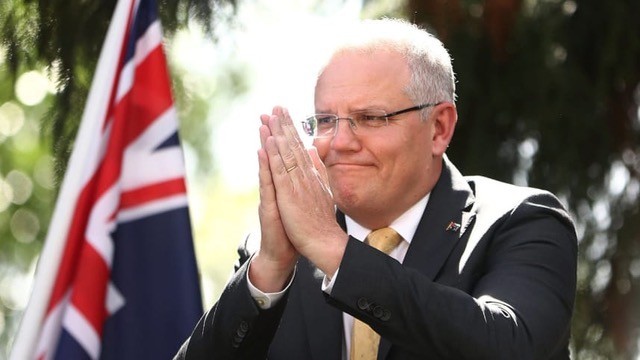
Initially PM Scott Morrison’s captain’s call to move the Australian embassy to Jerusalem was a desperate ploy to garner the Jewish vote in the October Wentworth by-election. The Morrison government was then warned against changes to Australia’s status on Jerusalem by its own Department of Foreign Affairs and Trade, the Defence Department and ASIO.

The largest Muslim nation, Indonesia, Australia’s neighbour and largest trading partner, expressed its objection indicating the bilateral defence cooperation commitment may be threatened as well as $16.5 billion free trade (trade with Israel is worth $1.5 billion) agreement under negotiation.

At the East Asia Summit in Singapore, Malaysian PM Dr Mahathir’s reasonable prediction that an Australian embassy move was “adding to the cause for terrorism” was met by virulent condemnations of antisemitism by Australia’s Jewish treasurer, Josh Frydenberg.

On 11 December, PM Morrison announced that Australia intended to formally recognise Jerusalem as the capital of Israel but, due to a $200 million cost, would delay moving its embassy from Tel Aviv.

On 15 December, at the pro-Israel Sydney Institute, Morrison announced a quasi-compromise; it recognised West Jerusalem as Israel’s capital preempting Jerusalem’s status as a corpus separatum to be resolved solely between Palestine and Israel.

The tone of his speech was like a comedy spoof of Moses carrying aloft divine pronouncements for his daring deliverance of Palestine and Israel – except there was nothing divinely newfangled to be heard. It amounted to a hardshell of the hackneyed ‘conventional wisdom’ replete with ambiguities and hasbara-cliches:

  • Repeated slavish adherence to the dead, departed, defunct, belly-up two state solution.
  • Israel = victim : Morrison bemoaned that there was “biased and unfair targeting of Israel,” “Israel is bullied” by “anti-Semitic agenda masquerading as defence of human rights” and “ritual denunciations of Israel, ” Israelis “live under existential threat”


  • but he was stridently silent on Palestinian suffering under Israeli brutal occupation. Morrison, the zionist apologist extinguished“what Rabbi Jonathan Sacks called the “five cardinal sins against human rights: racism, apartheid, crimes against humanity, ethnic cleansing and attempted genocide.”

with

  • “Think about it: a nation of immigrants; with a free press; parliamentary democracy; financially prosperous; the source of tremendous innovation in the world; and a refuge from persecution and genocide, is somehow the centre of cruelty in the world.”

Talk about ‘intellectual fraud’!

  • The on-cue regurgitation of Israeli official propaganda that Palestine’s resistance movement under Hamas = terror.


  • He stated, ‘the Australian Government has also resolved to acknowledge the aspirations of the Palestinian people for a future state’ but to date Australia has not joined the 137 nations that have recognised the State of Palestine and under Morrison’s direction Australia abstained on UN Resolutions that condemn Israel.


  • The ‘rancid stalemate’ of Morrison’s moral retardation is no more evident than in his pious insolence that Australia has an entitlement to be an important voice for Israel; ‘We have turned up; we have played our part; we have done our share and we have paid the price through great sacrifice. That’s what gives us a microphone on this topic’. To back this up he rolls out the Battle of Beersheba but not the British -Anzac Sarafand Massacre as well as Australia’s key role in drawing up the partition of Palestine omitting that there was no legal mandate to do so,“The United Nations had no business offering the nation of one people to the people of many nations. Its General Assembly had neither the legal nor the legislative powers to impose such a resolution or to convey title of a territory; Articles 10, 11 and 14 of the UN Charter bestows the right on the General Assembly merely to recommend resolutions.”


It appears that Australian securitypressure has watered down Morrison’s gung ho recognition to only West Jerusalem. On 14 December, the Department of Foreign Affairs warned Australians going to popular Indonesian holiday destinations to “exercise a high degree of caution” recalling PM Mahathir prediction of possible retaliatory terror attacks against Australians. On the bright side, Morrison’s diluted endorsement has unwittingly put his ‘great friend’ in a bind: – of the 610,000 illegal settlers in the West Bank, 215, 000 live in East Jerusalem which was illegally annexed in 1967.

That said, what could be moving Morrison to doggedly rush Australia to the edge of a political precipice?

Someideas are worth considering:

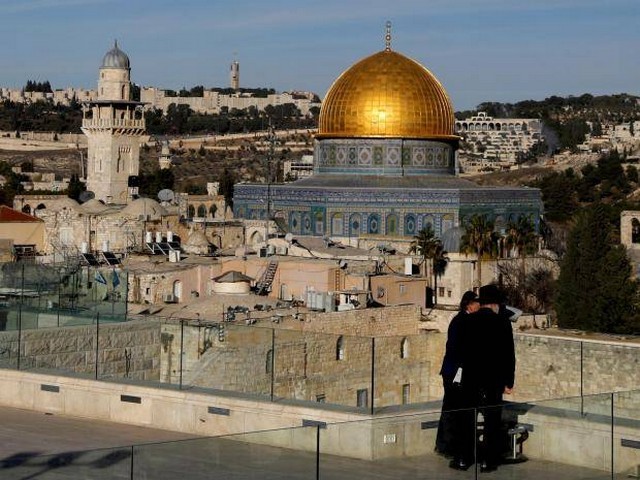
1.A) There is an alarming racist i.e. OK to be whiteJudeo-Christian arrogance underlying the Morrison government that overlooks the religious significance of the Noble Sanctuary in Jerusalem on which stands the third holiest site in Islam where the Prophet Mohammed ascended to heaven for 1.8 billion devoted Muslims, and underestimates their intelligence to see that the Australian ratification of West Jerusalem as Israel’s capital is identical to moving its embassy to Jerusalem and is therefore a political and religious threat.

1.B) The right-wing conservative coupin August replaced the quasi-secular PM Malcolm Turnbull who refused to move the Australian embassy in respect for the UN position

“The abiding position of the United Nations on Jerusalem was that the city remained a final status issue to be determined through a comprehensive, just and lasting solution to be negotiated between the two sides concerned on the basis of relevant United Nations resolutions and other agreements”

withtheir man, Scott Morrison, who openly identifies as an evangelical and pentecostal member of the The Australian Christian Churches.

Morrison stressed that “politics is about doing what you believe in”.. of concern is what he and his evangelical brethren believe:

Pentecostalism is a charismatic evangelical faith. Evangelical Christians take the authority of the Bible as absolute and believe in the fulfilment of”the “prophecy” of the conversion of the Jews, the second coming of Jesus, the final judgment, and the end of the world — the events referred to as the biblical apocalypse” when only believers would rise in Rapture with Jesus to heaven.

Unconverted Muslims, Hindus, Buddhists Sikhs, Jews, Athiests, Taoists etc etc will perish in hell.

About 15 million American Christian Zionists, such as US vice-president Pence, together with the Jewish Lobby have a powerful political influence on the White House that advances Israel’s violent expansionism in Palestine,

“evangelicals who backed Donald Trump in the presidential election have since been pressuring him to pursue policies in line with positions embraced by the settler movement. These include moving the U.S. Embassy to Jerusalem and enabling new settlement construction in the West Bank.”Haaretz

Millions of evangelical dollars are directed to the illegal settlements and invested in the very settlement businesses that the Palestinian BDS movement targets. The mutually exploitative relations between the evangelicals and Jewish Israelis is like two cannibals greedily feasting on each other,

Persico explains why evangelicals are such avid supporters of Israeli settlers and Jewish claims to the entire West Bank. For these groups, he says, “it is essential that Israel control Jerusalem and the entire Promised Land, in order to set in motion the events of the much anticipated Armageddon. The settlers, of course, do not believe this narrative, but they are happy to take advantage of evangelical beliefs in it.”Haaretz

Ideologically, assuming Jesus died to save all humanity, then the essence of Christianity is Agapic equality. So, logically the flaw within the evangelical fulfilment of biblical prophecy is that it is radically exclusive therefore UnChristian. So following on, disrespecting Jerusalem as a Muslim Holy Site and abandoning the political and human rights of Palestinian families to save your own skin is UnChristian, immoral and repugnant (and fantastical).

1.C) Is Morrison rushing through the controversial recognition of the biblical capital because he may only a small window of opportunity before he is likely defeated in the 2019 May election?

If religious expedience is a factor overriding the serious consequences of the conservatives’ recognition of Jerusalem as the capital of the Jewish state, then Morrison’s zealousrapture for Jerusalem is challenging the separation of church and state in the Australian democracy, challenging Australian political and economic relationships with neighbouring Asian partners, challenging world peace and may well shake up an Australia’s political apocalypse.

Dr. Vacy Vlazna is Coordinator of Justice for Palestine Matters and editor of a volume of Palestinian poetry.

16 December 2018

Source: countercurrents.org
The Kidnaping of Meng Wanzhou

By John Scales Avery

The UN Security Council alone has the power to impose sanctions

According to the Charter of the United Nations, only the UN Security Council has a mandate by the international community to apply sanctions (Article 41) that must be complied with by all UN member states (Article 2,2). Therefore sanctions on Iran, unilatterally imposed by the United States government, are illegal. They are a violation of the United Nations Charter. With amazing hubris and arrogance, the US government has imposed sanctions on various countries, including Iran. In the case of Iran, these sanctions have caused the suffering of millions of innocent people, who are unable to buy medicines for serious illnesses, and whose financial security is threatened by the economic damage produced by US sanctions. Although other nations realize that the US sanctions are a violation of international law, they nevertheless comply because they fear US financial reprisals.

Who is Meng Wanzhou?

Meng Wanzhou is the Chief Financial Officer of Huawei, the world’s largest telecom equipment manufacturer. She is also the daughter of Huawei’s founder. While flying from Hong Kong to Mexico, Ms. Meng was changing planes at the Vancouver International Airport when she was suddenæy detained by the Canadian government on an August US warrent. She faces extadition to a

New York City courtroom, where she could receive up to thirty years in federal prison for having allegedly conspired in 2010 to violate America’s unilateral (and illegal) trade sanctions against Iran.

The US is drifting towards facism

The kidnaping of Ms. Meng is yet another example of the almost insane hubris and arrogance of the present government of the United States. Insane is not not too strong a word, since many psichiatrists consider Donald Trump to be mentally unstable. Furthermore, Trump’s racism and his advocacy of violence are worryingly similar the the facists of the 1930’s, such as Hitler and Mussolini. It is clear from Trump’s actions that the present government of the United States no longer belongs to the American people. It belongs instead to corporate oligarchs, to Wall Street, and to the Israel Lobby. Trump’s advocacy of fossil fuels is an existential threat to the future of human civiluzation and the biosphere. Will he be re-elected in 2020? Worryingly we can remember that Hitler was legally elected, but retained his power through illegal means.

Leader of the Free World?

Just as the United States once declared its independence from Britain, so Europe and the remainder of the world ought to declare independence from the United States. Chearly, insane arrogance, hubris, contempt for international law, racism and many of the aspects of facism, do not deserve to be blindly followed. Whatever moral authority the United States may once have had has evaporated in a seemingly endless series of aggressive foreign wars and drone killings. If we must have leaders (and it is not clear that we must), China might not be a bad choice.

John Scales Avery is a theoretical chemist at the University of Copenhagen.

16 December 2018

Source: countercurrents.org
In Syria The Entire Nation Mobilized And Won

By Andre Vltchek

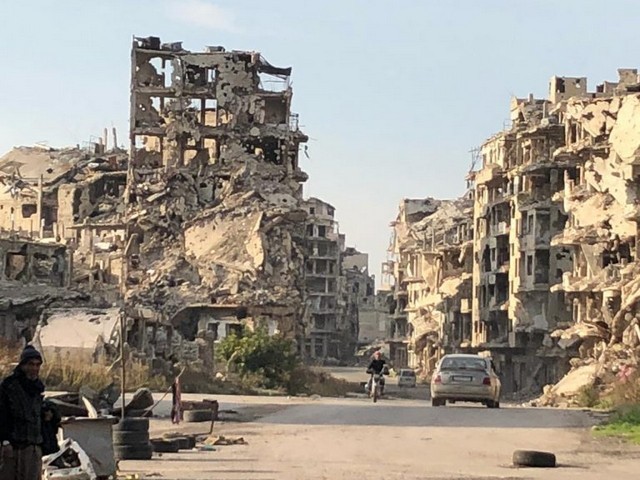
Yes, there is rubble, in fact total destruction, in some of the neighborhoods of Homs, Aleppo, in the outskirts of Damascus, and elsewhere.

Yes, there are terrorists and ‘foreign forces’ in Idlib and in several smaller pockets in some parts of the country.

Yes, hundreds of thousands of people lost their lives and millions are either in exile, or internally displaced.

But the country of Syria is standing tall. It did not crumble like Libya or Iraq did. It never surrendered. It never even considered surrender as an option. It went through total agony, through fire and unimaginable pain, but in the end, it won. It almost won. And the victory will, most likely, be final in 2019.

Despite its relatively small size, it did not win like a ‘small nation’, fighting guerilla warfare. It is winning like a big, strong state: it fought proudly, frontally, openly, against all odds. It confronted the invaders with tremendous courage and strength, in the name of justice and freedom.

Syria is winning, because the only alternative would be slavery and subservience, and that is not in the lexicon of the people here. The Syrian people won because they had to win, or face the inevitable demise of their country and collapse of their dream of a Pan-Arab homeland.

Syria is winning, and hopefully, nothing here, in the Middle East, will be the same again. The long decades of humiliation of the Arabs are over. Now everyone ‘in the neighborhood’ is watching. Now everybody knows: The West and its allies can be fought and stopped; they are not invincible. Tremendously brutal and ruthless they are, yes, but not invincible. The most vicious, fundamentalist religious implants can be smashed, too. I said it before, and I repeat it here again: Aleppo has been the Stalingrad of the Middle East. Aleppo and Homs, and other great courageous Syrian cities. Here, fascism was confronted, fought with all might and with great sacrifice, and finally deterred.

*

I sit in the office of a Syrian General, Akhtan Ahmad. We speak Russian. I ask him about the security situation in Damascus, although I already know. For several evenings and nights, I have been walking through the narrow winding roads of the old city; one of the cradles of human race. Women, even young girls, were walking as well. The city is safe.

“It is safe,” smiles General Akhtan Ahmad, proudly. “You know it is safe, don’t you?”

I nod. He is a top Syrian intelligence commander. I should have asked more, much more. Details, details. But I don’t want to know details;not right now. I want to hear again and again that Damascus is safe, from him, from my friends, from the passers-by.

“Situation is now very good. Go out at night…”

I tell him that I have. That I have been doing it since I arrived.

“No one is afraid, anymore”, he continues. “Even in the places where terrorist groups used to operate, life is returning to normal… The Syrian government is now providing water, electricity. People are returning to the liberated areas. East Ghouta was liberated only 5 months ago, and now you can see shops opening there, one after another.”

I get several permits signed. I take the General’s photo. I get photographed with him. He has nothing to hide. He is not afraid.

I tell him that at the end of January of 2019, or in February at the latest, I want to travel to Idlib, or at least to the suburbs of that city. That’s fine; I just have to let them know a few days in advance. Palmyra, fine. Aleppo, no problem.

We shake hands. They trust me. I trust them. That’s the only way forward – this is still a war. A terrible, brutal war. Despite the fact that Damascus is now free and safe.

*

After I leave General’s office, we drive to Jobar, on the outskirts of Damascus. Then to Ein-Tarma.

There, it is total madness.

Jobar used to be a predominantly industrial area, Ein-Tarma a residential neighborhood. Both places had been reduced almost entirely to rubble. In Jobar I am allowed to film inside the tunnels, which used to be used by the terrorists; by the Rahman Brigades and by the other groups with direct connection to Al-Nusrah Front.

The scene is eerie.Formerly these factories offered tens of thousands of jobs to the people of the capital city. Now, nothing moves here. Dead silence,just dust and wreckage.

Lieutenant Ali accompanies me, as I climb over debris. I asked him what took place here. He replies, through my interpreter:

“This place was only liberated in April 2018. It was one of the last places that was taken from the terrorists. For 6 years, one part was controlled by the ‘rebels’, while another by the army. The enemies dug tunnels, and it was very difficult to defeat them.They used every structure they could get their hands on, including schools. From here, most of the civilians managed to escape.”

I asked him about the destruction, although I knew the answer, as my Syrian friends used to live in this area, and told me their detailed stories. Lieutenant Ali confirmed:

“The West was feeding the world with propaganda, saying that this was destruction caused by the army. In fact, the Syrian army was engaging the rebels only when they were attacking Damascus. Eventually, the rebels retreated from here, after the Russian-sponsored talks with the government.”

*

A Few kilometers further east, in Ein-Tarma, things are very different. Before the war, this used to be a residential neighborhood. People used to live here, mostly in the multi-story buildings. Here, the terrorists hit hard at the civilians. For months or even years, families had to live in terrible fear and deprivation.

We stopped at the humble shop selling vegetables. Here, I approached an elderly lady, and after she agreed to it, I began filming.

She spoke, and then she shouted, straight into the camera, waving her hands:

“We lived here like cattle. The terrorists treated us like animals. We were scared, hungry, humiliated. Women: terrorists would take 4-5 wives, forcing young girls and mature women into so-called marriages. We had nothing; nothing left!”

“And now?” I asked.

“Now? Look! We live again. We have a future. Thank you; thank you, Bashir!”

She calls her president by his first name. She points palms at her heart, and after kissing them, she waves her hands again.

There is nothing to ask, really. I just film. She says it all, in two minutes.

As we are leaving, I realize that she is most likely not old; not old at all. But what has happened here broke her in half. Now she is living; she is living and hoping again.

I ask my driver to move slowly, and I begin filming the road, broken and dusty, but full of traffic: people walking, bicycles and cars passing by, negotiating potholes. In the side streets, people are hard at work, rebuilding, cleaning rubble, cutting fallen beams. Electricity is getting restored. Glass panels fitted into the scratched wooden frames. Life. Victory; all this is bittersweet, because so many people died; because so much has been destroyed. But lifeit is, despite everything;life again. And hope; so much hope.

*

I sit with my friends, Yamen and Fida, in a classic, old Damascus café, called Havana. It is a real institution; a place where Ba’ath Party members used to meet, during the old and turbulent days. Photographs of President Bashir al-Assad are displayed, prominently.

Yamen, an educator, recalls how he had to move from one apartment to another, on several occasions during the recent years:

“My family used to live right next to Jobar. Everything around there was getting destroyed. We had to move. Then, at a new location, I was walking with my little son, and a mortar had landed near us. Once I saw building in flames. My son was crying in horror. A woman next to us was howling, trying to throw herself into flames: ‘My son is inside, I need my son, give me my son!’In the past, we couldn’t predict from where the danger would arrive, and when. I lost several relatives; family members. We all did.”

Fida, Yamen’s colleague, is taking care of her ageing mother, every day, when she gets back from work. Life is still tough, but my friends are true patriots, and this helps them to cope with the daily challenges.

Over a cup of strong Arabic coffee, Fida explains:

“You see us laughing and joking, but deep inside, almost all of us are suffering from deep psychological trauma. What took place here was tough; we all saw terrible things, and we lost our loved ones. All this will stay with us, for many years to come. Syria does not have enough professional psychologists and psychiatrists to cope with the situation. So many lives have been damaged. I am still scared. Every day. Many people have been terribly shaken.”

“I feel sorry for my brother’s children. They were born into this crisis. My tiny nephew… Once we were under a mortar attack. He was so scared. Children are really badly affected!Personally,I am not afraid of getting killed. I am frightened of losing my arm, or leg, or not being able to take my mom to the hospital, if she was to be feeling sick. At least my ancestral city, Safita, has always been safe, even during the worst days of the conflict.”

“Not my Salamiyah,” laments Yamen:

“Salamiyah used to be just terrible. Many villages had to be evacuated… Many people died there. To the East of the city were the positions of Al-Nusrah, while the west was held by the ISIS”.

Yes, hundreds of thousands of the Syrian people were killed. Millions forced to leave the country, escaping both the terrorists and the conflict as well as poverty thatrodeon the tail of the fighting. Millions have been internally displaced;the entire nation in motion.

The previous day, after leavingEin-Tarma, we drove near Zamalka and Harasta. Entire huge neighborhoods were either flattened, or at least terribly damaged.

When you see the Eastern suburbs of Damascus, when you see the ghost buildings without walls and windows, with bullet holes dotting the pillars, you think that you have seen it all. The destruction is so huge; it looks like an entire big city was just blown up to pieces. They say this eerie landscape doesn’t change for at least 15 kilometers.The nightmare goes on and on, without any interruption.

So yes, you tend to think that you have seen it all, but actually you haven’t. It is because you have not visited Aleppo, nor visited Homs, yet.

*

For several years, I have been fighting for Syria.I was doing it from the peripheries.

I managed to enter the Israeli-occupied Golan Heights and to file reports about the brutality and cynicism of the occupation.

For years, I covered life in the refugee camps, and ‘around them’. Some camps were real, but others were actually used as training fortresses for the terrorist, who were later injected into Syrian territory, by NATO. Once I almost disappeared while filming Apayadin, one of such ‘institutions’, erected not far from the Turkish city of Hattay (Atakya).

I ‘almost’ disappeared, but others actually did die. Covering what the West and its allies have been doing to Syria is as dangerous as covering the war inside Syria itself.

I worked in Jordan, writing about the refugees, but also about the cynicism of the Jordanian collaboration with the West. I worked in Iraq where, in a camp near Erbil, the Syrian people were forced by both the NGO and the UN staff, to denounce President Assad, if they wanted to receive at least some basic services. And of course, I worked in Lebanon, where more than one million Syrian people have been staying; often facing unimaginably terrible conditions as well as discrimination (many are now going back).

And now that I was finally inside,it all felt somehow surreal, but it felt right.

Syria appeared to be as I expected it to be: heroic, brave, determined, and unmistakably socialist.

*

Homs. Before I went there, I thought that nothing could surprise me, anymore. I have worked all over Afghanistan, in Iraq, Sri Lanka, East Timor. But soon I realized that I had seen nothing, before I visited Homs.

The destruction of several parts of the city is so severe that it resembles thesurface of another planet, or a fragment from some apocalyptic horror film.

People climbing through the ruins, an elderly couple visiting what once used to be their apartment, a girl’s shoe that I find in the middle of the road, covered by dust.A chair standing in the middle of an intersection, from which all four roads leadtowards the horrid ruins.

Homs is where the conflict began.

My friend Yamen explained to me, as we were driving towards the center:

“Here, the media ignited hatred; mostly the Western mass media. But also, there were the channels from the Gulf: Al-Jazeera, as well as television and radio stations from Saudi Arabia.Sheik Adnan Mohammed al-Aroor was appearing, twice a week, on a television program which was telling people to hit the streets, banging on pots and pans; to fight against the government.”

Homs is where the anti-government rebellion began, in 2011. The anti-Assad propaganda from abroad soon reached a crescendo. The opposition was ideologically supported by the West and by its allies. Rapidly, the support became tangible, and included weapons, ammunition, as well as thousands of jihadi fighters.

A once tolerant and modern city (in a secular country), Homs began changing, getting divided between the religious groups. Division was followed by radicalization.

My good friend, a Syrian who now lives in both Syria and Lebanon, told me his story:

“I was very young when the uprising began. Some of us had certain legitimate grievances, and we began protesting, hoping that things could change for better. But many of us soon realized that our protests were literally kidnapped from abroad. We wanted a set of positive changes, while some leaders outside Syria wanted to overthrow our government. Consequently, I left the movement.”

He then shared with me his most painful secret:

“In the past, Homs was an extremely tolerant city. I am a moderate Muslim, and my fiancé was a moderate Christian. We were very close. But the situation in the city was changing rapidly, after 2011. Radicalism was on the raise. I repeatedly asked her to cover her hair when she was passing through the Muslim neighborhoods. It was out of concern, because I was beginning to clearly see what was happening around us. She refused. One day, she was shot, in the middle of the street. They killed her. Life was never the same again.”

In the West, they often say that the Syrian government was at least partially responsible for destruction of the city. But the logic of such accusations is absolutely perverse. Imagine Stalingrad. Imagine foreign invasion; an invasion supported by several hostile fascist powers. The city fights back, the government tries to stop the advancement of the troops of the enemy. The fight, terrible, an epic fight for the survival of the nation goes on. Who is to blame? The invaders or the government forces who are defending their own fatherland? Can anyone accuse the Soviet troops for fighting in the streets of their own cities that were attacked by the German Nazis?

Perhaps the Western propaganda is capable of such ‘analyses’, but definitely no rational human being.

The same logic as to Stalingrad, should also apply to Homs, to Aleppo, and to several other Syrian cities. Covering literally dozens of conflicts ignited by the West all over the world (and described in detail in my 840-page long book“Exposing Lies Of The Empire”), I have no doubts: the full responsibility for the destruction lies on the shoulders of the invaders.

*

I face Mrs. Hayat Awad in an ancient restaurant called Julia Palace. This used to be the stronghold of the terrorists. They occupied this beautiful place, located in the heart of the old city of Homs. Now, things are slowly coming back to life here, at least in several areas of the city. The old market is functioning, the university is open, and so are several government buildings and hotels. But Mrs. Hayat lives in both past and the future.

Mrs. Hayat lost her son, Mahmood, during the war. His portrait is always with her, engraved into a pentel she is wearing on her chest.

“He was only 21 years old, still a student, when he decided to join the Syrian army. He told me that Syria is like his mother. He loves her, as he loves me. He was fighting against the Al-Nusrah Front, and the battle was very tough. At the end of the day he called me, just to say that the situation was not good. In his last call he just asked me to forgive him. He said: ‘Maybe I am not going to come back. Please forgive me. I love you!’”

Are there many mothers like her, here in Homs, those who lost their sons?

“Yes, I know many women who lost their sons; and not just one, sometimes two or three. I know a lady who lost her two only sons. This war took everything from us. Not only our children. I blame the countries which supported the extreme ideologies injected into Syria; countries like the United States and those in Europe.”

After I am done filming, she thanks Russia for their support. She thanks all the countries that have stood by Syria, during those difficult years.

Not far from Julia Palace, reconstruction work is in full swing. And just a few steps away, a renovated mosque is re-opening. People are dancing, celebrating. It is Prophet Mohammed’s birthday. The Governor of Homs marches towards the festivities, with the members of his government. There is almost no security around them.

If the West does not unleash yet another wave of terror against its people, Homs should be just fine. Not right away, perhaps not soon, but it will be,with the resolute help of the Russians, Chinese, Iranian and other comrades.Syria itself is strong and determined. Its allies are mighty.

I want to believe that the most terrible years are over. I want to believe that Syria has already won.

But I know that there is still Idlib, there are also pockets occupied by Turkish and Western forces. It is not over, yet. The terrorists have not been fully defeated. The West will be shooting its missiles. Israel will be sending its air force to brutalize the country. And the mass media outlets from the West and the Gulf, will continue fighting the media war, agitating and confusing certain segments of the Syrian people.

Still, as I leave Homs, I see shops and even boutiques opening in the midst of the rubble. Some people are dressing up, elegantly again, in order to show their strength; their determination to put the past behind them and to live, once again, their normal lives.

*

Returning to Damascus, the motorway is in perfect condition and the industrial area in Hassia is getting rebuilt and amplified, too. There is a huge power plant, supported by the Iranians, I am told. Despite the war, Syria is still supplying neighboring Lebanon with electricity.

Yamen drives at 120 km/h and we joke that once we get scared of possible speed traps, instead of snipers, we know that the situation in the country is dramatically improving.

A Russian military convoy is parked at a rest area. Soldiers are drinking coffee. There is no fear. Syrians treat them as if they were their own people.

I see the most spectacular sunset, over the desert.

Then, once again, we pass through Harasta. This time at night.

I want to curse. I don’t; cursing is too easy. I need to get to my computer, soon. I have to write; to work. A lot, the best I can.

*

It is easy to feel at home in Syria. Maybe because Russian is my mother-tongue or perhaps because people here know that I have always stood by their country.

Some bureaucratic hindrances got resolved, quickly.

I met the outgoing Minister of Education, Dr. Hazwan Al-Waz, who is a fellow novelist. We spoke about his writing, about his latest book “Love and War.” He confirmed what I always knew, as a revolutionary novelist:

“During the war, everything is political, even love.”

And then something that I will never forget:

“My Ministry of Education has been, in fact, the Ministry of Defense”.

Last night in Damascus I walked all over the old city, till early morning. At one point, I arrived near the spectacular Umayyad Mosque, finding, right behind it, the mausoleum of Sultan Saladin.

I could not enter. At this late-night hour it was locked.But I could easily see it through the metal bars of the gate.

This brave commander and leader fought against the huge armies of the Western invaders – the Crusaders – winning almost every single battle, finding his peace and final resting place here, in Damascus.

I paid tribute to this ancient fellow internationalist, and I wondered, over a strong coffee in a nearby stall, in the middle of the night: “Did Saladin participate in this latest epic battle fought by the Syrian nation against the hordes of the foreign barbarians?”

Perhaps his spirit did. Or, more likely, some battles were fought and won with his name on lips.

‘I will be back,’ I uttered, walking back towards my hotel, few minutes after midnight. Two massivefurry cats accompanide me, following my steps until the first corner. ‘I will be back very soon’.

Syria is standing. That’s what really matters. It never fell on its knees. And it never will. We will not allow it to fall.

And damned be imperialism!

*

Andre Vltchek is a philosopher, novelist, filmmaker and investigative journalist.

14 December 2018

Source: countercurrents.org