Just International

Conflict Theory and Biosphere Annihilation

By Robert J. Burrowes

In a recent article titled ‘Challenges for Resolving Complex Conflicts’, I pointed out that existing conflict theory pays little attention to the extinction-causing conflict being ongoingly generated by human over-consumption in the finite planetary biosphere (and, among other outcomes, currently resulting in 200 species extinctions daily). I also mentioned that this conflict is sometimes inadequately identified as a conflict caused by capitalism’s drive for unending economic growth in a finite environment.

I would like to explain the psychological origin of this biosphere-annihilating conflict and how this origin has nurtured the incredibly destructive aspects of capitalism (and socialism, for that matter) from the beginning. I would also like to explain what we can do about it.

Before I do, however, let me briefly illustrate why this particular conflict configuration is so important by offering you a taste of the most recent research evidence in relation to the climate catastrophe and biosphere annihilation and why the time to resolve this conflict is rapidly running out (assuming, problematically, that we can avert nuclear war in the meantime).

In an article reporting a recent speech by Professor James G. Anderson of Harvard University, whose research led to the Montreal Protocol in 1987 to mitigate CFC damage to the Ozone Layer, environmental journalist Robert Hunizker summarizes Anderson’s position as follows: ‘the chance of permanent ice remaining in the Arctic after 2022 is zero. Already, 80% is gone. The problem: Without an ice shield to protect frozen methane hydrates in place for millennia, the Arctic turns into a methane nightmare.’ See ‘There Is No Time Left’.

But if you think that sounds drastic, other recent research has drawn attention to the fact that the ‘alarming loss of insects will likely take down humanity before global warming hits maximum velocity…. The worldwide loss of insects is simply staggering with some reports of 75% up to 90%, happening much faster than the paleoclimate record rate of the past five major extinction events’. Without insects ‘burrowing, forming new soil, aerating soil, pollinating food crops…’ and providing food for many bird species, the biosphere simply collapses. See ‘Insect Decimation Upstages Global Warming’.

So, if we are in the process of annihilating Earth’s biosphere, which will precipitate human extinction in the near term, why aren’t we paying much more attention to the origin of this fundamental conflict? And then developing a precisely focused strategy for transcending it?

The answer to these two questions is simply this: the origin of this conflict is particularly unpalatable and, from my careful observation, most people, including conflict theorists, aren’t anxious to focus on it.

So why are human beings over-consuming in the finite planetary biosphere? Or more accurately, why are human beings who have the opportunity to do so (which doesn’t include those impoverished people living in Africa, Asia, Central/South America or anywhere else) over-consuming in the finite planetary biosphere?

They are doing so because they were terrorized into unconsciously equating consumption with a meaningful life by parents and other adults who had already internalized this same ‘learning’.

Let me explain how this happens.

At the moment of birth, a baby is genetically programmed to feel and express their feelings in response to the stimuli, both internal and external, that the baby registers. For example, as soon after birth as a baby feels hungry, they will signal that need, usually by crying or screaming. An attentive parent (or other suitable adult) will usually respond to this need by feeding the baby and the baby will express their satisfaction with this outcome, perhaps with a facial expression, in a way that most aware parents and adults will have no difficulty identifying. Similarly, if the baby is cold, in pain or experiencing any other stimulus, the baby will express their need, probably by making a loud noise. Given that babies cannot immediately use a cultural language, they use the language that was given to them by evolution: particularly audibly expressed noise of various types that an aware adult will quickly learn to interpret.

Of course, from the initial moments after birth and throughout the next few months, a baby will experience an increasing range of stimuli – including internal stimuli such as the needs for listening, understanding and love, as well as external stimuli ranging from a wet nappy to a diverse set of parental, social, climate and environmental stimuli – and will develop a diverse and expanding range of ways, now including a wider range of emotional expression but eventually starting to include spoken language, of expressing their responses, including satisfaction and enjoyment if appropriate, to these stimuli.

At some vital point, however, and certainly within the child’s first eighteen months, the child’s parents and the other significant adults in the child’s life, will start to routinely and actively interfere with the child’s emotional expression (and thus deny them satisfaction of the unique needs being expressed in each case) in order to compel the child to do as the parent/adult wishes. Of course, this is essential if you want the child to be obedient – a socially compliant slave – rather than to follow their own Self-will.

One of the critically important ways in which this denial of emotional expression occurs seems benign enough: Children who are crying, angry or frightened are scared into not expressing their feelings and offered material items – such as food or a toy – to distract them instead. Unfortunately, the distractive items become addictive drugs. Unable to have their emotional needs met, the child learns to seek relief by acquiring the material substitutes offered by the parent. But as this emotional deprivation endlessly expands because the child has been denied the listening, understanding and love to develop the capacity to listen to, love and understand themself, so too does the ‘need’ for material acquisition endlessly expand.

As an aside, this explains why most violence is overtly directed at gaining control of material, rather than emotional, resources. The material resource becomes a dysfunctional and quite inadequate replacement for satisfaction of the emotional need. And, because the material resource cannot ‘work’ to meet an emotional need, the individual is most likely to keep using direct and/or structural violence to gain control of more material resources in an unconscious and utterly futile attempt to meet unidentified emotional needs. In essence, no amount of money and other assets can replace the love denied a child that would allow them to feel and act on their feelings.

Of course, the individual who consumes more than they need and uses direct violence, or simply takes advantage of structural violence, to do so is never aware of their deeply suppressed emotional needs and of the functional ways of having these needs met. Although, I admit, this is not easy to do given that listening, understanding and love are not readily available from others who have themselves been denied these needs. Consequently, with their emotional needs now unconsciously ‘hidden’ from the individual, they will endlessly project that the needs they want met are, in fact, material.

This is the reason why members of the Rothschild family, Jeff Bezos, Bill Gates, Warren Buffett, Amancio Ortega, Mark Zuckerberg, Carlos Slim, the Walton family and the Koch brothers, as well as the world’s other billionaires and millionaires, seek material wealth and are willing to do so by taking advantage of structures of exploitation held in place by the US military. They are certainly wealthy in the material sense; unfortunately, they are emotional voids who were never loved and do not know how to love themself or others now.

Tragically, however, this fate is not exclusive to the world’s wealthy even if they illustrate the point most graphically. As indicated above, virtually all people who live in material cultures have suffered this fate and this is readily illustrated by their ongoing excessive consumption – especially their meat-eating, fossil-fueled travel and acquisition of an endless stream of assets – in a planetary biosphere that has long been signaling ‘Enough!’

As an aside, governments that use military violence to gain control of material resources are simply governments composed of many individuals with this dysfunctionality, which is very common in industrialized countries that promote materialism. Thus, cultures that unconsciously allow and encourage this dysfunctional projection (that an emotional need is met by material acquisition) are the most violent both domestically and internationally. This also explains why industrialized (material) countries use military violence to maintain political and economic structures that allow ongoing exploitation of non-industrialized countries in Africa, Asia and Central/South America.

In summary, the individual who has all of their emotional needs met requires only the intellectual and few material resources necessary to maintain this fulfilling life: anything beyond this is not only useless, it is a burden.

If you want to read (a great deal) more detail of the explanation presented above, you will find it in ‘Why Violence?’ and ‘Fearless Psychology and Fearful Psychology: Principles and Practice’.

So what can we do?

Well, I would start by profoundly changing our conception of sound parenting by emphasizing the importance of nisteling to children – see ‘Nisteling: The Art of Deep Listening’ – and making ‘My Promise to Children’.

For those adults who feel incapable of nisteling or living out such a promise, I encourage you to consider doing the emotional healing necessary by ‘Putting Feelings First’.

If you already feel capable of responding powerfully to this extinction-threatening conflict between human consumption and the Earth’s biosphere, you are welcome to consider joining those who are participating in the fifteen-year strategy to reduce consumption and achieve self-reliance explained in ‘The Flame Tree Project to Save Life on Earth’ and/or to consider using sound nonviolent strategy to conduct your climate or environment campaign. See Nonviolent Campaign Strategy.

You are also welcome to consider signing the online pledge of ‘The People’s Charter to Create a Nonviolent World’.

As the material simplicity of Mohandas K. Gandhi demonstrated: Consumption is not life.

If you are not able to emulate Gandhi (at least ‘in spirit’) by living modestly, it is your own emotional dysfunctionality – particularly unconscious fear – that is the problem that needs to be addressed.

Robert J. Burrowes has a lifetime commitment to understanding and ending human violence. He has done extensive research since 1966 in an effort to understand why human beings are violent and has been a nonviolent activist since 1981.

30 May 2018
Transfer of the US Embassy to Jerusalem: Legal implications

By Hans Koechler

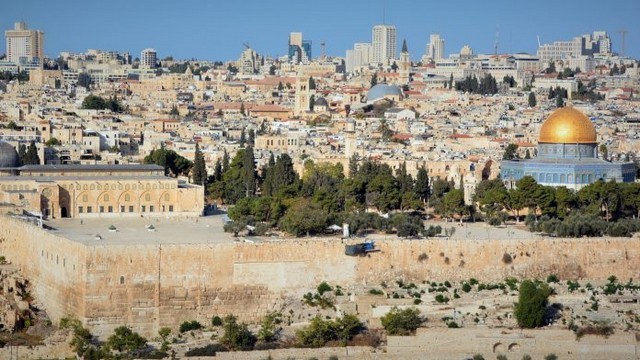
The decision of President Donald Trump to implement the US Congress Jerusalem Embassy Act of 1995, which transfers the United States Embassy to Jerusalem from Tel Aviv, is in contradiction with the principles and policies of the United Nations. It also undermines the US Administration’s self-declared aim to broker lasting peace between Israelis and Palestinians.

The facts are obvious. After the Arab-Israeli war of 1948/1949, Jerusalem was divided along armistice lines drawn between Israel and Jordan. West Jerusalem became part of Israel and East Jerusalem ruled by the Hashemite Kingdom of Jordan. A small portion of the territory – in the area between the western and southern parts of the Walls of Jerusalem and Musrara – was left as no man’s land. After the war of 1967, this territory and Arab Jerusalem east of the armistice line became occupied territory where the provisions of the Fourth Geneva Convention of 1949 apply, prohibiting any alteration of the status of the territory seized by force.

Since the establishment of the State of Israel a number of embassies from Latin American countries, plus the Netherlands, were located in Israeli West Jerusalem. This changed after 30 July 1980 when the Israeli Knesset passed the Basic Law entitled ‘Jerusalem, Capital of Israel’. The law declares “Jerusalem, complete and united,” i.e. it includes Arab East Jerusalem with the site of Haram al-Sharif, as the capital of Israel. This legislative step was tantamount to annexation, a point made abundantly clear by subsequent Israeli governments. Accordingly, the Guidelines of the Government of Israel, 1996, headed by Benjamin Netanyahu, stipulated that “Jerusalem, the capital of Israel, is one city, whole and united, and will remain forever under Israel’s sovereignty.”

In view of these facts, President Trump’s decision may well be seen as creating a precedent in terms of recognising Israeli claims of sovereignty over Arab East Jerusalem. His formulation, “I have determined that it is time to officially recognize Jerusalem as the capital of Israel,” points in that direction. He did not say ‘West Jerusalem’ (referring to the status quo ante before the 1967 seizure of the Arab part of the city), nor did he mention ‘East Jerusalem’ as capital of a future Arab State. Apart from this likely deliberate ambiguity, the caveat in the Trump’s solemn Proclamation of 6 December 2017 – “We are not taking a position on any final status issues, including the specific boundaries of the Israeli sovereignty in Jerusalem, in the resolution of contested borders” – is not consistent with the logic of the actual move from Tel Aviv to Jerusalem. Under the Israeli Basic Law, the city, West and East, is one undivided territorial entity where Israeli law exclusively applies. As always in international realpolitik, what counts are the facts on the ground, not the words.

Exactly the above-mentioned fact – that West and East Jerusalem no longer be conceptually separated under effective Israeli control and legislation – was the reason why the UN Security Council insisted right after the Knesset decision of 1980 that all “States that have established diplomatic missions at Jerusalem” should withdraw their missions from the city, a formulation that also means West Jerusalem. (Resolution 478 [1980] of 15 November 1980, adopted by 14 votes to none, with the abstention of the United States.) As a result, the concerned countries relocated their embassies back to Tel Aviv.

In strictly legal terms, Israel has made any future negotiations about final status issues and delimitation of borders (mentioned in the US President’s Proclamation) almost impossible. This follows two Amendments of the Basic Law of 1980, providing that “no authority that is stipulated in the law of the State of Israel or of the Jerusalem Municipality may be transferred either permanently or for an allotted period of time to a foreign body” (Amendment 1), and that any future amendment to the Law requires a supermajority of 80 out of 120 votes in the Knesset in order to decide over rescinding sovereignty over any area of unified Jerusalem (Amendment 2). This means that any final status negotiations between Israelis and Palestinians over Jerusalem, hinted at by President Trump and the US State Department, have become a distant dream.

The UN Security Council has made the legal issues crystal clear. In resolution 476 (1980) of 30 June 1980, the Council reaffirmed the basic principle of international law that “acquisition of territory by force is inadmissible” and reiterated that all measures that alter the “geographic, demographic and historical character and the status of the Holy City if Jerusalem are null and void and must be rescinded” in compliance with relevant resolutions of the Council. In resolution 478 (1980) of 20 August 1980 the Council reiterated this position and further decided “not to recognize the ‘basic law’ and such other actions by Israel that, as a result of this law, seek to alter the character and status of Jerusalem”.

There is one basic problem, however. The above, and all other resolutions in matters of Israeli occupation or annexation, though mostly adopted by an overwhelming majority of member states (14 votes out of 15), lack any enforcement mechanisms. This is because – due to the threat of a US veto – they are not based on Chapter VII of the UN Charter. This has also been the case with the most comprehensive resolution so far, 2334 (2016) of 23 December 2016. Regarding the general legal framework of the Jerusalem dispute it must also be stated that the UN General Assembly’s ‘Partition Plan’ of 1947 – which provided for a special international status of Jerusalem as corpus separatum – is, in strictly legal terms, essentially a recommendation. This has further added to the ambiguity of debates over the status of the city.[1]

Concerning the actual relocation of the US Embassy to Jerusalem – on 14 May 2018, a date with huge symbolic importance, coinciding with the day when Israel declared independence 70 years ago, the basic issues in terms of international law can be summed up as follows:

  • In view of the Knesset Basic Law of 1980, effectively annexing Arab East Jerusalem and stipulating the municipality boundaries as one indivisible entity of West and East Jerusalem, by implication the US decision ignores one of the foundational principles of modern international law, namely the inadmissibility of the acquisition of territory by force.
  • Consequently, the decision is at variance with relevant Security Council resolutions on Jerusalem, in particular 476 (1980) and 478 (1980), especially the latter resolution’s Paragraph 5(b). These resolutions are not based on Chapter VII, and thus without enforcement mechanisms, do not make the Israeli annexation legal. Nor does it make the move of a foreign embassy to a municipal area that Israel considers as undivided and under its permanent sovereignty (with occupied, now annexed, East Jerusalem as an integral part) a non-prejudicial administrative measure, as President Trump appears to suggest.
  • Furthermore, as regards the actual new location, the US Embassy – in the Arnona neighborhood of Jerusalem – is partly situated in the above-mentioned ‘No Man’s Land’ between the armistice lines of 1949, i.e. in technically occupied territory (which was not part of West Jerusalem under the pre-1967 borders).
  • In more general terms it must further be stated that, under modern international law as established after the two World Wars, claims of territorial sovereignty cannot be derived from religious sources or revelation, whether Jewish, Muslim or Christian. The issue of Jerusalem is undoubtedly also one of the protection of equal rights of the three monotheistic religions, but on the basis of the secular norms of human rights, in particular freedom of religion. This means that territorial issues can only be negotiated between the parties on the basis of generally recognised norms of international law, not by reference to religious claims of sovereignty – from whichever side.

The questions of international legality cannot be separated from those of politics and peace in a wider sense. By his unilateral decision (though in implementation of a Law of the US Congress), the President of the United States has not cut the Gordian knot of the Jerusalem conundrum, finally opening up new chances for a – so far elusive – ‘peace process’, as was suggested by some commentators. If anything, he has taken the US out of the Middle Eastern equation and has effectively relinquished the role of honest broker – or mediator – between Israelis and Palestinians. Should a hope of ‘peace by diktat’ have guided President Trump’s decision, it may ultimately be one of the numerous miscalculations of realpolitik in the long history of international relations.

Dr. Hans Koechler is professor of the University of Innsbruck (Austria) and holds the Chair of Political Philosophy and Philosophical Anthropology. He is the founder and President of the International Progress Organization (I.P.O.), an NGO in consultative status with the United Nations, and a member of the International Coordinating Committee of the World Public Forum «Dialogue of Civilizations». He is also the JUST International Advisory Panel(IAP).

29 May 2018

China, Japan, and the New Silk Road—Overcoming Geopolitics

By Mike Billington

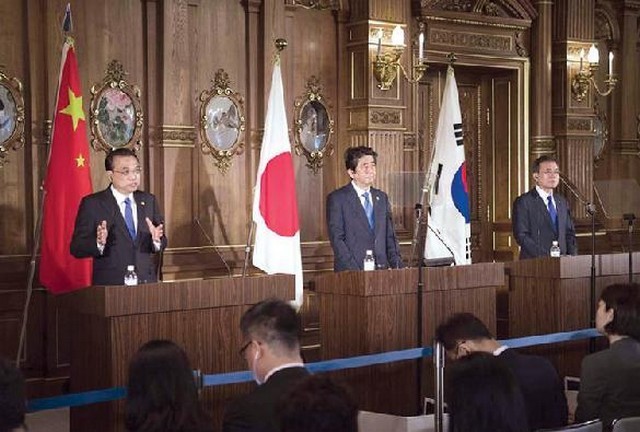
May 20—A world-changing event took place last week in Japan, but anyone in the Western world who depends on the establishment press would have no way of knowing it even happened. Chinese Premier Li Keqiang visited Japan, first for a trilateral summit with Prime Minister Shinzo Abe and South Korean President Moon Jae-in (the first such trilateral summit in nearly three years), then for a series of bilateral events with Prime Minister Abe.

Historic agreements were reached between the two economic powers (Japan and China are the second and third largest economies in the world), to initiate joint investments in infrastructure projects in nations along the Belt and Road, to cooperate in joint research and development of new technologies, and to establish a cross-departmental committee to enter into an “era of coordination rather than competition,” as Prime Minister Abe put it. Those in the West who are desperate to maintain the British imperial division of the world into hostile blocs, East vs. West, are chewing the rug over this historic development, and making sure it goes generally unreported in the West.

Throughout the Cold War, Japan was treated by the Anglo-American “free world” as a bulwark against “Godless Communism” in Asia, both in regard to China and to Russia, while serving as a military base for the U.S. colonial wars in Indochina. Efforts by Japanese leaders, including the efforts of the grandfather and the father of the current Prime Minister Shinzo Abe (Nobusuke Kishi, Prime Minister from 1957-1960, and Shintaro Abe, Foreign Minister from 1982-1986) to establish better relations with Russia were quashed by Anglophile American leaders such as John Foster Dulles, in defense of the Cold War division of the world into enemy blocs.

Under Prime Minister Kakuei Fukuda in 1972 (as Nixon was making his famous trip to China), China and Japan established trade relations, and soon thereafter diplomatic relations. In 1978, the two nations signed a Treaty of Peace and Friendship, with China giving up demands for war reparations from Japan, and Japan recognizing One China with Beijing as its capital, and with Taiwan an integral part of China. The Taiwan issue was particularly crucial in this relationship because Japan had occupied Taiwan from 1895, following the First Sino-Japanese War, until Japan’s 1945 defeat in World War II.

Following these agreements, trade and investment between the two nations skyrocketed in the 1970s, but political tensions continued to fester, because of Japan’s conduct during its brutal invasion and occupation of much of China during World War II, and also because of conflicting territorial claims to islands in the East China Sea. Recurring crises involving these issues restricted political ties, and prevented a softening of the popular anger in both populations against each other. The fact that this historic distrust and animosity is finally being resolved is demonstrated by the massive increase in Chinese tourists traveling to Japan—in 2011, only 1.04 million Chinese visited Japan, but by 2017 it was 7.35 million.

Abe was elected Prime Minister for the first time in 2006, and, although he was in office for only one year due to health problems, he and his successor Yasuo Fukuda (the Son of Kakuei Fukuda) took measures to improve relations with China, such that by 2008, China and Japan were the world’s largest trading partners, while Japan became the largest foreign investor in China, and still is today.

But it has been under Abe’s second term as Prime Minister, which began in 2012, that major changes have taken place in respect to political relations with China, and Russia, as well. In both cases, it has required that Japan stand up to British imperial interests demanding that Japan follow their dictates. Abe has not shied away from this challenge, as he has long recognized that Japan’s future depends on its participation in the emerging Chinese economic dynamo and in cooperation with Russia in the development of the vast frontier of Russia’s Far East.

Abe and Putin

Following the U.S./British coup in Ukraine in 2014, deposing the elected government through a violent “color revolution,” with neo-nazi organizations on the front lines, President Obama called Abe, demanding that he join in the condemnation of Russia for supporting those who resisted the coup, and to go along with the other G-7 nations in imposing sanctions on Russia. Abe deflected the pressure by imposing minor and meaningless sanctions, while continuing to build positive relations with Russia.

In May, 2016, Abe visited Russian President Putin in Sochi, despite a personal call from Obama instructing him not to go. Abe presented Putin with an eight-point plan for Japanese cooperation with Russia in infrastructure, health, energy, and more, both in the Russian Far East and across Russia. They also agreed to begin joint development of two of the four contested islands north of Hokkaido, including investments and visits from Japanese citizens, aiming at an eventual peace treaty to officially end World War II, through an equitable solution to the territorial issues.

Abe then attended the Eastern Economic Forum in Vladivostok in September 2016, proposing 18 development projects in the Russia’s Far East. That was followed by Putin’s visit to Japan in December, where 60 joint development projects were signed, totaling $2.5 billion.

Abe will be attending the St. Petersburg International Economic Forum on May 25—the first time a sitting Prime Minister of Japan has attended this annual event. He will speak on a panel at the plenary session with President Putin, French President Macron, and IMF Managing Director Christine Lagarde. Abe and Putin will also hold a bilateral summit on May 26, and then celebrate the “Year of Japanese-Russian Cultural Relations” with a visit to the Bolshoi Ballet.

Western “fake news” coverage of these developments has usually described them as an effort by Japan to build relations with Russia as a hedge against the “threat” of a rising China. Abe and Li Keqiang have now proven that to be a neocon pipe dream.

The New Silk Road in East Asia

All of the historic developments taking place across East Asia today, including the amazing process taking place on the Korean Peninsula, must be seen from above, as an expression of the “new paradigm” globally set in motion by Xi Jinping’s Belt and Road Initiative. At the trilateral Summit between Moon, Li, and Abe on May 9 in Tokyo, they agreed to foster joint development projects in Asia in infrastructure, industrial capacity, poverty reduction, and innovation cooperation, within the framework of “China-Japan-South Korea + X.” At the Summit Li Keqiang said that the Belt and Road Initiative is creating new opportunities for cooperation among the three countries, and that considering the advanced level of development of the three nations, and the development deficit in other parts of Asia, they should cooperate to bring technology, capital, and engineering capacities to open up fourth countries and foster rapid development across Asia.

Of course, North Korea is an obvious “+X” in this process, if the current diplomatic breakthrough in North Korean relations with President Moon and with President Trump, with major help from China, succeeds in ending the sanctions. Also, such cooperation need not be limited to Asia, but could rapidly expand to Southwest Asia and Africa, where all three Asian powers have considerable experience in building infrastructure, as well as industrial and agricultural capacities.

Following the trilateral summit, Premier Li and Prime Minister Abe attended a ceremony marking the 40th anniversary of the signing of the 1978 Treaty of Peace and Friendship between China and Japan. Li called for “new steps” to bolster the confidence of the Chinese and Japanese people, as well as that of the international community, adding that the two nations should “cherish the hard-won momentum of improvement in relations.”

In attendance at the ceremony was former Prime Minister Yasuo Fukuda, whose father Kakuei Fukuda had established diplomatic relations between China and Japan in the 1970s. Also in attendance was Sadayuki Sakakibara, the head of the Japanese Business Federation (Keidanren), who called for the business sectors of the two countries to collaborate “within the context of the Belt and Road.”

Will President Trump succeed in bringing the United States into friendly and collaborative relations with both China and Russia, as he intends to do, even though his intention is under attack by the underlings of the British Empire? He will find full support from a united Asia if he does—an Asia which has become the core driver for the world economy, while it is forging a new kind of relationship between world powers, based on the common aims of Mankind.

23 May 2018

Source: http://www.larouchepub.com/other/2018/4521_billington_china_japan_nsr.html

Election observer: ‘The majority have chosen the path they want for Venezuela’

By Eulalia Reyes de Whitney & Federico Fuentes

More than 300 international representatives from organisations such as the African Union, the Caribbean Community and the Electoral Experts Council of Latin America, as well as former heads of states, parliamentarians, trade unionists and solidarity activists, were present for Venezuela’s May 20 presidential vote. Among them was Eulalia Reyes de Whitney, a Venezuelan-born activist with the Australia Venezuela Solidarity Network (AVSN). She spoke to Federico Fuentes about her experience.

You were present in Venezuela for the entire election campaign and as an accredited international observer for the vote on May 20. What were your impressions of the elections?

I had a great experience during the campaign and on polling day. Not only did I get a chance to feel, see and live through the many challenges that Venezuelans live through, I also had the opportunity to participate as an official observer representing AVSN.

What I saw was Venezuelans doing what they have been doing since the beginning of the Bolivarian Revolution [kick-started by the election of former president Hugo Chavez in 1998]. Every time an election is called, they go out to vote even though it is not compulsory. This time was no different.

I visited six different voting centres on May 20 in the state of Anzoátegui: one was an Indigenous voting centre; another was a voting centre in a rural town; and the other four were in urban areas of varying characteristics. At every centre I visited, I saw the people’s enthusiasm and determination to vote and be part of deciding the fate of the country.

During the whole campaign there was a great atmosphere. It seems to me that Venezuelans love elections and that they are keen to share their process with the world. They were very appreciative of the visitors who came to witness the evolution of this process.

In the rural areas, there seemed to be even more engagement with the process. Given that transportation was difficult, I noticed how many people refused to be held back by these obstacles and instead sought innovative ways to resolve this difficulty. For instance, many people were happy to travel standing up and in great numbers on the back of big trucks to be able to get to the voting centre.

Inside the voting centre, they were very appreciative and thankful to the international observers. They wanted to make sure the observers understood the meaning of the revolution to the country.

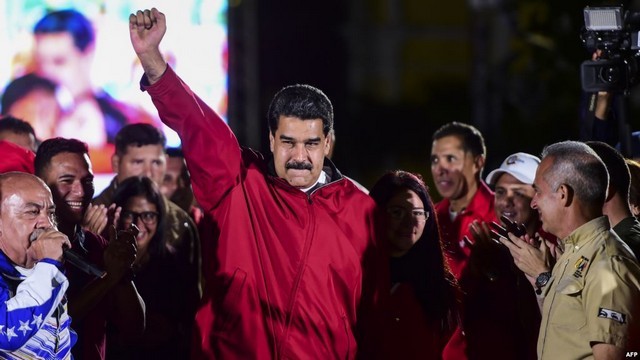
During the campaign, there was a call from the opposition to boycott the vote to delegitimise the results. In the end, Nicolas Maduro was re-elected for the presidential term of 2019-25 with more than 6.2 million votes (67.8%).

The election process was a journey of participation, and a clear signal that the majority have chosen the path they want their country to go down — and that is socialism.

From what you observed, how credible is the Venezuelan voting system? What do you say to claims outside Venezuela that the elections were fraudulent? Has any evidence of fraud been presented?

Venezuela’s voting system has been classified as one of, if not the most, secure and transparent in the world, including by former United States president Jimmy Carter, who is the founder of the Carter Center, an institution that monitors electoral processes in many regions of the world.

It is also important to remember that this was the 25th election held during the 19 years of the Bolivarian Revolution and the fourth election in the past 9 months. The process was open to numerous observers that came from every latitude of the globe.

It was very interesting to see the whole process of how the voting centres and machines were installed and put into action on the day. As an international observer, we were provided with an induction course on all the procedures that are followed through the whole process and the contingency plans in case of any problems arising.

There are no doubts about the transparency of the system. I witnessed the voting process in all the centres I visited and can give faith to the credibility, transparency and security of the system.

In terms of those people who have cried fraud: for Venezuela this nothing new. The same thing has happened after almost every election — except when the opposition has won. In these cases, there has never been any doubt cast about the results, and they have been accepted by all parties, including the government.

On the night of the elections, opposition candidate Henri Falcon surprised many when he appeared on TV half an hour before the results were announced and produced a list of complaints and accusations regarding the way the vote had been conducted.

He accused the National Electoral Council (CNE) of not fulfilling accords that had been agreed to by all parties during the election campaign, in particular focusing on the location of “Red Points” that should have been more than 200 metres away from the perimeter of voting centres. He also accused the CNE of favouring the re-election of Maduro and called for another election to be held before the end of the year.

However, Falcon did not produce any proof for these allegations, nor did he talk of any fraud in terms of the actual vote or result.

The other main candidate from the Hope for Change Party, Javier Bertucci, who won 10.8% of the votes, has recognised the results.

In the end, no one has come forward with evidence of fraud or even called for an audit of the vote.

Despite this, the vote is being audited, as this is a normal part of the electoral system. Every election in Venezuela obligatorily involves a series of audits during and after the election, always in the presence of witnesses from all parties contesting the elections and international observers.

On top of this, Maduro, in his speech after the results were announced, requested a complete audit of every single vote, not just the random sample of 53% of voting machines that is normally required in the auditing process.

The auditing process is open for all to view and can be followed on the CNE website.

What was the sentiment like the day after the elections, in light of the results and the international response? What impact has the result had on the mood of the people and their hopes for the future in light of the extremely difficult situation in Venezuela today?

People in the country are mostly happy, relieved and empowered by the results. The sense of accomplishment and of being on the right path exists across the whole of the country.

The Venezuelan people are today more conscious of their historic role, of the need to defend the legacy of Hugo Chavez and to work together to defy the criminal attacks the country has suffered from the enemies of their revolution.

Venezuelans from all corners of the country have spoken and given their president a mandate. Venezuelans want peace for everyone. The hopes and desires for a better future exist. The country and its people are looking forward to better times. They are also clear on who are the country’s enemies.

The international response has made its presence felt. Plenty of governments, allies and friends of Venezuela have recognised the results of the elections.

There was an international contingent of about 300 political leaders, journalists, academics, analysts, activists and representatives from different institutions and organisations, along with 2000 national and international observers, who were present in the country to express their support for the electoral process.

Organisations such as the Non-Aligned Movement, the Bolivarian Alliance for the Peoples of Our Americas (ALBA), the African Union, and countries such as Palestine, Russia, China, India, Bolivia, Nicaragua, El Salvador, etc. have recognised the vote.Others, however, such as the United States, the European Union, and the Lima Group [which included 13 right-wing Latin American countries and Canada] have refused to accept it and threaten more sanctions.

The day after Maduro was re-elected, the US administration implemented new, more severe sanctions. In response, Maduro expelled two leading diplomats from the US Embassy, Chargé d’Affaires Todd Robinson and head of political affairs Brian Naranjo, on May 22.

The president is calling on everyone to contribute their ideas and to come together for change. Maduro has also called on those Venezuelan youth that have left the country and that today are suffering from xenophobia in many places around the region to return and help move the country forward.

Venezuelans expect the government to move quickly to start changing the situation in the country. The hope for a genuine economic revolution exists.

Federico Fuentes is a national co-convenor of the Australia-Venezuela Solidarity Network.

27 May 2018

Source: https://countercurrents.org/2018/05/27/election-observer-the-majority-have-chosen-the-path-they-want-for-venezuela/

Saudi Wahabbism Serves Western Imperialism

By Andre Vltchek

When the Saudi Crown Prince gave an interview to the Washington Post, declaring that it was actually the West that encouraged his country to spread Wahhabism to all corners of the world, there was a long silence in almost all the mass media outlets in the West, but also in countries such as Egypt and Indonesia.

Those who read the statement, expected a determined rebuke from Riyadh. It did not come. The sky did not fall. Lightning did not strike the Prince or the Post.

Clearly, not all that the Crown Prince declared appeared on the pages of the Washington Post, but what actually did, would be enough to bring down entire regimes in such places like Indonesia, Malaysia or Brunei.Or at least it would be enough under ‘normal circumstances’. That is, if the population there was not already hopelessly and thoroughly indoctrinated and programed, and if the rulers in those countries did not subscribe to, or tolerate, the most aggressive, chauvinistic and ritualistic (as opposed to the intellectual or spiritual) form of the religion.

Reading between the lines, the Saudi Prince suggested that it was actually the West which, while fighting an ‘ideological war’ against the Soviet Union and other socialist countries, handpicked Islam and its ultra-orthodox and radical wing – Wahhabism – as an ally in destroying almost all the progressive, anti-imperialist and egalitarian aspirations in the countries with a Muslim majority.

As reported by RT on 28 March 2018:

“The Saudi-funded spread of Wahhabism began as a result of Western countries asking Riyadh to help counter the Soviet Union during the Cold War, Crown Prince Mohammed bin Salman told the Washington Post.

Speaking to the paper, bin Salman said that Saudi Arabia’s Western allies urged the country to invest in mosques and madrassas overseas during the Cold War, in an effort to prevent encroachment in Muslim countries by the Soviet Union…

The interview with the crown prince was initially held ‘off the record’. However, the Saudi embassy later agreed to let the Washington Post publish specific portions of the meeting.”

Since the beginning of the spread of Wahhabism, one country after another had been falling; ruined by ignorance, fanatical zeal and fear, which have been preventing the people of countries such as post-1965 Indonesia or the post-Western-invasion Iraq, to move back (to the era before Western intervention) and at the same time forward,towards something that used to be so natural to their culture in not such a distant past – towards socialism or at least tolerant secularism.

*

In reality, Wahhabism does not have much to do with Islam. Or more precisely, it intercepts and derails the natural development of Islam, of its strife for an egalitarian arrangement of the world, and for socialism.

The Brits were behind the birth of the movement; the Brits and one of the most radical, fundamentalist and regressive preachers of all times – Muhammad ibn Abd al-Wahhab.

The essence of the Wahabi/British alliance and dogma was and still is, extremely simple: “Religious leaders would force the people into terrible, irrational fear and consequent submission. No criticism of the religion is allowed;no questioning of its essence and particularly of the conservative and archaic interpretation of the Book. Once conditioned this way, people stopped questioning and criticizing first the feudalist, and later capitalist oppression; they also accepted without blinking the plunder of their natural resources by local and foreign masters. All attempts to build a socialist and egalitarian society got deterred, brutally, ‘in the name of Islam’ and ‘in the name of God’”.

Of course,as a result, the Western imperialists and the local servile ‘elites’ are laughing all the way to the bank, at the expense of those impoverished and duped millions in the countries that are controlled by the Wahhabi and Western dogmas.

Only a few in the devastated, colonized countries actually realize that Wahhabism does not serve God or the people; it is helping Western interests and greed.

Precisely this is what is right now happening in Indonesia, but also in several other countries that have been conquered by the West, including Iraq and Afghanistan.

Were Syria to fall, this historically secular and socially-oriented nation would be forced into the same horrid direction. People there are well aware of this, as they are educated. They also see what has happened to Libya and Iraq and they definitely do not want to end up like them. It is the Wahhabi terrorist fighters that both the West and its lackeys like Saudi Arabia unleashed against the Syrian state and its people.

*

Despite its hypocritical secular rhetoric, manufactured mainly for local consumption but not for the colonies, the West is glorifying or at least refusing to openly criticize its own brutal and ‘anti-people’ offspring – a concept which has already consumed and ruined both the Kingdom of Saudi Arabia and Indonesia. In fact, it is trying to convince the world that these two countries are ‘normal’, and in the case of Indonesia, both ‘democratic’ and ‘tolerant’. At the same time,it has consistently been antagonizing almost all the secular or relatively secular nations with substantial Muslim majorities, such as Syria (until now), but also Afghanistan, Iran (prior to the coup of 1953), Iraq and Libya before they were thoroughly and brutally smashed.

It is because the state, in which the KSA, Indonesia and the present-day Afghanistan can be found, is the direct result of both Western interventions and indoctrination. The injected Wahhabi dogma is giving this Western ‘project’ a Muslim flavor, while justifying trillions of dollars on ‘defense spending’ for the so-called ‘War on Terror’ (a concept resembling an Asian fishing pond where fish are brought in and then fished out for a fee).

Obedience, even submissiveness – is where, for many reasons, the West wants its ‘client’ states and neo-colonies to be. The KSA is an important trophy because of its oil, and strategic position in the region. Saudi rulers are often going out of their way to please their masters in London and Washington, implementing the most aggressive pro-Western foreign policy. Afghanistan is ‘valued’ for its geographical location, which could potentially allow the West to intimidate and even eventually invade both Iran and Pakistan, while inserting extremist Muslim movements into China, Russia and the former Soviet Central Asian republics. Between 1 and 3 million Indonesian people ‘had to be’ massacred in 1965-66, in order to bring to power a corrupt turbo-capitalist clique which could guarantee that the initially bottomless (although now rapidly thinning) natural resources could flow, uninterrupted and often untaxed, into places such as North America, Europe, Japan and Australia.

Frankly, there is absolutely nothing ‘normal’ about countries such as Indonesia and the KSA. In fact, it would take decades, but most likely entire generations, in order to return them to at least some sort of nominal ‘normalcy’. Even if the process were to begin soon, the West hopes that by the time it ends, almost all of the natural resources of these countries would be gone.

But the process is not yet even beginning. The main reason for the intellectual stagnation and lack or resistance is obvious: people in countries such as Indonesia and KSA are conditioned so they are not able to see the brutal reality that surrounds them. They are indoctrinated and ‘pacified’. They have been told that socialism equals atheism and that atheism is evil, illegal and ‘sinful’.

Hence, Islam was modified by the Western and Saudi demagogues, and has been ‘sent to a battle’, against progress and a just, egalitarian arrangement of the world.

This version of religion is unapologetically defending Western imperialism, savage capitalism as well as the intellectual and creative collapse of the countries into which it was injected, including Indonesia. There, in turn, the West tolerates the thorough corruption, grotesque lack of social services, and even genocides and holocausts committed first against the Indonesians themselves, then against the people of East Timor, and to this day against the defenseless Papuan men, women and children. And it is not only a ‘tolerance’ – the West participates directly in these massacres and extermination campaigns, as it also takes part in spreading the vilest forms of Wahabi terrorism and dogmas to all corners of the world. . All this, while tens of millions of the followers of Wahhabism are filling the mosques daily, performing mechanical rituals without any deeper thought or soul searching.

Wahhabism works – it works for the mining companies and banks with their headquarters in London and New York. It also works extremely well for the rulers and the local ‘elites’ inside the ‘client’ states.

*

Ziauddin Sardar, a leading Muslim scholar from Pakistan, who is based in London, has no doubts that ‘Muslim fundamentalism’ is, to a great extent, the result of the Western imperialism and colonialism.

In a conversation which we had several years ago, he explained:

“Trust between Islam and the West has indeed been broken… We need to realize that colonialism did much more than simply damage Muslim nations and cultures. It played a major part in the suppression and eventual disappearance of knowledge and learning, thought and creativity, from Muslim cultures. The colonial encounter began by appropriating the knowledge and learning of Islam, which became the basis of the ‘European Renaissance’ and ‘the Enlightenment’ and ended by eradicating this knowledge and learning from both from Muslim societies and from history itself. It did that both by physical elimination – destroying and closing down institutions of learning, banning certain types of indigenous knowledge, killing off local thinkers and scholars – and by rewriting history as the history of western civilization into which all minor histories of other civilization are subsumed.”

“As a consequence, Muslim cultures were de-linked from their own history with many serious consequences. For example, the colonial suppression of Islamic science led to the displacement of scientific culture from Muslim society. It did this by introducing new systems of administration, law, education and economy all of which were designed to impart dependence, compliance and subservience to the colonial powers. The decline of Islamic science and learning is one aspect of the general economic and political decay and deterioration of Muslim societies. Islam has thus been transformed from a dynamic culture and a holistic way of life to mere rhetoric. Islamic education has become a cul-de-sac, a one-way ticket to marginality. It also led to the conceptual reduction of Muslim civilization. By which I mean concepts that shaped and gave direction to Muslim societies became divorced from the actual daily lives of Muslims – leading to the kind of intellectual impasse that we find in Muslim societies today.  Western neo-colonialism perpetuates that system.”

*

In Indonesia, after the Western-sponsored military coup of 1965, which destroyed the Communist Party of Indonesia (PKI) and brought to power an extreme pro-market and pro-Western regime, things are deteriorating with a frightening predictability, consistency and speed.

While the fascist dictator Suharto, a Western implant after 1965, was said to be ‘suspicious of Islam’, he actually used all major religions on his archipelago with great precision and fatal impact. During his pro-market despotism, all left-wing movements and ‘-isms’ were banned, and so were most of the progressive forms of arts and thought.The Chinese language was made illegal. Atheism was also banned. Indonesia rapidly became one of the most religious countries on Earth.

At least one million people, including members of the PKI, were brutally massacred in one of the most monstrous genocides of the 20th century.

The fascist dictatorship of General Suharto often played the Islamic card for its political ends. As described by John Pilger in his book,“The New Rulers of The World”:

“In the pogroms of 1965-66, Suharto’s generals often used Islamicist groups to attack communists and anybody who got in the way. A pattern emerged; whenever the army wanted to assert its political authority, it would use Islamicists in acts of violence and sabotage, so that sectarianism could be blamed and justify the inevitable ‘crackdown’ – by the army…”

‘A fine example’ of cooperation between the murderous right-wing dictatorship and radical Islam.

After Suharto stepped down, the trend towards a grotesque and fundamentalist interpretation of the monotheist religions continued. Saudi Arabia and the Western-favored and sponsored Wahhabism has been playing an increasingly significant role. And so has Christianity, often preached by radical right-wing former exiles from Communist China and their offspring; mainly in the city of Surabaya but also elsewhere.

From a secular and progressive nation under the leadership of President Sukarno, Indonesia has gradually descended into an increasingly radically backward-looking and bigoted Wahhabi-style/Christian Pentecostal state.

After being forced to resign as the President of Indonesia during what many considered a constitutional coup, a progressive Muslim cleric and undoubtedly a closet socialist, Abdurrahman Wahid (known in Indonesia by his nickname Gus Dur), shared with me his thoughts, on the record:

“These days, most of Indonesian people do not care or think about God. They only follow rituals. If God would descend and tell them that their interpretation of Islam is wrong, they’d continue following this form of Islam and ignore the God.”

‘Gus Dur’ also clearly saw through all the tricks of the military and pro-Western elites. He told me, among other things, that the 2003 Marriott Hotel bombing in Jakarta was organized by the Indonesian security forces, and later blamed on the Islamists, who were actually only executing the orders given to them by their political bosses from the pro-Western military regime, which until nowis being disguised as a, ‘multi-party democracy’.

In Indonesia, an extreme and unquestioning obedience to the religions has led to a blind acceptance of a fascist capitalist system, and of Western imperialism and its propaganda. Creativity and intellectual pluralism have been thoroughly liquidated.

The 4th most populous nation on the planet, Indonesia, has presently no scientists, architects, philosophers or artists of any international standing. Its economy is fueled exclusively by the unbridled plunder of the natural resources of the vast, and in the past, pristine parts of the country, such as Sumatra and Indonesian Borneo (Kalimantan), as well as on the brutally-occupied Western part of Papua. The scale of the environmental destruction is monumental; something that I am presently trying to capture in two documentary films and a book.

Awareness of the state of things, even among the victims, is minimal or out rightly nonexistent.

In a country that has been robbed of its riches; identity, culture and future, religions now playthe most important role. There is simply nothing else left for the majority. Nihilism, cynicism, corruption and thuggery are ruling unopposed. In the cities with no theatres, galleries, art cinemas, but also no public transportation or even sidewalks, in the monstrous urban centers abandoned to the ‘markets’ with hardly any greenery or public parks, religions are readily filling the emptiness. Being themselves regressive, pro-market oriented and greedy, the results are easily predictable.

In the city of Surabaya, during the capturing of footage for my documentary film produced for a South American television network TeleSur (Surabaya – Eaten Alive by Capitalism), I stumbled over an enormous Protestant Christian gathering at a mall, where thousands of people were in an absolute trance, yelling and lifting their eyes towards the ceiling. A female preacher was shouting into a microphone:

“God loves the rich, and that is why they are rich! God hates the poor, and that’s why they are poor!”

Von Hayek, Friedmann, Rockefeller, Wahab and Lloyd George combined could hardly define their ‘ideals’in more precise way.

*

What exactly did the Saudi Prince say, during his memorable and ground-breaking interview with The Washington Post? And why is it so relevant to places like Indonesia?

In essence, he said that the West asked the Saudis to make the ‘client’ states more and more religious, by building madrassahs and mosques. He also added:

“I believe Islam is sensible, Islam is simple, and people are trying to hijack it.”

People? The Saudi themselves? Clerics in such places like Indonesia? The Western rulers?

In Teheran, Iran, while discussing the problem with numerous religious leaders, I was told, repeatedly:

“The West managed to create a totally new and strange religion, and then it injected it into various countries. It calls it Islam, but we can’t recognize it… It is not Islam, not Islam at all.”

*

In May 2018, in Indonesia, members of outlawed terrorist groups rioted in jail, took hostages, then brutally murdered prison guards. After the rebellion was crushed, several explosions shook East Java. Churches and police stations went up in flames. People died.

The killers used their family members, even children, to perpetrate the attacks. The men in charge were actually inspired by the Indonesian fighters who were implanted into in Syria –the terrorists and murderers who were apprehended and deported by Damascus back to their large and confused country.

Many Indonesian terrorists who fought in Syria are now on their home turf, igniting and ‘inspiring’ their fellow citizens. The same situation as in the past – the Indonesian jihadi cadres who fought against the pro-Soviet government in Afghanistan later returned and killed hundreds and thousands in Poso, Ambon and other parts of Indonesia.

Indonesian extremists are becoming world-famous, fighting the battles of the West as legionnaires, in Afghanistan, Syria, Philippines and elsewhere.

Their influence at home is also growing. It is now impossible to even mention any social or god forbid, socialist reforms in public. Meetings are broken up, participants beaten, and even people’s representatives (MP’s)intimidated, accused of being “communists”, in a country where Communism is still banned by the regime.

The progressive and extremely popular Jakarta governor, Ahok, first lost elections and was then put on trial and thrown into jail for “insulting Islam”, clearly fabricated charges. His main sin – cleaning Jakarta’s polluted rivers, constructing a public transportation network, and improving the lives of ordinary people. That was clearly ‘un-Islamic’, at least from the point of view of Wahhabism and the Western global regime.

Radical Indonesian Islam is now feared. It goes unchallenged. It is gaining ground, as almost no one would dare to openly criticize it. It will soon overwhelm and suppress the entire society.

And in the West ‘political correctness’ is used. It is lately simply ‘impolite’ to criticize Indonesian or even the Saudi form of ‘Islam’, out of ‘respect’ for the people and their ‘culture’. In reality, it is not the Saudi or Indonesian people who get ‘protected’ – it is the West and its imperialist policies; policies and manipulations that are used against both the people and the essence of Muslim religion.

*

While the Wahhabi/Western dogma is getting stronger and stronger, what is left of the Indonesian forests is burning. The country is literally being plundered by the Western multi-national companies and by its local corrupt elites.

Religions, the Indonesian fascist regime and Western imperialism are marching forward, hand in hand. But forward – where? Most likely towards the total collapse of the Indonesian state. Towards the misery that will come soon, when everything is logged out and mined out.

It is the same, as when Wahhabism used to march hand in hand with the British imperialists and plunderers. Except that the Saudis found their huge oil fields, plenty of oil to sustain themselves (or at least their elites and the middle class, as the poor still live in misery there) and their bizarre, British-inspired and sponsored interpretation of Islam.

Indonesia and other countries that have fallen victims to this dogma are not and will not be so ‘lucky’.

It is lovely that the Saudi Crown Prince Mohammed bin Salman spoke publicly and clarified the situation. But who will listen?

For the Indonesian people, his statements came too late. They did not open many eyes, caused no uprising, no revolution. To understand what he said would require at least some basic knowledge of both the local, and world history, and at least some ability to think logically. All this is lacking, desperately, in the countries that have found themselves squashed by the destructive imperialist embrace.

The former President of Indonesia, Abdurrahman Wahid, was correct: “If God would come and say… people would not follow God…”

Indonesia will continue following Mr. Wahab, and the capitalist dogma and the Western imperialists who ‘arranged it all’. They will do it for years to come, feeling righteous, blasting old North American tunes in order to fill the silence, in order not to think and not to question what is happening around them. There will be no doubts. There will be no change, no awakening and no revolution.

Until the last tree falls,until the last river and stream gets poisoned, until there is nothing left for the people. Until there is total, absolute submission:until everything is burned down, black and grey. Maybe then, few tiny, humble roots of awakening and resistance would begin to grow.

*

[First published by New Eastern Outlook – NEO]

Andre Vltchek is a philosopher, novelist, filmmaker and investigative journalist.

27 May 2018

Source: https://countercurrents.org/2018/05/27/saudi-wahabbism-serves-western-imperialism/

Seminar Report : The Rohingya Refugee Crisis: Causes and Consequences: Search for a Durable Solution

11th May 2018, India International Centre, New Delhi

The Rohingya Refugee Crisis: Causes and Consequences: Search for a Durable Solution” was a daylong Consultation held on May 11, at the India International Centre, New Delhi. The conference was organised by the South Asia Forum for Human Rights in collaboration with Development and Justice Initiative, India International Centre and Euro-Burma office. It brought together around 80 leading activist voices from civil society in Myanmar, the Rohingya community in Bangladesh and India, exile groups in the UK, official representative from Bangladesh, diplomats, lawyers, academics, social justice and women’s groups activists, the media, international agencies, faith based organisations and students.

The Conference on the Rohingya crisis was organised with a view to encourage the emergence of an informed discourse on the Rohingya, a people rejected by the country they call home and unwanted by their neighbours. The conference aimed to shift the emphasis from a security centric approach to the Rohingya refugee crisis to a human security one. Over-determination of the national security threat risks producing improper policy responses, undermining the human security of the refugees and rendering them vulnerable to extremist influences.

Opening Session, “Setting out the thematic terrain:  the humanitarian and human rights crisis, It sought to situate the Rohingya crisis within the global challenge of global refugee/migrant flows and the limitations of the international protection regime. It brought into the discursive framing of the international response, the role of South Asian states- in particular India and global response.  It identified the different perspectives and priorities of various stake- holders on the Rohingya crisis, and the near impossibility of their return with security and dignity. Within Myanmar, over the last few decades the Rohingya has been psychologically and socially dehumanized as the ‘other’, and as ‘migrant’, denying their claim to ancestral domain in the Arakan, renamed Rakhine. This ‘othering’ has got further overlaid by the ‘Islamic terrorist’ discourse and uncritically echoed by many governments, and obscuring the genocidal tragedy of the Rohingya. Meanwhile, in Myanmar as well as Sri Lanka and Bangladesh exclusionary extremist discourses find easy ideological echo in the social media exacerbating tension, legitimizing exclusion even within Myanmar’s democratic rights civil society.

The discussion was initiated by a mapping of the challenges facing Rohingya, not least being the inadequacy of the Indian and international community response, with Bangladesh with a most adverse land:man ratio sheltering more than a million. As the chair Rita Manchanda, scholar –activist reminded, the Rohingya are not even recognized as refugees and thus afforded the protection of international refugee law. Deliberately, they are called ‘migrants’, their protection and care the responsibility of the International Organisation of Migration.

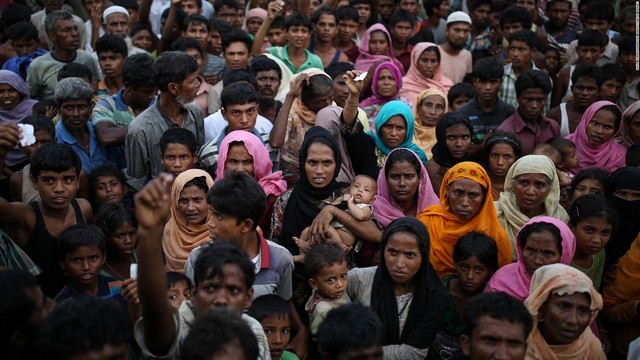
Rohingyas are an impoverished and a stateless ethnic minority community settled predominantly in the Rakhine province representing the largest percentage of Muslims in Myanmar has co-existed peacefully alongside Buddhists for decades. The latest cycle of violence allegedly carried out by Myanmar security forces compelled more than a million of the Rohingya to flee extrajudicial killings, rape, abuses, communal violence, persecution and terror to neighboring Bangladesh for refuge and security. The UN human rights body has described the brutal military action that caused the mass exodus as “a textbook example of ethnic cleansing”.

Tapan Bose, Secretary General of South Asia Forum for Human Rights, located the Rohingya crisis within global movements of refugees and migrants, and in particular, Myanmar’s role in creating a crisis of statelessness and refugees fleeing persecution and ‘slow genocide’. Empasising the regional repercussions of the crisis, he pointed out that the refugees  had crossed international borders largely into Bangladesh, but also spread into India, Pakistan, and Nepal in South Asia. They have travelled in leaky boats to Sri Lanka, to Thailand, Malaysia, Indonesia and Australia. Since the 1970s, military governments in Myanmar have been persecuting the Rohingyas, categorized as ‘illegal Bengali immigrants’, so as to obliterate the evidence of the Rohingyas long habitation in Arakan territory, hundreds of years prior to colonial rule and even before the Burmese conquest of the territory now renamed Rakhine. In fact the Rohingya were living in Arakan long before the Burmese conquered the region.

The installation of a democratic government in Myanmar has only worsened the persecution of the Rohingyas.   The ticking bomb of Rohingya statelessness exploded in August 2017. In less than two months, about 700,000 Rohingya Muslims and Hindus, women, children and men fled from an attacking army and gangs of Burmese Buddhist. Thousand were raped, killed, tortured, children and the elderly if they survived were burnt alive in whole villages set alight.  Bose recalled his two visits to the refugee camps in Cox’ Bazaar.  According to the Bangladesh government’s Refugee Relief and Repatriation Commission’s Family Counting Exercise (supported by UNHCR), by March 18 there were 836,210 refugees in total in all the camps. Quoting Yanghee Lee, UN Special Rapporteur, he said, “No amount of videos, photographs or news footage can prepare you for witnessing in-person the immensity of the camps and gravity of the loss and suffering experienced by the Rohingya population.”

Myanmar and Bangladesh have concluded an Agreement in Nov 2017 on the return of ‘migrants’, but the impracticability of such failed status quo solution was already evident. More than a million desperate and dispossessed Rohingyas languishing in camps with no future is a certain recipe for destabilizing South and South East Asia which comprise the largest Muslim population in the world. If Rohingya women children and men were not to fall victim to self-fulfilling Islamophobia about radicalization and violent extremism, it was crucial to intervene now, and assert the Rohingya peoples’ right to life, citizenship and dignity.

Focusing on the crisis within India where the Rohingya face the threat of deportation, Bose mapped the spatial spread of the 40,000 Rohingya refugees – Hyderabad, Jammu, West Bengal, Northeast India and Delhi. Indian government classifies them as illegal immigrants and a threat to national security on the basis of unsubstantiated links with ‘terrorist’ organisations. The Supreme Court of India has provided a temporary reprieve. But there were reports of the Border Security Force using “rude and crude methods” to block new comers. A BSF officer recently said to the media that they had started using chili sprays and stun grenades.

Sahana Basavapatna, lawyer researcher and human rights defender of the rights of refugees, sought to demystify the hyper security jingoism which was at the root of fostering an anti-refugee/migration sentiment. It was undermining India’s historical record of an accommodative ‘host’ country which has upheld the international principle of non-refuoulement. The country’s lack of recognition of the legal category of ‘refugee’ resulting in the clubbing of all as ‘illegal foreigners’ had resulted in arrests of several Rohingya (and other refugees) who had crossed over into Manipur, India. She expressed concern at the in/security pathology was giving popular legitimacy to the government’s decision to deport the 40,000 Rohingya Refugees. India has extended humanitarian assistance to Bangladesh, but it has been reluctant to use its considerable influence on Myanmar to end the violence and politically address the crisis of making people stateless, including hundreds of thousands of peoples of Indian origin, Hindus and Muslim.

Ravi Nair, South Asia Human Rights Documentation Centre, an expert in monitoring the effectiveness of international institutions and mechanisms, was openly critical of the inadequacy of the UN system’s response to the crisis which according to its own assessment bears the “hallmarks of genocide”. The warnings of a potential genocide were evident years ago when the Myanmar military began targeting Rohingya civilians and it made international headlines. A comprehensive arms embargo then, could have pressured Myanmar’s military into ending the assault. UN system “failed miserably to halt the crimes against humanity, or make the necessary noises.” Myanmar has benefitted from the role of Russia and China. Singling out culpability of UNDP, he reminded that in 2012 when Rohingya were being killed and forced out of their villages, the head of UN country team (UNDP Resident Representative) in Myanmar had tried to prevent human rights advocates from visiting sensitive Rohingya areas and isolated staff who tried to warn that ethnic cleansing might be happening. Despite ominous warnings of a genocidal threat and ethnic cleansing by its own officials, the UN and its member states have failed the Rohingya people in appalling ways.

Prof. Nasreen Chowdhary, opened up the discussion by drawing critical attention to India’s ad hoc and discriminatory policy toward refugees and called for the need to formalize a legal policy for refugees to bring in predictability of response and obligation, and not leave it to the discretion of the judiciary and issues of ‘ethics of admission’. Focusing on the threatened Rohingyas refugees in Jammu she contextualized it within the politicization of demography and the situation in the state of Jammu and Kashmir.

Session 2:
The session on “Looking Inside Myanmar and India’s role in restoring Human Rights and Peace”  was a rare opportunity to join an exceptional Burmese civil rights thinker-activist (professional dentist) Khin Zaw, and Tun Khin, a leading voice of the Rohingya community in exile, advocating Rohingya rights, globally. Also on the panel was veteran diplomat and author on Myanmar Amb. Malik and Bangladesh Deputy High Comissioner, Rokebul Haque. Steering the session was Amb. Vijay Nambiar, former special adviser on Myanmar of UN Secretary General 2011-2016.

Tun Khin, President of Burmese Rohingya Organisation UK, personalized the Rohnigya situation of forcible displacement and statelessness in his own experience —growing up in Aarakan, the grandson of a former Member of Parliament from his father’s side, the grandson of a judge from his mother’s side, being rendered stateless by the 1982 nationality law. It excluded the Rohingya from the list of 135 ethnic groups considered indigenous and therefore eligible for Burmese nationality. “I grew up in the Arakan state, went to school but the oppressive restrictions imposed on the Rohingya, and chocked the possibility of higher education. (Offcial approval was required for higher education, work permits, travel or marriage which took up to 3 years) I left. Travelling between villages was hard and to other districts was really hard, but I managed to bribe my way and reached Bangkok, seven years ago and got an education. Eventually, I went to the U.K and am currently doing post graduate studies”. From 1990 onwards the situation got worse – the military imposed restrictions on movement, education, religious practices, and marriage. Permission was necessary to get married, and there were at any point in time an estimated 10,000 pending applications.  Emphatically, he denounced the systematic campaign of rape and killings of the Rohingya as ‘pre-planned, the alleged ‘terrorist’ attack of ARSA as a manufactured ruse to execute the operation of ‘preplanned expulsion’ (For more details please see – “Pre-planned Expulison” Kaladan Press Network 2017).

“This is genocide”. He had been a supporter of the NLD and Aung San Suu Kyi, but was extremely critical of her silence against human rights violations and open complicity in the military’s genocidal campaign. He pointed out that Myanmar government was using divide and rule policy to systematically drive the Rohingyas out of Myanmar The Rohingyas refugees want to go back to their own land, but without a “protected return to a protected homeland”, we will face mass atrocities. The international community must intervene to ensure protection, he hoped the recent visit of UNSC’s team to Bangladesh would yield action.

Dr. Khin Zaw Win, Director Tampadipa Institute, is one of the very few Burmese Human Rights and Democratic activists to speak up for the rights of the Rohingya, within a context where the very identity of the community, Rohingya has been obliterated, and are constructed as ‘Bengali’ migrants. History is being rewritten, but ironically, in recent memory, VOA used to broadcast in the Rohingya language. In 1961 July, Vice Chief of Army Staff, recognized Rohingya as an ethnic group.  That changed with the 1982 Citizenship law resulting in the Rohingyas as well as some other ethnic groups were made stateless in Myanmar.  He spoke about the ‘othering’ of the Rohingya by the government’s systematic administrative and military methods, rendering them stateless and finally categorizing them as illegal immigrants from Bangladesh. In mainstream Burmese- Buddhist discourses Rohingyas are demonized as evil people out to destroy Buddhism. To call it “nationalist” was too polite a term, as this nationalist-populist impulse came from inciting racist phobias and demonizing the ‘Other’.

Pointing to the paradox of the revival of the democratic system in Myanmar after half-a-century of military dictatorship opening up core contradictions and multiple ethnic challenges, he suggested that the quasi democratic- military regime was whipping up a racist, authoritarian populism targeting the Muslim minorities, notably the Rohingya, as a prop. This short sighted dangerous policy was threatening not only the economy and governance, but also social and ethnic cohesion.  Looking within Myanar, he stressed the importance of civil society action in opening up a dialogue involving other ethnic groups and pointed to existing initiatives such as inter-faith dialogues that need to be strengthened. Internationally, he expressed optimism in the recent development of the International Criminal Court taking cognizance of the criminal offence of the crime of forced deportation, being forced to cross into the territory of Bangladesh would be a part of that ‘conduct.

[On Wednesday April 11, 2018, ICC judge Antoine Kesia-Mbe Mindua issued a decision that Bensouka’s request for a ruling on jurisdiction over the Rohingya deportation met existing criteria and assigned the request to a pre-trial chamber.] The prosecutor’s office on May 7, 2018 sent a ‘reference’ to the Bangladesh government to allow an investigation. Bangladesh is a signatory to the ICC, Myanmar is not. Characterising Myanmar’s response to the ICC judge’s decision as unsophisticated and defensive, Khin Zaw Win said Aung San Suu Kyi’s attempt to invoke the principle of national sovereignty and non-interference in the internal affairs of other states to block the ICC was another attempt to protect the military. He said Ms. Suu Kyi’s office statement that “that it has not deported any individuals” was completely untrue.

Amb. Preet Malik brought a historical overview, locating it in a colonial-post colonial continuum of frontier geographies and ethnicities and the challenge of integration and social cohesion which the Burmese-Myanmar state is grappling with. The situation is exacerbated by these areas being economically underdeveloped as ‘frontier’ territories. The autonomy envisaged by the Panglong Agreement, including the right to secede has been removed from Myanmar’s constitution. The 2008 Constitution was drafted in an undemocratic manner, without input from representatives elected by the people, and its clauses do not facilitate the establishment of a democratic union. He stressed that “you cannot isolate the peace process with ethnic grouping and rethinking the citizenship law. Despite the government’s structure of peace accords, ethnic conflicts persist. Economic backwardness, he believed, had led most ethnic groups of the frontier areas to form insurgent armies in rebellion against the Burmese government. Locating the Rohingya within the context of Myanmar’s multiple troubled ethnicities (many in armed struggle), he pointed to the anomaly of the construction of the Muslim Rohingya as a demographic ‘threat’ in a context where the population is: Buddhist 88%.Christian 6% and Muslim 4% (uncertain whether statistics include refugees). “Four percent of the population threatened 88 percent of the population!” Emphasising the role of economics in the reconciliation process, Amb Malik argued that India should coordinate with Myanmar and Bangladesh on a trilateral basis to develop the sub-region.  The Chinese he believed are interested in a stable settlement.

Mr. Rokebul Haque, the Deputy High Commissioner of Bangladesh, the country that is sheltering 1.2 million Rohingya refugees, spoke of the country’s formidable responsibility for the ‘forcibly displaced Myanmar nationals’ as they are categorized. Discussions were ongoing with Myanmar for implementing the bilateral Agreement for their repatriation, but the response on return under present circumstances makes implementation look very difficult. Meanwhile Bangladesh is confronting a humanitarian crisis that will become even more challenging in the coming monsoon season of rain and mudslides. He defended the plan to shift 100,000 refugees to the island of Bashan Char which human rights activists have decried as there is fear that there will be absolute restriction of movement and communication.

The Bangladeshi government wants the Rohingyas to go back to the Rakhine state. If the crisis continued indefinitely, it would destabilise the entire region of South Asia. He acknowledged India’s support on providing relief, but urged that India play a more pro-active role in persuading the Myanmar government. Amb Nambiar, in pulling together the rich discussion, expressed his own perplexity and disappointment at the Lady (Su Kyi) drawing upon his own personal encounter and expectations.

Session 3:
“Voices of Rohingyas” brought to the centre of the discussions, the perspectives and lived experiences of the rohingya in Bangladesh and India, and as the chair Rita Manchanda emphasised, it challenged the dominant policy framing of others —UNHCR, IOM –speaking for the refugees. Arguing that ‘participation itself was protection’, she argued against the infantalisation of the refugee especially refugee women, and emphasised the importance of refugees (women and men) being involved in determining the decisions that directly affect their lives. She regretted camp policies as evident in Cox’s Bazaar that desisted from involving the refugees in building basis infrastructure and thus reinforcing sense of disempowerment and agency.

Razia Sultana, assertively identifies herself as a Rohingya, and is a feminist, a lawyer, human rights defender. When the Burmese military junta nationalized businesses her father a prosperous businessman shifted his business and his family to Chittagong Bangladesh. Razia is a Bangladesh citizenship but deeply involved in campaigning for Rohingya rights,and rohingya women’s rights. She is the author of the devastating pamphlet, (Kaladan Press Network 2017 “Rape by Command’) which documents the widespread and systematic rape by the army of more than 300 women/girls as part of the military offense of ethnic cleansing and planned mass expulsion.

She asserted, “We are not asking for citizenship. We are reclaiming our rights”. She ridiculed the ‘official’ story of the coordinated ‘terrorist’ attack of hundreds by armed men of the Arakan Rohingya Solidarity Army on police –military posts in the Arakan. Where would they have trained in the hills, when in every corner of the highly militarized territory there are police posts and patrols.  When people are not able to move from one house to another, forget about a coordinated attack with bombs. Attack pre-planned. Razia expressed sadness and anger at her fallen icon, Suu Kyi.
On working in the camps, Razia spoke of the accommodative welcome of the local people but recognized the growing strain resulting from competition for resources and livelihood. The refugees are obliged to work for one fourth the minimum wage rate. And there is resentment that the refugees get free rations, health care etc.  Ironically there are considered ‘rich’ because of access to these resources. It has the girls vulnerable to ‘marriages that are nothing more than pieces of paper’. The camps have become a magnet for traffickers and ‘yava industry’ drug dealers who prey upon the ignorance and innocence of the refugees. For as little as a ‘mobile’, promise of an escape to India, a job they are sucked in. “Rohingya girls have become ‘cheap’. I used to be so proud of saying, I was Rohingya…” Rohingya girls were being brainwashed into “normalizing” prostitution in the refugee camps of Bangladesh. She was critical of women activists focusing on humanitarian and welfare needs and ignoring the need for awareness on gender equality and empowerment.

In India, the 40,000 plus Rohingya refugees have been facing increasing challenges after the government’s policy directive (stayed by Supreme Court) on deportation. Allegations of involvement with terrorist groups and rumors spread by media reports have made more difficult an already difficult their daily life struggles of shelter, health care schooling for children, livelihood and the hazards of being a non-citizen. The four Rohingya asylum seekers came from Jammu, Haryana and Delhi. Many made their way from Bangladesh to India hearing that there was possibility of schooling of finding some job. Sultan (not his name) , “After making our way to Delhi we applied for asylum seeker status to UNHCR. We got a card categorizing as a refugee. No other assistance. For 41 days we protested in front of UNHCR office. The police dispersed us and forced us to stay at a railway station for two days. Eventually we were ‘settled’ on government land property, “no construction area”, a makeshift camp constructed out of scraps of recycled wood and plastic, which we bought ourselves. That is home.

Seema (not her name) spoke of the difficulties girls face. Female sanitation and hygiene is a daily struggle. Till 6 months ago there were no toilets installed. UNHCR is providing sanitary napkins for 6 months a year. But in a camp there is nowhere the women can dispose of them.
Sultan (name changed), spoke of how he felt when he saw his father, once a senior government official, carrying loads at a construction site or he an educated young man, loading sacks, tears streaking his face. A benefactor rescued him. He had skills, he was lucky. Refugee children have the right to go to school, but there are just not enough entitlements of books, uniforms or the most important –mid day deal provisions. “We are called dirty”, made to sit apart.  A small number of NGOs have been engaged in supporting the residents in camps. The children have received 47 scholarships for free education in primary school. UNICEF also provides facilities for education, but the schools are too far for the children to reach, and public transport is unaffordable.
Sakina (not her name), one of a family of three women/girls, with middle school education, demonstrates the resilience of her family to learn and build a new life for themselves. In Jammu, the refugees have monopolised the digging works required by the city and the railways, the women are busy shelling walnuts but at Rs 100 –it is bare subsistence. Even that could be jeopardized by the xenophobic jingoism stoked by allegations of the ‘Muslim’ Rohingya being a security threat. So far there has been no tension in their day to day interaction with the immediate local community, she said.  All of the refugees were emphatic, they wanted to return, but in safety and dignity.

Session 4:
‘Establishing accountability- Should the Myanmar government’s acts be considered as genocide?’ was introduced by Prof. R. Sudharsan, of Jindal University who referred to the “right to protect” which qualifies the fundamental principle of the UN charter, respect for the sovereignty of member states , overriding it in order to extend protection to vulnerable people. It is the role of the UN to uphold the principles of the UN Charter and to ensure implementation of International Conventions and Protocols.
Nitya Ramakrishnan, Supreme Court of advocate, unpacked the Genocide Convention elaborating on whether the scope and nature of the violations against the Rohingya fitted the International law on Genocide and India’s position. Why did it matter whether the plight and flight of the Rohingya across the borders of the Rakhine state as genocide within the meaning of Article II of the Convention of 1950 and Article 6 of the Rome Statute? If covered the International Community will be duty bound to intervene in terms of Article VIII and VIII and failure of Member states to do so may amount to complicity within the meaning of Article III.

Critiquing the Genocide Convention she said, “Intent” as a governing principle was limiting. Knowledge of ensuing consequences should be added, as is the case in even normal criminal statutes like the definition of culpable homicide. She stressed that the nature of some acts must ipso facto be deemed genocide prone- such as enforced statelessness. In addition, complicity in genocide should be incorporated as an inclusive definition. There should be a presumption of ‘genocidal intent’, ‘genocidal conspiracy’ and ‘actual genocide’ predicated upon an incremental threshold of objective facts. This would be in keeping with the purport of the Convention- of prevention, retribution and reparation.

She listed the reasons why Myanmar’s actions against the Rohingya constituted Genocide – 1. Its refusal to acknowledge Rohingyas as citizens is of long standing- (Article II (b), ((c); 2. Killing by State agents like the military as well failure to act against the killing of Rohingyas by the majority forces (Article II (a); 3. Imposing the conditionality that they deny their identity for bare habitation (Article II (b), (C) (d); 4. sexual assaults and trafficking (b); (c) (f); 5. Impossibility of survival (Article II (a) (b) (c) (d); 6. And the sheer number of deaths, rapes and killing of children argues for intended extermination. Intent is inferable from objective and acknowledged data. Instigation and complicity, so consistent that intent is apparent is in addition to actual genocide. The offences are thus under articles II and III; Buddhist and other groups are jointly and severally guilty.
On what was the scope of India’s responsibility in terms of International Law in relation to the treatment of Rohingyas within its territory, Nitya Ramakrishnan explained that Article 51 of Indian Constitution was a Directive Principle obligating “respect for international law and treaty obligations in the dealing of organized peoples with one another”. The Directive Principles are not justiciable- in the sense that the legislature cannot be mandated to pass a law or the executive to act by a judicial writ, she pointed out that these were to be followed in interpreting existing law or in assessing policy. However, the state is obliged to follow these principles in governance. International Law has been incorporated in the Indian legal system in two ways- by reading it into the content of Fundamental Rights and in interpreting the Indian State’s duties. Non refoulement and aspects of the Refugee Convention have commonly been read into judicial relief, as also covenants on custodial justice.

Referring to India’s obligations in terms of Article VIII of the Genocide Convention, She said that while it might not be amenable to a direct writ- but could be referred to in preventing acts that go against the spirit of the Convention.   There are many such acts. Endorsing Burmese anti Rohingya acts as “anti-terrorist” would constitute as direct violation of its constitutional obligations. In her opinion, India’s silence and failure to act in favour of Rohingya rehabilitation and positive approval of Myanmar action – was indicative of complicity- in creating the conditions of genocide- and covered by the Convention. She felt that Indian Courts could be moved to challenge India’s stance in the international arena not so much as inviting a writ to act in a certain way but a direction not to act in a contrary way.
Saumya Uma, Asst. Professor of Law, Ambedkar University emphasized the need to create a legal framework in order to deal with refugee crisis. A campaign lobbyist on the ICC, she took up Khin Zaw Win’s earlier reference of ICC Prosecutor Fatou Bensouda’s request to The Netherlands-based international tribunal’s judges to rule on whether the ICC “can exercise jurisdiction over the alleged deportation of the Rohingya people from Myanmar to Bangladesh.” The Prosecutor has raised the jurisdiction issue because Bangladesh was a member of the ICC, while Myanmar was not. This is the first request of its kind filed at the ICC. It is an attempt to assert jurisdiction over “deportation” of the Rohingya by Myanmar army soldiers during the crackdown. It is based on the ICC’s ability to assert jurisdiction if the ‘conduct in question’ for a deportation was committed on the territory of a member state. Ms. Fatou Bensouda in her reference has pointed out since crossing a border was a legally required element of the crime of deportation, victims

The real challenge, Saumya said would be to overcome Myanmar’s non-member status. That challenge could be overcome by the involvement of the UNSC which has the power to refer the Myanmar situation to the ICC under Articles 13(b) and 87(7) of the ICC statute. Clearly, the Myanmar Situation presented an opportunity for the UNSC and ICC to stand above geopolitical rivalry and be active in ending impunity for heinous international crimes. Unfortunately, neither the UNSC nor the ICC has yet addressed the perennial problem of their competence and jurisdiction.

In the past, the UNSC was very quick to refer cases of Sudanese President and Libyan leader to the ICC Prosecutor, which launched these cases at a record speed. However, the UNSC has made no such referral as yet regarding the unabated commission of crimes which are covered by the ICC Charter in Syria and Yemen – clearly to protect the permanent members of UNSC. She spoke of a crisis of confidence and rise of popular skepticism about the exercise of the ICC referral jurisdiction. The Rohingya crisis presents another opportunity for the UNSC to refer the situation to the ICC Prosecution, which must act expeditiously as both organs did in case of Sudan and Libya. A failure would mean a support for impunity to prevail over justice and the rule of the jungle over the rule of law and further erode public confidence in the two important international institutions.

Bringing a more political and moral perspective to the discussion on holding the state to account on protection, Assoc. Profesor Centre for Policy Research, Dr Nimmi Kurian provocatively asked “Why the ‘Good’  refugee is a bad idea?

Session 5:
The concluding session brought focus on ‘Bangladesh- Facing the Rohingya Exodus’. Maynmar in effect has forcibly displaced what it believes is its Rohingya ‘problem’ and made it Bangladesh’s. Journalist-scholar Sukumar Muralidharan, chaired a session that unpacked the material reality of the camp situation and the geo political contextual reality of the regional response to finding a durable solution. Based on his visit to the camps in Cox’s Bazaar, Bharat Bhushan, senior editor and policy analyst mapped the condition of the ‘forcibly displaced Myanmar nationals’ spread across 58,000 acres of land sheltering more than 40,000 orphans, 17,000 pregnant women, 3000 new born infants, etc. He alluded to a recent article in Foreign Policy Magazine that referred to them as the ‘New Palestinians’.

Bharat pointed out that Bangladesh in addition to confronting a major financial crisis because of the massive influx of Rohingya refugees, was also staring at serious environmental damage due to the refugee settlements that have sprung in the hilly regions near Kutupalong and Balukhali that have denuded considerable areas of forests. He also highlighted the rampant problem of  prostitution and trafficking taking place inside the camps. Bharat was critical of the of the resettlement of Rohingya refugees in Bhashan Char Island was not a durable solution. Relations between the host community and the refugees had been supportive. Indeed Bangladesh government, initially had blocked entry of the refugees, it was civil society pressure that had obliged Sheikh Hasina’s government to allow them in. But with the competition for resources becoming more intense and donor support dwindling, the burden is beginning to strain relations.

He said while by hosting such a large number of refugees, Prime Minister Hasina has got more space internationally for herself and more importantly, for her government’s domestic policies which her critics claim are verging towards intolerance and authoritarianism. However, this international approval unless it is backed by financial support for the refugees was not going to help much.

Speaking about the fear of Islamic radicalization, Bharat Bhusan said, most Bangladeshis, including government officials, felt that Islamic radicalisation of Rohingya refugee youth in the camps was a real possibility and there were enough radicalizing elements within Bangladesh. The prospect was of a desperate excluded generation of young people growing up with virtually no access to education.  It was a ripe constituency for extremist recruitment. Rohingya youngsters who have seen their family members shot dead, tortured or raped can easily be prompted to fight back. A lot of Islamic NGOs have emerged suddenly and they are working in the camps. Many have names which people have never heard of earlier. Bharat pointed out that if radicalisation of Rohingya youngsters took place, then it was not going to be a threat only for Bangladesh. It would be a regional problem with the internal security of Myanmar as well as India being directly affected.

Ravi Hemadri, Director of Development and Justice Initiative reiterated the need for humanitarian aid and assistance from the international community. He talked about the response of South Asian states to Bangladesh’s call for international intervention in Myanmar. He reflected on whether the region’s sole mechanism for regional cooperation, SAARC could serve as enabling a regional response. Given the current impasse in SAARC an initiative looks unlikely. In the recent past, the South Asian countries have not been able to forge a collective regional response to the Afghan or Bhutanese refugee crisis. However, more successful has been sub-regional cooperation as in the case of the Bhutanese refugees which involved trilateral –Bhutan-Nepal-India cooperation. Bangladesh seems more interested in appealing to the western countries and the UN than SAARC, though it is working closely with neighbours India and China.

The seminar concluded reiterating the demand for urgent international intervention to ensure “protected return to protected homeland”. It reminded the international community of its obligation under the 2005 UN resolution on Responsibility to Protect (R2P), and recommended that no Rohingya should be forced to return till their citizenship was restored and their safety was guaranteed by an international force. At the South Asian level, it called on the governments of India and Bangladesh to actively engage the Chinese government to put pressure on Myanmar, to change its citizenship laws and to create a safe environment for the Rohingya to actively participate in the democratic life of Myanmar.

Khamenei, in Reply to Trump, Gives Europe 6-Point Ultimatum on Nuclear Deal

By Juan Cole

24 May 2018 – Iran’s clerical Leader, Ali Khamenei, weighed in on Trump’s violation of the Joint Comprehensive Plan of Action (JCPOA) or Iran nuclear accord of 2015, which the US signed off on along with the rest of the UN Security Council and Germany (informally representing the European Union). Speaking frankly to Iran’s European trading partners, the ayatollah laid down six requirements for Iran to remain in the JCPOA itself. These demands appear to be a response to those made by US Secretary of State Mike Pompeo, whom Khamenei has dismissed as a mere “spy.”

Khamenei expressed his disappointment in Europe’s past and present behavior. He noted that some large European firms were already pulling out of Iran (this may be a reference to Total, SA). He said that on several occasions the US has violated its responsibilities under the JCPOA (referring to new economic sanctions slapped on Iran by Congress after it was signed with a promise of sanctions relief). He added that the Europeans had not so much as complained about these US violations. Then he set out his requirements.

1. The US has violated UNSC Resolution 2231 by revoking its signature. The European members of the Security Council (France and Britain), along with non-member Germany must introduce a resolution there condemning the US for this violation.

2. The 3 Western European Powers must stop pressuring Iran about its ballistic missile tests and its presence in the Middle East. Khamenei said that every time there is a meeting with them they bring up these two issues. (Neither was part of the JCPOA). He insists that they cease and desist. He said that Iran’s relationship with Middle Eastern countries is based on Islamic soft power and Iran’s strategic depth, and is key its ability to defend itself. It will not give up this element of its strategy.

3. Every time Trump announces a new boycott on Iran, Europe must explicitly reject it and stand against it.

4. If the US manages to damage Iran’s ability to export its petroleum (it is now exporting 2.5 mn barrels a day), Europe at Iran’s request must make up the shortfall. It may be, Khamenei said, that the Islamic Republic will view a reduction in its oil exports as a positive. If, however, the Iranian government decides it is being harmed by the US ability to strong-arm some of Iran’s customers into ceasing their imports of Iranian oil, Europe must agree to hold Iran harmless.

[The line about the benefits of any reduction in Iranian oil sales may reflect a conviction in some circles that it is never bad for an oil state to keep the oil in the ground, since its value will only increase in the future. This line of thinking does not reckon with the rise of electric vehicles, which may make petroleum worthless in 15 years or so.]

5. European banks must guarantee both governmental and private financial transactions (i.e. they must not yield to US blacklisting of Iranian banks. The US has just slapped sanctions on the Bank Melli, a major government institution, in an attempt to make it harder for Iran to buy and sell on the world market).

6. The Europeans must be prompt in responding to these requests.

If France, Germany and Britain will not undertake these guarantees, Iran reserves the right to start back up its enrichment activities, and would go back to enriching to 19.75%.

(That level of enrichment produces fuel useful in medical reactors and nuclear submarines; but Iran only has one of the former, and none presently of the latter, so enriching to that percentage is simply a form of deterrence, since obviously it is easier to enrich a stockpile of 19.75% to the 95% needed for a bomb than it is to start from scratch. – JC)

Khamenei underlined that since the US plans to make war on Iran via the Department of the Treasury’s Office of Foreign Assent Control (OFAC), Iran would have to respond with its own economic and financial organs, as well as via the foreign ministry.

Khamenei was firm that Iran reserves the right to start back up its enrichment program if it concludes that the JCPOA is useless to it.

A set of ultimatums of this sort signals that Khamenei wants out of the JCPOA, since he surely knows that Europe is highly unlikely to acquiesce in his demands. He clearly has decided that Europe cannot be depended upon to buck Trump, and that its major corporations will most likely fold and pull up stakes from Iran. He may be underestimating the will of the French in particular to defy Trump, and Paris’s willingness to run interference for smaller French firms that do not have significant US business and who want to invest in Iran.

What the UNSC got from Iran in the JCPOA was pushing the timetable for any Iranian nuclear bomb, once Iran decided to create one, from three months out to a year or more. Khamenei’s response to Trump’s destruction of the JCPOA is to go back to the three-month timetable. It is a realistic and significant threat, which not only Europe but Israel and Saudi Arabia will take seriously. Europe in the end will shrug. Israel, Saudi Arabia, the UAE and their bought man in the White House are more likely to respond with extensive covert action against Iran, in hopes of stirring up its ethnic minorities and restless working class.

The aggressive quartet, however, should be careful, since Iran is not helpless and can make trouble for them through covert operations as well.

Juan Ricardo Cole is the founder and chief editor of Informed Comment and Richard P. Mitchell Professor of History at the University of Michigan.

28 May 2018

Source: https://www.transcend.org/tms/2018/05/khamenei-in-reply-to-trump-gives-europe-6-point-ultimatum-on-nuclear-deal/

The Bayer-Monsanto Merger: Empowering a Life-Destroying Cartel

By Dr. Vandana Shiva, Ellen Brown, Nick Meyer and Michael Welch

“The merger is more power in the hands of criminal corporations. To not just push the agenda, but corrupt governments, subvert democracy.”
– Vandana Shiva

20 May 2018 – As much of the world and the media focuses on the wedding of Prince Harry and Meghan Markle, another ‘royal couple’ is on the verge of completing its own matrimonial arrangement after a 21 month engagement.

The U.S. Department of Justice recently cleared the path for the German pharmaceutical and chemical company Bayer to merge with U.S. based agricultural giant Monsanto in a take-over deal worth more than $60 billion.

Once the partnership attains U.S. anti-trust approval, likely within days, a new entity will emerge, commanding more than a quarter of the combined world market for seeds and pesticides.

Would that this were a traditional wedding ceremony! With profound reasons for opposing this marriage, a robust crop of hands would spring up when prompted to ‘speak now or forever hold your peace!’

According to a recent poll of 48 U.S. States, 94 percent of farmers are concerned about the merger, with 83 percent being very concerned. Their top three concerns: market dominance to push other products, control over farmers’ data, and increased pressure to rely on chemical based farming practices.

This merger has implications not only for what goes on our dinner plate. There are questions of economic and political control that need to be addressed. Critics argue that the power of these economic giants is such that they have ‘captured’ regulatory agencies. Limitless financial resources permit these and similar companies to buy off academics, media and politicians.

Click to download the audio (MP3 format)

************

Transcript-Interview with Vandana Shiva

Global Research: Dr. Shiva, I’m very interested in a lot of what you had to say in your recent talk and in your writings about this interface between the corporate for-profit model and how it intersects with this need to provide for our basic food needs and basic energy needs. I guess it just…bringing in something that’s fairly timely, this merger between Monsanto, who you’ve been very outspoken against, and Bayer.

Could you maybe quantify exactly how you see that merger making the situation worse, going from the frying pan to the fire? What, in particular, do you think that those … is a concern for farmers and for food security generally?

GR Weekend Reader: Bayer and Monsanto: A Marriage Made in Hell

Vandana Shiva: First thing that people should remember is Monsanto and Bayer were one during the war. They were called Mobay. They worked together to sell poisons on both sides of the war. It’s only after the IG Farben trial at Nuremberg that the separation took place. So, in a way, the Bayer-Monsanto merger of the contemporary times is just a coming together in an open way of a hidden marriage that always was there. Second, even if you look at cross licensing arrangements, they’ve been working together.

When the BT Cotton of Monsanto failed in India in 2015-16 of the states of Punjab, 80% of the cotton was hit by White Fly. Who sold the pesticides? Bayer. So they work as one. As a poison cartel. Right now, buyers trying to push a GMO mustard. At the same time, Monsanto is trying to dismantle our patent laws which say we cannot allow patents and seeds, plants, animals, because these are not human inventions. They have their own self-organizing capacity to organize life, regulate life reproduce life, multiply seeds. What will this new open merger mean?

First is, I think the numbers like 66 billion are just games for the public. I’ve done an analysis. It will be out in my new book on the resurgence of the rial. The true owners of all of these corporations, down to the Coca Colas and Pepsis, all of them are the new investment giants, which are the cartel of the rich men, who have now designed ways of using their money to basically control the future of humanity.

And, for them, there is more future in collecting rents from seeds which they never invented, from selling more poisons, including corrupting governments, including denying the fact that even the W.H.O. said glyphosate is a carcinogen, so they’re putting their money to tell lies to defend killing and destroy democracy.

So, in effect, actually, the merger is more power in the hands of criminal corporations. To not just push the agenda, but corrupt governments, subvert democracy. We are witnessing it right now in India with the GM mustard case. Destroy science, and in the name of science, they say science requires GMOs, but they are knocking out any scientist who does real research on A] the fact that GMOs don’t produce more and B] that they haven’t controlled pests or weeds, they have created super pests and superweeds, C] that they have better ways through biodiversity, through agroecology, to actually produce enough food for people and have enough for other species, which is what the food system is about.

So, I see the merger of Bayer and Monsanto as, in a way, the peak of a contest between a century of ecocide and genocide with no stopping, versus Earth democracy where all species have their rights recognized, and they act. Because most of the subversion of the Monsanto agenda hasn’t taken place because people marched into the fields of Round-Up Ready soya, but the Palmer amaranth rose and defeated the project and that’s why I insist 300 million species and if you assume that even half of humanity will keep thinking and defending their freedom which would mean 3.5 billion people that’s a lot of intelligence against the criminality of a cartel of Bayer-Monsanto, Dow-Dupont, Syngenta-ChemChina all working together with a failed agenda of pushing GMOs.

GR: I find that there’s a sort of a parallel development perhaps – you’re talking about the food system, but there’s also the energy economy. And I noticed that there’s a lot of talk about transition, and about time, transition away from fossil fuel, but I noticed that a lot of investment, corruption, subversion, perhaps, is taking place in the guise of major investors like the Rockefellers and Warren Buffett and all of these major players. They are trying to invest, the Bill Gates Mission Innovation, they’re all trying to invest, get in on this renewable economy, but they’re not seeing the renewable economy as a… well, it seems as if their larger objective is finding a new frontier for capitalistic expansion.

And so, if I look at those sorts of developments when you see major donations to major environmental NGOs and so on, I’m wondering if we aren’t similarly seeing if this is something that we need to be on guard against. To prevent this kind of poison pill, another kind of poisonous cartel, from moving so that the renewable economy is in fact something that’s aligned with natural systems and natural intelligence and not simply another mechanism for for-profit growth and capitalist expansion. Could you address those concerns?

VS: First thing is, food is energy. It gives us energy when we eat nourishing food. Sadly, food itself has become the source of major confidence of a non-sustainable energy model. 90% of the corn in the soil, grown in the world right now, is going for biofuel. So we already have food diverted into a non-sustainable energy model. When it comes to renewable energy, which really began as small initiatives trying to build energy alternatives to fossil fuel, it was so clear in the Paris meetings that this would be the next platform for the Gates of the world and the Buffets of the world.

And do they make windmills? No, they don’t. He just keeps his hands in his pockets and eats hamburgers. Do they make solar panels? No. What do they run for? What is their innovation? Grabbing the patents. So, they are looking for a future where there will be a lot of renewable energy in the world but they will collect rents from the expansion of renewable energy like they seek to collect rents from seed, which is the only agenda for GMOs and the patents of seed.

What we are seeing is the emergence of a new economy that’s a rental economy based on intellectual property, and people who don’t work making the huge money and becoming the 1%, and the people who work and slog and are creative and are innovative punished just because they are hard-working human beings. It’s that – not just – I don’t call it inequality because it is worse than inequality. It is a lie, it is a brutalization, it is a dehumanization. It is a dehumanization of those that are robbed of their share of this Earth and the well-being of the Earth, but it’s a brutalization of those few who think being lords and masters of the universe at this critical time with a very survival of our species is at stake, that their profits come first not the humanity of the planet.

GR: You brought up the term anthropocentrism early in your talk, and that’s a serious concern insofar as it’s something that we just sort of don’t really pay attention or think about, it’s part of like the water that we swim in. And I’m finding that a lot of those technologies has that sort of anthropocentric veneer to it. Could you address the technologies, another vista, the digital technology that we mentioned, spyware, Edward Snowden talks about surveillance… I’m wondering if these technologies are irredeemably anthropocentric, or can we find some aspect to them where we can continue to utilize them?

VS: You know, for me, technologies are not some magical phenomenon that gets sent from the skies to a few privileged men, which is how Bacon used to think of the new technologies, and the new science, and the new Atlantis, and superheroes, etc. That’s not the way the world works. The way the world works is, people are creative and innovative, and they evolved tools.

The problem with the tools that have come from the commons… Microsoft is not the inventor of software. It’s the patenter of software. Monsanto is not the inventor of seed and definitely even not of recombinant DNA. It’s the patenter, and it’s the buyer of others who might have had the patent before them. So, it’s really a race for ownership through any means whatsoever. And the reason I worry about digital technologies is not that humans have worked out ways to deal with digital technologies, but that those who control digital technologies want to use it as an instrument of control.

For example, all of India’s economy was shut down on the 8th of November 2016, for a digital economy. Big cash notes were banned. All the savings of millions and billions of people were wiped out. This privileging of digital basically means that the global financial system where money runs to the U.S. to Wall Street, to these investment funds, that those people get your 6% rental with every transaction, and the hard-working person, through exchange, loses out. Has to pay more.

The second reason why the digital economy is being used as a new digital dictatorship, and I’ve written about this, is the new merger between digital technologies and information technologies on the one hand, and agriculture and biotechnologies on the other, but also digital technologies and finance. Right now, finance economy has nothing to do with money. It has nothing to do with wealth. It has everything to do with speculation, wire, rapid algorithms.

And I think it is narrowing our possibilities by not allowing the wide intelligences which are not one-dimensional, which are not linear, which play out in all kinds of combinations of hearts and heads and hands working as one to guide us out of crisis. At this moment of crisis, to put your fate of humanity in combinations of zeros and ones, and machines owned and patented, and algorithms owned and a handful of men who have zero real experience of what life is about is a very, very dangerous.

GR: And you also mention the term Terra Nullius, the second coming of Christopher Columbus and that whole mentality that seems to infect so much of our culture including the sciences. I mean, you come from a scientific background, and the way that we approach things, and you had to relearn from meeting with women and peasant folk a different understanding of this. So, could you maybe help us, those of us who wish to relieve ourselves of this infection, what we could do to not unknowingly or instinctively duplicate and replicate these same patterns?

VS: There are no empty lands; there are no empty minds, and the very idea that knowledge starts when someone gets the idea of conquest or extermination is the illusion born of colonialism, it’s the illusion born of fossil fuel age it’s the illusion born the concentration camps of Hitler and those are the kind of sciences that are dominating today especially in agriculture.

I think it is really time for us to recognize that we’ve done agriculture for 10,000 years. And there’s 10,000 years of knowledges, not one but many. It takes a different kind of ability to be able to live on fish in the Arctic in Greenland, and a totally different kind of ability to harvest your food from the Amazon rainforest. Each of these interactions generates its own knowledge, so the idea of one agriculture, one science that Bill Gates is trying to propose is absolutely against the diversity and vitality of the world.

The second thing we need to know and remember now is something – indigenous people never separated themselves from other species, never had an anthropocentric hierarchy, and realized that every plant, every microbe, every animal, was an intelligent and sentient being.

Science is finally waking up to this. The science not controlled by the poison cartel. And I think we need a new alliance of the ability to look through new eyes like microscopes. And the old eyes of wisdom, and join those in a resurgence of the real which is what my new book is about.

TRANSCEND Member Prof. Vandana Shiva is a physicist, ecofeminist, philosopher, activist, and author of more than 20 books and 500 papers

Ellen Brown is a member of the TRANSCEND Network for Peace Development Environment.

Nick Meyer is a writer with the site March-Against-Monsanto.com.

Dr. Stephen Frantz is the Principal with Global Environmental Options, LLC, which specializes in the management of environmental toxicants through sustainable , ecologically sound intervention strategies.

28 May 2018

Source: https://www.transcend.org/tms/2018/05/the-bayer-monsanto-merger-empowering-a-life-destroying-cartel/

Scourging Yemen

By Kathy Kelly

22 May 2018 – On May 10, the Kingdom of Saudi Arabia informed the UN Security Council and UN Secretary General Antonio Guterres that Saudi Air Defenses intercepted two Houthi ballistic missiles launched from inside Yemeni territory targeting densely populated civilian areas in Riyadh, the Saudi capital. No one was killed, but an earlier attack, on March 26, 2018, killed one Egyptian worker in Riyadh and an April 28 attack killed a Saudi man.

Unlike the unnumbered victims of the Saudis’ own ongoing bombardment of Yemen, these two precious, irreplaceable lives are easy to document and count. Death tolls have become notoriously difficult to count accurately in Yemen. Three years of U.S.-supported blockades and bombardments have plunged the country into immiseration and chaos.

In their May 10th request, the Saudis asked the UN to implement “all relevant Security Council resolutions in order to prevent the smuggling of additional weapons to the Houthis, and to hold violators of the arms embargo accountable.” The letter accuses Iran of furnishing the Houthi militias with stockpiles of ballistic missiles, UAVs and sea mines. The Saudis’ letter omits mention of massive U.S. weapons exports to Saudi Arabia and the United Arab Emirates (UAE).

The Security Council resolutions invoked by the Saudis name the Houthis as a warring party in Yemen and call for an embargo, so the Houthis can’t acquire more weapons. But these Resolutions don’t name the Saudis as a warring party in Yemen, even though Crown Prince Mohammed bin Salman has, since March 2015, orchestrated Saudi involvement in the war, using billions of dollars of weapons sold to the Saudis and the UAE by the U.S. and the UK.

The Saudis have an undeniable right to call on the UN to work toward preventing the Houthis from acquiring ballistic weapons that could be fired into Saudi Arabia, but the air, sea and water blockade now imposed on Yemen brutally and lethally punishes children who have no capacity whatsoever to affect Houthi policies. What’s more, the U.S. military, through midair refueling of Saudi and Emirati warplanes, is directly involved in devastating barrages of airstrikes while the UN Security Council essentially pays no heed.

As Yemeni civilians’ lives become increasingly desperate, they become increasingly isolated, their suffering made invisible by a near-total lack of Western media interest or attention. No commercial flights are allowed into the Sana’a airport, so media teams and human rights documentarians can’t enter the areas of Yemen most afflicted by airstrikes. The World Food Program (WFP) organizes a weekly flight into Sana’a, but the WFP must vet passengers with the Saudi government. Nevertheless, groups working in Yemen, including Amnesty International, Médecins Sans Frontières (MSF), Save the Children, Oxfam, and various UN agencies do their best to report about consequences of the Saudi-Emirati led coalition’s blockade and airstrikes.

On May 18th, Médecins Sans Frontières (MSF) issued a report about airstrikes against the Saada governorate which notes that “in the past three years, the coalition has carried out 16,749 air raids in Yemen, i.e. an average of 15 a day. Almost a third of the raids have hit non-military sites.”

Earlier in May, MSF responded to a series of Saudi-Emirati coalition led airstrikes on May 7th which struck a busy street in the heart of Sana’a, killing six people and injuring at least 72.

“Civilians, including children, were killed and maimed because they were in the wrong place at the wrong time,” said João Martins, MSF head of mission in Yemen. “No-one should live in fear of being bombed while going about their daily life; yet again we are seeing civilian victims of airstrikes fighting for their lives in hospitals.”

Lacking access to food, clean water, medicine and fuel, over 400,000 Yemeni children are, according to Save the Children, at imminent risk of starvation. “Most of them will never see a health clinic or receive treatment,” says Kevin Watkins, the organization’s UK Director. “Many of those who survive will be affected by stunting and poor health for the rest of their lives.” Watkins says the Saudi-UAE led coalition is using economic strangulation as a weapon of war, “targeting jobs, infrastructure, food markets and the provision of basic services.”

On March 22, 2018, Amnesty International called for an end to the flow of arms to the Saudi-led coalition attacking Yemen. “There is extensive evidence that irresponsible arms flows to the Saudi Arabia-led coalition have resulted in enormous harm to Yemeni civilians,” their statement says. “But this has not deterred the USA, the UK and other states, including France, Spain and Italy, from continuing transfers of billions of dollars’ worth of such arms.”

The UN Charter begins with a commitment to save succeeding generations from the scourge of war. The UN Security Council has miserably failed the Yemeni people by allowing the scourge of war to worsen, year by year. By approving biased resolutions that neglect to even name the most well-funded and sophisticated warring parties in Yemen — Saudi Arabia; the United Arab Emirates; the United States — the Security Council promotes the intensification of brutal, apocalyptic war and enables western war profiteers to benefit from billions of dollars in weapon sales. Weapon manufacturers such as Raytheon, Lockheed Martin and Boeing then pressure governments to continue selling weapons to two of their top customers, Saudi Arabia and the United Arab Emirates.

Earnest, honest and practical steps to stop the war are urgently needed. The U.N. must abandon its biased role in the Yemen conflict, so it can broker a peace in which the Houthi minority can retain some dignity and representation in majority-Sunni Yemen, which even before the Houthi uprising lacked any legitimate elected leader. The Houthis must be given an option to lay down arms without landing in any of the clandestine prisons operated by the UAE in Yemen, reported to be little more than torture camps. Even more urgent, the violence and economic strangulation by foreign invaders must cease.

At the very least, citizens in countries supplying weapons to the Saudi-Emirati coalition must demand their legislators forbid all future sales. The time for determined action is running out in the U.S. as the State Department is already taking preliminary steps toward a massive, multibillion-dollar sale of weapons to Saudi Arabia and the United Arab Emirates. The package is said to include tens of thousands of precision-guided munitions from Raytheon.

Yemeni civilians, especially children, pose no threat whatsoever to the U.S. Yet, U.S. support for airstrikes, blockades and the chaos inevitably caused by prolonged war threatens Yemeni civilians, especially vulnerable children. They have committed no crime but are being punished with death.

Kathy Kelly is a member of the TRANSCEND Network for Peace Development Environment, an American peace activist, pacifist and author, one of the founding members of Voices in the Wilderness, and currently a co-coordinator Voices for Creative Nonviolence.

28 May 2018

Source: https://www.transcend.org/tms/2018/05/scourging-yemen/

Israeli Settler Colonialism and Occupation Fact Sheet

By Robert J Barsocchini

Israeli Settler-Colonialism

“For eight years now, they sit in their refugee camps in Gaza, and before their eyes we turn into our homestead the land and villages in which they and their forefathers have lived.”

“We are a generation of settlers, and without the steel helmet and gun barrel, we shall not be able to plant a tree or build a house.”

  • Moshe Dayan, Israeli settler-colonial militant and politician
  • Every government in the world, except Israel, considers Israel’s colonial settlement building since 1967 to be illegal. (1)
  • Like the former South African settler-colonial Apartheid regime, Israel rejects virtually all well-established and reviewed official legal and moral opinion and continues its illegal activities in violation of legal and moral consensus. It continues to build settlements on Palestinian land.
  • The consensus view of the international community is that Israeli settlements are illegal and constitute a violation of international law. (2)
  • The majority of legal scholars hold the settlements to violate international law: “the establishment of the Israeli settlements in the Occupied Palestinian Territory has been considered illegal by the international community and by the majority of legal scholars.” (3)
  • The international community considers the establishment of Israeli settlements in the Israeli-occupied territories illegal under international law in part because the Fourth Geneva Convention of 1949 prohibits countries from moving their population into territories they occupy through war. (4)
  • The applicability of the fourth Geneva Convention to “all the territories occupied by Israel in 1967” is held with “a remarkable degree of unanimity” among international actors. (5)
  • TheUnited Nations Security Council, the United Nations General Assembly, the International Committee of the Red Cross, the International Court of Justice and the High Contracting Parties to the Convention have all affirmed that the Fourth Geneva Convention does apply. (6)
  • In a 2004 advisory opinion to theUN General Assembly, the International Court of Justice stated that Article 2 of the Convention applied to the case of Israel’s presence in the territories captured during the 1967 war.
  • Numerous UN resolutions have stated that the building and existence of Israeli settlements in theWest Bank, East Jerusalem and the Golan Heights are a violation of international law, including UN Security Council resolutions in 1979, 1980, (7) and 2016. (8) UN Security Council Resolution 446 refers to the Fourth Geneva Convention as the applicable international legal instrument, and calls upon Israel to desist from transferring its own population into the territories or changing their demographic makeup. The reconvened Conference of the High Contracting Parties to the Geneva Conventions has declared the settlements illegal (9) as has the primary judicial organ of the UN, the International Court of Justice (10) and the International Committee of the Red Cross.
  • Article 49 (6) of the Fourth Geneva Convention states:
  • The Occupying Power shall not deport or transfer parts of its own civilian population into the territory it occupies. (11)
  • According toJean Pictet of the International Committee of the Red Cross, this clause intended to prevent the World War II practice of an occupying power transferring “portions of its own population to occupied territory for political and racial reasons or in order, as they claimed, to colonize those territories”, which in turn “worsened the economic situation of the native population and endangered their separate existence as a race”. (12)
  • There is a vote in the UN General Assembly every year on the Question of Palestine. Every year, the vote is essentially the same: the vast majority of the world supports the resolution, and the US, Israel, and some small, US-occupied islands and sometimes a handful of other countries oppose the resolution.  The most recent vote was 153 in favor, 7 against.  The seven against were Canada, Israel, Marshall Islands, Micronesia, Nauru, Palau, United States.  Muslim people are a minority in the vast majority of the countries that support the resolution.

Thus, the resolution is adopted and affirmed every year.

The resolution states, in part,

“Reaffirmingthe illegality of the Israeli settlements in the Palestinian territory occupied since 1967, including East Jerusalem,

Expressing grave concernabout the extremely detrimental impact of Israeli settlement policies, decisions and activities in the Occupied Palestinian Territory, including East Jerusalem, including on the contiguity, integrity and viability of the Territory, the viability of the two-State solution based on the pre-1967 borders and the efforts to advance a peaceful settlement in the Middle East,

Expressing grave concern alsoabout all acts of violence, intimidation and provocation by Israeli settlers against Palestinian civilians, including children, and properties, including homes, mosques, churches and agricultural lands, condemning acts of terror by several extremist Israeli settlers, and calling for accountability for the illegal actions perpetrated in this regard,

Reaffirming the illegality of Israeli actions aimed at changing the status of Jerusalem, including settlement construction and expansion, home demolitions, evictions of Palestinian residents, excavations in and around religious and historic sites, and all other unilateral measures aimed at altering the character, status and demographic composition of the city and of the Territory as a whole, and demanding their immediate cessation”.

  • Examples of other, related resolutions that are adopted:
  • UNGA Res. 194, adopted 1948: Palestinian refugees may return “at the earliest practicable date,” and “compensation should be paid for the property of those choosing not to return and for loss of or damage to property”.
  • UNGA Res. 3236, adopted 1974:“Reaffirms also the inalienable right of the Palestinians to return to their homes and property from which they have been displaced and uprooted, and calls for their return”

The Israeli Settler-Colonial State’s Occupation of Gaza

  • The international community regards all of thePalestinian territories including Gaza as occupied. (13)
  • The United Nations, international human rights organizations, and the majority of governments and legal commentators consider Gaza to be currently occupied by Israel. (14)
  • Amnesty International, theWorld Health Organization, Oxfam, the International Committee of the Red Cross, The United Nations, the United Nations General Assembly, the UN Fact Finding Mission to Gaza, international human rights organizations, US government websites, the UK Foreign and Commonwealth Office, and the majority of legal commentators (eg Geoffrey Aronson, Meron Benvenisti, Claude Bruderlein, Sari Bashi and Kenneth Mann, Shane Darcy and John Reynolds, Yoram Dinstein, John Dugard, Marc S. Kaliser, Mustafa Mari, Iain Scobbie, and Yuval Shany) maintain that Israel’s extensive direct external control over Gaza, and indirect control over the lives of its internal population mean that Gaza remains occupied. (15)
  • Israel imposes an illegal blockade on Gaza: international aid groups, includingAmnesty International, CARE International UK, and Oxfamcall on Israel to lift the blockade, calling it collective punishment against the 1.5 million residents of the territory. (16)
  •  According to theInternational Committee of the Red Cross, “The hardship faced by Gaza’s 1.5 million people cannot be addressed by providing humanitarian aid. The only sustainable solution is to lift the closure.” (17)  The ICRC has also referred to the blockade as “a collective punishment imposed in clear violation of Israel’s obligations under international humanitarian law”. (18)
  • On 24 January 2008, theUnited Nations Human Rights Council released a statement calling for Israel to lift its siege on the Gaza Strip and therefore drop its restrictions on the supply of food, fuel, and medicine, and reopen border crossings.(19)
  • In August 2009, U.N. human rights chief Navi Pillay criticized Israel for the blockade in a 34-page report, calling it a violation of the rules of war.(20)
  • A UN Fact Finding mission in September 2009 led by South African JudgeRichard Goldstone (the Goldstone report) concluded that the blockade was possibly a crime against humanity, and recommended that the matter be referred to the International Criminal Court if the situation has not improved in six months.
  • In May 2010, the UNOffice for the Coordination of Humanitarian Affairs stated that the formal economy in Gaza has collapsed since the imposition of the blockade.(21) They also stated that the “restrictions imposed on the civilian population by the continuing blockade of the Gaza Strip amount to collective punishment, a violation of international humanitarian law.”(22)
  • Tony Blair, as UN Envoy to the MidEast, stated that “The blockade of the Gaza Strip needs to come to an end. There is now a welcome international consensus on Gaza.”(23)
  • In May 2011, EUCommissioner for Humanitarian Aid Kristalina Georgieva said the European Union and the United Nations were “calling for the immediate, sustained and unconditional opening of crossings for the flow of humanitarian aid, commercial goods and persons.” She then said in an interview with Israel’s Ynet that she believes that the “humanitarian crisis…was artificially created because of the blockade”.
  • After visiting Gaza in March 2010, Irish foreign ministerMicheál Martin described the Israeli blockade of Palestinian-ruled Gaza as “inhumane and unacceptable” and called on the European Union and other countries to increase pressure on Israel to lift the blockade.
  • William Hague, theForeign Secretary, said in a speech to the House of Commons that the blockade of Gaza was “unacceptable and unsustainable”, and that it was “the view of the British government, including the previous government, that restrictions on Gaza should be lifted – a view confirmed in United Nations security council resolution 1860 which called for sustained delivery of humanitarian aid and which called on states to alleviate the humanitarian and economic situation”.
  • UK Prime Minister David Cameron: “We should do everything we can through the UN, where resolution 1860 is absolutely clear about the need to end the blockade and to open up Gaza.”“Gaza cannot and must not be allowed to remain a prison camp.”
  • The World Bank estimated in 2015 that the GDP losses caused by the blockade since 2007 was above 50%, and entailed large welfare losses. Gaza’s manufacturing sector, once significant, shrunk by as much as 60 percent in real terms, due to the wars in the past 20 years and the blockade. Gaza’s exports virtually disappeared since the imposition of the 2007 blockade.(24)
  • Israeli human rights group B’tselem has referred to the blockade as a tactic of “collective punishment” of Palestinian civilians and called it a “serious violation” of international law. (Cited in Finkelstein, 2018, University of California Press, 15)
  • In March 2010,United Nations Secretary-General Ban Ki-Moon stated that the blockade of Gaza is causing “unacceptable suffering” and that families were living in “unacceptable, unsustainable conditions”.(25)

Public opinion

  • May, 2018: (26)
  • Israel is “extremely unpopular worldwide.” It consistently polls as, and today remains, in the bottom four most unpopular countries in the world.
  • While opinion of Israel stayed the same in Europe and North America in recent world polling, and in some countries worsened, opinion grew more favorable in Russia and Turkey.
  • “It’s clear that West Bank settlements are a key cause of Israel’s poor global standing. Most of the world believes that Israel’s continued control of the West Bank is an unlawful military occupation, and that settlements violate the Fourth Geneva Convention.”

Settler-Colonialism and Genocide

  • Raphael Lemkin, who coined the term ‘genocide’ to ‘denote an old practice in its modern development’, used it to describe the goals and effects of ‘occupation policies’:
  • A “policy of genocide” is carried out when the occupier takes actions to “destroy [in whole or in part], disintegrate, or weaken”, “in different degrees” and possibly over “decades”, the “enemy nation within the control” of the settler-colonial occupier.
  • “Generally speaking, genocide does not necessarily mean the immediate destruction of a nation, except when accomplished by mass killings of all members of a nation. It is intended rather to signify a coordinated plan of different actions aiming at the destruction of essential foundations of the life of national groups, with the aim of annihilating the groups themselves. The objectives of such a plan would be disintegration of the political and social institutions, of culture, language, national feelings, religion, and the economic existence of national groups, and the destruction of the personal security, liberty, health, dignity, and even the lives of the individuals belonging to such groups. Genocide is directed against the national group as an entity, and the actions involved are directed against individuals, not in their individual capacity, but as members of the national group.”
  • “the occupant also endeavors to bring about such changes as may weaken the national, spiritual resources.”
  • “The destruction of the foundations of the economic existence of a national group necessarily brings about a crippling of its development, even a retrogression. The lowering of the standards of living creates difficulties in fulfilling cultural-spiritual requirements. Furthermore, a daily fight literally for bread and for physical survival may handicap thinking in both general and national terms.
  • “It was the purpose of the occupant to create such conditions as these among the peoples of the occupied countries…”
  • The UN Office for the Coordination of Humanitarian Affairs notes that Israel’s blockade of Gaza has created “a profound human dignity crisis leading to a widespread erosion of livelihoods and a significant deterioration in infrastructure and essential services.” There is a sense of being “trapped, physically, intellectually, and emotionally.” (Cited in Finkelstein, 2018, University of California Press, 15-16)
  • Policies are undertaken to weaken the occupied group and strengthen the occupier.
  • “The occupant” tries to disrupt “national and religious influences”: For example, Israel “systematic[ally] target[s] minarets, which being too narrow for snipers to ascend, possess no apparent military value.The Dugard Report concluded that ‘mosques, and more particularly the minarets, had been deliberately targeted” by Israeli occupation forces “on the grounds that they symbolized Islam.” (27)
  • Full inclusion in economic life is “made dependent upon one’s being” a member of the occupying, dominant group, “or being devoted to the cause of” the occupier. Consequently, promoting a national ideology other than” that of the occupier “is made difficult and dangerous.”
  • “The undesired national groups … are deprived of elemental necessities for preserving health and life.” (Almost all water in Gaza, the supply of which is dictated by Israel, is poisonous.  Electricity, also dictated by Israel, is only available for part of the day.)
  • “The technique of mass killings”, termed by other genocide scholars as ‘genocidal massacres’, “is employed mainly against” the occupied national group, “as well as against leading personalities from among the non-collaborationist groups in all the occupied countries.” (28)
  • Ratio of Palestinian to Israeli children killed in Israel’s settler-colonial occupation enforcement action, “Operation Caste Lead”, 2008-9: 300-1
  • Ratio of Palestinian to Israeli children killed in Israel’s settler-colonial occupation enforcement action, “Operation Solid Cliff”, 2014: 550 to 1.
  • If one reads primary-source-based historical documentation on how Israel was established and what it continues to do in its illegal occupations, blockades, land theft, ethnic and historical cleansing, settlement building, and construction of settlements created for the dominant ethnic regime, the charge of genocide becomes a little difficult for objective observers to deny.
  • Contemporary scholars have also noted that settler-colonialism is inherently genocidal:
  • “…deliberate destruction and restriction of water resources as a means of expelling Palestinians from land allocated to Israeli settlements also arguably paints a picture of a genocidal relationship. …many of Lemkin’s techniques may be in evidence” in Israeli occupation.(29)
  • Statements from Israelis and independent observers offer additional evidence:
  • “This is … not a war against terror, and not a war against extremists… Who is the enemy? The Palestinian people.  …the entire Palestinian people is the enemy…  …in wars the enemy is usually an entire people, including its elderly and its women, its cities and its villages, its property and its infrastructure.  …in our war this is sevenfold more correct…  Every brave Um-Jihad [mother of a ‘little snake terrorist’] who sends her son to hell should know she’s going with him, along with the house and everything inside it.  [Their] houses should be bombed from the air, with intention to destroy and to kill. And it should be announced that we will do this from now on to every home of every martyr.

There is nothing more just, and probably nothing more efficient.”  – Israeli Settler-State “Justice” Minister Ayelet Shaked, 2015

  • The “un-livability threshold has been passed in Gaza quite a long time ago” (Robert Piper, UN Humanitarian Coordinator for the West Bank and Gaza).
  • “Innocent human beings in Gaza, most of them young, are slowly being poisoned by the water they drink” (Sara Roy, Harvard Center for Middle Eastern Studies)
  • “When a place becomes unlivable, people move . . . . Yet this last resort is denied to the people of Gaza” (United Nations Relief and Works Agency-UNRWA)
  • “Gaza is an open-air prison” (Former UK prime minister David Cameron).
  • “There are no innocents in Gaza” (Israeli Defence Minister Avigdor Lieberman)
  • “The closure constitutes a collective punishment imposed in clear violation of Israel’s obligations under international humanitarian law” (International Committee of the Red Cross)
  • Israel is “shooting at children” (Nikolai E. Mladenov, UN Special Coordinator for the Middle East Peace Process)
  • “Calls for an immediate and unconditional end to the blockade and closure of the Gaza Strip, which has resulted in a deteriorating, unprecedented humanitarian crisis” (European Parliament)
  • Likud MP Avi Dichter, the chair of the defense committee, went on to dismiss concerns in an interview of his own. Dichter insisted that protests in Gaza pose no danger, because “the IDF has enough bullets for anyone,”and open-fire regulations to shoot people allowing the military to deal with it. (30)
  • Oppressive regimes almost always portray and think of themselves as the victim of the group(s) they are oppressing. Israel and Apartheid South African both “said that their own peoples faced annihilation from external forces – in South Africa by black African governments and communism; in Israel, by Arab states and Islam.” (31)
  • The Nazis also made these claims, cultivating a feeling that Germans were being victimized by Jewish Bolshevik Communists: Nazi propaganda portrayed Jews as “destroying the Nazi regime and murdering the German people”, which meant the Nazis were merely engaged in self-defense, a “war of retaliation’ against European Jewry” (32).
  • As in the case of South African Apartheid, the Israeli regime claims that the reason it is so unpopular is not because of its unpalatable and oppressive policies and practices, but because people are biased against it. A small international fringe continued to defend South African Apartheid on this basis until the illegal aspects of that system collapsed under international pressure.

Human Shields

  • UN and human rights groups find that Israeli settler colonial occupation forces use Palestinians, including children, as human shields.(33)
  • E.g., in Operation Cast Lead: “Contrary to repeated allegations by Israeli officials of the use of ‘human shields,’ Amnesty found no evidence that Hamas or other Palestinian fighters directed the movement of civilians to shield military objectives from attacks.” – Amnesty International
  • “If it found no evidence that Hamas used human shields, Amnesty did, however, find ample evidence that Israel used them.”
  • “Israeli soldiers ‘used civilians, including children, as ‘human shields’… forcing them to remain in or near houses which they took over and used as military positions.”
  • Israeli occupation forces “took position and launched attacks from and around inhabited houses” in Gaza, “exposing local residents to the danger of attacks”.
  •  Israeli occupation forces used Gaza civilians as human shields for “inspecting properties or objects suspected of being booby-trapped.”
  • The Goldstone Report and other human rights investigations “and the postinvasion testimony of Israeli soldiers corroborated the IDF’s use of human shields.”
  • Israeli occupiers place “men, women and children… close to artillery and tank positions, where constant shelling and firing was taking place”. – Goldstone Report
  • The Goldstone Report found repeated “use of human shields” by Israeli occupiers in Gaza.
  • Two Israeli occupation soldiers who were convicted of using a nine year old child as a human shield received three month suspended sentences. (34)

Trivia:

  • Israel supports Nazi sympathizers, such as the South African Apartheid terrorist regime, which Israel helped nuclearize. (35)
  • How the Israel Lobby Protected Ukrainian Neo-Nazis (Nov. 2014)(36)
  • For reference: Us Lifts Ban on Funding ‘Neo-Nazi’ Ukrainian Militia (Jan. 2016)(37)
  • Israel uses chemical weapons on civilians.

Source:

(1) http://news.bbc.co.uk/2/hi/7708244.stm

(2) Emma Playfair (Ed.) (1992). International Law and the Administration of Occupied Territories. USA: Oxford University Press. p. 396; Cecilia Albin (2001). Justice and Fairness in International Negotiation. Cambridge: Cambridge University Press. p. 150; Mark Gibney; Stanlislaw Frankowski (1999). Judicial Protection of Human Rights: Myth or Reality?. Westport, CT: Praeger/Greenwood. p. 72; http://news.bbc.co.uk/2/hi/middle_east/1682640.stm; Roberts, Adam (1990-01-01). “Prolonged Military Occupation: The Israeli-Occupied Territories Since 1967”. The American Journal of International Law. 84 (1): 44–103 [69]

(3) Pertile, Marco (2005). “‘Legal Consequences of the Construction of a Wall in the Occupied Palestinian Territory’: A Missed Opportunity for International Humanitarian Law?”. In Conforti, Benedetto; Bravo, Luigi. The Italian Yearbook of International Law. 14. Martinus Nijhoff Publishers. p. 141.

(4) Roberts, Adam. “Prolonged Military Occupation: The Israeli-Occupied Territories Since 1967”. The American Journal of International Law. American Society of International Law. 84 (1): 85–86; ertile, Marco (2005). “‘Legal Consequences of the Construction of a Wall in the Occupied Palestinian Territory’: A Missed Opportunity for International Humanitarian Law?”. In Conforti, Benedetto; Bravo, Luigi. The Italian Yearbook of International Law. 14. Martinus Nijhoff Publishers. p. 141;  Barak-Erez, Daphne (2006). “Israel: The security barrier—between international law, constitutional law, and domestic judicial review”. International Journal of Constitutional Law. Oxford University Press. 4 (3): 548; Drew, Catriona (1997). “Self-determination and population transfer”. In Bowen, Stephen. Human rights, self-determination and political change in the occupied Palestinian territories. International studies in human rights. 52. Martinus Nijhoff Publishers. pp. 151–152;  International Labour Organization (2005). “The situation of workers of the occupied Arab territories” (PDF). p. 14.

(5) The American Journal of International Law. 84 (1): 44–103 [69].

(6) Roberts, Adam. “Prolonged Military Occupation: The Israeli-Occupied Territories Since 1967”. The American Journal of International Law. American Society of International Law. 84 (1): 69; Benveniśtî, Eyāl (2004). The international law of occupation. Princeton University Press. p. xvii.

(7) Emma Playfair (Ed.) (1992). International Law and the Administration of Occupied Territories. USA: Oxford University Press. p. 396; Cecilia Albin (2001). Justice and Fairness in International Negotiation. Cambridge: Cambridge University Press. p. 150; Mark Gibney; Stanlislaw Frankowski (1999). Judicial Protection of Human Rights: Myth or Reality?. Westport, CT: Praeger/Greenwood. p. 72.

(8) UN Security Council (2016-12-24). “Israel’s Settlements Have No Legal Validity, Constitute Flagrant Violation of International Law, Security Council Reaffirms – Resolution 2334 (2016)”; Beaumont, Peter (2016-12-23). “US abstention allows UN to demand end to Israeli settlements”. The Guardian.

(9) http://www.icrc.org/web/eng/siteeng0.nsf/html/5FLDPJ #12

(10)  https://web.archive.org/web/20100706021237/http://www.icj-cij.org/docket/files/131/1671.pdf

(11) Convention (IV) relative to the Protection of Civilian Persons in Time of War.Geneva, 12 August 1949.

(12) Pictet, Jean (ed.) Commentary on the Fourth Geneva Convention

(13) Reality Check: Gaza is still occupied

(14) Sanger, Andrew (2011). M.N. Schmitt, Louise Arimatsu, Tim McCormack, eds. “The Contemporary Law of Blockade and the Gaza Freedom Flotilla”. Yearbook of International Humanitarian Law 2010. Springer Science & Business Media. 13: 429;  Scobbie, Iain (2012). Elizabeth Wilmshurst, ed. International Law and the Classification of Conflicts. Oxford University Press. p. 295; Gawerc, Michelle (2012). Prefiguring Peace: Israeli-Palestinian Peacebuilding Partnerships. Lexington Books. p. 44.

(15) ‘Israel, Gaza & International Law,’ 19 November 2012; A Sanger, ‘The Contemporary Law of Blockade and the Gaza Freedom Flotilla,’ in M.N. Schmitt, Louise Arimatsu, Tim McCormack (eds.), Yearbook of International Humanitarian Law – 2010, Springer, 2011 pp.397–447 pp.429–430.

(16)  Tim Butcher (7 March 2008). “Human crisis in Gaza ‘is worst for 40 years’”. The Daily Telegraph. London.  For further sources on the illegality of the blockade, see Finkelstein, Gaza, 2018, University of California Press, 88, 139, 149-50, 157-62, 178-195, 197, 307n10, 309, 360, 363.

(17)  “Gaza closure: not another year!”. Icrc.org. 14 June 2010. Retrieved 1 June 2010.

(18)  “Gaza closure: not another year!”. Icrc.org. 14 June 2010. Retrieved 1 June 2010.

(19)  “SIXTH SPECIAL SESSION OF HUMAN RIGHTS COUNCIL CONCLUDES WITH CALL ON ISRAEL TO END SIEGE IMPOSED ON OCCUPIED GAZA STRIP”. United Nations. 24 January 2008. Retrieved 4 June 2010.

(20)  “U.N. Human Rights Chief: Israel’s Blockade of Gaza Strip Is Illegal”. Associated Press. 14 August 2009.(AP)

(21)  “PRESS STATEMENT – UN HUMANITARIAN COORDINATOR:GAZA BLOCKADE SUFFOCATING AGRICULTURE SECTOR, CREATING FOOD INSECURITY”(PDF). UN Office for the Coordination of Humanitarian Affairs, oPt (OCHA). 25 May 2010. Retrieved 30 May 2010.

(22)  “Farming without Land, Fishing without Water: Gaza Agriculture Sector Struggles to Survive (Office for the Coordination of Humanitarian Affairs (OCHA) 25 May 2010)”. Unispal.un.org. Retrieved 2014-08-10.

(23)  “Israel to unveil measures to ease Gaza blockade”. Haaretz. 15 June 2010.

(24)  “Economic Monitoring Report to the Ad Hoc Liaison Committee” (PDF). World Bank. Retrieved 8 July 2015.

(25)  “UN chief says Gaza suffering under Israeli blockade”. BBC. 21 March 2010. Retrieved 21 March 2010.

(26)  https://www.vox.com/cards/israel-palestine/world-opinion

(27)  Finkelstein. Gaza. 2018. University of California Press. P. 61.

(28) Lemkin, R. (1944). Axis rule in occupied Europe; laws of occupation, analysis of government, proposals for redress. Washington: Carnegie endowment for international peace, Division of international law.

(29) Rashed, H., & Short, D. (2012). Genocide and settler colonialism: Can a Lemkin-inspired genocide perspective aid our understanding of the Palestinian situation? The International Journal of Human Rights, 16(8), 1142-1169.

(30)  http://normanfinkelstein.com/2018/05/15/tweet-storm-for-gaza-8pm-9pm-london-time-15-may/

(31) https://www.theguardian.com/world/2006/feb/07/southafrica.israel

(32)  Kakel, Carroll P. The American West and the Nazi East: A Comparative and Interpretive Perspective. Palgrave Macmillan. 2011. P. 78.

(33) See Finkelstein, Gaza (2018), University of California Press, pp. 44, 71, 82, 89, 103, 352; Cited in Finkelstein: National Lawyers Guild: Onslaught: Israel’s attack on Gaza and Rule of Law (2009); HRW: White Flag Deaths: Killings of Palestinian Civilians During Operation Cast Lead; Breaking the Silence: Soldier Testimony from Cast Lead; Amnesty Int’l: Operation ‘Cast Lead’: 22 Days of Death and Destruction

(34) Finkelstein, Gaza, University of California Press, 81-2.

(35) “Israel provided expertise and technology that was central to South Africa’s development of its nuclear bombs.”  https://www.theguardian.com/world/2006/feb/07/southafrica.israel

(36) https://www.alternet.org/world/how-israel-lobby-protected-ukrainian-neo-nazis

(37) https://www.jpost.com/Diaspora/US-lifts-ban-on-funding-neo-Nazi-Ukrainian-militia-441884

Robert J. Barsocchini is a graduate student in American Studies. Years working as a cross-cultural intermediary for corporations in the film and Television industry sparked his interest in the discrepancy between Western self-image and reality.

17 May 2018

Source: https://countercurrents.org/2018/05/17/israeli-settler-colonialism-and-occupation-fact-sheet/