By Richard Falk
The introduction of this article is devoted to the distinctive challenges posed by this era of mega-terrorism initiated by the 9/11 attacks. The article offers a critique of the American response which is based on a ‘war’ rather than a law enforcement paradigm. An argument is then made to adapt international law to new modalities of conflict while at the same time learning the right lessons from the repeated militarist failures of transnational counterterrorism. These issues are further considered via the parallel analysis of American counterterrorism policy by the distinguished diplomat, Chas Freeman.
Introduction: Tensions Between Post-9/11 Counterterrorism and International Law
There are multiple complexities arising from the interactions between sovereign states and large-scale political violence of extremist groups and individuals associated with, or inspired by, such groups. These complexities profoundly challenge the efforts of international law and the capabilities of national governments to contain and minimize political violence. They also raise serious questions about the relations between war, territorial sovereignty, law, and morality under contemporary conditions.
To begin with, international law evolved in the last century to prohibit all uses of force that cannot be convincingly validated as claims of self-defense or as authorized by the UN Security Council. These are innovative and core ideas of the UN Charter that were agreed upon in the aftermath of World War II when the uppermost priority was the establishment of constraints on discretionary recourse to international force by states in the course of international disputes. Article 51 of the Charter further restricts valid claims by limiting self-defense under international law to situations in which a government is responding to “a prior armed attack.”[1] As suggested, supplemental to self-defense claims are authorizations to use force that are given to political actors by the UN Security Council. This was the case with respect to the 2011 NATO regime-changing intervention in Libya, although the precedent remains controversial as the scope of the use of force exceeded the evident intent and language of the authorizing resolution.[2]
Also, within the UN framework, recourse to force is required to be a matter of last resort, that is, after the failure of good faith diplomatic efforts.[3] Arguably, the practice of states during the Cold War was deeply inconsistent with this restrictive view of legally valid uses of force, and so there emerged a degree of uncertainty and disagreement as to the effectiveness of law in regulating recourse to international force.[4] Because of the absence of governmental institutions on a global level, there is a blurred line separating violations of existing international law and the practice of states that can have lawmaking impacts as a result of patterns of behavior that establish precedents.[5]
The kind of transnational political violence that reached its climax in 2001 with the 9/11 attacks on the U.S. World Trade Center and the Pentagon poses a more systemic challenge to the UN framing of lawful uses of international law. First, both al Qaeda (in attacking) and the United States (in responding)—whether prudently or not—viewed the ensuing political violence through the prism of ‘war’ rather than ‘crime,’ expanding the scope and magnitude of the violence. The 9/11 attacks had characteristics blurring the boundaries separating traditional terrorist acts from traditional acts of war, giving political leaders in the United States the choice of whether to respond within a war paradigm or a crime paradigm. That the leadership at the time in the United States immediately chose war partly reflected the neoconservative worldview of the presidency of George W. Bush, the traumatizing and symbolic nature of the targets, the gravity of the harm done, and a feared vulnerability to additional attacks by Al Qaeda.[6]
Second, Al Qaeda’s political violence was uniformly described as ‘terrorism.’ A non-state actor who lacked a territorial presence in the targeted country had attacked major civilian targets in the United States. This feature of 9/11 had the immediate effect of transnationalizing the interaction between terrorism and counterterrorism. In the process a new species of war was borne. By and large terrorism had been largely a state/society interaction, previously treated as a law enforcement challenge to be addressed within the boundaries of the targeted state or, internationally, with the cooperation of foreign police and security forces or through covert special operations. This international militarization of counterterrorism was essentially a new political phenomenon, although there had been a foretaste in the decades before in the form of retaliatory strikes (as distinct from extended military campaigns) against foreign countries thought to have sponsored terrorists, harbored them, or were otherwise complicit in the attacks.[7] The contemporary nature of transnational extremist politics and the forcible responses of geopolitical actors are contributing to the restructuring of world order by way of deterritorializing armed conflict.[8]
Third, the absence of a clear territorial base from which terrorists launched their provocative attacks made it more challenging to design a military response able to engage, defeat, and destroy such an adversary. On the terrorist side, the dispersal of its bases of operations, which are often inter-mingled with the civilian population, had several effects: turning the entire world into a potential battlefield, subverting notions of territorial sovereignty, eliminating legal options of neutrality in situations of armed conflict (as George W. Bush famously put it, “you are either with us or with the terrorists”), and strengthening incentives to engage in political assassinations that undermine the core distinction of international humanitarian law between civilians and combatants.[9]
Fourth, this kind of conflict also shifts the strategic focus away from deterrence and retaliation toward preemption and prevention. Such an anticipatory orientation expands the UN Charter’s conception of self-defense by allowing a threatened state to strike first rather than being compelled by law to wait until attacked.[10] This shift also encourages the adoption of legally and morally controversial tactical and weapon innovations intended to enhance counterterrorist effectiveness, including reliance on torture, drones, and special operations (covert military groups seeking to find and destroy terrorist targets in foreign countries) as necessitated and justified by the distinctive character of the security challenge.[11] The shift also reflects the politically motivated goal of minimizing casualties on the counterterrorist side even at the sacrifice of effectiveness so as to avoid the rise of anti-war sentiments of the sort that were thought by the U.S. government to have interfered with the prosecution of the Vietnam War.
Fifth, the insistence on treating the adversary as ‘terrorist’ identified as ‘evil’ substantially eliminates both diplomacy and self-scrutiny as instruments of counterterrorist statecraft. In the past, many ‘terrorist’ entities were at some stage in a conflict treated as political actors, enabling negotiated arrangements that succeeded in bringing high levels of political violence to a virtual end. Without this option, there is the prospect of permanent war, already acknowledged to some extent by the Pentagon in its designation of the struggle as the ‘long war,’ with side effects that increase the authority of the state and correspondingly decrease the freedom of the citizenry. The decision to treat an international adversary as a ‘terrorist entity’ is a highly subjective determination that can be withdrawn at any point that it becomes convenient to treat the enemy as a political actor.
These five clusters of issues deserve a detailed treatment that is critical of the self-serving manipulation of international law to free state actors from prior constraints on the use of international force. It is also appropriate to consider revisionist steps that loosen the constraints of international law in reasonable response to a series of grave new security challenges.[12] In this regard, the old international law is not reasonably calibrated to address this new generation of transnational mega-terrorist threats, but neither is the wholesale rejection of normative constraints justified, nor practically necessary. How to strike a proper balance is the central question being addressed here by distinguishing between the contextually rational use of counterterrorist force and, at the same time, striving to uphold those features of international law that in the past sought, with admittedly mixed results, to minimize political violence and the human suffering caused by warfare during the past hundred years.[13]
Critical Challenges
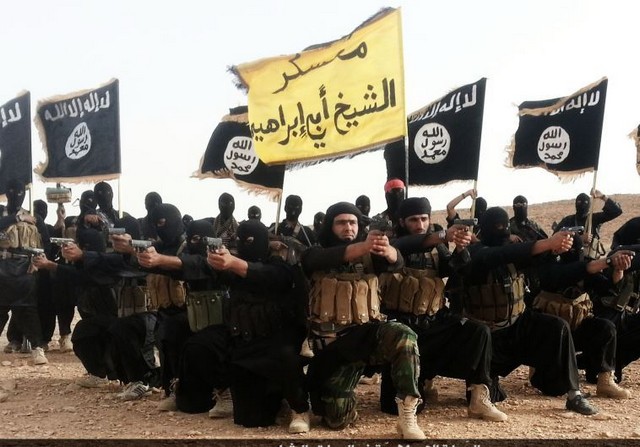
These background considerations inform and structure an assessment of how best to fashion an effective response to the ISIS phenomenon. There are two overlapping challenges associated with ISIS. There is the challenge of selecting the best tactics to address the immediate territorial and security threats presently posed by ISIS in the Middle East, North Africa, Europe and other parts of the world. In short, within the Middle East and North Africa, the challenge is essentially at this point both territorial and political, which is producing a new hybrid form of armed conflict and asymmetric warfare that gives rise to new tactics of combat that should, in turn, lead to corresponding modifications in the framework of international humanitarian law. So far, this has not happened. As far as Europe and the United States are concerned, the terrorist events have involved mainly individuals or small groups operating independently, although claiming allegiance to, or inspiration from, ISIS, but essentially posing traditional internal state/society challenges.
For these reasons, at least for the present, the challenges emanating from outside the Middle East and North Africa directed at the established order should be treated primarily as an issue of crime prevention, and not as an occasion for war. Turkey situated next to ISIS-held territory in Iraq and Syria is faced with several types of threats, the radical destabilization of neighboring countries and the disruptive spillover generated by refugee flows and isolated acts of terrorism apparently intended both as retaliatory responses to Turkish counterterrorist initiatives jointly undertaken with the United States and as efforts to widen the conflict theatre and extend the zone of subversive and destabilizing influences attributable to ISIS. The Turkish case is complicated by the priority presently accorded by Ankara to anti-Kurdish operations; creating tensions with counterterrorist goals as has been the case in Syria.
A third deeper challenge associated not only with ISIS, but also with other expressions of jihadism, including Al Qaeda and its affiliates, is to alter relations with the Islamic world in ways that minimize the prospect of the continuing (re-)emergence of anti-Western extremist political organizations and movements. In my view, the militarist and politically deficient character of present and past Western, particularly American, counterterrorism policies has unwittingly contributed to the rise, spread, and success of jihadist militancy. Such movements have in common the perception that the West is their supreme enemy as a result of intervening in the politics of the region as well as engaging in resource exploitation, especially oil and gas, and by a globally influential popular culture perceived to be undermining Islamic values.[14] The West is also viewed as responsible for upholding Arab governments regarded by ISIS and kindred groups as corrupt, incompatible with Islamic ideas of political community, and viewed for other reasons as illegitimate. The very origins of ISIS are bound up with the US/UK occupation policies pursued in Iraq since 2003, particularly the sectarian purge of Sunni elements in the Iraqi armed forces and governing process.
The main focus of this article is on this structural challenges to the West that can only be effectively met by abandoning certain patterns of past behavior, including an attitude toward global security, which has in the past given rise to jihadism that arose to resist foreign military occupation, but adopted perverse types of liberation strategies, including the repeated commission of crimes against humanity which are viewed generally as atrocities. From this perspective, a critique of Western militarism is put forward both with regard to past ineffectiveness in achieving its goals and with respect to the normative unacceptability of the counterterrorist modalities of response. The distinct interpretative lens concerned with policy assessments of counterterrorist containment efforts are sufficiently interrelated with structural dimensions as to cause some overlap in analysis while still respecting the differences between immediate security threats in combat zones and the underlying conditions that give rise to the threats.[15]
The attention given here to the reliance on the military instrument in the service of counterterrorist policy cannot be separated from the surrounding historical circumstances that led to the present conditions, nor be oblivious to prospects for change. The surprises surrounding the Arab Spring events of 2011 should encourage humility with regard to any effort to evaluate the lasting significance of the reactive counterrevolutionary political turn of the last several years.[16] The situation remains in flux as to what will endure and what is likely to change.
This critique of a militarist orientation also reflects skepticism as to whether current terrorist threats to the security of sovereign states and their populations are being adequately interpreted as a new species of international warfare that calls for a rethinking of the proper role of international force. There is also the related question as to whether–by having recourse to war rather than to the criminal justice machinery–the established political order did not unwittingly create a self-fulfilling prophesy, generating the very threat it is designed to suppress. The dysfunctional application of a war approach to counterterrorism indirectly encourages extremist political movements to emerge, especially through treating a non-state movement as if it were a state, and then, being shocked, as in the case of ISIS by the actuality of its territoriality. This heightening of status by establishing a terrorist identity is illustrated by the transition from al-Qaeda in Iraq to ISIS.
Militarism and the Military Instrument
The distinction between ‘militarism’ and ‘military’ instruments of security is central to an understanding of a structural critique of Western post-colonial policy in the Middle East and North Africa over the course of the last century. By militarism is meant the compulsion to address threats and conflict situations primarily by reliance on a militarist reflex, that is, by an over-reliance on the use of force without giving appropriate consideration to such non-military alternatives as diplomatic negotiations, removing legitimate grievances, adhering to international law, and engaging in self-scrutiny as to the roots of, and responsibility for, the emergence, persistence, and appeal of ISIS and other kindred threats. The argument put forward here is not pacifist, but is directed at the misuse of military capabilities that has led to serious blowback phenomena. This should give rise to an overdue occasion for stocktaking with respect to counterterrorist tactics and doctrine since 9/11.[17]
This misuse reflects, in large part, the failure to adjust to altered historical circumstances. At the height of the colonial era, essentially up until 1945, military superiority was used effectively in the Arab world and elsewhere, to satisfy the colonial ambitions of Europe at acceptable costs to the colonizers. What changed politically was the rise of self-confidence on the part of nationalist forces, the influence exerted by strong global anti-colonial support at the UN and elsewhere under the leadership of the Soviet bloc, and the weakening of European colonial powers due to the losses suffered in the two world wars. Although the United States endeavored to fill the geopolitical vacuum left by the collapse of colonialism, it failed to appreciate the accompanying shift in the balance of forces that shape the outcomes of internal political struggle. Hence the US found itself caught between loyalty to alliances and friendships with European colonial powers and an anti-colonial tradition strongly reinforced by recent historical trends – something that goes back all the way to the American Revolution, which was the first fully successful anti-colonial war.
Despite experiencing a series of frustrating setbacks, the United States continues primarily to rely on innovations in military technology (e.g. drones) and doctrine to sustain a false confidence in militarist approaches to the maintenance of the established political order in non-Western settings of strategic interest. It does so by ignoring a record of frustration and failure associated with military interventionism.[18]
The American failure in Vietnam was expected at the time to generate a more realistic understanding of the limits of military superiority in shaping the political outcome of asymmetric wars. In Vietnam the United States military possessed complete and essentially unchallenged control of air, sea, and land dimensions of the battlefield, and yet could not get the assigned job done to win the war. It was unable despite a decade of effort to crush the Vietnamese political will to continue national resistance to foreign intervention whatever the costs, and finally it was Washington gave in, calculating that it was not worth the effort to continue. In effect, the unconditional will to resist prevailed over theconditional will to intervene, and controlled the outcome, but this core explanation of the Vietnam experience was never understood by the American policy community as providing the key lesson for the future. Instead, the lessons learned were to take steps to blunt the rise of opposition to such foreign wars by abolishing the draft, relying on a professional army, and making a greater effort to enlist the media in support of an ongoing war effort.
A second lesson could have been learned in Afghanistan: those opportunistically trained and equipped as allies in a secondary struggle (in this case, containing the spread of Soviet influence) may turn out to be enemies in a more primary sense (the direct attack of 9/11 would never have been undertaken by the Soviet Union, which is inhibited because vulnerable to retaliation).[19] In effect, short-term geopolitical opportunism was pursued at the expense of intermediate-term security and stability. Al Qaeda’s anti-Soviet collaboration in Afghanistan was followed by launching a struggle to dislodge the United States from the Islamic world, especially its large military deployments in close proximity to the sacred sites located in Saudi Arabia.
A third lesson should have been learned in reaction to the spectacular failures of the Iraq policy pursued by the United States ever since 1992, reliant on punitive sanctions, aggressive war, and a badly mishandled occupation.[20] The aims of imposing ‘democracy,’ influencing oil pricing, securing military base rights, containing Iran, and reconnecting Iraq with the world economy were all frustrated. What is worse from Washington’s strategic point of view, the war intensified sectarian tensions throughout the Middle East, which, contrary to the intention of the mission, increased Iran’s regional influence, led to the formation and local popularity of ISIS, and damaged the American reputation in relation to both the effectiveness of its military diplomacy and the propriety of its political goals and methods.
In my view, the U.S. response to security threats posed by transnational terrorism and specifically, by the rise of ISIS, has often been deeply flawed due to this persistence of militarism. The 2016 presidential campaign discourse in the United States on how to deal with ISIS, especially the policies proposed by the opposing presidential candidates, are surrealist exaggerations of this militarist mindset that has so badly served American and regional security needs in the 21st century. This militarism has also intensified widespread suffering and chaos throughout the Middle East and North Africa. It has also accentuated violent disorder and devastation in other parts of the post-colonial world.[21]
This critique of militarism as 21st century counterterrorism should not be understood as a disguised pacifist plea for an unconditional renunciation of force in response to mega-terrorist threats. There are appropriate counterterrorist roles for military power, although its efficiency and effectiveness in achieving global, national, and human security has markedly declined in the period since the end of World War II, especially when used to wage wars of choice in political struggles for the control of foreign states.
The colonial wars after 1945 confirmed the declining historical agency of military power in recent decades. The colonial powers, despite enjoying overwhelming military superiority in relation to national resistance forces, lost almost every colonial war. The French experience in Indochina and Algeria were, perhaps, the clearest instances of this decisive shift in the operation of the balance of forces in conflict situations in the global South. The genocidal behavior of ISIS along with the regional and global consensus that has formed around its containment and defeat provides a legitimate basis for reliance on military power if coupled with a recognition of its narrow utility, given the mix of political circumstances, including the prior Shi’a abuses in Sunni areas of Iraq and the insistence of parts of the population, especially in Iraq, to be freed in the future from Shi’a governance. The superior military capabilities of the intervening forces do not assure an enduring victory even if it achieves temporary control over a combat zone; what counts is a sense that the political future is entrusted to the indigenous society and to a legitimate national government rather than managed and manipulated by outsiders. It is surprising that the colonial record of failure with respect to military interventions under Western auspices in the period since 1945 did not yield a much more selective approach toward uses of force by the West when addressing security threats in the Middle East and elsewhere in the South.
The U.S. war efforts’ outcome in Vietnam was lamented in Washington, provoking much handwringing with respect to why the Vietnam War was lost, but without questioning the militarist mindset that had, for more than ten years, guided American participation in the struggle. After the Vietnam War a variety of steps were taken to fix the military instrument so that it could function more effectively in the future. However, what was not done, was an assessment of why military intervention had itself become intrinsically dysfunctional late in the 20th century–in contrast to earlier times when it provided an efficient instrument of force projection and allowed the assertion of control over foreign societies. It was true that after the Vietnam experience the American public, for several reasons, became disillusioned about getting involved in distant wars seemingly unrelated to national defense or clearly explainable national interests. Militarists derided this public disillusionment by derisively speaking of ‘the Vietnam syndrome,’ a label intended to convey the unhealthy reluctance of the American public to support the use of military power. The Gulf War, and then the NATO Kosovo War, seemed to remedy the political situation by the delivering quick military victories, and–this is crucial–achieved with minimal casualties, accompanied by national enthusiasm that was bolstered by the militarist claim that warfare could now bring victory to the West in what were approvingly labeled ‘zero casualty wars.’ This change in war fighting tactics was promoted by militarists who were trying to regain their political traction in Washington. They sold it as ‘a revolution’ in the conduct of warfare: no boots on the ground, precision targeting from the air and heavy explosive payloads accurately delivered over long distances with ‘shock and awe’ drama, and a supposedly more respectful relationship between intervening forces and the indigenous population.
It is not surprising that President George H.W. Bush’s first exultant words after victory in 1991 were “We have finally kicked the Vietnam Syndrome”. This is best translated as saying “we can again confidently use military force as a potent instrument of American foreign policy, without encountering either anti-war resistance at home or facing the prospect of a disillusioning long war that ends in defeat.” Actually, it was not as innovative as claimed. The neoconservative Project for a New American Century made this clear in its influential 2000 report, which regretfully acknowledged the absence of a political mandate to support the regime-changing military interventions that it strategically favored in the Middle East.[22] The report contended that ‘a new Pearl Harbor’ was needed to create a political atmosphere in the United States that would be supportive of the aggressive geopolitics that neoconservatives believed promoted American interests in the Middle East after the Cold War. Subsequent developments would show this particular analysis of public sentiments was correct. After 9/11, the public and Congress endorsed, on the basis of a bipartisan consensus, militarist and interventionist undertakings in the Middle East that had no persuasive justification as necessary to meet threats of mega-terrorism. As it turned out, carrying out the interventionist agenda has clearly had the opposite effect of generating and intensifying terrorism in the region and beyond, implementing a misguided neoconservative diplomacy centered on upholding ‘special relationships’ with Israel and Saudi Arabia. The Iraq War, launched in 2003, was a disaster from a counterterrorist point of view. It transformed a stable autocracy into a strife-ridden, occupied country that became a fertile breeding ground for extremist resistance movements.[23]
The mood of militarist optimism with respect to American uses of military force was short lived; it was discredited by the distinctive challenges of the post-9/11 world. This new approach to war fighting, while enjoying success in removing Iraq from Kuwait and persuading Serbia to withdraw from Kosovo, had not been tested in conflict situations in which the goal was to shape the outcome of political, religious, and ethnic strife in medium-sized states, in response to counterterrorist regime-changing interventions, and in relation to dispersed extremist base areas situated in countries with which the United States is at peace. The threats posed in the post-9/11 world were unlike either the kind of missions undertaken in the failed anti-colonial wars or the success stories of the Gulf War and Kosovo. George W. Bush mindlessly sold the government and the public on a militarist response to 9/11. And surprisingly, there have been no fundamental conceptual reassessments during the Obama presidency despite the major disappointments experienced in Afghanistan, and even more so, in Iraq. At most there have been several controversial and ambiguous cautionary retreats made during the Obama presidency.
Three costly and misleading tactical ideas overlapped. First, that regime change as a result of military intervention could control the post-conflict state’s (re-)building process under the mentorship of a foreign occupation that was subsidizing economic recovery. The actual outcomes witnessed the rise of regimes that proved totally unsatisfactory from a counterterrorist point of view – regimes that seemed not even capable of providing orderly governance within their national borders. Secondly, that eliminating an unfriendly regime or a regime supportive of international terrorism or unable to prevent the use of its territory for international terrorist activities, would lead to the elimination of the terrorist threat rather than its dispersal, reconfiguration, and renewal. In different ways, both Afghanistan and Iraq, are illustrative of these unexpected blowback consequences. Without viewing conflict through a militarist lens, these consequences would have been anticipated, and the fact that they were not, strengthens the contention that policy shaped within a militarist box will not grasp the nuances of post-9/11 security challenges in the Middle East. And thirdly, that a regime-changing intervention would enhance internal security and promote the regional and global security goals of Washington. Even now those that defend the Iraq War claim, without showing why, insist that the Iraqi people are better off without the dictatorial leadership of Saddam Hussein. It seems obvious that a second coming of Saddam, despite many misgivings, is the only way to overcome the violent forms of disorder that continue to dominate the everyday landscape of Iraq.
An obvious puzzle is ‘why do smart people of good faith continue to behave dysfunctionally in the face of such costly military failures?’ There is no simple answer, and none that applies to all conflict situations. There are some elements of the ISIS type challenge that seem useful to take into account in shaping a tentative answer to such a question. I would here only mention six worth analyzing:
The difficulty of turning the ship of state around on fundamental issues of security. This is partly because political leaders and their advisors continue to subscribe to hard power versions of political realism, which affirms an abiding faith in the agency of military power in international conflict situations.
A combination of bureaucratic and special interests (military-industrial complex) that resist all efforts to reduce the defense budget, and are inclined to justify with militarist bravado high fiscal outlays to augment military capabilities even in peacetime, reinforced by exaggerating security threats that are usually accompanied by fear-mongering; a compliant media has the effect of setting limits on ‘responsible’ debate, marginalizing the critics of militarism.
A prevalent feature of collective political consciousness, which views current forms of terrorism as both evil and extremely frightening, with restored security depending on their elimination, and not an eventual negotiated accommodation.
More controversially, the merger of counterterrorist tactics with a broader American program of global pacificiation that depends upon a structure of military globalization that is given the unacknowledged mission of upholding the neoliberal world economy. This necessarily mixes the pursuit of geopolitical goals that arouses anti-West resentment with the realization of somewhat inconsistent counterterrorist objectives.[24] The Iraq War, its motivations, frustrations, and eventual failure, exemplify the tensions and contradictions caused by pursuing geopolitical goals beneath a banner of counterterrorism.
The adoption of this militarist agenda by the United States is tantamount to a partial rejection of the ethos of self-determination in the post-colonial era and as such opposes the flow of history.
The militarist mindset, by its very nature, does not adequately explore alternative and complementary nonmilitary responses to terrorist provocations, and as a result tends to produce outcomes that are the opposite of what is set forth as initially justifying military intervention. For instance, the attack on Iraq was seen as part of a policy to contain Iran, yet its effects were to expand the regional influence of Iran, including the irony of bringing Iraq into its sphere of influence. In this respect, the United States, at great expense, produced widespread devastation and casualties. It not only failed to achieve its goals, but has become worse off than had it accepted Saddam Hussein’s autocracy as it did gratefully during the Cold War due to anti-Soviet, rather than anti-Iran priorities, and then, incidentally, turning a blind eye toward the abusive human rights record.
In my view, the basic conceptual mistake of militarism is its inability to recognize the limits of the military instrument in achieving desired security goals under current historical conditions and in light of the essentially non-military distinctive challenges responsible for the rise of jihadist extremism. As argued, not only does militarism not achieve its goals, it makes matters worse. This has been the experience of warfare generally after 9/11, and most concretely in relation to the ISIS phenomenon. More precisely, the successes of counterterrorist operations have been essentially preventive law enforcement actions, the failures have been foreign wars.
The Diplomatic Critique of Militarism
One of the most seasoned and thoughtful American diplomats in the Middle East, Chas Freeman, has similarly diagnosed this failed militarism in the region from a mainstream perspective–with illuminating insight. As Freeman put it, “the major achievement of multiple interventions in the Muslim world has been to demonstrate that the use of force is not the answer to very many problems but there are few problems it cannot aggravate.”[25] Or more succinctly, the militarist impulse is a goad to action, in his words, “Don’t just sit there, bomb something.” Freeman’s main point is that not only has military intervention failed almost wherever it was relied upon, despite enjoying the benefit of overwhelming superiority in capabilities, but that it has made the situation worse than it would have been had the situation been left to fester on its own. Again Freeman expresses this assessment in clear language: “Our campaign against terrorism with global reach has multiplied our enemies and continuously expanded their areas of operation.”[26]
When it comes to ISIS, or Da’esh as he prefers to call it, Freeman’s diagnosis is a direct challenge to mainstream thinking: “Given our non-Muslim identity, solidarity with Israel, and recent history in the Fertile Crescent, the U.S. cannot hope to unite the region’s Muslims against Da’esh.” Freeman adds that we cannot stop Da’esh “without fixing the broken political environment in which extremism flourishes.”[27] What this might mean is uncertain, and whether such goals are within reach of the US and its allies is dubious even if recalibrated. Yet, what makes Freeman’s approach worthy of close attention is that he is a Washington insider who dares to think outside the militarist box, and has paid a political price for doing so. His views acknowledge the fundamental failures of military intervention, blaming the rise of ISIS (Da’esh) on American mishandling of Iraq and Syria. The failure is not just the formidable difficulty of translating ‘mission accomplished’ results on a battlefield into a program of political transformationdesigned to produce results congenial to Western ideas of regional and global security. It is the more generic matter of territorial resistance encountered in the 21st century whenever a Western intervening power seeks to override the politics of self-determination.
The political side of the Freeman story is revealingly relevant. When President Obama near the beginning of his presidency proposed Freeman to be the chief of National Intelligence Estimates, a pushback of tsunami proportions blocked the appointment. An official, no matter how qualified, who was situated outside the militarist box would naturally be expected to be a subversive presence inside the box, and for this reason would not be wanted by the Washington nomenclatura. Perhaps, Freeman’s real Achilles’ heel was his willingness to question along the same lines ‘the special relationship’ with Israel in framing his critique of American foreign policy in the Middle East. As the controversy heated up, the White House abruptly withdrew Freeman’s name from further consideration. In effect, this amounted to an undisguised surrender to the militarist worldview with the Israel Lobby serving as the No. 1 enforcer. The Freeman experience confirms the opinion that the militarist bias of governmental policymaking is currently impenetrable. Thus, there is little likelihood of adopting an approach to the menace posed by ISIS and related phenomena that is any less prone to blowback and harmful adverse consequences.
Not all of Freeman’s policy recommendations seem helpful. He is too ready to work toward stability by collaborating with the most authoritarian political actors in the region, especially Saudi Arabia, while overlooking their miserable record in human rights, including crushing popular uprisings. And worst of all, overlooking the massive Saudi financial and diplomatic commitment to the international dissemination of a fundamentalist version of Islam. Freeman puts himself on the wrong side of history by repudiating the Arab Spring from its inception, and is even critical of the American failure to lend support to such old allies as the corrupt and oppressive leader of Egypt, Hosni Mubarak. In these respects, Freeman seems insensitive to the mass misery experienced by impoverished populations in the Middle East; he would likely be antagonistic to the still unfolding effort of the peoples in the region to control their destinies. The appropriate diplomatic posture for the United States is one of non-intervention, not one of either regime change or regime stabilization. Admittedly, this posture of detachment may produce results that bring chaos and strife to a foreign country, but it seems preferable to accept the dynamics of self-determination than to embark on the futile and destructive work of opposing populist and nationalist challenges to the established order.
A Concluding Note
In light of the analysis offered, it is essential to draw a sharp distinction between dealing with ISIS as a present reality and pursuing policies, as in the past, that create conditions conducive to the emergence of jihadist challenges. In this regard, coping with ISIS requires some reliance on military power to contain and preempt its violent activities and, if possible, engage with its forces in battlefield combat in which it is likely to be defeated, but combined with a willingness to have exploratory negotiations and even a receptivity to possible diplomatic compromise. Such an outlook would be in line with the extended effort in Colombia to find an end to the prolonged strife between FARC and the state, in the Philippines to end the rebellion on the island of Mindanao.
On the broader issues of security, abandoning militarism as the cornerstone of counterterrorist strategy would be a dramatic starting point. President Obama has gone part of the way by seeking to reduce American combat activities in Iraq, Syria, and Afghanistan, but with only limited success and an uncertain will. Obama is to be praised for his insistence that the ‘global war’ against terrorism not be treated as a ‘perpetual’ conflict, but the policies pursued by his administration seem insufficiently modified to give such ideas real world credibility.[28] Instead, Obama’s approach is seen as an instance of ‘weak militarism’ that pleases neither militarists nor critics, but has more continuities than discontinuities with his neocon predecessor in the White House.
There are several connected policy proposals that seem responsive to the global and regional setting that exists at the present time. First of all, desist from policies of military intervention that are unlikely to succeed at acceptable costs and will likely generate conditions conducive to the rise and spread of transnational terrorism. Secondly, recognize that the security priority of the West is to prevent attacks within Western homelands or against Western targets, making the challenge more in the nature of law enforcement, inter-governmental collaboration, terrorist prevention than the sort of traditional military undertakings associated with deterrence, defense, retaliation, and foreign territorial occupation. This understanding makes international collaboration with police, intelligence, and internal security forces of foreign countries the most promising way to address this category of mega-transnational terrorist threat.
It also seems sensible to discourage, and even restrict, Islamophobic sentiments and activities, but without abridging freedom of expression. The political response to the Charlie Hebdo incident was exaggerated, and illustrative of how the Western establishment should not respond. Western leaders took the occasion of a horrifyingly brutal and murderous incident to identify unnecessarily and excessively with an often viciously anti-Muslim magazine. And although some display of solidarity with the victims of such a vicious attack was certainly justified as a counterterrorist affirmation of freedom of expression, it was widely perceived and presented to the world as a seizure of an opportunity to slam Islam through appearing to endorse the inflammatory outlook of Charlie Hebdo with greater vigor than was being devoted to upholding the abstract principle of freedom of expression. Beyond this, why should this incident have drawn such a display of global solidarity, with many heads of state joining the huge Paris demonstration, than earlier or subsequent comparably brutal incidents of terrorist violence?
As suggested, the emergence of ISIS was definitely a byproduct of American-led militarism, and its containment will not be effectively achieved by reliance on militarism. The needed policies for such a hybrid war is a mixed strategy that emphasizes the political, seeks the higher moral and legal ground, and is imaginative about and receptive to diplomatic opportunities to restore security.
Richard Falk is an international law and international relations scholar who taught at Princeton University for forty years. Since 2002 he has lived in Santa Barbara, California, and taught at the local campus of the University of California in Global and International Studies and since 2005 chaired the Board of the Nuclear Age Peace Foundation. For six years (2008-2014) he acted as UN Special Rapporteur for Occupied Palestine
Notes
[1] See United States v. Nicaragua, ICJ Reports 1986.
[2] See UN Security Resolution 1973, 17 March 2011.
[3] For views that practice of dominant states alters legal norms by setting precedents, see Anthony C. Arend & Robert J. Beck, International Law and the Use of Force Beyond the Charter Paradigm (New York: Palgrave, 1993); Mark Weisbrud, Use of Force: The Practice of States Since World War II(Philadelphia, PA: University of Pennsylvania, 1997); see especially, Ruchi Anand, Self-Defense in International Relations (New York: Palgrave, 2009); for strong geopolitically oriented jurisprudence, see Michael J. Glennon, Limits of Law: Prerogatives of Power: Interventionism after Kosovo (New York: Palgrave, 2001).
[4] There is a good case to be made that Vietnam War was the turning point. In post-Cold War settings, the NATO Kosovo War and the Iraq War of 2003 were both non-defensive wars undertaken without the authorization of the UN Security Council.
[5] In struggling with the relationship between legal norms, defying patterns of state practice, and the absence of strong central institutions, some scholars have identified ‘the law’ with ‘reasonable expectation,’ which turns out to be deferential to dominant political actors. For an influential attempt along these lines, see Myres S. McDougal & Florentino P. Feliciano, Law and Minimum World Public Order (New Haven, CT: Yale University Press, 1961).
[6] An intense fear of further attacks after 9/11 as undermining respect for international legal constraints is depicted from a governmental insider’s perspective in Jack Goldsmith, Terror Presidency: Law and Judgment inside the Bush Administration (New York: Norton, 2007)
[7] For critical commentary on retaliatory strikes in a pre-9/11 atmosphere, see E.P. Thompson & Mary Kaldor, Mad Dogs: The US Raids of Libya (1986); there were also retaliatory responses to the Al Qaeda attacks on the USS Cole and on the US embassies in Kenya and Tanzania.
[8] See for a challenging interpretation of the impact of transnational terrorism on the nature of world order: Philip Bobbitt, Terror and Consent: The Wars for the Twenty-first Century (New York: Knopf, 2008).
[9] George W. Bush, September 20,, 2001, speech to Joint Session of the US Congress.
[10] Nicaragua vs. United States, ICJ Reports (1986) is the most authoritative judicial treatment of the scope of self-defense, refrains from expressing an opinion on the legality of anticipatory self-defense. In §194 of the decision the following statement appears: “In view of the circumstances in which the dispute has arisen, reliance is placed by the Parties only on the right of self-defence in the case of an armed attack which has already occurred, and the issue of the lawfulness of a response to the imminent threat of armed attack has not been raised. Accordingly the Court expresses no view on that issue.”
[11] On the torture debate, see Sanford Levinson (Ed.), Torture: A Collection(New York, Oxford, 2004); Marjoried Cohn (Ed.), Torture: Interrogation, Incarceration, and Abuse (New York: New York University Press); Alfred McCoy,Torture and Impunity: The U.S. Doctrine of Coercive Interrogation (Madison, WI: University of Wisconsin Press, 2012).
[12] This suggestion of a middle course is not represented in the literature very well; there assessments are either apologetic or denunciatory. For example, Philippe Sands, Lawless World: Making and Breaking Global Rules (New York: Penguin, 2006); compare John Yoo, Crises and Command: The History of Executive Power from George Washington to George W. Bush (New York: Kaplan, 2005).
[13] For two attempts, see Richard Falk, The Great Terror War (Northampton: Interlink, 2003) and Gens David Ohlin, The Assault of International Law (New York: Oxford, 2013).
[14] The root cause of the Arab political encounter with the West was explicitly associated by ISIS with the artificiality of the states generated by colonial ambition in the aftermath of World War I, and originally delineated in the Sykes-Picot Agreement of 1916. The other underlying explanation of perceived injustice is traced to the Balfour Declaration of 1917, a pure colonialist pledge by the British Foreign Secretary to support the commitment of the world Zionist movement to establish a Jewish homeland in historic Palestine. See David Fromkin, A Peace to End All Peace: The Fall of the Ottoman Empire and the Creation of the Modern Middle East (New York: Henry Holt, (19—); David A. Andelman, A Shattered Peace: Versailles 1919 and the Price We Pay Today(New York: John Wiley, 2003); Jonathan Schneer, The Balfour Declaration: The Origins of the Arab-Israeli Conflict (New York: Random House, 2010); Patrick Cockburn, The Rise of the Islamic State: ISIS and the New Sunni Revolution(London: Verso, 2015); Daniel Byman, Al Qaeda, The Islamic State, and the Global Jidhadist Movement: What Everyone Needs to Know (New York: Oxford University Press, 2015).
[15] Western diplomacy has also contributed to the spread of jihadist politics as through the ‘special relationship’ with Saudi Arabia despite its encouragement of jihadism in numerous ways, including billions of dollars to finance madrasas throughout the Islamic world. See Richard Falk, “Saudi Arabia and the Price of Royal Impunity,” Middle East Eye, 6 October 2015.
[16] See Marc Lynch, The New Arabs Wars: Uprisings and Anarchy in the Middle East (New York: Public Affairs, 2016); also: Richard Falk, Chaos and Counterrevolution: After the Arab Spring (Charlottesville, VA: Just World Books, 2015).
[17] See Chalmers Johnson, Blowback: The Costs and Consequences of American Empire (New York, Henry Holt, 2000).
[18] See the rise of David Petraeus as a result of his influential text revising counterinsurgency thinking: U.S. Army/Marine Corps Counterinsurgency Field Manual: U.S. Army Field Manual No. 3-24 (Chicago: University of Chicago Press, 2007). See Fred Kaplan, The Insurgents: David Petraeus and the Plot to Change the American Way of War (New York: Simon & Schuster, 2013); the failure of such tactical onslaughts as ‘shock and awe’ in the 2003 attack on Iraq as essentially a belief that political ends could be achieved by a traumatizing show of military superiority.
[19] Effectively explored in Deepak Tripathi, Breeding Ground: Afghanistan and the Origins of Islamist Terrorism (Washington, DC: Potomac Books, 2011).
[20] Richard Falk, The Costs of War: International Law, the UN, and World Order after the Iraq War (New York: Routledge, 2008).
[21] See books cited in Note 14.
[22] “Rebuilding American Defenses: Strategy, Forces, and Resources for a New Century,” Project for a New American Century, Sept. 2000.
[23] See Note 12.
[24] See Jeff Halper, War Against the People: Israel, the Palestinians, and Global Pacification (London: Pluto, 2015).
[25] Chas Freeman, “The End of the American Empire,” April 2, 2016, Remarks at the Barrington Congregational Church, Barrington, RI.
[26] Chas Freeman, America’s Continuing Misadventures in the Middle East(Charlottesville, VA: Just World Books, 2016), 238.
[27] Note 24, 17
[28] See President Barack Obama, “U.S. Drone and Counterterror Policy,” National Defense University, March 23, 2013.
First published in Richard Flak Blog
28 August 2016